Results for "Delhi+|+7+>+8"
22322 results found.
Agence et hôtel en Inde English translation pending
nous devons partir en Inde la semaine prochaine, tres peu de temps pour organiser un circuit de 13 jours depuis Delhi quelqu'un connait-il une petite agence de Voyage qui loue voiture avec chauffeur et réservation d'hotels à des prix raisonnables ave c maximum de souplesse
Réserves d'Inde du nord English translation pending
Bonjour
Je pars en Inde faire les réserves du nord et visiter le Rajasthan.....
J'arriverai à Delhi le 30 mars 2005. Ensuite, je compte aller à barathpur (à côté d'Agra que je compte visiter), Khana, barangarhv, ranthambore et ensuite Udaipur..
Quelqu'un peut-il me renseigner sur le climat en avril, les endroits à privilégier pour dormir à Delhi et des infos sur la réservation de train....Car il y a deux ans, je suis allée en Inde du Sud et me suis retrouvée à prendre les bus de nuit car les trains étaient bondés...est-ce pareil en cette période ?
Merci d'avance pour vos suggestions et précieux conseils..
Cathy
Je pars en Inde faire les réserves du nord et visiter le Rajasthan.....
J'arriverai à Delhi le 30 mars 2005. Ensuite, je compte aller à barathpur (à côté d'Agra que je compte visiter), Khana, barangarhv, ranthambore et ensuite Udaipur..
Quelqu'un peut-il me renseigner sur le climat en avril, les endroits à privilégier pour dormir à Delhi et des infos sur la réservation de train....Car il y a deux ans, je suis allée en Inde du Sud et me suis retrouvée à prendre les bus de nuit car les trains étaient bondés...est-ce pareil en cette période ?
Merci d'avance pour vos suggestions et précieux conseils..
Cathy
Paludisme Inde du nord English translation pending
je vais faire un circuit organisé du 10 au 20 février 2005 en Inde du nord ( Delhi, Jaipur, Agra ). Dois je prendre ou non des médicaments contre le paludisme ? Merci de me répondre et de me conseiller .
Dispensaires de Mère Thérésa en Inde English translation pending
où il a-t-il des dispensaires de mère Thérésa en Inde?
je sais qu'il y en à Delhi, à Calcutta, et à Madras. est ce qu'il y en a a Varanasi?
je sais qu'il y en à Delhi, à Calcutta, et à Madras. est ce qu'il y en a a Varanasi?
Inde: trains seconde classe English translation pending
En partance pour l'inde fin octobre, je me pose encore quelques questions malgré mes recherches.
Nous avons prévu un atterrissage sur Delhi durant 2-3 jours avec un hotel dans le quartier Tibétain. Est-ce un quartier sympa ? n'est il pas trop éloigné du centre ? Sortir le soir sur delhi est ce facile ? Quel quartier ?
Ensuite -direction Darjeeling et le Sikkim pour une quinzaine de jours avec arrêt a Varanasi à l'aller ou au retour. Coté train (nuit) la 2ème classe est elle correcte ? L'Inde m'est totalement inconnue, en Thailande la 2ème classe est sympa et permet de voyager en sécurité avec les locaux.
Patna (puis Bogdaya) vaut le détour ?
Si nous avons quelques jours d'avance sur notre planning, nous comptons aller à Agra, puis mettre un pied au rajasthan (Jaipur, Pushkar), au total 5 jours. Vaut-il mieux envisager le train pour y aller ou une voiture avec chauffeur ?
Merci à tous.😊
Si nous avons quelques jours d'avance sur notre planning, nous comptons aller à Agra, puis mettre un pied au rajasthan (Jaipur, Pushkar), au total 5 jours. Vaut-il mieux envisager le train pour y aller ou une voiture avec chauffeur ?
Merci à tous.😊
Transport pour le Sikkim (Inde) English translation pending
Nous partons en Inde en oct/nov pour la 1ère fois dans ce pays.Notre parcours:Delhi, Bénares, Calcutta, Darjeeling et le Sikkim. La découverte de ce dernier ne me semble pas évidente et je n'ai pas trouvé beaucoup d'infos sur le forum. Notamment quelles sortes de transports pour rallier le Sikkim et l'état des routes. Est-ce qu'une dizaine de jours suffit pour découvrir Gangtok et ses environs?
En bref, je suis preneuse de toutes informations pratiques. Merci à vous de bien vouloir m'éclairer.
En bref, je suis preneuse de toutes informations pratiques. Merci à vous de bien vouloir m'éclairer.
Inde: Calcutta - Orissa - Darjeeling - Vallée du Gange English translation pending
Partis de Paris-Roissy le dimanche 29 décembre 1996 par un froid glacial, nous atterrissons enfin à Delhi, au petit matin. C'est l'hiver en Inde, aussi, les indiens ont l'air frigorifié, tout entortillés dans leurs châles, il fait 18°...Au bout de longues heures d'attente dans une salle sinistre de l'aéroport, nous embarquons à nouveau dans un Boeing Air-India à destination de Calcutta.
L'avion a plongé dans un épais nuage de pollution jaunâtre qui recouvre la ville comme un édredon géant. Horreur. La circulation vers le centre-ville est étonnamment fluide, et la ville elle-même semble propre : nous sommes surpris et décontenancés : cela contredit tout ce qu'on a pu lire sur Calcutta... L'hôtel Kenilworth a bien enregistré la réservation faite par Miss Air-India de Nice. On s'écroule sur nos lits extra-planches pour récupérer de cet interminable voyage.
Le "Times of India" annonce la venue prochaine de Sir John Major, premier ministre britannique. Tout s'explique ! Les miséreux qui campent d'habitude le long des rues ont été ramassés et parqués au loin, hors de la vue du cortège officiel qui passera par-là dans quelques jours.
Mais la voici, la vraie Calcutta, crasseuse, grouillante et authentique, fidèle à sa mauvaise image : car nous sommes plongés dans le quartier New-Market, aux ruelles encombrées de charrettes, camions, motos, vélos, qui arrivent autour des halles surpeuplées. Odeurs pestilentielles des tas d'ordures amoncelés sur les trottoirs. Et voici les "hommes-chevaux", ces pauvres bougres attelés aux brancards de leur pousse-pousse. Ils cavalent pieds nus pour transporter humains ou ballots énormes au milieu des embouteillages terrifiants. Ce sont les derniers survivants de cette corporation en voie de disparition.
Ce soir, grand dîner de fin d'année au Kenilworth. Un repas "ourdou" au Marble room, mets traditionnels et orchestre moghol qui joue des musiques nostalgiques. Bel adieu à 1996, bonjour 1997.
Promenade dans le quartier chinois, surpeuplé, où nous pouvons circuler sans être abordés par les mendiants qui grouillent autour de notre hôtel. Ici, c'est la vie des travailleurs qui nous saluent en souriant, sans nous considérer comme des "porte-monnaie à pattes". Un passant indien nous guide vers le Marble Palace, bien caché dans un parc, en refusant énergiquement la moindre pièce. Cette grande bâtisse un peu écroulée, témoin des anciennes splendeurs, renferme une foule d'objets collectionnés à travers le monde, ensevelis sous une poussière et des toiles d'araignées séculaires... Curieux et très émouvant.
Tout près, le grand poète bengali Rabindranah Tagore a vécu dans une maison transformée en musée. Nous sommes exceptionnellement admis à entrer dans la belle mosquée Nakhoda, aux coupoles vernissées de céramique verte qui dominent le vieux quartier musulman. Tout en haut d'un interminable escalier de pierre, on a une vue plongeante sur les toits environnants, couverts d'immondices.
Une bonne adresse : Sudder street, le restaurant Zaranj, avec sa cascade d'eau fraîche qui serpente entre les tables. Délicieux plats de cuisine bengalie.
Le chauffeur sikh en grande tenue nous pilote vers le Pont Howrah qui traverse la rivière Hooghly, jusqu'à la gare principale de Calcutta. Il a garé la belle limousine, tandis qu'on pénètre dans la vieille station ferroviaire où une foule de voyageurs court vers les trains en partance. Assis ou couchés sur le sol crasseux, des familles entières se sont réfugiées sous les verrières, chassées de leurs villages à la recherche d'un improbable avenir.
Un curieux édifice situé au nord-ouest de la ville, sur les bords de l'Hooghly, le Belur Math, où se rejoignent les trois principales religions indiennes : hindouisme, islam et christianisme. Nous roulons sur la Grand Trunk road, qui relie Calcutta à Delhi, traversant le sous-continent dans toute sa largeur. Trafic d'une intensité supra-indienne, une marée d'énormes véhicules dans les deux sens, occupant tout l'espace, dans un nuage de fumées nauséabondes qui stagne à quelques mètres du sol. Les camions déglingués, surchargés de marchandises entassées en montagnes débordantes, menacent de verser dans le profond fossé. A l'arrière de chaque monstre, on peut lire "Horn, please" ainsi que la marque TATA, constructeur richissime des poids lourds indiens. C'est le marquis de Carabas, ce Mr. TATA possède des paquets d'actions phénoménales dans de nombreuses sociétés internationales.
Les milliers de voitures garées devant les grilles du Belur font présager de la foule qui piétine autour du temple baroque édifié sur la colline. Un cortège incessant de pélerins défile à l'intérieur de la basilique oecuménique qui ressemble vaguement au Sacré-Coeur de Montmartre. Sous des tentes bariolées, on aperçoit des personnages enveloppés de toges jaunes ou orangées, crâne rasé à l'exception d'une mèche de cheveux tortillée au sommet, cascades de colliers autour du cou. Assis sur les tapis, un auditoire subjugué par un gourou peinturluré qui psalmodie de lancinantes onomatopées amplifiées par un puissant micro. Invocations à Ramakrishna...
L'avion a plongé dans un épais nuage de pollution jaunâtre qui recouvre la ville comme un édredon géant. Horreur. La circulation vers le centre-ville est étonnamment fluide, et la ville elle-même semble propre : nous sommes surpris et décontenancés : cela contredit tout ce qu'on a pu lire sur Calcutta... L'hôtel Kenilworth a bien enregistré la réservation faite par Miss Air-India de Nice. On s'écroule sur nos lits extra-planches pour récupérer de cet interminable voyage.
Le "Times of India" annonce la venue prochaine de Sir John Major, premier ministre britannique. Tout s'explique ! Les miséreux qui campent d'habitude le long des rues ont été ramassés et parqués au loin, hors de la vue du cortège officiel qui passera par-là dans quelques jours.
Mais la voici, la vraie Calcutta, crasseuse, grouillante et authentique, fidèle à sa mauvaise image : car nous sommes plongés dans le quartier New-Market, aux ruelles encombrées de charrettes, camions, motos, vélos, qui arrivent autour des halles surpeuplées. Odeurs pestilentielles des tas d'ordures amoncelés sur les trottoirs. Et voici les "hommes-chevaux", ces pauvres bougres attelés aux brancards de leur pousse-pousse. Ils cavalent pieds nus pour transporter humains ou ballots énormes au milieu des embouteillages terrifiants. Ce sont les derniers survivants de cette corporation en voie de disparition.
Ce soir, grand dîner de fin d'année au Kenilworth. Un repas "ourdou" au Marble room, mets traditionnels et orchestre moghol qui joue des musiques nostalgiques. Bel adieu à 1996, bonjour 1997.
Promenade dans le quartier chinois, surpeuplé, où nous pouvons circuler sans être abordés par les mendiants qui grouillent autour de notre hôtel. Ici, c'est la vie des travailleurs qui nous saluent en souriant, sans nous considérer comme des "porte-monnaie à pattes". Un passant indien nous guide vers le Marble Palace, bien caché dans un parc, en refusant énergiquement la moindre pièce. Cette grande bâtisse un peu écroulée, témoin des anciennes splendeurs, renferme une foule d'objets collectionnés à travers le monde, ensevelis sous une poussière et des toiles d'araignées séculaires... Curieux et très émouvant.
Tout près, le grand poète bengali Rabindranah Tagore a vécu dans une maison transformée en musée. Nous sommes exceptionnellement admis à entrer dans la belle mosquée Nakhoda, aux coupoles vernissées de céramique verte qui dominent le vieux quartier musulman. Tout en haut d'un interminable escalier de pierre, on a une vue plongeante sur les toits environnants, couverts d'immondices.
Une bonne adresse : Sudder street, le restaurant Zaranj, avec sa cascade d'eau fraîche qui serpente entre les tables. Délicieux plats de cuisine bengalie.
Le chauffeur sikh en grande tenue nous pilote vers le Pont Howrah qui traverse la rivière Hooghly, jusqu'à la gare principale de Calcutta. Il a garé la belle limousine, tandis qu'on pénètre dans la vieille station ferroviaire où une foule de voyageurs court vers les trains en partance. Assis ou couchés sur le sol crasseux, des familles entières se sont réfugiées sous les verrières, chassées de leurs villages à la recherche d'un improbable avenir.
Un curieux édifice situé au nord-ouest de la ville, sur les bords de l'Hooghly, le Belur Math, où se rejoignent les trois principales religions indiennes : hindouisme, islam et christianisme. Nous roulons sur la Grand Trunk road, qui relie Calcutta à Delhi, traversant le sous-continent dans toute sa largeur. Trafic d'une intensité supra-indienne, une marée d'énormes véhicules dans les deux sens, occupant tout l'espace, dans un nuage de fumées nauséabondes qui stagne à quelques mètres du sol. Les camions déglingués, surchargés de marchandises entassées en montagnes débordantes, menacent de verser dans le profond fossé. A l'arrière de chaque monstre, on peut lire "Horn, please" ainsi que la marque TATA, constructeur richissime des poids lourds indiens. C'est le marquis de Carabas, ce Mr. TATA possède des paquets d'actions phénoménales dans de nombreuses sociétés internationales.
Les milliers de voitures garées devant les grilles du Belur font présager de la foule qui piétine autour du temple baroque édifié sur la colline. Un cortège incessant de pélerins défile à l'intérieur de la basilique oecuménique qui ressemble vaguement au Sacré-Coeur de Montmartre. Sous des tentes bariolées, on aperçoit des personnages enveloppés de toges jaunes ou orangées, crâne rasé à l'exception d'une mèche de cheveux tortillée au sommet, cascades de colliers autour du cou. Assis sur les tapis, un auditoire subjugué par un gourou peinturluré qui psalmodie de lancinantes onomatopées amplifiées par un puissant micro. Invocations à Ramakrishna...
Rajasthan en deux semaines en juillet (Inde) English translation pending
e vais en inde 2 semaines au mois de juillet
nous sommes 2 personnes, et voulons faire le rajasthan; delhi agra jaipur udhaipur jodhpur jaisalmer bikaner et mandawa, pour l instant nous avond reserver que le billet d avion,
j ai contacter une agence de voyage a delhi et cette agence nous a proposer une prix de 2600 frs par personne pour la voiture avec chauffeur et hotel avec petit dej pour ce circuit. que pensez vous de cette formule et de ce prix.
c est la premiere fois que nous allons en inde.
dois je plutot prendre que la voiture avec le chauffeur et nous debrouiller par nous meme pour l hebergement?
merci pour ses tuyaux et les autres que vous pourrez m apporter mercie d avance. laurent.
merci pour ses tuyaux et les autres que vous pourrez m apporter mercie d avance. laurent.
Toujours dans le quasi continent Indien... English translation pending
Re,
Les réponses ne seront pas nombreuses.
A votre avis, quelle est à votre avis, à part Delhi (trop cher pour moi), la meilleure place pour ne parler que hindi ?
Merci du fond du coeur!
Les réponses ne seront pas nombreuses.
A votre avis, quelle est à votre avis, à part Delhi (trop cher pour moi), la meilleure place pour ne parler que hindi ?
Merci du fond du coeur!
Votre avis sur Ouzbékistan airlines? English translation pending
Bonjour, encore moi, mais puisque j'y suis j'en profite;J'ai trouvé un billet pour paris/delhi pour 514euros(hors taxes)en aout(haute saison) avec OUZBEKISTAN, est ce quelqu'un connait ou a déjà pris cette compagnie, c'est vraiment pas cher, ets ce que vous pensez que c'est sur, ou que c'est un peu risqué?
merci!
merci!
Compagnies aériennes pour l'Inde? English translation pending
Bonjour,
je recherche la moins chère des compagnies aériennes pour se rendre de Marseille à New Delhi ...
si vous avez des infos !
MERCI !
je recherche la moins chère des compagnies aériennes pour se rendre de Marseille à New Delhi ...
si vous avez des infos !
MERCI !
Quel circuit en Inde du Nord? English translation pending
Bonjour,
Je pars fin avril 204 pour environ 3 mois.
Je pensais faire un périple du style: 1> Soit Ariivée DELHI -> AGRA - > VARANSI -> PATNA -> KHAJURAHO -> Rajasthan -> Ladakh 2> Soit Arrivée DELHI - rajastan -> varansi -> Haridwar -> ladakh
J'aimerai vraiment passer au Rajasthan par contre on m'a dit que c'était un peu hot à cette saisson : Préférable d'y aller direct en arrivant début Mai ou alors plus tard?
Du fait de la mousson, le quel vous semble préférable pour éviter les trombes d'eau et les trop grosses chaleurs. On m'a aussi dit qu'il n'était possible de passer au Ladakh quà partir de fin Juin, Est-ce vrai?
Suis preneur de tout conseil.J'ai déjà eu ceux de "SHIVA108" en private, merci à lui
Que la Paix soit avec vous Mane na
Je pars fin avril 204 pour environ 3 mois.
Je pensais faire un périple du style: 1> Soit Ariivée DELHI -> AGRA - > VARANSI -> PATNA -> KHAJURAHO -> Rajasthan -> Ladakh 2> Soit Arrivée DELHI - rajastan -> varansi -> Haridwar -> ladakh
J'aimerai vraiment passer au Rajasthan par contre on m'a dit que c'était un peu hot à cette saisson : Préférable d'y aller direct en arrivant début Mai ou alors plus tard?
Du fait de la mousson, le quel vous semble préférable pour éviter les trombes d'eau et les trop grosses chaleurs. On m'a aussi dit qu'il n'était possible de passer au Ladakh quà partir de fin Juin, Est-ce vrai?
Suis preneur de tout conseil.J'ai déjà eu ceux de "SHIVA108" en private, merci à lui
Que la Paix soit avec vous Mane na
Billet d'avion pour tour du monde English translation pending
Hello,
qui saurait me dire le meilleur plan billet avion pour faire le TDM suivant : Paris- Rio - Lima - Bangkok - New Delhi - Paris.
Pour l'instant, on nous propose toujours de repasser par la France entre l'AmSud et l'Asie, ce qui enlève énormément au charme de pouvoir faire le tour du globe en une seule fois.
Merci pour vos tuyaux.
Matj
qui saurait me dire le meilleur plan billet avion pour faire le TDM suivant : Paris- Rio - Lima - Bangkok - New Delhi - Paris.
Pour l'instant, on nous propose toujours de repasser par la France entre l'AmSud et l'Asie, ce qui enlève énormément au charme de pouvoir faire le tour du globe en une seule fois.
Merci pour vos tuyaux.
Matj
Itinéraire en Inde English translation pending
Bonjour,
Je pars en inde dans quelques temps. Essentiellement dans l'uttar pradesh.
J'arrive a delhi . Est ce qu'il vaut mieux commencer par Agra ou directement aller vers benares en sachant que je fais une boucle "classique" delhi agra jaipur allahabad benares delhi. Quel sens choisir pour s'acclimater plus facilement.
Une autre question, est ce qu'il vaut mieux pour moi de tout prevoir a l'avance :trajet train hotel... ou est ce que je peux me permettre de faire cela au jour le jour...
Merci d'avance pour vos reponses.
Je pars en inde dans quelques temps. Essentiellement dans l'uttar pradesh.
J'arrive a delhi . Est ce qu'il vaut mieux commencer par Agra ou directement aller vers benares en sachant que je fais une boucle "classique" delhi agra jaipur allahabad benares delhi. Quel sens choisir pour s'acclimater plus facilement.
Une autre question, est ce qu'il vaut mieux pour moi de tout prevoir a l'avance :trajet train hotel... ou est ce que je peux me permettre de faire cela au jour le jour...
Merci d'avance pour vos reponses.
Hors des sentiers battus en Inde du nord English translation pending
Namasté les routard!!!!!
Je part pour le premiere fois en Inde du nord, j'arrive a delhi et compte me balader 3semaines......
J'ai deja un pti itinéraire de prevu, Bénares, radjastant.....(bon ok c leger...lol...)
c donc pour sa que je me tourne vers vous pour avoir une ptite idée des ville vraiment interressante et surtout des coin que l'on ne trouve pas dans les guides, mais qui malgré tout vallent le détour.....
merci a tous 😎
Je part pour le premiere fois en Inde du nord, j'arrive a delhi et compte me balader 3semaines......
J'ai deja un pti itinéraire de prevu, Bénares, radjastant.....(bon ok c leger...lol...)
c donc pour sa que je me tourne vers vous pour avoir une ptite idée des ville vraiment interressante et surtout des coin que l'on ne trouve pas dans les guides, mais qui malgré tout vallent le détour.....
merci a tous 😎
Road conditions in Rajasthan for a motorcycle road trip in January
hi
planning to ride through Rajasthan on a motorcycle in January 2027 and I’d love to hear about the road conditions.
I’ll be riding with a buddy on a Royal Enfield that I’ll rent in Delhi.
Thanks for your tips!
Nepal Feedback
NAMASTE NEPAL! PRACTICAL INFO AND EXPERIENCE FEEDBACK
Stay from March 25 to April 16, 2025
· Flight tickets Air India (via Delhi) (via Skyscanner) = 1130 € per person · Planned budget (and respected without too many restrictions and while buying a few small gifts) = 2000 € for the stay for two. Buses, taxis, and entrance fees to various sites represent a budget to consider. Meals are cheap. Drinks like beer/Coke, however, are not cheap and cost the equivalent of a meal. · Exchange rate of the rupee during our stay = 0.0064 € (the exchange rate is almost identical everywhere, including at the airport). · At the airport, purchase of two SIM cards (phone) = 1000 NPR x 2 for 28 days. · Kathmandu: we had booked the hotel upon arrival: Kathmandu Boutique Hotel (+977 015 357 446 – email: booking@kathmanduboutiquehotel.com), very well located in a quiet alley off the street, south of Thamel, a 10-minute walk from Durbar Square. A hotel like Nepal knows how to do, where tall people will have to duck. Night + breakfast = 18 € for two. Very warm welcome, great location, excellent value for money. · Bhaktapur: we had also booked a hotel for the end of our stay because the chance of the year 2025 made the Nepali New Year and Bisket Jatra particularly festive in Bhaktapur: Manju Baha Hotel School (+977 976 7234014 – email: manjubahahotel@gmail.com) located in an old monastery. "A social enterprise transforming an old monastery into a charming hotel, offering professional hospitality training to underprivileged Nepali youth." Night + breakfast = 32 € for two. Beautifully decorated room. Very warm welcome. Don’t miss the Changunarayan site (near Bhaktapur), it’s amazing. And if you’re lucky enough to be in Bhaktapur in mid-April for 3 days, there’s the Bisket Jatra festivities (Newari festival), joyful, noisy, fun, and wild… · Pokhara (hotel recommended by the Kathmandu hotel): Hotel Green Tara, Lakeside, 10th street, set back, quiet (Tel. +977 61 462698 – email: greentara_67@hotmail.com) · Trek permit (Lower Mustang, no need for an agency or guide, permits checked at Ghasa and Jomsom) = 2000 NPR per person (2 ID photos) · Bus Kathmandu/Pokhara and return = 2000 NPR per person · Bus Pokhara/Jomsom, 2 one-way tickets = 2800 NPR. · Taxi: negotiation with a driver we recommend, Vicky (+977 984 075 599). You explain what you want, negotiate the price, and he waits for you during the visit. Very charming, we used him several times. For example: departure from our hotel at 10 AM -> Boudhanath/Pashupatinath/Patan return at 5 PM to the hotel = 6500 NPR – Swayambhunath (round trip) = 1200 NPR · Site prices: https://ntb.gov.np/plan-your-trip/before-you-come/heritage-site-entry-fees o Visitor Pass for Kathmandu Durbar Square (for the duration of the stay, show your visa) = 1000 NPR per person (1 ID photo) o Bhaktapur Durbar Square (old town) = 1800 NPR per person o Patan = 1000 NPR per person o Swayambhu Stupa = 200 NPR per person o Boudha Stupa = 200 NPR per person o Pashupatinath Temple = 1000 NPR per person (interesting to take a guide) o Changunarayan Temple (6 km north of Bhaktapur) = 400 NPR per person o Mountain Museum in Pokhara = 750 NPR per person · E-cigarettes: e-cigarettes are banned in India and confiscated whether they’re in carry-on or checked luggage. On the way there, we had kept them in our carry-on, they were confiscated in Delhi. On the way back, learning from our previous experience, we put them in our checked luggage. Someone came to get us to take them out of our bags and confiscate them… You can find e-cigarettes and products in Kathmandu.
* * *
I’m 74 years old. I went to Nepal in 1982, 1983, and the last time in 1986. I wanted to introduce this beautiful and endearing country to my husband, and it was… now or never. So we decided it was now.
I knew the trek starting from Pokhara: Naudanda/Birethanti/Ghorepani/Tatopani/Kalopani. There was no way I was going to do that trek, especially the 1000-meter staircase to reach Ghorepani… You have to stay humble with age.
Back then, the road didn’t exist. I didn’t consider, with the construction of this road (NH48) along the western bank of the Kali Gandaki, doing a trek along a windy and dusty road. Was there an alternative hiking trail on the eastern bank? No one answered my question on VoyageForum, so I did my research online. And I found this site: "Andrées de Ruiter and Prem Rai - Trekking the Annapurna Circuit, including the new NATT trails that avoid the road - A guide to one of the most beautiful trekking regions in Nepal and the world (2011) - NATT = New Annapurna Trekking Trail".
Phew! A solution was emerging. This circuit from 2011 wasn’t fully marked. The idea was to go from Jomsom to Tatopani, so we needed to make sure the path was well-marked all the way, which we did, and the path exists, marked in red and white!
So, with the walking times information, we built our 8-day circuit:
· Jomsom/Thinigaon · Thinigaon/Chimang · Chimang/Saura · Saura/Kokhetanti · Rest day or, if in good shape: loop to Sekong Lake · Kokhetanti/Jhipra Deurali · Jhipra Deurali/Kopchepani · Kopchepani/Tatopani
It’s a senior trek, after all. So the walking times noted on the sites indicated 3 hours or even 4 hours for the two longest stages. That pace suited us fine.
On March 29, we left Kathmandu (1400m), after visiting the must-see sites, by bus to Pokhara: 200 km and 8.5 hours on a chaotic road under construction. I had a memory of Pokhara where it was the first city where you could see the Himalayan range, especially Machhapuchhare. But the pollution is such, the dust raised by traffic and construction, that no horizon is visible except the first hills around Pokhara.
We stayed 24 hours in Pokhara (820m), and on March 31, we left our luggage at the hotel and set off with our lightest backpacks: change of clothes, toiletries, first aid kit, anti-chafing cream, water bottle, sleeping bag liner, and light shoes for the stages.
We took the bus to Jomsom: 160 km/7.5 hours including stops for bathroom breaks, tea, and lunch. The road is nothing but a chaos of potholes, landslides, construction, dust, rebuilding, and mudslides. In Ghasa, the bus stops, and we’re told we’re at a checkpoint and that the two foreigners in the bus, my husband and I, need to have our permits checked, which takes a few minutes. The driving is rock-and-roll, surprising, and courteous. The drivers have their codes, and on these improbable roads, they’re virtuosos.
We could have chosen the plane, but several reasons dissuaded us: if there’s too much wind, the planes don’t take off; personally, I wasn’t reassured about landing in Jomsom, and this transport has a cost.
We arrived around 2 PM in Jomsom (2720m), and despite the early wake-up, the nearly 8 hours on the bus, and the altitude, we decided to head straight to Thinigaon (2840m). At the Jomsom checkpoint, they told us it was a 30-minute walk. Great! Except we took an hour and a half on an uphill road, bent over to fight a strong wind. But the Himalayan range is there! The Dhaulagiri, the Nilgiri, the Annapurnas as a reward.
In Thinigaon, we found a room at the "Nilgiri View Hotel" run by a didi (big sister in Nepali). From the lodge’s roof, she proudly showed us the different peaks surrounding the village and told us, worried, that it hadn’t snowed here for 3 years. She said there are very few tourists, that the season is rather in September/October/November. It seems there’s not a soul in this village, yet mules pass through the narrow street paved with large flat stones, their bells ringing. We dine at 6 PM and go to bed… Room = 1200 NPR and dinner, breakfast, and drinks = 2560 NPR.
On April 1, we set off at 9 AM, not for Chimang as planned but for Marpha! The didi from the Thinigaon lodge had said it was a 3-hour walk. The first part of this stage is attractive, the mountains are magnificent and imposing, the landscape is superb, there’s no one around, a feeling of being "alone in the world." We follow Dhumbra Tal, this small green lake. The path is a rocky track that climbs steeply. Then, around a hill, we start the big descent that joins the Kali Gandaki. We face the wind head-on, and the violent gusts take our breath away, throw us off balance, and envelop us in dust. We see the road on the other side of the Kali Gandaki. We arrive in the village of Chhairo at 2 PM, completely exhausted and with blistered feet, after 5 hours of walking instead of the planned 3.5 hours.
We’re welcomed by the village nurse, who tells us there’s a lodge in the village. Chhairo is a Tibetan village, a 20-minute walk from Marpha (according to the locals, multiply by 2 or even 3 for us…). We’re going to revise our trek plan and, first of all, spend the night in Chhairo.
The lodge is quite pleasant, and Karma, the hostess, is very friendly. She asks about our plans and suggests we stay in Chhairo the next day, from where we can visit Marpha and also Chimang, a 1-hour walk away, in light mode, meaning without backpacks. She invites us to participate in a village ceremony the next evening.
We immediately accept the proposal, as our feet need rest and the welcome is so warm… Dinner and bed!
We reworked our trek plan, which was too ambitious for our untrained bodies and, let’s face it… no longer in our first youth. In the initial plan, we thought there wouldn’t be too much elevation gain following the Kali Gandaki, but checking the map, we realize there might be significant elevation changes between Sauru and Sirkung. So we plan:
· Tomorrow: visit Marpha (2670m) and Chimang (2744m) · April 3: bus from Chhairo (2700m) to Kalopani (2530m) and continue on foot to Ghasa (2010m) · April 4: Ghasa/Pairataplo (1940m) · April 5: Pairatapla/Gadpar (1580m) · April 6: Gadpar/Narchyang (1510m) · April 7: Narchyang/Tatopani (1190m) · April 8: return to Pokhara.
Normally, it’s all downhill…
April 2, a rest day then… We set off in the morning to explore Marpha. We have to take a temporary bridge because the suspension bridge is closed due to road construction. We join the road and arrive in Marpha, a village famous for its apple orchards, brandy, cider, and apple juice production. This village is magnificent with its stone houses and monastery clinging to the hillside. The road construction spared it. There are people, but very few Western tourists.
We have lunch in Marpha and go back through Chhairo to take the path to Chimang. We cross a fragrant pine forest and find the rocky path; the landscape is splendid. We walk quietly, passing peaceful buffaloes and cows, and arrive at the foot of a stone staircase… 275 steps (which we counted on the way back) leading us to the village of Chimang. Chimang is an isolated Newari village that seems a bit desolate. Despite the slopes, there are crops on every little bit of land. Thankfully, we changed our initial program because there’s no lodge in this village, contrary to what we saw on a map… We wander through the village, which seems very deserted, have coffee in a house from another world, and then head back to Chhairo.
A rest day? = 5 hours of walking!!
Dinner and village ceremony. From what we understand, this ceremony is in honor of the Dalai Lama. Men, women, and children in traditional costumes gather twice a month; they dance, make, and offer small sweet cakes with Tibetan tea (made from tea, yak butter—often rancid—water, and salt). Surprising for first-timers…
Around 10 PM, we leave the ceremony; tomorrow morning, we need to be on the roadside by 7 AM to catch the bus to Kalopani…
This village of Chhairo is very pleasant and welcoming, no tourists, just two motorcyclists who arrived in the evening, one of whom participated in the ceremony and discreetly poured his Tibetan tea outside.
Lodge: "Norsang Tibetan Guesthouse and Restaurant". Total bill for 2 nights, 2 dinners, 2 breakfasts, and drinks = 8000 NPR.
April 3: bus from Chhairo to Kalopani, about 1.5 hours for the 20 km (200 NPR per person). We descend on the right bank of the Kali Gandaki. We find the red and white markings to resume the trek toward Ghasa. We’re in a fragrant pine forest, the Dhaulagiri on one side and the Annapurnas on the other, magnificent, and the path is pleasant and easy. We get a bit lost in this forest, always looking for the markings. Near Lete, two trekkers pass us, and we meet them again a little further on with two very young children, to whom we give the 2 hard-boiled eggs I didn’t eat this morning. They accepted them without hesitation.
We arrive in a village and ask for directions to Ghasa. The young girls point the way. But we come across a forest being logged, trees cut in all directions. We turn back and ask for confirmation. They confirm… But the two young girls catch up with us and clear the way. We have to step over, go around, and cross the felled trees, with no indication at all. Through this pick-up sticks of felled trees, the girls lead us to the top of a stone staircase, indicating that was the path. It’s the only place where we saw rhododendrons in bloom.
We descend the staircase. At the bottom, to the left, there’s a bridge to go toward Choyo, and to the right, a path to Ghasa. We take the right path and join the road. We should normally find the red and white markings, but we don’t… So we continue on the western bank road of the Kali Gandaki.
A little before the village of Misi, we see fumaroles on the opposite bank that seem to come from the ground. We don’t understand. We stopped to eat in the village of Misi (noodle soup = 600 NPR), but it’s hard to communicate with the elderly people running the guesthouse.
We continued on the road, not finding the marked path parallel to the road. Landslides, both on the left and right banks, seem to have taken over the marked routes. It’s a place where the Kali Gandaki gorge narrows, and on the opposite bank, the mountain smokes more and more, and we now hear the crackling of fire. Across from us, the mountain is burning… Our initial plan had us passing on that burning bank right now…
We arrive in Ghasa at 3:30 PM, a 6.5-hour stage but with a 1-hour stop at noon. We’re at the "Florida Guesthouse and Restaurant." From our room, we see the mountain smoking on the other side of the river, and at night, we see the flames. In this village, posters show Himalayan eagles and vultures that seem to be protected species. Indeed, we saw (and heard) 3 eagles circling today.
April 4 – Today, heading to Pairothapla or Kopchepani depending on our feet, accommodation options, and simply our desires.
No more smoke on the mountain this morning. It’s chilly, 7:45 AM, the sky is clear, just a smell of smoke outside.
Price of the lodge = 1000 NPR for the night + 3580 NPR for meals.
We cross Ghasa, which stretches over more than a kilometer. We have a drink at the last guesthouse in the village, and the didi, when she learns our destination, tells us to be careful because the villages we’re going to aren’t safe. Should we distribute our rupees in different pockets? Nah, we kept going.
At the exit of Ghasa, we find the red and white markings and take the suspension bridge to cross the boiling waters of the Kali Gandaki. The passage is impressive because the river is tumultuous. Lots of climbs and even more descents. We’re back on the eastern bank. It’s hot! On the narrow path, we meet a group of buffaloes. Who has the right of way? We decide to stick as close as possible to the rock wall and move forward calmly. The buffaloes look at us, chewing placidly, with no intention of jumping on us. Phew!
After a 5-hour stage (including stops), we arrive in Pairothapla, with hot feet and firm thighs, and decide we won’t go any further. It’s a good thing because there’s a lodge, the most basic so far, but with a great welcome. We have a meal and a short nap. The buffaloes we met on the way belong to this house. They come to drink at the fountain by the path.
Our host, very pleasant, doesn’t know what to do to please us and is very attentive. He wants to chat. He has two children, a 4-year-old girl and a 7-year-old boy. Where do they go to school? Do they go? He tells us that the fires in the mountain are caused by people, but for what reason? We won’t find out, but it’s illegal. From here, we can still see smoke rising in the distance. The wife is a bit less friendly. Corn kernels dry on a woven straw mat on the ground, and the mom sorts them.
From where we are, we overlook the valley and see the road under construction winding along the mountainside on the other bank.
Dinner on the terrace of the house overlooking the path, windbreaker and fleece on: dal bhat chicken for me and chicken curry for my husband: "organic" products, at least local production. There are small vegetable gardens everywhere with all sorts of vegetables.
April 5 – While we’re having breakfast on the terrace of our lodge, 5 porters, straps on their foreheads, heavily loaded, pass by on the path. A few minutes later, a group of 9 people appears. It must be said that since the beginning of our journey, we’ve met very few hikers. Two backpackers in Chhairo, the two hikers near Lete, two female hikers passed us before Pairothapla, a solo female hiker passed us…
The lodge in Pairothapla is called "Bimala Lodge & Thakali Kitchen" – Price for night + 4 meals + 2 breakfasts = 3000 NPR.
The descent toward the Kali Gandaki involves climbs whose steps we didn’t count. Clearly, the landslides on the mountain cause changes to the official ACAP trek marked in red and white, and the marking updates can’t keep up with the pace of these landslides. It’s almost always by chance that we find the markings. Fortunately, we can follow the power line that guides us somewhat.
Drink stop in Kopchepani, the legs are fine, but the feet don’t like being tightly enclosed. A group of trekkers with porters passes on the path. We met buffaloes that we kindly let pass; the path was wide enough, but it was a staircase going up, and we didn’t want to take any risks.
Across, a view of the magnificent Rupse Waterfall on the other bank of the Kali Gandaki, at the bottom, lots of vehicles and people.
Arrival in Gadpar after crossing a rather unwelcoming small village and cultivated gardens between dry stone walls, each better built than the last.
First lodge spotted, first lodge adopted to answer the call of our feet, and a very warm welcome from the owner. Since we hadn’t eaten at noon, we had Tibetan bread/jam. 6-hour stage including 1 hour of stops. Night + dinner + breakfast + drinks = 5060 NPR
April 6 – Today, heading to Narchyang.
For several days, we’ve seen banana trees with their bunches of fruit and even a prickly pear with large fruits ripening.
This stage is quite peaceful and pleasant. We take a suspension bridge to cross a tributary of the Kali Gandaki. While we’re resting for a moment before crossing the bridge, a couple of porters, a man and a woman, arrive and start across the bridge with their wood load in a basket held by a strap on their forehead, making them bend. We set off too… lighter than them.
On the other side of the bridge… a stone staircase, and it climbs steeply. The porter couple didn’t take this staircase; they went right on the path.
At the top of the staircase, we arrive in Narchyang after a 4-hour stage. A magnificent waterfall overlooks the village. We get lost in this fairly large village looking for a lodge. After wandering around for a while, we ask for directions, and an 84-year-old man takes us through the whole village and accompanies us to a very nice lodge run by a woman.
We chat with our hostess, who asks where we’re from and where we’re going. We explain that we want to reach Tatopani the next day and then return to Pokhara. She tells us there are 4x4s going directly to Pokhara and that it would probably be easier than taking a bus that might be full in Tatopani. After a quick consultation, we decide to return to Pokhara the next day by 4x4. She finds us a 4x4 with 2 seats left, departure at 8 AM – 5 hours on the road and 1500 NPR per person. A charming didi who does everything to be pleasant and helpful.
Narchyang community lodge = night + snacks + dinner + breakfast = 3000 NPR.
There you go, our trek ends tomorrow. Many necessary changes and adaptations to our initial trek, but no regrets, it was superb and a great experience that, for my part, I won’t be able to repeat. Always this encounter with the endearing, welcoming, curious, and very kind Nepali people. It was now or never, and we did it!
* * *
In conclusion, 3 full weeks in Nepal is a duration that allows visiting Kathmandu, Patan, and Bhaktapur, enjoying the various sites, and soaking in the atmosphere and urban Nepali life.
The trek, even revised and corrected, allowed us to get close to the impressive Annapurna and Dhaulagiri peaks. One or two acclimatization days might be necessary to get the body in tune with this magical and extraordinary land.
Stay from March 25 to April 16, 2025
· Flight tickets Air India (via Delhi) (via Skyscanner) = 1130 € per person · Planned budget (and respected without too many restrictions and while buying a few small gifts) = 2000 € for the stay for two. Buses, taxis, and entrance fees to various sites represent a budget to consider. Meals are cheap. Drinks like beer/Coke, however, are not cheap and cost the equivalent of a meal. · Exchange rate of the rupee during our stay = 0.0064 € (the exchange rate is almost identical everywhere, including at the airport). · At the airport, purchase of two SIM cards (phone) = 1000 NPR x 2 for 28 days. · Kathmandu: we had booked the hotel upon arrival: Kathmandu Boutique Hotel (+977 015 357 446 – email: booking@kathmanduboutiquehotel.com), very well located in a quiet alley off the street, south of Thamel, a 10-minute walk from Durbar Square. A hotel like Nepal knows how to do, where tall people will have to duck. Night + breakfast = 18 € for two. Very warm welcome, great location, excellent value for money. · Bhaktapur: we had also booked a hotel for the end of our stay because the chance of the year 2025 made the Nepali New Year and Bisket Jatra particularly festive in Bhaktapur: Manju Baha Hotel School (+977 976 7234014 – email: manjubahahotel@gmail.com) located in an old monastery. "A social enterprise transforming an old monastery into a charming hotel, offering professional hospitality training to underprivileged Nepali youth." Night + breakfast = 32 € for two. Beautifully decorated room. Very warm welcome. Don’t miss the Changunarayan site (near Bhaktapur), it’s amazing. And if you’re lucky enough to be in Bhaktapur in mid-April for 3 days, there’s the Bisket Jatra festivities (Newari festival), joyful, noisy, fun, and wild… · Pokhara (hotel recommended by the Kathmandu hotel): Hotel Green Tara, Lakeside, 10th street, set back, quiet (Tel. +977 61 462698 – email: greentara_67@hotmail.com) · Trek permit (Lower Mustang, no need for an agency or guide, permits checked at Ghasa and Jomsom) = 2000 NPR per person (2 ID photos) · Bus Kathmandu/Pokhara and return = 2000 NPR per person · Bus Pokhara/Jomsom, 2 one-way tickets = 2800 NPR. · Taxi: negotiation with a driver we recommend, Vicky (+977 984 075 599). You explain what you want, negotiate the price, and he waits for you during the visit. Very charming, we used him several times. For example: departure from our hotel at 10 AM -> Boudhanath/Pashupatinath/Patan return at 5 PM to the hotel = 6500 NPR – Swayambhunath (round trip) = 1200 NPR · Site prices: https://ntb.gov.np/plan-your-trip/before-you-come/heritage-site-entry-fees o Visitor Pass for Kathmandu Durbar Square (for the duration of the stay, show your visa) = 1000 NPR per person (1 ID photo) o Bhaktapur Durbar Square (old town) = 1800 NPR per person o Patan = 1000 NPR per person o Swayambhu Stupa = 200 NPR per person o Boudha Stupa = 200 NPR per person o Pashupatinath Temple = 1000 NPR per person (interesting to take a guide) o Changunarayan Temple (6 km north of Bhaktapur) = 400 NPR per person o Mountain Museum in Pokhara = 750 NPR per person · E-cigarettes: e-cigarettes are banned in India and confiscated whether they’re in carry-on or checked luggage. On the way there, we had kept them in our carry-on, they were confiscated in Delhi. On the way back, learning from our previous experience, we put them in our checked luggage. Someone came to get us to take them out of our bags and confiscate them… You can find e-cigarettes and products in Kathmandu.
* * *
I’m 74 years old. I went to Nepal in 1982, 1983, and the last time in 1986. I wanted to introduce this beautiful and endearing country to my husband, and it was… now or never. So we decided it was now.
I knew the trek starting from Pokhara: Naudanda/Birethanti/Ghorepani/Tatopani/Kalopani. There was no way I was going to do that trek, especially the 1000-meter staircase to reach Ghorepani… You have to stay humble with age.
Back then, the road didn’t exist. I didn’t consider, with the construction of this road (NH48) along the western bank of the Kali Gandaki, doing a trek along a windy and dusty road. Was there an alternative hiking trail on the eastern bank? No one answered my question on VoyageForum, so I did my research online. And I found this site: "Andrées de Ruiter and Prem Rai - Trekking the Annapurna Circuit, including the new NATT trails that avoid the road - A guide to one of the most beautiful trekking regions in Nepal and the world (2011) - NATT = New Annapurna Trekking Trail".
Phew! A solution was emerging. This circuit from 2011 wasn’t fully marked. The idea was to go from Jomsom to Tatopani, so we needed to make sure the path was well-marked all the way, which we did, and the path exists, marked in red and white!
So, with the walking times information, we built our 8-day circuit:
· Jomsom/Thinigaon · Thinigaon/Chimang · Chimang/Saura · Saura/Kokhetanti · Rest day or, if in good shape: loop to Sekong Lake · Kokhetanti/Jhipra Deurali · Jhipra Deurali/Kopchepani · Kopchepani/Tatopani
It’s a senior trek, after all. So the walking times noted on the sites indicated 3 hours or even 4 hours for the two longest stages. That pace suited us fine.
On March 29, we left Kathmandu (1400m), after visiting the must-see sites, by bus to Pokhara: 200 km and 8.5 hours on a chaotic road under construction. I had a memory of Pokhara where it was the first city where you could see the Himalayan range, especially Machhapuchhare. But the pollution is such, the dust raised by traffic and construction, that no horizon is visible except the first hills around Pokhara.
We stayed 24 hours in Pokhara (820m), and on March 31, we left our luggage at the hotel and set off with our lightest backpacks: change of clothes, toiletries, first aid kit, anti-chafing cream, water bottle, sleeping bag liner, and light shoes for the stages.
We took the bus to Jomsom: 160 km/7.5 hours including stops for bathroom breaks, tea, and lunch. The road is nothing but a chaos of potholes, landslides, construction, dust, rebuilding, and mudslides. In Ghasa, the bus stops, and we’re told we’re at a checkpoint and that the two foreigners in the bus, my husband and I, need to have our permits checked, which takes a few minutes. The driving is rock-and-roll, surprising, and courteous. The drivers have their codes, and on these improbable roads, they’re virtuosos.
We could have chosen the plane, but several reasons dissuaded us: if there’s too much wind, the planes don’t take off; personally, I wasn’t reassured about landing in Jomsom, and this transport has a cost.
We arrived around 2 PM in Jomsom (2720m), and despite the early wake-up, the nearly 8 hours on the bus, and the altitude, we decided to head straight to Thinigaon (2840m). At the Jomsom checkpoint, they told us it was a 30-minute walk. Great! Except we took an hour and a half on an uphill road, bent over to fight a strong wind. But the Himalayan range is there! The Dhaulagiri, the Nilgiri, the Annapurnas as a reward.
In Thinigaon, we found a room at the "Nilgiri View Hotel" run by a didi (big sister in Nepali). From the lodge’s roof, she proudly showed us the different peaks surrounding the village and told us, worried, that it hadn’t snowed here for 3 years. She said there are very few tourists, that the season is rather in September/October/November. It seems there’s not a soul in this village, yet mules pass through the narrow street paved with large flat stones, their bells ringing. We dine at 6 PM and go to bed… Room = 1200 NPR and dinner, breakfast, and drinks = 2560 NPR.
On April 1, we set off at 9 AM, not for Chimang as planned but for Marpha! The didi from the Thinigaon lodge had said it was a 3-hour walk. The first part of this stage is attractive, the mountains are magnificent and imposing, the landscape is superb, there’s no one around, a feeling of being "alone in the world." We follow Dhumbra Tal, this small green lake. The path is a rocky track that climbs steeply. Then, around a hill, we start the big descent that joins the Kali Gandaki. We face the wind head-on, and the violent gusts take our breath away, throw us off balance, and envelop us in dust. We see the road on the other side of the Kali Gandaki. We arrive in the village of Chhairo at 2 PM, completely exhausted and with blistered feet, after 5 hours of walking instead of the planned 3.5 hours.
We’re welcomed by the village nurse, who tells us there’s a lodge in the village. Chhairo is a Tibetan village, a 20-minute walk from Marpha (according to the locals, multiply by 2 or even 3 for us…). We’re going to revise our trek plan and, first of all, spend the night in Chhairo.
The lodge is quite pleasant, and Karma, the hostess, is very friendly. She asks about our plans and suggests we stay in Chhairo the next day, from where we can visit Marpha and also Chimang, a 1-hour walk away, in light mode, meaning without backpacks. She invites us to participate in a village ceremony the next evening.
We immediately accept the proposal, as our feet need rest and the welcome is so warm… Dinner and bed!
We reworked our trek plan, which was too ambitious for our untrained bodies and, let’s face it… no longer in our first youth. In the initial plan, we thought there wouldn’t be too much elevation gain following the Kali Gandaki, but checking the map, we realize there might be significant elevation changes between Sauru and Sirkung. So we plan:
· Tomorrow: visit Marpha (2670m) and Chimang (2744m) · April 3: bus from Chhairo (2700m) to Kalopani (2530m) and continue on foot to Ghasa (2010m) · April 4: Ghasa/Pairataplo (1940m) · April 5: Pairatapla/Gadpar (1580m) · April 6: Gadpar/Narchyang (1510m) · April 7: Narchyang/Tatopani (1190m) · April 8: return to Pokhara.
Normally, it’s all downhill…
April 2, a rest day then… We set off in the morning to explore Marpha. We have to take a temporary bridge because the suspension bridge is closed due to road construction. We join the road and arrive in Marpha, a village famous for its apple orchards, brandy, cider, and apple juice production. This village is magnificent with its stone houses and monastery clinging to the hillside. The road construction spared it. There are people, but very few Western tourists.
We have lunch in Marpha and go back through Chhairo to take the path to Chimang. We cross a fragrant pine forest and find the rocky path; the landscape is splendid. We walk quietly, passing peaceful buffaloes and cows, and arrive at the foot of a stone staircase… 275 steps (which we counted on the way back) leading us to the village of Chimang. Chimang is an isolated Newari village that seems a bit desolate. Despite the slopes, there are crops on every little bit of land. Thankfully, we changed our initial program because there’s no lodge in this village, contrary to what we saw on a map… We wander through the village, which seems very deserted, have coffee in a house from another world, and then head back to Chhairo.
A rest day? = 5 hours of walking!!
Dinner and village ceremony. From what we understand, this ceremony is in honor of the Dalai Lama. Men, women, and children in traditional costumes gather twice a month; they dance, make, and offer small sweet cakes with Tibetan tea (made from tea, yak butter—often rancid—water, and salt). Surprising for first-timers…
Around 10 PM, we leave the ceremony; tomorrow morning, we need to be on the roadside by 7 AM to catch the bus to Kalopani…
This village of Chhairo is very pleasant and welcoming, no tourists, just two motorcyclists who arrived in the evening, one of whom participated in the ceremony and discreetly poured his Tibetan tea outside.
Lodge: "Norsang Tibetan Guesthouse and Restaurant". Total bill for 2 nights, 2 dinners, 2 breakfasts, and drinks = 8000 NPR.
April 3: bus from Chhairo to Kalopani, about 1.5 hours for the 20 km (200 NPR per person). We descend on the right bank of the Kali Gandaki. We find the red and white markings to resume the trek toward Ghasa. We’re in a fragrant pine forest, the Dhaulagiri on one side and the Annapurnas on the other, magnificent, and the path is pleasant and easy. We get a bit lost in this forest, always looking for the markings. Near Lete, two trekkers pass us, and we meet them again a little further on with two very young children, to whom we give the 2 hard-boiled eggs I didn’t eat this morning. They accepted them without hesitation.
We arrive in a village and ask for directions to Ghasa. The young girls point the way. But we come across a forest being logged, trees cut in all directions. We turn back and ask for confirmation. They confirm… But the two young girls catch up with us and clear the way. We have to step over, go around, and cross the felled trees, with no indication at all. Through this pick-up sticks of felled trees, the girls lead us to the top of a stone staircase, indicating that was the path. It’s the only place where we saw rhododendrons in bloom.
We descend the staircase. At the bottom, to the left, there’s a bridge to go toward Choyo, and to the right, a path to Ghasa. We take the right path and join the road. We should normally find the red and white markings, but we don’t… So we continue on the western bank road of the Kali Gandaki.
A little before the village of Misi, we see fumaroles on the opposite bank that seem to come from the ground. We don’t understand. We stopped to eat in the village of Misi (noodle soup = 600 NPR), but it’s hard to communicate with the elderly people running the guesthouse.
We continued on the road, not finding the marked path parallel to the road. Landslides, both on the left and right banks, seem to have taken over the marked routes. It’s a place where the Kali Gandaki gorge narrows, and on the opposite bank, the mountain smokes more and more, and we now hear the crackling of fire. Across from us, the mountain is burning… Our initial plan had us passing on that burning bank right now…
We arrive in Ghasa at 3:30 PM, a 6.5-hour stage but with a 1-hour stop at noon. We’re at the "Florida Guesthouse and Restaurant." From our room, we see the mountain smoking on the other side of the river, and at night, we see the flames. In this village, posters show Himalayan eagles and vultures that seem to be protected species. Indeed, we saw (and heard) 3 eagles circling today.
April 4 – Today, heading to Pairothapla or Kopchepani depending on our feet, accommodation options, and simply our desires.
No more smoke on the mountain this morning. It’s chilly, 7:45 AM, the sky is clear, just a smell of smoke outside.
Price of the lodge = 1000 NPR for the night + 3580 NPR for meals.
We cross Ghasa, which stretches over more than a kilometer. We have a drink at the last guesthouse in the village, and the didi, when she learns our destination, tells us to be careful because the villages we’re going to aren’t safe. Should we distribute our rupees in different pockets? Nah, we kept going.
At the exit of Ghasa, we find the red and white markings and take the suspension bridge to cross the boiling waters of the Kali Gandaki. The passage is impressive because the river is tumultuous. Lots of climbs and even more descents. We’re back on the eastern bank. It’s hot! On the narrow path, we meet a group of buffaloes. Who has the right of way? We decide to stick as close as possible to the rock wall and move forward calmly. The buffaloes look at us, chewing placidly, with no intention of jumping on us. Phew!
After a 5-hour stage (including stops), we arrive in Pairothapla, with hot feet and firm thighs, and decide we won’t go any further. It’s a good thing because there’s a lodge, the most basic so far, but with a great welcome. We have a meal and a short nap. The buffaloes we met on the way belong to this house. They come to drink at the fountain by the path.
Our host, very pleasant, doesn’t know what to do to please us and is very attentive. He wants to chat. He has two children, a 4-year-old girl and a 7-year-old boy. Where do they go to school? Do they go? He tells us that the fires in the mountain are caused by people, but for what reason? We won’t find out, but it’s illegal. From here, we can still see smoke rising in the distance. The wife is a bit less friendly. Corn kernels dry on a woven straw mat on the ground, and the mom sorts them.
From where we are, we overlook the valley and see the road under construction winding along the mountainside on the other bank.
Dinner on the terrace of the house overlooking the path, windbreaker and fleece on: dal bhat chicken for me and chicken curry for my husband: "organic" products, at least local production. There are small vegetable gardens everywhere with all sorts of vegetables.
April 5 – While we’re having breakfast on the terrace of our lodge, 5 porters, straps on their foreheads, heavily loaded, pass by on the path. A few minutes later, a group of 9 people appears. It must be said that since the beginning of our journey, we’ve met very few hikers. Two backpackers in Chhairo, the two hikers near Lete, two female hikers passed us before Pairothapla, a solo female hiker passed us…
The lodge in Pairothapla is called "Bimala Lodge & Thakali Kitchen" – Price for night + 4 meals + 2 breakfasts = 3000 NPR.
The descent toward the Kali Gandaki involves climbs whose steps we didn’t count. Clearly, the landslides on the mountain cause changes to the official ACAP trek marked in red and white, and the marking updates can’t keep up with the pace of these landslides. It’s almost always by chance that we find the markings. Fortunately, we can follow the power line that guides us somewhat.
Drink stop in Kopchepani, the legs are fine, but the feet don’t like being tightly enclosed. A group of trekkers with porters passes on the path. We met buffaloes that we kindly let pass; the path was wide enough, but it was a staircase going up, and we didn’t want to take any risks.
Across, a view of the magnificent Rupse Waterfall on the other bank of the Kali Gandaki, at the bottom, lots of vehicles and people.
Arrival in Gadpar after crossing a rather unwelcoming small village and cultivated gardens between dry stone walls, each better built than the last.
First lodge spotted, first lodge adopted to answer the call of our feet, and a very warm welcome from the owner. Since we hadn’t eaten at noon, we had Tibetan bread/jam. 6-hour stage including 1 hour of stops. Night + dinner + breakfast + drinks = 5060 NPR
April 6 – Today, heading to Narchyang.
For several days, we’ve seen banana trees with their bunches of fruit and even a prickly pear with large fruits ripening.
This stage is quite peaceful and pleasant. We take a suspension bridge to cross a tributary of the Kali Gandaki. While we’re resting for a moment before crossing the bridge, a couple of porters, a man and a woman, arrive and start across the bridge with their wood load in a basket held by a strap on their forehead, making them bend. We set off too… lighter than them.
On the other side of the bridge… a stone staircase, and it climbs steeply. The porter couple didn’t take this staircase; they went right on the path.
At the top of the staircase, we arrive in Narchyang after a 4-hour stage. A magnificent waterfall overlooks the village. We get lost in this fairly large village looking for a lodge. After wandering around for a while, we ask for directions, and an 84-year-old man takes us through the whole village and accompanies us to a very nice lodge run by a woman.
We chat with our hostess, who asks where we’re from and where we’re going. We explain that we want to reach Tatopani the next day and then return to Pokhara. She tells us there are 4x4s going directly to Pokhara and that it would probably be easier than taking a bus that might be full in Tatopani. After a quick consultation, we decide to return to Pokhara the next day by 4x4. She finds us a 4x4 with 2 seats left, departure at 8 AM – 5 hours on the road and 1500 NPR per person. A charming didi who does everything to be pleasant and helpful.
Narchyang community lodge = night + snacks + dinner + breakfast = 3000 NPR.
There you go, our trek ends tomorrow. Many necessary changes and adaptations to our initial trek, but no regrets, it was superb and a great experience that, for my part, I won’t be able to repeat. Always this encounter with the endearing, welcoming, curious, and very kind Nepali people. It was now or never, and we did it!
* * *
In conclusion, 3 full weeks in Nepal is a duration that allows visiting Kathmandu, Patan, and Bhaktapur, enjoying the various sites, and soaking in the atmosphere and urban Nepali life.
The trek, even revised and corrected, allowed us to get close to the impressive Annapurna and Dhaulagiri peaks. One or two acclimatization days might be necessary to get the body in tune with this magical and extraordinary land.
Unsure about destinations in Northern and Eastern India
Hi everyone! 🙂
My partner (who’s a teacher—hence the summer holidays) and I are heading to Eastern India for 23 days in July. This is my 5th trip to India, but her first.
We fly into Delhi on July 7th and leave from Delhi on the 23rd (since our flight to Kolkata arrived late at night, and I wanted to show Agra and Varanasi to my partner).
We love getting off the beaten track and meeting people, so we’ll mostly be taking the train.
Here’s what we’re planning:
- **DELHI**: 1 night on the way (short because the plane is supposed to land at 01:55), then we take the train at 13:00 - **GWALIOR**: 3 nights, including a day trip to **AGRA** by train to see the Taj Mahal and the Red Fort (I find Agra too touristy to stay overnight). Otherwise, in Gwalior, the Fort, the temples, the Man Mandir Palace, and the Jai Vilas Palace if we have time. - **ORCHHA**: 2 nights... *maybe skip this to spend more time in VARANASI?* - **VARANASI**: overnight train + 3 nights, the Ghats, temples... maybe a day trip to **SARNATH**. - **KOLKATA**: overnight train + 3 nights. Maybe a countryside excursion to the ashram in Channa. *- Here we’re hesitating over 2 nights: either 2 nights in **SHANTINIKETAN** with a visit to **CHANNA** on the way, or a 2-day excursion to the **SUNDARBAN** nature park. But is it worth it in July during the monsoon?* - **PURI**: overnight train + 4 nights. *We’re planning to do everything from Puri, as it seems nicer than staying in BHUBANESWAR. What do you think?* Visit **KONARK** and **CHILIKA LAKE**. *Is it worth visiting Chilika Lake this season? Another question: can you swim in Puri, or is it too dangerous (waves)?* - Train to **BHUBANESWAR**, then a flight from BHUBANESWAR to **DELHI**, - 2 nights in **DELHI**, visiting Jama Masjid, and *either Humayun’s Tomb, Safdarjung’s Tomb, or Qutb Minar.*
Back to Paris. Total: 23 nights.
What do you think of these choices? What about the options we’re still unsure about *(in bold/italics)*? Thanks so much! 🙂
We fly into Delhi on July 7th and leave from Delhi on the 23rd (since our flight to Kolkata arrived late at night, and I wanted to show Agra and Varanasi to my partner).
We love getting off the beaten track and meeting people, so we’ll mostly be taking the train.
Here’s what we’re planning:
- **DELHI**: 1 night on the way (short because the plane is supposed to land at 01:55), then we take the train at 13:00 - **GWALIOR**: 3 nights, including a day trip to **AGRA** by train to see the Taj Mahal and the Red Fort (I find Agra too touristy to stay overnight). Otherwise, in Gwalior, the Fort, the temples, the Man Mandir Palace, and the Jai Vilas Palace if we have time. - **ORCHHA**: 2 nights... *maybe skip this to spend more time in VARANASI?* - **VARANASI**: overnight train + 3 nights, the Ghats, temples... maybe a day trip to **SARNATH**. - **KOLKATA**: overnight train + 3 nights. Maybe a countryside excursion to the ashram in Channa. *- Here we’re hesitating over 2 nights: either 2 nights in **SHANTINIKETAN** with a visit to **CHANNA** on the way, or a 2-day excursion to the **SUNDARBAN** nature park. But is it worth it in July during the monsoon?* - **PURI**: overnight train + 4 nights. *We’re planning to do everything from Puri, as it seems nicer than staying in BHUBANESWAR. What do you think?* Visit **KONARK** and **CHILIKA LAKE**. *Is it worth visiting Chilika Lake this season? Another question: can you swim in Puri, or is it too dangerous (waves)?* - Train to **BHUBANESWAR**, then a flight from BHUBANESWAR to **DELHI**, - 2 nights in **DELHI**, visiting Jama Masjid, and *either Humayun’s Tomb, Safdarjung’s Tomb, or Qutb Minar.*
Back to Paris. Total: 23 nights.
What do you think of these choices? What about the options we’re still unsure about *(in bold/italics)*? Thanks so much! 🙂
Is Kullu worth a stop?
I'm planning a return trip to India next year, and this time I want to check out what's nice on the way up to Manali. Since the bus rides are really long coming from the plains (Chandigarh or even Delhi), I'm looking for a place to stop along the way (my partner and I). I’ve spotted Kullu, about an hour from Manali, but no matter how much I study the map, I can’t tell if there’s an actual town there. We really don’t want to end up in some isolated hotel that’s only convenient for people traveling with their own transport—definitely not our style. We prefer to drop our bags in a room, freshen up a bit, then wander around streets or alleys with at least a little life.
So, I’m wondering if we’d be better off just skipping Kullu altogether.
What do you think, folks who’ve been there before?
So, I’m wondering if we’d be better off just skipping Kullu altogether.
What do you think, folks who’ve been there before?
India itinerary: too packed?
Hi everyone, and first of all, I wish you all wonderful travels in 2025! ;)
My partner and I (we're seniors) are leaving at the end of January for a 40-day trip to India, arriving in Cochin and departing from Delhi. After reading lots of travel journals about India, I’ve put together an itinerary, but I’m worried it might be too (very?) packed... Here’s my plan:
5 or 6 days in the backwaters Munnar: 1 or 2 nights? Ideally next: Madurai, Trichy, Tanjore, Kumbakonam, Chidambaram, Pondi, Mahabalipuram (number of nights in each place to be decided if I keep Tamil Nadu) Flight from Chennai to Varanasi Varanasi: 2 or 3 nights Overnight train to Agra Agra: 1 night Drive to Jaipur with a stop in Fatehpur Sikri Jaipur: 3 nights Bundi: 3 nights Drive to Udaipur with a stop in Chittorgarh? Udaipur: 2 nights Drive to Jodhpur with a stop in Ranakpur Jodhpur: 1 night Jaisalmer: 3 nights Flight to Delhi, then back to France.
This all feels *very* packed. We’re thinking of taking taxis between cities fairly often if public transport is too complicated or time-consuming. Do you think this is doable? Otherwise, the alternative would be to spend more time in Kerala (though we’re not really beach people) and skip Tamil Nadu (which I’d hate to do!!) to focus more on the north instead. We’ve never been to India before, and I’m a little worried about feeling overwhelmed with all the city and temple visits. We’re more used to alternating nature and culture. Looking forward to your valuable advice to finalize our itinerary!
My partner and I (we're seniors) are leaving at the end of January for a 40-day trip to India, arriving in Cochin and departing from Delhi. After reading lots of travel journals about India, I’ve put together an itinerary, but I’m worried it might be too (very?) packed... Here’s my plan:
5 or 6 days in the backwaters Munnar: 1 or 2 nights? Ideally next: Madurai, Trichy, Tanjore, Kumbakonam, Chidambaram, Pondi, Mahabalipuram (number of nights in each place to be decided if I keep Tamil Nadu) Flight from Chennai to Varanasi Varanasi: 2 or 3 nights Overnight train to Agra Agra: 1 night Drive to Jaipur with a stop in Fatehpur Sikri Jaipur: 3 nights Bundi: 3 nights Drive to Udaipur with a stop in Chittorgarh? Udaipur: 2 nights Drive to Jodhpur with a stop in Ranakpur Jodhpur: 1 night Jaisalmer: 3 nights Flight to Delhi, then back to France.
This all feels *very* packed. We’re thinking of taking taxis between cities fairly often if public transport is too complicated or time-consuming. Do you think this is doable? Otherwise, the alternative would be to spend more time in Kerala (though we’re not really beach people) and skip Tamil Nadu (which I’d hate to do!!) to focus more on the north instead. We’ve never been to India before, and I’m a little worried about feeling overwhelmed with all the city and temple visits. We’re more used to alternating nature and culture. Looking forward to your valuable advice to finalize our itinerary!
Itinerary for a solo trip to Northern India
Hi everyone,
Here’s my route—I’d like to stay at least 3 nights in each stop, take Indian dance classes, a cooking class, and any other discoveries you might recommend!
I arrive in Delhi in early March 2025, then take a flight to Jaisalmer.
Do you know of any charming, well-located hotels along this route?
Between buses, trains, or another flight, what would you suggest?
Jaisalmer / Jodhpur:
Jodhpur / Udaipur
Udaipur / Jaipur
Jaipur / Agra
Agra / Varanasi
Maybe head down to Kolkata and then back up to Delhi.
I’d love to hear about any firsthand experiences you’ve had!
Best, MurieJeanne
Best, MurieJeanne
15 days in Rajasthan by train and bus
Good evening everyone.
I’m so glad VoyageForum is back up and running.
This forum has helped me plan so many trips thanks to all your contributions.
So, I’m turning to you for advice on a trip I’m planning for March 2025, from the 7th to the 21st.
I was thinking of a classic itinerary:
Arrival in Delhi at 12:05 AM on Saturday, then taking a train in the afternoon to Agra.
2 nights in Agra
2 nights in Jaipur
2 nights in Pushkar
2 nights in Jodhpur
3 nights in Udaipur
Then flying back to Delhi.
The trip would mostly be by train (which we love) and bus.
However, after reading various travelers’ comments, some cities seem less interesting, while others I hadn’t included—like Bundi and Jaisalmer—are catching my eye. But traveling by train and bus, I’m worried it might get really complicated.
I’m not sure how to organize my stay anymore, especially since we love nature and peace and quiet… and I’m afraid of too much hassle if everything isn’t planned.
Also, how can I book trains and buses in advance from France?
Thanks in advance for your help.
Magali
4 friends discover a piece of North India
Hello fellow travelers!
I’m adding my small contribution to the reopening celebration by posting this travel journal from India, made in January 2024. We’re 4 friends (2 couples), and we did a 3-week loop in Rajasthan, stopping by Delhi and Agra (which, as everyone knows, aren’t in Rajasthan 😛). Delhi - Agra - Jaipur - Bundi - Udaipur - Jodhpur - Jaisalmer - Delhi
We rented a car with a driver from Agra to Jaisalmer, 550 € for 14 days. https://chauffeurpriveeninde.com/fr/
We took the train from Delhi to Agra and the plane (Spicejet) from Jaisalmer to Delhi.
Most of the accommodations were booked on Booking before we left.
I’m sharing this story written by Richard and illustrated by me. We dedicate it to Nathalie and Bruno, our amazing travel companions.
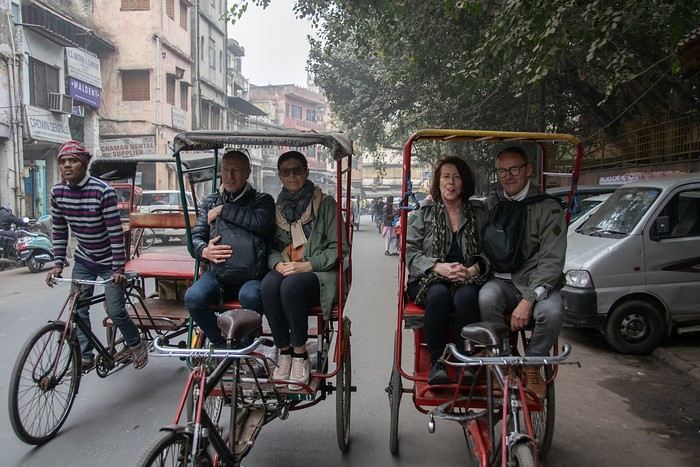
I’m adding my small contribution to the reopening celebration by posting this travel journal from India, made in January 2024. We’re 4 friends (2 couples), and we did a 3-week loop in Rajasthan, stopping by Delhi and Agra (which, as everyone knows, aren’t in Rajasthan 😛). Delhi - Agra - Jaipur - Bundi - Udaipur - Jodhpur - Jaisalmer - Delhi
We rented a car with a driver from Agra to Jaisalmer, 550 € for 14 days. https://chauffeurpriveeninde.com/fr/
We took the train from Delhi to Agra and the plane (Spicejet) from Jaisalmer to Delhi.
Most of the accommodations were booked on Booking before we left.
I’m sharing this story written by Richard and illustrated by me. We dedicate it to Nathalie and Bruno, our amazing travel companions.
Circuit d'un mois en auto avec chauffeur en Inde et Katmandou English translation pending
Bonjour,
Nous avons prévu un voyage en inde de la mi-octobre à mi-novembre. J'ai préparé un circuit et je voulais le valider ici sur le forum. C'est un voyage découverte pour l'essentiel et non pas spirituel de façon particulière:
Jour 1Delhi Jour 2Delhi Jour 3Delhi - Amritsar (Avion) Jour 4Amritsar Jour 5Amritsar - Katmandou (Avion) Jour 6Katmandou Jour 7Katmandou Jour 8 Katmandou - Delhi - Mandawa (Avion + Chauffeur et auto) Jour 9 Mandawa - Bikaner Jour 10Bikaner - Jaisalmer Jour 11Jaisalmer Jour 12 Desert Jour 13Desert - Jodpur Jour 14Jodpur Jour 15Jodpur - Ranakpur Jour 16Ranakpur - Udaipur Jour 17Udaipur Jour 18 Udaipur - Chittogarh - Bundi Jour 19Bundi - Jaipur Jour 20 Jaipur Jour 21Jaipur - fatehpur - agra Jour 22 Agra - Gwalior Jour 23Gwalior - Orchha Jour 24 Orchha - Khajuraho Jour 25 Khajuraho - Varanasi (Avion) Jour 26Varanasi Jour 27 Varanasi - Mumbai (Avion) Jour 28Mumbai Jour 29Mumbai
Le trajet sera fait en auto avec chauffeur
Je me demandais si c'était trop mais en même on voyage souvent à ce rythme. Concernant Katmandou, on pourrait le remplacer par Dharamsala mais on me dit que Katmandou est plus intéressant pour des visites.
J'attends vos commentaires
Jean
Nous avons prévu un voyage en inde de la mi-octobre à mi-novembre. J'ai préparé un circuit et je voulais le valider ici sur le forum. C'est un voyage découverte pour l'essentiel et non pas spirituel de façon particulière:
Jour 1Delhi Jour 2Delhi Jour 3Delhi - Amritsar (Avion) Jour 4Amritsar Jour 5Amritsar - Katmandou (Avion) Jour 6Katmandou Jour 7Katmandou Jour 8 Katmandou - Delhi - Mandawa (Avion + Chauffeur et auto) Jour 9 Mandawa - Bikaner Jour 10Bikaner - Jaisalmer Jour 11Jaisalmer Jour 12 Desert Jour 13Desert - Jodpur Jour 14Jodpur Jour 15Jodpur - Ranakpur Jour 16Ranakpur - Udaipur Jour 17Udaipur Jour 18 Udaipur - Chittogarh - Bundi Jour 19Bundi - Jaipur Jour 20 Jaipur Jour 21Jaipur - fatehpur - agra Jour 22 Agra - Gwalior Jour 23Gwalior - Orchha Jour 24 Orchha - Khajuraho Jour 25 Khajuraho - Varanasi (Avion) Jour 26Varanasi Jour 27 Varanasi - Mumbai (Avion) Jour 28Mumbai Jour 29Mumbai
Le trajet sera fait en auto avec chauffeur
Je me demandais si c'était trop mais en même on voyage souvent à ce rythme. Concernant Katmandou, on pourrait le remplacer par Dharamsala mais on me dit que Katmandou est plus intéressant pour des visites.
J'attends vos commentaires
Jean
Obtention du visa iranien par Trabzon (Turquie) puis transport maritime vers Oman (à vélo) English translation pending
bonjour
en vue d un tour du monde fin 2020 ( vive la retraite ) j aimerais renseignement sur obtention visa iranien je pense arriver par Trabzon puis direction Bazargan ou autre point de passage rejoindre Téhéran et direction sud pour aller territoire d Oman avant de rejoindre New Delhi par avion si des voyageurs ont fait a vélo un parcours semblable en partie ou complet
merci a tous
guy
en vue d un tour du monde fin 2020 ( vive la retraite ) j aimerais renseignement sur obtention visa iranien je pense arriver par Trabzon puis direction Bazargan ou autre point de passage rejoindre Téhéran et direction sud pour aller territoire d Oman avant de rejoindre New Delhi par avion si des voyageurs ont fait a vélo un parcours semblable en partie ou complet
merci a tous
guy
Voyage du West Bengal à Varanasi en passant par Bodhgaya English translation pending
Atteints par le virus "Inde" depuis notre premier voyage en 2013 , (seulement😮 ! ), nous y revoilà pour un 8° séjour ( du 14 au 28 janvier 2020).
Cette fois-ci notre périple nous amènera de Calcutta à Varanasi en passant par des petits villages du Westbengal et par Bodhgaya..
Nous prendrons ensuite notre vol de retour de Delhi à Nice .
Je me lance enfin pour rédiger mon premier cahier de voyage en remerciant aux passage tous ceux et celles qui ont alimenté ce forum en postant carnets, photos et commentaires, fort utiles à la préparation d'un voyage. Je demande d'avance un peu d'indulgence concernant ce récit, où quelques fautes vont peut-être s'immiscer par ci par là car, même si je vis en France depuis longtemps, ma langue maternelle reste l'allemand. Vous voilà prévenus 🙂!
Notre séjour débute à Kolkata ou nous resterons 2 jours entiers. Nous logeons dans un petit hôtel de College street . Le personnel est très sympathique et très serviable, notre chambre très propre, que demander de plus? Certes , c'est bruyant côté rue mais l'avantage d'un petit balcon nous permet d'observer tout le trafic d'en bas. Celui -ci ne s'arrête guère même pendant la nuit...Ceci dit, nous dormons très bien, le voyage a été long !
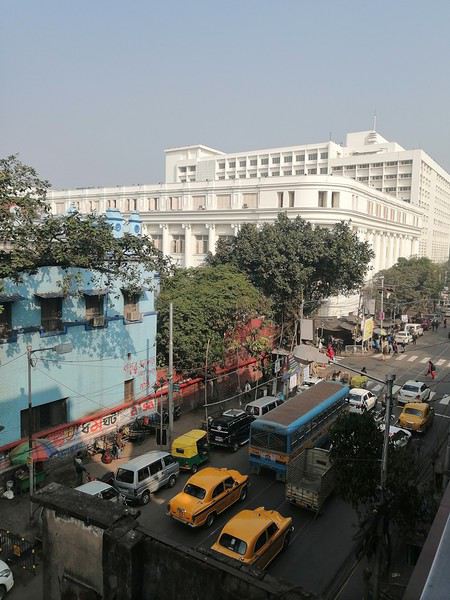
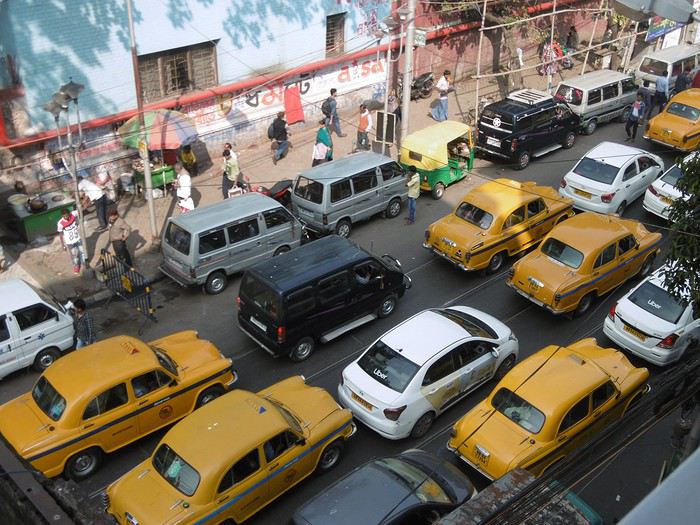
 Vue du balcon de l'hôtel

Je me lance enfin pour rédiger mon premier cahier de voyage en remerciant aux passage tous ceux et celles qui ont alimenté ce forum en postant carnets, photos et commentaires, fort utiles à la préparation d'un voyage. Je demande d'avance un peu d'indulgence concernant ce récit, où quelques fautes vont peut-être s'immiscer par ci par là car, même si je vis en France depuis longtemps, ma langue maternelle reste l'allemand. Vous voilà prévenus 🙂!
Notre séjour débute à Kolkata ou nous resterons 2 jours entiers. Nous logeons dans un petit hôtel de College street . Le personnel est très sympathique et très serviable, notre chambre très propre, que demander de plus? Certes , c'est bruyant côté rue mais l'avantage d'un petit balcon nous permet d'observer tout le trafic d'en bas. Celui -ci ne s'arrête guère même pendant la nuit...Ceci dit, nous dormons très bien, le voyage a été long !
Vue du balcon de l'hôtelPourboire d'usage pour un chauffeur en Inde English translation pending
Nous sommes rentrés d'Inde la semaine dernière avec une grosse surprise en fin de voyage avec notre chauffeur.
Nous sommes restés 28 jours avec lui à faire un tour complet du Rajasthan. Nous sommes passés par une agence de Delhi pour trouver ce chauffeur et nous avons strictement suivi l'itinéraire que nous avions prévu nous-mêmes avant d'arriver. Tout nous semblait bien se passer pendant ce circuit.
Puis est arrivé le dernier jour et le moment crucial du pourboire. Comme c'était notre premier voyage de ce type, nous nous étions renseignés sur internet pour savoir combien il était d'usage et raisonnable de donner. D'après les informations que nous avions pu trouver, nous avons décidé de donner 10 % du montant total payé à l'agence (46 euros par jour). Et là, énorme déception et colère (contenue) de notre chauffeur qui n'a pas pu se retenir, tout de même, de nous dire que ce montant était ridiculement bas par rapport à ce qu'il espérait.
Nous en sommes restés là, déçus lui comme nous de cette fin d'aventure en nous posant beaucoup de questions auxquelles nous n'avons pas de réponses.
Quelqu'un pourrait-il nous dire si 10 % vous semble correct ?
Merci de vos expériences pour nous aider à mieux comprendre.
Nous sommes restés 28 jours avec lui à faire un tour complet du Rajasthan. Nous sommes passés par une agence de Delhi pour trouver ce chauffeur et nous avons strictement suivi l'itinéraire que nous avions prévu nous-mêmes avant d'arriver. Tout nous semblait bien se passer pendant ce circuit.
Puis est arrivé le dernier jour et le moment crucial du pourboire. Comme c'était notre premier voyage de ce type, nous nous étions renseignés sur internet pour savoir combien il était d'usage et raisonnable de donner. D'après les informations que nous avions pu trouver, nous avons décidé de donner 10 % du montant total payé à l'agence (46 euros par jour). Et là, énorme déception et colère (contenue) de notre chauffeur qui n'a pas pu se retenir, tout de même, de nous dire que ce montant était ridiculement bas par rapport à ce qu'il espérait.
Nous en sommes restés là, déçus lui comme nous de cette fin d'aventure en nous posant beaucoup de questions auxquelles nous n'avons pas de réponses.
Quelqu'un pourrait-il nous dire si 10 % vous semble correct ?
Merci de vos expériences pour nous aider à mieux comprendre.
e-Visa Inde avec Udaipur comme destination finale English translation pending
Bonjour a tous,
Je me permets de demarrer une nouvelle conversation car je suis un peu perdue.
Nous devons faire notre visa pour l'Inde, et souhaitons passer par le e visa.
Le problème c'est que nous arrivons à udaipur, au départ de Paris, avec une escale à Delhi, et repartons au départ d'ahmedabad. Or l'aéroport d'udaipur n'est pas sur la liste des aéroports référencés. Pensez vous que nous pouvons néanmoins tenter de mettre delhi, ou bien cela peut nous poser quelques soucis a l'arrivée ?
Merci pour votre aide sur le sujet et bonne journée.
Aurelia
Aurelia
Voyage de 3 semaines au Rajasthan + Dharamsala English translation pending
Bonjour à tous,
Nous allons parti du fin avril/début mai avec ma copine en Inde et j'aimerai avoir vos avis sur notre trajet. A la base, nous y allons pour le mariage d'une amie qui aura lieux à Lucknow (pas loin d'Agra). Voici le détail de notre trajet: - J01: Arrivée à Delhi + visite Delhi - J02: Train pour Lucknow + visite Lucknow - J03: Mariage à Lucknow - J04: Train pour Agra à 15h (arrivée en soirée à Agra) - J05: Visite Agra - J06: Train pour Jaipur 14h50-18h50 - J07: Visite Jaipur - J08: Visite Jaipur - J09: Visite Jaipur + train pour Jaisalmer 23h45 - J10: Arrivée à 12H10 + visite Jaisalmer - J11: Visite Jaisalmer - J12: Visite Jaisalmer - J13: Visite Jaisalmer - J14: Train pour Jodhpur 00h55-06h25 + visite Jodhpur - J15: visite Jodhpur - J16: Voiture pour Ranakpur 10h00-13h30 + visite Ranakpur - J17: Voiture pour Kumbhalgarh + Udaipur - J18: Visite Udaipur + Forteresse de Chittorgarh - J19: Visite Udaipur + train pour Delhi 18h15-06h35 - J20: Visite Delhi - J21: Visite Delhi + avion pour Dharamsala at 14h30-16h50 - J22: Visite Dharamsala - J23: Visite Dharamsala - J24: Visite Dharamsala + avion pour Delhi à 16h10 + retour
Voilà, je me suis basé sur les différentes informations que j'ai trouvé sur le net pour le temps à passer dans chaque ville mais c'est compliqué de savoir s'il faut rester plus ou moins à chaque fois. Je pense que j'ai peut-être mis un jour de trop à Jaipur que je voulais déplacer à Jodhpur ou New Delhi.
Qu'est-ce que vous en pensez ? Je suis ouvert à tout changement :)
Nous allons parti du fin avril/début mai avec ma copine en Inde et j'aimerai avoir vos avis sur notre trajet. A la base, nous y allons pour le mariage d'une amie qui aura lieux à Lucknow (pas loin d'Agra). Voici le détail de notre trajet: - J01: Arrivée à Delhi + visite Delhi - J02: Train pour Lucknow + visite Lucknow - J03: Mariage à Lucknow - J04: Train pour Agra à 15h (arrivée en soirée à Agra) - J05: Visite Agra - J06: Train pour Jaipur 14h50-18h50 - J07: Visite Jaipur - J08: Visite Jaipur - J09: Visite Jaipur + train pour Jaisalmer 23h45 - J10: Arrivée à 12H10 + visite Jaisalmer - J11: Visite Jaisalmer - J12: Visite Jaisalmer - J13: Visite Jaisalmer - J14: Train pour Jodhpur 00h55-06h25 + visite Jodhpur - J15: visite Jodhpur - J16: Voiture pour Ranakpur 10h00-13h30 + visite Ranakpur - J17: Voiture pour Kumbhalgarh + Udaipur - J18: Visite Udaipur + Forteresse de Chittorgarh - J19: Visite Udaipur + train pour Delhi 18h15-06h35 - J20: Visite Delhi - J21: Visite Delhi + avion pour Dharamsala at 14h30-16h50 - J22: Visite Dharamsala - J23: Visite Dharamsala - J24: Visite Dharamsala + avion pour Delhi à 16h10 + retour
Voilà, je me suis basé sur les différentes informations que j'ai trouvé sur le net pour le temps à passer dans chaque ville mais c'est compliqué de savoir s'il faut rester plus ou moins à chaque fois. Je pense que j'ai peut-être mis un jour de trop à Jaipur que je voulais déplacer à Jodhpur ou New Delhi.
Qu'est-ce que vous en pensez ? Je suis ouvert à tout changement :)
Circuit francophone au Gujarat (Inde) English translation pending
aratBonjour, je suis a la recherche d'une agence réceptive sérieuse bon rapport qualité/prix pour circuit 15/20 jours Gujarat guide francophone, petite extension Mont Abu tout près, arrivée et retour Ahmedabadh via Delhi, merci.