last edited Dec 11, 2019
Health and Safety in Madagascar
Location Map of Madagascar
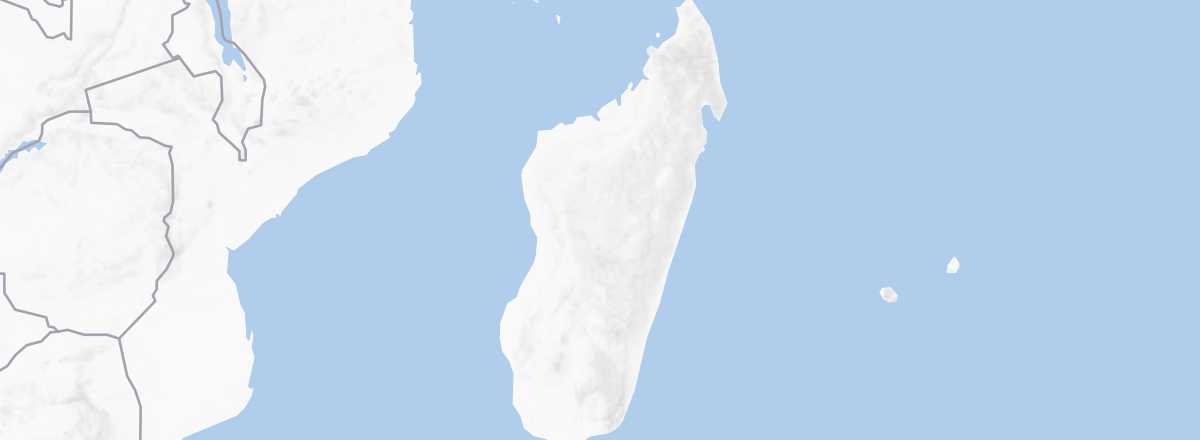 Madagascar
Open the interactive map
Madagascar
Open the interactive map
Official Recommendations
In France, both for individuals and professionals, the "travel advice" from the Ministry of Foreign Affairs regarding precautions for each country has legal value. A similar online travel advice system exists in several countries:
Health
It's best to be up to date with your vaccinations, starting with hepatitis A. As for the rabies vaccine, it is "officially" recommended only for long stays.
Diseases
Malaria
The main issue for travellers visiting Madagascar remains malaria. The disease, transmitted by a variety of mosquitoes, is indeed widespread with varying intensity depending on the location and time of year. While the central Highlands are little or not at all affected, the east and north coasts are at risk year-round, and the rest of the country during the rainy season. In all cases, you should plan for anti-malaria treatment, along with a good repellent, using a mosquito net to sleep, and covering your arms and legs at dusk when mosquitoes are most active.
Other Risks
As in other parts of the Indian Ocean, there are risks of dengue fever and chikungunya, also spread by mosquitoes. Once again, the northern and eastern parts of Madagascar are most affected due to the vegetation and high humidity.
Beyond that, occasional cases of plague and cholera occur in very remote and localized areas of the island. Rabies is also a risk from stray dogs or lemurs that may bite. Lastly, avoid swimming in freshwater due to the risks of bilharzia and other parasitic infections.
Hygiene
Good personal and especially food hygiene is essential. Avoid tap water and dishes or foods that do not appear fresh to prevent traveller’s diarrhoea. Also, make sure to stay hydrated and protect yourself from the sun in the hottest regions and seasons.
For personal hygiene, wash your hands regularly, treat any wounds, blisters, or fungal infections that could become infected due to heat and humidity.
Healthcare Facilities on Site
Local healthcare facilities are quite limited and often poorly equipped, even in the capital. Elsewhere, apart from major cities with hospitals, medical care is usually limited to a dispensary. As a result, serious cases typically require transfer to Réunion. Therefore, in all cases, in addition to good insurance, bring your own personal pharmacy and sufficient quantities of your medications.
Safety
Crime and Delinquency
This is one of the (major) problems in Madagascar, with a steadily increasing level of crime, delinquency (and police/customs extortion, which is thriving) affecting both property and people. Some incidents can be violent and do not necessarily spare tourists. Nowadays, large cities as well as certain tourist sites, beaches, and national parks are affected.
In short, without being paranoid, great vigilance is required, with the following key advice:
- Check the situation in the region, city, or place you plan to visit.
- Keep a copy of your identity documents with you (checks are always possible).
- Avoid walking alone at night. Use taxis for all your movements.
- Do not travel by car at night on the roads.
- If driving in the city, keep your car doors and windows locked at all times.
- Avoid wild camping at all costs.
- Do not flaunt wealth or items that might attract attention.
- Take precautions when exchanging money, doing so only in banks or authorized places.
- For excursions, always use official and licensed guides rather than people you meet by chance.
- Avoid shady situations, especially anything related to drugs and associated schemes.
- Above all, in case of aggression, do not resist or be confrontational, and always have something to "give" to your attackers.
Sex Tourism
Madagascar is one of the few destinations in the world where sex tourism is prevalent (along with STIs and HIV). The law theoretically punishes any relations with minors, as well as with prostitutes, with heavy prison sentences and/or fines. Additionally, the laws of countries like France, Belgium, or Canada allow for the prosecution of their nationals upon return if it is proven that they had relations with a minor in a third country.
While these laws are a step in the right direction, they also have a perverse effect: blackmail for "sexual harassment" is on the rise on the island. Specifically, young women threaten to accuse a man (usually a foreigner) of harassment if they are not compensated. This practice occurs in bars and clubs in cities, but it can also be triggered by opportunity, even if the people have never met before.
Scams and "Tourist" Harassment
Socio-Political Risks and Terrorism
While the country does not experience terrorism, violent socio-political unrest has been a recurring feature of Madagascar’s recent history. As always, it is essential to stay informed about the situation in the area you plan to visit. And, of course, stay away from any demonstrations or crowds.
In a slightly different context, a portion of the southeast of the country (east of Tulear) is a conflict zone between cattle thieves and law enforcement.
Climate and Nature
Heavy rains during the rainy season, as well as cyclones at the beginning of the year on the east coast, are the two major issues. These have a significant impact on daily life, particularly in terms of road closures and their effects on transportation. Otherwise, Madagascar is an island with "wild nature," so it’s best to be cautious, especially during treks.
Animals
It is primarily in the water where you will find animals that can pose problems. For example, some areas of the northeast coast (around Tamatave) are shark zones (and have strong currents). When diving, also be cautious of certain locally venomous fish or species. Finally, with varying levels of risk, there are crocodiles, scorpions, centipedes, leeches, sand fleas, stray dogs, aggressive lemurs, as well as mosquitoes and other flying pests that require repellent.
Foreign Consulates on Site
If you encounter problems while travelling abroad, your country’s consular services can assist you. It’s also worth noting that if you are a citizen of the European Union and your country is not represented, you can contact any other representation of an EU member state.
France
- Consulate General: 3 rue Jean-Jaurès, Ambatomena, BP 897101, Antananarivo. Tel.: +261 20 22 398 98 (24/7)
- Detached Chancellery of Diego Suarez: rue Beniowski, Diego-Suarez - Antsiranana. Tel.: +261 82 210 43. Open to the public Monday to Thursday from 8:30 AM to 12:30 PM by appointment.
Other Countries
Belgium
- Honorary Consulate: Groupe Fraise, Rue Ravonanahitriniarivo, Ankorandrano, BP28 Antananarivo. Tel.: +261 33 370 06 00.
Canada
- Consulate: Immeuble Fitaratra, Ankorondrano, Antananarivo 101. Tel.: +261 20 22 397 37.
Switzerland
- Embassy: Immeuble ARO (2nd floor), Lalana Solombavambahoaka, Frantsay 77, Antsahavola, 101 Antananarivo. Tel.: +261 20 226 29 97.