last edited Dec 11, 2019
Overview of Eastern Europe
Location Map of Eastern Europe
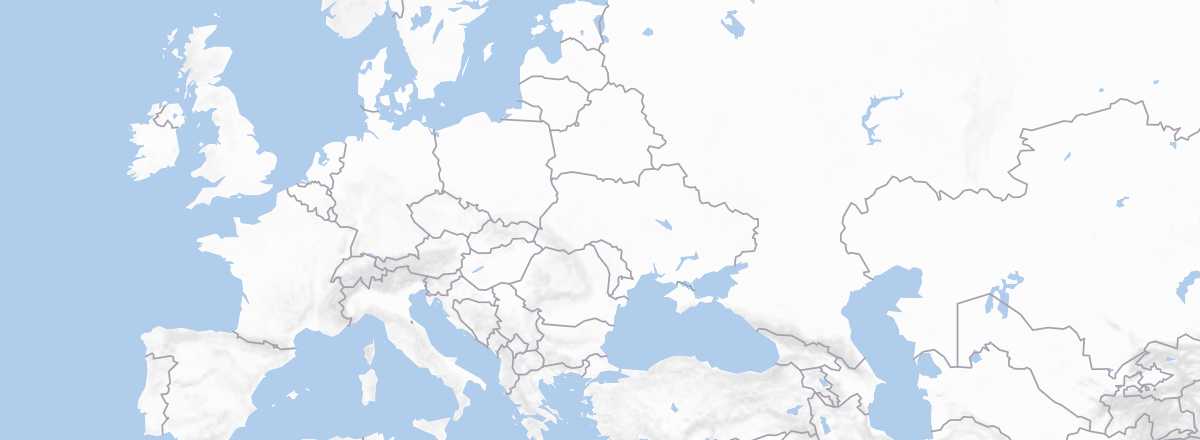 Eastern Europe
Open the interactive map
Eastern Europe
Open the interactive map
Quick Overview
Countries of Eastern Europe
- Albania: For decades, it was one of the most closed-off countries in the world. But since the 1990s, things have changed significantly, and Albania is gradually becoming a tourist destination as well. Even if the country’s image remains "mysterious" or even "alarming" for many people...
- Belarus: The last dictatorship in Europe, entirely dependent on Russia, remains a truly unique and off-the-beaten-path destination. It boasts a certain historical heritage, as well as numerous lakes and forests.
- Bosnia and Herzegovina: This country, whose name was—or still is—associated with the turbulent history of the former Yugoslavia in the 1990s, has now become a (nearly) ordinary tourist destination. Though still under-visited, Bosnia offers a rich cultural heritage and a pleasant natural environment.
- Bulgaria: For a long time, the country was the preferred holiday destination for Eastern Europeans during the Soviet era. Now, it attracts visitors from all over Europe thanks to its beaches, mountains, monuments, and above all, a cost of living and travel among the lowest in Europe.
- Cyprus: Still divided since 1974, with an independent southern part and a Turkish northern part, the island of Aphrodite—or more precisely, the Republic of Cyprus—is a popular tourist destination for its climate, beaches, natural environment, and historical sites.
- Northern Cyprus: Recognized by no one except Turkey, the Turkish Republic of Northern Cyprus is far less touristy than its southern neighbor, despite its heritage, beaches, and growing ecotourism sector.
- Croatia: The sea, hundreds of islands, mountains, and renowned lakes like those of Plitvice, along with a unique culture shaped by countless civilizations over the centuries—Croatia has all the makings of a major tourist destination. And indeed, it is.
- Estonia: A capital with a UNESCO-listed heart, historical sites, cultural heritage, numerous lakes and rivers, forests, and above all, the charm of the Baltic with its rugged coasts and offshore islands. In short, plenty to attract visitors and make Estonia the most visited of the three Baltic States.
- Greece: Despite the country’s "political ups and downs" in recent years, Greece remains one of the world’s top tourist destinations. The land of the Olympian Gods, rich in history and monuments, has long been synonymous with beaches and holidays for many people.
- Hungary: Though its landscapes—dominated by the vast grassy plain of the Puszta—may not be spectacular, Hungary has two major tourist draws: the expansive Lake Balaton and, above all, its beautiful capital, Budapest, a UNESCO World Heritage site.
- Kosovo: Little known as a tourist destination, it is the last European country to have emerged, in 2008. Like elsewhere in the Balkans, traces of its complex history are well preserved, along with some beautiful natural spaces.
- Latvia: A lively and stunning capital, Riga, whose center is also a UNESCO World Heritage site, castles and palaces of all styles, long pleasant beaches along the Baltic, forests, lakes, and rivers, plus opportunities for outdoor activities in both summer and winter—Latvia is a destination in its own right.
- Lithuania: The best-known of the three Baltic States, it is, like its neighbors, a great option for those seeking a European destination that combines cultural and historical heritage, beautiful nature, and some "relaxation-holiday" opportunities—all at a fairly reasonable price.
- North Macedonia: With its mountains, preserved nature, and many traces of its past, North Macedonia has strong tourist potential that is only waiting to be developed. For now, the destination remains "discreet," particularly among Western European travelers.
- Moldova: Almost entirely unknown to the general public, Moldova nevertheless offers a certain heritage, as well as a unique culture and traditions within a socio-political context that, admittedly, has not always been—and still is not—simple.
- Montenegro: Following in the footsteps of neighboring Croatia, this country, which regained independence in 2006, is increasingly positioning itself as a major tourist destination for many Europeans. Its seaside resorts, beautiful mountain landscapes, and especially its famous "Bay of Kotor" are surely part of the reason...
- Poland: From its sometimes painful history, the country has retained a rich heritage, a vibrant culture, and strong traditions. From its geography, a fairly attractive coastline, but also countless lakes, rivers, and forests ideal for outdoor activities. All of this makes Poland one of the most interesting destinations.
- Czech Republic: At the heart of Europe, the destination is still too often reduced, for many, to its capital, Prague—a truly one of the most beautiful cities in Europe. Yet there is so much more to see and do in the country.
- Romania: Like most of its neighbors, Romania offers a great balance for those seeking an affordable destination where a rich—if not always easy—history, a still-vibrant culture and traditions, and well-preserved nature all come together.
- Serbia: Despite a turbulent past, this land, always at the crossroads of religions and civilizations, boasts a vast cultural and historical heritage, as well as many natural spaces waiting to be discovered.
- Slovakia: Less known as a tourist destination than its Czech neighbor, Slovakia is nonetheless home to a rich cultural heritage, including several UNESCO-listed sites, as well as remarkable natural areas like the Tatra Mountains.
- Slovenia: Sea, mountains, countryside, and a certain historical heritage—the small country of Slovenia, though less known than its Italian and Croatian neighbors, remains an interesting tourist destination for all types of travelers.
- Turkey: A major tourist destination with its ancient ruins, seaside resorts, and unique natural sites like Cappadocia, Turkey has long attracted millions of visitors... at least until the country descended into authoritarianism amid sharp political tensions.
- Ukraine: In conflict with its Russian neighbor for several years, the country—and particularly the Crimean region—has seen its tourism plummet. Nevertheless, western Ukraine still offers beautiful discoveries, starting with cities like Lviv and its capital, Kyiv.
Tourism
| Visitors (in millions) | including French | Main countries of origin | |
|---|---|---|---|
| Albania | 5.340 (2018) | 30,000 (2012) | - |
| Belarus | 1.106 (2017) | - | Russia, Latvia, Lithuania, Ukraine, Germany, Poland... |
| Bosnia and Herzegovina | 1.053 (2018) | - | Croatia, Turkey, Serbia, Slovenia, Italy, South Korea, Poland... |
| Bulgaria | 9.273 (2018) | 195,500 (2016) | Romania, Turkey, Greece, Germany, Russia, North Macedonia, Serbia... |
| Cyprus | 3.939 (2018) | 42,500 (2016) | United Kingdom, Russia, Greece, Israel, Germany, Sweden, Ukraine... |
| Croatia | 16.645 (2018) | 495,000 (2016) | Germany, Slovenia, Austria, Italy, Poland, Czech Republic, United Kingdom, France... |
| Estonia | 3.234 (2018) | 22,000 (2012) | Finland, Russia, Sweden, Germany, United Kingdom... |
| Greece | 30.123 (2018) | 1,522,000 (2015) | North Macedonia, Germany, United Kingdom, Bulgaria, France, Italy, Turkey, Poland... |
| Hungary | 17.152 (2018) | 168,000 (2016) | Germany, United Kingdom, Austria, Romania, United States, Czech Republic, Poland... |
| Kosovo | - | - | Germany, Italy, United States, United Kingdom, Croatia... |
| Latvia | 1.946 (2018) | 39,000 (2012) | - |
| Lithuania | 2.825 (2018) | 26,000 (2014) | Germany, Belarus, Russia, Poland, Latvia, Ukraine... |
| North Macedonia | 0.707 (2018) | 7,600 (2015) | Turkey, Serbia, Greece, Bulgaria, Netherlands, Albania, Kosovo... |
| Moldova | 0.160 (2018) | - | Romania, Ukraine, Russia, Bulgaria, Italy, Turkey, Israel... |
| Montenegro | 2.077 (2018) | 36,000 (2013) | - |
| Poland | 19.623 (2018) | 240,000 (2013) | Germany, Ukraine, Belarus, Lithuania, United Kingdom, Russia... |
| Czech Republic | 10.160 (2017) | 281,000 (2016) | Germany, Slovakia, Poland, United States, United Kingdom, Russia, Italy... |
| Romania | 2.797 (2018) | 145,500 (2016) | Germany, Israel, Italy, France, United Kingdom, Hungary, United States, Poland... |
| Serbia | 1.711 (2018) | 24,300 (2014) | Bosnia, Bulgaria, Turkey, Montenegro, Croatia, Slovenia, Germany... |
| Slovakia | 2.162 (2017) | 42,300 (2016) | Czech Republic, Poland, Germany, Hungary, Austria... |
| Slovenia | 4.425 (2018) | 67,600 (2012) | Italy, Austria, Germany, Croatia, South Korea, United Kingdom, Serbia... |
| Turkey | 45.768 (2018) | 555,000 (2016) | Russia, Germany, Bulgaria, Georgia, United Kingdom, Iran, Ukraine... |
| Ukraine | 14.207 (2018) | 64,800 (2012) | Moldova, Belarus, Russia, Hungary, Poland, Romania... |
(): Reference year - Sources: UNWTO and others