Décidemment, moi qui me plaint de trop d'écrans en tout lieu, il y a quand même des lectures qui font plaisir ( ou déplaisir ) à lire ...... surtout quand ce sont des vérités comme on dit " bonnes à entendre " .......
Parcoureurs sans frontières . . .
et sans scrupules
Touriste est un mot qui devient laid. Et lorsque «masse» est associé à tourisme, ce n'est plus laid, c'est horrible ! Ce mot passe lentement du côté de ces vieux mots qu'on n'emploie plus, car ils ont pris, au fil des ans, une tournure péjorative. Tout comme les hôtels ont tendance à disparaître au profit des ressorts et les spas remplacent déso...rmais les vulgaires salons de massage, un autre mot enverra bientôt « tourisme de masse » aux oubliettes du politiquement correct.
On ne parle plus de tiers-monde, mais de pays émergents, on ne dit plus sourd, mais malentendant et on ne dira plus touristes, mais pourquoi pas, «parcoureurs». Bravitude vient bien de remplacer bravoure ! Un parcoureur, c'est quelqu'un qui parcourt le monde.
En 1950, ils étaient 25 millions à s'adonner aux délices du farniente et du dépaysement lointain. Cinquante ans plus tard, ils étaient 700 millions à sillonner la planète et, si les prévisions de l'Organisation mondiale du tourisme (OMT) se vérifient, ils seront un milliard en 2010 et 1,6 milliard en 2020. C'est demain ! C'est terrifiant !
Aujourd'hui, avec plus de 12% du PIB mondial et 200 millions d'emplois, le «parcourage» est devenu la première industrie planétaire. Une compagnie aérienne low cost a pour slogan: «Maintenant tout le monde peut voler» ! Et si tout ce monde peut voler, il se met à voyager, à parcourir. C'est épouvantable ! Car le touriste de masse est un intrus doublé d'un malotru !
Un intrus, car il débarque chez vous sans trop de respect pour les plates-bandes de votre jardin. Et un malotru car il y importe ce dont il a besoin et transforme ainsi le paysage. En quelques années, le tourisme de masse a défiguré les lieux qu'il a visités, car ces derniers s'adaptent à ses désirs.
Un touriste, à Angkor en 1995, c'est un fait-divers. Personne n'y prête attention. Près de deux millions aujourd'hui, c'est un problème qui a des répercutions sur de nombreux secteurs, à commencer par l'environnement. La petite bourgade tranquille est devenue un gigantesque parc à touristes pressés. Et les rues, des avenues à bus climatisés.
Le parcoureur solitaire est un minuscule engin à aplanir les différences, un petit appareil à niveler le monde. Sept cents millions de touristes, c'est un immense rouleau compresseur ! Un engin qui écrase sans vergogne les cultures qu'il visite.
Près de deux milliards, c'est une menace aussi grande que le réchauffement climatique. Mais personne ne s'en émeut.
Même pas Nicolas Hulot ! Le touriste parcoureur est la main armée de la mondialisation. Sans touristes, l'Internet aurait mis davantage de temps pour connaître une telle évolution. Les MacDonald et le Coca Cola seraient peut-être (on peut rêver) restés chez eux !
Le touriste a besoin, à l'autre bout du monde, de ce qu'il a chez lui.
Sinon, il n'est pas content
«Comment, vous n'avez pas l'ADSL dans votre hôtel ? Mais c'est inadmissible !», s'insurgeait hier un quidam parcoureur, outré.
Avec son numérique il photographie l'exotique paysan dans les rizières et sa cahute. Et la fille du rustre, marchande des temples, qui n'a, chez elle, ni électricité ni eau courante, lui vend (beaucoup plus cher qu'à la Fnac), la carte memo-stick 2 gigas pour son appareil photo Sony.
Le parcoureur ne voyage pas vraiment. Il s'endort dans son avion, y mange, s'y ennuie durant 10 ou 20 heures, se comporte comme un gougeât avec les hôtesses, fait la queue à l'immigration et, sitôt débarqué, cherche à retrouver ce qu'il a laissé chez lui…. En moins cher!!.
Rarement, il tente de comprendre et d'accepter la différence. Il se déplace d'un point à un autre, à plus ou moins grande vitesse, de plus en plus souvent en groupe. Les temples d'Angkor ne se visitent plus guère, non, ils se prennent en photo.
Le quidam passe plus de minutes le dos aux pierres, pour être sur la photo, que de face, à admirer les bas-reliefs.
Le Caucasien prend certes un peu plus de temps que le Japonais qui survole à Mach 2 les vieux cailloux, poursuivit par les nuées de Coréens, comme des nuages de crickets affamés sur un champ de cannes à sucre. Mais tout est question de nuance.
Le Cheap Charlie
Il considère qu'ici tout doit être «pas cher» puisque le pays est très pauvre.
Or, le Cambodge est cher ! Un chauffeur de taxi à disposition pour une journée entière pour moins de 15 euros, c'est hors de prix pour certains.
Un tuk-tuk avec chauffeur, 8 euros pour 12 heures de travail quotidien, c'est cher également pour le touriste qui paye le même prix pour une bière en terrasse d'un bistrot parisien sans sourciller, se bat pour les 35 heures et vote Besancenot ! Dans son pays. Mais ce n'est pas pareil.
En voyage, on essaye toujours de vous voler. C'est bien connu !
Ainsi donc, je fais ici ce que je ne ferai jamais chez moi. Je suis fatigué d'enchaîner les temples comme d'autres les perles, je rentre à mon hôtel dans l'après-midi. Le chauffeur, à qui j'ai loué les services sur la base de la journée, me demande de payer le plein tarif. «Il veut me voler, le bougre. Mais, je négocie et je ne lâcherai pas». Sur les pistes de ski, je prends mon forfait journée, je jette les gants à midi, épuisé, mais jamais je ne vais me plaindre au directeur de la station pour me faire rembourser la moitié de mon forfait.
Le parcoureur débarque dans un hôtel. La chambre ne lui plaît pas. Il décide de ne pas payer la course depuis l'aéroport puisqu'il ne reste pas là. Lorsqu'il sort à la mauvaise station de métro, il ne lui vient jamais à l'idée de se faire rembourser le ticket par la RATP... Car, dans les pays riches, tout se paye en avance, que ce soit le forfait de remontées mécaniques ou le ticket de métro. Dans les pays pauvres, on fait confiance... Pour un temps encore.
Tout doit absolument se marchander! La chose est particulièrement vraie pour le parcoureur sac à dos. Il ne cherche qu'à découvrir ce qui est bon marché ! Uniquement. C'est sa seule quête. Les guest-houses pas chères, les restaurants chers, les bons plans pour aller d'un point à un autre, etc. Et il veille, il a l'œil, il sait que l'indigène tentera tout pour le faire trébucher dans cette quête du «pas cher». Alors, il marchande !
L'Asie est une des régions, comme toutes celles pauvres et touristiques, où l'on doit marchander tout, partout, et de manière toujours indécente. Le parcoureur ne débat jamais le prix de son steak chez le boucher, pas plus qu'il ne négocie sa nuit dans un hôtel F1 à 35 euros pour une chambre avec vue sur l'échangeur du périf' nord et salle de bains commune en plastique au bout du couloir. Il ne peut pas, certes, car il s'adresse à une machine dans laquelle il entre sa carte bancaire et ne voit jamais le patron des lieux.
Mais quand ce parcoureur se paye le voyage de sa vie à l'autre bout du monde, il marchande ! A commencer par le tarif de sa chambre, qu'il veut à l'étage et pas au rez-de-chaussée, ou le contraire et loin du couloir. Mais il n'est pas le seul: «Nous travaillons aux Nations Unies à Jakarta et nous ne viendrons chez vous que si vous consentez à nous faire une bonne ristourne!» Les expatriés professionnels, avec leur bataillon de nourrices, de femmes de ménage et de cuisinières, ne se comportent pas mieux que le VRP vendeur d'aspirateurs en banlieue parisienne.
Une fois enfilé l'uniforme du parcoureur, on entre dans le troupeau. Impossible d'y échapper. Mais le VRP, lui au moins, a une excuse: il a lu pendant six mois ce guide de voyage censé conseiller ces nouveaux routards qui n'en sont plus et qui ressasse les clichés du genre: «Marchandage: une vieille tradition asiatique à laquelle vous n'échapperez pas. Tous les prix se discutent…» Ainsi donc, le serpent se mord la queue: comme le touriste va forcément discuter, le prix est augmenté dès le départ, car il sera «bargainé» comme disent les Québécois.
« Cela ne nous est jamais arrivé ! »
Et puis, il y a les gens qui savent. Ceux-là commencent leurs phrases par «nous qui voyageons beaucoup», signifiant en fait, «nous qui ne voyageons jamais». Ils savent tout: que le transfert de l'aéroport à l'hôtel est toujours gratuit, «dans tous les pays que nous avons faits», que l'utilisation d'Internet est gratuite dans tous les établissements hôteliers du monde entier, que le petit déjeuner peut se prendre à 4 heures du matin (avant d'aller voir se lever le soleil sur les temples), que, si la machine refuse leur carte bancaire, c'est forcément la faute de la machine, car «nous qui voyageons beaucoup, c'est la première fois que...»
Faudra-t-il donc écrire un guide sur le comportement des parcoureurs? Non pas de ces niaiseries qui vous disent où dormir et où manger pas cher.
Un vrai guide expliquant, par exemple, comment se comporter en avion, arrêter de s'agripper au siège de devant pour se lever ou s'asseoir, ne pas se précipiter dans la coursive dès que l'avion a posé ses roues sur le tarmac. Aider sa voisine à descendre son sac au lieu de l'écraser du sien.
Mais qui, aujourd'hui, veut chercher à comprendre et non à imposer, à apprendre et non à dicter, à donner et non à profiter ?
L'art du voyage se meurt, tout comme dépérit le respect des cultures et disparaît la curiosité. Faut-il enseigner désormais tout cela à l'école, entre l'éducation sexuelle et les cours de civisme ?
Mais j'y pense, le civisme ne s'enseigne plus.
Et si c'était le monde qui changeait trop vite ? Et si ces comportements de touristes n'étaient que le reflet d'une évolution des sociétés vers un égoïste repli sur soi ?
Voyager non plus pour apprendre mais pour confirmer les clichés que l'on a de l'autre.
Cela voudrait dire que l'individu est malade et non le seul touriste!
Frédéric Amat
Si vous aves tout lu, c'était bien non ...... ? 😛 Merci Frédéric de nous remettre d'aplomb .......
wow. merci pour ce très beau texte. A lire et relire. A s'attarder sur les passages révélateurs de certains comportements de merde de la part de trop de touristes. A rire et a brailler. Et oui, moi aussi, j'adore PP ... pour les sourires surtout comme Alan dit, qui sont plus vrais qu'ailleurs. Du moins, on aime le croire. Il y a du plaisir a marchander, c'est la règle dans plusieurs pays et c'est même une marque de respect mutuel. Mais il ne faut jamais perdre de vue que le pauvre bougre qui nous vend son travail est toujours désavantagé par rapport a nous. La police, la loi, le système ne sont pas la pour le protéger. Et a la fin du processus de marchandage, il doit pouvoir vivre et faire vivre sa famille. Gagner sur un pauvre, sur une personne sans pouvoir de négociation, c'est abuser, c'est perdre sa dignité en voyage plutôt que de voyager avec dignité.
Et puis, il y a les gens qui savent. Ceux-là commencent leurs phrases par «nous qui voyageons beaucoup», signifiant en fait, «nous qui ne voyageons jamais». Ils savent tout: que le transfert de l'aéroport à l'hôtel est toujours gratuit, «dans tous les pays que nous avons faits», que l'utilisation d'Internet est gratuite dans tous les établissements hôteliers du monde entier, que le petit déjeuner peut se prendre à 4 heures du matin (avant d'aller voir se lever le soleil sur les temples), que, si la machine refuse leur carte bancaire, c'est forcément la faute de la machine, car «nous qui voyageons beaucoup, c'est la première fois que...»
Le "lever de soleil" est la tarte à la crème du voyage actuel. Je me demande si tous ces gens qui se font réveiller pour les voir, et qui inondent leurs blogs de photos de levers de soleil savent que ça existe aussi chez eux....
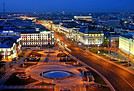
Angkor .... La petite bourgade tranquille est devenue un gigantesque parc à touristes pressés
--
Le centre, là où se concentrent les bars et les restaurants bidons « cuisine khmère » (tiens, mon œil !), j’ai trouvé ça débile à en pleurer. 😕
Une blague:
Un Japonais revient d’un voyage. De retour chez lui, on lui demande : « Alors, c’était bien ce voyage ? ». Réponse : « Je ne sais pas. Je n’ai pas encore téléchargé mes photos ».
😉Je suis allé à Siem Reap en 2012...........Bourgade tranquille quand j'y étais et encore plus tranquille pendant 7 jours dans les temples.
je ne dis rien sur les bars, je ne les connais pas.
Néanmoins, je ferais 1 nouveau séjour là bas tranquillement, suffit de choisir la bonne période sans s'étaler et se répandre partout sur les forums en stéréotype du voyageur .
J’y étais en octobre 2011. Bien question niveau des eaux dans le lac, puisque c’était vers la fin de la saison des pluies. Peut-être pas la période la plus tranquille? Mais alors qu’est-ce que ça doit être entre novembre et février !
Frédéric Amat ne trouve pas une seule petite qualité aux parcoureurs et cheap charlies ....un milliard de complets abrutis , eux .
Tandis que nous, Wuouahh!!
"La vie est un voyage qui se vit au présent ou jamais ...."
Texte très vrai. Que l'on soit celui qui consomme un cadre idyllique et cueille les monuments sans vouloir changer ses habitudes, ou le backpacker qui a tendance à se croire tout permis en tant que "vrai voyageur", on ne doit pas oublier que l'on entre dans l'espace de l'autre.
De toutes les situations décrites je crois que le coup du marchandage à l'extrême pour se féliciter de ses bonnes affaires est ce qui me déplaît le plus. J'ai été plutôt mal à l'aise dans les souks de Marrakech avec un ami qui prenait une attitude assez arrogante pour marchander. OK à Marrakech on dit que cela fait parti du "jeu", mais il y a des limites. Personnellement je proposais un prix inférieur, le vendeur me faisait une autre proposition ou non et puis c'était plié. Je trouvais ça ridicule de m'acharner pour baisser le prix de 30 dirhams alors que je n'étais vraiment pas à ça près. Et tout de suite on me dit "tu te fais pigeonner, dans le souk faut marchander ferme, c'est la culture, franchement tu fais de sales affaires". Donc il faut harceler les marchands pour obtenir le label "bon voyageur" et échapper à la terrible catégorie du "touriste de base qui est un gros pigeon"? Ce n'est pas du tout ma vision..
L'autre chose qui m’insupporte, ce sont les gens qui arrêtent dans la rue une petite vielle bien typique ou le bambin démuni pour tirer le portrait qui apportera la caution "rencontre des locaux" dans l'album souvenir. Faire le portrait d'une personne avec qui l'on a passé un beau moment (même quelques minutes) et dont on souhaite garder une trace je comprend, mais prendre quelqu'un à la volée dans la rue, même en lui demandant l'autorisation, je trouve cela bizarre. Si un japonais avec qui je n'ai rien partagé veut me prendre en photo en bas de chez moi, j'aurais la désagréable impression d'être une bête de cirque.
Bref, on a tous des choses qui nous agacent comme cela et certainement que je donne matière à agacer moi aussi. Mais c'est bien de se rappeler à la question du respect des locaux quand on voyage. Est-ce que j'accepterais que l'on vienne se comporter comme cela "chez moi"?
Frédéric Amat ne trouve pas une seule petite qualité aux parcoureurs et cheap charlies ....un milliard de complets abrutis , eux .
Tandis que nous, Wuouahh!!
Il expose certaines situations où selon lui le respect des locaux n'est pas toujours pris en compte. On a tous un abruti en nous, on a tous nos mauvais comportements, cet article c'est juste une prise de conscience à ce niveau, ça ne fait pas de chaque touriste un abruti complet.
Je ne voulais plus intervenir dans cette discussion, mais tu as dis le mot juste qui est " respect " ..... sans doute un mot que l'on galvaude de plus en plus, ce qui est bien dommage ...
Pour Frédéric Amat il a en effet la science des mots á employer pour nous montrer nos lacunes au travers de situations que parfois on a tendance á minimiser ou á réduire par rapport á la situation de " faiblesse " des personnes rencontrées .... lá encore dommage de ne pas regarder dans le miroir de nos propres faiblesses basés sur nos ignorances et nos arrogances ... merci Frédéric de le faire pour nous ...
Depuis que j'habite au Cambodge, et á Phnom Penh précisément, il y a une chose que je m'applique á faire chaque jour, c'est de sourire aux locaux constamment et á me dire que j'ai bien de la chance qu'ils m'accueillent auprés d'eux, moi l'étranger avec mes défauts importés d'ailleurs .... car par dessus tout je leur dois justement ce respect pour avoir cette chance de les côtoyer chaque jour ... et dans le respect mutuel on a que le bonheur de profiter du quotidien .... et cela j'en abuse ..
Si je ne conteste pas la forme, les qualités littéraires du texte coup-de-gueule de Frédéric Amat, je suis moins convaincu par son fonds, à charge, sans mesure et pessimiste.
1 milliard de voyageurs aériens n'équivaut pas à 1 milliard de touristes mais inclut aussi les déplacements à but familial, professionnel etc...
Confusion de l'auteur.
S'il existe un caractérisé par un "standard" universel, d'origine Occidentale, de comportements touristiques, n'est-il pas exagéré d'assimiler chaque touriste à un ? Il n'existe pas qu'une "famille" de voyageurs.
Pourquoi fustiger le ?
Pourquoi nier/reprocher au touriste le désir/goût/curiosité de l'Ailleurs/Autre ? et le réduire à vouloir chercher à l'Etranger ce qu'il a chez lui ?
Manque de respect de l'auteur.
Sa démonstration est caricaturale et même anachronique.En 2013 le Monde se désenclave et l'idée que chaque humain est citoyen du Monde avant d'avoir une "nationalité" se répend.N'est-ce pas une belle, une grande idée?
Pessimisme de l'auteur.
Ne peut-on pas, positivement, considérer que le , avant d'uniformiser le Monde, est une chance/un vecteur d'échange, de compréhension, bref pour la Liberté et la Paix ?
Par ailleurs, si je peux me permettre, je pense que le nombre de sourires que l'on "récolte" est fonction de celui que l'on offre, partout dans le Monde, quelque soit la lattitude.Les Cambodgiens ne sont pas intrinsèquement plus souriants que les Français.Faîtes le test, vous verrez!!!
Ouvrons nos coeurs et nos consciences et réjouissons-nous d'aller au paradis de l'Autre, en voyage.Laissons-nous, chacun, gagner par l'Optimisme, la Confiance, la Joie, plus productives que le Pessimisme, la Défiance, la Morosité.
Sa démonstration est caricaturale et même anachronique.En 2013 le Monde se désenclave et l'idée que chaque humain est citoyen du Monde avant d'avoir une "nationalité" se répend. N'est-ce pas une belle, une grande idée?
Pessimisme de l'auteur.
Sa démonstration ne fait pas dans la demie mesure mais c'est le but. Il ne proscrit pas le voyage, mais cherche à éclairer certaines attitudes. Ca appelle juste à remettre en question notre comportement à tous qui peut-être parfois être insultant envers ceux qui nous accueillent. Se croire supérieur aux locaux, ne pas se soucier de polluer un espace qui n'est pas notre quotidien, ne pas faire l'effort d'adapter son comportement pour satisfaire certaines coutumes. C'est des comportements que l'on peut tous adopter à un moment ou un autre et il convient d'en être conscient, je ne me sent pas pour autant insulté par son texte.
Et l'idée que l'on soit tous citoyens du monde n'est pas incompatible avec ces notions de respect, elles en étendent même le périmètre puisque cela vaut aussi bien pour le cambodgien que pour notre voisin.
N'empêche que l'auteur a bien fait une caricature des voyageurs , ne parlant même d'aucune exception possible . Comme l'a bien souligné Yellowmop, il ne fait aucune différence entre le touriste irrespectueux, le touriste respectueux dont il ignore complètement l'existence, celui qui se déplace pour raisons professionnelles, et celui qui rend visite à la famille .
Donc une vision très bornée, très limitée .
On reconnaît bien sûr dans sa description certaines scènes auxquelles nous avons été témoins et certains s'y reconnaîtront quelques fois .
J'aimerais toutefois un texte plus nuancé, la réalité étant très rarement noire ou blanche, mais passant par toutes les nuances de gris
"La vie est un voyage qui se vit au présent ou jamais ...."
Je suis tout à fait d'accord avec vous, du début à la fin de votre analyse (le message d'alerte de l'auteur, les notions de respect et de responsabilité individuelle...).
Pour autant, si je ne remets pas en question et déplore les comportements qu'il souligne, je trouve son propos radical, caricatural, excessif, simpliste et trop pessimiste.
Par ailleurs, si je peux me permettre, je pense que le nombre de sourires que l'on "récolte" est fonction de celui que l'on offre, partout dans le Monde, quelque soit la lattitude.Les Cambodgiens ne sont pas intrinsèquement plus souriants que les Français.Faîtes le test, vous verrez!!!
Juste de cela je peux être sûr pour avoir pratiquer les deux formes de sourire ...... 😉🙂
Les Cambodgiens sourient naturellement et cela chaque jour que leurs dieux leur donnent et quoiqu'il advienne de leur vie á venir ... ils ont cette conception de la fatalité de l'existence qui est quasi naturelle chez eux, et n'empêche nullement de sourire au contraire de mes contemporains francais vite contrariés par les petites choses de l'existence ....
Mais désolé je suis hors sujet .... 🙂 et surtout intarrissable sur le Cambodge et les khmers ..... 😉
tellement d'accord avec Alan. J'ai visité et travaillé dans plusieurs pays et bien sur, j'ai vite réalisé que lorsque l'on sourit soi-même, ca aide a obtenir en retour l'équivalent. Dans la même veine, lorsque l'on respecte les locaux (leur culture, leurs habitudes de vie, leurs croyances), en général, ils vous le rendent bien. Mais sur le sujet des sourires, le Cambodge ne se compare pas vraiment a la France ni a l'Europe en général, ni même a d'autres pays asiatiques comme la Chine ou le Japon. Le Cambodge est un petit pays qui a une population relativement jeune (ils ont balancé une partie de leurs ainés de l'autre coté plus rapidement que cela se ferait normalement) et ils ont une culture de gratitude envers la vie malgré que celle-ci soit assez difficile pour plusieurs. C'est le pays ou je me sens le mieux accepté par les locaux et je me sens bien parmi eux. Je rajeunis chaque fois que je peux y mettre les pieds.
Je comprends votre point de vue et celui de notre camarade Québecois, mais que voulez-vous, je ne me referai pas:pour moi l'Autre est, à priori, un Ami et je crois en la force universelle du sourire-du-coeur.
J'aimerais beaucoup, Alan, connaître votre sentiment à propos de mes réserves sur le texte que vous avez porté à notre réflexion.
Et voilà, pour la 10ème année consécutive le demi marathon d'Angkor va avoir lieu au mois de Novembre... coureurs en shorts fluos, banderolles publicitaires,…
Ou seriez vous si vous pourriez etre ailleurs que devant votre écran d'ordinateur a lire ce message sur ce forum??? Moi je serai sans doute très très loin...…
Matin de vent, matin de pluie, matin de froid L'automne dénude les branches et fait s'envoler les oiseaux Nuages coléreux et feuilles tourbillonnantes Sans le…
Dés que je reviens en France, et bien je me dis "que c'est mieux-ailleurs". Là où nous sommes allés, je ressens une espèce de legèreté de vivre, moins…
J'ai effectué un voyage Paris (CDG)-Casablanca fin juin avec la nouvelle compagnie Airarabia. Au retour, à l'aéroport Mohamed V le 4 juillet, avant le…
Hi everyone, just this once I’m not posting for a travel story, but to share a thought for Venezuela.
If you didn’t know—since it’s not making headlines—the country was hit by two 7.5-magnitude earthquakes last week. Over 2,200 people have died, more than 50,000 are missing, and some coastal towns have been completely destroyed.
Maybe when the scale of the humanitarian crisis becomes clear, our media will cover it a bit more... especially since earthquakes with this many casualties usually make the front page, but there’s been nothing in France.
So here’s a thought for this country, which, whatever you think of its politics, is a true jewel of South America, both for its landscapes and its people.
hi there
I’d like to invite you to discover my coastal province in central Vietnam: Quang Ngai.
This year, my province has really improved its infrastructure—mountains, countryside, and sea are all authentic here.
No harassers or thieves, and no Russians either.
A local lunch costs around 1 €.
A *** hotel room is about 25 €, and you can find hotels right on My Khe Beach.
We have a specialty: *banh xeo*—10 crepes for just 1.5 €.
You can rent motorbikes to explore the province and maybe visit the many ethnic minorities.
I live here—I’m not selling anything, but I can help if needed (my father-in-law is a traditional Vietnamese doctor and he’s very skilled).
Hi everyone! 😉
I’m Typhaine, 35 years old. Five years ago, I left France for a solo round-the-world trip—no planes, just a van, hitchhiking, cycling, and even a canoe in the Amazon! Today, I work as a naturalist guide in Argentine Patagonia.
Wherever I go, my compass stays the same: observing and photographing wildlife, which I deeply admire and respect.
My project: I’d love to share this experience through a sustainable, authentic, and immersive nature tourism initiative. But to build something meaningful, I need to understand how other nature enthusiasts experience their own adventures.
If you:
Are over 20 years old
Have a true passion for Nature
Have already taken at least one trip lasting more than 3 nights (in your country or abroad) in your life
Promise: I’m not selling anything, this isn’t marketing. Your answers are 100% anonymous and will only help me shape this wild project.
A huge thank you to everyone for your help and kindness! Looking forward to chatting in this thread 😛
(Dear admins, this is purely a collaborative effort for my project study, with no commercial purpose. Thank you so much for your support!)
Photo: Grizzly Bear (Ursus arctos horribilis), female on the left and her cub on the right. Photo taken by me in Alaska, Denali National Park.
It’s something we often notice in this forum—and many others—this behavioral shift.
A long-time member, or even a new one, asks a question.
They get one or more answers, some brief, some detailed, and then... nothing???
Not even a simple thank you!!!
From what I’ve gathered, if the answers don’t align with what they wanted to hear, it seems natural for the asker to just disappear!! 😕
Unless—(and I fear this is the case)—basic politeness is no longer part of our society????
I spent 3 weeks in Bali last summer (+ 3 nights on Gili Meno and a day trip to Kawah Ijen in Java). So I wanted to see what ChatGPT could suggest for comparison...
Here’s the prompt I gave:
"You’re a local expert guide for Bali.
- Plan a 20-day itinerary for Bali with a side trip to Gili Meno and a day trip to Kawah Ijen in Java without staying overnight.
- I’m traveling with my wife, and I love visiting historical sites, hiking, relaxing at the beach, snorkeling, and exploring rice terraces...
- For the duration of the stay, I don’t want more than 8 places to sleep, and I’d like to stay at least 2 days at each stop to avoid unpacking too often. Except for the last night, where I’m okay with just one night near the airport.
- I prefer neighborhoods that are walkable and try to avoid typical tourist traps, though I don’t want to miss the must-see spots. So suggest a mix of iconic sites and hidden gems.
- Recommend hotels or guesthouses with a budget of 50 to 100 € per night, including breakfast. Make suggestions in areas popular with travelers, specifying the vibe (I prefer quiet), and consider safety and proximity to attractions.
- For lunch and dinner, suggest two to three restaurants that are well-rated by customers.
- Give me a day-by-day program with details on travel times, visiting times for each point of interest, and recommendations for transportation (taxi, train, bike, etc.).
Estimate the total cost of the trip, including accommodations, food, transportation, and activities, and suggest two tips for saving money in each category.
- Don’t make anything up—be realistic about travel times, take into account the opening dates and hours of sites, and give me the entry fees for places to visit.
- Ask me all the questions until you’re 95% sure you understand what’s being asked. Don’t generate your response until you’ve understood."
The AI asked for a few clarifications:
"Great request—I can build you a really optimized and enjoyable itinerary, but to be 95% sure I hit the mark, I need a few key clarifications (this will really influence the pace, areas, and accommodations)."
In the end, it proposed a program very close to what we actually did.
I’ll skip its accommodation and restaurant suggestions...
Its proposal:
"Ubud (4 nights) => we did 5 nights
Sidemen (2 nights)
Amed (3 nights) => we’d planned 2 nights
Gili Meno (3 nights) => we did Gili between Sidemen and Amed
Munduk (3 nights) => we did 2 nights before Pemuteran
Pemuteran (3 nights) with Ijen => we did 4 nights
Sanur (2 nights + 1 last night) => we chose Jatiluwih instead of Sanur
It suggested "activities" (and accommodations too):
IN UBUD:
- Walk around central Ubud (1–2h)
- Campuhan Ridge Walk
- Tegalalang Rice Terrace
- Tirta Empul
- Gunung Kawi
- Massage / market / slow café
IN SIDEMEN:
- Rice terrace hike (2–3h)
- Cooking class
IN AMED:
- Snorkeling
- Japanese Shipwreck
- Beach + relaxation
- Volcano sunset
ON GILI:
- Snorkeling at Gili Meno Turtle Point, Nest Underwater Statues
IN MUNDUK:
- Jungle & waterfall hike - Munduk Waterfall + Melanting Waterfall
- Loop: 3–4h (perfect for your level)
- Ulun Danu Bratan Temple
- Twin Lakes
IN PEMUTERAN
- Snorkeling: Menjangan Island
For Kawah Ijen, it detailed the day well:
👍 from Pemuteran = best possible option
12 PM: leave hotel (we left at 10 PM)
1 PM: ferry
3 PM: arrival in Java + transfer
11 PM: start ascent
2 AM–6 AM: volcano
Return to Bali around 11 AM–12 PM (we got back at 4 PM)
👍 still very intense, but doable with an agency
💰 ~80–120 €/person all-inclusive
IN SANUR:
- Relaxation
- Quiet beach
- Proximity to airport (30 min)"
I’ve kept the habit of blowing my nose in the sink and then washing my hands—a custom I picked up in India. Sometimes, non-travelers are shocked when they catch me in the act... 🤪
Also, when I run out of toilet paper, it doesn’t bother me—unless I’ve got company over... 🤪
Just got back from walking a friend’s dog (while they’re on vacation), wearing a djellaba and Tibetan boots... 😏😏😏 Oh, for sure, if I’d run into locals, I probably would’ve shocked them? 😏
Anyway, as long as I’m not spitting on the floor at a restaurant or squatting on the side of a highway with a water bottle in hand...
After taking a little trip around the world, I came back a few months ago with an idea in mind.
I mostly do diving, and I love observing animals in their natural habitat without disturbing them.
During the trip, I realized it was quite complicated to know where and when to see certain species.
For example:
where to dive with sharks or manta rays
where you might get a chance to swim with whales
I even discovered thresher sharks during my trip… I didn’t even know this species existed before, even though they’re incredible to see.
We spent a ton of time searching for info all over the place, especially on social media, without ever getting a clear picture.
So I started putting all this together on my own, in the form of a map, to make it easier to visualize where to go depending on the seasons.
I recently put a first version online (it’s called Fauneya).
There are probably mistakes, inconsistencies, or things to improve, and that’s partly why I’m posting here.
I’d really love to know how you all go about planning this kind of trip.
As part of my Master’s thesis, I’m currently conducting a public survey on a topic that concerns all of us when planning a trip: artificial intelligence and the role of human contact in travel planning.
These days, we’re using more and more digital tools to find ideas, compare options, and book trips... but is the role of human advisors still essential? At what moments? And for what types of trips?
The survey is anonymous and takes about 7 minutes.
It’s aimed at anyone who travels (or has traveled) for leisure, whether you plan everything yourself or go through an agency.
While browsing the forum to gather info for my upcoming trip to Thailand, I often see the terms "traveler," "great traveler," and also "tourist"—so what’s the nuance for you?
I've traveled quite a bit in Vietnam over the past few years—from the southern delta to bustling cities and even some small islands—but what really sticks with me is the north, the high mountains.
Up there, there's something different—maybe slower, more raw. The morning markets with ethnic groups, women in traditional clothes, the colors...
The stilt houses, kids following you and laughing for no reason, the terraced rice fields—it almost feels unreal at times, so vast and quiet, yet so human and simple.
You often hear that Sapa has become too touristy, and that's partly true, especially in the center. But as soon as you move a little farther away, everything changes quickly. The landscapes open up, encounters feel more natural, and you rediscover something truly authentic.
I think it's that contrast that struck me—the difference between what you imagine before going and what you actually discover when you take the time.
And you—what memory do you hold onto from Vietnam? A particular place that touched you more than others?
Hello,
We’re finalizing the plans for our upcoming trip to China in May 2025. The second-to-last stop will be in Zhangjiajie, where we’ve planned to stay for 2 full days before heading to Shanghai.
We’re traveling solo using local transport and have arranged to stay in the city of Zhangjiajie.
We’ve seen that there’s a lot to see:
Tianmen Mountain, the Grand Canyon and the glass bridge, Zhangjiajie National Park, and that the sites are quite far apart with fairly expensive entry fees.
We’re thinking of dedicating one day to the national park and the Grand Canyon (glass bridge) and one day to Tianmen Mountain.
But we’re not sure if this plan is realistic—any thoughts would be much appreciated!
I should be serving a warming drink to the participants in the discussion about gardens and parks that provide us with beautiful photos, I could mention the delicious buttery scent wafting from bakeries in the thread about returning to France, but my heart, its powerful pulse that nourishes my entire being, is elsewhere.
Dasht-e Lut, Yazd, Esfahan, Bam, Kerman, Qeshm, Hormuz—a melody, a prayer at the heart of desire.
A dream, an unattainable fantasy? No. Not anymore.
A very serious Italian travel agency is organizing this trip for 6 people this winter. I’m signed up, I’m going, I’m living. Maybe.
"But you’re completely crazy!!!!"
I know... I know that every civilization, every society has a vital need to create scapegoats to define and justify itself, pathetically. And Iran is one of them, top of the list. I laugh or sigh, and it doesn’t bother me.
But that unchanging red, deep red and garnet, so beautiful in itself, in all the Western chancelleries repeats, whispers, shouts: don’t go, don’t go, don’t go, you’re putting yourself in danger and we can’t do anything for you. You’ll be turned into mere bargaining chips, into arguments for endless negotiations. Fear must be instilled, its power absolutely preserved, no concessions made to the enemy. The information (how many French hostages, real or fake, compared to the number of travelers?) is always lacking.
Traveling becomes a merciless confrontation between desire, the vital pulse, and anxiety, its ghosts.
Hi everyone, here’s our itinerary. Arriving on the evening of December 13th. Departing on January 7th.
Thanks in advance for your tips and valuable feedback.
Manila – 1 night
Coron – 4 nights
Coron to El Nido cruise – 2 nights
El Nido – 4 nights
Port Barton – 5 nights
Flight from Puerto Princesa to Vigan
Vigan – 2 nights
Sagada – 2 nights
Banaue – 2 nights
Bagabag – 1 night
Manila – 1 night
I’ve only booked the flight to Manila and the Manila/Coron flight so far. Is it possible to book boat trips, accommodations, and the Puerto Princesa flight last-minute?
Really disappointed with Costa Rica! Pura vida? The scam of the century!
(Costa Rica pure emptiness).
The country where animals are free and people are in cages.
3 weeks in December in this country and never again. Imagine the trailer of a movie that seems interesting, and when you go see it, you realize it’s a flop and the best moments were in the trailer.
Well, that’s exactly how we felt with Costa Rica pure emptiness.
My wife and I have traveled quite a bit and didn’t expect to be so wrong about a place.
On the main routes, we visited:
San José
Alajuela
Limón, Cahuita, Puerto Viejo, Manzanillo (Caribbean side)
Jaco, Quepos, Manuel Antonio (Pacific side)
And a few short stops in intermediate towns.
Our dissatisfaction grew gradually like this:
When we arrived at the hotel, the taxi dropped us off on a small street in front of a white metal gate with ground-floor windows barred. We looked at it skeptically, but the sign matched.
He approached the gate, rang the bell, the buzzer sounded, and the door opened slightly. The hotel wasn’t bad for the price, a 10-minute walk from downtown, but with a "Fleury-Mérogis" vibe guaranteed.
So far, so good.
After showering and regaining our bearings, we headed downtown.
What started to unsettle us on the way was seeing houses with bars on the ground-floor windows and even on the second floor.
At first, we thought the hotel’s neighborhood wasn’t great.
Downtown San José:
It’s a generic city, not very exotic, with a pedestrian street and a small mercado where you can eat local food without frills. Very few tourists—if any—which let you blend in with the locals. We had lunch and struggled to make ourselves understood because, aside from one or two shops, English wasn’t spoken.
On the way back to the hotel, we took a different route, and while chatting and strolling, my wife pointed out a beautiful two-story white house completely barricaded like Fort Knox.
From that moment, we started noticing the facades of houses and buildings, and wow, it was creepy—most looked like prisons, some even with barbed wire.
Though put off, we told ourselves it was probably a big-city thing and the rest of the country couldn’t be like this.
So far, so good.
We relaxed at the hotel and had a drink at the bar. Night falls early, around 5:30 PM. By 7:30 PM, we headed back downtown for dinner. A bit unsettling for a capital—downtown was almost deserted, and aside from fast-food chains, very few restaurants were open, with hardly anyone on the streets.
Bars with security guards out front.
I won’t say we felt unsafe that night, but once it got dark, we realized the bars on the windows weren’t for nothing. First day in, and our impression was already mixed.
The next day, we explored the city and surroundings, and our feelings didn’t change.
So far, so good.
Off to Cahuita by bus—4 hours of travel.
The landscapes are very green but quickly become monotonous. The road runs alongside the forest and passes through a few towns and villages, and even in the countryside, there were just as many prison-like houses.
The bus dropped us off at Cahuita’s terminal station—only four of us got off. It’s a village, or rather, a small town. Cahuita is basically one straight road and a perpendicular one, and honestly, doubt started to creep in.
A few restaurants that add 13% tax and 10% service charge—so 23% extra. We dropped our stuff at the hotel and went to explore. In 20 minutes, we’d seen it all. We had lunch and planned to check out the famous park.
Entry is by donation—well, the "entry" is a joke. There’s a path along the forest by the sea, and that’s it.
Nothing’s going right anymore.
We thought it was a total scam, but since we hadn’t gone far, we decided to come back the next day to explore further.
We returned to the hotel, relaxed, and around 8:00 PM, we went out for dinner. Only two restaurants were open, and the streets were deserted.
Creepy!
The next day, we explored the so-called park more thoroughly and really got it.
A path along the forest by the sea—2 hours there and 2 hours back, where you see animals that feel like showing their faces.
A total joke—"all that for this?"
The beach was full of wood debris and coconut husks. We wondered if the photos online were edited because the sea, very rough, wasn’t the azure blue we’d seen in pictures.
But calling this a park is a joke—it’s like a new concept.
When we thought about the reviews online, we started to suspect that professionals with interests in the country were monitoring and countering any negative feedback that could harm their business.
Too bad we didn’t check the negative reviews beforehand—we did while we were there, and it helped. We wondered if we’d become too demanding after all our travels, but no—when something’s bad, it’s bad.
Manuel Antonio’s park is even more ridiculous—there’s a short path along the sea for about 500 meters, and then nothing. You have to climb through mud and hack your way through the forest. We ended up barefoot because the mud was up to our calves. All that to see a raccoon and a few parrots flying overhead.
We didn’t expect Noah’s Ark, but we’ve seen more animals in Bali, Mexico, and Thailand while visiting temples or just walking around than in these so-called parks!
Puerto Viejo, not far from Cahuita and supposedly livelier—well, it couldn’t be worse!
According to Lonely Planet, it had a Caribbean vibe and wild nights, but maybe that was a long time ago. The good reggae music playing everywhere isn’t enough.
In the evening, Puerto Viejo was a bit livelier than Cahuita, but that’s not saying much. Very few tourists—if any—no night market, just two or three shops open selling $20 T-shirts. Same vibe as San José.
No big deal—we enjoyed the beach and the sun, which was reliable.
Our itinerary was supposed to include Tortuguero Park, but after talking to other travelers who’d just been, we changed our minds, knowing we’d be visiting Manuel Antonio Park on the Pacific side.
To get back to the Pacific side, you have to take the bus and go through San José again—5 hours this time—then switch bus terminals and another 4.5 hours to Quepos.
A stopover town to get to Manuel Antonio’s beach and park!
A town just like the others we’d seen—deserted as soon as the sun sets, and not exactly bustling during the day either. (Where are all the tourists?)
Still as many bars on the windows and that feeling of being in the wrong place.
7 km later: Manuel Antonio beach and park.
The beach is very beautiful and quite large, but don’t expect turquoise blue water—the waves stir up the sand, giving the water a brownish color.
Along the beach, shops and restaurants for about 300 meters, and then nothing. At night, after sunset, the town shuts down too.
Manuel Antonio Park is highly praised for its wildlife, so we were eager to see it. When you express dissatisfaction with Cahuita or Manzanillo parks, the response is always, "But you should’ve gone to Monteverde or Manuel Antonio!" No matter what you do or say, they’ll tell you, "You should’ve gone there or here."
Back to our famous park—entry was about $16, and contrary to what we’d heard, it wasn’t crowded!
Guides at the entrance with spotting scopes offered their services for about $30.
The park: a mix of boardwalk and dirt paths through the forest, sometimes running alongside beautiful coves and beaches.
As soon as we entered, a crowd was taking photos of a deer eating leaves.
A little further on, a guide with a group of five stopped. The guide raised his arm and set up his spotting scope! He showed them, about 100 meters away, a hummingbird perched on a branch. Some, looking through the scope, exclaimed, "Oh my God! Amazing! Incredible!"
For a moment, we thought they’d discovered a unicorn or were in Jurassic Park and had just crossed paths with a T-Rex!
The concept is comical—looking at a bird or another animal through a spotting scope because it’s too far away. Isn’t that what TV is for?
For our part, we saw monkeys, ants, an armadillo, an iguana, and the backside of a sloth climbing a tree. Amazing, incredible!
We stayed a few days in Manuel Antonio to enjoy the beach, changing hotels often because prices varied wildly from one day to the next for shameful services. On top of that, they’d quote a price in dollars and convert it at their discretion—thieves!
Alajuela, a city near the airport, has a two-story mall and a local market downtown! No interest except its proximity to the airport.
What we liked:
The climate and, in hindsight, San José—the most authentic city we visited.
What we didn’t like, in addition to what we’ve already mentioned:
Costa Ricans aren’t very friendly or communicative. English is barely spoken, not even by doctors at Quepos Hospital, where my wife ended up with food poisoning (thanks, Google Translate). The widespread obesity among Costa Ricans, who eat like Americans. The insecurity. The eco-hipsters who leave their $150 lodges in minivans with guides to visit parks and other sites, then return to barricade themselves in their fortresses at nightfall (oh my God, amazing, incredible). The blue signs at the entrance of towns that accept this payment method: "We accept American Express." Parking lots that become paid just because a guy is watching your car. Prices displayed in dollars. The cost of living (hotels, restaurants, taxes). Landscapes that are too green and not flowery enough. Beaches—nothing exceptional. Pollution in cities where big American trucks rule. Sewage dumped directly into the sea. Aside from the jungle, there’s nothing to visit—no ruins, monuments, or anything worth seeing.
In short, my wife and I think the hype about this supposedly eco-friendly country is overrated. It’s just the trendy destination of the moment. There are much better, cheaper, and more authentic places.
In hindsight, we keep the good memories and our beautiful photos, but if we had to do it over...
Before signing off, a little message to those who don’t like hearing opinions different from theirs:
Well, some things aren’t up for debate. And to those who’d have us believe that in 3 weeks, we don’t have the right to criticize a country or express our feelings—how can you praise it in so little time? What a scam. Costa Rica is a money pit. Pura vida? Pure cosmic emptiness.
If you like spending your evenings barricaded in your cozy hotel after dark, this country is for you.
For everyone else: run!
Hello,
Since the war between Russia and Ukraine, nothing is simple anymore for traveling to Belarus due to sanctions.
No more direct flights from the EU to Minsk.
Driving is a huge hassle, especially crossing through Poland at the only open border in Brest—you can wait 2, 3, or even 4 days just to get through by car.
The least painful driving option is to come via Lithuania and cross at the only open border, with a minimum wait time of 8 hours, sometimes up to 20 hours or more!!
Controls are very strict and annoying on both the Lithuanian and Belarusian sides. Avoid bringing alcohol, food, or cigarettes—everything will end up in the trash, especially when leaving Belarus for Vilnius, where the Lithuanians are tough, even with EU citizens.
The joy I once knew when visiting my wife in Minsk is sadly over—it’s now a real ordeal.
The fastest solution is to fly. My wife travels to France by taking a bus to Kaunas in Lithuania, where you can catch a flight (though not daily) to Paris Beauvais or Charleroi in Belgium with Ryanair, for example.
For the return trip, it’s the same: a flight to Kaunas and then a direct bus from the airport to Minsk.
The bus crossing is quicker than driving—the 250 km journey, including border checks, takes about 6 to 8 hours for buses leaving Lithuania around midnight, but controls are still strict at the border.
The biggest challenge is finding flight schedules that align with the bus routes between the two countries, given the unpredictable border crossing times.
Now, my wife travels via Charleroi in Belgium (near Brussels), and you can take a train to Paris. Alternatively, you can fly into Beauvais and take a bus to Paris (Porte Maillot).
For those driving, note that EU insurance and assistance policies no longer work in Belarus or Russia. You’ll need to get local insurance, usually limited to third-party liability (I don’t think full coverage exists?), as well as mandatory medical insurance. This is available at the border.
You now have to pay highway tolls—no more BELTOLL boxes. Instead, you pay a flat fee for the duration of your stay. Stop at the first gas station after crossing from Lithuania to fill up on fuel and cigarettes.
From what I know, Lithuania bans carrying more than 60 € in cash, but there’s no limit for USD (though it’s capped at $10,000??).
With a Visa card, you can now withdraw 1,000 rubles per week (about 270 €)—two months ago, it was only 500 rubles!!
For now, you can still pay by card in shops and gas stations.
However, major retailers like KORONA (which may be Russian-owned??) no longer accept foreign Visa cards.
Unfortunately, the additional sanctions announced by the U.S. on August 5, 2025, against Russia—and possibly Belarus—aren’t promising for the future.
After 20 years of visiting Belarus, I’m truly saddened to see the joy of living in this country with my wonderful wife turn into such a bleak situation, all because of human folly.
Hi everyone!
I’m putting together our travel itinerary for Veneto at the end of April. And the more I look and research potential sites to visit, the more I find!
We’ll only be there for a week—my family and I—including 3 days in Venice. So we have to make some choices...
I plan to rent a car when we arrive in Venice and head straight to Bergamo, which would be our first stop. We’d leave the car at the airport when we return to Venice so we can explore the city at our leisure.
What do you think:
1 night in Bergamo (a 2h15 drive from Venice airport),
1 night in Garda,
1 night in Verona,
1 in Padua, and
3 in Venice—would that be doable?
Thanks in advance for your tips and experiences! :)
Now that the curtain has fallen on the past year, it’s time to see what’s happening around here.
It seems pretty quiet, but I’ll read more in detail later.
First, I need to tell you all an anecdote.
My eldest little girl, in her third year of law school, was really scared she wouldn’t pass the year.
I told her:
“Trust yourself, you’ve worked so hard, and worst case, if you fail, you’ll just redo the year.”
“But I don’t think I’ll make it—they changed the rules, and if I mess up even one unit, I have to start all over.”
I knew her grades weren’t exactly stellar, and with what I was about to say, I wasn’t taking much of a risk.
“Here’s the deal, sweetheart: if you pass, I promise I’ll take you to India, just the two of us.”
I have to admit, India is a country I’ve talked about so much to all my grandchildren that in their minds, it’s become a magical, mythical place (hmm).
July had barely begun when my phone rang, her name flashing on the screen.
“Mamido, I did it!”
My promise came rushing back—oh no, oh no, oh no!
“Congratulations, sweetheart!”
A little shyly, she said:
“Is the India trip still on?”
And me, replying:
“Of course it is!”
And that’s that—a promise is a promise, or you risk losing that precious trust that keeps hearts warm and at peace.
We’re leaving in February. Only 8 days—yikes, the carbon footprint!
But we can’t miss her tutorials, or she’ll be kicked out.
Personally, that works just fine for me.
Going to India has become a challenge for me. It’s far, it’s exhausting, I sweat, I hate mosquitoes, the spices bother my mouth when I used to love them. There’s noise all the time—at night, the dogs bark nonstop, and we almost get run over. I’ll get lost in the streets because my sense of direction has vanished. I don’t like rice anymore. All that chaos and those cultural differences that once enchanted me now just overwhelm me.
But I promised.
The upside—and it’s a big one—Raman, the same driver I’ve had forever, will be at the airport with a sign with our names. We’ll stop at the same little shop for chai (or tea, plain and simple) with that aroma that intoxicates me, halfway through the trip.
It’ll be a tiny trip—staying with friends, I’ll show her a few places I love: Chidambaram, Mamallapuram, and the clinic where I worked. Then we’ll head back.
My little girl will go home to her parents.
As for me, I’ll leave right away for our Scottish island with Homme for our chilly winter.
How can you love a country so much you want to live there, then suddenly reject it, no longer able to appreciate what once made it special?
That’s the mystery of love, I guess.
I’ve visited the U.S. four times myself, including two long road trips. The last one was just this past August...
I won’t be going back. I already felt guilty last August, but recent policies have finally convinced me: the humiliation of Zelensky, authoritarian excesses, Gestapo-like methods for detaining people of foreign origin, the murder of innocent people (a mother shot dead), corruption, insane "tariffs," skyrocketing healthcare costs for Americans, the abduction of foreign figures to secure oil, the requirement to disclose social media accounts, and now... threats and blackmail to forcibly take Greenland—a region that belongs to Denmark and thus the European Union!
The reality is that simply posting this could get me denied entry to the U.S.!
In this context, I just can’t keep spending money there. I loved my trips, but there are so many other countries with stunning landscapes to explore.
So I get why you’d want to travel there. I did, and I loved it. But once a country no longer respects any of the values that made us love it, why go?
How can we even consider traveling to a country that threatens to take one of our territories by force?
Hello everyone,
Controversial topic? Not necessarily—maybe just a reflection on a world to come.
I spent the last 15 days of August on a cruise in Greenland, from Kangerlussuaq to Tasiilaq.
I was utterly amazed by this unique world of rock and ice, the little houses in every color, a simple life that’s also complicated by isolation and climate, among other things...
I carry in my heart the kindness of the people I met, the raw and gentle majesty of the icebergs, the colors of the sky...
So, I can’t even imagine a massive presence of raw material prospectors, heavy machinery requiring roads to be built—if that’s even possible—changing their way of life... putting sled dogs out to pasture!
Do fast food and Greenland’s northern lights really mix?
I wouldn’t trade my memories for an ESTA!
All opinions are respectable, which is why this isn’t a controversy—but I’m sorry, I have a soft spot for *my* Greenland.
We’re a couple aged 58 and 63. We’ve just returned from a wonderful trip to South India in Tamil Nadu and a few days in Kerala. We traveled with a local French-speaking guide and his friend, the driver. They both live in Pondicherry. We spent 3 weeks with them in the most authentic way!
We covered just over 2,500 km and visited not only temples but also archaeological sites, museums, and small artisanal businesses making tiles, tea, sculptures, bronze, and silk spinning. We were lucky enough to visit a public school, attend a wedding, and even a death announcement in a small countryside village. We were fully immersed in the culture, food, noise, and colors—it was incredible!
The hotels and guesthouses we chose were very clean and mostly quiet. We’re returning from India with amazing discoveries!
We’re happy to share more info if you’d like!
M-Claire and Jean
This catchy and somewhat mysterious title comes from several questions I’ve been asking myself.
VF has been back open for a reasonable number of weeks and months now.
The number of visitors overall matches past averages, but the number of members online in the last 24 hours seems relatively lower than what we used to see.
Yet, to my surprise, I’m seeing fewer travel journals, way fewer messages, and way fewer questions.
I don’t see many new registered users online, and I notice a number of members who are logged in but either aren’t participating or have stopped participating.
Something’s not adding up for me because, in my opinion, VF is still appealing, and I don’t see which other sites could really compete.
Was there a real break between pre- and post-Covid?
Does it just take more time for some people to discover the site or learn that it’s active again?
Do people now prefer quick consumption on sites like FB or others I’m not familiar with?
Where have the site’s old-timers gone, and what are they doing with their time now?
What’s really going on here?
This isn’t exactly a traveler’s question... I’d like to know who handles the technical side of this forum?
I run a similar forum on a different topic (unrecognized children), and we’re dealing with a few technical issues that are slowly killing our forum... so I’d have one or two questions to ask 😊.
Also, I was wondering who created this forum... who the administrators or moderators are, etc.
I think this forum is great. Much better than Facebook, which I’ve been using since it shut down (so I’m happy to see it’s working again...)
Hi there, I’ve been traveling for 18 years now, at least 6 months a year, and as the years go by, I actually enjoy coming back to France more and more—a feeling I struggled with at first. I mean, we always think the grass is greener elsewhere.
But in the end, I find meaning in that saying about how there’s no place like home. I still love traveling just as much, but now my trips are shorter, and I enjoy spending more time in our beautiful country, even though I don’t hesitate to criticize it.
How about you? How do you handle coming back from your travels?
A few years ago, I went with a group of friends to lend a hand at a small rural school near Thiès, Senegal.
It was a relaxed but hardworking atmosphere—hands in the mortar, laughter, exchanges, and everything that a COOPERATION project can bring.
Today, the little project is flying on its own.
Wanting to explore Senegal’s riches, we set off for some tourism in the Siné Saloum. One girl in our group fell ill (a malaria attack), and we decided to take her to see a doctor at a large tourist complex nearby. Despite her condition, we had to "show our credentials" (if I may say so) just to get in. She was treated and has been fine since.
This "stop" at a Club Med-style resort with a Teutonic twist—resembling Le Grau-du-Roi but fancier—was a horror show for us: pools, massive artificial basins dyed blue, pink, or green (!!!!), animators shouting around wet T-shirt contests or coconut tree climbing, and sunburned (or sun-pinked) *toubabs*.
The entire hotel was surrounded by a huge wall, behind which a small souvenir-seller slum had sprung up, worthy of Dakar’s outer neighborhoods.
On leaving, we saw a minibus of guests returning from an "excursion," loaded with masks, fabrics, and djembés—African souvenirs?
Maybe those will be *theirs*?
What impression did the kids clustered at the hotel gates get?
What about the Black servers in "traditional African costumes," serving cocktails and ice cream nonstop?
For me, who experienced Africa very young and in the bush, this remains a haunting image.
On VF, this kind of vacation doesn’t seem to be the norm among users, and that’s exactly why I signed up.
Have you ever experienced this kind of interstellar travel?
Do you understand the Martians?
Are their motivations peaceful?
I’ve been wondering: Is it still reasonable to rent a car in the U.S.?
Apparently, since early January 2025—and very quietly—the most important insurance coverage, namely the driver’s civil liability, has seen its coverage amount drop from $1 million to just $300,000. This coverage is supposed to protect us from damages we might be responsible for while driving. We can go decades without a single scrape (especially if it’s our fault), but anything can happen in a split second. A motorcycle appearing out of nowhere, a misjudgment at one of those huge intersections with staggered traffic lights, and suddenly we could be deemed at fault for the accident. We’d then have to pay out of pocket for the other party’s medical expenses. Given what hospitals charge... it can easily exceed $300,000 and turn into a nightmare in no time!!! Plus, anyone who’s driven on American roads has seen those billboards for lawyers offering their services to accident victims. So on top of the sky-high medical bill, the lawyer will demand compensation worthy of a Hollywood movie!!!! So, is it even worth getting behind the wheel in America anymore? Well... that’s just my take! And on top of that, I haven’t found any insurance company that offers such high civil liability coverage. Chapka and others do offer coverage in the millions, but motor vehicles are excluded.... So here’s the thing... Unless I’ve "missed something," I’ve come to this conclusion: Renting a car in the U.S. is like playing Russian roulette! But maybe I’m being too pessimistic? What do you think?
My two bullfighting traditions when I'm back home in Camargue (France) and in Colombia (Caribbean) every time I return. 🤠
Details:
Bullfights (corridas) aren’t part of my two bullfighting traditions, but I respect those who attend them!!!
In these two ancestral bullfighting traditions—which aren’t bullfights—the Bulls and Toros aren’t killed or tortured, as some might think.
These are bull games where the animals return to their pastures afterward and only come back to the Arenas 2–3 times a year at most.
They spend 15 minutes in the ring for the Camarguais and 5 minutes for the Toros in the Colombian Corralejas.
They’re cared for and pampered. They’ll die of old age in miles of open fields.
The young people who face them are professionals, risking their lives to support their families and live their Passion for the Toro!!! 😄
https://youtu.be/yYKQer42HoQ
Colombian Corraleja in the link below (hope it works) 🤪
https://fb.watch/BMfmuCgQpG/













 .
.
.
.