Now that the curtain has fallen on the past year, it’s time to see what’s happening around here.
It seems pretty quiet, but I’ll read more in detail later.
First, I need to tell you all an anecdote.
My eldest little girl, in her third year of law school, was really scared she wouldn’t pass the year.
I told her:
“Trust yourself, you’ve worked so hard, and worst case, if you fail, you’ll just redo the year.”
“But I don’t think I’ll make it—they changed the rules, and if I mess up even one unit, I have to start all over.”
I knew her grades weren’t exactly stellar, and with what I was about to say, I wasn’t taking much of a risk.
“Here’s the deal, sweetheart: if you pass, I promise I’ll take you to India, just the two of us.”
I have to admit, India is a country I’ve talked about so much to all my grandchildren that in their minds, it’s become a magical, mythical place (hmm).
July had barely begun when my phone rang, her name flashing on the screen.
“Mamido, I did it!”
My promise came rushing back—oh no, oh no, oh no!
“Congratulations, sweetheart!”
A little shyly, she said:
“Is the India trip still on?”
And me, replying:
“Of course it is!”
And that’s that—a promise is a promise, or you risk losing that precious trust that keeps hearts warm and at peace.
We’re leaving in February. Only 8 days—yikes, the carbon footprint!
But we can’t miss her tutorials, or she’ll be kicked out.
Personally, that works just fine for me.
Going to India has become a challenge for me. It’s far, it’s exhausting, I sweat, I hate mosquitoes, the spices bother my mouth when I used to love them. There’s noise all the time—at night, the dogs bark nonstop, and we almost get run over. I’ll get lost in the streets because my sense of direction has vanished. I don’t like rice anymore. All that chaos and those cultural differences that once enchanted me now just overwhelm me.
But I promised.
The upside—and it’s a big one—Raman, the same driver I’ve had forever, will be at the airport with a sign with our names. We’ll stop at the same little shop for chai (or tea, plain and simple) with that aroma that intoxicates me, halfway through the trip.
It’ll be a tiny trip—staying with friends, I’ll show her a few places I love: Chidambaram, Mamallapuram, and the clinic where I worked. Then we’ll head back.
My little girl will go home to her parents.
As for me, I’ll leave right away for our Scottish island with Homme for our chilly winter.
How can you love a country so much you want to live there, then suddenly reject it, no longer able to appreciate what once made it special?
That’s the mystery of love, I guess.
How can one love a country so much as to want to live there, then suddenly reject it and no longer appreciate what once made it so appealing?
It’s the mystery of love.
Perhaps?
Funny enough, I’ve run into the same issue with women for a long time 😛
It’s also the mystery of love, though not so mysterious in the end.
What struck me in the rest of your reflection was the need for delicacy demanded by our aging bodies and souls. More comfort, a better mattress, less noise, gentler food, taking a taxi instead of the bus, no harsh lights, and so on.
We used to appreciate adventurous trips in exhausting conditions, but back then, our experiences were full of blank slates, and our bodies allowed us to push limits.
Damn, I’ve officially crossed into the third age...
"The leaves we tread, a train that rolls, life flows by."
You’re quite poetic today.
I don’t feel like I’m tipping into old age as you put it, but rather sliding into it peacefully, far from all those travel worries that used to stress me out—ridiculous ones like:
finding a reliable guesthouse, hotel, or car rental, scoring a cheap flight ticket, avoiding long layovers, recovering from jet lag, learning a few words of the local language only to forget them as soon as I get back, forcing a smile even when I’m in a bad mood because, after all, you don’t want to ruin your vacation over a canceled flight, a flat tire, or missing tent pegs, etc., etc...
Taking the time to live life to the fullest.
Anyway, it’s sweet of you to leave a few lines.
I see you do that often on dormant posts.
A bit like a guardian spirit! 😛
This morning, at that strange hour when night hesitates to slip away and day trembles at the thought of lighting up, I checked if my post had been read.
A fly suddenly fell onto my desk. On its back. It was frantically waving its legs. I gently picked it up between my thumb and index finger. I hate that tiny buzzing sensation between my fingers.
I went to feed my spider in the bathroom. It’s been living there peacefully for months. I don’t know what it eats. I’ve forbidden everyone from chasing it away or killing it. If I blow on its delicate web, it stirs. As soon as I place the fly on the web, it calmly comes to wrap its feast in silk.
To conclude this episode, it’s fair to say I don’t just have a spider on the ceiling.
Yesterday, I walked to the village. I listened to the scritch-scratch of my boots in the snow. The silence was absolute and so intense that I felt like I had earplugs in my ears.
It was the earth’s contemplation, and I felt deeply at peace. I had cast aside all the sneaky worries we’re fed every day to the edges of my mind.
At the edge of the village, in the rickety little book exchange box, there were only a few books warped by moisture.
I took *Le Grand Meaulnes*, which I have such fond memories of.
On the title page was a name: Gudmar Johansson. The whole book was annotated in Norwegian, or maybe Swedish? How had this book ended up in that little book exchange box?
Who was Gudmar? He read in French and annotated in his own language.
And I continued my walk, transported to the Scandinavian countries, where winter snow seems even softer than here.
So, I believe—I’m sure—I no longer need to travel today.
My memories and imagination cover thousands of kilometers in my mind, and that’s enough.
Hi Dom, I don’t drop by here too often anymore. Covid has probably changed a lot of things when it comes to communication—Instagram and other sites have altered how we express ourselves online.
But today, stuck indoors because of the bad weather and feeling too lazy to read ("flemme" already means extreme fatigue), I opened my computer. Among other things, I saw a message from VF in my inbox, which I usually delete without reading. But then I saw Pondy—wow, that completely woke me up, and my chronic gloominess, fueled by the general mood, evaporated like mist hiding the Vosges forest.
I rediscovered your writing, which I’ve always loved, across the years that pass—or rather, flee.
I don’t write on VF anymore, but I still share tips now and then.
Spiders, like you, I love them. They’re the guardians of houses, feeding on mosquitoes and other invaders. But the world is strange: since I’m not vegetarian (unlike my granddaughters), I have to fight not to kill them when one of them screams and runs away at the sight of one. Sure, I’ve come across some not-so-nice ones, especially in Argentina, and I’d zip up my tent as best I could—just like in the forests of Laos, but there it was snakes.
Time passes, desires follow and fade. You have to surround yourself with old friends—"potes" and "potesses"—whose souls haven’t been as marked by time. You eagerly wait for them to shake you up and sweep you off into new adventures. While you realize that the foam (maybe not the kind Boris Vian wrote about) piles up like waves depositing layer after layer on the sand, all it takes is for others to blow on it—you, who no longer have the courage or desire—for those strong, beautiful loves to reappear beyond the chaos of the coming shipwreck.
I still write for various cycling or more technical magazines. Here are two texts just for you:
A bike trip this summer 2025 with two friends:
71, 72, 73... years old, tackling the Grands Causses
Is the goal of a bike trip to cover kilometers? In reality, there are many other reasons. Often, comments—or even reproaches—arise about travel stories where, supposedly, there isn’t enough about cycling. Do we have a completely clear idea of our quest when we set off on an adventure on two wheels? Obviously, everyone moves forward with their own reasons or intuitions, sometimes poorly defined, which the road and trails gradually shape.
Choosing your companions is just as crucial. Finding good company isn’t always easy, but you also have to ask yourself: "Am I a good travel companion?" Experience alone is necessary to start asking that kind of question.
This short 7-day trip—450 km and 6,000 m of elevation gain—from Montpellier to Marvejols left me with memories of conversations with my two companions and a multitude of architectural, human, and natural discoveries. The big climbs, jumping from causse to causse, were sometimes the occasion for long chats. At 71, the bike gets pushed more often on 6% gradients, especially in scorching heat, headwind, or at the end of a tiring afternoon.
My companions are solid. André, already a partner in beautiful cycling expeditions in high-elevation zones in France and around the world. Nicolas, with whom this is our first trip together despite a long friendship—both driven, even devoured, by the same lifelong passion: mountaineering. They say great loves can fade over time, but not this one. Our passionate exchanges ignite our memories, from the Drus and its prestigious routes to the north face of the Grandes Jorasses and its famous Walker Spur. The bonds grow stronger, and any notion of suffering disappears on the steep climbs as we reminisce. This parallel between mountaineering and bike travel comes up often, as many of my cycling buddies—men and women—previously practiced high-level mountaineering. Certainly, the notion of physical and moral commitment underlies both activities.
With time, maybe we seek to shape our trips differently, with more encounters than physical effort. Some might object: "You don’t need a bike—go to the pool and the restaurant with your old friends, and with a good bottle, the snippets of past life will be grander and more beautiful." But the equation is more complex: this desire to make our muscles work for days on end to convince ourselves we still have some control over time, which inexorably slips away, is probably the biggest unknown.
We left from André’s place in Montpellier. His deep knowledge of the city made it easy to escape a conurbation under construction with heavy traffic. Quickly, small deserted but steep roads opened up under our wheels. The meet-up with Nicolas was in Lamalou-les-Bains. For a warm-up, 90 km and, if that wasn’t enough, 1,000 m of elevation gain with a steady headwind. A tough baptism. By Lake Salagou, a magnificent spectacle unfolded: the ballet of Canadair planes training for water scooping captured our attention. It’s fascinating to watch, especially when there are several, the precision with which the pilots maneuver—often former naval aviators, used to landing in tight spots.
Nicolas was waiting at the agreed spot. The route would take shape based on each of our inspirations. Few constraints were imposed, except two: the bad weather forecast for the following week and my burning desire to cross the Grands Causses—Larzac, Noir, Méjean, and Sauveterre. The foundations were laid.
The route zigzagged between rivers and plateaus, dotted with a multitude of small towns or villages, true gems of French cultural heritage. The Caussenard habitat, recognizable by its thick walls and aesthetic curves, has long caught my attention. France remains one of the most beautiful cycling destinations due to its constant diversity. A Canadian cycle-traveler once told me he particularly appreciated our country for its multitude of towns with unique names and millennia-old churches. 36,000 municipalities—enough to fuel curiosity, even if we’re currently in a phase of regrouping.
Nicolas had the first idea: the Héric gorges in the Espinouse. But they’re not bike-friendly. We headed for the Col de Fontfroide. Maybe it’s not daunting with its 12 km and 771 m of elevation gain, but the previous day’s efforts had left their mark. Under an unrelenting sun, the bike got pushed for a long time. The place holds memories of resistance actions and recounts various combat operations from World War II. A sign even lists the number of deaths by country—a rare and striking way to illustrate the losses of that terrible conflict.
This second day raised questions. Is it reasonable to keep pushing ourselves with heavy panniers? The answer would come in the following days. Avoiding too brutal starts, the body—always accommodating—eventually finds its rhythm, and pleasure inevitably takes over again.
This southern region offers constant changes of scenery for the traveler. In just one week, everything blends in my memory: a parade of beautiful villages, countless rivers (some unfortunately marked as polluted by warning signs along the banks), and beautiful surprises. And always, a crush for the Causse Méjean, which unfolds like a Bolivian Altiplano, but greener.
These lands are steeped in history. There are places where the spirit breathes, as Maurice Barrès wrote about the hill of Sion.
The richness of traveling also lies in communion with experienced adventurers who carry stories from around the world. Travel is also about confronting old hands who aren’t intimidated by any difficulty and remain endlessly curious. Never jaded, always a source of inspiration. Their practices are a rich lesson. Nicolas, close to minimalism, travels without a tent, finding shelter every evening—an old bread oven, a church awning, or any other refuge on rainy nights. No stove either, often eating raw vegetables like fresh peas, buying big handfuls of pods. What characterizes them both is their even temper in the joy of living. Crossing Sudan solo during troubled times didn’t stop him from savoring a little French ride. That’s where the traveler’s spirit lies.
The tiny mishaps hold a big place in memory, like this path turning into a steep track before hitting a 100-meter cliff, making passage impossible.
The village of Sylvanès offered two beautiful surprises. The first, a wooden Orthodox church transported from Russia by train and reassembled by a team of young Russian carpenters in this Aveyron commune. The second, an abbey with 9 centuries of history. A surprising feature: the nave impresses with its size because there are no side aisles to support the vault, which enhances space and light.
The Grands Causses remain the striking image of this short journey. The tough climbs from the valley floors to reach them, followed by the reward when the space opens up and the immensity appears. But beware, it’s not always flat. A special spirit reigns on these highlands. Each causse has its own character: Larzac, empire of raw limestone; the Causse Noir, dotted with clusters of pines that give it a dark touch from afar; Méjean, the most airy, studded with flowers depending on the season and carrying an elusive celestial altitude sensation; and finally, Sauveterre, which transitions to more northern regions, opening toward the great Auvergne volcanoes.
The small towns also leave their mark: Nans, Meyrueis, or Saint-Enimie. Despite tourism during this long-weekend period, the atmosphere remains peaceful before the summer migrations. A memorable evening in a bar, in a packed room, watching the PSG-Milan match on TV—what a rare spectacle: a crowd going wild, crescendo, with an apotheosis at the fifth goal.
After seven days that flew by, our journey ended abruptly in Marvejols. The bad weather drove us from these highlands, André and I back to Montpellier, Nicolas to Paris. The latter pulled off a daring feat by crossing the Aubrac at night and in the rain to reach a train line to Clermont-Ferrand. There’s a god for bold adventurers without tents—an old communal bread oven offered him a dry shelter for the night.
Wherever it starts and wherever it leads, travel remains a source of wonder, and if you’re lucky enough to have good company, the miracle happens.
Text about my professional memories at the request of a classmate who wants to make a book where each of us, classmates, would let ourselves go to a certain frankness or even immodesty. Text limited to 5,000 characters including spaces—difficult exercise to recount a life, but we spend our existence being trained to write reports where conciseness and brevity are demanded:
I thought I was someone because I had just passed the exam. Shock—arriving at the Air School with my suitcase still in hand, my first contact was: "Drop everything and start running."
For the country bumpkin I was, a bit wild, not used to constraints and orders, adaptation was tough. After three years of prep school, the BDE (student office) was the lethal overdose. A school for learning cohesion, a few guardian angels like Teysson or Grosse Baffe (aka Zuzu) saved me, as did Condus, who had a soft spot for me.
From that period, I remember a mountain training course with the alpine hunters. Early morning wake-up to climb the north face of the Tsanteleina in Vanoise. Very early, the commanding officer gets up from the table, and everyone follows. Banga (P...) no, he tells me, "I’m not done," and we stay to finish our breakfasts before joining them. The instructor sergeant wasn’t a firebrand. I knew the route, and we reached the summit breaking trail. Another time, he was too lazy to get up, so I ended up in the brig for leaving with Pinky and Zuzu to the Aiguille Noire de Pramécou above Tignes.
And then there’s the day Condus intercepts me as I’m sneaking off with my climbing gear and announces as a "reward": D..., change into uniform and on the plane to Paris for the Ailes ball. Not my thing. I was really bored.
SLT, I roomed with two future top pilots, Z... and G.... But we’re not always wired the same as our friends. Flying wasn’t for me—I was more into the outdoors, nature. When I was doing basic aerobatics solo in a Fouga above Sainte-Victoire, I thought, "I’d be so much happier climbing." Clearly not up to what was expected of a future pilot, the DV (flight director) kicked me out of the PN (navigator-pilot) program, accusing me of doing it on purpose. Even today, I’m not really sure.
So I became a commando. One school replaces another. Salon, Nîmes. Again, not my cup of tea. I started living as an EP (platoon) commander. I met great leaders like Colonel Guéniot, or later as MSP (mission support) chief, Colonel Paloméros. Very strict but true leaders, and leaders who have your back. These two great generals deserve at least a chapter, but 5,000 characters...
On OPEX (overseas operations), Sarajevo marked me because I was in the thick of it—the real war. Sometimes scared, but I loved it. Maybe because I was young and found it thrilling, or maybe because of the taste for risk and toughness that accompanies my life. My room slowly collapsed after a shell hit the foot of the facade. The Serbs weren’t happy, French journalists were spouting nonsense. The F14s buzzing my TACP (Tactical Air Control Party) point on the mountaintop at dawn. When I got back, a text I wrote with a bit too much enthusiasm earned me the wrath of the general commanding the commandos.
But the most extraordinary posting was Albania as defense attaché. The ambassador and the first secretary, both homosexual, formed an as extravagant as unexpected duo—a drag ball in the hushed temple of diplomacy. Their little squabbles set the daily rhythm. I’d laugh despite my consternation. I lived in this very endearing country where you can say anything and its opposite—unbelievable stories like election days when, at the polling station entrance, a half-uniformed man decides who gets to vote with a silencer peeking out of his pocket, where ballot boxes disappear for hours, where a Greek MP comes to throw punches. A different logic, far from our way of thinking, but we’re still in Europe. And above all, I made friendships there that last to this day.
A final posting as zone defense EM (staff) chief with the impression of being a pawn in a crumbling state where ministries constantly trip each other up—enough said...
And then comes the aftermath. End of the game at 52. Another job awaits me: taking care of my parents. There’s no question of not giving them everything, no matter how hard the mission. I put the uniform back on for a few months by joining the reserve, despite my initial refusal, at the insistence of one of my former chiefs. Attached to the CDAOA (Air Defense and Air Operations Command), I reconnected with beautiful international maneuver experiences, including a final 12-day stint deep in Norway.
My parents are no longer here. With time regained, I’ve plunged into the world of bike travel and discovered many places around the planet at the rhythm of wheel turns, especially the great deserts—the Gobi and especially the Atacama, which I’ve returned to three times to explore for many months. Even today, it’s the terrain and nature that call me.
There you go, I’ve had a pleasant moment—thanks, Dom
Your life has truly been abundant, rich with discoveries and adventures.
I’ve been reading your long posts for years.
These texts that some have criticized for their length in a world of instant gratification and immediacy.
It’s worth taking the time to read you slowly, and I now enjoy savoring your words—you describe with such care those “places where the spirit breathes.”
I’ve often been captivated by the intensity of your spiritual life in certain discussions, by the energy you put into your bike trips, and by the strength of your friendships.
Thank you for adding a few “steps” to this unassuming post where I’m simply pondering the meaning of travel.
Before diving into the heart of the matter, let me share this with you.
No!!! It wasn’t the Karni Mata temple.
I was reading in my comfy armchair that hugs your back, in front of the cold fireplace. The house was silent.
I hear scratching in the wall—really loud scratching. Not the squeak-squeak of a mouse at all. It was a full-on racket. I slap the wall with my hand, but it keeps going.
So, since it’s inside the wall and I can’t see anything, I go back to my reading.
Then... total silence. Phew, the animal’s gone.
About ten minutes later: plop, plop, plop.
Water dripping between the beams, right at the top of the ceiling.
I’ll spare you my cursing.
The plumber came, the pipe was chewed up, and he fixed it.
My husband put a small camera in the barn next to that wall.
The next day, we saw a huge black rat—really big and plump. A field rat, much nicer than sewer rats.
We set out rat poison and a trap with sunflower seeds, which these rodents love... Snap! Ouch, we see it caught in the trap, shaking and managing to break free.
Darn! That was in November.
Why am I telling this story? Because since the repair, it had been quiet in the barn—just the bats—but last night... a geyser in the barn.
We turned off the water.
It doesn’t smell bad yet.
Back to our sheep—not the black-headed ones, though I’ll see them soon.
--
It was during the Christmas holidays.
When the house is filled with laughter and shouts, when the older teens thunder down the stairs risking the house’s collapse, the adults passionately discuss summer vacations.
Oldest son: "We’ve decided—we’re doing the great Alpine crossing."
Oldest daughter: "We’re going back to Crete."
Youngest son: "No change for us—Mauritius again."
I catch snippets of their questions, words, enthusiasm, and their fervor.
I just listen and no longer feel like getting involved, telling them about Crete’s beauty, that February when snow had made tiny white hats on the oranges in the orchards. I don’t feel like saying I’ve never wanted to go to Mauritius or that I admire the idea of hiking that long distance in the Alps.
I’m simply happy they still have this burning desire to explore, test their limits, and relax in the sun.
And if it’s true that traveling helps you learn about yourself, and if, as a result, I no longer feel like traveling, I conclude that I know myself well enough—or more likely, I’m turning into a homebody.
Your writing sparks a brainstorm (sorry for the English word) in me—"a brainstorm" sounds a little odd in French. English has expressions that require some mental gymnastics in French. The two that resonate with me most, especially when it comes to sports, mountaineering, and cycling, are dry tooling and bikepacking.
So, your writing brings past experiences that left their mark bubbling to the surface—moments from the present, particularly about relationships with my kids and grandkids—and also projects me into future desires, maybe even fantasies, that my wife calls "nonsense that’s no longer appropriate for your age." I’ll take the time to reflect and probably get back to you.
In the meantime, I’m copying the short promotional text for the Itinérance 2026 festival. The first edition in 2025 was apparently a great success, and the Mayor strongly encouraged me to do it again. I really love the last line:
Festival Itinérance Cornimont 24–26 April 2026
Polyactivity Center
In 2026, the Itinérance Festival in Cornimont, in the Vosges, will return from 24 to 26 April. The success of the 2025 edition confirmed the desire to continue the adventure.
Dedicated to non-motorized travel, this year’s festival will feature a smaller but more diverse lineup of speakers, each with rich and complementary experiences. A single guest might discuss bike or foot travel, long-distance hiking across major European or remote mountain ranges, or even mountaineering. The sea will also be celebrated.
Most of the speakers are travel writers; storytelling and narrative will take center stage, particularly with Pierre Herant, an author in high demand by publishers. Among the key themes, resilience in the face of illness will be explored through Alexandra Husta’s epic cycling journeys. Extreme travel conditions will also be featured, highlighted by Blandine Dupuis’s physical and moral commitment. Luc Devors will delve into his relationships with companions during demanding projects, while Julien Humbert will discuss the challenges of leaving and being away for several years. Sailors Gilles Jaulet will share his sailing experiences, and Guy Lecointre will take us on a journey to Cape Horn in a sea kayak, fully self-sufficient. All speakers will also have the opportunity to share their solo adventures.
A special session for families will be held on Friday afternoon: children will be able to ask questions and chat freely with the speakers. Photographic exhibitions will round out the program, including one on the wildlife of the Vosges mountains, presented by a native of Cornimont whose connection with wild animals is striking.
True to the 2025 edition, sunrise hikes will return on Saturday 25 and Sunday 26 April, taking participants to the highest points in the area. These special moments will combine landscape discovery—guided by a local expert—with readings from the works of the attending travel writers.
The Cornimont town hall will provide its spacious polyactivity center, and as in 2025, entry will be free. The association Cook’ Events Services, led by Nadège Perrier, will run the bar and catering, with profits supporting initiatives for people with disabilities.
Whether it’s scaling rocky cliffs, thriving along trails and paths, hitting the open road, or sailing the seas—and whatever form it takes—the nomadic spirit celebrated by the festival reminds us that age is never a barrier to setting off and discovering our world.
No way am I going to interrupt this conversation I’m enjoying so much, stretched out on the couch, lulled by the steady creak of the fan struggling to stir the hot air that built up during the day.
As for spiders, they’re absolutely forbidden from coming inside the house (Madame’s orders). The eaves are the only place they’re allowed—apparently, that’s where the best mosquitoes are, or so they’ve assured me.
In Colin and Chloé’s house, a kindly gray mouse does the windows. She could give your domestic field-mouse—a pipe-munching pest—a run for his money.
On the other hand, I don’t recall a spider in *Froth on the Daydream*. Not even on the ceiling. Unless you think Boris Vian was a bit unhinged.
(Hope your story won’t involve a water lily. That’d be heartbreaking.)
How can you love a country enough to want to live there, then suddenly reject it and no longer appreciate what made it lovable in the first place?
That’s the mystery of love, I guess.
As for spiders, they’re absolutely forbidden from entering the house (Madame’s orders), only the eaves are allowed for them
R. is cruel because that’s also where the geckos hang out hunting mosquitoes, and they’re not picky about their menu. Sometimes, even at the risk of its back, a toad will leap from its chair and give it a try. 😉
Age isn’t a barrier to travel, and yes, I completely agree,
but Luc, I’ve been trying to explain to you that my only efforts—and they aren’t really efforts, by the way—are to marvel at time passing so calmly and peacefully.
It’s not age that limits me, like the meadows of Morvan, I’m still very ‘lush.’ It’s simply that the desire isn’t there anymore.
Xavier, you can tell your wife that I don’t have an overwhelming passion for spiders, but I’ve grown attached to the one in my bathroom because she’s been living there for months, and to me, that’s a great mystery.
Jean-Luc, I think Boris Vian was a bit crazy, but in a charming way, like lace.
Did you know he chose the name Chloé as a tribute to Duke Ellington?
One day
There will be something other than day
A franker thing, which we’ll call the Yodel
Another, translucent like galipot
That we’ll set into the eye with an elegant gesture
There will be the auraille, crueler
The volutin, more carefree
The height, less eternal
The baouf, always snowy
There will be the chalamondre
The ivrunini, the baroïque
And a whole planting of analognes
The hours will be different
Not the same, without result
No use fixing now
The precise detail of all that
One certainty remains: one day
There will be something other than day.
__
To me, this poem by Boris Vian is a little—okay, a lot—unhinged! !
Writing trivialities to distract myself, for a while, from the world's torments...
Feeling down?
Not even, and yet the plumber still isn’t available.
Ugh, I went to buy some bottles of water.
The man put the pump in the well, and after a few muddy gurgles, the water is now clear.
We heat the water in the big pot—the one that’s seen so many stews, carbonnade, vegetable soups, Provençal daube, all that slow-cooked food for our big gatherings. But it’s also seen our greatest fear as grandparents, that terror that makes you tremble and cry with anguish.
It was when little Félix decided to disappear.
We searched the whole house, everyone calling out, screaming Fééééélixxxx.
The pot was stored in the shed, and that tiny boy was silent, the lid tightly closed, his mouth shut too.
When his cousin, barely older, said: "I know where he is."
A heavy silence from all of us, then "Tell us, tell us!"
"In the pot!"
And to tie this back to the travel theme—at the risk of getting kicked out of this serious reflection section—this culinary epic reminds me of the taste discoveries during our trips. Sometimes delicious, sometimes disgusting (for me). I’ll mention seaweed and raw fish—*ugh*, definitely off my list of foreign cuisine I now love to cook, now that the urge to travel has left my life.
I was just browsing VF to see if there was any activity and I'm delighted to discover Pondy here! Even if some topics don’t get many comments, they’re still interesting—yours included.
Losing the urge to travel?
Yeah, it’s hitting me too. It happened quite recently—I wanted to visit Easter Island, the last place I was dreaming about. And then, poof! I just don’t feel like it anymore. Is it a desire to stop struggling, to seek comfort and ease? I see I’m not the only one feeling this way. Plus, I had a real shock when I saw what’s become of the Trevi Fountain. That really cooled my travel enthusiasm.
Traveling with my grandson
I had a wonderful trip with my 5-year-old grandson—not so much in distance (just a few RER stops), but in time! At that age, kids go through their dinosaur phase, so I suggested a visit to the Natural History Museum. Beforehand, we revisited a classic: *The Sceptre of Ottokar*, where Snowy swipes a dinosaur bone.
After the inevitable McDonald’s (luckily right across the street), we stepped into the venerable institution and both dove into a dream that’s stayed with me ever since. We saw the skeleton of a gigantic, endlessly long, and beautifully graceful creature. I don’t have a rat at home, but I can picture it striding over my garden in three steps. A vegetarian, thankfully. We also saw a fully intact mammoth—not just a skeleton, but complete. It was less dreamy than the other massive, slender creature.
So, I took a trip close to home with my little buddy. It could’ve been 10,000 km away—it wouldn’t have changed a thing.
Every time I see this kid, I feel energized. I want to show him wonders, to see his amazement and catch his enthusiasm. And then there are those precious moments shared between grandfather and grandson—something I never got to experience myself!
Next time? A royal ship raised from the waters in Stockholm? A royal boat at the foot of the Pyramids? A bit far-fetched? It’s all just a dream. And there’s no guarantee his parents will let me take him or that I’ll manage to keep him still.
Our descendants will live our experiences differently, but sometimes we can join them along the way.
Where Pondy’s breeze revives two dinos... oh no, that was later, toward the end of protohistory. Let’s say two pillars of VF. 🙂
I wanted to visit Easter Island, the last object of my fantasies. And then—splash!
Speaking of pillars, the latest Tesson (*The Pillars of the Sea*) recounts his global climbing tour of sea stacks. The fifth one takes place off Easter Island. He teams up with Pétéro, a 70-year-old Rapa Nui man, son of the Birdman, who’ll protect him from the gods’ wrath. Pétéro’s never set foot on Kao Kao; he’ll climb naked, covered in ashes, and in tears.
So, splash—are you diving in? 😉
(In my previous message, the video that won’t display is Boris Vian playing "What Remains of Our Love?" on trumpet.)
Ahhhhh François, it’s such a pleasure to see you here.
You open the starry skylight of childhood onto a mist of happiness.
"Grandchildren fill the empty space in your heart that you didn’t even know you had."
With them, the youngest ones, I soar even higher than in an airplane and journey to unexplored lands where words become arabesques.
"Mamido, it’s raining today, I want to go with you to Nowhere."
"Alright, you explain to me where Nowhere is, and off we go."
"It’s when you take my hand on the path to the little bridge, and when we shout, we find my friend Echo."
And little Nathan, three years old, tracing a feather-light finger across my face:
"You’ve got more lines than Mom’s car because you’ve driven more."
Savor your grandson’s early years—the time of dinosaurs flies by so quickly.
All our grown-up teens still travel with their parents except for one of them.
"I’d rather come to your place, so I can take my time, split wood, bring in the logs, drive the tractor, and just hang out (his favorite term)."
The only grandson who can’t stand the world moving too fast.
And he adds, now that he’s in Lyon, if he wants to travel, he can go on immersive 3D expeditions, like to Egypt and visit the Pyramid of Khufu—you see, it’s cool and cheaper than actually going to Egypt.
And you can even explore lost worlds from the origins of the Earth, still in immersive expeditions.
In the end, here’s the time of dinosaurs again—it makes me smile.
"And yet I knew how to sing the sun
The whole sun, the one that breathes
In every chest and in every eye
The drop of innocence that shines after tears."
Eluard
Cherish your grandson’s early years—dinosaur time flies by so fast.
Hi Dom and everyone,
I really loved your message, Zorba.
Yes, Dom, we must savor those early years, whether it’s with children or grandchildren. Before you know it, time slips away.
For my son Bertrand, it happened in an instant: he was around 14, preparing for a regional cross-country race. I suggested he wear spikes. He was hesitant, so I proposed we go to Lac de la Ramée, south of Toulouse, to show him the advantages of spikes in competition. Off we went, starting slow so he could get used to them and feel the grip. He seemed to adapt, though it was less comfortable than sneakers. We picked up the pace, and naturally, a son tests his father. The rhythm quickened, and with 300 meters left in our lap around the lake, he said, "First one to the finish!" I took off—I was in good shape back then, maybe even better. He hung on, then quickly overtook me and left me in the dust, sprinting to the finish. That’s when I realized my son could outrun me in a sprint.
For grandchildren, too, a sudden moment made us realize how time flies. Two of our granddaughters, whose mother worked nights, often stayed with us when we babysat. One evening, my wife left around 7 PM to spend the night with them—I stayed home. Around 8 PM, she came back, looking upset. She told me about her conversation with the older one: "You know, Granny, we’re not little anymore, and we don’t need you at night." Boom—it hit me like a ton of bricks. But in this case, it was just a false alarm. Half an hour later, the phone rang: "Granny, can you come back? My little sister is scared." I saw my wife’s face light up with a big smile as she rushed back to them.
Your story about Félix hiding in your big multi-purpose pot brought back some nerve-wracking memories. Like a flash, five came flooding back. I’ll tell you at least one of them. These experiences leave a mark because of the intense anxiety they create, which only grows until you find the child or adult.
I also want to talk to you about the taste for travel over time—everyone has their own experiences, feelings, and ways of trying to anticipate the future, without forgetting that the journey has an end. Ignoring that can lead to a breaking point, like a friend of mine who couldn’t accept he could no longer climb at a high level. Be careful!
Reading you, I understand that poetry in children flourishes in an atmosphere of love for poetry; your grandchildren are lucky to have a grandmother who’s so immersed in it.
At our place, no poetry—we’re not poetry lovers. But like everyone, we’re charmed by their innocence and candor, by how they fumble to name things. Still, I do have one memory of my daughter: *"When you picked Mom, did you tell her, ‘You’re beautiful?’"*
My grandson, though, is obsessed with mechanics. He rushes into the street whenever the garbage truck roars by. The sanitation workers, who know him well, greet him and let him honk the horn. When school started, he picked a backpack with a garbage truck on it—only to be told to switch to something more "glamorous."
The other day, I was comfortably settled on my couch, wrapped in my bathrobe; I had a nice fire crackling in the fireplace and even a glass of Islay in hand, hidden from my wife’s view. I was about to watch *The Hanging Tree* for the umpteenth time.
Then a message from "Voyajou" popped up!
Every time, such a message poses a problem: you have to examine its form and content, guess any hidden meaning—first, second, even third degree? It reminds me of Thursday afternoon Latin translation classes, where we had to find the correct interpretation.
I limit myself to the first hidden meaning, if there is one, because I don’t have the intellectual capacity to go further. As for quotes from unknown authors in the messages, they fly over my head like a volley of Iskander missiles at Mach 10.
But really, why bother with such complicated messages when you could just sneak a sip of Islay and watch simple Hollywood legends on TV? These days, it’s all about ease and simplicity. Voyajou’s got wit, though—and that’s not common. That’s reason enough not to ignore the message.
After trying to understand the messages, you have to reply. Be careful what you write: a cliché, a mistranslation, or nonsense, and you’re guaranteed a backlash. If there’s a bit of style, you might even get a small compliment in return.
This message is at my level—easy enough for a comeback. It plays on the literal and figurative meaning of the word "pillar." With a semantic pirouette, it propels me onto such a pillar, the subject of Sylvain Tesson’s latest book, where he climbs it. At the end of his message, he hits me with the odd question: "So, *plouf*, you diving in?"
Diving where? Into the Pacific Ocean, at some insane latitude. "*Me frio las pelotas*" as the Rapa Nui of Easter Island would say.
I refuse. I would’ve accepted being teleported into one of Sylvain Tesson’s *isbas*, in the middle of a gathering of Siberian drinkers enjoying *omul* and vodka (if I were the author, I’d have added a gentle Russian woman with endless blue eyes for a touch of poetry). But just then, my wife walks into the room, interrupting this Tessonian nightmare.
"You don’t look well—what’s wrong?"
"A friend just suggested I dive into freezing water."
"You have weird friends with strange ideas. Besides, I never see them."
"Neither do I. I just read them."
"And the whisky—was that to warm you up?"
You're one of those people you read with your mind wide awake and a smile on your lips. That’s precious.
(See how Brittany is hospitable: it’s almost time for the fire and the Islay here too; and tomorrow’s Sunday, so there’ll be croissants 😉)
But you’re giving me quite the reputation:
Be careful what you write: a banality, a misstatement, a foolishness, and the backlash is guaranteed
Luckily, JojoOne gives me a chance to practice. 😇
@JojoOne
All that’s left is to hope that one day one of us solves his riddles so that Thebes might be freed
A bout of pedantry or acute subjunctivitis, I don’t know. But what’s certain is the zero in conjugation.
I wouldn’t write the same thing about hospitality in Brittany anymore. Over the past 10 years, the welcome has changed a lot; hoteliers and restaurateurs have finally realized that tourism and its clientele have evolved. However, hotel capacity hasn’t budged, which drives up prices in season due to demand. Plus, I think there’s a climate tourism phenomenon: people from the south of France are coming to Brittany to cool off.
I’ll try to defend JojoOne because I suspect their text is a *contrepet* (a French spoonerism). This kind of wordplay sometimes requires stretching conjugations a bit. "Fusse" probably becomes "fesse" (butt), and with "soit" (so be it), the whole thing would fall apart! I haven’t managed to crack the spoonerism yet—I used to be sharper at this.
Good croissants and even buckwheat Kouign Amann—pretty great! !
Not being able to grasp the stylistic choices of some, I still enjoyed tinkering with a tense I rarely use. I didn’t realize you wouldn’t pick up on the grammatical sarcasm, and I must say I’m more disappointed than surprised.
Luckily, I’ve always had a kind of lightheartedness tinged with carelessness, which makes life much easier. Highly negative people—the poor souls—have always hated me for it.
On this Sunday as gray as my hair, I’ve come to read your latest posts.
I can assure you, little jabs aren’t really helpful.
Being a sarcastifleur doesn’t make anyone grow. Especially at our age, when we subtly tend to shrink.
Luc, could you share one of your unsettling memories? Just one—I’m longing to experience only peaceful moments. Life in our world these past few months has been rather sad.
__
Anyway, this morning we were at the ceremony of the Brotherhood of Saint Sebastian.
I’d been promising myself for over twenty years that I’d go. The church in this little village is only a few car rides away, but laziness always wins out.
The brotherhood was founded in the 1500s, saving the region from the plague.
It’s a bit like our Lyon 8th of December, which today is called the Festival of Lights. In my younger days, it was called the Festival of Illuminations, when thousands of little candles flickered on windowsills. Very different from today’s electric, consumerist fair.
When I stepped into that simple little village church, a light scent of incense and the rich smell of bread—so comforting—drifted through the air.
In front of the altar were huge wicker baskets filled with *épougnes*, those golden loaves distributed by the former and current *bâtonnier* of the brotherhood to all participants at the end of the ceremony.
In the absolute silence before the brotherhood entered, I even heard the faint crackling of the cooling bread.
A journey through time: men and women, all draped in chocolate-brown robes embroidered with a red cross, children holding candles carefully, and the *bâtonnier* carrying high the banner of Saint Sebastian. They all processed up the nave with slow steps.
Truly, yes—a beautiful ceremony of sharing and brotherhood. It was luminous.
As a result of this lovely moment, I forgot to tell you about the rat and the water leak.
Does it really matter, though?
Noise and fury have been a habit in France for at least four centuries. Cavalier Marin, Venice’s ambassador, reported back to the Doge in flowery terms about what he discovered in France in 1615. If you're interested in the letter, I could copy it out—I love it.
Yes, our experiences with our children, grandchildren, and others are at the heart of our concerns, there you go:
Your account of your lived experience with Félix, your grandson who disappeared hidden in your big multi-purpose pot, instantly brings back memories that are at least worrying, if not downright traumatic. Five came to mind in the first flash. I’ll tell you one, but the others aren’t any less terrifying in their outcome:
In a distant period of another life, we lived in Fontainebleau and spent a good part of our time climbing in the forest, which is unique in the world—thirty thousand hectares teeming with rocky boulders, sandstone, one of the most challenging rocks for climbing. Our son Bertrand, aged 3, had quickly gotten into the habit of wandering around at the foot of the rocks, equipped with a beautiful cowbell around his neck. He wore it proudly. That way, we could locate him by ear.
One evening, as dusk was falling, we were the last ones left, stubbornly clinging to what some consider a pointless activity—climbing up only to come back down. As we were about to leave the site, but where is he? We strain our ears—no sound, no jingling. We each head off in a different direction through the maze of rocks, calling out to him—nothing. Panic sets in quickly, accompanied by its usual train of anxiety and guilt. Darkness takes over, inevitable and heavy with vague threats. The area slopes downward, and in desperation, we head toward the steepest part, where large rocks populate the slope. Despite our increasingly frantic calls, he doesn’t answer, and not a single chime from the bell gives us a direction. The minutes feel long—no need for Einstein’s relativity to realize that time is a relative concept. After twists and turns, growing more terrified by the second, relief hits us out of nowhere. At the foot of a massive boulder, a small sandy patch—he’s there, sitting in the middle, drawing in the sand as inspiration strikes. He’s at home, one with the spirit of the forest now swallowed by darkness, clearly an object of terror only for his parents.
Some time later, we’re climbing in one of the great Meccas of climbing, the Verdon. At the Lapalud campsite, we meet a Canadian. As the conversation flows, of course, Fontainebleau comes up—its worldwide reputation known to this Canadian, just like to so many foreign climbers. As often happens, the ritual question arises: do we have kids? A photo pops out of a wallet. Our Canadian lets out a cry: “But I know that kid! I saw him passing at the foot of a rock in Franchard.” He admits he’d been very intrigued by this child alone with his big clanging bell.
Mamido, can we play a little longer? Come on, please.
Here, look, some spoonerisms for grandkids:
1/ I slipped in the pool
2/ Hi, buddies
3/ Better late than never (this one should ring a bell)
4/ A saintly cheese
@Zorba
because I suspect his text is a spoonerism, "fusse" probably becomes "butt"; with "soit" everything would fall apart!
Fine! But I haven’t found anything better than « Six barrels six crates... ». What about you?
@JojoOne
Go on, without having Chimène’s eyes, I don’t hate you (that much). 🙂
My urge to travel has taken a leave of absence.
I’m done with beds that are too soft, too hard, and pillows so flat my neck can’t nestle into them.
Done with packing, unpacking, repacking, and thinking about the right adapter.
Forgotten are the noisy rooms, too small, too impersonal, or those that only have charm in their name.
Over are the fifteen days or three weeks of going here and there, renting a car, checking it for scratches or damage.
Over is reading reviews about this or that hostel.
Over is searching for tickets with or without layovers, this or that airline, this or that terminal. No more check-ins, no more lines.
Now I leave—elsewhere—for several months, and the couch of elsewhere becomes as cozy and familiar as my own.
I’m probably driven by other dreams, other desires, and that’s surely why, here on this forum I’ve loved so much, today, I’m bored. Just as my urge to travel has taken a leave, I’m quietly taking my leave too and will return—who knows—later....
Life is a tale that glorifies the everyday, offering the magic of reinventing oneself, and I have a passion for tales.
Magic thought blew gently, and for the briefest dream, the old grimoire creaked open. Impressions of a bygone past slipped out. With wisdom, like the seasoned poet full of experience and reason, it quietly closed the little window again—for an undetermined interval, a decade, a century...
I’m thinking of starting a new travel journal in a few months, where I’d love to share what’s inspired me to explore the Elsewhere.
It’d be a bit like the flip side of your current feelings—or maybe the intro after your conclusion. Why not?
Happy are those like Alice who’ve seen a beautiful landscape
While beneath Mirabel Bridge the Saône flows
As our loves dissolve into the ozone
Until the next thrilling and blissful journey
😎
Hello everyone on this forum!
I know in advance that what I'm about to say here won't please everyone, but honesty is a virtue, isn't it?
Here's the thing: for many years now, I've noticed a habit in French-speaking posts of using abbreviations left and right, as if to show that we're "in the know." Let me explain with a few examples:
- - In discussions about Peru, I see "Aguas" for "Aguas Calientes." And if it's Mexico, well, it'll be "Aguas" for "Aguascalientes"!
- - For Guatemala, "travelers" will say "Guaté." Come on, saying "Guatemalas" would maybe be the undeniable sign that you know nothing about the country???
- - Back from Indonesia, many will talk about how familiar they've become with the country's language: "bahasa." Of course, everyone will know what you're talking about, but it still gets on my nerves because the language (one of the many languages) of Indonesia is "bahasa Indonesia." "Bahasa" actually means "language," and you'll find this word of Indian origin ‘Bhāṣā’ (it's Sanskrit originally) outside Indonesia too: in Thailand, for example, any language will be "phasa" as in "phasa thai" (official Thai), "phasa isan" (what's spoken in northeastern Thailand), "phasa angkrit" = English, etc.
Am I an incorrigible nitpicker? Maybe. But I'd also find it ridiculous if a foreigner came and told me they visited "Monte" during their trip to France, when it was actually Monte Carlo.
I read a lot in English and don't think I've encountered such a habit among English speakers.
Who’d like to share their best and worst travel memories in a few lines?
For me, it’s watching the TAJ MAHAL at sunrise and getting chased by dogs at the top of a mountain pass in GREECE on the way back from ISTANBUL.
THANKS GUYS
This is my 15,000th post, and it's a message I would have preferred never to write.
Patrick—Yangguizi—won’t be returning from his trek in Uganda. His health betrayed him in the mountains.
Like many of you, I laughed until I couldn’t anymore at his travel stories. I met him in Shanghai, then in Istanbul... We scoured restaurants—he was an incredible expert on world cuisines. We relived Korea, China. Always brilliant, so sharp, so funny, so down-to-earth. Being even a little bit his friend was something to be proud of. I think I envied him.
Patrick is still out there, of course...
He found his happiness running across the world. He’s on his path. He never doubted that "the traveler doesn’t even know if he’ll return one day."
Not sure this would’ve suited him, but his departure devastates me.
Alright,
Farewell, you foreign devil. Safe travels.
hello to all travelers with their eyes wide open to the desert...
I’ve always wondered what I was "doing" on this earth. And why my father, who died a few months after I was born—a former youngest French resistance fighter—joined the First Saharan Motorized Company in Atar and spent the rest of his life repairing army engines in Algeria, Mauritania, Senegal, Mali (which didn’t exist under that name back then), Morocco, and finally Algeria, where my mother was born and raised. (Believe me, it’s not "cool" being the child of a soldier in a country occupied by France, and even less so the child of a "pied-noir.")
Of course, I never got an answer: the dead don’t talk, and the army doesn’t either.
But here’s the thing—I had photos...
So naturally, one day I hit the road. I wanted to see, to understand.
It’s thanks to VF that I was able to do a little research on crossing the Morocco-Mauritania border, and I’m grateful to its members, just as I’m grateful to all those who welcomed me on the road for 14 years.
For the past few weeks, I’ve been wondering if I should talk about this or not...
It turns out the Mauritanians changed my life by asking for my help... And that started as early as February 2012... (Did I owe them something? No answer to that question.)
Ah, the irony—they saw me coming. But when you’re handed sick children and begged to do something, what would you have done? I’d worked in a hospital, so I knew a bit about the rules to follow. I didn’t hesitate.
And well, over all these years, I met doctors, surgeons, and together we organized care, evacuations of children, training for surgeons—even trying to stop children from having to travel outside their country. It was never easy. I’d like to thank those who supported us, as well as *La Chaîne de l’Espoir*, *La Fondation Face au Monde*, and everyone who built bridges between our two countries.
Unfortunately, despite the constant efforts of Mauritanian doctors and surgeons, some children couldn’t be helped in time. Today, I want to talk about four siblings—orphans of their mother—suffering from congenital glaucoma causing irreversible blindness. Their case was entrusted to me in 2020, just weeks before the big lockdown. We couldn’t do anything for them then, but when their father asked me for a gift, I rushed to my computer and wrote a story.
Through a tale, the children take a great journey, explore their country, and fulfill a dream. I never thought this book would be published—it was, in 2023.
This book pays tribute to Mauritania. It’s a message for those who know nothing about the hardships of life there, carrying both the harshness and beauty of an immense desert where you can travel by 4x4, bike, on foot, or by camel in complete safety. It bears witness to the kindness of Mauritanians toward travelers.
As a woman traveling alone in my vehicle—a now-rusted old Mercedes that no longer runs—I had the most beautiful encounters of my life there (I’ve seen other parts of the world...). The blind children of Choum, Atar, Nouadhibou, and Nouakchott will forever be in my heart.
Volunteer readers transcribed the book into a free audio version for the visually impaired. It’s available in sound libraries in France, the *Fondation Valentin Haüy*, and the Swiss Romande library.
I made my last trip to Mauritania in my old 4x4 to distribute the book everywhere, especially to its heroes and the school for the visually impaired in Nouakchott.
After that, I thought it was time to close the chapter because I no longer have the means or the strength to travel.
My publishers chose this title for it: *The Blue Eyes of the Desert*.
This publication helped a mission of Swiss volunteer ophthalmologists come to operate on glaucomas in Mauritania. I’m thrilled because they come back every year!
This adventure is ending, yes—everything must come to an end—but ultimately, it was born here, on the VF site!! So yes, I had to say it: THANK YOU!!!!!
Hi everyone,
I’m Loulou, a French expat who’s been living in Southeast Asia for about fifteen years, currently in Phnom Penh, Cambodia. A passionate walker at heart, I’ve trekked in Nepal (Thorung La, Mardi Himal), India, Vietnam, and I’m still planning new hikes (Char Dham, Langtang, Annapurna).
I’ve just published my first travel journal, recounting three months of walking and encounters across India. A portion of the sales goes to an educational center I support in Kep, for children whose parents work in the salt marshes.
I’m also working on a second book about Nepal with a musician friend, focusing on the Mardi Himal trek—two independent perspectives on the same journey.
Happy to swap stories with you about the Himalayas, India, Southeast Asia, or just the urge to hit the road and walk far from home.
Safe travels,
Loulou
Hi! It was totally by chance that I stumbled upon VoyageForum (an ad online and a story lol), and I’ve been reading some really old posts from 2011 about Thai massage schools—discussions on how to get by, accommodation, prices, etc. It reminded me of my own experience: I kept things simple by staying with a local family during my entire trip. I only shared all the expenses with them, which, I’ll admit, was super cheap… and I often traveled with them, which naturally opened a lot of doors for me. To start, at the school in Salaya, my Thai friend immediately connected me with Teacher Phong (the school’s mentor and teacher of teachers, a former monk). I was supposed to join a group session with other foreigners, but for some reason I don’t know, I got two days of private lessons for free with this expert… incredible! And on top of that, he loved France! It was an amazing experience. I "discovered" massage by chance—the Thai family just told me: "Try it, you’ll see!" (I’d had a pretty intense massage in the capital before 😅… but the next day, I felt unbelievably great!))
Every morning, I’d take a taxi (chosen by the Thai family at prices that beat all the competition) to this school—I’ve forgotten the name of the little village now… right in the heart of the countryside. Then, in the evenings, I’d keep practicing massage on all the family members… and they’d teach me Thai at the same time!))
Since then, I’ve practiced a bit, with lots of positive feedback. Following Teacher Phong’s advice—he thought my pressure was deep, firm, and precise—he strongly encouraged me to take this seriously.
I love Thailand so much. It’s a whole different way of living… and it’s a real blessing, even if I couldn’t live there full-time. Anyway, that was an unforgettable memory, and sometimes the Thai family and I still say hi—from 2011, 2013… right up to today!
"It seems to me that poverty would be less painful in the sun" wrote Aznavour...
Not sure...😕 Who can prove that people in hot countries are happier than others?
What do you think?
Is it better to live in Montpellier than in Lille?
Are the Pygmies happier than the Inuit?
Are Canadians less happy than the people of Louisiana?
Are there more French expats in hot countries?
And your travels? Do you choose your destinations based on the climate?
Do you rejoice when a bit of sunshine appears?
Hi everyone, just this once I’m not posting for a travel story, but to share a thought for Venezuela.
If you didn’t know—since it’s not making headlines—the country was hit by two 7.5-magnitude earthquakes last week. Over 2,200 people have died, more than 50,000 are missing, and some coastal towns have been completely destroyed.
Maybe when the scale of the humanitarian crisis becomes clear, our media will cover it a bit more... especially since earthquakes with this many casualties usually make the front page, but there’s been nothing in France.
So here’s a thought for this country, which, whatever you think of its politics, is a true jewel of South America, both for its landscapes and its people.
hi there
I’d like to invite you to discover my coastal province in central Vietnam: Quang Ngai.
This year, my province has really improved its infrastructure—mountains, countryside, and sea are all authentic here.
No harassers or thieves, and no Russians either.
A local lunch costs around 1 €.
A *** hotel room is about 25 €, and you can find hotels right on My Khe Beach.
We have a specialty: *banh xeo*—10 crepes for just 1.5 €.
You can rent motorbikes to explore the province and maybe visit the many ethnic minorities.
I live here—I’m not selling anything, but I can help if needed (my father-in-law is a traditional Vietnamese doctor and he’s very skilled).
Hi everyone! 😉
I’m Typhaine, 35 years old. Five years ago, I left France for a solo round-the-world trip—no planes, just a van, hitchhiking, cycling, and even a canoe in the Amazon! Today, I work as a naturalist guide in Argentine Patagonia.
Wherever I go, my compass stays the same: observing and photographing wildlife, which I deeply admire and respect.
My project: I’d love to share this experience through a sustainable, authentic, and immersive nature tourism initiative. But to build something meaningful, I need to understand how other nature enthusiasts experience their own adventures.
If you:
Are over 20 years old
Have a true passion for Nature
Have already taken at least one trip lasting more than 3 nights (in your country or abroad) in your life
Promise: I’m not selling anything, this isn’t marketing. Your answers are 100% anonymous and will only help me shape this wild project.
A huge thank you to everyone for your help and kindness! Looking forward to chatting in this thread 😛
(Dear admins, this is purely a collaborative effort for my project study, with no commercial purpose. Thank you so much for your support!)
Photo: Grizzly Bear (Ursus arctos horribilis), female on the left and her cub on the right. Photo taken by me in Alaska, Denali National Park.
It’s something we often notice in this forum—and many others—this behavioral shift.
A long-time member, or even a new one, asks a question.
They get one or more answers, some brief, some detailed, and then... nothing???
Not even a simple thank you!!!
From what I’ve gathered, if the answers don’t align with what they wanted to hear, it seems natural for the asker to just disappear!! 😕
Unless—(and I fear this is the case)—basic politeness is no longer part of our society????
I spent 3 weeks in Bali last summer (+ 3 nights on Gili Meno and a day trip to Kawah Ijen in Java). So I wanted to see what ChatGPT could suggest for comparison...
Here’s the prompt I gave:
"You’re a local expert guide for Bali.
- Plan a 20-day itinerary for Bali with a side trip to Gili Meno and a day trip to Kawah Ijen in Java without staying overnight.
- I’m traveling with my wife, and I love visiting historical sites, hiking, relaxing at the beach, snorkeling, and exploring rice terraces...
- For the duration of the stay, I don’t want more than 8 places to sleep, and I’d like to stay at least 2 days at each stop to avoid unpacking too often. Except for the last night, where I’m okay with just one night near the airport.
- I prefer neighborhoods that are walkable and try to avoid typical tourist traps, though I don’t want to miss the must-see spots. So suggest a mix of iconic sites and hidden gems.
- Recommend hotels or guesthouses with a budget of 50 to 100 € per night, including breakfast. Make suggestions in areas popular with travelers, specifying the vibe (I prefer quiet), and consider safety and proximity to attractions.
- For lunch and dinner, suggest two to three restaurants that are well-rated by customers.
- Give me a day-by-day program with details on travel times, visiting times for each point of interest, and recommendations for transportation (taxi, train, bike, etc.).
Estimate the total cost of the trip, including accommodations, food, transportation, and activities, and suggest two tips for saving money in each category.
- Don’t make anything up—be realistic about travel times, take into account the opening dates and hours of sites, and give me the entry fees for places to visit.
- Ask me all the questions until you’re 95% sure you understand what’s being asked. Don’t generate your response until you’ve understood."
The AI asked for a few clarifications:
"Great request—I can build you a really optimized and enjoyable itinerary, but to be 95% sure I hit the mark, I need a few key clarifications (this will really influence the pace, areas, and accommodations)."
In the end, it proposed a program very close to what we actually did.
I’ll skip its accommodation and restaurant suggestions...
Its proposal:
"Ubud (4 nights) => we did 5 nights
Sidemen (2 nights)
Amed (3 nights) => we’d planned 2 nights
Gili Meno (3 nights) => we did Gili between Sidemen and Amed
Munduk (3 nights) => we did 2 nights before Pemuteran
Pemuteran (3 nights) with Ijen => we did 4 nights
Sanur (2 nights + 1 last night) => we chose Jatiluwih instead of Sanur
It suggested "activities" (and accommodations too):
IN UBUD:
- Walk around central Ubud (1–2h)
- Campuhan Ridge Walk
- Tegalalang Rice Terrace
- Tirta Empul
- Gunung Kawi
- Massage / market / slow café
IN SIDEMEN:
- Rice terrace hike (2–3h)
- Cooking class
IN AMED:
- Snorkeling
- Japanese Shipwreck
- Beach + relaxation
- Volcano sunset
ON GILI:
- Snorkeling at Gili Meno Turtle Point, Nest Underwater Statues
IN MUNDUK:
- Jungle & waterfall hike - Munduk Waterfall + Melanting Waterfall
- Loop: 3–4h (perfect for your level)
- Ulun Danu Bratan Temple
- Twin Lakes
IN PEMUTERAN
- Snorkeling: Menjangan Island
For Kawah Ijen, it detailed the day well:
👍 from Pemuteran = best possible option
12 PM: leave hotel (we left at 10 PM)
1 PM: ferry
3 PM: arrival in Java + transfer
11 PM: start ascent
2 AM–6 AM: volcano
Return to Bali around 11 AM–12 PM (we got back at 4 PM)
👍 still very intense, but doable with an agency
💰 ~80–120 €/person all-inclusive
IN SANUR:
- Relaxation
- Quiet beach
- Proximity to airport (30 min)"
I’ve kept the habit of blowing my nose in the sink and then washing my hands—a custom I picked up in India. Sometimes, non-travelers are shocked when they catch me in the act... 🤪
Also, when I run out of toilet paper, it doesn’t bother me—unless I’ve got company over... 🤪
Just got back from walking a friend’s dog (while they’re on vacation), wearing a djellaba and Tibetan boots... 😏😏😏 Oh, for sure, if I’d run into locals, I probably would’ve shocked them? 😏
Anyway, as long as I’m not spitting on the floor at a restaurant or squatting on the side of a highway with a water bottle in hand...
After taking a little trip around the world, I came back a few months ago with an idea in mind.
I mostly do diving, and I love observing animals in their natural habitat without disturbing them.
During the trip, I realized it was quite complicated to know where and when to see certain species.
For example:
where to dive with sharks or manta rays
where you might get a chance to swim with whales
I even discovered thresher sharks during my trip… I didn’t even know this species existed before, even though they’re incredible to see.
We spent a ton of time searching for info all over the place, especially on social media, without ever getting a clear picture.
So I started putting all this together on my own, in the form of a map, to make it easier to visualize where to go depending on the seasons.
I recently put a first version online (it’s called Fauneya).
There are probably mistakes, inconsistencies, or things to improve, and that’s partly why I’m posting here.
I’d really love to know how you all go about planning this kind of trip.
As part of my Master’s thesis, I’m currently conducting a public survey on a topic that concerns all of us when planning a trip: artificial intelligence and the role of human contact in travel planning.
These days, we’re using more and more digital tools to find ideas, compare options, and book trips... but is the role of human advisors still essential? At what moments? And for what types of trips?
The survey is anonymous and takes about 7 minutes.
It’s aimed at anyone who travels (or has traveled) for leisure, whether you plan everything yourself or go through an agency.
While browsing the forum to gather info for my upcoming trip to Thailand, I often see the terms "traveler," "great traveler," and also "tourist"—so what’s the nuance for you?
I've traveled quite a bit in Vietnam over the past few years—from the southern delta to bustling cities and even some small islands—but what really sticks with me is the north, the high mountains.
Up there, there's something different—maybe slower, more raw. The morning markets with ethnic groups, women in traditional clothes, the colors...
The stilt houses, kids following you and laughing for no reason, the terraced rice fields—it almost feels unreal at times, so vast and quiet, yet so human and simple.
You often hear that Sapa has become too touristy, and that's partly true, especially in the center. But as soon as you move a little farther away, everything changes quickly. The landscapes open up, encounters feel more natural, and you rediscover something truly authentic.
I think it's that contrast that struck me—the difference between what you imagine before going and what you actually discover when you take the time.
And you—what memory do you hold onto from Vietnam? A particular place that touched you more than others?
Hello,
We’re finalizing the plans for our upcoming trip to China in May 2025. The second-to-last stop will be in Zhangjiajie, where we’ve planned to stay for 2 full days before heading to Shanghai.
We’re traveling solo using local transport and have arranged to stay in the city of Zhangjiajie.
We’ve seen that there’s a lot to see:
Tianmen Mountain, the Grand Canyon and the glass bridge, Zhangjiajie National Park, and that the sites are quite far apart with fairly expensive entry fees.
We’re thinking of dedicating one day to the national park and the Grand Canyon (glass bridge) and one day to Tianmen Mountain.
But we’re not sure if this plan is realistic—any thoughts would be much appreciated!
I should be serving a warming drink to the participants in the discussion about gardens and parks that provide us with beautiful photos, I could mention the delicious buttery scent wafting from bakeries in the thread about returning to France, but my heart, its powerful pulse that nourishes my entire being, is elsewhere.
Dasht-e Lut, Yazd, Esfahan, Bam, Kerman, Qeshm, Hormuz—a melody, a prayer at the heart of desire.
A dream, an unattainable fantasy? No. Not anymore.
A very serious Italian travel agency is organizing this trip for 6 people this winter. I’m signed up, I’m going, I’m living. Maybe.
"But you’re completely crazy!!!!"
I know... I know that every civilization, every society has a vital need to create scapegoats to define and justify itself, pathetically. And Iran is one of them, top of the list. I laugh or sigh, and it doesn’t bother me.
But that unchanging red, deep red and garnet, so beautiful in itself, in all the Western chancelleries repeats, whispers, shouts: don’t go, don’t go, don’t go, you’re putting yourself in danger and we can’t do anything for you. You’ll be turned into mere bargaining chips, into arguments for endless negotiations. Fear must be instilled, its power absolutely preserved, no concessions made to the enemy. The information (how many French hostages, real or fake, compared to the number of travelers?) is always lacking.
Traveling becomes a merciless confrontation between desire, the vital pulse, and anxiety, its ghosts.
Hi everyone, here’s our itinerary. Arriving on the evening of December 13th. Departing on January 7th.
Thanks in advance for your tips and valuable feedback.
Manila – 1 night
Coron – 4 nights
Coron to El Nido cruise – 2 nights
El Nido – 4 nights
Port Barton – 5 nights
Flight from Puerto Princesa to Vigan
Vigan – 2 nights
Sagada – 2 nights
Banaue – 2 nights
Bagabag – 1 night
Manila – 1 night
I’ve only booked the flight to Manila and the Manila/Coron flight so far. Is it possible to book boat trips, accommodations, and the Puerto Princesa flight last-minute?
Really disappointed with Costa Rica! Pura vida? The scam of the century!
(Costa Rica pure emptiness).
The country where animals are free and people are in cages.
3 weeks in December in this country and never again. Imagine the trailer of a movie that seems interesting, and when you go see it, you realize it’s a flop and the best moments were in the trailer.
Well, that’s exactly how we felt with Costa Rica pure emptiness.
My wife and I have traveled quite a bit and didn’t expect to be so wrong about a place.
On the main routes, we visited:
San José
Alajuela
Limón, Cahuita, Puerto Viejo, Manzanillo (Caribbean side)
Jaco, Quepos, Manuel Antonio (Pacific side)
And a few short stops in intermediate towns.
Our dissatisfaction grew gradually like this:
When we arrived at the hotel, the taxi dropped us off on a small street in front of a white metal gate with ground-floor windows barred. We looked at it skeptically, but the sign matched.
He approached the gate, rang the bell, the buzzer sounded, and the door opened slightly. The hotel wasn’t bad for the price, a 10-minute walk from downtown, but with a "Fleury-Mérogis" vibe guaranteed.
So far, so good.
After showering and regaining our bearings, we headed downtown.
What started to unsettle us on the way was seeing houses with bars on the ground-floor windows and even on the second floor.
At first, we thought the hotel’s neighborhood wasn’t great.
Downtown San José:
It’s a generic city, not very exotic, with a pedestrian street and a small mercado where you can eat local food without frills. Very few tourists—if any—which let you blend in with the locals. We had lunch and struggled to make ourselves understood because, aside from one or two shops, English wasn’t spoken.
On the way back to the hotel, we took a different route, and while chatting and strolling, my wife pointed out a beautiful two-story white house completely barricaded like Fort Knox.
From that moment, we started noticing the facades of houses and buildings, and wow, it was creepy—most looked like prisons, some even with barbed wire.
Though put off, we told ourselves it was probably a big-city thing and the rest of the country couldn’t be like this.
So far, so good.
We relaxed at the hotel and had a drink at the bar. Night falls early, around 5:30 PM. By 7:30 PM, we headed back downtown for dinner. A bit unsettling for a capital—downtown was almost deserted, and aside from fast-food chains, very few restaurants were open, with hardly anyone on the streets.
Bars with security guards out front.
I won’t say we felt unsafe that night, but once it got dark, we realized the bars on the windows weren’t for nothing. First day in, and our impression was already mixed.
The next day, we explored the city and surroundings, and our feelings didn’t change.
So far, so good.
Off to Cahuita by bus—4 hours of travel.
The landscapes are very green but quickly become monotonous. The road runs alongside the forest and passes through a few towns and villages, and even in the countryside, there were just as many prison-like houses.
The bus dropped us off at Cahuita’s terminal station—only four of us got off. It’s a village, or rather, a small town. Cahuita is basically one straight road and a perpendicular one, and honestly, doubt started to creep in.
A few restaurants that add 13% tax and 10% service charge—so 23% extra. We dropped our stuff at the hotel and went to explore. In 20 minutes, we’d seen it all. We had lunch and planned to check out the famous park.
Entry is by donation—well, the "entry" is a joke. There’s a path along the forest by the sea, and that’s it.
Nothing’s going right anymore.
We thought it was a total scam, but since we hadn’t gone far, we decided to come back the next day to explore further.
We returned to the hotel, relaxed, and around 8:00 PM, we went out for dinner. Only two restaurants were open, and the streets were deserted.
Creepy!
The next day, we explored the so-called park more thoroughly and really got it.
A path along the forest by the sea—2 hours there and 2 hours back, where you see animals that feel like showing their faces.
A total joke—"all that for this?"
The beach was full of wood debris and coconut husks. We wondered if the photos online were edited because the sea, very rough, wasn’t the azure blue we’d seen in pictures.
But calling this a park is a joke—it’s like a new concept.
When we thought about the reviews online, we started to suspect that professionals with interests in the country were monitoring and countering any negative feedback that could harm their business.
Too bad we didn’t check the negative reviews beforehand—we did while we were there, and it helped. We wondered if we’d become too demanding after all our travels, but no—when something’s bad, it’s bad.
Manuel Antonio’s park is even more ridiculous—there’s a short path along the sea for about 500 meters, and then nothing. You have to climb through mud and hack your way through the forest. We ended up barefoot because the mud was up to our calves. All that to see a raccoon and a few parrots flying overhead.
We didn’t expect Noah’s Ark, but we’ve seen more animals in Bali, Mexico, and Thailand while visiting temples or just walking around than in these so-called parks!
Puerto Viejo, not far from Cahuita and supposedly livelier—well, it couldn’t be worse!
According to Lonely Planet, it had a Caribbean vibe and wild nights, but maybe that was a long time ago. The good reggae music playing everywhere isn’t enough.
In the evening, Puerto Viejo was a bit livelier than Cahuita, but that’s not saying much. Very few tourists—if any—no night market, just two or three shops open selling $20 T-shirts. Same vibe as San José.
No big deal—we enjoyed the beach and the sun, which was reliable.
Our itinerary was supposed to include Tortuguero Park, but after talking to other travelers who’d just been, we changed our minds, knowing we’d be visiting Manuel Antonio Park on the Pacific side.
To get back to the Pacific side, you have to take the bus and go through San José again—5 hours this time—then switch bus terminals and another 4.5 hours to Quepos.
A stopover town to get to Manuel Antonio’s beach and park!
A town just like the others we’d seen—deserted as soon as the sun sets, and not exactly bustling during the day either. (Where are all the tourists?)
Still as many bars on the windows and that feeling of being in the wrong place.
7 km later: Manuel Antonio beach and park.
The beach is very beautiful and quite large, but don’t expect turquoise blue water—the waves stir up the sand, giving the water a brownish color.
Along the beach, shops and restaurants for about 300 meters, and then nothing. At night, after sunset, the town shuts down too.
Manuel Antonio Park is highly praised for its wildlife, so we were eager to see it. When you express dissatisfaction with Cahuita or Manzanillo parks, the response is always, "But you should’ve gone to Monteverde or Manuel Antonio!" No matter what you do or say, they’ll tell you, "You should’ve gone there or here."
Back to our famous park—entry was about $16, and contrary to what we’d heard, it wasn’t crowded!
Guides at the entrance with spotting scopes offered their services for about $30.
The park: a mix of boardwalk and dirt paths through the forest, sometimes running alongside beautiful coves and beaches.
As soon as we entered, a crowd was taking photos of a deer eating leaves.
A little further on, a guide with a group of five stopped. The guide raised his arm and set up his spotting scope! He showed them, about 100 meters away, a hummingbird perched on a branch. Some, looking through the scope, exclaimed, "Oh my God! Amazing! Incredible!"
For a moment, we thought they’d discovered a unicorn or were in Jurassic Park and had just crossed paths with a T-Rex!
The concept is comical—looking at a bird or another animal through a spotting scope because it’s too far away. Isn’t that what TV is for?
For our part, we saw monkeys, ants, an armadillo, an iguana, and the backside of a sloth climbing a tree. Amazing, incredible!
We stayed a few days in Manuel Antonio to enjoy the beach, changing hotels often because prices varied wildly from one day to the next for shameful services. On top of that, they’d quote a price in dollars and convert it at their discretion—thieves!
Alajuela, a city near the airport, has a two-story mall and a local market downtown! No interest except its proximity to the airport.
What we liked:
The climate and, in hindsight, San José—the most authentic city we visited.
What we didn’t like, in addition to what we’ve already mentioned:
Costa Ricans aren’t very friendly or communicative. English is barely spoken, not even by doctors at Quepos Hospital, where my wife ended up with food poisoning (thanks, Google Translate). The widespread obesity among Costa Ricans, who eat like Americans. The insecurity. The eco-hipsters who leave their $150 lodges in minivans with guides to visit parks and other sites, then return to barricade themselves in their fortresses at nightfall (oh my God, amazing, incredible). The blue signs at the entrance of towns that accept this payment method: "We accept American Express." Parking lots that become paid just because a guy is watching your car. Prices displayed in dollars. The cost of living (hotels, restaurants, taxes). Landscapes that are too green and not flowery enough. Beaches—nothing exceptional. Pollution in cities where big American trucks rule. Sewage dumped directly into the sea. Aside from the jungle, there’s nothing to visit—no ruins, monuments, or anything worth seeing.
In short, my wife and I think the hype about this supposedly eco-friendly country is overrated. It’s just the trendy destination of the moment. There are much better, cheaper, and more authentic places.
In hindsight, we keep the good memories and our beautiful photos, but if we had to do it over...
Before signing off, a little message to those who don’t like hearing opinions different from theirs:
Well, some things aren’t up for debate. And to those who’d have us believe that in 3 weeks, we don’t have the right to criticize a country or express our feelings—how can you praise it in so little time? What a scam. Costa Rica is a money pit. Pura vida? Pure cosmic emptiness.
If you like spending your evenings barricaded in your cozy hotel after dark, this country is for you.
For everyone else: run!
Hello,
Since the war between Russia and Ukraine, nothing is simple anymore for traveling to Belarus due to sanctions.
No more direct flights from the EU to Minsk.
Driving is a huge hassle, especially crossing through Poland at the only open border in Brest—you can wait 2, 3, or even 4 days just to get through by car.
The least painful driving option is to come via Lithuania and cross at the only open border, with a minimum wait time of 8 hours, sometimes up to 20 hours or more!!
Controls are very strict and annoying on both the Lithuanian and Belarusian sides. Avoid bringing alcohol, food, or cigarettes—everything will end up in the trash, especially when leaving Belarus for Vilnius, where the Lithuanians are tough, even with EU citizens.
The joy I once knew when visiting my wife in Minsk is sadly over—it’s now a real ordeal.
The fastest solution is to fly. My wife travels to France by taking a bus to Kaunas in Lithuania, where you can catch a flight (though not daily) to Paris Beauvais or Charleroi in Belgium with Ryanair, for example.
For the return trip, it’s the same: a flight to Kaunas and then a direct bus from the airport to Minsk.
The bus crossing is quicker than driving—the 250 km journey, including border checks, takes about 6 to 8 hours for buses leaving Lithuania around midnight, but controls are still strict at the border.
The biggest challenge is finding flight schedules that align with the bus routes between the two countries, given the unpredictable border crossing times.
Now, my wife travels via Charleroi in Belgium (near Brussels), and you can take a train to Paris. Alternatively, you can fly into Beauvais and take a bus to Paris (Porte Maillot).
For those driving, note that EU insurance and assistance policies no longer work in Belarus or Russia. You’ll need to get local insurance, usually limited to third-party liability (I don’t think full coverage exists?), as well as mandatory medical insurance. This is available at the border.
You now have to pay highway tolls—no more BELTOLL boxes. Instead, you pay a flat fee for the duration of your stay. Stop at the first gas station after crossing from Lithuania to fill up on fuel and cigarettes.
From what I know, Lithuania bans carrying more than 60 € in cash, but there’s no limit for USD (though it’s capped at $10,000??).
With a Visa card, you can now withdraw 1,000 rubles per week (about 270 €)—two months ago, it was only 500 rubles!!
For now, you can still pay by card in shops and gas stations.
However, major retailers like KORONA (which may be Russian-owned??) no longer accept foreign Visa cards.
Unfortunately, the additional sanctions announced by the U.S. on August 5, 2025, against Russia—and possibly Belarus—aren’t promising for the future.
After 20 years of visiting Belarus, I’m truly saddened to see the joy of living in this country with my wonderful wife turn into such a bleak situation, all because of human folly.
Hi everyone!
I’m putting together our travel itinerary for Veneto at the end of April. And the more I look and research potential sites to visit, the more I find!
We’ll only be there for a week—my family and I—including 3 days in Venice. So we have to make some choices...
I plan to rent a car when we arrive in Venice and head straight to Bergamo, which would be our first stop. We’d leave the car at the airport when we return to Venice so we can explore the city at our leisure.
What do you think:
1 night in Bergamo (a 2h15 drive from Venice airport),
1 night in Garda,
1 night in Verona,
1 in Padua, and
3 in Venice—would that be doable?
Thanks in advance for your tips and experiences! :)
I’ve visited the U.S. four times myself, including two long road trips. The last one was just this past August...
I won’t be going back. I already felt guilty last August, but recent policies have finally convinced me: the humiliation of Zelensky, authoritarian excesses, Gestapo-like methods for detaining people of foreign origin, the murder of innocent people (a mother shot dead), corruption, insane "tariffs," skyrocketing healthcare costs for Americans, the abduction of foreign figures to secure oil, the requirement to disclose social media accounts, and now... threats and blackmail to forcibly take Greenland—a region that belongs to Denmark and thus the European Union!
The reality is that simply posting this could get me denied entry to the U.S.!
In this context, I just can’t keep spending money there. I loved my trips, but there are so many other countries with stunning landscapes to explore.
So I get why you’d want to travel there. I did, and I loved it. But once a country no longer respects any of the values that made us love it, why go?
How can we even consider traveling to a country that threatens to take one of our territories by force?
Hello everyone,
Controversial topic? Not necessarily—maybe just a reflection on a world to come.
I spent the last 15 days of August on a cruise in Greenland, from Kangerlussuaq to Tasiilaq.
I was utterly amazed by this unique world of rock and ice, the little houses in every color, a simple life that’s also complicated by isolation and climate, among other things...
I carry in my heart the kindness of the people I met, the raw and gentle majesty of the icebergs, the colors of the sky...
So, I can’t even imagine a massive presence of raw material prospectors, heavy machinery requiring roads to be built—if that’s even possible—changing their way of life... putting sled dogs out to pasture!
Do fast food and Greenland’s northern lights really mix?
I wouldn’t trade my memories for an ESTA!
All opinions are respectable, which is why this isn’t a controversy—but I’m sorry, I have a soft spot for *my* Greenland.



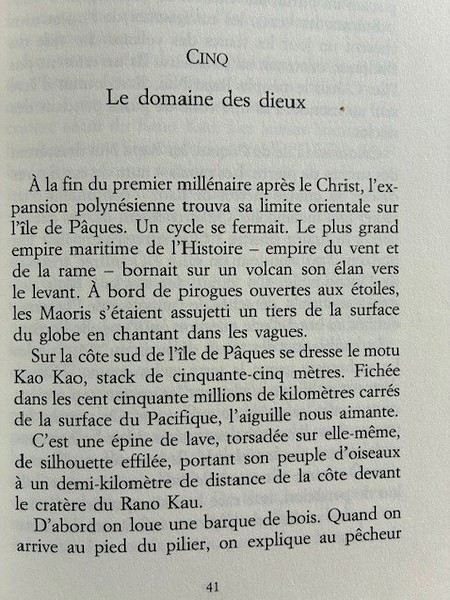

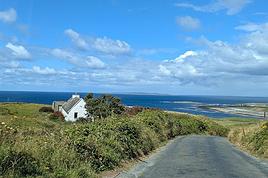
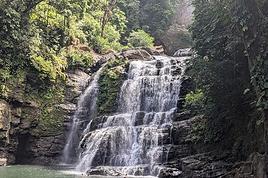
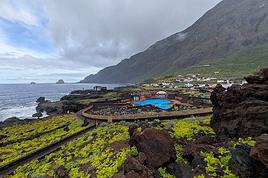
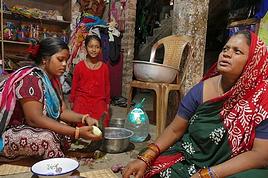
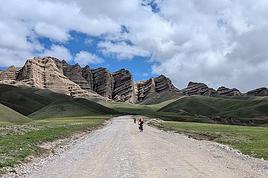


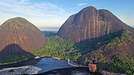
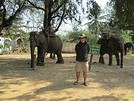
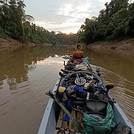

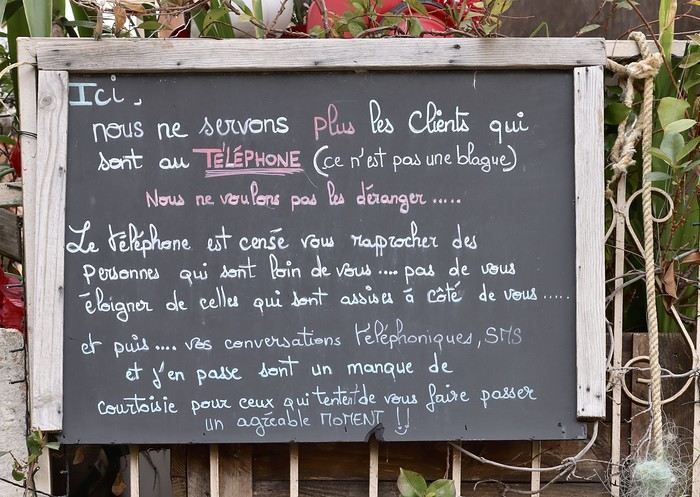 .
.
.
.