Pour commencer je tenai a remercier toutes les personnes qui m'ont aidé sur le précedent post que j'ai lancé (Etape de l'Eurovélo6) Merci, votre aide m'ai très utile..
Je me pars de St Nazaire pour rejoindre la suisse début 2010 et une question me vient a l'idée...
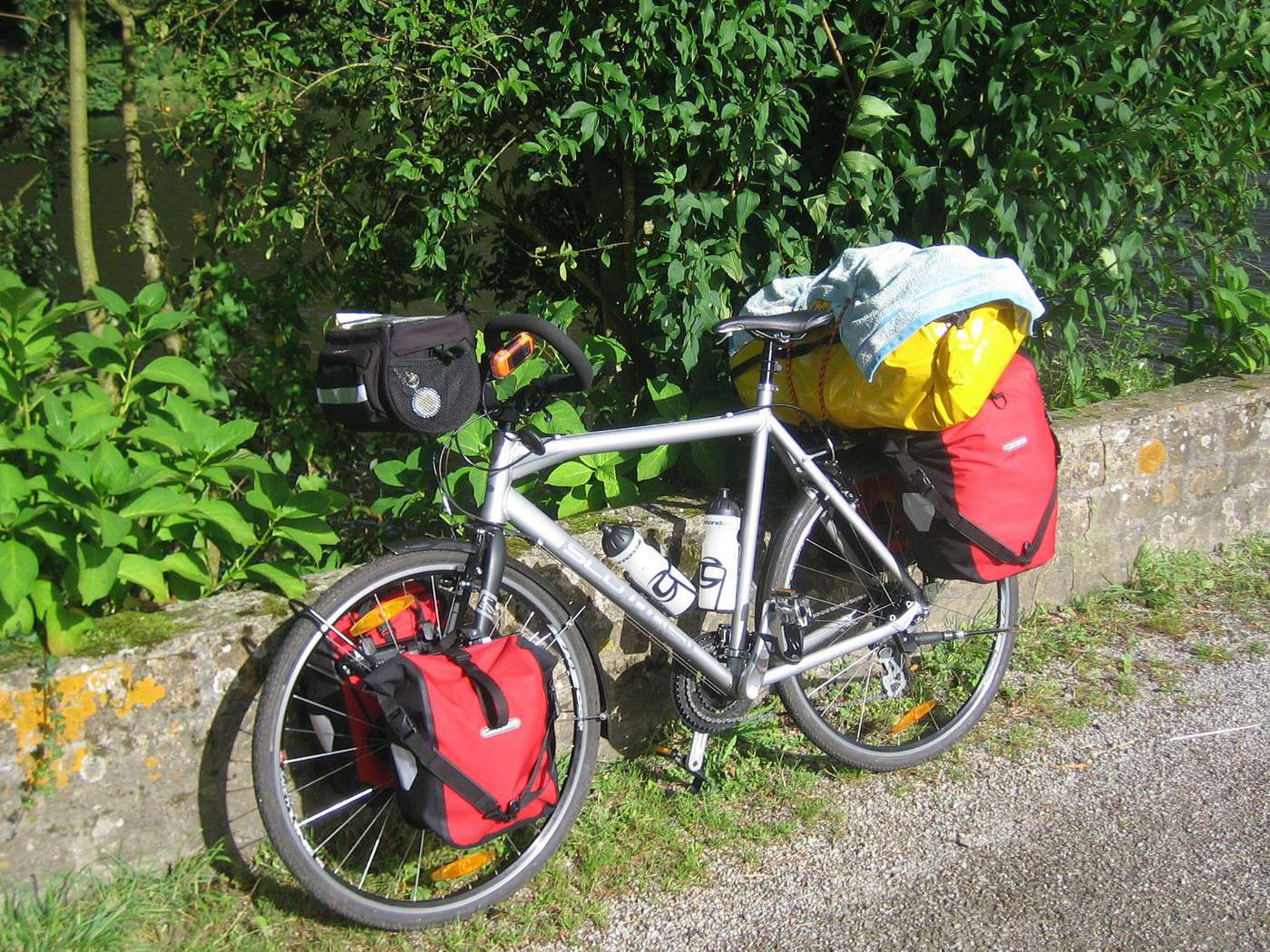
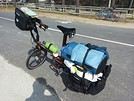
Existe -t- il une alternative a la remorque ou aux sacoches pour le voyage a vélo???
J'ai fait beaucoup de recherche sur le forum mais ma question est sans réponse pour le moment.
Je ne suis pas convaincu non plus qu'il y en ai une mais si des gens ont deja fait autrement, je suis preneur d'idées!
Merci
"De l'eau de mer dans les veines... La nature est belle pour qui sait en profiter..."
- Le sac à dos, mais comme dit ci dessus pas vraiment d'intérêt. Autant laisser le vélo porter plutôt que tes épaules. Tu peux fixer un gros sac à dos sur le vélo mais pas pratique du tout. Les sacoches s'en sortent beaucoup mieux.
- Envoyer du matériel ou de la nourriture par la poste à des points de passage. Pas facile à planifier, interdit les pairissables, oblige à suivre un itinéraire plus stricte. Certains randonneurs (à pied) utilisent ce procédé pour s'alléger lors de leur trek sur 1 semaine/ 15 jrs.
- Être dans une philosophie MUL : matériel ultra léger, réutilisation des objets poussée à l'extrême, sacrifice du confort. Mais je trouve que l'avantage du vélo par rapport à la marche à pied c'est justement de pouvoir se charger un peu plus pour gagner en confort.
Je ne vois pas d'autres choses pour le moment. En tout cas, je trouve aucune de ces trois solutions vraiment idéales et les sacoches/remorques reste à mon avis les meilleures compromis poid/confort/encombrement.
- Être dans une philosophie MUL : matériel ultra léger, réutilisation des objets poussée à l'extrême, sacrifice du confort. Mais je trouve que l'avantage du vélo par rapport à la marche à pied c'est justement de pouvoir se charger un peu plus pour gagner en confort.
Je pratique le vélo en mode BUL et je ne réutilise aucun objet. De quel objets parles tu présisément ?
Je n'ai pas non plus l'impression de sacrifier mon confort. J'ai même un oreiller bien moelleux pour dormir et un baladeur mp3 pour écouter de la musique et accessoirement la radio ...
Quand ce n'est pas sur le matériel lui même, le gain de poids se fait autre part. A commencer par le conditionnement. Par exemple, j'utilise un ziplock en guise de trousse de toilette. Idem pour la trousse à pharmacie. Dans la trousse elle même, j'ai reconditionné la crême à raser dans un tube de 40ml et redécoupé le savon qui rentre dans une petite boite plastique. J'utilise aussi du dentifrice en poudre et je m'essuie avec une serviette micro fibre ultra légère, etc, etc ... De même pour manger, j'utilise une spork en guise de fourchette et de cuillère ainsi qu'une popote en titane. Pas besoin d'assiettes ni de verres ...
Bref, au total je suis à 13 kilo max, poid des sacoches incluses et je ne manque de rien. Je pourrais même faire encore plus léger mais là, ce serait effectivement en prenant sur mon confort. A vélo, je m'autorise même quelques boites de conserves ( thon à l'huile, sardines ), chose que je ne fait jamais à pied ou je tourne plus ou moins à 11 kilos suivant la saison et la destination.
Quand je parle de réutilisation d'objets je pense aux objets qui peuvent servir pour plusieurs fonctions.
Exemples
- le pancho qui sert aussi de tarpe
- la grande boite plastique qui fait stockage étanche, siège, bassine à linge ou à vaisselle
- Savon de marseille pour le linge, la toilette, la vaisselle, le matos
.. etc
Quand je parle de réutilisation d'objets je pense aux objets qui peuvent servir pour plusieurs fonctions.
Exemples
- le pancho qui sert aussi de tarpe --> Il faut des batons de marche pour un tarp/abri. A vélo, ça perd donc de son intérêt. Pour ce qui est du poncho lui même, c'est déjà une horreur à pied de mon point de vue, à vélo, j'imagine même pas.
- la grande boite plastique qui fait stockage étanche, siège, bassine à linge ou à vaisselle --> La boite plastique est une hérésie dans le monde merveilleux des muls. Le ziplock est plus léger et se compacte facilement. On se passe du reste assez bien d'une bassine pour laver le linge ou sa popote. Ca n'est pas très dérangeant.
- Savon de marseille pour le linge, la toilette, la vaisselle, le matos --> Vrai. Mon savon me sert également de champoing. Par contre, j'emmènes du produit vaisselle ( concentré ) dans une petite fiole plastique de 10ml. Je doit être une exeption.
La seule alternative que je connaisse, c'est de se faire suivre par une camionnette. J'ai rencontré des Hollandais en Bade Wurtemberg, à Siegmaringen, qui, à quatre, alternaient sur les vélos (de course, 10000€ pièce), un au volant de la camionette, les trois autres sur les vélos. Le conducteur préparer les bivouacs, fairt les course, prépare les sandwich, les autres roulent sans souci. C'est une option, mais il faut ^^etre au moins 3, et le conducteur ne fait pas l'étape. Or , la satisfaction intellectuelle, c'est de faire les routes de bout en bout.
se faire suivre par une camionnette. (......) C'est une option, mais il faut ^^etre au moins 3, et le conducteur ne fait pas l'étape. Or , la satisfaction intellectuelle, c'est de faire les routes de bout en bout.
pas seulement : personnellement, ma plus grande satisfaction quand je roule en autonomie, c'est de pouvoir m'arrêter où je veux pour le casse-croute ou le bivouac, alors qu'avec un véhicule porteur, il faut fixer les points de rendez-vous à l'avance. Il y a quelques agences de voyage qui proposent d'ailleurs des formules de voyage à vélo en assurant le tranpsorts des bagages d'un hébergement au suivant, mais évidemment, ça fige l'itinéraire et le timing.
Sinon, pour revenir à la question intiale de Loic, je conseillerais plutot les sacoches s'il a peu de bagages, et choix ouvert entre sacoches ou remorque s'il est plus chargé (cf autres fils de discussion pour les avantages de ces 2 options)
personnellement, ma plus grande satisfaction quand je roule en autonomie, c'est de pouvoir m'arrêter où je veux pour le casse-croute ou le bivouac
Pour moi, c'est la satisfaction intellectuelle de l'autonomie elle même et du rachat par l'effort. Sauf contrindication médicale, je ne conçois donc pas de me faire suivre par un véhicule. A moins d'être dans la performance pure mais là, c'est plus du cyclo tourisme.
Je suis mal placé pour répondre, puis qu'il m'est arrivé souvent de partir avec et les sacoches et la remorque.
Dans ce cas je ne charge que les sacoches avant et le reste dans la remorque. Il faut dire que j'aime mon confort, que je sais rarement ou je vais ni le temps que durera ma promenade.
je fus navigateur navigaterre , je reste navigaterre.
Qu'importe d'où nous venons, car nous pouvons aller beaucoup plus loin que ce dont nous avions révé .
Sacoches, remorque, j'ai essayé les 2
Pratiquant la rando à vélo couché et à vélo droit, je trouve les sacoches plus pratiques et facilement adaptables à tout type de vélo
Un conseil : sac à dos à éviter
Le truc c'est peu être de n'emmener que 2 tenues et de se faire inviter tous les jours ...
Le parcours m'intéresse, je prépare également pour 2010 un petit périple d'angers à la Suisse, par l'Eurovélo 6.
Si tu fais ce voyage fais nous part de ton avis au retour
Salut Armor! Merci pour tes conseils je vais certainement opter pour les sacoches, et c'est plus simple lors du retour en train aussi je pense!
Je la 3e semaine de mai a partir des ponts de Cé jusqu'a Bâle sur 2 semaines par l'Eurovélo6, je dormirai dans les campings ou a la sauvage, selon les conditions!
Vous partez peut être avant moi, ceci dit je continue régulièrement a mettre des posts sur le forum, donc vous saurez quand je part, je l'indiquerai aussi un peu avant..
Merci, a plus!
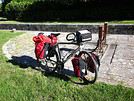
peut-être des sacs types sac de marins accroché par des sangles sur les portes bagages (c'est ma réflexion en cours car mes sacoches actuelles sont des Ortlieb backpaker plus 20 l 980 g)
des sacs genre Seasutommit "big river dry sac" qui sont léger (35 l 218 g) mais reste assez résistant (450 denier)
I’m planning to cycle from Morlaix to Brest (via Roscoff and the V45 coastal route). We’ll start riding on August 16th for 13 days (with stops for island visits, surfing, etc.). Is there a lot of traffic at this time of year? I’ve got two kids, 11 and 13, and we don’t like riding in the middle of cars (we’ve already done the Vélomaritime—Caen to Cherbourg—the Loire route from Orléans to Saumur, the Vélodyssée from Nantes to Royans, and the canals like the Nivernais and Bourgogne, where there were plenty of bike-only lanes, which isn’t the case on this route).
Thanks for your help if you’ve already done this route in late August!
Virginie
I’ve got my flight ticket sorted—departing in mid-November and returning in mid-March. I’ll arrive in Santiago and leave from Buenos Aires.
I’ve already been to southern Argentina, specifically Torres del Paine National Park, and I’d love to go back to do the full W trek (I only did the shorter version last time).
I also want to do some hiking and maybe even tackle a summit. I climb and occasionally do some mountaineering, so I’ll definitely be going with a guide.
I plan to start around Temuco in Chile, with the idea of heading toward the lakes, then taking the Carretera Austral.
I’m not sure if I’ll go all the way to Ushuaia—it’s supposed to not be *that* worth it, except for the bragging rights of saying you’ve been to the end of the world.
I saw there are lakes in Argentina too.
I don’t have a precise itinerary, but what I’d love is, once I reach the southernmost point of my trip, to take a mini-cruise to see some wildlife. Any tips for that?
What kind of sleeping bag did you take? Is a 0°C (32°F) one enough?
And one last question: white gas stove or can I get by with my gas stove?
Hi there,
I’ve been road cycling for several years, and I’m about to switch to gravel in the next few days—I’m waiting for my bike, which should arrive this week.
I’m planning a bikepacking trip in a few weeks along the Véloroute V81, also known as the Vélosud, from Biarritz to Le Barcarès.
Has anyone here already done this route? Any info is welcome, whether it’s about the route itself, gear, or accommodation. I’ll prioritize staying with locals as much as possible. On that note, I just signed up for the brand-new site *Guidon et Couette* ((www.guidon-et-couette.fr)), which offers free accommodation between cyclists across the country, but there’s almost no one listed along my route!
Thanks in advance.
Laurent.
I'm developing a free and open-source web app for planning walking and cycling trips (and even car trips). You can create a route by clicking directly on the map to add waypoints, and it can consist of multiple stages. The app provides tools to edit the stages and the overall route, and to display useful information (distances, altitudes, and elevation changes). A relief profile can be shown as a graph for a specific stage or the entire route.
Once the route is ready, it can be exported as a GPX file, which can then be used with a GPS or a mobile navigation app.
The app is built in JavaScript and runs entirely in the web browser. It uses the Leaflet library and several OpenStreetMap-based services. Initially developed for my personal needs (I enjoy hiking and cycle touring), I’d be happy to share it with anyone who might find it useful. It’s free to use, doesn’t require an account, and the source code is available.
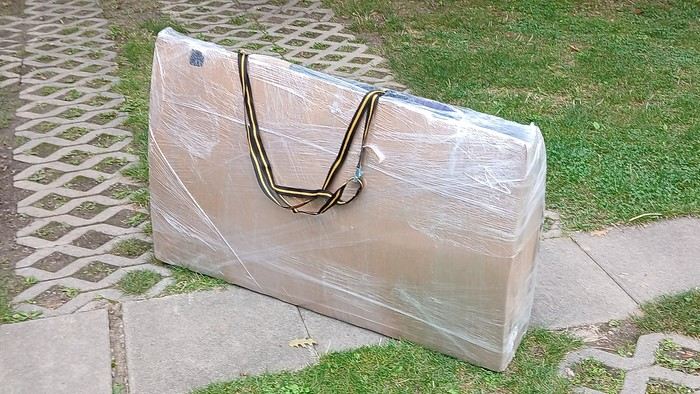
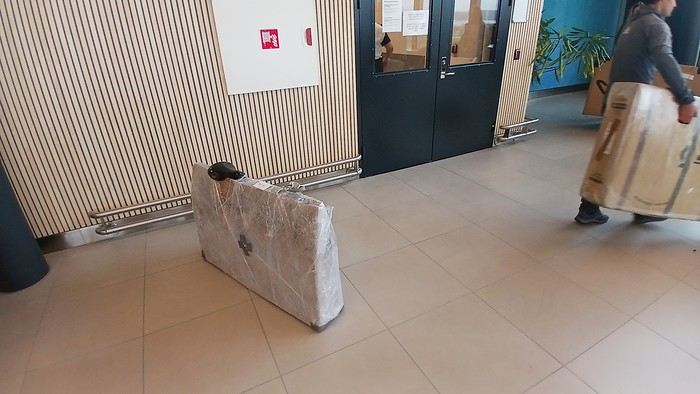
After testing it for three years across various modes of transport, I’m sharing this video of a bike packing case. It’s made from recycled cardboard and shrink-wrapped, with adjustable thickness and added bubble wrap depending on the level of protection you want.
Installing spacers at the fork and chainstays makes the packaging compact. With the fifteen-odd euros for shrink-wrapping at the airport, this case travels really well.
https://youtu.be/_GDJi-GqmkM
- Low bulk (1.10m x 0.70m x 0.25m for a large frame), it fits vertically in train luggage compartments and the total dimensions (x+y+z) don’t exceed 2.40m.
- Two carrying solutions for public transport and easy handling by airport staff (no more tears in the cardboard from openings).
- Discreet packaging when dealing with bus drivers and train conductors, as it looks like an ordinary parcel.
- No need to return to the starting point to retrieve the case from your outbound trip, which you’d otherwise have to store somewhere, or deal with a bulky cover to pack in your panniers.
- You can still check tire pressure through the plastic film without damaging the packaging too much.
Drawbacks: Around 3 hours for this lengthy and meticulous process—removing the wheels, pedals, handlebars, and derailleur without misaligning them, then securing all components to the frame.
If you get a chance to test it, send me your feedback for future improvements.
Hi there, I’m planning a cross-Canada bike trip, and I’ve got a question that might seem silly, but could someone tell me how to pack a bike (in a box, with a fragile sticker... I don’t know) for a flight? Thanks in advance!
This summer, we’re planning to cycle along the EV 19 that follows the Meuse River from Langres all the way to Rotterdam.
My question is about getting back to Nantes.
Do any of you know what the best return option might be? I’d love to hear about your experiences.
I saw that FlixBus doesn’t take bikes.
By train, I think it’s possible but would involve multiple local trains.
We were also wondering if there’s a boat from Rotterdam to Saint-Nazaire that could take passengers with bikes.
Any tips or experiences you can share would be really helpful—thanks in advance!
Have a great evening
I’ve gotten used to crossing Europe by bus to return by bike.
It was really convenient to take the bike without having to disassemble it.
But FlixBus no longer accepts bikes...
What alternatives do you know about?
Thanks.
Hi there,
I’m planning to ride the Dutch section of the EuroVelo 19, from Maastricht to Rotterdam.
Since it’s too complicated to bring my bike on the train, I’m looking to rent one locally.
I’d love any tips or bike rental shop recommendations—I’m struggling to find options even in Rotterdam.
The plan is to rent in Rotterdam, take the train to Maastricht with the bike, then cycle back to Rotterdam.
Thanks in advance for any advice or suggestions!
Nath
I’m planning to build a new touring bike.
I want to prioritize lightness.
That said, I’m tempted by a suspension fork that could offer some comfort on rougher roads.
The recent appearance of gravel suspension forks on the market might meet my needs—at least on paper.
I’m particularly considering the RockShox Rudy Ultimate XPLR fork.
Unlike MTB forks, its travel is short: either 30 mm or 40 mm.
It weighs 1400 g, which is 400/500 g more than a steel fork.
Any thoughts or real-world feedback on this?
I’m also wondering about the durability of magnesium (lower leg) for long-distance bike touring.
And what’s the impact of skipping the manufacturer-recommended maintenance every 50 and 200 hours? That’s bound to happen on a long trip unless you carry extra gear.
More generally, how reliable are these kinds of forks?
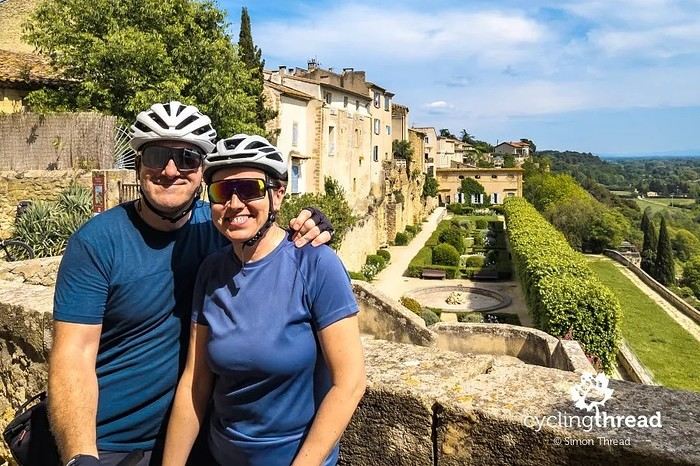
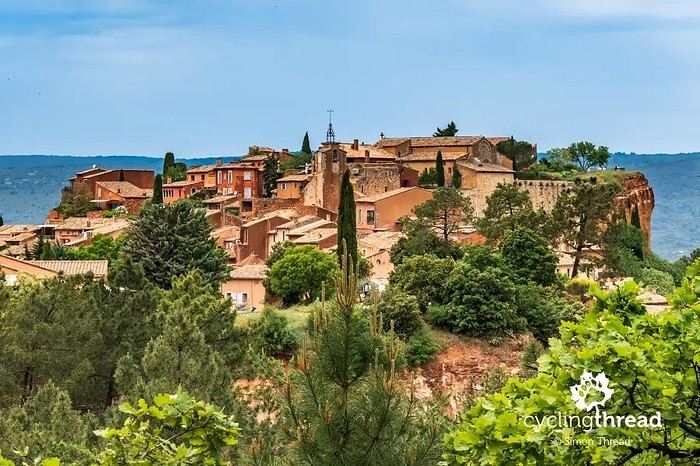
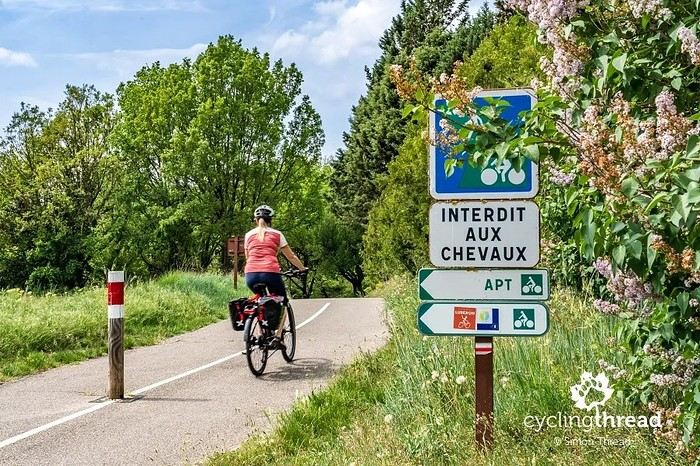
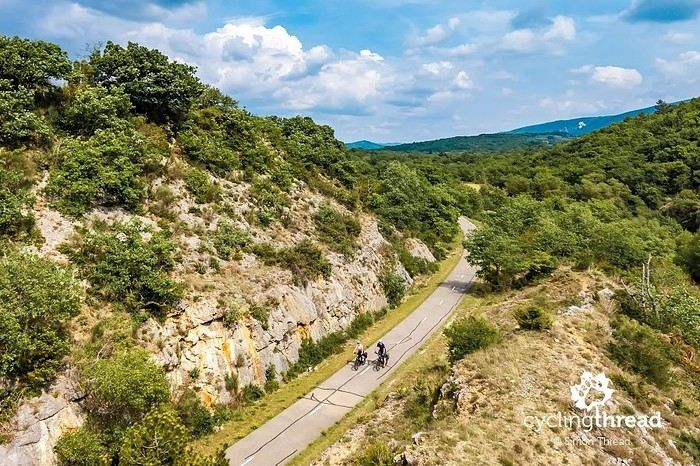
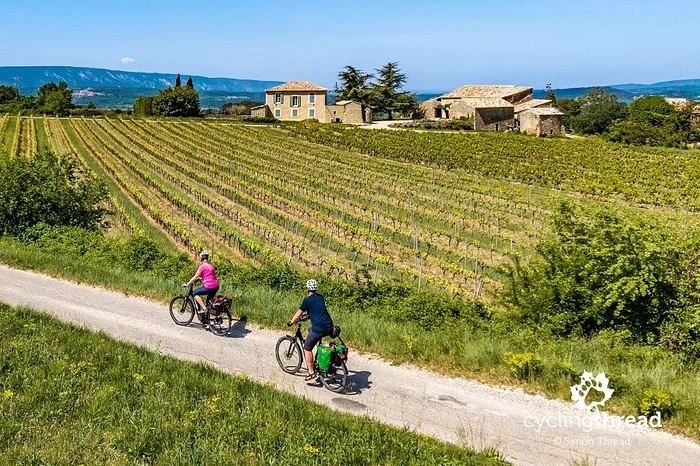
I’m making an exception and creating a separate post this time, since it’s all about France. In May, we spent a week in Provence, specifically in the Luberon, exploring the cycling routes *Autour du Luberon à Vélo*, the *Véloroute du Calavon* (part of EuroVelo 8), and the shorter *Les Ocres à Vélo* route. Together, they gave us an amazing journey through rolling hills, vineyards, lavender fields still green in spring, and some of the most stunning landscapes in southern France.
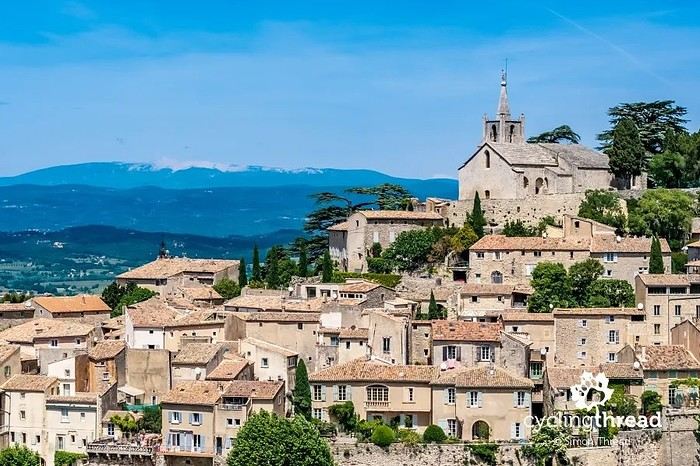
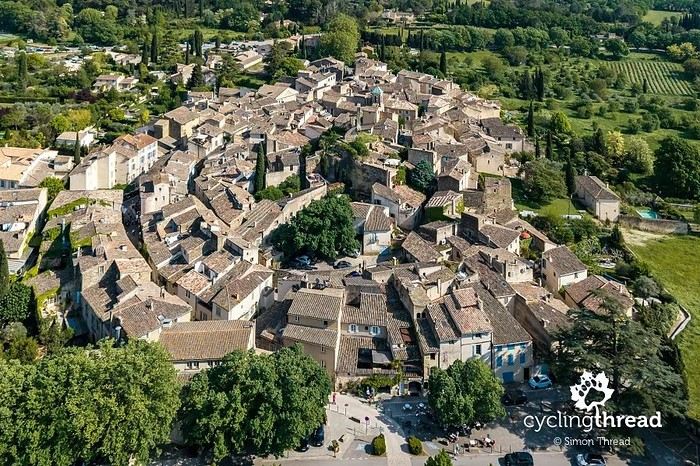
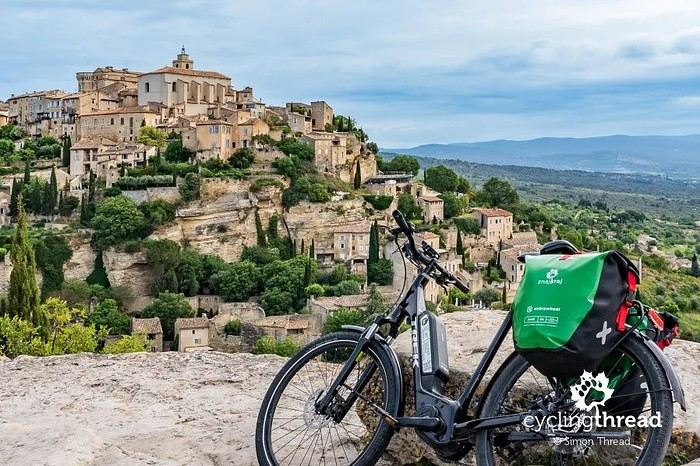
It was, of course, the perched villages that impressed us the most. We visited Gordes, Roussillon, Bonnieux, Lacoste, Lourmarin, Ménerbes, Oppède-le-Vieux, Cucuron, and Lauris. Many of them are among the most beautiful villages in Provence, and it’s hard not to agree with that reputation.
One interesting point is the route of EuroVelo 8 in this part of the region. The official path mainly follows the old railway line of the *Véloroute du Calavon*, which is very comfortable and safe. But in our opinion, cyclists traveling EuroVelo 8 around the Mediterranean would discover even more treasures if the route passed through villages like Bonnieux, Lacoste, or Oppède-le-Vieux.
We were also pleasantly surprised by how safe cycling felt. Most of the route takes small local roads, but traffic is light, drivers are respectful, and road design really takes cyclists into account. It’s one of those places where you can ride peacefully even without separated bike lanes.
Our full story:
Around Luberon by bicycle - the most beautiful villages of Provence
You can also find all our cycling travel stories on the forum:
Cycling Thread - Europe’s most beautiful bike routes
Hi there, we’re a group of 4 cyclists looking to get from Treviso in Italy to Munich with our 4 non-folding bikes. It seems complicated! Are there any solutions? Thanks so much.
hello fellow cycling enthusiasts
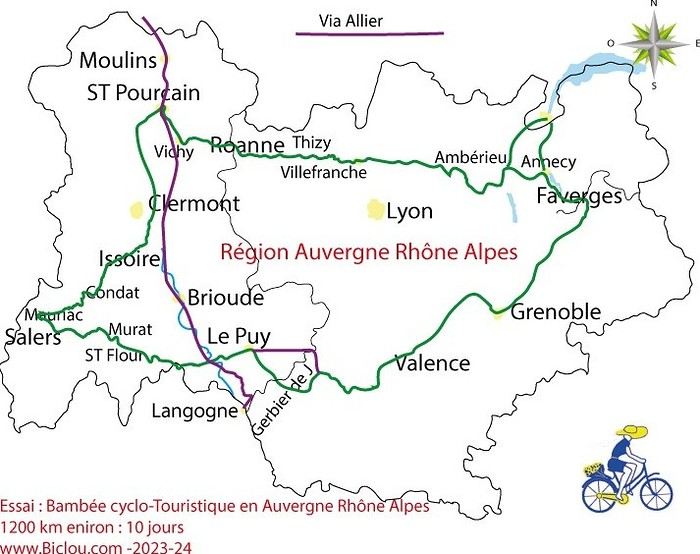
here’s a travel journal of the cycling tour through the Rhône-Alpes Auvergne region by Claudio
zouli
it was the plan
http://cbandiera.free.fr/parcours/auvergne-Ralpes/
the trip was completed
story being posted online soon
1100 km in 11 days
beautiful and varied regions
Hi there, we’re planning a Munich to Venice bike trip at the end of June 2026. Getting back from Venice to Toulouse by train with 4 bikes isn’t straightforward. What return options have others who’ve done this trip chosen? Any tips or great deals would be much appreciated. Thanks a bunch! !
Hi everyone,
Happy owner of a Pegasus Estremo bike with a Rohloff hub, which is giving me trouble with the SF11-NCX-FT-E-LITE 700C TS 300/0 fork (serial number TD01329060). It’s starting to show its age, and I’d like to repair it to extend the life of my beloved bike.
The suspension is gone, and there’s an oil leak from the seals.
Does anyone know how to repair it? Where can I find parts that are about fifteen years old? Or where to find an identical replacement fork? Just to clarify, the Magura HS11 brakes are mounted using Firm Tech, meaning they’re on pivots behind the fork, facing the frame.
Hi, I'd like to know if anyone has done this route recently or has reliable info.
Does the track exist, and most importantly, is there sand (for biking)?
Any info is welcome.
Cheers,
diego ambilobe: mangaoka, manondro, ramena
vohemar sambava: masondrono, tanambao
Hi there,
New to bike touring,
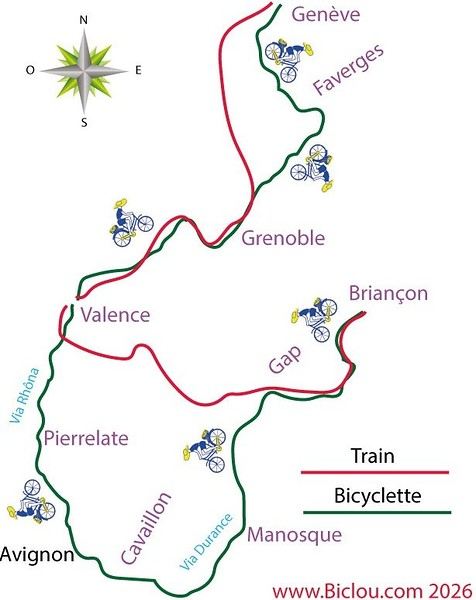
I’d love to start with a section of the Via Rhona to explore and share (route to be decided).
Looking forward to exchanging tips!
I’m landing in Madagascar with a buddy before the end of April 2026. We’re planning to bike around for about twenty days or so. We don’t have a specific goal other than exploring the country and meeting the locals.
Ideally, we’d prefer a loop route starting from Antananarivo with a good chunk of it along the coast. On the bike side, we’re used to riding 6 to 8 hours a day, depending on the needs, encounters, and mood 😉 Any feedback or tips from trips around this length?
A big thank you to Lazarou for all the info you share in this forum!
I'm passionate about Morocco, which I cycled through back in 2009.
Last year, my wife and I explored the High Atlas by tandem. Completely smitten, we're heading back in April (Anti Atlas) and May (High and Middle Atlas), still on our tandem.
Do you have any info on the track between Amezri and Ali Ait Nito? Are the river crossings in the Tessaout still there? It's not easy to navigate with a loaded tandem... especially if the river level is high due to this year's heavy snowmelt!
Thanks in advance for any tips you might have, and best wishes for health in this new year!
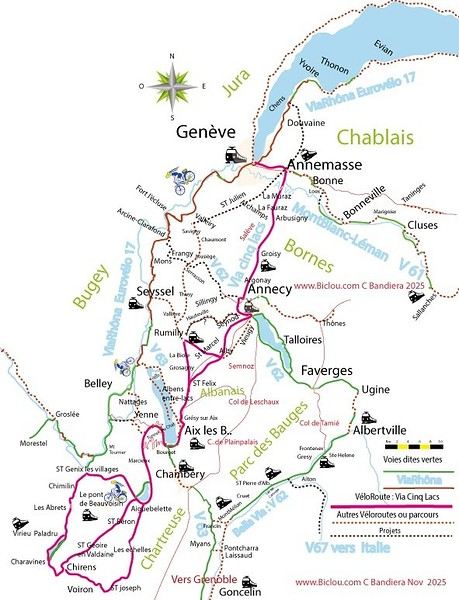
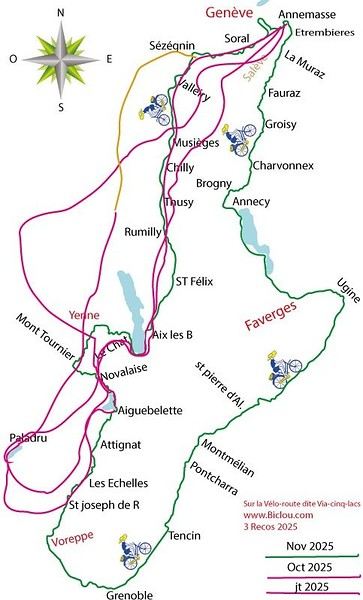
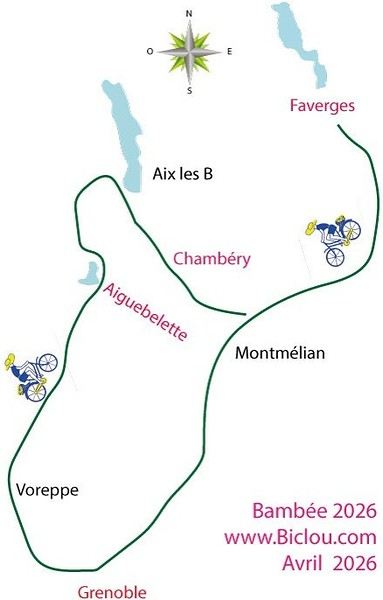
Claudio specializes in the route of the Savoie lakes
Here are his travels
Between Bornes, Chartreuse, the Savoie foothills, and Dauphiné
Five lakes: Léman, Annecy, Paladru, Aiguebelette, Bourget, not to mention a few ponds along the way
Plenty of accommodation options: camping, hotels, and more...
A lovely route not far from his place
Rural and quite peaceful
A road cycling route created by Serge B...
First of all... happy New Year! Wishing you great roads in 2017!
I’ve been traveling for a few years now with a high-quality mountain bike, but it’s equipped with hydraulic disc brakes. I live (pedal) with the constant worry of a breakdown (leak, air bubble, heat causing the fluid to...). My bike mechanic tells me it’s impossible to switch them out for V-brakes.
What do you all think? Am I taking a big risk continuing (alone) with these brakes? Thanks in advance for your great tips!
First post here to share a quick recap of our west-to-east bike trip along Algeria’s coast in January 2025.
It was just the two of us—my partner and I—with French passports and not a word of Arabic. No friends or welcoming hosts in the country.
Under those conditions, we’d strongly advise against going.
Our original plan was to follow the coast from Algiers to Tunis. We ended up cycling from Algiers to Béjaia, then took the train from Béjaia to Annaba (with a stop in Constantine), and finally biked to the border.
We were tailed by police the whole way—whether on our bikes, on the train, or even on foot while exploring towns. On top of that, we couldn’t wild camp and were limited to the few state-approved hotels that accept foreigners. Under those circumstances, connecting with locals was especially tough.
With such an omnipresent and intrusive police presence, we’d definitely recommend against this destination for bike touring. A really sad situation that completely cuts you off from the local population...
We’d been warned, we went to check it out, and we weren’t disappointed!
Hi there,
I’m planning the route to cycle from Lille to Nordkapp with my partner.
Duration: 3 months, from May 1st to July 31st, 2026.
In the attached details below, I need to add some "non-riding" days (rest days, basically).
So I’m looking to "shorten" the trip by taking ferries or trains for some stretches. Which areas could I skip?
Thanks in advance for your great tips.
Have a good evening.
https://www.komoot.com/fr-fr/collection/4023980/-lille-cap-nord-1er-mai-au-31-juillet-2026?ref=collection
I’m planning to bike back from Poland this summer. Does anyone know a way to ship it there without having to take it apart? Otherwise, it’s a real hassle to fine-tune all the settings before departure!
Thanks in advance.
Hi, has anyone recently bought Primus or Butagaz gas, possibly puncture-style, in Dubrovnik or the surrounding area? Same question for Albania... thanks. aichatou
Just a few words about the loop I did by bike in Yunnan.
Entry and exit
I entered China through the Sino-Vietnamese border crossing at Lào Cai / Hekou under the 30-day visa exemption currently available to French nationals and others.
The process was simple and quick. A Chinese police officer even helped me complete my electronic pre-registration at a computer kiosk. I wasn’t aware this formality was required—it’s similar to Thailand’s TM6.
No issues with the bike.
I left the country via the Sino-Laotian border crossing at Mohan / Boten.
The atmosphere was a bit chaotic there, but again, no problems with the bike.
The timing
I visited Yunnan in February 2026.
Weather-wise, at higher altitudes (between 1,500 and 2,000 meters), it was around ten degrees at night and in the mornings, and around twenty degrees at the hottest part of the day.
I had two days of rain, so I took the bus to keep moving. Otherwise, clear blue skies.
Culturally, Chinese New Year fell on February 17th (and the 15 days following), right in the middle of my trip. Because of this, my take on the traffic might be off.
Accommodation and food
I always found a hotel to stay in for prices ranging from 8 to 15 €. Except in Kunming (the capital), where many hotels were fully booked (Chinese New Year). I ended up at a 100 € hotel with great value for money.
A bowl of noodles costs about 1.5 € on average.
Onboard electronics
Since my smartphone doesn’t support eSIMs, I subscribed to a China plan with my carrier. Otherwise, for much cheaper, Alipay offers eSIMs for foreigners that allow access to services usually blocked for Chinese users (WhatsApp, Facebook, etc.).
An internet connection is essential for paying with Alipay or WeChat, as this payment method is widespread.
I only managed to use Alipay.
Either way, always carry cash because sometimes there’s no signal, or the merchant only accepts WeChat.
Also, it’s best to bring a power adapter when you arrive rather than struggling to find one.
Traffic and roads
The Chinese aren’t reckless drivers. They follow traffic rules and watch out for cyclists. This is slightly less true in Xishuangbanna (the region bordering Myanmar and Laos).
In urban areas, there are almost always wide bike lanes, separated from other roads, where bikes, electric mini-scooters, and scooters share the space pretty harmoniously.
The roads are in great condition, and traffic is generally manageable—even light—except for one stretch (Eshan -> Yangwu).
Most traffic is absorbed by expressways, China’s equivalent of highways: toll roads that are off-limits to slow vehicles.
You’re never far from these expressways; sometimes you even ride alongside them, which can be noisy at times.
The climbs are usually reasonable, around 5% to 6%. From what I remember, the steepest section was between Menglun and Mengla, with gradients of 8% to 10%, sometimes more.
Riding at these altitudes—though modest—took a bit of getting used to.
The route
I didn’t plan anything in advance. My only goal was to reach Kunming. I don’t know why, but just hearing the name of that city, like Yunnan, always felt dreamy to me.