Camping-car: température à Yellowstone en septembre, duvet, chauffage?
by Plaplanou
This discussion is in French, the community’s main language.
Original post
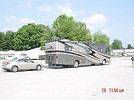
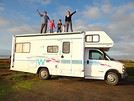
Bonjour, Qui peux me dire si un bon duvet suffit en plus de celui fourni (en général très léger) de cruise américa , dans le camping- car pour les nuits en septembre dans les parcs des rocheuses (yellowstone, national glacier)et sinon, est-il possible de louer un petit chauffage d'appoint à cruise america à SLC ? Merci de vos conseils.
Bonjour Jean-Luc,
Je prendrais aussi mon CC chez CruiseA à SLC, mais le 13/08 pour monter vers Yellowstone ! un peu avant toi...
Je ne pense pas qu'un chauffage d'appoint soit disponible (ni autorisé). Par contre il y a un chauffage à air pulsé sur le CC (c'est la clim à l'envers - si je puis dire...).
Mais il faudra avoir le branchement électrique ! ce qui n'est pas le cas à Yellowstone et Grand Teton (sauf Colter Bay RV - Fishing Bridge - ou Cody/Gardiner/WestYellowstone).
Voir blog 2012 ci-dessous, si tu as besoin d'infos.
à + Jean.
Je prendrais aussi mon CC chez CruiseA à SLC, mais le 13/08 pour monter vers Yellowstone ! un peu avant toi...
Je ne pense pas qu'un chauffage d'appoint soit disponible (ni autorisé). Par contre il y a un chauffage à air pulsé sur le CC (c'est la clim à l'envers - si je puis dire...).
Mais il faudra avoir le branchement électrique ! ce qui n'est pas le cas à Yellowstone et Grand Teton (sauf Colter Bay RV - Fishing Bridge - ou Cody/Gardiner/WestYellowstone).
Voir blog 2012 ci-dessous, si tu as besoin d'infos.
à + Jean.
4 fois en Camping-car: Parcs US - NewMex - Yellowst - Louisiane.
http://blogs.crespel.me/usa2009/ http://blogs.crespel.me/usa2011/
http://blogs.crespel.me/usa2012/ http://blogs.crespel.me/usa2013/
Andalousie, Bretagne, Corse, Provence, Sicile, Toscane, villes d'Italie.
sur : http://blogs.crespel.me/
Bonjour,
Nous avions eu de la neige vers le 15 septembre 🤪.
Vêtements chauds recommandés 😉

Fabrice
Nous avions eu de la neige vers le 15 septembre 🤪.
Vêtements chauds recommandés 😉

Fabrice
Une famille autour du monde contre la pollution lumineuse. http://www.lesquatrevieux.com
Le CC sont équipés de fournaises fonctionnant au propane, et vous n'avez pas besoin d'être branché.
Ce qu'il faut faire si on prévoit des nuits froides, c'est de faire fonctionner la génératrice jusqu'à l'heure permise pour avoir les batteries chargées a bloc.
Il faut également ne pas mettre le degré de température sur le thermostat trop élevé. Avec de bonnes couvertures pendant la nuit fixez la température à environ 65F soit environ 18 C.
Ce qu'il faut faire si on prévoit des nuits froides, c'est de faire fonctionner la génératrice jusqu'à l'heure permise pour avoir les batteries chargées a bloc.
Il faut également ne pas mettre le degré de température sur le thermostat trop élevé. Avec de bonnes couvertures pendant la nuit fixez la température à environ 65F soit environ 18 C.
Bonjour,
J'ai un doute... car nous parlons de camping-car de Location (genre CruiseAmerica de "petite" taille: 25/30 pieds) !!!
Et il me semble que le chauffage soit à air pulsé (c'est la clim au plafond qui fonctionne en air chaud ???).
Merci. Jean.
J'ai honte de ne pas le savoir car j'ai loué plusieurs fois... mais jamais utilisé !
J'ai un doute... car nous parlons de camping-car de Location (genre CruiseAmerica de "petite" taille: 25/30 pieds) !!!
Et il me semble que le chauffage soit à air pulsé (c'est la clim au plafond qui fonctionne en air chaud ???).
Merci. Jean.
J'ai honte de ne pas le savoir car j'ai loué plusieurs fois... mais jamais utilisé !
4 fois en Camping-car: Parcs US - NewMex - Yellowst - Louisiane.
http://blogs.crespel.me/usa2009/ http://blogs.crespel.me/usa2011/
http://blogs.crespel.me/usa2012/ http://blogs.crespel.me/usa2013/
Andalousie, Bretagne, Corse, Provence, Sicile, Toscane, villes d'Italie.
sur : http://blogs.crespel.me/
Vous n'avez pas a avoir de doute, il y a bien un chauffage au propane dans les CC.
C'est un équipement de base des fabriquants se CC en amérique du nord.
Pour ce type de chauffage pas besoin d'ètre branché. Par contre quand vous mentionnez le chauffage avec la Clim, la très grande majorité n'ont pas l'option du chauffage dans la clim.
C'est un équipement de base des fabriquants se CC en amérique du nord.
Pour ce type de chauffage pas besoin d'ètre branché. Par contre quand vous mentionnez le chauffage avec la Clim, la très grande majorité n'ont pas l'option du chauffage dans la clim.
Hello,
Merci pour cette réponse !
Je récupère "le mien" (C25 chez CruiseA) à SLC, dans 3 mois, et pour les "jeunes générations de camping-cariste" je ferais les photos qui conviennent !!
PS: si tu as l'expérience de la route 14A entre Cody/Lovell/Medecine Wheel et Ranchester...Sheridan, ça m'intéresse;
Cordialement. Jean.
Merci pour cette réponse !
Je récupère "le mien" (C25 chez CruiseA) à SLC, dans 3 mois, et pour les "jeunes générations de camping-cariste" je ferais les photos qui conviennent !!
PS: si tu as l'expérience de la route 14A entre Cody/Lovell/Medecine Wheel et Ranchester...Sheridan, ça m'intéresse;
Cordialement. Jean.
4 fois en Camping-car: Parcs US - NewMex - Yellowst - Louisiane.
http://blogs.crespel.me/usa2009/ http://blogs.crespel.me/usa2011/
http://blogs.crespel.me/usa2012/ http://blogs.crespel.me/usa2013/
Andalousie, Bretagne, Corse, Provence, Sicile, Toscane, villes d'Italie.
sur : http://blogs.crespel.me/
Bonsoir Jean-Luc,
je ne suis plus sûr de rien....
Donc solution, tu peux appeler Christine de CruiseAmerica (en France) et lui poser la question !
J'ajouterais l'info sur mon blog ultérieurement.
à + Jean.
je ne suis plus sûr de rien....
Donc solution, tu peux appeler Christine de CruiseAmerica (en France) et lui poser la question !
J'ajouterais l'info sur mon blog ultérieurement.
à + Jean.
4 fois en Camping-car: Parcs US - NewMex - Yellowst - Louisiane.
http://blogs.crespel.me/usa2009/ http://blogs.crespel.me/usa2011/
http://blogs.crespel.me/usa2012/ http://blogs.crespel.me/usa2013/
Andalousie, Bretagne, Corse, Provence, Sicile, Toscane, villes d'Italie.
sur : http://blogs.crespel.me/
À titre de propriétaire d'un camping car depuis au moins 18 ans (7 modèles différents durant cette période;
1) Le de chauffage à air pulsé au plafond requiers le branchement électrique extérieur (11volts) ou la présence d'une génératrice à bord.
2) Le chauffage au propane ne requiers pas de branchement électrique extérieur ou de génératrice. Il fonctionne à partie de l'accumulateur (batterie) du véhicule (très rare) ou d'un accumulateur accessoire (batterie) branchée sur le système électrique du véhicule.
Cet accumulateur est rechargé lorsque branché à l'extérieur, ou lorsque la génératrice fonctionne, ou lorsque le véhicule est en mouvement.
Le chauffage propane est suffisant pour poaser une nuit à température extérieur de --20C..... si vous avec de bonnes et nombreuses couvertures.
La vie est trop belle pour être petite.
Bonjour Jacques,
et merci pour ces infos précises et détaillées en provenance d'un Cousin de la Belle Province (la formulation est-elle correcte ???).
C'est vrai que cet accessoire (le chauffage) est beaucoup plus utile "pour vous" que pour "nous", voyageurs occasionnels de haute saison.
En 2009 il ne faisait "qu'un peu frais" le matin/en août, à Bryce Canyon ou Mesa Verde (5°C) mais ensuite la T° monte vite. En 2011 pas de Pb au Nouveau Mexique. Pour cet été à Grand Teton ou Yellowstone... on verra !
Bien cordialement. Jean.
et merci pour ces infos précises et détaillées en provenance d'un Cousin de la Belle Province (la formulation est-elle correcte ???).
C'est vrai que cet accessoire (le chauffage) est beaucoup plus utile "pour vous" que pour "nous", voyageurs occasionnels de haute saison.
En 2009 il ne faisait "qu'un peu frais" le matin/en août, à Bryce Canyon ou Mesa Verde (5°C) mais ensuite la T° monte vite. En 2011 pas de Pb au Nouveau Mexique. Pour cet été à Grand Teton ou Yellowstone... on verra !
Bien cordialement. Jean.
4 fois en Camping-car: Parcs US - NewMex - Yellowst - Louisiane.
http://blogs.crespel.me/usa2009/ http://blogs.crespel.me/usa2011/
http://blogs.crespel.me/usa2012/ http://blogs.crespel.me/usa2013/
Andalousie, Bretagne, Corse, Provence, Sicile, Toscane, villes d'Italie.
sur : http://blogs.crespel.me/
Moi je passe l'hiver dans le sud des USA et au cours des 10 dernières années plus fréquemment en Arizona et Californie. Je peux vous dire que dans les déserts de ces 2 états pendant la période de décembre à la fin de février les nuits sont souvent froides et on a besoin de chauffage. La température descend souvent à 5 ou 6 degrés. Je règle le thermostat du chauffage au propane à environ 10 ou 11, nous ne sommes pas des frileux, mais le matin lorsque je me réveille alors je monte le thermostat aux environs de 18. Par la suite c'est le soleil qui nous réchauffe.
Par contre je me souviens de ma première nuit à Yellowstone, nous étions installés dans un camping sans service de ce parc national. C'était début juillet et jour ou nous sommes arrivés, assez tôt environ vers 11 am, c'était très chaud aux environs de 32-33 C. Nous avons fait fonctionner la clim pendant que nous prenions le repas du sort, alimentée par la génératrice. Nous avons du arrêter la génératrice, donc la clim aussi vers 19 h, règle du camping pour ne pas déranger les autres campeurs. Nous avions laissé toutes les fenêtres ouvertes dans notre CC et sommes allés au lit comme ca.
Le lendemain matin je me réveille vers 5 am, il faisait environ 7C à l'intérieur. Brrrr, c'était assez froid. Je peux vous dire que les nuits subséquentes avant d'aller au lit on fermait plusieurs fenêtres.
Par contre je me souviens de ma première nuit à Yellowstone, nous étions installés dans un camping sans service de ce parc national. C'était début juillet et jour ou nous sommes arrivés, assez tôt environ vers 11 am, c'était très chaud aux environs de 32-33 C. Nous avons fait fonctionner la clim pendant que nous prenions le repas du sort, alimentée par la génératrice. Nous avons du arrêter la génératrice, donc la clim aussi vers 19 h, règle du camping pour ne pas déranger les autres campeurs. Nous avions laissé toutes les fenêtres ouvertes dans notre CC et sommes allés au lit comme ca.
Le lendemain matin je me réveille vers 5 am, il faisait environ 7C à l'intérieur. Brrrr, c'était assez froid. Je peux vous dire que les nuits subséquentes avant d'aller au lit on fermait plusieurs fenêtres.
Bonjour,
De quelle quantité de propane disposez vous et quelle autonomie cela vous donne en utilisant régulièrement le chauffage ?
Je vous pose cette question car j'avais ce type de chauffage sur un classe B lors d'un précédent voyage et lorsque j'ai du l'utiliser (en Bolivie et a Ushuaia avec des températures inférieures a O°c ) je l 'ai trouvé très gourmand en propane, et je ne disposais même pas d'une semaine d'autonomie en ne faisant marcher le chauffage que la nuit.
Je pars dans quelques semaines en Amérique du Nord, je vais y acheter un classe C et compte faire une utilisation intensive du chauffage je me demande donc si il ne serait pas bon de remplacer ce chauffage au propane par un système du style webasto ou eberspacher qui semble être le référence en terme de consommation d'energie et d'autonomie .
Jérôme
De quelle quantité de propane disposez vous et quelle autonomie cela vous donne en utilisant régulièrement le chauffage ?
Je vous pose cette question car j'avais ce type de chauffage sur un classe B lors d'un précédent voyage et lorsque j'ai du l'utiliser (en Bolivie et a Ushuaia avec des températures inférieures a O°c ) je l 'ai trouvé très gourmand en propane, et je ne disposais même pas d'une semaine d'autonomie en ne faisant marcher le chauffage que la nuit.
Je pars dans quelques semaines en Amérique du Nord, je vais y acheter un classe C et compte faire une utilisation intensive du chauffage je me demande donc si il ne serait pas bon de remplacer ce chauffage au propane par un système du style webasto ou eberspacher qui semble être le référence en terme de consommation d'energie et d'autonomie .
Jérôme
2009/2010 : Amérique centrale-Amérique du Sud http://lespetitsnomades.blogspot.fr/
2012/2013 : Amérique du Nord http://petitsnomades.blogspot.fr/
2013/2014 :Asie du Sud Est
http://www.lespetitsnomadesenasie.blogspot.com/
Le réservoir de propane de mon "camping Car" est de 90 litres (25 gallons U.S.)
Le chauffage consomme environ 1.5gal de propane/heure de fonctionnement.
Le chauffe-eau consomme également, mais moins.
Oubliez le Webasto ou le Eberspächer, ce n'est ni nécessaire ni économique si le camping car est conçu pour le Canada.
J'ai voyagé/dormi à -30C dans mon camper...aucune engelure.
La vie est trop belle pour être petite.
Merci pour la précision des informations. Ça doit être assez impressionnant de dormir a -30 !, j imagine qu'il faut prendre certaines précautions (pour ne pas que les conduits d'eau gelent par exemple ...)
Donc si mes calculs sont justes avec une consommation de 1,5 gal/heure et un réservoir de 25 gallons, on a une autonomie de 16 heures seulement !
L'avantage du webasto est qu'il ne consomme qu'entre 0,1 et 0,2 l de diesel/heure (pour le webasto air top 2000s) , donc sur une nuit de 10 h seulement 1,5 l. Avec un réservoir de 30 l par exemple cela permettrait de chauffer pendant 20 nuits contre a peine 2 avec du propane ... C'est ce qui me fait un peu réfléchir ...
Donc si mes calculs sont justes avec une consommation de 1,5 gal/heure et un réservoir de 25 gallons, on a une autonomie de 16 heures seulement !
L'avantage du webasto est qu'il ne consomme qu'entre 0,1 et 0,2 l de diesel/heure (pour le webasto air top 2000s) , donc sur une nuit de 10 h seulement 1,5 l. Avec un réservoir de 30 l par exemple cela permettrait de chauffer pendant 20 nuits contre a peine 2 avec du propane ... C'est ce qui me fait un peu réfléchir ...
2009/2010 : Amérique centrale-Amérique du Sud http://lespetitsnomades.blogspot.fr/
2012/2013 : Amérique du Nord http://petitsnomades.blogspot.fr/
2013/2014 :Asie du Sud Est
http://www.lespetitsnomadesenasie.blogspot.com/
Le chauffage/propane ne fonctionne jamais continuellement. I arrête, re-part en cycle. Donc l'autonomie est beaucoup plus que les 16 heures que vous avez mentioné.
De plus, la très grande majorité des camping car fonctionnent à la gasoline, et non au diesel, donc webasto non-applicable.
A système webasto ne chaufferait pas non plus les réservoirs d'eau, les conduites et autres espaces de rengement sous le plancher, tout gèlerait en peu de temps.
La vie est trop belle pour être petite.
Log in first, then come back to this page.
You might also like
More discussions
Hi,
How do you manage to charge your battery using a solar panel while keeping your vehicle in the shade so it doesn’t turn into an oven?
I have a Renault Trafic, unfortunately black, and my cooler, battery, and BougeRV solar panel.
My battery is mainly used for my electric cooler.
https://www.amazon.fr/dp/B0CQ4LFVVR?ref_=ppx_hzsearch_conn_dt_b_fed_asin_title_3
Thanks in advance! Nath
How do you manage to charge your battery using a solar panel while keeping your vehicle in the shade so it doesn’t turn into an oven?
I have a Renault Trafic, unfortunately black, and my cooler, battery, and BougeRV solar panel.
My battery is mainly used for my electric cooler.
https://www.amazon.fr/dp/B0CQ4LFVVR?ref_=ppx_hzsearch_conn_dt_b_fed_asin_title_3
Thanks in advance! Nath
Hi everyone, I don’t think there’s already a thread on this topic,
we’re planning—two or three years from now (I know, it’s a ways off...)—a cross-Canada trip from east to west, meaning Montréal ====> Vancouver, and leaving the RV in Vancouver. First, we’ll spend a few days visiting Québec City, then pick up the RV in Montréal. The trip will likely be around 5 weeks, late August to early September. If you’ve got any route ideas, we’d love to hear them! Banff is probably a must-see stop for us. Thanks in advance!
Didier and Nicole
Hi everyone,
I recently arrived in Uruguay and I'm currently thinking about the best solution for my South America travel project.
I have a 2013 Fiat Ducato camper van that's currently in France. My initial plan was to have it shipped to Uruguay so I could travel across South America for about a year, then sell it here at the end of the trip.
But now that I'm here, I have a lot of questions about selling a French-registered vehicle in South America, particularly in Uruguay.
So, I'd love to hear from anyone who's been in this situation before:
Is it possible to sell a French-registered vehicle in Uruguay without permanently importing it? Is it common to sell your vehicle to other travelers (French, Europeans, or others) who want to continue traveling with it? Are these kinds of transactions relatively straightforward? What administrative procedures should I expect? What are the risks for the seller and the buyer? Are there any South American countries where this kind of sale is easier than in Uruguay? Based on your experience, would it be wiser to sell my van in France and buy a vehicle locally to travel with?
Any advice, experiences, or recommendations are welcome. Thanks in advance for your help !
Is it possible to sell a French-registered vehicle in Uruguay without permanently importing it? Is it common to sell your vehicle to other travelers (French, Europeans, or others) who want to continue traveling with it? Are these kinds of transactions relatively straightforward? What administrative procedures should I expect? What are the risks for the seller and the buyer? Are there any South American countries where this kind of sale is easier than in Uruguay? Based on your experience, would it be wiser to sell my van in France and buy a vehicle locally to travel with?
Any advice, experiences, or recommendations are welcome. Thanks in advance for your help !
Hello,
Today is January 7th, Orthodox Christmas Day.
It’s the perfect occasion to share on VF a religious site that left a lasting impression on us.
For a long time, we’d admired photos of the Makaryevo Women’s Monastery on Russian websites. They’re always taken from cruise hydrofoils that, in season, depart from Nizhny Novgorod.
This gave us the idea for a crazy challenge: to visit the monastery during a river cruise, with our little plumber’s van that’s become the common thread of our travels!
This challenge seemed impossible to pull off.
The equation was indeed impossible to solve
1. Find a dock 2. Load the van onto a boat 3. Cross the Volga 4. Arrive at sunset 5. Sail past the monastery 6. All with no reliable information. NONE!
Incredibly, every obstacle fell into place one after another! Gifting us unforgettable moments.
The photos follow our exact journey.
1. We arrive on the southern bank of the Volga, searching for a ferry to Makaryevo. First attempt, first failure—we’re way too far east. We find a second ferry, but it serves a different town on the northern bank.
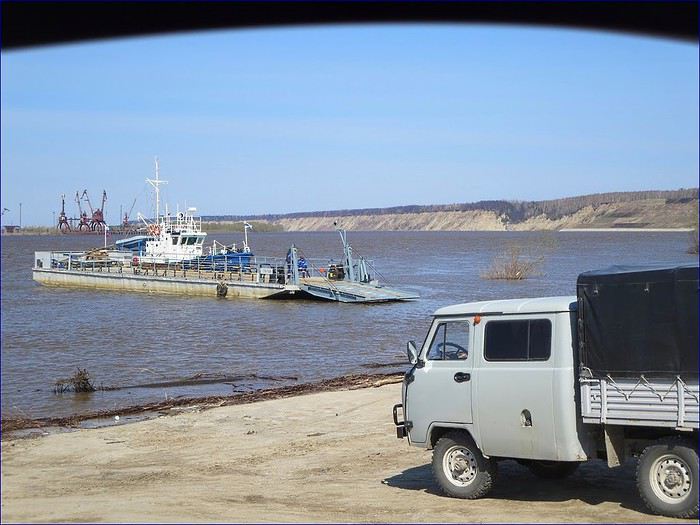
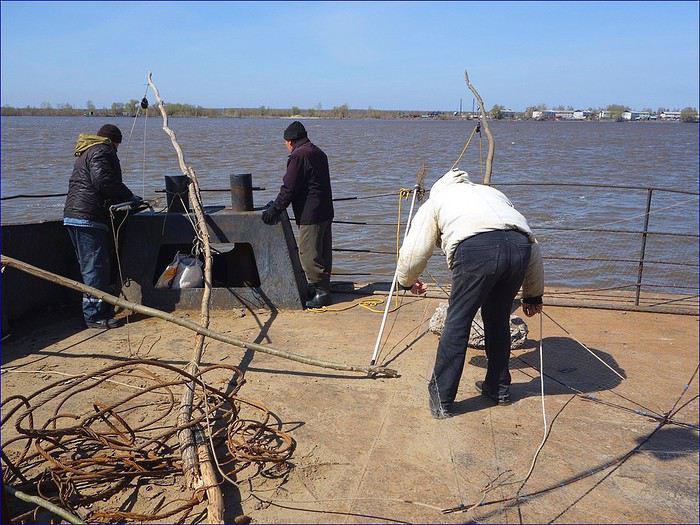
2. We keep going and meet some fishermen. But even they don’t know where to board a vehicle for the monastery.
3. After several fruitless searches, a young man who speaks a few words of English points us to a dock where, in summer, boats *might* serve the monastery. Miraculously, at the end of a rough track, we find an old ferry moored. But no one’s on board, and a chain blocks the entrance.
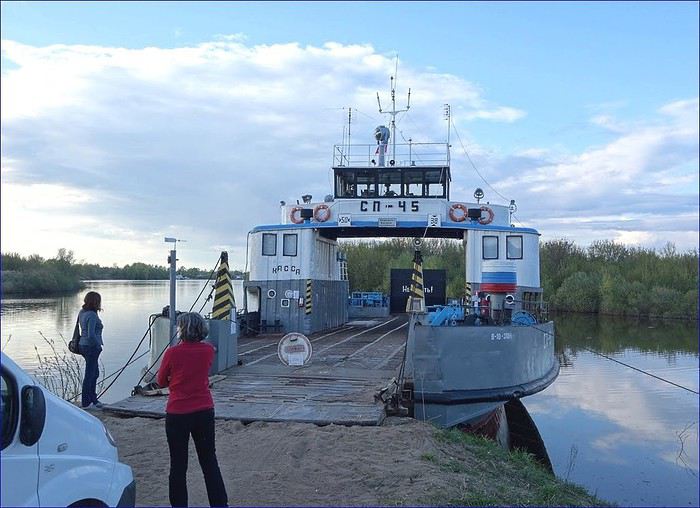
After an hour of waiting, a worker arrives and tells us they *will* cross the Volga tonight,
but the exit ramp at Makaryevo isn’t accessible for our vehicle.
The captain joins him, and seeing our disappointed faces, they confer, discuss,
and load some planks to raise the ramp!
Another miracle!
4. We board, with just one passenger accompanying us— the Trafic is the only vehicle on board.

5. The crossing was magical. And longer than expected, since the Volga here is several kilometers wide, and we’re navigating between countless islands!
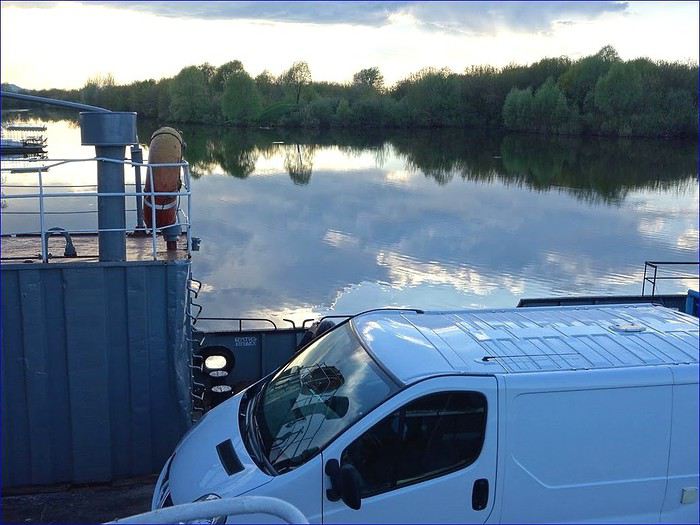
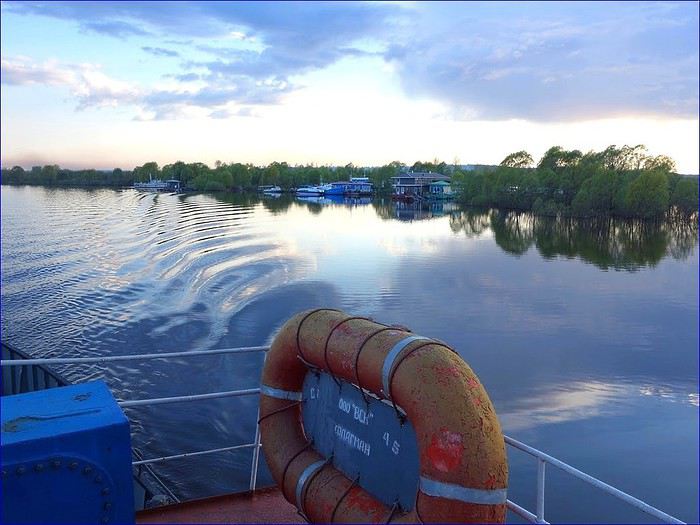
6. Under a sky that gradually clears, we discover there are homes on the river— invisible from the banks—that form small communities where people get around by boat!
7. Then, suddenly, around a bend in the channel, the monastery appears in the distance on the northern bank.
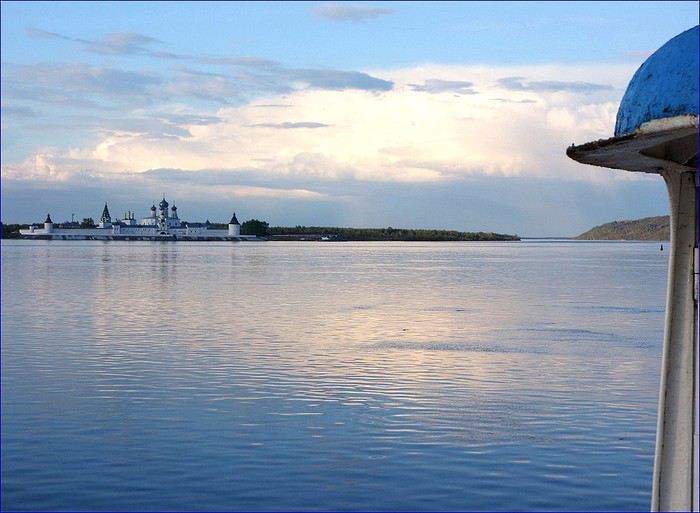
8. At the exact moment our boat rounds the buoy and nears the monastery, the sun breaks through the clouds!
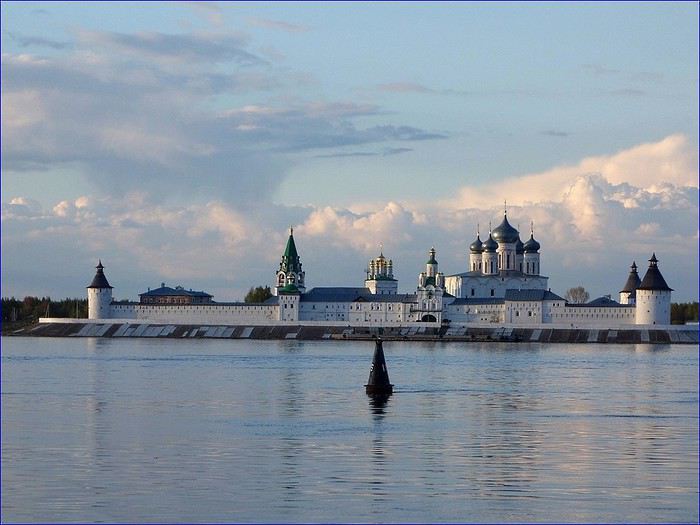
9. A breathtaking sight, with our boat gliding along the monastery walls in absolute silence.
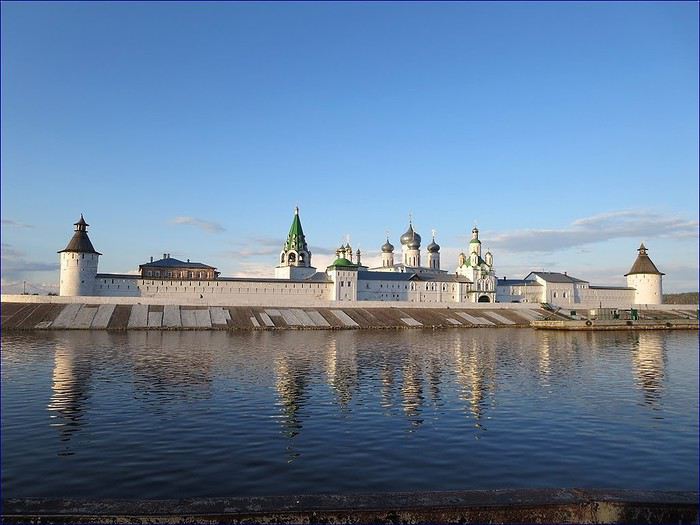
10. The sky, now a deep blue, makes the vibrant colors of the onion domes pop.
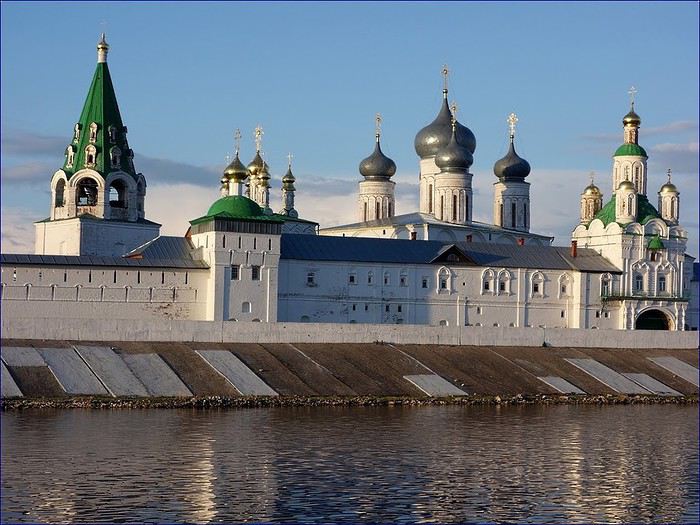
11. We sail slowly past the monastery under extraordinary light— something our little compact camera can’t fully capture.
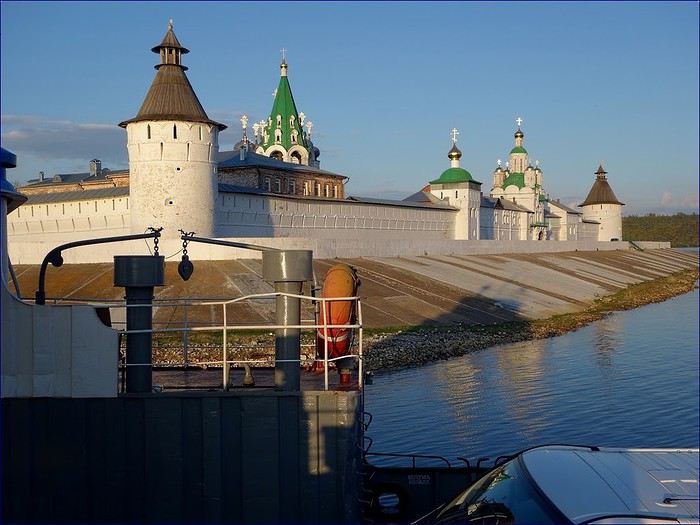
12. As promised, the captain and his crew adjust the exit ramp. You can’t tell from the photo, but even with the planks, it was a close call— the van’s chassis barely cleared the ramp. We thanked them warmly.
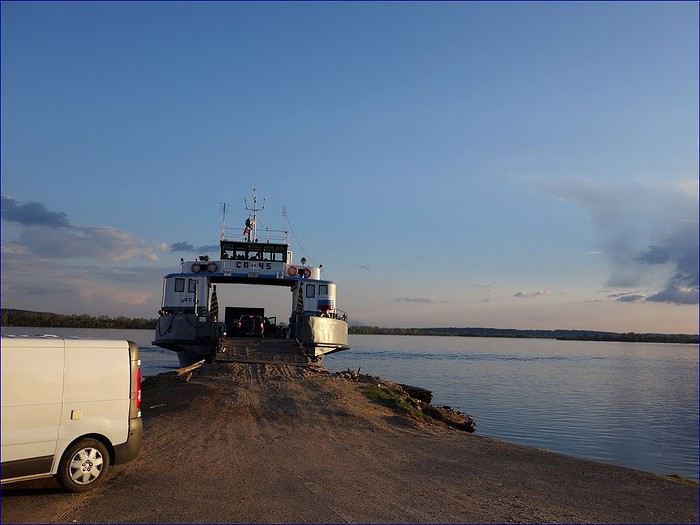
13. By the end of the day, the monastery is, of course, closed. But another miracle happens! It turns out the passenger who crossed with us is the mayor’s wife. When Sylvie told her we were from France, she called her husband, who immediately contacted the Mother Superior. Like in a dream, the monastery opens just for us. A nun and a guard come to meet us and take us through the chapels and gardens!
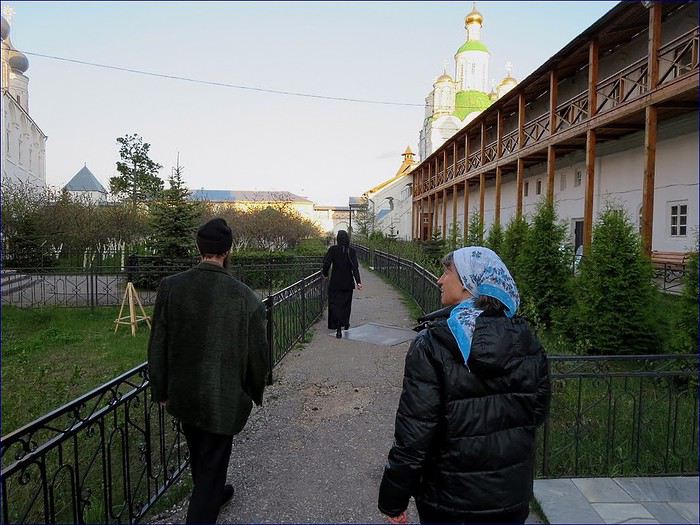
14. A visit all the more intimate since only the silent nuns, deep in prayer, are present in these sacred spaces.
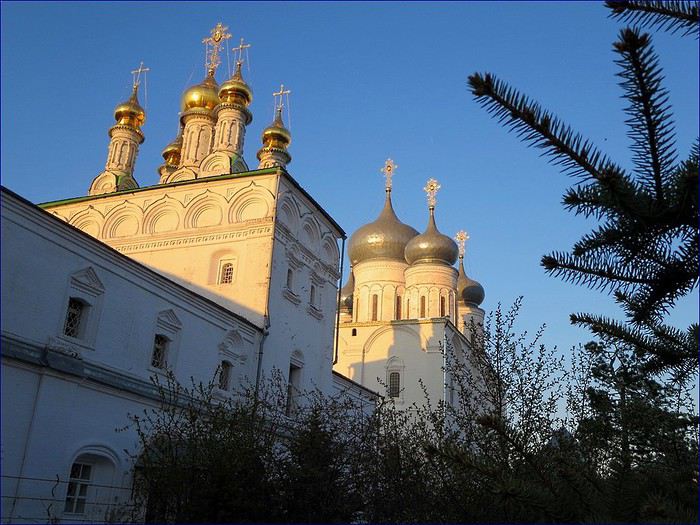
15. After dinner in our little van, we enjoy the exceptional light illuminating the now-closed monastery. We’re the only visitors, and the site feels like a massive ship anchored on the Volga.
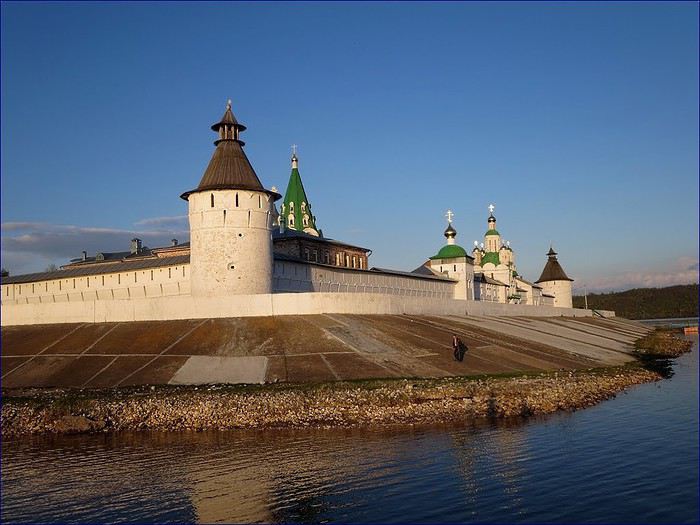
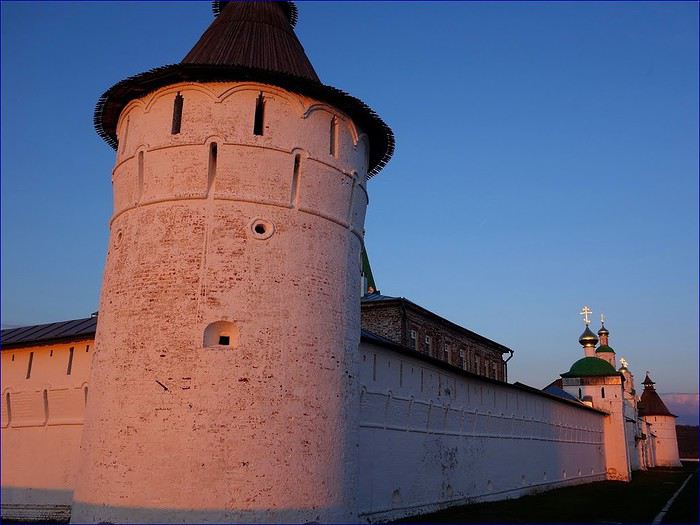
16. The setting sun now bathes the monastery walls in gorgeous pink hues!
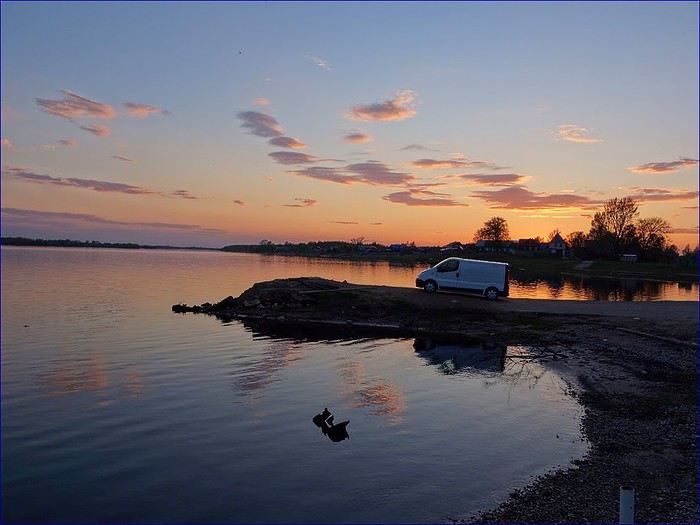
17. Gradually, the legendary Volga itself takes on magical colors! For the night, I’ll just back the van up to level it. It’ll take us a while to fall asleep after such intense moments.
18. Just as inexplicably, the magic continues the next morning! Seeing I’m struggling with my knee, the guard lets us drive slowly along the monastery’s perimeter path. So there we are at dawn, solitary wanderers between the Volga and the monastery walls.
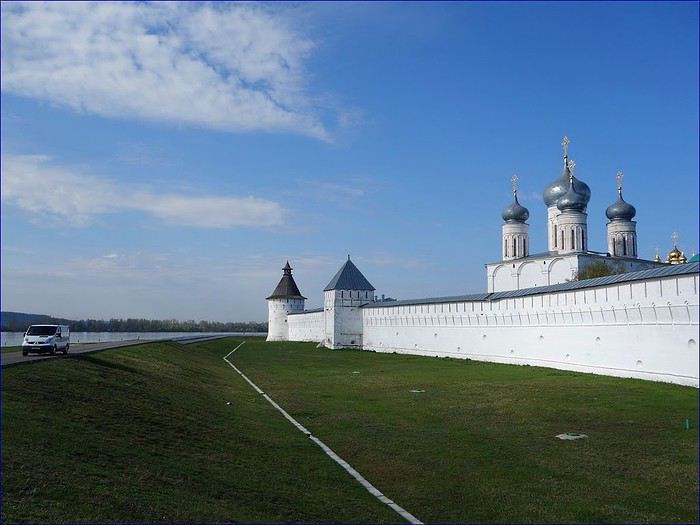
19. The morning light now illuminates the monastery’s eastern façade, which we hadn’t admired yesterday. An exceptional moment.
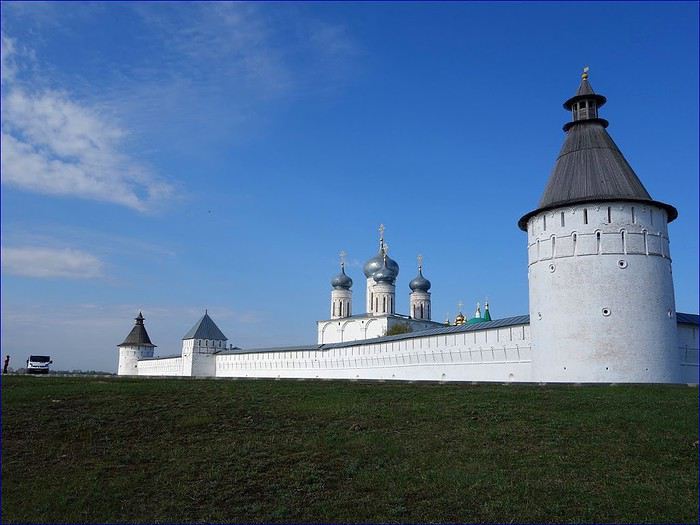
20. Even more impressive when we realize we’re on the nuns’ prayer path. We cross paths with them—tall, silent, black-clad figures, fully covered.
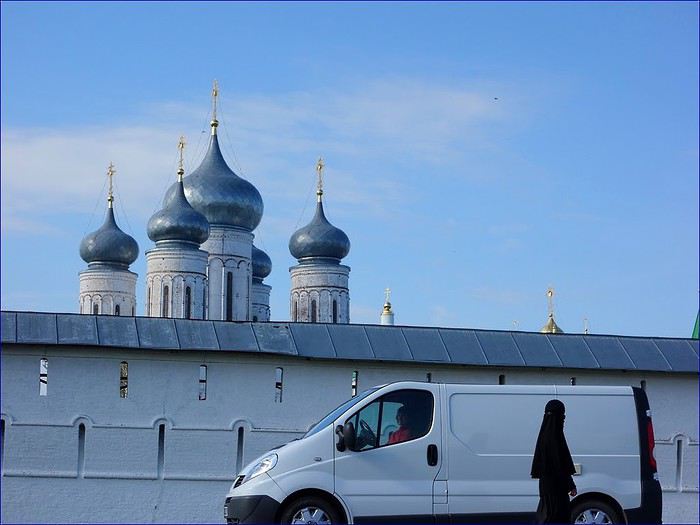
We leave Makaryevo with regret, following the Volga toward Kostroma on the Golden Ring. That’s about all there is to add.
We’ve already taken three long trips through Russia in our little van. The travel journals are shared in the link in our signature.
Best regards, Sylvie & Bernard
Today is January 7th, Orthodox Christmas Day.
It’s the perfect occasion to share on VF a religious site that left a lasting impression on us.
For a long time, we’d admired photos of the Makaryevo Women’s Monastery on Russian websites. They’re always taken from cruise hydrofoils that, in season, depart from Nizhny Novgorod.
This gave us the idea for a crazy challenge: to visit the monastery during a river cruise, with our little plumber’s van that’s become the common thread of our travels!
This challenge seemed impossible to pull off.
The equation was indeed impossible to solve
1. Find a dock 2. Load the van onto a boat 3. Cross the Volga 4. Arrive at sunset 5. Sail past the monastery 6. All with no reliable information. NONE!
Incredibly, every obstacle fell into place one after another! Gifting us unforgettable moments.
The photos follow our exact journey.
1. We arrive on the southern bank of the Volga, searching for a ferry to Makaryevo. First attempt, first failure—we’re way too far east. We find a second ferry, but it serves a different town on the northern bank.

2. We keep going and meet some fishermen. But even they don’t know where to board a vehicle for the monastery.

3. After several fruitless searches, a young man who speaks a few words of English points us to a dock where, in summer, boats *might* serve the monastery. Miraculously, at the end of a rough track, we find an old ferry moored. But no one’s on board, and a chain blocks the entrance.
After an hour of waiting, a worker arrives and tells us they *will* cross the Volga tonight,
but the exit ramp at Makaryevo isn’t accessible for our vehicle.
The captain joins him, and seeing our disappointed faces, they confer, discuss,
and load some planks to raise the ramp!Another miracle!
4. We board, with just one passenger accompanying us— the Trafic is the only vehicle on board.

5. The crossing was magical. And longer than expected, since the Volga here is several kilometers wide, and we’re navigating between countless islands!

6. Under a sky that gradually clears, we discover there are homes on the river— invisible from the banks—that form small communities where people get around by boat!

7. Then, suddenly, around a bend in the channel, the monastery appears in the distance on the northern bank.

8. At the exact moment our boat rounds the buoy and nears the monastery, the sun breaks through the clouds!

9. A breathtaking sight, with our boat gliding along the monastery walls in absolute silence.

10. The sky, now a deep blue, makes the vibrant colors of the onion domes pop.

11. We sail slowly past the monastery under extraordinary light— something our little compact camera can’t fully capture.

12. As promised, the captain and his crew adjust the exit ramp. You can’t tell from the photo, but even with the planks, it was a close call— the van’s chassis barely cleared the ramp. We thanked them warmly.

13. By the end of the day, the monastery is, of course, closed. But another miracle happens! It turns out the passenger who crossed with us is the mayor’s wife. When Sylvie told her we were from France, she called her husband, who immediately contacted the Mother Superior. Like in a dream, the monastery opens just for us. A nun and a guard come to meet us and take us through the chapels and gardens!

14. A visit all the more intimate since only the silent nuns, deep in prayer, are present in these sacred spaces.

15. After dinner in our little van, we enjoy the exceptional light illuminating the now-closed monastery. We’re the only visitors, and the site feels like a massive ship anchored on the Volga.

16. The setting sun now bathes the monastery walls in gorgeous pink hues!

17. Gradually, the legendary Volga itself takes on magical colors! For the night, I’ll just back the van up to level it. It’ll take us a while to fall asleep after such intense moments.

18. Just as inexplicably, the magic continues the next morning! Seeing I’m struggling with my knee, the guard lets us drive slowly along the monastery’s perimeter path. So there we are at dawn, solitary wanderers between the Volga and the monastery walls.

19. The morning light now illuminates the monastery’s eastern façade, which we hadn’t admired yesterday. An exceptional moment.

20. Even more impressive when we realize we’re on the nuns’ prayer path. We cross paths with them—tall, silent, black-clad figures, fully covered.

We leave Makaryevo with regret, following the Volga toward Kostroma on the Golden Ring. That’s about all there is to add.
We’ve already taken three long trips through Russia in our little van. The travel journals are shared in the link in our signature.
Best regards, Sylvie & Bernard
Hi everyone.
We’re planning a two-month trip to Morocco and Mauritania this fall (2026). We’d like to use this trip to get some bodywork and paint done on our VW T4 camper bus.
Does anyone have recommendations for trustworthy auto body shops (either personally tested or firsthand recommendations)?
Thanks in advance.
"Hey fellow road-trippers! 🚐🔥
After 4 years on the road, I’ve noticed something simple: we’re all looking for the same things. Authentic welcomes, great local eateries, and stops that don’t feel like supermarket parking lots.
But it’s always bugged me to see small producers or local guesthouses getting their margins eaten up by big booking platforms.
That’s why I created TerraNomad.
The concept is straightforward:
The pro (farmer, restaurant, small campsite, guesthouse) pays no commission to be on our map. In return, they offer a special welcome or discount to members.
It’s direct, local, and human. We’re starting in France, then heading together toward Morocco, Spain, and Portugal. Quick question: Does this kind of "no-middleman" network speak to you? I’m opening the first 100 Founding Member spots this Friday night (special launch price at 12 € for the year—just 1 € per month). Can’t wait to read your thoughts and see if you’d be up for this adventure! 🌍✋"
The pro (farmer, restaurant, small campsite, guesthouse) pays no commission to be on our map. In return, they offer a special welcome or discount to members.
It’s direct, local, and human. We’re starting in France, then heading together toward Morocco, Spain, and Portugal. Quick question: Does this kind of "no-middleman" network speak to you? I’m opening the first 100 Founding Member spots this Friday night (special launch price at 12 € for the year—just 1 € per month). Can’t wait to read your thoughts and see if you’d be up for this adventure! 🌍✋"
Is it complicated to rent a car and drive in Morocco? Also, is an international driver’s permit mandatory? Thanks
hi
where can you park a camper van in Trieste to sightsee and sleep?
thanks
Hi there,
Does anyone have a good agency recommendation for renting a camper van in Morocco (Marrakech or Essaouira) for about two weeks in March 2026?
Thanks for your tips!
Hi everyone,
We’re a family of four—two adults with two kids aged 4 and 7—about to embark on a year-long round-the-world trip in a camper van. I’m currently planning the Asia leg, which should last about 6 months. We’ll arrive in Thailand in January, head north, then move on to Laos. Ideally, we’d continue to Vietnam, Cambodia, and then return to Thailand to head south into Malaysia. If the budget allows, we’d love to include China and Japan. The big question after lots of research is: how easy is it to temporarily import a vehicle into these countries? The info I’ve found is outdated (2019–2020), and given how quickly regulations change, I’d love to hear from anyone currently (or recently) traveling in these countries with their vehicle. I’ve read that you need a local guide in Vietnam, local license plates in China, and that importing a vehicle into China is quite complicated—are these rules still in place? More generally, is there a recommended route for this part of the world with a camper van?
Thanks in advance!
We’re a family of four—two adults with two kids aged 4 and 7—about to embark on a year-long round-the-world trip in a camper van. I’m currently planning the Asia leg, which should last about 6 months. We’ll arrive in Thailand in January, head north, then move on to Laos. Ideally, we’d continue to Vietnam, Cambodia, and then return to Thailand to head south into Malaysia. If the budget allows, we’d love to include China and Japan. The big question after lots of research is: how easy is it to temporarily import a vehicle into these countries? The info I’ve found is outdated (2019–2020), and given how quickly regulations change, I’d love to hear from anyone currently (or recently) traveling in these countries with their vehicle. I’ve read that you need a local guide in Vietnam, local license plates in China, and that importing a vehicle into China is quite complicated—are these rules still in place? More generally, is there a recommended route for this part of the world with a camper van?
Thanks in advance!
hello fellow travelers
For my golden years, I'd like to drive to India in my 508. I want to avoid Iran and Pakistan. Instead, I’m thinking of going through Turkey, Georgia, Armenia, Azerbaijan, then taking the ferry from Baku to Türkmenbaşy in Turkmenistan, followed by the Silk Road through Central Asia—Uzbekistan and Kyrgyzstan.
After that, China? I’ve seen that some travelers manage to drive through China with their own vehicle... Then Tibet, Nepal, and India... But things get tricky with the Himalayan crossing. I’ve checked on Google—it looks tough.
Any tips or info on these routes? Thanks
After that, China? I’ve seen that some travelers manage to drive through China with their own vehicle... Then Tibet, Nepal, and India... But things get tricky with the Himalayan crossing. I’ve checked on Google—it looks tough.
Any tips or info on these routes? Thanks
Hi,
It seems that vans and campervans aren't allowed on Hurtigruten ferries?
We have a California van with a bike rack—length: 5.70 m / height: 2.20 m / width: 1.95 m.
We'd like to take the ferry from Trondheim to the Lofoten Islands this coming September.
Thanks for sharing any info!
regions Brittany, Rhône-Alpes, and Massif Central (Auvergne Limousin)
Hi fellow travelers,
We’re planning our first trip to Iceland.
We’re considering renting a 4x4 where we could sleep from time to time.
My question is: What’s the current regulation in Iceland? Which areas allow sleeping in your vehicle, and where is it prohibited (requiring you to stay in campgrounds)?
In June, is it possible to find spots without having booked in advance?
Sergio
Hi there,
We’re traveling in our camper van from Haute-Savoie.
We’ve got 2 weeks in April and want to explore northern Portugal.
We’re thinking of:
- Peneda-Gerês National Park - the Douro Valley - Porto
We love nature, hiking, and culture (and also good food and wine).😉
Do you have an itinerary to suggest?
Thanks in advance for your replies
We’re traveling in our camper van from Haute-Savoie.
We’ve got 2 weeks in April and want to explore northern Portugal.
We’re thinking of:
- Peneda-Gerês National Park - the Douro Valley - Porto
We love nature, hiking, and culture (and also good food and wine).😉
Do you have an itinerary to suggest?
Thanks in advance for your replies
Hi there,
We're planning a full week in Iceland in April. Given the short timeframe to prepare, I’m asking for some help on the forum.
We’re considering renting a camper van to be more independent with our travel. - Is this really a good idea at this time of year due to weather conditions (cold nights, poor road conditions, etc.)? - Can we just "park" anywhere for the night to sleep, or do we absolutely have to go to a campsite? What are the approximate rates for a van with 2 people? Do we need to book in advance? - If this mode of transport is recommended, do you have any good places to rent one?
Iceland is still a big island with lots of points of interest, so I think it’ll be tough to see everything in 8 days. - Are there parts of the island we should prioritize in April? We like hiking (nothing too long—6 or 7 hours is out of the question) and unique landscapes. - Are some sites inaccessible at this time of year? - Is Reykjavik worth stopping for a day or two?
Thanks in advance for your answers!
Jeff
We're planning a full week in Iceland in April. Given the short timeframe to prepare, I’m asking for some help on the forum.
We’re considering renting a camper van to be more independent with our travel. - Is this really a good idea at this time of year due to weather conditions (cold nights, poor road conditions, etc.)? - Can we just "park" anywhere for the night to sleep, or do we absolutely have to go to a campsite? What are the approximate rates for a van with 2 people? Do we need to book in advance? - If this mode of transport is recommended, do you have any good places to rent one?
Iceland is still a big island with lots of points of interest, so I think it’ll be tough to see everything in 8 days. - Are there parts of the island we should prioritize in April? We like hiking (nothing too long—6 or 7 hours is out of the question) and unique landscapes. - Are some sites inaccessible at this time of year? - Is Reykjavik worth stopping for a day or two?
Thanks in advance for your answers!
Jeff
Hi there,
Most of the time when I travel, I tow a trailer with an ATV for my local trips... I’d love to hear from anyone who’s traveled with a trailer and a second vehicle of any kind—especially the downsides of towing a trailer in Norway, aside from ferry costs.
Thanks!
Most of the time when I travel, I tow a trailer with an ATV for my local trips... I’d love to hear from anyone who’s traveled with a trailer and a second vehicle of any kind—especially the downsides of towing a trailer in Norway, aside from ferry costs.
Thanks!
hi,
I’m planning a trip to Albania in a camper van, most likely between May, June, and early July (2027), for about 60 days. On the way down, I’ll go as far as Bari (or Brindisi) and cross by ferry, and on the way back, I’ll go through the former Yugoslavia (or maybe take the return ferry?).
Has anyone been there recently? What are the roads like, the must-see spots, and any general tips you can share?
There’ll probably be two of us traveling together.
Thanks
Hi there,
During our last trip to Greece in 2021, we used Anek Lines' open deck offer, which allowed us to spend the night in our van on an open deck by the sea with access to the ferry's bars, restaurant, and showers (on the Ancona-Igoumenitsa route).
From my initial research, it seems this service no longer exists—can anyone confirm this?
Any alternatives?
Thanks
Hi everyone,
I’m planning to drive my camper van to southern Spain in autumn 2026. Ideally, I’d like to find a ferry leaving from France (Marseille or Toulon, doesn’t matter) that drops me off as far south in Spain as possible. I’ve done some research but haven’t had any luck.
Thanks for your tips!
Vanouk
We’d like to spend 15 days in August visiting Normandy by camper van, starting from Lyon.
Has anyone got an itinerary to suggest for exploring Normandy?
We’d like to go to Calvados to visit: Flower Coast, Honfleur, Cabourg, Deauville, D-Day landing beaches
Mont Saint-Michel
Alabaster Coast, Étretat cliffs, and maybe Rouen Fabienne
We’d like to go to Calvados to visit: Flower Coast, Honfleur, Cabourg, Deauville, D-Day landing beaches
Mont Saint-Michel
Alabaster Coast, Étretat cliffs, and maybe Rouen Fabienne
Hi there,
I have a bit of a crazy dream... I'd love to drop everything and hit the road with my wife and kids in a camper van.
I want to visit villages to learn, immerse ourselves in other cultures, and see different perspectives on the world. To teach my kids different values.
Hi everyone,
I’m planning a campervan road trip and would love some tips from those who know these countries: Slovenia, Bosnia and Herzegovina, Croatia, Montenegro, and Slovenia again. At the moment, nothing’s set in stone, but for example, is it better to visit Slovenia or Bosnia? My preferences lean toward landscapes (rivers, sea, lakes)—basically anywhere there’s water! :) Wild camping, cheap or even free spots, and a *very* tight budget—it’s the discovery, curiosity, and meeting locals that drive me. I’ll visit cities and sites only if access is easy (by bike, for example, or by train from an affordable campsite) and if visitors aren’t treated like cash cows. Just reasonable stuff, really. So, any advice is welcome—like swimming spots or easy hikes along coasts or rivers. I love caves and offbeat visits (salt mines in Poland, La Roque Saint-Christophe in France, etc.). Castles and old ruins? Not really my thing... Thanks for your help! Sylvia
Hi, I’m planning to pick up a camper van in Dubai and drive it back to France... is this even possible? What’s the best route? What are the main challenges? Are there secure parking areas along the way? Is diesel fuel available for the whole trip? ... So many questions... Thanks for your help! See you soon!
I'm planning to drive to the UAE by road, going through Iraq. Has anyone done this and can give me some info? Specifically about the border crossings Turkey/Iraq and Iraq/Kuwait.
Hi there,
I’d love to hear your thoughts on a trip to New Zealand in a campervan. Is it a good idea to mix hotels and a car on the North Island and a campervan on the South Island? Or should I do the whole trip in a campervan—though visiting big cities seems trickier that way.
Other questions: which companies do you recommend, and what are the least tiring or most sensible routes? 😄
Thanks for sharing your experiences and ideas!
Hi there,
We’re planning to tour Scandinavia by camper van—Denmark, Sweden, Finland, and Norway (in that order)—for 5 weeks from late May to late June 2026.
I’ve done it before, but that was way back in 1980 😎 and by hitchhiking!
We’d love to hear from anyone who’s done this trip about the best routes, great tips, must-know advice, and what to do or avoid (ferries, campsites, etc.).
Thanks in advance!
hi there,
We’re heading to southern England this summer in our camper van, including a stop in London.
Does anyone have a good experience with a campsite near London that has easy access to public transport to get into the city center? Ideally, we’d like to leave the camper van at the campsite...
Thanks so much in advance for your help!
We’re heading to southern England this summer in our camper van, including a stop in London.
Does anyone have a good experience with a campsite near London that has easy access to public transport to get into the city center? Ideally, we’d like to leave the camper van at the campsite...
Thanks so much in advance for your help!
Hi everyone,
I’m planning a trip with my camper van in autumn 2026 to head to southern Italy from Genoa by ferry.
Ideally, I’d like to leave from Genoa for southern Italy (like Messina) or another city in the boot.
I’ve done some research online but haven’t had any luck.
Can you help or give me some advice?
Thanks in advance!
Vanouk
Hi there, we’ll be in Portugal from March 9 to April 14, 2026. We’ve booked our first five days in Lisbon for sightseeing. After that, we’d like to rent a campervan (RV), but we’re having trouble finding a good site for the rental. The rental would be for about three weeks. Do you have any suggestions for us? We think it’s best to book the campervan before we arrive. And since we’re not mechanics, we need a vehicle in good condition...
Thanks so much for your suggestions. We’re open to everything—even route ideas and places to visit! Pierrette