Bonjour,
Je pense partir le 15 juillet avec une arrivée sans doute sur Chengdu
Je souhaite me rendre au festival de Yushu ( Jeykundo) qui se déroule à partir du 25 juillet
J'avais envisagé de me rendre à Labrang avant mais les discussions sur le forum ne sont pas très encourageantes
visite speed en groupe !!!!
Je me demande si je n'ai pas intérêt à privilégier les environs de Xining, voir de couper le trajet Xining -Yushu 18h de bus il me semble
Dans ce cas que me conseillez vous ?
Sinon j'ai vu qu'il y a un festival aussi en été à Tongren pas très loin de Xining
qq un connait-il cette petite ville et la date du festival ?
Merci pour vos conseils
Siya
http://perso.wanadoo.fr/chine-ethnic
en réponse à (à propos de Labrang) : les discussions sur le forum ne sont pas très encourageantes
visite speed en groupe !!!!
Tu peux très bien aller par toi-même à Labrang par bus depuis Xining.
Personnellement, j'ai pris un bus pour Rekpong - nuit à Rekpong et lendemain matin bus pour Labrang (très tôt) - visite de Labrang - nuit à Labrang - retour en bus vers Xining (très tôt aussi).
Bonjour
Quand je disais en groupe, je voulais dire la visite elle-même du monastère
J'ai l'impression que les visiteurs sont un peu déçu
Si je vais à Xiahe ce sera par mes propres moyens
Siya
J' y suis allée cet hiver (janvier) : on me m'a parlé de visite en groupe. J'ai visité seule.
Par contre j'ai été décue par Kumbum. Pas loin, il y a Takster, lieu de naissance du Dalai Lama.
Je n'ai rien aimé à Kunbum: c'est assez indescriptible, froid, vide. c'est une impression toute personnelle, je te l'accorde!
Oui j'ai visité sans billet ... mais c'était l'hiver, pas de touristes, par contre énormément de pélerins.
NB : ce n'est pas le seul endroit que j'ai visité sans billet d'ailleurs!
Bonjour,
J'y vais fin juillet, il risque d'y avoir un peu plus de monde
Qu'est ce que le Kumbun ? est ce loin de Xining ? et Takster ?
J'en profite pour renouveler ma demande sur les sites intéressants entre Xining et Yushu
Siya
Bonjour Suisiya,
Il y a en effet beaucoup de choses intéressantes entre Xining et Yushu. Mais souvent difficile d'accès avec les transports en commun. Songes-tu à passer quelques jours à droite ou à gauche de la grande route, car sur ou juste à côté de la grande route même, il n'y a évidemment pas grand chose. Je pense que parfois tu seras obligée de louer une voiture. Suivant ta réponse, je peux te donner des indications sur ce que tu pourrais voir, par contre moins d'indications sur les bus à prendre, car j'avais loué une voiture pour tout le circuit, ce que je souhaitais visiter étant pratiquement impossible à atteindre avec les transports en commun.
Tongren est une petite ville qui se développe avec plusieurs monastères, dont certains sont très réputés pour leur peinture des thankas. Beaucoup de thankas que l'on voit dans les monastères de la région de l'Amdo sont faits par les artistes de Repkong (Tongren en chinois).
Kumbum n'est pas loin de Xining, une excursion qui peut se faire dans la journée. Pour Kumbum, Labrang, tu risques en effet d'être déçue. L'atmosphère est moins empreinte de sérénité que les monastères plus reculés de l'Amdo, car visités par beaucoup de groupes.
Quant à Takster, je ne sais pas si tu peux y aller en transports en commun, car le village est interdit aux étrangers. Mais bien sûr, il y a toujours des privés qui acceptent de t'emmener.
Pour la réponse entre Xining et Yushu, j'attends que tu me dises si tu as le temps de t'éloigner de la grande route quelques jours et combien de jours à peu près. Pas trop loin de Yushu il y a bien sûr aussi des choses à voir, mais peut-être connais-tu déjà.
Takster est interdit aux voyageurs sans permis : ça c'est ce qui est écrit. Dans la pratique, il en va autrement ! je me suis rendue à Takster en prenant tout simplement un taxi à Xining, près de la gare. Je n'ai vu aucun point de checkpoint. D'autres voyageurs y sont allés tout comme moi sans le moindre souci.
Juste, moi aussi je m'y suis rendue sans permis. Mais je pense qu'il vaut mieux prévenir les gens que c'est normalement interdit sans permis. Ils peuvent ensuite faire eux-mêmes le choix d'aller chercher un permis, d'y aller sans, etc. Je pense qu'il est quand même nécessire de donner l'info à la base.
Il n'y a pas de checkpoint, d'après ce qu'un Tibétain m'a dit, quand ils ont décidé d'embêter le monde, ils sont généralement dans la maison même ou pas loin.
Sylvie
Bonjour,
Je ne sais pas si j'aurai vraiment le temps de m'éloigner de la route. Je pense arriver à Xining le 16 juillet et je voudrais bien arriver à Yushu le 23 au soir
cad avant veille du festival pour n'avoir pas trop de problème pour trouver un lit
Pas trop avant de dormir sur le sol sur un minuscule matelas comme au festival de Litang
Si je me sens en forme je peux commencer par Tongren puis prendre les petites routes qui traversent les monts Anye Maqen avant de rejoindre Huashixia puis Yushu
Sinon je peux prendre mon temps sur Xining, voire aller jusqu'au lac Qinghai hu ( Ca vaut le coup ou pas) puis aller tranquillement à Yushu, peut-être en m'arrêtant à Maduo ?? et après reprendre les monts Anye Maqen avant de redescendre sur Chengdu
Sans carte précise de la province, j'ai un peu de mal à évaluer
Dis moi un peu ce que tu as fait cela me donnera des idées
Trouver les bus pour moi ne présente pas de problème
Je connais un peu ces coins là
route tibet sud Chengdu-Zhongdian en 2004
et route Tibet nord Chengdu -Dege en 2005
Je m’étais surtout servi des cartes du guide Footprint de Gyurme Dorje et des livres du tibétologue Andreas Gruschke pour faire mon itinéraire (en anglais).
Le Qinghai Hu, tout au moins là vont les bus, c’est-à-dire au sud du lac, est décevant. Peut-être au nord c’est mieux mais il faut avoir le temps.
D’une façon générale, je ne pense pas qu’il y ait de bus tous les jours pour aller d’un point A à B dans la partie située entre Tongren et les monts Amnye Machen.
– De Xining vers Jentsa (je t’écris les noms tels qu’ils sont sur la carte de Gyurme Dorje, car il y a tellement d’écritures différentes). De là tu peux visiter les monastères Ger, Guwa, les caves Lhodorjetrak (impressionnantes), le monastère Lamo Dechen, la nonnerie Namzong dans le parc national Khamra (Kanbula). Très beaux paysages. Montagnes rouges et un grand lac.
– Guide: petite ville plus chinoise que tibétaine au premier abord. Quelques petits monastères intéressants. Beaux paysages faits de montagnes ciselées par la pluie et le vent avec différentes couleurs (ocre, rouge, blanc) le long du fleuve jaune.
– Xinghai, petite ville qui se trouve pas loin à gauche de la route Xining-Yushu: une trentaine de km de Xinghai, le monastère Drakar Treldzong. Pour y aller on passe par un grand canyon. Un des moments les plus forts de ce voyage pour moi.
– Mato/Maduo: de là nous sommes allés vers les sources du fleuve jaune. Paysages fantastiques une fois encore, beaucoup d’antilopes, quelques kyangs (ces ânes tibétains), des oiseaux de proie. Ca devait bien faire 30 à 50 km de Maduo.
– Ensuite nous sommes allés Dari/Gyume. Près de là très beau monastère Nyingmapa. À Dari nous n’avons pas eu de problème, alors que la police nous a vus, donc je suppose que c’est une ville ouverte, mais par contre sur la route de Dari vers Maqen, nous n’avons même pas eu le droit de descendre prendre un verre de thé. Maqen est à nouveau une ville ouverte.
– De la ville de Maqen aux monts Amnye Maqen il y a pas mal de km, le temps est toujours assez incertain et change très vite mais quel bonheur d’apercevoir l’Amnye Maqen de loin sur la route quand on a de la chance. Quand nous avons quitté la ville, je ne m’imaginais pas une seconde que nous pourrions entr’apercevoir le moindre petit bout de l’Amnye Maqen, mais tout d’un coup la montagne nous est apparue sous le soleil.
– De Maqen vers Tongde en passant par Rabgya Gompa entre autres. Il y a encore d’autres monastères en route mais Rabgya est le plus important. Les paysages en route sont très beaux aussi, beaucoup de terre rouge et quelques forêts.
– Route de Tongde Tongren en passant entre autres par le beau monastère de Hor.
– Tongren plusieurs monastères faciles d’accès. Si tu souhaites ramener un tangkha, c’est là qu’il faut acheter (directement aux moines peintres dans les monastères). L’art de Tongren est très beau.
– Retour sur Xining: pas loin de Xining l’est et au nord quelques monastères, Qutan, Yangzun (vers Ledu, Ping’an) et vers Huzhu, Datong également quelques monastères: Tianmen Si, Yiuning Si, Chubsang Gompa, Ganghui Si (excuse parfois j’ai les noms chinois, parfois les noms tibétains, mais ce sont tous des monastères tibétains)
Pour te donner une toute petite idée: ce voyage a été effectué en 3 bonnes semaines en voiture privée.
– Du côté de Yushu dans la ville même et aux alentours, un grand nombre de monastères Kagyu: Dondrubling, Benchen, monastère de la princesse Wencheng, Trangu, il ya aussi le champ de pierres mani, Gyanak Mani avec plus de 2 millions de pierres mani.
Je suppose que tu es au courant, mais on ne sait jamais. Pendant les mois d’été, il y a beaucoup de retraites dans les monastères et pendant ces semaines, les femmes sont interdites d’entrée. C’est marqué par un signe avant l’entrée. Si on demande la permission au supérieur du monastère, il n’y a généralement pas de problème, mais il faut la demander avant de poser le pied dans l’enceinte. Si tu es seule, il faut donc essayer de te faire remarquer de la porte d’entrée pour que quelqu’un aille demander au supérieur. La permission est en général accordée. Une fois, mon ami et moi nous n’avons pas vu le signe, j’avais donc déjà fait quelques pas à l’intérieur et là je dois dire qu’ils n’étaient pas contents du tout, mais pas du tout.
Je te souhaite un excellent voyage et si je peux encore t’aider pour quoi que ce soit, n’hésite pas. Prévois large pour les temps de transport dans la partie intérieure (entre Tongren et Maqen par exemple, les routes ne sont pas aussi bonnes que celle de Kangding à Manigango. Par contre de Xining à Yushu c’est une bonne route, bien que certains troncons (2006) ne soient pas encore finis.
oahhhh
Que de détails
je te remercie, très utile effectivement
En ce moment je suis en train de me demander si je tente l'aventure
pb de logement à Yushu, je vais peut-être trouver qq pour me prêter une tente, je crois que je dois m'y résoudre
Au fait es tu allée à Yuanyang ?
Siya
Oui, j'y suis allée il y a quelques années. Kunming, Tonghai, Jianshui, Yuanyang. Fin décembre, les rizières étaient remplies d'eau. Absolument magnifiques et quel travail de fourmi de sculpter ces montagnes! Fin décembre il y a aussi des fêtes chez les minorités du coin, où tout le village mange dehors, les tables étant placées les unes après les autres tout au long de la rue principale. Très sympa.
Mais je crois que tu y es allée aussi, si tu es la "Siya" de routard.com. Ou ce n'est pas toi?
En ce qui concerne Yushu, il est en effet très difficile de se loger pendant le festival. Et parfois, selon un ami tibétain, la forte présence policière pendant le festival est assez... gênante pour l'ambiance. Ca dépend des années.
Sylvie
Non, pas pendant le festival de juillet. J'y étais en août il y a deux ans et il y avait un "petit" festival en l'honneur d'un tulku qui habite depuis longtemps au Népal et était revenu à son monastère en visite près de Yushu: courses de chevaux, chants, danses. Petit mais très sympa. Donc pas de pb de logement.
Mon ami tibétain habitant à 600 km de Yushu, je ne peux même pas te proposer de le contacter pour qu'il t'aide à trouver quelque chose.
Sylvie
Suite au tremblement de terre à Jiuzhaigou. je dois changer une partie de mon parcours ce qui m'ennuie beaucoup. Je devais faire: pékin / pingyao / xian /…
Est ce que quelqu'un sait si à ce jour, ou pour les mois à venir la visite de Labrang (xiahe) est de nouveau ouverte aux étrangers...visible... non en 2008,…
Je pars en Chine en février prochain, j'irais au festival de labrang, si vous avez des adresses d'hotels sympas à Pékin (hutong), à Pingyao, à Lanzhou et à…
I’m looking for advice from seasoned travelers about a roughly one-month trip to Japan.
From late October to late November 2026.
We often travel in Southeast Asia but have never been to Japan.
Based on what I’ve read, I’d love to hear your thoughts on:
- Is traveling day-to-day, without booking hotels or trains in advance, possible in Japan?
(I’ve read many travel journals and blogs that say everything was booked way in advance… but that’s not how we usually travel.)
- Will the Japan Rail Pass be worth it for us?
(According to an old simulator, I’m looking at around 400 € for trains compared to 570 € for the JRP.)
Here’s our rough itinerary (which may change):
- Arrival Osaka: 3 nights with Nara
- Hiroshima and Miyajima Island: 3 nights
- Kurashiki or Naoshima: 2 nights
- Himeji: 1 night
- Kyoto: 4 nights
- Kanazawa: 2 nights
- Takayama and Shirakawa-go: 3 nights
- Around Mount Fuji: 3 nights
- Tokyo with Nikko: 6 nights (no theme parks)
Departure from Tokyo
Hi,
My departure is coming up soon—two months backpacking in Taiwan, so much to discover! I’d love to hear about your travel experiences.
My main interests are meeting people, understanding how things work, hiking, and nature in general. I’ve also done a lot of reading about Taiwan’s complex situation.
I do stone sculpture.
I also want to visit Orchid Island for its history.
Marie
I booked my trip from May 5 to 26, 2027. I’m starting to plan my itinerary and look for hotels (I know it’s early!). While I’ve found some in Seoul and Busan, I’m noticing that elsewhere—like Yeosu—most hotels aren’t available (on Booking.com, for example, almost all are unavailable). AI tells me not to worry because hotels in South Korea only open bookings 6 months in advance, so it’s normal to see most of them unavailable on booking sites.
Could you confirm this for me and, of course, reassure me (!)? Thanks so much.
philippe
We’re back from a one-month trip to China and wanted to share our itinerary. Hopefully, this can give future travelers some ideas for exploring this beautiful country.
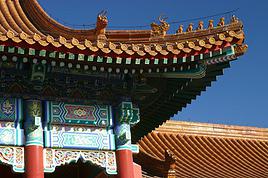
Beijing → Temple of Heaven / Forbidden City
Jinshanling → Great Wall
Zhangjiajie → Tianmen Mountain and Heaven’s Gate
Wulingyuan → Avatar Mountains / sandstone pillars
Fenghuang → riverside houses
Ping’an → terraced rice fields
Tiantouzhai → village / rice terraces
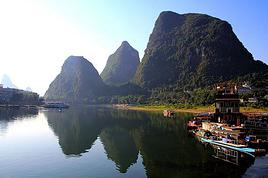
Yangshuo → Li River / karst mountains
Shanghai → skyline with the Oriental Pearl Tower
Our travel journal is available on our travel journal, written day by day. You’ll find lots of photos and some travel tips there.
We’re arriving as a group of three in Tokyo on Saturday, October 17th, then heading straight to Kyoto by direct train.
On Sunday and Monday, we’ll explore Kyoto, and in the evening, we’ll take a train to Osaka to spend the night.
On Tuesday, we’ll pick up a rental car at Itami Airport for a 6-day/5-night road trip around Shikoku:
- 2 nights in the Iya Valley
- Thursday morning, we’ll head to Matsuyama for 2 nights.
- Saturday, we’ll visit Mima (town, a few temples + overnight stay) and return on Sunday to drop off the car in Osaka.
We’ll leave very early on Monday the 26th by plane for Aomori in northern Honshu, where we’ll pick up another rental car at the airport for a 5-day/4-night trip:
- Day 1: Tsugaru Peninsula (Takayam Inari, Cape Tappi, Kanita); overnight in Kanita
- Day 2: Ferry transfer to the Mutsu Peninsula (cliffs, Lake Usori); overnight in Shimofuro
- Day 3: Head to the Hakkoda Mountains and onsens galore; overnight TBD
- Day 4: Return the car in Aomori by noon and explore the city before taking the train to Tokyo in the evening
We’ll spend Friday night in Tokyo, wander around on Saturday, and head home on Sunday.
Thoughts on the road feasibility of this trip? We’ll be there right in the middle of Koyo season, so it’ll be busy...
I know it’s a lot of driving, but there are two of us who can take turns. We’re not afraid of driving, even in the mountains and on the left side! Just wondering, are we going to be rushing, or is this manageable? AI says it’s all good, but it’s not the one driving...
Any tips for booking accommodations in the Iya Valley? Not many places have email addresses or websites (I know Booking.com exists, but not all listings are on there... and given the season, I think it’s better to book ahead!). Same question applies for northern Honshu.
For the rental car, I’m thinking of going with Alamo since at least it’s in French and straightforward, but are there any direct rental companies with user-friendly websites (Toyota Rentacar, ugh... 🏴☠️)?
Another question: With so many trains, is it even necessary to book them in advance? Can we just go to the ticket counter and grab seats on the spot?
For paying for the rental car, do we need a credit or debit card?
I’m starting to look at neighborhoods in Seoul, and I’m leaning toward staying in a hotel in Insa-Dong—I’ve spotted one really close to Unhyeongung.
Is this a good area—nice and convenient for exploring the city?
Otherwise, I’ve also found another hotel in Yongsan-Gu, right near the station of the same name. Is that station useful for getting around Seoul?
Since I’ll be in South Korea for nearly two months, I plan to spend at least a week in Seoul to recover from jet lag (it takes me a while to adjust...). So, I’d love a neighborhood that’s pleasant and a hotel not too far from a subway station.
I could really use your help to finalize our trip to Japan.
We’re heading there for three weeks with my partner, starting November 10th. Our plan was to visit Tokyo, Kyoto, and a few stops in between (nothing too original so far…).
However, we’re more into nature and hiking, so even though we do want to explore Tokyo and Kyoto, we’d like to maximize nature stops between the two. Initially, we’d considered places like Kamikochi, but I understand it’s not accessible this late in the season.
Hi there,
I’d like to do this cycling route over 2 or 3 days. I’m struggling to figure out and find a (good) bike rental that lets me start in Onomichi and drop off in Imabari. Can anyone help with great tips for rentals and accommodations along the route? How do I get back to Onomichi afterward?
Next year, we’re celebrating 20 years of marriage (and travel 🙂), and we’re looking for something new, pretty legendary, and something the teens will enjoy too.
The family council has settled on Japan for now. And it’d have to be a summer trip—no choice there.
The catch: I keep reading that August isn’t the right season for southern Japan. It’s hot, humid, and there’s a risk of typhoons… Okay, but what does that *actually* mean in practice? Are there any travelers who’ve been there during this time? Is it *that* unbearable?
We’re pretty familiar with Southeast Asia—last year, we dealt with scorching heat in Vietnam and insane humidity, plus a typhoon we experienced from a distance, and visiting Angkor in the blazing sun. Is it worse than that?
I’m back with my detailed itinerary for 20 days in South Korea—it’s my first trip to the country. Our idea is to experience a more rural and cultural Korea. Here’s the rough plan: Seoul for 4 nights at the start and 1 night at the end, Gurye for 4 nights, Suncheon for 4 nights, Namhae for 4 nights, and Gyeongju for 2 nights. The goal is to pick a base and explore the surrounding areas. What do you think of this itinerary? Anything you’d change?
thanks
hi everyone, we're heading out for a 12-day trek in the Japanese Alps. We're bringing freeze-dried meals like we always do. We just found out that importing meat is banned, even freeze-dried. Is that true? We already bought them. They're commercially made freeze-dried meals. Online, it's not specified that they have to be "commercially made" because you can make your own freeze-dried food. And since we've heard they're really strict in Japan, can anyone confirm this for us? thanks
I haven’t found what I’m looking for despite my searches!
For a 15-day trip next spring, I’d like to buy a card (preferably an eSIM, but a physical SIM is fine too) that also lets me make calls in the country (to contact a hotel, a tourist spot, etc.).
You can easily find options just for data, but I haven’t come across any that include calls, texts, or even MMS.
Could you recommend something?
hi there
I’m planning a trip in September—here’s my rough itinerary. What do you think? Is it easy to rent a car to get around between my stops? Thanks so much!
Philippe
StopNightsFull daysSeoul44Gurye (Jirisan)43Suncheon43Namhae43Gyeongju21Seoul1—
Hi,
July 2026: I’m writing to you from Dali.
First, I got scammed on Booking—AI-retouched photos. No tourists at this hotel (Yishanju Designer Hotel), and the reality was horrible: dirty, with a disgusting breakfast. It’s better to use Trip.com here.
Next, the old town was an infernal cacophony, packed with tourists who shoved past without a care. Some vendors harassed you to buy things. All the stalls sold the same cheap plastic junk or other uninteresting stuff. The beautiful scenery was ruined by vendors lining 100% of the alleys. Impossible to walk, crushing heat, nothing good to eat except fresh fruit. Horrible experience.
Day 2: We went to Cangshan Mountain by cable car—the ride was short and nothing spectacular. We were at 2,600 m.
My plan was to see Erhai Lake. Unfortunately, I followed the advice of an AI chatbot: take the boat at Langkan Dock. The Didi dropped us off in the nearest area, which was full of charming little alleys but packed with Chinese tourists. The three-wheeled yellow cabs zoomed through the narrow streets, forcing you to hug the walls, on top of the scooters and other pedestrians to deal with. Crossing the neighborhood was hellish and suffocating. Once out, we hit the "corniche," which was also packed with Chinese tourists. The lake’s edge was all pebbles, and everyone was standing around taking photos. I was with my 5-year-old son. I would’ve liked to sit down and let him play with stones by the water, but it was clear we didn’t belong. They were even shoving each other for a shot! There were no boats in sight. In short, we’d had enough, and there was nothing interesting there either.
On the way back, we had to cross that maze again under the scorching sun. My son was braver than me—I even had a little dizzy spell from all the chaos. Add to that Dali’s altitude (2,200 m), so altitude insomnia, fatigue, and vulnerability during the day...
The restaurants weren’t inviting—the staff served sticky rice in a little bucket. The dishes were wrapped, and you had to figure it out yourself. After that, they ignored you completely, even if you were the only tourist.
On the 3rd day, it was time to leave for Shaxi. I hope to see beautiful villages. But honestly, I’m exhausted by this atmosphere where everything is complicated, communication is never smooth, noise is everywhere, and the behavior of some Chinese people is abusive...
Silver lining: not a drop of rain in 4 days and blue skies.
I couldn’t visit the villages in southern Yunnan because of rain and storms there...
But I was expecting to see a few more tourists.
We’re planning a 17-day trip to South Korea in October 2026 with my husband and our daughters, who’ll be 9 years old.
I’d love to get your thoughts on our draft itinerary.
First, some key details:
1/ Jeju Island is a must for us. I’ve personally dreamed of going there for years after reading a novel about it.
2/ Our girls are used to road-trip style travel since they were born, so this kind of trip won’t be an issue for them.
3/ We plan to travel by train, except on Jeju where we’ll rent a car (we already have an international driver’s permit).
Itinerary:
Seoul: 1 arrival day at 10 AM + 4 full days
Gyeongju: 2 days
Busan: 3 days
Jeju: 4 days
Seoul: 2 days
Hi there,
My girlfriend (23) and I (24) are heading to Japan for the first time from October 20th to November 6th. Here’s our itinerary:
6 nights in Tokyo
1 night in Hakone (ryokan already booked)
4 nights in Kyoto (hotel already booked)
2 nights in Osaka
4 nights back in Tokyo
I’d like to book hotels for Tokyo (both stays) and Osaka, but I’ve gotten so many different recommendations.
I’ve read that Shinjuku is the place to be for its huge hub, accessibility, and things to do, but I’ve also heard about Shibuya, Asakusa, and Ueno.
I’ve looked at hotels, and first off, I’m surprised by the prices compared to what I’ve seen on forums (I guess inflation’s hit here too… and maybe I’m late to the booking game?). I’m feeling a bit overwhelmed with all the options.
For our first stay in Tokyo, I’d prefer a hotel (not a residence or Airbnb) since we’ll be arriving at night, and it’s our first time in Japan. It’d be great to have a place with a reception, staff who speak at least a little English, and can give us some guidance. For the second stay, we could consider other options if it’s better.
Budget-wise, we can go up to 150–180 € per night, but if we can save some money to spend elsewhere, that’d be amazing!
I’m open to all recommendations, hotel suggestions, or any other tips for Tokyo (first stay), Osaka, and Tokyo (second stay).
Hi there,
I’m getting ready for a classic tourist trip to China in May 2026.
The "Terres Lointaines" itinerary looks good to me, and the price is interesting.
Has anyone traveled with them before? Any feedback?
Is there a better option?
Thanks so much for sharing your experiences on this!
Michel
I just booked my hotel in Seoul—it’ll be near Unhyeongung, on Samil-Daero 30-Gil—and I’m wondering if there’s public transport from the airport to this address (bus or subway)? If not, what’s the taxi fare? I read it’s around 50 or 60 €.
I’m traveling to Japan with a young adult with autism (ASD) from July 28 to August 8, following a pretty classic route: Osaka, Hiroshima, Kyoto, and Tokyo. I’m looking for a schedule of the most spectacular fireworks displays during that time. So far, the dates for the major *hanabi* events aren’t available online yet. If anyone has them, I’d really appreciate it if you could share!
We’ll be doing a self-drive trip using public transport in May 2026.
On Day 6, we’ll arrive in Hakone by train from Tokyo in late morning. We’ll spend the night in Hakone before heading to Kyoto.
The main goal of this stop is clearly the view (no hiking) of Mount Fuji, not so much exploring Hakone, where the sights seem limited.
I’ve read on the forum that the view is great from Gotemba, but it also takes a good hour by bus to get there. And, apart from that view, there’s nothing else to see in Gotemba!
So, I’m not sure what to choose. Any thoughts? Or alternatives to suggest?
Maybe some spots in Hakone or Gotemba for a great view?
Hi everyone, I’m Julien!
This summer, from late June to late July, I’m planning a one-month solo trip to Japan—my first time!
I’d love to hear your thoughts and advice on the itinerary I’ve put together to explore this amazing country.
Here are the routes I’m considering:
**Option 1: More mountain and nature-focused**
Tokyo: 8 nights, with day trips to Nikko and maybe the Izu Peninsula
Kawaguchiko (Lake Kawaguchi/Mt. Fuji): 1 night. The place looks stunning, but I’m worried Mt. Fuji might not be visible due to the weather
Kyoto: 6–7 nights (including a trip to Nara)
Osaka: 1–2 nights, where I’d like to drop off my things to make the Kumano Kodo easier
Kumano Kodo: 3 nights—an experience I haven’t seen much elsewhere, but I thought it sounded really interesting
Hiroshima: 2 nights
Miyajima: 1 night
Takayama: 3 days
Kanazawa: 3 days (From what I understand, the Osaka–Takayama–Kanazawa–Tokyo route is convenient for transport)
Tokyo: 1 night (return)
**Option 2: More varied but a bit vague in parts**
Tokyo: 8 nights
Kyoto: 7 nights (+ Nara)
Osaka: 2 nights
Kobe + Himeji: just passing through—I’m not sure if it’s worth a night
Naoshima: 1 night—still pretty unclear for me
Takamatsu: 2 nights. An interesting city, but I’m not sure how long to stay
Shimanami Kaido: biking from Imabari to Onomichi, then heading to Hiroshima
Hiroshima: 2 nights
Miyajima: 1 night
Kyushu road trip (Aso + onsens + Fukuoka): 5 nights (also pretty vague—I could fly from Fukuoka back to Tokyo)
Tokyo: 1 night
**Option 3: More balanced/simplified**
Tokyo: 8 nights
Kawaguchiko: 1 night
Kyoto: 7 nights (+ Nara)
Osaka: 2 nights
Koya-san: 1 night
Kumano Kodo: 3 nights
Takayama: 3 nights
Kanazawa: 3 nights
Tokyo: 1 night
A few key points:
I haven’t made any reservations yet, except for the flight tickets.
I know my plans are too packed and will need to be adjusted.
I’m specifically looking for advice on which stops to cut or shorten.
Hello everyone,
Like Cedric13600, I’ve booked a flight ticket for 30 days / 29 nights in September 2026, from Beijing to Shanghai. We’re a couple in our sixties who love independent road trips.
I’d like to draw inspiration from the following private itinerary suggested by a travel agency:
Day 1: Arrival in Beijing
Day 2 to 4: Beijing
Day 5: Datong
Day 6 & 7: Pingyao
Day 8 to 10: Xi'an
Day 11: Luoyang
Day 12: Dengfeng
flight
Day 13 & 14: Chongqing
flight
Day 15 & 16: Lijiang
Day 17: Dali
Day 18: Kunming
Day 19: Jianshui
Day 20 & 21: Yuanyang
Day 22: Travel via Guilin
Day 23 & 24: Yangshuo
Day 25: Guilin
Day 26 & 27: Zhangjiajie
flight
Day 28 & 29: Shanghai
Day 30: Departure from Shanghai
But to do this itinerary independently:
1. This schedule seems very ambitious to me—what do you think?
2. If it’s too packed, what would you remove as a priority?
Thanks so much in advance for your help.
I’m planning a 5-week trip between Yunnan and Sichuan from mid-October to the end of November 2026:
Arriving in Kunming, I’ll do a loop in the far south of Yunnan via Thonghai, Jhiansu, Zhemi, Yuanyang, Nafa, Jinping, Mengzi, and Shilin (visiting markets, villages, and hiking), then head to northern Yunnan/southern Sichuan on the same theme (passing through Kunming again) via Dongchuan, Huize, Qiaojia, Puge, Xichang, Lanba, Butuo, Huolie, Dimo, Riha, Niuniuba, Meigu, Mabian, and Leshan, before arriving in Chengdu (where I’ll take my return flight to Paris).
This would be a trip with a strong ethnic/rural focus. Since I’ve never traveled in China, I’d love to hear your thoughts on doing this solo. Are there public transport options in the region? What tips do you have for traveling through this area as smoothly and enjoyably as possible? I’ve done quite a bit of backpacking in the mountains of northern Vietnam and really enjoyed using local motorbike drivers. Is something like that available in this region (through local tourist agencies or hotels)?
What should I be cautious about? Are local tourist agencies (or hotels) offering tours and guides reliable? If you know of any specialized sites sharing tips or experiences, or names of local agencies, hotels, etc., please don’t hesitate to share them! :)
In short, all your advice (on any topic that comes to mind!) is very welcome.
Thanks so much!
While researching South Korea, I came across the term "templestay," which refers to a Korean program that lets you stay in a traditional temple to discover Buddhism and Korean culture by living like the temple residents and doing activities like making lanterns.
A templestay isn’t just for foreign tourists—on the booking site, I saw that some temples are more geared toward foreigners, with English-speaking monks.
I was wondering if it’s still worth it, especially in temples where the monks don’t speak English?
I'm 69 years old and heading to China, where most tourist sites are free or discounted for me. However, trip.com either refuses to let me book because the sites are free or doesn’t apply the discount. Does WeChat apply this discount if I book through them? How can I just reserve without paying and pay on-site? Is that possible?