Bonjour a tous,
Apres trois semaines dans le froid du Missouri: Moins 13 le Dimanche matin ou nous sommes partis😕 et presqu’une semaine a Houston TX, ou nous avons retrouve une temperature plus a notre gout, 20 degres😎 nous voila en route pour les Parks que nous esperons voir sous la neige😏😄😎😉
Depuis White Sands, en passant par Monument Valley, Moab, Bryce Canyon Grand Canyon etc..
Pas besoin de reserver les motels a cette epoque de l’annee.😎
En descendant vers le Sud, tout au plus 20 clients a La Quinta de Denison Texas.😎
Alex
http://durandale2.blogspot.com/
How heavy do I journey on the way,
When what I seek (my weary travel’s end)
Shakespeare sonnet 50, vers 1- 2.
Bonjour a Tous,
Sur la route du retour vers San Francisco.
Premier arret White Sands. Nous y avons passe toute l'apres-midi jusqu'au coucher du soleil.
A 3:30 PM il faisait environ 15 degres, au moment du depart a 5:15PM il ne faisait plus que 5 degres avec un vent bien froid.
Voici des photos, prises en 2015 le 17 Juin et des photos prises il y a deux jours.
Question: Pourquoi le blanc sur les photos de Juin 2015 parait tres blanc et sur les photos d'il y a deux jours le meme blanc a une couleur grise.
L'orientation du soleil?
June 17, 2015
June 17, 2015
Jan 16, 2016
Jan 16, 2016
Merci d'avance
Cordialement
Alex
http://durandale2.blogspot.com/
How heavy do I journey on the way,
When what I seek (my weary travel’s end)
Shakespeare sonnet 50, vers 1- 2.
Question: Pourquoi le blanc sur les photos de Juin 2015 parait tres blanc et sur les photos d'il y a deux jours le meme blanc a une couleur grise.
L'orientation du soleil?
salut Alex,
la probable réponse à ta question ( ou en tous cas une réponse partielle):
Albedo (/ælˈbiːdoʊ/) or reflection coefficient, derived from Latin albedo "whiteness" (or reflected sunlight) in turn from albus"white", is the diffuse reflectivity or reflecting power of a surface.
It is the ratio of reflected radiation from the surface to incident radiation upon it. Its dimensionless nature lets it be expressed as a percentage and is measured on a scale from zero for no reflection of a perfectly black surface to 1 for perfect reflection of a white surface. NOTE: Since it is the ratio of all reflected radiation to incident radiation it will include the diffuse AND the specular radiation reflected. It is, however, common to assume a surface reflects in either a totally specular manner or a totally diffuse manner, as this can simplify calculations.
Albedo depends on the frequency of the radiation. When quoted unqualified, it usually refers to some appropriate average across the spectrum of visible light. In general, the albedo depends on the directional distribution of incident radiation, except for Lambertian surfaces, which scatter radiation in all directions according to a cosine function and therefore have an albedo that is independent of the incident distribution.
Suite des "Rencontres insolites avec des grizzlys, chercheurs d'or et autres dans l'Ouest Américain" (26 février 2009)
… parce qu'un autre paramètre simple et commun influe sur l'albedo donc sur la blancheur apparente des sols : c'est l'humidité et c'est probablement plus important
dans une autre vie j'ai passé un certain temps à étudier les playas ( =salt lakes, dry lakes etc...) un peu partout dans le Basin and Range, en hiver, au printemps ( mais diable sûrement pas en été !). Alors que l'eau d'averses ou de neige fondue met du temps à s'évaporer il est parfois apparent que même le soleil revenu la blancheur des efflorescences salines n'est plus aussi éclatante pendant un temps
de manière plus générale en dehors même des d'évaporites comme à White Sands on a tous constaté, à un moment ou à un autre , qu'un sol humide réfléchit moins bien la lumière et paraît souvent plus sombre. Pour l'anecdote , c'est un certain Angstrom ( homonyme de celui qui a donné son nom à l'unité de mesure du même nom) qui en 1925 a le premier théorisé le phénomène….quand l'eau remplace l'air dans les pores du sol
ce qui est à noter c'est que ce phénomène d'élévation ou d'abaissement de l'albedo lui-même n 'est pas si anodin que çà et qu'il n'y a pas que les touristes qui peuvent y être sensibles … les scientifiques se sont depuis longtemps penchés sur la question pour différentes raisons.
Par exemple White Sands a servi pour le calibrage de certains capteurs embarqués sur satellites
Par exemple une étude a montré qu'en mesurant depuis un satellite les accroissements d'albedo (donc de ''blancheur'' ) associés à l'abaissement de l'humidité il était possible de prévoir quelques jours à l'avance des tempêtes de poussière .
Par exemple encore le phénomène joue un rôle dans significatif dans les modélisations climatiques, sujet d'actualité s'il en est, c'est pourquoi des géophysiciens (dont des Français) l'étudient
en tous cas l'albedo élevé du gypse sec (du même ordre que celui de la neige propre) permet à la NASA de nous faire bénéficier d'images satellites remarquables lorsque le vent souffle en tempête sur White Sands
voir aussi:
White Sands Dust Storm : Natural Hazards
Suite des "Rencontres insolites avec des grizzlys, chercheurs d'or et autres dans l'Ouest Américain" (26 février 2009)
Bonsoir Jean-Paul,
Effectivement, maintenant que vous parlez d'humidite, lorsque j'etais a White Sands il y a quelques jours, en grattant le gypsum, je me suis rendu compte que si la surfacew etait assez seche, la partie du dessous, quelques centimetres, etait tres humide.
Un grand merci pour l'explication. Je savais depuis longtemps que tout phenomene a une cause.
Il suffit de savoir quelle est cette cause et tout s'explique😎
Cordialement
Alex
http://durandale2.blogspot.com/
How heavy do I journey on the way,
When what I seek (my weary travel’s end)
Shakespeare sonnet 50, vers 1- 2.
Bonsoir Jean-Luc,
Merci pour le (Tip) sur la balance des blancs.
J'ai pendant tres longtemps fait du noir et blanc et la photo digital et une chose ou j'ai encore a apprendre. Parfois je regrette mon 6X7 Mamyia😕
Mais i n'est jamais trop tard pour apprendre.
Encore merci
Cordialement
Alex
http://durandale2.blogspot.com/
How heavy do I journey on the way,
When what I seek (my weary travel’s end)
Shakespeare sonnet 50, vers 1- 2.
l'actualité colle parfois étonnament aux discussions en cours…
la preuve : cet article de la revue de presse du 22 janvier🙂
Climat : une étude chiffre le réchauffement possible au Québec
Latitude élevée
Puisque le Québec est situé plus au nord, près de l'Arctique, justement, l'augmentation de la température y est plus élevée. Le phénomène en cause est essentiellement la perte de couverture neigeuse sur le continent et la fonte de glace sur les eaux de l'Arctique, qui amplifie le réchauffement dû à l'effet de serre. Il s'agit de l'albédo, un phénomène bien connu des scientifiques.
« C'est un phénomène d'amplification. Parce que la neige et la glace ont la capacité de réfléchir l'énergie solaire, un peu comme un miroir . Et au cours des années, à mesure que la glace fond, on enlève en quelque sorte ce miroir. De plus en plus d'énergie est absorbée par l'océan et la surface du continent. Ça vient amplifier le changement climatique initié par le phénomène atmosphérique de l'effet de serre. »
bientôt du vin à Chibougamau😛
Suite des "Rencontres insolites avec des grizzlys, chercheurs d'or et autres dans l'Ouest Américain" (26 février 2009)
Bonsoir a tous,
Apres avoir quitte White Sands ou le temps etait presque doux, nous avons pris la route le lendemain matin pour Carrizozo.
Durant la nuit le froid est arrive et ce matin du 18 janvier un vent froid nous attend.
Direction Carrizozo, la petite ville semble deserte.
Une voiture ou un camion passe dans la rue principale de temps a autre. Dans une petite rue parallele nous trouvons une petite coffee shop. Nous sommes les seuls clients.
Quelques photos de la ville, beau soleil mais vent glace.
S'il y a peu de monde a Carrizozo, il y a encore moins de monde a Montainair.
Trois photos et nous voila reparti.
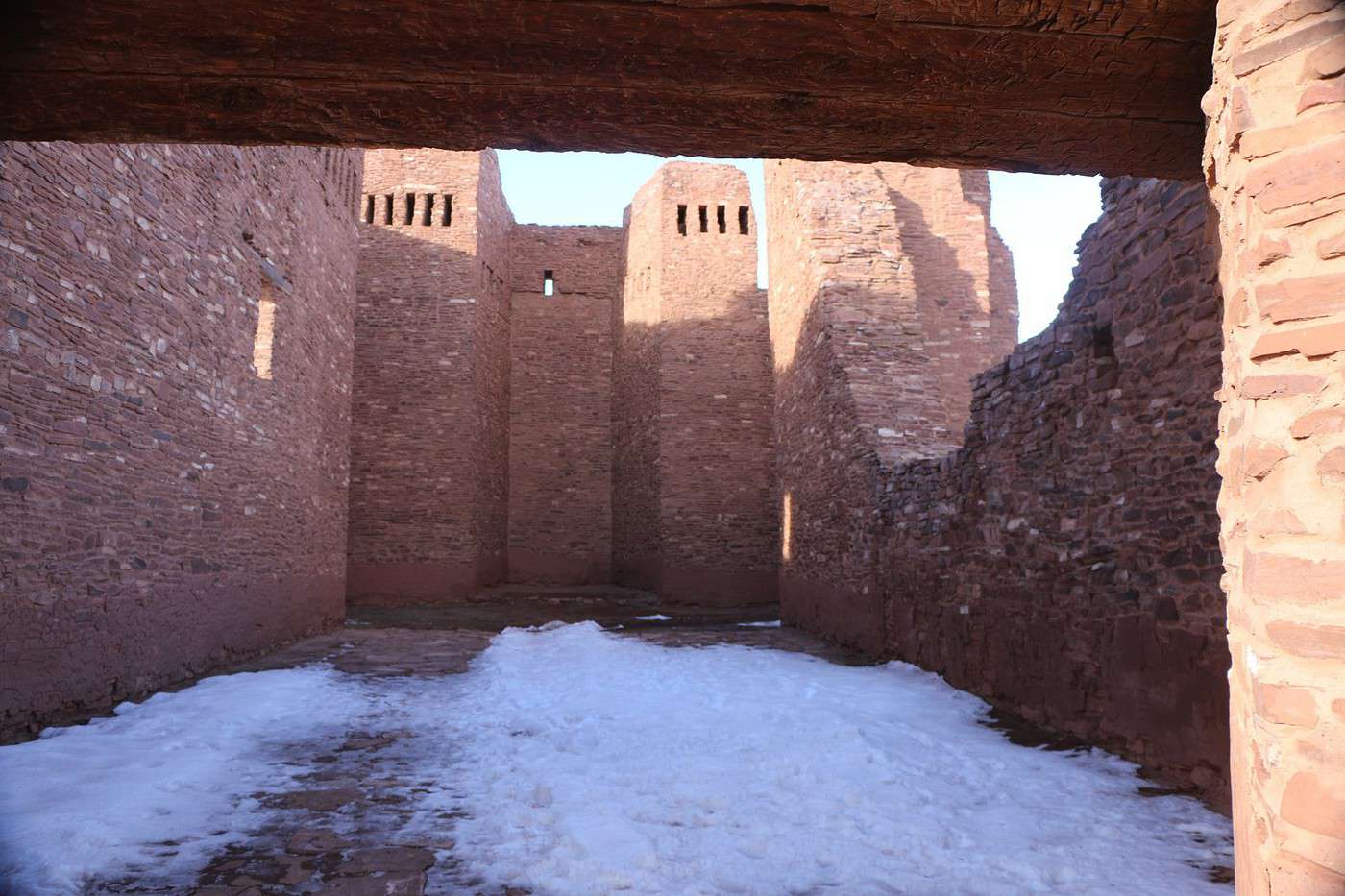
Gran Quivira est sous la neige comme toute la region.
Pas facile de circuler entre les ruines. La temperature a monte et le sol commence a degeler et le terrain est moue et je m'enfonce dans le sol.Rien a craindre des rattlesnakes aujourd'hui😄
Quarai la seule chose visible est cette eglise.
Ce n'est pas une ruine. Elle fut commencee dans les annees 1830 et elle ne fut jamais terminee.
Toutes les autres ruines se trouvent encore enterrees, et peut etre seront elles mises a jour plutard.
http://durandale2.blogspot.com/
How heavy do I journey on the way,
When what I seek (my weary travel’s end)
Shakespeare sonnet 50, vers 1- 2.
Howdy Jean-Paul,
Pour rire un peu😎
SOUTHERN MEDICAL DICTIONARY 2015 EDITION.
Artery The study of painting
Bacteria The back door to a cafeteria
Barium What doctors do when patients die.
Bowel A letter like A, E, I, O, U
Caesarean section A neighborhood in Rome
Cat scan Searching for kitty
Cauterize Made eye contact with her
Colic A sheep dog
D&C Where Washington is
Dilate To live long
Enema Not a friend
Fester Quicker
Genital Not a jew
G.I series A soldier’s ball game
Hangnail A coat hook
Impotent Distinguished well known
Labor pain Getting hurt at work
Medical staff A doctor’s cane
Morbid A higher offer
Nitrates Cheaper than day rates
Node Was aware of
Outpatient A person who fainted
Pap smears A fatherhood test
Pelvis A cousin to Elvis
Post-operative A letter carrier
Recovery room A place to do upholstery
Rectum Damn near killed’em
Seizure A Roman emperor
Tablet A small table
Terminal illness Getting sick at the airport
Tumor More than one
Urine Opposite than you are out
Varicose Nearby
Vein Conceited
http://durandale2.blogspot.com/
How heavy do I journey on the way,
When what I seek (my weary travel’s end)
Shakespeare sonnet 50, vers 1- 2.
Nous partons deux semaines dans les parcs de l'Ouest Américain cet été entre le 18/07 et le 03/08 Au programme Zion, Bryce, Capitol Reef, Canyonland, Arches,…
Y a-t-il sur ce forum des gens en cours de voyages dans l'ouest actuellement?? Quelle est la météo actuellement? Je regarde sur internet et à priori le temps…
Ma fille doit effectuer fin juillet un voyage en mini bus de san francisco à los angeles via les parcs nationaux et las vegas. Le groupe campera dans les parcs…
Je vais visiter les parcs (Zion, Bryce, Moab, Mesa Verde, Monument Valley, Grand Canyon) du 14 au 26 septembre. Ma première idée était de camper en tente.…
Je compte visiter les parcs nationaux de l'Utah la première quinzaine d'avril 2007, notamment Zion, Bryce, Arches, Canyonlanfs, Capitol reef et le lake Powell.…
Hi,
We're leaving on June 19th for an 8-day road trip in South Iceland. I've heard that even in summer, it's cold and the weather can change several times a day. Should we mainly pack winter gear, like a K-Way, fleece, down jacket, beanie, etc.?
We’d love to visit Georgetown and the beautiful beaches of Langkawi from mid-September to early October, but we’re worried it’ll be a real steam bath 🥵
Thanks to anyone who can share their experience!
Mitisi
For those who’ve experienced it, what’s the weather like in Shanghai at the end of December?
I’ve heard it’s cold, but coming from France, is the winter milder than in Lyon, for example?
I’m tempted to spend the Christmas holidays in Shanghai and the surrounding areas (Nanjing, Suzhou) with my family—kids are 11 and 2. It’d be a bummer if the little one catches a cold over there.
Generally, is this a good time for simple family visits to the main spots, restaurants in the city, indoor heating, and outdoor walks?
Hi everyone, I’m planning a trip to Mauritius—anyone have advice on when to go? I’m thinking April, May, or June for my stay. Which month would you recommend for the best beach weather, sunbathing, and exploring the island? Thanks!
Hi,
we’re planning to travel through Patagonia (Chile and Argentina) in February and March 2027.
From a seasonal and weather perspective, at that time of year and with hiking as our main activity, is it better to explore Patagonia from south to north or the other way around?
Thanks in advance.
Anne Marie
I’ve planned a three-week itinerary for this summer, from August 9 to 27, in Sri Lanka:
Negombo – 1 night
Sigiriya and the Cultural Triangle – 4 nights
Kandy – 2 nights
Ella – 3 nights
Tangalle – 6 nights
Colombo Airport – 1 night
I know this isn’t the ideal time for the south since the beach conditions aren’t great, but we’ve booked a hotel with a pool and won’t be swimming in the sea. We want to relax after all the travel since we’re bringing our two kids, aged 6 and 8.
I know the east would be better, but (i) I’m struggling to find suitable accommodation, and (ii) it adds a lot of travel time, and my kids can only handle about 3 hours at a stretch.
I looked into Arugam Bay, but it’s a 7-hour trip back to Colombo from there.
I’ve checked every weather site imaginable, but they don’t all agree. Do you think we’ll spend our whole trip in the rain, or is the monsoon in the south mostly limited to the sea, as I’ve read?
I’m worried about ending up in the middle of a natural disaster with my two young kids, given recent events.
hi
After reading quite a few posts and buying a guidebook, I’m still struggling to finalize my suitcase.
Given that we’ll be visiting both islands during our road trip and suitcases aren’t exactly expandable,
I’ve noted that temperatures can be changeable—but should I pack more winter clothes than summer ones?
Thanks for your help
We’ve decided to go to Skopelos for 2 weeks at the end of April. What kind of weather should we expect? Any special things to know about this remote island?
Thanks for your tips
Hi there. On my itinerary from São Luís to Jericoacoara, I’ll be passing through the Lençóis. Is there any point stopping there this time of year? Apparently, the lagoons are dry, but aside from the lagoons, is the surrounding landscape still interesting enough to warrant a 1- or 2-day stop? Thanks in advance for your help.
Hi,
We’ve booked our flight tickets and we’re leaving from October 29th to November 13th for Mauritius.
I just reserved our accommodation in Cap Malheureux.
We’re used to hot and especially very sunny destinations like Oman, Jordan, Uzbekistan...
If you can reassure me about the period—can we expect sunny weather? I’m really dreaming of discovering Le Morne Brabant under beautiful sunshine...
Thanks
Hi everyone,
I need to go to Sri Lanka at the end of January.
I’ve seen that many roads, hotels, and parks were closed after the cyclone, which unfortunately caused a lot of damage.
Does anyone have more information?
Would it be wiser to postpone our trip?
Thanks, Alain.
Hi,
I’m planning a trip to Oman, probably the first half of February to avoid the extreme heat and Ramadan.
But after checking various weather sites and reading accounts, I’m a bit worried about rain, which can apparently be frequent and heavy in February. I’d love to hear from travelers or locals who’ve been there recently.
What would be the ideal month to explore Oman without extreme heat or rain? November?
Also, it’s best to avoid visiting the wadis on weekends—does that mean Saturday and Sunday?
This year, 2026, I can only get away in April and May. I never travel during these months usually, and from what I know, they aren’t the best for India. But in such a big country, there are always spots that are better than others weather-wise.
Which region would you recommend?
Given that I’ve already traveled quite a bit in this country, and in any case, I’ll be discovering places I don’t know yet. No need for a major tourist hotspot or luxury comfort.
Hi everyone,
We’d love to return to India next year for 3 weeks (we visited Rajasthan about fifteen years ago). Unfortunately, we’re tied to traveling in September, and our initial plan was to explore Himachal Pradesh. However, it seems like that might not be the best month for this region.
Could you share your experiences from that time of year in Shimla, Manali, Dharamsala, or even the Spiti Valley—in short, anywhere in Himachal Pradesh? Otherwise, which region of India would you recommend for a September trip?
Thanks so much!
Hi everyone, I’m planning a trip from mid-January to the end of February but I just can’t make up my mind 😕
I’ve looked into a few different options: Brazil, Cambodia, and Ecuador. The last one really appeals to me, but what’s making me hesitate is the risk of our trip being a bit too rainy (literally ),
We’re more drawn to the Andes, exploring colonial cities, typical villages, markets, and a bit of the coast. We’ve already gotten a taste of this in Bolivia, Colombia, and Chile. Plus, we’d love to do part of it by car since we’re used to driving at our own pace and stopping whenever we feel like it. Anyway, time’s running out, and I need to decide so I can finalize a route and book the tickets!!
Can anyone help me make up my mind or decide to postpone it for later? But for this year, I don’t have any other time slot to travel. Thanks for reading this far! !
I’ve planned a trip to Asia for the first half of November.
I’ll arrive in Singapore at the start of November for about 3 days, and I’ll leave from Bangkok in mid-November.
In between, I’d like to gradually head north to visit some less touristy islands on the Thai coast.
Since the weather is a big risk during this period, I’d love to hear your recommendations.
I’m looking for: sunshine, snorkeling, beaches, nature / jungle in places that are easily accessible without too much transport to make the most of my trip.
Hi there,
We’re planning a trip to Chile this coming August and would love to head down to Chiloé. We’ve heard that as we go further south at this time of year, the weather gets pretty rough.
What’s the weather like in Chiloé in late August/early September? What activities can we do? And which ones become really tricky because of the weather?
Thanks in advance for your tips!
Marie
So great to be back on this forum after being away for—I don’t even know what!
I’m planning a trip to Malaysia in July with my 5-year-old son. The thing is, I’m not sure which coast to choose. AI keeps telling me east one minute and west the next. Which spot is least affected by rain during this time?
Hey everyone! 🙂
Just giving you the quick context: A group of friends and I are planning a trip to South Korea (Seoul/Busan) at the end of June/July next year. It falls right in the middle of the monsoon season, but we don’t really have other availability options.😕
I’d love to hear from people who’ve visited the country and these cities during this period—basically, is it not as bad as it sounds, or should we just cancel our tickets (we don’t mind the heat, it’s mostly the rain that scares us).
I know there are plenty of indoor activities, but do you think we’ll still manage to get a few sunny days, or will it be torrential rain for our entire 2-week trip?
The only other country we’ve visited during the rainy season is Brazil (in the northeast) around the same time, and honestly, aside from a few really annoying downpours, we had sunshine most of the time and it was awesome. That said, the climate is totally different, so I’m not sure how relevant the comparison is.
Thanks in advance to anyone who takes the time to read or reply to this post! 🙂
Hi everyone.
Not sure if guidebooks, agencies, and other tour operators are keeping up by changing their visiting hours and offerings.
Personally, I see a promising opportunity here—jumping on this adaptation to extreme climates before others do, since they’re inevitably coming.
From my own travel experience, I’ve met a few guides so far who are starting to adjust, like in Egypt, Kenya, Senegal, and elsewhere.
They avoid crowds and the hottest hours by starting their tours around 6–7 AM, when it’s cooler.
Yeah, you’ve gotta wake up early, but the payoff is so worth it. 😴
If you’ve got any great tips like this, why not discuss them in this thread and share addresses or websites where the people in charge have realized climate change is real and are adapting? 😊
Hi there,
I’m planning a trip to Namibia in 2026.
I’m torn between visiting the Fish River Canyon and the Caprivi Strip / Victoria Falls.
I’d also love your advice on the best time to travel for wildlife viewing and pleasant weather.
I haven’t chosen a tour operator yet... since I’m traveling solo, I’d prefer a small-group escorted trip. Has anyone traveled with a local agency and what’s your feedback or advice?
Thanks so much!
I’m taking a month-long trip to northern Argentina throughout September. Buenos Aires, Iguazu, Salta, Humahuaca, Cafayate, and if time allows, La Rioja. I’m unsure about what clothes to pack. What are the temperatures like in September?
Thanks for your great tips!
Dominerja
hi
It seems that in recent years, January and February in Bohol have seen an increase in rainy periods. Have any of you noticed this?
Thanks in advance for your replies
Hello, We’re heading to Finnish Lapland near Rovaniemi as a family at the end of February with two kids (8 and 14 years old). We’ve got direct flights with Luxairstours. The itinerary is already set, but I’m wondering if anyone has traveled with Luxair before and knows exactly what kind of clothes they provide on the second day? The agency just told me it’s a heavy-duty cold-weather suit. I’m thinking we should get Sorel Caribou boots, maybe second-hand. Here’s what I’ve already planned:
- Thermolactyl leggings and tights from Damart for the whole family as a base layer.
- A first layer of Damart socks + Nordic Stocks socks in 70% merino wool for all four of us.
- Loose fleece layers, including some Polartec.
- Ski pants for hikes.
- For my son and me, a The North Face Himalayan down parka with a hood.
- A ski parka for my husband and my 14-year-old daughter (she *really* wants a Roxy one—I hope it’ll be warm enough).
- For myself, for the flight and the first day at Santa’s village, I’ve packed The North Face winter hiking pants, a long-sleeve merino wool top from Decathlon (thin), a fleece, and my big parka.
I’m wondering if I should just pack fleece joggers or sweatpants for the kids and my husband, at least for the first and last days, to be comfortable on the plane?
I’m also planning to buy balaclavas and neck warmers in addition to our beanies, as well as mittens for all of us. I really need advice because I have no idea—I’ve never been skiing! Also, for a 4-night, 5-day trip, should I pack a second set of base layers, like from Odlo?
Of course, I’ll be leaving cotton clothes out of the suitcase.
As you can tell, I’m someone who gets cold easily—especially my feet, hands, and ears—so that’s my biggest worry. I *don’t* want to be cold, even at -20°C during dog sledding, snowmobiling, or aurora hunting when we might be standing still. We won’t be in the city, and the kids will likely spend most of their time outside, as they usually do.
Hi there!
I’m planning a 10-day trip to Greenland in early August.
Could anyone tell me what kind of weather and temperatures to expect?
I’ve heard there are mosquitoes—is that true?
Thanks!😊
Sunny destinations in October???
Not too much rain.
Martinique, Mexico, Dominican Republic, Mauritius, Cape Verde, or somewhere else?????
Any tips? Thanks for your help