bonjour, 🙂
J'aurais voulu savoir quel était le meilleur moyen de transport pour se rendre à Kanchanaburi en partant de bangkok.Train ou taxi je ne sais pas???Merci pour vos conseils!!!😉
3 moyens 1 a pied ;;
2 en train 1 depart par jour gare de thonburi
"3 bus toutes les "30 minutes depuis la gare de say tay mai
les guest sont prez de pont a kancha
« Le voyage apprend la tolérance. »
Benjamin Disraeli
-
le pont de la rivière kwai construit par les prisonniers a été détruit entièrement pendant la guerre. ils ont reconstruit un autre pont, pas au même endroit et pas selon les mêmes plans (celui d'aujourd'hui est en béton et acier)
et on te le vends comme étant le pont de la rivière kwai.
a par visiter le musée de la déportation de siem reap, quel sont tes objectifs ?
sinon : comme le marché flottant de Damnoen SADUAK : aucun intéret ! piège a touristes
depuis que les japonais ont déportés les prisonniers anglais sur la thailande pour construire la voie de chemin de fer vers l'inde, via la rivière kwai...
OK, désolé, je me suis mal exprimé.
Je reformule donc la remarque un peu plus clairement :
Siem Reap se trouve au Cambodge, à côté des temples d'Angkor
Le musée de la déportation dont tu parles se trouve à Kanchanaburi, en Thaïlande, au bord de la rivière Kwai et à côté du pont du même nom.
Je suppose qu'en préparant ton voyage, tu as dû plier la carte dans le mauvais sens. Ça m'est arrivé à moi aussi 😛
le pont de la rivière kwai construit par les prisonniers a été détruit entièrement pendant la guerre. ils ont reconstruit un autre pont, pas au même endroit et pas selon les mêmes plans (celui d'aujourd'hui est en béton et acier)
et on te le vends comme étant le pont de la rivière kwai.
a par visiter le musée de la déportation de siem reap, quel sont tes objectifs ?
sinon : comme le marché flottant de Damnoen SADUAK : aucun intéret ! piège a touristes
Bizarre …vous avez dit bizarre. C’est la première fois que j’entends une telle version du Pont de la Rivière Kwaï. Il ne faut pas se baser sur les films. L’histoire est toute autre. Le pont que l’on visite est bel et bien le vrai. On peut y voir encore les traces de balles de fusillades pendant le bombardement du pont. Les japonais avaient construit 2 ponts à 100 m de distance : Le pont en acier et un en bois pour passer de l’autre côté et construire de l’autre côté. Le pont en bois a été emporté par le courant quelques temps après.. Comment aurait-on pu construire un autre pont ailleurs alors qu’il est bien sur la ligne de chemin de fer de la mort ? On a donc aussi fait une autre ligne de chemin de fer de la mort ? Ça va être un peu long mais instructif.
Le Pont de la Rivière Kwaï et Le chemin de fer de la mort
Il s’agissait de construire une ligne de Chemin de fer longue de 415 km (303.95 km en Thaïlande et 111.05 km en Birmanie) pour rejoindre Ban Pong et Thanbyuzayat. Les travaux ont commencé au mois d’Octobre 1942 et se sont poursuivi jusqu’en Novembre 1943.
Plus de 16.000 prisonniers de guerre et 100.000 travailleurs constitués de Chinois, Indiens, Malais, Birmans, Japonais, Hollandais, Indonésiens et eurasiens sont morts pendant la construction de cette ligne de chemin de fer de la mort.
Avec ce projet, les Japonais ont pensé acheminer environ 3.000 tonnes de marchandise par jour.
La ligne de chemin de fer devait être une alternative à la voie maritime vers Rangoon via Singapore et le détroit de Malacca car cette dernière voie était fermée par les sous-marins et les avions alliés. La seule route de la Thaïlande à la Birmanie étant insuffisante, la Thaïlande et la Birmanie avaient envisagé de faire une ligne de chemin de fer mais celle-ci ne fut jamais terminée.
HISTORIQUE :
Tout a commencé la nuit du 8 Décembre 1941. Les forces de l'Armée impériale japonaises débarquèrent en une opération éclair sur tout le littoral thai en même temps depuis Bangpoo, Samutprakan, Prajuabkhirikhan, Chumphon, Suratthani, Nakhornsrithammarat, Songkla et Pattani ainsi que sur l'Est les japonais sont arrivés par la voie terrestre à Aranyaprathet.
A tous ces point de débarquement, il y a eu lutte de la part des militaires, les policiers, les fonctionnaires, les scouts et les villageois. Même si, à 7h30 du matin, le gouvernement thai a annoncé le cesser le feu, les combats continuèrent dans plusieurs points jusqu'à midi. Les luttes les plus acharnées furent celles de Aomanao - Province de Prachuabkhirikhan, Aobaandon - Province de Suratthani et à ThaPhæ - Province de Nakhornsrithammarat. A midi la voix du Maréchal P. Pibulsongkram - Premier ministre et Commandant en chef des Armées se fit entendre et l'on sut que la Thaïlande a signé un accord de laisser de passage des Japonais vers la Birmanie et la Malaisie. Il y eut 116 soldats morts dans cette lutte de défense.
Sitôt après que l'accord fut signé, les Japonais envoyèrent 50.000 soldats en marche vers Bangkok. En moins de 24 heures suivantes, Bangkok fut prise. L'armée Japonaise dispersa ses hommes dans les points stratégiques du Nord, du Centre, du Sud, de l'Est et de l'Ouest du pays. L'arme japonaise plaça des postes de commandement dans les villes importantes du pays : Lampang, Songkla et Kanchanaburi et prenait position dans les points stratégiques sur les frontières, les Gares, les Bureaux de Poste, les Ecoles, etc.
Le 21 Décembre 1941 à 10h00, par le Maréchal P. Phibulsongkram, la Thaïlande s'allia aux Japonais avec un traité signé dans le Temple du Bouddha d'Emeraude. Les Japonais promirent de respecter l'indépendance et l'honneur de la Thaïlande.
Un mois après le débarquement des Japonais, le 25 Janvier 1942, la Thaïlande déclara la guerre aux Alliés Américains et Anglais.
Durant la première année de guerre, les Japonais furent victorieux sur tous les lieux. Ils prirent ainsi Singapore, la Birmanie et sont arrivés jusqu'à la frontière indienne. On raconte que si les Japonais ont pu être victorieux de cette façon, c'est qu'ils avaient préparé la prise de l'Asie du Sud-est depuis longtemps en envoyant des Japonais habiter dans ces endroits.
Les Japonais avaient l'intention d'utiliser la Thaïlande comme voie de passage pour aller en Birmanie et ensuite pour prendre l'Inde.
Dans un premier temps les Japonais avaient pris l'île de Ko Song ou Victoria Point pour servir de voie de ravitaillement en vivre et munitions . Mais ces transports furent très difficile surtout pour les armes lourdes. On envisagea alors la construction de cette fameuse ligne de chemin de fer.
Le haut commandement de l'armée impériale japonaise basée à Tokyo mît en place un comité d'étude afin de construire la ligne de chemin de fer. Le 8 août 1942, un comité mixte nippo-thai fut mis en place.
Les constructions débutèrent en octobre 1942. En temps normal, on mettrait 5 à 6 ans pour terminer une telle ligne de chemin de fer.
Les Anglais avaient déjà avant la guerre projeté de faire une telle ligne de chemin de fer reliant Bangkok à Malamaeng mais ils durent abandonner tant les obstacles étaient nombreux.
Les travaux furent divisés en deux : Construire à partir de Nong Pla Duk en thaïlande et construire de Thanbyuzayat en Birmanie.
Le tronçon de Nong Pla Duk :
Les premiers 56 kms furent relativement faciles car on construisait en plaine. Selon les accords avec les Japonais, les Thais devaient réaliser les sous-bassements en terre, pourvoir en traverses, poteaux électriques, ciment, sable et matériels et outils de construction anisi que la main d'œuvre (payée 70 stangs par jour). Les travaux commencèrent à rencontrer les difficultés arrivés au bord de la rivière Kwai Yai au district de Thamakham distant de la ville de Kanchanaburi de 4 km. Afin de faciliter les constructions, les japonais firent construire un pont en bois distant du pont actuel de 100 m en aval. Ce pont en bois fut construit au moment où le niveau d'eau de la rivière baissait en fin novembre 1942 et terminé en début de février 1943. En même temps on débutait les travaux de chemin de fer de l'autre côté du pont en direction du col des Trois Pagodes. Malheureusement ce pont en bois fut emporté par les flots. Les Japonais acheminèrent les morceaux de pont préfabriqués de Java pour être montés sur place 11 arches circulaires montées sur pliliers de béton et terminé en bois du côté ouest. Ce pont fut construit de février 1943 à septembre 1943 (7 mois) .
Le 28 novembre 1944, à 15h00 les bombardiers B24 alliés détruisirent le pont au niveau des arches 4-5-6. Les Japonais avaient prévu la destruction et avaient créér une déviation allant dans l'eau afin de pouvoir continuer les ravitaillements.
Le 29 novembre 1944, à 17h00 les alliés envoyèrent les B24 pour détruirent les camps militaires japonais de Kanchanaburi.
Après la guerre les Chemins de Fers Thais réparèrent le pont en 2 arches angulaires. Ces travaux furent financés en partie par une firme japonaise en guise de dédomagemnet de guerre.
Cette ligne de chemin de fer fut donc construit en octobre 1942 pour être terminé en août 1943 mais fut prolongé jusqu'en novembre 1943. Elle fut réellement terminée le 17 octobre 1943 et ouvert au service le 25 octobre 1943.
j'ai cependant été en thailande 3 fois et les vidéos et photos ramenées par mes collègues ayant été passé une journée a KWAI, ainsi que leurs commentaires ne m'ont pas incités a faire le trajet.
je suis en ce moment a bkk et obliger d'y rester jusqu'a lundi soir car j'attend de recuper mon passeport (visa)
j'ai donc l'intention d'aller a kanchanaburi pour voir les cascades a t u une guesthouse pas chere a me conseiller .
merci d'avance
elodie
Après avoir parcouru ce forum qui a répondu à beaucoup de nos questions pour programmer notre séjour en Thailande pour février prochain, une question reste…
Actuellement sur Ko Phi Phi je vais faire un saut a Ko Lanta, puis aller sur Krabi. De la je souhaite passer une nuit a Phang Nga pour voir la baie tres tot le…
Nous voyagerons en fevrier prochain à 4 adultes et 2 enfants. nous prenons un vol bangkok-krabi à notre arrivée ou nous resterons quelques jours. puis nous…
Je me trouve actuellement a Bangkok et je souhaite me rendre a Sukhotahai. Je ne sais pas s il vaut mieux que j utilise le train ou le bus? J ai du temps, donc…
Hi everyone,
I’m currently working on a 30-day itinerary for May/June 2027.
10 days in eastern Java (Malang, Bromo, waterfalls, Meru Beriti Park, Banyuwangi, and Ijen), a short transit in Ubud for a few days, then Flores before heading back to Jakarta.
We’ll spend 15 days in Flores (the classic route: Moni, Bajawa, Riung, Ruteng, ending in Labuan Bajo).
I’d love some firsthand feedback on flights to Maumere or Ende from Bali Denpasar. I know there are no direct routes and that you have to connect through Labuan Bajo or Timor (I think), which isn’t an issue in itself.
But I’ve read here and there that flights to these destinations can be delayed—or worse, canceled—and that it’s better to fly in and out of Labuan Bajo, which isn’t exactly ideal...
Thanks for any tips or experiences you can share!
I’d love to get some feedback on our itinerary—it’s probably pretty basic! This is our second trip to Asia and our first to Indonesia. We have three kids aged 20, 18, and 12. We land in Jakarta at 4 PM, spend 3 nights/2 days there, then take the train to Yogyakarta for 3 nights/2 days, followed by the train to Surabaya for 2 nights/1 day, then the train to Bromo for 1 day/1 night, a private driver to Ijen for 2 nights/2 days, then on to Bali (Ubud) for 4 nights/3 days, followed by Gili Air for 3 nights/2 days, Senggigi (Lombok) for 2 nights, and finally 5 nights in Kuta. I’m considering cutting the 2 nights in Senggigi to just keep Kuta and extend it to 7 nights. In Lombok, I’m not sure how to get around since I’m not comfortable with scooters... Your thoughts on all of this, and any advice, are more than welcome—don’t hesitate!
For those wondering why cities like Jakarta and Surabaya: we don’t often get the chance to visit big Asian cities, so we wanted to include that discovery in our trip. The trains between Jakarta and Yogyakarta, Surabaya and Probolinggo are booked. The return flight from Lombok to Jakarta is also set. Accommodations are booked but flexible (same for the trains).
I need some expert advice on these two destinations for a 15-day trip. We land in KL and plan to stay for 2 days before heading to Borneo and finishing with an island for snorkeling.
For those who’ve been, what are your must-sees?
We were thinking of spending the last 3 days on the Perhentian Islands, unless you’ve got another island to recommend near Borneo.
Thanks for your tips and help!
Hi everyone,
Could you share your thoughts on my 3-week itinerary?
We’re a small group (family + friends) of 12 people, planning to leave around January 21, 2027.
Here’s my itinerary:
3 nights in Bangkok
4 nights in Chiang Mai
3 nights on Koh Samui
3 nights on Koh Phangan
4 nights in Krabi
4 nights in Phuket
I’m also open to any great tips you might have...
Thanks, everyone! Alain.
Hi! I’m planning a 15-day trip to Malaysia. The idea is to visit KL for 2 or 3 days, then Borneo, and I’m wondering what to do with the rest of the time. I’d like to finish with the Perhentian Islands... What do you think? Any tips or advice would be great—I’d really appreciate it!
Hi everyone,
I’m looking for addresses for guesthouses or, even better, houseboats or rafting houses on the River Kwai, between Kanchanaburi and Sangkhlaburi, to spend a few weeks contemplating this beautiful river.
Thanks for your suggestions!
Premaria
Hi there,
we’re currently in Mai Chau and tomorrow we’re hitting the road back to Hanoi to head up toward Bac Ha and Sapa.
We haven’t really had a set plan since we arrived—we’ve already done the Halong Bay on land and by sea.
I’ve got 2 free days before heading to Bac Ha and Sapa.
Any tips?
Thanks, and looking forward to hearing from you.
Hi fellow travelers,
First trip to Vietnam.
We’ll be arriving in Ho Chi Minh City during Tet.
Is it complicated to find accommodation and get around during this period?
Any tips would be welcome.
Thanks for your replies.
Silly question—backpack or hard-shell suitcase for the Sepilok, Kinabatangan, Tioman, KL trip?
I’m struggling to fit all my son’s and my stuff into the 70L backpack... and I’m thinking a suitcase would be easier, but I’m not sure if it’ll work for getting around.
Hi there,
I didn’t plan to return to Thailand this year, but my health conditions mean it’ll be the best place for me to stay between two trips to India. The tourism setup there is so well-organized that it’s the most "comfortable" country for a short visit. Thailand feels too sanitized for my taste, and there’s too much religion, Buddha, and the King, but it’s still the best option given how my health has been evolving. I’d considered two weeks in ThaTon for hiking, but I got too sick from the burn-offs during my trips to the mountains around Chiang Rai. So I’m not sure where to go this year. Definitely not the sea, touristy spots, or the mountains with burn-offs...
Hello.
In 1996, we crossed Vietnam from Saigon to Hanoi by motorbike—Minsk bikes we bought in Saigon. I haven’t been back since, and it seems like a lot has changed.
- We’re heading to the south (well, the north and center) with the family in July-August (3 people).
- Is the road network more developed now? Back then, there was only National Route 1 from south to north. I’m thinking of renting a car this time (no motorbike with the family—though in ’96, they had a Jawa sidecar for sale, and we hesitated… maybe it’s for the best).
- Is Halong Bay really something to avoid because of overtourism? Even back then, it was pretty crowded. Is there a less touristy alternative?
- We’ll be traveling from Hanoi down to Danang (the only city we didn’t stop in back in ’96). Even though it’s a bit overhyped in a Chinese-tourist kind of way (from what I’ve read), we’re only going for the beach—pure relaxation for 7 days. The beaches are stunning, and I know the South China Sea is warm like coffee.
- Then, we’ll visit Hoi An, where I stopped in ’96. It was already popular with backpackers back then, but no glowing boats or all the touristy fuss!
- After that, Hue, where I have great memories—it’s a beautiful city.
- And also the nature around Ninh Binh, followed by 2-3 days in Hanoi.
That’s the plan. I’d love to hear any tips to avoid mass tourism, and if anyone’s done this before:
- Is it possible to rent a car in Danang and drop it off in Hanoi?
Hey everyone,
I’m over in East Borneo in mid-July.
I’m struggling to wrap up the end of my itinerary, even though it’s pretty straightforward (long but simple).
Last year, we did Malaysia (KL and the mainland + around Kuching).
Day 1 – Arrive in Kota Kinabalu early, stroll around town and hit the must-sees.
Day 2 – Excursion to Tunku Abdul Rahman Park, snorkeling at 3 islands.
Day 3 – Hike around Mount Kinabalu without summiting (450 per person, no way).
Day 4 – Poring Hot Springs + evening flight to Sandakan.
Day 5-6-7 – Kinabatangan River (still looking for the right guide).
Day 8 – Sepilok for the orangutans, the Sun Bear Centre, and Rainforest Discovery Centre.
Day 9 – Selingan, turtle island.
Day 10 – Head to Semporna.
Day 11-12-13-14 – Sipadan, Mabul, Kapalai.
Day 15 – Bohey Dulang.
Day 16 to Day 25: I’M STUCK.
I looked into Danum Valley, but for 3 days/2 nights, they’re quoting 650 € per person—come on, that’s ridiculous.
I checked out a detour into Indonesia (still East Borneo), but I’m having trouble deciding what would be amazing.
I read about Sangalaki + Kakaban (2 islands, 1 base) / Mahakam Delta - Kutai (orangutans and river) / Sungai Boh (Dayak Kayan) – jungle & culture.
But honestly, I’m struggling to finalize this itinerary.
If we venture that way, we’d head back to KK from Balikpapan.
For a 4-month stay in Egypt, I had ENORMOUS problems. The regulations are very bureaucratic and extremely nitpicky there. For a 4-month stay in the Philippines, I was wondering if the procedures are just as complicated? I’m bringing my cell phone with an eSIM. Should I choose a plan from Canada for use in the Philippines, or should I get a plan only once I arrive? After 30 days, do I renew with the Canadian provider I chose before leaving, or do I switch to a local company? Do I need to register my phone with the authorities in the Philippines? (That was the case in Egypt.) For the 3rd and 4th months, will it be just as simple—renewing with a Canadian or local provider—or should I expect problems?
Hello,
I’ll be in Malaysia with my wife, mainly in Langkawi and Penang for Christmas and New Year’s at the end of 2026.
If you’ve had the experience—and since I’ve read (though it’s not very clear) that these two islands get quite crowded during this period—would you recommend booking accommodation well in advance, or is it easy to find something on the spot?
Hotels or Airbnb?
Do you have any great tips for accommodation or any practical info to share?
We’ll be staying 5 to 7 days on each island.
Thanks in advance for your replies
Hi there. To make the most of Lake Toba, is it better to find accommodation on the lake’s shores (which one?) or on Samosir Island? Thanks for your tips!
Hi there,
We’re heading to Vietnam as a family on July 8th for a little over 3 weeks (north and center). We’ve only booked the first 3 nights in Hanoi, and nothing else after that. We like to decide things on the spot and go with the flow, without rushing everywhere. But I’m still a bit unsure: when heading down to the center (Hue), is it better to book the overnight trains in advance? We don’t want to take any flights while we’re there—just use the overnight train for the long trips. But I’m worried we won’t get seats if we buy the tickets on the spot, say, 2 days before. What do the experts here think? And which website can we use to book the tickets? Thanks in advance for your tips!
Hi everyone!
I’m heading back to Thailand in July 2026 with a stopover in Cambodia to visit the Angkor site.
After Angkor, I’ve booked a stay on Ko Chang island. Does anyone know if there are direct transport options from Cambodia to Ko Chang without having to go back through Bangkok? That would be amazing!!
I think there are, but I’d need more details!!
I went to Thailand in February 2025 and don’t remember having to apply for a visa—is that still the case now? And for Cambodia too?
Thanks so much!!!
Laurence from Bayonne
Hi,
After our trip to China, we want to spend a week in the Philippines for some beach time and snorkeling.
We're looking for the best spot to settle in—nice beaches, great marine life, and short transfer times.
Thanks for your suggestions!
Does anyone know of a private transfer or taxi company that organizes transfers from the Sukhothai area to Chiang Mai?
Our routes are Sukhothai-Lampang, Lampang-Chom Thong, and Chom Thong-Chiang Mai.
My searches on Google Maps, 12Go, and others haven’t turned up much...
For our Bangkok-Sukhothai trips, I use a company I’ve already tried, but they don’t have a fleet available from Sukhothai and have to go through third-party companies—which, understandably, take their commission. This nearly doubles the prices...
There are four of us, and we’re not traveling light, so a minibus isn’t an option. ;-)
Hello,
While traveling in Thailand, I’m looking for a Buddhist kumlai reed bracelet.
Does anyone know where I can find one?
In Bangkok, I visited a few temples but didn’t see any in the nearby shops.
If you have any ideas, I’d love to hear them! Have a great day! :-)
My trip’s coming up, and I’m having a bit of trouble with three bus/minivan routes. Usually, I find everything at this time of year, but this time—yikes!
Sandakan → Sepilok:
No app for this one—you just hop on bus #14 at the local terminal (pay cash on board). But where do I catch it, and where’s the stop??
Sandakan → Semporna:
From what I’ve heard, it’s the Sida Express company (great name, right? 😄).
Can’t book online, but apparently, you *have* to because there’s only one bus at 8 AM.
Where do I board, and where does it drop me off?
Semporna → Tawau:
Found this via AI—is it legit?
No online booking, as far as I can tell.
Minivans leave from a stop in the Jalan Hospital area, near the Milimewa supermarket, supposedly????
And when you arrive, does it drop you at **Sabindo Square** in Tawau?????
Hi there,
we’ll be in Mai Chau in June and we’re thinking of heading to Sapa, but first spending a few days in Bac Ha to do some hiking and explore the area.
Is this a good idea for those who’ve been there?
How do you get there?
Thanks for your feedback.
Looking forward to hearing from you.
Cédric.
Hi there,
I’m planning an itinerary and would love some feedback on whether it’s doable and if the number of days per destination is enough—or too much. I was also debating whether to add an extra night on an island or spend an extra night in Kampot to visit Kep or Battambang.
March 23: Arrival in Phnom Penh in the morning
March 24: Phnom Penh
March 25: Phnom Penh
March 26: Depart for Kampot
March 27: Kampot
March 28: Depart for Battambang
March 29: Battambang
March 30: Tonlé SAP to Siem Reap
March 31: Siem Reap
April 1: Siem Reap
April 2: Siem Reap
April 3: Siem Reap
April 4: Siem Reap
April 5: Departure
Hi there,
Yesterday in the Thailand section, 100% of the new threads were just about beach destinations 😕...
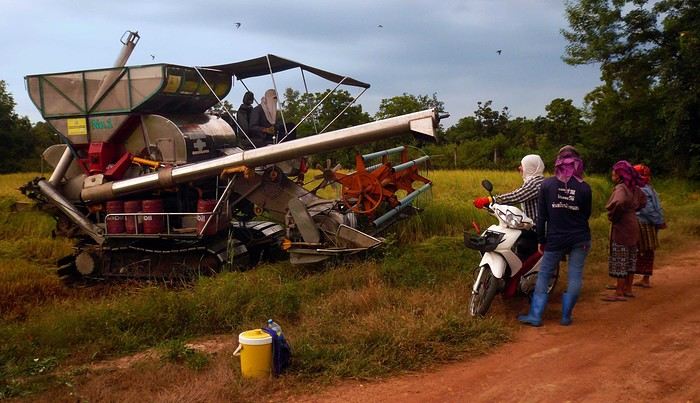
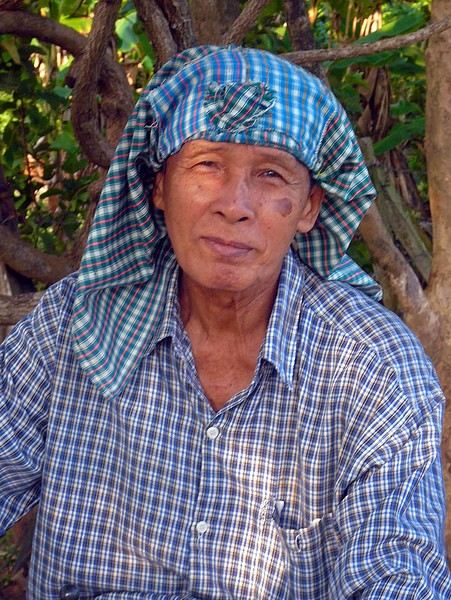
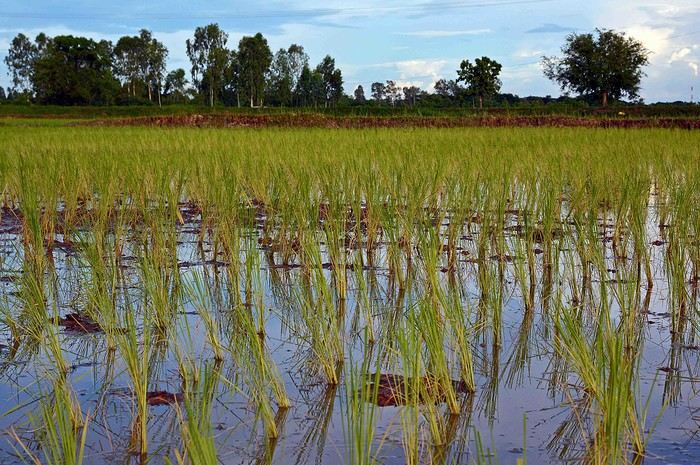
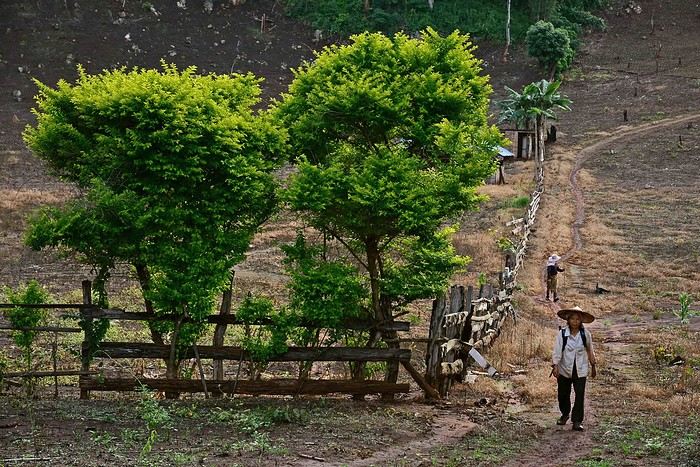
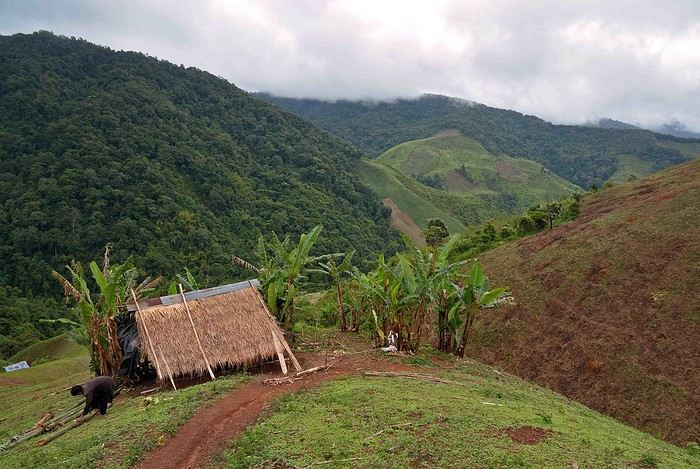
So here’s the counterattack in the form of this photo thread, dedicated solely to the countryside: the locals, their livestock, fields, farms, rice paddies, small rivers, and agricultural machinery. If you’ve got any pictures that fit these categories, feel free to add them!
Comments welcome.
For each photo, I’ll (or you can) indicate the area where it was taken.
Hope you're all doing well! It's been a while since I last traveled, but I'm finally heading out again soon!
For those familiar with SOUTHEAST ASIA, I'm planning to leave in mid-June (with the trip ending at the latest in November), and I don’t have a precise idea of exact places or itineraries yet. The thing is, this period is usually the rainy season...
Any advice? I was thinking of Malaysia or Indonesia, like Sulawesi, for example (all countries and islands in Southeast Asia interest me except Bali).
Any recommendations? I’m doing my research online, but if anyone here has the time and knowledge, I’d love to hear from you.
My partner and I are planning a trip to Indonesia in September-October 2026. It’ll be our first time in Asia, and we’re thinking of hitting the classic spots in East Java and Bali, then wrapping up with a cruise around Komodo for some snorkeling/diving. Here’s a rough draft of our itinerary—I’m wondering if it’s doable.
20/09: Flight from Jakarta to Yogyakarta, arrive around noon, afternoon/evening and overnight in Yogyakarta.
21/09: Borobudur
22/09: Prambanan
23/09: Travel to Bromo (Cemoro Lawang)
24/09: Bromo
25/09: Kawa Ijen
26/09: Travel to Bali, overnight in Pemuteran
27/09: Excursion to Pulau Melujan, overnight in Pemuteran
28/09: Travel to Munduk, overnight in Munduk
29/09: Explore Munduk and surroundings, overnight in Munduk
30/09: Explore Munduk and surroundings, overnight in Munduk
01/10: Route to Ubud (via Pura Ulu Danau Bratan, Jatiluwih?), overnight in Ubud
02/10: Explore Ubud and surroundings, overnight in Ubud
03/10: Explore Ubud and surroundings, overnight in Ubud
04/10: Travel to Denpasar, flight to Labuan Bajo, overnight in Labuan Bajo
05/10: Komodo cruise
06/10: Komodo cruise
07/10: Komodo cruise, flight to Denpasar in the late afternoon/evening or overnight in Labuan Bajo.
08/10: Flight to Denpasar (if not taken the day before), afternoon in Jimbaran, overnight near Denpasar
09/10: 10:00 AM flight Denpasar - SIN, overnight in Singapore
10/10: Flight SIN-YQB