bonjour tout le monde, mon ami (Joboy31) et moi avons pour rêve commun de partir en voyage au Japon. Notre jeune age ne nous permet pas d'avoir des moyens très conséquent pourtant, nous sommes prêt à tous pour réaliser notre rêve. C'est pourquoi nous travaillons afin d'avoir les moyens nécessaire. Maintenant je vais vous expliquer comment nous voyons ce voyage : nous ne voulons pas de circuit organisé avec visites car cela nous reviendrai trop cher, nous voulons seulement visiter librement ( au maximum avec un guide) nous ne sommes pas très exigeant pour le logement ni pour la nourriture ( que c'est beau d'entre jeune 🙂 ) par contre mon ami est allergique au poisson 🙁 . Nous nous sommes donc inscrit sur ce site afin de recueillir un maximum d'information quant à l'accomplissement de notre rêve, c'est pourquoi nous serions très reconnaissant si un ou plusieurs d'entre vous pouvait nous aider en nous conseillant sur cette destination, plus précisément :cout du transport (avion + deplacements locaux)Hébergement et pensionVisites à ne pas ratélieux à éviter
Merci d'avance pour vos réponses, cela nous tient vraiment a cœur 😏
Pour ce qui est de l'avion, le mieux est d'utiliser un moteur de recherche comme www.kelkoo.fr. Comme bien souvent, les billets sont d'autant moins chers qu'ils sont pris en avance (mais pas trop quand même, l'idéal est peut-être 6-8 mois avant). Les vols directs sont plus chers; à vous de voir le compromis durée totale / prix. Il y a beaucoup de commentaires négatifs sur Aeroflot dans ce forum. Personnellement, j'hésiterais à choisir Alitalia, qui casse les prix en ce moment, mais dont la situation financière est catastrophique.
Une curiosité : le vol direct Paris Osaka (en novembre) est à 1000 euros sur JAL, et 1400 euros sur Air France. Pourtant, c'est en fait le même avion Air France en partage de code !
Sur place, le forfait de train JR Pass est très pratique, mais cher. Tout a déjà été dit sur le sujet dans ce forum. Il est possible de l'éviter tout en faisant un voyage très intéressant, en partageant votre séjour entre la région du Kanto (Tokyo), et du Kansai (Kyoto/Nara) et en faisant le trajet entre les deux en bus de nuit (tarif imbattable de l'ordre de 4300 yen). Le JR pass n'est absolument pas rentable pour les trajets locaux de ces deux régions. Pour vous donner une idée des tarifs des trains, voyez le site http://www.hyperdia.com/cgi-english/hyperWeb.cgi?JP_MODE=0
L'hébergement est un autre point délicat. Une bonne solution est l'auberge de jeunesse (qui n'est d'ailleurs pas réservée aux jeunes). Le réseau est assez dense, certaines sont dans des bâtiments pittoresques, on peut y faire des rencontres passionnantes, mais les horaires sont assez stricts. Tarif : environ 3000 yen, à condition d'avoir pris une carte d'AJ dans son pays (sinon, supplément de 600 yen par nuit).
voir http://www.jyh.or.jp/english/index.html. En période de pointe, il faut réserver.
Il y a aussi dans ce forum des posts faisant état d'hôtels bon marché dans ces deux régions.
A Kyoto, j'ai bien aimé Tani House (http://kansaiconnect.com/members/tani/), dont les tarifs sont très compétitifs. Les deux AJ sont fonctionnelles, mais sans âme.
Sinon, il y a les hébergements de type www.couchsurfing.com
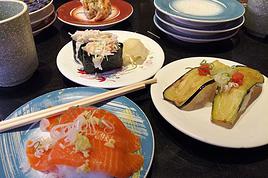
La nourriture est vraiment bon marché. On trouve à se nourrir presque partout dans des petits restos de quartier pour 600 yen, ou en faisant ses courses dans des "boutiques à 100 yen". Le poisson est une base de l'alimentation japonaise. Si ton ami est allergique au sens médical du terme, il faudra faire attention, mais comme dans la cuisine japonaise, les ingrédients sont souvent présentés de manière séparée, ça doit être faisable, bien que franchement malpratique.
De lieux à éviter ? franchement, aucun. Le Japon est l'un des pays les plus sûrs du monde, de jour comme de nuit. C'est une bonne raison pour faire l'économie d'un guide (humain!) : se perdre (un peu) au Japon fait découvrir des quartiers et des situations inattendues, sans autre risque que de perdre un peu de temps. Côté guide (papier), je préfère le Lonely Planet.
Les lieux incontournables ? il y en a beaucoup, mais en restant dans ma suggestion Kanto + Kansai :
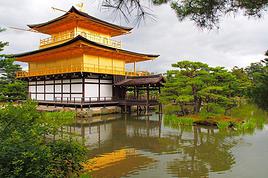
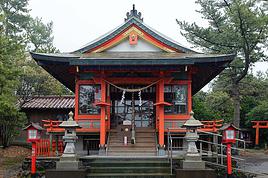
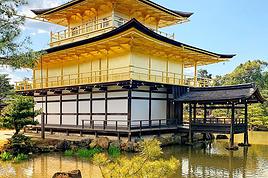
Kansai : Kyoto, Nara, Himeji (rien que cela, on peut y passer 3 semaines)
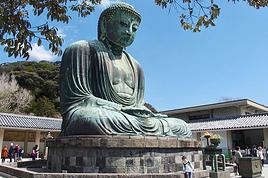
Kanto : Tokyo, Nikko, Kamakura
Un conseil en passant : voyagez léger, et choisissez vos bagages en fonction de la taille standardisée des consignes si vous envisagez un voyage itinérant.
Quand partir ? éviter la saison des pluies (début juin à mi-juillet) : chaleur et humidité oppressante. En août, certains trouvent la chaleur insupportable, mais pas moi. Eviter la semaine du 1er mai (ça c'est pour l'an prochain) : tous les Japonais sont en vacances, donc les sites touristiques, transports et hébergements sont bondés.
Et en fonction de vos contraintes de calendrier, essayez d'aller à un des innombrables festivals ("matsuri") : vous ne le regretterez pas, l'ambiance est inoubliable.
Je n'ai pas beaucoup à ajouter aux excellents conseils de Marathon.
Si vous prévoyez un (relativement) long séjour, un railpass de 7 jours peut s'avérer utile pour rejoindre une région lointaine mais intéressante: Il n'y a pas que la région de Tokyo et du Kansai qui mérite visite, considérez les alpes japonaises, le nord (provinces de Yamagata, Iwate, Miyagi, ...), le Hokkaido, et bien sûr les îles de Kyushu et Shikoku. Il convient de se rappeler que le railpass peut être activé à tout moment et est remboursable s'il n'a pas été activé dans une durée de 3 mois.
bonjour et merci a tous :) vos conseils nous sont vraiment d'une grande utilité et sont très complets. C'est un pas de plus vers notre voyage qui nous semble de plus en plus fascinant et merveilleux chaque jours. Merci aussi d'avoir pris en compte notre petit budget ainsi que l'alergie de mon ami. Nous vous remercions sincèrement et vous convions a rajouter des informations si nécessaire ^^ merci encore.
demandez à votre ami de s'assurer s'il est vraiment médicalement allergique au poisson et/ou aux fruits de mer, simplement intolérant, ou s'il s'agit seulement d'une aversion/dégoût/détestation pour ces produits.
L'intolérance aux fruits de mer n'est en général pas très grave mais peut causer des désagrément susceptibles de gâcher des vacances (indigestions, diarrhées, ...).
L'allergie vraie au poisson, elle, est rarissime (plus fréquente aux fruits de mer, ou plutôt aux bactéries que celles-ci contiennent) mais peut présenter un risque vital, et il faut se rappeler que la base de la cuisine japonaise est un bouillon à base de poisson sec et d'algues (le "dashi"), qu'on trouve dans quasiment toutes les préparations, y compris des plats végétariens comme le tofu bouilli, etc. Ceci étant, je n'ai pas connaissance de personnes allergiques ayant été malades avec ce bouillon et comme son goût est extrêmement discret, la majorité des gens ignore en avoir avalé.
Je suis personnellement très intolérante aux fruits de mer (huitres, moules crues, etc.: plus jamais être malade comme ça !) au point d'y avoir totalement renoncé, mais pas aux poissons ni aux algues et n'ai jamais eu le moindre problème au Japon.
malheureusement mon ami est allergique médicalement parlant il n'a jamais mangé de poisson car sa maladie a été dessellé très tôt...merci de votre réponse. Le voyage serait alors rendu impossible voir invivable?
il devrait être possible de trouver des kfc ou des mcdo non? même les nourriture lyophilisé ou il suffit de versé de l'eau sont à base de poisson? merci beaucoup de nous aidés ainsi.
Ne renoncez pas à ce voyage, vous n'allez ni mourir d'intoxication, ni de faim:
Il y a des kfc, des mc-do (et leurs équivalents japonais genre Mos Burger), des restaus et bars spécialisés en sandwiches, salades, grillades (brochettes de volaille, yaki-niku, le barbecue coréen), fritures (je recommande le ton-katsu, il n'est pas allergique au porc, votre ami ?), nouilles sautées (yakisoba), crêpes (okonomiyaki) et des épiceries ouvertes 24/24 qui proposent de tout à l'emporter.
Votre ami devra aussi apprendre à dire qu'il est allergique au poisson (allergie se prononce un peu pareil qu'en français, et poisson se dit "sakana").
Une chose encore, le déclenchement des allergies est en fonction de la dose. Il faudrait vérifier avec son médecin si l'ingestion occasionnelle d'une petite quantité de dashi* pose problème ou non, ce qui lui permettrait peut-être de manger des plats mijotés comme le curry (kare raïsu), etc.
* le dashi est une infusion de flocons de filet de bonite séchée (Katsuobushi) et d'algue laminaire (Konbu) en petites quantités. Ca ne fait donc pas beaucoup de poisson sur un repas et peut-être votre ami pourrait-il consommer de toutes petites doses sans risque. Je vous mets les noms japonais pour que vous puissiez faire une recherche sur le net afin de renseigner le médecin si besoin.
ces nouvelles nous réjouissent 🙂 mon amis parle pratiquement couramment anglais et nous avons pu remarquer que les japonais parlent ou du moins comprennent assez bien l'anglais. Pensez vous qu'il y est des expressions ou phrases complètes qu'il faille que nous connaissions(en japonais)? je vous remercie une fois de plus.
L'anglais va vous aider pour un tas de choses, mais les japonais en général ne le parlent ni le comprennent vraiment aisément ou volontiers. De plus, plus on connaît la langue d'un pays, plus on l'apprécie. Si possible, apprenez un maximum de phrases et d'expressions courantes. L'office du tourisme à Paris (voyez l'adresse sur www.jnto.go.jp) dispose de plein de documentation gratuite qu'il envoie volontiers sur demande, dont un petit lexique de phrases courantes bien utiles. Notez que l'on trouve tout ça sur place dans les offices de tourisme. Si possible, apprenez à reconnaître un maximum de signes (hiragana/katakana, les syllabaires et les kanji, les idéogrammes chinois), pour les principales villes, lieux que vous visiterez, etc. Vous ne regretterez pas votre effort.
D'autre part, si vous vous adressez systématiquement aux gens avec les expressions de politesse courante, ça leur fait très plaisir, surtout dans les zones où passent moins d'étrangers (en dehors des grandes villes et de l'axe Tokyo-Hiroshima):
O hayo gozaïmas' : bonjour (le matin)
Ko nichi wa : bonjour (la journée)
Domo arigato (gozaïmas') : merci beaucoup
Sumimasen : pardon/excusez-moi, s'il-vous-plaît (pour attirer l'attention), merci (quand on nous a fait une petite faveur inattendue)
(kore) o kudasaï : je voudrais (ceci) (encore mieux précédé de sumimasen)
Rien que ces quelques expressions aident à briser la glace.
une fois encore nous vous remercions . Comme nous ne partons pas dessuite nous avons du temps afin d'apprendre un maximum d'expressions utiles en commençant par celles que vous nous avez donnée . Je pense et j'espère qu'il y aura des sites internet mentionnant ces phrases a connaitre et qui pourront nous aider^^merci pour tout vos conseils cela fait plaisir d'être conseillé par des gens qui ont de l'expérience. Si vous avez d'autres informations importantes a nous donner nous vous en serions très reconnaissants.
Tout ce que je peux vous dire car moi aussi je planifie un voyage au japon et je suis pas bien vieille, c est que j ai trouvé des billets allée simple a moins de 900euros et apperemment, gardez toujours votre passeport européen avec vous car tous les produits peuvent etre détaxé sur présentation en caisse ( tu fais tes courses et boum 5% en moins...). sinon, je vous conseille d appeler l ambassade du japon, ils sauront exactement quoi dire( http://www.fr.emb-japan.go.jp/ )
bonne chance et rien de mieux (et de moins cher) que de vivre chez l habitant
Voici mon blog sur le Japon, je l'ai fait suite à mon 1er voyage et je pense que tu y trouveras une mine d'informations. Nottamment les articles intitulés : "idée reçue sur le Japon". à titre d'info : je parle des transports, de la cuisine, de la langue, de la culture et évidemment il y a bcp de photos et de conseils de visites.
"Ils ne savaient pas que c'était impossible alors ils l'ont fait." M. Twain
Pour répondre à ta question, la vie au Japon est moins chère qu'en France, si si ! Tu peux manger pour 1 euro (bon ça je le faisais 1 repas sur 2). Je rejoins la personne qui dit que chez l'habitant c'est ce qu'il y a de mieux à tous points de vue, mais encore faut-il connaître qqn (c'était mon cas) ou être un adepte du couch surfing. Sinon, tu peux faire confiance les yeux fermés aux auberges de jeunesse dont le rapport qualité prix est excellent. Pour environ 20 euros la nuit tu as un confort incroyable et des services irréprochables. Ne prenez pas avec la salle de bain individuelle, au Japon les bains publics sont une tradition. N"hésitez pas à prendre le petit déj' c'est copieux et très bon. L'autre avantage des auberges c'est qu'on y fait de belles rencontres. Evidemment, tu n'as peut-être pas les moyens de mettre 20 euros par nuit...
Sinon j'ai entendu parlé des capsules hotels mais il ne faut pas être claustrophobe ! D'une manière générale, pour les garçons il y a de nombreux moyens de dormir pour presque rien. J'ai aussi dormi dans un ryokan (petit hotel de charme) et un minshuku (pension), c'est très bien mais pas aussi intéressant que les auberges. En plus, si tu as la carte, tu as des réductions.
"Ils ne savaient pas que c'était impossible alors ils l'ont fait." M. Twain
je n'est pas de date fixe mais je pense que se sera bien plus tard que 2009 car il faut que nous gagnions l'argent nécessaire ce qui n'est facile. je ne peut donc pas t'aider, j'en suis désolé .
bonjour
pour tes renseignements je pense que tu trouvera un max d'info sur le guide du routard.com
j'en cherche moi pour ma fille qui est fan de manga et culture japonaise et qui voudrait partir la bas
info est tu au courrant qu'un bar theme manga pour fan c'est ouvert a toulouse ça s'appel le tokyo cafe espace detente dedié au manga 56 bd arcole a toulouse
si tu as des infos n(hesite pas a nous les communiquer merci
bon courage et bon voyage
Actuellement étudiant, j'aimerais beaucoup partir une grosse semaine au pays du soleil levant. cependant, je dispose de peu de moyens... J'aimerais tout…
Je vais arriver à Osaka depuis Busan vers 16h et je repars le lendemain vers Okinawa à 8h donc réveil matinal. Avez-vous un hôtel PAS CHER à me proposer (autre…
Je suis à la recherche d'un hôtel pas très cher pour mes premiers jours à Fukuoka en septembre. L'idéal serait près de la gare d'Hakata (là où se trouve mon…
Je cherche tout renseignement d'un vol pas chére de TokyoParis ou Osaka Paris ou Nagoya Paris vers le 15 aout. J'arrive de Shanghai en bateau et retour après…
Les vols Bruxelles Tokyo ont des tarifs très intéressants ( 400€)... Seul inconvénient pour un parisien, il faut se rendre à Bruxelles en Thalys. Pour l'aller,…
Three years after exploring northern Argentina and Chile, my two travel buddies and I want to discover the southern part of these two countries.
We’re traveling on a budget, backpacker-style, favoring public transport and modest accommodations, but we don’t hesitate to splurge a little when it’s worth it.
The classic spots that have been fueling our dreams: Bariloche, the lakes, Chiloé, El Chaltén, Torres del Paine, Perito Moreno, El Calafate, Fitz Roy, Ushuaia and Tierra del Fuego, and wrapping up in Valparaíso.
We’ll take a round-trip flight to Santiago, then I’m thinking of a one-way flight from Santiago to Punta Arenas. From there, we’ll explore and do several day hikes in the south, including Ushuaia and, if possible, Tierra del Fuego.
Then we’ll head back north by bus to Bariloche and the lakes, followed by Chiloé, then a bus to Santiago and Valparaíso.
Based on your experience, could you help me figure out the best way to structure this trip and maybe suggest some ideas?
Thanks in advance.
Didier
Hello! 👋
I’m new to this site and feeling a little desperate. 😢 My boyfriend’s birthday is in 4 days, and I wanted to surprise him with a New Year’s trip to London... except I just found out he’s already been there as a kid. Well, there goes my surprise! 😅
Since we both love Christmas and winter, I’m looking for a destination where we can really feel the holiday magic—with a budget of around 500 € for transport + accommodation for two (yes, I know, I might be asking for a Christmas miracle here 😇).
We’ve already been to Bucharest, Prague, Vienna, and Budapest, so I’d love to find something a little more offbeat, not too expensive, and with a beautiful Christmas atmosphere.
Please help me! 🙏 On social media, it’s always the same ultra-touristy cities... I’m sure there are hidden gems I haven’t discovered yet!
Hi there,
I'm heading to Morocco for 10 days as a backpacker, with my car and a tent canvas if needed. Does anyone have great experiences in this country around the Tétouan and Tangier areas?
I'd love to spend time with locals, rent a small room, and take part in daily life.
If you've got any addresses to share, that'd be awesome!
Thanks a million for your replies!!!😉
Christine
I’m heading to Quebec and New Brunswick this summer and got a Revolut Classic card for the trip. I’ve already exchanged some Canadian dollars in the app so I’ll have a reserve ready for my departure day. My question is whether I’ll incur any additional fees when using my Canadian dollar account. I think I’m limited to 200 € in ATM withdrawals for my part. Thanks!
My boyfriend and I are going there for just 9 days, including the two travel days… It’s not much, but oh well!
Looking at prices online, I get the impression everything’s more expensive than I thought 😅 So, I wanted to get your feedback on a few things:
* Is hitchhiking common, easy, and generally safe in Albania?
* Is it possible to find day-to-day accommodations without booking ahead? If so, are they usually cheaper than the ones you find online?
* Is wild camping allowed or at least tolerated?
If any of you have traveled there recently, I’d love all the tips and great deals you’ve got!
Hi,
We’re a young couple planning to travel to South Africa after spending about three weeks in Namibia. We’ll arrive in Cape Town around mid-December, with no fixed travel duration (though our budget will eventually set a limit).
After browsing through the forum, we’ve realized the country is packed with incredible spots, which makes choosing an itinerary tough. We’re looking for stunning landscapes, hikes, and so on. So, we’d love to hear your thoughts and experiences.
When we arrive in Cape Town, we’d like to settle in and take it easy until New Year’s, exploring at a relaxed pace. We know this period coincides with South African holidays—does that make finding accommodations (availability/prices) more difficult? Do you think it’s possible to stay in a nice place for about 15 days without aiming for the most upscale neighborhoods? Maybe somewhere a bit outside Cape Town, like Fish Hoek, and just visit the city occasionally.
After that, we’ll have plenty of time (about 2 to 2.5 months) to explore the country. We’d like to take our time. In your opinion, is it better to focus on the Cape Town region, or is it reasonable to consider more distant areas like the Drakensberg or Blyde River Canyon? Can everything be done by car if we take our time, or are domestic flights sometimes more practical?
Budget-wise, how much do car rentals cost? For accommodations, we usually look at Airbnb—are they affordable in South Africa? What’s the average nightly rate outside the biggest cities? Are there other platforms you’d recommend for saving on lodging?
Finally, regarding safety, are there any regions to avoid besides Johannesburg?
We know this is a lot of questions, but we’re still in the early planning stages!
Thanks in advance for your advice!
Hi there,
After exploring southern Peru in 2024 with your help, we’d love to head north next. There’ll be 5 or 6 of us:
1. Arrive in Lima in the evening.
2. Visit Lima and take a flight at 6:35 PM to Tarapoto.
3, 4, 5. Spend a few days there to trek in a reserve (Pacaya-Samiria National Reserve) or somewhere else.
6. From Tarapoto to Chachapoyas—either by overnight bus, daytime bus, or private car.
7. In Chachapoyas: Gocta Waterfall, Sonche Canyon, and walk back to town.
8. Head to Kuelap citadel, Revash, and arrive in Leymebamba.
9. Leymebamba museum, then route to Cajamarca.
10. Cajamarca hot springs, overnight bus to Trujillo or Chiclayo—or do both.
11, 12, 13. Visit and explore the area.
14. Overnight bus back to Lima.
15. Lima.
16. Depart at 8 PM for France.
What do you think of this itinerary? Looking forward to your advice.
Thanks
I’m planning a 7-day trip to Marrakech for a sports camp, and I’ll be traveling with just a standard carry-on backpack.
I’d love to hear your best tips and tricks:
• What clothes are absolutely essential?
• Any advice for managing the heat while traveling light?
• Which accessories have been the most useful for you?
• Mistakes to avoid on a first trip to Marrakech?
I’m also open to your recommendations for neighborhoods, restaurants, or activities not to miss during my free time.
Thanks in advance for your advice and experience! !
Hi there, we’re heading to the Cyclades from June 23 to July 9. We’ll arrive in Santorini and leave from Mykonos. We’re thinking of visiting these islands: Folegandros, Milos, Sifnos, Tinos, and Mykonos. Do you think it’s better to book the ferries now (which site do you recommend for booking?) or can we buy the tickets on the spot? Also, do you have any suggestions for accommodation under 100 €/night on each of these islands? Thanks in advance!
Hi everyone!
I’m planning my dream trip for next September, lasting about a month. Here’s my itinerary:
Amsterdam: 3 days (departing from Montreal)
Tanzania: 3-day safari
Zanzibar: 6 days
Istanbul: 7 days
Return to Montreal.
Since my budget is pretty tight, I’m looking for tips and advice to cut costs without sacrificing the experience. Here are my questions:
Multi-destination flights: What’s the best way to book these connections? Is it better to buy a one-way ticket from Montreal to Amsterdam, then a separate internal flight, or use comparison tools for a multi-destination ticket?
Budget safari: Do you have recommendations for local agencies or tips to do a 3-day safari (Serengeti/Ngorongoro) at an affordable price (e.g., camping/glamping instead of luxury lodges)?
Accommodation in Zanzibar: Which villages or types of lodging are the most budget-friendly and accessible via local transport for these 6 days?
Istanbul: Any tips for well-located but cheap accommodation and great food deals?
Hi,
Are there still basic, traditional, and affordable authentic accommodations in Poland? I’ll be traveling in July with my husband and our 2 kids along the Warsaw-Łódź-Toruń-Gdańsk route, and all I can find online are standardized Ikea-style apartments in the cities. When I look for agrotourism, it’s all luxury farms.
Can you find farms in the countryside or city lodgings for under 60 euros per night? And if so, how?
Is it possible to find accommodations on the spot without internet—like from people who put up signs—even in July?
Hi,
I need to stay in Paris or Créteil for 2 nights a week for a month. I know some cheap backpacker options, but I’d like something even cheaper. Do you know of any rooms for rent from private individuals?
Thanks
We’re a young couple planning our first trip to Albania from June 23, 2026, to July 2, 2026. We have a pretty tight budget and want to make the most of this amazing country without breaking the bank.
We’re looking for all the advice you can give to help us plan our stay:
* What are the must-see places to visit?
* Which cities or villages are really worth the detour?
* What natural sites, hikes, canyons, springs, or viewpoints do you recommend?
* Do you know of any free, uncrowded, or particularly beautiful beaches?
* Where can we responsibly observe or swim with sea turtles?
* What are the most beautiful beaches on the Albanian Riviera that are accessible on a small budget?
* What budget-friendly accommodations (hotels, hostels, homestays, campgrounds) do you recommend?
* What are the best ways to get around between different regions at a low cost?
* Do you know of any reliable and affordable agencies for renting a vehicle (car, scooter, or motorcycle)? What are the average rates at the end of June, and which rental companies do you recommend or advise against?
* Is it better to rent a vehicle right when we arrive or stick to local buses and minibuses to keep costs down?
* Which restaurants or local specialties offer the best value for money?
* Are there any free or low-cost activities we shouldn’t miss?
* Which places do you think are overrated or can be skipped when you’re short on time and money?
* What practical tips would you have wished you knew before your first trip to Albania?
We’d also love any 10-day itineraries that you particularly enjoyed, along with your budget estimates for accommodation, meals, and transportation.
We’re open to off-the-beaten-path spots and local tips. If you have any secret addresses, hidden beaches, favorite accommodations, or mistakes to avoid, we’d love to hear about them! 😊
Hi there, we’re planning a road trip in northern Algeria at the end of January – early February.
Anyone have any tips for a car rental agency that’s both reliable and not too expensive? Thanks in advance!
I traveled through southern Peru in November 2024 and now I’d like to explore the north.
We’re a group of 5 people for a 15-day trip.
Iquitos or Nauta for the Amazon rainforest—I saw that you have to fly there.
Chiclayo
Chachapoyas
Kuelap
Leimebamba
Cajamarca
Trujillo
And if we have time, Huaraz for the Andes cordillera.
No problem taking overnight buses—they save a lot of time.
Or renting a car and figuring it out as we go.
We’d also love to take the train from Lima to Huancayo, but it seems complicated—I don’t understand when it runs.
I’d like to drive to Morocco from Paris via Spain. I was really surprised to see the ferry crossing prices—around 500 €—but especially the crossing time (about 1 hour). Normally, I pay 3000 € to go to Tunisia from Genoa, but that’s for a 24-hour crossing.
My question: is it cheaper to buy the ticket on the spot, as some Moroccans have advised me? Though I’ve also heard the opposite.
What do you think, considering I need to get to Tétouan around July 17th and return from Tangier around August 4th?
Thanks in advance
I’m planning a 10-day trip to Slovenia in May (9–19 May) and starting to look at accommodations. Unfortunately, I’m only seeing relatively expensive options—nothing under 50 €, and usually around 100–150 €. Traveling solo, that could quickly blow my budget. And 30 € for a bed in a 10-person dorm at a youth hostel feels like a rip-off...
Are there other booking sources besides the usual Booking.com, Airbnb, and Google? Or can anyone confirm if I’ll find more reasonable rates on the ground around Bled, Bohinj, Triglav, or in mountain huts? I’ll be renting a car to optimize my travel, so I won’t be limited geographically.
Hi there,
Could you recommend some nice and affordable neighborhoods to book a hotel in for visiting Nice and exploring its surroundings and nearby villages?
I’d like to know if it’s better to book the entire stay in Nice and take day trips to the villages, or if there are villages worth spending at least one night in to really explore them properly?
Since all the villages are stunning and we have to make a choice, which ones are absolutely must-visit?
My 16-year-old daughter and I will be spending a week there at the end of April. We’ll arrive by TGV from Paris and plan to use public transport during our stay. Do you know if there’s a weekly transport pass available and how much it costs?
I’m planning to spend about twenty days in Réunion in November.
I’d like to get around using the *car jaune* (2 € per ticket), but from what I’ve heard, it doesn’t cover the whole island.
I’m not looking to head toward the ocean and the beautiful beaches—more toward the mountainous landscapes, even if I’ll just be admiring them from below. 😉
Maybe other buses go where I want to go.
By the way, are there any relatively easy mountain hikes, and where?
But here’s the most important part:
I don’t want to book anything in advance because I don’t know what my itinerary will look like—it’ll change depending on my mood. 3 days here, 5 days there, etc.
On top of that, I’d like to arrange half-board stays with locals—not professionals—by approaching them and asking if they’d be willing to host me (overnight stay, breakfast, and dinner) for 30 € to 40 € per day.
What do you think?
Does the price seem reasonable?
And is it okay to take the initiative and ask Réunionnais directly?
The tourist office in Réunion told me that since November is peak tourist season, I should book without delay. 🤪
For four years in a row, I traveled across Canada for a month and a half each time, relying only on hitchhiking and half-board stays with Canadians who welcomed me (and refused to let me pay them).
If I’d listened to my family and friends, I never would’ve taken the leap—and that adventure remains one of the best experiences of my life.
It’s been ages since I last dropped by here... maybe simply because, apart from Nepal, I haven’t really had the chance to hit the road lately. 😉
This year, I’d love to spend a few days in Lisbon, probably in late May or early June. But with my budget being what it is, I’m looking for great tips to avoid wasting time once I’m there and risk missing out on hidden gems or unusual culinary specialties and/or quirky activities! I’m hoping to find a room in a local’s home where I can stay in a quiet neighborhood near the center, so I can get around without relying too much on public transport—my walking shoes are my best travel buddies.
I’d love all your recommendations, especially for parks, small neighborhood markets, casual eateries for a quick bite, your favorite viewpoints to soak in the scenery (I’m bringing my travel journal to sketch my getaway in watercolors), events around traditional art and crafts, and so on.
All your advice will definitely help me travel peacefully and come back with my head full of vibrant memories!
Thanks in advance, everyone!
Isabelle
I’m diving into planning a trip I’ve dreamed of for a long time: crossing Africa from North to South solo, with a departure planned for October 2025 for about 8-9 months. I’m leaving from Paris with a starting budget of around 7,000 €, aiming to supplement it with work along the way.
My planned route: Senegal → Gambia → Sierra Leone/Liberia (if logistics work out) → Côte d'Ivoire → Ghana → Togo → Benin → Cameroon → Gabon → Kenya (Masai Mara) → Uganda (Bwindi gorillas) → Rwanda → Tanzania (Kili + Serengeti + Zanzibar) → Mozambique → Malawi → Zambia (Victoria Falls) → Botswana → Namibia → South Africa (Cape Town). Madagascar as a bonus if timing/budget allows from Mozambique.
I’m not a backpacking newbie—I’ve done several trips in Europe and I’m familiar with the lifestyle, hostels, local transport, etc. But Africa is my first big adventure on this continent, and I’ve got some very concrete questions I’d love feedback on from people who’ve been there.
🎭 My big dilemma: flexibility vs. pre-organized work
What matters most to me is NOT rushing through. If I feel good somewhere, I’ll stay longer. If a region doesn’t click, I’ll cut it short. That seems totally incompatible with having pre-booked work or volunteer gigs, yet I need that income to stretch my budget.
I’m torn between two approaches:
Option A: The mixed rhythm: 3-4 weeks of volunteering in a country (free accommodation, full immersion), then 1-2 countries in classic backpacker "vacation" mode, then another mission somewhere, etc. This gives a breathing rhythm and avoids burnout from non-stop volunteering.
Option B: The continuous flow: finding gigs as I go, from the previous country, contacting hosts 2-3 weeks in advance with a flexible date range. Keeping maximum spontaneity but never arriving anywhere without a safety net.
Have you tried either? What actually works on the ground in Africa?
🌍 What I’m really looking for in this trip
Not just the classic tourist spots. I want to see the country as it is—eating at local joints, taking local transport (bush taxis, minibuses, sept-places), staying with locals when possible. The big reserves and safaris are part of the plan (Masai Mara, Serengeti, Okavango), but just as much as hanging out in a residential neighborhood in Dakar, understanding how people really live.
Volunteering or work interests me for that reason too (not just for free lodging, but because it’s the deepest way to dive into a country). Working at a school in Ghana, a lodge in Kenya, a permaculture farm in Mozambique—I see it as an immersion that classic tourism can’t offer.
🎒 My concrete questions
About Workaway and Worldpackers: I’ve read a lot but would love on-the-ground feedback, especially for West and East Africa. Are hosts really flexible with dates for long-term travelers? Do the advertised gigs match reality? Are there alternative platforms you’d recommend for Africa specifically (I’ve heard of Help Exchange, WWOOF Africa, local networks…)?
About "off-platform" jobs: Is it really doable to find informal work on the spot (bars, restaurants, lodges) without prior contacts? In which countries/cities is this most accessible for a French speaker without a local work permit?
About logistics between countries: For those who’ve done the West Coast (Senegal → Ghana → Benin), how did you cross borders? Direct buses or local shared taxis at each border? And for the jump from Central Africa → Kenya, is a flight mandatory, or are there feasible overland routes?
About Madagascar: I’m considering adding it from Mozambique (flight Maputo or Beira → Tana). Those who’ve done it backpacker-style on a tight budget—is 3-4 weeks doable, or is it too short to be worth it?
I’m open to all tips, experiences, warnings, and pleasant surprises. And if you’ve got trusted local contacts (Workaway hosts, associations, community lodges), I’m all ears!
I’ve got tons of questions and I’m eager for any advice or experiences you can share!!
Hi there,
We’re planning a trip for 2 adults and 2 kids to Tanzania and Zanzibar. I’ve had a quick look, and the prices are starting to get pretty wild.
We’ve got a budget of 8,000 €, and I was thinking of doing three or four days of safari and three or four days in Zanzibar, but even that seems like it might be over budget. Have you got any thoughts? I was also considering heading straight to Zanzibar and doing a one- or two-day excursion by plane instead—maybe that’d be cheaper than staying in a lodge.
Anyway, thanks for sharing your experiences and any price tips, departing from Nice!
Good evening,
As two senior French couples who are used to traveling independently all over the world, we’d like to visit Kenya next November.
Now, after seeing and reading a bit everywhere, and with the first quotes for a 6/7-day safari, I’m shocked by the prices (like $2,250) for places like Maasai Mara, where entry alone costs $200 per person per day, plus fees for the driver and vehicle.
So if you have any recent great tips or contacts to share to help me out, I’d really appreciate it—because despite the costs, we’d still love to go, while keeping things reasonable.
The most plausible solution is probably renting a vehicle with a driver-guide.
Thanks in advance for all your replies.
Jacques
We’ll be in Srinagar for 4 days in mid-May 2026 during our backpacking trip as a couple. Do you have any nice places to recommend, and what about the houseboats on Dal Lake? Should we spend all our nights there, or just one night for practicality when getting around?
Thanks,
Rozenn
Hi there,
This is my first time traveling to Italy, and I’m planning to go by car.
From what I’ve read, parking is tough in cities like Florence.
I’m looking for a small town not too far from Florence where I can stay and park my car, then take the train to visit Florence.
Any ideas or suggestions?
Thanks in advance
Hi there, it’s been a long time since I last went to London. I’d love to spend a week there in July with my daughter and my niece (both young adults).
Of course, I’m looking for great tips on accommodation, and I’m wondering about renting an apartment. It seems like a better deal to save on restaurants (with the option of having a few meals at home... but is that really the case? I’m not sure about the cost of a meal in a modest restaurant, the pound exchange rate, or grocery prices...).
Otherwise, I’d like to stay in accommodation (hotel or apartment) near a tube station and in Zone 1.
If you have any great tips, I’d love to hear them!
Hi everyone!
I’m heading to Morocco for a trip in the south, starting with 3 days in Marrakech (from January 8th to 11th, 2026).
If you’ve got any tips, cool spots to recommend, I’m all ears! 🎊
And, fellow traveler, if you’d like to share this Marrakech adventure together, I’d love that!
Have a great evening
Hi there,
I’m planning a trip to Peru and have estimated how many days I’ll spend in each place.
Any advice on must-see sights and tourist traps to avoid?
September–October
5 days in Lima
Bus: 07:00→13:30 or 06:00 to 09:30 (express) (3 hr 30 min journey)
3 days in Paracas (beach)