Sauf erreur de ma part, il n’y a pas de feedbacks d’individuels qui ont pratiqué par les transports locaux en Zambie. A lire VF, on a la fausse impression que le self-drive est la seule solution.
Revenu d’un mois en Zambie, voici quelques pistes et idées pour ceux qui désirent pratiquer de la sorte.
S’il est évident que le self-drive permet d’aller où bon vous semble, avec un peu de débrouille et du temps, il est tout à fait possible de voyager, par vous-même, en dehors des villes et de ne pas se contenter juste de « l’essentiel ».
Il n’y a que quelques endroits qui posent des difficultés insurmontables si vous ne savez pas employer un plan bis ! Encore une fois, employer les transports collectifs ne signifie pas que l’on ne fait pas de stop ou que l’on n’affrète pas à l’occasion un véhicule pour un lift « problématique »
Hormis si vous êtes overlander et que vous arrivez en Zambie par voie terrestre, Lusaka sera certainement votre porte d’entrée dans le pays. Elle va également être le passage quasi obligé entre les différentes régions.
Vous auriez intérêt à loger dans un quartier « central » comme Maluba (Fairview) et le meilleur point de chute pour l’indépendant est l’ex Chachacha (dénommé maintenant Lusaka Backpackers). Il y a d’autres possibilités dans le même quartier (bien situé par rapport à la gare interurbaine, Cairo Road, Manda Hill ou encore Arcades) mais après avoir été ailleurs, cela reste un excellent choix.
C’est l’endroit où tous les indépendants se croisent et il y a moyen d’échanger pleins d’infos. Ils proposent également des activités y compris des séjours dans des parcs nationaux ou des randos en canoë (entre autres) avec le bémol que vous devez être un nombre minimum et que vous êtes parfois le seul à être branché pour telle activité ! D’où la nécessité de faire par soi-même et de se débrouiller…
Remarque préliminaire : je n’ai pas souhaité voyager de nuit (ce qui est possible) car si les routes ont des noms évocateurs (Great East road, Great North road, etc.), elles sont plus longues que …larges et lorsque vous voyez le cirque que représente le croisement en journée d’un bus et d’un camion, vous vous dites que vous n’allez pas jouer à la roulette russe en voyageant de nuit, avec des chauffeurs fatigués (parfois alcoolisés) et des croisements limites. C’est du moins mon choix.
Les coachs (autocars interurbains) sont le moyen de transport à privilégier. Ils desservent les grands axes et sont les plus confortables. Il y a différentes compagnies (de la plus pro à la plus folklo…) et en employant le « time bus », l’horaire de départ matinal est, en théorie, respecté. Par facilité, achetez votre billet la veille (surtout vrai pour le premier bus de la journée) sinon, venez à la gare et voyez…
Moins confortables parce que surtout bien trop chargés, les camionnettes Hiace (en théorie 15 places) sont employées, en plus d’assurer les transports à Lusaka, pour certaines liaisons (Lusaka-Siavonga en est l’exemple typique)
Vous allez très vite comprendre en montant dedans que vous avez intérêt à être le moins chargé possible. En Zambie et contrairement à certains autres pays, les gens sont relativement chargés en voyage et vous risquez d’être compacté entre personnes et bagages.
Le camion-stop (payant comme tout stop en Zambie hormis si vous avez un lift avec des « blancs ») est la solution pour aller dans le nord, au-delà de Serenje. En effet, s’il y a des Hiace depuis Kapiri jusqu’à Serenje, si vous souhaitez rejoindre Mutinondo, Shiwa Ng’andu ou le Tanganyika (par exemple), le stop est obligatoire (il n’y a des bus que la soirée/ nuit)
Vous payerez le lift (tarif équivalent à celui du bus) et essayerez de trouver une place dans un des nombreux camions tanzaniens qui relient Lubumbashi et/ou le Copperbelt à Dar.
Evitez par contre impérativement de faire du camion-stop sur la route qui relie Kafue (la ville) à Chirundu (pour vous rendre à Siavonga). La partie après les gorges est terriblement dangereuse. Il y a de très nombreux accidents et vous le constaterez au nombre impressionnant de carcasses et de pièces de carrosseries qui jonchent les bas-côtés. Même si l’idée du stop vous trotte dans la tête, c’est la partie du pays la plus dangereuse pour en faire !
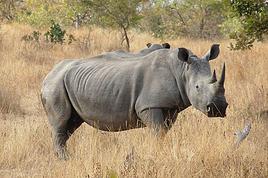
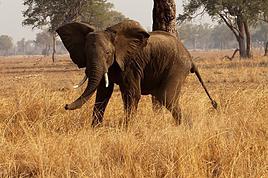
Sans être véhiculé, il est possible d’aller dans plusieurs parcs nationaux. En règle générale, Kafue, South Luangwa et Lower Zambezi sont ceux qui ont la préférence des voyageurs (self-drive, indépendants ou troupeaux) mais seuls les deux premiers sont possibles avec un mélange de bus et de marche.
Pour Kafue, la taille de celui-ci (deux-tiers de la Belgique) oblige à aller dans la partie sud, près de Mukambi. Il y a un bush camp et le lodge et il est tout à fait possible d’y arriver à pied une fois déposé par le bus (pour Mongu)
Même s’ils déconseillent de marcher dans la brousse, vous n’avez que trois kilomètres entre le lodge et la route. Avec la surface du parc, c’est pas de chance que de croiser un fauve alors que vous êtes en chemin… Si vous y allez en journée, il n’y a pas de quoi fouetter un (gros…) chat…
Le South Luangwa s’atteint soit par Mfuwé en avion (vous vous ferez chercher par la structure que vous avez choisi à l’aéroport) ou via Chipata (coach depuis Lusaka puis camion ou Hiace entre Chipata et Mfuwé)
Seul le Lower Zambezi pose de réels soucis car sauf si vous optez pour la GMA, le parc national est bien trop éloigné que pour y aller par vous même. Un lift par une agence (ou un vol) est la seule solution.
Le nord-est est la zone (avec l’extrême ouest) qui demande le plus de temps et nécessite de se débrouiller pour y circuler (encore une fois si vous souhaitez voyager de jour)
La seule option pour un trajet de jour en bus, c’est le post bus mais vous devez prendre le billet à l’avance, pas nécessairement la veille car il n’y en a qu’un par jour (quand les départs sont quotidiens) et ils sont courus. Bref, parfois une « fausse » solution…
Il y a moins de camions qui remontent (en journée) vers le nord que ceux qui descendent.
En envisageant des étapes et en s’accordant assez de temps, vous pouvez y voyager.
Rétrospectivement, j’ai tendance à proposer de découper votre séjour par semaines et ainsi consacrer une semaine par « région » (grosso modo) sauf pour le nord qui demande bien plus de temps.
Les distances sont importantes, les transports collectifs pas tous des foudres de guerre et encore une fois, les kilomètres sur papier bien différents de ceux en vrai !
Le train est très très lent et pas nécessairement pratique (hormis pour ceux qui veulent aller sur Dar (ou descendre par ce moyen depuis la Tanzanie)
Je ne peux que vous encourager à y aller. Il n’y a rien de sorcier à pratiquer de la sorte.
Merci pour ces différents mémos !
As-tu finalement été jusque Livingstone et les Vic Falls ? Lubum ?
Tu nous raconteras un peu ce que tu as vu dans les différents parcs ? 😎
Il y a, comme tu le dis, si peu de retours de cette région.
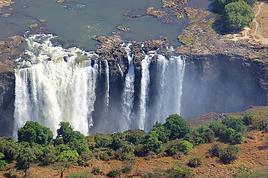
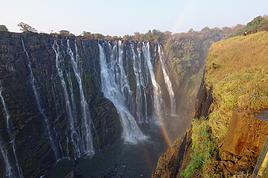
Si j'ai bien été à Livingstone et aux chutes, je suis resté par contre du côté zambien. En fait, début juin (lorsque j'y étais), les eaux étaient encore très très fortes (pas de possibilité pour du rafting et encore moins possible d'aller à la devil's pool)
Bref, pas de différence significative entre voir les chutes depuis la Zambie ou depuis le Zimbabwe: douche garantie à tous les coups.
Je n'ai finalement pas été à Lubum (les connaissances passant en Belgique en juillet)
Du point de vue parcs, j'ai été au South Luangwa et au Southern Kafue ainsi qu'à Mutinondo. Je n'ai pas le moindre regret d'y avoir voyagé un mois mais avec les distances considérables, il est clair qu'il faut faire des choix.
Salut,
Je te remercie pour ta réponse... Je compte m'y rendre avec ma femme et donc je me renseigne un peu pour que le voyage ne soit pas trop aventureux.. ( par exemple qu'on fasse des journées de transport et qu'il soit ensuite impossible ou très difficile d'obtenir une entée en individuel dans un parc ...) S'il y a un ou deux endroits ( parc nationaux ou autres) que tu as trouvés particulièrement intéressants quels sont-ils?
Il n’y a rien de sorcier à y voyager par vous-même hormis les remarques habituelles sur les endroits éloignés des grands axes.
En effet, si sur ceux-ci, vous aves des coachs qui peuvent vous véhiculer, une fois que vous souhaitez vous en éloigner ou que vous vous trouvez sur des tronçons peu (ou mal) desservis, il est impératif de trouver un moyen de transport alternatif.
Néanmoins, même si vous y allez pour un mois, il y a des tas de choses à faire et vous n’allez pas passer votre vie sur les routes ou au bord de celles-ci à attendre un bon samaritain…
Pour les parcs nationaux, vous ne saurez pas y aller seul (sauf avec un véhicule, en self-drive, et y entrer par vous-même en réglant le droit d’entrée)
Gardez en tête qu’il y a des animaux et que c’est bien plus grand que le parking de l’Auchan dans lequel vous allez chaque samedi ! A un seul véhicule, il faut être capable de se débrouiller par soi-même et ne pas rester en rade au milieu de nulle part… Il n’y a bien entendu pas d’enclos ou de barrières. Y entrer c’est bien, voir des animaux, c’est mieux mais quand vous savez que Kafue, c’est deux-tiers de la Belgique, ce n’est pas gagné d’en voir beaucoup par vous-même !
En pratique, vous passerez par une structure : un lodge ou un opérateur qui va s’occuper de tout. Le lodge, c’est comme à l’hôtel où vous pouvez y rester sans aller dans le parc national (ce qui est inepte) ou vous partez, via la structure, en game-drives ou autres activités (walking safari, canoë, …)
Un opérateur a un camp (avec tentes et/ou chalets) et s’occupe de toute la logistique (le lodge aussi) et va vous emmener dans le parc. En règle générale, vous vous êtes arrangé à l’avance avec lui afin de fixer le nombre de jours (vous êtes en pension complète) et les activités.
Quelques structures ne visent pas le haut de gamme mais la Zambie reste chère car les parcs sont éloignés de tout. Et l’éloignement a un coût !
Je ne sais vous parler que de ce que je connais. Kafue et le South Luangwa pour les animaux et Mutinondo pour la ballade. Je n’ai pas choisi d’aller en Zambie pour faire exclusivement du safari (mais ai vraiment apprécié mes 10 jours) mais ai aussi voulu aller me promener par moi-même, sans escorte et tout le toutim. Raisons pour lesquelles j’ai été à Mutinondo.
Mon projet initial était d’aller à Shiwa Ng’andu mais le problème est de l’atteindre. Je sais maintenant que c’est facile (via un lift à Mpika) mais avant d’en avoir parlé avec un anglais, résident zambien, à Mutinondo, cela me paraissait mal embarqué. Je n’y ai pas su aller par manque de temps (et souhait d’aller aux chutes Victoria)
J’ai adoré Mutinondo où la théorie veut qu’il n’y ait pas d’animaux dangereux si ce n’est que j’ai appris en le quittant qu’ils ont perdu un cheval il y a un an tué par …un lion…
C’était en chemin vers Kalonje mais les félins ne connaissent pas les distances.
Maintenant, avec les étendues, pas de bol d’en croiser un au coin du sentier…mais cela reste la brousse… Il n’y a par contre pas de crocos et la rivière recèle de spots pour se baigner ou lézarder.
D’une manière générale, le nord demande beaucoup de temps car il est bien moins desservi que le reste du territoire (avec l’ouest qui est lui aussi « délaissé »)
Si vous faites des choix et n’avez pas l’idée (ridicule) de vouloir tout voir et aller partout (un peu à la manière japonisante des troupeaux), vous ne saurez qu’apprécier un voyage en Zambie. C’est une destination « zéro tracas »
Vous auriez intérêt à vous procurer le Bradt (le Lonely est trop succinct et englobe aussi le Malawi alors que la courtoisie m’empêche de commenter le « Petit Futé ») et de le bouquiner afin de vous faire une idée de ce qui vous tente.
Si vous maitrisez l’allemand, Hupe est un guide réputé bien que des allemands croisés à Mukambi (Kafue) le trouvaient un peu brouillon. Ils éditent aussi une carte (routière) qui est la référence absolue.
En pratique, vous passerez par une structure : un lodge ou un opérateur qui va s’occuper de tout. Le lodge, c’est comme à l’hôtel où vous pouvez y rester sans aller dans le parc national (ce qui est inepte) ou vous partez, via la structure, en game-drives ou autres activités (walking safari, canoë, …)
Et dans ce cas il faut aussi avoir déjà son véhicule où on peut en trouver un sur place au lodge ( éventuellement avec chauffeur)?
Quels parcs ne visent pas le haut de gamme?
Hormis quelques camps ou lodges qui se trouvent dans les parcs nationaux (ce sont des structures haut de gamme), toutes les structures (camps ou lodges) sont dans les GMA (game management area) où les règles pour les activités sont moins strictes.
De là, vous irez avec un véhicule (du camp ou du lodge selon celui que vous choisissez) et son chauffeur (qui est le guide) dans le parc national.
Si vous intégrez un camp de tente ou un lodge de petite taille, il faut les contacter à l'avance pour définir le nombre de jours que vous allez rester et les activités souhaitées. Et voir s'ils ont de la place pour les dates qui vous arrangent!
Jackleberry Safaris est typiquement une structure, basée dans le South Luangwa, qui vise les voyageurs "petits budgets". ils sont adéquats et l'infrastructure est tout à fait correcte.
Petit rappel qui a toute son importance, les animaux sont les même que ceux de Robin Pope ou Norman Carr qui, eux, sont des structures très haut de gamme. Vous verrez autant d'animaux qu'avec une structure bien plus couteuse (et cela peut vite monter)
Il y a du haut de gamme dans tous les parcs mais par-ci par là quelques structures plus abordables.
Décidez d’où vous souhaitez aller en fonction de vos centres d’intérêt
Contacter des opérateurs (surtout vrai en pleine saison car petites structures avec peu de guests, donc vite complet et parfois réservé longtemps à l’avance)
Une fois sur place :
Achetez une carte Sim Airtel pour votre mobile
Vous vous déplacez avec un mélange coachs/Hiace/camion/stop selon les coins où vous souhaitez aller
Vous contactez la structure une fois arrivé au point de rendez-vous (par exemple Chipata pour le South Luangwa, Kalonje pour Mutinondo) afin d’avoir le lift.
Petit rappel qui a toute son importance, les animaux sont les même que ceux de Robin Pope ou Norman Carr qui, eux, sont des structures très haut de gamme. Vous verrez autant d'animaux qu'avec une structure bien plus couteuse (et cela peut vite monter)
Merci c'est un peu ce que je pensais et merci beaucoup pour le lien: jackalberry et les autres infos..
Bouquinez le Bradt, tout y est bien expliqué.
ça peut se trouver en France? Jamais entendu parler...
Ps: j'ai trouvé sur internet encore merci!
Oui on le trouve en France, du moins dans une bonne librairie de voyage.
Sinon, s’ils ne le possèdent pas (ou même d’autres titres de Bradt) ou que vous ne le trouvez pas, vous pouvez vous le procurer en direct, via le net, sur le site de l’éditeur (http://www.bradt-travelguides.com), paiement avec carte de crédit, site sécurisé et ils sont réglos.
Pour les destinations africaines, je les utilise de préférence. Ils sont bien ficelés et sont de véritables guides pratiques avec cartes et plans (en plus des infos !)
Ils ne sont qu’en anglais mais il y a toujours moyen de l’annoter avant de partir en s’aidant d’un dico.
De toute façon, vous ne saurez rien faire avec le français en Zambie. L’anglais est obligatoire mais vous ne devez pas être bilingue parfait, loin s’en faut !
La structure de Gavin Opie (Jackleberry) est tout à fait adéquate et vous ne serez pas déçu. Les tentes sont spacieuses et vous avez des sanitaires (propres, qui « ne sentent pas le poney », avec de l’eau pour les douches et toilettes) qui appartiennent à Wildlife Camp. La cuisine est au petit oignon quand vous pensez qu’ils « sortent » tout au départ d’un simple feu de bois…
Pour le Bradt, voici le lien sur l’avis que j’avais donné.
Je pars en octobre en Namibie, et j'aimerais bien aller aux chutes victoria. J'ai loué un 4*4 pour la durée de mon voyage (22 jours de loc), et j'ai déjà payé…
Afrique de l'Est et Australe › Zambie · 28 replies
Je voudrais savoir si le tarif pour les étrangers est une conversion en $ d'un prix en Kwacha ou si le tarif est bien en $ dès le départ. (Idem pour le prix…
Afrique de l'Est et Australe › Zambie / Zimbabwe · 16 replies
Je n'arrive pas à trouver de réponse aux questions suivantes: je serai aux chutes Victoria côté Zambie mais j'ai vu que l'on pouvait passer à pied côté…
J ai loué un 4x4 a windhoek et je vais visiter le botswanna via la bande de caprivi je voudrai savoir le meilleur endroit pour visiter les chutes victoria est…
Nous souhaitons partir en Zambie dans 2 ans. Nous sommes à notre 4ème voyage en Afrique australe le dernier cette année Moremi Boteti KCGR KTP en selfdrive et…
March or May 2027.
Around 15 days in the Western Cape,
then 15 days in the southern KNP.
Arrival either in PE or George.
The pros know I’m somewhat familiar with the area... that I don’t camp... that my accommodations can be simple and remote, self-catering but with basic comforts... that I’m looking for spots that are a bit off the beaten path... in a relaxed mode...
From George:
Late arrival... need some rest... Herolds Bay from George to the N1.
Tsitsikamma is catching my eye (Storms River)... with or without a stop in Knysna.
Question:
What’s the current condition of the pass from Knysna to Uniondale? R339.
And while I’m at it, the condition of the R340.
Tsitsikamma, Knysna, and my questions still apply if arriving in PE.
Is the Swartberg still closed?
Any recommendations for accommodation in Prince Albert?
If I cross the escarpment, I’ll continue via Anysberg NR, Touwsrivier... any thoughts?
From there... Tankwa Karoo or Mount Cedar (or both).
Then heading back down to the coast... the highlands of Hermanus or Kogelberg NR (any opinions on the latter?).
Or,
A more classic route along the coast...
If I arrive (fairly late) in PE... any ideas for accommodation in that little area?
Given that Nyathi Camp is winking at me...
(For context... a while back, I stayed at Riverbend (same Addo sector, private concession)... and I visited the ruins of that abandoned lodge at the time, which has clearly been renovated since... located in a very quiet part of Addo...).
Any feedback from the pros?
Well, that’s about it...
I’m open to any other tips or advice!
I’m reaching out with a question about which park to choose for a 3-day safari in Kenya.
After 20 days in Uganda, I’m meeting up with my dad for a 3-day safari (that works for him). We’ll be meeting in Nairobi and have a full day to travel to a park (preferably the farthest from Nairobi to avoid crowds?) and spend 4 nights there before heading back to the capital for our flight to France.
I’d love to hear your recommendations since I’ve read so many great tips on this forum.
Hi there,
I’m considering camping in Nyungwe Park with my family (2 adults, 2 kids) at Uwinka campsite. Problem: the park rents the tent but without any gear (mattresses, blankets). We don’t have a car. Is it possible to rent or buy mattresses and blankets near the park, please?
Thanks for your help
Hi, I'm looking for information on the road conditions in Moremi. We're leaving in 15 days, and from what I've heard, the roads are pretty tough to drive on. Any advice?
Thanks
I’m planning a potential trip to Namibia for a classic circuit in April 2027.
I’m surprised by how expensive the accommodations inside the parks are—really steep! Is it possible to stay outside the parks but still close enough to enjoy the game drives?
Do you have any recommendations for more reasonably priced lodging? I’m okay with spending 200 to 250 € per night.
No camping—the friend I’m traveling with absolutely refuses 😉, but maybe upgraded tents would work.
Hello,
We’re planning a route from Maun to Kazane and Victoria Falls for May 2027 in a Toyota Hilux 4x4, staying in lodges (no camping). Here’s the rough outline:
- Maun: Arrival likely from Johannesburg, 2 nights
- Khwai: 2 nights
- Return to Maun
- Need to decide on a stop between Maun and Sepopa?
- Sepopa: 2 nights
- Cross into Namibia: Bagani, 2 nights
- Kongola: 2 nights
- Katima Mulilo: 2 nights
- Kasane: 3 or 4 nights
- Victoria Falls: 1 or 2 nights
- Return to France from Kasane or Victoria Falls
What’s the road condition like between Maun and Khwai? The stop names are approximate based on accommodations.
Thanks for any feedback on this plan!
Ailleurs 64
At the end of July, we’re heading to Namibia with a group of five for a three-week road trip and visit to the national parks.
We’ve read conflicting info about buying entry tickets—either online (where?) or at the gate when we arrive?
I’d love to hear your thoughts on the agencies you used to plan your trip to Uganda.
There’s the whole issue of gorilla permits, which need to be booked in advance and involve a significant financial commitment. That’s where I’m at with my trip planning. Between checking lutb.go.ug/ and reading online reviews, it’s hard to move forward with confidence.
I contacted the French Embassy, but they don’t provide any recommendations. I almost booked with an agency that had a really bad review from February specifically about the permit process.
How did you go about choosing your agency? Given the large sum involved, I’m this close to booking through a travel agency in France for this part.
From what I understand, no matter which agency books the permit, you’re ultimately guided by professionals trained for gorilla trekking based on the permit itself? I’m assuming that’s how it works.
Thanks for your feedback, and I’m really happy to see the forum’s new energy—it’s been super helpful to me in the past.
We’re heading to Uganda next summer for three weeks with our two kids, who’ll be 7 and 9 years old.
We’ve been to Southern Africa before but not East Africa, and after a trip to South Africa two years ago, the kids wanted to return to Africa, while we wanted to explore a new region while staying independent... Uganda’s been catching our eye for a while, and with Rwandair offering relatively attractive prices, we’re going for it!
We’ll be traveling in a 4x4 (self-drive) with roof tents. I don’t have any 4x4 driving experience, so it’ll be a first for me, but we’ll manage 😉 No great apes for us—kids need to be 15, and we don’t want to do that experience without them.
I don’t usually ask the forum much for trip planning, but this time, I’d love your thoughts and advice!
First question: Karamoja or not? At first glance, if we want to add it to a "classic" loop in the southwest, it doesn’t seem realistic—too packed, too much driving. We could consider doing the full loop via Kidepo and then heading down to Murchison, but I’m worried the trip might feel less varied and less kid-friendly. That said, the region looks stunning, and I’m struggling to accept not going at all... What do you think?
If we skip Karamoja, we’d do a loop: Murchison/Fort Portal/QENP/Bunyonyi/Mburo, which seems pretty comprehensive and would let us take our time, which is nice. A few random questions:
- How much time should we plan for the Fort Portal area? I was thinking at least 3 days to visit Bigodi Swamp, walk around the craters, and maybe do a community walk (any thoughts on that?).
- Between Murchison Falls and the Fort Portal area, is it worth breaking up the drive? I spotted Lake Albert Safari Lodge on the shores of Lake Albert—it’s not too expensive and looks nice.
- I’d love to do some easy walks/hikes at the foot of the Rwenzori Mountains, ideally without a guide, but it doesn’t seem straightforward. Do you know if it’s possible to do nice walks independently? I’ve read about hikes in the hills near Kilembe but nothing very specific. Maybe staying somewhere at the foot of the mountains, like Ruboni Community Camp, would allow that.
- Lake Mutanda looks really cool, and so does Lake Bunyonyi... Ideally, I’d like to see both, but won’t that feel repetitive? Is Lake Mutanda worth the detour?
Last practical question, since we don’t have experience with this: for the car with kids, would you recommend two tents (a bit more space) or a four-person tent?
I’ll stop here—already a lot of questions...
Thanks in advance for your feedback, and looking forward to exchanging ideas!
Gabriel
We’re planning our second trip to South Africa in July 2026. In 2023, we did a loop from Joburg, Golden Gate, Drakensberg, Hluhluwe, St Lucia, Eswatini, Kruger, Blyde River Canyon, and back to Joburg.
This time, we’d like to go to Cape Town and do a road trip to Port Elizabeth, then fly back to Joburg to return to Kruger. At this stage of my planning, here’s what it could look like:
D1 to D4: Cape Town and Cape of Good Hope (Table Mountain, Lion’s Head, Waterfront, Bo-Kaap, Boulders, Cape Point, Chapman’s Peak Drive). I’ve spotted a few places to stay between Camps Bay and Hout Bay (3 nights).
D5 and D6: Either Karoo NP or Hermanus and De Hoop. Any opinions to tip the scales? I’ll admit I’m already leaning toward Karoo (the "wild" vibe of the landscapes and wildlife encounters appeal to me much more than the seaside, which feels less exotic). If we go for Karoo, where should we stay? Inside the park or in Beaufort West? I’ve seen good reviews for Ko-ka Tsara Bush Camp, but maybe it’s better to stay in the Sanparks cottages to make the most of the park? (2 nights)
Option B is to do Stellenbosch (though vineyards aren’t great in winter) and/or the Whale Route—Betty’s Bay, Hermanus, De Hoop (2 nights near Gansbaai).
D7 and D8: Klein Karoo, Oudtshoorn. Staying at De Cango Guest Farm (2 nights).
D9 and D10: Knysna, Robberg Nature Reserve, Tsitsikamma (2 nights in Plettenberg Bay and 1 night in PE).
D11: Flight from Port Elizabeth to Joburg at 7 AM and drive to Marloth Park.
For Kruger, I’ve booked 2 nights in Marloth Park, 1 night in Skukuza, 2 nights in Satara, and 1 night in Talamati, which we loved. I’ll book the last night in Graskop later since we want to revisit the Blyde Canyon area.
I’d love all the feedback you can give on my itinerary, especially for days 5 and 6.
If you have recommendations for accommodations for 4 people, I’d appreciate those too.
Thanks! 🙂
We’re a family of four (two daughters aged 18 and 21) and we’re planning a three-week trip to Tanzania. Zanzibar would be our main base, but we’d also like to do a safari on the mainland.
Could you share any tips on:
- the ideal length for such a safari, the best place to go during this period (and easily accessible by flight from Zanzibar)
- your recommendations for the most suitable type of stay for a family like ours
- reliable local agencies with reasonable prices that could help us with this plan
Hi everyone, I’m here to get some advice on visiting KRUGER Park.
From what I’ve gathered through my reading, I understand there are two ways to visit the park:
- Independently with your own vehicle
=> Do you drive all day?
- By booking with a professional
=> Safari early in the morning and late in the afternoon. But what do you do in between?
When it comes to accommodations, the options are:
- Booking in one of the park’s camps, where the lodging is basic but functional
- Booking in a private reserve, which is more comfortable but prohibitively expensive
- Booking outside the park, which means entering the park every morning. But if you want to stay for 3 days, that doesn’t seem practical to me.
Do you have any advice for accommodations?
To be honest, I’m really struggling to understand how it all works...
Thanks to everyone for your help.
Bidule 27
Hey everyone!
Heading to Namibia in a few days and I just read that the entry fees for all parks in Namibia have skyrocketed. Increases between 86 and 100%, and this has been in effect since April 1st (no joke). Have any of you heard about this, and if so, do you know if it’s actually being enforced?
For example, the fee for Etosha has gone from 150 NAD to 280 NAD per day per person.
Thanks in advance!
I’m really interested in traveling to South Africa in September 2020. My question is whether I should go on an organized tour or plan my own itinerary. Organized trips are pretty expensive $$$$, but the security aspect reassures me. I’d love to hear your thoughts on safety in South Africa and whether it’s easy to arrange activities like visiting vineyards, Cape Town, and going on a safari on our own. Which is better in terms of cost—booking an organized trip or doing it ourselves? It’s definitely less exciting to follow a group for 10 days. We’re a couple in our 50s who love nature.
😊🦁
We’re heading out in April 2027 with our 4x4 to explore part of Southern Africa. Right now we’re researching all these beautiful countries and deciding where to ship our vehicle. We’re from Le Havre—has anyone here already shipped from that port to South Africa or East Africa?
As for all these countries, is wild camping allowed, tolerated, easy, or difficult?
We’ve already visited a few, but you can read just about anything online, so getting tips from real independent travelers is way better :)
We’re all ears for any hacks, experiences, or spots you’d recommend.
See you on the road with Doddy
Hi,
I’m starting to plan a great trip for the last three weeks of January 2027 (my first time in South Africa).
After spending a few hours (!) browsing this forum, here’s a rough first draft of my itinerary:
D0 Arrival at JNB
D1, D2 Blyde River Canyon
D3, D4, D5, D6, D7: Kruger
D8, D9, D10: St Lucia and surrounding area
D11, D12, D13, D14: Drakensberg + Lesotho
D15 A very long driving day to the south (hope the AC doesn’t break down!)
D16, D17, D18, D19 southwest coast (so far I’ve noted Oudtshoorn, Robberg Nature Reserve, Wilderness NP, De Hoop Reserve, and a bit of the wine route)
D20, D21 Cape Town (peninsula and a bit of the city) + domestic flight and return flight (departure from JNB at 11 PM)
A few questions before refining this:
- Do you see any major issues with this itinerary?
- We don’t have a choice on dates, and personally, I prefer green landscapes to desert ones anyway, but do you really see far fewer animals in January than in the dry season? Five days in Kruger should give us enough time to spot plenty of different animals despite the tall grass, right? As for the heat, we’re from Réunion, so we’re relatively used to it, even though I know it’s not the same type of heat.
- Can I trust the distances and driving times given by Google Maps?
- Picking up the vehicle in Johannesburg and dropping it off in Cape Town: how much might that cost us? I’m thinking it probably won’t be worse (in terms of time or money, since there are five of us—2 adults + 3 kids) than going back to Joburg after Lesotho, taking a flight to Cape Town, and renting another vehicle... but maybe I’m wrong.
- Finally, wouldn’t it be better to focus on just one of the two regions (either the northeast or Cape Town and the south coast)? If it were up to me, I’d stick to the first part and extend a few stops... but not everyone agrees! And we’re thinking that since it’ll be really hot, a second part of the trip that’s a bit """cooler""" would be welcome.
I imagine many of you have been captivated by the Masai Mara park and/or your safari experience with Tony Crocetta/Melting Pot Safari. Still, I’d like to share my perspective.
First, I’m an avid traveler, especially in love with Africa, which my partner and I have explored a bit (Zambia, South Africa, Botswana, Kenya, Zimbabwe, Namibia...).
That said, I want to express my deep disappointment with both the Masai Mara and Tony Crocetta’s camp, Melting Pot Safari, where we stayed last year.
First, about the park: it’s stunning, no doubt. But what a highly touristy place! I can’t find the words to describe the horror of being among 30 4x4 vehicles lined up in front of a lioness hunt, let alone encircling her right after her kill while her prey is still alive in her jaws... no respect for wildlife. The same goes for surrounding a young leopard playing with its small prey, a moment when I counted over 50 vehicles, most with their engines running... sickening. I turned away, both my gaze and my camera. What a disaster to see this natural wonder of Africa turned into a tourist hotspot.
Yes, I loved this place on Earth, but no, I won’t "promote" it anywhere or to anyone.
Next, I also wanted to share my dissatisfaction with Tony Crocetta’s famous camp, Melting Pot Safari: where to begin? We booked a private vehicle for four with two friends, and I have no complaints about the vehicle itself (though it obviously came at a cost). The windows and the vehicle weren’t very photo-friendly, but let’s move on.
The trip between the sisters’ guesthouse (which was fine) and the camp went smoothly, except we arrived a bit too late. Result: "We’ll leave for the safari an hour later today because the driver has to respect his rest hours." Perfect—with park formalities, we only spent about an hour in the park that evening. The safari got off to a great start...
During our 12-day stay, we saw some amazing things. Tony wasn’t at the camp—I don’t know what the atmosphere is like when he’s there, but it was rather cold during our trip. Sylvie, his wife, barely looked at us, never asking how our day, night, or game drive went (I think she spoke to us once during the stay, plus the day we arrived, of course). We felt invisible... (if I were mean, I’d say the money had already been deposited into Melting Pot’s bank account.)
The evening meals, if I may say so, were a joke: not enough dessert (aside from fruit, but the few elaborate desserts—like 10 for 18 guests) for everyone, barely enough meat or sides. If you were unlucky like us and ended up with a group of 15 people who decided to skip the starter, you’d better hurry to get your main course, or there might not be any left—and no refills... We always ate our fill, but sometimes we had to serve ourselves in advance.
Finally, I want to correct something about the quality of the meals: seriously, this buffet was really mediocre and far from the culinary standards I’d read about in my pre-trip research (see their Facebook page).
Anyway, let’s move past the food—after all, the avocados were sublime, and we’re not there primarily to eat.
About the tent: the river views were beautiful, and the beds were very comfortable. No running water, individual showers outside the tent, and dry toilets—but it’s Africa, so we weren’t shocked. However, I’m disappointed that for this "modest" price, I wasn’t warned there’d be no soap (and no, I don’t travel with my own soap—and for the price, a little bar in the tent wouldn’t be a luxury). But let’s move on—the hippo views were fantastic. Oh, and to preserve the Masai Mara’s water (which makes sense) and for hygiene reasons, underwear isn’t washed by the camp staff—fair enough. But then what’s that little sign next to the bed? Oh right, for a hefty sum, underwear suddenly becomes "washable"...
Finally, my biggest gripe is about the essential part: the game drives. In France, they sell you a dream with a "photo safari" (what’s the difference, really? A room with a few more electrical outlets?). They promise guides especially suited for photography (not a given, sorry) and vehicles that can get close to animals and go off-road... but here’s the catch: the guides are bound by park laws and hounded by rangers looking to fine rule-breakers. Result: as soon as a white ranger vehicle is spotted, we have to abandon our spot for a wild chase through the grass. Fun once... The next day, we learned that another group’s guide got caught and had to pay $100 for breaking the rules—a sum he casually asked the travelers in his vehicle to cover... because of course, Melting Pot lures tourists with dreams, the poor rangers try to get close, all while breaking park laws... and they break those laws for Crocetta’s company, which, of course, won’t dip into its profits to pay the fines. Basically, it’s "keep the clients happy, but don’t get fined—or the fines are on you or you’ll have to ask the clients directly." Nice boss! Anyway, there were long discussions about this last year, especially among the guests in the fined vehicle. My partner and I found these practices unacceptable, and we were deeply disappointed by this attitude.
I know many people adore this park and/or this company—maybe you were luckier... or maybe you’re less demanding than we are when it comes to respecting rules, nature, and clients. But after traveling through much of southern Africa, I can tell you we personally came back frustrated from this experience and aren’t eager to return... You’ve been warned.
Here’s my feedback after a recent trip to Ethiopia, organized with a local guide.
Despite a signed quote, months of prep exchanges (over eight months!), and phone calls right up to departure day, the guide didn’t honor the commitments we’d agreed on.
Haile Haftu FANUAILE, manager of the agency www.charmethiopiantours.com—who we’d organized everything with—didn’t meet us as promised when we arrived in Addis Ababa. Without any warning, he sent a different guide to accompany us for the entire trip (with a flimsy excuse).
Several parts of the signed quote weren’t respected:
– Services included in the quote but not provided on-site (meals, water),
– Hotels we’d chosen, booked, and paid for were swapped for lower-category places,
– Visits were canceled because the timing wasn’t calculated properly,
– One stop on the itinerary was dropped without any reason or explanation.
We’d paid a deposit for domestic flights, with a promise to refund any overpayment. A month after returning, 150 € per person (there were three of us) still hasn’t been refunded.
I’m sharing this to warn fellow travelers about the importance of solid guarantees to ensure contracts are actually honored. Double-check everything before committing!
Wishing everyone safe and smooth travel prep—Ethiopia is an incredible country!
---
Hello,
Feedback following a recent trip to Ethiopia, organized with a local guide.
Despite a signed quote, numerous preparatory exchanges over eight months, and phone calls right up until the day of departure, the guide did not fulfill his commitments.
Haile Haftu FANUAILE, manager of the agency www.charmethiopiantours.com with whom we had organized everything, did not meet us as agreed upon our arrival in Addis Ababa; without warning us, he sent another guide in his place to accompany us throughout the trip (with a bogus excuse).
Several points in the signed quote were not honored:
– services included in the quote but not provided on site (meals, water),
– hotels chosen, booked, and paid for, replaced by lower-category establishments,
– visits canceled due to lack of time, which had not been calculated correctly,
– one stop on the itinerary canceled without reason or explanation.
A deposit had been paid for the booking of domestic flights, with a commitment to refund the overpayment.
To date, one month after our return, 150 € per person (there were three of us) has still not been refunded.
This testimony is intended to alert travelers to the importance of solid guarantees for contracts that are actually honored, so that everyone can be extra vigilant before committing.
Good luck with your travel preparations, everyone.
Ethiopia is an extraordinary country!
Hello,
With so many agencies out there, we're feeling a bit lost. Could you please share your experience—like recommending your agency if you were happy with them—and tell us why, and if possible, what budget we should expect? Feel free to send it in a private message :)
We’re just the two of us, and ideally, we’d like to go in a 4x4 alone or with another couple, or in a very small group.
Hi there,
I’ve reached out to a few agencies for a week-long family safari next summer before heading to Zanzibar.
So far, the itinerary looks like this:
Day 1: Late arrival at JRO and overnight in Arusha
Day 2: Drive to Tarangire, park visit, and overnight in Tarangire
Day 3: Tarangire, drive to and overnight in Karatu
Day 4: Ngorongoro and overnight in Ngorongoro
Day 5: Drive to Serengeti and safari in Seronera
Day 6: Serengeti and overnight near Lobo
Day 7: Serengeti and overnight in Seronera
Day 8: Flight from Seronera to Zanzibar
On paper, it covers "everything," but maybe there’s a bit too much time lost on the road... Any alternatives?
To simplify (and cut costs), I was thinking:
Day 1: Late arrival at JRO and overnight in Arusha
Day 2: Arusha National Park with a walking safari and meeting the Maasai (?)
Day 3: Drive to Tarangire, park visit, and overnight in Tarangire
Day 4: Full day in Tarangire
Day 5: Tarangire, drive to and overnight in Karatu
Day 6: Ngorongoro and overnight in Ngorongoro
Day 7: Morning in Manyara or Natron and drive to JRO
Day 8: Flight to Zanzibar
Your thoughts and recommendations are welcome...
Thanks
We have the opportunity to spend about ten days somewhere for Christmas, and I’m really tempted by Zanzibar. I’ve been dreaming for a long time about the Spice Island, Stone Town, diving...
Which hotels could you recommend? Not a big "resort"—we’re more into "boutique hotels" or even an Airbnb house. Somewhere quiet (we’re not party animals).
I’m thinking of staying the first few nights in Stone Town and then moving to a beach, preferably one where we can swim regardless of the tides, without ending up in seaweed and mud at low tide.
I’m a bit lost with all the beaches because apparently, the north is very crowded, the south is very windy, and the east has some good and some not-so-good spots, with big tides or not... HELP! 🤪
I’d like to limit myself to a maximum of 2 different places to stay over the 10 days.
I’m reaching out because I don’t understand how Volcanoes National Park works.
I looked at booking for the gorillas, but there’s just the price listed, and the same goes for the Diane Fossey tomb.
So I contacted a hotel in Kinigi, and they told me that for the gorillas, you need a car to get to the park headquarters, and then once you know your group, you need to get from the headquarters to the trekking start point?? Do you confirm this? Is that really how it works? They say the hotel has a driver and it would cost 100 DOLLARS!!
I just found out that on top of the permit, there are other fees??? Uhh…
Are there other options, knowing I don’t want to rent a 4x4 since I’m traveling alone?
And if I don’t get the gorilla permit but just want to visit the Diane Fossey tomb, is it the same issue? From Kinigi, do you need a 4x4? How far is the tomb from the headquarters? Is it a hike you can do alone OR DO YOU NEED A GUIDE, ON FOOT? By car??
If someone could explain everything to me… and is the DF Foundation different??
If I decide to go through an agency, is it possible in Musanze (which would save me trips) or is it mandatory to go through Kigali?
Thanks so much for your help…
Best regards
I’m in the middle of planning a road trip in Southern Africa, and I’m specifically working on the itinerary—especially the distances.
I’ve got the time, but I’m struggling with the transfer days (so much driving just to end up spending the whole day on the road). That’s why I’m trying to analyze travel times, even if it means adding extra stops.
My highlights in Zimbabwe would be:
- Hwange
- Victoria Falls (and maybe Matusadona)
- Mana Pools
- Harare
- Gonarezhou
- Great Zimbabwe
But the distances and travel times seem huge (over 4 hours each time), and I don’t see how to make the drives more chill or shorten them—even if it means adding stops (but which ones?) between each leg.
Would anyone be able to estimate the travel time between these highlights and maybe suggest some nice stops to take breaks?
I’ve been to Rwanda twice before, in November 1991 and December 1993, mostly for solidarity work.
I’m looking into going back this November or December for three weeks, but I’m a bit hesitant when I see the tourist offerings—it’s so far from how I like to travel...
I travel solo using public transport and stay in places like guesthouses (GH), or accommodations run by cooperatives, associations, or religious groups. I love villages, markets, hikes, and local crafts.
So far, my searches for these kinds of lodging options haven’t turned up much.
For now, I’m considering visiting (in no particular order):
Butare: Kibeho, Bisesero, Nyanza
Ngenda
Akagera, Kibungo, Lake Muazi
Dian Fossey’s tomb (with the possibility of seeing gorillas)
Kibuye??? Is the political situation stable there? Or Cyangugu?
So here are my first questions:
-Is French still widely spoken?
-Are there lists of the types of accommodations I mentioned above, or places to find that info?
-Is what I’m planning doable using public transport? From the towns, are moto-taxis still available to get to villages, sites, and—most importantly—back?
-Is it possible to go hiking solo?
-Which are the best markets and what days are they held?
I know that’s a lot of questions already, and I really appreciate any relevant answers you can share.
Looking forward to exchanging more!
I’m planning my next trip in September, and after two self-drive trips to Botswana last year, I’d love to explore Kruger. Since I’m used to camping, I’m thinking of renting an equipped van from Kitted Africa (a small Suzuki van—thanks Safari Expert!) to sleep in a tent and occasionally in a hut.
Here’s my provisional itinerary, and I’d love to hear your thoughts if you don’t mind.
I’ve got 13 nights to plan in Kruger. The rental company is based in Nelspruit.
Entering from the south:
14-15-16.09: 3 nights at Crocodile Bridge or Lower Sabie
17-18-19.09: 3 nights at Skukuza
20-21.09: 2 nights at Satara
22-23-24.09: 3 nights at Olifants
25-26.09: 2 nights at Tamboti or Talamati
Exiting the park on 27.09 via Orpen Gate, then heading to Blyde River Canyon for a night in a hotel or elsewhere.
28.09: Return to Nelspruit, drop off the van, and stay in a hotel.
29.09 (midday): Airlink flight to Johannesburg, then an evening return flight to GVA.
What do you think? Too many nights here, not enough there?
I’ll be traveling solo, I love driving, and I enjoy settling in the middle of nature to listen, observe, and take photos (Botswana was perfect for that).
Thanks in advance!
Nicole
Photo: Baines Baobab, Botswana, April 2025
I’d like to return to Africa and stay in a lodge where I can see animals—not necessarily the Big Five—without needing any transport once I arrive at the lodge, and at a price under $250 per day for two people with full board. The week-long stay is planned for late June into early July. I’m looking for suggestions. Thanks in advance!
Hi, I’d like to travel to Ethiopia as a solo 60-year-old woman, backpacking style, between December 2025 and January 2026.
I’m wondering about the current state of the country: unrest, safety concerns, etc.
Government websites advise against going, saying it’s too dangerous.
But I’m skeptical—they tend to be overly cautious.
So I’m looking for reliable information, though I’m not sure where to find it.
Thanks in advance!
Hello,
We’re a group of four seventy-something retirees and we’re planning a 4-week trip to South Africa. We’re seasoned "adventurers" used to multi-week stays (we’ve been to India seven times, Mexico, Thailand, Laos, Myanmar, Australia, etc.).
For South Africa, we’re thinking of covering most of the trip in a private vehicle and taking flights for inter-state transfers.
We’re interested in meeting people, learning about the country’s evolution, exploring major cities, visiting traditional villages, and seeing wildlife.
Here’s the itinerary we’re considering:
Johannesburg – 2 days (we’ll pass through again later)
Pretoria – 2 days
Blyde River Canyon and Graskop – 1 day
Acornhoek – 1 day
Letaba – 2 days
Lobamba – 2 days
Johannesburg – 1 day
Flight to Cape Town
Cape Town – 3 days
Cape of Good Hope – 1 day
Stellenbosch – 1 day
Hermanus – 1 day
Mossel Bay – 2 days
Oudtshoorn
Wilderness – 2 days
Knysna
Port Elizabeth – 2 days
Addo Elephant Park
Flight back to Johannesburg
Johannesburg – 1 day
Return to Paris
Could you share your thoughts on this itinerary? We’ll be renting a vehicle to explore both regions.
We can easily add 4–5 more days to the trip if needed.
We’re looking at traveling either between April and May 2026 or in October/November 2026.
I’ll follow up later to discuss the best safari options and get a rough budget estimate.
Thanks to everyone who takes the time to read this and share their thoughts!