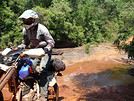
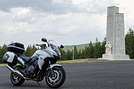
Bonjour , nous partirons une dizaine de jours pour l'Iralnde fin mai (saison sèche !!! ) en fouinant sur le net on trouve bien sur 2730 récits de voyages qui semble tous confirmer que les principaux circuits se situent a l'ouest , ce que nous avions prévu de visiter , mais on revient par ou ?????? sachant qu'en 10 jours nous ne pourrons pas faire le tour ! on trouve en fait peu de chose sur le centre du pays . Quels sont vos conseils pour le retour vers le sud ?
Sans faire un road book , pouvez vous me lister les villes ou villages ou endroits qui vous ont marqué
Merci pour vos conseils
Bruno
l'invitation pour les coins sympas tient toujours,
Si tu aimes la nature faut faire le ring of Kerry (montagnes, courbes, océan, criques, plages) magique....en fait tout le comté de Kerry est a visiter....
Irlandais de souche et vivant au Canada et..................ecrivant parfaitement français ! , merci pour le tuyau , on va visiter le sud depuis Cork ou Rosslare et remonter jusqu'a Achill island donc le Kerry est au programme , Merci
Les racines des Irlandais au Québec sont vastes et profondes et c'est pourquoi il est difficile de brosser un tableau précis du rôle prépondérant qu'ils ont joué dans le développement de la plupart des régions de la province.
La relation entre les Français et les Irlandais au Québec prend source au sein des armées de France dans lesquelles bon nombre de chefs et de soldats irlandais en exil ont servi, y formant souvent des régiments distincts.
En raison du grand nombre d'Irlandais en France au 16e siècle, le Collège irlandais vit le jour à Paris en 1578 pour assurer l'éducation des enfants d'exilés irlandais qui se voyaient refuser une éducation catholique par les autorités britanniques en Irlande.
Le Collège sert encore aujourd'hui à la tenue d'évènements culturels et diplomatiques irlandais.
Bon nombre de soldats irlandais combattant au sein des forces francaises en Nouvelle-France cachaient leur identité aux forces britanniques en changeant leur nom pour un patronyme à consonnance française.
C'est la raison pour laquelle un grand nombre de noms supposément francais au Québec ne trouvent pas écho en France.
À la fin des années 1600, on estime que 130 des 2 500 familles installées en Nouvelle-France, soit environ 5 %, étaient composées d'Irlandais. En 1871, après une vague d'immigration massive, leur proportion atteignait 10 %, faisant des
Irlandais le deuxième groupe en importance au Canada après les Français.
De 1816 à 1860, on estime que plus de un million d'immigrants, dont 60 % étaient Irlandais, sont entrés au pays par les ports de Québec et de Montréal.
Au cours de la triste année de 1847, quelque 17 477 immigrants à destination de Québec sont décédés; il s'agissait pour la plupart d'Irlandais. De ce nombre, 3 879 ont trouvé une sépulture à Grosse-Île, alors qu'environ 5 000 sont enterrés près des hangars de Pointe Saint-Charles à Montréal.
Heureusement, cette tragédie s'est dénouée sur une note moins triste. Des centaines d'orphelins aussi bien à Québec qu'à Montréal ont été adoptés par des familles francophones qui leur ont permis de conserver leur nom irlandais.
FAITS SAILLANTS
Après s'être installé à Québec, le docteur Timothy O'Sullivan, né à Cork, a pris le nom de Timothée Sylvain; il était le père de Marguerite d'Youville, la fondatrice des Soeurs grises en 1737.
Le gouverneur Guy Carleton (Lord Dorchester), né à Strabane, en Irlande, a occupé le poste de gouverneur du Québec et a recommandé l'adoption de l'Acte de Québec en 1774, garantissant ainsi les droits religieux et le droit à l'instruction des francophones.
Lewis Thomas Drummond, né à Derry, en Irlande, est devenu un avocat québécois de grande notoriété et a été un homme politique réformateur qui s'est porté à la défense des Patriotes de 1837. Il a occupé le poste de procureur général au sein de divers gouvernements pour ensuite devenir juge.
Le docteur Edmund Bailey O'Callaghan, avocat, né à Cork, était un défenseur des droits des francophones dans le cadre de ce qui a mené à la rébellion de 1837, ce qui l'a forcé à fuir aux États-Unis en compagnie de Louis-Joseph Papineau.
Davis Ross McCord, fondateur du Musée McCord, est issu d'une illustre famille originaire de Dublin.
Au cours de la période qui a mené à la Confédération, Robert Baldwin, Francis Hincks et D'Arcy McGee, trois hommes politiques de descendance irlandaise, ont collaboré avec des hommes politiques du Québec, Louis-Hippolyte Lafontaine, Augustin-Norbert Morin et Georges-Étienne Cartier respectivement, à défendre les droits des Canadiens français dans le nouveau pays.
Louis Riel, celui qui a permis au Manitoba d'obtenir le statut de province et qui fut accusé de trahison et pendu pour avoir instauré un gouvernement provisoire en Saskatchewan, était le descendant de Jack Reilly, un natif de Limerick qui avait changé son nom à Jean-Baptiste Riel au moment de son mariage à Boucherville en 1704.
L'honorable Charles Fitzpatrick était l'avocat qui a défendu Louis Riel en 1885 et Honoré Mercier en 1892. Il a été membre aussi bien de l'Assemblée nationale du Québec que du Parlement canadien, et a été nommé juge en chef du Canada et lieutenant-gouverneur du Quebec.
L'honorable Charles J. Doherty a été juge à la Cour supérieure du Québec de 1891 à 1906. Élu au Parlement pour la première fois en 1908, il a occupé le poste de ministre de la Justice pendant dix ans et, à ce titre, il a signé le traité de Versailles pour le Canada en 1919. Il a représenté ce pays à la Société des Nations et a contribué à la constitution de la Cour internationale de justice.
Il a agi comme conseiller auprès du juge en chef de l'Irlande dans le cadre de la rédaction de la constitution de la République d'Irlande. Son petit-fils, l'honorable Charles Doherty Gonthier, siège actuellement comme juge à la Cour suprême du Canada.
L'honorable Edmund James Flynn a enseigné à l'Université Laval pendant plus de 40 ans. Il a occupé le poste de ministre dans bon nombre de gouvernements du Québec et a été premier ministre de la province en 1896 et 1897.
Au cours du 19e siècle, la ville de Montréal a compté six maires irlandais soit : William Workman, Francis Cassidy, le docteur William Hingston, James McShane, Richard Wilson-Smith et l'honorable James Guérin.
De 1849 à 1980, 32 juges irlandais ont siégé à la Cour supérieure du Québec. Entre 1867 et 1973, 44 députés fédéraux irlandais ont été élus dans différents comtés au Québec alors que de 1867 à 1978 non moins de 57 Irlandais ont été membres de l'Assemblée nationale du Québec à titre de représentants de différentes régions de la province.
Bon nombre d'hommes politiques ont entrepris leur carrière au niveau municipal et certains se sont hissés au rang de maire. Parmi ceux-ci on compte Francis Byrne (Charlesbourg), Xavier Kennedy (Douglastown), Charles Kirkland (Saint-Pierre), Charles McLary (Clifton), Dennis James O'Connor (Huntingdon), George O'Reilly (Verdun) et Charles Alleyn et Owen Murphy (tous deux à Québec).
Les parents de Catherine Broderick, la mère du très honorable Louis Saint-Laurent, étaient originaires d'Irlande. Après avoir été ministre fédéral de la Justice et ministre fédéral des Affaires étrangères, ce dernier a été élu premier ministre du Canada en 1948 pour ensuire être réélu en 1949 et 1953.
Georges Vanier, fils de l'Irlandaise Margaret Maloney, a connu une brillante carrière militaire et diplomatique avant de devenir le premier Canadien d'origine à occuper le poste de Gouverneur général en 1959.
Héritant son intérêt pour la politique de ses grands-parents irlandais, l'honorable Daniel Johnson a été premier ministre de la province de Québec de 1966 à 1968. Deux de ses fils, Pierre-Marc et Daniel, ont également été premier ministre du Québec dans deux gouvernements différents.
Claude Ryan, Louis O'Neill, Brian Mulroney et Jean Charest comptent parmi les hommes politiques québécois d'envergure dont les ancêtres sont irlandais.
Des ingénieurs et des travailleurs irlandais ont joué un rôle prépondérant dans la construction du canal Lachine (1821-1825), du canal de Beauharnois (1843), du Grand Trunk Railway (1852) et du pont Victoria (1854-1859).
La constitution de la Banque d'êpargne de la Cité et du District de Montréal (maintenant la Banque Laurentienne) est le fruit d'efforts communs de Français et d'Irlandais. Parmi les personnes recrutées par l'évêque Ignace Forget pour servir de mécènes de la banque, on retrouve d'une part, Morin, Lafontaine, Papineau et Cartier, et d'autre part, Hincks, Drummond, Curran, O'Brien et Workman. Parmi les présidents de la banque : Henry Mulholland, l'honorable Edward Murphy, Sir William Hingston et Dr Donald A. Hingston.
La basilique St. Patrick, l'hôpital St. Marys, le Centre d'accueil Father Dowd et le Collège Loyola comptent parmi les institutions que les Irlandais ont aidé à créer à Montréal. Le manoir Shaughnessy, donné pour servir de premier emplacement pour l'hôpital St. Mary's, est maintenant la pièce maîtresse du Centre canadien d'architecture.
Les Montreal Shamrocks ont remporté la Coupe Stanley en 1899 et 1900 alors que les Canadiens de Montréal ont été fondés en 1910 par Ambrose O'Brien. Pendant la première décennie de l'existence de cette équipe, George Kennedy en était l'entraîneur et le directeur; cette équipe a remporté la coupe Stanley en 1910.
Joe Malone, né à Québec, a joué pendant sept ans pour les Bulldogs de Québec et a mené cette équipe à la conquête de deux coupes Stanley en 1912 et 1913.
James O'Donnell, né à Wexford, en Irlande, est l'architecte qui a conçu la basilique Notre-Dame de Montréal sous le plancher de laquelle d'ailleurs il est enterré. Il a consacré cinq années de sa vie à la supervision de la construction de cet édifice.
La Bolduc (Mary Travers), plus grande chansonnière du Québec, et Émile Nelligan, poète canadien français de renom,
étaient moitié Irlandais, moitié Français et leur art a été enrichi par les deux cultures. Le légendaire violonneux, Ti-Jean Carignan, a su incorporer les traditions et les techniques musicales irlandaises à sa musique, donnant à la musique québécoise sa sonorité unique.
Je n'aurais ete d aucune utilité vue que tu dois avoir fait le voyage dans la meme periode que moi ....à la saison sèche.
As tu fait un Compte rendu de ton voyage ou mis des photos pour partager ton aventure ? As tu visité le cliifs of kerry ...? etc
j'ai fait celui-ci http://jicre.wifeo.com/irlande-2011.php ,
Je visite toujours des site ou blog , j'ai l impression de continuer mon voyage. Et voir ce que j'aurais raté... peut etre pour y retourner ..sans doute ...apres d autres destinations.
Bonne route
J-C
Tu as raison , voyage fait et nous sommes encore un peu la bas ! pour l'instant le temps me manque , mais je compilerai tout ça !
Très chouette voyage !
Bon we
Je découvre seulement ton message qui avait été "spammé" ! la période d'été étant chargée professionnellement je n'aurai pour l'instant pas le temps de compiler photos et récit , je ferai qq chose a l'automne ,
Sinon très chouette voyage !!
à bientot
Voyager à moto › Irlande / Grande-Bretagne · 1 reply
J'envisage de parcourir la côte ouest wwa de l'Irlande puis de traverser sur l'Ecosse et les îles Shetland. Et je recueille tous renseignements utiles. Merci
J'envisage durant le mois de mai et de juin 2019, d'user de la gomme sur cette île, en maxi trail, et en solo. Je pratique principalement le bivouac et…
Voyager à moto › Irlande / Grande-Bretagne · 5 replies
L’Ecosse nous ayant ravie en 2016, nous envisageons de sillonner l’Irlande notamment la côte Ouest en passant par l’Angleterre et le Pays de Galle. Nous…
Je projette un séjour en Irlande à moto en Duo en Irlande une semaine. J'arriverai a Rosslare par bateau (et en repartirai également). Je souhaite un juste…
Avec un visa "tourist", la tolérance d'acheter et de vendre une petite moto ou scooter (avec la green card au nom de l'ancien propriétaire), est-elle toujours d'actualité en 2026 ?
Hello everyone.
I'm looking for campsites around BOLZANO (South Tyrol) for early September.
I'll be on my motorcycle with a small tent.
I've noticed that some campsites have exorbitant prices.
If you've traveled through the Dolomites by motorcycle or otherwise and camped there, I'd love any tips on places and prices where I can stay for one night or several.
Thanks to all of you, and happy travels.
I just realized I’ve been registered on VoyageForum since... March 28, 2012 😊. Yet, I’ve barely participated until now.
August 1, 2026, will mark a somewhat special milestone: 5 years on the road.
We left Switzerland on August 1, 2021 with a simple idea: let chance decide our direction. We placed a bottle of wine on a world map, spun it... and it chose our first destination.
A year later, when we arrived in Morocco, we faced a new choice: continue toward Africa or head to Asia. This time, a tarot card game made the decision. Since then, we’ve tried to keep this journey as open to the unexpected as possible.
Today, that adds up to about 120,000 km, 46 countries, and over 1,800 days on the road—mostly by motorcycle, but also by sailboat, train, bus, hitchhiking, or on foot when adventure calls.
Our guiding thread isn’t just the motorcycle, but service exchanges. Instead of simply passing through countries, we try to stop regularly to lend a hand to the people we meet. So far, that’s about 600 days of volunteering.
Over the years, we’ve:
renovated a house in Croatia
made earth bricks in the Moroccan desert
helped sail a boat through the Greek islands
looked after houses, dogs, horses, a camel... and lots of other animals
worked at a street art festival in Morocco
created videos for local associations and projects
worked the grape harvest on the Tibetan plateau
been accredited as "media" for the World Nomad Games in Central Asia
Some of the moments that have stuck with us the most include six months in China, a night spent on the Great Wall, the Pamir Highway, the Silk Road, three months in Taiwan, and the incredible encounters in the mountains of Central Asia.
We travel on Falkor, our lucky dragon—a 2014 BMW F800GS that’s been with us since the start and is starting to have some great stories of its own.
While we share our adventure on Instagram, Polarsteps, and YouTube, that’s not why we’re here. The forum’s rules about promotion are clear, and I totally get them. If I’m finally taking the time to write, it’s mostly because after five years on the road, I thought our experience might be useful to other travelers.
Happy to chat about:
preparing for a long motorcycle trip
visas and borders
the Silk Road and Central Asia
riding in China (with or without a motorcycle)
volunteering and service exchanges while traveling
gear, daily life on the road... or just the unexpected moments that make long-term travel so special
Looking forward to swapping stories and hearing about your adventures too! 😊 Greetings from Thailand, and happy to chat! ✌️
Hi there! My daughter and I are heading to Malta and I’d love to rent a scooter. Does anyone know any good places to rent from and what the budget would be for a week?
Hello, I’m retired and planning a roughly 3-week motorcycle trip (1200gs). The dates aren’t set in stone yet, and everything’s open to discussion—I’m pretty flexible with the planning.
I’d like to ride from Mahajanga to Morondava, sticking as close to the coast as possible—using roads and tracks—in September 2026. If you’ve got any suggestions, let me know! 😉
hi
planning to ride through Rajasthan on a motorcycle in January 2027 and I’d love to hear about the road conditions.
I’ll be riding with a buddy on a Royal Enfield that I’ll rent in Delhi.
Thanks for your tips!
hi there
I’m planning a 3-week motorcycle road trip in Rajasthan, renting a Royal Enfield in Delhi in January 2027.
I’d love to get some tips on a fun itinerary and hear your thoughts on the roads up north.
I’ve ridden a motorcycle in southern India—Kochi to Madurai—about 10 years ago.
Thanks for sharing your experience, and I’m all ears for any great tips you’ve got!
Best regards
hi there
I’d like to ride the RN 12 by motorcycle in September.
I’d love to know the main challenges—I ride a 300cc and do enduro in France.
Thanks for your tips!
I’m planning a motorcycle road trip to Armenia and Georgia in September 2026 or May 2027. I’m looking for one or more riders (male or female) who’d like to explore these countries with me.
Along the way, we’ll visit Cappadocia, the capitals Yerevan, Tbilisi, Sofia, Skopje, and other cities—we can finalize the route and roadbook later.
This trip requires experience with long motorcycle journeys, as we’ll cover around 7,000 km over 5 or 6 weeks (or more, depending on sightseeing and time spent).
I don’t expect dozens of applicants, since motorcycle riders are few and far between on this forum, but I’m putting this out there anyway.
I’m starting to think about a trip that’s really close to my heart: Algeria by motorcycle, specifically the southern part of the country. It’d be for January 2025, and I’ve got two main questions:
Is it possible for an individual on a motorcycle to travel freely, outside of any organized tour, or does the regulation require some kind of supervision in the Algerian Sahara region?
Is the Hoggar massif accessible by road or by (rideable) tracks?
Beyond the official recommendations, I’m really looking for your firsthand experiences.
Thanks so much for your answers, and sorry if my questions are a bit newbie!
Hi, I’d like to take a 15-day "break" to get away from the surrounding hustle and bustle.
Why not explore the Peloponnese!
I’m not particularly drawn to museums, ruins, or monuments.
I want to experience local life—small villages, seaside spots, beaches, and the interior if the landscapes are extraordinary.
Ideally, coming from Athens, I’d take a bus or train to get as close as possible to a starting point, then rent a scooter (125cc) to explore by taking secondary roads or even coastal paths. I’d stay in 2-3 places for a few days each to discover their surroundings.
Do a loop.
What do you think would be the ideal itinerary?
From Athens, the best option would be to take either a flight or a bus to Kalamata. Rent a scooter and head either west or east. Is there a tertiary road (very lightly trafficked) or a path where I can ride slowly, take it easy, and enjoy the scenery without being bothered by traffic? I’d like to go all the way to Monemvasia, still hugging the coast. I need to find a way to avoid returning to Kalamata to drop off the scooter and catch a flight—maybe a small town where the train stops so I can head back to Athens.
Thanks in advance for your tips.
I want to rent an off-road style motorcycle to get around the coast during my trip to Ecuador. I’m only finding options in Quito. Do you have any suggestions for me?
Hi there,
I’m planning a sidecar trip to South America for 4 or 5 months at the end of this year.
I’m looking for info on shipping my vehicle by sea—possibly to Uruguay or another destination, as I haven’t finalized anything yet.
How do you get visas for the countries I’ll be crossing: Uruguay, Argentina, Bolivia, Peru, and Chile? Are they e-Visas, obtained at the border, or through embassies?
Where can I get vehicle insurance?
Lastly, if any bikers want to join us (my partner and me), we’re open to that possibility too.
Patrick
I’ve got 15 days off in June and I’m pretty undecided about where to go for a motorcycle road trip. Two strong desires are pulling me in different directions: Corsica or Norway.
Corsica has been a dream of mine for a long time: legendary roads, stunning landscapes, a unique vibe, and the perfect mix of sea and mountains. At the same time, I’m wondering if 2 weeks might be *too much* for Corsica—risking feeling like I’ve seen it all too quickly, especially on a bike.
Since I also have an extra week free in May, I could use that specifically for Corsica. Maybe splitting it into two trips would make more sense? If so, which routes or regions would be the most interesting to plan for a 7-day trip?
On the other hand, Norway is *super* appealing. The landscapes look incredible, totally different from anything I’ve experienced, and it’d be a real “wow” trip. I know 15 days is still short for such a vast country. Getting all the way to the North Cape seems pretty much impossible in that time, but I’m curious about what realistic routes could be planned.
So I’m wondering:
Is it better to save Norway for next year, take 3 weeks off, and do it *properly*?
Or are 15 days enough for a first amazing taste of the country?
I’d love to hear about your experiences—whether it’s Corsica (ideal duration, routes) or Norway (what’s realistic in 2 weeks on a bike).
Thanks in advance for your thoughts!
Hello,
I'm thinking of buying a used small motorcycle to travel around the country for a month and a half.
I've done this in other countries without putting the registration in my name—is that possible in Guinea given the apparently frequent checks, or do I have to go through the paperwork?
Thanks.
Hello,
My dream is to ride Route 66 by motorcycle. I have a disability—while I’m not in a wheelchair, my walking mobility is reduced.
The ideal scenario would be to have a motorcycle driver and ride as their passenger on an organized trip.
Are there any guides or services like this offered by travel agencies?
Thanks for sharing your experiences!
Hello,
I’ve got a plan with a friend to go on a motorcycle road trip in 2028 or 2029, starting in Santiago de Chile and ending in Ushuaia, for about a month.
Has anyone done a trip like this before, and what’s the best time of year?
I’ve heard there can be quite a bit of wind depending on the season.
Thanks for any tips!
Cheers,
PA
I'm seriously considering heading to Nepal to do some nice motorcycle loops... my goal is also to do the Kailash Yatra round trip from Kathmandu, in a small group with a guide, in May '26... but here's the thing—I'm solo! So if you're up for sharing a similar adventure, hit me up... Cheers, Frankoys
It's all in the title: I'm heading to Krabi soon and want to rent a scooter for a few weeks, but after reading comments about all kinds of scams, I'm reaching out to ask where and how (read: *the right way*) to rent one.
Thanks for your tips and advice.
Hello everyone! Like every year, a winter migration is on the horizon (revised plan): this time, it’ll be Dakar, or even Abidjan, via Morocco, Mauritania, and Senegal.
Looking for an experienced motorcyclist or pillion rider—small build preferred—on a GSA 1250 with a comfy seat and luggage setup, available from early November to late December 2025. I’d like to plan the trip together (important to me) to make sure we’re on the same wavelength.
Don’t hesitate to get in touch!
Didier
Looking for travel companions to ride from France to Senegal by motorcycle.
I’m Paul, 37, and I’ve already done a bit of riding in Morocco.
For now, I’m solo, riding a 1998 SUZUKI DR 650 with some basic gear to keep things smooth. I’ll have a tent so we can do a few nights under the stars.
We’ll need to coordinate departure dates—"ideally in November."
I’m currently checking out routes to take. Any tips would be welcome! :)
I’m heading to Vietnam and Laos with a buddy next week for a month.
We’re thinking of renting motorbikes, especially to do the Ha Giang Loop. We don’t have an international license, just our Belgian one. Is that enough? If not, is it risky?
In November, we’re planning to do the Ha Giang loop and the RC4 by motorbike without a guide. 😎
We’re looking for a decent place to stay/rent in Ha Giang.
If anyone has any info, we’d be really interested.
Hello! We’re planning a motorcycle trip that will include a visit to Auschwitz-Birkenau in June 2026.
We’re unsure (still debating) whether we should stay at a hotel on-site and get to the memorial with an Uber (leaving our bikes at the hotel) and book a guided tour, or base ourselves in Kraków and take a tour that includes transport.
One thing’s for sure—we’d prefer a guide in French since we don’t speak English 😅.
Could you share your experiences or advice?
I understand we need to book online rather than on-site.
Thanks in advance for your replies!
Hello,
Next October we’re planning to ride the Ruta de la Plata by motorcycle—a historic Spanish route that runs from Gijón to Seville, also known as the N630.
Has anyone here already ridden it?
Unfortunately, I’m worried that parts of the N630 may have disappeared or merged with the A66 motorway, forcing us to ride long stretches of highway, which we’d rather avoid.
Thanks in advance for any tips or details about this route!