Hi everyone,
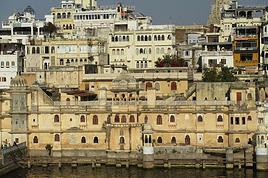
For traveling in Rajasthan by train and bus, could you give me some info: where to buy tickets, cost, purchase locations, websites, etc.?
Any tips you have would be super helpful.
Thanks
Hi there
I’m traveling from Geneva to Marseille in May and only have 18 minutes to change trains in Lyon. Do you think that’s doable?
Thanks and have a great day
I’m traveling from Geneva to Marseille in May and only have 18 minutes to change trains in Lyon. Do you think that’s doable?
Thanks and have a great day
Hi there,
We’re traveling to Java on October 23, just the two of us. I’ve read that it’s best to book train tickets in advance on tiket.com. Is that true, and how far ahead do you recommend? Are the tickets changeable?
Thanks for your help!
Nicole
We’re traveling to Java on October 23, just the two of us. I’ve read that it’s best to book train tickets in advance on tiket.com. Is that true, and how far ahead do you recommend? Are the tickets changeable?
Thanks for your help!
Nicole
Hi
Can anyone tell me how to book train tickets online? We're planning to travel from HANOI to HO CHI MINH CITY by train, making several stops along the way. I'd also like to find the schedules and the stations where the trains stop.
There are four of us, and we've already planned stops in HANOI / DONG HOI / HUE.
Thanks in advance to anyone who can help!
Mounette74
Can anyone tell me how to book train tickets online? We're planning to travel from HANOI to HO CHI MINH CITY by train, making several stops along the way. I'd also like to find the schedules and the stations where the trains stop.
There are four of us, and we've already planned stops in HANOI / DONG HOI / HUE.
Thanks in advance to anyone who can help!
Mounette74
Hi there,
I’ll be traveling to Japan this coming August. We’ve finalized our itinerary and booked our flight tickets. Now I’m at the stage of buying train tickets for the few segments we’ll need to cover:
Tokyo - Hakone
Hakone - Kyoto
Kyoto - Osaka
Osaka - Tokyo
Here are my questions:
a) Is it possible to buy train tickets for these segments from Canada?
b) If so, which website should I use to do this?
c) And if it is possible, will we be able to print our tickets from Canada?
d) If it’s not possible, where in Tokyo should I go to buy these tickets when I arrive?
Thanks a bunch,
Mario Séguin Québec, Canada
Thanks a bunch,
Mario Séguin Québec, Canada
Hi there,
Do you know if it’s possible to book train tickets from France on the IRCTC website with a non-Indian phone number? https://www.irctc.co.in/nget/train-search
12GoAsia lets you do it but adds extra fees we’d rather avoid—like an extra 9 € in taxes for two Ahmedabad–Mumbai tickets that cost 38 €. https://12go.asia/fr The same tickets are 3360 rupees on IRCTC.
Thanks in advance for your tips! Alod
Do you know if it’s possible to book train tickets from France on the IRCTC website with a non-Indian phone number? https://www.irctc.co.in/nget/train-search
12GoAsia lets you do it but adds extra fees we’d rather avoid—like an extra 9 € in taxes for two Ahmedabad–Mumbai tickets that cost 38 €. https://12go.asia/fr The same tickets are 3360 rupees on IRCTC.
Thanks in advance for your tips! Alod
Hi,
I’m supposed to be going on a university exchange in Shanghai from February to June 2025, and I’d love to return to Europe afterward via the Trans-Mongolian Railway. My plan was to fly from China to Mongolia’s capital and maybe spend 3-4 days exploring the country. Then, I could take the train, with a stop in Irkutsk before heading to Moscow for a two-day visit, followed by two days in Saint Petersburg. After that, I’d take a bus to Tallinn and possibly fly home from there due to time constraints. I was thinking this whole trip would take about two weeks. This site: Russian Train Tickets - Online Booking for Russian Train Tickets seems useful for buying tickets (though the ones that go through Mongolia need to be booked via a form or on tutu.travel), and this one for the bus from Russia to Estonia: St. Petersburg - Tallinn buses and tickets.
From what I’ve gathered, Russia now offers an e-visa, and Mongolia has suspended visas for Europeans until the end of next year.
Would anyone have any info or advice? Given the current situation in Russia, everything is pretty complicated to research, and most of the information is outdated.
Thanks in advance, Alicia
I’m supposed to be going on a university exchange in Shanghai from February to June 2025, and I’d love to return to Europe afterward via the Trans-Mongolian Railway. My plan was to fly from China to Mongolia’s capital and maybe spend 3-4 days exploring the country. Then, I could take the train, with a stop in Irkutsk before heading to Moscow for a two-day visit, followed by two days in Saint Petersburg. After that, I’d take a bus to Tallinn and possibly fly home from there due to time constraints. I was thinking this whole trip would take about two weeks. This site: Russian Train Tickets - Online Booking for Russian Train Tickets seems useful for buying tickets (though the ones that go through Mongolia need to be booked via a form or on tutu.travel), and this one for the bus from Russia to Estonia: St. Petersburg - Tallinn buses and tickets.
From what I’ve gathered, Russia now offers an e-visa, and Mongolia has suspended visas for Europeans until the end of next year.
Would anyone have any info or advice? Given the current situation in Russia, everything is pretty complicated to research, and most of the information is outdated.
Thanks in advance, Alicia
This forum was closed for a long time after COVID, then due to its sale by the previous owner. Since 2022, there have been notable changes for Russia. It became possible to travel to Russia as a tourist again after COVID restrictions ended in summer 2022. But before that, in March 2022, the EU and member countries cut air links with Russia, as well as train lines. They also cut Russian banks off from the Euro-American banking network—meaning cards and wire transfers.
EU-based insurers stopped offering policies for Russia. The Green Card for cars in Russia was also discontinued. Then the EU abolished the simplified visa regime agreement with Russia. All in all, a summary of the current practical aspects would be helpful.
I’ve been traveling to Russia regularly for about twenty years, and after the long COVID break, I resumed in autumn 2022.
Visa
The usual paper visa is much more expensive. On one hand, because the previous regime was scrapped, and on the other, because invitations for multi-entry visas are pricier. A single-entry 30-day visa costs 80 €. The multi-entry one is 240 €. To be sure you’ll get a 12-month multi-entry, it’s best to buy a telex invitation from the MID (Russian Ministry of Foreign Affairs), though there are few resellers. Prices vary depending on the seller.
E-visas are now available for Schengen passport holders. A big simplification for trips up to 16 days within a 60-day validity period. You can apply from 40 days up to 5 days before your desired date. Issued in up to four days. The site is https://evisa.kdmid.ru/ Cost: 50 €. Processed through an Emirati bank (United Arab Emirates).
Medical Insurance
Medical insurance with repatriation is required to get a visa. So you’ll need to buy a policy. This brings up payment methods. If you’re already familiar with Russia and have a Russian bank account, you can pay with your Russian card. Otherwise, you’ll have to buy from a site that accepts payments via a Belarusian bank—which means your bank must work with Belarus—or go through https://goingrus.com/fr/insurance
Transport from the EU
Minibus (marshrutka) from Kirkenes (Norway) to Murmansk. Schedules are coordinated with flights from Oslo, which arrive between 11:00 and 12:00. They wait on the right as you exit the airport. Some are chartered by groups and leave directly, but may have space—ask the driver. Otherwise, two companies run the route, with a stop in town at the corner of the Scandic, where they depart around 14:00 or 15:00. Payment in cash (NOK or RUB) to the driver. Main operator: https://borodinbus.com Bus from Tallinn (Estonia) to St. Petersburg. The border crossing is on the Narva River. The Russian road checkpoint has been closed since January 2024 for construction expected to last 2.5 years, so reopening is possible in summer 2026. In the meantime, it’s a two-bus journey: Tallinn-Narva, then walk across the bridge between the Estonian and Russian checkpoints at Ivangorod, followed by another bus. Several companies: Luxexpress, Ecolines, Baltic Shuttle, Anniston, СКСавто. Bus from Riga to Pskov or St. Petersburg (final destination). Departs from Riga’s bus station (behind the train station) daily between 18:00 and 19:00. Arrives in Pskov between 01:00 and 02:00 (Russian time). Company: СКСавто. There’s another bus around 21:00 with Ecolines, but it’s longer, with a long stop at the border. Bus from Gdańsk to Kaliningrad. Several buses per day. From the PKS bus station, behind Gdańsk’s central station, on the other side of the boulevard. From Kaliningrad, a 1-hour flight to St. Petersburg costs around 5000 RUB.
Basically, unless you’re planning to go to Murmansk and the Kola Peninsula—and possibly from Murmansk, flights to Arkhangelsk, then Nenetsia (Naryan-Mar), etc.—the three main crossing points with airports are Tallinn, Riga, and Gdańsk.
The Gdańsk-Kaliningrad bus is the fastest, and the ticket to St. Petersburg is very reasonable.
The Narva-Ivangorod route is the riskiest in terms of potential queues and crossing time. Holiday periods are especially risky. Last mid-June, I took a 14:00 bus from Tallinn. I’d bought a single-berth compartment on the Grand Express St. Petersburg-Moscow train, leaving at 23:00, with the idea of a good night’s rest before a Moscow-Magadan flight. A 7-hour queue at the border meant I arrived at St. Petersburg’s bus station at 23:00—missed the train, had to book a room, and spent time finding a reasonably priced flight to Moscow the next day for the same airport as my Magadan flight.
The Riga-Pskov route is a bit long but relaxed. If you get off in Pskov, you can still get decent sleep between 02:00 and 12:00. The Oktyabrskaya Hotel is cheap. I’ve also stopped in Izborsk. You ask the driver when boarding in Riga. The stop is on the federal highway—cross the road, and the main inn is 200m away. You can explore the medieval site the next morning before taking a bus to Pskov (30 km).
From Pskov, there are fast regional Lastochka trains—three or four per day—to St. Petersburg, taking 3.5 hours. Very comfortable and affordable. Also, two daily flights with Azimuth to Moscow-Vnukovo from 5000 RUB. A one-hour flight. It’s a section of Pskov’s military airfield, just a few kilometers from the city center.
Money
Cash. The EU issued a nonsensical decree: a ban on importing EU currency (euros, zloty, kroner, forints, etc.) except for personal travel use. This doesn’t make sense because as a citizen of a eurozone country, you *have* to have euros—cash or electronic (card). You can’t travel without them. The stipulation about a limit for personal use is absurd because personal use can mean anything from a hostel bed to a luxury hotel room, plus transport (flight tickets, train tickets in Russia), restaurants, etc. Estonian customs officers ask about this at the border when leaving. They ask in Estonian, then Russian, then English, depending. Since I cross with a French passport, I just say, "Sorry, I don’t understand," no matter what. Then they ask with a questioning look, "Euro?" and I shake my head. I haven’t been searched, but they do ask to glance in your bag. Russians with large suitcases often get checked. Cards and phone apps: if you have a Russian bank account.
Telephony and Internet
Roaming works but is pricey. Okay for calls and SMS, but very expensive for data. In that case, use an e-SIM with your home carrier if your phone supports it. Otherwise, look into prepaid rechargeable SIMs in Russia for data only—like SIM cards for mobile modems.
Russian SIM: Since this year (2025), as of March, it’s mandatory to be registered in the EBS (Unified Biometric System) to buy a SIM card. For a non-resident foreigner, this means first registering for a SNILS at an MFC (Multifunctional Center)—also called "My Documents." The SNILS is the pension center, which doesn’t require residency. After getting your SNILS number and certificate, you register on the public services portal, Gosuslugi. Finally, you register in the EBS system (voice sample—you read numbers—and a biometric facial photo).
Personal Car
The Green Card no longer covers Russia, and neither do EU-based insurers. But third-party liability insurance (OSAGO) is mandatory. Since the closure of the Russian checkpoint at Ivangorod for construction and the Finnish border closure, the routes are from Kirkenes in Norway, the Estonia-Pskov route, and—since the Belarus-Russia joint visa this year—the Belarus route, e.g., Poland-Terespol-Brest or Lithuania-Belarus. No OSAGO sales if you cross via Kirkenes. I didn’t see any at Shumilkino, the Russian checkpoint after Estonia toward Pskov. If you have a Russian card, you can buy online, of course. Otherwise, pay in cash on-site at certain company offices (specific forms aren’t available at all agencies) or online by paying to a third-party account outside Russia—with added fees.
EU-based insurers stopped offering policies for Russia. The Green Card for cars in Russia was also discontinued. Then the EU abolished the simplified visa regime agreement with Russia. All in all, a summary of the current practical aspects would be helpful.
I’ve been traveling to Russia regularly for about twenty years, and after the long COVID break, I resumed in autumn 2022.
Visa
The usual paper visa is much more expensive. On one hand, because the previous regime was scrapped, and on the other, because invitations for multi-entry visas are pricier. A single-entry 30-day visa costs 80 €. The multi-entry one is 240 €. To be sure you’ll get a 12-month multi-entry, it’s best to buy a telex invitation from the MID (Russian Ministry of Foreign Affairs), though there are few resellers. Prices vary depending on the seller.
E-visas are now available for Schengen passport holders. A big simplification for trips up to 16 days within a 60-day validity period. You can apply from 40 days up to 5 days before your desired date. Issued in up to four days. The site is https://evisa.kdmid.ru/ Cost: 50 €. Processed through an Emirati bank (United Arab Emirates).
Medical Insurance
Medical insurance with repatriation is required to get a visa. So you’ll need to buy a policy. This brings up payment methods. If you’re already familiar with Russia and have a Russian bank account, you can pay with your Russian card. Otherwise, you’ll have to buy from a site that accepts payments via a Belarusian bank—which means your bank must work with Belarus—or go through https://goingrus.com/fr/insurance
Transport from the EU
Minibus (marshrutka) from Kirkenes (Norway) to Murmansk. Schedules are coordinated with flights from Oslo, which arrive between 11:00 and 12:00. They wait on the right as you exit the airport. Some are chartered by groups and leave directly, but may have space—ask the driver. Otherwise, two companies run the route, with a stop in town at the corner of the Scandic, where they depart around 14:00 or 15:00. Payment in cash (NOK or RUB) to the driver. Main operator: https://borodinbus.com Bus from Tallinn (Estonia) to St. Petersburg. The border crossing is on the Narva River. The Russian road checkpoint has been closed since January 2024 for construction expected to last 2.5 years, so reopening is possible in summer 2026. In the meantime, it’s a two-bus journey: Tallinn-Narva, then walk across the bridge between the Estonian and Russian checkpoints at Ivangorod, followed by another bus. Several companies: Luxexpress, Ecolines, Baltic Shuttle, Anniston, СКСавто. Bus from Riga to Pskov or St. Petersburg (final destination). Departs from Riga’s bus station (behind the train station) daily between 18:00 and 19:00. Arrives in Pskov between 01:00 and 02:00 (Russian time). Company: СКСавто. There’s another bus around 21:00 with Ecolines, but it’s longer, with a long stop at the border. Bus from Gdańsk to Kaliningrad. Several buses per day. From the PKS bus station, behind Gdańsk’s central station, on the other side of the boulevard. From Kaliningrad, a 1-hour flight to St. Petersburg costs around 5000 RUB.
Basically, unless you’re planning to go to Murmansk and the Kola Peninsula—and possibly from Murmansk, flights to Arkhangelsk, then Nenetsia (Naryan-Mar), etc.—the three main crossing points with airports are Tallinn, Riga, and Gdańsk.
The Gdańsk-Kaliningrad bus is the fastest, and the ticket to St. Petersburg is very reasonable.
The Narva-Ivangorod route is the riskiest in terms of potential queues and crossing time. Holiday periods are especially risky. Last mid-June, I took a 14:00 bus from Tallinn. I’d bought a single-berth compartment on the Grand Express St. Petersburg-Moscow train, leaving at 23:00, with the idea of a good night’s rest before a Moscow-Magadan flight. A 7-hour queue at the border meant I arrived at St. Petersburg’s bus station at 23:00—missed the train, had to book a room, and spent time finding a reasonably priced flight to Moscow the next day for the same airport as my Magadan flight.
The Riga-Pskov route is a bit long but relaxed. If you get off in Pskov, you can still get decent sleep between 02:00 and 12:00. The Oktyabrskaya Hotel is cheap. I’ve also stopped in Izborsk. You ask the driver when boarding in Riga. The stop is on the federal highway—cross the road, and the main inn is 200m away. You can explore the medieval site the next morning before taking a bus to Pskov (30 km).
From Pskov, there are fast regional Lastochka trains—three or four per day—to St. Petersburg, taking 3.5 hours. Very comfortable and affordable. Also, two daily flights with Azimuth to Moscow-Vnukovo from 5000 RUB. A one-hour flight. It’s a section of Pskov’s military airfield, just a few kilometers from the city center.
Money
Cash. The EU issued a nonsensical decree: a ban on importing EU currency (euros, zloty, kroner, forints, etc.) except for personal travel use. This doesn’t make sense because as a citizen of a eurozone country, you *have* to have euros—cash or electronic (card). You can’t travel without them. The stipulation about a limit for personal use is absurd because personal use can mean anything from a hostel bed to a luxury hotel room, plus transport (flight tickets, train tickets in Russia), restaurants, etc. Estonian customs officers ask about this at the border when leaving. They ask in Estonian, then Russian, then English, depending. Since I cross with a French passport, I just say, "Sorry, I don’t understand," no matter what. Then they ask with a questioning look, "Euro?" and I shake my head. I haven’t been searched, but they do ask to glance in your bag. Russians with large suitcases often get checked. Cards and phone apps: if you have a Russian bank account.
Telephony and Internet
Roaming works but is pricey. Okay for calls and SMS, but very expensive for data. In that case, use an e-SIM with your home carrier if your phone supports it. Otherwise, look into prepaid rechargeable SIMs in Russia for data only—like SIM cards for mobile modems.
Russian SIM: Since this year (2025), as of March, it’s mandatory to be registered in the EBS (Unified Biometric System) to buy a SIM card. For a non-resident foreigner, this means first registering for a SNILS at an MFC (Multifunctional Center)—also called "My Documents." The SNILS is the pension center, which doesn’t require residency. After getting your SNILS number and certificate, you register on the public services portal, Gosuslugi. Finally, you register in the EBS system (voice sample—you read numbers—and a biometric facial photo).
Personal Car
The Green Card no longer covers Russia, and neither do EU-based insurers. But third-party liability insurance (OSAGO) is mandatory. Since the closure of the Russian checkpoint at Ivangorod for construction and the Finnish border closure, the routes are from Kirkenes in Norway, the Estonia-Pskov route, and—since the Belarus-Russia joint visa this year—the Belarus route, e.g., Poland-Terespol-Brest or Lithuania-Belarus. No OSAGO sales if you cross via Kirkenes. I didn’t see any at Shumilkino, the Russian checkpoint after Estonia toward Pskov. If you have a Russian card, you can buy online, of course. Otherwise, pay in cash on-site at certain company offices (specific forms aren’t available at all agencies) or online by paying to a third-party account outside Russia—with added fees.
Hi there,
We’re planning a 15-day trip to Uzbekistan in March—classic independent itinerary: Tashkent, Samarkand, Bukhara, Khiva. We’d like to take the train between each city, but I don’t want to lock down the whole trip before we leave.
So, my question is: is it absolutely necessary to book train tickets before departure, whether for the high-speed trains or the regional ones? Is booking really essential for the regional trains?
Thanks a bunch!
Philippe
We’re planning a 15-day trip to Uzbekistan in March—classic independent itinerary: Tashkent, Samarkand, Bukhara, Khiva. We’d like to take the train between each city, but I don’t want to lock down the whole trip before we leave.
So, my question is: is it absolutely necessary to book train tickets before departure, whether for the high-speed trains or the regional ones? Is booking really essential for the regional trains?
Thanks a bunch!
Philippe
Hi there,
I can’t seem to complete the payment for my trip on the IRCTC (Indian Railways) site. No matter which payment method I choose, my Visa card isn’t accepted. Has anyone here managed to do it, and if so, could you share the method you used? Thanks in advance! Charlie
I can’t seem to complete the payment for my trip on the IRCTC (Indian Railways) site. No matter which payment method I choose, my Visa card isn’t accepted. Has anyone here managed to do it, and if so, could you share the method you used? Thanks in advance! Charlie
Hi there,
Does anyone know if there’s a bus from Luang Namtha to Boten to catch the train coming from China to Vientiane? If so, what’s the name of the company? Also, how long does the bus take to cover that distance? What’s the condition of the road like?
Thanks for your help!
Tom
Hi there,
We’re two young engaged folks trying to plan a trip to Romania by train since we can’t drive. We’d love to visit Viscri and Biertan, but we’re not sure how to get there...
Any ideas?
Same question for the painted monasteries of Bucovina.
We might also take a taxi from Rupea, but we’re not sure how to arrange a ride back...
Thanks so much for your help
Hi there,
I’m thinking of (re)visiting Thailand in a few months, and my planned itinerary includes an overnight train ride.
My goal is to book a first-class compartment, so I should reserve it as soon as possible...
Which website (reliable, please!) can I use to make this reservation, and are e-tickets available?
Thanks!😊
I’m thinking of (re)visiting Thailand in a few months, and my planned itinerary includes an overnight train ride.
My goal is to book a first-class compartment, so I should reserve it as soon as possible...
Which website (reliable, please!) can I use to make this reservation, and are e-tickets available?
Thanks!😊
Hi there,
I need help creating my IRCTC account. I tried to create an account via the website (not the app), but I’m not receiving any OTP at my email address. It asks me to verify my OTP to confirm registration, but I’ve tried multiple emails and checked spam, trash, etc.—nothing. I’m not getting any OTP at all.
What should I do now?
I want to take the train from Delhi to Agra Cantt. What are my options without an IRCTC account? I have a trip from New Delhi to Agra and another from Agra to Jaipur.
FYI: I’d prefer to avoid the bus since it doesn’t seem to stop, and I don’t feel comfortable jumping off a moving bus. Too risky for my taste.
Thanks in advance for your help!
I need help creating my IRCTC account. I tried to create an account via the website (not the app), but I’m not receiving any OTP at my email address. It asks me to verify my OTP to confirm registration, but I’ve tried multiple emails and checked spam, trash, etc.—nothing. I’m not getting any OTP at all.
What should I do now?
I want to take the train from Delhi to Agra Cantt. What are my options without an IRCTC account? I have a trip from New Delhi to Agra and another from Agra to Jaipur.
FYI: I’d prefer to avoid the bus since it doesn’t seem to stop, and I don’t feel comfortable jumping off a moving bus. Too risky for my taste.
Thanks in advance for your help!
Hi everyone,
I’m heading to Japan for the second time with my 20-year-old son. During our first trip, we spent two weeks in Tokyo and Kyoto (plus the surrounding areas). This time, we’re planning to stay in Tokyo for at least 4-5 days and then head to the island of Naoshima. I’m looking for suggestions and advice: Is getting to Naoshima from Tokyo complicated? If so, do you have any recommendations for a stopover somewhere? Given that we’d prefer not to move every day, we’d rather settle in one place and then explore on day trips... Do you think it’s possible to do something like this: 5 nights in Tokyo (Shinjuku) 3 nights in Kyoto 2 nights in Naoshima (or is one night enough??) and if one night is enough, where could I spend a second night on the way back to Tokyo? 2 nights in Tokyo (I’d love your advice on staying in a different neighborhood—last time we stayed near Ueno Park)—keeping in mind we’re flying out of Narita.
I’m considering maybe skipping Kyoto, which I love but has apparently become *very* touristy... Not really keen on Osaka... since we’ll already have done Tokyo as our "big city." I’d prefer towns where nature is present... (a bit like Kyoto, which offers all that...)
For info, we’ll be traveling by train. Thanks in advance for all your suggestions and help!
I have one last little question: Is cash still widely used in Japan, or not at all anymore?
Thanks so much,
Karine
I’m heading to Japan for the second time with my 20-year-old son. During our first trip, we spent two weeks in Tokyo and Kyoto (plus the surrounding areas). This time, we’re planning to stay in Tokyo for at least 4-5 days and then head to the island of Naoshima. I’m looking for suggestions and advice: Is getting to Naoshima from Tokyo complicated? If so, do you have any recommendations for a stopover somewhere? Given that we’d prefer not to move every day, we’d rather settle in one place and then explore on day trips... Do you think it’s possible to do something like this: 5 nights in Tokyo (Shinjuku) 3 nights in Kyoto 2 nights in Naoshima (or is one night enough??) and if one night is enough, where could I spend a second night on the way back to Tokyo? 2 nights in Tokyo (I’d love your advice on staying in a different neighborhood—last time we stayed near Ueno Park)—keeping in mind we’re flying out of Narita.
I’m considering maybe skipping Kyoto, which I love but has apparently become *very* touristy... Not really keen on Osaka... since we’ll already have done Tokyo as our "big city." I’d prefer towns where nature is present... (a bit like Kyoto, which offers all that...)
For info, we’ll be traveling by train. Thanks in advance for all your suggestions and help!
I have one last little question: Is cash still widely used in Japan, or not at all anymore?
Thanks so much,
Karine
Hi everyone, my husband and I are planning a night-train trip in September: first to Vienna (3 nights), then Budapest (2 nights), Bratislava (1 night or skip it?), Salzburg (1 night), Munich (1 night), and maybe Stuttgart (1 night) before heading back to Paris. The whole trip will be by train.
Is it worth getting the Interrail Global Pass for this? Thanks for your feedback!
Is it worth getting the Interrail Global Pass for this? Thanks for your feedback!
The enr.gov.eg site says train reservations are only for Egyptians. What should I do if I want to book a first-class air-conditioned ticket (not a sleeper berth)?
Thanks!
Hi there,
I need to take a sleeper train from Bangkok to Vientiane in January. I found some ticket options on 12Go Asia, but booking doesn’t seem possible at the moment. I’ve tried simulations for several dates, but no luck. I’m wondering if it’s already fully booked, if they’ve stopped selling tickets… yet 12Go still features it every day 😕
Has anyone else run into this issue? Can I find tickets on another site? (I tried Baolau, but no sleepers left for January 8th.)
Thanks!
I need to take a sleeper train from Bangkok to Vientiane in January. I found some ticket options on 12Go Asia, but booking doesn’t seem possible at the moment. I’ve tried simulations for several dates, but no luck. I’m wondering if it’s already fully booked, if they’ve stopped selling tickets… yet 12Go still features it every day 😕
Has anyone else run into this issue? Can I find tickets on another site? (I tried Baolau, but no sleepers left for January 8th.)
Thanks!
Hi there,
We’re heading to Thailand in February 2026 and we’d like to take the overnight train from Bangkok to Chiang Mai. Can we book two first-class tickets? I’m only seeing second-class options.
Thanks
We’re heading to Thailand in February 2026 and we’d like to take the overnight train from Bangkok to Chiang Mai. Can we book two first-class tickets? I’m only seeing second-class options.
Thanks
Hi everyone,
I’m planning a trip around Italy using only trains or public transport in October (hoping the weather stays nice!).
I’d obviously like to see some tourist destinations, but I also want to get off the beaten path a bit, and I’m hoping to find some help here? I don’t plan to linger too long in the cities.
Starting in the north, I’d like to visit Lake Como or Lake Orta, pass through the Cinque Terre for some hiking, spend a few days in Naples and Rome, then head down to Sicily.
What do you think?
Thanks for your help! 🙂
I’m planning a trip around Italy using only trains or public transport in October (hoping the weather stays nice!).
I’d obviously like to see some tourist destinations, but I also want to get off the beaten path a bit, and I’m hoping to find some help here? I don’t plan to linger too long in the cities.
Starting in the north, I’d like to visit Lake Como or Lake Orta, pass through the Cinque Terre for some hiking, spend a few days in Naples and Rome, then head down to Sicily.
What do you think?
Thanks for your help! 🙂
Hello,
We’re traveling as a family with two boys aged 10 and 12 to Cairo in February. During our trip, we’re planning to take an overnight train (with or without a sleeper) for the Cairo-Aswan route.
Do you know how I can book this remotely?
Also, I’m looking for: - A local contact to sail the Nile by felucca for 3 days from Aswan - A contact to guide us in Cairo
Looking forward to your tips, and thanks in advance! Marie
Also, I’m looking for: - A local contact to sail the Nile by felucca for 3 days from Aswan - A contact to guide us in Cairo
Looking forward to your tips, and thanks in advance! Marie
I just realized there’s only one payment method accepted for booking the Mombasa-Nairobi express train ticket online: M-Pesa, a mobile money transfer service used in Africa. Would it be impossible to book as a European?
Hi,
I'm looking for a train to get to Orly Terminal 4—I'm leaving from Charleroi in Belgium.
Does it seem complicated?
I'm looking for a train to get to Orly Terminal 4—I'm leaving from Charleroi in Belgium.
Does it seem complicated?
Hello,
Starting November 15th, I’ll be arriving in Thailand, and during my stay, I plan to visit the north, around the Chiang Mai area, then head south to the Krabi region. After Krabi, I’m planning to take an overnight train to Bangkok. I was wondering if there’s a train that leaves from Krabi or Trang, or if I absolutely have to go to Surat Thani? Also, which official website can I use to book my ticket?
Next, since I’ll be arriving at dawn in Bangkok, I’ve planned to spend 2 days in Kanchanaburi. What’s the most convenient way to get there—bus or train? And if you know any companies or websites, that’d be great.
Thanks for your tips!
Fred
Starting November 15th, I’ll be arriving in Thailand, and during my stay, I plan to visit the north, around the Chiang Mai area, then head south to the Krabi region. After Krabi, I’m planning to take an overnight train to Bangkok. I was wondering if there’s a train that leaves from Krabi or Trang, or if I absolutely have to go to Surat Thani? Also, which official website can I use to book my ticket?
Next, since I’ll be arriving at dawn in Bangkok, I’ve planned to spend 2 days in Kanchanaburi. What’s the most convenient way to get there—bus or train? And if you know any companies or websites, that’d be great.
Thanks for your tips!
Fred
By 2030, the tourism sector is evolving with the rise of virtual agents, booking via social media, and the transformation of loyalty programs.
A recent study anticipates several major developments in the travel industry by 2030.
Virtual agents powered by artificial intelligence will become personalized assistants, capable of organizing trips based on travelers' individual preferences.
At the same time, social media will position itself as essential booking platforms, making it easier to purchase flight tickets directly through these channels.
Loyalty programs will also undergo a revolution thanks to NFTs, offering monetizable and diverse rewards.
Among the expected innovations are:
Fast and free Wi-Fi available on all flights The ability to explore your room in virtual reality before even arriving Eco-friendly accommodations featuring hanging gardens and green spaces 100% digitalized check-in and check-out, with no need to stop by the front desk Automatic refunds if the price of your ticket drops after purchase
A recent study anticipates several major developments in the travel industry by 2030.
Virtual agents powered by artificial intelligence will become personalized assistants, capable of organizing trips based on travelers' individual preferences.
At the same time, social media will position itself as essential booking platforms, making it easier to purchase flight tickets directly through these channels.
Loyalty programs will also undergo a revolution thanks to NFTs, offering monetizable and diverse rewards.
Among the expected innovations are:
Fast and free Wi-Fi available on all flights The ability to explore your room in virtual reality before even arriving Eco-friendly accommodations featuring hanging gardens and green spaces 100% digitalized check-in and check-out, with no need to stop by the front desk Automatic refunds if the price of your ticket drops after purchase
The end of a golden age
For years, travel forums embodied the spirit of mutual aid on the web. Travelers generously shared their experiences, tips, and secret spots. This collective generosity seemed endless. But behind this altruistic facade lay a more complex reality.
The silent infiltration of forums Free travel forums have gradually become marketing hunting grounds. Under the guise of "experienced travelers," professionals in tourism, affiliates seeking commissions, or aspiring influencers testing monetization strategies now lurk.
These fake profiles master the community’s codes. They build credibility by answering dozens of basic questions before subtly slipping in their paid recommendations. A "favorite" hotel mentioned insistently, an "essential" guidebook systematically cited, an "extraordinary" local agency that keeps coming up in conversations.
New travelers can no longer tell the difference between selfless advice and disguised promotion. This informational pollution has gradually eroded the trust that gave these platforms their value.
The rise of paid Travel Planners Faced with this decline, a new profession has emerged: the independent Travel Planner. These professionals fully embrace their commercial status and charge for personalized advice.
The model is transparent: you pay for real expertise, tailor-made itineraries, and guaranteed availability. Some offer packages for 150-300 € to plan a two-week trip entirely. Others charge by the hour.
This professionalization marks a turning point. Travel advice is leaving the realm of volunteerism and entering the world of paid services. Paradoxically, this acknowledged monetization can restore a form of trust: you know what you’re paying for.
The irruption of artificial intelligence But now, a third option is emerging: generative AI. ChatGPT, Claude, Gemini, and others can now generate travel itineraries in seconds, for free, with no commercial agenda.
AI promises neutral, synthetic, endlessly customizable information. It compiles thousands of sources in real time, suggests alternatives, and adapts recommendations to your budget and time constraints. It doesn’t sell anything, earns no commissions, and has no hotels to promote.
But this apparent neutrality hides its own limitations. AI feeds on existing data, often from the same polluted forums or marketing content. It can invent restaurants that don’t exist, mix up tourist seasons, or ignore recent local realities. It has never walked a city’s streets, negotiated with a tuk-tuk driver, or felt the atmosphere of a neighborhood at nightfall.
The forgotten alternative: authentic local experts In this landscape saturated with dubious information, imperfect AI, and monetized services, one often-overlooked option remains: consulting real local professionals.
Not the agencies at the top of Google’s first page—often the most expensive and generic. But small local businesses, independent guides established for years, still-free municipal tourism offices, and cultural associations organizing themed tours.
These players offer what neither AI nor forums can: embodied, up-to-date, contextualized knowledge of the area. They know the newly opened restaurant, the museum temporarily closed for renovations, the impromptu weekend festival, or the alternative route to avoid construction.
Finding them takes extra effort. You have to search in the local language, look beyond the first page of results, check regional institutional websites, and join community Facebook groups. But this approach is often rewarded with free or low-cost advice of unmatched precision.
Toward an ecology of travel advice The future of travel advice likely won’t be binary but hybrid. AI can rough out itineraries, propose logistical options, and compare alternatives. Travel Planners can refine, personalize, and reassure anxious travelers. Local experts can enrich, correct, and ground advice in on-the-ground reality.
But for this ecosystem to work, we’ll need to develop new discernment. Learn to spot fake profiles on forums. Systematically verify AI suggestions. Assess the real value of a Travel Planner before paying. And, above all, rediscover the habit of contacting those who live there directly.
Travel has always been a school of discernment. It teaches us to distinguish the authentic from the fake, sincere advice from commercial manipulation. In the digital age, this skill becomes more crucial than ever.
Because ultimately, the real question isn’t which information source to prioritize, but how to cultivate our own ability to evaluate, cross-check, and ultimately make informed choices. The best travel guide may still be our critical thinking.
Photo credit: Arakis Travel
The silent infiltration of forums Free travel forums have gradually become marketing hunting grounds. Under the guise of "experienced travelers," professionals in tourism, affiliates seeking commissions, or aspiring influencers testing monetization strategies now lurk.
These fake profiles master the community’s codes. They build credibility by answering dozens of basic questions before subtly slipping in their paid recommendations. A "favorite" hotel mentioned insistently, an "essential" guidebook systematically cited, an "extraordinary" local agency that keeps coming up in conversations.
New travelers can no longer tell the difference between selfless advice and disguised promotion. This informational pollution has gradually eroded the trust that gave these platforms their value.
The rise of paid Travel Planners Faced with this decline, a new profession has emerged: the independent Travel Planner. These professionals fully embrace their commercial status and charge for personalized advice.
The model is transparent: you pay for real expertise, tailor-made itineraries, and guaranteed availability. Some offer packages for 150-300 € to plan a two-week trip entirely. Others charge by the hour.
This professionalization marks a turning point. Travel advice is leaving the realm of volunteerism and entering the world of paid services. Paradoxically, this acknowledged monetization can restore a form of trust: you know what you’re paying for.
The irruption of artificial intelligence But now, a third option is emerging: generative AI. ChatGPT, Claude, Gemini, and others can now generate travel itineraries in seconds, for free, with no commercial agenda.
AI promises neutral, synthetic, endlessly customizable information. It compiles thousands of sources in real time, suggests alternatives, and adapts recommendations to your budget and time constraints. It doesn’t sell anything, earns no commissions, and has no hotels to promote.
But this apparent neutrality hides its own limitations. AI feeds on existing data, often from the same polluted forums or marketing content. It can invent restaurants that don’t exist, mix up tourist seasons, or ignore recent local realities. It has never walked a city’s streets, negotiated with a tuk-tuk driver, or felt the atmosphere of a neighborhood at nightfall.
The forgotten alternative: authentic local experts In this landscape saturated with dubious information, imperfect AI, and monetized services, one often-overlooked option remains: consulting real local professionals.
Not the agencies at the top of Google’s first page—often the most expensive and generic. But small local businesses, independent guides established for years, still-free municipal tourism offices, and cultural associations organizing themed tours.
These players offer what neither AI nor forums can: embodied, up-to-date, contextualized knowledge of the area. They know the newly opened restaurant, the museum temporarily closed for renovations, the impromptu weekend festival, or the alternative route to avoid construction.
Finding them takes extra effort. You have to search in the local language, look beyond the first page of results, check regional institutional websites, and join community Facebook groups. But this approach is often rewarded with free or low-cost advice of unmatched precision.
Toward an ecology of travel advice The future of travel advice likely won’t be binary but hybrid. AI can rough out itineraries, propose logistical options, and compare alternatives. Travel Planners can refine, personalize, and reassure anxious travelers. Local experts can enrich, correct, and ground advice in on-the-ground reality.
But for this ecosystem to work, we’ll need to develop new discernment. Learn to spot fake profiles on forums. Systematically verify AI suggestions. Assess the real value of a Travel Planner before paying. And, above all, rediscover the habit of contacting those who live there directly.
Travel has always been a school of discernment. It teaches us to distinguish the authentic from the fake, sincere advice from commercial manipulation. In the digital age, this skill becomes more crucial than ever.
Because ultimately, the real question isn’t which information source to prioritize, but how to cultivate our own ability to evaluate, cross-check, and ultimately make informed choices. The best travel guide may still be our critical thinking.
Photo credit: Arakis Travel
Originally planned for an official opening on July 3, 2025, the Grand Egyptian Museum in Cairo, which has already been partially open since autumn 2024, has had its official inauguration pushed back to the end of the year. This decision, made due to growing tensions in the Middle East, was motivated by the desire to give the event the international dimension it deserves.
Spanning 500,000 m²—larger than the Louvre (which has 360,000 m² of total space, including 73,000 m² of exhibition areas)—the museum will house up to 100,000 artifacts, including the complete collection of Tutankhamun and a monumental statue of Ramses II. It can already welcome 4,000 visitors per day with limited access, with a future capacity estimated at 13,000 per day once fully open.
Read the article
Spanning 500,000 m²—larger than the Louvre (which has 360,000 m² of total space, including 73,000 m² of exhibition areas)—the museum will house up to 100,000 artifacts, including the complete collection of Tutankhamun and a monumental statue of Ramses II. It can already welcome 4,000 visitors per day with limited access, with a future capacity estimated at 13,000 per day once fully open.
Read the article
"Les rencontres voyageurs" is a must-attend event for all travel enthusiasts, at the heart of France’s most beautiful gatherings.
Whether you're a seasoned traveler or a beginner looking for your first adventures, these meet-ups aim to bring people together, inspire, and share knowledge.
They offer a unique opportunity to chat with inspiring travelers, discover their authentic stories, their favorite spots around the world, and their practical tips for traveling peacefully and enrichingly 😉
"Les rencontres voyageurs" also feature conferences and masterclasses led by industry experts, covering a variety of topics such as responsible travel, content creation, and optimizing itineraries.
These sessions, both practical and inspiring, are designed to expand your knowledge and fuel your projects. On top of that, there are fun and educational activities, including the famous traveler quiz, encouraging exchanges and conviviality. Finally, visitors can explore an exhibition of travel vehicles, vans, 4x4s, nomadic equipment, and chat with professionals about van conversions, mobility, and innovations dedicated to vanlife. A complete, immersive experience that’s all about discovery.
Whether you're a seasoned traveler or a beginner looking for your first adventures, these meet-ups aim to bring people together, inspire, and share knowledge.
They offer a unique opportunity to chat with inspiring travelers, discover their authentic stories, their favorite spots around the world, and their practical tips for traveling peacefully and enrichingly 😉
"Les rencontres voyageurs" also feature conferences and masterclasses led by industry experts, covering a variety of topics such as responsible travel, content creation, and optimizing itineraries.
These sessions, both practical and inspiring, are designed to expand your knowledge and fuel your projects. On top of that, there are fun and educational activities, including the famous traveler quiz, encouraging exchanges and conviviality. Finally, visitors can explore an exhibition of travel vehicles, vans, 4x4s, nomadic equipment, and chat with professionals about van conversions, mobility, and innovations dedicated to vanlife. A complete, immersive experience that’s all about discovery.
Destination choices for summer 2025 are evolving, with some countries gaining popularity while others see a decline.
According to recent data, summer 2025 shows notable shifts in the preferences of French travelers. Spain, Greece, and France are seeing a drop in bookings compared to 2024. On the other hand, Tunisia (+11.2%), Italy (+10.6%), and especially Egypt (+36.1%) are experiencing a significant rise in popularity. The United Kingdom is also showing notable growth (+28.7%) among medium-haul destinations. For long-haul trips, the United States is surprising with a 17.3% increase in bookings, despite a complex geopolitical context. These trends reflect a diversification in travelers' choices for summer 2025. Read the article...
According to recent data, summer 2025 shows notable shifts in the preferences of French travelers. Spain, Greece, and France are seeing a drop in bookings compared to 2024. On the other hand, Tunisia (+11.2%), Italy (+10.6%), and especially Egypt (+36.1%) are experiencing a significant rise in popularity. The United Kingdom is also showing notable growth (+28.7%) among medium-haul destinations. For long-haul trips, the United States is surprising with a 17.3% increase in bookings, despite a complex geopolitical context. These trends reflect a diversification in travelers' choices for summer 2025. Read the article...
Travelers in 2025 are leaning toward immersive and original experiences.
Here are 3 new trendy terms to casually drop in your next conversation 😉:
"Cowboy Core" is gaining popularity, with trips focused on country music and horseback riding across vast plains.
"Destination Dupes" offer less crowded and more affordable alternatives to overrun tourist spots, like Albania instead of the Greek islands.
Finally, "Goods Getaways" encourage tourists to discover gourmet products that have gone viral on social media—such as Japanese matcha or Dubai chocolate—by visiting their place of origin.
Check out the article
"Cowboy Core" is gaining popularity, with trips focused on country music and horseback riding across vast plains.
"Destination Dupes" offer less crowded and more affordable alternatives to overrun tourist spots, like Albania instead of the Greek islands.
Finally, "Goods Getaways" encourage tourists to discover gourmet products that have gone viral on social media—such as Japanese matcha or Dubai chocolate—by visiting their place of origin.
Check out the article