Hi there,
We’re planning to visit Crete during the second half of May and rent a car.
A knee issue means we can’t do any hiking anymore, just leisurely walks.
Is it realistic to explore the whole island by basing ourselves in two spots—one in the east and one in the west?
Could you recommend some nice places to stay that aren’t tourist factories?
Thanks in advance for your help with my questions.
Best regards.
Hi everyone! 🙂
We’re planning a one-week trip to Croatia but can’t decide between Zadar and Dubrovnik, especially since we’ll be using public transport or trains to explore the surrounding areas.
What are some relaxed, easy things to do around these cities? We don’t want to rush.
Of course, we’re really drawn to Plitvice and its park, but Dubrovnik looks so beautiful...
For those of you who know these destinations well, could you help us decide, please?
Thanks so much!
Good evening,
We go on a cycling trip abroad every year for about twenty days. Obviously, we prefer small roads to discover a country. Is it possible to explore Poland mainly by taking small roads?
Apart from the beautiful cities (Kraków, Warsaw, etc.), are there any regions worth discovering by bike?
Thanks in advance for your replies.
Jean-lucbergot
hi everyone,
I’d like to spend two weeks in Poland visiting the most beautiful spots: monuments, landscapes, etc. Do you think two weeks is enough? I’m planning to rent a car and book a room as I go. If anyone’s done this road trip before, I’d love to hear your thoughts and recommendations.
Thanks! 🙂
Hi,
I'm heading to Greece via Albania soon. Does anyone have info on transportation from Gjirokastër to Ioannina?
Which company, fares, and schedules—it's not very clear with Google.
Thanks!
Patrice
Thanks!
Patrice
Hi there,
For a trip planned next summer, I’m considering this itinerary for a maximum of 3 weeks:
Kalamata Pylos Foinikounta Kardamyli Limeni? Areopoli Mezapos (just a quick stop along the way) Gerolimenas Elafonissos Then we’ll head back up toward Nafplio And Athens for the return flight.
My questions: - Is it possible to find a direct flight to Kalamata, or will we have to go through Athens for a domestic flight? - For Limeni, can we get there from Areopoli? - The drives from Gerolimenas to Elafonissos and from Elafonissos to Nafplio are a bit long—any ideas for stops? Though that might make too many stops overall?!
Thanks for your help in optimizing this itinerary!
For a trip planned next summer, I’m considering this itinerary for a maximum of 3 weeks:
Kalamata Pylos Foinikounta Kardamyli Limeni? Areopoli Mezapos (just a quick stop along the way) Gerolimenas Elafonissos Then we’ll head back up toward Nafplio And Athens for the return flight.
My questions: - Is it possible to find a direct flight to Kalamata, or will we have to go through Athens for a domestic flight? - For Limeni, can we get there from Areopoli? - The drives from Gerolimenas to Elafonissos and from Elafonissos to Nafplio are a bit long—any ideas for stops? Though that might make too many stops overall?!
Thanks for your help in optimizing this itinerary!
Hi there, we're heading to southern Croatia for nine nights in early September. We land in Dubrovnik and fly out from Split.
I’ve already read a lot of discussions on this forum, and I’ll admit I’m a bit overwhelmed...
I’d love your advice, because I’m not sure if we should visit the islands of Korčula, Hvar, or Brač (with all the ferry hassles, potential delays, or boarding issues), since we’ve rented a car.
Or is the coast so beautiful that there’s already plenty to see without rushing around, and we know we can’t do it all anyway?
At the start of the trip, we’ve planned one night to see the Bay of Kotor, then maybe one night back in Dubrovnik, and after that, we’re unsure.
What do you recommend?
If we stick to the mainland, maybe we could go as far as Krka National Park.
Thanks, and have a great day!
At the start of the trip, we’ve planned one night to see the Bay of Kotor, then maybe one night back in Dubrovnik, and after that, we’re unsure.
What do you recommend?
If we stick to the mainland, maybe we could go as far as Krka National Park.
Thanks, and have a great day!
Hi there,
We want to go to Greece in May. I have no idea how to plan our 10-day trip. Athens is a must, but after that, I'm lost. We're looking for unusual spots that aren't necessarily touristy but still want to hit the must-see places. We're skipping Santorini given the current events.
Thanks so much in advance for your help—it was already super useful for New York!
Hi everyone!
I’m heading to Croatia for the second time (first time was 5 days in Dubrovnik), but this time I’ll be seeing more of the country since I’m renting a car to drive between Dubrovnik and Split. I’ve got 2 days and 2 nights for the trip, and I was wondering which stops I could make. I’m looking for quiet, typical villages or spots where I can swim peacefully—just a nice break between the two touristy cities. 😊
Thanks in advance for your help!
I’m heading to Croatia for the second time (first time was 5 days in Dubrovnik), but this time I’ll be seeing more of the country since I’m renting a car to drive between Dubrovnik and Split. I’ve got 2 days and 2 nights for the trip, and I was wondering which stops I could make. I’m looking for quiet, typical villages or spots where I can swim peacefully—just a nice break between the two touristy cities. 😊
Thanks in advance for your help!
Planning to return to Belarus in mid-August, I just realized that since last September, Poland has reopened several border crossing points, and for buses, this means connections like Białystok-Grodno.
The official Polish page: https://granica.gov.pl/index_wait.php?p=b&c=t&v=pl&k=w
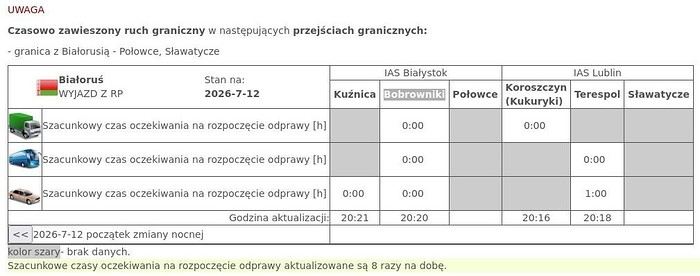
Several bus company routes, like on infobus.eu, take between 3 and 4 hours. Trains from Warsaw to Białystok take about 1.5 to 2 hours. This has the advantage of allowing comfortable train journeys with minimal time spent on a bus. Also, the Terespol-Brest border might have shorter queues if you still prefer a Warsaw-Brest bus.
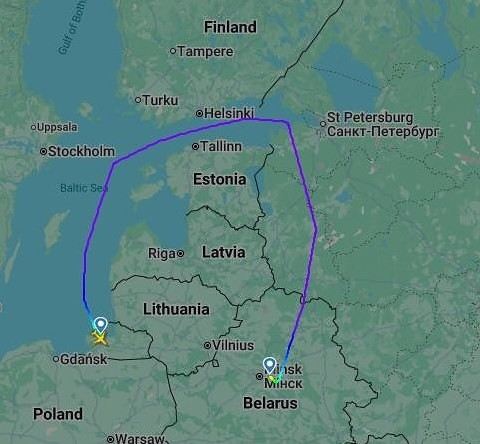
Note that another route to Minsk, if you have a paper Russian or Belarusian visa, is the Kaliningrad-Minsk train. It’s long—around ten or eleven hours—but you can lie down and sleep. An option if you fly into Gdańsk and then take a short bus to Kaliningrad.
There are also Belavia flights from Minsk to Kaliningrad, but they’re expensive. The route is scenic:
In any case, this adds a few more options compared to what’s been available over the last four years.
The official Polish page: https://granica.gov.pl/index_wait.php?p=b&c=t&v=pl&k=w
Several bus company routes, like on infobus.eu, take between 3 and 4 hours. Trains from Warsaw to Białystok take about 1.5 to 2 hours. This has the advantage of allowing comfortable train journeys with minimal time spent on a bus. Also, the Terespol-Brest border might have shorter queues if you still prefer a Warsaw-Brest bus.
Note that another route to Minsk, if you have a paper Russian or Belarusian visa, is the Kaliningrad-Minsk train. It’s long—around ten or eleven hours—but you can lie down and sleep. An option if you fly into Gdańsk and then take a short bus to Kaliningrad.
There are also Belavia flights from Minsk to Kaliningrad, but they’re expensive. The route is scenic:
In any case, this adds a few more options compared to what’s been available over the last four years.
At the risk of drawing some harsh criticism, I’ll admit we were really disappointed: sure, this trip—taken at the end of September—was short (a week), but we’d planned this little road trip (1,000km by car) as a first scouting mission. We won’t be going back anytime soon!
First mistake: we flew into Tirana (from Marseille) when it would’ve been better to fly to Corfu and rent a car in the south of the country instead of staying in the capital, which frankly isn’t all that interesting. From Tirana, we headed east toward Lin, by Lake Ohrid (a very poor region facing Macedonia), then to Korça, which guidebooks call "the most pleasant city in Albania." From there, we drove to Gjirokastra, an old Ottoman town (170km of mountain roads that took us nearly 5 hours...), then further south to Butrint, near Greece. The goal of these stops? To visit UNESCO World Heritage sites. In Lin, 6th-century mosaics; in Korça, a remarkable icon museum; in Gjirokastra, the citadel. At Butrint, we fled at the sight of all the tour buses parked in front of "this major archaeological site in the Mediterranean" and headed back north! The entire Adriatic coast is undergoing severe overdevelopment: developers are destroying the coastline to attract even more tourists (11 million visited in 2024, while Albania only has 3 million residents). We preferred to leave the coastal road (in excellent condition, a future highway) to visit Berat, an Ottoman town topped by a citadel. Our favorite spot. Why were we so disappointed? Villages without charm, outskirts of major cities in advanced decay, trash along the roads... The weight of the communist dictatorship and forced industrialization over forty years is still felt everywhere. The country is recovering but betting on tourism. The result? Newly built villas for the newly rich, beaches near the capital already polluted... Too bad, because the natural landscapes are often stunning, the locals are welcoming (young people learn English, though their parents speak little), and prices remain very reasonable—except in the capital. We’d chosen to stay with locals as much as possible, but like in Croatia, families are turning their homes into guest houses (~35 € per night, hearty breakfast included). Renting the car cost us 312 € for a week (with an international rental company—it’s probably cheaper with a local one, but I prefer understanding the contract I sign), and we cautiously took the optional insurance. Just so you know: Albanians drive fast, seem unfamiliar with traffic rules, overtake before curves, ignore yellow lines, and rarely use turn signals...)
First mistake: we flew into Tirana (from Marseille) when it would’ve been better to fly to Corfu and rent a car in the south of the country instead of staying in the capital, which frankly isn’t all that interesting. From Tirana, we headed east toward Lin, by Lake Ohrid (a very poor region facing Macedonia), then to Korça, which guidebooks call "the most pleasant city in Albania." From there, we drove to Gjirokastra, an old Ottoman town (170km of mountain roads that took us nearly 5 hours...), then further south to Butrint, near Greece. The goal of these stops? To visit UNESCO World Heritage sites. In Lin, 6th-century mosaics; in Korça, a remarkable icon museum; in Gjirokastra, the citadel. At Butrint, we fled at the sight of all the tour buses parked in front of "this major archaeological site in the Mediterranean" and headed back north! The entire Adriatic coast is undergoing severe overdevelopment: developers are destroying the coastline to attract even more tourists (11 million visited in 2024, while Albania only has 3 million residents). We preferred to leave the coastal road (in excellent condition, a future highway) to visit Berat, an Ottoman town topped by a citadel. Our favorite spot. Why were we so disappointed? Villages without charm, outskirts of major cities in advanced decay, trash along the roads... The weight of the communist dictatorship and forced industrialization over forty years is still felt everywhere. The country is recovering but betting on tourism. The result? Newly built villas for the newly rich, beaches near the capital already polluted... Too bad, because the natural landscapes are often stunning, the locals are welcoming (young people learn English, though their parents speak little), and prices remain very reasonable—except in the capital. We’d chosen to stay with locals as much as possible, but like in Croatia, families are turning their homes into guest houses (~35 € per night, hearty breakfast included). Renting the car cost us 312 € for a week (with an international rental company—it’s probably cheaper with a local one, but I prefer understanding the contract I sign), and we cautiously took the optional insurance. Just so you know: Albanians drive fast, seem unfamiliar with traffic rules, overtake before curves, ignore yellow lines, and rarely use turn signals...)
Hi there,
When landing in Warsaw (WAW) in the middle of the day, is it possible to reach Bialowieza by public transport before nightfall? Or is it better to spend the night in Warsaw or Bialystok?
In August, is it easy to find accommodation/homestays in Bialowieza without booking in advance? What about the other parks in the area?
Thanks in advance! 🙂
When landing in Warsaw (WAW) in the middle of the day, is it possible to reach Bialowieza by public transport before nightfall? Or is it better to spend the night in Warsaw or Bialystok?
In August, is it easy to find accommodation/homestays in Bialowieza without booking in advance? What about the other parks in the area?
Thanks in advance! 🙂
Hi there,
I’m landing in Athens on Sunday, July 6th at 6:30 PM, picking up my rental car at the airport, and heading straight to Nafplio to spend the night.
Do I have enough time to get there and grab dinner? Until what time can I easily find places to eat without any issues?
Another question: I’m thinking of using Waze or Google Maps for directions. Is 4G coverage well-developed, or is it optimistic to count on having service along the way?
Thanks
I’m landing in Athens on Sunday, July 6th at 6:30 PM, picking up my rental car at the airport, and heading straight to Nafplio to spend the night.
Do I have enough time to get there and grab dinner? Until what time can I easily find places to eat without any issues?
Another question: I’m thinking of using Waze or Google Maps for directions. Is 4G coverage well-developed, or is it optimistic to count on having service along the way?
Thanks
Hi there,
This summer, we’re heading to Bulgaria as a family (2 adults and 2 kids aged 15 and 12). Our flights and rental car are already booked, and our accommodations are pre-reserved (cancellable). Just so you know, we prefer nature over cities for our vacations.
I’d love your thoughts on our itinerary—specifically, any interesting sites, hikes, or nature activities you’d recommend. - Day 1: Arrival in Sofia at 11 PM - Day 2: Sofia - Day 3: Drive to Veliko Tarnovo, overnight there - Day 4: Drive to the Black Sea (we were supposed to go to Varna, but our booking was canceled) - Days 5–8: We were planning to stay in Varna and visit Balchik and Nesebar. But since our accommodation fell through, we’re wondering if we should spend only 2 nights in Varna and 3 in Nesebar instead. What do you think? - Day 9: Drive to Sinemorets - Days 10–11: Sinemorets, Strandja (3 nights in Sinemorets) - Days 12–13: Plovdiv - Days 14–16: Rhodopes, staying in Yagodina for 3 nights - Day 17: Melnik - Days 18–20: Bansko (Bansko Jazz Fest, hikes) - Day 21: Rila Monastery, then overnight in Sapareva Banya - Day 22: Seven Rila Lakes hike - Day 23: Return to Sofia and fly home
Does this route feel balanced, or too rushed? What do you think are the must-see spots along the way?
Thanks! PM
This summer, we’re heading to Bulgaria as a family (2 adults and 2 kids aged 15 and 12). Our flights and rental car are already booked, and our accommodations are pre-reserved (cancellable). Just so you know, we prefer nature over cities for our vacations.
I’d love your thoughts on our itinerary—specifically, any interesting sites, hikes, or nature activities you’d recommend. - Day 1: Arrival in Sofia at 11 PM - Day 2: Sofia - Day 3: Drive to Veliko Tarnovo, overnight there - Day 4: Drive to the Black Sea (we were supposed to go to Varna, but our booking was canceled) - Days 5–8: We were planning to stay in Varna and visit Balchik and Nesebar. But since our accommodation fell through, we’re wondering if we should spend only 2 nights in Varna and 3 in Nesebar instead. What do you think? - Day 9: Drive to Sinemorets - Days 10–11: Sinemorets, Strandja (3 nights in Sinemorets) - Days 12–13: Plovdiv - Days 14–16: Rhodopes, staying in Yagodina for 3 nights - Day 17: Melnik - Days 18–20: Bansko (Bansko Jazz Fest, hikes) - Day 21: Rila Monastery, then overnight in Sapareva Banya - Day 22: Seven Rila Lakes hike - Day 23: Return to Sofia and fly home
Does this route feel balanced, or too rushed? What do you think are the must-see spots along the way?
Thanks! PM
Hi there,
I’m in the middle of planning our trip to Croatia. We’re arriving in early September for a week in Split and leaving from Split as well. We’re a couple with a 20-month-old little girl. We’re renting a car directly at the airport, which I still need to book (I have a GOLD debit card). I hope that won’t be an issue because, logically, with this card, I shouldn’t need to take out extra insurance from the rental company. If you have any recommendations on that, I’d love to hear them.
As for the itinerary I’m planning, I’ve already ruled out Plitvice and Zadar because we don’t want to spend too much time on the road—this is a vacation, after all—and some travelers told me Zadar can be seen quickly and isn’t worth the long drive. For the nights, someone already suggested we spend the last two in Trogir to consolidate.
I particularly love beautiful towns, historic centers, ports, taking photos, shopping, beaches, and seeing stunning places. We’re not big on museums, and hiking with a little one makes long or steep hikes tricky, especially with the heat we might encounter.
Here’s the initial plan I’ve come up with:
Day 1:
Activities: Arrive in Split in the morning, pick up the car, explore the historic center, Marjan Hill... Klis Fortress, and see what else we can add before evening. Night: Initially planned near Plitvice (2 min away).
Day 2:
Activities: Day at Plitvice—check out Entrance 1 or 2 with the baby. Night: Lozovac (2 min from Krka, 16 min from Šibenik, and 1 hour from Zadar).
Day 3: Activities: Zadar and Šibenik. Night: Lozovac (2 min from Krka, 16 min from Šibenik, and 1 hour from Zadar).
Day 4: Activities: Krka National Park (someone recommended going after 4 PM and seeing the "circular" waterfalls) + Primošten. Night: Lozovac (2 min from Krka, 16 min from Šibenik, and 1 hour from Zadar).
Day 5: Activities: Hvar (exploring the island). Night: Jelsa.
Day 6: Activities: Omiš + Starigrad Fortress. Night: Omiš.
Day 7: Activities: Trogir city center, Čiovo Island. Night: Trogir.
I haven’t updated the plan yet because I’m still looking for the best way to optimize it. Someone suggested Makarska and Brač as alternatives to Plitvice.
Given that I’m already planning to visit Hvar with an overnight stay, is it worth adding Brač? If so, maybe taking the ferry without the car—would we still be able to enjoy the day without being too limited? Did I forget anything essential? Thanks in advance—I know answering all these questions can be repetitive, but it’ll save me so much time and help optimize our vacation. I also like to take my time and enjoy being there rather than stressing over preparations, which is why I’m planning just enough. What’s most important to me is optimizing the route and staying in places that let us explore easily. I think we’ll come back another time to enjoy Dubrovnik, which we didn’t include in this itinerary because it’s over two hours away with a border crossing.
What I really want to see: Trogir, Split, Krka, Hvar…
I’m in the middle of planning our trip to Croatia. We’re arriving in early September for a week in Split and leaving from Split as well. We’re a couple with a 20-month-old little girl. We’re renting a car directly at the airport, which I still need to book (I have a GOLD debit card). I hope that won’t be an issue because, logically, with this card, I shouldn’t need to take out extra insurance from the rental company. If you have any recommendations on that, I’d love to hear them.
As for the itinerary I’m planning, I’ve already ruled out Plitvice and Zadar because we don’t want to spend too much time on the road—this is a vacation, after all—and some travelers told me Zadar can be seen quickly and isn’t worth the long drive. For the nights, someone already suggested we spend the last two in Trogir to consolidate.
I particularly love beautiful towns, historic centers, ports, taking photos, shopping, beaches, and seeing stunning places. We’re not big on museums, and hiking with a little one makes long or steep hikes tricky, especially with the heat we might encounter.
Here’s the initial plan I’ve come up with:
Day 1:
Activities: Arrive in Split in the morning, pick up the car, explore the historic center, Marjan Hill... Klis Fortress, and see what else we can add before evening. Night: Initially planned near Plitvice (2 min away).
Day 2:
Activities: Day at Plitvice—check out Entrance 1 or 2 with the baby. Night: Lozovac (2 min from Krka, 16 min from Šibenik, and 1 hour from Zadar).
Day 3: Activities: Zadar and Šibenik. Night: Lozovac (2 min from Krka, 16 min from Šibenik, and 1 hour from Zadar).
Day 4: Activities: Krka National Park (someone recommended going after 4 PM and seeing the "circular" waterfalls) + Primošten. Night: Lozovac (2 min from Krka, 16 min from Šibenik, and 1 hour from Zadar).
Day 5: Activities: Hvar (exploring the island). Night: Jelsa.
Day 6: Activities: Omiš + Starigrad Fortress. Night: Omiš.
Day 7: Activities: Trogir city center, Čiovo Island. Night: Trogir.
I haven’t updated the plan yet because I’m still looking for the best way to optimize it. Someone suggested Makarska and Brač as alternatives to Plitvice.
Given that I’m already planning to visit Hvar with an overnight stay, is it worth adding Brač? If so, maybe taking the ferry without the car—would we still be able to enjoy the day without being too limited? Did I forget anything essential? Thanks in advance—I know answering all these questions can be repetitive, but it’ll save me so much time and help optimize our vacation. I also like to take my time and enjoy being there rather than stressing over preparations, which is why I’m planning just enough. What’s most important to me is optimizing the route and staying in places that let us explore easily. I think we’ll come back another time to enjoy Dubrovnik, which we didn’t include in this itinerary because it’s over two hours away with a border crossing.
What I really want to see: Trogir, Split, Krka, Hvar…
Hi there! This summer, we're planning a 2- to 3-week road trip in one of these countries!! But despite all the reviews we’ve read on the forum, we still can’t decide... It’s so hard to choose between the Carpathians, Budapest, and Krakow!!! Could you give us some advice based on what you know? Thanks, Karine and Christophe
Hi there,
My partner and I are planning to visit Paros from June 4th to 11th, 2025.
I’ve been reading a lot of conflicting things, so I’m a bit confused.
Does Paros feel more like St. Tropez or Porto-Vecchio—overcrowded, too built-up, and has it lost its authentic charm?
Are umbrella and sunbed prices on the beach still reasonable?
Thanks so much for your input—we’re thinking of heading there in early June with my partner.
Hi there!!
This summer, we're planning to explore Poland from July 4th to 23rd. I’ve outlined our rough itinerary below—could you let me know if the number of days allocated to each destination makes sense or if there’s anything we should change? Thanks in advance!
S4 Departure, overnight in Würzburg (Germany) to break up the drive. D5 Travel day with visits: Jawor and Świdnica churches, Książ Castle (likely just the exterior), and a few other stops. Overnight in Wrocław. L6 Explore Wrocław M7 Explore Wrocław M8 Visit Kłodzko—is one day enough? Overnight near Auschwitz. J9 Visit Auschwitz, overnight in Kraków V10 Explore Kraków S11 Explore Kraków D12 Visit the Wieliczka Salt Mine, overnight near Zakopane L13 Zakopane M14 Zakopane M15 Visit Zamość, overnight in Lublin J16 Explore Lublin, overnight in Masuria (TBD) V17 Explore Masuria S18 Explore Masuria D19 Depart for Gdańsk, visit the Teutonic Castle, overnight in Gdańsk L20 Explore Gdańsk M21 Explore Gdańsk J22 Explore Gdańsk, possible day trip to Sopot? V23 Visit Toruń, then drive back to Germany. Overnight stop like on the way out. S24 Home!
Best, Christophe
This summer, we're planning to explore Poland from July 4th to 23rd. I’ve outlined our rough itinerary below—could you let me know if the number of days allocated to each destination makes sense or if there’s anything we should change? Thanks in advance!
S4 Departure, overnight in Würzburg (Germany) to break up the drive. D5 Travel day with visits: Jawor and Świdnica churches, Książ Castle (likely just the exterior), and a few other stops. Overnight in Wrocław. L6 Explore Wrocław M7 Explore Wrocław M8 Visit Kłodzko—is one day enough? Overnight near Auschwitz. J9 Visit Auschwitz, overnight in Kraków V10 Explore Kraków S11 Explore Kraków D12 Visit the Wieliczka Salt Mine, overnight near Zakopane L13 Zakopane M14 Zakopane M15 Visit Zamość, overnight in Lublin J16 Explore Lublin, overnight in Masuria (TBD) V17 Explore Masuria S18 Explore Masuria D19 Depart for Gdańsk, visit the Teutonic Castle, overnight in Gdańsk L20 Explore Gdańsk M21 Explore Gdańsk J22 Explore Gdańsk, possible day trip to Sopot? V23 Visit Toruń, then drive back to Germany. Overnight stop like on the way out. S24 Home!
Best, Christophe
Hi everyone,
So, I’m heading to Bulgaria this September. I’ll be based in Varna and plan to rent a car for a few days. I don’t know Bulgaria at all, so I’ve got everything to learn about this country.
I’m an amateur photographer, so I’d love to take some great landscape shots (sea or mountains) as well as photos of picturesque little villages... I’m open to all kinds of tips, and thanks in advance for reading!
Best regards, Patrice
So, I’m heading to Bulgaria this September. I’ll be based in Varna and plan to rent a car for a few days. I don’t know Bulgaria at all, so I’ve got everything to learn about this country.
I’m an amateur photographer, so I’d love to take some great landscape shots (sea or mountains) as well as photos of picturesque little villages... I’m open to all kinds of tips, and thanks in advance for reading!
Best regards, Patrice
Hi there,
We were planning to spend a month in June exploring Croatia (Istria for 1 week, Plitvice Park, Zadar, Split, the islands, Dubrovnik…) and Montenegro, and we’ve already made good progress on our plans. But after reading the forum, we got a bit worried—there are so many negative reviews. Apparently, tourism has exploded, and Croatians are getting more and more fed up (which we totally get), becoming aggressive and disrespectful. The euro has sent prices skyrocketing, and scams of all kinds are popping up—even car vandalism is being mentioned!!
Here’s what we had in mind: Day 1: Our trip was supposed to start from Nice by car, with a stop in Verona to arrive in Croatia the next day. Days 2–6: First possible detour to visit Postojna Cave in Slovenia (or later from Rijeka... but I’ve heard border crossings can be super long!!!) and a 5-night stay in Rovinj (visiting Rovinj, Bale, Poreč, Grožnjan, and other small villages, Pula, maybe Cape Kamenjak, relaxing on beaches, possibly Cres Island). - Days 7–8: Head toward Rijeka and Plitvice Lakes National Park via the coastal road; 2 nights outside the park (given the prices!!!) and visit the park the next day. Do we need to book park entry way in advance for June? - Days 9–11 or 12: Leave for Zadar for 4 nights—one island (Dugi Otok, Pašman Island, Kornati Islands National Park, Silba, Molat, Olib, Premuda, Sakarun Bay, Veli Žal Beach, Iž Island, Ugljan Island), explore the city, and check out the surroundings. - Days 13–15: Head to Split, visit Šibenik, Split, and Trogir. - Days 16–17: Hvar Island. - Days 18–21 or 22: Head to Dubrovnik, explore the city, cross over to Korčula, Prapatno port at the start of the Pelješac Peninsula, via Ston, Mljet Island (Konavle and Cavtat port?).
- Then return to Split to catch the ferry to Ancona or head to Montenegro for 5–7 days.
If you’ve visited Croatia since 2023 (when it joined the Schengen Zone), we’d love to hear your thoughts on traveling there in June. Françoise
Here’s what we had in mind: Day 1: Our trip was supposed to start from Nice by car, with a stop in Verona to arrive in Croatia the next day. Days 2–6: First possible detour to visit Postojna Cave in Slovenia (or later from Rijeka... but I’ve heard border crossings can be super long!!!) and a 5-night stay in Rovinj (visiting Rovinj, Bale, Poreč, Grožnjan, and other small villages, Pula, maybe Cape Kamenjak, relaxing on beaches, possibly Cres Island). - Days 7–8: Head toward Rijeka and Plitvice Lakes National Park via the coastal road; 2 nights outside the park (given the prices!!!) and visit the park the next day. Do we need to book park entry way in advance for June? - Days 9–11 or 12: Leave for Zadar for 4 nights—one island (Dugi Otok, Pašman Island, Kornati Islands National Park, Silba, Molat, Olib, Premuda, Sakarun Bay, Veli Žal Beach, Iž Island, Ugljan Island), explore the city, and check out the surroundings. - Days 13–15: Head to Split, visit Šibenik, Split, and Trogir. - Days 16–17: Hvar Island. - Days 18–21 or 22: Head to Dubrovnik, explore the city, cross over to Korčula, Prapatno port at the start of the Pelješac Peninsula, via Ston, Mljet Island (Konavle and Cavtat port?).
- Then return to Split to catch the ferry to Ancona or head to Montenegro for 5–7 days.
If you’ve visited Croatia since 2023 (when it joined the Schengen Zone), we’d love to hear your thoughts on traveling there in June. Françoise
Hi everyone,
Here’s a little account of our two-week family trip (with two boys aged 7 and 10) to Corfu. I hope it helps other travelers! We chose Corfu because there are direct flights from Paris, and we were looking for a destination where it’d be easy to swim with the kids. We were there from August 14 to 28.
Since I wasn’t sure about the distances and had read quite a bit about Greek driving and the state of the roads, I decided to split the trip into three parts: Corfu Town, the North, and the South.
Corfu Town (3 nights) Day 1: We landed in the late afternoon. Booked three nights via Booking on the edge of the old town (Sueno Garden Apartment), which is walkable from the airport—no need to rent a car for the first few days or stay in Corfu Town. First evening in the old town, dinner at Pane e Souvlaki on Dimarchiou Square. Touristy, but good vibes.
Day 2: Visited the Old Fort. Nice for the Church of St. George, which looks like an ancient Greek temple, and especially for the 360° view from the top. By 11 a.m., the sun was already beating down. Left the fort and strolled through the People’s Gardens. Lunch at Mouragia a bit further away, then backtracked to let the kids swim at Faliraki Bathing Beach.
Day 3: We took bus line 2A from Spinada (in front of the Old Fort) to the end of the runway (stop ΚΑΛΟΚΑΙΡΙ Ε). Poorly signposted when you’re at the top—you have to go down via the bar. Not well set up, which is a shame. The Panagia Vlacherna Monastery is pretty on its little island, but don’t turn around—the landings are impressive. Returned via the 2A with a stop at Mon Repos Beach, where the kids loved jumping off the pier.
North (6 nights) Day 4: Headed to Sidari, rented a small Fiat Panda from Europcar—no issues with this rental company (I booked late, so it’s probably possible to find cheaper). We’d also booked via Booking at Blue Dreams Apartment, just south of Sidari. A family-run hotel with a nice pool, we had a great stay (it’s just been taken over by Belgians who speak French). We wandered around Sidari to the Canal d’Amour. Not easy to access—you have to walk through all the bars, and the tiny beach is pretty dirty. Still, it’s fun for a swim and exploring the cave.
Day 5: Quick breakfast to be at Cap Drastis by 9 a.m. Parked at the top, but there’s very little space (we couldn’t park on the way back), and it’s a dirt road. The signs saying “To the sea” actually lead to a boat dock for a cape tour. You only see the cape from above, not below. A bit of a letdown, but since it was early and no one was down there yet, we treated ourselves to a quick swim. Brunch back in Sidari at Eviva—I recommend it: not Greek at all, but high quality. Agios Stefanos in the late afternoon after the heat. The port is awful (dirty and uninteresting), but there’s a swimming spot just before the beach, near the old port (park above, by the church). No one was there—great moment with the kids.
Day 6: Left around 9 a.m. for Mount Pantokrator. A bit of a climb at the end in the Fiat Panda—it’s steep! The road is long, but I think it’s worth it for the lunar landscape at the top, the monastery-antenna, and the 360° view. Then down to Kassiopi (we paid 5 euros for the Kassiopi Car Park—I think it’s the best option, as there’s no big free parking like in Sidari) and a swim at Paralia Mpataria (small but nice). Really relaxing in the late afternoon. Walked around the peninsula and saw several dolphin pods with amazing jumps. Unforgettable. Kassiopi is more family-friendly than Sidari and has more charm (Sidari has none, so that’s easy!).
Day 7: Morning off at the hotel, then afternoon at Paralia Kalamaki for the inflatable playground the kids had spotted on the way back from Kassiopi. 10 euros per person for an hour, not many people around 4 p.m., and we had a blast. Shallow sandy beach. Not much marine life, but safe for young kids. Note: free freshwater shower. Dinner at Nikos Family Restaurant in Roda. Great welcome and atmosphere. The stifado and soutzoukakia were delicious, and the Greek desserts were amazing too. Next door, at Roda Park restaurant, there was a Greek party with traditional dancing and plaster plate-smashing. Even though we didn’t eat there, everyone was invited to join in the street—it was fun. Probably touristy, but pretty spontaneous, and it was a good time.
Day 8: I’d booked two dives in Paleokastritsa with Achilleon Diving Center, directly via WhatsApp. Great international vibe, two easy but interesting dives (a barracuda school and a “cow” nudibranch at Colovri Reefs, cool crevasses and holes at Donald’s Place). In the afternoon, we visited the Paleokastritsa Monastery (well-maintained, pretty nice) and spent some time at the beach (very crowded).
Day 9: Day off—we enjoyed the hotel pool and went to Olea next door to buy a small olive wood souvenir. Note that the old man who works the wood doesn’t have many fingers left…
South (5 nights) Day 10: Headed to Lefkimmi. Stopped at Achilleion on the way. I knew from reviews that only the gardens were accessible, but I think it’s worth it, even at 7 euros. We passed by the French military cemetery nearby (nothing special, poorly signposted but quiet and peaceful) and ate at Elia Tavern right next door: super good, best calamari of the trip. We’d booked our accommodation at Villa Rosa South Corfu, a bit outside Lefkimmi, near Alikes. Pretty isolated, but the beach is a 3-minute walk away, right next to the old salt pans. On the way, we saw a poster (use Google Lens to translate) for a local festival near Linia. We went that evening: barbecue, concert, and local dancing. Lots of people, but only locals—it was a great time.
Day 11: Short “hike” to Arkoudilas. We parked at the exit of Kavos, just before The Rose Tree restaurant. Some people drive all the way to the beach, but it’s very rocky. We followed the “Monastery” path to see Cape Asprokavos and the ruins of the monastery nearby. To avoid backtracking, we continued through the woods after the monastery to reach Arkoudilas Beach. Nice shaded walk, but dusty road. Dinner at Agali on the Potami Canal (friendly family vibe, but long wait).
Day 12: Boat trip to Sivota with Pegasus. A wooden boat, human-sized. Crowded, but not cramped. Two swimming stops (Blue Lagoon in the morning and a beach in the afternoon) and a 2-hour stop at noon in Sivota. We knew it’d be touristy, but the vibe was good, with some dancing on the way back. Not too many people at the swimming stops.
Day 13: Kouris Museum in Lefkimmi. Okay, don’t go for the history—the guide cracks more jokes than gives rational explanations. Still, we laughed a lot and had a great time. Lunch at The Village on the main road: very fresh, very good. Perfect homemade dip platter. Not the best location since it’s right on the road, but it’s worth it. Free ice cream for the kids, super-friendly owner. Fresh ratatouille (finally, some veggies!). Afternoon at Paralia Issos. View of Korission Lagoon and a walk through the sand dunes, a bit like the Sahara in places (hard to do before 5 p.m., even 6 p.m., because of the heat).
Day 14: I’d booked a visit/tasting at Pontiglio Winery. Short tour of the small site and tasting of the 4 wines produced there: 2 whites, 1 red, 1 rosé. Fresh homemade snacks, fruit for the kids, great welcome. Then to Paralia Kanoula Beach. Mikro Nisi Bar, sunbeds at 20 euros—expensive. But a nice beach with some rocks, so a bit of marine life. We saw octopuses while snorkeling with the kids—great moment.
Honest take on Corfu The island is dirty—not just at the garbage sites, which aren’t collected often enough and overflow constantly, but everywhere. Not a single square meter without cigarette butts, even if you get off the main paths. Stray cats everywhere, wasps everywhere, sewage smells often.
The natural heritage is stunning but ruined by private encroachment on the coastline. Bars and restaurants take over the land right up to the sea. I’d only been to Santorini and Paros about ten years ago, and I don’t remember it being like this at all. Maybe the Cyclades are different now. From talking to a few tourists here and there, it seems Crete is better managed. We still had a good vacation, even if it was sometimes hard to overlook the dirtiness.
Here’s a little account of our two-week family trip (with two boys aged 7 and 10) to Corfu. I hope it helps other travelers! We chose Corfu because there are direct flights from Paris, and we were looking for a destination where it’d be easy to swim with the kids. We were there from August 14 to 28.
Since I wasn’t sure about the distances and had read quite a bit about Greek driving and the state of the roads, I decided to split the trip into three parts: Corfu Town, the North, and the South.
Corfu Town (3 nights) Day 1: We landed in the late afternoon. Booked three nights via Booking on the edge of the old town (Sueno Garden Apartment), which is walkable from the airport—no need to rent a car for the first few days or stay in Corfu Town. First evening in the old town, dinner at Pane e Souvlaki on Dimarchiou Square. Touristy, but good vibes.
Day 2: Visited the Old Fort. Nice for the Church of St. George, which looks like an ancient Greek temple, and especially for the 360° view from the top. By 11 a.m., the sun was already beating down. Left the fort and strolled through the People’s Gardens. Lunch at Mouragia a bit further away, then backtracked to let the kids swim at Faliraki Bathing Beach.
Day 3: We took bus line 2A from Spinada (in front of the Old Fort) to the end of the runway (stop ΚΑΛΟΚΑΙΡΙ Ε). Poorly signposted when you’re at the top—you have to go down via the bar. Not well set up, which is a shame. The Panagia Vlacherna Monastery is pretty on its little island, but don’t turn around—the landings are impressive. Returned via the 2A with a stop at Mon Repos Beach, where the kids loved jumping off the pier.
North (6 nights) Day 4: Headed to Sidari, rented a small Fiat Panda from Europcar—no issues with this rental company (I booked late, so it’s probably possible to find cheaper). We’d also booked via Booking at Blue Dreams Apartment, just south of Sidari. A family-run hotel with a nice pool, we had a great stay (it’s just been taken over by Belgians who speak French). We wandered around Sidari to the Canal d’Amour. Not easy to access—you have to walk through all the bars, and the tiny beach is pretty dirty. Still, it’s fun for a swim and exploring the cave.
Day 5: Quick breakfast to be at Cap Drastis by 9 a.m. Parked at the top, but there’s very little space (we couldn’t park on the way back), and it’s a dirt road. The signs saying “To the sea” actually lead to a boat dock for a cape tour. You only see the cape from above, not below. A bit of a letdown, but since it was early and no one was down there yet, we treated ourselves to a quick swim. Brunch back in Sidari at Eviva—I recommend it: not Greek at all, but high quality. Agios Stefanos in the late afternoon after the heat. The port is awful (dirty and uninteresting), but there’s a swimming spot just before the beach, near the old port (park above, by the church). No one was there—great moment with the kids.
Day 6: Left around 9 a.m. for Mount Pantokrator. A bit of a climb at the end in the Fiat Panda—it’s steep! The road is long, but I think it’s worth it for the lunar landscape at the top, the monastery-antenna, and the 360° view. Then down to Kassiopi (we paid 5 euros for the Kassiopi Car Park—I think it’s the best option, as there’s no big free parking like in Sidari) and a swim at Paralia Mpataria (small but nice). Really relaxing in the late afternoon. Walked around the peninsula and saw several dolphin pods with amazing jumps. Unforgettable. Kassiopi is more family-friendly than Sidari and has more charm (Sidari has none, so that’s easy!).
Day 7: Morning off at the hotel, then afternoon at Paralia Kalamaki for the inflatable playground the kids had spotted on the way back from Kassiopi. 10 euros per person for an hour, not many people around 4 p.m., and we had a blast. Shallow sandy beach. Not much marine life, but safe for young kids. Note: free freshwater shower. Dinner at Nikos Family Restaurant in Roda. Great welcome and atmosphere. The stifado and soutzoukakia were delicious, and the Greek desserts were amazing too. Next door, at Roda Park restaurant, there was a Greek party with traditional dancing and plaster plate-smashing. Even though we didn’t eat there, everyone was invited to join in the street—it was fun. Probably touristy, but pretty spontaneous, and it was a good time.
Day 8: I’d booked two dives in Paleokastritsa with Achilleon Diving Center, directly via WhatsApp. Great international vibe, two easy but interesting dives (a barracuda school and a “cow” nudibranch at Colovri Reefs, cool crevasses and holes at Donald’s Place). In the afternoon, we visited the Paleokastritsa Monastery (well-maintained, pretty nice) and spent some time at the beach (very crowded).
Day 9: Day off—we enjoyed the hotel pool and went to Olea next door to buy a small olive wood souvenir. Note that the old man who works the wood doesn’t have many fingers left…
South (5 nights) Day 10: Headed to Lefkimmi. Stopped at Achilleion on the way. I knew from reviews that only the gardens were accessible, but I think it’s worth it, even at 7 euros. We passed by the French military cemetery nearby (nothing special, poorly signposted but quiet and peaceful) and ate at Elia Tavern right next door: super good, best calamari of the trip. We’d booked our accommodation at Villa Rosa South Corfu, a bit outside Lefkimmi, near Alikes. Pretty isolated, but the beach is a 3-minute walk away, right next to the old salt pans. On the way, we saw a poster (use Google Lens to translate) for a local festival near Linia. We went that evening: barbecue, concert, and local dancing. Lots of people, but only locals—it was a great time.
Day 11: Short “hike” to Arkoudilas. We parked at the exit of Kavos, just before The Rose Tree restaurant. Some people drive all the way to the beach, but it’s very rocky. We followed the “Monastery” path to see Cape Asprokavos and the ruins of the monastery nearby. To avoid backtracking, we continued through the woods after the monastery to reach Arkoudilas Beach. Nice shaded walk, but dusty road. Dinner at Agali on the Potami Canal (friendly family vibe, but long wait).
Day 12: Boat trip to Sivota with Pegasus. A wooden boat, human-sized. Crowded, but not cramped. Two swimming stops (Blue Lagoon in the morning and a beach in the afternoon) and a 2-hour stop at noon in Sivota. We knew it’d be touristy, but the vibe was good, with some dancing on the way back. Not too many people at the swimming stops.
Day 13: Kouris Museum in Lefkimmi. Okay, don’t go for the history—the guide cracks more jokes than gives rational explanations. Still, we laughed a lot and had a great time. Lunch at The Village on the main road: very fresh, very good. Perfect homemade dip platter. Not the best location since it’s right on the road, but it’s worth it. Free ice cream for the kids, super-friendly owner. Fresh ratatouille (finally, some veggies!). Afternoon at Paralia Issos. View of Korission Lagoon and a walk through the sand dunes, a bit like the Sahara in places (hard to do before 5 p.m., even 6 p.m., because of the heat).
Day 14: I’d booked a visit/tasting at Pontiglio Winery. Short tour of the small site and tasting of the 4 wines produced there: 2 whites, 1 red, 1 rosé. Fresh homemade snacks, fruit for the kids, great welcome. Then to Paralia Kanoula Beach. Mikro Nisi Bar, sunbeds at 20 euros—expensive. But a nice beach with some rocks, so a bit of marine life. We saw octopuses while snorkeling with the kids—great moment.
Honest take on Corfu The island is dirty—not just at the garbage sites, which aren’t collected often enough and overflow constantly, but everywhere. Not a single square meter without cigarette butts, even if you get off the main paths. Stray cats everywhere, wasps everywhere, sewage smells often.
The natural heritage is stunning but ruined by private encroachment on the coastline. Bars and restaurants take over the land right up to the sea. I’d only been to Santorini and Paros about ten years ago, and I don’t remember it being like this at all. Maybe the Cyclades are different now. From talking to a few tourists here and there, it seems Crete is better managed. We still had a good vacation, even if it was sometimes hard to overlook the dirtiness.
We're back. It's still a bit tough to get precise info, so here's a quick trip report!
A good starting point is Shkoder, a really pleasant city. You can easily explore Shkoder itself in a day or two.
Two accessible spots: Valbona and Theth. In both cases, local travel agencies in Shkoder or online offer round-trip or one-way access packages. Super handy, especially for Valbona.
Valbona and Theth are both very steep! There aren’t many easy hikes for less sporty folks (like me!).
Valbona: The highlight is the amazing 2.5-hour boat ride across Lake Koman. There are day trips from Shkoder, but you’ll only get a short tour of the lake. The best option is to do the full crossing—so spend a night in Valbona (or two if you want to hike in the valley) and return.
Theth is deeply nestled in the mountains. The village at the end of the valley, which is a dead end, has lots of hotels, but they’re pricey. Other hostels are scattered along the mountainside road, but it’s a steep climb down to the village or to the start of the two easy hikes (waterfalls and the Blue Eye). For us, it was a one-hour descent (and ascent!). It’s fine if you have a car; otherwise, keep an eye out for a taxi (cheap) or try hitchhiking—it works really well. Access from Shkoder to Theth is through an agency. The road is in great condition, and you can also rent a car for 2-3 days in Shkoder. If we did it again, that’s the option we’d choose.
We didn’t do the trek and returned to Shkoder each time. I can’t speak to its difficulty, but we were there in late May, and even experienced hikers had given up because of heavy rain and snow.
Hope this helps! It’s a stunning region you shouldn’t miss.
A good starting point is Shkoder, a really pleasant city. You can easily explore Shkoder itself in a day or two.
Two accessible spots: Valbona and Theth. In both cases, local travel agencies in Shkoder or online offer round-trip or one-way access packages. Super handy, especially for Valbona.
Valbona and Theth are both very steep! There aren’t many easy hikes for less sporty folks (like me!).
Valbona: The highlight is the amazing 2.5-hour boat ride across Lake Koman. There are day trips from Shkoder, but you’ll only get a short tour of the lake. The best option is to do the full crossing—so spend a night in Valbona (or two if you want to hike in the valley) and return.
Theth is deeply nestled in the mountains. The village at the end of the valley, which is a dead end, has lots of hotels, but they’re pricey. Other hostels are scattered along the mountainside road, but it’s a steep climb down to the village or to the start of the two easy hikes (waterfalls and the Blue Eye). For us, it was a one-hour descent (and ascent!). It’s fine if you have a car; otherwise, keep an eye out for a taxi (cheap) or try hitchhiking—it works really well. Access from Shkoder to Theth is through an agency. The road is in great condition, and you can also rent a car for 2-3 days in Shkoder. If we did it again, that’s the option we’d choose.
We didn’t do the trek and returned to Shkoder each time. I can’t speak to its difficulty, but we were there in late May, and even experienced hikers had given up because of heavy rain and snow.
Hope this helps! It’s a stunning region you shouldn’t miss.
Hello,
We’re heading to Prague with so much excitement from June 10th to 20th. I’ve got three main questions for those who live there or have visited:
- What are your thoughts on what to pack clothing-wise? What’s the weather usually like at this time of year? We’re a bit sensitive to the cold—we live way down in southern Andalusia and are used to the *calor* 😎... Should we pack rain gear? Are we likely to get a lot of rain (which we’re dreading a little, but we couldn’t choose other dates)?
- I’ve seen there are "passes" for various attractions, museums, and sites, including one that’s valid for 10 days but costs a whopping 160 € per person—that’s an average of 16 € per day. Do you think it’s really worth it? We won’t be spending our days rushing between every indoor site; we also love wandering the streets and discovering things a bit "at random." If we do two paid visits a day, that’ll probably be the max... Can we make it worth the cost with that? Of course, we want to visit the castle and take a boat trip as a minimum. Are the sites included in these passes iconic, or are they more "minor" attractions? Does having the pass help us skip long lines?
- Finally, a question about communication: I speak French, obviously, plus Spanish and English fluently, but very little German (haven’t practiced in ages), and no Russian or Czech at all. My husband knows a few words of Russian, but it’s "Cuban" Russian—about the same level as my current German 🙂 !! Can we still get by without too much trouble? We don’t want to spend 10 days not saying a word to anyone and communicating only with gestures!!
Thanks for your valuable tips and opinions.
What are the main sights to visit on Rhodes itself or the surrounding islands, and what’s the weather like? We’re leaving on May 18th.
Hi everyone,
I'm on my way to Slovakia, where I'll be spending about ten days on vacation in the High Tatras. I've decided to stop in Prague for 24 hours with my two teens (arriving around noon, leaving the next day). We don’t know the city at all. I know a single day is way too short to discover everything, so I’d like to plan a small circuit to see the must-see spots.
Here’s what I’ve planned:
Walk through Nový Svět street Visit the castle, St. Vitus Cathedral, and Golden Lane Quick stop at Vojanovy Sady gardens Malá Strana Square Maltese Square Kampa Island Then the iconic Charles Bridge and a short tour of the Jewish Quarter We’ll head back down to visit Old Town Square (Malé Náměstí, St. Nicholas Church, and the Church of Our Lady before Týn) Head to Wenceslas Square and the Church of Our Lady of the Snows Then to the Church of Saints Cyril and Methodius and the Dancing House And finally, back to the starting point.
Estimated distance: 10 km
I was thinking of a little evening stroll up Petřín Hill... what do you think? Are there things that aren’t really worth it, or other spots that are must-sees?
Thanks for your thoughts and feedback!
Stéphane.
I'm on my way to Slovakia, where I'll be spending about ten days on vacation in the High Tatras. I've decided to stop in Prague for 24 hours with my two teens (arriving around noon, leaving the next day). We don’t know the city at all. I know a single day is way too short to discover everything, so I’d like to plan a small circuit to see the must-see spots.
Here’s what I’ve planned:
Walk through Nový Svět street Visit the castle, St. Vitus Cathedral, and Golden Lane Quick stop at Vojanovy Sady gardens Malá Strana Square Maltese Square Kampa Island Then the iconic Charles Bridge and a short tour of the Jewish Quarter We’ll head back down to visit Old Town Square (Malé Náměstí, St. Nicholas Church, and the Church of Our Lady before Týn) Head to Wenceslas Square and the Church of Our Lady of the Snows Then to the Church of Saints Cyril and Methodius and the Dancing House And finally, back to the starting point.
Estimated distance: 10 km
I was thinking of a little evening stroll up Petřín Hill... what do you think? Are there things that aren’t really worth it, or other spots that are must-sees?
Thanks for your thoughts and feedback!
Stéphane.
We’re a Canadian couple, both 77, and we’re already planning our vacation for fall 2027.
Timeframe: mid-September to mid-October... dates are flexible, and we might stay even longer.
Initially, I had planned this itinerary:
Athens (3), Naxos (4), Paros (4), Santorini (4), then a flight to Istanbul (7–10 days!!). This would let us maximize our flights and experience another culture.
That’s a lot of ferries, though... I’ve already cut out Milos.
Our second option would be to stay 2 x 15 days on two different islands, but I’d still keep Istanbul as our next destination... or maybe 30 days on one island that offers the chance to take day trips to other islands where the ferry ride is no more than 2 to 2.5 hours. For example, Naxos to Paros only takes 30 minutes. We could return the same evening or stay overnight.
Naxos seems like the best option!!!
For Istanbul, of course we want to do a day cruise on the Bosphorus and see Hagia Sophia. If we stay 6–7 days, what would be the other main attractions? Are there any points of interest we can reach by local bus?
Our second option would be to stay 2 x 15 days on two different islands, but I’d still keep Istanbul as our next destination... or maybe 30 days on one island that offers the chance to take day trips to other islands where the ferry ride is no more than 2 to 2.5 hours. For example, Naxos to Paros only takes 30 minutes. We could return the same evening or stay overnight.
Naxos seems like the best option!!!
For Istanbul, of course we want to do a day cruise on the Bosphorus and see Hagia Sophia. If we stay 6–7 days, what would be the other main attractions? Are there any points of interest we can reach by local bus?
A little trip report from an 11-day journey to Albania at the end of April 2026, with two friends in their early sixties and beyond...
Our route: Berat, Gjirokastër, Himarë, Tirana
Here are some opinions, tips, and great deals to share:
Flight Round-trip Beauvais-Tirana: Ryanair, 260 € with checked baggage (20 kg) and seat selection. Flight was fine and on time. 2h 30min flight.
Exchange: 1 € was worth 95 lek in April 2026. We were advised to exchange in the airport hall at the Illiria counter (98 lek outside the security zone), saying we wouldn’t find a better rate. However, the exchange rate was 93 lek for 1 euro, while in the city it was 95...
Car rental at Tirana airport for 9 days via Booking.com: 144 € (56 € for the car rental and 88 € for optional full insurance deductible waiver).
Wheego agency: the car was fine, but be careful when signing the contract—they tried to convince us that the insurance taken through Booking didn’t cover everything and insisted we take their own insurance for 250 €... We refused.
After reading about driving in Tirana, instead of starting our trip by visiting the capital, we decided to head straight to Berat upon arrival and return the car at the end of the trip to explore the city on foot. This turned out to be a great choice!
Accommodations: All our stays were booked via Booking.com. Everyone prefers to be paid in euros and in cash—they mention this when booking.
Berat: 2-hour drive from the airport.
Accommodation: Vila Arben Elezi: 135 € for 3 nights with breakfast and private parking. The room was decent and clean but a bit dark, located slightly below ground level near the parking. However, the breakfast on the rooftop was excellent, especially with the stunning view of the "city of a thousand windows." Great location.
Berat was our favorite—there are lovely walks through the different neighborhoods on both sides of the river, each with a very different vibe. The citadel visit is also fascinating, as it’s like a small town within the fortress.
The walk along the river is pleasant, with plenty of restaurant choices. Other restaurants in the old town are also very nice. The White House Restaurant, on the first floor along the road, is good and offers a great view of the Gorica district.
Gjirokastër:
Accommodation: Te Ajdini Guest House: 120 € for 3 nights with breakfast. A private home stay. There’s free parking just before entering the city, a 5-minute walk from the accommodation, which is very convenient since the cobblestone streets are narrow and parking is tricky. Yes, it’s a climb to get to the place, but everything in this city is uphill... The room was bright and clean. Breakfast was very good, hearty, and served in the courtyard with a view of the castle. The guesthouse is a 5-minute walk from the city center (the bazaar) but in a quiet area.
Restaurants: Rrapi and Kujtimi—good and affordable with their little pergolas.
The old town of Gjirokastër is charming but very touristy, with streets packed with souvenir shops and restaurant tables and chairs. Lots of people.
-The bunker visit (near the tourist office) is very interesting: Cold War Tunnel.
The castle offers a beautiful view of the city.
-Visit to the Ottoman house Skenduli: very well done. Don’t forget to climb the ladder facing a trapdoor in the ceiling to see the roof’s framework—it’s like a forest of beams: impressive!
-The bridge Ura e Ali Pasha: A steep 45-minute climb from the city to the site is worth it, but once you reach the viewpoint (which is stunning), you have to go back down a path to reach the bridge. You can drive to the viewpoint, but parking is very tricky.
Around Gjirokastër:
-Just outside the city: Lake Liqeni i Viroit: a nice, ordinary-looking lake, but at the end, there’s a natural spring making the water crystal clear and a brilliant blue—really spectacular, like photos of Blue Eye near Sarandë.
-Drive to Përmet along the gorges: beautiful viewpoints along the way and lovely countryside.
Himarë:
Accommodation: Vila Kosteli: 120 € for 2 nights with breakfast—slightly overpriced for this type of place but very close to a small beach and not far from the promenade with all the restaurants. Private parking, but very tight (4 cars on a tiny lot along the road). The "sea view" room is a bit obstructed by the building across the street. However, the rooftop breakfast view is beautiful. Friendly staff.
Himarë is a pleasant seaside resort, quite calm (but it was April...). There’s a cute promenade with restaurants along the beach. The castle on the heights of Himarë is worth a visit.
Around Himarë:
-Qeparo is worth a quick stop, but Qeparo village is really worth the detour: a village lost in the heights after a scenic drive up from the coastal road—narrow but well-maintained. Beautiful view from the top and a charming village.
-The Big Bunker and Llogora Panorama: take a right turn several kilometers after Dhermi—a road that climbs steeply from the start... A breathtaking winding road that reaches 900 meters in altitude. The view is stunning.
-Several small villages between Dhermi and Himarë are worth a quick stop.
-Porto Palermo Castle is somewhat disappointing.
Tirana:
Taxi from Tirana airport to the city center: 15 € with electric taxis (Green Taxi, Bee Taxi, Do Taxi).
Accommodation: Hotel Nevi Apartment: 63 € for 2 nights. A private apartment in an older building but very clean and well-equipped, with a kitchen and small enclosed balcony.
Great welcome and contact—the owner even booked a taxi for our departure. Very well located, close to the main square, shops, and restaurants. A small supermarket nearby is perfect for stocking up on breakfast supplies.
The city is lively and dynamic, with plenty of green spaces and promenades. Buildings are popping up everywhere, often with surprising architecture—like a building shaped like a face, a huge golden cube, and many others under construction.
-Sky Tower: at the top, a rotating bar offers a 360° view of the city and its buildings. Drinks are a bit pricier than usual, but it’s totally worth it (6 € for a beer or a glass of white wine, 3 € for coffee). We were there for sunset, and it was amazing! A must-do. Arrive early, as it fills up quickly.
-The House of Leaves: a house used for secret surveillance and interrogations during the dictatorship... A great way to learn about the surveillance systems of that era.
-Bunk’Art 2: a bunker in the heart of the city—very interesting, covering the dictatorship period and its system...
-The Pazari i Ri Bazaar: the new bazaar district. The large hall is worth a visit, but souvenir prices are often higher than elsewhere... The area is nice.
Restaurant: Kastrati Restaurant—a bit like a canteen with lots of traditional dishes. It’s on the first floor of a building. Excellent value for money, and the waitress explains the dishes in French.
That’s a little overview of our trip and my personal impressions! Albania is a beautiful and pleasant country to visit. If you have any questions, feel free to ask!
That’s a little overview of our trip and my personal impressions! Albania is a beautiful and pleasant country to visit. If you have any questions, feel free to ask!
hello
I’m looking for advice for a last-minute trip—about 3 weeks (half Montenegro, half Croatia).
I’m traveling solo, backpacker style (low budget, hostels). I’m 40 and love exploring cool spots—cities, beaches, mountains, sports activities, you name it.
I’m torn between renting a car or just going with the flow using buses once I’m there. A car would definitely be more convenient, but it might be pricier—plus, parking (is it paid?) and having to return it to the same place. My plan is to start in Montenegro (flying into Podgorica or Albania) and finish in Croatia, so I’d either need to do short-term rentals per country or one-way.
In Montenegro, here are the spots I’ve noted: - Ulcinj and Velika Plaža beach - A side trip to Lake Skadar and Virpazar - Budva, Sveti Stefan, and Petrovac - Cetinje and Lovćen National Park - Kotor / Perast - Žabljak and Durmitor National Park + rafting in the Tara Canyon Is 8–10 days enough?
And in Croatia, I’ve got: - Dubrovnik - Korčula - Hvar - Split + Trogir and Krka National Park - Zadar - Plitvice Lakes National Park - Croatian Istria / Rovinj / Pula - Zagreb Around 10–12 days.
Any tips on the stops (adding or cutting some from my list) or transportation options?
Thanks in advance!
I’m torn between renting a car or just going with the flow using buses once I’m there. A car would definitely be more convenient, but it might be pricier—plus, parking (is it paid?) and having to return it to the same place. My plan is to start in Montenegro (flying into Podgorica or Albania) and finish in Croatia, so I’d either need to do short-term rentals per country or one-way.
In Montenegro, here are the spots I’ve noted: - Ulcinj and Velika Plaža beach - A side trip to Lake Skadar and Virpazar - Budva, Sveti Stefan, and Petrovac - Cetinje and Lovćen National Park - Kotor / Perast - Žabljak and Durmitor National Park + rafting in the Tara Canyon Is 8–10 days enough?
And in Croatia, I’ve got: - Dubrovnik - Korčula - Hvar - Split + Trogir and Krka National Park - Zadar - Plitvice Lakes National Park - Croatian Istria / Rovinj / Pula - Zagreb Around 10–12 days.
Any tips on the stops (adding or cutting some from my list) or transportation options?
Thanks in advance!
Hi there, I was wondering if it's possible to see the highlights of Prague in two and a half days? My flight arrives on a Sunday evening at 9 PM, so we’d have Monday, Tuesday, and Wednesday morning to explore. Return flight is on Wednesday at 4:30 PM. Best regards, Christophe
Hi there,
We’re planning a 12-day trip to Greece next February.
It’s our first time, so we’ll be hitting the "Must-Sees"—that should keep us busy enough! 😎
The itinerary isn’t set in stone yet, but we’re already wondering if it’s doable or just crazy, if some stops are essential or a waste of time...
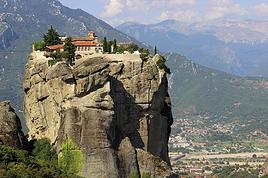
Here’s the plan: Day 1-2-3: Athens (we arrive midday on Day 1) Day 4: Southern Athens (Temple of Neptune) then overnight in Corinth (we’re renting a car from the airport) Day 5-6-7: Western/Southern Peloponnese (one or two places to stay, and the iconic spots: Acrocorinth, Cargo, Mycenae, Sanctuary of Epidaurus, Nafplio, Nemea...) Day 8: Transit to Delphi via Olympia Day 9-10: Delphi, Monastery of Osios Loukas... Day 11: Return to Athens via Thermopylae We were wondering if it’s feasible to add the Meteora monasteries? And Mount Olympus, just for fun?
For accommodations, do you have any recommendations for Athens? Peloponnese? Delphi? In Athens, I think it’s best to stay near the metro line that connects to the airport. But which neighborhood is good? It’s hard to navigate such a big city...
Two more questions: - Is Piraeus worth a visit? - We know February is a quieter time than peak tourist season, and that’s what we like. But there must be consequences—do all sites/museums close by 5 PM (except in Athens, maybe)? What do you do in the evenings once it’s dark?
Thanks in advance for your tips and advice!
We’re planning a 12-day trip to Greece next February.
It’s our first time, so we’ll be hitting the "Must-Sees"—that should keep us busy enough! 😎
The itinerary isn’t set in stone yet, but we’re already wondering if it’s doable or just crazy, if some stops are essential or a waste of time...
Here’s the plan: Day 1-2-3: Athens (we arrive midday on Day 1) Day 4: Southern Athens (Temple of Neptune) then overnight in Corinth (we’re renting a car from the airport) Day 5-6-7: Western/Southern Peloponnese (one or two places to stay, and the iconic spots: Acrocorinth, Cargo, Mycenae, Sanctuary of Epidaurus, Nafplio, Nemea...) Day 8: Transit to Delphi via Olympia Day 9-10: Delphi, Monastery of Osios Loukas... Day 11: Return to Athens via Thermopylae We were wondering if it’s feasible to add the Meteora monasteries? And Mount Olympus, just for fun?
For accommodations, do you have any recommendations for Athens? Peloponnese? Delphi? In Athens, I think it’s best to stay near the metro line that connects to the airport. But which neighborhood is good? It’s hard to navigate such a big city...
Two more questions: - Is Piraeus worth a visit? - We know February is a quieter time than peak tourist season, and that’s what we like. But there must be consequences—do all sites/museums close by 5 PM (except in Athens, maybe)? What do you do in the evenings once it’s dark?
Thanks in advance for your tips and advice!