Ca m'a pris 1.30h a telecharger (pas d'adsl ici), mais ca vaut vraiment le coup. La prise de la Bastille version Kruger. Les humains ont beaucoup a apprendre de cette video, suffit juste de surmonter ses peurs.
Magnifique scène !! Je trouvais un peu drole aussi que les buffles ne reviennent pas, ils sont pas faciles et se laissent pas faire il parait, on dit que c'est l'une des plus grosse bete dangereuse en brousse ! Je croyais que c'en était fini du petit entre les machoires des lions et du croco!! Et non, on peut toujours compter sur la cavalerie !
Merci pour cette video (1h30 c à la rame !!!)
Et tu as raison les animaux nous donnent parfois des leçons ... l'homme est petit parfois à côté.
Magnifique scène !! Je trouvais un peu drole aussi que les buffles ne reviennent pas, ils sont pas faciles et se laissent pas faire il parait, on dit que c'est l'une des plus grosse bete dangereuse en brousse ! Je croyais que c'en était fini du petit entre les machoires des lions et du croco!! Et non, on peut toujours compter sur la cavalerie !
Merci pour cette video (1h30 c à la rame !!!)
Et tu as raison les animaux nous donnent parfois des leçons ... l'homme est petit parfois à côté.
Bonjour!!!!
les deux animaux les plus dangereux sont en fait le Buffle bien sur et l'Hippo!!!!😉
L'hippo ... la fois dernière au Burundi on a pris une pirogue sur le Tanganyka, il y a avait plus loin un petit groupe d'hippos, on est passé entre la berge et eux chose normalement à pas faire, d'une... bon ils étaient pas proches non plus mais pas assez loin non plus à mon gout ... Deux, je demande au piroguier à quoi servent les caillasses dans la barque, il me dit que c'est au cas où on rencontre un hippo qui est vieux, seul et irrascible ....bien ... on l'à pas vu et tant mieux !! Pas vu de crocos non plus, j'en ai vu au Musée vivant, ça me suffit comme ça, et où pour qqs sous on leur jette des cochons d'Inde vivants !
L'éléphant(assala) de foret aussi est pas mal !
😊 merci de nous avoir signalé cette vidéo sur youtube
ce fut un moment exceptionnel pour ceux qui ont assistés à cette scéne de la vie sauvage au parc KRUGER
dommage que le cinéaste ne sache pas se servir de son appareil car la vidéo est difficilement regardable compte tenu des bougés de plans pendant 8 mn!
cela confirme bien l' adage : on ne vend pas la peau de l' ours avant de l' avoir tué, appliqué à un jeune buffle.
Superbe vidéo et beaucoup de chance pour ceux qui ont vu cela !
Pour notre part, on a vu les buffalos le mois dernioer, quelques lionnes assoupies sous un arbre mais pas de lions ni léopards....
Donc une bataille comme cela, cela doit être le must en live....
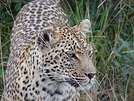
On voit tres rarement des leopards dans les parcs, ils preferent leur intimite. Ils dorment le jour et chasse a la tombee de la nuit. Pour bien les voir, il faut faire de l'affut et parfois pendant plusieurs jours. C'est plus facile en saison seche a cause du manque d'eau, donc ils sont obliges de venir a des endroits bien precis. Sinon, on ne voit que les traces. Un ami en visite au parc de Mahale, repute plus pour ses chimpanzes, a eu la chance d'en voir un sortir de la foret et sauter sur la piste ou il se trouvait. Comme il etait seul et ne faisait pas de bruit, le leopard a ete surpris et a file. Ca n'arrive pas tous les jours.
Ca m'a pris 1.30h a telecharger (pas d'adsl ici), mais ca vaut vraiment le coup. La prise de la Bastille version Kruger. Les humains ont beaucoup a apprendre de cette video, suffit juste de surmonter ses peurs.
Bonjour!!!
Merci de nous faire découvrir cette vidéo!!! Quel spectacle innoubliable pour les chanceux qui ont pu voire cette scène de chasse, bel exemple de solidarité et comme quoi que lorsque les humains ou les animaux sont unis rien ne peut les arrêter😉
Mais toi, comme moi connaissons l'Afrique de l'est et nous savons que le lion fasse au buffle n'est pas toujours le gagnant et que bcp de lionnes sont blessées par les buffles et souvent mortellement par exemple🙂
Le léopard est vraiment un animal magnifique, puissant, rusé, mais tres discret(c peut etre ce qui le protege), sauf peut etre quand il est vieux et/ou blessé ou malade . Dans un village comme ça il y avait un léopard (panthere qu'on dit au Gabon) qui trainait la nuit dans les alentours et venait roder dans le village, quelques poules disqparaissaient, rien de grave mais les chasseurs n'arrivaient pas à le retrouver . Le temps passa et un jour c'est une femme qui a été attaquée pres de la rivière, là il y a eu une grande battue et le léopard fut tué, il était blessé à une patte et avait des dents cassées, il en devenait dangereux donc.
"la part de l'antilope revient toujours au léopard."
"la pluie(ou le vent?) n'enlève pas les taches du léopard ."
Dans certains pays autrefois il y avait aussi les hommes léopards, tres redoutés!!
Mobutu le léopard ...
Un fameux "poison" aussi qui consiste à couper des moustaches de léopard en petits bouts et de les mettre dans la bouffe, radical 🤪!!
Je ne sais pas si les moustaches contiennent un poison, mais je pense qu'elles sont assez rigides pour perforer l'estomac. En RDC j'ai eu des amis dont leur Berger allemand a eu ce genre de probleme (il faisait trop peur), mais avec des eclats de bambou et du verre pile. Dans ce pays ils ne s'embarrassent pas trop pour les moyens. Pour les elephants ils mettent de l'acide de batteries dans les fruits et le suivent a la trace jusqu'a ce qu'il meure. Dans le temps, tous ces peuples respectaient la nature et les animaux, mais avec les religions qui ont dit qu'ils n'avaient pas d'ame, plus aucun respect.
C'est pour ca que j'ai parle de la Bastille, car quand les populations bougent, les tetes couronnees tombent. D'ailleurs cette video risquent d'etre censuree, trop subversive!🙂
C'est exact, j'ai dit estomac mais je pensais intestins; C'est vrai aussi pour les moustaches du tigre. Pour ses cils, ils ont trouve une autre utilisation, plus volupteuse!!🙂
Pour la K7, sur ce continent, tout prete a suspicion!😉 certains exemples ne doivent pas etre suivis, sinon ou irait-on?
"Dans le temps, tous ces peuples respectaient la nature et les animaux, mais avec les religions qui ont dit qu'ils n'avaient pas d'ame, plus aucun respect. "
Tout à fait et depuis l'homme se prend pour le nombril du monde! 😕
Oui les moustaches perforent les intectincts et c'est une mort lente et douloureuse, mais assurée 🤪(ça marche avec les moustaches de chat aussi)
Pauvre berger allemand mais ça ne m'étonne pas, avec la peur ...Au Gabon j'avais fait faire un grigri à mon chat, car c' est un plat de fete et en plus les gens en avait peur aussi(!) car il était balèze et avait une attitude de chien et parce qu'il me miaulait comme s'il me parlait !! "ton chat là c'est pas normal"
Superbe vidéo, merci pour le lien...
Ce qui me gène le plus ce sont les commentaires des touristes pas capables de se taire et de profiter du spectacle. Mais bon, s'ils n'avaient pas été là, point de vidéo !
D'autre part je regarderai mon chat différemment la prochaine fois qu'il attrapera une souris, on sait jamais des fois que...
Qu'il en arrive d'ailleurs à inverser les théories et ose affirmer que le quadrumane mime l'Humain 😎
A lui mettre (au quadrumane) des couches culottes que cela le rassure qu'il en a encore beaucoup à apprendre.
C'est tellement vrai ce que tu dis, qu'une dame que j'ai connu a Kinshasa a promene un chimpanze a Paris en hiver, dans un landeau et des personnes polies ont meme dit qu'il ressemblait a sa mere.
...un grand "MERCI" de plus pour cette scène qui me rappele celle d'un hippo venant porter secours à une jeune antilope prise par un croco...
L'indifférence et le racisme ne seraient-ils pas des germinations propres et exclusives de l'animal considéré, en tout cas par lui-même et par lui-même seul, comme étant le plus intelligent ???
Merci beaucoup pour cette découverte.
Véro
(chanceuse qui a vu 2 léopards en Afrique du Sud et qui est de tout coeur avec toi pour la connection tanzanienne)
Est ce que quelqu'un a eu l'occasion de voir la video de la lionne qui capturait des jeunes antilopes pour les adopter. Les gardiens amenaient les touristes pour les voir. Sur le film le garde disait qu'elle en etait a sa 3eme tentatives; les 2 autres ayant mal fini. Personne (parmi les scientifiques) n'a jamais pu expliquer le comportement de cette lionne. Avez vous des suggestions a emettre?
Est ce que quelqu'un a eu l'occasion de voir la video de la lionne qui capturait des jeunes antilopes pour les adopter. Les gardiens amenaient les touristes pour les voir. Sur le film le garde disait qu'elle en etait a sa 3eme tentatives; les 2 autres ayant mal fini. Personne (parmi les scientifiques) n'a jamais pu expliquer le comportement de cette lionne. Avez vous des suggestions a emettre?
A la stupéfaction des experts animaliers, une lionne du Kenya a adopté un bébé oryx (un genre d’antilope normalement pris comme proie par les grands félins).
Selon les témoins, une lionne adulte aurait, voici quelques semaines, fait irruption dans un groupe d’oryx de la réserve de Samburu, effrayant la mère. Au lieu d’attaquer le bébé oryx sans défense, la lionne l’aurait alors adoptée, la protégeant des autres prédateurs, dont un léopard.
Encore plus étonnant, la lionne autorisait même la maman de l’oryx à venir nourrir son petit de temps en temps. Mais la loi de la jungle a prévalu lorsque dimanche 6 janvier, un mâle de la tribu a dévoré le bébé antilope alors que sa « mère » dormait😏
Si merci, il me semble que ca. Ils n'ont pas l'air d'avoir le meme regime dietetique! As tu une explication (qui tienne la route evidemment) sur ce comportement?
Si merci, il me semble que ca. Ils n'ont pas l'air d'avoir le meme regime dietetique! As tu une explication (qui tienne la route evidemment) sur ce comportement?
Hummmmmmmm!!😉 n'est ce point un comportement maternelle au dessus de tout soupçon raciste ou un futur garde manger ambulant!!!!!!!😛
Sans doute chez les grands fauves comme chez les humains, l'instinct maternel est qq fois plus fort que tout.
Certaines femmelles souffrant de stérilité et donc d'incapacité à donner toute forme d'affection et de tendresse, ainsi que de transmission éducative et de rituels, (ce qui n'est certainnement pas une exclusivité humaine), auraient plus de "facilités" à tenter d'élever un petit faisant partie de leur prédation quotidienne,
qu'un autre de leur race propre, beaucoup plus difficile à soustraire de leur mère et de leur groupe génétique.
En faisant dans le plus sérieux que ce que j'ai dis plus haut pour un peu d'humour, je suis entièrement dans la même pensée que toi concernant la réaction de cette lionne envers le bébé oryx!!!!
le " transfert " d'affection est bien vu mais reste la vision d'un Etre Humain.
Récemment, le mythe de l'enfant sauvage est tombé comme l'était dans le passé celui de Romulus et Rémus.
Dans ce spectacle Kenyan, il ne faut pas omettre la " patte " de l'homme.
Seul les quelques personnes concernées à la naissance de cette vidéo peuvent savoir comment s'est construite cette relation.
Autre contexte :
Normalement, Chien et Chat ne sont pas fait pour s'entendre.
Seul l'Humain a pu les rassembler.
On en a même vu se laisser à des comportements " osés " .
Dans la nature, affamés ou amenés à se subvenir à eux mêmes, l'un aurait servi de repas à l'autre.
Comment est-ce déjà le dicton ?
" Ventre affamé n'a pas d'oreille " 😉
Dans les parcs, idem.
La main de l'homme a transformé la donne, je le pense.
En déduction, tu penses que cela est une manipulation humaine et non une relation naturelle entre deux animaux qui ne devaient pas s'unir pour cause de leur éloignement génétique c'est à dire "prédateur et proie"!!!!😕
Je ne suis pas convaincu de cela, j'opterai plus pour la version d'Archimade avec notre déduction d' êtres humains bien sûr!!!!!!😉
Tout félin comme un chat domestique mais dans la possibilité de chasser va jouer avec sa proie avant de la croquer.
C'est instinct là est plus fort que celui de la maternité chez le Félin.
On ne parle pas là d'une Boxer ou d'une Labrador ( en haut de la liste ) qui va nous faire des grossesses nerveuses tellement elles sont dans le désir perpétuel de gestation.
Une Lionne qui pour des problèmes hormonaux ou Physio 😉 ne connaît de grossesse, ne fera un transfert d'affec.
Elle peut ou ne peut pas mais ne se fera pas comme la Femme, une éventuelle déprime qui la fera reporter ou sur le chocolat ou sur les enfants des autres.
Je pense que la Féline adulte qui connaît une progéniture s'en occupe puis c'est chacun dans son coin.
Comme il n'y a pas de reconnaissance de filiation, il ne peut exister une relation de transfert comme le concevrait l'être humain avec le schéma triangulaire classique.
Schéma qui d'ailleurs se conçoit dans une société comme la tienne ou la mienne mais pas dans toutes les formes de société.
Dans une tribu X, l'enfant est l'enfant de la tribu et le complexe d'Oedique n'existe pas.
Une femme qui ne peut donner d'enfant dans cette tribu et ce malgré le fait que c'est une personne n'aura pas et la tribu également ce concept du report d'afffection.
Elle prendra d'autre fonction et compensera son manque de fertilité par des dons autres (sorcellerie, chamanisme, ...)
Par cette parenthèse, j'essaye de justifier de l'impossibilité naturelle d'entente affective entre une prédatrice et son " garde manger " histoire de reprendre l'expression.
Je repense également que depuis certainement fort longtemps, l'Etre humain, de part, sa vision démocratique de la société, veut prouver qu'il est capable d'associer des paramètres dits incompatibles et ce au nom de l'exception qui fait la règle ou de celui des miracles.
En partant du principe que les solutions sont dans la nature, donc si deux animaux fondamentalement opposés arrivent à une relation enfant-mère nourricière, pourquoi entretenir ce dicta de certaines ethnies dans l'incapacité de cohabitaion d'avec d'autres.
Donc en induisant ce sentiment de culpabilité par le biais de ce type d'exemple on draîne à soi, ou bien on justifie que certains moyens employés en valent la peine.
Ce dernier paragraphe doit être un peu confus mais je peux à l'occasion le reprendre différement.
Reste que le début de cette relation, sa construction est ce qu'il y a de plus intéressant d'un point de vue scientifique.
En déduction, tu penses que cela est une manipulation humaine et non une relation naturelle entre deux animaux qui ne devaient pas s'unir pour cause de leur éloignement génétique c'est à dire "prédateur et proie"!!!!😕
Ce que je redoute le plus pour ma part, ce sont les dictons à l'emporte-pièce et qui malheureusement on la vie dure du genre "s'entendre comme chien et chat"...
Je pense plus comme toi qu'un individu qu'il soit chien, chat, lion ou humain, au delà de tout comportement à caractère purement instinctif, se discerne par une multitude d'autres comportements à caractère beaucoup plus unique et individuel.
De nombreuses études comportementales menées notemment sur les grands singes, l'ont déjà parfaitement démontré. Et je ne vois pas pourquoi il en serait autrement pour les fauves.
En outre, et contrairement à l'idée que semble développer Toukoul, je pense qu'en réponse au besoin instinctif de protection chez un jeune animal auprès d'un adulte, il ne faille pas chercher ailleurs que le besoin instinctif de protection d'un adulte pour un jeune...
Toukoul,
Si dans une forêt il y a 2 hommes, l'un est bûcheron soucieux de l'écosystème, et l'autre conducteur de bulldozer pour tracer une autoroute... on ne va pas dire de la même façon pour les 2, "L'homme détruit la nature" point-barre !?
L'observation ne peut pas être la même pour l'un comme pour l'autre !?...
Tu en as un qui réfléchit à ce qu'il fait, et l'autre qui obéit juste à son besoin de bouffer.
Et je ne serais pas surpris que chez les bestiolles ce soit pareil. ???🤪???
Amicalement ou Animalement... ah !!! je ne sais plus, c'est déjà tellement proche à écrire !!!😉!!!
L'Homme en se domestiquant à oublier qu'il est le plus grand des prédateurs dans la chaîne des mamifères.
Ton exemple de la forêt me fait repenser à ce qu'il pourrait redevenir si demain tout nu il était " largué " en pleine forêt ou en plein désert.
Il retrouverait vite des instincts oubliés et enfouis et je ne pense pas que le maternage d'un individu ne faisant pas parti de sa meute l'intéresserait.
Tout est trés simple et primaire : chasser-manger-dormir-procréer.
Le regard de l'homme sur la chaîne est parasité par la vision qu'il a de la domestication.
Mode fiction : demain on dira que le Pygmé est l'être le plus intelligent du monde, hier on disait de lui qu'il est un animal tout juste évolué et bon à tourner dans un cirque.
Toukoul,
Si dans une forêt il y a 2 hommes, l'un est bûcheron soucieux de l'écosystème, et l'autre conducteur de bulldozer pour tracer une autoroute... on ne va pas dire de la même façon pour les 2, "L'homme détruit la nature" point-barre !?
L'observation ne peut pas être la même pour l'un comme pour l'autre !?...
Tu en as un qui réfléchit à ce qu'il fait, et l'autre qui obéit juste à son besoin de bouffer.
Et je ne serais pas surpris que chez les bestiolles ce soit pareil. ???🤪???
Ah non !!! ( en jouant l'élément contradicteur 😉 )
Le conducteur de Bull va aussi réfléchir à quand, comment, appuyer sur la pédale, mettre le godet en marche, pousser les gazs...C'est toute une science qui demande des années de maîtrise des engins du BTP 🙂
Plus sérieusement, dans un cas comme dans un autre, ce sont des humains vu par des humains.
A mes yeux, l'un et l'autre peuvent selon le contexte être valorisés dans leurs fonctions.
J'écris cela un peu de façon affectueuse ayant connu un proche ayant fait toute sa vie en construction de routes en Afrique.
Mais là n'est pas le sujet.
Pour comparer entre celui qui a la réflexion et l'autre non, on pourrait être parfois étonné que face à un mur, les rôles pourraient s'inverser.
Qui n'a pas fait dans sa vie un métier alimentaire ? cela n'enlevant en rien à la valeur de l'individu...
Alors que d'autres ayant la chance d'avoir une fonction passant au yeux du public proche de la nature, ne sont pas moins que trés éloignés ( je pense à un ami Véto ayant " fait " quelques mois le Gabon histoire de voir autre chose que Neuilly et Saint-Cloud... )
Aussi, je pense que tu mets dans le même créneau les Félins et les Primates.
A mes yeux les Primates possèdent des fonctions qui les différencient des Félins.
Le fait de posséder par exemple une " pince fine " développe chez eux des réflexions, je ne vais écrire, supérieures mais différentes.
Chez les chiens par exemple, il est reconnus que le Boxer et le Berger allemand sont parmis les animaux pouvant comprendre le plus de mots ( de l'ordre de 300 si mes souvenirs sont bons )
Donc si le Berger et le Boxer ont cette capacité, d'autres seront, malheureusement, au bas de l'échelle ( je passe sur les tares propres à chaque race )
Ainsi chaque chien tout en étant individuel et unique possède les traits communs propre à sa race ( et là aussi je passe sur le domestication et les créations de la main de l'homme )
Dés lors, je pense qu'il y a des dominantes chez les primates que l'on ne trouvera ches les Félins et inversement.
Chez les Primates, une comparaison d'avec une certaine forme de vie clanique ou dans certains comportement proches de l'humain sont souvent faites et pour notamment, comme écrit plus haut chez les " grands" singes ( amusant d'ailleurs le fait de préciser " grands " )
Le singe intrigue l'humain et vice et versa, ceci étant un autre sujet.
On trouvera ainsi des traits de " caractères " chez les Primates inexistants chez les Félins, ne serait que le fait de se servir de ses mains en tant que vecteur, prolongement d'une " idée " ( comment vais-je faire pour casser cette noix, autrement qu'avec mes dents )
Chez le Félin on trouvera par exemple le fait de jouer avec sa proie avant de la dévorer ( tel le chat avec la souris )
Quant à la protection de l'adulte pour un jeune, je ne pense pas que dans la meute de loups, les anciens sont là pour protéger les jeunes et bien au contraire dans la mesure où ils sont tenus à l'écart ( mais où serait donc passé l'instinct maternel ? réponse à mon avis comme écrit plus haut : fini mon petit, fini les câlins, la tétée, les léchouilles, les papouilles, tu es pubères, tu dégages avec ta bande de jeunots et prépares toi en t'encannailler avec les anciens )
Je passe rapidement sur la protection particulière que semble affectionner le morse ou autres pachiderme de mer pour les jeunes...😉
En conclusion, en dehors de toutes proximité d'avec l'humain, à mon avis le monde animal en dehors de chaque espèce ( et encore, les infanticides y sont nombreux, même chez les félins ) se résume à qui est le Prédateur de qui, car on est bien d'accord que dans la chaîne on est toujours la proie d'un autre.
Et d'après vous qui est le plus grand prédateur de l'humain ? 🙂
Sinon, je rêve d'être adopté par une Mante religieuse 🏴☠️
Tout est trés simple et primaire : chasser-manger-dormir-procréer.
et selon toi l'amour ne serait encore, qu'une invention de l'homme ... juste pour se mesurer au binaire 😕 Bon appétit !!!
Si tu me l'écris avec un "a" minuscule pour te faire plaisir, je vais abonder dans ton interrogation 😛
Tu m'attends deux secondes, je monte dans la machine à voyager dans le temps
Je viens, avec du mal car j'ai du laisser une oreille en guise de bonne foi, de demander à nos grands-grands ancêtres ( ceux des Pierres à Feux )
Réponse :
Cf. ce que j'ai écris concernant l'enfant qui est celui de la tribu et non, en dehors du biologique, de son père et de sa mère au sens occidental.
Comme tu es un spécialiste des Grands singes : - Quand les singes se papouillent, est-ce de l'affection ou purement pratique ?
D'autre-part qu'est-ce qu'ils doivent s'aimer les Gonogos ? 🙂
Cependant j'admets qu'un geste doux et ce même dans le monde animal est apprécié à sa juste valeur par rapport à un coup de crocs ou de griffes ( bien que parfois, sans être cuir ou fouet, ils font forts les bestiaux )
Je pense aussi que l'Amour n'est pas absent dans cette histoire; consciemment ou inconsciemment.
Je pense qu'il fut un temps tres eloigne ou les rapports entre le regne Humain et le regne Animal obeissait a d'autres regles avant que les hommes les pervertissent.
http://www.dailymotion.com/video/x3zpc9_amazinghug_animals ;ca ressemble a de l'Amour je crois.
C'est comme ca que je vois les rapports entre les humains et les animaux dans notre monde futur.
Je suis vegetarien et ma sante ne s'en plaint pas, bien au contraire.
Je pense aussi que l'Amour n'est pas absent dans cette histoire; consciemment ou inconsciemment.
Je pense qu'il fut un temps tres eloigne ou les rapports entre le regne Humain et le regne Animal obeissait a d'autres regles avant que les hommes les pervertissent.
Bonjour MDA !!!🙂!!! Ton sujet de dissertation était très intéressant... On est bien d'accord sur les liens probables entre les rapports amoureux du règne animal et celui des humains... Je ne regrette qu'une chose c'est qu'aucune opinion féminine ne se soit exprimée à ce sujet 🤪 Mesdames, si vous lisez ce message...
...
Je pense qu'il fut un temps tres eloigne ou les rapports entre le regne Humain et le regne Animal obeissait a d'autres regles avant que les hommes les pervertissent...
Tu nous parles d'un temps que les moins de 20 ans ne peuvent pas connaîîîîtreu...🙂
Bien sur, que l'Homme transforme, perverti selon les besoins d'un moment, d'une cause ou d'un dogme.
Toukoul, Il respire la sante celui la!
A propos de chien et chat: dans ma famille, dans les signes chinois il y a un chien, un chat et un rat et pas beaucoup de place autour de la table!
Pour la discussion je ne me suis pas casser la tete pour le titre, j'ai repris celui de la K7.
Mais dans l'ensemble, je suis d'accord que dans beaucoup de vos commentaires, les arguments sont senses et qu'il y a certainement du vrai, mais j'ai une version differente.
La spititualite n'etant pas l'apanage des religions (surtout de nos jours ou je trouve qu'elles en sont totalement denuees), et n'etant affilie a aucune religion j'ai puise un peu partout et suis convaincu que l'ame, pour evoluer, doit passer par toutes les experiences, victimes, bourreau, riche, pauvre, blanc, noir, rouge, jaune, homme, femme....ca en fait des centaines et des centaines!
Alors pour moi la reincarnation est la meilleure explication. Elle explique pas mal de choses pour les humains comme la disharmonie entre le ying et le yang de certaines personnes a cause de leur incarnations precedentes et comme l'a si bien dit je ne sais trop qui "celui qui doute que les animaux ont une ame n'a jamais vraiment regarder un chien dans les yeux." "Pouvez vous imaginer un paradis sans animaux?" Moi non.
Alors pour moi, ce qui est valable pour les humains doit l'etre pour les animaux, donc je pense que cette lionne a vecu une vie anterieure en tant qu'Oryx femelle et son subconscient qui en a garde des traces, lui restitue des reflexes qu'elle avait avant. En theorie, a chaque incarnation on oublie les precedentes, ce qui corse le jeu, mais dans certains cas il en reste des traces.
Je ne cherche pas a faire des adeptes pour monter une secte!!!! j'aime trop ma liberte!🙂 Je cherche juste a
comprendre.
Très très bonne réponse et beaucoup devraient se pencher sur ce que tu as écris et penseraient peut-être différemment, et si cela était vrai!!!!!!!!!!!!!😉
( Chez toi ce n'est plus une tablée mais une véritable arche de Noé !!! )
Bonjour MDA !!!😉!!!
Je me dis qu'avec des perceptions et des analyses aussi proches,
on doit tirer nos formes respectives de la spititualité des même sources.
En tout cas ce que tu dis est très proche des préceptes du Bouddhisme...
Toujours dommage qu'aucune femme, ayant pratiqué la régression dans ses vies antérieures ou pas,
n'ait donné son avis. Décidemment, même quand on leur propose la parité, elles continuent de s'occuper de leurs petits...!!!😇!!!
I’m starting to plan a trip to Tanzania + Zanzibar in August 2027 for 2 to 3 weeks with my partner.
I’ve never been there before and I’d love some advice, especially for Tanzania where we’re planning to do several safaris in the North.
Specifically:
Do you recommend using a travel agency to organize the trip, or are guidebooks and internet recommendations enough?
If you’ve used a local agency (rather than one in France), which one?
Would you recommend hiring a guide for the entire stay in Tanzania, or is it better to travel independently except in the parks where I’ve read that guides are mandatory?
If you’ve used a local agency (rather than one in France), which one and at what price?
Have you had any bad surprises (hidden fees, inexperienced guide, poor vehicle condition)?
Looking forward to reading your tips! 🙂
Thanks in advance
Thirty years ago, I traveled to Zanzibar (Tanzania) with my children. Since I’ve since started a new family, I took the opportunity of a trip to Kenya to bring my new family along: my wife, who’s Kenyan, and my 10-year-old daughter.
Zanzibar has really changed in 30 years.
It’s become the island of taxes.
It all starts upon arrival: I think it’s the only country in the world, besides the visa, where Zanzibar insurance (and no other) is mandatory—it costs 40 €. If you didn’t purchase it before arriving, good luck getting it: the IT systems are unreliable. With a bit of luck, it’ll take at least an hour to process! And of course, this insurance is useless—if you get sick, it’s recommended to use your home country’s insurance because if you use Zanzibar’s, your national insurance won’t cover you anymore.
I wanted to show my daughter the red colobus monkey, which is endemic to Zanzibar. I paid for a tour that was supposed to be all-inclusive. First, we visited a spice farm, where a farm guide took charge of us—meaning commissions were involved, of course! The tour was very good and informative, though. When we arrived at Jenzhi Park (the colobus park), the guide told us he "forgot" there was an entrance fee (50$).
Aware of the system, I decided to book an Ocean Blue tour through the Zanzibar Tourism Office. After two hours of driving, we stopped at a beach—and were left there. No boat was ready to take us. Since my wife speaks Swahili (the language in Zanzibar), after an hour, a captain with his own boat agreed to take us along with his family.
Another attempt. The main attraction in Zanzibar (besides the city) is Changuu, the Prison Island. You have to take a motorboat and pay the captain, which is normal.
But in Zanzibar, to even get on a boat, you first have to pay a tax! Once we arrived at the island, it started all over again! Thirty years ago, access was free, and the entire island (about 1 km²) was open. Today, there’s a small office, and you have to pay a hefty fee to enter. But enter where? A paved path leads to about 15% of the island—the rest is off-limits. In total, I paid 100 € for my wife, daughter, and myself just to visit a tiny portion of the island! Avoid this!
For the rest of our stay, we stayed at a 5-star hotel with golf, horseback riding, tennis courts, evening concerts, etc.—undeniably high-level comfort. One last thing: if you want to rent a car, it’s affordable and useful for exploring the island’s diverse landscapes, but there are speed cameras at every corner on the main roads. The fine is supposedly 100 $, and it’s hard not to get one!
I told you: Zanzibar, the land of taxes. I used to think my country, Belgium, was the tax champion—I’ve found something even better!
I’m thinking (thanks to some tips from forum members 😉) of taking this route to get to the Cederberg.
Apparently, the road was damaged by the May rains, and traffic is still slow there.
Has anyone taken this route recently?
If not, is one direction (toward or from the Cederberg) more scenic than the other?
In Nov./Dec. 2022, I went on a safari in the region and we suffered from the extreme temperatures caused by the "El Niño" phenomenon in the Indian Ocean at that time. On top of the extreme heat, there can be torrential rains, flooding, etc., which have led to disasters with casualties.
Hi everyone!
I’m still planning my Cape Town to Johannesburg trip in January 2027.
I saw a documentary about the San people in Namibia, and the same day, I stumbled upon the Lonely Planet page about !Kwah Ttu.
I checked out their website to learn more, including Michel’s travel journal about it. I’m really keen to go.
So, I’m thinking of dedicating:
- either 1 day out of the 4.5 I have in Cape Town...
- or making a detour to !Kwah Ttu on the day I leave Cape Town for Montagu, instead of visiting Franschhoek and its Saturday market...
To the VFers who’ve already been: is it really worth spending a day there?
Thanks in advance for your feedback!
Malijp
Hello everyone!
It's been a year since I've been longing for South Africa. Our first trip in August 2025 amazed us, and—rarely—it was a unanimous hit with our little family! We were touched to the core, and from the moment we got home, we couldn’t stop talking about going back. 😄
I’d like to take this opportunity to thank everyone who gave me advice on the itinerary for that first trip (Johannesburg loop: Blyde, Kruger, Eswatini, St. Lucia, Durban, Drakensberg)! Thanks to you, our trip went like a dream!
Since then, I haven’t stopped reading articles and discussions on VoyageForum to keep my head in South Africa a little longer!
So, we finally caved and just booked our tickets for January 2027 (from the 3rd to the 26th), with a plan to do a road trip from Cape Town to Johannesburg in about 3 weeks.
I’ve got a rough itinerary that seems great based on what I’ve read on various forums, but there are still some uncertain points, and that’s where I could use your advice.
3/01: Arrival in Johannesburg at 11:45 PM
4/01: Flight to Cape Town, pick up rental car. Afternoon sightseeing
5,6,7/01: Cape Town to visit the big classics in the area (any tips for finding accommodation: which neighborhood, a specific place?)
8/01: Overnight stop before Oudtshoorn—but where??? (Is it essential, or is the CT-Oudtshoorn drive manageable? If so, I’d gain a day in Oudtshoorn. Google Maps shows over 5 hours of driving...)
9,10/01: Oudtshoorn (or would 3 nights be better to really enjoy the area?)
11,12/01: Knysna, Plettenberg Bay (to have time for hiking—if you’ve got hiking tips, I’m all ears!)
13,14/01: Tsitsikamma (still to have time for hiking—who knows the must-do hikes in the area? But maybe 4 nights in the Knysna-Tsitsikamma area is too much—I’m not sure)
16,17/01: Addo Elephant (I’m torn between 3 nights at Addo or 3 nights at Mountain Zebra. Based on travel journals, especially Michel’s on MZ, I’ve scheduled 3 nights at MZ 😄...)
18,19,20/01: Mountain Zebra NP
21/01: Camdeboo NP (because it looks so beautiful!)
22/01: Overnight stop (where?) before wrapping up the trip with either 2 or 3 nights at Golden Gate NP or the Lesotho option, which appeals to me, but I don’t know if it’s doable in 3 days to be back in Johannesburg by the afternoon of the 26th.
That’s my trip idea for now...
I’m eagerly waiting for your advice, ideas, and comments...
Can’t wait to be back there again!
We're heading to South Africa for a month with 5 adults.
We'd like to rent a vehicle that can accommodate 5 people and all our luggage.
We're starting in Cape Town and ending in Johannesburg.
What vehicle would you recommend?
EDITH
Hi there,
I’m planning a gorilla trek in Bwindi, Uganda. I’m torn between the classic option (1 hour with the gorillas) and the habituation trek (4 hours with the gorillas but a more expensive permit). Has anyone done the habituation trek? Both? If so, I’d love to hear your feedback (including on the difficulty).
Thanks
I’ve read some travel journals here but I still have a question.
We’re heading to Uganda next February. The gorilla permits are booked, and the flight tickets are sorted too.
My question is about the chimpanzee trek. I’d love to know whether it’s better to book the habituation experience (4 hours) or the standard trek (1 hour).
The price difference isn’t huge, but I keep wondering and I’d hate to miss out on a great experience.
Hi everyone,
We’re revising our travel plans for January 2027. Originally, we were considering Uganda for about 14/15 days, but given the current health situation and the restrictions that might affect my partner, who’s American, we’ve decided to switch to Tanzania instead.
I’m used to traveling in South Africa and organizing my trips myself, but I get the impression that planning a safari in Tanzania is quite different.
I know self-drive isn’t really an option in Tanzania. So my main question is: can you organize your own itinerary and book lodges directly, then hire a local driver-guide? Or is it better to go through a local agency that handles the entire safari?
For the itinerary, which parks would you recommend for a first-time visit in January? Serengeti, Ngorongoro, Tarangire, Manyara, Ruaha, Arusha, Selous…
We’d also like to include Zanzibar to end the trip with a few days at the beach. Over 14/15 days, does that sound realistic or too ambitious?
Finally, for flights, is it better to arrive at Kilimanjaro (JRO) or Dar es Salaam (DAR) based on the itinerary we’re considering?
Thanks in advance for your feedback, especially on the best way to organize the safari and which parks to prioritize in January!
We're now just 5 weeks away from our trip to South Africa 🙂 and *so* excited to explore (just a tiny bit of) this amazing country.
I need to buy some binoculars but have no idea which model to choose. I don’t really know what to look for (and I don’t want to spend too much).
Thanks in advance to anyone who can give me some tips!
We just got back from ten days in Tanzania. We were lucky enough to be guided by Gishaman. Always in a great mood, a good driver, and an excellent guide. Thanks to him, we not only saw the Big Five in one day but also loads of other animals. He works for the local agency Blit Safaris, which provided excellent support throughout our trip. Highly recommended!
I’m planning a potential trip to Namibia for a classic circuit in April 2027.
I’m surprised by how expensive the accommodations inside the parks are—really steep! Is it possible to stay outside the parks but still close enough to enjoy the game drives?
Do you have any recommendations for more reasonably priced lodging? I’m okay with spending 200 to 250 € per night.
No camping—the friend I’m traveling with absolutely refuses 😉, but maybe upgraded tents would work.
Hi, I'm looking for information on the road conditions in Moremi. We're leaving in 15 days, and from what I've heard, the roads are pretty tough to drive on. Any advice?
Thanks
My trip to South Africa is getting closer (still 2 months to go 😏), and I’m diving back into my itinerary: from Saturday to the following Sunday around Cape Town, then from Sunday to the following Saturday in Kruger.
For Cape Town, the plan was to avoid changing accommodation every day (we’ll do enough of that in the second part) but still see different landscapes.
I know, I’m missing out on a lot, but you’ve got to make choices, and after all this time, I know what I like—and especially what I don’t (or like less) 😉
Here’s the breakdown:
Arrival Saturday at 11 AM: heading to Hermanus (2 nights). The idea is to stroll along the cliff path in the afternoon, and possibly drive to the Klein River Lagoon. Sunday: Stony Point, then depending on time and weather, a hike in Kogelberg Nature Reserve or Fernkloof Nature Reserve (which seems less scenic but has shorter walks).
Monday: drive to Franschhoek (1 night). If everything lines up, a hike in Jonkershoek NR and a visit to a wine estate.
Tuesday: drive to Mountceder Lodge in the Cederberg (2 nights). I’m thinking of visiting the Stadsaal Caves and the elephant paintings, and maybe one of the hikes listed on the lodge’s site or Maltese Cross.
Thursday: heading to Hout Bay for 3 nights. In no particular order: a classic day trip around the peninsula, half a day at Kirstenbosch Gardens, and half a day at Lion’s Head.
Sunday: flight to Johannesburg.
My questions are mostly about (short) hikes:
Has anyone here done hikes in Kogelberg, Fernkloof, or Jonkershoek?
At Mountceder Lodge (Michel, if you’re reading this… 😉), has anyone tried the hikes (guided or not) offered by the lodge?
There’s still half a day to fill when we’re in Hout Bay—any ideas (not necessarily hikes)?
Lastly, regarding safety: the French foreign ministry (always alarmist, but still) recommends hiking in groups. Is it really risky in broad daylight? (I’m not sure a group of two women counts as a "group"…)
Thanks in advance for your answers, ideas, and comments!
Question: we’re doing a 3-week trip in Namibia, including 5 days for Victoria Falls.
I’ve booked one night in Brandberg, and then I have some questions.
I was thinking of spending 2 nights in Palmwag, then heading to Etosha for one night in Okaukuejo and then 2 nights in Halali.
Alternatively, from Brandberg, I could book a night near Galton Gate and then enter Etosha.
I’m not really sure about the distances, especially with a 4x4.
Same for the return trip: Halali to Windhoek seems long. Maybe it’d be smart to break it up on the way back? (We have 2 days to get back if needed.) If so, where?
Jambo! I organized my trip through this kind of group, so I thought I’d share my experience here. We traveled as a group of four, including two kids aged 9 and 11. After requesting around twenty quotes, I decided to book the safari portion with MAKING MEMORIES IN AFRICA. Ally responded quickly and listened to all my requests—unlike other agencies—such as having a French-speaking guide, the order of park visits (Tarangire, Manyara, Serengeti, then Ngorongoro), and a mix of budget hotels and camping to keep costs down. There were still four agencies in the running, and price was the deciding factor. Even though they were the cheapest, I felt better taken care of than with others. For example, all meals were prepared by a Maasai chef, Louis, who accompanied us throughout the trip, while some others ate meals out of cardboard boxes. Samuel, our guide, explained so many things and answered all our questions. José drove us safely the whole way. Everything was done with great cheer!
At the end of the stay, Ally came to meet us and gave us t-shirts with the agency’s logo—we loved that they took the time to hear our feedback in person. In short, I highly recommend them +++, especially since it’s a local agency that also supports a charity for women and children.
For Zanzibar, I organized everything myself. I hesitated for a long time but eventually booked all four nights at the same place. We don’t like crowds, so I initially considered Jambiani but ended up choosing EVERGREEN BUNGALOWS in Bwejuu. We took their first airport-to-hotel transfer since we arrived at night, and it felt safer. Great value for money, in our opinion. Just be aware that it’s quite isolated—perfect for relaxing and going on excursions. There were very few beach vendors, unlike what I’d read about Zanzibar. We lived with our feet in the sand from morning to night, with a small basin of water outside our room to rinse off. Such a lovely spot!
I had asked for some excursion prices before leaving but ended up booking on-site. Not at our hotel, but at a nearby restaurant that was cheaper. After some thought, since we were based in Bwejuu, I wanted to do Blue Lagoon and Pungume (both departing from the south of Zanzibar).
Blue Lagoon: About 3 hours total, with snorkeling on a small reef full of fish (coral wasn’t great) and a stop at a spot with tons of starfish, plus local snacks, fruit, and drinks.
Pungume: An amazing day with a 50% chance of seeing dolphins (we missed them), a visit to the mangroves, then snorkeling at a spot with some nice coral and, of course, fish. We ended with a fantastic grill (tuna, shrimp, squid, lobster, and fries) on a sandbank in the shade.
Finally, before heading to Stone Town, we visited Paje Cave, which is much less known than Maalum. It’s smaller, but we saw bats, went for a swim, and fed the chickens and rabbits (great for the kids). To finish, we explored Stone Town on our own and had dinner at Forodhani Market.
For flights, we flew with Turkish Airlines from Barcelona to Kilimanjaro and back from Zanzibar—no issues there. However, I don’t recommend the Kilimanjaro-Zanzibar leg with Precision Air. Our luggage didn’t arrive, and according to the hotel, this happens often. We only got it back a day and a half later.
March or May 2027.
Around 15 days in the Western Cape,
then 15 days in the southern KNP.
Arrival either in PE or George.
The pros know I’m somewhat familiar with the area... that I don’t camp... that my accommodations can be simple and remote, self-catering but with basic comforts... that I’m looking for spots that are a bit off the beaten path... in a relaxed mode...
From George:
Late arrival... need some rest... Herolds Bay from George to the N1.
Tsitsikamma is catching my eye (Storms River)... with or without a stop in Knysna.
Question:
What’s the current condition of the pass from Knysna to Uniondale? R339.
And while I’m at it, the condition of the R340.
Tsitsikamma, Knysna, and my questions still apply if arriving in PE.
Is the Swartberg still closed?
Any recommendations for accommodation in Prince Albert?
If I cross the escarpment, I’ll continue via Anysberg NR, Touwsrivier... any thoughts?
From there... Tankwa Karoo or Mount Cedar (or both).
Then heading back down to the coast... the highlands of Hermanus or Kogelberg NR (any opinions on the latter?).
Or,
A more classic route along the coast...
If I arrive (fairly late) in PE... any ideas for accommodation in that little area?
Given that Nyathi Camp is winking at me...
(For context... a while back, I stayed at Riverbend (same Addo sector, private concession)... and I visited the ruins of that abandoned lodge at the time, which has clearly been renovated since... located in a very quiet part of Addo...).
Any feedback from the pros?
Well, that’s about it...
I’m open to any other tips or advice!
I’m reaching out with a question about which park to choose for a 3-day safari in Kenya.
After 20 days in Uganda, I’m meeting up with my dad for a 3-day safari (that works for him). We’ll be meeting in Nairobi and have a full day to travel to a park (preferably the farthest from Nairobi to avoid crowds?) and spend 4 nights there before heading back to the capital for our flight to France.
I’d love to hear your recommendations since I’ve read so many great tips on this forum.
At the end of July, we’re heading to Namibia with a group of five for a three-week road trip and visit to the national parks.
We’ve read conflicting info about buying entry tickets—either online (where?) or at the gate when we arrive?
I’d love to hear your thoughts on the agencies you used to plan your trip to Uganda.
There’s the whole issue of gorilla permits, which need to be booked in advance and involve a significant financial commitment. That’s where I’m at with my trip planning. Between checking lutb.go.ug/ and reading online reviews, it’s hard to move forward with confidence.
I contacted the French Embassy, but they don’t provide any recommendations. I almost booked with an agency that had a really bad review from February specifically about the permit process.
How did you go about choosing your agency? Given the large sum involved, I’m this close to booking through a travel agency in France for this part.
From what I understand, no matter which agency books the permit, you’re ultimately guided by professionals trained for gorilla trekking based on the permit itself? I’m assuming that’s how it works.
Thanks for your feedback, and I’m really happy to see the forum’s new energy—it’s been super helpful to me in the past.
We’re heading to Uganda next summer for three weeks with our two kids, who’ll be 7 and 9 years old.
We’ve been to Southern Africa before but not East Africa, and after a trip to South Africa two years ago, the kids wanted to return to Africa, while we wanted to explore a new region while staying independent... Uganda’s been catching our eye for a while, and with Rwandair offering relatively attractive prices, we’re going for it!
We’ll be traveling in a 4x4 (self-drive) with roof tents. I don’t have any 4x4 driving experience, so it’ll be a first for me, but we’ll manage 😉 No great apes for us—kids need to be 15, and we don’t want to do that experience without them.
I don’t usually ask the forum much for trip planning, but this time, I’d love your thoughts and advice!
First question: Karamoja or not? At first glance, if we want to add it to a "classic" loop in the southwest, it doesn’t seem realistic—too packed, too much driving. We could consider doing the full loop via Kidepo and then heading down to Murchison, but I’m worried the trip might feel less varied and less kid-friendly. That said, the region looks stunning, and I’m struggling to accept not going at all... What do you think?
If we skip Karamoja, we’d do a loop: Murchison/Fort Portal/QENP/Bunyonyi/Mburo, which seems pretty comprehensive and would let us take our time, which is nice. A few random questions:
- How much time should we plan for the Fort Portal area? I was thinking at least 3 days to visit Bigodi Swamp, walk around the craters, and maybe do a community walk (any thoughts on that?).
- Between Murchison Falls and the Fort Portal area, is it worth breaking up the drive? I spotted Lake Albert Safari Lodge on the shores of Lake Albert—it’s not too expensive and looks nice.
- I’d love to do some easy walks/hikes at the foot of the Rwenzori Mountains, ideally without a guide, but it doesn’t seem straightforward. Do you know if it’s possible to do nice walks independently? I’ve read about hikes in the hills near Kilembe but nothing very specific. Maybe staying somewhere at the foot of the mountains, like Ruboni Community Camp, would allow that.
- Lake Mutanda looks really cool, and so does Lake Bunyonyi... Ideally, I’d like to see both, but won’t that feel repetitive? Is Lake Mutanda worth the detour?
Last practical question, since we don’t have experience with this: for the car with kids, would you recommend two tents (a bit more space) or a four-person tent?
I’ll stop here—already a lot of questions...
Thanks in advance for your feedback, and looking forward to exchanging ideas!
Gabriel
We’re planning our second trip to South Africa in July 2026. In 2023, we did a loop from Joburg, Golden Gate, Drakensberg, Hluhluwe, St Lucia, Eswatini, Kruger, Blyde River Canyon, and back to Joburg.
This time, we’d like to go to Cape Town and do a road trip to Port Elizabeth, then fly back to Joburg to return to Kruger. At this stage of my planning, here’s what it could look like:
D1 to D4: Cape Town and Cape of Good Hope (Table Mountain, Lion’s Head, Waterfront, Bo-Kaap, Boulders, Cape Point, Chapman’s Peak Drive). I’ve spotted a few places to stay between Camps Bay and Hout Bay (3 nights).
D5 and D6: Either Karoo NP or Hermanus and De Hoop. Any opinions to tip the scales? I’ll admit I’m already leaning toward Karoo (the "wild" vibe of the landscapes and wildlife encounters appeal to me much more than the seaside, which feels less exotic). If we go for Karoo, where should we stay? Inside the park or in Beaufort West? I’ve seen good reviews for Ko-ka Tsara Bush Camp, but maybe it’s better to stay in the Sanparks cottages to make the most of the park? (2 nights)
Option B is to do Stellenbosch (though vineyards aren’t great in winter) and/or the Whale Route—Betty’s Bay, Hermanus, De Hoop (2 nights near Gansbaai).
D7 and D8: Klein Karoo, Oudtshoorn. Staying at De Cango Guest Farm (2 nights).
D9 and D10: Knysna, Robberg Nature Reserve, Tsitsikamma (2 nights in Plettenberg Bay and 1 night in PE).
D11: Flight from Port Elizabeth to Joburg at 7 AM and drive to Marloth Park.
For Kruger, I’ve booked 2 nights in Marloth Park, 1 night in Skukuza, 2 nights in Satara, and 1 night in Talamati, which we loved. I’ll book the last night in Graskop later since we want to revisit the Blyde Canyon area.
I’d love all the feedback you can give on my itinerary, especially for days 5 and 6.
If you have recommendations for accommodations for 4 people, I’d appreciate those too.
Thanks! 🙂
We’re a family of four (two daughters aged 18 and 21) and we’re planning a three-week trip to Tanzania. Zanzibar would be our main base, but we’d also like to do a safari on the mainland.
Could you share any tips on:
- the ideal length for such a safari, the best place to go during this period (and easily accessible by flight from Zanzibar)
- your recommendations for the most suitable type of stay for a family like ours
- reliable local agencies with reasonable prices that could help us with this plan
Hi everyone, I’m here to get some advice on visiting KRUGER Park.
From what I’ve gathered through my reading, I understand there are two ways to visit the park:
- Independently with your own vehicle
=> Do you drive all day?
- By booking with a professional
=> Safari early in the morning and late in the afternoon. But what do you do in between?
When it comes to accommodations, the options are:
- Booking in one of the park’s camps, where the lodging is basic but functional
- Booking in a private reserve, which is more comfortable but prohibitively expensive
- Booking outside the park, which means entering the park every morning. But if you want to stay for 3 days, that doesn’t seem practical to me.
Do you have any advice for accommodations?
To be honest, I’m really struggling to understand how it all works...
Thanks to everyone for your help.
Bidule 27
Hey everyone!
Heading to Namibia in a few days and I just read that the entry fees for all parks in Namibia have skyrocketed. Increases between 86 and 100%, and this has been in effect since April 1st (no joke). Have any of you heard about this, and if so, do you know if it’s actually being enforced?
For example, the fee for Etosha has gone from 150 NAD to 280 NAD per day per person.
Thanks in advance!