I did these two treks in Himachal Pradesh in September 2026. The Pin Parvati trek absolutely must be done before mid-September to have favorable weather conditions, while the Bara Banghal trek can be done until the end of September. In both cases, the weather window is limited because these treks are only feasible between the post-monsoon period (early September) and the more or less early arrival of the first snowfalls (mid-October or even earlier). I chose to do these two treks back-to-back with just a few days in between, taking a welcome break in the village of Kasol, which is really pleasant with its German bakeries on every corner, set in the stunning Parvati Valley—much better than the unremarkable village of Barsheni. From Kasol, there are plenty of bus connections to the Kullu Valley, but they’re long due to the narrow, winding, and sometimes badly damaged roads. From Kullu, Manali is very close and easy to reach.
South Asia (Indian subcontinent) · India
Bangladesh, Bhutan, India, Maldives, Nepal and Sri Lanka.
Showing 1–30 of 175 discussions in English.
Stay tuned for trip reports from a series of 5 treks between Zanskar and Ladakh from early August to early September 2026, always solo and fully self-sufficient with around 20 kg of gear. Make sure to bring good equipment for cold nights at high altitude, even in summer, a sturdy tent to handle thunderstorms and hail, and a solid pair of sandals for crossing the many glacial streams. If you don’t fly directly into Leh but, like me, come from Kargil, you won’t find gas canisters... In that case, I used a small alcohol stove with thinner bought locally since denatured alcohol is impossible to find in India. The thinner worked perfectly as fuel, even at high altitude—it’s sold for just 120 rupees per liter in paint shops.
During the 60s and 70s, thousands of travelers hit the road to India. Some were backpackers or hippies, but not all. In this collective anthology featuring around twenty contributors (including GeorgesOz), you’ll also find truth-seekers, a couple who went on their honeymoon to get married in Bengal... and "crazy" folks who set off on VéloSolex bikes...
Worth noting: all contributors donated their royalties to support the Céline Hegron clinic in a poor neighborhood of Varanasi.
Hi everyone,
I’m planning a Kerala/Tamil Nadu trip and can’t decide between these two spots. We’ll be coming from Madurai by taxi. Munnar seemed perfect for some hiking and great views. But I’ve heard about Idukki, which is less touristy...
So I’d love to hear your experiences to help me choose.
Thanks!
I’m planning a Kerala/Tamil Nadu trip and can’t decide between these two spots. We’ll be coming from Madurai by taxi. Munnar seemed perfect for some hiking and great views. But I’ve heard about Idukki, which is less touristy...
So I’d love to hear your experiences to help me choose.
Thanks!
Hey everyone!
I’m heading back to India after more than 15 years and I’d love to know what the cost of living is like these days.
I’m planning a trip for just under a month—Delhi, Agra, Varanasi, Kolkata—mostly by train and taking it slow.
We’re traveling as a couple, so we’ll be splitting accommodation costs.
Thanks in advance for your tips!
Small travel note: trip planned for early 2027.
Hi there! 🙂
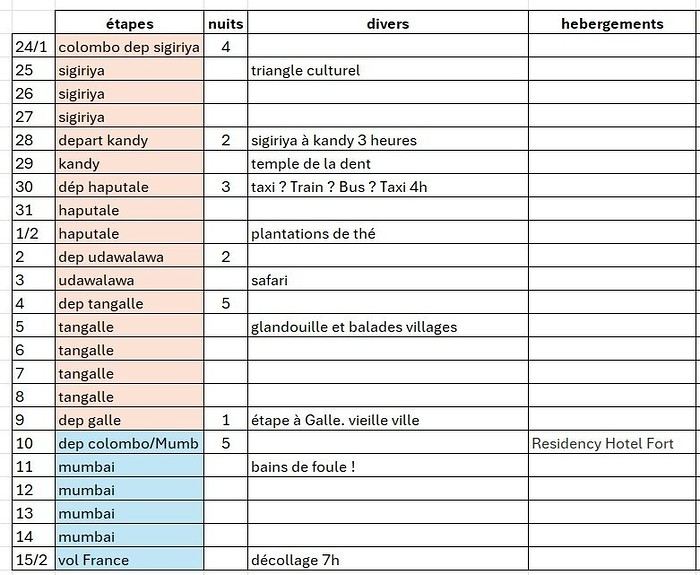
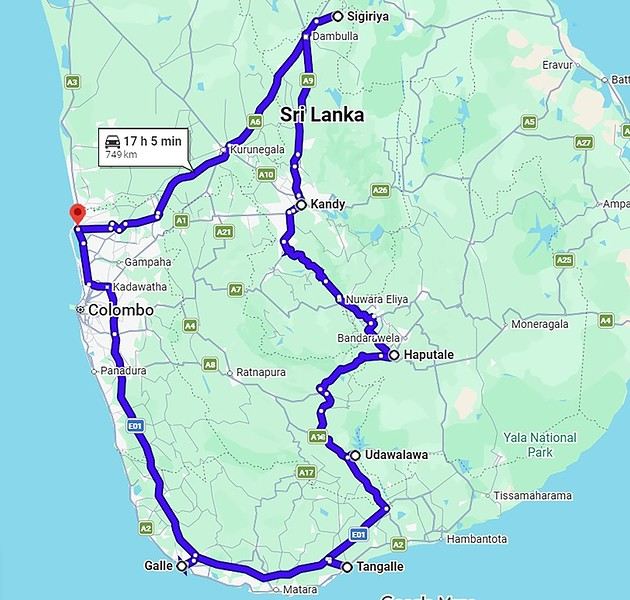
We’re heading to Sri Lanka for 23 days in January 2027—there are four of us—and we’ll wrap up the trip with 5 days in Mumbai. Our itinerary is coming together, but what do you think? (We can’t change the dates since our flights are already booked.)
We still have one night to slot in, and I’ve tentatively planned it in Tangalle, though it was a bit random. Would it make more sense to place it at a different stop? Or is there an intermediate stop I might be missing?
I’ve got accommodations sorted everywhere except Mumbai—it’s a nightmare (either way too expensive or really dodgy). By default, we’ve spotted the Residency Hotel Fort, but 70 € a night (with a discount) for a hotel that doesn’t offer anything special in India?!
Thanks so much for your help!


Namaste!
Here I am live from Delhi, past midnight, at least 30 degrees....
I wanted to post the start of this France travel journal but couldn’t find the time, so here it is live!
Off we go for a third trip, but this time for double the duration—6 weeks with the goal of discovering Ladakh and Spiti, starting with a detour to Varanasi to meet up with Babeli and her family.
Phir milenge for the rest of the adventures...
Hello!
We're a family of 4—3 adults and a 14-year-old. We're seasoned travelers with a passion for science, culture, and history. In short, we love discovering and learning.
We'll be in India for 3 weeks, from December 11, 2026 (in Goa) to January 3, 2027 (in Thiruvananthapuram).
We're looking for one or more drivers to handle the journey and guides who speak clear, fluent English, French, or Spanish. We'd love guides who are knowledgeable, passionate about their region, and able to answer our countless questions while giving us in-depth insights into the places, rituals, culture, and more.
Do you know of such guides or drivers, or have any tips on how to find people who can help us create unforgettable memories?
Thank you so much in advance!
Cat
hi
I was almost done with my e-visa application, and when I selected the payment method, I chose Razorpay. It glitched, and I got a server error 500/404... No matter how many times I go back to "complete partially filled form," it doesn’t work...
What should I do? Thanks for your help!
Hi everyone,
The "Rometorio" app is super handy—you just enter a departure city and a destination, and it suggests train, bus, and flight routes. For trains, you get the name and number of each one along with the schedules. Plus, it gives you an idea of how long bus and train trips take.
Happy travels to all!
Hi fellow travelers,
I need some info.
Landing in Mumbai on the 16th at 11:55 PM, so immigration will be on the 17th.
On the e-arrival card form, which date should I put—16th or 17th?
Thanks for your answers.
Hi everyone,
I’d like to visit Mahe with the goal of seeing the 5 former French trading posts. Is it worth it? I get the feeling that northern Kerala is overlooked by tourists—am I wrong? And why?
If you’ve got any great tips for guesthouses or hotels in Mahe, I’m all ears.
Thanks in advance for your feedback!
Hello everyone!
What a pleasure to be back on this forum after all these years… Goodness, we’re clearly far from the days of backpacking solo and carefree! Today, I’m well and truly "tied down," with two adorable little anchors—ages 3 and 5½—keeping me on my toes 😊
But here we are, finally mustering the courage to dive back into adventure, backpacks and all… this time as a family!
We know traveling with young kids won’t be a walk in the park, but we’re ready to adapt. And for that, I’ll need your brilliant advice!
Here’s our plan:
We’ve got our tickets for Kochi, from December 28 to January 5, 2026.
From my research, I’ve seen that this period is super lively in Kochi, with lots of festivities. I’ve also read that despite the crowds, it’s generally pretty "kids-friendly." Can any of you confirm this?
I figure it’d be a shame to miss all the fun, especially if there are parades (with or without elephants… even if I’m not a fan of the concept, I know my kids would be amazed…).
As for the itinerary, I’m still a bit unsure.
Since New Year’s Eve falls right in the middle of our trip, it complicates the idea of doing a loop around Kerala. Here’s what I’m considering so far:
December 28: Arrival in Kochi, then we’d head straight to Marari Beach (or a similar beach) to settle in and let the kids get their bearings.
December 30: Houseboat cruise in Alleppey
December 31: Back to Kochi, to enjoy the New Year’s festivities
We’d stay in Kochi until January 1 or 2, then head to Munroe Island for a few more relaxing days before heading home
January 5: Flight back to France
My big question: Is spending New Year’s Eve in Kochi with kids a good idea? Or should we arrive, then leave the city quickly to avoid the crowds? Thanks in advance for your feedback, experiences, and tips. I’m all ears for any suggestions to make this first (real) family trip as smooth as possible 😊
For those planning a trip to Kerala, here’s a quick, practical summary.
For the most part: the stunning landscapes, the natural kindness of the locals, their cuisine, and their culture—you’ll get to enjoy all of that once you’re there...
Flight (arrival and departure to/from Cochin)
Avoid Air India and opt for flights via the Middle East: Saudi Arabia, Qatar, United Arab Emirates, Oman, etc.
Price: between 500 € and 600 €
Accommodations
Average price: 20 € per night for a couple (max: 40 €, min: 10 €, often including breakfast), via the usual booking sites.
Homestays (staying in the owner’s house) are of a higher standard.
Only 2 nights were spent in questionable cleanliness. The rest were good, even very good, or even *very* very good.
Car with Driver
All-inclusive daily price: tolls, fuel, driver’s lodging and meals... and of course, we often shared our meals with our driver too.
Toyota sedan (e.g., Corolla) for 4 travelers (1 in front, 3 in the back): 50 € / day,
Toyota SUV (e.g., Innova) for up to 6 travelers: 60 € / day
DM me if you’d like more details.
Overall budget (excluding flights and shopping) Around 1500 € for 1 couple for the 3 weeks... in "2-couple mode"! (i.e., sharing the driver’s cost). Itinerary
Night 1: Arrival in Cochin in the morning, departure for Attirappily Beautiful waterfalls
Night 2: Thrissur Via Vallachira, not much tourist interest, a stop to ease into the trip and shorten the journey to Wayanad
Nights 3, 4, 5: Wayanad, staying in Sultan Battery Coffee and tea plantations, dam lake, URAVU (bamboo craft workshop), ...
Night 6: Ooty Botanical garden, then a really fun tourist train the next afternoon to Metupalaiyam
Night 7: Toward Coimbatore
Nights 8, 9, 10: Munnar City visit, stunning tea plantations
Nights 11, 12: Thekkady/Kumilly Amazing tea plantations, sightseeing, Jeep ride, not-so-interesting boat tour on Periyar Lake, trekking options
Night 13: Marari Beach (near Alleppey) 4-hour backwaters tour, then beach (swimming, dinner)
Nights 14, 15, 16: Munroe Island Super chill, walks around the island (small coir rope factory), sunrise by boat or canoe, sunset
Night 17: Varkala Gorgeous beaches, shopping
Night 18: Trivandrum City center visit, then train back to Cochin the next day in 3 hours.
Night 19: Cochin Fort Kochi is a lovely way to wrap up the trip
Have a great trip in this incredible region, so unique in India!
Hello,
Planning a cruise on the Brahmaputra in January—should we worry about being bothered by those little critters? One of us has allergies.
Thanks for your replies
Hi there,
I’m planning a winter trip across India. Departing in early December and returning to France in mid-April.
My main concern is finding an airline that offers this round-trip with the fewest hassles regarding cancellations or flight schedule changes. The unstable geopolitical situation in the Middle East isn’t making this search any easier—recent reviews online about airlines from Gulf states describe quite a few struggles over the past few months.
The direct Paris-Delhi round-trip flights offered by Air France or Air India are probably the safest options, but not the cheapest!
Given this uncertainty, I’m still holding off on finalizing my ticket purchase... Maybe some of you India lovers on VoyageForum have tips or experiences to share?
Thanks, and happy travels to all.
Hi there,
Our trip to India, starting at the end of October, is taking shape.
I’d like to book a hotel in Delhi for our first three nights and another in Amritsar, where we’ll be staying during Diwali.
I’ve realized it’s really hard to trust the reviews on Booking. Have any of you stayed at and can recommend mid-range hotels in these two cities?
Your feedback could help us decide!
Thanks in advance.
Hello,
Does anyone know a good local French-speaking agency for a discovery/trekking trip in Maharashtra? For about 3 weeks, a custom trip, but not too expensive!
Thanks in advance,
Laura
Hi there, we're planning to go to Haridwar and Rishikesh in February, either from Delhi or from Amritsar where we'll be beforehand. What's the best way to get there? Driver, private car, train? Your tips would be much appreciated... thanks
Hi, I'm thinking of attending the Nagaur Fair in Rajasthan, which takes place from February 12 to 15, 2027.
Has anyone been to this fair? Is it just a livestock market or a real festival with music and dancing? Since it’s quite a detour for me, I wanted to know if it’s worth it. Thanks!
Hi,
Does anyone know if the Banbasa border crossing is open on weekends?
Thanks
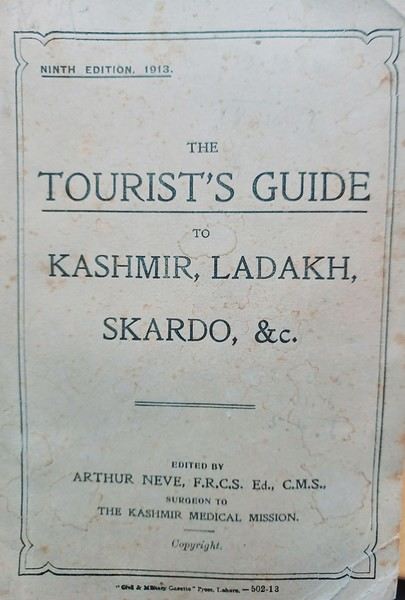
Arthur Neve (1859–1919), an English doctor and missionary, dedicated most of his life to his passion for Kashmir, a region he wrote several books about—including this guide (18 editions published between 1890 and 1945).
This copy (225 pages, 9th edition, 1913), published in Lahore, features dozens of detailed itineraries with maps, covering campsites, mountain pastures, river crossings, and more. Among them, you can trek from Srinagar to Khapalu and then to Baltistan, or "travel" from Leh to Yarkand (Xinjiang) via the Nubra Valley, along with other unexpected destinations.
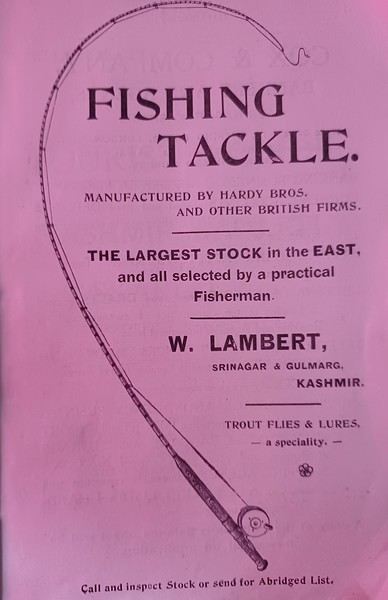
The guide also includes suggestions for shikara rides, houseboat rentals, and gear for hunting, camping, fishing, and photography.
Plus, it lists various supplies like chocolate, Egyptian cigarettes, frames, and alcohol.
Note that the Murree Brewery, relocated to Rawalpindi, is still operational—though, in theory, the predominantly Muslim population can’t access it.
I found this book in a box of old books, and you can still find copies on Anglo-Saxon websites—though often at prohibitive prices.
This copy (225 pages, 9th edition, 1913), published in Lahore, features dozens of detailed itineraries with maps, covering campsites, mountain pastures, river crossings, and more. Among them, you can trek from Srinagar to Khapalu and then to Baltistan, or "travel" from Leh to Yarkand (Xinjiang) via the Nubra Valley, along with other unexpected destinations.
The guide also includes suggestions for shikara rides, houseboat rentals, and gear for hunting, camping, fishing, and photography.
Plus, it lists various supplies like chocolate, Egyptian cigarettes, frames, and alcohol.
Note that the Murree Brewery, relocated to Rawalpindi, is still operational—though, in theory, the predominantly Muslim population can’t access it.
I found this book in a box of old books, and you can still find copies on Anglo-Saxon websites—though often at prohibitive prices.Hi there,
I can’t seem to complete the payment for my trip on the IRCTC (Indian Railways) site. No matter which payment method I choose, my Visa card isn’t accepted. Has anyone here managed to do it, and if so, could you share the method you used? Thanks in advance! Charlie
Hello,
We’ve already traveled to India twice before, but only for two-week stretches (2013, a loop from Mumbai including Hampi, and in 2019, Tamil Nadu). This time, we’re leaving at the end of October for nearly three months of travel—something completely new for us! We’ll arrive in Delhi and depart from Bangalore. Our goal is to explore Northern India and then head down to Kerala, taking a maximum of one flight and prioritizing trains.
Traveling for this long should let us plan longer stops to slow down the pace and fully enjoy our trip...
What are the places you’ve loved with this in mind? I’ve already thought of Gokarna... Do you have any other suggestions, especially in Northern India? Thanks in advance for your tips!
Traveling for this long should let us plan longer stops to slow down the pace and fully enjoy our trip...
What are the places you’ve loved with this in mind? I’ve already thought of Gokarna... Do you have any other suggestions, especially in Northern India? Thanks in advance for your tips!
Hi everyone,
I’ll be landing in Srinagar on October 23rd. I’ve decided to visit this region of India that I haven’t explored yet to discover new landscapes and, especially, their crafts. I don’t have anything planned so far. I’ll be staying for about two weeks before heading back to Pushkar. I’d love any tips you can share—small towns or villages to visit, ideas for affordable and authentic accommodations, workshops to check out, and so on. I’m open to all your suggestions! I might head toward Jammu, where a host has offered to put me up for a few days. Thanks in advance, and take care!
Hi everyone,
I’m Loulou, a French expat who’s been living in Southeast Asia for about fifteen years, currently in Phnom Penh, Cambodia. A passionate walker at heart, I’ve trekked in Nepal (Thorung La, Mardi Himal), India, Vietnam, and I’m still planning new hikes (Char Dham, Langtang, Annapurna).
I’ve just published my first travel journal, recounting three months of walking and encounters across India. A portion of the sales goes to an educational center I support in Kep, for children whose parents work in the salt marshes.
I’m also working on a second book about Nepal with a musician friend, focusing on the Mardi Himal trek—two independent perspectives on the same journey.
Happy to swap stories with you about the Himalayas, India, Southeast Asia, or just the urge to hit the road and walk far from home.
Safe travels,
Loulou
Wednesday, April 1st
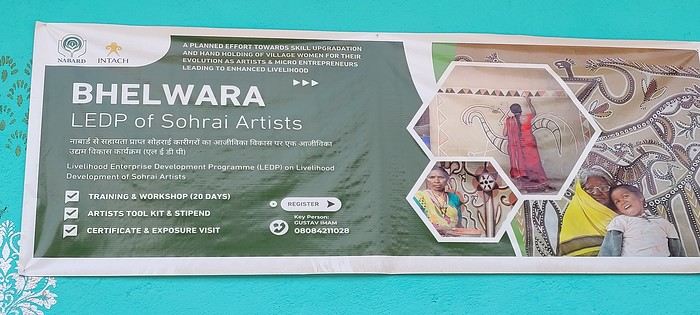
Hazaribagh I’ve got a meet-up with Adam Iman, a guide and painter. He picks me up from the hotel at 10 AM. Another traveler from Bangalore is supposed to join us, but while we wait for him to arrive, Adam takes me to see the paintings his mother and sister created at Hazaribagh station. The town became famous thanks to these murals, which can also be found in several surrounding villages. This art form has earned recognition and is now protected, a sign of its cultural importance. Once the visit is over, we go to pick up the other traveler and then head to our first village: Belwara, where Sohrai art is practiced. At the entrance, a sign proudly announces that we’re entering an artists’ village, where this art is created by women organized into micro-enterprises. Some even offer workshops for those who’d like to learn this tradition.
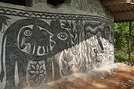
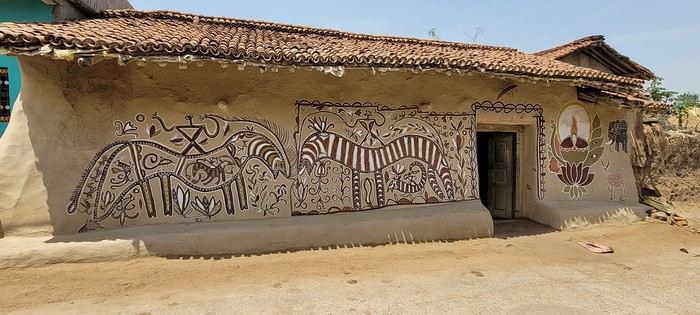
Sohrai art is tied to the harvest season, from October to mid-November. The motifs, in natural colors, celebrate fertility and abundance. The artists use pigments from the earth: red oxides, ochre, white kaolin, and black manganese. On the walls, you’ll see animals, fish, birds—all symbols of life and prosperity. As I look closer at the murals, I start to realize that each motif tells a story. Large animals like cows or bulls often take center stage. Their bodies are filled with intricate, almost hypnotic patterns. They symbolize wealth and prosperity for the household, as well as the deep respect for cattle, which are essential to daily life. On some facades, elephants stand out—massive and decorated with the same precision. They evoke quiet strength and protection. But it’s when I stop in front of one of the houses that I really take the time to look. The wall, a soft ochre, is entirely covered in murals. Two large animals stretch out on either side of the door, their elongated bodies fitting the length of the wall. Their silhouettes are filled with geometric patterns and incredibly fine curved lines, as if every space was patiently filled. Around them, stylized plants, flowers, and small decorative elements fill every gap. The door, dark and worn, becomes almost the silent center of the composition, framed by these living, protective forms. To the right, a more colorful motif catches the eye—a flower or a stylized lamp—like a touch of light on the earth. The whole thing gives an impression of perfect balance, between the rigor of the patterns and the freedom of the gesture.
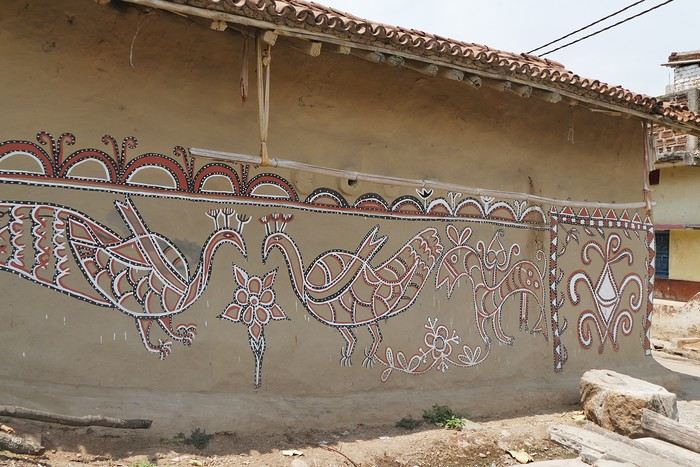
Elsewhere, birds and freer forms bring movement. Peacocks, recognizable by their stylized silhouettes, embody beauty and vitality, while fish symbolize water, fertility, and the continuity of life.
On some paintings, the scenes become almost narrative: you can make out figures, everyday gestures, like a memory of the village inscribed in the walls. The decorative frames around the doors aren’t left to chance either—they symbolically protect the house, like a boundary between the inside and the outside world.
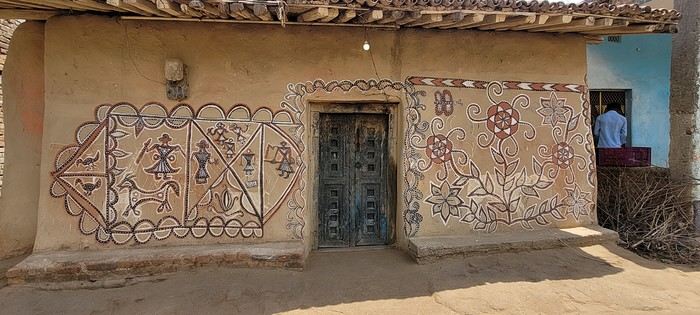
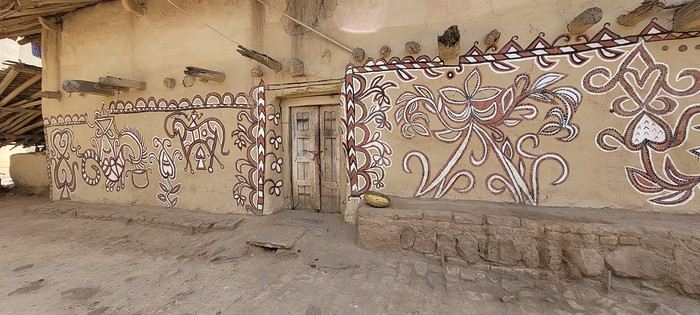
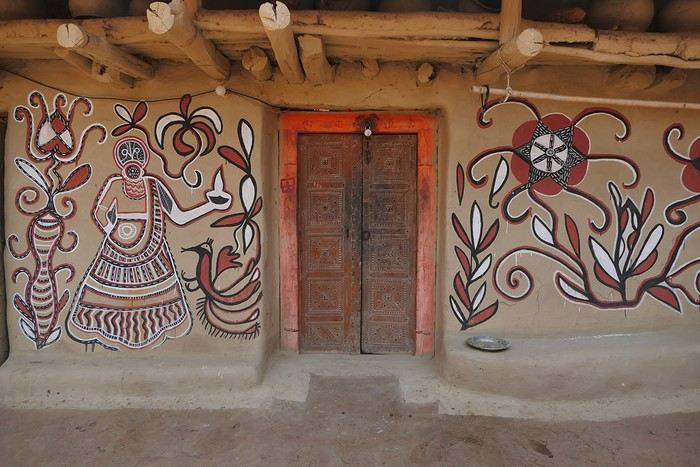
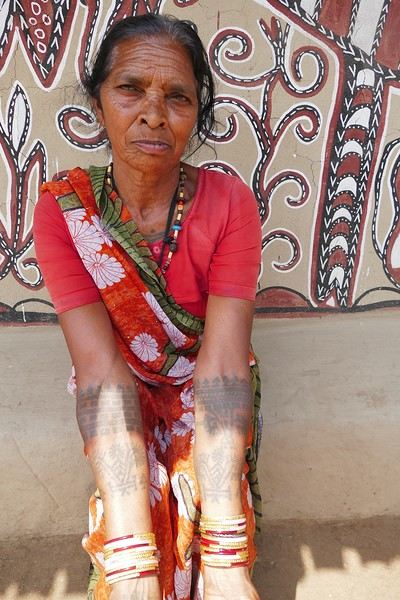
During the Sohrai festival, cattle are led into the jungle in the morning. Meanwhile, the women finish the *aripans*—these floor paintings—and continue the wall murals. Around noon, the animals return to the village, and the bulls’ horns are anointed with oil and vermilion in a gesture of gratitude, amid the vibrant colors adorning the houses. We visit several artists, including Parvat Devi, a well-known woman who has received many awards. Her arms are adorned with intriguing tattoos, which I’ll talk about in more detail later.
On another wall, the style changes completely. Here, no massive animals—just birds occupying the space, light and graceful, as if caught in mid-movement. Two silhouettes face each other, their long necks arched almost like mirrors, while their outstretched wings seem to vibrate with the patterns that compose them.
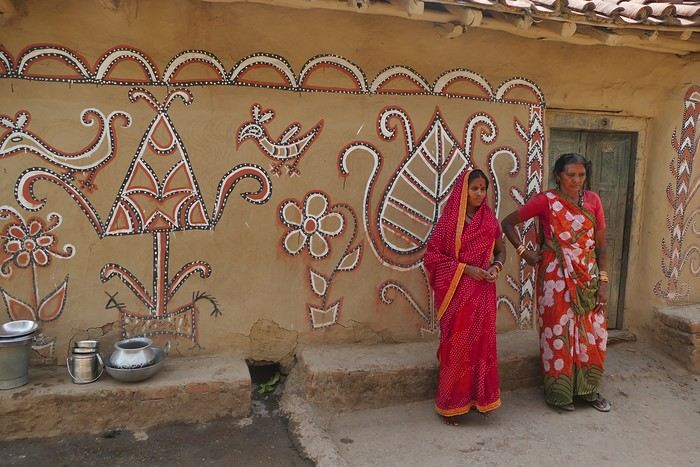
The design is more graphic, almost airy. The lines are smoother, more fluid, as if drawn in one confident stroke. The birds’ bodies aren’t solid—they’re filled with repetitive motifs like scales, stylized feathers, and spirals, giving a sense of continuous movement. Around them, everything comes to life: flowers burst open, arabesques swirl, and even the simplest shapes seem alive. What strikes me here is the sense of lightness. Where the large animals evoked stability and grounding, these birds bring something freer, almost joyful. They seem to embody movement, the circulation of life, like a breath flowing through the village.
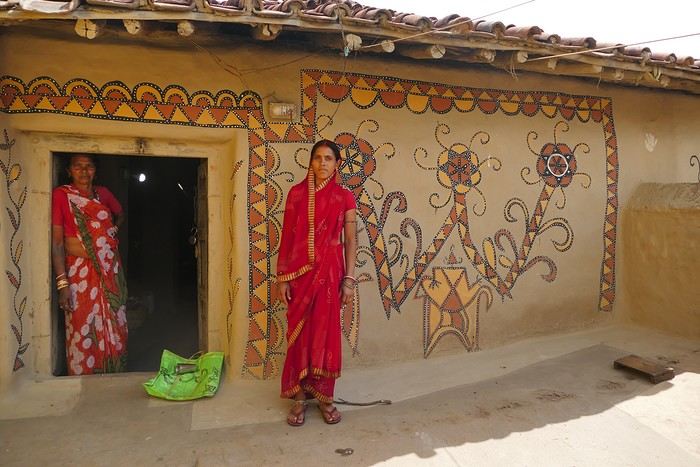
The colors remain the same—deep reds, intense blacks, and chalky white—but the rhythm is different. Faster, more spontaneous. As if each wall had its own personality, while still speaking the same language.
That’s probably why I’m so moved. I’d heard about these paintings from my friend Raja, and last year, I saw an exhibition in a village near my home. That first encounter made me want to come here. But seeing them in person is a whole different experience. These paintings are unique. This ancient art is passed down from mother to daughter, or mother-in-law to daughter-in-law, in a quiet, deeply living continuity. At first glance, it might seem almost childlike in its simplicity and pared-down forms. And yet, everything is thought out, balanced, mastered. Nothing is left to chance.
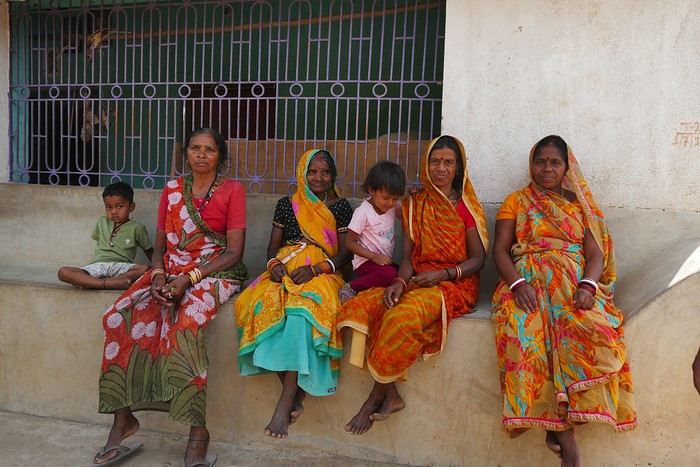
That apparent simplicity, combined with such rich symbolism, touches me deeply. There’s something sincere and essential in these walls—and that’s what moves me.

Hazaribagh I’ve got a meet-up with Adam Iman, a guide and painter. He picks me up from the hotel at 10 AM. Another traveler from Bangalore is supposed to join us, but while we wait for him to arrive, Adam takes me to see the paintings his mother and sister created at Hazaribagh station. The town became famous thanks to these murals, which can also be found in several surrounding villages. This art form has earned recognition and is now protected, a sign of its cultural importance. Once the visit is over, we go to pick up the other traveler and then head to our first village: Belwara, where Sohrai art is practiced. At the entrance, a sign proudly announces that we’re entering an artists’ village, where this art is created by women organized into micro-enterprises. Some even offer workshops for those who’d like to learn this tradition.

Sohrai art is tied to the harvest season, from October to mid-November. The motifs, in natural colors, celebrate fertility and abundance. The artists use pigments from the earth: red oxides, ochre, white kaolin, and black manganese. On the walls, you’ll see animals, fish, birds—all symbols of life and prosperity. As I look closer at the murals, I start to realize that each motif tells a story. Large animals like cows or bulls often take center stage. Their bodies are filled with intricate, almost hypnotic patterns. They symbolize wealth and prosperity for the household, as well as the deep respect for cattle, which are essential to daily life. On some facades, elephants stand out—massive and decorated with the same precision. They evoke quiet strength and protection. But it’s when I stop in front of one of the houses that I really take the time to look. The wall, a soft ochre, is entirely covered in murals. Two large animals stretch out on either side of the door, their elongated bodies fitting the length of the wall. Their silhouettes are filled with geometric patterns and incredibly fine curved lines, as if every space was patiently filled. Around them, stylized plants, flowers, and small decorative elements fill every gap. The door, dark and worn, becomes almost the silent center of the composition, framed by these living, protective forms. To the right, a more colorful motif catches the eye—a flower or a stylized lamp—like a touch of light on the earth. The whole thing gives an impression of perfect balance, between the rigor of the patterns and the freedom of the gesture.

Elsewhere, birds and freer forms bring movement. Peacocks, recognizable by their stylized silhouettes, embody beauty and vitality, while fish symbolize water, fertility, and the continuity of life.
On some paintings, the scenes become almost narrative: you can make out figures, everyday gestures, like a memory of the village inscribed in the walls. The decorative frames around the doors aren’t left to chance either—they symbolically protect the house, like a boundary between the inside and the outside world.


During the Sohrai festival, cattle are led into the jungle in the morning. Meanwhile, the women finish the *aripans*—these floor paintings—and continue the wall murals. Around noon, the animals return to the village, and the bulls’ horns are anointed with oil and vermilion in a gesture of gratitude, amid the vibrant colors adorning the houses. We visit several artists, including Parvat Devi, a well-known woman who has received many awards. Her arms are adorned with intriguing tattoos, which I’ll talk about in more detail later.

On another wall, the style changes completely. Here, no massive animals—just birds occupying the space, light and graceful, as if caught in mid-movement. Two silhouettes face each other, their long necks arched almost like mirrors, while their outstretched wings seem to vibrate with the patterns that compose them.

The design is more graphic, almost airy. The lines are smoother, more fluid, as if drawn in one confident stroke. The birds’ bodies aren’t solid—they’re filled with repetitive motifs like scales, stylized feathers, and spirals, giving a sense of continuous movement. Around them, everything comes to life: flowers burst open, arabesques swirl, and even the simplest shapes seem alive. What strikes me here is the sense of lightness. Where the large animals evoked stability and grounding, these birds bring something freer, almost joyful. They seem to embody movement, the circulation of life, like a breath flowing through the village.

The colors remain the same—deep reds, intense blacks, and chalky white—but the rhythm is different. Faster, more spontaneous. As if each wall had its own personality, while still speaking the same language.
That’s probably why I’m so moved. I’d heard about these paintings from my friend Raja, and last year, I saw an exhibition in a village near my home. That first encounter made me want to come here. But seeing them in person is a whole different experience. These paintings are unique. This ancient art is passed down from mother to daughter, or mother-in-law to daughter-in-law, in a quiet, deeply living continuity. At first glance, it might seem almost childlike in its simplicity and pared-down forms. And yet, everything is thought out, balanced, mastered. Nothing is left to chance.

That apparent simplicity, combined with such rich symbolism, touches me deeply. There’s something sincere and essential in these walls—and that’s what moves me.
March 2nd — Departure by bus from Latour at 6:50 AM. The journey isn’t direct: we pass through Elne then Corneilla. In Perpignan, I switch to a BlablaBus heading to Barcelona’s northern bus station. Before reaching Le Perthus, French police stop us to check IDs. Several people aren’t in order, but after about fifteen minutes, we’re on our way again. We’re checked again at La Jonquera: this time, the wait lasts almost forty-five minutes while police identify those in violation and wait for a vehicle to pick them up. The driver then tries to make up for lost time; we finally arrive at our destination half an hour late.
I quickly head to the Arc de Triomphe metro station, located 200 meters away: you have to cross the bridge along the bus parking lot, then walk through a large garden; the station is on the right before the garden entrance. The trip to the airport isn’t direct: I have to change at Tomasso and take the line to the airport, where I arrive at 1 PM.
At the Emirates counter, I learn my flight was just canceled due to the war in Iran; they offer me another flight for the next day. I have to wait at the airport until 7 PM before being taken to a hotel; the next morning, I’ll take a flight to Vienna (with an 8-hour layover), then an Air India flight to Delhi, and finally a flight to Kolkata. I agree: I don’t know Vienna, so it’ll be an unexpected discovery.
At 7 PM, a small group is taken to the hotel, 35 minutes from the airport, where we’re served a light dinner upon arrival.
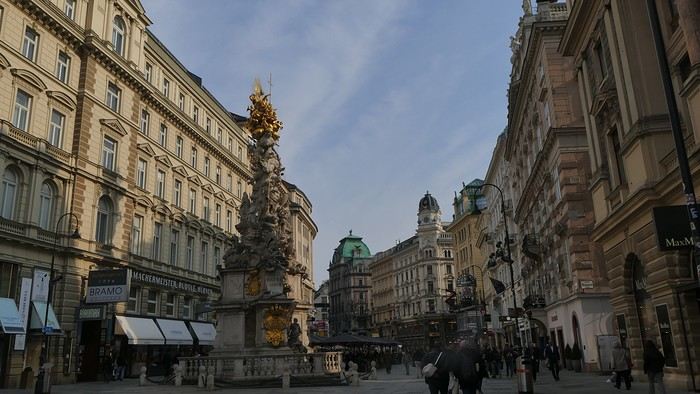
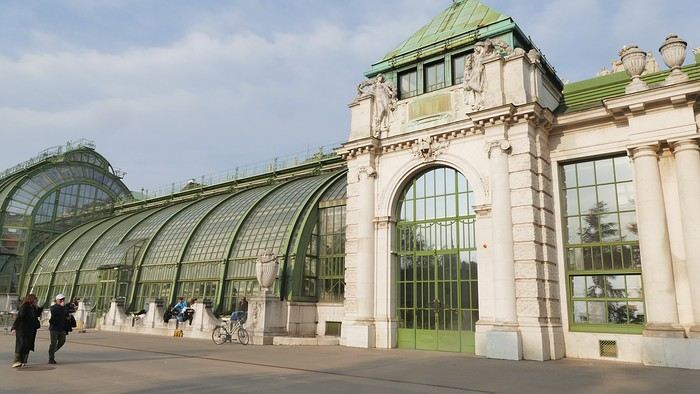
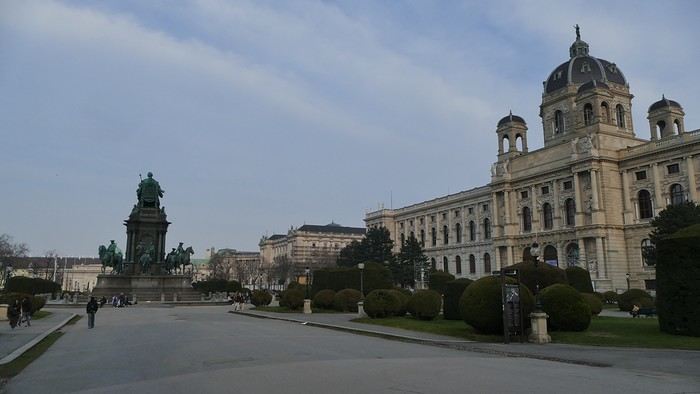
March 3rd — A taxi picks me up at 6:30 AM; the flight to Vienna takes off at 9:30 AM and arrives at noon. I’m free until 7 PM; the metro is direct to the city center. The weather is pleasant and not too cold, luckily, since my clothes are light.
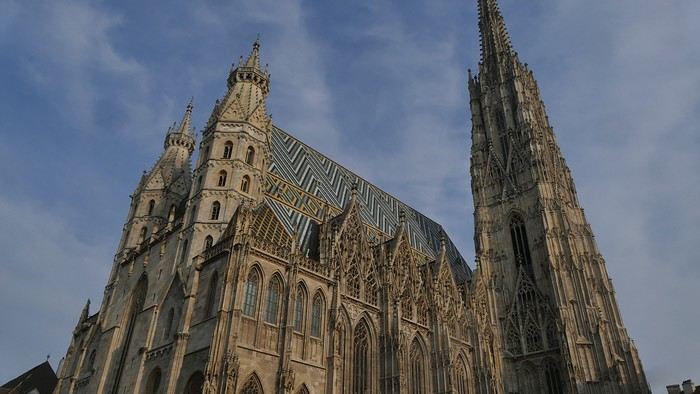
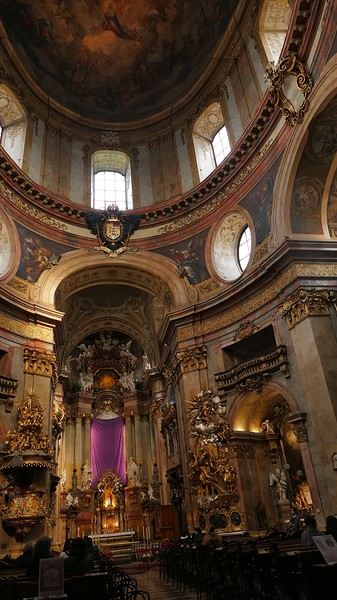
When I exit the metro, I spot the St. Stephen’s Cathedral tower in the distance and approach it: the roof, made of glazed tiles, is remarkable.

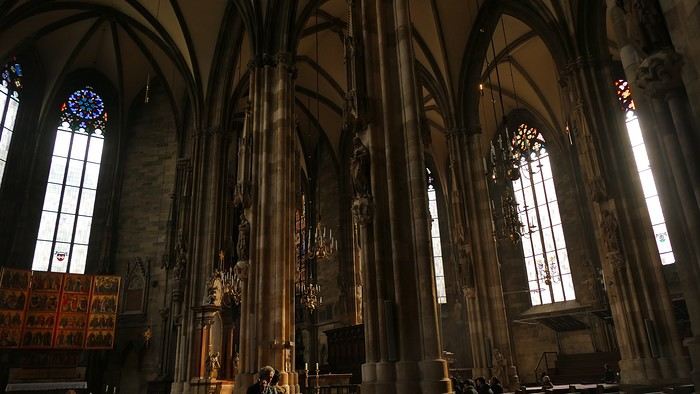
Entry is free, and the interior, a mix of Gothic and Baroque styles in the center, is stunning.

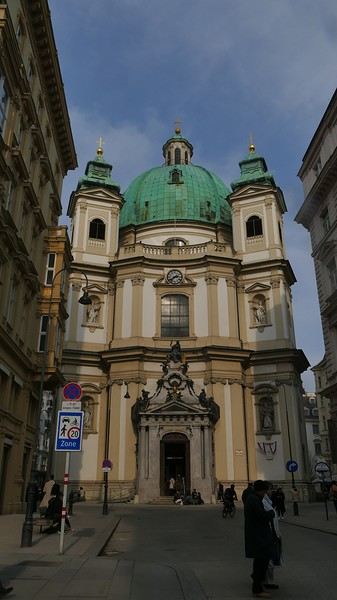
Not far from there is St. Anne’s Church

, also Baroque, adorned with beautiful frescoes

—a music concert adds an enchanting atmosphere to the visit. I continue my walk at random through the pedestrian streets lined with magnificent buildings: I’m charmed by the city.


Before heading back to the airport, I stop at a lovely tea salon. My flight will eventually leave with a delay.
Wednesday, March 4th — Delhi and a little luggage scare We arrive in Delhi shortly after noon. Immigration is quick, and good news: my bag was checked through from Barcelona to Kolkata. I head to the connecting terminal and arrive half an hour before boarding: the flight goes smoothly. Upon arrival, the luggage comes out quickly… except mine. After filing a report, I’m told my bag is in Delhi—I have to retrieve it before taking another flight. I didn’t know (or had forgotten): with the delays, I wouldn’t have had time to pick it up and make the connection.
I take a taxi to the Ichamati Hotel. The welcome is warm, and the room is clean but very small. Without my bag, I feel a bit lost—I have nothing to change into.
Tonight, I’m dining with Raja and his friends at a beautiful restaurant, an old colonial house turned into a hotel.


We’re happy to see each other and have a comforting evening together.
Hi,
I’m looking for an organized tour in Northern India that goes through Agra (of course!) over about twenty days, prioritizing 2-day stops given the long distances or flights.
So far, my search has led me to these tours:
Intimate Rajasthan + Ganges Valley
Intimate Rajasthan and Goa
Confidential Rajasthan + Goa circuit
The number of kilometers is still pretty overwhelming and a bit scary.
Thanks for your feedback!
bcricri14
Hello,
We’d like to go on a 3- to 4-month bike trip starting in December, crossing from Assam (northeast India) to New Delhi via Nepal.
Are there routes with light traffic along the Brahmaputra and through Nepal?
We’re also looking for any info on accommodations, wild camping, local interactions, etc.
Thanks,
Michel
Recommended for you
Meghalaya: A Very Rainy Week
Rajasthan: Incredible India?
Discovering Assam and Nagaland 2025
Yet Another Travel Journal in this (Too) Familiar Rajasthan, But with Family and Kids
The Hippie Trail to India in the 60s and 70s
A lovely wander at the mercy of the wind in this amazing Rajasthan
7-week trip feedback: Rajasthan and Varanasi, October-November-December 2025
A Few Days in Turkmenistan from Uzbekistan
20,244 more discussions in this forum are in French. Browse them on the French forum