A lot of water has flowed under the bridges, and many kilometers have rolled by under my wheels since my last post on this forum. I've ridden the 4 diagonals of France, a Paris-Brest-Paris, and crisscrossed the country from one end to the other.
Hey everyone, travelers! Here’s a little post to share our bike trip this summer. We did the Via Rhôna from Geneva all the way to the Mediterranean Sea. It was a truly amazing adventure—no hitches, lots of independent greenways, and we felt like we had the Rhône all to ourselves as our guide for 700 km over 7 days. That averages out to 100 km a day. We thought we’d do less, but the Via Rhôna is flat and not too tiring, which let us push to around 100 km each day!
Here’s the full video of our route: www.youtube.com/watch?v=x_cpBro6Df8
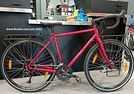
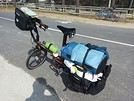
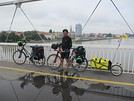
We’re not seasoned cyclists—we just love biking, and this trip was our first big bike touring adventure. As for our bikes (see photo), we had road bikes, sturdy ones with fairly large wheels and rear racks for our gear.
Speaking of gear, here’s what we brought: just the essentials for 7 days of biking and camping—1 tent for 2, two sleeping bags, a few clothes (not too many), 1 book each, toiletries, phone chargers, a basic bike repair kit... and maybe 2 or 3 things I’m forgetting. The idea is to travel light so you’re carrying as little as possible!
We camped every night. Along the Rhône, it’s pretty easy to find campgrounds, and they’re cheap too! Each morning, we’d decide on our destination for the evening (usually based on available campgrounds) and call during the day to book. We always managed to get a spot right away (except when we reached the Mediterranean coast, but we should’ve seen that coming 😛).
For expenses, we slept at campgrounds (between 15 and 25 € per site for 2) and either picnicked or ate at restaurants. Other than that, there weren’t really any other costs besides a few small souvenirs here and there. In total, we spent about 500 € for two over 7 days (so 35 € per person per day). I think it’s possible to spend even less—we decided not to restrict ourselves when it came to restaurants and campground prices.
For us, the most beautiful part was between Geneva and Lyon! The Rhône is still a bit wild there, as are its banks. Not too many roads, highways, trains, or factories around—just nature and peace. You gradually leave the Alps behind and head further south. It was truly stunning. We also loved the "Rhône Valley" after Lyon. The succession of dozens of suspension bridges and little villages, each more charming than the last, really enchanted us.
The trickiest part was leaving Lyon... The Via Rhôna disappears for a long stretch, forcing you to alternate between roads, traffic, danger, and pollution. We had to wait until Givors, further south, to finally get back to the quiet bike path and the Rhône showing us the way. Also, after Lyon, the Rhône becomes a bit more industrial—you pass by dams, factories, and power plants more often. But it’s really just a small detail, the exception that proves the rule of this magnificent Via Rhôna.
The Via Rhôna is a fantastic way to see how water from the mountains of Lake Geneva flows, travels, and winds its way for hundreds of kilometers to reach the sea. With this trip, you get closer to the Rhône—it becomes your accomplice, your guide. Plus, you cross a beautiful part of France, with its charm and little villages. It’s the France we love, and it’s great to explore your own country like a tourist.
That’s it for our little travel journal. I didn’t go into too much detail about our days since everyone will follow the same route, and everyone can go at their own pace :) But I’m happy to answer any questions (logistics, technical stuff, routes, etc.)—I’d be glad to help!
Here’s the video of our route again—I also composed the music, so I hope you’ll like it: www.youtube.com/watch?v=x_cpBro6Df8
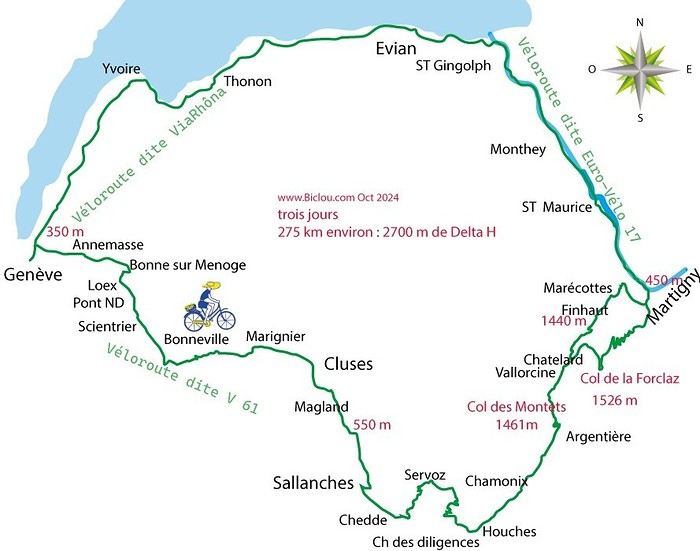
End-of-season ride this autumn 2024!
Claudio will head up the Arve Valley from Geneva to Chamonix via Annemasse, Cluses, Sallanches, and Argentière, then make his way to Martigny, Switzerland, through Finhaut, and return via the Rhône Valley and the ViaRhôna: St-Gingolph, Evian, Thonon, and back to Geneva.
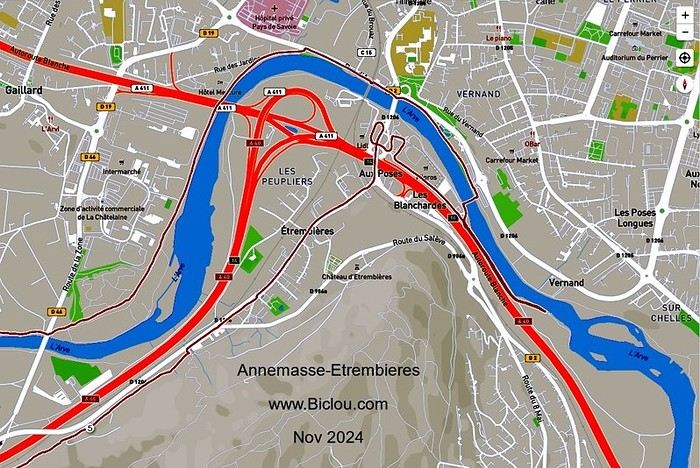
claudio didn’t get its purpose: no secure bike access and it leads to a sketchy path through a grim commercial zone that’s really tough to ride on at the exit. Anyone have an explanation?
hi there
After covering thousands of kilometers over the years with front and rear panniers, I’m now facing a problem: broken spokes on the rear wheel.
Once, twice—imagine the hassle of fixing it when you're in the middle of nowhere in the Cévennes!
So, drastic times call for drastic measures! I switched to a reinforced wheel and, following my bike mechanic’s advice, fitted a tire that’s a "tad" wider than the front one.
We set off on our summer adventure feeling confident, and guess what—"BAM"—a broken spoke after just 200 km. Seriously?! Not even that heavily loaded—just around 30 kg, plus my 80 kg. Even with the sturdier wheel, I still ended up with a broken spoke after 300 km!
Back to the bike mechanic, and the only explanation: "It’s your pedaling style..." Not convinced at all!
So here’s the idea: a Bob trailer! I’m done with this sword of Damocles hanging over my head—it’s a real buzzkill.
Has anyone here tried a Bob trailer? Could you share your experiences—pros, cons, etc.?
Thanks!!!
Hi fellow bike-packers,
so I’m heading out solo by bike this spring, like I do every year—around 1,500 to 2,000 km in total.
This time I want to explore the south of France.
I’ll start by meeting up with a buddy in Ariège, and after that the road’s wide open toward the east, aiming for Drôme.
If anyone has route ideas—especially quiet backroads, places I can wild-camp pretty much anywhere, and climbs that aren’t too steep—I’m all ears!
Thanks, and see you around here or on the road.
Take care.
Hi,
We crossed the Pyrenees by e-bike last July, from Bayonne to Perpignan, taking small roads as close to the border as possible (25 mountain passes in 10 days). It was an absolute delight, and we can share tips with anyone interested in this experience.
I’m planning a short trip—max one week—to connect to the Dolce Via starting from La Voulte and then link up with the Dolce Fluvia. I’d like to head up via Le Puy and was wondering if it’s best to make the connection by going through Saint-Agrève, then up to Chambon/Lignon, and finally to Raucoules. Does anyone have a nice route suggestion? I’m traveling with a loaded touring bike (a Farrad TX800 with two rear panniers), but I’m limiting my load to 13 kg. I’m aiming for around 70 km a day, max 80 km, and I usually sleep at campsites or in a guest room if the rain’s too heavy.
On my way up to Le Puy-en-Velay, I plan to come back down through the Ardèche mountains, then head to Aubenas and the Rhône Valley. Does anyone have route ideas with scenic roads (like Lac d’Issarlès) or any other suggestions?
Hi! I’d like to cycle from Basel to Budapest in August and then take the train back to Besançon.
Which website should I use to book, and how far in advance do I need to reserve my tickets?
but it’s become useless since the "bike" option for France was removed.
- Next, we go to the Deutsche Bahn website https://www.bahn.com/fr, which has a "bike" option that combines TGVs, TETs (IC), and TERs.
Then, you can either:
- Buy the ticket directly on the Deutsche Bahn site,
or
- Note all the trains in the itinerary and,
to use your discount cards, go to the SNCF website to purchase all the necessary tickets.
The Deutsche Bahn site lets you adjust connection times in the "details" of an itinerary if the suggested one seems too short.
I’ve found that 10 minutes is really risky—delays, crowds on the platform making it hard to move quickly, not to mention the line for the elevator and navigating an unfamiliar station.
Still, it’s best to double-check that each train allows bikes.
- Now, thanks to the site "Biclous et bidouilles," check it out here:
These days, SNCF is gradually converting all its TGVs to INOUI. Normally, they all have bike spaces, so these workarounds might not be needed much longer.
Hey Cyclists! So, here we go—departure this Thursday from Giromagny (90), still in bikepacking mode, but this time with my wife’s bike lol.
12 years later, back in the Alps for a crossing all the way to Barcelonnette. From there, I’ll head toward Vaucluse and face Mont Ventoux for the first time 🚴♂️. Until then, the Alps will most likely leave their mark 😅🚵♂️🚴♂️. I’m a bit nervous about the Col de la Colombière—if all goes well, I should leave a wreath there lol! The return after Mont Ventoux should be less traumatic (or maybe not).
A few photos below.
If you’re on my route, it’d be great to chat! ;)
I’m also planning to film the ride (as usual), my impressions, etc.
Good luck with your preparations to everyone working on a project, and safe travels to those already on the road! ;)
Gilles
Hi there,
We’re planning a bike trip around Brittany this summer. We’re driving from Belfort and looking for a parking spot (paid) to leave our car for 4-5 weeks, from mid-June to mid-July, somewhere near Rennes.
Best regards,
Hi,
My boyfriend and I are looking to spend a week in the Alps at the end of August. But since we only know the region in winter, I have no idea where to start!
I’d like to avoid the big resorts with apartment blocks and instead head for a typical village, with great hikes (on foot and by bike) and ideally near a lake, river, or water spot.
Since the forum came back, it's been a bit quiet—no one's sharing their adventures yet. I know it's the start of the season, so let's hope it picks up!
Last Saturday, my buddy Jean Paul (who’ll be 84 next month) and I rode through the cedar forest between Cavaillon and Bonnieux—I highly recommend it! I already knew the area. We started from Pont Royal: me on my latest women’s FUN RIDE SOLO mountain bike (kept it as simple as possible), and him on a road bike with gravel tires. The road starting near Cheval Blanc, called the Vidauque route, is paved but completely wrecked—full of potholes, abandoned for ages, and technically off-limits to cars (though 4x4s still use it). The views over the Cavaillon plain are stunning, but we had to push our bikes a few times. After that, we did 10 km through the gorgeous cedar forest, followed by all downhill and flat terrain through the Lourmarin valley, then Cadenet, before heading toward La Roque-d'Anthéron. From there, we tackled the dirt paths of Provence by bike—beautiful trails—and made our way back to Mallemort and Pont Royal. A great loop: 81.51 km with 908 m of elevation gain. And Jean Paul? Fresh as a daisy at the finish—what an impressive guy!
Now, the real reason for this post: At the start, we followed the Carpentras Canal, which runs from Mallemort to Travaillan (69 km total). I’ve seen some photos on Komoot, and it looks amazing—apparently, there’s always a towpath.
**HAS ANYONE DONE THIS BY BIKE BEFORE? COULD YOU SHARE YOUR EXPERIENCE? THANKS IN ADVANCE!**
Serge
Hi everyone,
We’re organizing a week-long bike trip for a group of scouts.
I’ve already mapped out a route using Géovélo (travel option).
The teens will take the train to Nemours (or a bit beyond) and then follow the Loire à Vélo route for a good stretch (until Nevers, which they’ll bypass to the west).
After Nevers, things get a bit trickier.
I also wanted to avoid Moulins, so I planned for them to follow the Allier’s west bank and cross near Châtel-de-Neuvre.
I’m having some doubts about the route and really want to steer clear of busy main roads as much as possible.
I’d love to hear your thoughts on the route I’ve chosen, plus any tips you might have.
I saw there’s the V70 veloroute, but I decided against it after hearing it has some *very* road-heavy sections.
I’m trying to figure out how to get from Paris to Marseille or Montpellier with non-disassembled bikes by train in early July 2025... and it’s a total flop!!! Can’t find any trains that offer the bike-on-board option! It’s so complicated between SNCF-CONNECT, OUIGO, and TER INTERCITÉS!!! Nothing’s simple!
I want to take my teens and their cousins on a bike trip to the Camargue, but I’ll have to start planning way ahead to sort out bike transport!!!
So glad I found VoyageForum for tips! !
Hi everyone,
I’m seriously considering going bikepacking with my Brompton (6-speed model) on a mixed route of roads and bike paths for a trip lasting a few days or even a week.
I know the Brompton isn’t the typical touring bike, but its compactness and practicality really appeal to me for combining train + bike travel and staying super mobile.
I’ve got a few questions, and I’d love to hear your experiences or tips:
What panniers or luggage setup do you recommend for a Brompton in travel mode?
Have you run into any specific limitations (comfort, carrying capacity, elevation gain, etc.)?
Should I adjust any components (tires, gearing, saddle) to make it more durable for multi-day trips?
Do you prefer wild camping or lightweight accommodations (hostels, campsites, etc.) with this kind of setup?
Finally: what types of routes do you think a Brompton handles well? (And what should I absolutely avoid?)
I’d love to chat with others who’ve tried (or are considering) the Brompton bikepacking adventure.
Thanks in advance for your insights! 🚴♂️
Happy riding,
With summer just around the corner, I’m looking for ideas for organized bike trips in France or Italy. I’m pretty used to traveling independently, but this time I’d like to try something more structured—either in a small group or with minimal logistics (accommodations booked, luggage transport, etc.).
I’m open to different difficulty levels, as long as the setting is pleasant (countryside, seaside, well-known routes, or even a bit more off-the-beaten-path).
If you’ve already tried this kind of trip or have good recommendations for agencies or providers, I’d love to hear them!
Hi everyone, I’m new to the forum!
I’d like to buy some panniers for bike travel made of Cordura. I initially went for the Ortlieb Back Roller Plus, but while browsing the cylo-randonnée website, I came across the Extrawheel Wayfarer Premium panniers. They’re also made of Cordura, manufactured in Poland with German materials, and each has a 25-liter capacity—10 liters more than the Ortliebs.
Has anyone here tried them or knows this brand? I know Ortlieb is super reputable, but I figured there might be other brands that are just as good.
🙂 Gabriele
Hello, I'm looking for a small town where we can eat and stay near the canals of Brittany to do short bike rides of about 50 km round trip. Ideally, it would be a town at a junction of several canals, but I'm not sure if that exists. Otherwise, a town like Redon with the Nantes-Brest canal and, on the other side, the Vilaine River. But I don’t know if there are paths that can be used along these canals.
Hi there,
We’d like to take our bikes to Sicily in early April for Easter, then cycle back home via Puglia to the Lyon area.
Has anyone got any tips?
1: How to get there? Train or ferry?
2: Camping or other options in big cities? Is it true that campsites are really expensive?
3: Recommended route
We’re open to all suggestions.
Thanks, and happy holidays!
Last summer, I cycled through the Lot and Célé Valleys. There were two couples of us, in "camping mode," with hybrid bikes (except for one road bike with tires that weren’t hybrid at all (!) plus a Bob trailer).
We completed the route in the first half of July in just under 15 days (allowing time to explore along the way). The odometer totaled 550 km.
We started in Aiguillon on the Lot River and finished in Saint-Geniez-d’Olt.
It was an absolute delight.
First off, a big thank you to everyone who helped us plan this trip by sharing tips, favorite spots, and practical guides—there were many, and some will recognize themselves (a Jakez from Brittany, a local postman, etc.).
A major project seemed to have been launched, but since 2011, not much has materialized beyond Cahors (a signposted cycle route). Don’t let that stop you—it’s totally worth it!
In return for the great tips we received, I’m happy to help anyone considering the same route with details on the itinerary, stages, road conditions and traffic, campsites, highlights, and more.
Best regards,
I’m planning to cycle the Vélodyssée from Hendaye to Saint-Brevin in July 2026.
My issue: how do I get to Hendaye with my bike? FlixBus doesn’t take bikes, and SNCF is complicated.
Any ideas?
Has anyone got a solution to suggest?
Thanks in advance!
Cheers,
Patrig
I'm planning a 3-day weekend with my wife on this cycle path. The articles about this route are old, so if anyone has traveled it recently and can give me an update on its condition, that'd be great. We're riding 1994 ROCKRIDER 340 mountain bikes but with 1.5-inch tires suited for road touring—will that work, or should I switch back to MTB tires? Thanks for your replies!
A bit disappointed with the forum's revival—there isn’t much activity or shared travel stories anymore.
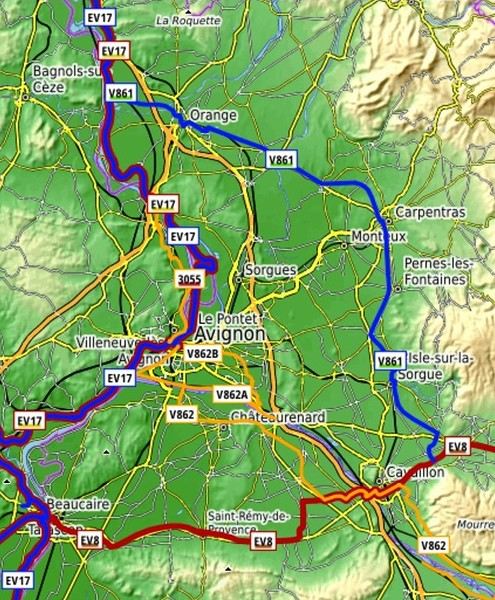
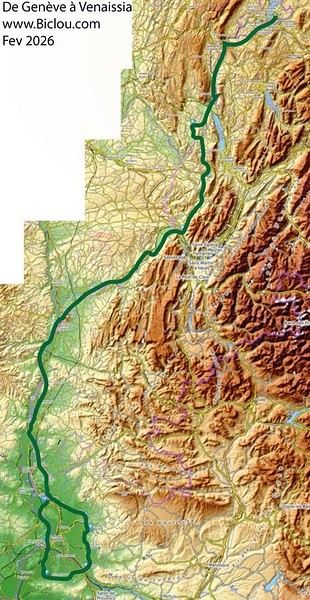
The plan was to go from Faverges to Cavaillon and explore the Via Venaissia a bit.
A crazy idea? Maybe, but don’t forget that the month of February—"februare" in Latin—means "to purify,"
so it’s the Month of the Lupercalia, a Roman festival that was a purification rite.
So, to purify himself after the feasts of the Saturnalia, Claudio set off (from an oak tree, no less) to pedal south.
He returned a little soaked but alive: The stages were as follows: (to be continued)
overall impression:
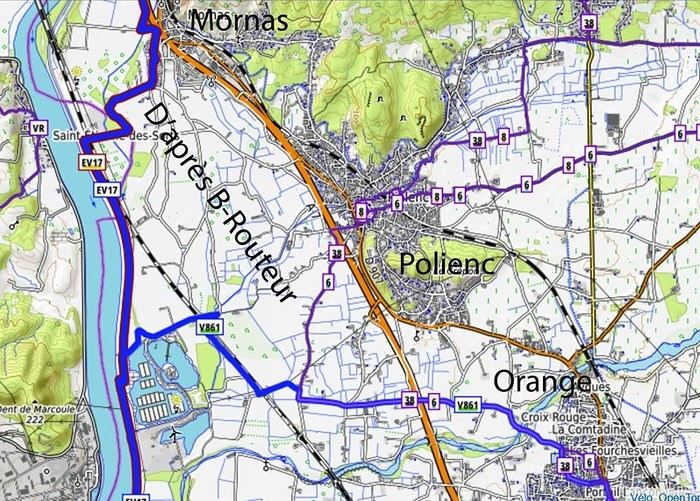
good signage, but Claudio still managed to get lost in cities like Orange and Carpentras...
Cavaillon... got lost several times, but thanks to the map and GPS, he got back on track...
Nice route, sometimes a bit boring, quiet, deserted (normal given the weather), threatening skies, but he escaped the rain.
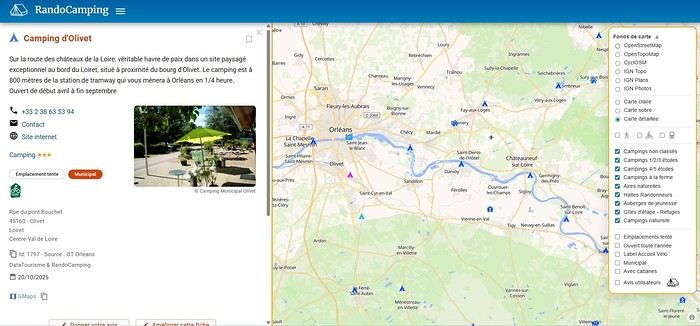
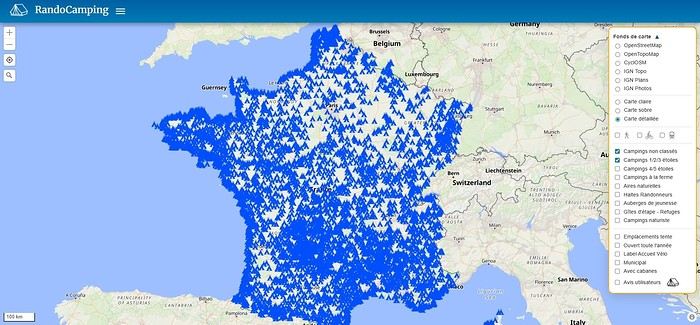
The site is collaborative and supported by associations like Cyclo-Camping International or AF3V.
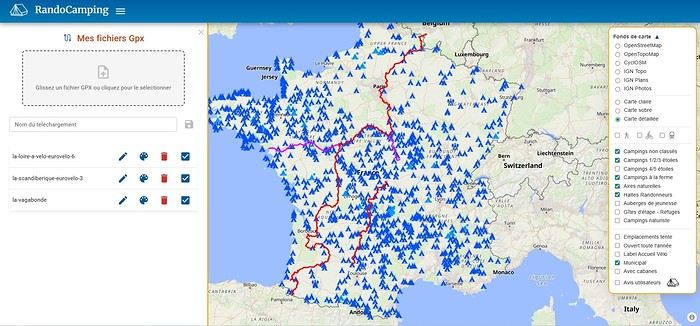
It lets you plan a trip or trek (on foot or by bike) by searching for accommodations along a route. The accommodations come from the DataTourisme platform (which aggregates information from Tourist Offices) and from users (trekkers & hosts).
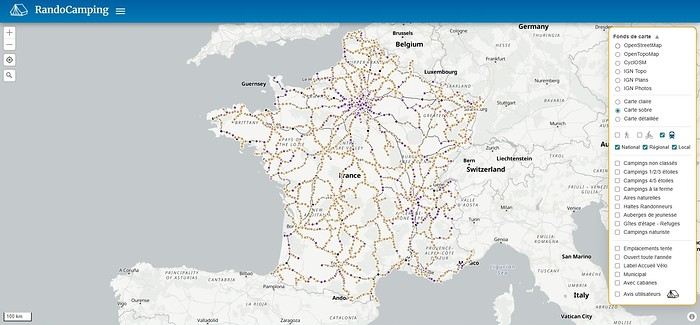
Train lines and passenger stations are also listed. Clicking on a station can show you (if the data is available) how accessible the platforms are with a non-dismantled bike.
Bike and hiking routes come from Waymarked Trails (which is based on OpenStreetMap).




 overall impression:
good signage, but Claudio still managed to get lost in cities like Orange and Carpentras...
Cavaillon... got lost several times, but thanks to the map and GPS, he got back on track...
Nice route, sometimes a bit boring, quiet, deserted (normal given the weather), threatening skies, but he escaped the rain.
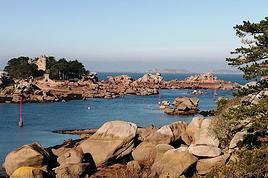 Holiday in Brittany: Pink Granite Coast and Cornwall
 The Pearl of Africa - July-August 2026
 A little piece of Sulawesi with the family: Rantepao and Selayar
 Tanzania Classics (Safari & Zanzibar)
 Getting Away to Ireland
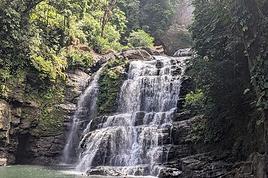 On the Roads of Costa Rica
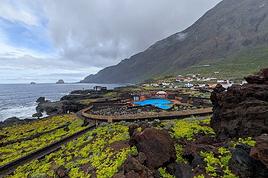 Storm in the Canary Islands
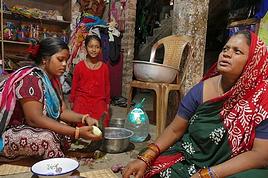 New adventures from Perpignan to Ranchi (Jharkhand)