Voici un petit sujet qui sans polémiquer peut servir de precaution a plus d'un pour son futur voyage !!!
Enfin ceci dit nous partons dns 4 jours en Républica Dominicana pour 1 mois et demi mais je me fais pas de souci hé hé hé
Analyse Record de violences aux Caraïbes, par Jean-Michel Caroit LE MONDE | 31.05.07 | 12h46 • Mis à jour le 31.05.07 | 12h46 Découvrez le Desk, votre écran de contrôle et de suivi de l'information en temps réel.
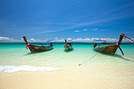
lages paradisiaques bordées de cocotiers, resorts tout inclus et croisières sur les eaux turquoise : les Caraïbes évoquent les vacances ensoleillées et le farniente à longueur d'année. Au revers de ces images de dépliant touristique, cette région est pourtant la plus violente du monde. Dans un récent rapport intitulé "Criminalité, violence et développement dans les Caraïbes", la Banque mondiale souligne que "les taux d'homicide y sont plus élevés que dans toute autre région du monde et que les taux d'agression se situent largement au-dessus de la moyenne mondiale". Attisée par le trafic de drogue, cette violence "compromet la croissance et la prospérité".
Avec un taux d'homicide de 30 pour 100 000 habitants, le bassin des Caraïbes devance l'Afrique du Sud et de l'Ouest (29), l'Amérique du Sud (26) et l'Amérique centrale (22). Les indicateurs de violence varient d'une île à l'autre dans cette région où l'extrême pauvreté d'Haïti côtoie l'opulence des Bahamas. Dans la majorité des pays et territoires formant l'arc insulaire, qui s'étire des côtes vénézuéliennes à la Floride, la criminalité a progressé ces dernières années. Parfois de manière spectaculaire, comme dans les îles jumelles de Trinité-et-Tobago et en République dominicaine, où les taux d'homicide ont respectivement triplé et doublé entre 2000 et 2005.
Les pages des quotidiens dominicains sont remplies de faits divers sanglants. Le 24 mai, El Nacional a fait sa "une" sur l'assassinat par balles de trois jeunes à la sortie d'une discothèque d'un quartier huppé de Saint-Domingue, à la suite d'une rixe apparemment banale. Trois jours plus tôt, un Colombien, accusé de trafiquer 442 kg de cocaïne et pourtant en liberté sous caution, était abattu de plusieurs balles devant un débit de boisson. Deux cents femmes ont été tuées en 2006 par un mari ou un concubin jaloux. La violence contre les femmes est très répandue. L'initiation sexuelle de 48 % des adolescentes a été "forcée", révèle une enquête réalisée en 2003 dans neuf pays de la région. Les Bahamas détiennent le peu enviable record mondial du taux de viol.
Diverses par leurs héritages coloniaux, leurs tailles, leurs populations, leurs langues et leurs niveaux de vie, les îles ont un point commun : elles sont devenues l'une des principales plaques tournantes du trafic de stupéfiants. Hormis le cannabis jamaïcain, la région ne produit pas de drogue. Mais une part importante de la cocaïne colombienne y transite à destination de l'Amérique du Nord et de l'Europe, un marché en expansion. En 2005, au moins 10 tonnes de cocaïne sont passées par la Jamaïque, et 20 tonnes par l'île d'Hispaniola, que se partagent Haïti et la République dominicaine.
Les saisies d'héroïne et de drogues synthétiques, notamment d'ecstasy, ont fortement augmenté ces dernières années. Parmi les vingt pays identifiés par les Etats-Unis comme étant des centres majeurs de production ou de transit de drogues, quatre appartiennent aux Caraïbes : les Bahamas, la République dominicaine, Haïti et la Jamaïque. Les services des trafiquants régionaux sont souvent rémunérés en marchandises, qui sont écoulées localement. Minime, il y a une vingtaine d'années, la consommation de cocaïne et de crack s'est répandue dans toutes les couches de la population. En République dominicaine, les gangs, appelés les "nations", recrutent des enfants pour distribuer la drogue. Selon le code pénal, les mineurs de moins de 13 ans ne peuvent être arrêtés. Exclus d'un système éducatif déficient, sans perspectives d'emploi, les jeunes paient le plus lourd tribut à la violence liée au trafic de stupéfiants. Près de la moitié des victimes d'homicides sont âgées de 11 à 30 ans en République dominicaine.
Etroitement associé au négoce illicite des stupéfiants, le trafic d'armes est en pleine expansion. Dans plusieurs pays de la région, comme la Jamaïque ou la République dominicaine, la prolifération d'armes de poing n'est pas nouvelle. Les partis politiques les distribuent depuis longtemps à leurs sympathisants, et le port d'armes, légal ou non, est commun. De plus en plus de fusils d'assaut et d'armes de guerre, souvent achetés aux Etats-Unis, sont introduits en contrebande.
CULTURE DE LA CORRUPTION
Trinité-et-Tobago est l'un des pays où les crimes ont fortement augmenté. Ces deux îles jumelles, dont l'économie est dopée par l'envolée des prix des hydrocarbures, ont connu une explosion du nombre des kidnappings. Nouveaux dans la région, les enlèvements avec demande de rançon sont devenus une véritable industrie à Trinité-et-Tobago et en Haïti. La corruption sert de terreau à la criminalité. En Haïti, les mafias ont occupé le vide créé par l'effondrement de l'Etat. Illustrant la culture de la corruption et de l'impunité qui gangrène la République dominicaine, le rapport de la Banque mondiale rappelle le scandale de Baninter, l'une des principales banques commerciales.
Sa faillite frauduleuse, en 2003, a coûté l'équivalent de 16 % du PNB et fait plonger 1, 5 million de Dominicains (16 % de la population) dans la pauvreté. A ce jour, aucun des responsables de ce désastre n'est en prison ni n'a été condamné. Les criminels en col blanc exhibent sans pudeur leurs hélicoptères et leurs villas somptueuses, tandis qu'un pauvre bougre a passé des années en prison préventive pour le vol d'une poule. "La criminalité et la violence constituent un problème de développement", souligne Caroline Anstey, la responsable des Caraïbes à la Banque mondiale. Selon l'organisme international, une baisse d'un tiers des taux d'homicide permettrait de doubler le taux de croissance par habitant dans la région. Si Haïti et la Jamaïque parvenaient à réduire leur taux d'homicide au niveau du Costa Rica, leur revenu par habitant augmenterait de 5, 4 % par an. Pour la République dominicaine, le gain serait de 1, 8 %.
Pertes humaines et matérielles, soins, justice, police, prisons, augmentation des dépenses privées de sécurité : dans tous les pays, les coûts de la criminalité ne cessent d'augmenter. La violence éloigne les investisseurs et renchérit les coûts des entreprises, qui doivent financer leur sécurité ou payer des racketteurs, parfois en uniforme. Principal secteur d'activité régional, le tourisme n'a jusqu'à présent que peu souffert de cette inquiétante montée de la criminalité. En Jamaïque ou en République dominicaine, les hôteliers ont constitué des enclaves où les touristes sont isolés des populations locales. Mais ces resorts protégés par des gardiens armés et appartenant le plus souvent à des chaînes étrangères contribuent peu à l'économie locale. Et donc à la lutte contre la pauvreté, qui pourrait freiner la montée de la violence. Jean-Michel Caroit
Bof, tout cela on le sait, et en plus tu ne sait pas la face cachée de l'iceberg...Mais je n'ai pas bien compris, pourquoi tu viens sachant que tu vas courrir toius ces risques...
Car justement tout ca ne m'inquéte pas !!! C'est une partie de la vie intégrante de l'Amerique Latine.....En RD il y a les bons cotés et aussi les mauvais cotés et dns la vie vaut mieux s'adapté aux mauvais coté car de cette facon on surmonte les choses plus facilement !!!
Jy reviendré encore encore et encore mais ensuite ca peu effrayer certains personne habitué a la vie en rose et qui sont barricadé dns leurs Hotels face a la plage facon Punta Cana.....puis c'est pas mon premier voyage en RD ou autres.
En france y'a les mêmes problemes chez moi a Paris donc dns le fond c'est le même bordel.
Je rejoins Clermontois dans son propos, , , , , , , , je ne comprends pas pourquoi tu mets la panique ainsi, , , , si tu es pret a affronter les mauvais cotes de la Rd et puisque tu dis la connaitre, je me permet de sourire car tu sembles ne pas connaitre grand chose excuse moi 😕
Tu crois que les milliers de touristes qui viennent tranquilles ici se reposer et profiter du soleil et de la plage vont aller trainer dans les barrios tres tres chauds de la RD ..........................je pense que tu as un peu faux sur le sujet, desole, , , , , , 😎😉 mais bonnes vacances tout de meme 😄
😉 oui mais je ne viens pas en touriste bien sur !!!
eh je sais parfaitement que la Rd est bien plus sûr en general que nos banlieues parisienne .......mais bon apparement toi tu te trouve Boca chica, c'est un peu notre cannes de chez nous enfin t'est pas du tout mal lotis !!!
Mais je met juste les infos qui peuvent servir a certains et chacun les comprends et les utilise a sa facon....donc je ne suis pas la pour paniquer les gens mais les informer que de nos jours il ne faut plus etre un simple touristes mais comprendre et connaitre que ce soit positif ou négatif le pays on l'ou vas !!! Dns d'autres forums et d'autres sujet je ne dénigre pas du tout la Rd ....au contraire.
Enfin je te laisse dns ta belle Boca chica.......😎
😉 !! je n'ai pas besoin d'être rassurer c'est plus de l'info !!!
De ce coté j'ai du vécu.....je viens pas des beaux quartier que ce soit a Santo domingo ou Bogota juska paris les problemes sont les mêmes .........alors je suis assuré rassurér.
Mais merci de vous inquieter pour moi.
En tout cas heureusement qu'il y a des gens comme vous opur rassurer les gens sur ce genre d'informations que j'ai pu mettre en ligne car je comprend que c'est pas du positif mais tu sais vu d'ici les gens résume la RD a 2plages de Punta cana ou ailleurs et se croyent en toute sécurité car dérriére leurs complexes y'a une protection optimale et donc ensuite se croyent tout permis et surpuissant car ce sont des touristes en position de force économique.....enfin je vais pas m'étendre............seulement je ne généralise pas car entre autres il y a ceux qui viennent juste pour la farniente et rien de plus.
Voila !!! alors je m'excuse aupres des personnes qui jugeront ce message négatif envers la RD......mais il y a aussi beaucoup de touristes qui dans leurs comportement, leurs attitudes......envers la population et autres donnent un peu plus de négativité dns le pays.
Pour tous ceux qui ne sont pas dans cette optique....leurs voyages en Rd sera fabuleux, enrichissant......au plan personnel et émotionnel et bien sur reviendront avec plein d'images de la RD a partager.......loin des clichés habituels = Hôtel + Plages
A horseback ride by the sea on the Caribbean island of Saint Martin or ... on the beach, but at a walk and trot! It was probably these visions that gave me the…
I’m reaching out today because I’m really struggling to find concrete, up-to-date info and feedback on the Bahamas. My wife, our 7-year-old daughter, and I have traveled to Playa del Carmen, Bayahibe, and Punta Cana in previous winters, and we loved escaping to "summer" during the French winter!
We’d like to spend about 10 days in the Bahamas in mid-February 2027. I’m really drawn to the history of the place (pirates, etc.), and we’re excited to explore the Atlantis complex, wander around Nassau, and especially see those dreamy landscapes (the Exumas in particular).
Project overview:
- Days 1 to 7: Stay at Atlantis + exploring Nassau + 1-day excursion to the Exumas (I’ve seen Powerboat Adventures?)
- Days 7 to 10: A few nights somewhere else, further south in the archipelago, but I’m not sure where yet. Any recommendations for stunning spots to discover?
Questions:
-1: My biggest concern is the weather/climate in February. I’ve heard mixed things, and it’d be a real bummer if we didn’t get at least *some* warmth...
I’m not expecting scorching heat, but if we have to wear a jacket and can’t swim, that’d kind of ruin the trip.
According to Google and lots of sites, it’s the ideal time—dry season and sunny—but I’ve seen a few forum posts that worry me.
Does anyone live there or have enough experience to give me a real sense of what to expect?
-2: At this time of year, especially in the Exumas, is the water crystal-clear or more murky/churned up for snorkeling visibility? I read a post saying that in winter, there are stronger currents that stir up the water and make it less beautiful (not like the photos of the Exumas).
-3: Any ideas for a dream spot where we could spend the last 3 nights of our trip? (Without it being a huge trek to get there.)
-4: I’m open to all tips, random or not:
- Must-sees in Nassau?
- Cool pirate-themed spots or restaurants?
- Cool places at Atlantis?
- Beautiful beaches in Nassau/Paradise Island? (Cabbage Beach?)
- Thoughts on the Powerboat Adventures excursion to Ship Channel Cay (apparently a private island, reviews are very positive, and it looks stunning)
Thank you so much in advance to anyone who takes the time to read and respond—I’m sorry for the long post, haha! :)
Have a great day,
Kevin.
We all know the raft is taking on a bit of water.
No discussion threads about the island for weeks...
Have all travelers really moved on elsewhere? No one who could come to the rescue with recent info?
I’m in the Caribbean and still kinda feel like swinging by in September/October...
Looks like there are still direct flights from Mexico and the Dominican Republic for getting in and out.
I'm heading to the Dominican Republic for 5 days in December.
I arrive and depart from Samana Airport (AZS). I'm looking to rent a car, ideally right at the airport, but I don't see any options. Are there no rental agencies at Samana Airport?
If not, do you know where I could rent a vehicle closest to the airport and how to get there?
Hi,
I’m heading to Miches for the first time in November 2026 (no all-inclusive)
I’d love some tips to plan my stay—accommodation, things to do, places of interest nearby.
Is it possible to rent a scooter there to get around the area?
Thanks for your help!
Best,
hi there, I’ve never been to Martinique. my girlfriend, who’s of Martinican origin, has never had the chance to go either (life isn’t always easy). now we can plan a little trip, but we don’t know which airline to choose or how to find accommodation.
basically, I need quite a few tips.
we’re planning to go in September—no chance before that.
Hi! We spent 10 wonderful days in Guadeloupe’s gorgeous climate. Our arrival got off to a shaky start, though—our suitcase was left behind at the airport, which caused quite a stir. A police officer was shouting at us to get out and cross the street. Then, a taxi driver refused to take us after we showed him where we were staying, right by the port in Pointe-à-Pitre. "No one goes there," he told us! Good thing we arrived during Carnival! A second driver finally agreed to take us, and I can say he knew every nook and cranny of his city.
The rest of the trip was amazing. The locals were smiling and welcoming. We didn’t rent a car, so we didn’t get around much and stayed in the Deshaies area—a real favorite. Plage de la Perle (Pearl Beach) truly lives up to its name! We liked Grande Anse Beach less because of the steep slope, which made walking tricky, and the waves were pretty intense. The landscapes in this part of the island are idyllic. We visited the botanical garden—it’s worth it—and went to the port in Deshaies. If we ever go back, we’ll rent a vehicle so we can explore more, because taxis aren’t cheap!
Hi, I’m leaving soon for Punta Cana—what kind of money should we bring: Canadian dollars, US dollars, or are we forced to exchange once we arrive?
Thanks
We spent 15 days in the Exumas from March 10th to 26th.
I should mention that we’ve been traveling to islands for 20 years, so we have points of comparison when it comes to prices, hospitality, and landscapes.
First, the flights: we now live in the Luberon, so we flew out of Marseille. We took British Airways, which we’ve used several times before for trips to the English-speaking Caribbean and which offers flights via Heathrow. We had an overnight layover in London on the way out, then a flight to Nassau. After that, we took a connecting flight (we had a 2h20 layover in Nassau, which was more than enough) to George Town with Sky Bahamas. We had initially ruled out Bahamasair based on very negative reviews.
Immigration and customs were very quick.
When we arrived, we took a taxi to our hotel, Augusta Bay. Cost: $30.
We rented a car through Sure and Shore. It was delivered to our hotel the day after we arrived, and we kept it until we left for Stocking Island. For 9 days, we paid $470 (which is a great price) for a small Honda that wasn’t very new, but we didn’t have any issues with it. One thing we’d never experienced before: they’d put newspaper sheets on the floor, and we were told not to get any sand in the car if we went to the beach!
We stayed 5 nights at Augusta Bay. A 5-minute walk away is the beautiful, uncrowded Jolly Beach, perfect for swimming. We visited the southern part of the island to see the beaches of Little Exuma, especially Tropic of Cancer Beach and the one next to Santana’s restaurant. We also went to Hopper Bay Beach, where you can see a group of about ten turtles near a small boat dock. We went kayaking from the hotel.
Then we stayed at Paradise Bay in the north. While we hadn’t encountered the sandfly problem before, here it’s important to know that the beach is infested with them. The hotel’s restaurant, which is very good otherwise, even provides repellent for guests— that’s how bad it is!
From there, we visited Coco Plum Beach, Three Sisters Beach (where you can snorkel), and others. We also went kayaking again.
We ended our trip with 3 nights on Stocking Island at Saint Francis Resort. If we were to do it again, we’d spend 4 nights there. The island has many trails, snorkeling spots, and you can get around by kayak. We saw rays, turtles, and even a harmless shark, as well as some beautiful beaches. Plus, the welcome at Saint Francis was the warmest we experienced.
Be aware that everything is very expensive on the island—much more so than in the English-speaking Caribbean. Clearly, the purchasing power of Americans plays a role. They say everything is imported, but that’s the case on all islands!
Some places only accept cash or charge a 5% fee if you pay by card.
We didn’t find the locals particularly friendly. If you’ve been to Dominica or Grenada, for example, you’ll know what I mean.
We explored the whole island. The beaches are stunning, but the roads tell a different story. There are a lot of car wrecks—some houses have two or three in front of them, which really spoils the landscape. There are also many abandoned, ruined houses.
The vegetation is lush but not tropical, and you’ll be served apples and oranges for breakfast because there are very few exotic fruits.
As for the climate in March, there was no humid atmosphere, and the heat was very manageable (26°C). It was very pleasant. The seawater, however, is definitely cooler than in the Indian Ocean, for example.
There’s not much snorkeling, but we knew that before coming.
In conclusion: beautiful beaches, sand as fine as flour, and a very pleasant climate. But honestly, for the same cost, I’d prefer the Seychelles, for example.
Hi everyone,
I need your help!
We’re planning to visit Guadeloupe and take the opportunity to explore the islands La Désirade, Marie-Galante, and Les Saintes.
I initially planned to rent a car to get around the main island and then take the ferry from Trois-Rivières to Les Saintes, from Pointe-à-Pitre to Marie-Galante, and finally from Saint-François to La Désirade, following that route.
But when I look at it, the car would sit unused for at least 5 days—that’s paying for nothing🙁.
Is it possible to go from LES SAINTES to MARIE-GALANTE and then on to LA DÉSIRADE? We’d only rent a car once we arrive in Saint-François to continue exploring Guadeloupe. What do you think—is that doable?
This trip is planned for April.
Thanks so much for your help
Just a quick update on the state of this road: the unpaved section has been significantly improved. You can now complete the journey in about 4 to 4.5 hours instead of 6. Great news! For me, the most hazardous part is actually the paved section before and after Sagua. It encourages higher speeds, but there are deep, dangerous potholes that appear without warning. Be careful!
I’d also note that despite occasional power outages—which casas and paladares know how to handle—tourism remains perfectly doable. Cuba is still magical! I was just told, with a touch of humor, that the official German government website suggests bringing your own toilet paper and candles… Hmm, maybe an update on rechargeable gear would be in order…
Hi! We’re visiting Guadeloupe for the first time in January. We’re looking for accommodation near Deshaies to start our trip. A quiet spot, not too far from the sea so we can walk there. Any suggestions are welcome!
I’ve just returned from 15 days in Cuba and wanted to share my experience along with some practical tips for those planning a trip there.
1. Formalities:
- Passport valid for at least 6 months after your return.
- E-visa: apply online (payment by bank transfer only via the embassy of your choice): evisacuba.cu or through an agency novelacuba.com (card payment on their site—I had to go with this option and recommend it because the Cuban embassy in Brussels apparently never received my transfer...)
- Digital D’Viajeros form to fill out a few days before departure
- Mandatory health insurance
2. Currency/budget
- Plan your entire budget in cash; card payments are rare, and withdrawals at the official rate aren’t great.
Local currency: CUP (Cuban Peso)
Official rate: ~1 € = 120 CUP → state-run restaurants and shops.
Current unofficial rate: ~1 € = 490 CUP → private restaurants, local bars, Cuban-owned shops.
For exchanging money:
The easiest way: ask at your *casa particular* or a local restaurant.
3. My itinerary (15 days)
Havana: 3 nights
Viñales: 3 nights
Cienfuegos: 1 night
Trinidad: 3 nights
Varadero: 3 nights
Havana: 1 night
Flights: Air Europa from Brussels, with a layover in Madrid. Smooth and pleasant service.
Accommodations: *casas particulares* booked on Airbnb except for Varadero (Iberostar Playa Alameda hotel).
Practical tips
Install a VPN before departure (many blocked sites like Instagram and Airbnb).
Download the El Toque app to check the updated CUP exchange rate.
Internet via ETECSA SIM card (~30 € for 10 GB) or Wi-Fi in hotels/*casas*.
Download Maps.me for offline maps.
Intercity travel: shared taxi, Viazul bus, or private transfer through your *casa*.
Electricity: 110 V, sometimes 220 V.
Bring basic supplies and medications—hard to find there.
Cuba requires flexibility and openness: regular power outages, unstable internet (especially in Trinidad).
Finally, my personal take:
I loved my trip to Cuba! It’s a disorienting yet deeply charming country.
Poverty is visible, especially in Havana: crumbling buildings, many people asking for help (but no safety concerns!). Bringing some essentials for locals is a good idea (soap, toothpaste, medications, clothes...).
Cubans are incredibly welcoming and friendly. A few basics in Spanish help a lot! The vibe is unique: music in every street, musicians everywhere, salsa all around.
The variety of landscapes is amazing: colonial architecture, paradise beaches, mountains, waterfalls, lush valleys—you’ll never get bored.
Only downside: Varadero, less authentic than the rest of the country, but I expected that!
Overall, it was a wonderful trip, and I’d love to go back!
Hi,
Several comments recommend bringing mosquito repellent. Got it. Are there a lot of them during the day? And by the seaside? Or are they more present (and voracious) in the evening? Thanks.
I bought tickets for Martinique in April 2025 for 15 days, without really looking into what there was to do, and with the idea in my head that we could: hike, do water activities, swim, visit rum distilleries...
But... I’m worried I’ll get bored over 15 days and I’m considering maybe spending 1 week in Guadeloupe and 1 week in Martinique.
For example, I don’t know how to spend a whole afternoon at the beach. 2 hours, max.
I know it’s a personal question and depends on how you travel, but I’d love to hear your thoughts if you’ve done it:
- Did you feel too rushed?
- Is it reasonable to do?
- How much time would you spend on each island?
I’ve just returned from Havana after an 18-day stay from October 8th to 26th.
From Montreal, you have to go through Varadero Airport. I now break up the airport-to-Havana transfer with a SUPER pleasant stopover halfway, in the historic village of Hershey (Camilo Cienfuegos). Quebecer Anne-Marie has renovated a century-old house there, and every stay of mine feels like a peaceful oasis. Amazing food, a pool, impeccable hospitality—I highly recommend it! Casa Cub'Anita.
Life for Cubans remains just as tough, made even harder right now by tropical viruses spread by mosquitoes. It’s absolutely essential to protect yourself properly. That said, the purchasing power of foreign currency hasn’t changed much, despite skyrocketing inflation. As of today, the US dollar exchanges for nearly 500 pesos on the "informal market."
This was my first time staying in Vieja, in the non-touristy part. I discovered some great little restaurants run by the younger generation. Affordable, excellent food, and remarkably friendly service: El Chanchulero (it was about time I checked it out—unbeatable value for money!), El Café, Jibaro...
Cubans are still as warm and welcoming as ever—bicitaxis, servers, markets. Speaking the language is a huge plus.
Essentials to download from abroad before you leave: the maps.me offline maps app, and the La Nave taxi/motorcycle taxi app, which is super efficient for getting around the capital.
Sending my best to all my friends in Oriente as the hurricane passes, especially to Baracoa. I’m planning to visit this winter.
I’m planning a trip to Cuba this summer and I’d love some info: Is travel insurance really necessary? Can you easily get online by buying a local SIM card or internet card? Apparently, there’s only one currency now—is it better to exchange money with your *casa particular* host?
Thanks for all these valuable tips!
Hi!
I’m heading to Havana for a week in February. I’m looking for a casa particular that’s affordable, clean, and cozy. Since I’ll be traveling alone, I’d love a place where people are welcoming!
Also, I really want to stay in Habana Vieja...
Do you have any recommendations for places you’ve stayed before?
I tried booking the casa particular *Chez Nous*, but I never got a response.
Hi fellow travelers,
We're heading to Martinique for a month from mid-January to mid-February.
Our plan is to explore the island by staying in three different spots for 10 days each, on both sides of the island...
Could you share some great tips on where to stay for an authentic experience and what we absolutely must see?!
Hi there,
In March 2026 I’ll be at the Club Med in Sainte-Anne and I’m thinking of heading to Les Saintes at the end of my stay.
Do you know what the most convenient way to get there is?
Thanks so much!
Hi everyone.
For those traveling to Cuba and then planning to go to the USA, you won’t be able to get your ESTA for the United States (same applies) if you’ve been to Cuba after 2021 due to a law passed by Donald Trump (a law that Biden later repealed).
You’ll have no choice but to apply for a visa, which costs 200 € (and approval isn’t guaranteed even after payment).
If you’re in this situation, the process to get this visa will be a real hassle—you’ll need to book an appointment at the U.S. Embassy in Paris. It’s the only embassy in France authorized to handle your application after you’ve filled out the visa request on the official website.
If you try to cheat by applying for an ESTA for the USA, just know that the American administration has ways of finding out if you’ve been to Cuba. 😉
I'm looking for information on the islands of Puerto Rico, St. Barthélemy, and St. Martin for March 2026.
What is there to see, and if possible, prices or tips, please?
Thanks, Michel V.
I’ve booked a room at an all-inclusive in Varadero for January 2025. This will be my 3rd trip to Cuba, the last one was 20 years ago.
The whole tipping and gratuities thing is wearing me out. Even though it’s an all-inclusive package, I think it’d be rude not to leave any tips for the bar staff and the housekeeping team, especially.
Here’s what I’m aiming for:
1. Not feeling stingy (or “feeling cheap” for my fellow Quebecers);
2. Not disrespecting Cubans by offering junk or, on the flip side, going overboard and creating unrealistic expectations for future tourists;
3. And most importantly, not spending the whole week wondering if I’m doing the right thing. I’m going there to relax, not to stress!
Hi there,
I’m planning our upcoming trip to Guadeloupe. We’re looking for a place to stay where human contact is a priority, with air conditioning, close to the beaches, and clean.
We’ve had several responses. After doing some research online, I was able to rule out quite a few options.
But now I’m deciding between:
Kokoplaj, tipayoune (issue: no AC, just fans—is that a problem?), Résidence Le Zandoli, and Gwada Rêves.
If you have any info or experiences to share, I’d love to hear them! ;-)
Thanks for your help!
See you soon...
I’m heading to Blau Costa Verde next February and I’d like to rent a scooter to explore the area. Are the roads around Holguín in good condition? I’m thinking of renting one for 1–2 or 3 days to visit Holguín, Gibara, and Banes on my own. Do you recommend it (I’ve got a great sense of direction)? How much does it usually cost to rent a scooter for 2 or 3 days (or a car, though I’d prefer a scooter)? Also, are there any other interesting spots nearby you’d suggest checking out?
Are there any excursions to Santiago, and how much do they typically cost?
Hi,
When booking the tickets to Martinique for our family, I must have made a mistake, and on one of the tickets, the third first name is wrong. Michel instead of Joel...
CORSAIR Airlines is telling me I have to buy a new ticket for 1200 € (Christmas period). I think that’s outrageous and, above all, impossible for us.
I’m desperate—I feel like Corsair is really overdoing it.
Is there any recourse? How can I get out of this?
I’m throwing this message in a bottle, just in case...😕
Hi, I'm looking for a car rental for January 2020 in Guadeloupe. There are several agencies I've seen reviews for—has anyone dealt with Autolagon before?
Thanks!