Un Français, rencontré au Brésil en 1987, nous avait fait l'apologie de l'Indonésie. Il ne tarissait pas d'éloges. 2 ans plus tard, mon ex-compagne et moi décidions de sauter le pas et nous voilà partis pour deux mois en Indonésie. Arrivés à l'aéroport de Bruxelles-National, première tuile : "Delayed-Info". Nous nous représentons donc le lendemain et là, le vol était prêt. Un vol Garuda (3 fois, 1.000 fois hélas !!!). Une escale était prévue à Abu Dhabi. Escale au cours de laquelle nous avions le choix : soit rester à bord de l'avion, soit visiter l'aéroport d'Abu Dhabi. Comme nous n'avions jamais mis les pieds aux Émirats, nous nous sommes dit "pourquoi pas ? Visitons." Grave erreur ! L'avion avait une avarie et il nous était interdit de le regagner. Nous n'avons jamais compris en quoi notre présence allait plus gêner que celle de ceux qui avaient choisi de rester dans l'avion. Nous avons donc tenté de dormir, à même le sol en mosaïque de l'aéroport (il y avait un garçon en chaise roulante, parmi nous). Vers 7 heures du mat, Garuda nous avait enfin dégotté des chambres dans l'Holiday Inn local, à charge pour nous, bien entendu, de remettre nos passeports, ce qui en a inquiété plus d'un. Certains voyageurs nous ont convaincus d'appeler l'ambassadeur de Belgique à Abu Dhabi : cet imbécile n'a rien trouvé de mieux que de nous suggérer de visiter les lieux, les marchés, et comment faisons-nous sans nos passeports, Ducon ? En plus, nous ne pouvions pas aller dormir tout de suite, les chambres n'étaient pas prêtes. On nous a "invités" à manger. Croyez-moi, quand vous manquez de sommeil à en crever, manger est bien la dernière chose à laquelle on pense ! Enfin, les chambres sont prêtes. Nous nous y précipitons et nous écroulons sur le lit où nous nous endormons instantanément. Las ! 30 minutes après, le téléphone nous réveille : l'avion était prêt ! Tout ça pour ça. Exténués, nous arrivons à Jakarta, à 1 heure du mat. La personne censée nous y attendre n'était évidemment plus là (nous étions supposés arriver vers 15 h !). Tous les bureaux de changes étant fermés, impossible de se procurer la moindre roupie indonésienne, évidemment ! J'ai entamé de longs pourparlers avec le personnel de Garuda, qui a enfin daigné nous dégotter une chambre à l'Hotel President, à Jakarta. Air co, ce qui n'était pas du luxe, vu la chape de plomb de l'air moite qui nous était tombée dessus dès la descente d'avion. Radio, qui m'a permis de découvrir la seule chose que j'aie aimée dans ce pays : le jazz fusion de Krakatau en général et d'Indra Lesmana en particulier. Mais nous avions prévu d'aller à Yogyakarta. Ayant quitté l'hôtel avant midi (selon la tradition), nous nous pointons à la gare. Et ce fut à nouveau un long voyage sans dormir (évidemment ! L’Indonésie sans privation de sommeil, ce ne serait plus l'Indonésie !). Nous débarquons donc à Yogyakarta comme des zombies. Nous trouvons (enfin !) où dormir au Bagus Hotel où je me lie d'amitié avec le mainate albinos, certes en cage, mais à qui le personnel fait faire son petit tour hors cage tous les soirs. À chaque fois qu'il me voit, il me dit "selamat pagi-pagi-pagi !" (Selamat pagi = bonjour, en indonésien).
Mais, excédés d'être réveillés par l'appel du muezzin dès l'aube (je vous dis, le sommeil n'a pas bonne presse en Indonésie), nous décidons de migrer pour Bali. Pas pour Kuta, non, on n'est pas des Australiens, mais pour Ubud. Et au début, tout se passe bien. On nous fait découvrir le gamelan balinais qui, malgré sa lutherie nettement plus réduite que celle du gamelan javanais, est autrement plus dynamique, plus intéressant, musicalement, nous prenons les quarts de ton en pleine tronche et c'est fabuleux. Hélas, un certain Agus qui manifestement, était payé pour nous faire découvrir tout ça, après nous avoir vendu des billets pour ledit gamelan, mais aussi pour le "Kecak" (discipline, paraît-il inventée à la seule intention des touristes), s'est aperçu avec nous que nous en avions fait le tour, des musiques balinaises. Du coup, il n'avait plus rien à nous vendre. Du coup, nous n'étions plus intéressants. Du coup, nous ne l'avons jamais revu.
Nous décidons alors d'aller sur l'île de Gili Tranwanggan. Las ! Pour y aller, il fallait traverser Lombok, probablement l'île la plus islamiste de l'Indonésie. Et ma compagne, qui se débattait désespérément avec l'anglais (elle était habituée à l'espagnol et au portugais), parvient à articuler une question dans un anglais grammaticalement correct. Mais ma compagne, n'étant "qu'une femme", l'autochtone répond certes à la question, mais en s'adressant à moi ! Charmant !
Bref (comme dirait Kyan Khojandi), nous arrivons ENFIN à Gili Trawanggan. Un complexe "hôtelier" (?) composé de maisonnettes sur pilotis. Gili Trawanggan est une île musulmane, a donc sa mosquée, le muezzin se fait entendre non pas à 5, mais à 4 heures du mat. Sauf que la mosquée est bien plus éloignée de notre logement qu'à Yogyakarta, ce qui rend la chose bien plus supportable. Le souci, ce sont les insectes et arachnides. Vu la chaleur moite, vous pensez bien qu'ils sont au paradis, au point qu'on nous fournit des moustiquaires à border sous le matelas. Et en allant se coucher, nous découvrons scorpions, énormes araignées sur ladite moustiquaire. À charge pour nous de nous coucher doûûûûcement, histoire de ne pas énerver ce joli monde.
Nous faisons connaissance avec Latu, le gestionnaire du complexe. Très sympa. C'est à lui que je dois de savoir que la musique entendue à l'Hotel President de Jakarta est de Krakatau, que la chanteuse en est Trie Utami et que le morceau s'intitule "Dirimu Kasih".
Nous quittons à regret (malgré les bestioles) Gili Trawanggan, revenons à Ubud. Après un bref et pénible passage par Candi Dasa, où j'ai vu des ouvriers du bâtiment mâchonner puis cracher des libellules, où l'unique poste téléphonique disponible dans la localité était habité par un nid de guêpes, nous faisons cap sur Denpasar, le chef-lieu de Bali. Ville ennuyeuse à périr, "hôtel" dont les chambres étaient "éclairées" par de poussives ampoules de 25W made in Indonesia et peuplées de cafards gros comme ma main, nous faisons (grossière erreur) un passage par Padangaran où nous nous sommes fait royalement ch*er. Comme Padangaran est une plage, mon ex a naïvement cru pouvoir y faire du bronzing. 15 minutes après, elle s'est retrouvée encerclée de motards voyeurs (qu'est-ce qu'elle croyait ?).
Nous trouvons enfin un bus pour Jakarta, bien décidés à n'y passer qu'une nuit, à Jalan Jaksa (la rue des hôtels pas chers). Durant le trajet, elle a le mal du voyage. J'ai été obligé de gueuler "STOOOOOOOOOOOOP !!!" pour que le chauffeur daigne finalement s'arrêter. Enfin arrivés à Jakarta, nous cherchons un hôtel à Jalan Jaksa. Nous en trouvons un. Au beau milieu de la nuit, mon ex sursaute : elle s'est encore fait escalader par un cafard grand comme ma main. Je me dis "ça n'en finira donc jamais ?". Ce n'était pas la dernière fois que je me faisais cette réflexion.
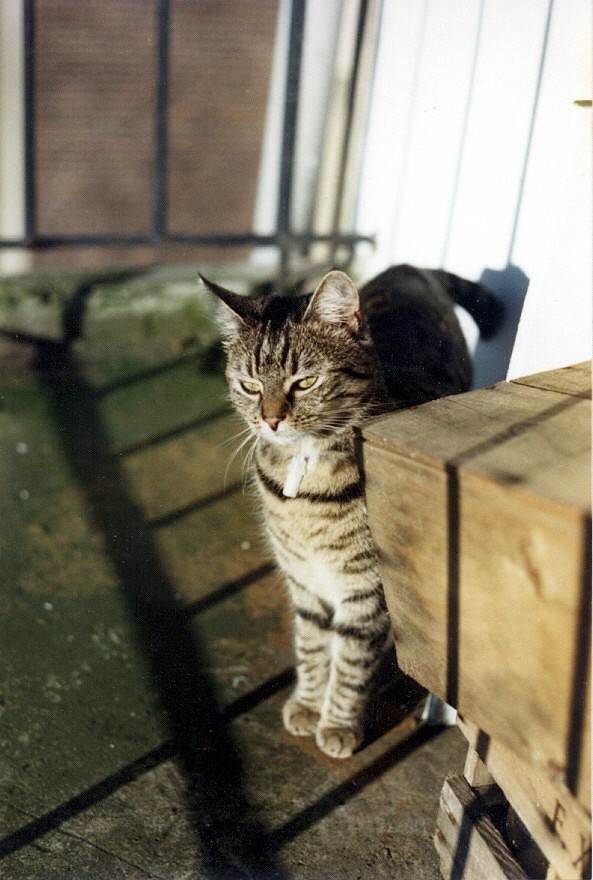
Le lendemain d'une ultime nuit approximative, la gérante de l'hôtel nous annonce qu'elle a appelé un taxi "Oiseau Bleu" à notre intention en sorte de pouvoir rallier l'aéroport. Le taxi (tiens ???) arrive dans les délais. Nous arrivons trop tôt à l'aéroport et, pour m'occuper, j'y achète la BD "Asterix di tengah Orang Swiss" ("Astérix chez les Helvètes", en indonésien). Nous arrivons au terminal et, comme prévu, l'avion a du retard. Ça ne m'étonne même pas. Plusieurs heures après, nous embarquons enfin. Et sur la carlingue, un cafard, plus grand que tous ceux que j'ai vu, fait de la voltige. Je dis à haute voix "Encore ! Ça n'en finira donc jamais ?" Mais une passagère européenne me rassure en me disant que s'il pénètre dans l'avion, il ne résistera pas à l'ai co. Une escale est encore prévue à Abu Dhabi. Et ô surprise, arrivés à Abu Dhabi, on découvre une avarie technique de l'avion. Ayant retenu la leçon à l'aller, nous décidons de rester à bord, pas fous ! Imitant d'autres passagers, nous décidons de, comme eux, profiter de l'espace laissé par les pigeons qui sont sortis de l'avion pour nous allonger et tenter de dormir. Las ! Le personnel de bord nous réveille à intervalles réguliers, au motif que ça ferait mauvaise impression à l'égard des passagers qui sont sortis, lorsqu'ils seraient (enfin) autorisés à regagner l'avion. Mais une certaine solidarité s'est organisée parmi les passagers restés à bord, ce qui fait que nous envoyons chier les empêcheurs de dormir, gentiment, mais fermement, résultat, au final, ils ont cessé d'insister. Ils ont probablement dû sentir que le sommeil n'était pas illégal en Belgique. Arrivés à Bruxelles, les gendarmes (oui, en 1989, la Gendarmerie existait encore, en Belgique), je les aurais embrassés ! Ce retour à Zaventem est mon meilleur souvenir d'Indonésie. Ça et les miaulements de ma petite et défunte Céline. Ayant fait part de nos mésaventures, le Français nous a marmonné qu'il ne parlait pas de l'Indonésie, mais de la Thaïlande. C'est c'laaa, oui...
Je le pense aussi. Ou alors, sans quitter l'Europe. Et encore, sans quitter mon pays ou en me limitant à l'Europe du Nord. Le Voyage (avec un grand V) n'est pas fait davantage pour les handicapés.
VOus êtes vraiment consternant ....Les muezzin en pays musulmans vous dérangent ? Les autres sont des "ducon" ou des imbéciles ? Il fait chaud, des cafards, des retards ...Ben oui, c'est comme ça 🤪
Je pense que vous feriez mieux d'aller dans des endroits moins "dépaysant", parce que effectivement en Indonésie comme dans beaucoup d'autres pays, il y a des bébêtes, du bruit et des muezzin qui appellent à la prière à pas d'heure. Et c'est justement pour tout ça qu'on y va. Si je voyageais pour retrouver la même chose que ce que j'ai à côté de chez moi, et bien je préfère rester chez moi, ça me coûte moins cher.
Vous n'êtes vraiment pas fait pour voyager ailleurs que chez vous, et encore !???
J'ai une mésaventure Belge à vous raconter :
C'était du temps de ''FEU SABENA'' votre belle Cie Belge. Je devais faire un BruSSels>>>Bujumbura (Burundi) via Le Caire, normalement 14 heures de voyage.
Je me suis retrouvé à Londres, puis à Adis Abeba (Ethiopie), puis à Naïrobi (Kenya), puis à Kigali (Rwanda), et enfin à Bujumbura 48 heures après !!!
Alors ne critiquez pas les Cies Aériennes que vous avez pris.
Votre récit pourrait faire rigoler des potes à votre retour, dans le genre "oh lala quelle aventure!!!"
Mais bon, à part le retard sur vos vols (en même temps vous prenez la Garuda qui n'est pas réputée pour être dans le top 10 des compagnies), vous racontez des trucs qui font partie du voyage: des insectes locaux, un mal des transports en bus, des "guides" locaux interéssés par les touristes, un air chaud et humide.........ce qui serait interessant à savoir c'est pourquoi voyagez vous? A priori ce n'est pas votre 1er voyage et vous voyagez sans tour operateur.......et pourtant sur place vous n'êtes pas content alors que rien de grave ne vous est heureusement arrivé.
Bsr ! j'étais plié de "rire😉" , en vous lisant !! mais, sérieusement, QUEL INTERET😮 de raconter une histoire vieille de ......23 ans 😕 ??? ....en plus que bcp de choses ont du changer ds ce pays, non ?? il est vrai que certains "plats " réchauffés sont bien meilleurs !! LOL 😏😉
J'avoue que faire un etat d'un voyage en Indo il y a 22 ans, c'est pas vraiment de l'info tres fraiche.
Entretemps, il y a eu quelques changements :
Garuda est beaucoup plus fiable, meme si je voyage assez rarement avec eux
Sinon n'a pas change :
- Il faut toujours tres chaud et humide
- C'est toujours Musulman avec 5 prieres par jour
- Les horaires sont toujours elastiques
- Les cafards sont toujours aussi gros. (a noter que depuis 2 ans que j'y vis, je n'ai pas encore rencontre de scorpion ni d'araignee hors normes)
- Les vendeurs sont toujours aussi interesses par le pognon
Et au cas, vous auriez encore quelques velleites de venir, sachez aussi que vous n'en faites pas mention mais :
- La police et les fonctionnaires sont ultra corrompus
- Les gens conduisent comme des tares et survivre sur la route releve de l'exploit
- Les routes sont encombrees
- Les iles sont soumises aux eruptions volcaniques, tremblements de terre et autres tsunamis
- La bouffe est souvent tres epicee
- Les cas de dengue sont legion
- L'eau qu'on utilise pour laver les legumes et les fruits est pas toujours extra propre
...
Comme ca, ca evitera d'avoir ce genre de commentaires a l'avenir, tout ca est vrai, archi connu et ecrit dans tous les guides, mais si vous etes prets a passer outre il ya tellement de choses magnifiques a decouvrir dans ce pays que ce serait dommage de se borner a ces petits desagrements. Un voyage ca se prepare, surtout ici.
Je suis navrée pour vous! votre voyage ne donne pas le souvenir agréable.
C'est vrai un voyage en Asie ça se prépare et encore.. même si je donne les info a les groupes, j'explique, je montre par photos ou video
de 'vivre' les experiences en indonesie est parfois très difficile. On perds tout les repères d'ici, ça demande quelque jours de aclimatiser.
C'est vrai il y a encore plein de belles choses en Indonesie. Peut être la prochaine fois
si vous allez voyager en asie de vous bien préparer ou aller avec une personne asiatique ou français qui connais indonésie, qui peut vous
aider. Pas pour enlever les petites bêtes, mais pour vous aider de vous adapter et de comprendre la culture
ou la façon de vivre des indonesien, voir les asiatique, après vous pouvez peut être voir aussi les choses
plus interessant ou belle.
Je vous souhaite d'ouverture, flexibilité, compassion et tolerance
partir dans un pays à 85% musulman pour se plaindre d'entendre l'adhan 5 fois par jour.
????????????
j'ai entendu ca souvent et il y a quelque chose que je ne comprends toujours pas.
qu'on se plaigne de la qualité (généralement déplorable, sans parler des sonos) des chants des muezzin indonesiens, je comprends, mais qu'on se plaigne de leur existence.....
Partir sous les tropiques pour se plaindre de la chaleur et des insectes.
??????????
partir dans un pays pauvre et qualifier de cauchemard l'inconfort général que ca implique.
Eh oui, bienvenus dans le tiers monde.
Apres je dois dire que les problemes d'avion que vous avez eu sont du genre velus c'est vrai mais c'est votre mauvaise experience avec Garuda.J'ai aussi passé des heures dans des aeroports, à cause d'eux, à attendre des avions qui semblaient ne jamais arriver (sur des vols domestiques), ils m'ont meme une fois fait faire un tour de 7 heures dans les airs pour...revenir à notre point de départ et attendre sur place un hypothétique autre avion le lendemain...pénible oui, énervant surement, cauchemardesque surement pas.
sans dire qu'en plus 23 ans apres....Meme si les choses dont vous parlez ne se sont guère arrangées.
Que vous ayez eu des problèmes avec une compagnie aérienne, je peux comprendre. Mais lorsque vous dites "cauchemar indonésien", j'ai les cheveux qui se dressent !
J'y suis allée 5 fois en Indonésie (Bali, Gili Trawangan, Java) et chaque fois c'est que du bonheur.
Lorsque je suis là bas, je n'ai plus envie de rentrer en France, je reprends l'avion avec les larmes aux yeux.
Les indonésiens sont extrêmement gentils et accueillants.
Je suis rentrée de Bali le 26 avril dernier avec la tête pleine de bons souvenirs comme d'habitude.
Vous vous plaignez des moustics et des musulmans, chez vous il n'y en a pas ????????
Vous n'êtes vraiment pas fait pour voyager, c'est dommage, vous passez à côté de plein de belles choses !
Hello everyone! I’m heading off solo in February and wanted to share my rough itinerary with you. Does this sound doable?
PS: I’m not really into beaches.
D1 Departure on February 17, 2027
D2 Arrival in Kuala Lumpur – stroll through Chinatown and visit the Petronas Towers
D3: Kuala Lumpur – Chow Kit Market, Batu Caves, Little India, Bukit Bintang downtown area
D4: Early morning bus to Malacca. Explore Malacca in the afternoon and evening
D5: Another 2–3 hours in Malacca in the morning, then bus back to Kuala Lumpur. Merdeka Square area. Stay in Chinatown
D6: Bus trip to Kuala Tahan. Night tour
D7: Morning – canopy walk and Bukit Terisek hike. Afternoon – off to Lata Berkoh
D8 & D9: 2-day jungle trek in Taman Negara National Park
D10: Head to Cameron Highlands
D11: Morning hike through the plantations. Afternoon still to be decided
D12: Morning – excursion to Mossy Forest and Sungei Plantation. Afternoon bus to Ipoh
D13: Morning – Mirror Lake / Sam Poh Temple area. Afternoon – explore downtown Ipoh
D14: Morning train to Penang. Afternoon – wander around Georgetown
D15: Morning – Penang Hill and Keh Loh Temple. Afternoon – Georgetown
D16: Bus to Butterfly Garden and Spice Garden. Late afternoon – Burmese and Thai temples
D17: Morning flight to Singapore. Afternoon – Chinatown and Marina Bay tour
D18: Morning – Gardens by the Bay area. Afternoon – Boat Quay, Clarke Quay, Kampong Glam
D19: Morning – The Ridges area and Botanical Garden. Afternoon – Little India, then back to Chinatown before 11:15 PM return flight
D20: Morning arrival
Hi everyone,
I’ll be in western Malaysia for 20 days in January and February.
I’m coming from southern Thailand to Ipoh for the Thaipusam festivities.
Then it’s off to Pangkor Island.
I’ll finish up in Malacca for the Chinese New Year celebrations before heading to Singapore.
I’ve got a 6-day gap.
I was thinking of going to K.Lipis for the jungle train and heading to Dabong, but the caves might not be open.
Any suggestions around K.L.?
Day treks?
A stopover between K.L. and Malacca?
Thanks
Hi, I’ve read that these two volcanoes are super popular and that there are *tons* of people for sunrise, especially in July. I’m looking for firsthand accounts from anyone who’s done it later, around 9–10 a.m.
Thanks for your help!
Laëtitia
I’m heading to Cambodia at the end of December 2026 – January 2027 for 3-4 weeks. Since I’ve already visited Cambodia twice, my itinerary is a bit different this time—I’d love to explore Botum Sakor Park, Chi Pat, the Tatai region, and the Cardamom Mountains. I’m traveling solo. If you have any tips on transportation, excursions, treks, sights, or accommodations in the area, I’d really appreciate it. Thanks for your feedback!
Has anyone traveled with the Laos travel agency ADV ?
I’m planning a trip to Laos and have received several quotes. Among them, this agency’s seem very reasonable, and so far, the interactions have been positive.
I’ve found a few positive reviews online, but I’d love to hear from travelers who’ve actually booked with them: how’s the organization, guide quality, accommodations, on-the-ground responsiveness, etc.
Thanks for sharing your experiences!
First stop on our discovery of the peninsula: Amphawa. It’s our first night in Thailand (we arrived at Suvarnabhumi at 8:50 AM).
Our initial plan was to explore the area before heading further south. The Mae Klong Railway Market is tempting... but what else is there to do????
We’ll be there on a Wednesday, and from what I’ve read on the forum, some say there’s absolutely nothing to do during the week—no floating market, barely any shops open, no restaurants, etc.
Others, though, say the place is actually more charming without the weekend crowds.
Could you share your thoughts? Missing the floating market is one thing, but if it’s really a ghost town on Wednesdays, I might just drop our bags somewhere else.
Amphawa seemed like a good first stop, just 1.5 hours from the airport, but I’d still like to settle somewhere a bit lively for our first evening.
We’ll be there at the end of October.
Thanks!
Hi,
I wanted to visit the plantations in the morning with GetYourGuide or by just showing up.
How much time should I really plan for?
I’d like to catch either the 3 PM or 5 PM bus back to KL.
Thanks
Hi,
I wanted to get some info about the cable car and the bridge—I see lots of different options...
How much time should we allow for these two activities? If we arrive around 4 PM, will we have enough time to visit without rushing?
Thanks
Hi there,
I didn’t plan to return to Thailand this year, but my health conditions mean it’ll be the best place for me to stay between two trips to India. The tourism setup there is so well-organized that it’s the most "comfortable" country for a short visit. Thailand feels too sanitized for my taste, and there’s too much religion, Buddha, and the King, but it’s still the best option given how my health has been evolving. I’d considered two weeks in ThaTon for hiking, but I got too sick from the burn-offs during my trips to the mountains around Chiang Rai. So I’m not sure where to go this year. Definitely not the sea, touristy spots, or the mountains with burn-offs...
Hi,
On September 1st, we're heading to Kalimantan for six weeks, probably from Pontianak to the Derawan Islands.
I've scoured this site, which is usually my go-to 😉, and others like VoyageForum, but recent info is pretty scarce.
I'd love any tips on places you've visited—our itinerary is still a work in progress.
We're two couples traveling with backpacks, using buses, boats, guesthouses, and homestays.
Thanks in advance!
Hi fellow travelers,
First trip to Vietnam.
We’ll be arriving in Ho Chi Minh City during Tet.
Is it complicated to find accommodation and get around during this period?
Any tips would be welcome.
Thanks for your replies.
Hi! I’d like to split my trip into two parts: 15 days in Phuket and 15 days in Krabi. Do you know if I can rent a car and drop it off in Krabi when I fly back to France?
Thanks for your feedback!
Have a great Sunday!
Martine
Hello,
After 1 night in Khao Sok, I’d like to find a 2 Days 1 Night package on the lake.
After reading a lot, I decided to "break the bank" and treat ourselves to a private tour—mainly to avoid the crowds.
But after contacting several operators, they offer "private tours" that are very expensive (around 700 €), yet in the details, the boats can only leave from the pier at 10 AM like everyone else. (I was hoping to leave much earlier.) The morning program is the same for everyone too (private or not). They drop us off at noon at our floating hotel (I’d chosen Phupha Waree). Free afternoon (swimming or kayaking in front of the hotel). We head back by boat for a 1-hour sunset ride. And the next morning, we leave the hotel at 8 AM to be at the pier by 9:30 AM at the latest—end of the trip.
So basically, we’re paying a lot for a private tour just to do the same thing as everyone else at the same time.
Or maybe I just had bad luck in my search.
I contacted Panida Ladi, who’s very popular on forums. We’d agreed on a private tour that matched my request (departure from the pier at 8 AM, very personalized itinerary). We settled on the itinerary and price, she asked for a Wise transfer for a 30% deposit, confirmed receipt of the deposit. Then 30 minutes later, she messaged me to say she was canceling everything because it was impossible to do the requested tour—and promised a quick refund of my deposit.
So here’s my question: Who’s done a *real* private tour on this lake? Who can recommend a reliable agency? Is it even really possible to do a private tour here?
I’m searching for a real gem for my 3rd stay in Koh Lanta: a lovely, high-quality hotel right by an easily accessible beach in a lively spot.
If you know of anything that fits what I’m looking for and want to share, don’t hesitate!
Hi, is anyone there in Flores right now? According to some websites, everything is closed and the situation is tough. But our guide says it's fine. Who should we believe? We're supposed to leave on September 2nd. Thanks to anyone in Flores at the moment!
Hi dear community,
I'm planning to visit Cambodia this winter, right after Christmas, for my first solo trip and my first trip to Asia. For two weeks (yes, I know it's short, but I really can't do more...). I have two main desires: Siem Reap and the countryside, the villages, the Mekong...
What do you think of this itinerary? Arrival in Siem Reap, departure from Phnom Penh.
SR: 5 days (1 day for arrival, 3 for the temples, 1 for the lake and its villages)
Kratie (stop on the way to Mondolkiri): 3 days (1 day of travel, 2 days there)
Mondolkiri/Sen Monorom: 4 days (1 day of travel, 1 day there, 2 days of treks)
PP: 3 days (1 day of travel, 2 days of sightseeing)
I think I need to cut one day somewhere if I travel from Saturday to Saturday or Sunday to Sunday. In Kratie, maybe? Or in PP? And I'll miss the boat trip that everyone recommends (SR-Battambang), but I don't see where to fit it in. Unless I do a PP-PP loop starting in the east, skip Kratie or just stay one night, then SR, then PP.
In my timing, Mondolkiri seems closer than Ratanakiri, which also tempted me a lot! Will it be too complicated alone? I'm thinking of using local guides or a small local agency for a nature and village getaway.
I've read that Siem Reap is very crowded between Christmas and New Year's. I could also do the circuit in the opposite direction. But I thought it would be easier to get familiar with the country by arriving in a touristy area—I might be wrong...
Thanks for your advice and opinions!
Hi everyone.
I’m planning my trip, and based on all the posts I’ve read, this country is amazing.
Of course, I’ve got a ton of questions for you.
Here’s a possible itinerary: Vientiane - Vang Vieng - Phonsavan - Sam Neua - Nong Khiaw + villages - Phongsali - Luang Namtha and the area - Udomxai - Huay Xai - Luang Prabang and back to Vientiane.
What do you think?
We’re planning to prioritize local transport—is it possible to do this loop?
We’d also love to go kayaking, but I’m not sure if the season’s right or where the best spot is.
For trekking—I read that Phongsali is the most authentic spot to visit villages and see wildlife. Do you know of a reliable agency and a guesthouse with reasonable prices?
Is it worth taking a slow boat for a stretch on the Mekong, and if so, which route?
For accommodations, is it better to book through Booking.com and Agoda or look when we arrive?
Are mosquitoes bad in Laos, and should we take malaria prophylaxis?
What’s the average daily budget (accommodation, food, visits)?
Is renting scooters a good option for exploring towns, and if so, which ones?
From what I’ve read, it’s best to carry cash—euros or dollars? Is it risky to walk around with that much cash?
I’ve still got tons of questions. Thanks to anyone who can help, and I’m open to all tips, info, etc.
Thanks again
Hi there,
I’m planning a family trip (my wife and I, both 47, and our two sons, aged 5 and 12) to Malaysia for the last week of June and the first two weeks of July 2027.
We used to love road trips as a couple, then as a trio, but since our second child arrived, we’ve taken a break with "camping village" style trips.
Now feels like the right time to get back to our old habits, while adjusting the pace for the kids.
We’re craving Asia. We’ve been lucky enough to visit Thailand, Indonesia (Bali and Lombok), and Sri Lanka before.
Friends have raved about Malaysia, so we’re definitely tempted.
For those who know and love Malaysia, what would be a good itinerary starting from Kuala Lumpur, with a maximum of 3-4 stops? We’d like a mix of culture, nature, and relaxation (just to clarify, we’re not big beach fans). All of this without rushing, of course.
Hello,
We’re a family of four with two teens aged 16 and 18. We’re heading to Thailand this summer. We’ll arrive in Bangkok and plan to take a flight to Luang Prabang.
I’ve seen there are some great visits and excursions to do (temples, markets, waterfalls) and maybe even venture a bit north to places like Nong Khiaw, Muang Xay, Muang Ngoy, or Oudom Xay.
But I’ve also heard about the Bokeo region with the Gibbon Experience.
Since we won’t be able to do everything, I’d love to hear about your experiences, impressions, and advice on the two options I’m considering, especially since we’ll be meeting family in Chiang Mai, Thailand, afterward.
Option 1: A loop from Luang Prabang heading slightly north, then a flight from Luang Prabang to Chiang Mai.
Option 2: A few days in Luang Prabang, exploring within a few dozen kilometers around, then heading to Bokeo province for the 2-day/1-night Gibbon Experience. For this option, I saw on Rome2Rio that it’s possible to book a ferry trip on the Mekong from Luang Prabang to Huay Xay—they mention about 8 hours. But is that realistic? What type of boat is it?
Then, to get to Chiang Mai, there aren’t many options—bus or minivan—but how does crossing the border work?
Finally, for those of you who’ve been to Laos in August, what was the weather like?
We’ve already visited Thailand, Vietnam, and Cambodia during the same period over the past four years and weren’t really bothered by bad weather.
I’m starting a discussion about guides in the Mekong Delta because we’ve just finished our trip in this region and had a hard time finding a French-speaking guide. We had Thanh—she speaks French really well and travels all over the delta region, including Ho Chi Minh City. She’s super friendly and flexible. I recommend her wholeheartedly. If it can help someone...
Feel free to contact us for her number.
Hi everyone,
I couldn’t find any recent info on Kuching.
Can anyone recommend a hotel or guesthouse for under 100 RM that’s nice and affordable? No dorms, please.
Also, does it rain a lot in November, and is it still worth visiting Semenggoh or Bako?
We’ll be arriving in Phnom Penh this coming January and we’re thinking of starting our trip with a stop in Kampong Cham, then Kratie.
After Kratie, we’re considering heading toward Siem Reap with a stop in Kampong Thom.
That said, I’m not really sure how long the Kratie–Kampong Thom journey might take or how complicated it is.
Does this stop on the way to Siem Reap seem like a good idea to you?
If we don’t visit the Sambor Prei Kuk site, are there still any walks or sights worth checking out in Kampong Thom?
Silly question—backpack or hard-shell suitcase for the Sepilok, Kinabatangan, Tioman, KL trip?
I’m struggling to fit all my son’s and my stuff into the 70L backpack... and I’m thinking a suitcase would be easier, but I’m not sure if it’ll work for getting around.
After a stay on Koh Phayam this coming November, I’d like to spend 2 or 3 days on Koh Phra Thong before heading further south.
Do you think it’s doable to leave Koh Phayam early enough to catch the 10 AM boat from Khura Buri to Koh Phra Thong? The next one isn’t until 4 PM, which would cost me a whole day.
I’m planning a trip to Indonesia, specifically Sulawesi and Java, in September for 10 days.
I don’t know this part of the world at all—any advice is welcome!
I’ll be traveling solo and would also love tips on meeting other travelers or locals.
Hello everyone,
Not long ago, I used to travel as a couple, but my husband has since passed away, and I’ve decided to set off again. The trip I took to Cambodia in January 2025 did me a world of good.
I’m now considering Thailand, a destination we never included in our plans because even 15 years ago, people said it was too touristy. Still, I’m thinking about the itinerary below, but I don’t feel up to arranging buses, trains, or guides on my own while I’m there. I’m looking for one or more drivers and have been in touch with an agency, but their offers are just copy-paste group tours that I don’t want.
So, if you have any contacts, experiences, or advice, I’d be so grateful if you’d share them with me. Here’s my rough plan:
Arrival in Bangkok
Ayutthaya (2 nights)
Kanchanaburi (2 or 3 nights)
Sangkhlaburi/Sai Yok (3 nights)
Sukhothai (2 nights)
Lampang (I’ve planned 3 nights, but that might be a bit much—it depends on what time I arrive in the city)
Chiang Mai
Chiang Dao
Pai
Chiang Rai
I was thinking about the Mae Hong Son loop—thoughts?
What do you think about staying overnight at the Golden Triangle?
When I look online, of course, I can find agencies that organize tours to national parks, etc.
I’m retired but in great physical shape. I’d rather go hiking than sit in hot springs with crowds of tourists who’ve all arranged meet-ups. I don’t want to spend a day at an elephant camp, and I don’t want to visit Karen villages.
I’d love to hear your advice.
Thank you all,
Hi everyone,
Could you share your thoughts on my 3-week itinerary?
We’re a small group (family + friends) of 12 people, planning to leave around January 21, 2027.
Here’s my itinerary:
3 nights in Bangkok
4 nights in Chiang Mai
3 nights on Koh Samui
3 nights on Koh Phangan
4 nights in Krabi
4 nights in Phuket
I’m also open to any great tips you might have...
Thanks, everyone! Alain.
Hi there,
We’re planning a 3-week family trip next summer with our three kids, who’ll be 8, 8, and 7 years old.
After some research, we’re leaning toward Malaysia to combine nature/forests and paradise beaches. The idea is to introduce our kids to the country’s culture, nature, and wildlife.
We want a great trip but without splurging on luxury options like high-end lodges and resorts. We’re looking for comfort with a touch of authenticity—basically, a good middle ground.
I’ve started putting together an itinerary and would love your expert advice and tips to help us build this amazing trip with our little ones.
Day 1: Departure from France
Day 2: Kuala Lumpur
Stay at a hotel near the airport or KL Sentral.
Just one night.
Day 3: Morning flight to Sandakan (Borneo).
Stay in Sepilok
Day 4: Sepilok:
* Orangutan Center
* Malayan Sun Bear Center
* Rainforest Discovery Centre
Day 5: Depart for Kinabatangan.
Boat safari in the late afternoon.
Day 6: Sunrise safari.
Jungle walk.
Evening safari.
Day 7: Final safari.
Return to Sandakan.
Flight to Kuala Lumpur, then to Kota Bharu (or overnight transit depending on schedules).
Day 8: Transfer to the port.
Boat to the Perhentian Islands.
Days 9 to 13: Perhentian Besar
5 full days.
* Snorkeling
* Hiking
* Turtle watching
* Wild beaches
* Relaxation
Day 14: Return to the mainland.
Bus or private car to Taman Negara.