Je vais passer 5 semaines à partir de fin Janvier au Vietnam pour le boulot. Je serai basé à Vung Tau. N'ayant jamais mis les pieds au Vietnam j'aimerai glaner qq conseils sur les choses à faire, a voir pendant les 4 week ends de libre que j'aurai à disposition! :p
Je pense deja en passé au moins un pour visiter Ho Chi Min. Quoi d'autre? et Pour les soirs de semaines à Vung Tau des plans sympas?
Merci pour vos renseignements, j'ai hate d'y aller!
Nous sommes un couple du Québec (Canada) qui ont resté a Vaug Tau pendant 18 mois. C'est une très belle ville et les gens sont super sympatiques. Comme je peux lire dans ton texte, tu n'as que les week ends de libres alors ce n'est pas beaucoup pour visiter. Bien sur, il y a quelques monuments comme la statue de Jesus, la maison blanche etc..
Moi, je te conseille de te louer une moto (tout en faisant attention car la signalisation n'existe presque pas) pour 60$ US ou 1,000,000 dongs..
Ho Chi Minh est la plus grande ville près de Vaug Tau, tu peux t'y rendre en bateau hydroglisseur en 1h30 et en mini-bus en 3h.
Il y a aussi une petite ville au nom de Baria, il y a une belle plage mais on a vite fait le tour, en moto c'est le fun.
Si tu veux te mêler aux Vietnamiens , je te recommande d'aller prendre une petite bìère en fut a la BIA TUOI, cet endroit se trouve devant le parc près de l'hotel Pacifique....si tu parles anglais tu pourras demander mon amie vietnamienne Chau, et dis lui que c'est moi qui t'envoie (Katie), , si tu as besoin de quelque chose, elle va t'aider..elle est ma meilleure amie..
Nous planifions retourner a Vaug Tau en novembre 2011 pour 6 mois.
Si tu as d'autres questions ne te gênes pas....
Kathleen (Katie en anglais pour les vietnamiens)
Mon émail est kat.pier@hotmail.com
Juste un petit bémol qu'il faut connaitre :au Vietnam les étrangers n'ont pas le droit de conduire de véhicules autos et- ou motos, sauf les deux roues de moins de 5Occ🙁 je joue les rabat-joie mais il faut quand même le savoir car si on peut avoir des soucis (accident où vous serez toujours considéré comme responsable, refus de vous rendre votre caution auprès d'un loueur, etc...) la police est plus laxiste au sud qu'au nord, mais méfiance quand même !!😉😉
Bon séjour - cordialement -
Kimtwo
Le vent et les turbulences sont l'oeuvre de Dieu, mais la voile et le gouvernail nous appartiennent..
Voyager c'est aller de soi à soi, en passant par les autres (proverbe touareg)
DE CE QUE JE CONNAIS DU SUD (ma "spécialité", c'est le Nord), dodo à Saigon le vendredi soir pour gagner du temps et
- Un week-end delta (Mytho et Cantho)
- Un week-end visite Saigon 1 jour et 1 jour excursion Tay Ninh (temple Cao Dai) et les tunnels de Cu Chi
Je pense aussi à un week-end Phan Tiet-Muine, dont beaucoup disent du bien, mais je ne connais pas du tout, donc je ne sais donc pas si c'est faisable
Il est vrai que conduire une moto est illégal donc source d'ennuis possibles avec les flics en cas de pépin, toujours possibles ici vu que les viets et le code de la route ne sont pas copains du tout. Ceci dit, il paraît qu'ils sont plus "coulants" dans le Sud que dans le Nord, où les flics peuvent être méchants.
Méfiez-vous de la vie, car les ratés ne vous rateront pas!
Je pense deja en passé au moins un pour visiter Ho Chi Min. Quoi d'autre? et Pour les soirs de semaines à Vung Tau des plans sympas?
Vung Tàu est une ville côtière très agréable. Le soir, les jardins au bord de la mer sont très fréquentés. Tous les viêtnamiens se promènent pour prendre l'air frais de la brise maritime.
Au bord de la longue plage Bai Sao qui se trouve au nord, vous avez de grands restaurants et de petites guesthouses.
Sur la corniche, il y a de très très bons restaurants de fruits de mer: des seiches à la vapeur de bière et au gingembre, c'est un délice des connaisseurs, puis vous aurez ensuite le choix des poissons frais sous toute forme de cuisson.
Pour le we, vous pouvez prendre le speedboat et visiter le centre de HCM Ville.
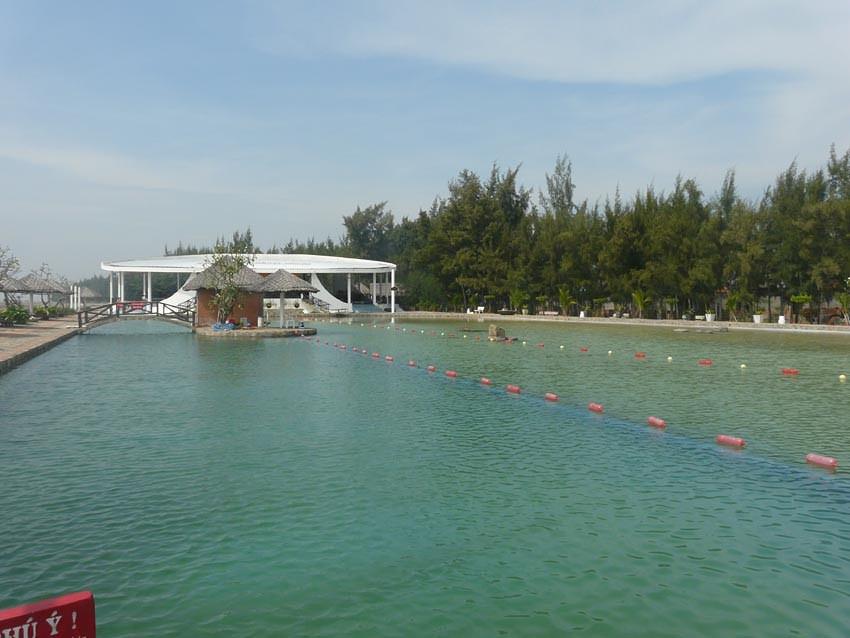
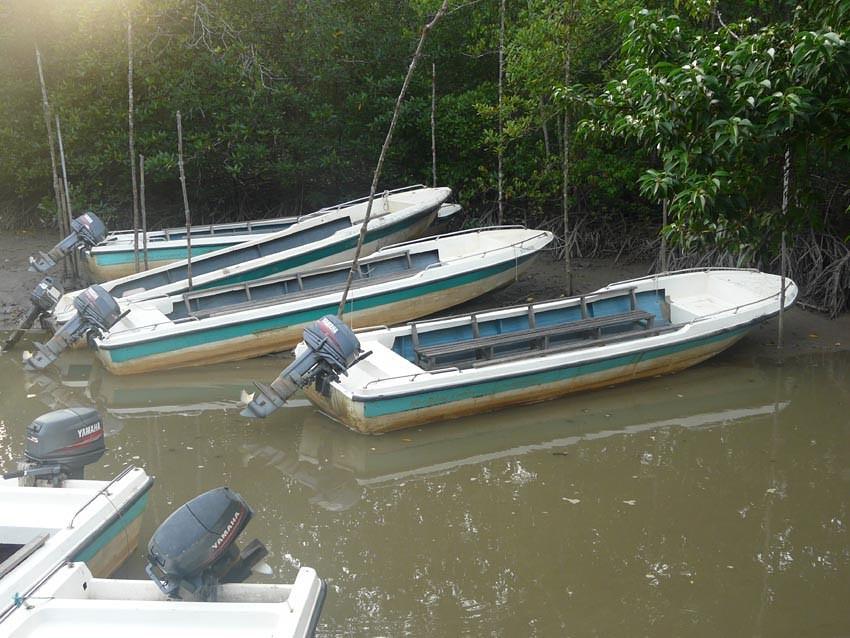
Vous pouvez aussi prendre un bateau pour vous rendre à l'autre rive du fleuve pour vous rendre à Hung Thanh. De là vous pouvez faire appel à une moto taxi pour visiter le long de mer et regarder les gens pêcher les coquillages à pied ou pour vous rendre au parc national de Can Gio pour voir la forêt de mangrove, vous pouvez faire appel à un service de bateau à moteur pour visiter le parc (plein de singes vivant en communauté avec leur chef et plein de crocodiles ...). Il existe plein d'hôtels où vous pouvez vous payer un week-end romantique dans un décor de rêve, au milieu de l'eau. Dans la piscine d'une longueur de 100 mètres remplies d'eau de mer, vous pouvez vous initier à manoeuvrer le bateau rond en osier.
C'est un véritable paradis que les touristes de 3 semaines ou 1 mois ne peuvent jamais connaitre.
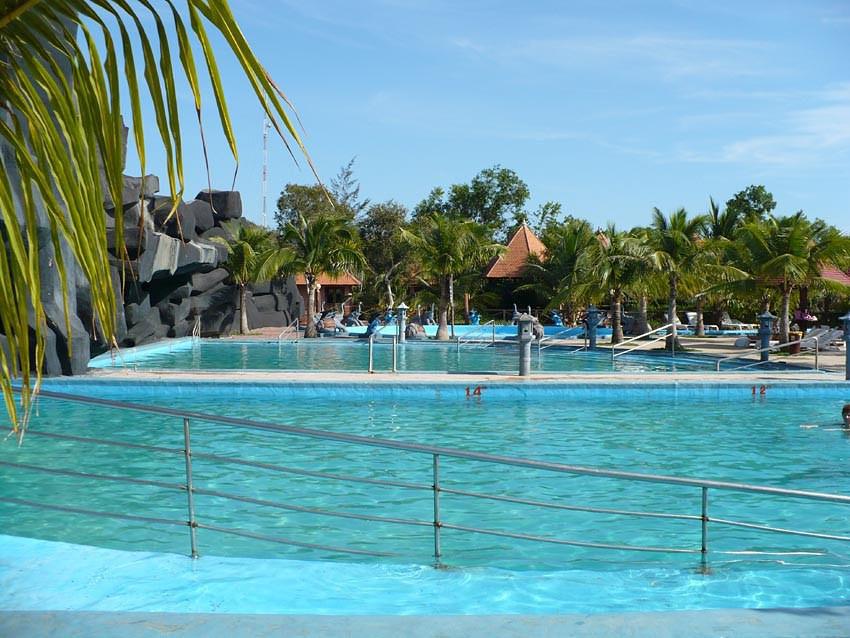
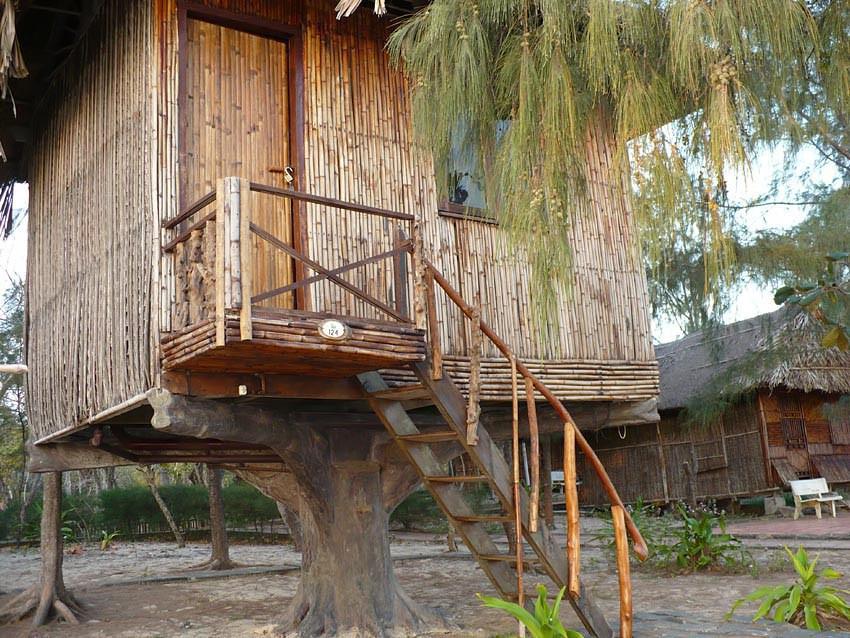
Si vous n'allez pas vers le Sud, vous pouvez vous rendre au Nord en bus et moto taxi jusqu'à la source thermale de Bình Châu. Le restaurant dans ce parc peut vous concocter un menu gastronomique qui vous fera connaître la vraie et bonne cuisine viêtnamienne. La piscine d'eau chaude en plein air est un véritable régal. Si vous ne voulez pas dormir dans le parc, faites-vous amener à Hô Cóc et dormir dans des bungalows en bois au bord de l'eau. Ici, vous pouvez louer une moto et prendre la route du bord de mer très peu fréquentée où vous pouvez rouler en toute sécurité. Vous découvrirez de petites criques de plages aux eaux limpides et cristallines (la région est très peu habitée et le littoral est bordé par un désert de sable couvert par des plantes rampantes.
Si vous n'allez ni vers le Sud ni vers le Nord, vous pouvez faire un saut à Con Dao, en prenant le ferry qui part vers 17 Heures pour accoster dans l'île à 7 H du matin, des services de bus gratuits peuvent vous amener dans les hôtels de votre choix. Si vous avez regardé les émissions Koh Lanta de TF1 ces dernières semaines, vous aurez un aperçu de ces plages paradisiaques aux eaux turquoises et de sable blanc.
Ensuite, s'il vous reste d'autres we, vous pouvez découvrir la chute d'eau Giang Dien à Long Khánh, le parc Dai Nam Van Hiên à Thu Dâu Môt, voir un peu plus loin le parc Nam Cat Tiên etc...
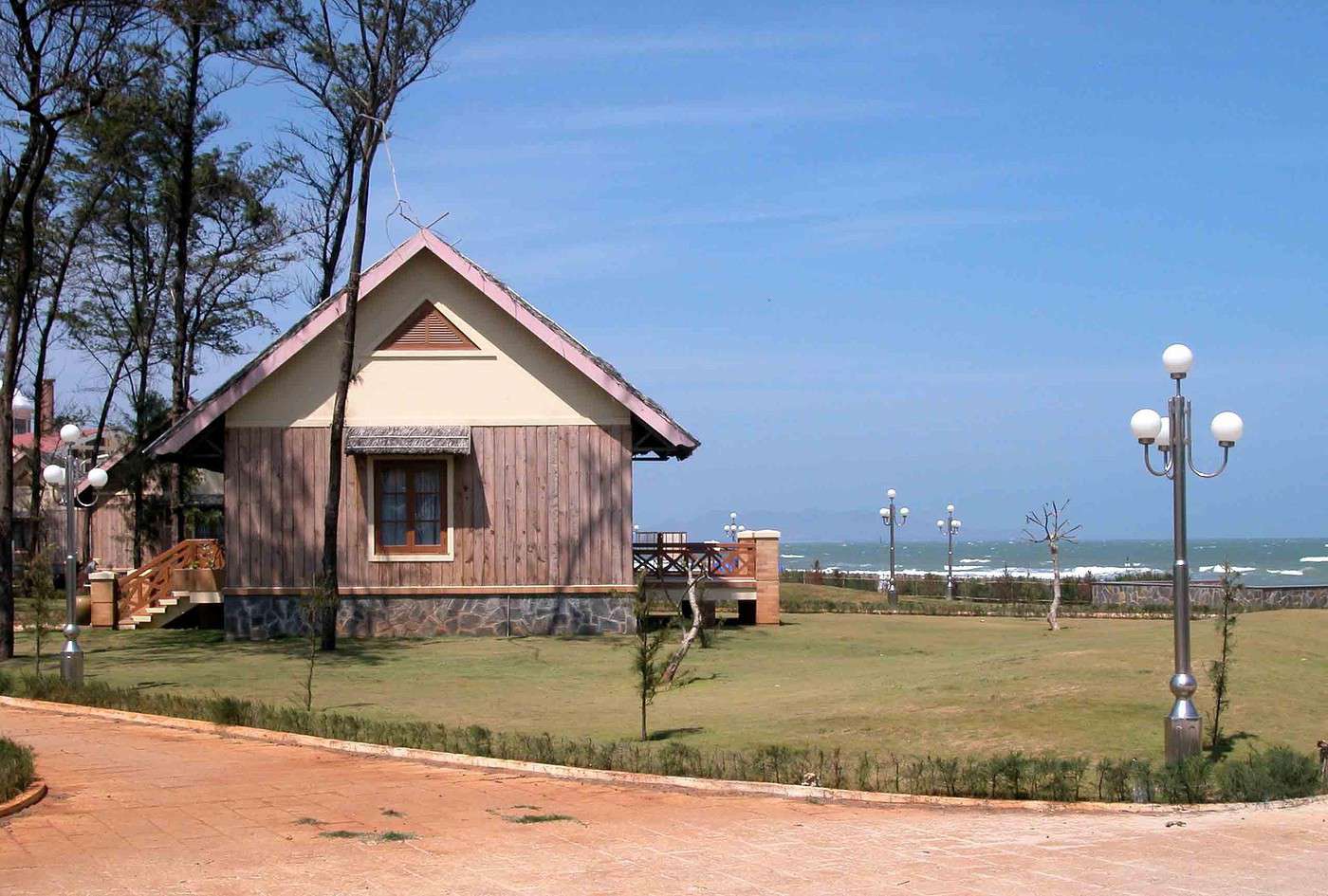
Photo 1 : Chalet sur la plage Bai Sao de Vung Tàu
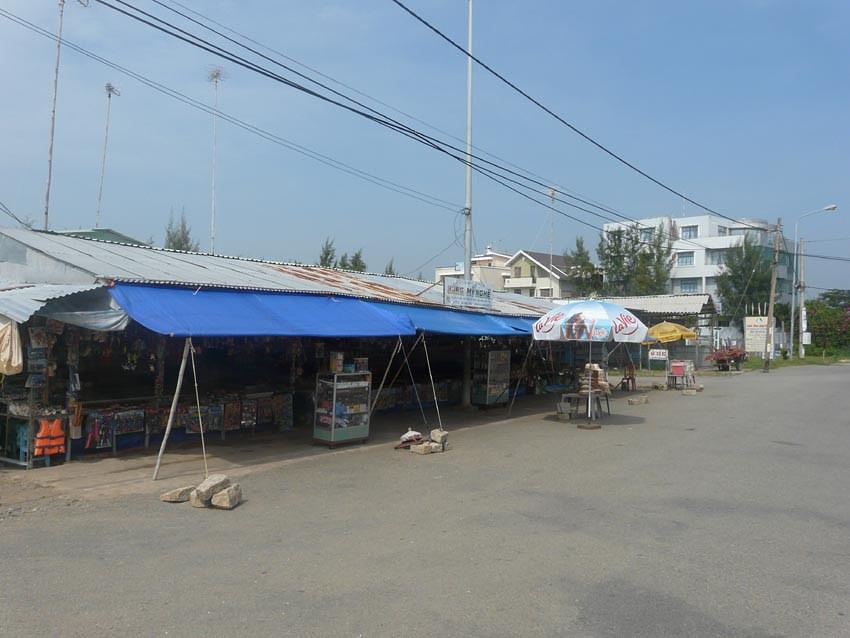
Photo 2 : Marché de Can Gio
Photo 3 : Pêche à pied
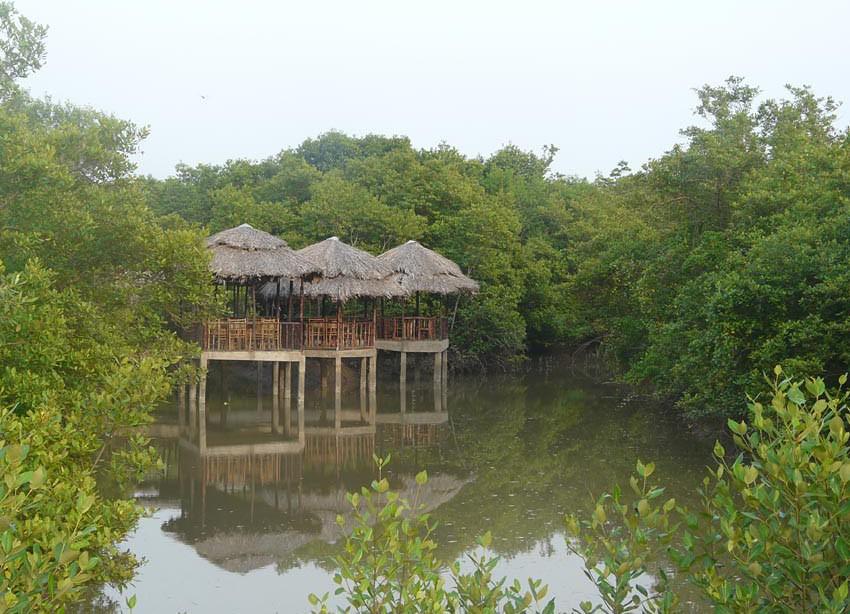
Photo 4 : Parc de Can Gio
Photo 5 : Hôtel au dessus de l'eau
Photo 6 : Piscine de 100 m d'eau de mer
Photo 7 : Bateaux à moteur pour visiter le parc de Can Gio
Photo 8 : Piscine d'eau chaude de Bình Châu
Photo 9 : Bungalow en bois à Hô Cóc
Photo 10 : Lever de soleil devant Hô Cóc
Photo 11 : Parc Dai Nam Van Hiên
Photo 12 : Parc Nam Cát Tiên
PS: Je recommande des fois la location de motos sur des routes bien précises, c'est parce que ce n'est pas surveillé, sachez que la police de la circulation est 10 fois plus sévère que celle qui est dans le Nord du ViêtNam et je dis ce que je sais en toute connaissance de cause🙂
Lucky that we have a home/Our Home is Nha May Man/Passing rain and dry seasons/In a full-of-love atmosphere/Besides my new family/I have brothers and sisters/The sun shines over the skies/Let's stay here, with all of us,
Merci pour toutes ces indications )):
Je ferai mon choix. J'irai bien faire un tour style marche à pied dans des paysages de rizieres, s'il en existent par trop éloignés.
Sinon, pour la communication, les gens comprennent-ils un peu l'anglais, ou le francais peut etre? ou dois je me procurer un petit guide linguistique pratique?
Nous serons à HCMV du 25 au 29/01/09, et on aimerait avoir des infos sur la fete du tet dans cette ville ou les environs, les choses à faire et à voir à cette…
Pour ceux qui sont déjà allés au Vietnam, je voudrais savoir votre top 5 des choses à voir ET je vous invite a faire aussi le top 5 des choses qui vous ont…
Des conseils ou des adresses sympas durant 14 heures d attene à Saigon. Sachant que je connais deja l hôtel de ville, l'opéra, la poste, la cathédrale... mais…
Hi there,
I’ve found so many tips and reviews on this forum, so it’s my turn to contribute a little.
We spent just over two weeks with our family, with the following itinerary:
- Hanoi: 5 days
- Halong Bay: 3 days and 2 nights
- Tam Coc: 3 days
- Mai Chau: 2 days
- Sapa: 3 days
We got around by bike, scooter, Grab, and bus.
Our main accommodations were homestays and hotels in Hanoi.
We visited lots of museums, temples, and neighborhoods in Hanoi.
We did a 2-day, 1-night trek in Sapa with May, a Hmong local, without going through an agency.
A few small regrets: the weather was overcast, and we couldn’t make it to Fansipan, but nothing major 😅. We also couldn’t find transport to get from Sapa to Mu Cang Chai.
Other than that, this trip will stay in our memories for the kindness of the Vietnamese people, the connections we made, the food (street food, homestays...), the coffee 😋, the landscapes, and how easy it was to get around...
Our goal was to take our time and focus only on a small part of northern Vietnam.
If you need any tips or recommendations, don’t hesitate to ask.
Looking forward to hearing from you.
Cédric.
Bonjour, cela faisait longtemps que je n'avais pas sollicité votre aide par le biais de ce forum, qui m'avait bien manqué ! J'espère que vous allez bien, nouveaux ou anciens.
J'ai un projet de voyage du 6 au 18 février 2027 avec ma soeur (nous avons 47 et 50 ans... le temps passe à une vitesse...). Je lorgne sur un billet d'avion de Paris le 6 février qui atterrit à Bangkok le 7 février à 15h, avec un retour de Bangkok le 18 février à 12h.
Ma soeur ne connait pas la destination du voyage, et ce sera la 1ère fois qu'elle ira en Asie. Ses critères : plages, soleil, cocktails sur la plage. Pour ma part, j'aime ça mais aussi la découverte, nature, forêts, et un certain confort (alternance guesthouse et hôtels de plus grand standing parfois, avec piscine). Un peu d'animation le soir serait top, mais pas trop (plutôt de bons cocktails dans une bonne ambiance qu'une rave-party ;-). Et je ne peux m'empêcher de rêver à la faire crapahuter un peu dans une forêt tropicale (souvenirs et fous rires garantis, mais elle me maudirait sur le coup), et de lui faire découvrir quelques paysages karstiques.
Pour ma part, j'ai eu l'occasion d'aller en Thaïlande mais ce fût il y a 15 ans déjà...
L'idée serait de lui donner un aperçu de Bangkok pour 1 ou 2 nuits, quelques jours sur une île (mais laquelle...), une excursion dans une forêt tropicale avec 1 ou 2 nuits sur place (Khao Sok ?), puis retour à Bangkok.
Pour l'île "principale", et bien que j'ai lu le Guide du Routard, je suis toujours aussi indécise, car difficile de concilier tout cela avec une île où nous ne serions pas aussi nombreux que sur la Côte d'Azur en août : Koh Lanta ? Khao Lak (mais ce n'est pas une île) ? Koh Tao (je pourrais peut-être passer mon PADI, mais je crains qu'elle ne s'y ennuierait et qu'il vaut mieux que je me réserve un autre voyage solo pour le passer) ? Koh Yao Yai (j'ai peur que nous nous y ennuyions le soir venu) ? Quel dilemme !
Merci si vous avez pris le temps de me lire jusqu'ici. N'hésitez pas à me donner des conseils, ils seront tous les bienvenus et chaleureusement accueillis.
L'ébauche d'itinéraire serait le suivant (je préfère sacrifier une nuit à Bangkok si besoin) :
· samedi 6 février 2027 : départ (nuit dans l'avion)
· dimanche 7 février 2027 : arrivée à 15h, probablement vers 18h à l'hôtel, soirée à Bangkok (nuit à Bangkok)
· lundi 8 février 2027 : journée à Bangkok (Wat Pho et marché flottant ?) (nuit à Bangkok)
· mardi 9 février 2027 : trajet pour Koh Lanta ou autre île (vol pour Phuket ou Krabi ?) (nuit sur île « x »)
· mercredi 10 février 2027 : plage et ballades (nuit sur île « x »)
· jeudi 11 février 2027 : plage et ballades (nuit sur île « x »)
· vendredi 12 février 2027 : plage et ballades (nuit sur île « x »)
· samedi 13 février 2027 : plage et ballades (nuit sur île « x »)
· dimanche 14 février 2027 : plage et ballades (nuit sur île « x »)
· lundi 15 février 2027 : trajet pour Khao Sok - sortie nocturne pour Khao Sok (nuit à Khao Sok)
· mardi 16 février 2027 : découverte et rando Khao Sok (nuit à Khao Sok)
mercredi 17 février 2027 : trajet retour pour Bangkok (nuit à Bangkok)
· jeudi 18 février 2027 : vol retour pour Paris à 12h
Hi there, we’re landing at Hanoi Airport and would like to head straight to Cao Bang without going into Hanoi. Does anyone know if there are buses that go directly from the airport to Cao Bang (especially in the early afternoon)? Thanks in advance!
Hi everyone,
I’m currently working on a 30-day itinerary for May/June 2027.
10 days in eastern Java (Malang, Bromo, waterfalls, Meru Beriti Park, Banyuwangi, and Ijen), a short transit in Ubud for a few days, then Flores before heading back to Jakarta.
We’ll spend 15 days in Flores (the classic route: Moni, Bajawa, Riung, Ruteng, ending in Labuan Bajo).
I’d love some firsthand feedback on flights to Maumere or Ende from Bali Denpasar. I know there are no direct routes and that you have to connect through Labuan Bajo or Timor (I think), which isn’t an issue in itself.
But I’ve read here and there that flights to these destinations can be delayed—or worse, canceled—and that it’s better to fly in and out of Labuan Bajo, which isn’t exactly ideal...
Thanks for any tips or experiences you can share!
hi everyone,
I want to travel in the north for 3 weeks in September-October 2026 to meet ethnic minorities, photograph mountain rice terraces and their harvest, and revisit Halong Bay—but maybe Lan Ha Bay instead. Can you recommend one or more local agencies?
Thanks, and happy holidays!
I need some expert advice on these two destinations for a 15-day trip. We land in KL and plan to stay for 2 days before heading to Borneo and finishing with an island for snorkeling.
For those who’ve been, what are your must-sees?
We were thinking of spending the last 3 days on the Perhentian Islands, unless you’ve got another island to recommend near Borneo.
Thanks for your tips and help!
Hi everyone,
Could you share your thoughts on my 3-week itinerary?
We’re a small group (family + friends) of 12 people, planning to leave around January 21, 2027.
Here’s my itinerary:
3 nights in Bangkok
4 nights in Chiang Mai
3 nights on Koh Samui
3 nights on Koh Phangan
4 nights in Krabi
4 nights in Phuket
I’m also open to any great tips you might have...
Thanks, everyone! Alain.
I’d love to get some feedback on our itinerary—it’s probably pretty basic! This is our second trip to Asia and our first to Indonesia. We have three kids aged 20, 18, and 12. We land in Jakarta at 4 PM, spend 3 nights/2 days there, then take the train to Yogyakarta for 3 nights/2 days, followed by the train to Surabaya for 2 nights/1 day, then the train to Bromo for 1 day/1 night, a private driver to Ijen for 2 nights/2 days, then on to Bali (Ubud) for 4 nights/3 days, followed by Gili Air for 3 nights/2 days, Senggigi (Lombok) for 2 nights, and finally 5 nights in Kuta. I’m considering cutting the 2 nights in Senggigi to just keep Kuta and extend it to 7 nights. In Lombok, I’m not sure how to get around since I’m not comfortable with scooters... Your thoughts on all of this, and any advice, are more than welcome—don’t hesitate!
For those wondering why cities like Jakarta and Surabaya: we don’t often get the chance to visit big Asian cities, so we wanted to include that discovery in our trip. The trains between Jakarta and Yogyakarta, Surabaya and Probolinggo are booked. The return flight from Lombok to Jakarta is also set. Accommodations are booked but flexible (same for the trains).
Hi! I’m planning a 15-day trip to Malaysia. The idea is to visit KL for 2 or 3 days, then Borneo, and I’m wondering what to do with the rest of the time. I’d like to finish with the Perhentian Islands... What do you think? Any tips or advice would be great—I’d really appreciate it!
Hi everyone,
I’m looking for addresses for guesthouses or, even better, houseboats or rafting houses on the River Kwai, between Kanchanaburi and Sangkhlaburi, to spend a few weeks contemplating this beautiful river.
Thanks for your suggestions!
Premaria
Hi there,
we’re currently in Mai Chau and tomorrow we’re hitting the road back to Hanoi to head up toward Bac Ha and Sapa.
We haven’t really had a set plan since we arrived—we’ve already done the Halong Bay on land and by sea.
I’ve got 2 free days before heading to Bac Ha and Sapa.
Any tips?
Thanks, and looking forward to hearing from you.
Hi fellow travelers,
First trip to Vietnam.
We’ll be arriving in Ho Chi Minh City during Tet.
Is it complicated to find accommodation and get around during this period?
Any tips would be welcome.
Thanks for your replies.
Silly question—backpack or hard-shell suitcase for the Sepilok, Kinabatangan, Tioman, KL trip?
I’m struggling to fit all my son’s and my stuff into the 70L backpack... and I’m thinking a suitcase would be easier, but I’m not sure if it’ll work for getting around.
Hi there,
I didn’t plan to return to Thailand this year, but my health conditions mean it’ll be the best place for me to stay between two trips to India. The tourism setup there is so well-organized that it’s the most "comfortable" country for a short visit. Thailand feels too sanitized for my taste, and there’s too much religion, Buddha, and the King, but it’s still the best option given how my health has been evolving. I’d considered two weeks in ThaTon for hiking, but I got too sick from the burn-offs during my trips to the mountains around Chiang Rai. So I’m not sure where to go this year. Definitely not the sea, touristy spots, or the mountains with burn-offs...
Hello.
In 1996, we crossed Vietnam from Saigon to Hanoi by motorbike—Minsk bikes we bought in Saigon. I haven’t been back since, and it seems like a lot has changed.
- We’re heading to the south (well, the north and center) with the family in July-August (3 people).
- Is the road network more developed now? Back then, there was only National Route 1 from south to north. I’m thinking of renting a car this time (no motorbike with the family—though in ’96, they had a Jawa sidecar for sale, and we hesitated… maybe it’s for the best).
- Is Halong Bay really something to avoid because of overtourism? Even back then, it was pretty crowded. Is there a less touristy alternative?
- We’ll be traveling from Hanoi down to Danang (the only city we didn’t stop in back in ’96). Even though it’s a bit overhyped in a Chinese-tourist kind of way (from what I’ve read), we’re only going for the beach—pure relaxation for 7 days. The beaches are stunning, and I know the South China Sea is warm like coffee.
- Then, we’ll visit Hoi An, where I stopped in ’96. It was already popular with backpackers back then, but no glowing boats or all the touristy fuss!
- After that, Hue, where I have great memories—it’s a beautiful city.
- And also the nature around Ninh Binh, followed by 2-3 days in Hanoi.
That’s the plan. I’d love to hear any tips to avoid mass tourism, and if anyone’s done this before:
- Is it possible to rent a car in Danang and drop it off in Hanoi?
Hey everyone,
I’m over in East Borneo in mid-July.
I’m struggling to wrap up the end of my itinerary, even though it’s pretty straightforward (long but simple).
Last year, we did Malaysia (KL and the mainland + around Kuching).
Day 1 – Arrive in Kota Kinabalu early, stroll around town and hit the must-sees.
Day 2 – Excursion to Tunku Abdul Rahman Park, snorkeling at 3 islands.
Day 3 – Hike around Mount Kinabalu without summiting (450 per person, no way).
Day 4 – Poring Hot Springs + evening flight to Sandakan.
Day 5-6-7 – Kinabatangan River (still looking for the right guide).
Day 8 – Sepilok for the orangutans, the Sun Bear Centre, and Rainforest Discovery Centre.
Day 9 – Selingan, turtle island.
Day 10 – Head to Semporna.
Day 11-12-13-14 – Sipadan, Mabul, Kapalai.
Day 15 – Bohey Dulang.
Day 16 to Day 25: I’M STUCK.
I looked into Danum Valley, but for 3 days/2 nights, they’re quoting 650 € per person—come on, that’s ridiculous.
I checked out a detour into Indonesia (still East Borneo), but I’m having trouble deciding what would be amazing.
I read about Sangalaki + Kakaban (2 islands, 1 base) / Mahakam Delta - Kutai (orangutans and river) / Sungai Boh (Dayak Kayan) – jungle & culture.
But honestly, I’m struggling to finalize this itinerary.
If we venture that way, we’d head back to KK from Balikpapan.
For a 4-month stay in Egypt, I had ENORMOUS problems. The regulations are very bureaucratic and extremely nitpicky there. For a 4-month stay in the Philippines, I was wondering if the procedures are just as complicated? I’m bringing my cell phone with an eSIM. Should I choose a plan from Canada for use in the Philippines, or should I get a plan only once I arrive? After 30 days, do I renew with the Canadian provider I chose before leaving, or do I switch to a local company? Do I need to register my phone with the authorities in the Philippines? (That was the case in Egypt.) For the 3rd and 4th months, will it be just as simple—renewing with a Canadian or local provider—or should I expect problems?
Hello,
I’ll be in Malaysia with my wife, mainly in Langkawi and Penang for Christmas and New Year’s at the end of 2026.
If you’ve had the experience—and since I’ve read (though it’s not very clear) that these two islands get quite crowded during this period—would you recommend booking accommodation well in advance, or is it easy to find something on the spot?
Hotels or Airbnb?
Do you have any great tips for accommodation or any practical info to share?
We’ll be staying 5 to 7 days on each island.
Thanks in advance for your replies
Hi there. To make the most of Lake Toba, is it better to find accommodation on the lake’s shores (which one?) or on Samosir Island? Thanks for your tips!
Hi there,
We’re heading to Vietnam as a family on July 8th for a little over 3 weeks (north and center). We’ve only booked the first 3 nights in Hanoi, and nothing else after that. We like to decide things on the spot and go with the flow, without rushing everywhere. But I’m still a bit unsure: when heading down to the center (Hue), is it better to book the overnight trains in advance? We don’t want to take any flights while we’re there—just use the overnight train for the long trips. But I’m worried we won’t get seats if we buy the tickets on the spot, say, 2 days before. What do the experts here think? And which website can we use to book the tickets? Thanks in advance for your tips!
Hi everyone!
I’m heading back to Thailand in July 2026 with a stopover in Cambodia to visit the Angkor site.
After Angkor, I’ve booked a stay on Ko Chang island. Does anyone know if there are direct transport options from Cambodia to Ko Chang without having to go back through Bangkok? That would be amazing!!
I think there are, but I’d need more details!!
I went to Thailand in February 2025 and don’t remember having to apply for a visa—is that still the case now? And for Cambodia too?
Thanks so much!!!
Laurence from Bayonne
Hi,
After our trip to China, we want to spend a week in the Philippines for some beach time and snorkeling.
We're looking for the best spot to settle in—nice beaches, great marine life, and short transfer times.
Thanks for your suggestions!
Does anyone know of a private transfer or taxi company that organizes transfers from the Sukhothai area to Chiang Mai?
Our routes are Sukhothai-Lampang, Lampang-Chom Thong, and Chom Thong-Chiang Mai.
My searches on Google Maps, 12Go, and others haven’t turned up much...
For our Bangkok-Sukhothai trips, I use a company I’ve already tried, but they don’t have a fleet available from Sukhothai and have to go through third-party companies—which, understandably, take their commission. This nearly doubles the prices...
There are four of us, and we’re not traveling light, so a minibus isn’t an option. ;-)
Hello,
While traveling in Thailand, I’m looking for a Buddhist kumlai reed bracelet.
Does anyone know where I can find one?
In Bangkok, I visited a few temples but didn’t see any in the nearby shops.
If you have any ideas, I’d love to hear them! Have a great day! :-)
My trip’s coming up, and I’m having a bit of trouble with three bus/minivan routes. Usually, I find everything at this time of year, but this time—yikes!
Sandakan → Sepilok:
No app for this one—you just hop on bus #14 at the local terminal (pay cash on board). But where do I catch it, and where’s the stop??
Sandakan → Semporna:
From what I’ve heard, it’s the Sida Express company (great name, right? 😄).
Can’t book online, but apparently, you *have* to because there’s only one bus at 8 AM.
Where do I board, and where does it drop me off?
Semporna → Tawau:
Found this via AI—is it legit?
No online booking, as far as I can tell.
Minivans leave from a stop in the Jalan Hospital area, near the Milimewa supermarket, supposedly????
And when you arrive, does it drop you at **Sabindo Square** in Tawau?????
Hi there,
we’ll be in Mai Chau in June and we’re thinking of heading to Sapa, but first spending a few days in Bac Ha to do some hiking and explore the area.
Is this a good idea for those who’ve been there?
How do you get there?
Thanks for your feedback.
Looking forward to hearing from you.
Cédric.