Voila c'est décider je serais en thailand de mi decembre a debut janvier (bangkok, koh samui, et une ou deux autre destination dont je ne connait pas encore le nom..feeling feeling)
ma question est donc de savoir a quoi puis je m 'attendre au niveau de ma conversion euro-baht . je lance donc un appel a tous les économistes et boursicoteurs de ce merveilleux site qui est ma référence en attendant d 'etre sur place 🙂!!!!
Il est évident que personne ne peut etre sure du resultat mais j'aimerais savoir ce que vous en penser hausse baisse?
cour actuel 1 euros = 38.63 baht
cour au 12/2012 1euros =???
en meme temps si vous avez une destination a me conseillez n' hésiter pas je suis tout ouÎ
- j'aime faire la fète
- les beaux paysages
- essayer de me mélanger au thailandais d'une façon naturelle
- et pourquoi pas m'éloigner des touriste comme moi haha.
C'est impossible de prevoir le taux de change pour decembre, il y a beaucoup trop d'incertitudes en zone euro.
En tout cas, les probabilité sont forte que le bath soit dans la zone des 35-42 baths pour 1 euro, suivant si ca se passe "bien" ou pas, mais il y a peu de chance que l'euro remonte a plus d'un pour 42 comme ca a ete le cas.
A ce niveau de toute façon ca ne change pas dramatiquement la donne, la thailande restera un pays bon marche quoi qu'il arrive, même en perdant 10% de plus de pouvoir d achat.
Sinan, faire la fete et voir de beaux paysages, que ce soit le nord ou le sud, tu trouvera ton bonheur partout, bien que beaucoup vont te dire d aller sur phuket / pattaya / samui surtout pour ca !
Et pour s'ecarter du touriste, c est simple, il faut aller dans des endroits un peu plus eloigne que les centres touristique, des fois 2km en scoot suffisent pour te retrouver dans des endroits sympa sans farangs, mais bon il y a fort a parier que les thais dans ces endroits parleront pas anglais, alors faut se debrouiller si tu parles pas un peu thai :D !
tu crois que l'on a une boule de cristal pour te donner un cours pour décembre!!! soit réaliste un peu.... il vaut mieux voir plus bas que trop haut....donc fie toi à ci-dessous et autres réponses des membres qui sont habitués à y aller pour les vacances.....
là en moins de 3 jours : de 38,02 baht fin de semaine dernière pour 1 euros, il est passé
à 38,46 baht hier...
ce lien est le plus fiable... bangkok bank et en temps réel (heure de thailande) ça ferme à 15h30 locale... et du coup les boutiques exchange, modifie les cours après cette heure là...
de toutes les façon c'est pas demain la veille que le cours remontera significativement faut pas rêver.... nous avons connu 51baht pour 1 euros il ya un moment..
là c'est comme ça et de toutes les manières la vie là bas est tout de même très très intéressante...il suffit de ne pas avoir la folie des grandeurs et attention ce qui plombe un budget c'est l'alcool et les filles de bar..
autre destination BALI qui reste aussi très très attractif au niveau vie sur place pour un étranger...
oui azerty013 je me doute que personne ne peut savoir mais certain peuvent avoir de bonne intuition on ne sait jamais 😎!!!(c'est par simple curiositer)
a chacun son pronostique moi personnelement je le vois en hausse entre 40 et 42 ..🙂
quelque soit le taux a mon arriver en décembre rien ne pourra gacher mon plaisir ; je suis telement impatient d'y être 🤪
== >une biere dans un bar a kOH samui ou bkk ca coute combien?
== >une biere dans un bar a kOH samui ou bkk ca coute combien?
Il faut compter entre 80 et 100 bahts pour une petite Singha (La Chang est un peu moins chère et la Heineken plus chère) 😛 Perso je ne crois pas que l'Euro dépasse les 40 bahts pour un Euro en décembre 🙁
Pourquoi s'inqujieter de la conversion (40 o 42 bahts = tu rève en grand. Mise plutot sur 37.... 😛) alors qu'entre Noel et le 1er de l'An ca va déja te couter un bras (les hébergements doublent ou triplent leurs tarifs à cette période) ?
Pour les prix usuels = fonction RECHERCHER tu trouveras pleins de réponses !!
Entre Noel et le jour de l'an ca n'est pas la haute saison mais la Peak Season !! Aucun espoir de negocier et les tarifs explosent.... Pas vraiment nouveau.... 😛
ok moi je ne savais pas!!!😊
dsl de la ressortir mais sinon pour 120 baht on peut manger correctement? ou a kho samui faut pas rever? sachant que je ne chercherai a manger que comme les thais le temps de mes vacances!!!
Que tu manges pour 120 ou 160 bahts ne fait pas une grosse difference. Pour Samui compte plutot 200 bahts en moyenne : ce qui reste encore faible comparé a la France 😉
200bahts dans les échoppes de rue?
avec 5.50e ici je me nourrie sans problemes dans les restaurant turque ou à la boulangerie (sandwich+dessert et cannette dans les 2 cas mais je ne suis pas difficile hehe)
je m'atendais a moins🤪 .
"on va finir par me prendre pour un radin" ...😄
Obnubilé par le cout de tes vacances, elles commencent bien mal.... La radinerie est une maladie (et un péché capital 😇) et les kebabs turcs ne font surtout pas partie de ma nourriture par souci de santé alimentaire. 😛
Si tu vas en dehors des coins touristiques à la cambrousse tu peux avoir ton pad thai pour moins de 80 bahts. La dernière fois que j'ai mangé un pad thai dans un coin vraiment pas touristique du tout, c'était y'a une paire d'années : la noodle soup ou le pad thai à 40 bahts, mais j'imagine que ça a dû augmenter depuis. Si tu manges tous les jours des kebabs, ça ne devrait pas te déranger de manger tous les jours la même chose en Thaïlande. Mais ouais, si tu vas manger sur Bang La Road, compte plutôt 300 bahts pour ton pad thai (moins bon et avec du ketchup).
ok moi je ne savais pas!!!😊
dsl de la ressortir mais sinon pour 120 baht on peut manger correctement? ou a kho samui faut pas rever? sachant que je ne chercherai a manger que comme les thais le temps de mes vacances!!!
La street food est toujours à 40/60b. Même à Koh Samui, on peut manger sans problème pour bien moins que 120b. Les Thaïs qui bossent en zone touristique ne mettent pas les prix des touristes dans leurs repas. Un exemple: le petit resto en face du 7/eleven à la sortie du Fisherman's village: à 30m du ghetto occidental. Tu peux aussi sélectionner tes hôtels en prenant un petit déj américain inclus: ça ne fera pas de différence flagrante avec le prix d'une nuitée, et tu peux faire un repas complet le matin, ce qui te permet de sauter ton déjeuner. Pour les boissons, tu fais le plein au supermarché ou tu vas au 7/11. Quand on a un budget serré, on s'organise, on mange moins, on boit pas d'alcool, et c'est meilleur pour la santé.🙂Pour le taux de change, pour ne pas te tromper, prévois entre 32 et 48b.😉
A titre personnel, je reste un fan des "paneng" (curry poulet ou beuf, épicé mode thai) et il me sert de "valeur étalon" pour constater les variations de prix d'une région à l'autre : le moins cher fut constaté à Chiang Saen (40 bahts) sinon 60 bahts à Chumpon, à Bangkok c'est 90/100 bahts et dans le Sud de 160 (Phuket) à 120 bahts (Lanta).
A Samui je dirai que tu t'en sors à 120 bahts, rajoute une biere (50/60 bahts) et le pourboire ca fait 200 bahts 😉.
quand on parle de change je repense toujours à mon premier voyage où, pour 100 CHF on avait 1680 baths. Les vols coûtent moins chers qu'à cette époque, les bières étaient déjà à 40-50 baths et mon hôtel à 1000 baths.
La dernière fois, pour 100 CHF j'ai eu dans les 3200 baths...
ça fait tout de même du yoyo.. on verra si ça continue à remonter au moins à 40-42 pour 1 euro, d'ici fin d'année comme l'espère le membre qui a mis ce post. moi je préfère tabler sur 38...c'est rien ça , en février on l'avait à 41.85 pour 1 euro... c'est des bouts de chandelles....
on n'a pas à se plaindre des petites différences la vie reste tout de même très intéressante sur place tant que l'on n'a pas la folie des grandeurs encore une fois....
ok moi je ne savais pas!!!😊
dsl de la ressortir mais sinon pour 120 baht on peut manger correctement? ou a kho samui faut pas rever? sachant que je ne chercherai a manger que comme les thais le temps de mes vacances!!!
La street food est toujours à 40/60b. Même à Koh Samui, on peut manger sans problème pour bien moins que 120b. Les Thaïs qui bossent en zone touristique ne mettent pas les prix des touristes dans leurs repas. Un exemple: le petit resto en face du 7/eleven à la sortie du Fisherman's village: à 30m du ghetto occidental. Tu peux aussi sélectionner tes hôtels en prenant un petit déj américain inclus: ça ne fera pas de différence flagrante avec le prix d'une nuitée, et tu peux faire un repas complet le matin, ce qui te permet de sauter ton déjeuner. Pour les boissons, tu fais le plein au supermarché ou tu vas au 7/11. Quand on a un budget serré, on s'organise, on mange moins, on boit pas d'alcool, et c'est meilleur pour la santé.🙂Pour le taux de change, pour ne pas te tromper, prévois entre 32 et 48b.😉
Pour ceux qui s'intéressent à la vraie cuisine locale, la cuisine de rue est très bonne, peu chère et bien meilleure que dans nombreux restaurants. Budget 100 baht par repas.
Pour ceux qui s'intéressent à la vraie cuisine locale, la cuisine de rue est très bonne, peu chère et bien meilleure que dans nombreux restaurants. Budget 100 baht par repas.
Oui mais pour trouver de la vraie cuisine de rue a Samui, il faut s'éloigner de la plage et des coins les plus touristiques 😛
non mais je ne suis pas radin 😇!!!
c'est juste que j'aime savoir a quoi m'attendre mais il est claire que 38 ou 40 bahts pour 1euros ca ne vas pas me tuer.
je suis telement impatient de partir.Discuter et regarder les sujet sur la thailand cela me permet de rester calme 😄!!!!
aaaa😎 100 bath la je trouve pas ca chère , en effet je ne compte manger que comme sa pdt mes 3 semaines!
je partirais avec un pote et un budget de 40 000 baht et je ne suis pas un fou de la Saturday Night Fever enfin faut pas trop me chauffer non plus hehe😎 donc le budget bière et soiré ne sera pas énorme!!!
A chiang mai, tu peux manger des soupes ou des plats de riz avec viande a 30-40 baths presque n'importe ou, que ce soit dans la rue, dans les endroits touristiques (comme le night bazaar ou la vieille ville) ou dans les centres commerciaux (il y a toujours des stands de bouffe dans les centres commerciaux!), faut ajouter une petite boisson a cote (de l'eau coute 10 baths par exemple, ou un coca 15 baths).
Apres il y a des plats un peu plus cher, mais la street food tu en as pas pour plus de 80 baths ici.
Sinan ici les ''petits restos'' thai en dur, tu as une multitude de plats a peine plus cher 50-60 baths pour les prix de bases (les truc un peu speciaux tournent entre 100 et 200 baths).
Pour comparaison un menu Big mac (une fois de temps en temps ca fait pas de mal!) ca coute 140 baths si je me trompe pas et le menu de base au KFC est a 95 baths.
Une autre comparaison, une pizza vaux entre 100 et 250 baths (ca depend ce qu'il y a dessus) dans les petits restos italiens du centre ville qui visent essentiellement les touristes.
Je confirme,
A Chiang Mai tu peux manger un Pad Thai où du riz frit pour 35 - 40 baths dans les petites échoppes de rue
il y aussi les foods courts du central airport plaza et de l' autre centre commercial (façade en brique) au nord de la vieille ville en direction de Doi Suthep.
tu peux aussi manger dans des resto barbecue buffet avec tout à volonté boissons non alcoolisées incluses pour 190 baths
voir la vidéo et l' adresse sur ma page
J'ai été sur ta page 😄===> direction chiangmai après koh samui !!
Donc arriver bangkok 1 ou 2 jours ; koh samui 1 semaine ; chiangmai (avec réservation même la bas en peak season ou pas la peine?) 1 semaine puis retour sur bangkok pour le reste du séjour!!!la destination inconnue de derrière les fagots est toujours de mise on verra sur place
(vraiment bien la page facebook cela me donne pas mal d'idée, "j'ai craqué sur les tigres"😉 faut que j'aille voir cela de plus près)...
En effet sur la vidéo ils n'ont pas l'air très agressif je pensais que élevé en captivité et au contact quotidient avec les hommes, en plus d'un bon steak avant la rencontre avec les touriste, les rendaient dociles pour une heure ou deux ok je n'irais pas la bas je cautionne pas non plus😠; bon c'est partis pour les elephants 😎mais pas avec un siège de pacha sur le dessus et une dizaine de touristes comme moi !!!
merci Olivier
j' essaye de faire partager ma passion pour la Thaïlande via ma page 😊
Pour Chiang Mai en haute saison je te conseille de réserver si tu veux une guesthouse de bon confort. Sinon tu trouvera toujours un endroit ou dormir.
je peux te conseiller la chiang mai thai house bien située à 2 minutes à pied de la Tapae gate (porte principale de la vieille ville), dans une petite ruelle calme.
A kanchanaburi je te conseille la ploy guesthouse idéalement située au bord de la rivière
Choisir le batiment A plus récent
superbe piscine juste au bord de la rivière kwai
http://www.ploygh.com/
Pour les éléphants tu peux aller au Ganesha park chez François Collier
Tu passera 2 jours au contact des éléphants. Promenade à cru, baignade, repas... et tu apprendra beaucoup de choses
C 'est à Un peu plus de 2 heures de Bus de Kanchanaburi
http://www.ganeshapark.com/
🙂Bonjour,
Pour ce qui est du taux de change bien malin celui qui pourra prétendre connaître le taux à mi-décembre....
Mais se surestimez pas le change si vous tablez sur 1 Euro pour 38 Baths, vous ne serez certainement pas loin du compte.
Pour ce qui est de la nourriture en bord de route ou dans les super marchés comptez entre 40 et 60 Baths suvant votre commande buvez des boissons non alcoolisées très bon marché.
Et si vous désirez un tableau plus ou moins complet des prix, j'avais au cours du printemps fait un tableau excel des différents produits trouvés sur les marchés et en grande surface.
Cela vous donnera un aperçu global des prix dans le pays, vous trouverez ce tableau sur notre blog en signature.
Excellentes futures vacances.😉
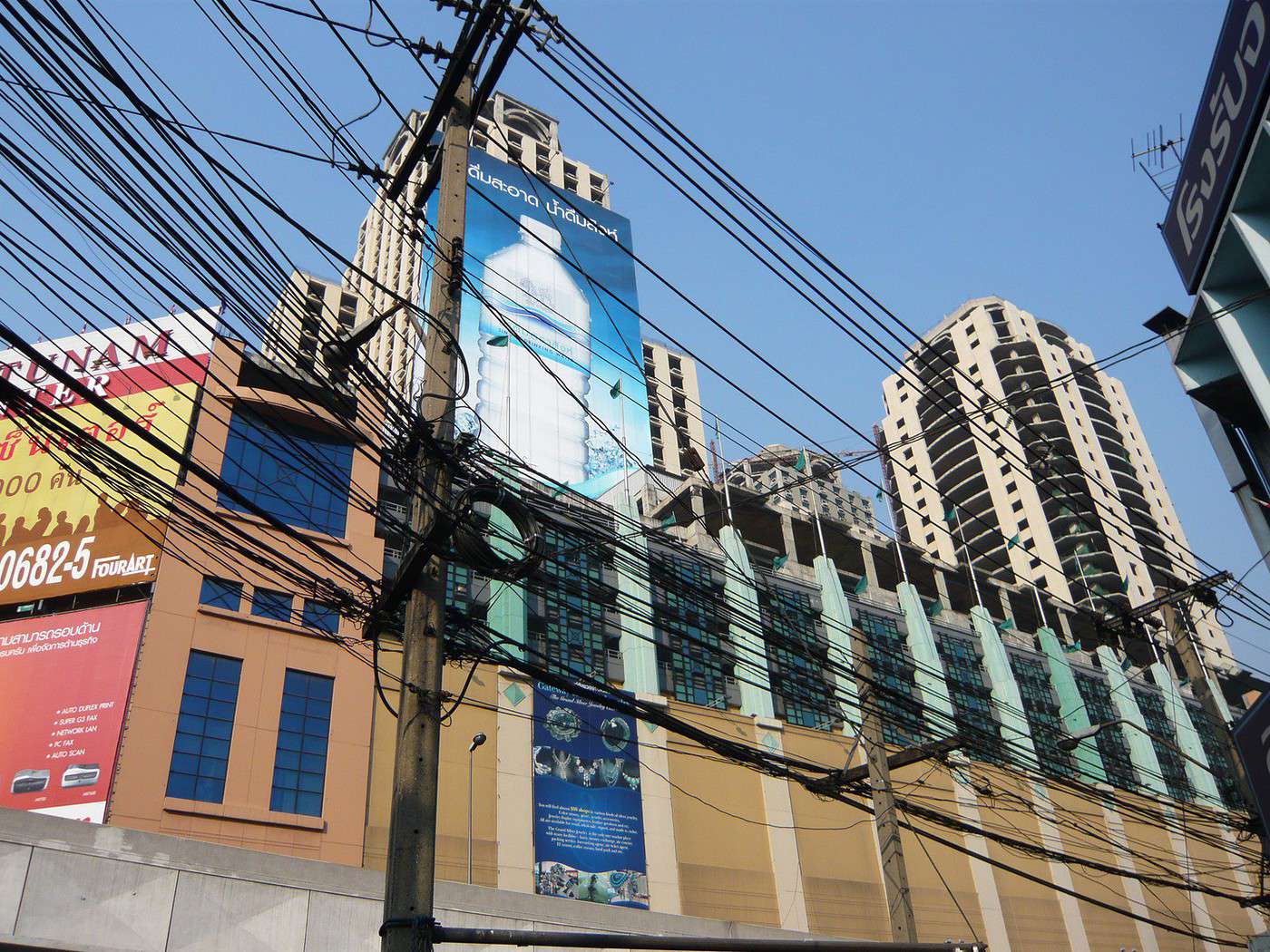
alors la woaaaooo je suis electricien et voir dans tes photos leur installation de distrib me fais froid dans le dos 🤪!!!
pinaise meme pour 8000e net par moi je ne met pas mes mains dedans.🏴☠️
impressionnant.j'imagine pas le nombre de deces chaque année due au installation vetuste.
😉Salut Olivier effectivement c'est comme cela , mais à la différence de nos pays occidentaux personne ne me les doigts ou il ne faut pas...
Mais il est vrai les accidents sont malheureusement trop fréquent.
Bien cordialement.
Jean-Michel
Salut,
Cette question m’intéresse puisque je prépare mon expatriation en Asie du sud-Est. Je pars début septembre, il est probable que je m'installe en Thaïlande. Je m'informe régulièrement du cours de l'euro face au bath.
Aujourd'hui je pleure...
Par exemple: pour monter une boite en Thaïlande , il faut un capital de 2 millions de bath. En juillet 2008, 2 millions de baths = 38 000 euros😎. aujourd'hui 2 millions de baths = 52 000 euros.🏴☠️
Si j'ai bien compris, la valeur d'une monnaie est fonction de la santé économique de l'état (ou de la zone avec la même monnaie).
La bonne ou mauvaise santé économique d'un pays est calculée, en générale, sur la base de son taux de croissance.
La croissance dépend de l’activité économique du pays dont notamment ses exportations-importations.
Aujourd'hui la croissance de la zone euro est nulle voire récessive. Le taux de croissance en Thaïlande est autour de 5-6%. L'activité en Europe ne nous laisse pas présager une relance de l'économie alors que l'économie thaïlandaise se porte pas trop mal. Donc, à moyen long/terme l'euro devrait perdre de sa valeur face au bath.
Toutefois...🙂, .. à cours terme. 2 points:
-Lorsqu'on observe une courbe du taux de change entre deux monnaies, elle est faite en forme de vagues avec des creux et des sommets, et des phases montantes ou descendantes.
-A quelques jours près, l'euro n'a jamais été aussi bas depuis des années. Il semblerait que l'euro se trouve au creux d'une vague sur phase descendante qui dure depuis au moins un an.
Donc, mon espoir 😛, repose sur l'idée qu'un euro faible devrait favoriser l'exportation (et donc les investissements sur la zone euro). Sur cette base, on peut espérer une hausse légère de l'euro sur les mois qui viennent.
Faut trop rêver non plus!... le jour ou l'euro est à 40 baths, je transfert mes fonds!
PS: Moi j'adore le -chicken/fish/...fried rice: 40-50 baths (dans la rue ou sur un marché)
-chicken/fish/...green curry: 60-80 baths (idem)
C'est peut être plus cher à Pucket, Pattaya ou Samui... mais bon... on ne peut pas vraiment considérer que ces endroits soient représentatifs du reste de la Thaïlande.
Un Euro faible facilite certes les exportations européennes.
Mais pour exporter il faut produire. Et pour produire, il faut embaucher. Et embaucher dans le contexte actuel, apparemment, ça n'a pas l'air d'être très tendance auprès des entreprises. Pour qu'une entreprise embauche quelqu'un il faut qu'elle soit sûre que ça lui rapportera plus que ce que ça va lui coûter. À moins d'être une grosse entreprise pour laquelle un salarié de plus représente un coût marginal faible, je ne sais pas si beaucoup de petites ou moyennes entreprises peuvent se le permettre aujourd'hui. Et n'oublions pas que les banques ne sont plus très chaudes non plus pour prêter des sous.
En rendant plus facile l'embauche et le licenciement et la démission, et/ou en "réduisant le coût du travail" ça peut en revanche changer la donne.
Bien entendu, mon explication est réductrice. Je ne ne suis pas un expert économique et je n'ai pas l'âme d'un capitaliste. Je m'intéresse tout de même au domaine parce que je travaille pour mon compte et qu'en plus je m'expatrie.
Je m'intéresse aux tendances générales d'un point de vue "macro-économique" . Les "experts", qu'ils soient de droite ou de gauche, sont dans l'ensemble d'accord pour dire que lorsqu'une crise économique importante a lieu dans un pays, le pays en question ne relance pas sont économie sans une forte dévaluation de sa monnaie. C'est ce qui est arrivé, par exemple, en Argentine au début des années 2000 ou en Thaïlande dans les années 90.
L'économie est une mécanique complexe et les choses ne changent pas du jour au lendemain. Je suis d'accord avec toi.
D'une manière générale, lorsqu'on observe l'euro sur une période de 4 ans, on constate qu'il a perdu 20-25% de sa valeur (variable en fonction des devises).
Concernant le cours de l'euro (puisque c'est ce qui nous intéresse), si les marchés/investisseurs pensent que l'économie européenne peut être relancée et/ou sécurisée (quel que soit le moyen: exportations, consommation intérieure, "planche à billet" de la BCE, ...), le choix des investissements se portera d'avantage sur la zone euro que sur d'autres devises. Et on verra le cours l'euro monter.
Il suffit que quelques grosses économies européennes se voient accorder la confiance des marchés comme la France dont le CAC est passé de moins de 3000 à plus de 3500 en quelques semaines et on voit le cours de l'euro monter.
Tu as, par exemple, le cas de la Suisse qui a vu la valeur de sa monnaie considérablement augmenter depuis quelques années lorsque des doutes ont été émis sur l'avenir de la zone euro (entre autre). Des capitaux européens (notamment) ont été transféré vers la suisse (qui reste une petite économie à coté de celle de la zone euro). Cet afflue de liquidité a fait mécaniquement augmenter la valeur du franc suisse.
La valeur d'une monnaie n'est en effet pas uniquement liée à ses exportations. Tout est lié: consommation intérieure , exportation, importation, endettements privés/publics, santé des banques, chômage, confiance des investisseurs, ... bref. ...etc...etc...
...pour revenir à nos moutons, en l’occurrence le taux de change euro/bath pour la fin de l'année 2012:
Je pense que, compte tenu de la baisse importante de l'Euro depuis quelques années, les entreprises européennes deviennent plus compétitives (d'un point de vue macro-économique bien entendu).
Je ne pense pas, en effet, que la frivolité des marchés influencera le marché de l'emploi ou la bonne santé économiques des petites entreprises. Toutefois les caprices du marché, la spéculation, ... influencent considérablement la valeur d'une monnaie.
C'est la raison pour laquelle, je pense que l'Euro peut remonter à cours terme face au bath, tandis qu'à long terme, il se cassera la figure car je ne crois pas en l'avenir économique de l’Europe.
Ceci est autre débat, mais il existe 2 théories principales concernant les moyens de résoudre la crise par la relance de la croissance:
1/ théorie libérale que tu as décrit en partie. Je te cite:
"En rendant plus facile l'embauche et le licenciement et la démission, et/ou en "réduisant le coût du travail" ça peut en revanche changer la donne."
S'ajoute souvent à ces arguments, le problème de la dette publique dont la solution se trouve dans la diminution des dépenses comme le ferait "un bon père de famille" (privatisation des biens publics, la diminution des prestations sociales, ...etc...).
En résumé: politique de rigueur.
2/Théorie socialiste:
Résoudre le problème de la dette publique en augmentant les impôts.
Relancer la croissance par la création monétaire = faire tourner la planche à billet de la BCE= emrunts= augmentation des dettes publiques.
Je ne crois à aucune de ces théories. Le gouvernement actuel pioche des solutions à gauche autant qu'à droite. Ce gouvernement se situe entre "droiche" et "gaute".
Aller, ... je m'éloigne assez du sujet.... Je pense que le système économique mondial ultra-capitaliste basé sur la recherche d'une croissance permanente est... mort.
Pour terminer et pour prendre un peu de hauteur... en regardant les évènements d'un point de vue macro-économique-environnemental... voire politique...je citerai Kenneth Boulding (économiste américain mort en 1993)
"Celui qui croit qu'une croissance exponentielle peut continuer à l'infini dans un monde fini est soit un fou, soit un économiste"
Pour terminer et pour prendre un peu de hauteur... en regardant les évènements d'un point de vue macro-économique-environnemental... voire politique...je citerai Kenneth Boulding (économiste américain mort en 1993)
"Celui qui croit qu'une croissance exponentielle peut continuer à l'infini dans un monde fini est soit un fou, soit un économiste"
39.64 haha on n'y croit on n'y croit ...et 1 et 2 et 3 EUROS
Je profite de ce message informatif pour vous posez une question!!!!😏
je pense atterrir a phuket ou pas loin en tous cas.(d'après ce que j'ai pu lire un peu partout samui c'est presque la meme mais en moin beau donc...)
vu la periode fin decembre j'aimerais reserver mon hotel par agoda ou autre mais quelque chose me turlupine😠...
en reservant par internet ais-je des frais de commission élever ?(vu 30e sur autre sujet) comment ca se passe? je me demande ci cela vaut le cout.
oupsss j'oubliais.
Merci pour l'analyse benoitjoseph.
certain pense que la crise est due à l'unique raison d'un pétrol de plus en plus rare et chère!!!
a mon niveaux sa parait ètre une vrai énigme cette crise chaque personne a son avis propre c'es vraiment compliqué a comprendre..
j'essayerais d'y reflechir en decembre en sirotant un cocktail les pieds dans l'eau 😇.
Si ta carte de crédit a des frais élevés tu peux te faire facturer dans la devise de ton choix avec Agoda, donc en Euros si tu veux.
Pour te répondre sur le pétrole: "certain pense que la crise est due à l'unique raison d'un pétrol de plus en plus rare et chère!!! "...... il faut savoir que grâce aux gaz et pétrole de schiste les réserves sont maintenant estimée à 100 ans..sans parler du kérogène (huile solidifié dans le schiste) que l'on ne pense pas exploiter avant longtemps, qui représenterais vaguement 500 ans....
J'ai entendu parler de ce gisement. A priori il s'agit d'un des premiers exploités, à une époque (2002 la vidéo) où on ne maîtrisait pas encore l'exploitation des gaz de schistes. Apparemment, maintenant c'est clean. En tout cas, j'ai eu aucun écho de gisement récent sale...
🙂Bonjour,
J'aimerais juste rapeller à mon ami Pumpui et autres intervenants et déviations par ailleurs intéressantes que le sujet n'est pas directement le pétrole et autres transformation des gaz et différents dérives du pétrole, mais que le sujet de départ concerne la conversion Euro-Baths....
Cordialement et meilleures salutations à tous.
Jean-Michel
😉Salut monsieur le messager,
Nous qui avons partagés d'excellents moments notamment le 31 décembre sur le marche de Monthey et bien d'autres fois sur la rivièra aussi en Thaïlande du côté de ko Samui, il semble que la mémoire fasse un petit peu défection.
Mais très cordialement quand même.
Jean-Michel
Hello everyone! I’m heading off solo in February and wanted to share my rough itinerary with you. Does this sound doable?
PS: I’m not really into beaches.
D1 Departure on February 17, 2027
D2 Arrival in Kuala Lumpur – stroll through Chinatown and visit the Petronas Towers
D3: Kuala Lumpur – Chow Kit Market, Batu Caves, Little India, Bukit Bintang downtown area
D4: Early morning bus to Malacca. Explore Malacca in the afternoon and evening
D5: Another 2–3 hours in Malacca in the morning, then bus back to Kuala Lumpur. Merdeka Square area. Stay in Chinatown
D6: Bus trip to Kuala Tahan. Night tour
D7: Morning – canopy walk and Bukit Terisek hike. Afternoon – off to Lata Berkoh
D8 & D9: 2-day jungle trek in Taman Negara National Park
D10: Head to Cameron Highlands
D11: Morning hike through the plantations. Afternoon still to be decided
D12: Morning – excursion to Mossy Forest and Sungei Plantation. Afternoon bus to Ipoh
D13: Morning – Mirror Lake / Sam Poh Temple area. Afternoon – explore downtown Ipoh
D14: Morning train to Penang. Afternoon – wander around Georgetown
D15: Morning – Penang Hill and Keh Loh Temple. Afternoon – Georgetown
D16: Bus to Butterfly Garden and Spice Garden. Late afternoon – Burmese and Thai temples
D17: Morning flight to Singapore. Afternoon – Chinatown and Marina Bay tour
D18: Morning – Gardens by the Bay area. Afternoon – Boat Quay, Clarke Quay, Kampong Glam
D19: Morning – The Ridges area and Botanical Garden. Afternoon – Little India, then back to Chinatown before 11:15 PM return flight
D20: Morning arrival
Hi everyone,
I’ll be in western Malaysia for 20 days in January and February.
I’m coming from southern Thailand to Ipoh for the Thaipusam festivities.
Then it’s off to Pangkor Island.
I’ll finish up in Malacca for the Chinese New Year celebrations before heading to Singapore.
I’ve got a 6-day gap.
I was thinking of going to K.Lipis for the jungle train and heading to Dabong, but the caves might not be open.
Any suggestions around K.L.?
Day treks?
A stopover between K.L. and Malacca?
Thanks
Hi, I’ve read that these two volcanoes are super popular and that there are *tons* of people for sunrise, especially in July. I’m looking for firsthand accounts from anyone who’s done it later, around 9–10 a.m.
Thanks for your help!
Laëtitia
I’m heading to Cambodia at the end of December 2026 – January 2027 for 3-4 weeks. Since I’ve already visited Cambodia twice, my itinerary is a bit different this time—I’d love to explore Botum Sakor Park, Chi Pat, the Tatai region, and the Cardamom Mountains. I’m traveling solo. If you have any tips on transportation, excursions, treks, sights, or accommodations in the area, I’d really appreciate it. Thanks for your feedback!
Has anyone traveled with the Laos travel agency ADV ?
I’m planning a trip to Laos and have received several quotes. Among them, this agency’s seem very reasonable, and so far, the interactions have been positive.
I’ve found a few positive reviews online, but I’d love to hear from travelers who’ve actually booked with them: how’s the organization, guide quality, accommodations, on-the-ground responsiveness, etc.
Thanks for sharing your experiences!
First stop on our discovery of the peninsula: Amphawa. It’s our first night in Thailand (we arrived at Suvarnabhumi at 8:50 AM).
Our initial plan was to explore the area before heading further south. The Mae Klong Railway Market is tempting... but what else is there to do????
We’ll be there on a Wednesday, and from what I’ve read on the forum, some say there’s absolutely nothing to do during the week—no floating market, barely any shops open, no restaurants, etc.
Others, though, say the place is actually more charming without the weekend crowds.
Could you share your thoughts? Missing the floating market is one thing, but if it’s really a ghost town on Wednesdays, I might just drop our bags somewhere else.
Amphawa seemed like a good first stop, just 1.5 hours from the airport, but I’d still like to settle somewhere a bit lively for our first evening.
We’ll be there at the end of October.
Thanks!
Hi,
I wanted to visit the plantations in the morning with GetYourGuide or by just showing up.
How much time should I really plan for?
I’d like to catch either the 3 PM or 5 PM bus back to KL.
Thanks
Hi,
I wanted to get some info about the cable car and the bridge—I see lots of different options...
How much time should we allow for these two activities? If we arrive around 4 PM, will we have enough time to visit without rushing?
Thanks
Hi there,
I didn’t plan to return to Thailand this year, but my health conditions mean it’ll be the best place for me to stay between two trips to India. The tourism setup there is so well-organized that it’s the most "comfortable" country for a short visit. Thailand feels too sanitized for my taste, and there’s too much religion, Buddha, and the King, but it’s still the best option given how my health has been evolving. I’d considered two weeks in ThaTon for hiking, but I got too sick from the burn-offs during my trips to the mountains around Chiang Rai. So I’m not sure where to go this year. Definitely not the sea, touristy spots, or the mountains with burn-offs...
Hi,
On September 1st, we're heading to Kalimantan for six weeks, probably from Pontianak to the Derawan Islands.
I've scoured this site, which is usually my go-to 😉, and others like VoyageForum, but recent info is pretty scarce.
I'd love any tips on places you've visited—our itinerary is still a work in progress.
We're two couples traveling with backpacks, using buses, boats, guesthouses, and homestays.
Thanks in advance!
Hi fellow travelers,
First trip to Vietnam.
We’ll be arriving in Ho Chi Minh City during Tet.
Is it complicated to find accommodation and get around during this period?
Any tips would be welcome.
Thanks for your replies.
Hi! I’d like to split my trip into two parts: 15 days in Phuket and 15 days in Krabi. Do you know if I can rent a car and drop it off in Krabi when I fly back to France?
Thanks for your feedback!
Have a great Sunday!
Martine
Hello,
After 1 night in Khao Sok, I’d like to find a 2 Days 1 Night package on the lake.
After reading a lot, I decided to "break the bank" and treat ourselves to a private tour—mainly to avoid the crowds.
But after contacting several operators, they offer "private tours" that are very expensive (around 700 €), yet in the details, the boats can only leave from the pier at 10 AM like everyone else. (I was hoping to leave much earlier.) The morning program is the same for everyone too (private or not). They drop us off at noon at our floating hotel (I’d chosen Phupha Waree). Free afternoon (swimming or kayaking in front of the hotel). We head back by boat for a 1-hour sunset ride. And the next morning, we leave the hotel at 8 AM to be at the pier by 9:30 AM at the latest—end of the trip.
So basically, we’re paying a lot for a private tour just to do the same thing as everyone else at the same time.
Or maybe I just had bad luck in my search.
I contacted Panida Ladi, who’s very popular on forums. We’d agreed on a private tour that matched my request (departure from the pier at 8 AM, very personalized itinerary). We settled on the itinerary and price, she asked for a Wise transfer for a 30% deposit, confirmed receipt of the deposit. Then 30 minutes later, she messaged me to say she was canceling everything because it was impossible to do the requested tour—and promised a quick refund of my deposit.
So here’s my question: Who’s done a *real* private tour on this lake? Who can recommend a reliable agency? Is it even really possible to do a private tour here?
I’m searching for a real gem for my 3rd stay in Koh Lanta: a lovely, high-quality hotel right by an easily accessible beach in a lively spot.
If you know of anything that fits what I’m looking for and want to share, don’t hesitate!
Hi, is anyone there in Flores right now? According to some websites, everything is closed and the situation is tough. But our guide says it's fine. Who should we believe? We're supposed to leave on September 2nd. Thanks to anyone in Flores at the moment!
Hi dear community,
I'm planning to visit Cambodia this winter, right after Christmas, for my first solo trip and my first trip to Asia. For two weeks (yes, I know it's short, but I really can't do more...). I have two main desires: Siem Reap and the countryside, the villages, the Mekong...
What do you think of this itinerary? Arrival in Siem Reap, departure from Phnom Penh.
SR: 5 days (1 day for arrival, 3 for the temples, 1 for the lake and its villages)
Kratie (stop on the way to Mondolkiri): 3 days (1 day of travel, 2 days there)
Mondolkiri/Sen Monorom: 4 days (1 day of travel, 1 day there, 2 days of treks)
PP: 3 days (1 day of travel, 2 days of sightseeing)
I think I need to cut one day somewhere if I travel from Saturday to Saturday or Sunday to Sunday. In Kratie, maybe? Or in PP? And I'll miss the boat trip that everyone recommends (SR-Battambang), but I don't see where to fit it in. Unless I do a PP-PP loop starting in the east, skip Kratie or just stay one night, then SR, then PP.
In my timing, Mondolkiri seems closer than Ratanakiri, which also tempted me a lot! Will it be too complicated alone? I'm thinking of using local guides or a small local agency for a nature and village getaway.
I've read that Siem Reap is very crowded between Christmas and New Year's. I could also do the circuit in the opposite direction. But I thought it would be easier to get familiar with the country by arriving in a touristy area—I might be wrong...
Thanks for your advice and opinions!
Hi everyone.
I’m planning my trip, and based on all the posts I’ve read, this country is amazing.
Of course, I’ve got a ton of questions for you.
Here’s a possible itinerary: Vientiane - Vang Vieng - Phonsavan - Sam Neua - Nong Khiaw + villages - Phongsali - Luang Namtha and the area - Udomxai - Huay Xai - Luang Prabang and back to Vientiane.
What do you think?
We’re planning to prioritize local transport—is it possible to do this loop?
We’d also love to go kayaking, but I’m not sure if the season’s right or where the best spot is.
For trekking—I read that Phongsali is the most authentic spot to visit villages and see wildlife. Do you know of a reliable agency and a guesthouse with reasonable prices?
Is it worth taking a slow boat for a stretch on the Mekong, and if so, which route?
For accommodations, is it better to book through Booking.com and Agoda or look when we arrive?
Are mosquitoes bad in Laos, and should we take malaria prophylaxis?
What’s the average daily budget (accommodation, food, visits)?
Is renting scooters a good option for exploring towns, and if so, which ones?
From what I’ve read, it’s best to carry cash—euros or dollars? Is it risky to walk around with that much cash?
I’ve still got tons of questions. Thanks to anyone who can help, and I’m open to all tips, info, etc.
Thanks again
Hi there,
I’m planning a family trip (my wife and I, both 47, and our two sons, aged 5 and 12) to Malaysia for the last week of June and the first two weeks of July 2027.
We used to love road trips as a couple, then as a trio, but since our second child arrived, we’ve taken a break with "camping village" style trips.
Now feels like the right time to get back to our old habits, while adjusting the pace for the kids.
We’re craving Asia. We’ve been lucky enough to visit Thailand, Indonesia (Bali and Lombok), and Sri Lanka before.
Friends have raved about Malaysia, so we’re definitely tempted.
For those who know and love Malaysia, what would be a good itinerary starting from Kuala Lumpur, with a maximum of 3-4 stops? We’d like a mix of culture, nature, and relaxation (just to clarify, we’re not big beach fans). All of this without rushing, of course.
Hello,
We’re a family of four with two teens aged 16 and 18. We’re heading to Thailand this summer. We’ll arrive in Bangkok and plan to take a flight to Luang Prabang.
I’ve seen there are some great visits and excursions to do (temples, markets, waterfalls) and maybe even venture a bit north to places like Nong Khiaw, Muang Xay, Muang Ngoy, or Oudom Xay.
But I’ve also heard about the Bokeo region with the Gibbon Experience.
Since we won’t be able to do everything, I’d love to hear about your experiences, impressions, and advice on the two options I’m considering, especially since we’ll be meeting family in Chiang Mai, Thailand, afterward.
Option 1: A loop from Luang Prabang heading slightly north, then a flight from Luang Prabang to Chiang Mai.
Option 2: A few days in Luang Prabang, exploring within a few dozen kilometers around, then heading to Bokeo province for the 2-day/1-night Gibbon Experience. For this option, I saw on Rome2Rio that it’s possible to book a ferry trip on the Mekong from Luang Prabang to Huay Xay—they mention about 8 hours. But is that realistic? What type of boat is it?
Then, to get to Chiang Mai, there aren’t many options—bus or minivan—but how does crossing the border work?
Finally, for those of you who’ve been to Laos in August, what was the weather like?
We’ve already visited Thailand, Vietnam, and Cambodia during the same period over the past four years and weren’t really bothered by bad weather.
I’m starting a discussion about guides in the Mekong Delta because we’ve just finished our trip in this region and had a hard time finding a French-speaking guide. We had Thanh—she speaks French really well and travels all over the delta region, including Ho Chi Minh City. She’s super friendly and flexible. I recommend her wholeheartedly. If it can help someone...
Feel free to contact us for her number.
Hi everyone,
I couldn’t find any recent info on Kuching.
Can anyone recommend a hotel or guesthouse for under 100 RM that’s nice and affordable? No dorms, please.
Also, does it rain a lot in November, and is it still worth visiting Semenggoh or Bako?
We’ll be arriving in Phnom Penh this coming January and we’re thinking of starting our trip with a stop in Kampong Cham, then Kratie.
After Kratie, we’re considering heading toward Siem Reap with a stop in Kampong Thom.
That said, I’m not really sure how long the Kratie–Kampong Thom journey might take or how complicated it is.
Does this stop on the way to Siem Reap seem like a good idea to you?
If we don’t visit the Sambor Prei Kuk site, are there still any walks or sights worth checking out in Kampong Thom?
Silly question—backpack or hard-shell suitcase for the Sepilok, Kinabatangan, Tioman, KL trip?
I’m struggling to fit all my son’s and my stuff into the 70L backpack... and I’m thinking a suitcase would be easier, but I’m not sure if it’ll work for getting around.
After a stay on Koh Phayam this coming November, I’d like to spend 2 or 3 days on Koh Phra Thong before heading further south.
Do you think it’s doable to leave Koh Phayam early enough to catch the 10 AM boat from Khura Buri to Koh Phra Thong? The next one isn’t until 4 PM, which would cost me a whole day.
I’m planning a trip to Indonesia, specifically Sulawesi and Java, in September for 10 days.
I don’t know this part of the world at all—any advice is welcome!
I’ll be traveling solo and would also love tips on meeting other travelers or locals.
Hello everyone,
Not long ago, I used to travel as a couple, but my husband has since passed away, and I’ve decided to set off again. The trip I took to Cambodia in January 2025 did me a world of good.
I’m now considering Thailand, a destination we never included in our plans because even 15 years ago, people said it was too touristy. Still, I’m thinking about the itinerary below, but I don’t feel up to arranging buses, trains, or guides on my own while I’m there. I’m looking for one or more drivers and have been in touch with an agency, but their offers are just copy-paste group tours that I don’t want.
So, if you have any contacts, experiences, or advice, I’d be so grateful if you’d share them with me. Here’s my rough plan:
Arrival in Bangkok
Ayutthaya (2 nights)
Kanchanaburi (2 or 3 nights)
Sangkhlaburi/Sai Yok (3 nights)
Sukhothai (2 nights)
Lampang (I’ve planned 3 nights, but that might be a bit much—it depends on what time I arrive in the city)
Chiang Mai
Chiang Dao
Pai
Chiang Rai
I was thinking about the Mae Hong Son loop—thoughts?
What do you think about staying overnight at the Golden Triangle?
When I look online, of course, I can find agencies that organize tours to national parks, etc.
I’m retired but in great physical shape. I’d rather go hiking than sit in hot springs with crowds of tourists who’ve all arranged meet-ups. I don’t want to spend a day at an elephant camp, and I don’t want to visit Karen villages.
I’d love to hear your advice.
Thank you all,
Hi everyone,
Could you share your thoughts on my 3-week itinerary?
We’re a small group (family + friends) of 12 people, planning to leave around January 21, 2027.
Here’s my itinerary:
3 nights in Bangkok
4 nights in Chiang Mai
3 nights on Koh Samui
3 nights on Koh Phangan
4 nights in Krabi
4 nights in Phuket
I’m also open to any great tips you might have...
Thanks, everyone! Alain.
Hi there,
We’re planning a 3-week family trip next summer with our three kids, who’ll be 8, 8, and 7 years old.
After some research, we’re leaning toward Malaysia to combine nature/forests and paradise beaches. The idea is to introduce our kids to the country’s culture, nature, and wildlife.
We want a great trip but without splurging on luxury options like high-end lodges and resorts. We’re looking for comfort with a touch of authenticity—basically, a good middle ground.
I’ve started putting together an itinerary and would love your expert advice and tips to help us build this amazing trip with our little ones.
Day 1: Departure from France
Day 2: Kuala Lumpur
Stay at a hotel near the airport or KL Sentral.
Just one night.
Day 3: Morning flight to Sandakan (Borneo).
Stay in Sepilok
Day 4: Sepilok:
* Orangutan Center
* Malayan Sun Bear Center
* Rainforest Discovery Centre
Day 5: Depart for Kinabatangan.
Boat safari in the late afternoon.
Day 6: Sunrise safari.
Jungle walk.
Evening safari.
Day 7: Final safari.
Return to Sandakan.
Flight to Kuala Lumpur, then to Kota Bharu (or overnight transit depending on schedules).
Day 8: Transfer to the port.
Boat to the Perhentian Islands.
Days 9 to 13: Perhentian Besar
5 full days.
* Snorkeling
* Hiking
* Turtle watching
* Wild beaches
* Relaxation
Day 14: Return to the mainland.
Bus or private car to Taman Negara.