Le prix des billets sur Jnb m'a fait changer d'avis... (Moins de 600€ actuellement même au départ de ma lointaine province😛)
Bye bye Namibie (ce n'est que partie remise ) et Zimbabwe me voilà !
De nouvelles questions se posent donc que je soumets à votre sagacité😉
Location de voiture : les loueurs classiques refusent les cross border vers le Zimbabwe sauf First rental (uniquement les premières catégories soit au mieux une Nissan Tiida) et les spécialistes ne louent que des gros 4x4 qui ne me serviront pas vu que je ne ferai pas ni camping ni "vrai" off road.
Je n'ai donc trouvé pour l'instant qu'un Nissan Grand Livina par Kea. Une opinion ? Un nom de loueur de SUV genre Condor ou Terios ?
Les routes : Une idée de la durée des parcours suivants ?
- de beitbridge à Great Zimbabwe
- de Great Zimbabwe à Bulawayo
- de Bulawayo à Hwange main camp
Les routes semblent bonnes : exact ?
Le passage de la frontière : combien de temps prévoir et qui a-t-il à payer ?
La police : correcte ? Il paraitrait que le véhicule doit être équipée de bandes réfléchissantes sinon amendes.....
Le parc Hwange : comment réserver les logements (logement public) ? Uniquement via le très sommaire site officiel ?
Le prix d'entrée par personne semble être uniquement de 20usd pour la semaine et non par jour si on dort dans le parc : ai-je bien compris ?
Tout autre renseignement sur les logements (confort), idées de visite (parcours: frontière great zim bulawayo hwange vf), tuyaux divers sera vivement apprécié🙂
Bonsoir Attila,
Géniale idée! "ça me plaît beaucoup" comme on dit au Togo.
Pour la voiture, je ne puis t'aider, nous avions notre propre Land Rover (sans bande réfléchissante mais avec les décorations exigées au Mozambique)
En venant de Harare puis Mutare, nous avons suivi la route que tu évoques jusqu'à Hwange: je ne note pas les temps de route mais comme tu le dis elles sont en excellent état mais encombrées de mules. On peut faire autant de kms en une journée que dans les pays que tu connais dans cette région (hors RSA)
Nous avions une tente sur le toit et ne nous sommes donc pas préoccupés des étapes: je ne puis t'aider là non plus mais les infrastructures sont beaucoup moins répandues que dans les pays limitrophes.
Le passage de la frontière pour nous s'est bien passé mais nous y avons retrouvé un ami portugais installé au Mozambique qui était retenu depuis des heures parce qu'apparemment il les avait pris de haut (bien qu'il s'en défendit). Je ne sais plus combien on a payé mais cela nous a paru normal, donc raisonnable.
De même avec les autorités en général, notamment aux péages tenus par des fonctionnaires des finances assistés d'hommes en armes, il convient d'adopter profil bas moyennant quoi tout se passe bien. (j'ai fait l'expérience de l'arrogance à deux reprises et ils n'ont pas aimé du tout)
A Hwange, en février, nous n'avions rien réservé (comme d'hab) et avons même eu des places dans des camps "privés" qui ne recoivent qu'une réservation à la fois, avec garde armé mais néanmoins charmant.
Si en venant de JNB tu peux monter jusqu'à Nyanga NP (au nord de Mutare, près du Moz), il y a là une étape de rêve, un hotel (Troutbeck Inn) construit par un major anglais où on dit que le feu brûle dans la cheminée sans interruption depuis la construction. Full english breakfast à se damner, si tu aimes.
Mais tu sembles rester à l'ouest du pays pour rejoindre les Vic Falls, non?
je ne note pas les temps de route mais comme tu le dis elles sont en excellent état mais encombrées de mules
Très bonne nouvelle !
les infrastructures sont beaucoup moins répandues que dans les pays limitrophes
C'est bien ce qui me semblait. Les hébergements semblent surtout concentrés sur Vf et dans une moindre mesure Bulawayo (matobo hills).
notamment aux péages tenus par des fonctionnaires des finances assistés d'hommes en armes, il convient d'adopter profil bas moyennant quoi tout se passe bien.
Bien noté😉
A Hwange, en février, nous n'avions rien réservé
Parfait, c'est aussi ma période de voyage🙂
A ce sujet, comment sont les routes/pistes à l'intérieur de ce parc ? Comme au Kruger /Kgalagadi /pistes namibiennes ou vraiment défoncées, sableuses ?
Mais tu sembles rester à l'ouest du pays pour rejoindre les Vic Falls, non?
Oui, nous allons concentrer notre voyage sur le nord Kruger, le Hwange, un peu de Vf (visite trop courte il y a quelques années car à la journée depuis Kasane) et Great Zimbabwe.
Si tout se passe bien pourquoi pas un Zambie Zimbabwe une prochaine fois ?
Les routes : elles commencent un peu à se dégrader, mais pas trop. Cela est principalement du au fait qu'il n'y a en fait pas un trafic dément, et donc, même si elles ne sont pas refaites depuis 10 ans, elles sont plutôt en très bon état.
Par contre, dès que l'on sort de la route, on n'est pas vraiment bien.
On peut espérer maintenir un 70 à 80km/h de moyenne en voiture.
Distances : Beitbridge- Bulawayo : 320km
Bulawayo-Main Camp parc de Hwange : 300km (attention, la traversée de Bulawayo en venant de Matopos dure un bon 20 minutes)
Main-Camp Hwange NP-Vic Falls : 200km
Beitbridge Masvingo 300km
great Zimbabwe-Bulawayo : env 300km
Hébergements.
Je ne sais pas ce que tu cherches ... Le plus rustique, ce sont en général les hébergements des NP (National parc). Tu en as un à Matopos, et un à Hwangre NP (à Main Gate).
Il y a aussi du très haut de gamme, Matopos : Camp Amalinda (décoré avec un gout incroyable par Sharon Stead, avec des lodges blottis au milieu des rochers de granite d'un skopje) et Hwange : The Hide (hatched tents : un bijou face à une plaine herbeuse où on voit régulièrement passer tous les animaux, y compris des lions), Ivory Lodge (une propriété de Philippe et Sharon Stead).
En prix intermédiaires (que tu peux en général négocier un peu, , il y a les lodges de Touch the wild : Matobo Hills Safari Lodge situé dans le parc (partie récréative, mais hors partie game : un de mes préférés avec les lodges contruits sur le rocher brut. Très beau), Sikumi Tree Safari Lodge (à Hwange, avec des petits lodges perchés dans les arbres à proximité du point d'eau ou les éléphants viennent boire le soir), et surtout à Masvingo (Great Zimbabwe), il y a the Ancient City Lodge, construit dans l'esprit de Great Zimbabwe avec ces espèces de pavés de granite, une vraie merveille.
à Hwange, il y a aussi Hwange Safari Lodge (propriétaire Africa Sun), un hotel 3* sympa en arc de cercle devant une grande pelouse et le point d'eau où les animaux viennent le soir.
Effectivement, à VicFalls, beaucoup d'hôtels. J'aime bien A'Zambezi, pas trop cher (et on peut négocier en arrivant), c'est un Mercure, un joint venture entre Mercure et RTG. Il y a aussi le Matetsi Water Safari Lodge, la toute nouvelle acquisition de RTG également sur le bord du Zmabèze en alont des chutes comme le A'Zambezi.
A Vic Falls, si tu es hors saison des pluies (entre mai et novembre), je recommande la descente en raft du Zambèze, c'est un truc dingue à faire, un des meilleurs spots de la planète pour le raft (environ 100 euros pour la jouréne avec picnic). En tout cas j'ai adoré. Les meilleurs pour le faire est Shearwater Adventures.
Dans le parc de Hwange, les pistes dans les environs de Main Gate sont pas mal. Avant, je faisais la route par le parc de Main Gate à Sinamatella, mais il faut maintenant un 4x4, à moins qu'ils ne repassent un sérieux coup de grader, parfois sur au moins 50cm. Avec une bagnole normale tu risques de rester planté sur le chassis, et il n'y a plus personne qui passe par là. C'est pire que la route intérieure entre vic falls et Kariba en logeant le lac Kariba. En plus en février, c'est sur que vous aurez de a pluie à un moment ou à un autre, et ce n'est pas bon du tout du tout loin dans le parc.
A Hwange, vous pouvez faire du safari sur la zone tampon (les propriétés des lodges le long du bas fond de la rivière qui contient de l'eau à la saison des pluies et est totalement sèche en aout), sans payer les droits des parcs nationaux.
J'avais discuté pendant 1 heure avec le Directeur des Parcs Nationaux quand il était venu à l'Unesco cette année pour lui demander de faire un forfait illimité genre 60 dollars pour la semaine (80 dollars pour 2 semaines), entrée illimitée dans tous les parcs (Vic Falls, Hwange, Great Zimbabwe, Matopos, etc...). Il a aimé l'idée a dit oui, mais rien n'est fait ... Probablement la cohabitation : quand il y a un ministère qui dit oui, l'autre dit non rien que parce qu'ils sont dans des partis opposés ....
Il faudrait que je relance l'Ambassadeur pour voir si ça a avancé.
Je te remercie pour tes infos mais j'ai renoncé au Zimbabwe pour les raisons suivantes (ordre décroissant) :
- il est très difficile de trouver un loueur Sud af qui accepte que son véhicule aille au Zimbabwe. Je n'ai pu trouver que de l'entrée de gamme ou du vrai 4x4.
- Mugabé semble très mal en point ces derniers temps vu ses nombreuses escapades médicales.
- Il semble que le passage de Beitbridge soit assez infernal et que les routes qui y amènent (côté Zim) soient assez mal fréquentées......
Mais mes recherches m'ont convaincue de l'intérêt de ce pays. Une autre année , en été et sur une plus longue période.
Pour février, ce sera la douceur des plages mozambicaines.......
... certaines des ONG qui apportent des secours alimentaires ont une tendance prosélytique (riz contre crucifix). J'ai horreur de ça, ....
Il est d'ailleurs étonnant qu'il n'y ait aucun problème de sécurité, que ce soit à VicFalls (très touristique), à Harare (la capitale) ou à Bulawayo (2eme ville du pays et une forte présence de blancs zimbabwéiens). D'ailleur le Golf de Bulawayo ne compte aucun membre noir, uniquement des blancs (ah, et des jaunes quand même, puisque moi-même, je suis d'origine asiatique et membre honoraire).
Il y a une assez forte présence de police secrète (un peu comme nos RG) du fait des nombreuses économies parrallèles qui se sont développées durant les années de troubles économiques intenses avec en particulier tous les trafics sur les devises au temps du dollar Zimbabwe.
Il y a beaucoup de remous autour des diamants du Zimbabwe à coup de déclarations fracassantes. Il y a plusieurs entreprises minières ...
Aujourd'hui, il y a semble-t-il deux compagnies privées (Mbada et Marange) qui ne satisfont toujours pas à tous les critères, ...
A titre de comparaison, avant sa suppression par Sarkozy, la garden partie annuelle du 14 juillet en France avait un budget de l'ordre de 0,75 million d'euros et qui venaient des caisses de l'Etat (enfin, du budget discrétionnaire de représentation alloué à la présidence).
En 2008, la ville de Lyon a dépensé 0,78 millions d'euros en champagne et petits fours.
Et vous dites- si je lis bien - " je pense qu'il serait souhaitable de ne pas faire de politique"
😮 ! ! Bizarre ! !
"mais pour ce qui nous concerne"
Si vous êtes concernés 😮( ? ! ?) , sachez que ma réaction ne s'adressait pas à vous.😕
Peu importe la moralité ou non
😮 🤪 😕 😠
Mais ce n'est pas responsable de sortir de telles réflexions avec autant de légèreté.
On a la légèreté qu'on peut ...😕
Même les meilleurs ne réussissent pas toujours à passer le "cut"...
Je répète ma conclusion : ce qui m'intéresse le plus c'est la joie de vivre du peuple, son bien-être et sa liberté.
Voilà ! 😐
Je compte me rendre au Zimbabwe en septembre prochain (du 13 au 27).
Je voudrais notamment visiter le parc national Hwange, mais sans me ruiner.
Je recherche des infos sur Main Camp, qui semble offrir une solution d'hébergement à bon prix à l'entrée du parc.
Savez-vous s'ils organisent aussi des safaris, et dans quelle fourchette de prix ?
Faut-il réserver à l'avance (sachant que septembre semble être la "haute saison" touristique pour les parcs nationaux) ?
J'ai essayé de les contacter par mail, mais sans réponse.
Par ailleurs, je voudrais avoir des infos sur les transports en commun.
Je compte utiliser les bus (notamment City Link) pour parcourir le pays.
Quels sont les temps d'attente (j'ai le souvenir de longues heures d'attente dans certains pays africains, le temps que les bus se remplissent) ?
Quid des petites distances ?
Avez-vous déjà pris des vols intérieurs (par exemple d'Harare à Vic Falls) ?
Je vais au Zim / Zam en juillet / août (mon véhicule perso est à Windhoek pour le moment).
D' après les Sud-Africains, habitués du Zim, il n' est pas nécessaire de réserver sauf si on veut vraiment être sur d' avoir les "meilleurs spots", ceci uniquement sur Hwange (j' ai envoyé un mail à Zimparks il y a quelques jours, pas de réponse).
Pour les autres parcs, réservation "recommandée" seulement pour Mana Pools (j' en ai fait une par Zimpark, ils m' ont confirmé sans paiement avant l' arrivée - ce qui n' empêche pas, bien au contraire, la correction de les informer si on change d' avis).
De toutes les façons, l' ensemble n' est pas très rigoureux car il y a peu/pas de communications (tel ou autre) entre Zimparks à Harare et les parcs eux mêmes, ce qui veut dire qu' on s' expose au risque de trouver son site réservé et payé occuppé, ou bien de se faire demandeer sur place un nouveau paiement, avec l' extrême difficulté de se faire rembourser..
Il n'y a pas vraiment de différence entre les différents logements de Main Camp à l'entrée de Main Gate. En tout cas, ce n'est pas de là que l'on voit les animaux.
Si on n'a pas de véhicule, de mémoire, une sortie (soit le matin, soit le soir) est de l'ordre de 45USD par personne. Et bien entendu, il faut compter l'entrée dans le parc dont je ne connais plus le prix (il était de 20USD, et je crois qu'il est entre 25 et 30). J'ai rencontré à Paris le Directeur des Parcs Nationaux quand il est venu pour la dernière session de l'Unesco, pour lui faire créer des pass (genre 3 jours pour le prix de deux et une semaine pour le prix de 3, tous parcs confondus). Il était intéressé, mais plusieurs mois après, cela ne bouge toujours pas.
Il y a aussi la possibilité de faire des safaris autour du parc dans la zone tampon qui appartient aux hôtels. Ce n'est pas vraiment plus cher, et surtout, on économise le prix d'entrée du parc. Il y a essentiellement deux zones. L'une est exploitée par la plus grande partie des hôtels et lodges (Hwange Safari lodge, Sikumi Tree, Sable Lodge, Ivory Lodge) et l'autre par The Hide. Les deux sont aussi des zones intéressantes.
De Main Camp, il n'est pas trop difficile d'aller à Hwange Safari Lodge, mais il n'y a pas de transport régulier.
Les transports en commun ne sont pas stabilisés. Il n'y en avait plus du tout, et il commencent à y en avoir de nouveau. Mais je ne peux pas donner de renseignement sur les transports en commun actuellement. On peut louer des voitures à Victoria Falls. Une ford fiesta (non 4x4) revient à un peu moins de 500 euros pour une semaine en km illimité. Et il faut partir avec toute son essence, car il n'y a pas de poste près du parc national de Hwange (il n'y en avait pas, et la ville de Hwange n'est pas tout près).
La ford fiesta ne permet pas bien de faire du safari dans le parc car certaines zones ne sont praticables qu'en 4x4
Les choses s'arrangent progressivement pour les voyageurs individuels au Zimbabwe, mais ce n'est pas encore tout à fait ça. En contrepartie, vous trouverez en général des gens prêts à vous aider dans les limites de leurs possibilités. Par contre, si vous êtes un petit groupe (8 personnes par ex), des agences locales peuvent vous arranger à peu près tout avec leur propre minibus et chauffeur pour des prix raisonnables.
Je maintiens bien sûr mon projet de partir en individuel au Zimbabwe et de me débrouiller avec les transports en commun.
Mais je m'aperçois que sans réservation préalable pour les lodges dans le parc de Hwange (ou en périphérie de Hwange), il y aura un pb d'accès (pas de bus réguliers pour relier ces lodges).
J'ai envoyé un mail (il y a plus d'une semaine) à Miombo Safaris, qui sur leur site internet, proposent une formule à 150 USD par personne (nuit + 2 game drive + nourriture et boissons), mais je n'ai pas de réponse. Je réessaierai évidemment.
Quant aux agences locales de tourisme, ça peut être une solution ponctuelle, si j'arrive à me greffer sur place à un petit groupe.
Je verrai ça à Bulawayo ou Vic Falls, avant d'aller à Hwange.
Je veux en tout cas éviter les luxueux lodges à 500 USD la nuit !
Je vous recontacterai peut-être pour d'autres questions, d'ici mon départ en septembre.
Bonjour Armand,
(j'avais bien aimé tes infos sur le Ghana l'an dernier🙂)
Comme dit Koudou, le Zimbabwe en transports en commun n'est pas un choix très adapté: par exemple aucun bus ne vous emmènera à Main Camp.
A Main Camp il y a toutes sortes d'hébergements et un restaurant. En février 2011 nous étions 4 clients au restaurant, il y a eu une coupure d'électricité et le staff, serveurs & cuisiniers, une dizaine en tout nous a préparé de la viande au barbecue et nous avons diné aux chandelles en rigolant avec eux de leur infortune.
Je ne pense pas qu'il soit utile de réserver, même en septembre (les principaux visiteurs sont les sud-africains et ils ne sont pas en vacances à ce moment là).
Si tu persistes à y aller « à pied » tu devrais suivre le conseil de Koudou et t'adresser à un des hôtels qu'il a cité pour organiser les safaris.
Nous avons payé 50$ pour l'entrée (2 pers.) et 30$ pour le camping.
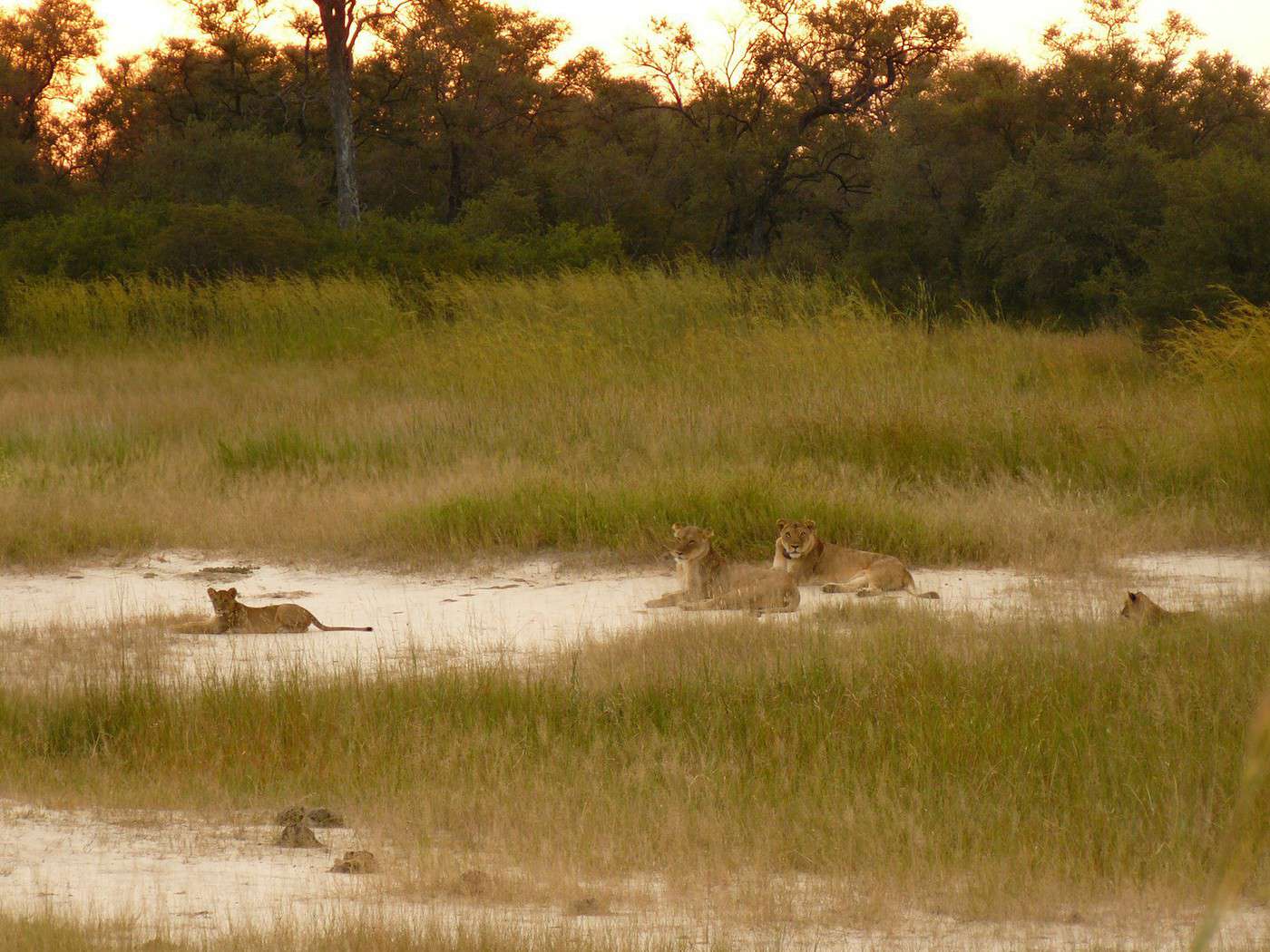
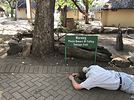
Autour de Main Camp, en un tour de deux heures avant le coucher du soleil nous avions eu la chance de rencontrer, selon le relevé de ma co-pilote: 6 éléphants, 2 girafes et deux lionnes avec 4 lionceaux (voir photo)
@ Koudou: il y a une station d'essence à Main Camp mais nous ne le savions pas et n'en ayant pas besoin je n'ai pas vérifié si elle était approvisionnée.
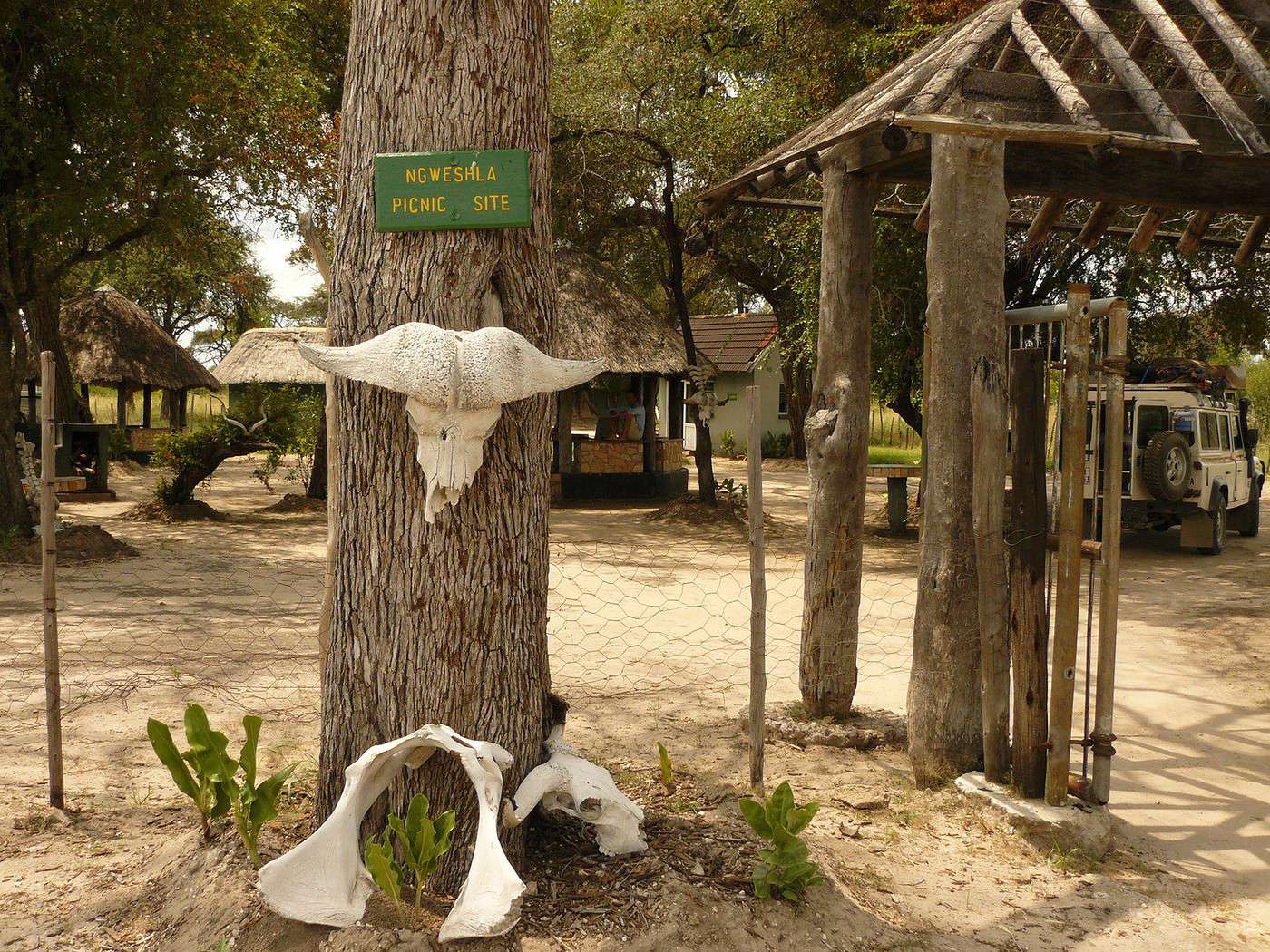
@ Bolo: à Hwange, essaie de passer les nuits dans ce qu'ils nomment les picnic sites, on y est seul ou presque avec le gardien armé d'une antique pétoire. Nous l'avons fait à Kennedy1 et Ngweshla (voir photo)
Juste une info pour 2013 (pas cette année, l'année prochaine)
Eviter Victoria Falls la dernière semaine d'aout 2013, car Le Zimbabwe et la Zambie co-organisent l'Assemblée Générale de l'UNWTO (United Nations World Tourism Organization. Autrement dit l'Organisation Mondiale du Tourisme). Ca va être totalement plein, et donc tout va être plus cher cette semaine là.
A priori, les gens qui seront là ne vont pas dans les petits hotels (et encore, il y a tous ceux qui gravitent autour des délégués), et à priori ils ne font de raft. Donc il y a quand même moyen de se distraire sans les avoir dans les pattes. Mais quand même.
A ce sujet Koudou, ce choix de l'OMT de confier la co-organisation de cette manisfestation au Zimbabwe a été contesté par diverses parties y compris par le Premier Ministre du Zimbabwe, le Président en profitant pour s'autoproclamer "ambassadeur de l'ONU" auprès de son peuple largement sous-informé et illettré.
Quel est ton point de vue là-dessus?
Merci Voyajou pour ta réponse (et je suis impressionné que tu aies gardé en mémoire mon petit compte rendu sur le Ghana !)
Je vais continuer d'envoyer des mails aux différents lodges et hôtels à Hwange, le but étant de trouver un bon rapport qualité-prix (car jusqu'à présent, seuls les luxueux lodges privés m'ont répondu et les tarifs avoisinaient les 500 USD la journée, ce qui n'est pas dans mon budget).
C'est de la politique (les déclarations) et en plus sans aucune conséquence. Il ne faut donc pas y prêter attention.
Il faut savoir que le président est vieux et ne se maintient au pouvoir que parce qu'il a peur que son pays soit "pillé" en profitant de sa faiblesse économique. Il n'a pas tort, même s'il est un des acteurs (pas le seul) de cette faiblesse. Faut-il citer le cas de cette compagnie chinoise qui a obtenu le droit d'exploiter une mine de diamants au Zimbabwe et qui creuse, creuse, creuse et ne reverse rien au gouvernement comme c'était pourtant prévu en disant qu'ils ne trouvent pas de diamants alors que tout le monde en trouve dans les autres mines du coin en creussant deux fois moins ...
En plus, à la disparition de Mugabe, le risque important est qu'il n'y a pas de dauphin unique dans le parti ZANU-PF, et donc que la présidence tombe aussi dans les mains de l'opposition du MDC. Cela arrive régulièrement en France, et on y survit parfaitement avec les plus et les moins à chaque changement, mais la différence est que les étrangers (et en particulier UK dont le rôle a été très trouble ces 15 dernières années au Zimbabwe) ont financé le MDC pour lutter contre Mugabe.
Le Premier Ministre est de l'opposition (du MDC). Donc, il est très difficile de déméler ce qui est une véritable opinion dans l'absolu de ce qui est une attitude simplement d'opposition.
Du point de vue UNWTO, les choses sont un peu différentes. D'abord, le Zimbabwe est un des plus beaux pays d'Afrique Australe, et tout particulièrement pour aller voir les grands animaux. L'UNESCO a d'ailleurs listé 4 lieux au Zimbabwe, ce qui est assez remarquable pour un pays qui ne fait que les 2/3 de la France.
Ensuite, le potentiel touristique de la région australe n'est pas suffisamment reconnu dans les pays du nord (qui représentent encore la très grosse majorité des touristes) probablement pour des causes de distances. POur beaucoup, les grands animaux sont Kenya et Tanzanie. Mais Botswana, Zambie, Zimbabwe et Mozambique ne sont pas associés aux grands animaux dans l'esprit du grand public.
Je pense que le fait que la Zambie et le Zimbabwe se soient associés pour cette organisation est une bonne chose pour la notoriété. C'est aussi un signal du retour du Zimbabwe dans les destinations touristiques.
Chaque année, un pays différent organise l'AG de l'UNWTO. Et chaque année, le pays est déclaré "Ambassadeur" de l'UNWTO. Dans l'esprit de tout le monde, c'est du genre "goodwill ambassador" donc plutôt un promoteur de l'UNWTO et certainement pas avec un rôle représentatif. Mugabe, rusé, s'est emparé du mot et l'a pris à la lettre, ce qui a embarrassé tout le monde. Mais ce n'est qu'un effet de manche qui ne lui donne aucun pouvoir de représentativité de l'UNWTO (il a déclaré être ambassadeur de l'UNWTO et pas des Nations Unies).
Je ne sais pas l'influence que cela peut avoir au niveau de la population locale. Mais la vraie sortie des problèmes quotidiens (problèmes pas finis pour tout le monde) a démarré avec la majorité de l'opposition à la chambre basse.
Concernant Tsvangirai (le premier ministre), il est évidemment pour le développement du tourisme qui est une des activités d'export essentielles pour le Zimbabwe, car il ne demande pas pour démarrer d'infrastructures nouvelles importantes. A terme si (transport en commun, routes, formation à l'accueil, mise en valeur des sites, ...) mais ça peut démarrer de suite à un moment où le Zim n'a pas beaucoup par rapport aux besoins.
D'ailleurs, quand il est venu en France pour rencontrer Fillon et l'Assemblée Nationale Française, un des rares ministres qu'il a emmené dans ses bagages était le ministre du tourisme.
Ce Ministre du Tourisme est plutôt ravi de cette organisation du Congrès UNWTO à Vic Falls. Mais n'oublions pas que c'est une co-organisation et que la Zambie est aussi co-organisatrice.
Enfin, j'ai été un peu surpris que tu parles du peuple "largement illettré".
Même si une grande partie des plus diplômés se sont enfuis hors du pays pendant les années difficiles, le taux d'alphabétisation des adultes de plus de 15 ans est de 92% et si on regarde la tranche 15-24 ans, elle est de 99% (source ONU, dernières stat connues à décembre 2011). Il est vrai que l'on voit de nombreux petits villages perdus qui survivent limite, mais en s'arrêtant et en discutant, je me suis rendu compte qu'il savaient souvent lire et écrire, même maladroitement ... Comme quoi, comme toujours, la misère n'est pas obligatoirement synonyme d'ignorance. Mais ça vaut le coup de s'arrêter dans un de ces villages en demandant si quelqu'un parle anglais pour discuter savoir comment sont organisés les villages.
Et tu as raison le terme illettré est inapproprié. Je voulais dire absence de culture politique permettant à un peuple de faire la part des choses dans les discours de leurs gouvernants.
Mais c'est une insuffisance largement répandue jusque dans nos vieilles démocraties.🙁
Bien vu Eric!
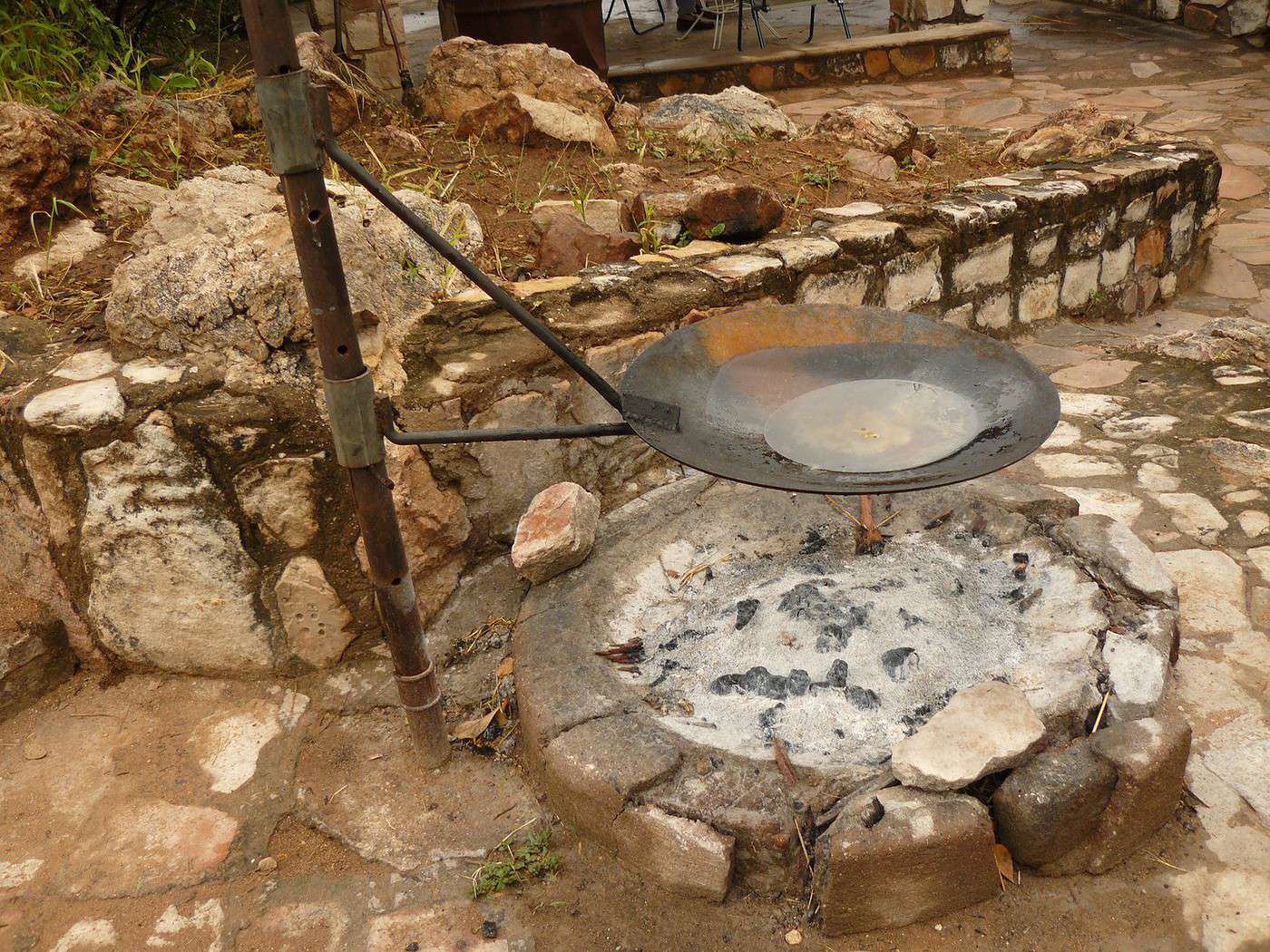
Si tu n'avais pas satisfaction nous avons passé aussi une nuit au Mandavu Dam Camp qui surplombe un dam assez profond (15 kms au sud du camp de Sinamatella. Nuit avec une harde d'hippos, et c'est là que j'ai vu pour la première fois ce drôle de barbecue qui permet de griller des viandes mais aussi de cuisiner un bobotie par exemple ou des légumes.
Bonne préparation.
C'est peut être un peu juste pour la procédure de réservation ... Sauf erreur de ma part, on lance la demande, zimparks répond avec la facture en une semaine, on lance le paiement par virement bancaire et là, il y a généralement 1 mois de délais avant confirmation que le virement est bien arrivé .. Si tu ne procèdes pas ainsi, il faudra prévoir un arrêt dans un wildlife office pour effectuer les réservations et le règlement sur place. Nous avons testé les 2 possibilités à plusieurs reprises et tout s'est toujours déroulé sans aucun problème. Je ne crois pas que ce soit possible de se présenter directement à l'entrée des parcs.
Par contre, il est a priori possible de se présenter avec la preuve du virement bancaire si tu n'as pas reçu le voucher avant ton départ. Ca a marché pour quelqu'un sur un autre forum.
Sinon, je suis d'accord avec voyajou, les picnic sites sont géniaux. J'aurais tendance à conseiller Ngweschla pour sa proximité immédiate avec un tas de matous, Sinamatella pour la vue incroyable sur la vallée et Mandavu pour sa colonie de damans super poilants.
Dernière chose, ne pas trop compter quand même sur l'essence à Main Camp. Il existe une station au Hwange Safari lodge mais lorsque nous étions passé, les réservoirs étaient vides. La station la plus proche côté Main Camp se trouve ensuite à Dete mais il faut rester vigilant aussi sur l'approvisionnement (après, il faudra rouler jusque la ville de Hwange).
Mais j' avoue (je suis un vieux voyageur) que je ne me prends pas trop la tête avec les réservations...juste le minimum syndical, de préférence sans payer d' avance, je suis enfn à la retraite, je ne prends plus de vacances mais fais des voyages sans carcans ni agences (dans mon vocabulaire, organisé et collectif sont des gros mots).
J' ai réservé Mana Pools sans payer, de toutes les façons, comme la communication entre Harare et les autres endroits fonctionne mal, j' ai le risque de trouver mon spot occupé (cela m' est arrivé au Bots, so what, si on est pas débile on dit bonjour, on partage le spot, le Braai et un pack de bières)...
Quant à Hwange, j' essaie et on verra bien...
Pour le mazout, j' en ai 140 l. dans mon Def et applique une veille règle du bush australien: quand tu vois une pompe pas trop loin, tu fais le plein, tu ne sais jamais ce qui t' attend après. Mais 1.200 km d' autonome sont plus que suffisants en Afrique Australe, même quand la pompe de Rakops ou Shakawe est à sec...
Je ne connaissais pas le nom des ces bestioles bizarres, sorte de gros rats, méfiants mais sans plus qui crèchent dans les rochers en contrebas de Mandavu. Nous avons joué à leur jeter ici ou là des morceaux d'aliment (ouh c'est pas bien ça!) et c'était en effet rigolo de voir les comportements individuels, les malins, les téméraires, etc.
Que veux-tu dire ici: "Je ne crois pas que ce soit possible de se présenter directement à l'entrée des parcs"?
Nous avons fait exactement cela en février 2011 dans trois NP zimbabwéens dont Hwange: on arrive à l'entrée sans avoir jamais rien fait auparavant, on paye, on rentre.
Le Zimbabwe n'étant plus aussi attractif que le Botswana, il n'y a très peu de chance que tu trouves ton emplacement occupé. Le fait d'annoncer sa venue permet aussi justement de respecter ceux qui ne veulent pas finir entassés dans un campsite, même si on dit bonjour et qu'on partage bien volontiers la soirée 😉
J'ai un souvenir assez moyen de Third Bridge et de Savute pour cette raison ... Bof bof côté communion avec la nature 😉
Sinon, ta règle australienne est effectivement la meilleure à suivre !
Je viens de jeter un coup d' oeil à ton blog: Moz, Malawi, Tanzanie, Kenya, Rwanda, Burundi, Uganda + la suite est dans les cartons pour incessamment sous peu...
Il me semblait que ce n'était pas "possible" pour les raisons évoquées plus hauts à savoir la communication inexistante entre les parcs et Harare qui centralise les demandes. Les rangers n'ont aucune idée de la réalité des réservations des campsites (sauf peut être à Main Camp ?), c'est donc difficile pour eux de savoir où installer les campeurs qui se présentent sans réservation, sans léser ceux qui ont fait la démarche. Je sais pas si je suis claire 😏
Après, il y a une autre réalité : la faible fréquentation des parcs zimbabwéens qui permet plus de souplesse ... souplesse dont on a profité également à Mana Pools quand on a constaté que le camp exclusif de Chitake 2 était disponible et que les rangers nous ont autorisé à y rester 😊
Bon, et que je ne te reprennes pas à nourrir un daman 😏😏
Bon, et que je ne te reprennes pas à nourrir un daman 😏😏
Ah mais c'était pour manger! lorsqu'un sortait vers l'appât il recevait une flèche et nous avons cuisiné un excellent rat-gout dans le barbecue que j'ai présenté plus haut😛
Curieusement, certains lodges se disent déjà complets pour le mois de septembre 2012 (soit 2 mois à l'avance).
C'est le cas du Miombo Safari Camp, dans le parc de Hwange, qui vient de répondre à mon mail, et qui me prévient qu'ils ont bcp de réservations en septembre. Ils n'ont plus de place pour la période du 15 au 20 septembre prochain.
Une question : quelqu'un a-t-il un contact avec le Main Camp ?
Est-il dans le parc ou à juste l'extérieur du parc ?
Main Camp est dans le NP, juste après l'entrée.
Tu n'envisages pas de camper avec une tente légère: tu pourrais te mettre facilement n'importe où et ce serait économique.
Il y a un bureau Park Head Office à Main Camp
Main camp c' est via Zimparks, c' est dans Hwange...
Ton Lodge complet pour Septembre...
Je ne sais pas ce que tu leur as demandé mais...
Miombo Safari Lodge est un truc très privé (et sans doute pas donné) qui n' a rien à voir sur le plan des prestations proposées (entre autres pas de camping, ce genre de Lodge préfère accueillir les self-catering à l' AK47, ils les accusent de pourrir leur lucratif business (cf. privatsation des camps au Bots, et restrictions sur le Chobe River front)...
Un petit mot (suite à notre correspondance sur ce forum l'été dernier) pour te dire que mon voyage de 2 semaines au Zimbabwe (sept 2012) s'est super bien passé.
Je viens de rédiger une note détaillée sur ce voyage en ouvrant une nouvelle discussion : " de retour de 2 semaines au Zimbabwe (+ Bostwana)".
J'y ai mis des infos pratiques sur les sites que j'ai visités, ainsi que les transports et les hôtels que j'ai testés.
Hello everyone!
It's been a year since I've been longing for South Africa. Our first trip in August 2025 amazed us, and—rarely—it was a unanimous hit with our little family! We were touched to the core, and from the moment we got home, we couldn’t stop talking about going back. 😄
I’d like to take this opportunity to thank everyone who gave me advice on the itinerary for that first trip (Johannesburg loop: Blyde, Kruger, Eswatini, St. Lucia, Durban, Drakensberg)! Thanks to you, our trip went like a dream!
Since then, I haven’t stopped reading articles and discussions on VoyageForum to keep my head in South Africa a little longer!
So, we finally caved and just booked our tickets for January 2027 (from the 3rd to the 26th), with a plan to do a road trip from Cape Town to Johannesburg in about 3 weeks.
I’ve got a rough itinerary that seems great based on what I’ve read on various forums, but there are still some uncertain points, and that’s where I could use your advice.
3/01: Arrival in Johannesburg at 11:45 PM
4/01: Flight to Cape Town, pick up rental car. Afternoon sightseeing
5,6,7/01: Cape Town to visit the big classics in the area (any tips for finding accommodation: which neighborhood, a specific place?)
8/01: Overnight stop before Oudtshoorn—but where??? (Is it essential, or is the CT-Oudtshoorn drive manageable? If so, I’d gain a day in Oudtshoorn. Google Maps shows over 5 hours of driving...)
9,10/01: Oudtshoorn (or would 3 nights be better to really enjoy the area?)
11,12/01: Knysna, Plettenberg Bay (to have time for hiking—if you’ve got hiking tips, I’m all ears!)
13,14/01: Tsitsikamma (still to have time for hiking—who knows the must-do hikes in the area? But maybe 4 nights in the Knysna-Tsitsikamma area is too much—I’m not sure)
16,17/01: Addo Elephant (I’m torn between 3 nights at Addo or 3 nights at Mountain Zebra. Based on travel journals, especially Michel’s on MZ, I’ve scheduled 3 nights at MZ 😄...)
18,19,20/01: Mountain Zebra NP
21/01: Camdeboo NP (because it looks so beautiful!)
22/01: Overnight stop (where?) before wrapping up the trip with either 2 or 3 nights at Golden Gate NP or the Lesotho option, which appeals to me, but I don’t know if it’s doable in 3 days to be back in Johannesburg by the afternoon of the 26th.
That’s my trip idea for now...
I’m eagerly waiting for your advice, ideas, and comments...
Can’t wait to be back there again!
Thirty years ago, I traveled to Zanzibar (Tanzania) with my children. Since I’ve since started a new family, I took the opportunity of a trip to Kenya to bring my new family along: my wife, who’s Kenyan, and my 10-year-old daughter.
Zanzibar has really changed in 30 years.
It’s become the island of taxes.
It all starts upon arrival: I think it’s the only country in the world, besides the visa, where Zanzibar insurance (and no other) is mandatory—it costs 40 €. If you didn’t purchase it before arriving, good luck getting it: the IT systems are unreliable. With a bit of luck, it’ll take at least an hour to process! And of course, this insurance is useless—if you get sick, it’s recommended to use your home country’s insurance because if you use Zanzibar’s, your national insurance won’t cover you anymore.
I wanted to show my daughter the red colobus monkey, which is endemic to Zanzibar. I paid for a tour that was supposed to be all-inclusive. First, we visited a spice farm, where a farm guide took charge of us—meaning commissions were involved, of course! The tour was very good and informative, though. When we arrived at Jenzhi Park (the colobus park), the guide told us he "forgot" there was an entrance fee (50$).
Aware of the system, I decided to book an Ocean Blue tour through the Zanzibar Tourism Office. After two hours of driving, we stopped at a beach—and were left there. No boat was ready to take us. Since my wife speaks Swahili (the language in Zanzibar), after an hour, a captain with his own boat agreed to take us along with his family.
Another attempt. The main attraction in Zanzibar (besides the city) is Changuu, the Prison Island. You have to take a motorboat and pay the captain, which is normal.
But in Zanzibar, to even get on a boat, you first have to pay a tax! Once we arrived at the island, it started all over again! Thirty years ago, access was free, and the entire island (about 1 km²) was open. Today, there’s a small office, and you have to pay a hefty fee to enter. But enter where? A paved path leads to about 15% of the island—the rest is off-limits. In total, I paid 100 € for my wife, daughter, and myself just to visit a tiny portion of the island! Avoid this!
For the rest of our stay, we stayed at a 5-star hotel with golf, horseback riding, tennis courts, evening concerts, etc.—undeniably high-level comfort. One last thing: if you want to rent a car, it’s affordable and useful for exploring the island’s diverse landscapes, but there are speed cameras at every corner on the main roads. The fine is supposedly 100 $, and it’s hard not to get one!
I told you: Zanzibar, the land of taxes. I used to think my country, Belgium, was the tax champion—I’ve found something even better!
In Nov./Dec. 2022, I went on a safari in the region and we suffered from the extreme temperatures caused by the "El Niño" phenomenon in the Indian Ocean at that time. On top of the extreme heat, there can be torrential rains, flooding, etc., which have led to disasters with casualties.
We're heading to South Africa for a month with 5 adults.
We'd like to rent a vehicle that can accommodate 5 people and all our luggage.
We're starting in Cape Town and ending in Johannesburg.
What vehicle would you recommend?
EDITH
Hi everyone!
I’m still planning my Cape Town to Johannesburg trip in January 2027.
I saw a documentary about the San people in Namibia, and the same day, I stumbled upon the Lonely Planet page about !Kwah Ttu.
I checked out their website to learn more, including Michel’s travel journal about it. I’m really keen to go.
So, I’m thinking of dedicating:
- either 1 day out of the 4.5 I have in Cape Town...
- or making a detour to !Kwah Ttu on the day I leave Cape Town for Montagu, instead of visiting Franschhoek and its Saturday market...
To the VFers who’ve already been: is it really worth spending a day there?
Thanks in advance for your feedback!
Malijp
Hi there,
I’m planning a gorilla trek in Bwindi, Uganda. I’m torn between the classic option (1 hour with the gorillas) and the habituation trek (4 hours with the gorillas but a more expensive permit). Has anyone done the habituation trek? Both? If so, I’d love to hear your feedback (including on the difficulty).
Thanks
I’ve read some travel journals here but I still have a question.
We’re heading to Uganda next February. The gorilla permits are booked, and the flight tickets are sorted too.
My question is about the chimpanzee trek. I’d love to know whether it’s better to book the habituation experience (4 hours) or the standard trek (1 hour).
The price difference isn’t huge, but I keep wondering and I’d hate to miss out on a great experience.
Hi everyone,
We’re revising our travel plans for January 2027. Originally, we were considering Uganda for about 14/15 days, but given the current health situation and the restrictions that might affect my partner, who’s American, we’ve decided to switch to Tanzania instead.
I’m used to traveling in South Africa and organizing my trips myself, but I get the impression that planning a safari in Tanzania is quite different.
I know self-drive isn’t really an option in Tanzania. So my main question is: can you organize your own itinerary and book lodges directly, then hire a local driver-guide? Or is it better to go through a local agency that handles the entire safari?
For the itinerary, which parks would you recommend for a first-time visit in January? Serengeti, Ngorongoro, Tarangire, Manyara, Ruaha, Arusha, Selous…
We’d also like to include Zanzibar to end the trip with a few days at the beach. Over 14/15 days, does that sound realistic or too ambitious?
Finally, for flights, is it better to arrive at Kilimanjaro (JRO) or Dar es Salaam (DAR) based on the itinerary we’re considering?
Thanks in advance for your feedback, especially on the best way to organize the safari and which parks to prioritize in January!
We're now just 5 weeks away from our trip to South Africa 🙂 and *so* excited to explore (just a tiny bit of) this amazing country.
I need to buy some binoculars but have no idea which model to choose. I don’t really know what to look for (and I don’t want to spend too much).
Thanks in advance to anyone who can give me some tips!
We just got back from ten days in Tanzania. We were lucky enough to be guided by Gishaman. Always in a great mood, a good driver, and an excellent guide. Thanks to him, we not only saw the Big Five in one day but also loads of other animals. He works for the local agency Blit Safaris, which provided excellent support throughout our trip. Highly recommended!
I’m planning a potential trip to Namibia for a classic circuit in April 2027.
I’m surprised by how expensive the accommodations inside the parks are—really steep! Is it possible to stay outside the parks but still close enough to enjoy the game drives?
Do you have any recommendations for more reasonably priced lodging? I’m okay with spending 200 to 250 € per night.
No camping—the friend I’m traveling with absolutely refuses 😉, but maybe upgraded tents would work.
Hi, I'm looking for information on the road conditions in Moremi. We're leaving in 15 days, and from what I've heard, the roads are pretty tough to drive on. Any advice?
Thanks
My trip to South Africa is getting closer (still 2 months to go 😏), and I’m diving back into my itinerary: from Saturday to the following Sunday around Cape Town, then from Sunday to the following Saturday in Kruger.
For Cape Town, the plan was to avoid changing accommodation every day (we’ll do enough of that in the second part) but still see different landscapes.
I know, I’m missing out on a lot, but you’ve got to make choices, and after all this time, I know what I like—and especially what I don’t (or like less) 😉
Here’s the breakdown:
Arrival Saturday at 11 AM: heading to Hermanus (2 nights). The idea is to stroll along the cliff path in the afternoon, and possibly drive to the Klein River Lagoon. Sunday: Stony Point, then depending on time and weather, a hike in Kogelberg Nature Reserve or Fernkloof Nature Reserve (which seems less scenic but has shorter walks).
Monday: drive to Franschhoek (1 night). If everything lines up, a hike in Jonkershoek NR and a visit to a wine estate.
Tuesday: drive to Mountceder Lodge in the Cederberg (2 nights). I’m thinking of visiting the Stadsaal Caves and the elephant paintings, and maybe one of the hikes listed on the lodge’s site or Maltese Cross.
Thursday: heading to Hout Bay for 3 nights. In no particular order: a classic day trip around the peninsula, half a day at Kirstenbosch Gardens, and half a day at Lion’s Head.
Sunday: flight to Johannesburg.
My questions are mostly about (short) hikes:
Has anyone here done hikes in Kogelberg, Fernkloof, or Jonkershoek?
At Mountceder Lodge (Michel, if you’re reading this… 😉), has anyone tried the hikes (guided or not) offered by the lodge?
There’s still half a day to fill when we’re in Hout Bay—any ideas (not necessarily hikes)?
Lastly, regarding safety: the French foreign ministry (always alarmist, but still) recommends hiking in groups. Is it really risky in broad daylight? (I’m not sure a group of two women counts as a "group"…)
Thanks in advance for your answers, ideas, and comments!
Question: we’re doing a 3-week trip in Namibia, including 5 days for Victoria Falls.
I’ve booked one night in Brandberg, and then I have some questions.
I was thinking of spending 2 nights in Palmwag, then heading to Etosha for one night in Okaukuejo and then 2 nights in Halali.
Alternatively, from Brandberg, I could book a night near Galton Gate and then enter Etosha.
I’m not really sure about the distances, especially with a 4x4.
Same for the return trip: Halali to Windhoek seems long. Maybe it’d be smart to break it up on the way back? (We have 2 days to get back if needed.) If so, where?
Jambo! I organized my trip through this kind of group, so I thought I’d share my experience here. We traveled as a group of four, including two kids aged 9 and 11. After requesting around twenty quotes, I decided to book the safari portion with MAKING MEMORIES IN AFRICA. Ally responded quickly and listened to all my requests—unlike other agencies—such as having a French-speaking guide, the order of park visits (Tarangire, Manyara, Serengeti, then Ngorongoro), and a mix of budget hotels and camping to keep costs down. There were still four agencies in the running, and price was the deciding factor. Even though they were the cheapest, I felt better taken care of than with others. For example, all meals were prepared by a Maasai chef, Louis, who accompanied us throughout the trip, while some others ate meals out of cardboard boxes. Samuel, our guide, explained so many things and answered all our questions. José drove us safely the whole way. Everything was done with great cheer!
At the end of the stay, Ally came to meet us and gave us t-shirts with the agency’s logo—we loved that they took the time to hear our feedback in person. In short, I highly recommend them +++, especially since it’s a local agency that also supports a charity for women and children.
For Zanzibar, I organized everything myself. I hesitated for a long time but eventually booked all four nights at the same place. We don’t like crowds, so I initially considered Jambiani but ended up choosing EVERGREEN BUNGALOWS in Bwejuu. We took their first airport-to-hotel transfer since we arrived at night, and it felt safer. Great value for money, in our opinion. Just be aware that it’s quite isolated—perfect for relaxing and going on excursions. There were very few beach vendors, unlike what I’d read about Zanzibar. We lived with our feet in the sand from morning to night, with a small basin of water outside our room to rinse off. Such a lovely spot!
I had asked for some excursion prices before leaving but ended up booking on-site. Not at our hotel, but at a nearby restaurant that was cheaper. After some thought, since we were based in Bwejuu, I wanted to do Blue Lagoon and Pungume (both departing from the south of Zanzibar).
Blue Lagoon: About 3 hours total, with snorkeling on a small reef full of fish (coral wasn’t great) and a stop at a spot with tons of starfish, plus local snacks, fruit, and drinks.
Pungume: An amazing day with a 50% chance of seeing dolphins (we missed them), a visit to the mangroves, then snorkeling at a spot with some nice coral and, of course, fish. We ended with a fantastic grill (tuna, shrimp, squid, lobster, and fries) on a sandbank in the shade.
Finally, before heading to Stone Town, we visited Paje Cave, which is much less known than Maalum. It’s smaller, but we saw bats, went for a swim, and fed the chickens and rabbits (great for the kids). To finish, we explored Stone Town on our own and had dinner at Forodhani Market.
For flights, we flew with Turkish Airlines from Barcelona to Kilimanjaro and back from Zanzibar—no issues there. However, I don’t recommend the Kilimanjaro-Zanzibar leg with Precision Air. Our luggage didn’t arrive, and according to the hotel, this happens often. We only got it back a day and a half later.
March or May 2027.
Around 15 days in the Western Cape,
then 15 days in the southern KNP.
Arrival either in PE or George.
The pros know I’m somewhat familiar with the area... that I don’t camp... that my accommodations can be simple and remote, self-catering but with basic comforts... that I’m looking for spots that are a bit off the beaten path... in a relaxed mode...
From George:
Late arrival... need some rest... Herolds Bay from George to the N1.
Tsitsikamma is catching my eye (Storms River)... with or without a stop in Knysna.
Question:
What’s the current condition of the pass from Knysna to Uniondale? R339.
And while I’m at it, the condition of the R340.
Tsitsikamma, Knysna, and my questions still apply if arriving in PE.
Is the Swartberg still closed?
Any recommendations for accommodation in Prince Albert?
If I cross the escarpment, I’ll continue via Anysberg NR, Touwsrivier... any thoughts?
From there... Tankwa Karoo or Mount Cedar (or both).
Then heading back down to the coast... the highlands of Hermanus or Kogelberg NR (any opinions on the latter?).
Or,
A more classic route along the coast...
If I arrive (fairly late) in PE... any ideas for accommodation in that little area?
Given that Nyathi Camp is winking at me...
(For context... a while back, I stayed at Riverbend (same Addo sector, private concession)... and I visited the ruins of that abandoned lodge at the time, which has clearly been renovated since... located in a very quiet part of Addo...).
Any feedback from the pros?
Well, that’s about it...
I’m open to any other tips or advice!
I’m reaching out with a question about which park to choose for a 3-day safari in Kenya.
After 20 days in Uganda, I’m meeting up with my dad for a 3-day safari (that works for him). We’ll be meeting in Nairobi and have a full day to travel to a park (preferably the farthest from Nairobi to avoid crowds?) and spend 4 nights there before heading back to the capital for our flight to France.
I’d love to hear your recommendations since I’ve read so many great tips on this forum.
At the end of July, we’re heading to Namibia with a group of five for a three-week road trip and visit to the national parks.
We’ve read conflicting info about buying entry tickets—either online (where?) or at the gate when we arrive?
I’d love to hear your thoughts on the agencies you used to plan your trip to Uganda.
There’s the whole issue of gorilla permits, which need to be booked in advance and involve a significant financial commitment. That’s where I’m at with my trip planning. Between checking lutb.go.ug/ and reading online reviews, it’s hard to move forward with confidence.
I contacted the French Embassy, but they don’t provide any recommendations. I almost booked with an agency that had a really bad review from February specifically about the permit process.
How did you go about choosing your agency? Given the large sum involved, I’m this close to booking through a travel agency in France for this part.
From what I understand, no matter which agency books the permit, you’re ultimately guided by professionals trained for gorilla trekking based on the permit itself? I’m assuming that’s how it works.
Thanks for your feedback, and I’m really happy to see the forum’s new energy—it’s been super helpful to me in the past.
We’re heading to Uganda next summer for three weeks with our two kids, who’ll be 7 and 9 years old.
We’ve been to Southern Africa before but not East Africa, and after a trip to South Africa two years ago, the kids wanted to return to Africa, while we wanted to explore a new region while staying independent... Uganda’s been catching our eye for a while, and with Rwandair offering relatively attractive prices, we’re going for it!
We’ll be traveling in a 4x4 (self-drive) with roof tents. I don’t have any 4x4 driving experience, so it’ll be a first for me, but we’ll manage 😉 No great apes for us—kids need to be 15, and we don’t want to do that experience without them.
I don’t usually ask the forum much for trip planning, but this time, I’d love your thoughts and advice!
First question: Karamoja or not? At first glance, if we want to add it to a "classic" loop in the southwest, it doesn’t seem realistic—too packed, too much driving. We could consider doing the full loop via Kidepo and then heading down to Murchison, but I’m worried the trip might feel less varied and less kid-friendly. That said, the region looks stunning, and I’m struggling to accept not going at all... What do you think?
If we skip Karamoja, we’d do a loop: Murchison/Fort Portal/QENP/Bunyonyi/Mburo, which seems pretty comprehensive and would let us take our time, which is nice. A few random questions:
- How much time should we plan for the Fort Portal area? I was thinking at least 3 days to visit Bigodi Swamp, walk around the craters, and maybe do a community walk (any thoughts on that?).
- Between Murchison Falls and the Fort Portal area, is it worth breaking up the drive? I spotted Lake Albert Safari Lodge on the shores of Lake Albert—it’s not too expensive and looks nice.
- I’d love to do some easy walks/hikes at the foot of the Rwenzori Mountains, ideally without a guide, but it doesn’t seem straightforward. Do you know if it’s possible to do nice walks independently? I’ve read about hikes in the hills near Kilembe but nothing very specific. Maybe staying somewhere at the foot of the mountains, like Ruboni Community Camp, would allow that.
- Lake Mutanda looks really cool, and so does Lake Bunyonyi... Ideally, I’d like to see both, but won’t that feel repetitive? Is Lake Mutanda worth the detour?
Last practical question, since we don’t have experience with this: for the car with kids, would you recommend two tents (a bit more space) or a four-person tent?
I’ll stop here—already a lot of questions...
Thanks in advance for your feedback, and looking forward to exchanging ideas!
Gabriel
We’re planning our second trip to South Africa in July 2026. In 2023, we did a loop from Joburg, Golden Gate, Drakensberg, Hluhluwe, St Lucia, Eswatini, Kruger, Blyde River Canyon, and back to Joburg.
This time, we’d like to go to Cape Town and do a road trip to Port Elizabeth, then fly back to Joburg to return to Kruger. At this stage of my planning, here’s what it could look like:
D1 to D4: Cape Town and Cape of Good Hope (Table Mountain, Lion’s Head, Waterfront, Bo-Kaap, Boulders, Cape Point, Chapman’s Peak Drive). I’ve spotted a few places to stay between Camps Bay and Hout Bay (3 nights).
D5 and D6: Either Karoo NP or Hermanus and De Hoop. Any opinions to tip the scales? I’ll admit I’m already leaning toward Karoo (the "wild" vibe of the landscapes and wildlife encounters appeal to me much more than the seaside, which feels less exotic). If we go for Karoo, where should we stay? Inside the park or in Beaufort West? I’ve seen good reviews for Ko-ka Tsara Bush Camp, but maybe it’s better to stay in the Sanparks cottages to make the most of the park? (2 nights)
Option B is to do Stellenbosch (though vineyards aren’t great in winter) and/or the Whale Route—Betty’s Bay, Hermanus, De Hoop (2 nights near Gansbaai).
D7 and D8: Klein Karoo, Oudtshoorn. Staying at De Cango Guest Farm (2 nights).
D9 and D10: Knysna, Robberg Nature Reserve, Tsitsikamma (2 nights in Plettenberg Bay and 1 night in PE).
D11: Flight from Port Elizabeth to Joburg at 7 AM and drive to Marloth Park.
For Kruger, I’ve booked 2 nights in Marloth Park, 1 night in Skukuza, 2 nights in Satara, and 1 night in Talamati, which we loved. I’ll book the last night in Graskop later since we want to revisit the Blyde Canyon area.
I’d love all the feedback you can give on my itinerary, especially for days 5 and 6.
If you have recommendations for accommodations for 4 people, I’d appreciate those too.
Thanks! 🙂
We’re a family of four (two daughters aged 18 and 21) and we’re planning a three-week trip to Tanzania. Zanzibar would be our main base, but we’d also like to do a safari on the mainland.
Could you share any tips on:
- the ideal length for such a safari, the best place to go during this period (and easily accessible by flight from Zanzibar)
- your recommendations for the most suitable type of stay for a family like ours
- reliable local agencies with reasonable prices that could help us with this plan
Hi everyone, I’m here to get some advice on visiting KRUGER Park.
From what I’ve gathered through my reading, I understand there are two ways to visit the park:
- Independently with your own vehicle
=> Do you drive all day?
- By booking with a professional
=> Safari early in the morning and late in the afternoon. But what do you do in between?
When it comes to accommodations, the options are:
- Booking in one of the park’s camps, where the lodging is basic but functional
- Booking in a private reserve, which is more comfortable but prohibitively expensive
- Booking outside the park, which means entering the park every morning. But if you want to stay for 3 days, that doesn’t seem practical to me.
Do you have any advice for accommodations?
To be honest, I’m really struggling to understand how it all works...
Thanks to everyone for your help.
Bidule 27
Hey everyone!
Heading to Namibia in a few days and I just read that the entry fees for all parks in Namibia have skyrocketed. Increases between 86 and 100%, and this has been in effect since April 1st (no joke). Have any of you heard about this, and if so, do you know if it’s actually being enforced?
For example, the fee for Etosha has gone from 150 NAD to 280 NAD per day per person.
Thanks in advance!
I’m really interested in traveling to South Africa in September 2020. My question is whether I should go on an organized tour or plan my own itinerary. Organized trips are pretty expensive $$$$, but the security aspect reassures me. I’d love to hear your thoughts on safety in South Africa and whether it’s easy to arrange activities like visiting vineyards, Cape Town, and going on a safari on our own. Which is better in terms of cost—booking an organized trip or doing it ourselves? It’s definitely less exciting to follow a group for 10 days. We’re a couple in our 50s who love nature.
😊🦁
We’re heading out in April 2027 with our 4x4 to explore part of Southern Africa. Right now we’re researching all these beautiful countries and deciding where to ship our vehicle. We’re from Le Havre—has anyone here already shipped from that port to South Africa or East Africa?
As for all these countries, is wild camping allowed, tolerated, easy, or difficult?
We’ve already visited a few, but you can read just about anything online, so getting tips from real independent travelers is way better :)
We’re all ears for any hacks, experiences, or spots you’d recommend.
See you on the road with Doddy