je vais partir pour un voyage d'un mois environ avec mon copain dans le but de passer par Denpasar pour faire un tour (pas de voyage organisé genre tour opérateur s'il vous plait...) de quelques îles à l'est de Bali.
Mon ami ayant déjà fais Bali en profondeur ainsi que Lombok, notre but serrait d'aller jusqu'à sûr Sumbawa, Rinca et Flores en tout cas. (Sumba nous attire mais c est apperement trop éloigné vu le peu de temps que nous avons à dissposition
Nous aimons la nature et sommes des gens simple, aventurier qui ne désire pas non plus dépenser des fortune.
Ma première question est, de quelle manière me conseilleriez vous de voyager?(transport, par ou commencer...)
Petit avion depuis Bali à Flores et retour en bateaux en passant par les îles qui nous interesse question de prendre son temps, c est ce que j ai pensé faire en premier lieu.
j ai l'habitude de me réferer à des livre Guide (dont je ne siterai pas le nom) pour me reperer un minimum, maisne trouve rien sûr ces endroits...est ce possible d arriver sûr Flores et de se débrouiller sûr l'île même sans informations au préalable?
En tant que femme, est ce très ennuyeux par rapport à la religion musulman présente (par rapport au baignade par exemple)?(le but n'est pas non plus de me promener en petite tenue n'importe où)
Bref j'aurais encore beaucoup de questions à poser sur ces endroit aolrs si quelqu'un à le temps et l'envie de me donner un max de renseignement...VOLONTIER
Ma première question est, de quelle manière me conseilleriez vous de voyager ? (transport, par ou commencer...)
Pour les moyens de transport à travers Sumbawa et Flores, tout est envisageable : avion, ferries, caboteurs, bemo, voiture, scooter... avec avantages et inconvénients pour chacun ! Mais vous pouvez mixer...
- l'avion : Flores est plutôt bien desservie depuis Bali (surtout à destination de Labuan Bajo), mais il est préférable de réserver une date à l'avance...
- les ferries (Perama) : les gros bateaux de passagers assurent des circuits entre les différentes îles, en accostant dans les principaux ports. Mais les rotations sont lentes et pas toujours ponctuelles en raison des aléas météo et surtout mécaniques...
- les caboteurs : petits bateaux embarquant jusqu'à une douzaine de passagers qui effectuent des liaisons côtières plus ou moins à la demande. Une "croisière" relativement populaire pour les voyageurs relie Labuan Lombok à Labuan Bajo (ou en sens inverse) en longeant la côte Nord de Sumbawa et en s'arrêtant à Rinca et/ou Komodo, en 3 ou 4 jours.
- les bemo et les bus : depuis Bali ou Lombok, aucune difficulté pour trouver un shuttle (bemos ou bus + tickets pour les ferries) qui fait la liaison jusqu'à Flores à travers Sumbawa, pour quelques centaines de roupies. Mais le trajet prend plusieurs jours, et vous ne verrez rien de Sumbawa à part ses routes... parfois cahoteuses !
Pour être plus libres : louer les services d'un chauffeur avec sa voiture, louer soi-même une voiture, ou louer un scooter. Dans les deux derniers cas, la contrainte est de ramener le véhicule au point de départ... Flores permet plus ou moins de faire une boucle (une route au Nord et une route au Sud de l'île), mais la seule route qui traverse Sumbawa impose de la prendre à l'aller et au retour vers Lombok ou Bali...
On a passé deux mois en Indonésie en mai et juin derniers, ayant en particulier loué des scooters pendant un mois pour aller jusqu'à Flores depuis Lombok. Si tu veux plus d'infos pour cette option, n'hésite pas. C'est à nos yeux le mode de transport qui offre le plus de liberté... Ce n'est pas le plus reposant non plus, mais on garde un souvenir extraordinaire de cette petite aventure.
Sumbawa est bien moins touristique que Flores (qui est le point de départ pour Komodo, et avec le volcan Kelimutu qui agit comme un aimant sur la plupart des voyageurs...), la plupart traversent l'île sans s'arrêter et sautent d'une traite de Lombok à Flores.
Nous on aurait tendance à maintenir que Sumbawa ça vaut le coup (on y a passé une dizaine de jours) 😇
est ce possible d arriver sûr Flores et de se débrouiller sûr l'île même sans informations au préalable ?
Si tu arrives à Labuan Bajo par le ferry depuis Sape à Sumbawa ou à l'aéroport, absolument aucun problème. La rue principale de la ville est une succession d'agences locales qui proposent les excursions à Rinca et Komodo, dans d'autres îles du détroit, ou vers l'intérieur de Flores. Il y a aussi un bon choix d'hébergements en ville, des loueurs de scooters, et plusieurs centres de plongée.
En tant que femme, est ce très ennuyeux par rapport à la religion musulman présente (par rapport au baignade par exemple) ?
Sur les plages un peu reculées de Lombok où les locaux ne voient pas trop de touristes, ma copine faisait attention à porter un sarong pour se baigner, au moins jusqu'à être complétement dans l'eau. Elle n'était pas avec moi à Sumbawa, mais la religion musulmane y étant très présente j'aurais tendance à dire qu'il est préférable par respect d'adopter une tenue semblable (même si je doute que dans le cas contraire ça aille plus loin qu'un simple regard désapprobateur)...
L'île de Flores est majoritairement catholique (hormis Labuan Bajo) mais je ne pense pas que ça change grand chose.
question, vous avez louer de differents scooter ou garder le meme pour faire toutes les iles?
On trouve des vols quotidien de denpasar pour flores ou c est plutot 1 fois par semaine?
niveau budget si c'est pas trop indiscret, faut il compter bcp d'argent pour 1 mois environ?
suis aller voir votre site, joli les voyage, bonne optique de vie.
vous avez louer de differents scooter ou garder le meme pour faire toutes les iles ?
On a loué deux scooters à Mataram sur Lombok que l'on a gardé pendant un peu plus d'un mois, pour aller jusqu'à Flores en les passant sur les ferries, et revenir. Pour un tel parcours on tenait à avoir de bonnes machines donc on les d'abord pris pour seulement quelques jours sur Lombok, avant d'être sûrs qu'elles roulaient bien et de prolonger pour une trentaine de jours supplémentaires (on a payé 35000rp/jour).
Il vaut mieux prendre des 125cc (plutôt que des 110) car les distances sont longues, et surtout à vitesses manuelles, les scooters automatiques étant une vraie plaie dès que la route grimpe un peu (et ça consomme bien plus).
Attention à s'assurer que sur les papiers que le véhicule est bien autorisé à sortir son île (le loueur doit payer une taxe supplémentaire pour ça), pour éviter quelques galères potentielles avec la polisi...
Et avoir la case "moto" cochée sur son permis international !
On trouve des vols quotidien de denpasar pour flores ou c est plutot 1 fois par semaine ?
Je sais qu'il y a au moins un vol par jour Denpasar - Labuan Bajo avec Merpati (compter environ 500000rp l'aller). Pour les autres points de chute sur Flores (Ende, Maumere...) je ne me suis pas renseigné. Il y a d'autres compagnies à consulter : Garuda, Lion Air, Transnusa...
Niveau budget si c'est pas trop indiscret, faut il compter bcp d'argent pour 1 mois environ ?
Pas facile à dire, ça dépend de ton mode de transport, de tes activités...
Sur Lombok, Sumbawa, Flores, compte une moyenne de 80000rp par nuit (pour deux, avec petit-déj) pour un homestay correct, et rajoute environ 25000rp par personne et par repas normal (à moins de faire une cure de nasi goreng, auquel cas tu peux compter seulement 10000rp, ou d'être accro à la bintang, auquel cas vises plutôt 50000rp !). Avec la location du scoot, l'essence, les ferries et quelques extras (hors plongées), je pense que dans notre cas on tournait à 300000rp/jour pour deux.
Si vous optez pour le scooter comme mode de transport, compte 15€ chacun par jour, ça me semble raisonnable pour être tranquilles.
Juste une question d'ordre purement technique : comment faites vous pour citer une partie d'un post en le mettant en italiques et entre guillemets? J'ai bien essayé de cliquer sur le bon " citer " en haut du cadre mais je n'obtiens pas la même présentation. Mystère et boule de gomme ???? Je sais je ne suis pas un as de l'informatique mais je ne désespère pas de progresser...
Sinon je vous souhaite de bien belles évasions pour 2011 sur cet archipel bien envoûtant.
Salut, le meilleur moyen serait effectivement de vous rendre de Bali (l'aéroport se trouve à Kuta) à Flores (Maumere ou Labuanbajo) par avion (plusieurs petites compagnies intérieures font les vols. Vous voulez les compagnies, je les ai je peux fouiller... ?
Et ensuite prendre un bateau, réservez des mois d'avance, mes amis se sont fait prendre à ne pas avoir de place dispo. l'été dernier....4 mois d'avance, alors imaginez....Mais je vous suggère avant tout de vous procurer le guide papier Lonely planet Indonésie 2010 en français, tout frais! Vous y trouverez toute l'info. dont vous aurez besoin sur ces iles!
Merci pour les info, je n'ai pas encore trouvé de lonly planet concernant toutes ces îles, mais je retourne se week end en librérie.
Pour se qui est des compagnie aérienne, on en a déjà quelques unes alors ca devrais aller!
Merci et bons futur voyage
Salut le guide existe il est sorti en juin dernier 2010. Lonely Planet en français, Indonésie 2010. Il est partout, sur le net aussi, Amazon.fr, ebay.fr , etc
Le lonely n'est déjà plus si frais que ça....
Les hotels semblent avoir poussé comme des champignons sur Florès et les liaisons aériennes proposées par le guide ne sont pas toujours à jour.
J'ai l'impression que le tourisme commence à bien se développer sur ces îles!
Bali est saturée, Lombok commence à l'être dans certains coins. Florès serait-elle le nouvel eldorado des investisseurs ?
Tu sais en général en asie du sud-est les guides se défraichisses rapidemnt peu importe le pays.... Mais c'est la vie, on prend ce qu'il y a de dispo et de mieux et le LP reste le mieux! A+
Fin de la semaine je part donc avec mon ami pour 1 mois🙂 (je n'ai malheureusement pas pu obtenir plus de vacances cette fois ci...mais c'est déjà ça.)en Indonésie. Ayant déjà été à Bali et Lombok quelques fois, c'est mon ami qui m'a donner l'envie de découvrire ces îles de la sondes, et nous sommes entrains de remarquer que nous devrons peut être laisser tomber la visite de Sumbawa si avec le peu de temps que nous avons nous aimerions déjà faire un peu de Flores, Sumba et Rinca..
Ma question est surtout : vaut il mieux commencer par Flores et continuer par Sumba ? ou le contraire? surtout niveau trajet, racordement entre une île et l'autre quelle serrait la meilleure optique à ton avis?(on ne sais pas encore si il vaut mieux faire les trajet en avion ou en bateau...j' supose que l'on prendra le moin cher et ce pour lequel il nous faudra le moin attendre)😉
A part cela, j'ai constaté que tu disais devoir parler un peu la langue pour aller sur Sumba...je parle 4 Langues mais l'indo malheureusement pas..cela ne vaut il pas la peine d'aller donc sur Sumba?
Combien de temps minimum faut il compte sur ces iles pour en découvrir un minimum?
Vaut il mieux passer pour le retour par Sumbawa Lombok ou Bali directement ?(pour rejoindre à la fin du séjour Denpasar)
Toutes réponse me serra de toute façon utile
alors merci d'avance pour des infos
Je par en indo du 4 octobre au 16 novembre j'atterie a jakarta et aimerai faire le tour des iles indonésiennes (sauf bali ou je suis déja allé) j'aimeré avoir…
Je suis nouveau sur ce forum, mais ca fait bien longtemps que j'y traine! avant de me faire couper en rondelles par les modérateurs, je précise que j'ai…
Nous partons à Java cet été et je me suis renseignée sur le prix d'un package auprès d'un guide français sur place: il nous propose un tarif de 230 € /…
Je vais partir solo en Indonésie au mois d'octobre et j'aimerais faire le tour classique Bromo-Ijen-Bali, avec éventuellement Sukamade en plus, au départ de…
Hi,
On September 1st, we're heading to Kalimantan for six weeks, probably from Pontianak to the Derawan Islands.
I've scoured this site, which is usually my go-to 😉, and others like VoyageForum, but recent info is pretty scarce.
I'd love any tips on places you've visited—our itinerary is still a work in progress.
We're two couples traveling with backpacks, using buses, boats, guesthouses, and homestays.
Thanks in advance!
Bonjour je souhaite diviser mon séjour en 2 parties soit 15 jours à phuket et 15 jours sur krabi. Savez-vous si je peux louer une voiture et la rendre a krabi lors de mon retour en France
Merci de vos retours
Bon dimanche
Martine
Je cherche la perle rare pour mon 3eme séjour sur Koh Lanta : un bel hotel qualitatif au bord d' une plage facile d'accès dans un endroit animé.
Si vous connaissez quelque chose qui s'apparente à ma recherche et que vous souhaitez partager n' hésitez pas.
Hi, is anyone there in Flores right now? According to some websites, everything is closed and the situation is tough. But our guide says it's fine. Who should we believe? We're supposed to leave on September 2nd. Thanks to anyone in Flores at the moment!
Bonjour précieuse communauté,
J'envisage de me rendre au Cambodge cet hiver, juste après Noël, pour un premier voyage seule, et mon premier voyage en Asie. Pour deux semaines (oui, je sais, c'est peu, mais je ne peux vraiment pas plus...). J'ai deux grandes envies: Siem Reap, et la campagne, les villages, le Mekong...
Que pensez-vous de cet itinéraire? Arrivée à Siem Reap, départ de Phnom Penh
SR: 5 jours (1 jour pour l'arrivée, 3 pour les temples, 1 pour le lac et ses villages)
Kratie (étape sur la route du Mondolkiri): 3 jours (1 jour de trajet, 2 jours sur place)
Mondolkiri/Sen Monorom: 4 jours (1 jour de trajet, 1 jour sur place, 2 jours de treks)
PP: 3 jours (1 jour de trajet, 2 jours de visite)
Je pense qu'il faut que j'enlève un jour quelque part, si je pars du samedi au samedi, ou du dimanche au dimanche. A Kratie, peut-être? à PP? et je rate le trajet en bateau que tout le monde conseille (SR-Battambang), mais je ne vois pas où le caser. Sauf à faire un PP-PP en commençant par l'est, laisser tomber Kratie ou vraiment juste une nuit, puis SR, puis PP).
Dans mon timing, j'ai l'impression que le Mondolkiri est plus proche que le Ratanakiri, qui me tentait aussi beaucoup! Est-ce que cela restera pas trop compliqué toute seule? Je pense faire appel à des guides locaux, ou une petite agence locale, pour faire une escapade dans la nature et les villages.
Je lis qu'il y a beaucoup de monde à SR entre Noël et Nouvel An, je peux aussi faire le circuit dans l'autre sens. Mais je trouvais plus facile de me familiariser avec le pays en arrivant en territoire touristique, je me trompe peut-être...
Merci pour vos conseils et avis!
Hi fellow travelers,
First trip to Vietnam.
We’ll be arriving in Ho Chi Minh City during Tet.
Is it complicated to find accommodation and get around during this period?
Any tips would be welcome.
Thanks for your replies.
Hi everyone.
I’m planning my trip, and based on all the posts I’ve read, this country is amazing.
Of course, I’ve got a ton of questions for you.
Here’s a possible itinerary: Vientiane - Vang Vieng - Phonsavan - Sam Neua - Nong Khiaw + villages - Phongsali - Luang Namtha and the area - Udomxai - Huay Xai - Luang Prabang and back to Vientiane.
What do you think?
We’re planning to prioritize local transport—is it possible to do this loop?
We’d also love to go kayaking, but I’m not sure if the season’s right or where the best spot is.
For trekking—I read that Phongsali is the most authentic spot to visit villages and see wildlife. Do you know of a reliable agency and a guesthouse with reasonable prices?
Is it worth taking a slow boat for a stretch on the Mekong, and if so, which route?
For accommodations, is it better to book through Booking.com and Agoda or look when we arrive?
Are mosquitoes bad in Laos, and should we take malaria prophylaxis?
What’s the average daily budget (accommodation, food, visits)?
Is renting scooters a good option for exploring towns, and if so, which ones?
From what I’ve read, it’s best to carry cash—euros or dollars? Is it risky to walk around with that much cash?
I’ve still got tons of questions. Thanks to anyone who can help, and I’m open to all tips, info, etc.
Thanks again
Hi there,
I’m planning a trip to Vietnam in February, specifically Da Nang and Hoi An.
Does anyone know a French-speaking guide in the area?
Thanks for your help
Hi there,
I’m planning a family trip (my wife and I, both 47, and our two sons, aged 5 and 12) to Malaysia for the last week of June and the first two weeks of July 2027.
We used to love road trips as a couple, then as a trio, but since our second child arrived, we’ve taken a break with "camping village" style trips.
Now feels like the right time to get back to our old habits, while adjusting the pace for the kids.
We’re craving Asia. We’ve been lucky enough to visit Thailand, Indonesia (Bali and Lombok), and Sri Lanka before.
Friends have raved about Malaysia, so we’re definitely tempted.
For those who know and love Malaysia, what would be a good itinerary starting from Kuala Lumpur, with a maximum of 3-4 stops? We’d like a mix of culture, nature, and relaxation (just to clarify, we’re not big beach fans). All of this without rushing, of course.
Hello,
We’re a family of four with two teens aged 16 and 18. We’re heading to Thailand this summer. We’ll arrive in Bangkok and plan to take a flight to Luang Prabang.
I’ve seen there are some great visits and excursions to do (temples, markets, waterfalls) and maybe even venture a bit north to places like Nong Khiaw, Muang Xay, Muang Ngoy, or Oudom Xay.
But I’ve also heard about the Bokeo region with the Gibbon Experience.
Since we won’t be able to do everything, I’d love to hear about your experiences, impressions, and advice on the two options I’m considering, especially since we’ll be meeting family in Chiang Mai, Thailand, afterward.
Option 1: A loop from Luang Prabang heading slightly north, then a flight from Luang Prabang to Chiang Mai.
Option 2: A few days in Luang Prabang, exploring within a few dozen kilometers around, then heading to Bokeo province for the 2-day/1-night Gibbon Experience. For this option, I saw on Rome2Rio that it’s possible to book a ferry trip on the Mekong from Luang Prabang to Huay Xay—they mention about 8 hours. But is that realistic? What type of boat is it?
Then, to get to Chiang Mai, there aren’t many options—bus or minivan—but how does crossing the border work?
Finally, for those of you who’ve been to Laos in August, what was the weather like?
We’ve already visited Thailand, Vietnam, and Cambodia during the same period over the past four years and weren’t really bothered by bad weather.
I’m starting a discussion about guides in the Mekong Delta because we’ve just finished our trip in this region and had a hard time finding a French-speaking guide. We had Thanh—she speaks French really well and travels all over the delta region, including Ho Chi Minh City. She’s super friendly and flexible. I recommend her wholeheartedly. If it can help someone...
Feel free to contact us for her number.
Hi everyone,
I couldn’t find any recent info on Kuching.
Can anyone recommend a hotel or guesthouse for under 100 RM that’s nice and affordable? No dorms, please.
Also, does it rain a lot in November, and is it still worth visiting Semenggoh or Bako?
We’ll be arriving in Phnom Penh this coming January and we’re thinking of starting our trip with a stop in Kampong Cham, then Kratie.
After Kratie, we’re considering heading toward Siem Reap with a stop in Kampong Thom.
That said, I’m not really sure how long the Kratie–Kampong Thom journey might take or how complicated it is.
Does this stop on the way to Siem Reap seem like a good idea to you?
If we don’t visit the Sambor Prei Kuk site, are there still any walks or sights worth checking out in Kampong Thom?
Silly question—backpack or hard-shell suitcase for the Sepilok, Kinabatangan, Tioman, KL trip?
I’m struggling to fit all my son’s and my stuff into the 70L backpack... and I’m thinking a suitcase would be easier, but I’m not sure if it’ll work for getting around.
Hi there,
I didn’t plan to return to Thailand this year, but my health conditions mean it’ll be the best place for me to stay between two trips to India. The tourism setup there is so well-organized that it’s the most "comfortable" country for a short visit. Thailand feels too sanitized for my taste, and there’s too much religion, Buddha, and the King, but it’s still the best option given how my health has been evolving. I’d considered two weeks in ThaTon for hiking, but I got too sick from the burn-offs during my trips to the mountains around Chiang Rai. So I’m not sure where to go this year. Definitely not the sea, touristy spots, or the mountains with burn-offs...
After a stay on Koh Phayam this coming November, I’d like to spend 2 or 3 days on Koh Phra Thong before heading further south.
Do you think it’s doable to leave Koh Phayam early enough to catch the 10 AM boat from Khura Buri to Koh Phra Thong? The next one isn’t until 4 PM, which would cost me a whole day.
I’m planning a trip to Indonesia, specifically Sulawesi and Java, in September for 10 days.
I don’t know this part of the world at all—any advice is welcome!
I’ll be traveling solo and would also love tips on meeting other travelers or locals.
Hello everyone,
Not long ago, I used to travel as a couple, but my husband has since passed away, and I’ve decided to set off again. The trip I took to Cambodia in January 2025 did me a world of good.
I’m now considering Thailand, a destination we never included in our plans because even 15 years ago, people said it was too touristy. Still, I’m thinking about the itinerary below, but I don’t feel up to arranging buses, trains, or guides on my own while I’m there. I’m looking for one or more drivers and have been in touch with an agency, but their offers are just copy-paste group tours that I don’t want.
So, if you have any contacts, experiences, or advice, I’d be so grateful if you’d share them with me. Here’s my rough plan:
Arrival in Bangkok
Ayutthaya (2 nights)
Kanchanaburi (2 or 3 nights)
Sangkhlaburi/Sai Yok (3 nights)
Sukhothai (2 nights)
Lampang (I’ve planned 3 nights, but that might be a bit much—it depends on what time I arrive in the city)
Chiang Mai
Chiang Dao
Pai
Chiang Rai
I was thinking about the Mae Hong Son loop—thoughts?
What do you think about staying overnight at the Golden Triangle?
When I look online, of course, I can find agencies that organize tours to national parks, etc.
I’m retired but in great physical shape. I’d rather go hiking than sit in hot springs with crowds of tourists who’ve all arranged meet-ups. I don’t want to spend a day at an elephant camp, and I don’t want to visit Karen villages.
I’d love to hear your advice.
Thank you all,
Hi everyone,
Could you share your thoughts on my 3-week itinerary?
We’re a small group (family + friends) of 12 people, planning to leave around January 21, 2027.
Here’s my itinerary:
3 nights in Bangkok
4 nights in Chiang Mai
3 nights on Koh Samui
3 nights on Koh Phangan
4 nights in Krabi
4 nights in Phuket
I’m also open to any great tips you might have...
Thanks, everyone! Alain.
Hi,
From Malacca to get to Jerantut, is it better to go back to KL and take a bus from there, or take a bus to Tampin and then a train? Any feedback on the "Jungle Train"? (duration, price, comfort, etc.). Thanks
Hi there,
We’re planning a 3-week family trip next summer with our three kids, who’ll be 8, 8, and 7 years old.
After some research, we’re leaning toward Malaysia to combine nature/forests and paradise beaches. The idea is to introduce our kids to the country’s culture, nature, and wildlife.
We want a great trip but without splurging on luxury options like high-end lodges and resorts. We’re looking for comfort with a touch of authenticity—basically, a good middle ground.
I’ve started putting together an itinerary and would love your expert advice and tips to help us build this amazing trip with our little ones.
Day 1: Departure from France
Day 2: Kuala Lumpur
Stay at a hotel near the airport or KL Sentral.
Just one night.
Day 3: Morning flight to Sandakan (Borneo).
Stay in Sepilok
Day 4: Sepilok:
* Orangutan Center
* Malayan Sun Bear Center
* Rainforest Discovery Centre
Day 5: Depart for Kinabatangan.
Boat safari in the late afternoon.
Day 6: Sunrise safari.
Jungle walk.
Evening safari.
Day 7: Final safari.
Return to Sandakan.
Flight to Kuala Lumpur, then to Kota Bharu (or overnight transit depending on schedules).
Day 8: Transfer to the port.
Boat to the Perhentian Islands.
Days 9 to 13: Perhentian Besar
5 full days.
* Snorkeling
* Hiking
* Turtle watching
* Wild beaches
* Relaxation
Day 14: Return to the mainland.
Bus or private car to Taman Negara.
Hi everyone,
We’re heading to Flores and then Bali at the end of September.
We’ve already visited both but this time, once we’re in Labuan Bajo, we’d like to take a boat to the Komodo Islands to see the famous Komodo dragons.
I don’t want to sleep on the boat—just a day trip would be perfect.
Does anyone know a reliable and friendly provider to recommend?
Thanks in advance, and have a great summer!
Summer seems to be the best time weather-wise for Bali.
And since summer’s when we can take a long trip, let’s go for Bali... even though we know it’ll be *packed* with people!
So we’ll steer clear of the island’s south...
Our current plan (19 days on the ground, 7 stops):
- 4 Nights (3 days) in Ubud
2 days for rice terraces / activities (Tegallalang, Campuhan Ridge, Monkey Forest, Bird Park, coffee plantation, market (?), dance "pestacle," cooking class and/or spa)
1 day with a driver for the Temples (Pura Gunung Kawi, Tirta Empul Spring, Pura Mengening, Goa Gajah...)
- 2 nights in Sidemen (1 day for Pura Kehen + Batur Caldera + Pura Besakih and 1 day to relax in the rice terraces)
- 3 nights on Gili Meno (Rest and beaches) from Padangbai
- 2 nights in Amed (1 day from Padangbai with the Abang rice terrace and Tirta Gangga baths, and the next day a boat tour in Amed)
- 4 nights in Pemuteran (1 day for transfer and rest, 1 day to visit Kawah Ijen, and 2 days of snorkeling at Menjangan Island)
- 2 nights in Munduk (1 day with the Dayang rice terrace and the 3-waterfall hike, 1 day at Pura Ulun Danu Bratan)
- 2 nights in Jatiluwih (1 day in the rice terraces, and on the last day, we’ll stop by Pura Taman Ayun in Mengwi and Pura Tanah Lot before catching our red-eye flight).
Accommodations in homestays or hotels.
Transportation to be arranged on-site with the lodgings (?)
Boat to Gili Meno to book in advance (?)
Kawah Ijen excursion to plan ahead (?)—check with the homestay (?)
Thanks for your thoughts/comments to help us explore this destination...
After reading and researching, we're planning the following stops in Cambodia in January 2027:
- Phnom Penh
- Kampong Cham
- Kratie
- Siem Reap
- Battambang
- Kampot (round trip)
I'm wondering about the direction of these stops, which could also influence our international flights.
Either a round trip from Phnom Penh in the order above.
Or landing in Siem Reap with the following order:
This second option would save us the Battambang - PP - Kampot trip but means doing a round trip to Battambang from Siem Reap and placing the "highlight of the trip" (Angkor) at the beginning of our stay.
Hi there,
We’re planning to travel from Chiang Rai to Luang Prabang next November.
We’d like to take a slow boat from Chiang Khong—or rather from Huay Xai in Laos—with an overnight stop in Pakbeng.
Could you let us know if the boat still leaves Huay Xai in the late morning? If so, what time roughly, and what’s the price for the trip?
Thanks for your help!
Alod
We (3 adults: 68, 65, and 25 years old) are just back from a short trip to the Philippines, and I’d like to share a little summary of our journey. First of all, I’d like to thank everyone who contributes to this forum about this destination and answers the questions of those who aren’t familiar with it. I should also mention that my comments are personal and don’t reflect anyone else’s opinions. Since I don’t have any literary or photographic talent, I’ll stick to the facts and share a few details about the sights, hotels, and restaurants.
Preparations:
We chose this destination in December and quickly booked our flight tickets (540 € with Turkish Airlines) for a departure on February 16 and return on March 5, 2019. We then contacted two French-speaking tour operators based in Manila, asking them to put together an itinerary based on our wishes (places to visit, type of accommodation) and our budget. We wanted to see the rice terraces in northern Luzon, the hanging coffins in Sagada, before flying to the Visayas (Bohol, Siquijor, etc.), and the Taal Volcano, while limiting our nights in Manila as much as possible. In the end, we opted for Alize, whose itinerary and quote matched our request almost perfectly. Our exchanges helped us refine our circuit.
International flights:
The round-trip flights went smoothly. Turkish Airlines, while not at the level of Asian or Gulf airlines, does the job just fine.
Day 1:
We landed on time (6:15 PM) on Monday, February 16, at Terminal 3. We exchanged our euros (near the car rental counters), and I can confirm the exchange rate was very good. On the way to the St. Giles Hotel (decent and affordable for a transit night), we got our first glimpse of Manila’s dense traffic. The Makati district, where our hotel was located, offers a wide choice of restaurants, so we grabbed a quick bite to recover from the trip.
Day 2:
This day was dedicated to transferring to Banaue. Fortunately, we had a comfortable van and an excellent driver for this journey, which took all day (8 to 9 hours with stops). We got a taste of driving in the Philippines—and it’s terrifying. You wouldn’t want to drive on these roads. The first thing that struck us was the relatively good condition of the roads and the cleanliness (a change from other Southeast Asian countries). This impression lasted throughout our trip. Around 6 PM, we checked into our room at the Banaue Hotel (large, charm-free, but with a beautiful view of the rice terraces).
Day 3:
With the help of a local guide, we took a jeepney to Batad. And then—wow! The rice terraces form an amphitheater overlooking the small village. Under the sun, it’s simply spectacular and breathtaking! Even though we’re familiar with rice terraces (Sapa, Bali, Thailand, etc.), we were dazzled by so much beauty. We spent the day walking along the terrace walls. This place is timeless and fully deserves its UNESCO World Heritage status. However, we returned to the hotel exhausted (due to our ages and lack of exercise). We had dinner with our driver at the Las Vegas restaurant in the center of Banaue. The meal was decent, cheap, and the Filipino owner played the guitar to accompany our dinner.
Day 4:
Today, our driver took us to Sagada. The mountain road offered spectacular landscapes (about 1.5 to 2 hours). Along the way, we stopped in Bontoc to visit the small but interesting anthropological museum. It features old photos and various objects from the Ifugao tribes, as well as a reconstruction of primitive dwellings.
We then went on a short hike in Sagada with a very friendly local guide who explained the region’s funeral rites. The walk started at the communal cemetery before reaching “Echo Valley,” where we saw the first coffins hanging on the cliff. We continued to the “Underground River” and a small waterfall, ending our journey in the “Lumiang Cave” burial cave. All in all, this day was very interesting. On the way back, we made a few photo stops.
In the evening, on our driver’s recommendation, we ate at the “Bistro,” a French enclave in the center of Banaue (good pizza, roasted quail, homemade fries).
Day 5:
Today was a transfer day. To limit fatigue and nights in Manila, our tour operator arranged a flight from Clark to Tagbilaran (Bohol), saving us 2 to 3 hours of driving. But to catch our flight, we had to leave very early: 5:30 AM. Our kind driver dropped us off on time at the airport. To use it, we had to pay a 150 PHP tax per person. The Philippine Airlines flight (15 minutes) left early and was far from full. Upon arrival, we were taken to the Loboc River Hotel, on the banks of the river of the same name. A very charming lodge lost in a tropical garden. We stayed in a stilt cottage overlooking the river. We relaxed a bit in the lovely pool. This place is really great—the staff is charming, and the food is excellent for a reasonable price.
Day 6:
This day was dedicated to exploring Bohol. The program was classic, starting with the tarsier sanctuary. We saw a few specimens in a small garden, each pointed out by a staff member. It was both good and disappointing because the animals were in pseudo-freedom in a small enclosure. Then we went to the “Chocolate Hills” and climbed 240 steps to admire the panoramic view of the hills—but by 10 AM, it was crowded. On the way back, we stopped at the butterfly garden, which was uninteresting: tiny, with few butterflies. We consoled ourselves by photographing beautiful flowers. To please our teen, we stopped at the Loboc Eco Tourism Adventure Park and crossed the river lying down, suspended from a steel cable (300 PHP). Finally, we had the traditional lunch-cruise on the Loboc River. It was a factory-like experience, and the meal was unremarkable. The only good thing was the singer on each boat and the lush vegetation. Afterward, we visited colonial churches and the cathedral, remnants of the Spanish presence, before returning to the hotel for a well-deserved dip in the pool. Note that for those interested, there’s an arena near the hotel where cockfights are held every Sunday—something Filipinos are passionate (if not obsessed) about.
Day 8:
Very early departure for the port. We boarded a *banca* in search of dolphins. After about an hour of sailing, we were lucky enough to spot around a hundred dolphins. Our boat then headed to the small and charming island of Pamilacan. After a walk through the little village, we came across locals traditionally building a boat. They told us it takes about a month to finish their outrigger boat. Then we had to choose our snorkeling spot between the coral garden, the fish park, and the turtle enclosure. Note that a fee is charged for each spot: 150 PHP per place and per person. It felt a bit like we were being ripped off, especially since the spots weren’t amazing—we’d see much better on Apo for much less. We had lunch on the island at one of the many small eateries (350 PHP per person).
Days 9 and 10:
On our return, we were taken to the Bohol Sea Resort on Panglao Island, where we stayed for 2 nights. It’s a small, recent establishment in a quiet corner of the island. It’s relaxing—maybe a bit too much. It has a nice pool and access to Danao Beach, but the view is blocked by a flotilla of boats. We didn’t try their diving school. The meals were good. If we had to do it again, we’d skip this stop to spend more time in Negros.
Days 11 and 12:
We took a fast ferry (Ocean Jet) from Tagbilaran port to Dumaguete and were taken to the Thalatta Resort, about 20 km away near Zamboanguita. We stayed there for 2 nights. Let’s just say it was our favorite. It’s a small place facing Apo Island. The rooms are simple, and the pool, nestled in a magnificent tropical garden, is fantastic. The staff is friendly, and the meals are very good. The hotel has its own diving center (snorkeling gear provided) and its own boats. We booked the Apo Island excursion: 1,350 PHP per person, including lunch. It was incredible: magnificent corals, colorful fish, and turtles of all sizes. The crew was endlessly kind and didn’t hesitate to dive to guide us to the best spots. In short, a perfect day. This site is ranked among the top 5 diving spots in the Philippines.
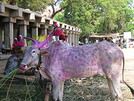
Since we were lucky enough to be there on a Wednesday morning, we explored the surprising Malapay Market, a 10-minute walk from our hotel. You’ll find numerous stalls selling vegetables, fruits, live or dried fish, and handicrafts. Enclosures are set up for selling livestock (calves, zebu, pigs). There are also restaurants. We were lucky to see two pigs roasted traditionally on a spit. There are few Europeans, and the people are warm. A great moment.
We left this beautiful place with regret because we didn’t have time to visit the island or go swimming with whale sharks.
Days 12 to 15:
From Dumaguete port, we took a short crossing (1 hour with Ocean Jet) to Siquijor Island to reach the Coco Grove Beach Resort. A beautiful hotel nestled in a spacious tropical garden. Several restaurants and bars, 4 pools. Despite the size of the place, it remains intimate. You can snorkel (corals and fish) right in front of the beautiful beach. We stayed in a very pleasant duplex suite. For those interested, there’s a spa and a diving center. You can also take the Apo Island excursion (offered at 1,950 PHP).
We spent our days relaxing between the pool and the beach. In the evening, the sunsets over Negros and Apo were stunning.
We booked an island tour with a comfortable tricycle from the hotel (1,500 PHP). The circuit was classic and allowed us to go around the island. We discovered beaches, the famous 400-year-old ficus tree with its enormous roots, and its equally famous foot bath with its cleaning fish. Then we visited the St. Isidore Convent before heading to the Cambugahay waterfalls and their four pools. The setting is idyllic, and the water is surprisingly good—we had a lot of fun swimming. We had dinner at a restaurant overlooking the island, where you can see Apo, Cebu, and Negros. In the end, Siquijor turned out to be a real little tropical paradise.
Since the hotel restaurants were expensive, we dined at nearby establishments: Fuego (clean, good—excellent raw fish—and quiet), Chekesch (louder), and the very pleasant Baha Bar, which brews its own beer and offers more refined cuisine.
Days 15 to 16:
We left at dawn to return to Dumaguete and its airport by ferry. We had breakfast at the Coco Grande Hotel, an annex of the previous one. The Philippine Airlines flight went smoothly. A driver took us to the town of Taal. We stayed at Paradores Del Castillo, right in the heart of the old town. It’s a charming old house with only 6 rooms. The various rooms are decorated with antiques—a real little museum. The garden is pleasant and opens onto the town.
It’s an old early 19th-century house converted into a hotel, beautifully arranged with 6 rooms in the heart of the city. The restaurant in the garden is very pleasant and offers a panoramic view.
We visited an old Spanish house before heading to the beautiful Basilica of St. Martin of Tours, one of the most beautiful religious buildings in the Philippines. A mass was in progress, allowing us to gauge the Filipinos’ fervor before we could visit. When we left, it was dark, and we could admire the illuminated building. We ended our evening by exploring the night market with its many fruit and skewer stalls. A nice surprise.
In the morning, we were taken to the shores of Taal Lake, an ancient caldera where a second volcano has formed in the middle of the lake, which in turn contains another lake. We boarded a *banca* to reach the island in the middle of the lake. This was followed by an uphill walk, made difficult by the high temperature (36°C) and the dust on the path. The dust was worsened by the many horses carrying (or bringing back) the less courageous. To illustrate the difficulty of the climb, the trail is marked by the Stations of the Cross and its 14 stations. We were panting while our guide trotted far ahead. Our effort was rewarded when we reached the summit and its viewpoints over the inner lake and the surroundings. The wisps of smoke seen here and there confirmed we were on an active volcano. Inside the lake, there are supposedly 45 small volcanoes, one of which emerged during its last eruption in 1911.
On the way back, we had lunch by the lake before returning to Manila and the Bayleaf Hotel, whose main merit is its location in the Intramuros district. In the late afternoon, we walked along the walls of the old city.
We had dinner on the hotel’s panoramic terrace overlooking the city and the bay.
Day 17:
Last day! Our tour operator joined us for a tour of the Intramuros district. He enriched the visit with comments on the history, geopolitics, and economy of the Philippines. We visited the Manila Cathedral, destroyed 7 times in the past (6 earthquakes and the 1945 bombing). It’s beautiful, and its stained glass is magnificent. We couldn’t enter the San Agustin Church, the oldest Catholic building in Manila. We passed by the memorial to the Battle of Manila, which claimed over 100,000 lives. We visited the area around Casa Manila, which was closed on Monday, and had a drink at Barbara’s cabaret, located in a historic house. A very enriching morning.
Then we went to the Mall of Asia, the world’s largest shopping mall, to buy some souvenirs (Kultura store) before being taken to the airport. We exchanged our last pesos at the buying rate right after check-in.
The return flight went smoothly. We regretted not being able to use the facilities of Istanbul’s new airport, as its opening was delayed by another month.
Finances:
In the end, we spent 1,640 € for the international flights, 4,200 € for the stay (hotels, visits, various transports) with the agency (whose professionalism we can only praise), and about 700 € for meals, tips, and souvenirs.
Summary:
Luckily, we had beautiful weather throughout our stay, with temperatures between 26 and 35°C. Discovering the Philippines was a wonderful experience. The diversity of the landscapes, the kindness of the Filipinos, the cleanliness, and the truly delicious fruits (especially pineapples and mangoes). We were never harassed, unlike in many touristy countries. On the other hand, the food, though generally cheap, wasn’t exceptional.
Since this country is so vast, we might return in the near future.
Though I’m not a specialist on this destination, I’m happy to answer your questions based on my experience.
So, my flight tickets have just been booked for a trip to Cambodia from November 4th to 27th, 2025.
I’ll be traveling solo and want to explore this amazing country while getting a bit off the beaten path.
I’m arriving in Phnom Penh and also departing from Phnom Penh.
My goal is to travel as much as possible by bus and scooter.
What itinerary would you recommend?
What are the must-do things?
I’m open to all tips and info.
Thanks in advance for your help and responses.
We got back enchanted from a 6-week trip to Cambodia!
Our itinerary: Kampot - Kampong Chhnang - Battambang - Siem Reap - Kampong Cham - Sen Monorom (Mondulkiri) - Banlung (Ratanakiri) - Kratie - Kampong Thom - Phnom Penh.
We traveled by bus, minivan, boat (between Battambang and Siem Reap), overnight bus, scooter, tuk-tuk, and rickshaw for shorter distances. We stayed in guesthouses, homestays, and even in the jungle during a trek.
While the Angkor temples are fabulous, it’s the people you should visit Cambodia for—the "Land of Smiles" truly lives up to its nickname! Tourists gather in Angkor but are quite rare elsewhere, even though the country is easy to travel around.
I won’t describe our trip in detail but instead highlight a few favorite moments.
From Kampot, don’t hesitate to head out around 6 AM to see the fishermen return and their wives selling their catch (just 10 minutes away by the coast). Guaranteed picturesque!
In Battambang, known for its food scene, we discovered a cooking class with Smokin’ Pot (authentic Khmer cooking class). They pick you up from your guesthouse to shop for ingredients (we made fish amok and beef lok lak) at their village market, then cook and eat together. A private class—just the two of us! They also send the recipes via WhatsApp as a PDF. +855 12 821 400
In Siem Reap, I can recommend a francophone tuk-tuk driver who was very attentive to our wishes. We visited tourist spots but also more remote villages and local grilled-pork restaurants with him. He’s a wealth of information about local life, and chatting with him was a real pleasure—we left with regret! You can reach him on WhatsApp: Vung Hem, +855 96 614 0146.
We did a 2-day, 1-night trek in Mondulkiri. Don’t expect a super dense jungle—it looks more like a forest similar to ours. But Nara, our Bunong ethnic guide, made the experience adventurous and ultimately very immersive! WhatsApp +855 86 630 489
Bee Bee’s Chalets homestay: If you pass through Banlung in Ratanakiri, we *loved* this family and their budget-friendly bungalows. Playing Uno, enjoying Nita’s cooking (ask for her fish amok—amazing!), it was a true homestay experience! Contact Nita on WhatsApp: +855 88 818 5525.
In Kratie, rent a scooter and follow the Mekong north for 40 km at your own pace. Being so close to the locals was a treat! Same goes for heading south if you have time.
Kampong Thom: Head 25 km out to visit the pre-Angkorian temples of Sambor Prei Kuk. Around a hundred monuments spread across three sites… and hardly anyone there!
A few practical tips:
Though prices are often listed in dollars, you can always pay in riels (1 USD = 4000 riels), which is what we preferred.
PassApp: An app to book tuk-tuks or rickshaws (and most importantly, know the price upfront).
Virak Buntham: A bus company connecting several cities, bookable online.
Feel free to ask me questions about places, accommodations, etc.—I’d be happy to answer!
We’re planning our second trip to Thailand (2 weeks on-site, late April/early May) as a family with our 5- and 7-year-olds.
On our first trip, we visited Bangkok, Ayutthaya, the River Kwai, Koh Lipe, Koh Phi Phi, and Khao Lak. We especially loved Koh Phi Phi for its limestone cliffs and lush vegetation, as well as Koh Lipe for its crystal-clear waters and snorkeling.
This time, I’m thinking of spending 7 days on the islands. I was considering Koh Tao and Koh Phangan. We’d like some scenery, snorkeling right from the beach, and a bit of atmosphere—but not too much (just enough to grab dinner in the evening).
For the other part of the trip, we’re torn between Chiang Mai and Khao Sok. One or the other… or both? We don’t want to rush, but we’re really nature-focused, so we won’t be hitting too many temples…