Bonjour,
Binôme et moi même nous envolons très bientôt ^^
J'aurais besoin de quelques conseils pour visiter Kanchanaburi et sa région. Nous y resterions une dizaine de jours, peut être 15.
Donc : Kanchanaburi évidement (j'ai particulièrement envie de voir les vieux marché et le nouveau marché, ça vaut le coup ? Le vieux marche ouvre réellement à 2h du mat' ?) ; Chutes d'Erawan et parc (je suppose qu'il ne constitue pas juste en les chutes, si ? J'ai cru comprendre qu'il y avait des sources d'eau chaudes aussi) ; Pont de la rivière Kwai ; les temples jumeaux ainsi que Ban Tham et Tham Magkong Thong ; le parc de Saï Yok noï ; prendre le Death railway (sublimes paysages non ?) ; Sangkhlaburi et alentours ; Thong Pha Phum et alentours. Que manque t'il "d'immanquable" ?
Quel(s) parcs privilégier parmi Thong Pha Phum, Lam Khlong Ngu, Khao Laem, Khuean Srinagarindra et Chaloem Rattanakosin parce que je pense bien que ça va être short 10 jours... Ou pas ? J'aime pas avoir à choisiiiiir ! Je veux tout voiiiiiir ! :D
J'ai essayé également d'obtenir une résa au Ganesha Park mais je n'ai que peu d'espoirs vu ma demande tardive :( Y'a t'il sur la région un autre parc aussi respectueux des éléphants (la demande de la grosse touriste lambda......)
Oui je sais, c'est très subjectif tout ça... je prends tous les avis et je trierai ;)
A moins que vous connaissiez par coeur tout le reste de la Thaïlande , 15 jours ou 10 me paraissent beaucoup ; 4 ou 5 sont largement suffisants
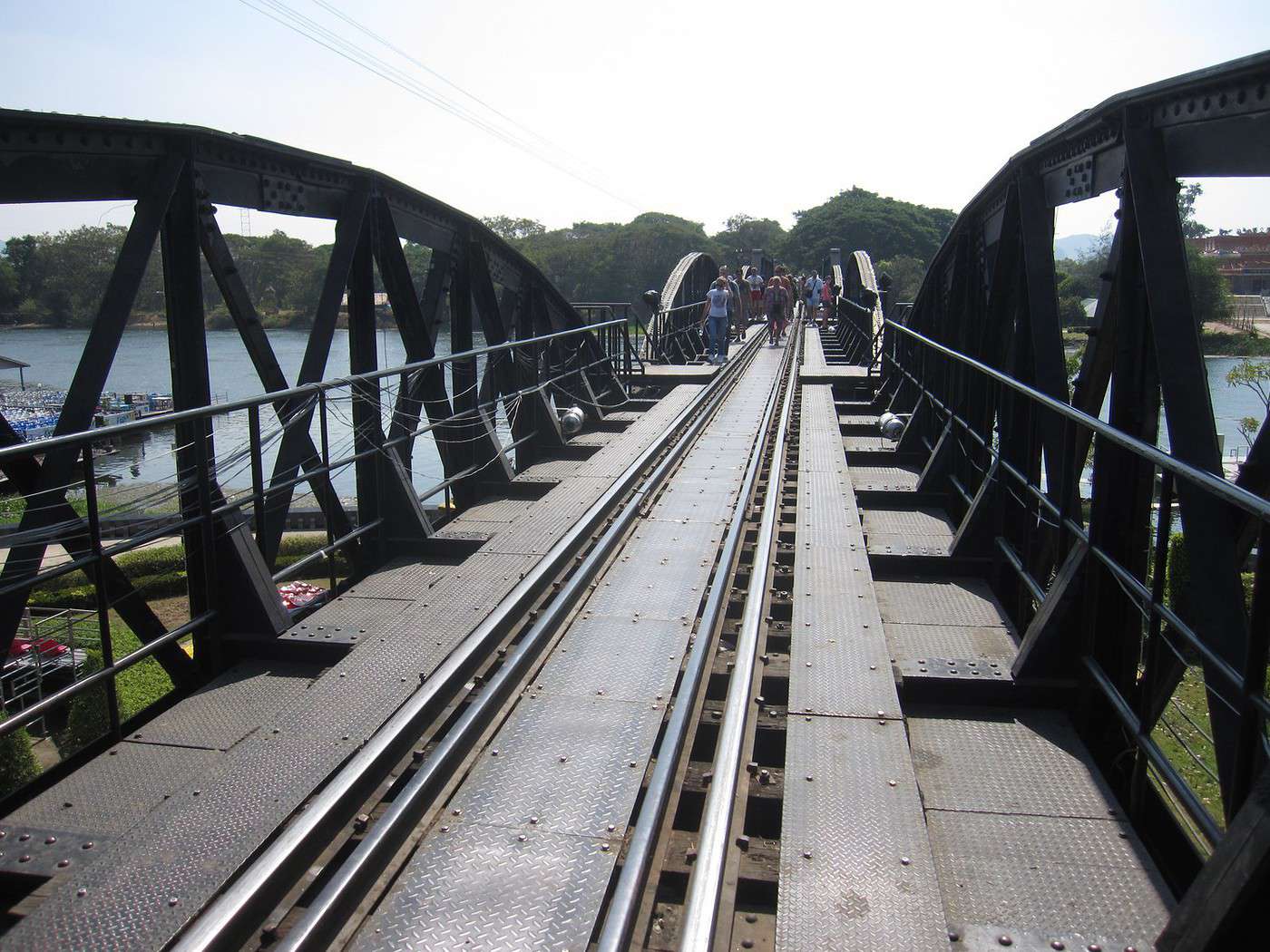
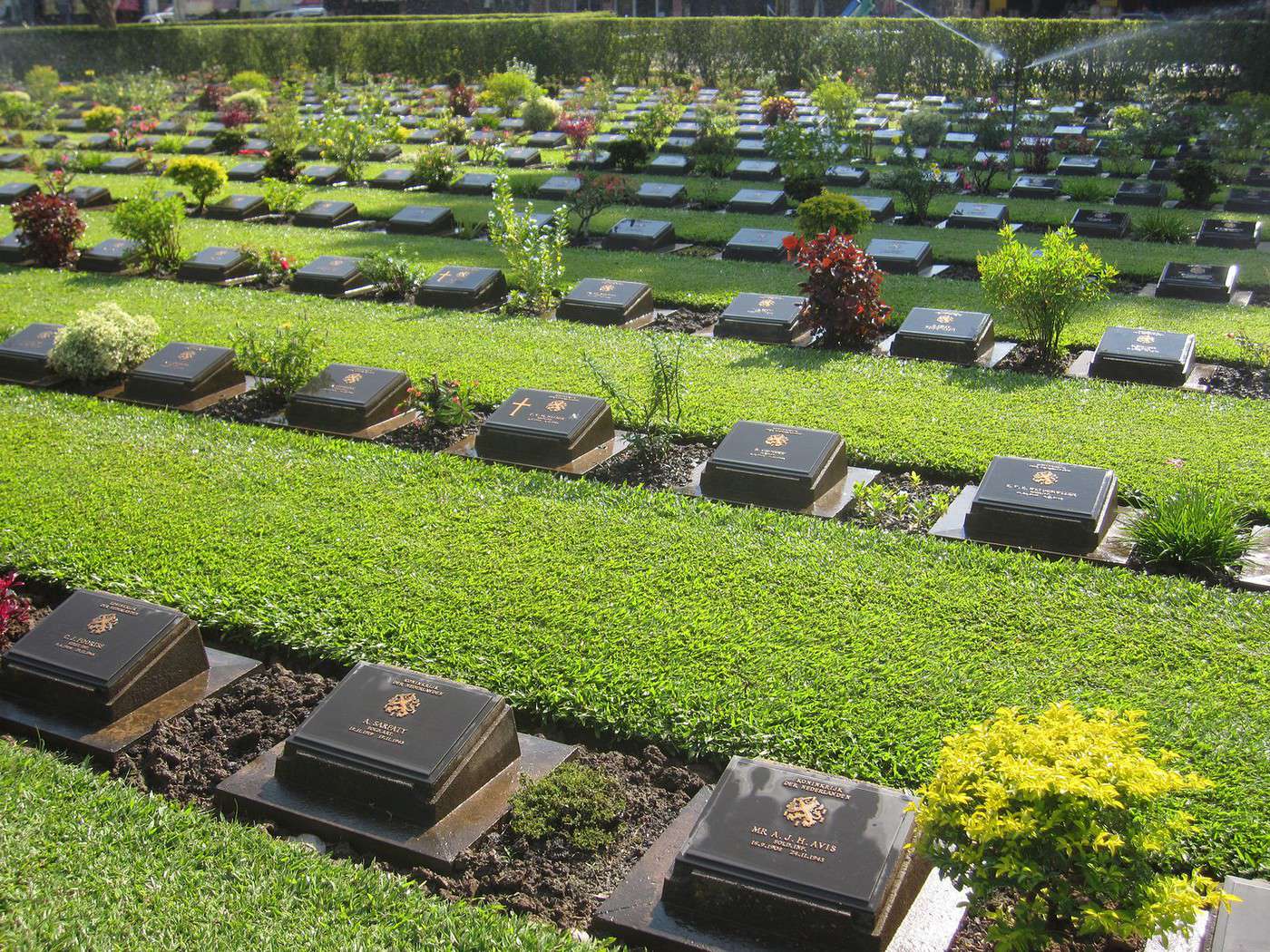
Rivière Kwaï :il y a régulièrement un très intéressant spectacle nocturne pour LE pont ( le "vrai" fut démoli par les B24 en 1944 !) : fin octobre , je crois , vérifier la date sur le site officiel , il y a un "super spécial" spectacle. Le jour , à côté du pont , un petit musée . Le parcours en train sur la "voie de la mort" a lieu plusieurs fois par jour : un aller-retour rigolo de 15-20 mn . Le cimetière est très beau , très bien entretenu.
On vous proposera aussi des ballades en radeau de bambous sur la rivière
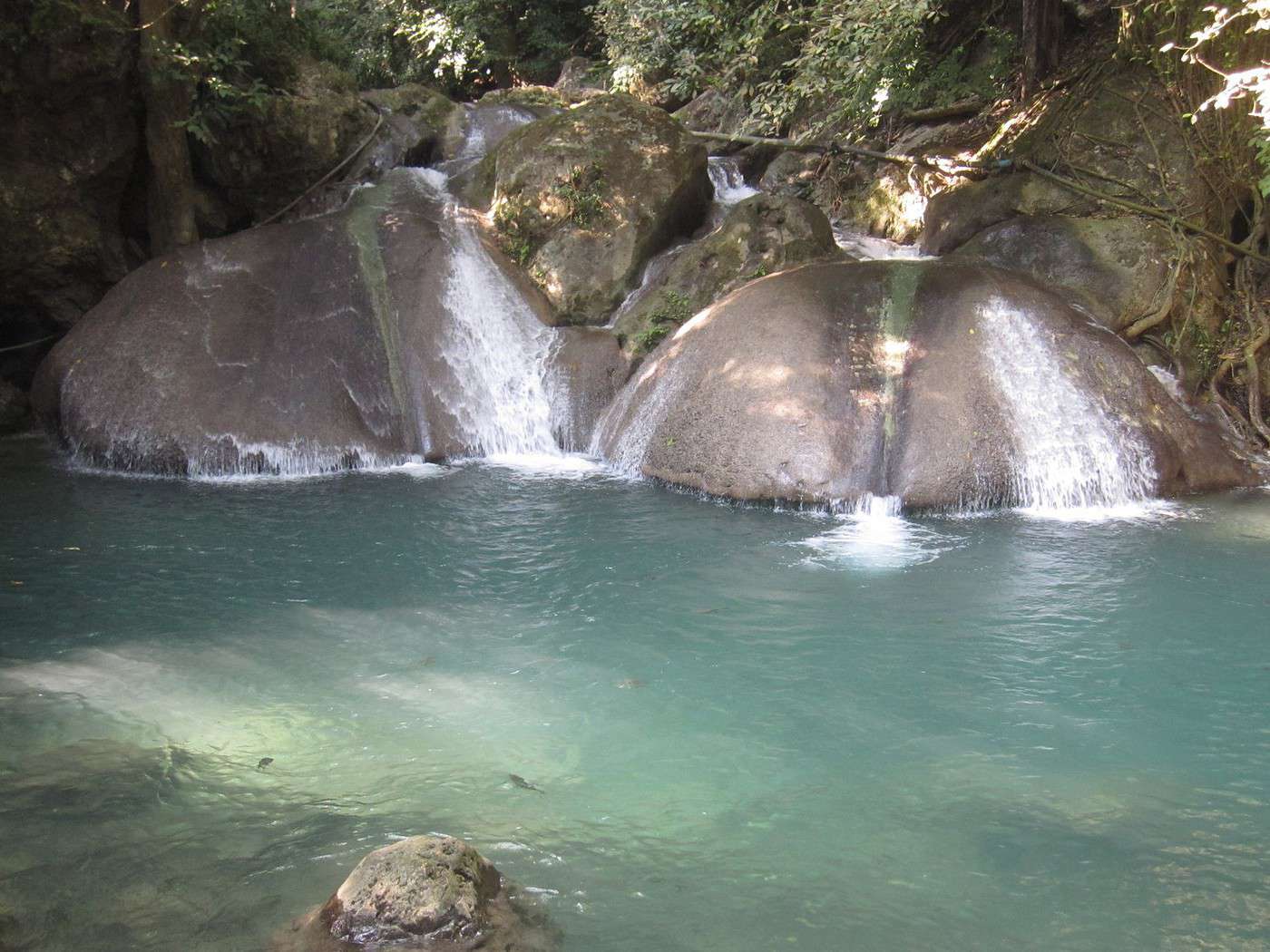
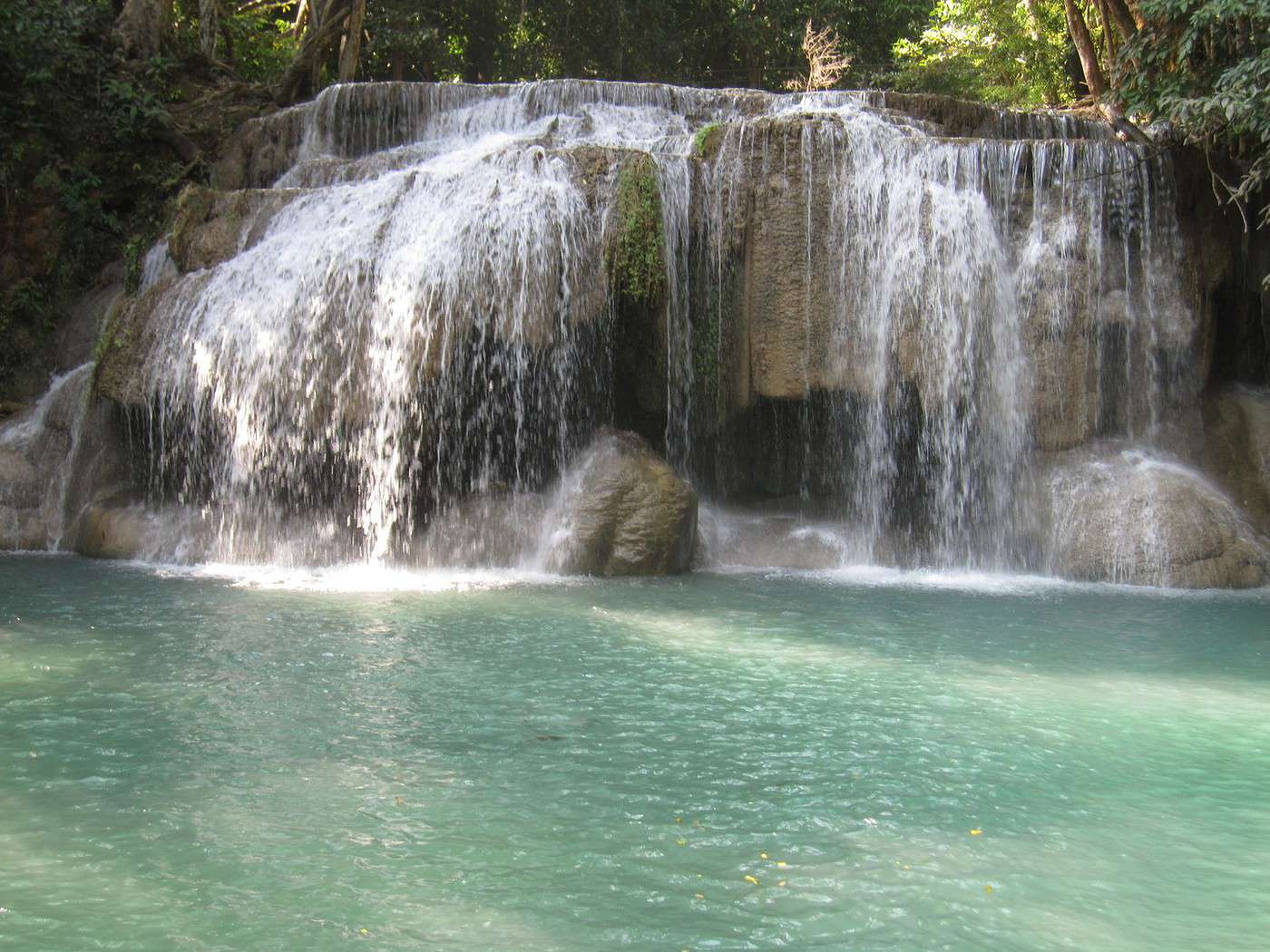
Erawan : quelques jolies petites chutes ; au-dessus des 3 premières , il faut vraiment aimer crapahuter pour voir les autres qui n'ont rien de fabuleux . A part les chutes , RIEN à voir dans le parc
Eléphants : à Kanchanaburi , x agences vous proposeront des visites-spectacles
Temple aux tigres : surprenant ! voir ces fauves dociles comme des vaches ...
Autres temples : pourquoi pas mais c'est la cinquième roue du carrosse par rapport aux temples de Bangkok et alentours ou à Sukhotaï
J'avais oublié ce spectacle sur le pont. Merci d'en avoir reparlé :)
Pour ce qui est du Temple aux tigres...euhhhh... non merci, je ne tiens pas à financer leur exploitation à ces pauvres bêtes droguées et maltraitées. Et faire une visite-spectacle pour les éléphant n'est pas vraiment ce que je cherche non plus. J'avais plutôt envie d'un contact plus "authentique", les voir, les approcher, éventuellement être en contact avec eux si ça n'est pas trop. Je sais qu'il y a des endroits où leur bien-être passe avant tout (Ganesha Park par exemple) et préférerais ne pas en voir du tout plutôt que de participer à un numéro de cirque ^^
Si vous voulez voir des éléphants sauvages dans leur milieu , il n'y en a pratiquement plus en Thaïlande !
Pour le temple aux tigres , je vois que vous reprenez l'antienne que je démolis tous les ans sur les tigres "drogués" . Régulièrement , je mets au défi ceux qui affirment cela de m'apporter les PREUVES SCIENTIFIQUES , analyse du sang des tigres , articles dans une revue scientifique , etc...et régulièrement , je ne reçois AUCUNE réponse !
Maintenant , si vous êtes du genre anti-zoo , je comprends très bien que cela ne vous intéresse pas
Bon voyage !
photos à Erawan
Il faut vraiment être d'une naïveté sidérante pour ne pas se rendre compte, ET D'UN SIMPLE COUP D’OEIL, que tous ces tigres sont drogués jusqu'à la moelle...🤪
Il n'y a plus que lui qui y croit, un cas désespéré ... laisses tomber irrécupérable ou inconscient (j'espère pour lui) mais bon il conseille aussi Pattaya alors j'ai des doutes... 😕
pour moi 10/15 jours au même endroit c'est pas top, 4 jours a kanchanabury suffit, les tigres pas interessant le pont de la rivière kway on y va a pied cela ressemble a Lourde, Erawan a la journée avec KFC , Safarine pour des tours privés, aller manger au Mokata, ou au paris Khan(+ cher) faire un tour à vélo, humer les senteurs du vieux marchés.
ensuite il faut aller chez francois et remonter ou aller faire du balnéaire vers hua hin ou Samet.
Bonjour, alors pour la région de Kanchanaburi pour ma part, j'ai trouvé 6 nuits trop courtes. Si on s'en tient juste à la ville de Kanchanaburi même, aucun attrait, même le pont... Bof. Par contre la région est magnifique, et il y a moultes parcs naturels à visiter. Erawann tres bof ? Non suis désolée , va voir les photos sur mon blog, des piscines naturelles, des petits paradis sur terre, à moins que tu sois blasé par la nature 😉Tu peux monter jusqu'à la 7ème sans être ni escaladeur ni sportif, j'en suis la preuve 🙂 et quel spectacle à ton arrivée...! Il est évident qu'il vaut mieux dormir sur place dans le parc pour pouvoir profiter des chutes avant les bus touristiques...
Pour les éléphants, si comme moi, les spectacles et zoos ne te disent pas, tu peux aller au Ganesha parc les yeux fermés, expérience authentique, unique et magique je ne cesserai de le répéter. A une heure du ganesha, tu as Sangklaburi, qui à mon avis oui est immanquable. A sangklaburi, il fait bon vivre, des paysages magnifiques, et tu peux faire des ballades très sympas. On est loin des tumultes touristiques...Beaucoup de grottes à voir dans la région, beaucoup de parcs, des sources d'eaux chaudes... Après j'avais loué une voiture, donc tu es beaucoup plus tenté de t'arrêter de partout... voilà.
Pour le temple aux tigres , je vois que vous reprenez l'antienne que je démolis tous les ans sur les tigres "drogués" . Régulièrement , je mets au défi ceux qui affirment cela de m'apporter les PREUVES SCIENTIFIQUES
Je dirais que drogué ou pas, n'est meme pas la question.
On voit tres bien que les tigres sont vu comme des sources de revenu pas comme des animaux. C'est un usine. allez venez assiter a ci, c'est XXX THB, et pour ça, c'est XXX THB etc...
Il y a aussi d'autres animaux dans le temple, dans une cage, il y avait un paon mort qui devait être depuis pas mal de temps. Comment se fait il que les nombreuses personnes du temple ne s'en soit pas pré occuper ?
Tout est fait pour le fric !!
Ce "temple" fait parti du top 3 des trucs que j'ai regretté en Thailande
Vous gagneriez une fortune en collaborant avec soit les douanes , soit la police des frontières , soit enfin avec la Mondaine : d'un coup d'oeil , vous repérez les êtres drogués ! vous êtes FABULEUX !
PS Un coup d'oeil n'est pas une PREUVE SCIENTIFIQUE : j'attends toujours cette dernière ...
Je ne suis pas borné : je changerai d'avis dès qu'on me fournira la preuve scientifique ( coup d'oeil : et puis quoi encore ! )
PS mes photos sur l'ours blanc et les hyènes : et oui ! non drogués !
Enfin , je ne "conseille" pas Pattaya : citez donc mon courriel où je conseille aux gens d'aller en premier à Pattaya au lieu de Phuket ou Hua Hin ou des Khos quelconques . Si vous ne pouvez pas le citer , c'est que vous mentez : et oui , encore une fois , DES PREUVES CONCRETES ..
Et je suppose que vous êtes tout aussi persuadé que les éléphants apprennent à peindre tout seuls, sans jamais recevoir le moindre coup de bâton ou autres châtiments ? 🤪🏴☠️
Sur le fond , vous posez le problème des zoos et des cirques : oui , les animaux y sont pour générer de l'argent . Etes-vous pour l'interdiction des cirques et des zoos ?
Question fondamentale à laquelle je n'ai personnellement pas de réponse : vaut-il mieux être un chimpanzé libre et mourir , si on n'est pas dévoré avant , vers 35 ans maximum ou bien avoir été Cheeta , la compagne de Tarzan dans les films , donc avoir été bien traitée et soignée et être morte vers 75 ans ?
"drogués ou pas n'est pas la question" : SI , c'est la question ! TOUS les gens qui critiquent ce temples parlent de "malheureux tigres drogués"
Si ces tigres ne sont pas drogués , EN QUOI sont-ils malheureux : nourris et soignés , que leur faut-il de plus ? l'espace peut-être..
Vous prêtez aux animaux des pensées humaines ! un animal vit minute après minute et ne sait pas ce que c'est que la mort , c'est entre autres une des différences capitales avec l'homme . Ou alors il faut interdire les chiens en ville : pas de vastes espaces ( les chats , c'est autre chose ) donc tous les chiens domestiques urbains sont malheureux de même que tous les poissons en aquarium , etc...J'ai toujours un peu mal au coeur quand je vois un oiseau en cage..
Vous voyez que ce n'est pas simple
Amitiés
Sur le fond , vous posez le problème des zoos et des cirques : oui , les animaux y sont pour générer de l'argent . Etes-vous pour l'interdiction des cirques et des zoos ?
oui
Question fondamentale : vaut-il mieux être un chimpanzé libre et mourir , si on n'est pas dévoré avant , vers 35 ans maximum ou bien avoir été Cheeta
Question fondamentale ?😏
Si ces tigres ne sont pas drogués , EN QUOI sont-ils malheureux : nourris et soignés , que leur faut-il de plus ? l'espace peut-être..
Et vous, cloitré à vie sur un terrain vague, drogué, nourri et soigné, que vous faudrait-il de plus ?
Mais sur quelle planète vivez-vous ?🤪 Etes-vous drogué ?...😏
Vous oubliez de parler des accusations de traffic d'animaux et de la jeune anglaise qui a été récemment violemment attaquée par un de ces tigres dans ce même "temple"...mais je vous laisse faire de la peinture avec vos éléphanteaux puisque vous ne voulez rien comprendre a la réalité du monde qui vous entoure 😛 Hé oui le monde est parfois cruel et ce n'est pas vos illusions qui vont y changer grand chose 😇 Faites de beaux rêves au pays des bisounours 😉😄😏
Vaste debat insoluble.
La liberté à un prix
Va expliquer aux planteurs qui se sont fait hier ravager leur travail par des elephants sauvages:
Alors des tigres...😏
Va demander à ces éléphants qui ont sautés sur des mines, s'ils ne préférèrent pas faire de la peinture après raccommodage
Plutot que de retrouver la "liberté"
Histoires de mines
😕
Vu que c'est a moi que vous répondez, je vous répond aussi
Sur le fond , vous posez le problème des zoos et des cirques : oui , les animaux y sont pour générer de l'argent . Etes-vous pour l'interdiction des cirques et des zoos ?
Je ne pose aucun probleme. Je ne fais qu'indiqué mon ressenti lorsque je suis aller a ce tiger temple.
Pour répondre a votre question de fond, non je ne suis pas pour leur interdiction.
"drogués ou pas n'est pas la question" : SI , c'est la question ! TOUS les gens qui critiquent ce temples parlent de "malheureux tigres drogués"
Si ces tigres ne sont pas drogués , EN QUOI sont-ils malheureux : nourris et soignés , que leur faut-il de plus ? l'espace peut-être..
Je critique ce temple et je n'ai pas parlé de tigre drogué. Votre postulat est donc erroné. J'ai meme indiqué qu'il fallait aller au dela de l'aspect drogué ou non (car je n'ai pas la réponse a cette question).
J'ai trouvé l'ambiance dans cet endroit malsain. J'espère que vous voudrez accepter mon opinion personnelle que je souhaite partager ?
Vous prêtez aux animaux des pensées humaines !
Je n'ai rien fait de tel
Vous voyez que ce n'est pas simple
Oui ce n'est pas si simple.
J'ai juste vu un endroit ou tout etait bon pour te faire depenser un maximum de fric. En tant que touriste, je n'ai pas envie de cautionner ce genre d'endroit en leur donnant du fric.
L'image de ce cadavre de paon dans son enclos en train de pourrir me laisse a penser que les paons n'étaient pas assez rentable et que donc il ne valait pas la peine que l'on s'en occupe. C'est définitivement pas le genre d'endroit ou je souhaite filer mon fric.
Va expliquer aux planteurs qui se sont fait hier ravager leur travail par des elephants sauvages:
Va expliquer aux éléphants sauvages que si on réduit toujours plus la surface de leur habitat vital, c'est pour heuu... pour notre bien.
Va demander à ces éléphants qui ont sautés sur des mines, s'ils ne préférèrent pas faire de la peinture après raccommodage
Et profites-en pour leur demander si on ne pourrait pas rajouter quelques mines, histoire de multiplier ces cas en bonne conscience et d'avoir ensuite de bons prétextes pour leur inculquer des martyrs-cours de peinture qui rapporteront du fric.
Je critique ce temple et je n'ai pas parlé de tigre drogué. Votre postulat est donc erroné. J'ai meme indiqué qu'il fallait aller au dela de l'aspect drogué ou non (car je n'ai pas la réponse a cette question).
C'est définitivement pas le genre d'endroit ou je souhaite filer mon fric.
Pour ceux qui en doutaient encore voici d'autres bonnes raisons de ne pas aller visiter cette arnaque qu'est le temple des tigres:
Il expose plusieurs raisons pour ne pas s’y rendre :
Les bébés tigres sont mis dans les mains des touristes dès l’âge de deux semaines, alors qu’ils ont normalement besoin de rester jusqu’à l’âge de deux ans avec leur mère. Ils sont par ailleurs gavés de lait toute la journée par les touristes.
Un tigre a besoin d’énormément d’exercice physique dans la nature. Or, au temple des tigres, les animaux sont la plupart du temps enfermés dans des cages minuscules entassés les uns sur les autres. Ils auraient parfois le droit à une balade effectuée par les volontaires, en laisse…
Leur régime alimentaire ne serait pas respecté : en effet, les tigres seraient nourris avec du poulet bouilli, alors que ce sont des animaux qui ont besoin de viande rouge pour leur développement musculaire.
Les raisons de ce régime peu adapté seraient d’ordre économique, le poulet étant moins cher que la viande rouge, mais également pour éviter de donner aux tigres le goût du sang, qui pourrait attiser leur instinct de prédateur.
Et si, en ayant lu cela, certains hésitent encore à s’y rendre, voici ce qui vous attend lors d’une visite dans l’après-midi au Tiger Temple.
Une véritable usine à touristes
Après avoir laissé 600 baht au comptoir et acheté un t-shirt car le temple impose d’avoir les épaules couvertes, rendez-vous dans ce lieu tant convoité : un endroit peu accueillant, qui paraît être laissé à l’abandon, aucun affichage, aucune indication, de toute façon ce n’est pas utile, vous n’avez qu’à rejoindre les centaines de touristes en file indienne qui attendent de pouvoir promener un tigre le temps de faire une photo.
Une volontaire hurle « à gauche, ceux qui ne veulent pas marcher avec le tigre, à droite, ceux qui veulent marcher avec et se faire prendre en photo ». Si vous avez choisi la file de droite, c’est parti pour une véritable course. Le tigre passe de main en main, pendant qu’une volontaire vous mitraille avec votre appareil photo lorsque c’est votre tour.
tiger temple
Le temple des tigres : un refuge pour les félins, ou une vulgaire usine à touriste ?
Ensuite, on vous amène devant un « Canyon » pour faire des photos plus intimes avec les tigres. Au choix, une formule payante et une gratuite. Pour la séance photo gratuite, suivez une volontaire qui vous prend par la main sans vraiment comprendre ce qu’il se passe.
Des tigres sont allongés par terre, on vous explique que c’est le moment de leur sieste, c’est donc rassurant, au moins ils sont vivants. On vous amène à côté d’un premier tigre, on vous assoit, une photo, et c’est reparti. Un autre tigre, beaucoup plus gros, vous attend non loin du premier. Cette fois-ci, la volontaire soulève la tête de l’imposante bête qui dort à poings fermés et ne daigne pas même ouvrir un œil.
Elle la pose sur vos genoux, prend une photo, reprend la tête du tigre pour lui redonner sa position initiale. Et si vous n’en avez toujours pas eu assez, laissez-vous trimballer de tigre en tigre jusqu’à avoir fait le tour, vous repartirez avec une belle série de photos de vous à côté d’un animal complètement amorphe. Bonne visite !
Bonjour,
Je vois que vous êtes partis il y a env 1 an en Thaialnde notamment la région de kanchanaburi .
C est exactement ce que je m'apprête a faire. Départ en février prochain.
Quels ont été les immanquables pour vous ? Sachant que nous y restons 4 jours + 2 jours au Ganesha park.
Dans mon programme le parc Erawan tombe un we... J ai peur que ce soit blindé....
J aimerais également avoir votre avis sur les autres pars que vous avez aimés car j hésite entre thong pha pum, si Nakharin , sai yok....
Bref s il en fallait qu un ou deux, le(s)quel(s)?
Nous pensons également aller faire un tour vers Sangkhlaburi .
Ce serait super gentil si vous pouviez prendre qqs minutes pour me conseiller.
Hello everyone! I’m heading off solo in February and wanted to share my rough itinerary with you. Does this sound doable?
PS: I’m not really into beaches.
D1 Departure on February 17, 2027
D2 Arrival in Kuala Lumpur – stroll through Chinatown and visit the Petronas Towers
D3: Kuala Lumpur – Chow Kit Market, Batu Caves, Little India, Bukit Bintang downtown area
D4: Early morning bus to Malacca. Explore Malacca in the afternoon and evening
D5: Another 2–3 hours in Malacca in the morning, then bus back to Kuala Lumpur. Merdeka Square area. Stay in Chinatown
D6: Bus trip to Kuala Tahan. Night tour
D7: Morning – canopy walk and Bukit Terisek hike. Afternoon – off to Lata Berkoh
D8 & D9: 2-day jungle trek in Taman Negara National Park
D10: Head to Cameron Highlands
D11: Morning hike through the plantations. Afternoon still to be decided
D12: Morning – excursion to Mossy Forest and Sungei Plantation. Afternoon bus to Ipoh
D13: Morning – Mirror Lake / Sam Poh Temple area. Afternoon – explore downtown Ipoh
D14: Morning train to Penang. Afternoon – wander around Georgetown
D15: Morning – Penang Hill and Keh Loh Temple. Afternoon – Georgetown
D16: Bus to Butterfly Garden and Spice Garden. Late afternoon – Burmese and Thai temples
D17: Morning flight to Singapore. Afternoon – Chinatown and Marina Bay tour
D18: Morning – Gardens by the Bay area. Afternoon – Boat Quay, Clarke Quay, Kampong Glam
D19: Morning – The Ridges area and Botanical Garden. Afternoon – Little India, then back to Chinatown before 11:15 PM return flight
D20: Morning arrival
Hi everyone,
I’ll be in western Malaysia for 20 days in January and February.
I’m coming from southern Thailand to Ipoh for the Thaipusam festivities.
Then it’s off to Pangkor Island.
I’ll finish up in Malacca for the Chinese New Year celebrations before heading to Singapore.
I’ve got a 6-day gap.
I was thinking of going to K.Lipis for the jungle train and heading to Dabong, but the caves might not be open.
Any suggestions around K.L.?
Day treks?
A stopover between K.L. and Malacca?
Thanks
Hi, I’ve read that these two volcanoes are super popular and that there are *tons* of people for sunrise, especially in July. I’m looking for firsthand accounts from anyone who’s done it later, around 9–10 a.m.
Thanks for your help!
Laëtitia
I’m heading to Cambodia at the end of December 2026 – January 2027 for 3-4 weeks. Since I’ve already visited Cambodia twice, my itinerary is a bit different this time—I’d love to explore Botum Sakor Park, Chi Pat, the Tatai region, and the Cardamom Mountains. I’m traveling solo. If you have any tips on transportation, excursions, treks, sights, or accommodations in the area, I’d really appreciate it. Thanks for your feedback!
Has anyone traveled with the Laos travel agency ADV ?
I’m planning a trip to Laos and have received several quotes. Among them, this agency’s seem very reasonable, and so far, the interactions have been positive.
I’ve found a few positive reviews online, but I’d love to hear from travelers who’ve actually booked with them: how’s the organization, guide quality, accommodations, on-the-ground responsiveness, etc.
Thanks for sharing your experiences!
First stop on our discovery of the peninsula: Amphawa. It’s our first night in Thailand (we arrived at Suvarnabhumi at 8:50 AM).
Our initial plan was to explore the area before heading further south. The Mae Klong Railway Market is tempting... but what else is there to do????
We’ll be there on a Wednesday, and from what I’ve read on the forum, some say there’s absolutely nothing to do during the week—no floating market, barely any shops open, no restaurants, etc.
Others, though, say the place is actually more charming without the weekend crowds.
Could you share your thoughts? Missing the floating market is one thing, but if it’s really a ghost town on Wednesdays, I might just drop our bags somewhere else.
Amphawa seemed like a good first stop, just 1.5 hours from the airport, but I’d still like to settle somewhere a bit lively for our first evening.
We’ll be there at the end of October.
Thanks!
Hi,
I wanted to visit the plantations in the morning with GetYourGuide or by just showing up.
How much time should I really plan for?
I’d like to catch either the 3 PM or 5 PM bus back to KL.
Thanks
Hi,
I wanted to get some info about the cable car and the bridge—I see lots of different options...
How much time should we allow for these two activities? If we arrive around 4 PM, will we have enough time to visit without rushing?
Thanks
Hi there,
I didn’t plan to return to Thailand this year, but my health conditions mean it’ll be the best place for me to stay between two trips to India. The tourism setup there is so well-organized that it’s the most "comfortable" country for a short visit. Thailand feels too sanitized for my taste, and there’s too much religion, Buddha, and the King, but it’s still the best option given how my health has been evolving. I’d considered two weeks in ThaTon for hiking, but I got too sick from the burn-offs during my trips to the mountains around Chiang Rai. So I’m not sure where to go this year. Definitely not the sea, touristy spots, or the mountains with burn-offs...
Hi,
On September 1st, we're heading to Kalimantan for six weeks, probably from Pontianak to the Derawan Islands.
I've scoured this site, which is usually my go-to 😉, and others like VoyageForum, but recent info is pretty scarce.
I'd love any tips on places you've visited—our itinerary is still a work in progress.
We're two couples traveling with backpacks, using buses, boats, guesthouses, and homestays.
Thanks in advance!
Hi fellow travelers,
First trip to Vietnam.
We’ll be arriving in Ho Chi Minh City during Tet.
Is it complicated to find accommodation and get around during this period?
Any tips would be welcome.
Thanks for your replies.
Hi! I’d like to split my trip into two parts: 15 days in Phuket and 15 days in Krabi. Do you know if I can rent a car and drop it off in Krabi when I fly back to France?
Thanks for your feedback!
Have a great Sunday!
Martine
Hello,
After 1 night in Khao Sok, I’d like to find a 2 Days 1 Night package on the lake.
After reading a lot, I decided to "break the bank" and treat ourselves to a private tour—mainly to avoid the crowds.
But after contacting several operators, they offer "private tours" that are very expensive (around 700 €), yet in the details, the boats can only leave from the pier at 10 AM like everyone else. (I was hoping to leave much earlier.) The morning program is the same for everyone too (private or not). They drop us off at noon at our floating hotel (I’d chosen Phupha Waree). Free afternoon (swimming or kayaking in front of the hotel). We head back by boat for a 1-hour sunset ride. And the next morning, we leave the hotel at 8 AM to be at the pier by 9:30 AM at the latest—end of the trip.
So basically, we’re paying a lot for a private tour just to do the same thing as everyone else at the same time.
Or maybe I just had bad luck in my search.
I contacted Panida Ladi, who’s very popular on forums. We’d agreed on a private tour that matched my request (departure from the pier at 8 AM, very personalized itinerary). We settled on the itinerary and price, she asked for a Wise transfer for a 30% deposit, confirmed receipt of the deposit. Then 30 minutes later, she messaged me to say she was canceling everything because it was impossible to do the requested tour—and promised a quick refund of my deposit.
So here’s my question: Who’s done a *real* private tour on this lake? Who can recommend a reliable agency? Is it even really possible to do a private tour here?
I’m searching for a real gem for my 3rd stay in Koh Lanta: a lovely, high-quality hotel right by an easily accessible beach in a lively spot.
If you know of anything that fits what I’m looking for and want to share, don’t hesitate!
Hi, is anyone there in Flores right now? According to some websites, everything is closed and the situation is tough. But our guide says it's fine. Who should we believe? We're supposed to leave on September 2nd. Thanks to anyone in Flores at the moment!
Hi dear community,
I'm planning to visit Cambodia this winter, right after Christmas, for my first solo trip and my first trip to Asia. For two weeks (yes, I know it's short, but I really can't do more...). I have two main desires: Siem Reap and the countryside, the villages, the Mekong...
What do you think of this itinerary? Arrival in Siem Reap, departure from Phnom Penh.
SR: 5 days (1 day for arrival, 3 for the temples, 1 for the lake and its villages)
Kratie (stop on the way to Mondolkiri): 3 days (1 day of travel, 2 days there)
Mondolkiri/Sen Monorom: 4 days (1 day of travel, 1 day there, 2 days of treks)
PP: 3 days (1 day of travel, 2 days of sightseeing)
I think I need to cut one day somewhere if I travel from Saturday to Saturday or Sunday to Sunday. In Kratie, maybe? Or in PP? And I'll miss the boat trip that everyone recommends (SR-Battambang), but I don't see where to fit it in. Unless I do a PP-PP loop starting in the east, skip Kratie or just stay one night, then SR, then PP.
In my timing, Mondolkiri seems closer than Ratanakiri, which also tempted me a lot! Will it be too complicated alone? I'm thinking of using local guides or a small local agency for a nature and village getaway.
I've read that Siem Reap is very crowded between Christmas and New Year's. I could also do the circuit in the opposite direction. But I thought it would be easier to get familiar with the country by arriving in a touristy area—I might be wrong...
Thanks for your advice and opinions!
Hi everyone.
I’m planning my trip, and based on all the posts I’ve read, this country is amazing.
Of course, I’ve got a ton of questions for you.
Here’s a possible itinerary: Vientiane - Vang Vieng - Phonsavan - Sam Neua - Nong Khiaw + villages - Phongsali - Luang Namtha and the area - Udomxai - Huay Xai - Luang Prabang and back to Vientiane.
What do you think?
We’re planning to prioritize local transport—is it possible to do this loop?
We’d also love to go kayaking, but I’m not sure if the season’s right or where the best spot is.
For trekking—I read that Phongsali is the most authentic spot to visit villages and see wildlife. Do you know of a reliable agency and a guesthouse with reasonable prices?
Is it worth taking a slow boat for a stretch on the Mekong, and if so, which route?
For accommodations, is it better to book through Booking.com and Agoda or look when we arrive?
Are mosquitoes bad in Laos, and should we take malaria prophylaxis?
What’s the average daily budget (accommodation, food, visits)?
Is renting scooters a good option for exploring towns, and if so, which ones?
From what I’ve read, it’s best to carry cash—euros or dollars? Is it risky to walk around with that much cash?
I’ve still got tons of questions. Thanks to anyone who can help, and I’m open to all tips, info, etc.
Thanks again
Hi there,
I’m planning a family trip (my wife and I, both 47, and our two sons, aged 5 and 12) to Malaysia for the last week of June and the first two weeks of July 2027.
We used to love road trips as a couple, then as a trio, but since our second child arrived, we’ve taken a break with "camping village" style trips.
Now feels like the right time to get back to our old habits, while adjusting the pace for the kids.
We’re craving Asia. We’ve been lucky enough to visit Thailand, Indonesia (Bali and Lombok), and Sri Lanka before.
Friends have raved about Malaysia, so we’re definitely tempted.
For those who know and love Malaysia, what would be a good itinerary starting from Kuala Lumpur, with a maximum of 3-4 stops? We’d like a mix of culture, nature, and relaxation (just to clarify, we’re not big beach fans). All of this without rushing, of course.
Hello,
We’re a family of four with two teens aged 16 and 18. We’re heading to Thailand this summer. We’ll arrive in Bangkok and plan to take a flight to Luang Prabang.
I’ve seen there are some great visits and excursions to do (temples, markets, waterfalls) and maybe even venture a bit north to places like Nong Khiaw, Muang Xay, Muang Ngoy, or Oudom Xay.
But I’ve also heard about the Bokeo region with the Gibbon Experience.
Since we won’t be able to do everything, I’d love to hear about your experiences, impressions, and advice on the two options I’m considering, especially since we’ll be meeting family in Chiang Mai, Thailand, afterward.
Option 1: A loop from Luang Prabang heading slightly north, then a flight from Luang Prabang to Chiang Mai.
Option 2: A few days in Luang Prabang, exploring within a few dozen kilometers around, then heading to Bokeo province for the 2-day/1-night Gibbon Experience. For this option, I saw on Rome2Rio that it’s possible to book a ferry trip on the Mekong from Luang Prabang to Huay Xay—they mention about 8 hours. But is that realistic? What type of boat is it?
Then, to get to Chiang Mai, there aren’t many options—bus or minivan—but how does crossing the border work?
Finally, for those of you who’ve been to Laos in August, what was the weather like?
We’ve already visited Thailand, Vietnam, and Cambodia during the same period over the past four years and weren’t really bothered by bad weather.
I’m starting a discussion about guides in the Mekong Delta because we’ve just finished our trip in this region and had a hard time finding a French-speaking guide. We had Thanh—she speaks French really well and travels all over the delta region, including Ho Chi Minh City. She’s super friendly and flexible. I recommend her wholeheartedly. If it can help someone...
Feel free to contact us for her number.
Hi everyone,
I couldn’t find any recent info on Kuching.
Can anyone recommend a hotel or guesthouse for under 100 RM that’s nice and affordable? No dorms, please.
Also, does it rain a lot in November, and is it still worth visiting Semenggoh or Bako?
We’ll be arriving in Phnom Penh this coming January and we’re thinking of starting our trip with a stop in Kampong Cham, then Kratie.
After Kratie, we’re considering heading toward Siem Reap with a stop in Kampong Thom.
That said, I’m not really sure how long the Kratie–Kampong Thom journey might take or how complicated it is.
Does this stop on the way to Siem Reap seem like a good idea to you?
If we don’t visit the Sambor Prei Kuk site, are there still any walks or sights worth checking out in Kampong Thom?
Silly question—backpack or hard-shell suitcase for the Sepilok, Kinabatangan, Tioman, KL trip?
I’m struggling to fit all my son’s and my stuff into the 70L backpack... and I’m thinking a suitcase would be easier, but I’m not sure if it’ll work for getting around.
After a stay on Koh Phayam this coming November, I’d like to spend 2 or 3 days on Koh Phra Thong before heading further south.
Do you think it’s doable to leave Koh Phayam early enough to catch the 10 AM boat from Khura Buri to Koh Phra Thong? The next one isn’t until 4 PM, which would cost me a whole day.
I’m planning a trip to Indonesia, specifically Sulawesi and Java, in September for 10 days.
I don’t know this part of the world at all—any advice is welcome!
I’ll be traveling solo and would also love tips on meeting other travelers or locals.
Hello everyone,
Not long ago, I used to travel as a couple, but my husband has since passed away, and I’ve decided to set off again. The trip I took to Cambodia in January 2025 did me a world of good.
I’m now considering Thailand, a destination we never included in our plans because even 15 years ago, people said it was too touristy. Still, I’m thinking about the itinerary below, but I don’t feel up to arranging buses, trains, or guides on my own while I’m there. I’m looking for one or more drivers and have been in touch with an agency, but their offers are just copy-paste group tours that I don’t want.
So, if you have any contacts, experiences, or advice, I’d be so grateful if you’d share them with me. Here’s my rough plan:
Arrival in Bangkok
Ayutthaya (2 nights)
Kanchanaburi (2 or 3 nights)
Sangkhlaburi/Sai Yok (3 nights)
Sukhothai (2 nights)
Lampang (I’ve planned 3 nights, but that might be a bit much—it depends on what time I arrive in the city)
Chiang Mai
Chiang Dao
Pai
Chiang Rai
I was thinking about the Mae Hong Son loop—thoughts?
What do you think about staying overnight at the Golden Triangle?
When I look online, of course, I can find agencies that organize tours to national parks, etc.
I’m retired but in great physical shape. I’d rather go hiking than sit in hot springs with crowds of tourists who’ve all arranged meet-ups. I don’t want to spend a day at an elephant camp, and I don’t want to visit Karen villages.
I’d love to hear your advice.
Thank you all,
Hi everyone,
Could you share your thoughts on my 3-week itinerary?
We’re a small group (family + friends) of 12 people, planning to leave around January 21, 2027.
Here’s my itinerary:
3 nights in Bangkok
4 nights in Chiang Mai
3 nights on Koh Samui
3 nights on Koh Phangan
4 nights in Krabi
4 nights in Phuket
I’m also open to any great tips you might have...
Thanks, everyone! Alain.
Hi there,
We’re planning a 3-week family trip next summer with our three kids, who’ll be 8, 8, and 7 years old.
After some research, we’re leaning toward Malaysia to combine nature/forests and paradise beaches. The idea is to introduce our kids to the country’s culture, nature, and wildlife.
We want a great trip but without splurging on luxury options like high-end lodges and resorts. We’re looking for comfort with a touch of authenticity—basically, a good middle ground.
I’ve started putting together an itinerary and would love your expert advice and tips to help us build this amazing trip with our little ones.
Day 1: Departure from France
Day 2: Kuala Lumpur
Stay at a hotel near the airport or KL Sentral.
Just one night.
Day 3: Morning flight to Sandakan (Borneo).
Stay in Sepilok
Day 4: Sepilok:
* Orangutan Center
* Malayan Sun Bear Center
* Rainforest Discovery Centre
Day 5: Depart for Kinabatangan.
Boat safari in the late afternoon.
Day 6: Sunrise safari.
Jungle walk.
Evening safari.
Day 7: Final safari.
Return to Sandakan.
Flight to Kuala Lumpur, then to Kota Bharu (or overnight transit depending on schedules).
Day 8: Transfer to the port.
Boat to the Perhentian Islands.
Days 9 to 13: Perhentian Besar
5 full days.
* Snorkeling
* Hiking
* Turtle watching
* Wild beaches
* Relaxation
Day 14: Return to the mainland.
Bus or private car to Taman Negara.