En tant que touriste Français peux t_on obtenir l, ouverture d'un compte bancaire.
Si oui quelles formalités ?
Exceptionnellement compliqué. Impossible en tant que touriste.
Même en tant que résident sur place, l'ouverture d'un compte peut mettre plus de 6 mois.
Ils ne savaient pas que c'était impossible, alors ils l'ont fait.
Jean Pierre
Il faut avoir le cpf, la résidence permanente et être enrégistré comme étranger (donc avoir le RNE, Registro Nacional de Estrangeiro), si on à tout ça il faut compter quelques jours maximum.
Donc comme touriste vous pouvez oublier.
Alternativement vous pourriez uteliser le truc des cartes de crédit "pré-payées" vous pouvez en acheter dans les grandes surfaces. Vous pouvez mettre de l'argent dessus et il suffit d'avoir le cpf de n'importe qui pour une petite première resitration. Mais pour ne pas être dépendent des autres prenez votre cpf (dans les agences de postes 'Correio') et vous êtes tranquil.
C'est une sorte de numéro qui est attribué à chaque personne. Comme un numéro de sécurité sociale en France.
On vous le demande presque partout, si vous n'en avez pas ce n'est pas grave, sauf pour certains achats et certaines démarches ou il est indispensable.
Tapez CPF Brésil dans google et vous verrez.
Ils ne savaient pas que c'était impossible, alors ils l'ont fait.
J'ai aussi essayé d'ouvrir un compte bancaire au Brésil (en tant que citoyen Suisse).
Quasi impossible (ou mieux très, très compliqué).
Heureusement ma femme possède encore un CPF, et elle était d'accord de me dépanner.
Alors, si j'ai bien compris le CPF (Cadastro de Pessoas Físicas) est un registre tenu par la Receita Federal (office des impôts fédéral du Brésil). Selon mes informations TOUT LE MONDE peut s'inscrire et demander un numéro/cadastro CPF (même des morts!). Aussi des étrangers et des non-Brésiliens.
Alors ça doit être un peu compliqué, car l'administration brésilienne est souvent lente et "très lourde".
Bonne chance
Chris
PS si vous lisez le Portugais:
O CPF é o Cadastro de Pessoa Física. Ele é um documento feito pela Receita Federal e serve para identificar os contribuintes. O CPF é uma numeração com 11 dígitos, que só mudam por decisão judicial.
Pour obtenir le CPF, il faut une adresse au Brésil ou un certificat d'hébergement d'un brésilien. L'ouverture du CPF donne automatiquement accès à l'ouverture d'un compte épargne à la Banco do Brasil.
Et non Raymond ...
Le CPF ne donne PAS automitiquement access à une ouverture de compte en banque.
Il faut avoir la résidence permanente et avoir son numero RNE (Registro Nacional de Estrangeiros) sinon aucune banque ne vous donnera un compte (légalement ils ne peuvent pas).
J'ai parle de compte épargne. J'en ai eu un, que j'ai toujours, avec mon CPF bien avant d'avoir la RNE.
Peut être que les choses ont changé récement, mais à l'époque il y avait automatisme avec la Banque du Brésil, mais pas une autre.
..
J'ai parle de compte épargne. J'en ai eu un, que j'ai toujours, avec mon CPF bien avant d'avoir la RNE.
Peut être que les choses ont changé récement, mais à l'époque il y avait automatisme avec la Banque du Brésil, mais pas une autre.
Ne pas confondre un compte courant et un poupança, qui est un compte épargne, avec une carte de paiements valable au Brésil..... Mais bon si vous le dites.....!
Ce n'est pas 'moi' qui le dit ... mais la législation (récente, oublions 'ton époque' ;-) brésilienne Raymond
Faisons un peu de recherches ...
Le site le plus complet est celui de Vinicius Terci (avocat brésilien, spécialisé dans les droits tributaires internationaux), le site est en portuguais (Raymond comprendra sans doute et devra avouer avoir été dépasé par la réalité, les autres utilisez traducteur goggol ;-)
Different sites (aussi celui du Banco Central do Brasil) mentionnent qu'il est possible d'avoir un compte bancaire / épargne étant NON-résident BRESILIEN (https://www.conta-corrente.com/bancos/abertura-de-conta-bancaria-para-nao-residente/), on mentionne aussi une bureaucratie bien avançée, mème pour les brésiliens + quelques banques limitent les transfers internationaux à 10.000R$, comme la Bradesco par exemple
Donc, nullepart vous trouverez qu'un ETRANGER pourra ouvrir son compte sans cpf, résidence permanante ET RNE, si une banque le ferait quand mème elle encourre les risque d'amandes salées ...
D'ailleurs il est bon de savoir que le RNE (Régistre National des Etrangers) est remplaçé depuis 2017 par le CRNM (Segundo o Decreto nº 9.199 de 20 de Novembro de 2017, que regulamenta a Lei nº 13.445, de 24 de maio de 2017, que institui a Lei de Migração.é a Carteira de Registro Nacional Migratório – CRNM)
C'est bien de vouloir avoir raison à tout prix mais encore faut-il lire ce qui est écrit. Il était question d'avoir un poupenca avec un CPF. Vous dites vous même que la Banco Do Brasil propose des comte épargne aux non résidents, ce qui est le sujet de la discution..... Alors pourquoi essayer de faire passer les gens pour des vieux ignorants quand vous dites la même chose. Donc je ne vois plus aucun intéret à discuter avec vous.
Je ne veux pas me mettre dans votre petite gueguerre, mais il faut bien lire ce qui a ete ecrit.
Ivan a ecrit:
"Different sites (aussi celui du Banco Central do Brasil) mentionnent qu'il est possible d'avoir un compte bancaire / épargne étant NON-résident BRESILIEN (www.conta-corrente.com/...-para-nao-residente/)".
On parle bien de bresiliens non residents .
Et Raymond repond:
"Vous dites vous même que la Banco Do Brasil propose des comte épargne aux non résidents, ce qui est le sujet de la discution...."
oui mais le sujet de la discussion parle de compte ou poupanca pour un francais...
Les documents a donner a la banque sont les memes pour un compte courant ou epargne ( poupanca). Mais toujours etre residents :
"O processo de abertura de uma conta bancária no Brasil é bastante simples. No entanto, os estrangeiros só estão autorizados a abrir uma conta se possuírem visto de residência. Para abrir uma conta bancária no Brasil, tem que estar presente na agência bancária."
Il y une possibilite pour les etrangers non residents:
Conta corrente para estrangeiro não residente: como abrir
Abrir a conta na condição de estrangeiro pode ser um procedimento um pouco mais complexo do que sendo nacional, pois a documentação pedida pode ser maior.
Sendo um estrangeiro não residente, a situação fica ainda mais difícil, já que, dentre os bancos tradicionais brasileiros, a grande maioria não aceita a abertura de conta por estrangeiros não-residentes.
Dentre os bancos mais conhecidos no Brasil (Caixa Econômica Federal, Itáu, Banco do Brasil, Santander e Bradesco), o Bradesco é um dos poucos que possibilita a abertura de conta para estrangeiros não residentes no país: trata-se da “Conta Internacional”.
C'est bien de vouloir avoir raison à tout prix mais encore faut-il lire ce qui est écrit. Il était question d'avoir un poupenca avec un CPF. Vous dites vous même que la Banco Do Brasil propose des comte épargne aux non résidents, ce qui est le sujet de la discution..... Alors pourquoi essayer de faire passer les gens pour des vieux ignorants quand vous dites la même chose. Donc je ne vois plus aucun intéret à discuter avec vous.
Ooooh, Raymond ... ne le prenez pas sur ce ton s'il vous plait.
Lisez bien le premier post du fil avec la question d'Edamon, je vous le copie ici :
En tant que touriste Français peux t_on obtenir l, ouverture d'un compte bancaire.
Si oui quelles formalités ?
Et vous avez effectivement lu "au non résidents" et dans les explicatif de l'avocat (spécialisé dans la matière) mais vous avez oublié un petit détail ... on parle de "non résidents brésiliens" ... petit détail qui change la donnée 😉
Ensuite, on ne vous traite pas de "vieux ignorant" (relisez encore)
D'ailleurs on est probablement de la mème époque vous et moi 😉.
Mon intention est tout juste d'informer les participants du forum sur leurs questions, de la façon la plus complète possible avec des infos ... récentes, car le Brésil aussi évolue dans tous les domaines.
D'ailleurs, je suis content que Topodidi (qui habite, comme moi d'ailleurs, le Brésil depuis longtemps et encore) à rajouté son info, sur la Bradesco, mème si la procédure est dite compliquée ça vaut le coup d'essayer.
En fin de compte échanger les infos sur un forum nous nous complètons tous pour informer sur les questoins posées. Et parfois, il faut savoir accepter d'être corrigé ou complementé, et ce n'est pas une question d'avoir raison Raymond, moi je n'ai que le désir sincère d'informer au mieux possible (comme la plupart des gens ici je pense) et on m'a déjà remercié de nombreuses fois pour cela.
Allez, je vous souhaite tous une journée excellente et paisible 😎
Hi there, I’m looking for recent info on a boat trip with sleeping accommodations from Belém to Santarém. I don’t want a "luxury cruise for wealthy tourists"—just a bed with a minimum of comfort seems great to me🙂. I didn’t find any up-to-date details with Amazon Star. Do you have any companies, guides, or prices for this route to recommend?
I’d love to hear tips and feedback on this trip, especially since I’m traveling solo. I’d like to get a sense of what to expect and ensure some basic safety with transportation.
Thanks.
Hi everyone,
We’re planning 40 days in Uruguay and Argentina in February and March, trying to avoid as much rain as possible.
We’re thinking of starting in Buenos Aires, then heading to Bariloche, and from there flying to Córdoba, Mendoza, or Salta. Maybe by bus or renting a car to explore each region.
Do you have any suggestions or tips for us? We love picturesque, historic cities and landscapes. As seasoned travelers, we’re used to planning our trips ourselves.
Thanks in advance!
We’ve planned our road trip in Chile, and the only thing left is to book the TABSA ferry from Punta Arenas to Puerto Williams.
Problem: the ferry that leaves Punta Arenas at 1 AM isn’t available for booking, no matter the day or month. All the other departures can be booked, though.
On top of that, Tabsa isn’t responding to any messages.
We’re planning to explore Peru’s main highlights and were wondering if anyone could share insights on the quality and comfort of overnight buses. If so, which bus company should we trust?
Hi,
My wife and I are heading to Brazil from November 6th to December 2nd. We’ll be stopping in São Paulo, Paraty, Ilha Grande, Rio, and Salvador de Bahia.
Could you recommend some nice, non-luxury places to stay in each of these spots?
Also, any suggestions for places to visit would be great.
Thanks in advance for your help!
Marc
Hi there.
I already posted a message asking for advice about our upcoming trip to Chile.
Details: Getting around by bus or train.
Starting from Valparaiso, heading north, passing through cities and places to visit, then returning to Santiago via a different route.
Avoid the beaches...
Thanks
Hello,
my wife and I will be in Cusco for a week in March 2027.
I’d like to organize the visit to the site on our own, combining the Sacred Valley and Machu Picchu.
We’d leave Cusco on Day 1 to arrive at the site in the morning, then stay in Aguas Calientes or Ollantaytambo, and on Day 2 return to Cusco while visiting the Sacred Valley.
Is this doable?
Looking forward to hearing from you.
Cédric.
Hello,
We’re spending 3 weeks in Rio between February 20 and March 15, 2027, to visit our son and daughter-in-law. We’re thinking of one or two "escapes" from Rio—3-day trips to get away from the city (so not too far, max 3–4 hours by car or bus). We’re all ears for suggestions! We love beautiful nature and authentic experiences, not so much the touristy spots... even though those spots are often in beautiful places, we’d rather avoid them.
Thanks for your insights!
Catherine
Hi there,
I’m planning a trip with my partner (no kids this time—thanks, Grandma!) for two weeks to celebrate her 40th birthday. I’ve been thinking about Chile. We’re looking at leaving around September 18, 2027, starting in the south and returning in early April.
Here’s what I had in mind:
8 nights in a van in the Lake District and the start of the Carretera Austral (up to the Chaitén area). We’re set to arrive in Puerto Montt around 2:00 PM. We don’t want to go too far south since we’re planning to explore the heart of Patagonia (Chile and Argentina) with the kids when they’re older. The idea is to spend 3 nights discovering the lakes (up to Cochamó) and 3 nights in Pumalín Park. I’ve also added two transition nights.
7 nights in the Atacama to experience another side of Chile (San Pedro), taking a domestic flight from Puerto Montt to Calama in the early afternoon. We’ll depart for France in the early evening from Santiago.
IMPORTANT NOTICE for those planning to take a bus to another city, state, or destination from Salvador!
Starting January 20, 2026, the intercity bus station Rodoviária is changing its address!
The Rodoviária is leaving the Iguatemi area and will now be located in ÁGUAS CLARAS (about twenty kilometers from downtown Salvador).
A brand-new station (the most modern in Brazil) has just been set up there, accessible by car/taxi/Uber/metro.
Allow for much more transfer time (especially during rush hours), so leave early if you're heading to Chapada Diamantina or other Brazilian cities by bus.
Remember, there are also private transfers (even French-speaking ones) that can take you directly from your hotel in Salvador to your hotel in Chapada. Sure, it’ll be more expensive, but you’ll save on transfer time and comfort.
Tropical greetings from Salvador,
@ivanbahiaguide
Loyal member of the French-Speaking Brazil Forums for over 15 years already 😊 🇧🇷
Hello,
We’re thinking of spending 1 month in Chile, maybe doing a loop?
From 12/23 to 01/22.
What are the must-see sights, given we’re more interested in the country’s cultural side than the beaches?
Thanks
Hi everyone,
We're planning a trip to southern Chile in November. Here's our tentative itinerary:
Day 1: Arrival in Santiago, then a flight the next day to Balmaceda where we'll pick up a rental car to reach Coyhaique.
Day 3: Walk in the Coyhaique National Reserve, then continue to Puerto Chacabuco. Return to Coyhaique for the second night.
Day 4: Drive to Villa Cerro Castillo for a hike in the national park. Continue to Puerto Tranquilo and stay there for 3 nights.
Day 5: Boat tour on Laguna San Rafael.
Day 6: Day trip to Monte San Valentin Glacier.
Day 7: Excursion to the Marble Chapels, then drive to Puerto Guadal. We'll stay there for 3 nights.
Day 8: Walk along Lago Carrera and return to Puerto Guadal.
Day 9: Rio Baker Valley and, if possible, a glacier excursion.
Day 10: Drive to Cochrane and hike in Tamango National Reserve. We'll stay 2 nights in Cochrane.
Day 11: Walk in the Chacabuco Valley.
Day 12: Drive to Caleta Tortel. We'll stay there for 2 nights.
Day 13: Cruise in the Rio Baker delta.
Day 14: Return to Cochrane.
Day 15: Return to Balmaceda in two stages.
Day 16: Continue the return journey.
Day 17: Return the rental car and head back to Santiago.
After this, we're also planning to explore northern Santiago. I'll post about that part once I have a clearer idea of the route.
What do you think of this itinerary? Is it doable in 17 days?
Thanks in advance for your tips and recommendations.
martine
Hi everyone! So happy to be back on this forum—it’s packed with such useful info! 🙂 My husband and I are planning a 2.5-week self-drive trip to Colombia at the end of the year, including some domestic flights. My first question is: is it possible, easy, and safe to do a road trip in Colombia?
Below is our draft itinerary (with questions at each stop):
29/11: France → Colombia. Overnight in Bogotá.
30/11: Exploring Bogotá: La Candelaria and Montserrate.
01/12: Gold Museum (closed on Mondays). Drive to Zipaquirá (1.5 hrs) to visit the Salt Cathedral. Then drive to Villa de Leyva (3 hrs). Explore the town. Overnight in Villa de Leyva.
02/12: Return to Bogotá via Laguna de Guatavita (5 hrs). Is it worth the detour? Overnight in Bogotá.
03/12: Flight to Pereira. Drive to Salento. Overnight in Salento.
04/12: Cocora Valley (hike among the wax palms) followed by a drive around the area. Are there any waterfalls or other sights nearby?
05/12: Visit a coffee finca—any recommendations? Then explore the surroundings: Filandia, Manizales, waterfalls? Hot springs? Which ones?
06/12: Flight to Medellín.
07/12: Exploring Medellín: Centro, Plaza Botero, Comuna 13. How do you visit Comuna 13? Is it easy to get around Medellín? Metro? Buses?
08/12: Drive to Guatapé (2 hrs). Visit the town, stroll around the lake, then El Peñol. Overnight in Guatapé.
09/12: Return to Medellín.
10/12: Flight to Santa Marta. Drive to a hotel near Tayrona Park.
11/12: Tayrona—El Zaino entrance.
12/12: Tayrona—Palangana entrance, then Bahia Concha and Santa Marta. What do you think?
13/12: Drive to Minca (45 mins). Can we reach the village by car? Pozo Azul and Marinka waterfalls. Overnight in Minca (or back in Tayrona?).
14/12: Drive to Puerto Nao (5 hrs). Stop in Ciénaga on the way + boat tour in Nueva Venecia and/or Buena Vista? Not enough time? Overnight in Puerto Nao.
15/12: Exploring Cartagena: Centro, Getsemaní, the walls + La Boquilla if we have time.
16/12: La Boquilla (is it really worth it?) if we didn’t have time yesterday, then back to the beach.
17/12: Return to France.
So, what do you think? Is this doable, or should we tweak it? Thanks in advance for your invaluable feedback and tips! 🙂
Hi there, I’ll be in Brazil from December 10th to the end of February.
I’ve sketched out a rough itinerary but I’m not sure how to arrange it—considering the climate, year-end holidays, and Carnival.
Basically, I’m thinking of the Amazon, the Northeast coast with Lençóis Maranhenses National Park (but skipping Chapada Diamantina),
Ouro Preto, Paraty, and Ilha Grande—but no Rio visit.
Is this doable in 3 months?
Which direction should I take for this itinerary?
Thanks in advance!
Hi everyone, does anyone know the agency Ventura Travel Agency (not ventura travel)? After lots of research and quotes, it’s the only one offering Uyuni at a reasonable price while meeting all the criteria: transfer to the border, private-room accommodation, and a very fair rate. Other agencies or guides either offer shared rooms, no border transfer, or prices that are way too high. But I’d love to hear some reviews about this agency. Thanks in advance!
Hi everyone,
We're planning a trip to Chile to visit the Atacama Desert and then head toward Putre, Lauca, Salar de Surire, etc.
Which would be the better time to go, April or November?
Is an SUV enough?
Looking forward to your tips!
Hi everyone, French travelers in Chile—what credit cards do you use for your various car rentals in the country? I’m traveling in September and was planning to switch my regular debit card (a VISA PREMIER in deferred debit mode) for the deposit guarantee.
My rentals are with Figal in Punta Arenas, Econautos in Arica, and Chilean Rent a Car in Temuco, and all of them want the deposit on a credit card. For me, deferred debit *should* work, but I’ve read comments saying the opposite.
How’s it actually working on the ground with these rental companies right now? Will a deferred debit card work, or not at all?
In France, banks don’t issue credit cards, right—or am I mistaken?
Hi everyone, is it still possible to travel in Ecuador outside the Amazon region? If so, do you have a reliable agency to recommend? All your recent experiences from the past few months would be greatly appreciated. Thanks so much
Hi,
We’re heading to Buenos Aires for 3 days in November and would like to do a guided tour of a few neighborhoods. There are "free" tours, but none in French. Does anyone have a guide to recommend so we can really get to know the city beyond just the architecture?
Thanks
Hi there,
I’m desperately looking for info on the schedules and routes of (shared) boats to visit the islands of Lake Titicaca.
From what I’ve found, there’s a *combi* (bus) that leaves from Puno to go to Llachon. Where do you catch it? What are the schedules and frequency? Does it take about 1 hour?
Then in Llachon, you can take a boat to Amantani (45 min). Same question—where do you check for frequency and schedule?
After that, from Amantani, boats go to Taquile and then Uros. Do you have enough time to visit the islands between two boats? Frequency and schedule?
The goal is to do this tour independently (no agency) over 2 days. Thanks for any tips you might have!
I just got back from a trip to Bolivia and wow—what a wake-up call. It’s not the easiest country, but it’s absolutely stunning.
I started with Isla del Sol, perfect for easing into the altitude at a relaxed pace. Try to stay in the northern part of the island—it’s quieter and the views are insane. And the trout there? Unreal. Quick tip: bring cash in small bills; they almost never have change, and cards are rarely accepted.
Next up, La Paz. The city’s pretty wild, built in every direction. I did a few hikes in the area, including the famous Charquini Lagoon (the blue lake) at over 5,000 m—let’s just say I struggled 😅 but it was so beautiful it was totally worth it.
After that, I headed to Sajama. It’s cool, especially for the hot springs, and I stayed in Tomarapi. But honestly, if you’re short on time, you can skip it without too many regrets.
The highlight of the trip: the Salar. I did it starting from Tupiza, and I *highly* recommend going Tupiza → Uyuni. Way less crowded at the start and the landscapes are super varied. For the tour, I used SplitYourGuide to find a group, and it worked out great. Super handy for splitting costs and meeting people.
I wrapped up in Sucre—this city is gorgeous, all white, with such a chill vibe. And the salteñas + ice cream? Next level 😋
Bottom line: Bolivia’s a bit rough around the edges, sometimes exhausting (shoutout to the altitude), but it’s 1000% worth it.
If you’ve got questions or need tips, I’m happy to help!
Martin
I was planning to go to Réunion and stay in half-board accommodation with non-professionals, but it seems that’s not really the custom there—or maybe my budget isn’t big enough.
So, since I’ve already traveled around Ecuador and Peru, I’m now looking at Argentina, especially for its mountains (like the ones in Réunion that tempted me, even though—frustratingly—I could only admire them from below).
I plan to get around by bus and don’t know in advance where I’ll sleep, so I won’t book ahead. If I like a place, I might stay for several days.
I know that in Chile, it’s easy to find half-board accommodation, but what about in Argentina?
I’d like to stay with locals in half-board without it being a professional setup. I’m not sure if this is common practice there. It’s up to me to find someone willing to host me.
What do you think?
What would be a fair price (keeping in mind that 40 to 50 € is the max I can spend on accommodation, breakfast, and dinner)?
Hi everyone,
We’re heading to Patagonia for three weeks in November, starting from Coyhaique in Chile.
We won’t have a car, and I’m struggling to find information about transportation options for a few parts of the itinerary we’d like to do:
1) From Perito Moreno (the town, near Los Antiguos), we’d like to travel down Ruta 40 to visit Perito Moreno National Park and then cross into Chile via the Paso Roballos (at the latitude of Bajo Caracoles) to reach the road to Cochrane. Without a car, it seems we’ll need to use private agencies to get to the national park—do you have any recommendations or suggestions? Also, does anyone know if it’s possible to cross into Chile via Paso Roballos (from Bajo Caracoles) without a rental car? That is, without having to go all the way down to El Chaltén or back up toward Perito Moreno/Los Antiguos, etc.?
2) The second stretch that seems a bit tricky (though still easier, in theory) is from Caleta Tortel to Villa O’Higgins on the Chilean side. Do we have to go back through Cochrane, or are there ways to get directly from Tortel to Villa O’Higgins?
3) Finally, we’d like to hike into Argentina (El Chaltén) from O’Higgins. Any recommendations for this? Do we need to go through an agency? What’s the estimated duration of the trek?
As you’ve probably gathered, we want to visit some off-the-beaten-path spots but don’t have a car, so we’re looking for the best possible compromises.
Thanks so much in advance for all your suggestions!
Thomas
Hi,
we’re planning a round trip from San Pedro de Atacama, Chile, to Salta, Argentina, in two months. On the way there, we’ll take the northern route via Susques, Route 27, then 52. But for the return, we were thinking of taking the southern route via San Antonio de los Cobres, Route 51, then 23. Is it similar to the northern route in terms of road surface? How busy is it, and are there gas stations? Basically, should we be worried about doing it in an SUV that’s supposedly 4x4 but has regular road tires and no second spare wheel, obviously...
I’ve seen that we can stop over in San Antonio de los Cobres.
Thanks for your feedback.
Raf.
Hi,
we’ll be in Calama at the end of March 2026, and I’m looking for a reliable car rental there for a 7-day road trip to Salta, Argentina. But I’m struggling with the car rental agencies in Calama because the reviews can be scary. I saw Gyg, which has great ratings, but I’m a bit wary (5/5 from 59 reviews—either the guy’s amazing or it’s fake...), but I can’t find any recent reviews on VF in general.
For Punta Arenas, I booked with Dachelet and didn’t have any issues with email exchanges.
Thanks in advance.
Raf.
I’m planning the trip of my dreams for next November—Chile!
I’d love to get your thoughts on my potential itinerary. I know it’s a big investment in terms of both time and money, so every bit of feedback, suggestion, or info helps immensely. Thank you in advance!!
1-Flight to Santiago
2-Explore Santiago
3-Explore Santiago
4-Bus from STG to Valpo (2h) + visit Valparaíso + night in Viña
5-Visit Valparaíso + bus back to STG (2h)
6-Flight to Calama + bus to San Pedro + explore and acclimate in San Pedro + car rental in the afternoon (+Chaxa?)
7-(Very early) Valle del Arcoíris + Laguna Cejar + Valle de la Luna
Good evening,
We’d love to go in November to enjoy some beautiful beaches for about two weeks, preferably around Bahia, as November/December seems like a great time.
We’ve already traveled to Brazil several times and know the south of Rio as well as the region between São Luís and Fortaleza, and Chapada Diamantina...
What advice would you give us: the south with Itaparica, Morro de São Paulo, Boipeba, Barra Grande—or all four? Or maybe the north?
Thanks in advance for your help
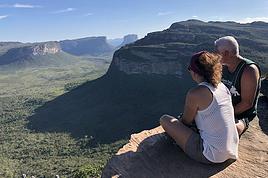 Brazil 2020: Amazon, Northeast, Chapada, and Boipeba – a winning combo!
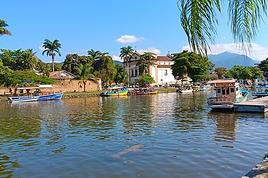 Recap of 17 days between São Paulo, Rio de Janeiro, and Iguaçu/Puerto Iguazu
 Two weeks in Brazil’s Northeast from late March to early April
 The Pearl of Africa - July-August 2026
 A little piece of Sulawesi with the family: Rantepao and Selayar
 Tanzania Classics (Safari & Zanzibar)
 Getting Away to Ireland
 On the Roads of Costa Rica