Nous envisageons de visiter le Pérou, circuit classique au mois de mars. Faut il prévoir un gros anorak pour l'altitude ? Quelle est la température à cette époque ?
Des bâtons pour les sites sont ils conseillés pour des personnes d'un certain âge ? (autour des 70ans !)
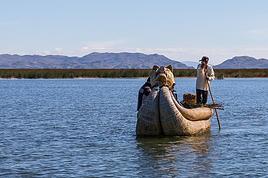
Pour notre logement chez l'habitant sur l'ile Amantani faut il prévoir sacs de couchage et autres ? Quel cadeau à emporter pour leur faire plaisir ?
Merci de me répondre !
Nous étions au pérou en juin au coeur de l'hiver.
Pas de gros froid à craindre, mais il faut un vetement polaire et un coupe vent en altitude. Pratiquement jamais de température négative la nuit, 15 à 20 degrés la journée (voir plus parfois).
Il y a de quoi beaucoup marcher au pérou et un baton de marche léger et retractable est une bonne aide.
A amantani, normalement tout est prévu pour vous recevoir. Nous avons dormi chez l'habitant mais avec un confort très très spartiate meêm pour des "jeunes" de 35 ans comme nous : lit très dur, pas d'eau, pas d'electricité, bref l'aventure ! Mais c'était chouette quoique un peu surfait et touristique à notre gout.
D'autres infos sur http://espacla.chez-alice.fr
j'ai visité le Pérou cet été avec mes parents qui sont également des jeunes retraités auour de 70 ans.
Le seul problème auquel ils aient eu à faire face est l'altitude qui rend la respiration plus difficile et peut entraîner des malaises.
Ma mère a malheureusement dû nous abandonner et rester avec des amis sur Lima car elle a été pris d'un malaise à Cuzco, et ce, malgré la prise d'un médicament contre le mal de l'altitude jugé efficace.
Sur Amantani qui est plus haut que Cuzco, ce problème d'altitude se ressent un peu plus. Un bâton doit pouvoir aider comme appui.
La chambre où nous avons dormi comportait 3 lits dont 1 seul était vraiment très dur: les autres étaient d'un confort correct. Il y a donc des lits sur lesquels on peut décemment dormir sur l'île Amantani. De plus, les habitants font des efforts pour améliorer ce confort mais cela coûte de l'argent et ils ne sont pas riches.
Pour le froid, de nombreuses couvertures de laine étaient disponibles. Le sac de couchage était inutile.
Il est important de penser à prendre une lampe torche de puissance suffisante pour éclairer son chemin la nuit (pour aller aux toilettes par exemple) et du papier toilette (cela peut être utile partout). Dans la chambre, nous disposions d'une bougie pour éclairer: pas d'électricité.
Penser également à prendre de quoi manger si vous appréciez des repas bien consistants car ce qu'on nous a servi était assez frugal: je n'avais pas faim à la fin du repas mais disons que c'était juste pour mon père et pour moi.
Pour les cadeaux, ils apprécient les produits comestibles (j'aurais tendance à recommander des légumes secs, du riz, des pâtes pour les adultes et des bonbons pour les enfants). On peut également leur acheter leurs productions locales pour les aider.
Nos hôtes étaient des gens adorables mais j'ai cru noter que beaucoup de péruviens le sont.
Pour les enfants des bonbons ..... Pas vraiment à cause des caries !!!!
Comme dans tous les pays ... surtout s'ils n'ont pas de brosse à dents et dentifrice ...
Peut-être des stylos et cahiers ...
C B
J'étais au Pérou en août dernier. Il faisait froid la nuit. En mars, les températures devraient être plus clémentes, mais prévoyez quand même pour les soirées : un bon pull, une polaire, et surtout un coup-vent (avec capuche), surtout pour l'excursion sur le lac Titicaca.
Des bâtons de marche peuvent se révéler utiles en effet. Parfois, sur certains sites on risque de vous en refuser l'utilisation pour éviter une dégradation des sites. Mais en justifiant de l'utilité par rapport à des problèmes de santé, j'ai vu des personnes obtenir des "dérogations".
L'hébergement chez l'habitant sur l'ile Amantani est effectivement relativement précaire : pas d'électricité, sanitaires dans une cabane au fond du jardin, toilette matinale dans une bassine d'eau... Les sacs de couchage ne sont pas nécessaires, les couvertures fournies sont suffisantes. Après, si l'hygiène vous inquiète, un simple drap-sac peut être utile.
Personnellement nous avons été hébergés dans une famille où la literie était très confortable, l'accueil extraordinaire et les repas plus que suffisants, tant en quantité que qualité. Vous pouvez contacter Olga (voir mon carnet de voyage pour ses coordonnées) pour faire le circuit Los Uros / nuit sur Amantani / Taquile avec elle. Un trio de femmes adorables !
Quel cadeau à emporter pour leur faire plaisir ?
Plutôt des biens de première nécessité, alimentaires (riz, sucre, farine... éventuellement de la viande : ils ont rarement de quoi s'en offrir ; mais bien spécifier que vous ne voulez pas la consommer vous, que c'est pour eux...) ou utilitaires (bougies, allumettes, briquet...)
Je ne suis pas d'accord avec les bonbons non plus (même si tous les enfants du monde adorent), et ils ne manquent généralement pas non plus de matériel scolaire de base (cahiers, stylos). Eventuellement, une pochette de crayons de couleur pourrait faire plaisir aux enfants...
Mais quoi que vous leur apportiez, ne l'achetez pas en Belgique ; attendez d'être à Puno : les mêmes articles se trouvent, moins cher que chez nous, et vous aiderez le commerce local.
Et bien sûr, ces familles produisent généralement de l'artisanat de qualité (bonnets andins...), ne pas hésitez à leur acheter.
Toujours à propos des bonbons pour les enfants.
Si on prend la consommation de bonbons et de sucreries diverses et variées chez nous en Europe, effectivement, attention aux caries.
Pensez vous que les enfants peruviens, ceux qui sont défavorisés mangent beaucoup de sucreries, moi j'en doute
Alors quand je vais partir au Pérou, je prendrai des bonbons et tant pis pour les esprits grincheux, qui nous assaisonnent de" bons conseils" de cette sorte.
Ont-ils oublié leur enfance?
Si vous offrez des crayons de couleur, n'oubliez pas les albums à colorier, c'est plus amusant que des feuilles blanches
Hi everyone! So happy to be back on this forum—it’s packed with such useful info! 🙂 My husband and I are planning a 2.5-week self-drive trip to Colombia at the end of the year, including some domestic flights. My first question is: is it possible, easy, and safe to do a road trip in Colombia?
Below is our draft itinerary (with questions at each stop):
29/11: France → Colombia. Overnight in Bogotá.
30/11: Exploring Bogotá: La Candelaria and Montserrate.
01/12: Gold Museum (closed on Mondays). Drive to Zipaquirá (1.5 hrs) to visit the Salt Cathedral. Then drive to Villa de Leyva (3 hrs). Explore the town. Overnight in Villa de Leyva.
02/12: Return to Bogotá via Laguna de Guatavita (5 hrs). Is it worth the detour? Overnight in Bogotá.
03/12: Flight to Pereira. Drive to Salento. Overnight in Salento.
04/12: Cocora Valley (hike among the wax palms) followed by a drive around the area. Are there any waterfalls or other sights nearby?
05/12: Visit a coffee finca—any recommendations? Then explore the surroundings: Filandia, Manizales, waterfalls? Hot springs? Which ones?
06/12: Flight to Medellín.
07/12: Exploring Medellín: Centro, Plaza Botero, Comuna 13. How do you visit Comuna 13? Is it easy to get around Medellín? Metro? Buses?
08/12: Drive to Guatapé (2 hrs). Visit the town, stroll around the lake, then El Peñol. Overnight in Guatapé.
09/12: Return to Medellín.
10/12: Flight to Santa Marta. Drive to a hotel near Tayrona Park.
11/12: Tayrona—El Zaino entrance.
12/12: Tayrona—Palangana entrance, then Bahia Concha and Santa Marta. What do you think?
13/12: Drive to Minca (45 mins). Can we reach the village by car? Pozo Azul and Marinka waterfalls. Overnight in Minca (or back in Tayrona?).
14/12: Drive to Puerto Nao (5 hrs). Stop in Ciénaga on the way + boat tour in Nueva Venecia and/or Buena Vista? Not enough time? Overnight in Puerto Nao.
15/12: Exploring Cartagena: Centro, Getsemaní, the walls + La Boquilla if we have time.
16/12: La Boquilla (is it really worth it?) if we didn’t have time yesterday, then back to the beach.
17/12: Return to France.
So, what do you think? Is this doable, or should we tweak it? Thanks in advance for your invaluable feedback and tips! 🙂
Hi there, we’ve decided to head to Brazil at the end of March for 2.5 weeks with our 13-year-old son. From what I’ve gathered from some research, Rio seems like a great destination at this time of year, and I’m thinking around 4-5 days to explore it—does that sound right to you? Copacabana, Ipanema, Sugarloaf Mountain, Christ the Redeemer, maybe a favela tour, or any other ideas?
How’s the best way to get around locally? I’ve heard about Bonito or Angra dos Reis and Ilha Grande—what do you think of those? Fernando de Noronha for snorkeling or even diving? Is Recife a good option at this time of year?
If you’ve got any suggestions, we’re all ears—it’s for our 50th birthdays! :-) Thanks so much for your help and tips. See you soon.
Hi there, I’m looking for recent info on a boat trip with sleeping accommodations from Belém to Santarém. I don’t want a "luxury cruise for wealthy tourists"—just a bed with a minimum of comfort seems great to me🙂. I didn’t find any up-to-date details with Amazon Star. Do you have any companies, guides, or prices for this route to recommend?
I’d love to hear tips and feedback on this trip, especially since I’m traveling solo. I’d like to get a sense of what to expect and ensure some basic safety with transportation.
Thanks.
Hi everyone,
We’re planning 40 days in Uruguay and Argentina in February and March, trying to avoid as much rain as possible.
We’re thinking of starting in Buenos Aires, then heading to Bariloche, and from there flying to Córdoba, Mendoza, or Salta. Maybe by bus or renting a car to explore each region.
Do you have any suggestions or tips for us? We love picturesque, historic cities and landscapes. As seasoned travelers, we’re used to planning our trips ourselves.
Thanks in advance!
We’ve planned our road trip in Chile, and the only thing left is to book the TABSA ferry from Punta Arenas to Puerto Williams.
Problem: the ferry that leaves Punta Arenas at 1 AM isn’t available for booking, no matter the day or month. All the other departures can be booked, though.
On top of that, Tabsa isn’t responding to any messages.
We’re planning to explore Peru’s main highlights and were wondering if anyone could share insights on the quality and comfort of overnight buses. If so, which bus company should we trust?
Hi,
My wife and I are heading to Brazil from November 6th to December 2nd. We’ll be stopping in São Paulo, Paraty, Ilha Grande, Rio, and Salvador de Bahia.
Could you recommend some nice, non-luxury places to stay in each of these spots?
Also, any suggestions for places to visit would be great.
Thanks in advance for your help!
Marc
Hi there.
I already posted a message asking for advice about our upcoming trip to Chile.
Details: Getting around by bus or train.
Starting from Valparaiso, heading north, passing through cities and places to visit, then returning to Santiago via a different route.
Avoid the beaches...
Thanks
Hello,
my wife and I will be in Cusco for a week in March 2027.
I’d like to organize the visit to the site on our own, combining the Sacred Valley and Machu Picchu.
We’d leave Cusco on Day 1 to arrive at the site in the morning, then stay in Aguas Calientes or Ollantaytambo, and on Day 2 return to Cusco while visiting the Sacred Valley.
Is this doable?
Looking forward to hearing from you.
Cédric.
Hello,
We’re spending 3 weeks in Rio between February 20 and March 15, 2027, to visit our son and daughter-in-law. We’re thinking of one or two "escapes" from Rio—3-day trips to get away from the city (so not too far, max 3–4 hours by car or bus). We’re all ears for suggestions! We love beautiful nature and authentic experiences, not so much the touristy spots... even though those spots are often in beautiful places, we’d rather avoid them.
Thanks for your insights!
Catherine
Hi there,
I’m planning a trip with my partner (no kids this time—thanks, Grandma!) for two weeks to celebrate her 40th birthday. I’ve been thinking about Chile. We’re looking at leaving around September 18, 2027, starting in the south and returning in early April.
Here’s what I had in mind:
8 nights in a van in the Lake District and the start of the Carretera Austral (up to the Chaitén area). We’re set to arrive in Puerto Montt around 2:00 PM. We don’t want to go too far south since we’re planning to explore the heart of Patagonia (Chile and Argentina) with the kids when they’re older. The idea is to spend 3 nights discovering the lakes (up to Cochamó) and 3 nights in Pumalín Park. I’ve also added two transition nights.
7 nights in the Atacama to experience another side of Chile (San Pedro), taking a domestic flight from Puerto Montt to Calama in the early afternoon. We’ll depart for France in the early evening from Santiago.
IMPORTANT NOTICE for those planning to take a bus to another city, state, or destination from Salvador!
Starting January 20, 2026, the intercity bus station Rodoviária is changing its address!
The Rodoviária is leaving the Iguatemi area and will now be located in ÁGUAS CLARAS (about twenty kilometers from downtown Salvador).
A brand-new station (the most modern in Brazil) has just been set up there, accessible by car/taxi/Uber/metro.
Allow for much more transfer time (especially during rush hours), so leave early if you're heading to Chapada Diamantina or other Brazilian cities by bus.
Remember, there are also private transfers (even French-speaking ones) that can take you directly from your hotel in Salvador to your hotel in Chapada. Sure, it’ll be more expensive, but you’ll save on transfer time and comfort.
Tropical greetings from Salvador,
@ivanbahiaguide
Loyal member of the French-Speaking Brazil Forums for over 15 years already 😊 🇧🇷
Hello,
We’re thinking of spending 1 month in Chile, maybe doing a loop?
From 12/23 to 01/22.
What are the must-see sights, given we’re more interested in the country’s cultural side than the beaches?
Thanks
Hi everyone,
We're planning a trip to southern Chile in November. Here's our tentative itinerary:
Day 1: Arrival in Santiago, then a flight the next day to Balmaceda where we'll pick up a rental car to reach Coyhaique.
Day 3: Walk in the Coyhaique National Reserve, then continue to Puerto Chacabuco. Return to Coyhaique for the second night.
Day 4: Drive to Villa Cerro Castillo for a hike in the national park. Continue to Puerto Tranquilo and stay there for 3 nights.
Day 5: Boat tour on Laguna San Rafael.
Day 6: Day trip to Monte San Valentin Glacier.
Day 7: Excursion to the Marble Chapels, then drive to Puerto Guadal. We'll stay there for 3 nights.
Day 8: Walk along Lago Carrera and return to Puerto Guadal.
Day 9: Rio Baker Valley and, if possible, a glacier excursion.
Day 10: Drive to Cochrane and hike in Tamango National Reserve. We'll stay 2 nights in Cochrane.
Day 11: Walk in the Chacabuco Valley.
Day 12: Drive to Caleta Tortel. We'll stay there for 2 nights.
Day 13: Cruise in the Rio Baker delta.
Day 14: Return to Cochrane.
Day 15: Return to Balmaceda in two stages.
Day 16: Continue the return journey.
Day 17: Return the rental car and head back to Santiago.
After this, we're also planning to explore northern Santiago. I'll post about that part once I have a clearer idea of the route.
What do you think of this itinerary? Is it doable in 17 days?
Thanks in advance for your tips and recommendations.
martine
Hi there, I’ll be in Brazil from December 10th to the end of February.
I’ve sketched out a rough itinerary but I’m not sure how to arrange it—considering the climate, year-end holidays, and Carnival.
Basically, I’m thinking of the Amazon, the Northeast coast with Lençóis Maranhenses National Park (but skipping Chapada Diamantina),
Ouro Preto, Paraty, and Ilha Grande—but no Rio visit.
Is this doable in 3 months?
Which direction should I take for this itinerary?
Thanks in advance!
Hi everyone, does anyone know the agency Ventura Travel Agency (not ventura travel)? After lots of research and quotes, it’s the only one offering Uyuni at a reasonable price while meeting all the criteria: transfer to the border, private-room accommodation, and a very fair rate. Other agencies or guides either offer shared rooms, no border transfer, or prices that are way too high. But I’d love to hear some reviews about this agency. Thanks in advance!
Hi everyone,
We're planning a trip to Chile to visit the Atacama Desert and then head toward Putre, Lauca, Salar de Surire, etc.
Which would be the better time to go, April or November?
Is an SUV enough?
Looking forward to your tips!
Hi everyone, French travelers in Chile—what credit cards do you use for your various car rentals in the country? I’m traveling in September and was planning to switch my regular debit card (a VISA PREMIER in deferred debit mode) for the deposit guarantee.
My rentals are with Figal in Punta Arenas, Econautos in Arica, and Chilean Rent a Car in Temuco, and all of them want the deposit on a credit card. For me, deferred debit *should* work, but I’ve read comments saying the opposite.
How’s it actually working on the ground with these rental companies right now? Will a deferred debit card work, or not at all?
In France, banks don’t issue credit cards, right—or am I mistaken?
Hi everyone, is it still possible to travel in Ecuador outside the Amazon region? If so, do you have a reliable agency to recommend? All your recent experiences from the past few months would be greatly appreciated. Thanks so much
Hi,
We’re heading to Buenos Aires for 3 days in November and would like to do a guided tour of a few neighborhoods. There are "free" tours, but none in French. Does anyone have a guide to recommend so we can really get to know the city beyond just the architecture?
Thanks
Hi there,
I’m desperately looking for info on the schedules and routes of (shared) boats to visit the islands of Lake Titicaca.
From what I’ve found, there’s a *combi* (bus) that leaves from Puno to go to Llachon. Where do you catch it? What are the schedules and frequency? Does it take about 1 hour?
Then in Llachon, you can take a boat to Amantani (45 min). Same question—where do you check for frequency and schedule?
After that, from Amantani, boats go to Taquile and then Uros. Do you have enough time to visit the islands between two boats? Frequency and schedule?
The goal is to do this tour independently (no agency) over 2 days. Thanks for any tips you might have!
I just got back from a trip to Bolivia and wow—what a wake-up call. It’s not the easiest country, but it’s absolutely stunning.
I started with Isla del Sol, perfect for easing into the altitude at a relaxed pace. Try to stay in the northern part of the island—it’s quieter and the views are insane. And the trout there? Unreal. Quick tip: bring cash in small bills; they almost never have change, and cards are rarely accepted.
Next up, La Paz. The city’s pretty wild, built in every direction. I did a few hikes in the area, including the famous Charquini Lagoon (the blue lake) at over 5,000 m—let’s just say I struggled 😅 but it was so beautiful it was totally worth it.
After that, I headed to Sajama. It’s cool, especially for the hot springs, and I stayed in Tomarapi. But honestly, if you’re short on time, you can skip it without too many regrets.
The highlight of the trip: the Salar. I did it starting from Tupiza, and I *highly* recommend going Tupiza → Uyuni. Way less crowded at the start and the landscapes are super varied. For the tour, I used SplitYourGuide to find a group, and it worked out great. Super handy for splitting costs and meeting people.
I wrapped up in Sucre—this city is gorgeous, all white, with such a chill vibe. And the salteñas + ice cream? Next level 😋
Bottom line: Bolivia’s a bit rough around the edges, sometimes exhausting (shoutout to the altitude), but it’s 1000% worth it.
If you’ve got questions or need tips, I’m happy to help!
Martin
I was planning to go to Réunion and stay in half-board accommodation with non-professionals, but it seems that’s not really the custom there—or maybe my budget isn’t big enough.
So, since I’ve already traveled around Ecuador and Peru, I’m now looking at Argentina, especially for its mountains (like the ones in Réunion that tempted me, even though—frustratingly—I could only admire them from below).
I plan to get around by bus and don’t know in advance where I’ll sleep, so I won’t book ahead. If I like a place, I might stay for several days.
I know that in Chile, it’s easy to find half-board accommodation, but what about in Argentina?
I’d like to stay with locals in half-board without it being a professional setup. I’m not sure if this is common practice there. It’s up to me to find someone willing to host me.
What do you think?
What would be a fair price (keeping in mind that 40 to 50 € is the max I can spend on accommodation, breakfast, and dinner)?
Hi everyone,
We’re heading to Patagonia for three weeks in November, starting from Coyhaique in Chile.
We won’t have a car, and I’m struggling to find information about transportation options for a few parts of the itinerary we’d like to do:
1) From Perito Moreno (the town, near Los Antiguos), we’d like to travel down Ruta 40 to visit Perito Moreno National Park and then cross into Chile via the Paso Roballos (at the latitude of Bajo Caracoles) to reach the road to Cochrane. Without a car, it seems we’ll need to use private agencies to get to the national park—do you have any recommendations or suggestions? Also, does anyone know if it’s possible to cross into Chile via Paso Roballos (from Bajo Caracoles) without a rental car? That is, without having to go all the way down to El Chaltén or back up toward Perito Moreno/Los Antiguos, etc.?
2) The second stretch that seems a bit tricky (though still easier, in theory) is from Caleta Tortel to Villa O’Higgins on the Chilean side. Do we have to go back through Cochrane, or are there ways to get directly from Tortel to Villa O’Higgins?
3) Finally, we’d like to hike into Argentina (El Chaltén) from O’Higgins. Any recommendations for this? Do we need to go through an agency? What’s the estimated duration of the trek?
As you’ve probably gathered, we want to visit some off-the-beaten-path spots but don’t have a car, so we’re looking for the best possible compromises.
Thanks so much in advance for all your suggestions!
Thomas
Hi,
we’re planning a round trip from San Pedro de Atacama, Chile, to Salta, Argentina, in two months. On the way there, we’ll take the northern route via Susques, Route 27, then 52. But for the return, we were thinking of taking the southern route via San Antonio de los Cobres, Route 51, then 23. Is it similar to the northern route in terms of road surface? How busy is it, and are there gas stations? Basically, should we be worried about doing it in an SUV that’s supposedly 4x4 but has regular road tires and no second spare wheel, obviously...
I’ve seen that we can stop over in San Antonio de los Cobres.
Thanks for your feedback.
Raf.
Hi,
we’ll be in Calama at the end of March 2026, and I’m looking for a reliable car rental there for a 7-day road trip to Salta, Argentina. But I’m struggling with the car rental agencies in Calama because the reviews can be scary. I saw Gyg, which has great ratings, but I’m a bit wary (5/5 from 59 reviews—either the guy’s amazing or it’s fake...), but I can’t find any recent reviews on VF in general.
For Punta Arenas, I booked with Dachelet and didn’t have any issues with email exchanges.
Thanks in advance.
Raf.
I’m planning the trip of my dreams for next November—Chile!
I’d love to get your thoughts on my potential itinerary. I know it’s a big investment in terms of both time and money, so every bit of feedback, suggestion, or info helps immensely. Thank you in advance!!
1-Flight to Santiago
2-Explore Santiago
3-Explore Santiago
4-Bus from STG to Valpo (2h) + visit Valparaíso + night in Viña
5-Visit Valparaíso + bus back to STG (2h)
6-Flight to Calama + bus to San Pedro + explore and acclimate in San Pedro + car rental in the afternoon (+Chaxa?)
7-(Very early) Valle del Arcoíris + Laguna Cejar + Valle de la Luna