Les recherches sont difficiles. Nous voulons partir par une agence francaise et voulions avoir votre avis sur "Vie Sauvage" qui nous propose un safari de 7 jours en camping avec visite d'Amboseli Nakuru et Masai Mara pour un prix de 2340 €. Le prix comprend le vol paris-nairobi via amsterdam et un vehicule privatisé sur place.
Que pensez vous du prix en général et surtout quelqu'un a-t-il voyagé avec cette agence ?
Nous avions également vu Safari VO mais nous ne trouvons pas de discussion a leur sujet ?
Connaissez vous d'autres agences sérieuses éventuellement ?
Bonjour, franchement je trouve que cette^proposition est très chère de plus faire le circuit proposé sur 5 jours, car il vous faudra retirer 1 jour au départ et 1 au retour pour le vol, çà va être la course.
Vous dites ne vouloir partir uniquement avec un to francais donc je ne peux pas vous aider sur ce domaine car nous partons tous les ans au Kenya avec les services d'une agence sérieuse basée à NBI avec une organisation complétz depuis la france Amicalement Monique et Claude
Il s'agit de 7 jours pleins de safaris et non 5. J'ai déjà décompté les jours de vols paris nairobi A/R. Pouvez vous quand même me dire avec qui vous êtes passé la bas ? budget tout compris (taxe aeroport, d'entrée dans les parcs, lieux visités) ? safari privatif ? histoire que ca me donne une idée.
Bonjour, donc si vous voulez comparer je vais vous donner les coordonnées de notre ami qui a une société sur NBI et qui pourra vous faire un devis en fonction de vos désidératas.
Sachez qu'il vous faut préciser ce que vous désirez au nivreau des parcs à visiter, des rencontres avec la population et surtout de votrebudget.
Personnellement nous partons toujours un minimum de 15 jours avec les groupes qui nous accompagnent et nous souhaions voir AMBOSELI - aBERDARE - Baringo Bogoria ou Nakuru - Masai Mara éventuellement Samburu et enfin si possible la cote aunord de Mombasa
Maintenant chacun son truc il faut surtout bien précisr ce que l'on veut
Pour contacter notre ami le joindre par email sous info@catjournalsafaris.com en précisant que vous venez de la part e Monique et Claude et de mettre LAMUCHAT dansl'objet de votre email
Amicalement Monique et Claude
PS les devis qui vous sont envoyés par notre ami tiennent compte soit d'un safari en pension compléte ou demi pension en dehors des parcs- des droits d'entré dans les parcs sachant que les taxes d'aéroport sont toujours à votre charge avec l'acht du billet.
Bonjour,
Les prix donnés par ces agences sont ''normaux '' si on compte le vol, les prestations et surtout le véhicule privé. Tout est là. Dans le côté privatif du safari ..A deux c'est plus cher qu'à quatre ...
Le vol c'est déjà 650 / 750 € en moyenne, reste le safari, et les entrées de parcs.
Ces agences que tu mentionnes, surtout Vie Sauvage, sont opérationnelles depuis des années et il n'y a pas de doute sur leurs compétences et offrent toutes les garanties, mais elles ont besoin de marge pour vivre, ce qui explique le prix. Enfin, il n'y a pas de safari digne de ce nom, pas cher.
Un prestataire local, sera en principe, moins cher, car ses besoins sont moindres..Mais, la différence est toute relative quand on fait, et c'est ton cas, un circuit très classique. Attention, donc.
L'intervention d'un local est vraiment intéressante quand il s'agit de'' sur mesure, '' de safaris sur des itinéraires très ''pointus '' qu'aucun TO ne revend, comme le Nord Kenya, ( vraiment beau, mais exigeant une logistique adéquate), ou sur des durées plus ou moins longues.
Bye !
Merci pour vos réponses Monique, Claude et Karine.
Monique et Claude, vous dites partir régulièrement en groupe. Or nous parlons d'un voyage privé avec uniquement 2 personnes + 1 guide. Il me semble donc qu'il ne faut pas comparer les prix que vous obtenez avec les notre.
Nous sommes partis avec Melting Pot Safari en septembre 2007, Naivasha, Nakuru, lac Baringo et Samburu-Buffalo Springs. Simon Chetbon est un excellent chauffeur guide, il est parfaitement francophone, connaît très bien la faune, dont les oiseaux avec noms vernaculaires anglais et français et nom scientifique binominal, rien que ça ! Nous repartons en septembre avec Melting Pot pour un camp de 15 jours à Mara.
Tu peux voir des carnets de voyage de membres de Nunda ayant voyagé avec Melting Pot sur Nundafoto et sur le site de l'ASCPF (recherche Google facile, je ne mets pas les liens car notre cher VF n'apprécie pas toujours...), Cécile, Bernard et Catherine, Savutimarsh sur Nunda, Patrick Esbly sur l'ASCPF.
merci beaucoup j'irai voir cela alors.....
nous sommes à l'heure actuelle en cours de décision pour partir nous expatrier au cap alors dans ce cas ce sera reculé certes mais plus près!!!!
merci en tous cas j'ai eu plusieurs contacts mail avec Tony qui est charmant vraiment!!!
😉
la famille de Stéphanie: Alan le papa Jules numéro un 16 ans Achille numéro deux 15 ans et Capucine numéro trois 11 ans .......
Bonjour,
Nous pensons partir en septembre ou octobre 2011 pour un safari au kenya. J'ai cru comprendre que vous partiez souvant avec une agence basée à Nairobi. Pourriez-vous nous indiquer laquelle?
Pour l'instant nous sommes en pourparlerq avec Melting spot safaris basé à Nairobi.
Toujours en France, et pas encore parti au Kenya, nous avons eu un devis avec l'agence Melting pot safari, pour décembre 2010, mais à 5 hors budget, du coup nous partons à Bali, on se fera le kenya c'est sur et avec cette agence c'est sur mais quand ?
😏
la famille de Stéphanie: Alan le papa Jules numéro un 16 ans Achille numéro deux 15 ans et Capucine numéro trois 11 ans .......
Les recherches sont difficiles. Nous voulons partir par une agence francaise et voulions avoir votre avis sur "Vie Sauvage" qui nous propose un safari de 7 jours en camping avec visite d'Amboseli Nakuru et Masai Mara pour un prix de 2340 €.
Que pensez vous du prix en général et surtout quelqu'un a-t-il voyagé avec cette agence ?
Connaissez vous d'autres agences sérieuses éventuellement ?
2340 euros pour 7 jours seulement et en camping???
Vous pouvez trouver moins cher et tout aussi bien, en safari entièrement privatisé, et à la carte, auprès d'agences locales.
Je peux vous donner des adresses en MP sur votre boite mail privée
pour ma part pas du tout mais attention, au mois de juin melting pot était déjà en train de boucler décembre 2010....il faut s'y prend longtemps en avance!!!
😉
la famille de Stéphanie: Alan le papa Jules numéro un 16 ans Achille numéro deux 15 ans et Capucine numéro trois 11 ans .......
Merci pour votre réponse. Nous pensons partir début octobre 2011 et avons mis une simple option pour melting pot. Nous sommes encore dans l'attente d'autre devis.
Etes-vous déjà parti avec cet organisme ?
Non comme je l'expliquais au dessus pour décembre on avait un devis mais c'était hors budget pour ces vacances là, du coup on part à Bali mais lorsque nous partirons au Kenya ce sera avec eux, j'ai aimé le contact avec TC.
la famille de Stéphanie: Alan le papa Jules numéro un 16 ans Achille numéro deux 15 ans et Capucine numéro trois 11 ans .......
Je vais répéter les recommandations faites dans un mien précédent message de ce fil, mais avec deux ans de recul 😎 et l'expérience du camp de Masai mara.
Melting Pot Safari : très hautement recommandé.
Seul problème, si l'on est "accro" au safari animalier et à la photo animalière, on sera toujours déçu si l'on voyage avec un autre T.O. plus "classique". Vous pouvez être en safari non-stop de 06 h à 18 h (et un peu plus, à Mara possibilité de petit safari de nuit autour du camp, à vous les oryctéropes et lièvres sauteurs), avec des chauffeurs guides de première bourre (Simon, l'associé kenyan de Tony Crocetta, une personnalité hors du commun) et des conseils photos gratuits (et gracieux, Tony est sympa, courtois et patient) d'un grand pro.
Le camp de Masai Mara juste à) côté de la Mara est plein, rançon du succès) jusqu'à ...
Nous avons fait deux séjours dans le camp (et vu plus de choses en un seul que dans tous nos safaris précédents, ou presque 😉). Nous avons également fait un superbe circuit sans Mara (Naivasha, Nakuru, Baringo, Samburu) avec Simon. Mara 2008 et Mara 2009, ainsi que notre safari 2007 sont disponibles dans les carnets de voyage de Nundafoto, site français de photographie animalière.
Un grand merci pour toutes ces infos qui nous sont vraiment utiles. Je dois téléphoner demain à la femme de Tony Crocetta et je crois que je vais confirmer mon accord pour octobre 2011.
Nous allons directement de Nairobi à Baringo pour redescendre à Nakuru puis dans le Massaï. Qu'en penses-tu? Ne serait-il pas plus judicieux de faire un arrêt à Naivasha avant d'atteindre Baringo? De plus
Le camp Massai est-il à l'ouest, à côté de governor's camp?
7 nuits dans le Massaï n'est-ce pas trop?
Enfin as-tu des infos sur Lamu? Nous aimerions faire une extension dans cet archipel s'il y a une barrière de corail.
Pas d'infos sur Lamu, je ne connais pas très bien le Kenya, ou à part de petits safaris à Amboseli en transit pour la Tanzanie, je n'ai fait que trois fois deux semaines de safari.
De notre maigre expérience, voici ce que je retire comme avis (avisés ? ça...).
Naivasha est joli, mais pas indispensable à mon avis. Nous le shunterons sans regret, si nous devons refaire un safari au Kenya, ce qui est probable (et en ce cas toujours avec Melting Pot, c'est certain).
Tu verras beaucoup plus d'animaux à Nakuru, notamment en mammifères avec léopards, rhinocéros, hyènes, impalas etc. Et je te parle pas des flamants 😉...
Et Baringo est unique, irremplaçable, si tu t'intéresses comme nous aux oiseaux. En dehors des fameuses séances de pêche des pygargues vocifer, et d'une quantité d'oiseaux aquatiques, hérons, aigrettes, limicoles, martins, les jardins d'Hamerkop sont une mine inépuisable en barbicans et autres jolis piafous.
Le camp de Tony et Simon est effectivement un peu à l'ouest et au nord de Governor, juste sur la rive de la Mara, tout près de la limite entre la réserve de Mara et celle de Koyaki.
Pour Masai Mara, je pense que 7 jours (6 nuits ?) sont bien. J'y repasserais même volontiers deux semaines entières, mais ma blonde est moins enthousiaste pour cette durée (pas assez d'oiseaux à son goût). Tu apprécieras de ne pas avoir à faire tes bagages tous les jours, et aussi l'ambiance très sympa avec que des passionnés, pas de snobs ou de "m'as-tu vu" comme il peut y en avoir parfois dans les lodges ou camps de luxe, les échanges possiblement fructueux avec d'autres photographes.
Le fait d'être sur place un certain temps permet d'avoir ses repères, de prévoir le comportement des troupes de lions ou des guépards en fonction de leur activité du jour précédent. Rester plusieurs jours est aussi une assurance (pas à 100 % mais dans l'observation ou l'exploitation des phénomènes naturels rien n'est à 100 %) d'assister à un "crossing", une traversée de rivière par les gnous dans leur grande migration (au cours de laquelle, d'ailleurs, ils passent plusieurs fois la Mara dans un sens puis dans l'autre, parfois en aller-retour immédiat !).
une photo "soft" afin de ne pas choquer les amis des gnous
Mille mercis pour les photos merveilleuses et tes conseils avisés. J'ai confirmé hier à Sylvie Crocetta notre accord pour le safari en octobre 2011. C'est loin, hélas, et tout ce que tu me dis de la faune me donne une envie folle d'y aller. Suite à tes reflexions, je pense effectivement que poser les valises au Massai 7 jours ne sera pas plus mal.
Cette année nous devions aller en Inde mais à 2 jours du départ, mon ami a fait un AVC... Nouvelle direction : hôpital !
Pour pallier un peu notre manque de voyage nous partons en octobre faire un petit tour en Jordanie, mais , j'allais dire "en voyage bête", classique. Enfin, ça nous fera patienter pour le Kenya !
Pourrais-tu me donner aussi quelques conseils pour les photos? (je n'ai pas d'appareil reflex, seulement un bridge).
Je vais me citer, que l'on me parfume, euh, pardonne :
"bridge"
Sauf exception (je n'en connais pas), les amateurs experts délaisseront le bridge, appareil à objectif non interchangeable, muni d'un zoom qui peut monter à un équivalent 24x36 de 400 mm et plus. Ils lui reprocheront les inconvénients qui suivent :
- son viseur électronique :pour l'instant encore, il est moins agréable, moins lumineux, moins performant que celui des reflex ; de gros progrès seront sans doute accomplis dans les toutes prochaines années
- son objectif fixe : il a un piqué moindre que ceux des reflex , encore que l'on puisse en discuter si on ne parle pas des optiques reflex pro, et surtout il est moins lumineux, de plus il est souvent limité du côté grand angle à 28 ou 35 mm équivalent 24x36, exceptionnellement moins.
- son capteur : il est de petite taille, parfois même très petite, ce qui favorise la montée du bruit dès 400 ISO ou moins et ce qui donne une profondeur de champ parfois trop importante, car on recherche souvent un sujet net bien détaché sur un joli fond flou ("bokeh"). Les reflex les plus performants permettent d'utiliser des sensibilités de 3200 ISO et plus, les bridges sont souvent limités à 200 ISO exploitables, d'autant que le nombre de leurs photosites augmente sans cesse : beaucoup plus de photosites égale photosites beaucoup plus petits, d'où signal beaucoup plus faible nécessitant une amplification beaucoup plus importante avec pour résultat un bruit thermique et un bruit chromatique beaucoup plus importants.
- les agrandissements importants lui sont interdits, les meilleurs donnent de bons A4, mais guère plus. En revanche, pour une utilisation amateur, en tirage 9x13 ou 13x18 ou équivalent (les bridges sont souvent de rapport 4/3 et non 3/2), les résultats sont parfaitement acceptables et avec un bon post-traitement le A4 ne devrait pas poser de problème. En revanche, le bridge est parfaitement adapté pour une utilisation sur écran, puisque la plupart des photos des amateurs ne sont jamais tirées sur support papier. Le traitement logiciel des images d'un "compact" (grosso modo, un bridge sans viseur électronique et avec un zoom d'amplitude plus limitée) ou d'un bridge est conçu pour donner une photo de format jpg (donc directement exploitable, imprimable, visible par tous les logiciels) qui est accentuée et a un bruit lissé de manière à pouvoir être utilisée directement sans post-traitement. On peut reprocher à ce traitement d'être parfois même un peu excessif, donnant une image 'flashy" type carte postale, très marquée "numérique", mais les bons bridges évitent cet écueil plus fréquemment rencontré sur certains "compacts".
- enfin, les bridges sont souvent affectés d'un retard au déclenchement assez important, même si des progrès ont été faits et se poursuivent.
Le bridge présente pourtant des avantages qui en font un choix très raisonnable pour beaucoup d'amateurs : pas de batterie d'objectifs encombrants, onéreux, tout est toujours disponible, sans changement d'objectif le risque de poussière sur le capteur est nul (ou presque, l'étanchéité n'est pas toujours parfaite), le coût du matériel est (relativement, relativement) réduit, les possibilités de macrophotographie sont réelles et faciles à toutes les focales en bénéficiant au mieux de la profondeur de champ plus importante.
Tiré de notre site (non commercial, hein ! on vend rien, même pas notre -maigre- science) safari-tanzanie.com
En résumé, un bridge que tu connais bien, ça peut parfaitement le faire, du moins si tu vises pas l'expo sur panneaux 60x90.
Sinon, tu auras avec Tony le meilleur des conseilleurs, il fait même des petits cours très didactiques à l'usage des débutants ou de ceux qui veulent rafraichir leurs connaissances.
Un conseils classique : éviter les photos trop en plongée, donc se privilégier les prises de vue par la fenêtre plutôt que par le toit ouvrant
Je vais laisser la parole à bien plus qualifié que moi, à savoir Tony Crocetta, dans l'interview de lui que j'ai commise pour le site animalier NundaFoto :
Septième question Tu es un juge sévère de tes photos et de celles des autres. Qu’est-ce qu’il faut sur une photo pour qu’elle soit bonne à tes yeux ?
Tony - C’est difficile à dire, de donner des généralités ; tant de paramètres comptent pour qu’une image se démarque : mise au point, piqué, lumière, cadrage, sujet, comportement, fond, éléments parasites, choix de la focale, distance de prise de vue, profondeur de champ, rendu de la vitesse… Mixe tout ça et tu obtiens une infinité de variations qui fait que chaque photo est unique. Disons que j’aime bien les images avec juste un sujet et un fond dépouillé, un sujet que l’œil analyse puis reconnaît immédiatement et qui ne se déconcentre pas attiré par divers éléments parasites comme des branches ou un autre animal noyé dans le flou par exemple. Bien sûr, la qualité de la lumière est le constituant principal : sans elle, difficile de faire de belles images.
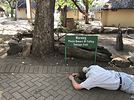
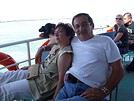
Tony dans son camp à Masai Mara
Autres conseils d'un photographe pro, un peu mis à ma sauce, ici et nulle part ailleurs. Mais la plupart de ces conseils sont mis en œuvre "automatiquement" au Melting Pot Bush Camp de Mara, alors... Déjà, à Mara, les chauffeurs, Tim, Abdou, et a fortiori Tony et Simon (ce dernier s'est mis à la photo et progresse très très vite) sont rodés au "transport" de photographes parfois un peu, un tout petit peu (😉) exigeants, ils en arrivent à raisonner en photographes (pas difficile pour Tony, s'pas ?) et choisissent d'eux-même le meilleur angle. De plus partant tôt et rentrant aussi tard que possible (théoriquement 18 heures, mais on déborde souvent un peu, un tout petit peu... 😉), on est à même de profiter des belles lumières de l'aube et du crépuscule.
Toujours à ta disposition.
Merci encore une fois pour tous tes conseils. Je crois que je vais garder le bridge car les photos ne sont que pour un usage perso (et copains), sans agrandissement spécifique.
Je suis allée sur ton site. Il est vraiment formidable, plein d'infos et très enrichissant.
Il n'a qu'un seul défaut : me donner trop envie de partir ... alors que je dois attendre octobre 2011!
Ne pas oublier les agences locales...surtout qu'en général les agences françaises et TO internationaux passent par des réceptifs locaux...des agences kenyannes !!!
Voilà plusieurs jours que j'épluche les dizaines d'agence qui vendent des safaris au Kenya. Je n'en peux plus! Compliqué, chers, inconnus, mal coté, arnaque,…
Est-ce que quelqu'un a déjà voyagé avec les circuits organisés de l'agence Voyage à rabais? Nous sommes intéressé par le voyage au Kenya qui comprend des…
Voilà un mois que mon compagnon et moi organisons notre safari au Kenya. Mais voilà le choix des agences est tellement grand et il est difficile pour nous de…
Je serais avec mes ados de 16 et 18ans à l'hôtel Leopard Beach /Diani du16 au 27 avril. Je pensais réserver un safari sur place avec une agence locale. Qui a…
Nous partons le 13 mars 2011 au kenya dans la region de mombasa pour 2sem...nous aimerions reserver un safari de 3jours sur place...pouvez vous m'indiquer une…
Hello everyone!
It's been a year since I've been longing for South Africa. Our first trip in August 2025 amazed us, and—rarely—it was a unanimous hit with our little family! We were touched to the core, and from the moment we got home, we couldn’t stop talking about going back. 😄
I’d like to take this opportunity to thank everyone who gave me advice on the itinerary for that first trip (Johannesburg loop: Blyde, Kruger, Eswatini, St. Lucia, Durban, Drakensberg)! Thanks to you, our trip went like a dream!
Since then, I haven’t stopped reading articles and discussions on VoyageForum to keep my head in South Africa a little longer!
So, we finally caved and just booked our tickets for January 2027 (from the 3rd to the 26th), with a plan to do a road trip from Cape Town to Johannesburg in about 3 weeks.
I’ve got a rough itinerary that seems great based on what I’ve read on various forums, but there are still some uncertain points, and that’s where I could use your advice.
3/01: Arrival in Johannesburg at 11:45 PM
4/01: Flight to Cape Town, pick up rental car. Afternoon sightseeing
5,6,7/01: Cape Town to visit the big classics in the area (any tips for finding accommodation: which neighborhood, a specific place?)
8/01: Overnight stop before Oudtshoorn—but where??? (Is it essential, or is the CT-Oudtshoorn drive manageable? If so, I’d gain a day in Oudtshoorn. Google Maps shows over 5 hours of driving...)
9,10/01: Oudtshoorn (or would 3 nights be better to really enjoy the area?)
11,12/01: Knysna, Plettenberg Bay (to have time for hiking—if you’ve got hiking tips, I’m all ears!)
13,14/01: Tsitsikamma (still to have time for hiking—who knows the must-do hikes in the area? But maybe 4 nights in the Knysna-Tsitsikamma area is too much—I’m not sure)
16,17/01: Addo Elephant (I’m torn between 3 nights at Addo or 3 nights at Mountain Zebra. Based on travel journals, especially Michel’s on MZ, I’ve scheduled 3 nights at MZ 😄...)
18,19,20/01: Mountain Zebra NP
21/01: Camdeboo NP (because it looks so beautiful!)
22/01: Overnight stop (where?) before wrapping up the trip with either 2 or 3 nights at Golden Gate NP or the Lesotho option, which appeals to me, but I don’t know if it’s doable in 3 days to be back in Johannesburg by the afternoon of the 26th.
That’s my trip idea for now...
I’m eagerly waiting for your advice, ideas, and comments...
Can’t wait to be back there again!
En nov./ déc. 2022, j’avais fait un safari dans la région et nous avions souffert des températures extrêmes engendrées par le phénomène “El Nino” sur l’océan Indien à cette époque . En plus des T. extrêmes, il peut y avoir des pluies diluviennes , avec crues etc ... qui ont engendré des catastrophes avec victimes .
Nous revenons de dix jours en Tanzanie. Nous avons eu la chance d’être guidés par Gishaman. Toujours de bonne humeur, bon conducteur et très bon guide. Grâce à lui nous avons eu la chance de voir non seulement les big5 en une journée mais aussi plein d’autres animaux. Il travaille pour l’agence locale Blit Safaris qui a assuré un très bon suivi de notre voyage. À conseiller !
I’m planning a potential trip to Namibia for a classic circuit in April 2027.
I’m surprised by how expensive the accommodations inside the parks are—really steep! Is it possible to stay outside the parks but still close enough to enjoy the game drives?
Do you have any recommendations for more reasonably priced lodging? I’m okay with spending 200 to 250 € per night.
No camping—the friend I’m traveling with absolutely refuses 😉, but maybe upgraded tents would work.
Hi everyone,
We’re revising our travel plans for January 2027. Originally, we were considering Uganda for about 14/15 days, but given the current health situation and the restrictions that might affect my partner, who’s American, we’ve decided to switch to Tanzania instead.
I’m used to traveling in South Africa and organizing my trips myself, but I get the impression that planning a safari in Tanzania is quite different.
I know self-drive isn’t really an option in Tanzania. So my main question is: can you organize your own itinerary and book lodges directly, then hire a local driver-guide? Or is it better to go through a local agency that handles the entire safari?
For the itinerary, which parks would you recommend for a first-time visit in January? Serengeti, Ngorongoro, Tarangire, Manyara, Ruaha, Arusha, Selous…
We’d also like to include Zanzibar to end the trip with a few days at the beach. Over 14/15 days, does that sound realistic or too ambitious?
Finally, for flights, is it better to arrive at Kilimanjaro (JRO) or Dar es Salaam (DAR) based on the itinerary we’re considering?
Thanks in advance for your feedback, especially on the best way to organize the safari and which parks to prioritize in January!
Hi, I'm looking for information on the road conditions in Moremi. We're leaving in 15 days, and from what I've heard, the roads are pretty tough to drive on. Any advice?
Thanks
Dream of standing on the roof of Africa at 5,895 m?
I’m looking for 4 people to complete our group for the Kilimanjaro ascent in Tanzania.
📅 September 17–28, 2026
👥 Small group
🥾 Suitable for experienced hikers
🏔️ Goal: Uhuru Peak – 5,895 m
🇹🇿 Local team specialized in Kilimanjaro
🎒 Porters during the ascent
🍽️ Meals and trek organization included
🧗♂️ Trip led by a French state-certified Mountain Leader
September is a great time to attempt the Kilimanjaro ascent.
🔥 Only 4 spots left. The departure is confirmed.
No need to be a mountaineer—just be in good shape, love hiking, and want to experience an incredible adventure.
👋 If you’re alone, no problem: you’ll join our small group directly.
📧 Send me a message for the full program, price, and all the details.
Don’t hesitate to share this post with your hiking friends! 😊
Mafate Randos
Just returned from a three-week family trip to Kenya (with three kids aged 10, 12, and 15), and I wanted to share my experience. Forums were super helpful in planning this trip, especially if you want to get a bit off the beaten path.
First off, Kenya is an amazing destination with incredibly friendly and welcoming locals. It was easy to travel around because you can always find someone to give you directions or help you out.
For practical tips—though you’ve probably read this elsewhere—get a Safaricom SIM card when you arrive at the airport so you can pay via M-Pesa (you can top it up with a credit card using the Wise app) and chat with people on WhatsApp. It’ll make your life *so* much easier (booking trains, buses, park entries, etc.) and save you from carrying too much cash or hunting for ATMs.
Also, we went during the first three weeks of July, which wasn’t peak tourist season.
One thing to note: even if you’re using public transport and budget accommodations, Kenya can still be pricey because tourist attractions add up fast—often more expensive than in France. But honestly, it’s usually worth it!
We started our trip with a 5-day homestay. We were welcomed by a really lovely family in Loitokitok with a view of Kilimanjaro right from their garden entrance (just a heads-up: in July, it’s often shrouded in mist!). To find them, search for Greenfield Homestay in Loitokitok. It was a fantastic experience, especially with kids! On top of transfers, they organized several outings with locals: a hike to the Tanzanian border, a motorcycle ride on the foothills of Kilimanjaro, and a day safari in Amboseli. You can book with them eyes closed! For the safari, Anthony (who’s English-speaking) took us around—he’s from the area and knows the park like the back of his hand. Highly recommend him!
Anthony then drove us to Isiolo, a town in the north that’s just starting to open up to tourism. We wanted to see the Monday livestock market, where different ethnic groups gather to buy and sell goats, sheep, and cows (according to Lonely Planet). We were a bit disappointed and wouldn’t recommend it. We also visited Ngare Ndare Forest, which has a stunning waterfall, an interesting walk with an armed ranger (elephants are common), and a suspension bridge for admiring the canopy. Just make sure to let them know you’re coming at least three days in advance to guarantee a ranger will be available. We also did a second safari day in Samburu—it’s a great complement to Amboseli and totally worth it!
Next, we headed to Naivasha (still with Anthony). We found a place on Airbnb (Jasmine House) at Fischerman’s Camp, a campsite we really loved! You’ll spot hippos, monkeys, and beautiful birds there. We organized several activities: a boat ride on the lake to see birds, zebras, and giraffes; a bike safari in Hell’s Gate Park (the campsite is right by the entrance and rents bikes); and a hike to Crater Lake (departing by boat from the campsite), where you walk among zebras, giraffes, and different gazelles. Naivasha is way more touristy than Loitokitok or Isiolo, but there’s no shortage of things to do.
Finally, we spent our last week in Watamu on the coast. To get there, we took an overnight ENA Coach bus from Naivasha to Mombasa, booked via https://www.travler.africa/. It was comfortable and fast, but you’ll need to call the driver to arrange a pickup spot—the restaurant staff at the campsite helped us out with that! Then we took an Uber to Watamu since we had a lot of luggage (we skipped the matatu).
Watamu is nicknamed "Little Italy" because of all the Italian tourists. When we were there (third week of July), it wasn’t peak season yet, so the beaches weren’t cleaned. But we loved the laid-back vibe and how easy it was to get around. We *highly* recommend the marine turtle rescue center—it’s fascinating (especially with kids) and supports a great cause! We were a bit disappointed by the marine park, though—maybe because of the season? There weren’t many fish, and jellyfish kinda ruined the snorkeling. The mangrove tour is also a must-do.
For the trip back to Nairobi, we took the express train from Mombasa. We booked our tickets when we first arrived in Kenya (since payment is only via M-Pesa). The train is reliable and comfortable, and we saw lots of elephants along the way. Just a heads-up: there are *a lot* of security checks, and we almost weren’t allowed to board with our Opinel knife…
If you have any questions, feel free to ask!
All in all, we had an amazing trip—so much variety, great encounters, and the magic of safaris!
My trip to South Africa is getting closer (still 2 months to go 😏), and I’m diving back into my itinerary: from Saturday to the following Sunday around Cape Town, then from Sunday to the following Saturday in Kruger.
For Cape Town, the plan was to avoid changing accommodation every day (we’ll do enough of that in the second part) but still see different landscapes.
I know, I’m missing out on a lot, but you’ve got to make choices, and after all this time, I know what I like—and especially what I don’t (or like less) 😉
Here’s the breakdown:
Arrival Saturday at 11 AM: heading to Hermanus (2 nights). The idea is to stroll along the cliff path in the afternoon, and possibly drive to the Klein River Lagoon. Sunday: Stony Point, then depending on time and weather, a hike in Kogelberg Nature Reserve or Fernkloof Nature Reserve (which seems less scenic but has shorter walks).
Monday: drive to Franschhoek (1 night). If everything lines up, a hike in Jonkershoek NR and a visit to a wine estate.
Tuesday: drive to Mountceder Lodge in the Cederberg (2 nights). I’m thinking of visiting the Stadsaal Caves and the elephant paintings, and maybe one of the hikes listed on the lodge’s site or Maltese Cross.
Thursday: heading to Hout Bay for 3 nights. In no particular order: a classic day trip around the peninsula, half a day at Kirstenbosch Gardens, and half a day at Lion’s Head.
Sunday: flight to Johannesburg.
My questions are mostly about (short) hikes:
Has anyone here done hikes in Kogelberg, Fernkloof, or Jonkershoek?
At Mountceder Lodge (Michel, if you’re reading this… 😉), has anyone tried the hikes (guided or not) offered by the lodge?
There’s still half a day to fill when we’re in Hout Bay—any ideas (not necessarily hikes)?
Lastly, regarding safety: the French foreign ministry (always alarmist, but still) recommends hiking in groups. Is it really risky in broad daylight? (I’m not sure a group of two women counts as a "group"…)
Thanks in advance for your answers, ideas, and comments!
Question: we’re doing a 3-week trip in Namibia, including 5 days for Victoria Falls.
I’ve booked one night in Brandberg, and then I have some questions.
I was thinking of spending 2 nights in Palmwag, then heading to Etosha for one night in Okaukuejo and then 2 nights in Halali.
Alternatively, from Brandberg, I could book a night near Galton Gate and then enter Etosha.
I’m not really sure about the distances, especially with a 4x4.
Same for the return trip: Halali to Windhoek seems long. Maybe it’d be smart to break it up on the way back? (We have 2 days to get back if needed.) If so, where?
Jambo! I organized my trip through this kind of group, so I thought I’d share my experience here. We traveled as a group of four, including two kids aged 9 and 11. After requesting around twenty quotes, I decided to book the safari portion with MAKING MEMORIES IN AFRICA. Ally responded quickly and listened to all my requests—unlike other agencies—such as having a French-speaking guide, the order of park visits (Tarangire, Manyara, Serengeti, then Ngorongoro), and a mix of budget hotels and camping to keep costs down. There were still four agencies in the running, and price was the deciding factor. Even though they were the cheapest, I felt better taken care of than with others. For example, all meals were prepared by a Maasai chef, Louis, who accompanied us throughout the trip, while some others ate meals out of cardboard boxes. Samuel, our guide, explained so many things and answered all our questions. José drove us safely the whole way. Everything was done with great cheer!
At the end of the stay, Ally came to meet us and gave us t-shirts with the agency’s logo—we loved that they took the time to hear our feedback in person. In short, I highly recommend them +++, especially since it’s a local agency that also supports a charity for women and children.
For Zanzibar, I organized everything myself. I hesitated for a long time but eventually booked all four nights at the same place. We don’t like crowds, so I initially considered Jambiani but ended up choosing EVERGREEN BUNGALOWS in Bwejuu. We took their first airport-to-hotel transfer since we arrived at night, and it felt safer. Great value for money, in our opinion. Just be aware that it’s quite isolated—perfect for relaxing and going on excursions. There were very few beach vendors, unlike what I’d read about Zanzibar. We lived with our feet in the sand from morning to night, with a small basin of water outside our room to rinse off. Such a lovely spot!
I had asked for some excursion prices before leaving but ended up booking on-site. Not at our hotel, but at a nearby restaurant that was cheaper. After some thought, since we were based in Bwejuu, I wanted to do Blue Lagoon and Pungume (both departing from the south of Zanzibar).
Blue Lagoon: About 3 hours total, with snorkeling on a small reef full of fish (coral wasn’t great) and a stop at a spot with tons of starfish, plus local snacks, fruit, and drinks.
Pungume: An amazing day with a 50% chance of seeing dolphins (we missed them), a visit to the mangroves, then snorkeling at a spot with some nice coral and, of course, fish. We ended with a fantastic grill (tuna, shrimp, squid, lobster, and fries) on a sandbank in the shade.
Finally, before heading to Stone Town, we visited Paje Cave, which is much less known than Maalum. It’s smaller, but we saw bats, went for a swim, and fed the chickens and rabbits (great for the kids). To finish, we explored Stone Town on our own and had dinner at Forodhani Market.
For flights, we flew with Turkish Airlines from Barcelona to Kilimanjaro and back from Zanzibar—no issues there. However, I don’t recommend the Kilimanjaro-Zanzibar leg with Precision Air. Our luggage didn’t arrive, and according to the hotel, this happens often. We only got it back a day and a half later.
March or May 2027.
Around 15 days in the Western Cape,
then 15 days in the southern KNP.
Arrival either in PE or George.
The pros know I’m somewhat familiar with the area... that I don’t camp... that my accommodations can be simple and remote, self-catering but with basic comforts... that I’m looking for spots that are a bit off the beaten path... in a relaxed mode...
From George:
Late arrival... need some rest... Herolds Bay from George to the N1.
Tsitsikamma is catching my eye (Storms River)... with or without a stop in Knysna.
Question:
What’s the current condition of the pass from Knysna to Uniondale? R339.
And while I’m at it, the condition of the R340.
Tsitsikamma, Knysna, and my questions still apply if arriving in PE.
Is the Swartberg still closed?
Any recommendations for accommodation in Prince Albert?
If I cross the escarpment, I’ll continue via Anysberg NR, Touwsrivier... any thoughts?
From there... Tankwa Karoo or Mount Cedar (or both).
Then heading back down to the coast... the highlands of Hermanus or Kogelberg NR (any opinions on the latter?).
Or,
A more classic route along the coast...
If I arrive (fairly late) in PE... any ideas for accommodation in that little area?
Given that Nyathi Camp is winking at me...
(For context... a while back, I stayed at Riverbend (same Addo sector, private concession)... and I visited the ruins of that abandoned lodge at the time, which has clearly been renovated since... located in a very quiet part of Addo...).
Any feedback from the pros?
Well, that’s about it...
I’m open to any other tips or advice!
I’m reaching out with a question about which park to choose for a 3-day safari in Kenya.
After 20 days in Uganda, I’m meeting up with my dad for a 3-day safari (that works for him). We’ll be meeting in Nairobi and have a full day to travel to a park (preferably the farthest from Nairobi to avoid crowds?) and spend 4 nights there before heading back to the capital for our flight to France.
I’d love to hear your recommendations since I’ve read so many great tips on this forum.
At the end of July, we’re heading to Namibia with a group of five for a three-week road trip and visit to the national parks.
We’ve read conflicting info about buying entry tickets—either online (where?) or at the gate when we arrive?
I’d love to hear your thoughts on the agencies you used to plan your trip to Uganda.
There’s the whole issue of gorilla permits, which need to be booked in advance and involve a significant financial commitment. That’s where I’m at with my trip planning. Between checking lutb.go.ug/ and reading online reviews, it’s hard to move forward with confidence.
I contacted the French Embassy, but they don’t provide any recommendations. I almost booked with an agency that had a really bad review from February specifically about the permit process.
How did you go about choosing your agency? Given the large sum involved, I’m this close to booking through a travel agency in France for this part.
From what I understand, no matter which agency books the permit, you’re ultimately guided by professionals trained for gorilla trekking based on the permit itself? I’m assuming that’s how it works.
Thanks for your feedback, and I’m really happy to see the forum’s new energy—it’s been super helpful to me in the past.
We’re heading to Uganda next summer for three weeks with our two kids, who’ll be 7 and 9 years old.
We’ve been to Southern Africa before but not East Africa, and after a trip to South Africa two years ago, the kids wanted to return to Africa, while we wanted to explore a new region while staying independent... Uganda’s been catching our eye for a while, and with Rwandair offering relatively attractive prices, we’re going for it!
We’ll be traveling in a 4x4 (self-drive) with roof tents. I don’t have any 4x4 driving experience, so it’ll be a first for me, but we’ll manage 😉 No great apes for us—kids need to be 15, and we don’t want to do that experience without them.
I don’t usually ask the forum much for trip planning, but this time, I’d love your thoughts and advice!
First question: Karamoja or not? At first glance, if we want to add it to a "classic" loop in the southwest, it doesn’t seem realistic—too packed, too much driving. We could consider doing the full loop via Kidepo and then heading down to Murchison, but I’m worried the trip might feel less varied and less kid-friendly. That said, the region looks stunning, and I’m struggling to accept not going at all... What do you think?
If we skip Karamoja, we’d do a loop: Murchison/Fort Portal/QENP/Bunyonyi/Mburo, which seems pretty comprehensive and would let us take our time, which is nice. A few random questions:
- How much time should we plan for the Fort Portal area? I was thinking at least 3 days to visit Bigodi Swamp, walk around the craters, and maybe do a community walk (any thoughts on that?).
- Between Murchison Falls and the Fort Portal area, is it worth breaking up the drive? I spotted Lake Albert Safari Lodge on the shores of Lake Albert—it’s not too expensive and looks nice.
- I’d love to do some easy walks/hikes at the foot of the Rwenzori Mountains, ideally without a guide, but it doesn’t seem straightforward. Do you know if it’s possible to do nice walks independently? I’ve read about hikes in the hills near Kilembe but nothing very specific. Maybe staying somewhere at the foot of the mountains, like Ruboni Community Camp, would allow that.
- Lake Mutanda looks really cool, and so does Lake Bunyonyi... Ideally, I’d like to see both, but won’t that feel repetitive? Is Lake Mutanda worth the detour?
Last practical question, since we don’t have experience with this: for the car with kids, would you recommend two tents (a bit more space) or a four-person tent?
I’ll stop here—already a lot of questions...
Thanks in advance for your feedback, and looking forward to exchanging ideas!
Gabriel
We’re planning our second trip to South Africa in July 2026. In 2023, we did a loop from Joburg, Golden Gate, Drakensberg, Hluhluwe, St Lucia, Eswatini, Kruger, Blyde River Canyon, and back to Joburg.
This time, we’d like to go to Cape Town and do a road trip to Port Elizabeth, then fly back to Joburg to return to Kruger. At this stage of my planning, here’s what it could look like:
D1 to D4: Cape Town and Cape of Good Hope (Table Mountain, Lion’s Head, Waterfront, Bo-Kaap, Boulders, Cape Point, Chapman’s Peak Drive). I’ve spotted a few places to stay between Camps Bay and Hout Bay (3 nights).
D5 and D6: Either Karoo NP or Hermanus and De Hoop. Any opinions to tip the scales? I’ll admit I’m already leaning toward Karoo (the "wild" vibe of the landscapes and wildlife encounters appeal to me much more than the seaside, which feels less exotic). If we go for Karoo, where should we stay? Inside the park or in Beaufort West? I’ve seen good reviews for Ko-ka Tsara Bush Camp, but maybe it’s better to stay in the Sanparks cottages to make the most of the park? (2 nights)
Option B is to do Stellenbosch (though vineyards aren’t great in winter) and/or the Whale Route—Betty’s Bay, Hermanus, De Hoop (2 nights near Gansbaai).
D7 and D8: Klein Karoo, Oudtshoorn. Staying at De Cango Guest Farm (2 nights).
D9 and D10: Knysna, Robberg Nature Reserve, Tsitsikamma (2 nights in Plettenberg Bay and 1 night in PE).
D11: Flight from Port Elizabeth to Joburg at 7 AM and drive to Marloth Park.
For Kruger, I’ve booked 2 nights in Marloth Park, 1 night in Skukuza, 2 nights in Satara, and 1 night in Talamati, which we loved. I’ll book the last night in Graskop later since we want to revisit the Blyde Canyon area.
I’d love all the feedback you can give on my itinerary, especially for days 5 and 6.
If you have recommendations for accommodations for 4 people, I’d appreciate those too.
Thanks! 🙂
We’re a family of four (two daughters aged 18 and 21) and we’re planning a three-week trip to Tanzania. Zanzibar would be our main base, but we’d also like to do a safari on the mainland.
Could you share any tips on:
- the ideal length for such a safari, the best place to go during this period (and easily accessible by flight from Zanzibar)
- your recommendations for the most suitable type of stay for a family like ours
- reliable local agencies with reasonable prices that could help us with this plan
Hi everyone, I’m here to get some advice on visiting KRUGER Park.
From what I’ve gathered through my reading, I understand there are two ways to visit the park:
- Independently with your own vehicle
=> Do you drive all day?
- By booking with a professional
=> Safari early in the morning and late in the afternoon. But what do you do in between?
When it comes to accommodations, the options are:
- Booking in one of the park’s camps, where the lodging is basic but functional
- Booking in a private reserve, which is more comfortable but prohibitively expensive
- Booking outside the park, which means entering the park every morning. But if you want to stay for 3 days, that doesn’t seem practical to me.
Do you have any advice for accommodations?
To be honest, I’m really struggling to understand how it all works...
Thanks to everyone for your help.
Bidule 27
Hey everyone!
Heading to Namibia in a few days and I just read that the entry fees for all parks in Namibia have skyrocketed. Increases between 86 and 100%, and this has been in effect since April 1st (no joke). Have any of you heard about this, and if so, do you know if it’s actually being enforced?
For example, the fee for Etosha has gone from 150 NAD to 280 NAD per day per person.
Thanks in advance!
I’m really interested in traveling to South Africa in September 2020. My question is whether I should go on an organized tour or plan my own itinerary. Organized trips are pretty expensive $$$$, but the security aspect reassures me. I’d love to hear your thoughts on safety in South Africa and whether it’s easy to arrange activities like visiting vineyards, Cape Town, and going on a safari on our own. Which is better in terms of cost—booking an organized trip or doing it ourselves? It’s definitely less exciting to follow a group for 10 days. We’re a couple in our 50s who love nature.
😊🦁
We’re heading out in April 2027 with our 4x4 to explore part of Southern Africa. Right now we’re researching all these beautiful countries and deciding where to ship our vehicle. We’re from Le Havre—has anyone here already shipped from that port to South Africa or East Africa?
As for all these countries, is wild camping allowed, tolerated, easy, or difficult?
We’ve already visited a few, but you can read just about anything online, so getting tips from real independent travelers is way better :)
We’re all ears for any hacks, experiences, or spots you’d recommend.
See you on the road with Doddy
Hi,
I’m starting to plan a great trip for the last three weeks of January 2027 (my first time in South Africa).
After spending a few hours (!) browsing this forum, here’s a rough first draft of my itinerary:
D0 Arrival at JNB
D1, D2 Blyde River Canyon
D3, D4, D5, D6, D7: Kruger
D8, D9, D10: St Lucia and surrounding area
D11, D12, D13, D14: Drakensberg + Lesotho
D15 A very long driving day to the south (hope the AC doesn’t break down!)
D16, D17, D18, D19 southwest coast (so far I’ve noted Oudtshoorn, Robberg Nature Reserve, Wilderness NP, De Hoop Reserve, and a bit of the wine route)
D20, D21 Cape Town (peninsula and a bit of the city) + domestic flight and return flight (departure from JNB at 11 PM)
A few questions before refining this:
- Do you see any major issues with this itinerary?
- We don’t have a choice on dates, and personally, I prefer green landscapes to desert ones anyway, but do you really see far fewer animals in January than in the dry season? Five days in Kruger should give us enough time to spot plenty of different animals despite the tall grass, right? As for the heat, we’re from Réunion, so we’re relatively used to it, even though I know it’s not the same type of heat.
- Can I trust the distances and driving times given by Google Maps?
- Picking up the vehicle in Johannesburg and dropping it off in Cape Town: how much might that cost us? I’m thinking it probably won’t be worse (in terms of time or money, since there are five of us—2 adults + 3 kids) than going back to Joburg after Lesotho, taking a flight to Cape Town, and renting another vehicle... but maybe I’m wrong.
- Finally, wouldn’t it be better to focus on just one of the two regions (either the northeast or Cape Town and the south coast)? If it were up to me, I’d stick to the first part and extend a few stops... but not everyone agrees! And we’re thinking that since it’ll be really hot, a second part of the trip that’s a bit """cooler""" would be welcome.
I imagine many of you have been captivated by the Masai Mara park and/or your safari experience with Tony Crocetta/Melting Pot Safari. Still, I’d like to share my perspective.
First, I’m an avid traveler, especially in love with Africa, which my partner and I have explored a bit (Zambia, South Africa, Botswana, Kenya, Zimbabwe, Namibia...).
That said, I want to express my deep disappointment with both the Masai Mara and Tony Crocetta’s camp, Melting Pot Safari, where we stayed last year.
First, about the park: it’s stunning, no doubt. But what a highly touristy place! I can’t find the words to describe the horror of being among 30 4x4 vehicles lined up in front of a lioness hunt, let alone encircling her right after her kill while her prey is still alive in her jaws... no respect for wildlife. The same goes for surrounding a young leopard playing with its small prey, a moment when I counted over 50 vehicles, most with their engines running... sickening. I turned away, both my gaze and my camera. What a disaster to see this natural wonder of Africa turned into a tourist hotspot.
Yes, I loved this place on Earth, but no, I won’t "promote" it anywhere or to anyone.
Next, I also wanted to share my dissatisfaction with Tony Crocetta’s famous camp, Melting Pot Safari: where to begin? We booked a private vehicle for four with two friends, and I have no complaints about the vehicle itself (though it obviously came at a cost). The windows and the vehicle weren’t very photo-friendly, but let’s move on.
The trip between the sisters’ guesthouse (which was fine) and the camp went smoothly, except we arrived a bit too late. Result: "We’ll leave for the safari an hour later today because the driver has to respect his rest hours." Perfect—with park formalities, we only spent about an hour in the park that evening. The safari got off to a great start...
During our 12-day stay, we saw some amazing things. Tony wasn’t at the camp—I don’t know what the atmosphere is like when he’s there, but it was rather cold during our trip. Sylvie, his wife, barely looked at us, never asking how our day, night, or game drive went (I think she spoke to us once during the stay, plus the day we arrived, of course). We felt invisible... (if I were mean, I’d say the money had already been deposited into Melting Pot’s bank account.)
The evening meals, if I may say so, were a joke: not enough dessert (aside from fruit, but the few elaborate desserts—like 10 for 18 guests) for everyone, barely enough meat or sides. If you were unlucky like us and ended up with a group of 15 people who decided to skip the starter, you’d better hurry to get your main course, or there might not be any left—and no refills... We always ate our fill, but sometimes we had to serve ourselves in advance.
Finally, I want to correct something about the quality of the meals: seriously, this buffet was really mediocre and far from the culinary standards I’d read about in my pre-trip research (see their Facebook page).
Anyway, let’s move past the food—after all, the avocados were sublime, and we’re not there primarily to eat.
About the tent: the river views were beautiful, and the beds were very comfortable. No running water, individual showers outside the tent, and dry toilets—but it’s Africa, so we weren’t shocked. However, I’m disappointed that for this "modest" price, I wasn’t warned there’d be no soap (and no, I don’t travel with my own soap—and for the price, a little bar in the tent wouldn’t be a luxury). But let’s move on—the hippo views were fantastic. Oh, and to preserve the Masai Mara’s water (which makes sense) and for hygiene reasons, underwear isn’t washed by the camp staff—fair enough. But then what’s that little sign next to the bed? Oh right, for a hefty sum, underwear suddenly becomes "washable"...
Finally, my biggest gripe is about the essential part: the game drives. In France, they sell you a dream with a "photo safari" (what’s the difference, really? A room with a few more electrical outlets?). They promise guides especially suited for photography (not a given, sorry) and vehicles that can get close to animals and go off-road... but here’s the catch: the guides are bound by park laws and hounded by rangers looking to fine rule-breakers. Result: as soon as a white ranger vehicle is spotted, we have to abandon our spot for a wild chase through the grass. Fun once... The next day, we learned that another group’s guide got caught and had to pay $100 for breaking the rules—a sum he casually asked the travelers in his vehicle to cover... because of course, Melting Pot lures tourists with dreams, the poor rangers try to get close, all while breaking park laws... and they break those laws for Crocetta’s company, which, of course, won’t dip into its profits to pay the fines. Basically, it’s "keep the clients happy, but don’t get fined—or the fines are on you or you’ll have to ask the clients directly." Nice boss! Anyway, there were long discussions about this last year, especially among the guests in the fined vehicle. My partner and I found these practices unacceptable, and we were deeply disappointed by this attitude.
I know many people adore this park and/or this company—maybe you were luckier... or maybe you’re less demanding than we are when it comes to respecting rules, nature, and clients. But after traveling through much of southern Africa, I can tell you we personally came back frustrated from this experience and aren’t eager to return... You’ve been warned.
Here’s my feedback after a recent trip to Ethiopia, organized with a local guide.
Despite a signed quote, months of prep exchanges (over eight months!), and phone calls right up to departure day, the guide didn’t honor the commitments we’d agreed on.
Haile Haftu FANUAILE, manager of the agency www.charmethiopiantours.com—who we’d organized everything with—didn’t meet us as promised when we arrived in Addis Ababa. Without any warning, he sent a different guide to accompany us for the entire trip (with a flimsy excuse).
Several parts of the signed quote weren’t respected:
– Services included in the quote but not provided on-site (meals, water),
– Hotels we’d chosen, booked, and paid for were swapped for lower-category places,
– Visits were canceled because the timing wasn’t calculated properly,
– One stop on the itinerary was dropped without any reason or explanation.
We’d paid a deposit for domestic flights, with a promise to refund any overpayment. A month after returning, 150 € per person (there were three of us) still hasn’t been refunded.
I’m sharing this to warn fellow travelers about the importance of solid guarantees to ensure contracts are actually honored. Double-check everything before committing!
Wishing everyone safe and smooth travel prep—Ethiopia is an incredible country!
---
Hello,
Feedback following a recent trip to Ethiopia, organized with a local guide.
Despite a signed quote, numerous preparatory exchanges over eight months, and phone calls right up until the day of departure, the guide did not fulfill his commitments.
Haile Haftu FANUAILE, manager of the agency www.charmethiopiantours.com with whom we had organized everything, did not meet us as agreed upon our arrival in Addis Ababa; without warning us, he sent another guide in his place to accompany us throughout the trip (with a bogus excuse).
Several points in the signed quote were not honored:
– services included in the quote but not provided on site (meals, water),
– hotels chosen, booked, and paid for, replaced by lower-category establishments,
– visits canceled due to lack of time, which had not been calculated correctly,
– one stop on the itinerary canceled without reason or explanation.
A deposit had been paid for the booking of domestic flights, with a commitment to refund the overpayment.
To date, one month after our return, 150 € per person (there were three of us) has still not been refunded.
This testimony is intended to alert travelers to the importance of solid guarantees for contracts that are actually honored, so that everyone can be extra vigilant before committing.
Good luck with your travel preparations, everyone.
Ethiopia is an extraordinary country!
Hello,
With so many agencies out there, we're feeling a bit lost. Could you please share your experience—like recommending your agency if you were happy with them—and tell us why, and if possible, what budget we should expect? Feel free to send it in a private message :)
We’re just the two of us, and ideally, we’d like to go in a 4x4 alone or with another couple, or in a very small group.
Hi there,
I’ve reached out to a few agencies for a week-long family safari next summer before heading to Zanzibar.
So far, the itinerary looks like this:
Day 1: Late arrival at JRO and overnight in Arusha
Day 2: Drive to Tarangire, park visit, and overnight in Tarangire
Day 3: Tarangire, drive to and overnight in Karatu
Day 4: Ngorongoro and overnight in Ngorongoro
Day 5: Drive to Serengeti and safari in Seronera
Day 6: Serengeti and overnight near Lobo
Day 7: Serengeti and overnight in Seronera
Day 8: Flight from Seronera to Zanzibar
On paper, it covers "everything," but maybe there’s a bit too much time lost on the road... Any alternatives?
To simplify (and cut costs), I was thinking:
Day 1: Late arrival at JRO and overnight in Arusha
Day 2: Arusha National Park with a walking safari and meeting the Maasai (?)
Day 3: Drive to Tarangire, park visit, and overnight in Tarangire
Day 4: Full day in Tarangire
Day 5: Tarangire, drive to and overnight in Karatu
Day 6: Ngorongoro and overnight in Ngorongoro
Day 7: Morning in Manyara or Natron and drive to JRO
Day 8: Flight to Zanzibar
Your thoughts and recommendations are welcome...
Thanks
We have the opportunity to spend about ten days somewhere for Christmas, and I’m really tempted by Zanzibar. I’ve been dreaming for a long time about the Spice Island, Stone Town, diving...
Which hotels could you recommend? Not a big "resort"—we’re more into "boutique hotels" or even an Airbnb house. Somewhere quiet (we’re not party animals).
I’m thinking of staying the first few nights in Stone Town and then moving to a beach, preferably one where we can swim regardless of the tides, without ending up in seaweed and mud at low tide.
I’m a bit lost with all the beaches because apparently, the north is very crowded, the south is very windy, and the east has some good and some not-so-good spots, with big tides or not... HELP! 🤪
I’d like to limit myself to a maximum of 2 different places to stay over the 10 days.
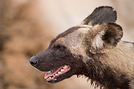


 une photo "soft" afin de ne pas choquer les amis des gnous
 Tony dans son camp à Masai Mara