Je suis un peu inquiète pour mon épouse qui est Africaine, j'ai lu plusieurs discussions ici et ailleurs sur le mépris qu'on les Thais pour les noirs... (Je comprend mieux maintenant pourquoi c'est compliqué d'avoir un visa!)
Apparemment, ils en ont plus contres les hommes; mais on doit etre accueilli par la femme d'un pote farang et déja c'est mal parti!
Je vivrais très très mal que ce voyage de 20 jours se passe mal, alors dites moi svp qu'elles sont les lieux et l'attitude à adopter par ma femme et moi pour pas que ca finisse mal.
Je connais bien ma femme et surtout sa fierté Africaine, et qu'on sera pas chez nous mais chez des gens qui souriant tout le temps et peuvent dire des saloperies, si c'est juste ca, c'est bon on comprend pas!
Mais plus c'est pas bon, on vient pour vivre des choses interessantes et lacher des pépétes m^me...rassurez moi : ca va allez, non?
Oui ça va aller car, comme tu le dis, on ne comprends pas. Je ne pense pas que ta femme subisse des réactions de rejet.
Le racisme en Thaïlande ne s'exerce pas seulement envers les étrangers à peau foncée, mais aussi envers les thaïlandais à peau foncée.
On retrouve cette triste tendance à peu près partout dans le monde.
D'après ma maigre expérience, j'ai vu des thais rigoler avec des blacks, les fuire aussi.
Certaines personnes que j'ai rencontré sur place me sortaient les vieux clichés du genre " ces gens ne se lavent pas🤪"
T'inquiète pas, des cons y en a partout même en thailande mais pour la majorité des gens, je pense qu'il n'y a pas de soucis 🙂
Beaucoup de thailandais ont le culte de la peau blanche, ils fuyent le soleil comme la peste pour certains...
Apparement avoir la peau sombre, cela veut aussi dire travailler dehors, dans les champs donc pas un niveau social très élevé...je sais c'est bizarre.
Maintenant, je me trompe peut être mais c'est ce que j'ai vu et entendu là-bas.
Rassure toi, tu va vivre une très belle expérience avec ta ptite femme :)
Pourquoi dis tu qu'avec la femme de ton ami c'est deja mal parti?
T' inquietes pas trop la dessus
Dans les grandes villes et les lieux touristiques les Thais sont trés tolerents ils en voient passer et de toutes les couleurs!
Tout au plus surtout dan les campagnes les gens serons curieux J 'en ai fait l' experience avec mes filles a la peau trés blanche tout le monde voulait se prenre en photo avec elles.
Cela dit en thaillande la blancheur de peau est synonime pour eux de beauté....
Mais ça m' etonnerait beaucoup que ton amie ait une reflexion sur sa couleure de peau de toute façon ils ont la peau trés foncée eux aussi.
Adoptez une atitude normale:
dechaussez vous avant de rentrer dans une maison Thai ou un Temple.
Ne faites AUCUNS commentaires sur le roi ou sa famille.
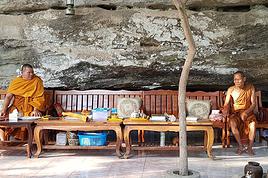
Les femmes ne doivent pas avoir de contacts avec les moines.
Et surtout gardez le sourire!!!
Pourquoi dis tu qu'avec la femme de ton ami c'est deja mal parti?
je dis ca parce que c'est par lui que j'ai appris que les Thaïs n'appréciaient pas trop la peau foncée, et il a pris l'exemple de ca copine méfiante vis à vis d'un voisin noir=trafiquant
Les thais racistes il y en a, ils le sont autant pour les Africains que pour les Europeens, mais ce racisme ne s'exprime pas ouvertement. Des reflexions a voix basses ou dans votre dos c'est possible, mais de face des sourires.
Pour les autres, une vraie curiosite. De toute facon, si les thais aiment les peaux blanches ils savent que les occidentaux preferent les peaux foncees, alors personne ne sera choque.
Généralement, il n'y a pas d'agression verbale directe (quoique ça arrive), mais par contre, les thaïs ne se gènent pas pour faire des commentaires entre eux ou vous balancer quelques noms d'oiseaux et ce, qu'on soit noir ou blanc. C'est très instructif de comprendre la langue, ça permet de voir "le pays du sourire" sous un autre angle.
Juste une petite remarque qui vaut ce qu'elle vaut: il y a une recrudescence de prostituées d'origine africaine sur Sukhumvit road entre soi 3 et soi 5. Ces filles là sont très mal vues car (je cite): "elles prennent le travail des thaïs". Les contrôlées de police ne sont pas rares. Mieux vaut peut-être éviter ce coin là afin d'éviter tout malentendu.
merci pour vos réponses, ca me rassure: évidemment y a du racisme partout (point d'angélisme); mais qu'en on ne maitrise pas l'environnement et la langue on a souvent tord en cas de conflit, et nos réactions peuvent etre mal percus.
Donc éviter le quartier de Sukhumvit, ok
on va loger à la G H shanti lodge sur Sri Ayutthya Road, c'est pas loin non?
Bonjour,
en 2006, je suis partie en Thailande avec mon ami de l'époque qui était d'origine Réunionaise donc assez typé et plutôt mat de peau (encore plus après qq jours de soleil).
Nous n'avons eu aucun problème de racisme, nous n'avons ressenti aucune hostilité de la part des thailandais ... bien au contraire ... "Handsome boy" fût une phrase qu'il a entendu plus d'une fois 🙂
Bon voyage
Je ne connais pas guilom mais quand on parle d'un pays où on n'est jamais allé, on a tendance à s'exprimer ainsi sans pour cela être xénophobe.
Je suis bien certain qu'un thaïlandais s'apprêtant à mettre pour la première fois les pieds en Thaïlande parlera des français, sans savoir que les français sont un ensemble de communautés diverses et variées, comme c'est le cas dans pratiquement tous les pays du monde.
Ne crois-tu pas ?
🙂Du racisme: c'est un ensemble de tout:des exemples que j'ai constaté sur le forum Thaïlande:
des petits secs blancs qui jalousent des gros en compagnie d'une super nana, des vieilles mémés qui rigolent en compagnie de copines thaïes des gros blancs, des gros blancs qui se foutent des jeunes sans le sou, des beaux gars âgés qui traitent les jeunes de crevard, ....des gens qui rigolent des bègues, d'autres qui ont la diarhée..
Voilà, faut pas se poser des questions: le monde est varié, original😉
Il ne faudra, par ailleurs, pas se vexer si vous entendez que l'on dit de votre femme qu'elle ait une "negro" (prononcé "nigo") car c'est comme cela que les thailandais appellent les personnes noires.
Même si, du peu que je connaisse, les thaïlandais n'aiment pas forcément les personnes noires, vous n'en serez normalement rien😉
J'ai des amis camerounais qui m'on fait le grand honneur de venir a Bangkok assister a mon mariage et je n'ai pas eu de retour négatif sur leur séjour bien au contraire, ils en ont été enchanté 😛 De plus j'entends plus parler de "chocolate man" que de négro 😉 Mais je ne dis pas que le racisme n'existe pas, pour les raisons données précedemment, il faut juste ne rien exagérer, un Baht est un Baht et le Baht n'a pas de couleur 😇
Oui oui je sais bien vel 😉 c'est vrai mais la plupart de mes amis thais les appellent chocolate men or women, ptet par egard pour moi le farang et ne pas me choquer? 😇
Il faut être clair (LOL), il y a "du racisme" en Thaïlande -comme partout !
Mais il est surtout "social", 80% des thaïlandais sont plutôt foncés, voire
"à la peau sombre" et dans la presse, à la TV on ne voit que des "blancs"
ou des bien blanchi(e)s.
Pourtant, ce n'est pas l'Inde, il n'y a pas de castes, si quelqu'un s'enrichit
il pourra rester à l'ombre et payer les crèmes et traitements adéquats
pour blanchir son épouse et ses filles.
Racisme donc mais peu de vraie discrimination (je ne parle pas des actrices
de cinéma etc ... qui doivent se blanchir).
Autre détail "intéressant", les gens à la peau sombre trouvent tous que le
"blanc" est plus beau, ils ne "s'aiment pas" vraiment ...
NB: Il y a quelque temps, j'ai lu un article super du Monde sur "La blanchitude"
mais il a disparu du Net.
Sinon je trouve que les thaïs sont beaucoup plus tolérants que les français.
tu as raison ........😛
proverbe thaïe .....<<<. si tu vois un indien et un serpent tape sur l'indien avant le serpent . >>
un peut facile pour un cul blanc que de parler du racisme quant on ne le subit pas .. laissons la parole a ceux qui sont les concernés ....... 😉
sur que les thaïes sont raciste . mais pas trop envers les touristes .. l'argent n'a pas de couleur /
il y a un bon moment de cela .. je rencontre une bande de africain parlant le français dans la rue On engage la conversation . ils me disent que ils sont en guest house . et font de l'export . mais pas du petit .. 15 containers par mois .. a la question pourquoi en guest puisque vous étés ici la plus part de l'année ..????
parce que personne veut louer a des africains .........
mon sang de petit cul blanc a chauffer ....... j'ai monter un coup . avec eux. je me présente . seul .. je loue .. mais je dis a ma bonne propriétaire chinoise .. que j'ai des amis qui vont s'installer aussi .😉.. une fois le contrat fait .. l'Afrique a débarquer .
( ils font d'excellents plats ses africain .. ) et quelle sensé de l'humour et dérision sur la vie !!
Perso j'ai des amis (jeune) couple mixte elle aussi est africaine et ils n'ont jamais de problème particulier.
Un autre couple de touriste que j'ai connue ils venaient de la martinique et ils sont reparti enchante de leur voyage.
Ne vous inquietez pas, il n'y aura pas de probleme. Restez vous meme, souriant, interesse, ouvert a la discussion et tout se passera bien. Bien du plaisir et bon voyage 😄
Je suis un peu inquiète pour mon épouse qui est Africaine, j'ai lu plusieurs discussions ici et ailleurs sur le mépris qu'on les Thais pour les noirs... (Je comprend mieux maintenant pourquoi c'est compliqué d'avoir un visa!)
Apparemment, ils en ont plus contres les hommes; mais on doit etre accueilli par la femme d'un pote farang et déja c'est mal parti!
Je vivrais très très mal que ce voyage de 20 jours se passe mal, alors dites moi svp qu'elles sont les lieux et l'attitude à adopter par ma femme et moi pour pas que ca finisse mal.
Je connais bien ma femme et surtout sa fierté Africaine, et qu'on sera pas chez nous mais chez des gens qui souriant tout le temps et peuvent dire des saloperies, si c'est juste ca, c'est bon on comprend pas!
Mais plus c'est pas bon, on vient pour vivre des choses interessantes et lacher des pépétes m^me...rassurez moi : ca va allez, non?
Merci pour vos conseils
ils m'ont pas encore décapiter ou lyncher d'un reunionais en isaan 😏😏..j'y bientot voir les
vieux ...pour ramener mon dernier fiston a peine 2 mois
faudrais qu'elle soit cool et très zen ..ne pas se prendre la tête ... 😉
Vous voilà bien mal partis pour résussir vos vacances ! Vous parlez sans rien savoir en accusant par avance sur la foi de quelques commentaires de forum les thaïlandais de racisme envers les africains !
C'est ça le racisme. La peur de l'inconnu et le jugement. Vous avez un comportement de racistes.
Je vais vous donner mon sentiment, moi qui suis thaïlandaise et qui ai vécu plusieurs années en France chez mon père : il y a une prévention contre les gens différents partout, mais je n'ai jamais vu autant de réaction de racisme, de violence de mots en Thaïlande, que j'en ai vu en France contre les noirs, les arabes et les asiatiques.
Si vous vous comportez bien, respectez les gens, les commerçants, si vous vous rappelez que vous êtes seulement des visiteurs de quelques jours d'un pays étranger dont vous ne connaissez pas l'histoire, le quotidien, les us, et que vous ne venez pas expliquer aux gens d'ici comment ils doivent vivre, que vous soyez noirs, verts ou bleus, vous n'aurez aucun problème de racisme à craindre des thaïlandais.
C'est ça le racisme. La peur de l'inconnu et le jugement. Vous avez un comportement de racistes.
Il ne faut pas exagérer non plus! Il peut être normal d'avoir une certaine crainte lors d'un voyage à l'étranger et lorsque l'on va cotoyer des gens aux us et coutumes différentes de les autres...de là à dire que ce Mr est raciste🤪😕...je n'y vois aucun rapport
Vous voilà bien mal partis pour résussir vos vacances ! Vous parlez sans rien savoir en accusant par avance sur la foi de quelques commentaires de forum les thaïlandais de racisme envers les africains !
C'est ça le racisme. La peur de l'inconnu et le jugement. Vous avez un comportement de racistes.
Je vais vous donner mon sentiment, moi qui suis thaïlandaise et qui ai vécu plusieurs années en France chez mon père : il y a une prévention contre les gens différents partout, mais je n'ai jamais vu autant de réaction de racisme, de violence de mots en Thaïlande, que j'en ai vu en France contre les noirs, les arabes et les asiatiques.
Si vous vous comportez bien, respectez les gens, les commerçants, si vous vous rappelez que vous êtes seulement des visiteurs de quelques jours d'un pays étranger dont vous ne connaissez pas l'histoire, le quotidien, les us, et que vous ne venez pas expliquer aux gens d'ici comment ils doivent vivre, que vous soyez noirs, verts ou bleus, vous n'aurez aucun problème de racisme à craindre des thaïlandais.
Je me permets d'intervenir à votre message.
L'intervenant n'a rien affirmé, il vient ici pour poser une question, ne connaissant pas, il est inquiet pour ses relations de voyage et pour ne pas faire souffrir son épouse, il nous interroge, certes sur la base de ce des personnes lui ont été rapportés. Si il était persuadé, il ne viendrait pas poser la question.
Ce n'est pas ce qu'on appelle une accusation !
La peur de l'inconnu est légitime, elle existe dans tout être humain, c'est donc pas "bizarre" ni "raciste", et il n'y a aucun jugement, simplement une interrogation.
Vous parlez de bons comportements de vos concitoyens, j'ai bien peur que vous n'en donniez une mauvaise image par vos propos, réfléchissez y !
Salut, ma femme est sénégalaise née en france mais bien évidemment black, nous sommes partis par deux fois en thailande du nord au sud et de mémoire je n"ai jamais eu aucun soucis a ce niveau parfois au massage les filles voulait la massée justement parcequ"elle était black et qu'elle n'avait pas l'habitude, peut etre quelque rire parfois mais bon rien de vexant, ayant était pusieurs fois seul avant je ne me suis meme pas poser la question a savoir si il allait y avoir des problémes de racisme.Donc pour conclure je tiens a te rassurer ca va allez .Keep cool
La peur de l'inconnu est légitime, elle existe dans tout être humain .... Vous parlez de bons comportements de vos concitoyens, j'ai bien peur que vous n'en donniez une mauvaise image par vos propos, réfléchissez y !
Bonne journée.
Ben non, la peur de l'inconnu (l'humain différent, s'entend) n'est pas légitime !
Désolé mais cette supposition de légitimité (où en sont les justifications ?) est à la base même du racisme et de la xénophobie !
Ce qui est légitime -et naturel en plus- c'est la curiosité, et c'est vrai pour beaucoup d'espèces (les clébards se reniflent le c.l d'abord lorsqu'ils ne se connaissent pas !).
Ce qui est naturel, ce sont les enfants qui se précipitent (pour "mon" cas) en répétant "un falang, un falang", les femmes adultes qui viennent toucher les cheveux blonds d'une étrangère alors qu'elles ont toutes des cheveux noirs etc ...
Supposer que ce qu'on ne connaît pas est forcément hostile ou dangereux a un nom, çà s'appelle de la paranöïa ... et c'est une maladie !
Pour la deuxième phrase citée, c'est un "argument" fourbe qui me fait un peu penser à du Torquemada ...
Il est tout à fait légitime (!) pour un thaïlandais d'estimer que l'affirmation "les thaïlandais sont racistes" est une marque de racisme puisqu'elle s'applique a priori à tous (et qu'il suffit d'un seul contre-exemple pour la réfuter) ...
Ce que je veux dire, c'est que c'est naturel d'avoir une crainte (le mot légitime utilisé était dans ce sens et pour ce sentiment exclusivement).
C'est la réaction exagérée par rapport à cette peur qui peut être condamnable et violente, et en ce qui concerne les races, un des effets de cette peur (la cause) peut être le racisme (l'effet), ce qui n'est pas tolérable.
Dans ce cas précis, cette peur de l'inconnu n'est pas la différence entre humains et le rejet d'une race, c'est la peur de la xénophobie qu'une personne humaine peut ressentir, donc de souffrir.
C'est plus clair ?
En ce qui concerne l'intervenant qui pose la question, il n'affirme rien, il relate un commentaire qui lui a été rapporté et nous interroge.
Si au contraire, l'intervenant avait dit : "les thais sont racistes", alors on aurait pu dire il est raciste, mais il n'en est rien.
Il aurait mieux valu s'adresser à ces personnes qui ont lancé un commentaire de ce type plutôt qu'à l'intervenant.
C'est pourtant simple non ?
De plus, il ne faut pas confondre inquiétude avec paranoïa, qui entre nous soit dit, n'est pas la peur de l'inconnu.
(paranoïa = Sans détérioration intellectuelle, la paranoïa se révèle essentiellement par un discours argumenté, d'apparence logique, mais cependant délirant, puisque étayé par un réseau d'illusions. Le délire de persécution en donne un exemple typique. La personne qui en souffre se croit la victime d'une personne ou d'une organisation qui lui veulent du mal. Elle voit dans le moindre fait la preuve de cette malveillance, dont le sentiment envahit sa vie, la pousse à des manœuvres absurdes, qui peuvent aller jusqu'à des pulsions meurtrières) ICI
Ce genre de terme utilisé à mauvaise escient dans ton propos me fait plutôt penser à cette maladie en effet.
N/B. Il y a sur ce sujet bien d'autres intervenants autre que Guilom qui se sont exprimés sur la question du racisme des thaïs, seul Guilom devrait en subir les foudres lui qui est dans l'interrogation 🤪
Si Guilom avait été réellement raciste, de 1) il ne serait pas marié à une femme de couleur, et si nous aurions pu éventuellement supposer qu'il est un raciste ciblé sur une race en particulier, cela m'amène logiquement au point 2) il n'organiserait pas un voyage en Thaïlande !!!!!!!!
Vous voilà bien mal partis pour résussir vos vacances ! Vous parlez sans rien savoir en accusant par avance sur la foi de quelques commentaires de forum les thaïlandais de racisme envers les africains !
C'est ça le racisme. La peur de l'inconnu et le jugement. Vous avez un comportement de racistes.
Je vais vous donner mon sentiment, moi qui suis thaïlandaise et qui ai vécu plusieurs années en France chez mon père : il y a une prévention contre les gens différents partout, mais je n'ai jamais vu autant de réaction de racisme, de violence de mots en Thaïlande, que j'en ai vu en France contre les noirs, les arabes et les asiatiques.
Si vous vous comportez bien, respectez les gens, les commerçants, si vous vous rappelez que vous êtes seulement des visiteurs de quelques jours d'un pays étranger dont vous ne connaissez pas l'histoire, le quotidien, les us, et que vous ne venez pas expliquer aux gens d'ici comment ils doivent vivre, que vous soyez noirs, verts ou bleus, vous n'aurez aucun problème de racisme à craindre des thaïlandais.
Vous voilà bien mal partis pour résussir vos vacances ! Vous parlez sans rien savoir en accusant par avance sur la foi de quelques commentaires de forum les thaïlandais de racisme envers les africains !
C'est ça le racisme. La peur de l'inconnu et le jugement. Vous avez un comportement de racistes.
Je vais vous donner mon sentiment, moi qui suis thaïlandaise et qui ai vécu plusieurs années en France chez mon père : il y a une prévention contre les gens différents partout, mais je n'ai jamais vu autant de réaction de racisme, de violence de mots en Thaïlande, que j'en ai vu en France contre les noirs, les arabes et les asiatiques.
Si vous vous comportez bien, respectez les gens, les commerçants, si vous vous rappelez que vous êtes seulement des visiteurs de quelques jours d'un pays étranger dont vous ne connaissez pas l'histoire, le quotidien, les us, et que vous ne venez pas expliquer aux gens d'ici comment ils doivent vivre, que vous soyez noirs, verts ou bleus, vous n'aurez aucun problème de racisme à craindre des thaïlandais.
OULA! si j'avais pas été de bonne humeur aprés ma journée de boulot, je t'aurais bien envoyé balader; mais voila je part bientot en Thailande et je suis heureux.
Mais je vais quand même te dire que ce que tu a écris là est un tissu de connerie, je ne t'en veux pas, parce que ca sent la souffrance vécue (ici en France), et crois moi j'en suis désolé, je sais ce que c'est!
Pour couper court, si les gens en Thailande disent ou ne disent pas des saloperies sur les Noirs, finalement ca change rien puisqu'on comprend pas la langue, ce qui m'inquiétais c'était de devoir subir des regards ou des attitudes discriminents (comme certains Marocains peuvent avoir dans les grands villes au Maroc à l'égare de les voisins Noirs Africains, par experience!!!).
Car je connais la réaction que pourrais avoir mon épouse dans ce cas la, et la ca se regle à l'Africaine : avec perte et fracas sans diplomatie aucune, se sentant dans son bon droit de se défendre; et je sais qu'en Thailande il ne faut point faire déclendre avec les locaux, car on aura toujours tord.
J'espere que tu conprend maintenant, moi qui voulais éviter le conflit diplomatique international, c'est raté! T'es tellement vexé dans ton incomprehension de mon poste qu'il va falloir convoquer l'ONU en session extraordinaire....!
Oui y a du racisme en France, mais celui la on sait le "gérer" car il a une forme tout aussi dégueulasse mais connu.
Tout comme toi apparement, on a eu à gérer ca ici, c'est ce qui devrait nous rapprocher Kwamfan, non????
Tandis que la forme de racisme qui peut exister dans certains pays dont la Thailande fait partie, culturellement on ne sait pas comment réagir.
Ce racisme la on en a pas l'habitude pour pouvoir le gérer dans le respect des Thailandais chez qui l'on se rend, voila c'est tout, .... tout ca pour ca.
Et pour conclure une bonne fois pour toute, je remercie tout ceux qui nous on répondu et orienté; ca nous est d'une aide precieuse et on sait qu'on va passer un trés bon séjour.
C'est plus facile de gérer le racisme en France ? Parce que tu comprends la langue ?
Je vais te dire ou redire que les thaïs sont largement bien plus tolérants. Donc si tu arrives à gérer le racisme en France alors tu n'auras aucun problème ailleurs.
Il faudrait arrêter de diaboliser la France, c'est fatigant.
Dès que tu as l'impression qu'on pourrait dire un peu de mal de la Thaïlande, te voila qui rapplique.
Tes façons de faire manquent de subtilité et, à force, tu vas obtenir l'effet inverse de celui escompté.
Si on relit tes posts, tu n'apportes pratiquement jamais d'infos sur la Thaïlande, ton pays chéri.
Je me demande quel est ton intérêt sur ce forum.
NB: Il y a quelque temps, j'ai lu un article super du Monde sur "La blanchitude"
mais il a disparu du Net.
La blanchitude, valeur sûre de la beauté asiatique, par Sylvie Kauffmann
LE MONDE | 05.11.07 | 13h16 • Mis à jour le 05.11.07 | 13h16
Combien de temps une Japonaise consacre-t-elle à ce que l'on appelle, dans les milieux de la cosmétique, sa "routine de beauté" ?
Le temps qu'il faut pour appliquer une moyenne de 3, 3 crèmes le matin - avant maquillage - et 4, 2 autres onguents le soir, qu'il faudra ajouter au temps passé à se coiffer, puisqu'elle se lave les cheveux 6, 4 fois par semaine (contre 4, 4 pour une Américaine).
Un record. Au pays du Soleil-Levant, le soin de la peau est presque une religion.
Fortes de la sagesse orientale, les femmes d'Asie savent que le soleil est l'ennemi de leur peau de porcelaine, qui se ride moins vite que celle des Occidentales, mais dont le processus de pigmentation favorise l'apparition de taches.
En Chine et en Asie du Sud-Est, l'indispensable parapluie n'est pas un parapluie, c'est un outil intemporel et permanent, renforcé par une doublure opaque pour servir aussi d'ombrelle.
Mais comment se protéger quand on sillonne des villes polluées en deux-roues ?
Loin de baisser les bras, Chinoises et Vietnamiennes rivalisent de créativité.
Au Vietnam, avant de monter sur un scooter, on se couvre le visage et le cou d'un foulard posé sur le nez puis noué derrière la tête, et l'on enfile de longs gants, si possible couleur chair, qui font la jointure avec la manche du T-shirt ; si l'on s'y prend bien, pas un centimètre de peau n'est exposé.
En Chine, il y a deux dispositifs possibles : l'ombrelle fixée au guidon par une hampe ad hoc, et le boléro léger, de coton blanc, à manches longues, très longues, qui recouvrent la main jusqu'aux doigts et que l'on enfile avant de monter sur son scooter.
Les plus combatives ont les deux, ombrelle et boléro.
Celles-là se sont évidemment enduit le visage d'une crème blanchissante.
Didier Saint-Léger n'aime pas ce mot, "blanchissante", il aimerait mieux qu'on dise "éclaircissante", mais c'est un combat d'arrière-garde.
La folie du "whitening" règne sur le marché du produit de beauté en Asie, et même M. Saint-Léger, l'enthousiaste directeur du laboratoire de recherche de L'Oréal à Shanghaï, n'y changera rien : blanc est le maître mot.
Aussi loin que les experts peuvent faire remonter leurs souvenirs, être belle en Asie est synonyme de teint clair, pâle, blanc.
Au Japon, le culte séculaire de la beauté blanche a même un nom, bihaku.
En Chine, la révolution culturelle a eu beau bannir le maquillage et classer le rouge à lèvres dans la catégorie des instruments réactionnaires, elle n'a pas réussi à détruire le fantasme de la peau blanche dans la psyché féminine.
"Si vous êtes blanche, vous êtes une princesse, si vous êtes foncée, vous êtes une travailleuse", résume Didier Saint-Léger.
La pâleur est aussi un signe extérieur de bien-être, tout comme le hâle donne bonne mine aux femmes blanches, ou "caucasiennes", selon l'appellation ethnique en vigueur en Asie, comme aux Etats-Unis.
Mais si, pour une Européenne, acquérir un hâle est relativement simple, même avant l'arrivée des autobronzants, la question est plus ardue pour une Asiatique : comment devenir/rester pâle ?
Longtemps, l'ingestion de poudre de perle a fourni la solution.
Mais outre que l'on n'a pas toujours des perles à moudre, c'était une solution de riches.
C'est la marque japonaise Shiseido qui, il y a un siècle, a révolutionné le bihaku en lançant la première lotion blanchissante, à base d'eau de peroxyde.
Shiseido fut le précurseur d'un mouvement de masse porté dans les années 2000 par des centaines de millions de femmes, pour le plus grand bonheur des groupes internationaux de cosmétiques.
Toutes les grandes marques, de Nivea à Lancôme, ont aujourd'hui leur gamme de produits blanchissants spécialement conçus pour le marché asiatique.
Les Japonaises, qui constituent le premier marché mondial en produits pour la peau, restent imbattables.
Exigeantes et sophistiquées, ce sont elles qui lancent les tendances pour l'Asie et fournissent le fameux "benchmark" de groupes comme L'Oréal ou Procter & Gamble.
Mais les Chinoises sont en train de rattraper le temps perdu.
Le marché chinois des produits de beauté s'élevait en 2005 à 5, 5 milliards de dollars, dont un tiers portait sur les produits blanchissants.
Cette année-là, L'Oréal, qui avait déjà une unité de recherche au Japon, a ouvert son laboratoire à Shanghaï avec six personnes ; aujourd'hui, 75 chercheurs y travaillent sur la peau et le cheveu chinois, et Didier Saint-Léger peut y assouvir sa passion pour les UVA, les UVB, le PPD (Persistent Pigmentation Darkening) et le PPF (Pigmentation Prevention Factor).
"En Chine, constate-t-il, les villes sont riches et les campagnes sont pauvres, mais l'attrait du blanc est le même partout."
Cela fait, en effet, beaucoup de crèmes à vendre en perspective, surtout quand on sait que les Chinoises, méfiantes sur la qualité des produits locaux, préfèrent à 80 % les marques étrangères.
La vague des produits blanchissants a, bien sûr, ses critiques, en particulier en Afrique, où des fabricants sans scrupule ont fait des ravages avec des produits au mercure.
Des études, au Canada et en Australie, ont dénoncé son caractère "néocolonial".
Dans Pigmentation and Empire, Aminata Mire, de l'université de Toronto, accuse L'Oréal de "consolider", à travers ses publicités pour les produits blanchissants, "l'idéologie mondialisée de la suprématie blanche". Mais les consommatrices asiatiques votent avec leurs pieds, et leurs maris sont en passe de leur emboîter le pas : la prochaine révolution des crèmes blanchissantes sera masculine.
Beiersdorf, qui produit la marque Nivea, a lancé en Inde cet été une ligne de produits blanchissants pour hommes.
Procter & Gamble, qui préfère en Inde le terme fair ("clair") à celui de white, a fait vanter la crème Fair and Handsome, le pendant masculin de Fair and Lovely, par une mégastar de Bollywood, Shahrukh Khan. Un marché de 500 millions d'hommes, ça ne se néglige pas.
Il faudrait arrêter de diaboliser la France, c'est fatigant.
Dès que tu as l'impression qu'on pourrait dire un peu de mal de la Thaïlande, te voila qui rapplique.
Tes façons de faire manquent de subtilité et, à force, tu vas obtenir l'effet inverse de celui escompté.
Si on relit tes posts, tu n'apportes pratiquement jamais d'infos sur la Thaïlande, ton pays chéri.
Je me demande quel est ton intérêt sur ce forum.
Pourquoi je devrais diaboliser la France ? Les thaïs sont plus tolérants je ne vais pas dire le contraire. Mais si tu n'es pas content bah c'est pareil lol.
Je rapplique ? Ah bon ? Le forum est devenu ta maison et on doit te demander l'a'utorisation avant de poster ? Ah mince alors je ne savais... alors je te demande : "est-ce que je pourrais poster encore stp.... ? Dis oui stp 😏"
Que j'apportes d'info sur la Thaïlande où est le problème, ce topic parle du racisme en Thaïlande tu veux que je te dises quoi ? Parler des quartiers racistes ?
Enfin dis moi aussi quel est ton intéret sur ce forum parce que je me pose la même question que toi (tiens on est d'accord là 😉).
Allez gros bisous à toi (ne t'inquietes pas je ne serais pas racistes avec toi).
Merci, il est vraiment bien cet article : pas enflammé mais çà n'en montre que plus fortement cette sorte de "malédiction des peaux bronzées" qui se retrouve un peu partout autour du monde !
Malédiction absurde s'il en fût mais tellement humaine ...
Hello everyone! I’m heading off solo in February and wanted to share my rough itinerary with you. Does this sound doable?
PS: I’m not really into beaches.
D1 Departure on February 17, 2027
D2 Arrival in Kuala Lumpur – stroll through Chinatown and visit the Petronas Towers
D3: Kuala Lumpur – Chow Kit Market, Batu Caves, Little India, Bukit Bintang downtown area
D4: Early morning bus to Malacca. Explore Malacca in the afternoon and evening
D5: Another 2–3 hours in Malacca in the morning, then bus back to Kuala Lumpur. Merdeka Square area. Stay in Chinatown
D6: Bus trip to Kuala Tahan. Night tour
D7: Morning – canopy walk and Bukit Terisek hike. Afternoon – off to Lata Berkoh
D8 & D9: 2-day jungle trek in Taman Negara National Park
D10: Head to Cameron Highlands
D11: Morning hike through the plantations. Afternoon still to be decided
D12: Morning – excursion to Mossy Forest and Sungei Plantation. Afternoon bus to Ipoh
D13: Morning – Mirror Lake / Sam Poh Temple area. Afternoon – explore downtown Ipoh
D14: Morning train to Penang. Afternoon – wander around Georgetown
D15: Morning – Penang Hill and Keh Loh Temple. Afternoon – Georgetown
D16: Bus to Butterfly Garden and Spice Garden. Late afternoon – Burmese and Thai temples
D17: Morning flight to Singapore. Afternoon – Chinatown and Marina Bay tour
D18: Morning – Gardens by the Bay area. Afternoon – Boat Quay, Clarke Quay, Kampong Glam
D19: Morning – The Ridges area and Botanical Garden. Afternoon – Little India, then back to Chinatown before 11:15 PM return flight
D20: Morning arrival
Hi everyone,
I’ll be in western Malaysia for 20 days in January and February.
I’m coming from southern Thailand to Ipoh for the Thaipusam festivities.
Then it’s off to Pangkor Island.
I’ll finish up in Malacca for the Chinese New Year celebrations before heading to Singapore.
I’ve got a 6-day gap.
I was thinking of going to K.Lipis for the jungle train and heading to Dabong, but the caves might not be open.
Any suggestions around K.L.?
Day treks?
A stopover between K.L. and Malacca?
Thanks
Hi, I’ve read that these two volcanoes are super popular and that there are *tons* of people for sunrise, especially in July. I’m looking for firsthand accounts from anyone who’s done it later, around 9–10 a.m.
Thanks for your help!
Laëtitia
I’m heading to Cambodia at the end of December 2026 – January 2027 for 3-4 weeks. Since I’ve already visited Cambodia twice, my itinerary is a bit different this time—I’d love to explore Botum Sakor Park, Chi Pat, the Tatai region, and the Cardamom Mountains. I’m traveling solo. If you have any tips on transportation, excursions, treks, sights, or accommodations in the area, I’d really appreciate it. Thanks for your feedback!
Has anyone traveled with the Laos travel agency ADV ?
I’m planning a trip to Laos and have received several quotes. Among them, this agency’s seem very reasonable, and so far, the interactions have been positive.
I’ve found a few positive reviews online, but I’d love to hear from travelers who’ve actually booked with them: how’s the organization, guide quality, accommodations, on-the-ground responsiveness, etc.
Thanks for sharing your experiences!
First stop on our discovery of the peninsula: Amphawa. It’s our first night in Thailand (we arrived at Suvarnabhumi at 8:50 AM).
Our initial plan was to explore the area before heading further south. The Mae Klong Railway Market is tempting... but what else is there to do????
We’ll be there on a Wednesday, and from what I’ve read on the forum, some say there’s absolutely nothing to do during the week—no floating market, barely any shops open, no restaurants, etc.
Others, though, say the place is actually more charming without the weekend crowds.
Could you share your thoughts? Missing the floating market is one thing, but if it’s really a ghost town on Wednesdays, I might just drop our bags somewhere else.
Amphawa seemed like a good first stop, just 1.5 hours from the airport, but I’d still like to settle somewhere a bit lively for our first evening.
We’ll be there at the end of October.
Thanks!
Hi,
I wanted to visit the plantations in the morning with GetYourGuide or by just showing up.
How much time should I really plan for?
I’d like to catch either the 3 PM or 5 PM bus back to KL.
Thanks
Hi,
I wanted to get some info about the cable car and the bridge—I see lots of different options...
How much time should we allow for these two activities? If we arrive around 4 PM, will we have enough time to visit without rushing?
Thanks
Hi there,
I didn’t plan to return to Thailand this year, but my health conditions mean it’ll be the best place for me to stay between two trips to India. The tourism setup there is so well-organized that it’s the most "comfortable" country for a short visit. Thailand feels too sanitized for my taste, and there’s too much religion, Buddha, and the King, but it’s still the best option given how my health has been evolving. I’d considered two weeks in ThaTon for hiking, but I got too sick from the burn-offs during my trips to the mountains around Chiang Rai. So I’m not sure where to go this year. Definitely not the sea, touristy spots, or the mountains with burn-offs...
Hi,
On September 1st, we're heading to Kalimantan for six weeks, probably from Pontianak to the Derawan Islands.
I've scoured this site, which is usually my go-to 😉, and others like VoyageForum, but recent info is pretty scarce.
I'd love any tips on places you've visited—our itinerary is still a work in progress.
We're two couples traveling with backpacks, using buses, boats, guesthouses, and homestays.
Thanks in advance!
Hi fellow travelers,
First trip to Vietnam.
We’ll be arriving in Ho Chi Minh City during Tet.
Is it complicated to find accommodation and get around during this period?
Any tips would be welcome.
Thanks for your replies.
Hi! I’d like to split my trip into two parts: 15 days in Phuket and 15 days in Krabi. Do you know if I can rent a car and drop it off in Krabi when I fly back to France?
Thanks for your feedback!
Have a great Sunday!
Martine
Hello,
After 1 night in Khao Sok, I’d like to find a 2 Days 1 Night package on the lake.
After reading a lot, I decided to "break the bank" and treat ourselves to a private tour—mainly to avoid the crowds.
But after contacting several operators, they offer "private tours" that are very expensive (around 700 €), yet in the details, the boats can only leave from the pier at 10 AM like everyone else. (I was hoping to leave much earlier.) The morning program is the same for everyone too (private or not). They drop us off at noon at our floating hotel (I’d chosen Phupha Waree). Free afternoon (swimming or kayaking in front of the hotel). We head back by boat for a 1-hour sunset ride. And the next morning, we leave the hotel at 8 AM to be at the pier by 9:30 AM at the latest—end of the trip.
So basically, we’re paying a lot for a private tour just to do the same thing as everyone else at the same time.
Or maybe I just had bad luck in my search.
I contacted Panida Ladi, who’s very popular on forums. We’d agreed on a private tour that matched my request (departure from the pier at 8 AM, very personalized itinerary). We settled on the itinerary and price, she asked for a Wise transfer for a 30% deposit, confirmed receipt of the deposit. Then 30 minutes later, she messaged me to say she was canceling everything because it was impossible to do the requested tour—and promised a quick refund of my deposit.
So here’s my question: Who’s done a *real* private tour on this lake? Who can recommend a reliable agency? Is it even really possible to do a private tour here?
I’m searching for a real gem for my 3rd stay in Koh Lanta: a lovely, high-quality hotel right by an easily accessible beach in a lively spot.
If you know of anything that fits what I’m looking for and want to share, don’t hesitate!
Hi, is anyone there in Flores right now? According to some websites, everything is closed and the situation is tough. But our guide says it's fine. Who should we believe? We're supposed to leave on September 2nd. Thanks to anyone in Flores at the moment!
Hi dear community,
I'm planning to visit Cambodia this winter, right after Christmas, for my first solo trip and my first trip to Asia. For two weeks (yes, I know it's short, but I really can't do more...). I have two main desires: Siem Reap and the countryside, the villages, the Mekong...
What do you think of this itinerary? Arrival in Siem Reap, departure from Phnom Penh.
SR: 5 days (1 day for arrival, 3 for the temples, 1 for the lake and its villages)
Kratie (stop on the way to Mondolkiri): 3 days (1 day of travel, 2 days there)
Mondolkiri/Sen Monorom: 4 days (1 day of travel, 1 day there, 2 days of treks)
PP: 3 days (1 day of travel, 2 days of sightseeing)
I think I need to cut one day somewhere if I travel from Saturday to Saturday or Sunday to Sunday. In Kratie, maybe? Or in PP? And I'll miss the boat trip that everyone recommends (SR-Battambang), but I don't see where to fit it in. Unless I do a PP-PP loop starting in the east, skip Kratie or just stay one night, then SR, then PP.
In my timing, Mondolkiri seems closer than Ratanakiri, which also tempted me a lot! Will it be too complicated alone? I'm thinking of using local guides or a small local agency for a nature and village getaway.
I've read that Siem Reap is very crowded between Christmas and New Year's. I could also do the circuit in the opposite direction. But I thought it would be easier to get familiar with the country by arriving in a touristy area—I might be wrong...
Thanks for your advice and opinions!
Hi everyone.
I’m planning my trip, and based on all the posts I’ve read, this country is amazing.
Of course, I’ve got a ton of questions for you.
Here’s a possible itinerary: Vientiane - Vang Vieng - Phonsavan - Sam Neua - Nong Khiaw + villages - Phongsali - Luang Namtha and the area - Udomxai - Huay Xai - Luang Prabang and back to Vientiane.
What do you think?
We’re planning to prioritize local transport—is it possible to do this loop?
We’d also love to go kayaking, but I’m not sure if the season’s right or where the best spot is.
For trekking—I read that Phongsali is the most authentic spot to visit villages and see wildlife. Do you know of a reliable agency and a guesthouse with reasonable prices?
Is it worth taking a slow boat for a stretch on the Mekong, and if so, which route?
For accommodations, is it better to book through Booking.com and Agoda or look when we arrive?
Are mosquitoes bad in Laos, and should we take malaria prophylaxis?
What’s the average daily budget (accommodation, food, visits)?
Is renting scooters a good option for exploring towns, and if so, which ones?
From what I’ve read, it’s best to carry cash—euros or dollars? Is it risky to walk around with that much cash?
I’ve still got tons of questions. Thanks to anyone who can help, and I’m open to all tips, info, etc.
Thanks again
Hi there,
I’m planning a family trip (my wife and I, both 47, and our two sons, aged 5 and 12) to Malaysia for the last week of June and the first two weeks of July 2027.
We used to love road trips as a couple, then as a trio, but since our second child arrived, we’ve taken a break with "camping village" style trips.
Now feels like the right time to get back to our old habits, while adjusting the pace for the kids.
We’re craving Asia. We’ve been lucky enough to visit Thailand, Indonesia (Bali and Lombok), and Sri Lanka before.
Friends have raved about Malaysia, so we’re definitely tempted.
For those who know and love Malaysia, what would be a good itinerary starting from Kuala Lumpur, with a maximum of 3-4 stops? We’d like a mix of culture, nature, and relaxation (just to clarify, we’re not big beach fans). All of this without rushing, of course.
Hello,
We’re a family of four with two teens aged 16 and 18. We’re heading to Thailand this summer. We’ll arrive in Bangkok and plan to take a flight to Luang Prabang.
I’ve seen there are some great visits and excursions to do (temples, markets, waterfalls) and maybe even venture a bit north to places like Nong Khiaw, Muang Xay, Muang Ngoy, or Oudom Xay.
But I’ve also heard about the Bokeo region with the Gibbon Experience.
Since we won’t be able to do everything, I’d love to hear about your experiences, impressions, and advice on the two options I’m considering, especially since we’ll be meeting family in Chiang Mai, Thailand, afterward.
Option 1: A loop from Luang Prabang heading slightly north, then a flight from Luang Prabang to Chiang Mai.
Option 2: A few days in Luang Prabang, exploring within a few dozen kilometers around, then heading to Bokeo province for the 2-day/1-night Gibbon Experience. For this option, I saw on Rome2Rio that it’s possible to book a ferry trip on the Mekong from Luang Prabang to Huay Xay—they mention about 8 hours. But is that realistic? What type of boat is it?
Then, to get to Chiang Mai, there aren’t many options—bus or minivan—but how does crossing the border work?
Finally, for those of you who’ve been to Laos in August, what was the weather like?
We’ve already visited Thailand, Vietnam, and Cambodia during the same period over the past four years and weren’t really bothered by bad weather.
I’m starting a discussion about guides in the Mekong Delta because we’ve just finished our trip in this region and had a hard time finding a French-speaking guide. We had Thanh—she speaks French really well and travels all over the delta region, including Ho Chi Minh City. She’s super friendly and flexible. I recommend her wholeheartedly. If it can help someone...
Feel free to contact us for her number.
Hi everyone,
I couldn’t find any recent info on Kuching.
Can anyone recommend a hotel or guesthouse for under 100 RM that’s nice and affordable? No dorms, please.
Also, does it rain a lot in November, and is it still worth visiting Semenggoh or Bako?
We’ll be arriving in Phnom Penh this coming January and we’re thinking of starting our trip with a stop in Kampong Cham, then Kratie.
After Kratie, we’re considering heading toward Siem Reap with a stop in Kampong Thom.
That said, I’m not really sure how long the Kratie–Kampong Thom journey might take or how complicated it is.
Does this stop on the way to Siem Reap seem like a good idea to you?
If we don’t visit the Sambor Prei Kuk site, are there still any walks or sights worth checking out in Kampong Thom?
Silly question—backpack or hard-shell suitcase for the Sepilok, Kinabatangan, Tioman, KL trip?
I’m struggling to fit all my son’s and my stuff into the 70L backpack... and I’m thinking a suitcase would be easier, but I’m not sure if it’ll work for getting around.
After a stay on Koh Phayam this coming November, I’d like to spend 2 or 3 days on Koh Phra Thong before heading further south.
Do you think it’s doable to leave Koh Phayam early enough to catch the 10 AM boat from Khura Buri to Koh Phra Thong? The next one isn’t until 4 PM, which would cost me a whole day.
I’m planning a trip to Indonesia, specifically Sulawesi and Java, in September for 10 days.
I don’t know this part of the world at all—any advice is welcome!
I’ll be traveling solo and would also love tips on meeting other travelers or locals.
Hello everyone,
Not long ago, I used to travel as a couple, but my husband has since passed away, and I’ve decided to set off again. The trip I took to Cambodia in January 2025 did me a world of good.
I’m now considering Thailand, a destination we never included in our plans because even 15 years ago, people said it was too touristy. Still, I’m thinking about the itinerary below, but I don’t feel up to arranging buses, trains, or guides on my own while I’m there. I’m looking for one or more drivers and have been in touch with an agency, but their offers are just copy-paste group tours that I don’t want.
So, if you have any contacts, experiences, or advice, I’d be so grateful if you’d share them with me. Here’s my rough plan:
Arrival in Bangkok
Ayutthaya (2 nights)
Kanchanaburi (2 or 3 nights)
Sangkhlaburi/Sai Yok (3 nights)
Sukhothai (2 nights)
Lampang (I’ve planned 3 nights, but that might be a bit much—it depends on what time I arrive in the city)
Chiang Mai
Chiang Dao
Pai
Chiang Rai
I was thinking about the Mae Hong Son loop—thoughts?
What do you think about staying overnight at the Golden Triangle?
When I look online, of course, I can find agencies that organize tours to national parks, etc.
I’m retired but in great physical shape. I’d rather go hiking than sit in hot springs with crowds of tourists who’ve all arranged meet-ups. I don’t want to spend a day at an elephant camp, and I don’t want to visit Karen villages.
I’d love to hear your advice.
Thank you all,
Hi everyone,
Could you share your thoughts on my 3-week itinerary?
We’re a small group (family + friends) of 12 people, planning to leave around January 21, 2027.
Here’s my itinerary:
3 nights in Bangkok
4 nights in Chiang Mai
3 nights on Koh Samui
3 nights on Koh Phangan
4 nights in Krabi
4 nights in Phuket
I’m also open to any great tips you might have...
Thanks, everyone! Alain.
Hi there,
We’re planning a 3-week family trip next summer with our three kids, who’ll be 8, 8, and 7 years old.
After some research, we’re leaning toward Malaysia to combine nature/forests and paradise beaches. The idea is to introduce our kids to the country’s culture, nature, and wildlife.
We want a great trip but without splurging on luxury options like high-end lodges and resorts. We’re looking for comfort with a touch of authenticity—basically, a good middle ground.
I’ve started putting together an itinerary and would love your expert advice and tips to help us build this amazing trip with our little ones.
Day 1: Departure from France
Day 2: Kuala Lumpur
Stay at a hotel near the airport or KL Sentral.
Just one night.
Day 3: Morning flight to Sandakan (Borneo).
Stay in Sepilok
Day 4: Sepilok:
* Orangutan Center
* Malayan Sun Bear Center
* Rainforest Discovery Centre
Day 5: Depart for Kinabatangan.
Boat safari in the late afternoon.
Day 6: Sunrise safari.
Jungle walk.
Evening safari.
Day 7: Final safari.
Return to Sandakan.
Flight to Kuala Lumpur, then to Kota Bharu (or overnight transit depending on schedules).
Day 8: Transfer to the port.
Boat to the Perhentian Islands.
Days 9 to 13: Perhentian Besar
5 full days.
* Snorkeling
* Hiking
* Turtle watching
* Wild beaches
* Relaxation
Day 14: Return to the mainland.
Bus or private car to Taman Negara.