je fais appel à vous pour une demande un peu particulière. Un ami étudiant prépare un projet de marketing international portant sur la Thailande. Pour ce faire, il a entre autres du rédiger un questionnaire...Tout logiquement il doit trouver des gens connaissant bien ce pays pour y répondre ou encore mieux, des personnes y vivant...
J'ai donc naturellement pensé à la communcauté VF. Voici ce questionnaire... N'hésitez pas à me répondre par message privé. La chose est assez urgente puisque son dossier est à rendre lundi prochain....😕 Merci d'avance à ceux qui trouveront quelques minutes...
Comment se ressent la collision entre l’Occident et l’Orient en Thaïlande ?
On définit la Thaïlande comme un pays aux mille facettes mais surtout comme une succession de dualité : bouddhisme et capitalisme, monarchie et démocratie, paysage magnifique et tourisme sexuel… En immersion, comment se vivent ces paradoxes au sein de ce pays ? Religion, politique, tourisme...
Si vous devez définir la Thaïlande, que diriez-vous ?
Y a-t-il une face caché au pays du sourire ?
Comment se passe l’immersion et ensuite le retour à la vie occidentale ?
Une anecdote représentative de ce pays ?
Si vous deviez le comparer aux autres pays d’Asie que vous connaissez ?
Comment se présente l’avenir de la Thaïlande ?
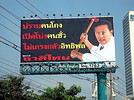
La communication en Thaïlande : Qu’avez-vous à dire sur les façons de communiquer dans ce pays ? La place de la pub par exemple? Les entreprises… ?
Comment se ressent la collision entre l’Occident et l’Orient en Thaïlande ?
Pas certain qu'il y ait une collision. Pour cela il faudrait qu'il y ait affrontement, et éviter l'affrontement fait partie de la culture thaie...
On définit la Thaïlande comme un pays aux mille facettes mais surtout comme une succession de dualité : bouddhisme et capitalisme, monarchie et démocratie, paysage magnifique et tourisme sexuel… En immersion, comment se vivent ces paradoxes au sein de ce pays ? Religion, politique, tourisme...
Je ne sais pas qui est ce on qui définit ainsi la Thaïlande, mais il me semble posséder une belle boite à clichés... Pour faire simple, la Thailande est une économie de marché, où l'argent (ou son manque) influe sur les relations sociales autant que le bouddhisme, la monarchie ou que sais je d'autre...
Si vous devez définir la Thaïlande, que diriez-vous ?
Je passe mon tour
Y a-t-il une face caché au pays du sourire ?
Non.. Les gens sourient tout le temps. C'est le pays des Bisounours...
Comment se passe l’immersion et ensuite le retour à la vie occidentale ?
Autant de cas que d'individus. De plus vivre à Bangkok par exemple n'est pas si différent de al vie occidentale. Métro boulot, dodo, ça existe ici...
Une anecdote représentative de ce pays ?
Dis moi combien coute ton téléphone portable, je te dirais qui tu es...
Si vous deviez le comparer aux autres pays d’Asie que vous connaissez ?
Les comparaisons n'ont pas de sens. Comparer la Thailande et le Japon ou la thailande avec le Laos ?
Comment se présente l’avenir de la Thaïlande ?
Avec des tensions sociales de plus en plus importantes si la machine économique s'enraye..
La communication en Thaïlande : Qu’avez-vous à dire sur les façons de communiquer dans ce pays ? La place de la pub par exemple? Les entreprises… ?
Dans la pub il y a le meilleur (créativité) et surtout le pire... Voir des filles à la peau plus blanche que blanche se mouvoir dans des lofts immenses au coeur de Bangkok sur les télé des gens ordinaires dans leur cahute peut donner envie de casser le poste ou d'éclater de rire...
Comment se ressent la collision entre l’Occident et l’Orient en Thaïlande ?
La vrai question est: y a-t'il vraiment collision, pour ma part je dirais non, les Thais de bonne societe et moyenne bonne ne se melangent que rarement aux etrangers. De plus, la culture Thai est fortement influence par le Japon et la Coree plutot que par les USA, il suffit pour cela de voir le nombre de restaurants japonais a Bangkok, vraiment impressionnant.
On définit la Thaïlande comme un pays aux mille facettes mais surtout comme une succession de dualité : bouddhisme et capitalisme, monarchie et démocratie, paysage magnifique et tourisme sexuel… En immersion, comment se vivent ces paradoxes au sein de ce pays ? Religion, politique, tourisme...
Il est vrai que la Thailande est au pays plein de paradoxe, je pourrai rajouter un paradoxe de plus, les policiers corrompus qui a la fin de l'annee reverse une partie de leur argent aux associations caricatives. Au debut, on trouve qu'il y a vraiment un manque de logique dans leur culture mais a la fin on s'y fait car en Thailande, on aprrend a etre "sanook" et par consequent prendre les choses a la legere ce qui permet a tout ses paradoxes d'exister.
Si vous devez définir la Thaïlande, que diriez-vous ?
Il y a 2 thailande celle des touristes qui donnent l'impression d'une tres grande integrite et d'une grande ouverture d'esprit et celle des Thais faite de multiple regles et en realite tres referme sur elle meme.
Y a-t-il une face caché au pays du sourire ?
Totalement, voir la reponse juste au dessus.
Comment se passe l’immersion et ensuite le retour à la vie occidentale ?
Pour ma part adaptation un peu dur au depart, tout est different de la nourriture en passant par les gens mais il y a pas de meilleur pays au sens propre du terme, chaque pays a ses avantages et ses inconvenients.
Une anecdote représentative de ce pays ?
Vos amis vous presentent quelqu'un et avant meme que vous ayez le temps de demander son nom, il va vous dire qu'il connait tel personne, qu'il est patron d'une grande societe etc... par exemple:Je connais le fils du 1er ministre alors qu'en realite il a vu qu'une fois, ou alors je suis concessionnaire auto alors qu'il est en faites mecanicien.
Si vous deviez le comparer aux autres pays d’Asie que vous connaissez ?
Je connais bien la Chine et le Japon pour y avoir vecu, tout est different mis a part que l'argent est la seule chose que les gens reconnaissent vraiment.
Comment se présente l’avenir de la Thaïlande ?
La thailande a un avenir des plus brillants si on constate que finalement elle ressemble vraiment a la France point de vue economie, une bonne agriculture, un tourisme fort, une bonne situation geographique, et une population plus ou moins egale seulement la thailande n'a pas su prendre le bon train a cause de son instabilite economique et disons le franchement a cause de la paresse de sa population, je pense que la Thailande deviendra une grande puissance si elle gagne en stabilite.
La communication en Thaïlande : Qu’avez-vous à dire sur les façons de communiquer dans ce pays ? La place de la pub par exemple? Les entreprises… ?
Les thai aiment les marques et sont pret a sacrifier des mois de salaire pour un tel, leurs pubs sont faites de beaucoup d'humour car la population reste vraiment des adultes enfants.
Il me semble qu'il s'agit d'un devoir de géographie de collégien ! Non ?
Quelle collision entre l'est et l'ouest dans le pays ? Le terme est impropre. Il y a différents modèles, différentes influences, venant aussi bien du pays que du reste du monde.
En quoi s'opposent bouddhisme et capitalisme ? En quoi s'opposent de beaux paysages et la prostitution ? Il n'y a rien là de paradoxal. Ni en Thaïlande, ni ailleurs. Le bouddhisme n'est pas une doctrine collectiviste ni communiste. Les fameux (dans le monde entier !) travestis du Bois de Boulogne n'empêchent pas d'admirer Versailles, le Mont St Michel ou les gorges du Verdon.
Il y a de nombreuses études et chiffres disponibles sur le net qui permettent de comprendre l'économie de l'Asie et de la Thaïlande.
L'image touristique est très fortement ancrée dans les esprits. Belles plages pour les uns, beaux temples pour les autres, et belles filles pour certains. Ce sont des réalités, mais des clichés. Ca ne représente absolument pas le pays et ses 63 millions d'habitants. Pas plus que la baguette et le béret ne sont la France !
Le type de gouvernement est une monarchie constitutionnelle, comme le Royaume Uni par exemple. L'ancrage démocratique est encore assez récent, mais solide. Les quelques coups d'état des militaires (le dernier en 2006) ont rapidement laissé la place à des élections (suffrage universel, population>18 ans).
A peu près grande et peuplée comme la France, avec un PIB qui la place en 26ième position (sur environ 230 classés) loin devant plusieurs pays d'Europe, la Thaïlande est un pays moderne. L'industrialisation forte y a démarré 30 ans après la France, et les campagnes ne se sont pas encore vidées (45% de paysans et ouvriers agricoles), mais elle s'accélère.
Le qualificatif de "pays à mille facettes" s'applique plus couramment à la Turquie ou au Maroc, dont les décorations sont très brillantes. En revanche le surnom de "pays du sourire" est, je crois, tiré du roman Anna et le Roi de Siam, de Margaret Landon. Sans doute récupéré ensuite par les publicitaires et tour operators !
Thailande, signifie pays des hommes libres. Elle se flatte en effet de n'avoir jamais été colonisée, contrairement à ses voisins.
Si tu souhaites quelques infos, pas d'une spécialiste de l'économie, mais d'une française installée en Thaïlande, n'hésite pas.
Non ce n'est pas un collégien 😉mais un étudiant dans une université au canada qui ne connait que la ThaÏlande par ce qu'il a pu lire sur le web ou entendre en quelques semaines.... Quand j'ai lu son questionnaire j'ai également tiquer sur certains points...je lui fait d'ailleurs remarquer dans la réponse que je prépare de mon côté. Toutefois, je trouve que ça retranscrit très bien les idées reçues sur la thailande. Ce questionnaire est censé lui aider à avoir une vision plus claire de la question... donc...
Ton ressenti de la vie en thaïlande serait surement très intéressant... Je garde ta proposition bien au chaud et reviens vers toi très rapidement
Un grand merci à tous pour vos réponses !
n'hésitez pas à en rajouter même si ça n'entre pas dans les cases. Dans ses questions on sent bien qu'il se base sur les clichés made in LP. Ce que je voudrai c'est lui transmettre des réponses qui lui donneront un aperçu précis de ce qu'est la vie en thailande ; comment un occidental qui s'y installe ressent ce pays, cette culture etc... Bref tout ce qui vous semble intéressant à savoir sur ce pays (je sais c'est énorme...)
encore un immense merci VFiens😉
Comment se ressent la collision entre l’Occident et l’Orient en Thaïlande ?
Il n'y a pas vraiment collision, mais des differences culturelles plus ou moins grandes. Ceci dit, la question est mal posee, car "l'Orient" est vaste, et chaque pays a une culture tres differente. par exemple, le mur culturel est beaucoup moins accentue dans les 2 autres pays que je connais, le Vietnam et la Birmanie. Pour tout dire, la Thailande est vraiment un cas; je dirais que c'est le pqays d'Asie du Sud Est ou le mur entre les locaux et les etrangers est le plus haut
On définit la Thaïlande ...
Les barrieres sont moins hautes qu'on ne l'imagine: le bouddhisme thai est une vaste entreprise tres fructueuse en ce qui concerne les autorites religieuses, la democratie a toupours ete plutot musclee, le pays est beau, mais pas aussi beau que le Vietnam (a part les iles) et il n'y a ni Angkor, ni la baie d'Halong, le tourisme est super developpe; quant au sexe, ce n'est pas une entite touristique, c'est une denree tres populaire parmi les thais; croire que ce sont les etrangers qui ont provoque cette outrance, c'est se tromper; les moeurs ont toujours ete tres libres chez les thais, qui sont les plus gros clients des "massage parlors". En fait, las Thailande, c'est un parfait vexemple d'un melange plutot ndetonaqnt d'occidentalisme et d'orientalisme, avec une tendance certaine des locaux a singer les americains des qu'ils gagnent un peu d'argent. Les thais: des hedonistes comme je n'en ai jamais vu, suaf a Rio; c'est peut etre eux qui ont raison, n'est-ce-pas?
Si vous devez définir la Thaïlande, que diriez-vous ?
Le pays du sourire MAIS, en tant qu'etranger, il vaut mieux ne pas "gratter derriere"
Une anecdote représentative de ce pays ?
Ca depend du sens ou on veut aller. Dans le bon sens, j'ai passe 14j dans un hotel et ai perdu ma carte de credit. Reaction de la patronne: c'est pas grave, vs me paierez quand vs reviendrez. Dans le mauvais sens, voir tous les etrangers qui se font rouler par les belles du pays
Si vous deviez le comparer aux autres pays d’Asie que vous connaissez ?
En ce qui me concerne, le Vietnam est NUMERO UNO, avec des paysages magnifiques et des locaux beaucoup plus interessants. No 2, la Birmanie (sans la junte). La Thailande, c'est fantastique pour y passer des vacances, mais pour y vivre et travailler, c'est une autre histoire!!!!!
Comment se présente l’avenir de la Thaïlande ?
C'est un pays de cocagne ou tout pousse, ou le climat est serein compare a celui de ses voisins, et ou le developpement industriel est remarquable. Je ne me fais pas de souci pour son avenir bien que, si j'etais eux, je surveillerais le Vietnam de pres
La communication en Thaïlande : Qu’avez-vous à dire sur les façons de communiquer dans ce pays ? La place de la pub par exemple? Les entreprises… ?
Quelle communication? Avec les gens? Si on parle de pub, les thais sont TRES forts; en fait, ils sont tres forts pour tout ce qui design. Les entreprises? Tres capitalistes, et se faisant une concurrence feroce. en fait, le drame dans les affaires, c'est que, quand ils veulent, les thais sont capables de grandes choses; mais quand ils ont pas envie, RIEN ne peut les remuer!!! Le fait reste que toutes les grandes societes thaies ont ete montees et sont controlles/gerees par des chinois thais. En ce qui concerne les entreprises etrangeres, les lois sont tres restrictives a moins d'investir 200 millions de bath ++: societe obligatoirement a capitaux thais a 51%, pas de permis de travail sans un minimum d'employes thais, obligation de "pointer" a l'immigration tous les 3 mois meme avec un visa business d'un an, perte du permis de travail ET DU VISA si on change de societe, etc. A comparer avec le Vietnam, ou les loius sont de + en + liberales, et avec le Cambodge et le Laos, ou il semble que l'on peut s'installer sans problemes (je ne connais rien aux autres pays)
pourquoi avoir peur de te faire des ennemis? le propre d'une question est d'obtenir des réponses différentes. Bref je te remercie donc de la tienne que j'ai trouvé instructive et intéressante.🙂
Il manquerait juste une réponse à la question : face cachée de la thailande? si je dis corruption on est tous d'accord non?
Si vous devez définir la Thaïlande, que diriez-vous ?
je vais faire avancer le debat d un grand pas:
en 5 ans je n ai toujours pas de reponses,
chaque jour qui passe est un nouvel etonnement pour moi,
ce que je croyais acquit hier est remis en question aujourd hui,
et puis comme dit dans le post sur les enseinants en thailande trop penser donne mal a la tete,
La corruption, non seulement elle est loin d'etre cachee, mais elle n'est pas pire qu'ailleurs! ce n'est vraiment pas une face characteristique du pays. En ce qui me concerne, ce serait plutot le cote completemnent hedoniste, unique en Asie, ou la vie est dure
Certes les définitions de telle ou telle chose sont difficiles à donner puisque rien n'est figé. Cependant, il faut parfois mettre des mots sur des idées. Même s'ils sont obsolets le lendemain... même s'ils sont subjectifs...c'est le propre d'un questionnaire... Même si l'on n'a pas LA réponse on peut avoir un avis ou des pistes qui aideront mon ami
Réfléchir ne donne pas seulement mal à la tête...
Merci quand bien me^me de votre intervention
Larsay, c'est bien ce que tu dis, je te rejoins sur pas mal de points. Tout comme voyageurasi d'ailleurs. Les ressentis changent vite et on se surprend parfois à apprécier quelque chose alors que lors d'expériences ultérieures pas du tout. Enfin, voici ma contribution.
Comment se ressent la collision entre l’Occident et l’Orient en Thaïlande ?
Collision ? Bof, ca ne me parle pas. Si tu le prends au premier degré et en marchant, bien tu ne fais pas long dans ce pays sans te faire démonter 😎. Si je peux le remplacer par rencontre, je continue.
De meme pour occident et orient, si tu entends le farang (étranger) et le thai, je poursuis et c'est d'ailleurs une vaste question. Il faut garder en tête en premier qu'un farang reste un farang. Meme celui qui a sorti des cd de morlum (ortho oups... musique du nord-est) restera toujours un farang. Certes un million de fois mieux introduit que moi, mais il ne sera jamais thai aux yeux des thais. On rejoint une des dualités, les locaux sont très ouverts, sympa, "souriant"😇, mais peuvent aussi rester impénétrables suivant le cas et protectionistes voire nationalistes. C'est entre autres ce qui fait leur charme car ca leur a permis de préserver une part de leur culture.
Ensuite on m'a souvent sorti : You farang think too much ! Funny, all farang think think think 🙂. Notre facon de penser est différente de celle des thais et à mon avis ca va jusqu'à la logique. Nous ne partageons pas la meme logique ce qui peut pas mal perturber, voire meme aller jusqu'à "foutre la monstre m...". Je ne dis pas qu'une vision est mieux que l'autre, je dirai juste que je me réjouis de me taper une singh avec les "potes" au Jazz bar.
Enfin, comme ca devrait être partout, la rencontre de farang et de thai se passe bien tant qu'une n'essaie pas d'envahir l'autre. Ajouter à la conversation une poignée d'autodérision et une pointe d'ironie et c'est une bonne soirée en perspective.
Si vous devez définir la Thaïlande, que diriez-vous ?
Le pays des contradictions, mais que c'est bon ! Ok, c'est un peu nul, mais c'est pour la ryme.
Il y a aussi le Amazing Thailand qui, dans toute son ampleur, résume bien le pays.
Un chouette pays avec pleins d'horreurs comme partout sur la planète, mais ou il fait bon vivre quand on respecte, apprécie, et le montre, le tout avec humour.
Y a-t-il une face caché au pays du sourire ?
Oui, le sourire...
Oui, mais elle est bien cachée et personne ne l'a vue.
Comment se passe l’immersion et ensuite le retour à la vie occidentale ?
Sabai sabai, tranquille mais perso le retour, c'est pas la grande fête. Une des choses qui me frappe à chaque fois, les premiers jours rentré, sont le stress et le sérieux des gens.
Quand à l'immersion, c'est à chaque fois un nouveau voyage avec ses surprises, c'est donc à chaque fois le pied. J-105 😎
Une anecdote représentative de ce pays ?
Lors d'un apéro chez une connaissance thai, je lui dis qu'un jour il me plairait d'avoir une petite maison par là, un petit jardin, quelques bêtes, pourquoi pas un champs, une compagne et... une moto ! Elle me regarde comme si j'allais continuer et me dit (je la mets en vo, c'est plus sympa) "and a car". La je lui dit qu'une voiture c'est pleins de soucis, une moto c'est suffisant et moins de tracas. Et la me sors "but, if you not buy car, you have girlfriend 6 months, than she go somebody have car !". On a bien rit ce soir-la.
Si vous deviez le comparer aux autres pays d’Asie que vous connaissez ?
C'est une question à se faire flinguer sur le forum 😄 !
Je connais un peu KualaLumpur et peu du Cambodge. Je dirai juste que la Thailande est à mes yeux la plus sanook (drôle).
Comment se présente l’avenir de la Thaïlande ?
Avec moi ? 😏
La communication en Thaïlande : Qu’avez-vous à dire sur les façons de communiquer dans ce pays ? La place de la pub par exemple? Les entreprises… ?
Je ne suis pas du métier, mais les pub télévisuelles thai sont souvent à mourrir de rire.
Bon, je m'arrête la, la singh (et c'est une vraie singh ce soir) commence à se réchauffer, meme par ici... et j'ai mal à la tête 😛
j'ai beaucoup aimé cette vision des choses .. peut-être parce qu'elle ressemble beaucoup à la mienne.
pour les retardataires on récapitule ce qu'on a appris d'important aujourd'hui : réfléchir ça donne mal à la tête et ça donne soif 😉.
Merci d'avoir pris le temps de répondre
Ton étudiant du Canada est étonnant ! Il mélange et oppose des choses qui n'ont aucun rapport. Trouver une réponse étayée va lui être difficile si on est bien dans le cadre d'une étude de commerce international, c'est à dire dans le domaine du palpable et du chiffré. Une étude de marché ne se fait pas sur du ressenti.
Le ressenti n'était d'ailleurs pas mon propos. Je ne t'ai pas indiqué mon feeling, mais juste donné quelques infos. J'ai enseigné la sociologie en université pendant 20 ans, en France et à l'étranger, et pour cela fait de nombreuses études. Je peux t'assurer que la réalité d'un pays n'est jamais le souvenir de vacances, même longues, comme je le vois illustré dans ce sujet, ce qui est bien logique dans un forum de voyage.
On peut reconnaître une caricature si on connaît au préalable le sujet caricaturé. Mais ça ne fonctionne pas dans le sens inverse. Il est impossible de reconnaître le vrai lorsqu'on n'a vu que sa caricature.
Une approche pragmatique est indispensable à percevoir la réalité d'un pays et de sa population. Les choses exprimées dans ce sujet donnent des tas d'infos sur qui sont les voyageurs qui en parlent et très peu sur le pays.
La façon dont nous exprimons notre perception des autres dit qui nous sommes, pas qui ils sont.
Une anecdote amusante qui va te donner une idée de la perception des étrangers par les thaïs, cette fois.
Au bureau des permis de conduire, il est interdit de fumer, comme dans toutes les administrations. Il y a à l'entrée, le petit panneau bien connu dans le monde entier qui représente une cigarette barrée. Le message est clair. Mais il y a un second panneau à côté où il est précisé en anglais: ne songez même pas à fumer à l'intérieur" !
Ca pose le problème de l'intégration. C'est un autre débat, mais une réalité qu'il faut intégrer au raisonnement dans la collecte d'infos ressenties.
Il faut garder en tête en premier qu'un farang reste un farang. Meme celui qui a sorti des cd de morlum (ortho oups... musique du nord-est) restera toujours un farang. Certes un million de fois mieux introduit que moi, mais il ne sera jamais thai aux yeux des thais. On rejoint une des dualités, les locaux sont très ouverts, sympa, "souriant"😇, mais peuvent aussi rester impénétrables suivant le cas et protectionistes voire nationalistes. C'est entre autres ce qui fait leur charme car ca leur a permis de préserver une part de leur culture.
tres tres bonne analyse,
qui rejoint le savoureux texte de Guido Franco :
FARANG, OU LES PERPLEXITES D UN ETRANGER
L'étranger arrivant en Thaïlande devra se résoudre, une fois pour toutes, a être FARANG, même s'il reste dans le pays toute sa vie, et ce statut comporte un certain nombre de servitudes et de limitations que l'auteur s'efforce tout en étant Farang, c'est a dire en ne comprenant rien a rien, de décrire ici
FARANG
Tout Occidental qui arrive en Thaïlande y est et y restera farang. Ce nom lui collera a la peau, ce sera le premier qu'il réussira a reconnaître et qui lui indiquera que l'on parle de lui dans les conversations. Farang est la déformation de Faranset ( Français ) survivance de nos ambassades et de nos visées au royaume de Siam. De nos jours ce nom désigne généralement tout Occidental au long nez, a la peau pâle, et qui se promène dans une chambre avec des souliers. Quoi qu'il fasse, même s'il apprend le Thaï et vit depuis 20 ans dans le pays, le farang restera farang. Il doit s'habituer a cette singularité. Les Japonais ne sont pas farang, ils sont Yipoun. Les Arabes et les Indiens: Kêk, les Noirs: Niklrô.
Le mot farang n'implique aucune exclusion, aucun racisme. Tout simplement une fatalité. Il faut s'y résigner, accepter son sort avec calme, comme on accepte d'avoir le teint pale et un long nez. Réaliser aussi que les Thaïs ne sont heureux qu'entre eux, qu'ils nous considèrent, malgré tous les bienfaits que nous avons apportés dans le pays ( fast-food, rock n' roll, tourisme sida, ect ) comme des dinosaures. Nous ne savons pas "paï tiâo" ( sortir pour s'amuser) nous déplaçons trop de vent, faisons trop de bruit. Nous ne savons pas ce qui est "Sanouk " (amusant, intéressant) et nous contentons de filles de troisieme catégorie. Nous ne nous inclinons pas devant les statues du Bouddha et les autels de l'Erawan, nous ne respectons pas les Pii (esprits) et montrons les choses du doigt comme si elles n'avaient pas d'âme. Nous sommes a tous points de vue des sauvages, et si les Thaïs nous appellent malgré tout "khon" (êtres humains) et non "thoua" (animaux) c'est qu'ils sont d'une extrême politesse.
Mais qu'on ne s'y trompe pas quand on passe dans les villages, les mères rassurent les enfants effrayés: "farang mai kat" (il ne mord pas) *
* pour la dernier phrase j ai vecu cette situation sur un vol de la Thai,
un couple avec un enfant, celui ci dit a sa mere:
<< je veux changer de place avec toi, j ai peur du Farang>>
qq heures plus loin l enfant m a sourit, je lui ai dit en Thai:
<< tu vois le farang mord pas >>
la mere rouge de confusion s est excusee, je lui ai sorti la phrase clef : MAI PEN RAI
et tout ca a finit dans un eclat de rire general
j espere que ma petite contribution dans le message ci-dessus ajoutera une pierre a ton edifice,
j ai pris la precaution de prendre une aspirine avant,
donc pas d effets collateraux
cordialement, bonne journee
* pour la dernier phrase j ai vecu cette situation sur un vol de la Thai,
un couple avec un enfant, celui ci dit a sa mere:
<< je veux changer de place avec toi, j ai peur du Farang>>
qq heures plus loin l enfant m a sourit, je lui ai dit en Thai:
<< tu vois le farang mord pas >>
la mere rouge de confusion s est excusee, je lui ai sorti la phrase clef : MAI PEN RAI
et tout ca a finit dans un eclat de rire general
Excellent !
Et le texte de Guido Franco sympa aussi... J'aime bien ce bout la : "Nous ne savons pas "paï tiâo" ( sortir pour s'amuser) nous déplaçons trop de vent, faisons trop de bruit. Nous ne savons pas ce qui est "Sanouk " (amusant, intéressant) et nous contentons de filles de troisieme catégorie. Nous ne nous inclinons pas devant les statues du Bouddha et les autels de l'Erawan, nous ne respectons pas les Pii (esprits) et montrons les choses du doigt comme si elles n'avaient pas d'âme. Nous sommes a tous points de vue des sauvages, et si les Thaïs nous appellent malgré tout "khon" (êtres humains) et non "thoua" (animaux) c'est qu'ils sont d'une extrême politesse. "
Aujourd'hui au boulot je vais me déplacer sans faire de vent ni bruit et vais être sanook ! Pour les filles, on verra bien....😛
Inutile de lui jeter la pierre. ses interrogations ne me parraissent pas si surprenantes après en avoir discuter davantage avec lui.
Les idées de collision et de paradoxe entre les notions mentionnées ne sont pas de lui mais tirés d'un ouvrage de Xavier Galland. Il cherche donc à avoir confirmation ou affirmation de ces dires.
Il est vrai que la philisophie bouddhiste basée sur des idées de partage et loin (théoriquement) d'un esprit mercantile peuvent détonner avec le capitalisme/libéralisme
Une monarchie mal gérée (qu'elle soit constitutionnelle ou non) peut empiéter sur les libertés d'une démocratie
Pour ce qui est des paysages vs prostitutions c'est vrai que je ne sais pas trop quoi répondre. Enfin bref...
Toutefois je comprends également ton point de vue sauf sur le fait que pour une étude commerciale ou de marketing ou de communcation (j'ai soldée il y aquelques années des études de relations internationales et de communication) il ne faut que des chiffres et du palpable... Dans ce domaine on joue aussi sur d'autres leviers...
🙂
Il est vrai que la philisophie bouddhiste basée sur des idées de partage et loin (théoriquement) d'un esprit mercantile peuvent détonner avec le capitalisme/libéralisme
Encore une fois, nous sommes dans le domaine de l'illusion et de l'amalagme. Certes, la religion donne une couleur plus ou moins forte à un pays, mais l'image du bouddhisme visiblement admise est tout à fait loin des réalités. Le moine type ressemble autant à l'image que beaucoup s'en font de l'extérieur que Mère Theresa à un curé de paroisse.
Les pays fortement influencés pas le christianisme tendent-ils la joue gauche lorsqu'on les a frappé sur la joue droite ?
Les pays fortement bouddhistes (ou de même famille) sont des pays d'excellents commerçants. Commerce et mercantilisme sont 2 notions aussi distinctes qu'éducation et dressage !
Une monarchie mal gérée (qu'elle soit constitutionnelle ou non) peut empiéter sur les libertés d'une démocratie
Il ne s'agit pas d'apprécier la qualité de gouvernance du roi. D'ailleurs dans une monarchie constitutionnelle, ici comme au R-U, le roi n'a qu'une autorité d'estime et ne régit rien. Il n'y a aucune ressemblance entre une monarchie et une monarchie constitutionnelle. Ce sont 2 systèmes absolument différents.
La démocratie n'a pas de liberté stricto sensu et n'est pas non plus un synonyme de liberté. Elle signifie que le peuple est souverain, c'est à dire du choix (suffrage) de ses dirigeants (en l'occurrence le 1er Ministre et les 2 assemblées). La Thaïlande est donc un pays démocratique.
Hello, Last year, we stayed for 3 months in Thailand, north of Khao Lak, and were able to benefit from the 2-month visa exemption, renewable for one month by…
hi fellow travelers, I'm "finalizing" a trip with my adventurous family (wife + 3 kids aged 16, 14, and 8) for this Easter break in Thailand (we'll be there…
Hello everyone! I’m heading off solo in February and wanted to share my rough itinerary with you. Does this sound doable?
PS: I’m not really into beaches.
D1 Departure on February 17, 2027
D2 Arrival in Kuala Lumpur – stroll through Chinatown and visit the Petronas Towers
D3: Kuala Lumpur – Chow Kit Market, Batu Caves, Little India, Bukit Bintang downtown area
D4: Early morning bus to Malacca. Explore Malacca in the afternoon and evening
D5: Another 2–3 hours in Malacca in the morning, then bus back to Kuala Lumpur. Merdeka Square area. Stay in Chinatown
D6: Bus trip to Kuala Tahan. Night tour
D7: Morning – canopy walk and Bukit Terisek hike. Afternoon – off to Lata Berkoh
D8 & D9: 2-day jungle trek in Taman Negara National Park
D10: Head to Cameron Highlands
D11: Morning hike through the plantations. Afternoon still to be decided
D12: Morning – excursion to Mossy Forest and Sungei Plantation. Afternoon bus to Ipoh
D13: Morning – Mirror Lake / Sam Poh Temple area. Afternoon – explore downtown Ipoh
D14: Morning train to Penang. Afternoon – wander around Georgetown
D15: Morning – Penang Hill and Keh Loh Temple. Afternoon – Georgetown
D16: Bus to Butterfly Garden and Spice Garden. Late afternoon – Burmese and Thai temples
D17: Morning flight to Singapore. Afternoon – Chinatown and Marina Bay tour
D18: Morning – Gardens by the Bay area. Afternoon – Boat Quay, Clarke Quay, Kampong Glam
D19: Morning – The Ridges area and Botanical Garden. Afternoon – Little India, then back to Chinatown before 11:15 PM return flight
D20: Morning arrival
Hi everyone,
I’ll be in western Malaysia for 20 days in January and February.
I’m coming from southern Thailand to Ipoh for the Thaipusam festivities.
Then it’s off to Pangkor Island.
I’ll finish up in Malacca for the Chinese New Year celebrations before heading to Singapore.
I’ve got a 6-day gap.
I was thinking of going to K.Lipis for the jungle train and heading to Dabong, but the caves might not be open.
Any suggestions around K.L.?
Day treks?
A stopover between K.L. and Malacca?
Thanks
Hi, I’ve read that these two volcanoes are super popular and that there are *tons* of people for sunrise, especially in July. I’m looking for firsthand accounts from anyone who’s done it later, around 9–10 a.m.
Thanks for your help!
Laëtitia
I’m heading to Cambodia at the end of December 2026 – January 2027 for 3-4 weeks. Since I’ve already visited Cambodia twice, my itinerary is a bit different this time—I’d love to explore Botum Sakor Park, Chi Pat, the Tatai region, and the Cardamom Mountains. I’m traveling solo. If you have any tips on transportation, excursions, treks, sights, or accommodations in the area, I’d really appreciate it. Thanks for your feedback!
Has anyone traveled with the Laos travel agency ADV ?
I’m planning a trip to Laos and have received several quotes. Among them, this agency’s seem very reasonable, and so far, the interactions have been positive.
I’ve found a few positive reviews online, but I’d love to hear from travelers who’ve actually booked with them: how’s the organization, guide quality, accommodations, on-the-ground responsiveness, etc.
Thanks for sharing your experiences!
First stop on our discovery of the peninsula: Amphawa. It’s our first night in Thailand (we arrived at Suvarnabhumi at 8:50 AM).
Our initial plan was to explore the area before heading further south. The Mae Klong Railway Market is tempting... but what else is there to do????
We’ll be there on a Wednesday, and from what I’ve read on the forum, some say there’s absolutely nothing to do during the week—no floating market, barely any shops open, no restaurants, etc.
Others, though, say the place is actually more charming without the weekend crowds.
Could you share your thoughts? Missing the floating market is one thing, but if it’s really a ghost town on Wednesdays, I might just drop our bags somewhere else.
Amphawa seemed like a good first stop, just 1.5 hours from the airport, but I’d still like to settle somewhere a bit lively for our first evening.
We’ll be there at the end of October.
Thanks!
Hi,
I wanted to visit the plantations in the morning with GetYourGuide or by just showing up.
How much time should I really plan for?
I’d like to catch either the 3 PM or 5 PM bus back to KL.
Thanks
Hi,
I wanted to get some info about the cable car and the bridge—I see lots of different options...
How much time should we allow for these two activities? If we arrive around 4 PM, will we have enough time to visit without rushing?
Thanks
Hi there,
I didn’t plan to return to Thailand this year, but my health conditions mean it’ll be the best place for me to stay between two trips to India. The tourism setup there is so well-organized that it’s the most "comfortable" country for a short visit. Thailand feels too sanitized for my taste, and there’s too much religion, Buddha, and the King, but it’s still the best option given how my health has been evolving. I’d considered two weeks in ThaTon for hiking, but I got too sick from the burn-offs during my trips to the mountains around Chiang Rai. So I’m not sure where to go this year. Definitely not the sea, touristy spots, or the mountains with burn-offs...
Hi,
On September 1st, we're heading to Kalimantan for six weeks, probably from Pontianak to the Derawan Islands.
I've scoured this site, which is usually my go-to 😉, and others like VoyageForum, but recent info is pretty scarce.
I'd love any tips on places you've visited—our itinerary is still a work in progress.
We're two couples traveling with backpacks, using buses, boats, guesthouses, and homestays.
Thanks in advance!
Hi fellow travelers,
First trip to Vietnam.
We’ll be arriving in Ho Chi Minh City during Tet.
Is it complicated to find accommodation and get around during this period?
Any tips would be welcome.
Thanks for your replies.
Hi! I’d like to split my trip into two parts: 15 days in Phuket and 15 days in Krabi. Do you know if I can rent a car and drop it off in Krabi when I fly back to France?
Thanks for your feedback!
Have a great Sunday!
Martine
Hello,
After 1 night in Khao Sok, I’d like to find a 2 Days 1 Night package on the lake.
After reading a lot, I decided to "break the bank" and treat ourselves to a private tour—mainly to avoid the crowds.
But after contacting several operators, they offer "private tours" that are very expensive (around 700 €), yet in the details, the boats can only leave from the pier at 10 AM like everyone else. (I was hoping to leave much earlier.) The morning program is the same for everyone too (private or not). They drop us off at noon at our floating hotel (I’d chosen Phupha Waree). Free afternoon (swimming or kayaking in front of the hotel). We head back by boat for a 1-hour sunset ride. And the next morning, we leave the hotel at 8 AM to be at the pier by 9:30 AM at the latest—end of the trip.
So basically, we’re paying a lot for a private tour just to do the same thing as everyone else at the same time.
Or maybe I just had bad luck in my search.
I contacted Panida Ladi, who’s very popular on forums. We’d agreed on a private tour that matched my request (departure from the pier at 8 AM, very personalized itinerary). We settled on the itinerary and price, she asked for a Wise transfer for a 30% deposit, confirmed receipt of the deposit. Then 30 minutes later, she messaged me to say she was canceling everything because it was impossible to do the requested tour—and promised a quick refund of my deposit.
So here’s my question: Who’s done a *real* private tour on this lake? Who can recommend a reliable agency? Is it even really possible to do a private tour here?
I’m searching for a real gem for my 3rd stay in Koh Lanta: a lovely, high-quality hotel right by an easily accessible beach in a lively spot.
If you know of anything that fits what I’m looking for and want to share, don’t hesitate!
Hi, is anyone there in Flores right now? According to some websites, everything is closed and the situation is tough. But our guide says it's fine. Who should we believe? We're supposed to leave on September 2nd. Thanks to anyone in Flores at the moment!
Hi dear community,
I'm planning to visit Cambodia this winter, right after Christmas, for my first solo trip and my first trip to Asia. For two weeks (yes, I know it's short, but I really can't do more...). I have two main desires: Siem Reap and the countryside, the villages, the Mekong...
What do you think of this itinerary? Arrival in Siem Reap, departure from Phnom Penh.
SR: 5 days (1 day for arrival, 3 for the temples, 1 for the lake and its villages)
Kratie (stop on the way to Mondolkiri): 3 days (1 day of travel, 2 days there)
Mondolkiri/Sen Monorom: 4 days (1 day of travel, 1 day there, 2 days of treks)
PP: 3 days (1 day of travel, 2 days of sightseeing)
I think I need to cut one day somewhere if I travel from Saturday to Saturday or Sunday to Sunday. In Kratie, maybe? Or in PP? And I'll miss the boat trip that everyone recommends (SR-Battambang), but I don't see where to fit it in. Unless I do a PP-PP loop starting in the east, skip Kratie or just stay one night, then SR, then PP.
In my timing, Mondolkiri seems closer than Ratanakiri, which also tempted me a lot! Will it be too complicated alone? I'm thinking of using local guides or a small local agency for a nature and village getaway.
I've read that Siem Reap is very crowded between Christmas and New Year's. I could also do the circuit in the opposite direction. But I thought it would be easier to get familiar with the country by arriving in a touristy area—I might be wrong...
Thanks for your advice and opinions!
Hi everyone.
I’m planning my trip, and based on all the posts I’ve read, this country is amazing.
Of course, I’ve got a ton of questions for you.
Here’s a possible itinerary: Vientiane - Vang Vieng - Phonsavan - Sam Neua - Nong Khiaw + villages - Phongsali - Luang Namtha and the area - Udomxai - Huay Xai - Luang Prabang and back to Vientiane.
What do you think?
We’re planning to prioritize local transport—is it possible to do this loop?
We’d also love to go kayaking, but I’m not sure if the season’s right or where the best spot is.
For trekking—I read that Phongsali is the most authentic spot to visit villages and see wildlife. Do you know of a reliable agency and a guesthouse with reasonable prices?
Is it worth taking a slow boat for a stretch on the Mekong, and if so, which route?
For accommodations, is it better to book through Booking.com and Agoda or look when we arrive?
Are mosquitoes bad in Laos, and should we take malaria prophylaxis?
What’s the average daily budget (accommodation, food, visits)?
Is renting scooters a good option for exploring towns, and if so, which ones?
From what I’ve read, it’s best to carry cash—euros or dollars? Is it risky to walk around with that much cash?
I’ve still got tons of questions. Thanks to anyone who can help, and I’m open to all tips, info, etc.
Thanks again
Hi there,
I’m planning a family trip (my wife and I, both 47, and our two sons, aged 5 and 12) to Malaysia for the last week of June and the first two weeks of July 2027.
We used to love road trips as a couple, then as a trio, but since our second child arrived, we’ve taken a break with "camping village" style trips.
Now feels like the right time to get back to our old habits, while adjusting the pace for the kids.
We’re craving Asia. We’ve been lucky enough to visit Thailand, Indonesia (Bali and Lombok), and Sri Lanka before.
Friends have raved about Malaysia, so we’re definitely tempted.
For those who know and love Malaysia, what would be a good itinerary starting from Kuala Lumpur, with a maximum of 3-4 stops? We’d like a mix of culture, nature, and relaxation (just to clarify, we’re not big beach fans). All of this without rushing, of course.
Hello,
We’re a family of four with two teens aged 16 and 18. We’re heading to Thailand this summer. We’ll arrive in Bangkok and plan to take a flight to Luang Prabang.
I’ve seen there are some great visits and excursions to do (temples, markets, waterfalls) and maybe even venture a bit north to places like Nong Khiaw, Muang Xay, Muang Ngoy, or Oudom Xay.
But I’ve also heard about the Bokeo region with the Gibbon Experience.
Since we won’t be able to do everything, I’d love to hear about your experiences, impressions, and advice on the two options I’m considering, especially since we’ll be meeting family in Chiang Mai, Thailand, afterward.
Option 1: A loop from Luang Prabang heading slightly north, then a flight from Luang Prabang to Chiang Mai.
Option 2: A few days in Luang Prabang, exploring within a few dozen kilometers around, then heading to Bokeo province for the 2-day/1-night Gibbon Experience. For this option, I saw on Rome2Rio that it’s possible to book a ferry trip on the Mekong from Luang Prabang to Huay Xay—they mention about 8 hours. But is that realistic? What type of boat is it?
Then, to get to Chiang Mai, there aren’t many options—bus or minivan—but how does crossing the border work?
Finally, for those of you who’ve been to Laos in August, what was the weather like?
We’ve already visited Thailand, Vietnam, and Cambodia during the same period over the past four years and weren’t really bothered by bad weather.
I’m starting a discussion about guides in the Mekong Delta because we’ve just finished our trip in this region and had a hard time finding a French-speaking guide. We had Thanh—she speaks French really well and travels all over the delta region, including Ho Chi Minh City. She’s super friendly and flexible. I recommend her wholeheartedly. If it can help someone...
Feel free to contact us for her number.
Hi everyone,
I couldn’t find any recent info on Kuching.
Can anyone recommend a hotel or guesthouse for under 100 RM that’s nice and affordable? No dorms, please.
Also, does it rain a lot in November, and is it still worth visiting Semenggoh or Bako?
We’ll be arriving in Phnom Penh this coming January and we’re thinking of starting our trip with a stop in Kampong Cham, then Kratie.
After Kratie, we’re considering heading toward Siem Reap with a stop in Kampong Thom.
That said, I’m not really sure how long the Kratie–Kampong Thom journey might take or how complicated it is.
Does this stop on the way to Siem Reap seem like a good idea to you?
If we don’t visit the Sambor Prei Kuk site, are there still any walks or sights worth checking out in Kampong Thom?
Silly question—backpack or hard-shell suitcase for the Sepilok, Kinabatangan, Tioman, KL trip?
I’m struggling to fit all my son’s and my stuff into the 70L backpack... and I’m thinking a suitcase would be easier, but I’m not sure if it’ll work for getting around.
After a stay on Koh Phayam this coming November, I’d like to spend 2 or 3 days on Koh Phra Thong before heading further south.
Do you think it’s doable to leave Koh Phayam early enough to catch the 10 AM boat from Khura Buri to Koh Phra Thong? The next one isn’t until 4 PM, which would cost me a whole day.
I’m planning a trip to Indonesia, specifically Sulawesi and Java, in September for 10 days.
I don’t know this part of the world at all—any advice is welcome!
I’ll be traveling solo and would also love tips on meeting other travelers or locals.
Hello everyone,
Not long ago, I used to travel as a couple, but my husband has since passed away, and I’ve decided to set off again. The trip I took to Cambodia in January 2025 did me a world of good.
I’m now considering Thailand, a destination we never included in our plans because even 15 years ago, people said it was too touristy. Still, I’m thinking about the itinerary below, but I don’t feel up to arranging buses, trains, or guides on my own while I’m there. I’m looking for one or more drivers and have been in touch with an agency, but their offers are just copy-paste group tours that I don’t want.
So, if you have any contacts, experiences, or advice, I’d be so grateful if you’d share them with me. Here’s my rough plan:
Arrival in Bangkok
Ayutthaya (2 nights)
Kanchanaburi (2 or 3 nights)
Sangkhlaburi/Sai Yok (3 nights)
Sukhothai (2 nights)
Lampang (I’ve planned 3 nights, but that might be a bit much—it depends on what time I arrive in the city)
Chiang Mai
Chiang Dao
Pai
Chiang Rai
I was thinking about the Mae Hong Son loop—thoughts?
What do you think about staying overnight at the Golden Triangle?
When I look online, of course, I can find agencies that organize tours to national parks, etc.
I’m retired but in great physical shape. I’d rather go hiking than sit in hot springs with crowds of tourists who’ve all arranged meet-ups. I don’t want to spend a day at an elephant camp, and I don’t want to visit Karen villages.
I’d love to hear your advice.
Thank you all,
Hi everyone,
Could you share your thoughts on my 3-week itinerary?
We’re a small group (family + friends) of 12 people, planning to leave around January 21, 2027.
Here’s my itinerary:
3 nights in Bangkok
4 nights in Chiang Mai
3 nights on Koh Samui
3 nights on Koh Phangan
4 nights in Krabi
4 nights in Phuket
I’m also open to any great tips you might have...
Thanks, everyone! Alain.
Hi there,
We’re planning a 3-week family trip next summer with our three kids, who’ll be 8, 8, and 7 years old.
After some research, we’re leaning toward Malaysia to combine nature/forests and paradise beaches. The idea is to introduce our kids to the country’s culture, nature, and wildlife.
We want a great trip but without splurging on luxury options like high-end lodges and resorts. We’re looking for comfort with a touch of authenticity—basically, a good middle ground.
I’ve started putting together an itinerary and would love your expert advice and tips to help us build this amazing trip with our little ones.
Day 1: Departure from France
Day 2: Kuala Lumpur
Stay at a hotel near the airport or KL Sentral.
Just one night.
Day 3: Morning flight to Sandakan (Borneo).
Stay in Sepilok
Day 4: Sepilok:
* Orangutan Center
* Malayan Sun Bear Center
* Rainforest Discovery Centre
Day 5: Depart for Kinabatangan.
Boat safari in the late afternoon.
Day 6: Sunrise safari.
Jungle walk.
Evening safari.
Day 7: Final safari.
Return to Sandakan.
Flight to Kuala Lumpur, then to Kota Bharu (or overnight transit depending on schedules).
Day 8: Transfer to the port.
Boat to the Perhentian Islands.
Days 9 to 13: Perhentian Besar
5 full days.
* Snorkeling
* Hiking
* Turtle watching
* Wild beaches
* Relaxation
Day 14: Return to the mainland.
Bus or private car to Taman Negara.