Voyage en inde
Je pars en inde l été prochain et mon trajet empreinte la route manali - leh .si quequ' un a des renseignements sur ce trajet , cela m' interesse. Quelles mesures peut on prendre pour anticiper au mieux le mal des montagnes.merci pour vos conseils
Manali-Leh (473 km en 1 ou 2 jours)
* en bus :
- Les "government bus", c'est à dire les bus publics, font le trajet en deux jours, on passe la nuit à Keylong, où l'on trouve à se loger en dortoir ou en chambre d'hôtel.
- "Himachal Tourism", compagnie privée qui possède des bus très confortables, le prix comprend le transport et les repas. La nuit se passe plus sous tente devant l'hôtel Himachal à Keylong ! Les bureaux d'Himachal Tourism sont dans la rue principale de Manali. L'étape du premier jour, Manali-Keylong fait 115 km et dure 6 heures. Le second jour, Keylong-Leh fait 358 km et dure 15 heures.
- Un bus "deluxe" privé affrété par les agences de voyage de Manali fait ce trajet avec une nuit - parfois froide - sous tente en pleine nature à mi-chemin à Sarchu. Dans ce cas, le premier jour Manali-Sarchu fait 222 km et dure 10 h, et le second jour Sarchu-Leh fait 251 km et dure
quelque 11 heures.
* en taxi : Deux options sont proposées.
- Le trajet en un jour, en partant à 2h du matin pour arriver à Leh vers 20h.
- Le trajet en deux jours, avec une nuit sous tente à Sarchu.
Il y a au moins 8 personnes dans le taxi.
Mal des montagnes : Prendre le bus, qui grimpe lentement vers Leh est une meilleure solution pour s'acclimater à l"altitude, tout au moins meilleure que l'avions.
Enfin, si le bus s'arrête Tanglang La à 5.355 m, et que vous n'êtes pas sur de n'avoir pas le mal es montagne, rester assis et profiter de la vue du bus depuis la fenêtre (vous n'êtes pas toujours acclimaté). Sortir pour tenter de sortir pour immortaliser cet instant, mérite-t-il d'attraper le mal des montagnes ? Chez moi acclimatation à durée 3 jours.
Enfin dernier conseil, essayer de trouver une place située avant l'essieu arrière (on est moins secoué) et côté gauche, en montant, pour admirer les paysages.
Alain
Coucou !
Je l'ai fait cet été avec le bus qui part à 2h du matin de Leh.
Ca reste la route la plus haute du monde avec beaucoup de virages et ils roulent comme des fous ;)
Mais c'est à vivre !
Précautions à avoir pour les hémorroïdes aussi..
Préviens le mal des transports avec ce qu'il te faut en médocs ou en homéopathie. Mais aussi le mal des montagnes. TU vas passer à 5000 mètres d'altitude, redescendre à 3000 remonter à 4000 redescendre à 2000... Si y'a une fragilité, prévois ;)
Le mieux, c'est le taxi ou le bus entre 2h et 20h.
Le taxi si tu as les moyens. Le bus est acceptable.
Si t'es malade par contre, ils ne s'arrêtent pas en route. Compte sur l'ouverture de la fenêtre, c'est tout... ^^
* en taxi : Deux options sont proposées.
- Le trajet en un jour, en partant à 2h du matin pour arriver à Leh vers 20h.
- Le trajet en deux jours, avec une nuit sous tente à Sarchu.
Il y a au moins 8 personnes dans le taxi.
Depuis quelques années, il y a en sus la solution du minivan grand-format. Plus grand qu'un minivan, mais pas encore le format minibus à l'indienne.
Les véhicules utilisés étaient tous des Traveller modèle 3350, un véhicule commercial construit par Force Motors, doté d'une motorisation puissante et offrant 14 places en sus du chauffeur.
Du fait de la saturation de l'autobus public le jour de mon choix, ce fut ma solution de repli (donc pas ma préférence initiale).
Réalisé dans le sens Leh -> Manali.
- Départ de Leh vers 23h00 (annoncé pour 22h00, mais retards multiples pour un départ en convoi).
- lever du jour un peu avant Sarchu
- arrivée à Manali vers 16h00.
Soit un trajet de 17 h. Loin d'être des plus agréables, surtout la nuit, car grand froid (il neigeait au passage des cols), chauffeur fumant la fenêtre ouverte, musique bruyante, conduite excessivement heurtée.
Le 15 septembre 2014, j'ai payé 2 000 roupies, mais ce prix aurait été réduit ce jour par rapport au tarif nominal (annoncé à 2 500 roupies), peut-être du fait du marathon de Leh qui aurait amené un excès de minivan repartant à vide vers Manali ce jour-là.
Quelles mesures peut on prendre pour anticiper au mieux le mal des montagnes.
Rejoindre Leh par la route de Srinagar (Vallée du Cachemire) via Kargil, s'acclimater tranquillement à l'altitude dans la Vallée de l'Indus, et repartir par la route de Manali. Cela a très bien marché pour moi, y compris en passant par le Zanskar, mais sans garantie, car nous ne sommes pas égaux devant le mal des montagnes.
Bonjour Fabrice,
Etant toujours de bons conseils, j aurais besoin de vos lumières concernant mon futur trip au nord de l Inde.
Pour l instant, je n en suis qu a débroussailler le parcours, mais voila ce qui serait éventuellement en gros l idée de base :
Départ de Delhi pour environs 3 semaines - 1 mois (début - fin août).
Delhi - Manali - Leh - Srinagar - Delhi. OU Delhi - Srinagar - Leh - Manali - Delhi.
Avec le recul, quel est le meilleur sens ?
vaut il mieux commencer en bus par Manali et le Ladakh en 1er et finir par quelques jours a Srinagar ? ou l inverse ? je n arrive pas a me faire une idée
En sachant que l idée serait de rester le moins possible a Delhi (sauf battement d un jour ou 2 maxi a la fin pour sécuriser le retour vers l Europe)
Départ de Delhi pour environs 3 semaines - 1 mois (début - fin août).
Delhi - Manali - Leh - Srinagar - Delhi. OU Delhi - Srinagar - Leh - Manali - Delhi.
Avec le recul, quel est le meilleur sens ?
vaut il mieux commencer en bus par Manali et le Ladakh en 1er et finir par quelques jours a Srinagar ? ou l inverse ?
Mon tout premier projet de voyage au Ladakh débutait par la remontée du Kinnaur pour passer au Spiti, puis au Lahaul, avant de rejoindre Leh.
J'y ai renoncé car la Mousson peut provoquer des blocages importants au Kinnaur. J'ai préféré en conséquence commencer par Srinagar.
De plus, c'était optimal en itinéraire dès lors que je souhaitais passer par le Zanskar et traverser la chaîne du Zanskar dans le sens Padum -> Lamayuru (car plus aisé et moins fréquenté dans ce sens).
Enfin, l'entrée au Ladakh via Srinagar réduit le risque d'intolérance à l'altitude.
Mais n'ayant pas fait un tel voyage dans le sens inverse, je ne peux assurer qu'un sens est préférable à l'autre.
rebonjour et merci pour cette réponse rapide.
je prends note des conseils et donc, si je comprends bien, c est moins risqué de passer par le Cachemire a l aller a cause d éventuels problèmes et blocages sur la route dus a la mousson sur la route Manali - Leh.
dans mon idée initiale, je me disais de prendre le bus de Delhi - Manali (1-2 j) puis Manali - Leh sur 2-3-4 jours (Keylong...) pour m acclimater a l altitude et ainsi profiter de la route qui est magnifique , il parait . Puis a Leh, louer peut être une Royal Enfield (entre 3-5 jours) pour rayonner autour de Leh (monastères Shey, Tiksey, Alchi.... + A/R lacs Tsomoriri, Tso Kar...) puis faire 1 ou plusieurs randonnées / ballades Pangong Tso(1-2-3 jours) ou 1 trek de quelques jours (pas encore choisi ou...). et de la descendre sur Lamayuru etc.... et finir par Srinagar et prendre un vol pour l avant dernier jour pour Delhi avant le retour en Europe.
Ce trajet me semblait moins risqué que l inverse concernant le retour en bus depuis Leh - Manali + jusqu a Delhi car entre le climat a cette saison et la connaissance de cette ville , le fait d y rester pas trop longtemps serait mieux, j imagine...
mais je vais réfléchir a un itinéraire de substitution, au cas ou ..... surtout que Srinagar et le Cachemire sont un vieux rêve de voyage. dans ce cas la, combien de jours a consacrer a cette ville avant de repartir soit vers le Ladakh soit a la fin avant le vol pour Delhi ?
merci d avance pour d éventuels bons plans, idées, précisions etc...
Cordialement
éventuels problèmes et blocages sur la route dus a la mousson sur la route Manali - Leh.
Ce n'est pas tout à fait ce que j'ai écrit.
Je faisais référence au Kinnaur (perturbations fréquentes sur le Bas-Kinnaur) et non à la Vallée de Kullu dans laquelle se trouve Manali.
Les blocages sur la route Manali - Leh interviennent essentiellement pour le franchissement du Rothang-La. Pendant la Mousson, cela peut arriver à tout moment. En général 1 journée, mais cela peut être plus, jusqu'à 3 jours d'affilée (cas début septembre 2015).
Pour mon retour sur Delhi, j'avais prévu 2 jours de sécurité, mobilisés finalement sur la Vallée de Kullu (1 j) et sur Delhi (1 j). En cas de blocage de 3 jours, j'aurais loupé mon avion.
Ce trajet me semblait moins risqué que l inverse concernant le retour en bus depuis Leh - Manali + jusqu a Delhi car entre le climat a cette saison et la connaissance de cette ville , le fait d y rester pas trop longtemps serait mieux, j imagine...
Djullé84 conseillait en 2012 le sens Srinagar -> Leh -> Manali, cf. http://voyageforum.com/v.f?post=4887502#4887502.
Lors de mon voyage au Ladakh, je n'ai eu qu'à me féliciter d'utiliser ses conseils. Et j'ai regretté de ne pouvoir tous les appliquer.
Le planning envisagé permet de s'acclimater convenablement :
Passer une journée à Manali à 2000 m, puis
deux jours à Keylong à 3500 m, c'est à dire l'altitude de Leh.
Sans aller jusqu'au Diamox, beaucoup utilisent l'homéopathie : 3 granules 5 fois par jour de Coca 9 CH.
Hello everyone. After a dozen 4x4 trips to this country before COVID, I’m planning another departure at the end of 2026 and early 2027—around three weeks starting December 27th. Main goal: Merzouga to Chegaga, sand, sand, and more sand. Mostly camping and a few campgrounds here and there.
After 40 years of traveling in Morocco, I want to explore a new area by 4x4—the Western Moroccan Sahara, which I don’t know very well.
I have plenty of tracks and itineraries, but I’d love some info to help me decide on the best route:
Part 1:
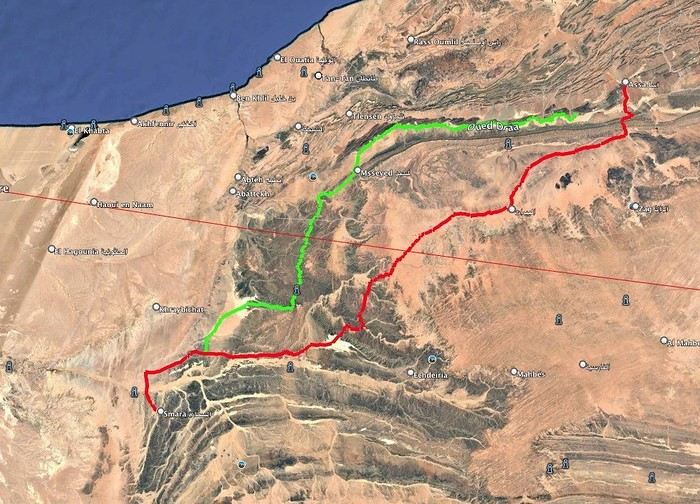
I want to do the ASSA - SMARA crossing. Basically, I have two options: the first follows the Draa River and goes through M’SIED, and the second is much further south, passing through LABOUIRAT and heading straight to SMARA.
If you have any details on road conditions, driving restrictions, etc., I’d really appreciate it.
Part 2:
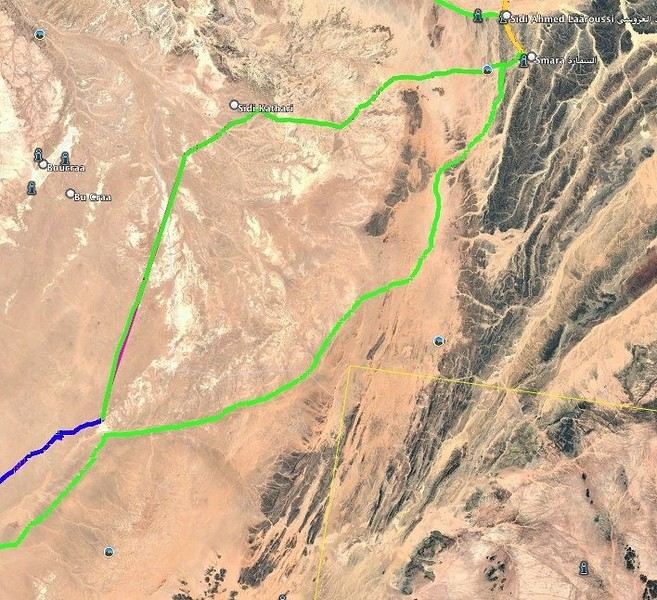
SMARA - BIR ANZERANE - DAKHLA – here, I also have two routes.
The first heads west from Smara toward Sidi Kathari.
The second goes east from SMARA and gets pretty close to the border at one point (about 10 km away).
Both routes meet up about 150 km later and are nearly identical from there to BIR ANZERANE and DAKHLA.
Hi,
For next summer’s vacation, I’m thinking of returning to the Sahara after visiting Tamanrasset and the Hoggar, which was stunning—not to mention the Tuareg hospitality.
I’d like to explore the sandy desert this time since the Hoggar was 80% rocky.
So, I’m wondering which city I should prioritize if I want to go there in late July–early August for the landscapes, extreme heat, and guides offering 4x4 and camel treks. Also, if there are any recommended guides for those in the know and a decent hotel.
I’m torn between Djanet, In Salah, Adrar, Ghardaïa, and Timimoun.
I’m of Algerian origin, so no visa or other formalities to worry about.
Thanks.
Hello, I’m preparing for a Tunisia-Algeria road trip.
I need to know if we can cross the Sahara to reach Djanet and Tamanrasset by road freely,
After that, obviously off-road in the desert with a guide.
What do the authorities say?
My trip: northern and southern Tunisia, a stroll in the desert.
Crossing the Tunisia-Algeria border via the Taleb Larbi customs.
I’ve already done this route through an agency, but this time we want to do it on our own.
Then heading down to Djanet for eight to fifteen days in the desert with Mouloud, a local guide.
Direction Tamanrasset: road and tracks, the mountains of the Assekrem, the Hermitage of Père de Foucauld.
Return via the Trans-Saharan Highway.
Visit to northern Algeria, then back by boat from Oran to Spain.
Dates: late December to mid-February.
We’ve got plenty of time.
If another crew is interested, we’re already two vehicles.
Looking forward to your replies.
Hi there,
I’m planning a trip to Russia and Mongolia, starting from France.
Crossing the border at Poland/Belarus or Georgia/Russia—other borders seem either closed or complicated.
Tourist visas for 3 months with multiple entries.
Do you have any info on Russian companies that cover a 4x4 vehicle for 3 months, and what prices in rubles or euros you’ve paid?
Which bank did you use for expenses? (EuroMastercard and Visa cards no longer work.)
Regarding Russian SIM cards, a new system called "Gosuslugi" has been introduced. How long did it take you to get one, and what steps did you follow?
Hi there,
We’ll be traveling in January 2027 in a 4x4 with a rooftop tent with our three kids, from Johannesburg to Cape Town. We’ve already booked several campsites in national parks (Golden Gate / Mountain Zebra / Addo Elephant / Garden Route).
We still need to reserve the stretch between De Hoop Nature Reserve and Cape Town. Any suggestions?
We’d love to stay around Cape Town for 5 days to explore the wine route, the peninsula, and do some hikes in Table Mountain.
Any camping recommendations? Or, on the contrary, places to avoid?
Also, we have 2 nights left near Wilderness National Park / Knysna. Any recommendations?
Thanks so much for your help!
For my 60th birthday (yes, I’m jumping the gun a bit!), I’m starting to plan a self-drive trip to Tanzania (in June).
I also considered Zimbabwe but I’m worried it might be a bit chilly at night in June.
I’ve revisited an itinerary I’d thought about before, tweaking it since I’ll have more days to dedicate to this trip. Still no big northern classics for the same reasons as before (too expensive, too crowded, too many tour operators).
Here’s what I’ve got so far:
(Arrival/departure from Kilimanjaro Airport)
Night 1: Arusha
Night 2: Arusha
Night 3: Lake Manyara
Night 4: On the way to Iringa (any ideas???)
Night 5: Iringa
Nights 6–8: Ruaha NP
Nights 9–10: Mikumi NP
Night 11: Bagamoyo
Nights 12–15: Beach
Nights 16–17: Lushoto
Nights 18–19: Mkomazi NP
Night 20: Toward Marangu – eastern Kilimanjaro
Night 21: Western Kilimanjaro
End of trip
All your ideas, tweaks, info, and suggestions on this route are welcome!
I could move one beach night somewhere else if needed.
Also, if you have a car rental company to recommend or thoughts on the bandas rented in the parks, I’m all ears!
Finally, what are the roads like in Ruaha in June? The rental company I’m looking at seems to allow this park with a small 4x4. (Off-limits: Serengeti and Natron)
We’re planning a long-term trip starting in April with our 4x4, beginning in the USA.
We’re still looking for car insurance that covers Canada and the USA.
We’ve read quite a few forums, but we’re hoping for some help (from fellow travelers).
Hi,
we’re planning to visit a park again.
Could you point us toward the camps in Gonarezhou Park?
>We’re traveling completely self-sufficiently.
We love wildlife.
Thanks for any tips you can share!
JP
Hi there, we’ll be in Mozambique in early December 2026 and we’d like to travel from Vilanculos to Beira by car or bus to reach Beira airport. After that, we’re planning to visit Gorongosa National Park before flying back to France from Beira. From what we’ve heard, the road to Beira is tricky, especially at this time of year (start of the rainy season). Could anyone share their thoughts or suggest a solution? Thanks so much for your help!
Anne
Hi there,
I’m heading to Lesotho in a few days and I’m struggling to find info on the best route between Katse Dam and Sehlathebe National Park. There’s a fairly "direct" route from Thaba Tseka, but the roads seem rough, and we’re not exactly 4x4 pros. Anyone have any tips to share? Thanks!
Hi everyone,
We’re heading to Mozambique in October and are looking for either a 4x4 or 4x2 rental in Maputo, or a driver transfer option to reach:
- Ponta Do Ouro
- Tofo
- Vilankulos
The idea is to be self-sufficient for sightseeing and stops while still being able to access certain lodges or beaches that require a 4x2.
Do you have any contacts, addresses, or ideas to share?
Thanks in advance,
Hello,
We're hitting the road again in 2027 to discover new countries and cultures.
Could anyone give me some tips on driving from Ulaanbaatar to Lake Baikal and the route to take?
Thanks, and safe travels to those who are setting off!
We’re planning a 4x4 trip from Belgium to Central Asia, passing through Georgia, Russia, Uzbekistan, Kazakhstan, and Kyrgyzstan.
For these countries, our national insurance obviously doesn’t cover the vehicle, so we’ll need to get local insurance.
Will it be a problem if the vehicle is registered under person A and the national insurance is under person B? Both A and B will be in the vehicle, and both will be listed as drivers on the insurance.
When we get the local insurance, if we again list A and B as drivers, does the order matter? Could we get stuck at the border for this reason?
Hi,
For those who’ve driven on Iceland’s gravel roads in their own or a rented Duster, could you tell me what tires were fitted on the vehicle?
Were they All Terrain tires or more "standard" ones like all-season tires, for example?
Follow-up question: if they were "standard" tires, did that cause any issues on the gravel roads and rough terrain?
Thanks so much for any info you can share.
Best,
Marc
Hi there,
I'm planning a 4x4 road trip from Darwin to Broome with a rooftop tent in July 2026.
I'd like to know if I need to book overnight stops in advance or if I can just wing it and stop wherever I feel like it?
Some evenings, we'd like to stop and make use of campsite facilities (restaurant, shop, showers, toilets).
What do you recommend?
Do I need a permit?
My rough itinerary looks like this:
Darwin - Kakadu
Kakadu - Nitmiluk
Nitmiluk - Kununurra
Kununurra - Purnululu
Purnululu - El Questro
El Questro - Mt Elizabeth - Bell Gorge - Broome
I’m planning a trip to Iceland for next July-August, with a car and tent, and I’m wondering about booking campsites.
From your experience, is it necessary or even essential to book campsites in advance, or do you always manage to find a spot to pitch your tent?
We’ll also have the option to sleep in the car without pitching the tent.
Does that give us the flexibility to stay outside a campsite for a night here and there?
Hi,
I’m planning a road trip in the Middle Atlas, starting and ending in Fez and heading down to the south of Midelt, the Assoul Massif.... We’ll be traveling with two small 4x4s.
I’m looking for detailed maps of this region that include small roads and tracks.
Last year, we had a fantastic road trip in the Anti-Atlas and High Atlas using Erfahren maps, but unfortunately, they don’t cover the area we’re interested in this year.
Thanks for your suggestions!
Dominique
We’re planning a 13-day family road trip in Morocco this July, with six people in a Toyota Prado 4x4 (renting in Marrakech).
We’ll alternate between bivouacking and small hotels/riads depending on the stops.
Here’s the planned route (in this order):
Marrakech
→ Ouarzazate
→ Draa Valley
→ Zagora
→ Erg Chegaga
→ Lake Iriki
→ Foum Zguid
→ Tata
→ Tafraoute
→ Aït Mansour
→ Tiznit
→ Mirleft
→ Taroudant
→ Back to Marrakech
Our goal:
Atlas Mountains + desert + dunes + plateaus + valleys + a bit of coastline.
We’ll cover about 1,700 km in total.
We’re planning:
Bivouacking in the Chegaga/Iriki area
Flexible for the rest (booking the day before or same day)
Sand gear: traction plates, compressor, tow strap, roof rack
Questions:
Is the Zagora → Chegaga → Iriki → Foum Zguid crossing in July doable on our own (single vehicle, no guide)?
Are there any truly technical or risky sections between Chegaga and Iriki?
Does the overall itinerary seem manageable in 13 days without rushing?
Any suggestions for great bivouac spots or particularly interesting stops along this route?
The points on the route are provisional overnight stops. Some spots will include two nights in the same area.
We’re used to off-road driving, but not yet in the Moroccan desert.
Thanks in advance for your feedback and tips! 😊
Good evening
I could use some advice 🙂
Our trip to Namibia is planned for June/July 2026.
We’re struggling a bit with timing and choosing activities for the part of the trip between Sesriem and Brandberg.
Day 1: Sesriem to Mirabib
Day 2: Mirabib to Swakopmund – visit Swakopmund, overnight in Swakopmund
Day 3: Sandwich Harbour – overnight in Swakopmund
Day 4: Kayaking with the seals + the living dunes – overnight in Swakopmund
Day 5: Moon Landscape, Henties Bay + Cape Cross – overnight at White Lady Lodge in Brandberg
Does this itinerary seem realistic to you? Is Cape Cross really worth the trip? If I had to choose between Cape Cross and kayaking with the seals, which would you recommend?
Thanks in advance for your help!
Hélix
My son and I are heading to Georgia this summer to explore the High Caucasus (Svaneti, Kazbek, and Tusheti regions). For this, we’re planning to rent a 4x4.
However, the rental agencies we’ve found prohibit driving on the tracks to Omalo (Tusheti) and/or Ushguli (Svaneti).
Do you know of any agencies in Tbilisi (local and reliable) that allow rented 4x4s to drive on these tracks? If so, which ones?
Hi everyone,
I’m starting to plan an itinerary for September 2027 focused on Zimbabwe and Zambia. I’d love to visit Gonarezhou National Park—I see there are two sectors: the Mwenezi Region in the south and the area around the Runde River in the north. Should I cover both sectors or just focus on the northern region?
For the parks along the Zambezi River, is it better to visit Mana Pools on the Zimbabwe side or Lower Zambezi on the Zambia side?
Thanks in advance for any tips on the parks in these two countries.
Have a great day, everyone.
We’re spending 18 days in New Zealand from 05/04 to 05/21, arriving in QUEENSTOWN and leaving from AUCKLAND.
Any ideas for a road trip that covers the highlights of both islands but only changes hotels every 3–4 nights?
Thanks.
For our trip to Georgia in July, I’d like to rent a 4x4 starting from Tbilisi.
Do you have any rental companies to recommend?
The traditional rentals like Hertz, Avis, etc. seem way overpriced compared to local companies—what do you think? Are they properly insured?
Has anyone here tried Geo Rent Car, Auto 4 Rental, or Sur Price?
Also, I’m looking for info on the condition of the Ushguli–Lentekhi track—is it passable?
Hi everyone,
A well-prepped 4x4, a travel plan across Africa in stages since I’ve got kids to see regularly and work to earn a living.
I’m leaving in November for about a month with the goal of reaching Senegal via Mauritania. I’d love to share this trip with someone who wants to discover Mauritania and a bit of Senegal... and also experience life on board a 4x4 in the desert or bush, sometimes sleeping in the vehicle or in hostels/small hotels for comfort. I want to share this rediscovery because two’s better than one!
Just traveling, exploring, and living! !
I’m planning to explore Argentine and Chilean Patagonia for a month in December 2019.
I’m looking for a rental company (or several) that offers single-cab 4x4 pick-ups with a fitted camper cell for two people. I’m specifically after a vehicle with an indoor shower for extra comfort ;)
So, no vans—at least not from the rental companies I’ve seen so far.
While browsing the forum, I came across the Chilean rental company Holiday Rent. But do you have any recommendations for Argentine rentals?
Because, if I can’t return the vehicle in the same city as pickup, I’d prefer—and it’d likely be cheaper—to at least return it in the same country.
I’m traveling through Argentina and Chile (as well as Paraguay and Uruguay) with a 2019 Toyota Hilux Euro 6. Could anyone tell me if the local diesel is suitable for its engine, or if I need to take any special precautions (like adding an additive, for example) for these countries?
I’d also like to know if driving at high altitudes is possible, and up to what elevation—or if I should worry about the vehicle going into limp mode?
If that happens, what should I do?