nous sommes en train de planifier un voyage de 3 semaines en Namibie pour le mois de juin. Nous avons les billets d'avion en poche (Air Berlin Munich-Windhoeck pour 695 euros par personne) et nous voulons organiser au mieux notre circuit. Il y a évidemment plusieurs discussions sur le sujet, mais quelques questions nous turlupinent encore.
La première concerne le choix ou non d'un 4x4. Cela est-il vraiment nécessaire? Vous allez me dire tout dépend de l'itinéraire. En gros, on veut faire les incontournables: Etosha, Walvis Bay, Cape Cross, Sesriem, Naukluft, Fish River Canyon et les chutes Victoria. Peut-être un petit tour au Kalahari si ça en vaut la peine.
Nous sommes un couple avec un bébé de 2 ans et nous voulons faire du camping (le petit est habitué et il adore). Mais pour revenir à l'itinéraire, faire le Fish River Canyon et les chutes Victoria, c'est un peu les 2 extrêmes. Trop loin? Il y aussi Epupa qui a l'air pas mal. A choisir, qu'est-ce qu'il faut laisser tomber: Fish River Canyon, Epupa ou les chutes Victoria? L'idée serait de partir sur le Sud et en fonction du temps qu'il nous reste aller ou non aux chutes Victoria. Bon si jamais on connaît le Grand Canyon aux USA, le Salto Angel au Vénézuéla et les chutes d'Iguaçu au Brésil. Ca peut aider pour le choix.
Ce qu'on aime, ce sont avant tout les paysages. Et pas de problème pour les heures de routes (bon on veut quand même pas passer toutes nos journées en voiture).
Voilà en gros les interrogations que nous avons. Merci pour vos avis éclairés.
Jérémie
Ce que vous envisagez en trois semaines est très (même trop) optimiste. Surtout avec un petit de deux ans. En grandissant, ils dorment de moins en moins en voiture et demandent de plus en plus "c'est quand qu'on arrive !" (je suis passé par là 😉).
Si vous n'avez pas de retour Vic Falls (ou Kasane) / Windhoek en avion, vous pouvez déjà oublier à coup sûr les chutes Victoria. Il faut 3/4 jours pour y aller et 3/4 jours pour revenir à Windhoek en roulant toute la journée ! Elles n'en valent pas la chandelle !
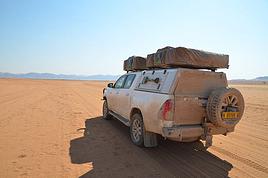
Un 4x4 n'est pas obligatoire, mais la moyenne sera plus basse en 2x4, donc les heures passées en voiture se multiplieront (6 ou 7000 km à 60 km/h de moyenne, ça fait beaucoup d'heures !).
En trois semaines, j'éliminerais aussi le Fish River Canyon.
En juin, les jours sont les plus courts, et les nuits les plus froides. Il faut en tenir compte, surtout avec un petit. En 2x4 (donc sans équipement camping fourni par le loueur), il vous faudra amener beaucoup, beaucoup de choses.
Si vous n'avez pas de résas pour Sesriem et Etosha, il est déjà bien tard. Pour trouver la bonne voiture au bon prix, il faut faire très vite aussi.
On va en effet zapper les chutes Victoria, ça fait trop de kilomètres. Comme ça, on peut monter directement vers Etosha depuis Windhoeck (combien de temps à peu près? On arrive très tôt le matin à Windhoeck. Il y a peut-être une étape sympa à faire en cours de route, histoire de se reposer après le voyage).
Et pour le Fish River Canyon, on verra en fin de périple s'il nous reste du temps.
Sinon, pour les voitures, on perd vraiment du temps sans 4x4. Je pensais que la majorité des routes étaient goudronnées? Bon, à Etosha sans 4x4, c'est peut-être pas génial.
Pour les réservations, pas de problèmes, il y a encore plein de possibilités.
Par contre, je vais vite aller voir pour les logements à Sesriem et Etosha. Vous connaissez de chouettes campings?
Encore merci pour tout
En arrivant à Windhoek, il faut compter toute la matinée au moins pour les transferts, les formalités, récupérer le 4x4, faire les courses, etc. Ne comptez pas trop être sur la route avant le début de l'après-midi. Etosha est donc hors de portée pour un premier jour. Et même si vous arrivez au Waterberg, ça sera épuisés et à la nuit tombée.
Si tu veux vraiment du repos après le voyage (ce qui est assez nécessaire à mon sens), il faut passer la 1ère nuit à Windhoek.
Non, la majorité des routes sont des gravel roads. En bon état, mais petite moyenne.
Ce n'est pas à Etosha que la voiture peut poser problème. Les routes de terre sont nickel et de toute façon on se traîne à la recherche des bestioles quelque soit le véhicule (vitesse limitée à 40 dans le parc).
De chouettes campings où ? C'est difficile de te conseiller si tu n'as pas au moins une ébauche d'itinéraire…
Bon prix pour l'avion!🙂
Pour le reste, ça part dans tous les sens, au propre comme au figuré😛.
Tu es certain d'avoir passé quelques heures sur les carnets de voyage en Namibie qui pullulent ici comme les touristes à Etosha.
Nous ne ferons rien de bien sans un effort préalable de ta part ('tain, j'ai l'impression de parler à mon fils😊) : c'est votre voyage
Cool, hein, c'est pour t'aider (et pour que tu n'épuises pas Chef Pierre🏴☠️)
D'accord avec Pierre, faut zapper les Vic falls !
Une 2x4 est suffisante pour un trajet classique (Etosha, Walvis Bay, Cape Cross, Sesriem, Naukluft, Fish River Canyon)
Pierre a raison, il faut embarquer le matériel de camping, ça prend de la place surtout avec un petit de 2 ans qui a besoin d’être au chaud mais c'est jouable.
Les nuits sont froides en juin.
Pour ne pas avoir de trop longues étapes, supprimer le Fish river canyon serait une option.
Vous pourrez vous concentrer sur le nord avec un petit tour au Epupa falls.
Faut tenter de réserver Sessriem et Etosha au plus vite...
Avec toutes les informations que vous trouverez sur le forum dans la partie Namibie, vous pouvez établir une esquisse d’itinéraire. Les forumistes vous donneront des trucs et astuces sur les étapes...
Bonne préparation !
bon vent à tous!!
voyage en Afrique Australe
Travel Southern Africa
Tu ne proposes pas ton site http://www.arroukatchee.fr/ tellement bien documenté ! 😮
Serait-ce la crainte de le voir méchamment retiré ? ! 🙁
Je pense qu'il peut aider Jérémie ! 😉
@ + 😉
Il y a peut-être une étape sympa à faire en cours de route, histoire de se reposer après le voyage).
Comme Musungu il me semble qu'il serait intéressant de faire étape à la Düsternbrook GF histoire de vous reposer après une nuit passée en vol et d' être déjà en route vers Etosha le lendemain matin.
Pour les campings regarde aussi la discussion postée par Jackson78 (notamment ceux de Sesriem).
à Etosha sans 4x4, c'est peut-être pas génial.
Eh non, à Etosha c'est tout plat et les pistes sont- pour la plupart -très bonnes .
Düsternbrook, le jour de l'arrivée c'est impeccable : c’est l'occasion de voir des animaux dès le premier jour en ne se fatigant pas à faire de a route après un vol de nuit.
Et comme Jérémie part dans le même sens que moi, mon carnet est en effet pile-poil. Par contre en trois semaine, il peut entrer dans le parc par l'est, sortir par l'ouest (Okakuejo ou Dolomite se lon ses envies (attention pas de camping à Dolomite)) et faire un petit détour dans le Kaokoland avant de redescendre..
@ Jérémie : à toi de jouer ...comme le propose voyajou.
merci pour tous ces messages remplis de conseils.
Non non, ce n'est pas que j'ai pas regardé d'anciens posts du forum, mais je commençais à me mélanger les pinceaux. Et je voulais avoir quelques réponses avant de peaufiner les étapes.
Donc, c'est clair, Victoria Falls, c'est zappé.
Et le jour d'arrivée, l'arrêt à Düsternbrook me paraît pas mal du tout. Comme ça c'est plus tranquille pour aller à Etosha.
Pour les affaires de camping, ce serait en effet plus simple de tout louer sur place. J'ai vu quelques adresses sur le forum. Reste à trouver un coffre assez grand.
Sinon, je vais définir un peu plus clairement mes étapes et revenir vers vous s'il me reste encore des questions.
les préparatifs avancent bien. On aimerait d'ailleurs louer un camping car, car avec le petit ça paraît mieux.
On a vu que le site http://www.4seasons-car-rental.com/ proposaient des modèles à prix intéressants. Vos connaissez cette agence? Fiable, bons véhicules?
Merci pour votre aide. Et bientôt je mettrai notre circuit pour que vous nous conseillez, car vous avez de bonnes infos...;)
Je suis Claudine, la femme de Jérémie. Voici une proposition d'itinéraire faite par une agence locale avec les logements entre () pour notre voyage qui se fera du 9 juin au 2 juillet:
Jour 1: Windhoek
Jour 2: Waterberg (NWR Waterberg)
Jour 3: Grootfontein (Roy's Rest Camp)
Jour 4: Etosha (NWR Namutoni)
Jour 5: Etosha (NWR Halali)
Jour 6: Etosha (NWR Okaukuejo)
Jour 7: Etosha (NWR Okaukuejo)
Jour 8: Kamanjab (Jako - duncan's Campsite)
Jour 9: Kaokoland (Ongongo Community camp)
Jour 10: Purros (Purros Community camp)
Jour 11: Purros (Purros Community camp)
Jour 12: Palmwag (palmwag lodge)
Jour 13: Twyfelfontein (Aabadi camp)
Jour 14: Brandberg (Brandberg White Lodge)
Jour 15: Spitzkoppe (Spitzkoppe Community camp)
Jour 16: Swakopmund (Fischreiher guesthouse)
Jour 17: Swakopmund (Fischreiher guesthouse)
Jour 18: Naukluft (Gecko camp)
Jour 19: Sesriem (NWR Sesriem)
Jour 20: Sesriem (NWR Sesriem)
Jour 21: Namib Rand (NamibRand Family Hideout)
Jour 22: Namib Rand (NamibRand Family Hideout)
Jour 23: Mariental (Teufelskrallen Tented Lodge)
Jour 24: Départ
Notre but est de réserver juste les camps d'Etosha et Sesriem comme vous nous l'avez conseillé.
Voici déjà mes remarques/questions sur cet itinéraire. Nous sommes intéressés par les paysages et les animaux. Nous ne voulons pas visiter un village Bushman ou Himba. Nous ne voulons pas non plus particulièrement voir de gravures rupestres. Dès lors, faut-il quand même monter jusqu'à Purros? Les paysages valent-ils ce grand détour? (J'ai vu des photos, ça a quand même l'air très beau). L'arrêt à Grootfontein ne me paraît pas non plus important. 4 nuits à Etosha, n'est-ce pas une de trop?
Voici maintenant l'itinéraire que j'ai imaginé suite à vos conseils et carnets de route qui sont d'ailleurs très utiles (merci!):
Jour 1: Windhoek - Düsternbrook
Jour 2: Waterberg (?)
Jour 3: Etosha Namutoni
Jour 4: Etosha Halali
Jour 5: Etosha Okaukuejo
Jour 6: Brandberg (?) - Peut-on aller directement à Spitzkoppe et y rester 2 nuits ou est-ce trop long? Y aurait-il une autre étape à faire dans la région? Twyfelfontein pour les paysages?
Jour 7: Spitzkoppe
Jour 8: Cape Cross - Swakopmund
Jour 9: Swakopmund (Sandwich Harbou + sortie en bateau)
Jour 10: Naukluf (Gecko camp)
Jour 11: Sesriem (NWR Sesriem)
Jour 12: Sesriem (NWR Sesriem)
Jour 13: Namib Rand (NamibRand Family Hideout)
Jour 14: Namib Rand (NamibRand Family Hideout)
Il nous resterait du coup 10 jours pour Fish river canyon et le Kalahari. N'est-pas un peu trop? Surtout que dans le fish river canyon, nous ne pensons pas faire une longue marche, avec le petit c'est compliqué. Auriez-vous d'autres arrêts à nous conseiller? Quelqu'un a-t-il été au skeleton coast park ou Lüderitz?
Concernant le véhicule, nous n'avons pas encore décidé entre un camping car et un 4x4. J'ai lu également quelques discussions au sujet du camping car. Ne perdrons-nous pas tro de temps avec ce moyen de locomotion?
Un grand merci d'avance pour vos réponses!
Claudine
Jour 5: Etosha Okaukuejo
Jour 6: Brandberg (?) - Peut-on aller directement à Spitzkoppe et y rester 2 nuits ou est-ce trop long? Y aurait-il une autre étape à faire dans la région? Twyfelfontein pour les paysages?
Pourquoi veux-tu rater tous les paysages merveilleux du Damaraland ? Okaukuejo / Brandberg, ça fait une très grosse étape, pour pas grand chose. Pourquoi zapper Palmwag et Twyfelfontein ?
Non, il n'est pas possible de rallier Spitzkoppe en une étape, surtout en camping car. Et je ne vois pas l'intérêt d'y passer deux nuits.
Je vous conseille de regarder la discussion toute récente http://voyageforum.com/...ost=4843528;#4843528
et les conseils de Pierre, j2p et Vinny (sens du voyage) donnés à DandeLYON qui peuvent s'appliquer à votre circuit aussi, principalement le crochet vers Puros et la nuit pas indispensable au Waterberg ni à Grootfontein si vous passez la 1ère nuit en dehors de Windhoek à Düsternbrook farm.
Suivant la 1ère ébauche vous pouvez monter jusque Epupa ...
Regardez aussi le trajet et les arrêts de domi22 sur son carnet cela vous donnera des idées pour le Kaokoland.
Bonne recherche ! 😉
Merci beaucoup pour vos rapides réponses et vos pistes.
Nous avions enlevé Twyfelfontein car nous pensions que c'était particulièrement pour les peintures rupestres.
Concernant le sens dans lequel nous tournons, c'est parce que nous serons 5 pour les 16 premiers jours. Les 2 personnes qui font la première partie avec nous, aimerait bien faire Etosha et Sesriem.
Au vu des autres discussions sur le forum, Purros n'est pas faisable sans 4x4. Du coup, les arrêts à Kamanjab et Kaokoland se justient-ils encore?
Nous allons effectivement enlever Waterberg et remettre Palmwag et Twyfelfontein. Pierre, j'ai vu que tu conseillais comme logement le Grootberg lodge, qui a l'air magnifique. Pensez-vous que nous pourrions dormir là et ensuite visiter Palmwag et Twyfelfontein en descendant à Brandberg ou faudrait-il le faire en 2 étapes?
Au vu des autres discussions sur le forum, Purros n'est pas faisable sans 4x4. Du coup, les arrêts à Kamanjab et Kaokoland se justient-ils encore?
Que veux-tu dire par Kaokoland ? Epupa Falls ? Le Kaokoland est une région immense qui occupe tout le Nord-Ouest de la Namibie.
Kamanjab n'a pas d'intérêt (sauf éventuellement les guépards d'Otjitotongwe), c'est juste une étape. Les paysages autour de Twyfelfontein sont très beaux. Nous ne sommes pas non plus allé voir les peintures rupestres.
En fait il faut faire une ou deux étapes entre Etosha et Brandberg pour profiter des paysages du Damaraland, d'une bande de springboks sautillants, d'une girafe traversant devant tes roues, d'un oryx hiératique au détour d'une route, d'un troupeau d'éléphants si tu as de la chance… À toi de faire le tri dans les "attractions officielles". Aucune n'est vraiment incontournable.
Pierre, j'ai vu que tu conseillais comme logement le Grootberg lodge, qui a l'air magnifique. Pensez-vous que nous pourrions dormir là et ensuite visiter Palmwag et Twyfelfontein en descendant à Brandberg ou faudrait-il le faire en 2 étapes?
Oui, le site de Grootberg est extraordinaire. Mais il n'y a pas de camping et on ne peut pas y monter en camping car. Raison pour laquelle je n'en avais pas parlé. Mais si vous voulez passer une nuit en lodge de temps en temps, c'est l'endroit pour !
Mais si on ne peut pas y aller en camping car, y a-t-il un autre moyen pour y monter? (bon nous hésitons encore entre le camping car et le 4x4). J'ai lu dans une autre discussion mais je ne me rappelle plus du tout où que dans un lodge, on venait vous chercher.
Pour le kaokoland, effectivement, ce n'était pas clair ce que j'ai écris. Je voulais dire l'étape proposée par le TO: Ongongo Community camp. Mais on va suivre ton conseil et choisir deux arrêts entre Etosha et Brandberg.
bonjour,
Ton prestataire (Tourmaline pour ne pas le nommer 😛) te fait aller à Ongongo community camp en camping car? La piste pour relier ce camping est vraiment dure et caillouteuse. Je suis surpris de cela.
Il y a d'autres hébergements à proximité (Twyfelfontein)
bonne journée.
Effectivement, à Grootberg, il y a une montée terrible pour arriver sur le plateau. Mais tu peux laisser ton véhicule en bas sur un parking gardé et ils viennent te chercher avec un Land Rover.
Ongongo, c'est un camp communautaire avec une source chaude agréable. Une des rares occasion de se baigner en Namibie à cette saison. Inaccessible en camping car.
Je crois être maintenant bien au clair sur l'itinéraire. Je vais le refaire avec la fin et vous le renoter ce soir au cas où il y a encore des remarques.
Juste encore deux questions:
- Je n'ai vu personne parler du Namib Rand (NamibRand Family Hideout) sur ce forum. Est-ce que quelqu'un y est allé?
- Avec un enfant de 2 ans, est-ce ok de faire le tour en 4x4 à Sandwich harbour et la croisière? Est-ce pratique de dormir sur le toît d'un 4x4? Ne fait-il pas trop froid la nuit?
Hier, nous nous sommes plus ou moins décidé sur les moyens transports. Nous prendrions un 4x4 et un camping car, pour la partie où nous sommes 5 puis nous garderions le camping car pour la fin du voyage.
Donc nous pourrions aller à Purros avec le 4x4. Est-ce qu'on peut aller jusqu'à Sesfontein avec le camping car? J'ai vu qu'on pouvait aller jusqu'à Khowarib. Serait-il imaginable de faire:
1. Okaukuejo - Khowarib ou Sesfontein (5h30?), laisser le camping car là le lendemain matin
2. Khowarib ou Sesfontein - Purros (par Hoanib?, est-ce trop compliqué avec un petit enfant? Ou par la D3707 à l'aller et au retour, un peu dommage?) Si on passe par Hoanib, on suit la rivière jusqu'à Amspoort et après? Et en passant par Hoanib, faut-il un gps ou tél particulier?
3. Purros - Palmwag (5h?) en récupérant le camping car
Et la région de Khowarib/Sesfontein est-elle intéressante en elle-même ou est-ce seulement une étape?
Jour 1: Windhoek - Düsternbrook farm
Jour 2: Etosha (NWR Namutoni)
Jour 3: Etosha (NWR Halali)
Jour 4: Etosha (NWR Okaukuejo)
Jour 5: Seisfontein ou environ (peut-on rejoindre l'Ongongo Community Camp en camping car?)
Jour 6: Purros (Purros Community camp)
Jour 7: Seisfontein ou Opuwo
Jour 8: Palmwag (palmwag lodge) on a laisser tomber Grootberg, un peu cher surtout si on a un camping car mais on y fera un saut pour la superbe vue.
Jour 9: Twyfelfontein (Aabadi camp ou Aba Huab Camp) + peut-être visite de Vingerklip
Jour 10: Brandberg (Brandberg White Lodge) + peut-être visite d'Erongo
Jour 11: Spitzkoppe (Spitzkoppe Community camp)
Jour 12: Swakopmund (Alte Brucke?) via Cape Cross
Jour 13: Swakopmund (Alte Brucke?)
Jour 14: Naukluft (Gecko camp)
Jour 15: Sesriem (NWR Sesriem)
Jour 16: Sesriem (NWR Sesriem)
Jour 17: Namib Rand (NamibRand Family Hideout)
Jour 18: Namib Rand (NamibRand Family Hideout)
Jour 19: Aus (Klein Aus Vista)
Jour 20: Aus ou Fishriver Canyon ou laisser une nuit de plus pour le Kahalari plus tard
Jour 21: Fishriver Canyon (Hobas Camp Site)
Jour 22: Keetmanshop (Quiver tree forest rest camp)
Jour 23: Mariental (Bagatelle ou Anib Lodge)
Jour 24: Départ
Il y aura une grosse journée pour aller d'Okaukuejo aux environs de Seisfontein mais il faut qu'on soit au plus tard à Sesriem le 16 jour pour que le couple qui repart plus vite puisse rentrer sur Windhoek. Pour eux, ça ferait:
Jour 17: Mariental
Jour 18: Départ
"Si on passe par Hoanib, on suit la rivière jusqu'à Amspoort et après? "
Par manque de temps, nous n'avons pas l'intention l'été prochain de passer par l'Hoanib pour arriver à Purros
Mais voilà ce que j'ai écrit ds mon road book, avec des données collectées à droite et à gauche
A l’ouest deSesfontein, avec un 4x4, on peut suivre le lit de la rivière Hoanib 65 km jusqu’Amspoort (à la limite du Skeleton Coast Park dont l’accès est interdit) et espérer y rencontrer bcp d’animaux (dont éléphants).
C’est superbe à partir de l’endroit où la Ganamub se jette dans la Hoanib (mais attention, passage étroit et sable profond sont dangereux en cas de rencontre d’éléphants).
Ensuite de Amspoort, il reste 75 Km pour rejoindre Purros
C'est faisable en une journée sans forcer, mais avant d’arriver à Purros, il faudra passer le Hoarusib Canyon 18° 50’ 36’’ S, 12° 53’ 17’’ E, partie étroite de la rivière Hoarusiboù les éléphants empêchent parfois le passage
J'ai lu un compte-rendu où les personnes y sont allées à une seule voiture (mais avec un tél satellite)
Les spécialistes vont sans doute te dire que c'est tjs mieux d'être à 2 voitures
Ouest USA 2009 https://voyageforum.com/v.f?post=2800143#2800143
5ème trip USA, 09/2013 https://voyageforum.com/v.f?post=6186946#6186946
Ca prend tournure ... 🙂
On finit toujours par un itinéraire assez classique finalement... En tout cas la première fois. (NB. n'y voit rien de péjoratif !)
peut-on rejoindre l'Ongongo Community Camp en camping car?
Non.
J7 : je ne vois aucune raison de monter à Opuwo.
J8 : tu ne pourras pas monter à Grootberg si tu n'y loges pas.
Mariental (Bagatelle ou Anib Lodge)
Bagatelle est sûrement plus exceptionnel. C'est surtout une question de budget. Anib n'est pas si mal mais pas très intime.
Bonne soirée !
Pour Purros, on va pas prendre de risque et passer par la D3707. Peut-être que d'autres voitures sur place seront motivés à passer par la rivière. A ce moment-là, on avisera.
Pour Opuwo, j'ai lu que la D3707 qui passait par Orupembe puis Opuwo était bien. C'est pas le cas?
Dommage pour Grootberg 🙁
Et merci pour Bagatelle. On va garder celui-là alors!
Oups 😊, effectivement. J'ai lu tellement de choses ces derniers jours (je pense avoir passer bien une dizaine d'heure sur les forums!) que j'en oublie certaines...
Merci déjà de donner ton avis! Ca nous rassure que tout semble + ou - ok.
Bon l'histoire du camping car + 4x4 a un peu compliqué les choses mais ce sera bien pratique avec le petit. Du coup, j'ai encore quelques craintes pour les jours 5-6-7. J'espère qu'on arrivera à rejoindre Seisfontein le jour 5 et que ce soit quand même pas que de la route et qu'on trouvera un endroit par là-haut pour laisser le camping car. On verra...
Pour arriver à Purros par le lit de rivière, via Amspoort depuis Seisfontein, nos amis en 2010 ont bivouaqué avant Purros.
Pour Opuwo, j'ai lu que la D3707 qui passait par Orupembe puis Opuwo était bien. C'est pas le cas?
Non, pas vraiment. Surtout ce sera long, long, long... La partie de la D3707 le long du Namib traverse un immense champ de caillasses monotone. Après Opuwo, une partie est plus intéressante, mais la fin est à nouveau fastidieuse. Compte 10 h de route pour Purros/Orupembe/Opuwo hors arrêts (en 4x4, pas camping car !).
L'intérêt dans ce coin, ce sont les lits de rivières; mais il faut avoir le temps... C'est quasiment un but de voyage à part entière. A mon avis, avec juste une nuit à Purros, la seule chose à faire, c'est l'aller/retour par la D3707 depuis Seisfontein et d'aller explorer un peu les lits de rivières autour de Purros.
C'est sympa de recevoir un message de compliment de la part d'un forumeur de la rubrique "Afrique Australe" 🙂.... car y en a d'autres nettement moins amicaux😕
" Tu as ce niveau d'anticipation pour l'ensemble du voyage?"
Euh... je crois que je peux répondre par l'affirmative... demande à Maxou😉. On forme une bonne paire: lui s'occupe des points GPS et de Mapsource, et moi je rédige le road book .
Et les personnes qui ont reçu certains extraits de road book de mes voyages américains ne se sont jamais plaints... au contraire puisque j'ai été sollicitée pour en envoyer d'autres😎
Ouest USA 2009 https://voyageforum.com/v.f?post=2800143#2800143
5ème trip USA, 09/2013 https://voyageforum.com/v.f?post=6186946#6186946
Regarde ici http://sites.google.com/...-repos-des-guerriers
La famille Grisemote a aussi fait ce trajet en 1 jour... mais a terminé ds le noir🏴☠️.... pas trop grave au point de vue paysage, puisque la fin est nettement moins scénique (regarde sur google earth et google maps relief, on voit qu'il n'y a plus de montagnes environnantes)... mais il parait que la piste est plutôt mauvaise sur la fin😕
A partir de Onganga jusqu'à Kaoko Otavi (soit presque 40 km) les paysages n’ont plus beaucoup d’intérêt ... mais sur cette partie, la piste devient plutôt mauvaise et ravinée. De très grands trous parsèment la piste. Le problème ne vient pas de zones de franchissement à passer (il ne faut guère enclencher la boite courte), mais il y a beaucoup de pierres tranchantes sur la route. Il faut alors trouver une trajectoire qui évite ts les pièges et rouler en douceur. Ça reste donc une route lente, fatigante et un peu stressante.
Puis, après Kaoko Otavi , on retrouve les larges gravel roads namibiennes (il reste 38 Km pour arriver à Opuwo): la D3705 pdt 15 km/+/-15 min, puis la C43 pdt 23 km/+/-25 min
Peut-être un peu large, mais pas tant que ça, en tout cas pour les conditions de routes telles qu'elles étaient en 2010… On a mis environ 6 h entre Orupembe et Opuwo. La D3707, entre Purros et Orupembe, je ne l'ai pas prise personnellement (puisque passé par les lits de rivières), mais j'ai vu des photos qui me laissent penser qu'elle est similaire à la piste plus au Nord le long du Namib par laquelle on est revenus de Marienfluss (via Bludroom). Disons 3h. Ça fait 9, pas 10…
Alors peut-être que Nicolas roule beaucoup plus vite que moi ? Ou alors, j'ai une autre explication, que j'ai déjà lue ça ou là : l'état de cette piste est extrêmement variable, en fonction de la dernière saison des pluies, et aussi en fonction du dernier nivelage. Ça ne m'étonne pas tant que ça que le temps de parcours puisse varier du simple au double. Comment sera-t-elle en août prochain ? Tu nous le diras ?
ça... c'est le même problème que pour les pistes américaines... et c'est bien un problème pour établir un planning... (au même titre que de deviner à l'avance où l'on va crever et où les éléphants vont nous bloquer le passage)
Et c'est d'autant plus difficile en Namibie où il est difficile de se renseigner puisque les visitors centers n'existent pas🤪... et que les renseignements entre voyageurs passent difficilement puisque, finalement, la plupart des touristes restent sur les gravel roads et ne vont pas "se perdre" au fin fond du Kaokoland sans guide (on est quand même loin de pouvoir comparer la D3707 avec la CCR qui, elle, est empruntée chaque jour par bon nombre de voitures)
"Tu nous le diras ?"
Vu ce que nous avons repéré via google maps + earth et ce que nous en avons lu (et en particulier tes interventions bien pertinentes sur ce forum), ns ne comptons pas emprunter la D3707 entre Purros et Orupembe. Ns favorisons le passage par les lits de rivière (Hoarusib et Khumib)... à moins qu'à ce stade du voyage, ns ayons déjà crevé de multiples fois et que ns ne voulions plus prendre de risque... ou que les troupes en aient marre d'être secouées....🤪
Sinon oui, c'est bien volontiers que je ferai, à notre retour, un état des lieux de la D3707 entre Orupembe et Kaoko Otavi
Ouest USA 2009 https://voyageforum.com/v.f?post=2800143#2800143
5ème trip USA, 09/2013 https://voyageforum.com/v.f?post=6186946#6186946
Pour les crevaisons, la technique de Pierre plus la mienne rendent les choses légères:
- la technique de Pierre: il ne se sépare jamais de son nécessaire à mèches pour réparer le pneu (même que pendant le vol, il le prend en cabine pour ne pas risquer de le perdre😛)
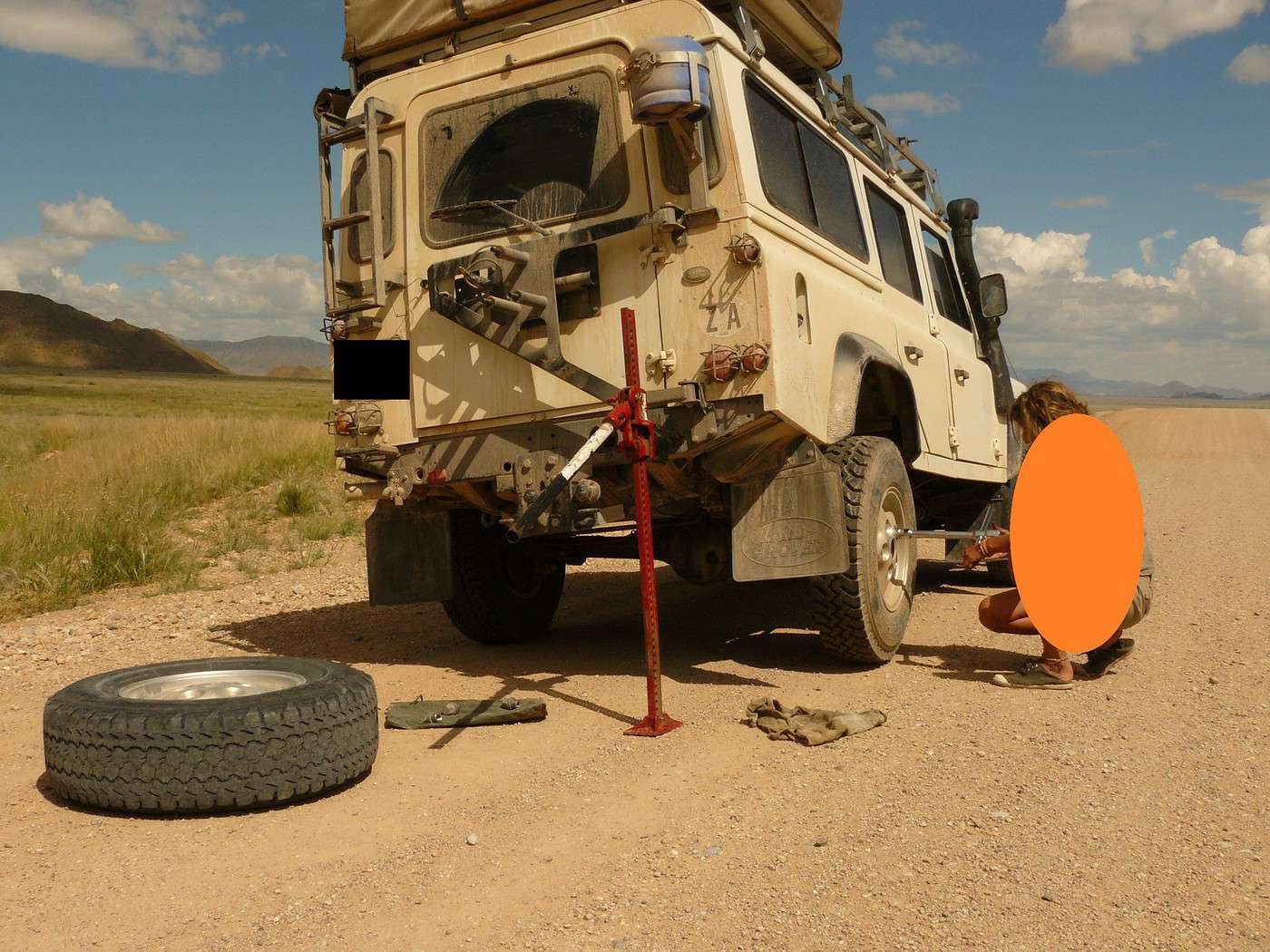
- la mienne: j'emmène la mécano 😊(voir image)
On n'a pas encore voyagé de concert mais ça pourrait le faire.
Merci beaucoup à tous pour toutes ces infos. On va aller lire les différents liens proposés de ce pas!
Mais vous nous avez convaincu d'abandonner cette fameuse D3707 de Purros à Opuwo. Pas envie de passer 10h sur la route... On profitera plus dans les environ de Purros!
Ca y est, on va pouvoir passer à l'étape des réservations. Et maintenant, reste plus qu'à attendre le départ. Ca va être long, très long... avec tous ces passages sur les forums, on a qu'une envie, partir tout de suite!
Pour les crevaisons, la technique de Pierre plus la mienne rendent les choses légères:
- la technique de Pierre: il ne se sépare jamais de son nécessaire à mèches pour réparer le pneu (même que pendant le vol, il le prend en cabine pour ne pas risquer de le perdre😛)
- la mienne: j'emmène la mécano 😊(voir image)
On n'a pas encore voyagé de concert mais ça pourrait le faire.
Hello,
Je ne peux pas m' empêcher: tu as oublié la mienne, il faut que je me joigne à vous...
- Deux roues de secours.
- Mêches et bidules ARB date de péremption vérifiée.
- Au cas où (sait on jamais), trois démonte pneus de 600 mm et deux chambres à air (déchirures latérales non réparables avec mêches - tu décoles le tubeless en le mettaant sous le pare choc et en montant avec le hi-lift en t' appuyant sur le pneu, sans embase).
Mes records perso:
- 10.000 km sans crever en Australie en 2005.
- 7 crevaisons sur une piste isolée de 1.300 km dans la même Australie en 2007 (heureusement que j' avais tous mes bidules).
A+
Le bonheur commence où le bitume s 'arrête et ....quand on est plus de quatre on est une bande de c... (Georges Brassens)
Toui, on est des amateurs perdus dans une discussion de pros, entre les roadbooks de Jackie, dignes de Gandini et Bolo qui vérifie la date de péremption de ses mèches!
jmayo, tu es en bonnes mains🙂
J' ai acheté le KIT ARB en 2005 (en Oz), j' au donc pensé que, sans être aussi courtes que celles du yaourt, il y avait des durées de péremption (je craignais que les mêches ne sèchent ou se délitent ou perdent leurs qualités vulcanisantes du à une quelconque réaction chimique bizarre).
- J' ai posé la question par e-mail à ARB, réponse: nada (en fait je crois que l' employé qui a traité mon mail m' apris pour un gogol, j' étais le premier à lui poser cette question)...
A+
Le bonheur commence où le bitume s 'arrête et ....quand on est plus de quatre on est une bande de c... (Georges Brassens)
Salut !
Triple Bolo, triple perfectionniste ! 🙂
J'ai utilisé l'an dernier aux US des mèches de marque duchemol que je traîne partout depuis 2004 (payées 10x moins cher que celles d'ARB). Elles ont très bien fait le boulot ! 😉
Ayant suivi plusieurs discussions à ce sujet, et ayant profité déjà pas mal de petits conseils, je sollicite la communauté pour des avis et retour concernant…
Afrique de l'Est et Australe › Namibie · 14 replies
J'avais déjà posté ici pour des renseignements, mais je préfère créer comment un nouveau topic, car ça se précise. En effet, pour notre voyage de noce, ma…
Afrique de l'Est et Australe › Namibie · 19 replies
Nous partons en Namibie du 1er au 23 novembre et souhaiterions encore bénéficier de vos précieux conseils pour ce voyage et avoir votre avis sur notre…
Afrique de l'Est et Australe › Namibie · 4 replies
Nous sommes trois à nous aventurer sur les routes de Namibie en Sept prochain durant 3 semaines. Nous avons dors et déjà loué notre 4x4 avec deux tentes sur…
Hello everyone!
It's been a year since I've been longing for South Africa. Our first trip in August 2025 amazed us, and—rarely—it was a unanimous hit with our little family! We were touched to the core, and from the moment we got home, we couldn’t stop talking about going back. 😄
I’d like to take this opportunity to thank everyone who gave me advice on the itinerary for that first trip (Johannesburg loop: Blyde, Kruger, Eswatini, St. Lucia, Durban, Drakensberg)! Thanks to you, our trip went like a dream!
Since then, I haven’t stopped reading articles and discussions on VoyageForum to keep my head in South Africa a little longer!
So, we finally caved and just booked our tickets for January 2027 (from the 3rd to the 26th), with a plan to do a road trip from Cape Town to Johannesburg in about 3 weeks.
I’ve got a rough itinerary that seems great based on what I’ve read on various forums, but there are still some uncertain points, and that’s where I could use your advice.
3/01: Arrival in Johannesburg at 11:45 PM
4/01: Flight to Cape Town, pick up rental car. Afternoon sightseeing
5,6,7/01: Cape Town to visit the big classics in the area (any tips for finding accommodation: which neighborhood, a specific place?)
8/01: Overnight stop before Oudtshoorn—but where??? (Is it essential, or is the CT-Oudtshoorn drive manageable? If so, I’d gain a day in Oudtshoorn. Google Maps shows over 5 hours of driving...)
9,10/01: Oudtshoorn (or would 3 nights be better to really enjoy the area?)
11,12/01: Knysna, Plettenberg Bay (to have time for hiking—if you’ve got hiking tips, I’m all ears!)
13,14/01: Tsitsikamma (still to have time for hiking—who knows the must-do hikes in the area? But maybe 4 nights in the Knysna-Tsitsikamma area is too much—I’m not sure)
16,17/01: Addo Elephant (I’m torn between 3 nights at Addo or 3 nights at Mountain Zebra. Based on travel journals, especially Michel’s on MZ, I’ve scheduled 3 nights at MZ 😄...)
18,19,20/01: Mountain Zebra NP
21/01: Camdeboo NP (because it looks so beautiful!)
22/01: Overnight stop (where?) before wrapping up the trip with either 2 or 3 nights at Golden Gate NP or the Lesotho option, which appeals to me, but I don’t know if it’s doable in 3 days to be back in Johannesburg by the afternoon of the 26th.
That’s my trip idea for now...
I’m eagerly waiting for your advice, ideas, and comments...
Can’t wait to be back there again!
In Nov./Dec. 2022, I went on a safari in the region and we suffered from the extreme temperatures caused by the "El Niño" phenomenon in the Indian Ocean at that time. On top of the extreme heat, there can be torrential rains, flooding, etc., which have led to disasters with casualties.
We just got back from ten days in Tanzania. We were lucky enough to be guided by Gishaman. Always in a great mood, a good driver, and an excellent guide. Thanks to him, we not only saw the Big Five in one day but also loads of other animals. He works for the local agency Blit Safaris, which provided excellent support throughout our trip. Highly recommended!
I’m planning a potential trip to Namibia for a classic circuit in April 2027.
I’m surprised by how expensive the accommodations inside the parks are—really steep! Is it possible to stay outside the parks but still close enough to enjoy the game drives?
Do you have any recommendations for more reasonably priced lodging? I’m okay with spending 200 to 250 € per night.
No camping—the friend I’m traveling with absolutely refuses 😉, but maybe upgraded tents would work.
Hi everyone,
We’re revising our travel plans for January 2027. Originally, we were considering Uganda for about 14/15 days, but given the current health situation and the restrictions that might affect my partner, who’s American, we’ve decided to switch to Tanzania instead.
I’m used to traveling in South Africa and organizing my trips myself, but I get the impression that planning a safari in Tanzania is quite different.
I know self-drive isn’t really an option in Tanzania. So my main question is: can you organize your own itinerary and book lodges directly, then hire a local driver-guide? Or is it better to go through a local agency that handles the entire safari?
For the itinerary, which parks would you recommend for a first-time visit in January? Serengeti, Ngorongoro, Tarangire, Manyara, Ruaha, Arusha, Selous…
We’d also like to include Zanzibar to end the trip with a few days at the beach. Over 14/15 days, does that sound realistic or too ambitious?
Finally, for flights, is it better to arrive at Kilimanjaro (JRO) or Dar es Salaam (DAR) based on the itinerary we’re considering?
Thanks in advance for your feedback, especially on the best way to organize the safari and which parks to prioritize in January!
Hi, I'm looking for information on the road conditions in Moremi. We're leaving in 15 days, and from what I've heard, the roads are pretty tough to drive on. Any advice?
Thanks
Dream of standing on the roof of Africa at 5,895 m?
I’m looking for 4 people to complete our group for the Kilimanjaro ascent in Tanzania.
📅 September 17–28, 2026
👥 Small group
🥾 Suitable for experienced hikers
🏔️ Goal: Uhuru Peak – 5,895 m
🇹🇿 Local team specialized in Kilimanjaro
🎒 Porters during the ascent
🍽️ Meals and trek organization included
🧗♂️ Trip led by a French state-certified Mountain Leader
September is a great time to attempt the Kilimanjaro ascent.
🔥 Only 4 spots left. The departure is confirmed.
No need to be a mountaineer—just be in good shape, love hiking, and want to experience an incredible adventure.
👋 If you’re alone, no problem: you’ll join our small group directly.
📧 Send me a message for the full program, price, and all the details.
Don’t hesitate to share this post with your hiking friends! 😊
Mafate Randos
My trip to South Africa is getting closer (still 2 months to go 😏), and I’m diving back into my itinerary: from Saturday to the following Sunday around Cape Town, then from Sunday to the following Saturday in Kruger.
For Cape Town, the plan was to avoid changing accommodation every day (we’ll do enough of that in the second part) but still see different landscapes.
I know, I’m missing out on a lot, but you’ve got to make choices, and after all this time, I know what I like—and especially what I don’t (or like less) 😉
Here’s the breakdown:
Arrival Saturday at 11 AM: heading to Hermanus (2 nights). The idea is to stroll along the cliff path in the afternoon, and possibly drive to the Klein River Lagoon. Sunday: Stony Point, then depending on time and weather, a hike in Kogelberg Nature Reserve or Fernkloof Nature Reserve (which seems less scenic but has shorter walks).
Monday: drive to Franschhoek (1 night). If everything lines up, a hike in Jonkershoek NR and a visit to a wine estate.
Tuesday: drive to Mountceder Lodge in the Cederberg (2 nights). I’m thinking of visiting the Stadsaal Caves and the elephant paintings, and maybe one of the hikes listed on the lodge’s site or Maltese Cross.
Thursday: heading to Hout Bay for 3 nights. In no particular order: a classic day trip around the peninsula, half a day at Kirstenbosch Gardens, and half a day at Lion’s Head.
Sunday: flight to Johannesburg.
My questions are mostly about (short) hikes:
Has anyone here done hikes in Kogelberg, Fernkloof, or Jonkershoek?
At Mountceder Lodge (Michel, if you’re reading this… 😉), has anyone tried the hikes (guided or not) offered by the lodge?
There’s still half a day to fill when we’re in Hout Bay—any ideas (not necessarily hikes)?
Lastly, regarding safety: the French foreign ministry (always alarmist, but still) recommends hiking in groups. Is it really risky in broad daylight? (I’m not sure a group of two women counts as a "group"…)
Thanks in advance for your answers, ideas, and comments!
Question: we’re doing a 3-week trip in Namibia, including 5 days for Victoria Falls.
I’ve booked one night in Brandberg, and then I have some questions.
I was thinking of spending 2 nights in Palmwag, then heading to Etosha for one night in Okaukuejo and then 2 nights in Halali.
Alternatively, from Brandberg, I could book a night near Galton Gate and then enter Etosha.
I’m not really sure about the distances, especially with a 4x4.
Same for the return trip: Halali to Windhoek seems long. Maybe it’d be smart to break it up on the way back? (We have 2 days to get back if needed.) If so, where?
Jambo! I organized my trip through this kind of group, so I thought I’d share my experience here. We traveled as a group of four, including two kids aged 9 and 11. After requesting around twenty quotes, I decided to book the safari portion with MAKING MEMORIES IN AFRICA. Ally responded quickly and listened to all my requests—unlike other agencies—such as having a French-speaking guide, the order of park visits (Tarangire, Manyara, Serengeti, then Ngorongoro), and a mix of budget hotels and camping to keep costs down. There were still four agencies in the running, and price was the deciding factor. Even though they were the cheapest, I felt better taken care of than with others. For example, all meals were prepared by a Maasai chef, Louis, who accompanied us throughout the trip, while some others ate meals out of cardboard boxes. Samuel, our guide, explained so many things and answered all our questions. José drove us safely the whole way. Everything was done with great cheer!
At the end of the stay, Ally came to meet us and gave us t-shirts with the agency’s logo—we loved that they took the time to hear our feedback in person. In short, I highly recommend them +++, especially since it’s a local agency that also supports a charity for women and children.
For Zanzibar, I organized everything myself. I hesitated for a long time but eventually booked all four nights at the same place. We don’t like crowds, so I initially considered Jambiani but ended up choosing EVERGREEN BUNGALOWS in Bwejuu. We took their first airport-to-hotel transfer since we arrived at night, and it felt safer. Great value for money, in our opinion. Just be aware that it’s quite isolated—perfect for relaxing and going on excursions. There were very few beach vendors, unlike what I’d read about Zanzibar. We lived with our feet in the sand from morning to night, with a small basin of water outside our room to rinse off. Such a lovely spot!
I had asked for some excursion prices before leaving but ended up booking on-site. Not at our hotel, but at a nearby restaurant that was cheaper. After some thought, since we were based in Bwejuu, I wanted to do Blue Lagoon and Pungume (both departing from the south of Zanzibar).
Blue Lagoon: About 3 hours total, with snorkeling on a small reef full of fish (coral wasn’t great) and a stop at a spot with tons of starfish, plus local snacks, fruit, and drinks.
Pungume: An amazing day with a 50% chance of seeing dolphins (we missed them), a visit to the mangroves, then snorkeling at a spot with some nice coral and, of course, fish. We ended with a fantastic grill (tuna, shrimp, squid, lobster, and fries) on a sandbank in the shade.
Finally, before heading to Stone Town, we visited Paje Cave, which is much less known than Maalum. It’s smaller, but we saw bats, went for a swim, and fed the chickens and rabbits (great for the kids). To finish, we explored Stone Town on our own and had dinner at Forodhani Market.
For flights, we flew with Turkish Airlines from Barcelona to Kilimanjaro and back from Zanzibar—no issues there. However, I don’t recommend the Kilimanjaro-Zanzibar leg with Precision Air. Our luggage didn’t arrive, and according to the hotel, this happens often. We only got it back a day and a half later.
March or May 2027.
Around 15 days in the Western Cape,
then 15 days in the southern KNP.
Arrival either in PE or George.
The pros know I’m somewhat familiar with the area... that I don’t camp... that my accommodations can be simple and remote, self-catering but with basic comforts... that I’m looking for spots that are a bit off the beaten path... in a relaxed mode...
From George:
Late arrival... need some rest... Herolds Bay from George to the N1.
Tsitsikamma is catching my eye (Storms River)... with or without a stop in Knysna.
Question:
What’s the current condition of the pass from Knysna to Uniondale? R339.
And while I’m at it, the condition of the R340.
Tsitsikamma, Knysna, and my questions still apply if arriving in PE.
Is the Swartberg still closed?
Any recommendations for accommodation in Prince Albert?
If I cross the escarpment, I’ll continue via Anysberg NR, Touwsrivier... any thoughts?
From there... Tankwa Karoo or Mount Cedar (or both).
Then heading back down to the coast... the highlands of Hermanus or Kogelberg NR (any opinions on the latter?).
Or,
A more classic route along the coast...
If I arrive (fairly late) in PE... any ideas for accommodation in that little area?
Given that Nyathi Camp is winking at me...
(For context... a while back, I stayed at Riverbend (same Addo sector, private concession)... and I visited the ruins of that abandoned lodge at the time, which has clearly been renovated since... located in a very quiet part of Addo...).
Any feedback from the pros?
Well, that’s about it...
I’m open to any other tips or advice!
I’m reaching out with a question about which park to choose for a 3-day safari in Kenya.
After 20 days in Uganda, I’m meeting up with my dad for a 3-day safari (that works for him). We’ll be meeting in Nairobi and have a full day to travel to a park (preferably the farthest from Nairobi to avoid crowds?) and spend 4 nights there before heading back to the capital for our flight to France.
I’d love to hear your recommendations since I’ve read so many great tips on this forum.
At the end of July, we’re heading to Namibia with a group of five for a three-week road trip and visit to the national parks.
We’ve read conflicting info about buying entry tickets—either online (where?) or at the gate when we arrive?
I’d love to hear your thoughts on the agencies you used to plan your trip to Uganda.
There’s the whole issue of gorilla permits, which need to be booked in advance and involve a significant financial commitment. That’s where I’m at with my trip planning. Between checking lutb.go.ug/ and reading online reviews, it’s hard to move forward with confidence.
I contacted the French Embassy, but they don’t provide any recommendations. I almost booked with an agency that had a really bad review from February specifically about the permit process.
How did you go about choosing your agency? Given the large sum involved, I’m this close to booking through a travel agency in France for this part.
From what I understand, no matter which agency books the permit, you’re ultimately guided by professionals trained for gorilla trekking based on the permit itself? I’m assuming that’s how it works.
Thanks for your feedback, and I’m really happy to see the forum’s new energy—it’s been super helpful to me in the past.
We’re heading to Uganda next summer for three weeks with our two kids, who’ll be 7 and 9 years old.
We’ve been to Southern Africa before but not East Africa, and after a trip to South Africa two years ago, the kids wanted to return to Africa, while we wanted to explore a new region while staying independent... Uganda’s been catching our eye for a while, and with Rwandair offering relatively attractive prices, we’re going for it!
We’ll be traveling in a 4x4 (self-drive) with roof tents. I don’t have any 4x4 driving experience, so it’ll be a first for me, but we’ll manage 😉 No great apes for us—kids need to be 15, and we don’t want to do that experience without them.
I don’t usually ask the forum much for trip planning, but this time, I’d love your thoughts and advice!
First question: Karamoja or not? At first glance, if we want to add it to a "classic" loop in the southwest, it doesn’t seem realistic—too packed, too much driving. We could consider doing the full loop via Kidepo and then heading down to Murchison, but I’m worried the trip might feel less varied and less kid-friendly. That said, the region looks stunning, and I’m struggling to accept not going at all... What do you think?
If we skip Karamoja, we’d do a loop: Murchison/Fort Portal/QENP/Bunyonyi/Mburo, which seems pretty comprehensive and would let us take our time, which is nice. A few random questions:
- How much time should we plan for the Fort Portal area? I was thinking at least 3 days to visit Bigodi Swamp, walk around the craters, and maybe do a community walk (any thoughts on that?).
- Between Murchison Falls and the Fort Portal area, is it worth breaking up the drive? I spotted Lake Albert Safari Lodge on the shores of Lake Albert—it’s not too expensive and looks nice.
- I’d love to do some easy walks/hikes at the foot of the Rwenzori Mountains, ideally without a guide, but it doesn’t seem straightforward. Do you know if it’s possible to do nice walks independently? I’ve read about hikes in the hills near Kilembe but nothing very specific. Maybe staying somewhere at the foot of the mountains, like Ruboni Community Camp, would allow that.
- Lake Mutanda looks really cool, and so does Lake Bunyonyi... Ideally, I’d like to see both, but won’t that feel repetitive? Is Lake Mutanda worth the detour?
Last practical question, since we don’t have experience with this: for the car with kids, would you recommend two tents (a bit more space) or a four-person tent?
I’ll stop here—already a lot of questions...
Thanks in advance for your feedback, and looking forward to exchanging ideas!
Gabriel
We’re planning our second trip to South Africa in July 2026. In 2023, we did a loop from Joburg, Golden Gate, Drakensberg, Hluhluwe, St Lucia, Eswatini, Kruger, Blyde River Canyon, and back to Joburg.
This time, we’d like to go to Cape Town and do a road trip to Port Elizabeth, then fly back to Joburg to return to Kruger. At this stage of my planning, here’s what it could look like:
D1 to D4: Cape Town and Cape of Good Hope (Table Mountain, Lion’s Head, Waterfront, Bo-Kaap, Boulders, Cape Point, Chapman’s Peak Drive). I’ve spotted a few places to stay between Camps Bay and Hout Bay (3 nights).
D5 and D6: Either Karoo NP or Hermanus and De Hoop. Any opinions to tip the scales? I’ll admit I’m already leaning toward Karoo (the "wild" vibe of the landscapes and wildlife encounters appeal to me much more than the seaside, which feels less exotic). If we go for Karoo, where should we stay? Inside the park or in Beaufort West? I’ve seen good reviews for Ko-ka Tsara Bush Camp, but maybe it’s better to stay in the Sanparks cottages to make the most of the park? (2 nights)
Option B is to do Stellenbosch (though vineyards aren’t great in winter) and/or the Whale Route—Betty’s Bay, Hermanus, De Hoop (2 nights near Gansbaai).
D7 and D8: Klein Karoo, Oudtshoorn. Staying at De Cango Guest Farm (2 nights).
D9 and D10: Knysna, Robberg Nature Reserve, Tsitsikamma (2 nights in Plettenberg Bay and 1 night in PE).
D11: Flight from Port Elizabeth to Joburg at 7 AM and drive to Marloth Park.
For Kruger, I’ve booked 2 nights in Marloth Park, 1 night in Skukuza, 2 nights in Satara, and 1 night in Talamati, which we loved. I’ll book the last night in Graskop later since we want to revisit the Blyde Canyon area.
I’d love all the feedback you can give on my itinerary, especially for days 5 and 6.
If you have recommendations for accommodations for 4 people, I’d appreciate those too.
Thanks! 🙂
We’re a family of four (two daughters aged 18 and 21) and we’re planning a three-week trip to Tanzania. Zanzibar would be our main base, but we’d also like to do a safari on the mainland.
Could you share any tips on:
- the ideal length for such a safari, the best place to go during this period (and easily accessible by flight from Zanzibar)
- your recommendations for the most suitable type of stay for a family like ours
- reliable local agencies with reasonable prices that could help us with this plan
Hi everyone, I’m here to get some advice on visiting KRUGER Park.
From what I’ve gathered through my reading, I understand there are two ways to visit the park:
- Independently with your own vehicle
=> Do you drive all day?
- By booking with a professional
=> Safari early in the morning and late in the afternoon. But what do you do in between?
When it comes to accommodations, the options are:
- Booking in one of the park’s camps, where the lodging is basic but functional
- Booking in a private reserve, which is more comfortable but prohibitively expensive
- Booking outside the park, which means entering the park every morning. But if you want to stay for 3 days, that doesn’t seem practical to me.
Do you have any advice for accommodations?
To be honest, I’m really struggling to understand how it all works...
Thanks to everyone for your help.
Bidule 27
Hey everyone!
Heading to Namibia in a few days and I just read that the entry fees for all parks in Namibia have skyrocketed. Increases between 86 and 100%, and this has been in effect since April 1st (no joke). Have any of you heard about this, and if so, do you know if it’s actually being enforced?
For example, the fee for Etosha has gone from 150 NAD to 280 NAD per day per person.
Thanks in advance!
I’m really interested in traveling to South Africa in September 2020. My question is whether I should go on an organized tour or plan my own itinerary. Organized trips are pretty expensive $$$$, but the security aspect reassures me. I’d love to hear your thoughts on safety in South Africa and whether it’s easy to arrange activities like visiting vineyards, Cape Town, and going on a safari on our own. Which is better in terms of cost—booking an organized trip or doing it ourselves? It’s definitely less exciting to follow a group for 10 days. We’re a couple in our 50s who love nature.
😊🦁
We’re heading out in April 2027 with our 4x4 to explore part of Southern Africa. Right now we’re researching all these beautiful countries and deciding where to ship our vehicle. We’re from Le Havre—has anyone here already shipped from that port to South Africa or East Africa?
As for all these countries, is wild camping allowed, tolerated, easy, or difficult?
We’ve already visited a few, but you can read just about anything online, so getting tips from real independent travelers is way better :)
We’re all ears for any hacks, experiences, or spots you’d recommend.
See you on the road with Doddy
Hi,
I’m starting to plan a great trip for the last three weeks of January 2027 (my first time in South Africa).
After spending a few hours (!) browsing this forum, here’s a rough first draft of my itinerary:
D0 Arrival at JNB
D1, D2 Blyde River Canyon
D3, D4, D5, D6, D7: Kruger
D8, D9, D10: St Lucia and surrounding area
D11, D12, D13, D14: Drakensberg + Lesotho
D15 A very long driving day to the south (hope the AC doesn’t break down!)
D16, D17, D18, D19 southwest coast (so far I’ve noted Oudtshoorn, Robberg Nature Reserve, Wilderness NP, De Hoop Reserve, and a bit of the wine route)
D20, D21 Cape Town (peninsula and a bit of the city) + domestic flight and return flight (departure from JNB at 11 PM)
A few questions before refining this:
- Do you see any major issues with this itinerary?
- We don’t have a choice on dates, and personally, I prefer green landscapes to desert ones anyway, but do you really see far fewer animals in January than in the dry season? Five days in Kruger should give us enough time to spot plenty of different animals despite the tall grass, right? As for the heat, we’re from Réunion, so we’re relatively used to it, even though I know it’s not the same type of heat.
- Can I trust the distances and driving times given by Google Maps?
- Picking up the vehicle in Johannesburg and dropping it off in Cape Town: how much might that cost us? I’m thinking it probably won’t be worse (in terms of time or money, since there are five of us—2 adults + 3 kids) than going back to Joburg after Lesotho, taking a flight to Cape Town, and renting another vehicle... but maybe I’m wrong.
- Finally, wouldn’t it be better to focus on just one of the two regions (either the northeast or Cape Town and the south coast)? If it were up to me, I’d stick to the first part and extend a few stops... but not everyone agrees! And we’re thinking that since it’ll be really hot, a second part of the trip that’s a bit """cooler""" would be welcome.
I imagine many of you have been captivated by the Masai Mara park and/or your safari experience with Tony Crocetta/Melting Pot Safari. Still, I’d like to share my perspective.
First, I’m an avid traveler, especially in love with Africa, which my partner and I have explored a bit (Zambia, South Africa, Botswana, Kenya, Zimbabwe, Namibia...).
That said, I want to express my deep disappointment with both the Masai Mara and Tony Crocetta’s camp, Melting Pot Safari, where we stayed last year.
First, about the park: it’s stunning, no doubt. But what a highly touristy place! I can’t find the words to describe the horror of being among 30 4x4 vehicles lined up in front of a lioness hunt, let alone encircling her right after her kill while her prey is still alive in her jaws... no respect for wildlife. The same goes for surrounding a young leopard playing with its small prey, a moment when I counted over 50 vehicles, most with their engines running... sickening. I turned away, both my gaze and my camera. What a disaster to see this natural wonder of Africa turned into a tourist hotspot.
Yes, I loved this place on Earth, but no, I won’t "promote" it anywhere or to anyone.
Next, I also wanted to share my dissatisfaction with Tony Crocetta’s famous camp, Melting Pot Safari: where to begin? We booked a private vehicle for four with two friends, and I have no complaints about the vehicle itself (though it obviously came at a cost). The windows and the vehicle weren’t very photo-friendly, but let’s move on.
The trip between the sisters’ guesthouse (which was fine) and the camp went smoothly, except we arrived a bit too late. Result: "We’ll leave for the safari an hour later today because the driver has to respect his rest hours." Perfect—with park formalities, we only spent about an hour in the park that evening. The safari got off to a great start...
During our 12-day stay, we saw some amazing things. Tony wasn’t at the camp—I don’t know what the atmosphere is like when he’s there, but it was rather cold during our trip. Sylvie, his wife, barely looked at us, never asking how our day, night, or game drive went (I think she spoke to us once during the stay, plus the day we arrived, of course). We felt invisible... (if I were mean, I’d say the money had already been deposited into Melting Pot’s bank account.)
The evening meals, if I may say so, were a joke: not enough dessert (aside from fruit, but the few elaborate desserts—like 10 for 18 guests) for everyone, barely enough meat or sides. If you were unlucky like us and ended up with a group of 15 people who decided to skip the starter, you’d better hurry to get your main course, or there might not be any left—and no refills... We always ate our fill, but sometimes we had to serve ourselves in advance.
Finally, I want to correct something about the quality of the meals: seriously, this buffet was really mediocre and far from the culinary standards I’d read about in my pre-trip research (see their Facebook page).
Anyway, let’s move past the food—after all, the avocados were sublime, and we’re not there primarily to eat.
About the tent: the river views were beautiful, and the beds were very comfortable. No running water, individual showers outside the tent, and dry toilets—but it’s Africa, so we weren’t shocked. However, I’m disappointed that for this "modest" price, I wasn’t warned there’d be no soap (and no, I don’t travel with my own soap—and for the price, a little bar in the tent wouldn’t be a luxury). But let’s move on—the hippo views were fantastic. Oh, and to preserve the Masai Mara’s water (which makes sense) and for hygiene reasons, underwear isn’t washed by the camp staff—fair enough. But then what’s that little sign next to the bed? Oh right, for a hefty sum, underwear suddenly becomes "washable"...
Finally, my biggest gripe is about the essential part: the game drives. In France, they sell you a dream with a "photo safari" (what’s the difference, really? A room with a few more electrical outlets?). They promise guides especially suited for photography (not a given, sorry) and vehicles that can get close to animals and go off-road... but here’s the catch: the guides are bound by park laws and hounded by rangers looking to fine rule-breakers. Result: as soon as a white ranger vehicle is spotted, we have to abandon our spot for a wild chase through the grass. Fun once... The next day, we learned that another group’s guide got caught and had to pay $100 for breaking the rules—a sum he casually asked the travelers in his vehicle to cover... because of course, Melting Pot lures tourists with dreams, the poor rangers try to get close, all while breaking park laws... and they break those laws for Crocetta’s company, which, of course, won’t dip into its profits to pay the fines. Basically, it’s "keep the clients happy, but don’t get fined—or the fines are on you or you’ll have to ask the clients directly." Nice boss! Anyway, there were long discussions about this last year, especially among the guests in the fined vehicle. My partner and I found these practices unacceptable, and we were deeply disappointed by this attitude.
I know many people adore this park and/or this company—maybe you were luckier... or maybe you’re less demanding than we are when it comes to respecting rules, nature, and clients. But after traveling through much of southern Africa, I can tell you we personally came back frustrated from this experience and aren’t eager to return... You’ve been warned.
Here’s my feedback after a recent trip to Ethiopia, organized with a local guide.
Despite a signed quote, months of prep exchanges (over eight months!), and phone calls right up to departure day, the guide didn’t honor the commitments we’d agreed on.
Haile Haftu FANUAILE, manager of the agency www.charmethiopiantours.com—who we’d organized everything with—didn’t meet us as promised when we arrived in Addis Ababa. Without any warning, he sent a different guide to accompany us for the entire trip (with a flimsy excuse).
Several parts of the signed quote weren’t respected:
– Services included in the quote but not provided on-site (meals, water),
– Hotels we’d chosen, booked, and paid for were swapped for lower-category places,
– Visits were canceled because the timing wasn’t calculated properly,
– One stop on the itinerary was dropped without any reason or explanation.
We’d paid a deposit for domestic flights, with a promise to refund any overpayment. A month after returning, 150 € per person (there were three of us) still hasn’t been refunded.
I’m sharing this to warn fellow travelers about the importance of solid guarantees to ensure contracts are actually honored. Double-check everything before committing!
Wishing everyone safe and smooth travel prep—Ethiopia is an incredible country!
---
Hello,
Feedback following a recent trip to Ethiopia, organized with a local guide.
Despite a signed quote, numerous preparatory exchanges over eight months, and phone calls right up until the day of departure, the guide did not fulfill his commitments.
Haile Haftu FANUAILE, manager of the agency www.charmethiopiantours.com with whom we had organized everything, did not meet us as agreed upon our arrival in Addis Ababa; without warning us, he sent another guide in his place to accompany us throughout the trip (with a bogus excuse).
Several points in the signed quote were not honored:
– services included in the quote but not provided on site (meals, water),
– hotels chosen, booked, and paid for, replaced by lower-category establishments,
– visits canceled due to lack of time, which had not been calculated correctly,
– one stop on the itinerary canceled without reason or explanation.
A deposit had been paid for the booking of domestic flights, with a commitment to refund the overpayment.
To date, one month after our return, 150 € per person (there were three of us) has still not been refunded.
This testimony is intended to alert travelers to the importance of solid guarantees for contracts that are actually honored, so that everyone can be extra vigilant before committing.
Good luck with your travel preparations, everyone.
Ethiopia is an extraordinary country!
Hello,
With so many agencies out there, we're feeling a bit lost. Could you please share your experience—like recommending your agency if you were happy with them—and tell us why, and if possible, what budget we should expect? Feel free to send it in a private message :)
We’re just the two of us, and ideally, we’d like to go in a 4x4 alone or with another couple, or in a very small group.
Hi there,
I’ve reached out to a few agencies for a week-long family safari next summer before heading to Zanzibar.
So far, the itinerary looks like this:
Day 1: Late arrival at JRO and overnight in Arusha
Day 2: Drive to Tarangire, park visit, and overnight in Tarangire
Day 3: Tarangire, drive to and overnight in Karatu
Day 4: Ngorongoro and overnight in Ngorongoro
Day 5: Drive to Serengeti and safari in Seronera
Day 6: Serengeti and overnight near Lobo
Day 7: Serengeti and overnight in Seronera
Day 8: Flight from Seronera to Zanzibar
On paper, it covers "everything," but maybe there’s a bit too much time lost on the road... Any alternatives?
To simplify (and cut costs), I was thinking:
Day 1: Late arrival at JRO and overnight in Arusha
Day 2: Arusha National Park with a walking safari and meeting the Maasai (?)
Day 3: Drive to Tarangire, park visit, and overnight in Tarangire
Day 4: Full day in Tarangire
Day 5: Tarangire, drive to and overnight in Karatu
Day 6: Ngorongoro and overnight in Ngorongoro
Day 7: Morning in Manyara or Natron and drive to JRO
Day 8: Flight to Zanzibar
Your thoughts and recommendations are welcome...
Thanks
We have the opportunity to spend about ten days somewhere for Christmas, and I’m really tempted by Zanzibar. I’ve been dreaming for a long time about the Spice Island, Stone Town, diving...
Which hotels could you recommend? Not a big "resort"—we’re more into "boutique hotels" or even an Airbnb house. Somewhere quiet (we’re not party animals).
I’m thinking of staying the first few nights in Stone Town and then moving to a beach, preferably one where we can swim regardless of the tides, without ending up in seaweed and mud at low tide.
I’m a bit lost with all the beaches because apparently, the north is very crowded, the south is very windy, and the east has some good and some not-so-good spots, with big tides or not... HELP! 🤪
I’d like to limit myself to a maximum of 2 different places to stay over the 10 days.
I’m reaching out because I don’t understand how Volcanoes National Park works.
I looked at booking for the gorillas, but there’s just the price listed, and the same goes for the Diane Fossey tomb.
So I contacted a hotel in Kinigi, and they told me that for the gorillas, you need a car to get to the park headquarters, and then once you know your group, you need to get from the headquarters to the trekking start point?? Do you confirm this? Is that really how it works? They say the hotel has a driver and it would cost 100 DOLLARS!!
I just found out that on top of the permit, there are other fees??? Uhh…
Are there other options, knowing I don’t want to rent a 4x4 since I’m traveling alone?
And if I don’t get the gorilla permit but just want to visit the Diane Fossey tomb, is it the same issue? From Kinigi, do you need a 4x4? How far is the tomb from the headquarters? Is it a hike you can do alone OR DO YOU NEED A GUIDE, ON FOOT? By car??
If someone could explain everything to me… and is the DF Foundation different??
If I decide to go through an agency, is it possible in Musanze (which would save me trips) or is it mandatory to go through Kigali?
Thanks so much for your help…
Best regards