Bonjour à tous ! 🙂
Nous sommes un jeune couple qui avons décidé de partir 2 semaines au Cambodge. Nous avons déjà bien bouquiné et surfé sur le net mais j'ai quand même quelques questions, des surement plus ou moins bêtes (car oui, je ne suis jamais partie aussi longtemps et dans un pays en développement par mes propres moyens...). Bref !
Voilà donc mes questions, si vous avez le courage de répondre à tout alors... merci infiniment !
Je suis consciente que certaines questions dépendent aussi du degrés d'appréciation de chacun ;)
- Quel est le meilleur sens de voyage selon vous ? Siem Reap – Battambang – Phneng Penh – Kep – Koh Rong – Phneng Penh ? OU Phneng Penh – Kep – Koh Rong – Phneng Penh – Battambang – Siem Reap ?
En gros la visite des temples (le truc le plus crevant quoi) et après la plage ? (bien qu'on pense plutôt à faire du snorkeling et de la marche plutôt que du bronzage vous voyez... mais plus soft) OU Le "meilleur pour la fin" ? (même si il y a beaucoup de touristes à Angkor je pense que c'est quand même le truc à pas louper et le plus impressionnant...)
- Y a-t-il beaucoup de pluie courant novembre ? Comme c'est le mois entre les deux saisons...
- Avez-vous déjà louer un vélo à Siem Reap pour aller en direction du Tonle Sap ? Des avis ? Est ce très fatiguant ? Long ? Combien de temps ? Vous êtes vous arrêtés aux pagodes, à la ferme de lotus et la ferme de la soie ? Faut-il vraiment avoir le passe des temples d'Angkor pour accéder au temple du Phnom Krom ?
- Les tuk-tuk font-ils beaucoup de poussière à l'arrière ?
- Est-il facile de trouver un tuk-tuk dans une ville ? Comment trouver un tuk-tuk driver ? Est ce qu'ils attendent tous au même endroit ou est ce qu'il faut les héler comme un taxi ? Un qui parle anglais ? Qui est prêt a venir un jour entier nous faire visiter les alentour de Battambang ? (demander à l'endroit où on loge ?)
- Les bus ont-il beaucoup de retard ? = Faut-il prendre de la marge ?
- J'ai trouver des durées de trajet de bus sur internet mais... Peut-on s'y fier ? Durée bus Siem Reap – Battambang = 4-5h ? Durée bus Battambang – Phneng Penh = 4-5h ?
- En parlant de bus, j'ai vu plein de blogger qui disaient que certains de leur voyage en bus avaient été terrible car les chauffeurs mettent des films ou de la musique cambodgienne à fond les ballons, il y a donc des compagnies à éviter ? Ou alors ça dépend du chauffeur ?
- Les fermes de lotus (Kamping Pouy vers Battambang ou au sud de Siem Reap) valent-elles le coup en novembre ? Les fleurs fleurissent en juillet août...
- Est-il possible de faire le trajet Battambang – Village flottant (Kompong Luong ou Kompong Chhnang?) et Village flottant – Siem Reap en une seule journée ? = Existe-t-il des bus qui font un arrêt vers un village flottant et un autre qui nous récupère pour aller à la capitale ?
- Faut-il absolument passer à Kampot ? Kep suffit-il ? (ferme de poivre)
- A part ses plages blanches, Sianoukville est-elle une ville intéressante ?
- Pour ceux qui ont logé sur l'île de Koh Rong Samloem, avez-vous un conseil pour les bungalows ? J'ai vu beaucoup de proposition de logement sur internet mais les avis étaient vraiment mitigés, je ne m'attend pas à un truc luxeux (de toute façon c'est pas prévu dans notre budget) mais j'ai pu lire dans certains commentaires la présence de rat, ou un gros bruit à cause du groupe électrogène...). De plus aux vus des photos... pas tous les bungalows ferment ? Comment peut-on alors laisser nos affaires sans soucis ?
Je vous remercie d'avance et bonne journée à tous 😉
Houla, un peu fouillis et beaucoup de questions auxquelles on ne peut repondre car ni devins ni psychologues !
Reprenons : Phneng Penh = Phnom Penh ? Parce que Phneng Penh, connais pas.
En gros la visite des temples (le truc le plus crevant quoi) et après la plage ?
Impossible de répondre, nous ne sommes pas dans votre tête et ne voyageons pas pour ni comme vous. Les 2 sens sont possibles mais je commencerai par le plus touristique et le plus frequenté pour aller vers du plus calme. Plus supportable pour garder un meilleur souvenir du pays.
Y a-t-il beaucoup de pluie courant novembre ?
Impossible de repondre 9 mois à l'avance. La mousson change d'année en année. Theoriquement c'est la fin de la saison des pluies mais en Novembre/ Decembre dernier, il y a eu une mousson tardive et il a plu un peu partout où je suis passée en fin d'année.
Cependant, la pluie n'est pas à proprement dit gênante et il ne tombe pas des trombes d'eau des journées entières, il suffit de s'adapter. Le seul hic en ville ce sont les embouteillages monstres que ça genère et c'est plus fastidieux de conduire quand on est en dessous.
Avez-vous déjà louer un vélo à Siem Reap pour aller en direction du Tonle Sap ?
J'ai rarement fait de vélo au Cambodge, je passe la main...
faut-il vraiment avoir le passe des temples d'Angkor pour accéder au temple du Phnom Krom ?
Oui, car situé dans les temples du site d'Angkor, au même titre que le Phnom Bakheng ou Phnom Bok aux alentours.
Si vous souhaitez visiter le Phnom Krom, c'est pour aller aussi à la ferme de lotus de Samatoa, pas vrai ?
Fin Novembre / Decembre, il est possible de voir les lotus en fleurs 🙂 et la ferme de Samatoa (au lac de Kam Pinh Pouy et à 12 km au sud ouest de Siem Reap) est un atelier équitable où l'on transforme les pétales de lotus en etoffe, thés et infusions et autres produits derivés. Instructif, on vous apprendra aussi un peu sur la culture de cette magnifique fleur, à la fois fruit, symbole de la realisation et des possibilités de l'être. Le côté mercantile - la visite est gratuite- peut déranger mais l'atelier donne du travail aux handicapés et aux femmes dans le besoin, vous ferez un geste utile.
Est-il facile de trouver un tuk-tuk dans une ville ? Comment trouver un tuk-tuk driver ? Est ce qu'ils attendent tous au même endroit ou est ce qu'il faut les héler comme un taxi ? Un qui parle anglais ? Qui est prêt a venir un jour entier nous faire visiter les alentour de Battambang ? (demander à l'endroit où on loge ?)
Relaaax, ce sont eux qui vous trouveront et vous les trouverez parfois même un peu trop nombreux, voire "envahissants". En fouillant sur le forum, certains membres recommandent des chauffeurs de tuk-tuk. Contactez les si necessaire.
Est-il possible de faire le trajet Battambang – Village flottant (Kompong Luong ou Kompong Chhnang?) et Village flottant – Siem Reap en une seule journée ?
Encore une fois, fonction "rechercher" en haut à droite.
Village flottant- Siem Reap, ce ne sont pas les infos qui manquent, il y en a plusieurs autour de Siem Reap, faites attention aux arnaques touristiques et aidez vous de votre chauffeur de tuk tuk, selon votre degré de sympathie.
Battambang - Kampong Chnnang: c'est 210 kms. Kampong Luong, c'est encore plus loin !
Demandez au chauffeur de bus qui fait la liaison Battambang - Phnom Penh de vous arrêter au bon endroit et s'il vous reste du temps et que vous aimez courir, reprenez un bus pour Phnom- Penh plus tard en fin de journée, si toutefois il en passe encore un.
Les bus ont-il beaucoup de retard ? = Faut-il prendre de la marge ?
Vous êtes en Asie....on apprend la patience et à calculer le temps autrement. En general, ils sont plus ou moins à l'heure, sauf gros pépin ou annulation de dernière minute. Ne cherchez pas d'explication, ça ne sert à rien et les temps de trajet me semblent corrects. Toujours plus ou moins, ok ?
Trouver un bus, c'est vraiment pas compliqué, y a une quantité infinie d'agences, vous ne serez pas les seuls et demandez à vos GH de vous aider. Mekong Express etant la compagnie la plus chère et plus luxe, plus rapide aussi: pour 2 USD de plus, ils viennent vous chercher à l'hotel et y a un paquet d'options, des minibus 11 places. etc...
Faut-il absolument passer à Kampot ? Kep suffit-il ? (ferme de poivre)
Kampot est à une vingtaine de kms de Kep, vous pourrez y faire un saut dans la journée sans problème en tuk tuk, bus, taxi et même bateau !
A part ses plages blanches, Sianoukville est-elle une ville intéressante ?
Plages blanches à Sihanoukville, c'est vite dit... Ville qui, d'ailleurs, n'a pas la reputation d'être "jolie". C'est plutôt sur Koh Rong et Koh Rong Saloem qu'on parlera de sable blanc et eaux translucides, hein ?
Perso, je pense qu'on ne visite pas le Cambodge pour ses stations balnéaires, il fait pâle figure à côté de ses voisins Thailande, Malaisie, Indonésie, Philippines ou Vietnam mais je conçois votre envie de mer et plage.
D'autres intervenants vous apporteront sans doute plus de précisions. Je ne suis plus allée au Cambodge pour ses bords de mer.
L'Asie se vit tranquillement et doucement. A vouloir voir trop de choses en peu de temps, vous ne verrez rien. En 15 jours, on survole un pays mais on sait si on reviendra ou pas.
Bonjour
En effet, énormément de questions !
Tentons de répondre au max
Quel est le meilleur sens de voyage selon vous ?
Comme ci-dessus : commencez par Angkor, terminez par le balnéaire
Y a-t-il beaucoup de pluie courant novembre ?
En général, ça commence à se calmer. Mais la météo n'est pas une science exacte
Avez-vous déjà loué un vélo à Siem Reap pour aller en direction du Tonle Sap ? Des avis ? Est ce très fatiguant ? Long ? Combien de temps ?
Ne faites pas ça, c'est trop long
Un coup de touk-touk, et c'est bon. Vous négociez pour qu'il vous attende après la visite du village lacustre et du village flottant
Faut-il vraiment avoir le pass des temples d'Angkor pour accéder au temple du Phnom Krom ?
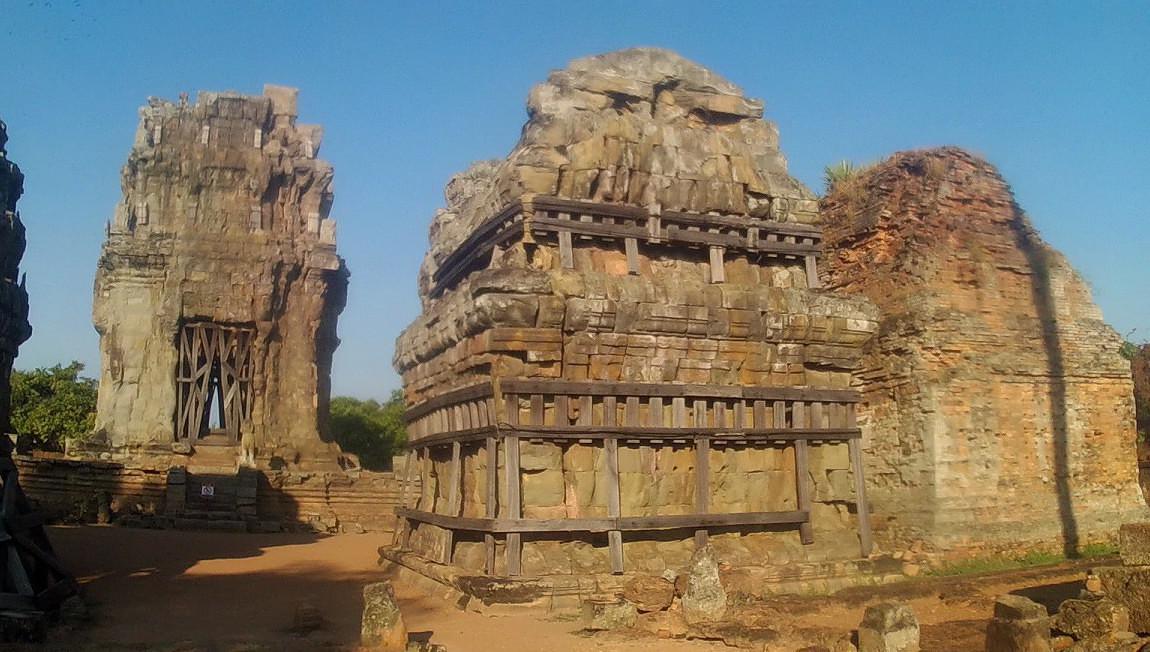
Non, pas besoin du pass. Il y a juste un gardien qui veille à ce que vous ne franchissiez pas les cordes, car les tours sont en réfection et ça peut être dangereux
Allez-y aussi en touk-touk, mais dites-lui de suivre la route jusqu'en haut, si besoin en décrochant la remorque et vous portant à moto, car s'il vous dépose au village au bas de l'escalier, vous allez suer sang et haut pour un temple très très modeste
Si vous aimez le step, le sport en général, prenez l'escalier !
Les tuk-tuk font-ils beaucoup de poussière à l'arrière ?
😏 Si ça roule sur route de latérite, vous allez manger la poussière de celui qui est devant ou du camion que vous croiserez. Mais seul, pas de souci
Est-il facile de trouver un tuk-tuk dans une ville ?
Si vous n'en trouvez pas, eux vous trouveront ! Vous serez sans arrêt sollicité, vous verrez, parfois ça en devient énervant ;-) A Siem Reap, 2$ la course en ville
Comment trouver un tuk-tuk driver ?
Votre hôtel ou votre GH en auront à vous proposer. Essayez d'en avoir un qui baragouine l'anglais. Sinon vous pouvez payer (cher) un guide francophone
Est ce qu'ils attendent tous au même endroit ou est ce qu'il faut les héler comme un taxi ?
C'est eux qui vous héleront, et pas qu'une fois !
Ils sillonnent les rues sans arrêt, en maraude
Un qui parle anglais ? Qui est prêt a venir un jour entier nous faire visiter les alentour de Battambang ? (demander à l'endroit où on loge ?)
Voir avec votre hôtel - Oui, sans aucun souci. A négocier avant de démarrer en lui montrant ce que vous voulez faire : la campagne, les villages au bord de la rivière, les pagodes un peu perdues...
Les bus ont-il beaucoup de retard ? = Faut-il prendre de la marge ?
En général ils sont à l'heure, au départ. L'arrivée est très aléatoire : routes en travaux, pneu éclaté, j'en oublie
Durée bus Siem Reap – Battambang = 4-5h ? Durée bus Battambang – Phneng Penh = 4-5h ?
C'est bon
La compagnie Giant Ibis est au top. Mekong Express est bien aussi
certains de leur voyage en bus avaient été terrible car les chauffeurs mettent des films ou de la musique cambodgienne à fond les ballons, il y a donc des compagnies à éviter ? Ou alors ça dépend du chauffeur ?
Entre ça et la clim à donf, il y a des incontournables à supporter
Sur Giant Ibis, c'est très bien, et il y a chauffeur, mécano et hôtesse
Faut-il absolument passer à Kampot ? Kep suffit-il ? (ferme de poivre)
Up to you !
A part ses plages blanches, Sihanoukville est-elle une ville intéressante ?
Non, pas besoin du pass. Il y a juste un gardien qui veille à ce que vous ne franchissiez pas les cordes, car les tours sont en réfection et ça peut être dangereux
Vous êtes sûr?
Quand je suis allée sur les Phnoms (Krom, Bok et Bakheng) il y a 2 ans, le gardien a insisté pour voir le pass afin d'accéder aux collines
Les choses ont peut-être changé depuis...
Bonjour
Oui, certain, j'y suis allé en touk-touk la semaine dernière
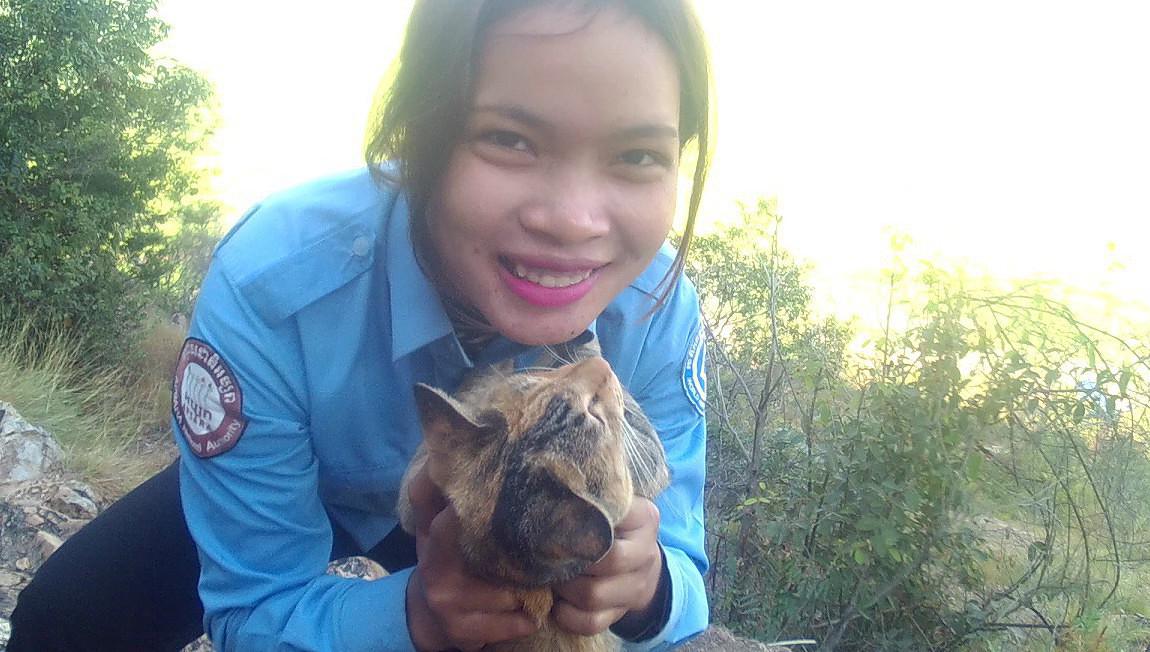
Il y avait une petite gardienne près du temple bouddhiste attenant, qui ne m'a même pas regardé
Et comme il n'y avait pas un chat (à part le sienj), j'ai passé les cordes pour photographier une sculpture de plus près, et là elle a surgi de nulle part. Mais juste pour m'enguirlander gentiment
Ensuite on a sympathisé, m'a raconté sa (courte) vie, 26 ans, orpheline très jeune et j'en passe
Donc non, pas besoin de pass, c'est peut-être nouveau
Phnom Bok je ne sais pas
Phnom Bakheng, ça oui, car c'est après le chek point général
Bye
Quand je suis allée sur les Phnoms (Krom, Bok et Bakheng) il y a 2 ans, le gardien a insisté pour voir le pass afin d'accéder aux collines
Les choses ont peut-être changé depuis...
Il me semble que le pass est valable pour les temples du site d'Angkor ainsi que pour les temples suivants : le groupe de Roluos (à 13 km de Siem Reap) Banteay Srei (à 25 km de Siem Reap), le Kbal Speen (à 6 km du Banteay Srei) ainsi que pour le Phnom Krom (à 10 km au Sud de Siem Reap).
Après 17h30 il n'est pas nécessaire de présenter un pass pour ces temples…
Milhusa n'a pas précisé à qu'elle heure il est allé au Phom Krom.
L'intérêt de monter au Phnom Krom n'est pas pour le temple (avis personnel) mais pour le coucher de soleil sur le Tonlé Sap.
On peut y aller l'après-midi, sur la route de Siem Reap au Phnom Krom il y le Vat Athvear qui est composé d'un temple de style angkorien et d'un autre à côté "contemporain".
Pour cette excursion de l'après-midi compter environ 20 $ en tuktuk (pour 1 à 3 personnes) et environ 5 $ par personne en plus pour la montée au Phnom Krom en moto. J'avais payé au total 20 $ (avec la montée en moto) en 2014.
Il est inutile de prendre un guide pour cette excursion ni de passer par une agence…
Il existe une personne (très connue sur un autre forum) qui propose cette excursion pour 55 $ pour une personne, 74 $ pour deux et 96 $ pour trois...
Prix pour les temples extérieurs au site d'Angkor :
Beng Mealea : 5 $
Koh Ker : 10 $
Preah Vihear : 10 $
Banteay Chhmar : 5 $
Pour le Phom Kulen il y a une route à péage, c'était 20 $ par personne il y a quelques années. Je ne connais pas le prix actuel
Faut-il vraiment avoir le passe des temples d'Angkor pour accéder au temple du Phnom Krom ?
Barefoot a déjà répondu à ta question et elle avait raison. J'ai eu confirmation par un guide : il faut le pass pour visiter le temple Krom.
Il est également exact que le pass pour les temples comprend ceux du site d'Angkor ainsi que pour les temples suivants : le groupe de Roluos, Banteay Srei, le Kbal Speen et le Phnom Krom.
Ces temples sont accessibles sans pass après 17h30.
Quelques renseignements pour ceux qui sont intéressés par les temples :
Le roi Yashovarman1er (889 - 910) a fait construire divers temples. Il a fait construire trois temples au sommet de trois collines (colline en khmer se dit phnom) : Phnom Bakheng, Phnom Krom et Phom Bok (source Maurice Glaize "Les monuments du groupe d'Angkor").
Avant Yashovarman 1er les capitales angkoriennes se trouvaient en dehors du site d'Angkor (Phnom Kulen, Roluos…). C'est ce roi qui a établi la première capitale sur le site d'Angkor, au temple du Bahkeng. Les capitales angkoriennes sont restées sur le site jusqu'à la fin de cet empire – aux environs de 1432 – à l'exception d'une période que l'on peut nommer "l'interlude de Koh Ker" : 928 – 944. C'est à Koh Ker que le roi Jayavarman IV (928 - 941) a installé sa capitale ainsi que son fils Harshavarman II (941- 944) (1)
Je pense que parmi les temples hindouistes angkoriens aucun n'est dédié à Brahma (je peux bien sûr me tromper). Ces temples sont dédiés à Shiva ou Vishnou, cependant je connais une exception : parmi les temples de Koh Ker il y a le Prasat Bak à l'intérieur duquel il y avait une grande statue de Ganeça (cette statue a été volée). Selon Claude Jacques ("L'Empire Khmer - Cités et sanctuaires Vème XIIIème siècles") on a là probablement le seul temple khmer consacré au seul Ganeça.
Les temples hindouistes du Krom et du Bok ne sont pas dédiés à Shiva ou Vishnou mais à la Trimurti hindouiste (2) composée de Shiva, Vishnou et Brahma. Les trois tours de ces temples sont dédiées à ces dieux.
(1) Pour l'histoire voir "Histoire d'Angkor" de Madeleine Giteau, curieusement elle commence l'histoire d'Angkor à partir de Yashovarman 1er qui a créé la première capitale sur le site d'Angkor. Elle ne parle pas de Jayavarman II et de ses successeurs. Pour plus de détails voir, entre autre, le site "La cité perdue des rois khmers : angkor.wat.online.fr/.
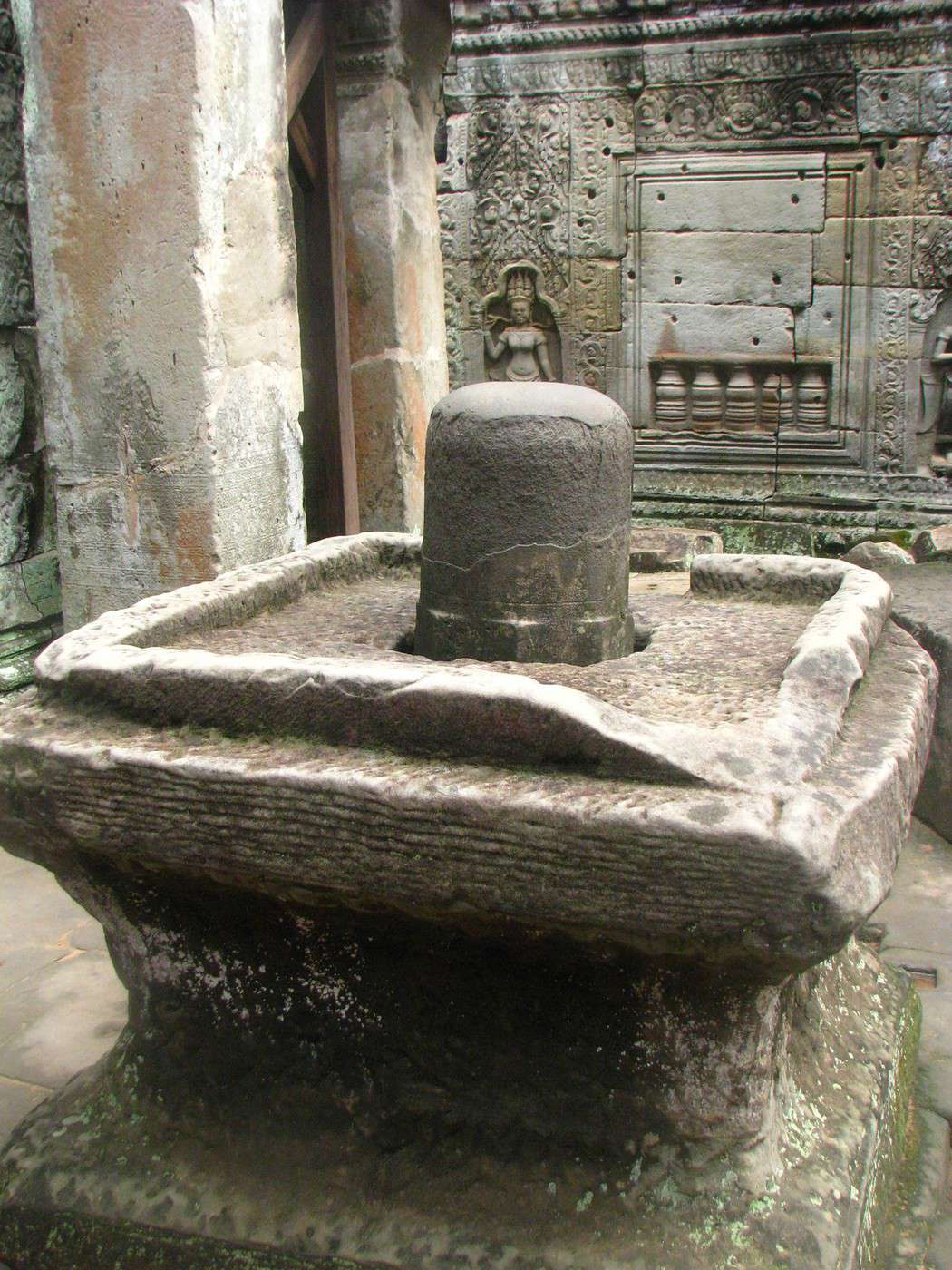
(2) Dans les temples hindouistes (surtout shivaïte) la Trimurti est souvent représentée sous la forme d'un linga dont en général seule la première partie est visible. Ce linga est composée de trois parties : ronde pour Shiva, octogonale pour Vishnou et carrée pour Brahma. Au Prah Khan on peut voir ces trois parties (voir photo).
A propos de Phnom Krom : le pass permet de ne pas payer l'entrée, mais on peut quand même accéder au sommet sans pass en payant 5$ (moins en discutant le prix) au garde qui attend en haut des escaliers. Vers 17h30 effectivement, quand le garde s'en va, on peut monter voir le coucher de soleil gratuitement (se dépêcher si on est à pied, la montée est longue !). Beau point de vue sur le lac.
mais on peut quand même accéder au sommet sans pass en payant 5$ (moins en discutant le prix) au garde qui attend en haut des escaliers
A partir du moment où l'on peut discuter du prix, je suppose qu'il ne s'agit pas d'un prix officiel avec remise de ticket… Je ne vais surtout pas critiquer cette manière d'agir car il est probable que ce gardien perçoive un faible salaire et que cela doit être difficile pour s'occuper de sa famille.
Je me souviens d'avoir vu un reportage sur le Cambodge dont le titre était "l'envers de la carte postale". En tant que touriste très souvent on ne se rend pas bien compte comment vit la population locale.
J'avais sympathisé avec un conducteur de tuktuk qui a voulu me faire plaisir en allant chez lui pour voir sa famille. Là j'ai vu "l'envers de la carte postale". Sa famille vivait dans la misère, pas de sol cimenté donc beaucoup de poussière, pas d'eau courante ni électricité… Ce conducteur de tuktuk devait probablement subvenir aux besoins de sa famille.
tout à fait d'accord avec toi , en ce qui concerne le MARCHANDAGE , parfois indécent avec les tuk tuk et autres moto dop , petites vendeuses etc
quand on sait à quel point pratiquement TOUS ces gens courageux , sont dans la pauvreté et restent DIGNES !
un peu d'effort amis de passage , n'oubliez pas qu'un dollar pour eux c'est beaucoup et si peu pour vous !
pensez y ! tous les jours je les vois se démener pour LEUR FAMILLE !
A Siem reap il y a de très nombreuses guesthouse à divers prix.
Je te recommande la Lovely Guesthouse. Je ne suis d'ailleurs pas le seul à recommander cette GH dont Soniac74 (j'en ai parlé plus haut)
Je ne sais pas si le prix correspondra à ce que tu recherches
Dans cette discussion tu pourras voir qu'une personne n'en dit pas du bien. Il ne faut surtout pas tenir compte de cela car cette personne recommandait la Lovely à plusieurs reprises et en disait du bien, curieusement maintenant elle a changé d'avis...
Bonjour
Je confirme haut et fort mes premières affirmations : pas besoin du pass pour monter au Phnom Krom
En tout cas pour la fois où j'y suis allé, et ce n'est pas vieux
J'y étais en pleine journée (ni très tôt le matin ni tard le soir, si tant est qu'il n'y ait plus de gardien à ces moments là)
J'ai précisé, dois-je le répéter ? que je suis tombé sur une gardienne officielle (uniforme, voir la photo) qui m'a sifflé parce que je montais près d'une tour prendre une photo de près
J'avais mon pass avec moi mais elle ne me l'a pas du tout demandé
D'ailleurs, avant cette anecdote, j'étais passé à côté d'elle, elle déposait une petite offrande au Bouddha du temple mitoyen, elle m'a vu et ne m'a rien dit non plus
Maintenant, il est possible qu'un autre gardien que cette jeune femme le demande, ce pass, il est possible aussi qu'on essaie de vous soutirer un bakchich
Ce sera un autre jour et avec un autre gardien
Chacun ses expériences
Je parle de vécu personnel (récent)
J'avais lu une description du Phom Krom dans les livres suivants :
"Les monuments du groupe d'Angkor", de Maurice Glaize (description détaillée)
"Angkor cité khmère" de Claude Jacques et Michael Freeman (photographe)
"Le guide es temples d'Angkor" de Michel Petrotchenko
En lisant ces livres je n'étais pas du tout intéressé pour voir ce temple. De plus j'avais vu des photos dans le livre "Angkor résidences des dieux" de Claude Jacques et Michael Freeman…
Les trois auteurs ont le même avis : la visite du temple est sans grand intérêt mais la montée au sommet de la colline permet de voir un beau coucher de soleil sur le Tonle Sap…
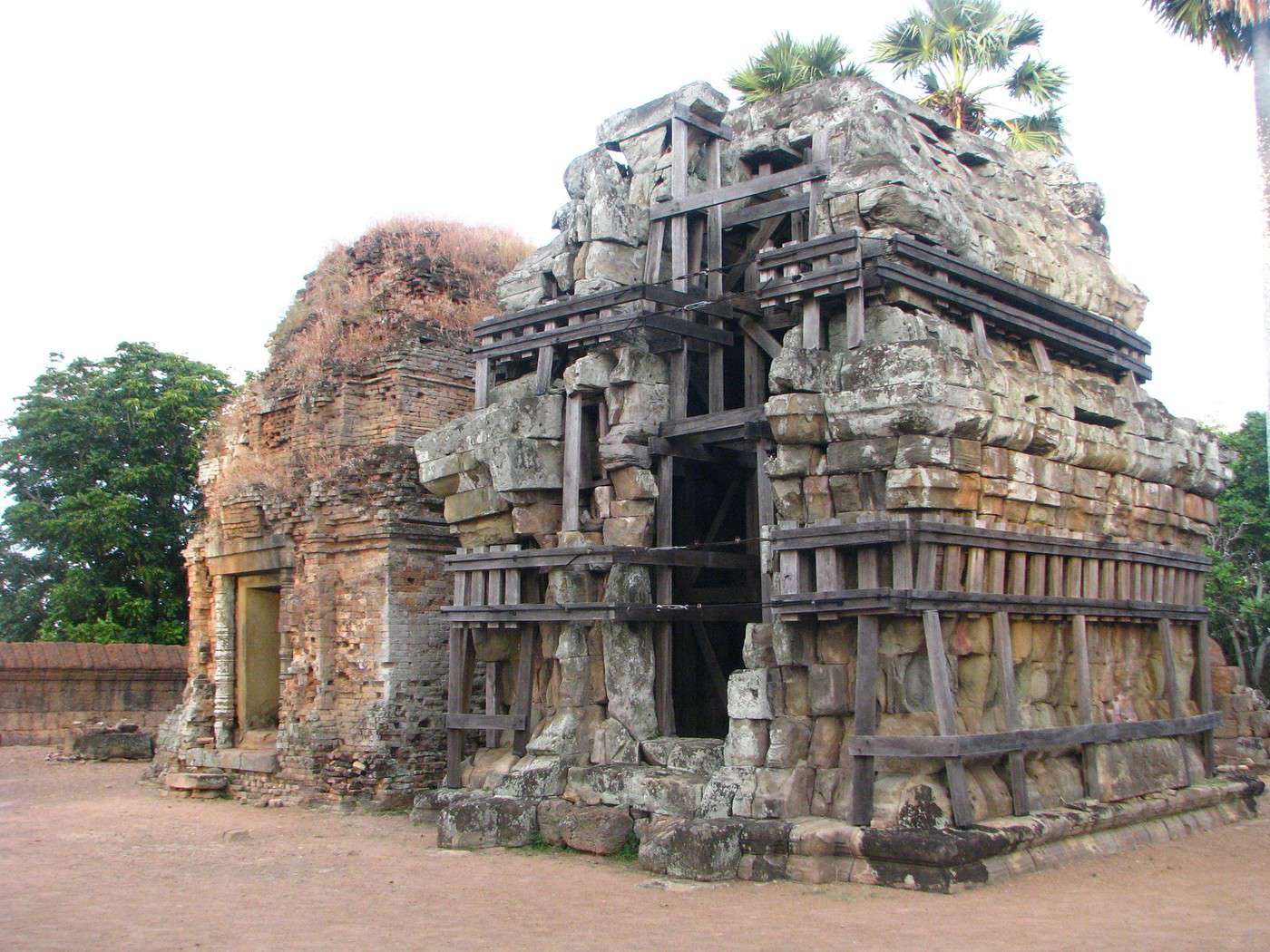
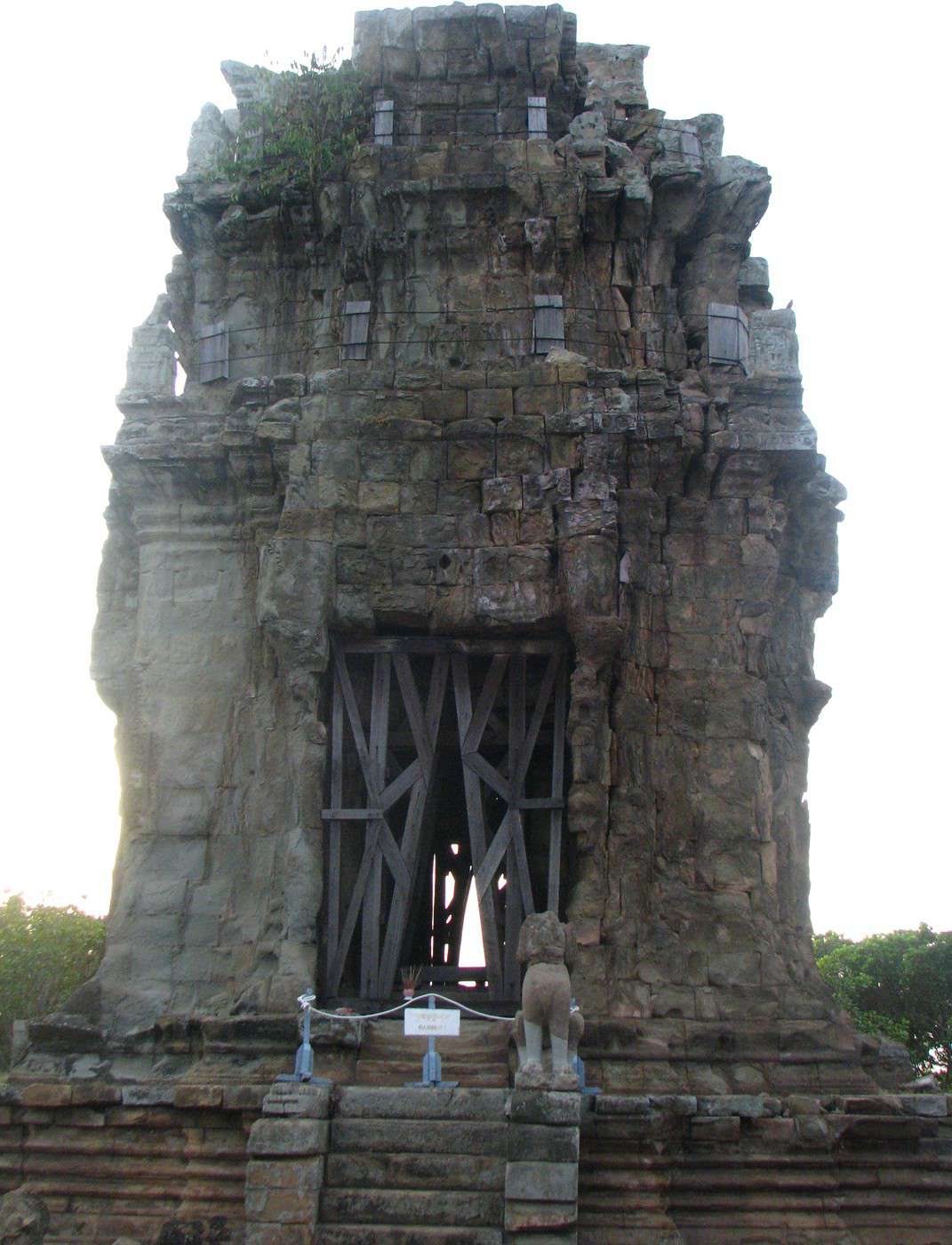
En Décembre 2014, ne voulant pas utiliser mon pass je suis arrivé vers 17h30. J'ai pu constater qu'effectivement le temple Krom est une ruine sans intérêt (voir photos). J'étais monté au sommet pour voir le coucher de soleil et je n'ai pas été déçu…
De retour à ma guesthouse, mon conducteur de tuktuk m'a demandé 15 $ comme nous avions convenu au départ pour la balade de l'après-midi et le Phnom Krom, comme il m'avait monté en moto au sommet de la colline je lui ai donné un pourboire de 5 $.
Son tarif est très correct.
Je ne voulais pas payer 55 $ en passant par un intermédiaire, un certain C… dont le site doit être il me semble "Siem Reap autrement c'est très cher"…).
En discutant avec mon conducteur de tuktuk je lui ai demandé s'il connaissait C…. Il m'a dit que oui et que celui-ci lui avait proposé de l'employer pour une balade et lui a demandé son tarif. C… lui a alors dit qu'étant donné qu'il lui trouvait des clients il lui donnerai la moitié… Le conducteur ayant une famille à nourrir a refusé…
Cet expatrié qui veut exploiter un cambodgien n'est peut-être pas le seul à agir de cette manière… Mais bien sûr il ne faut surtout pas généraliser car de nombreux expatriés donnent des salaires corrects à leurs employés cambodgiens…
je profite de cette discussion pour faire à nouveau une AMICALE SUGESTION
concernant les pourboires et autres services avec: les motodop , tuktuk et autres petites vendeuses : SVP quand vous "marchandez" , ce qui est la coutume et normal; faites le avec discernement en n'oubliant pas que ces personnes sont TOUTES pauvres, et ont des familles à nourrir !
UN $ pour nous est peu de chose MAIS BEAUCOUP pour eux !
et ces petites vieilles , où malheureuses femmes et enfants en guenilles, qui tirent une cariole remplie de carton où autre plastique , quoi de plus facile et d"enrichissant" que de s'arreter , et DISCRETEMENT glisser dans leur main un petit billet vert ! vous verrez les plus beaux sourires illuminer ces visages de souffrance ...C'EST VOUS QUI SEREZ LE PLUS HEUREUX ..... pensez y !
Avant d'aller au Cambodge j'ignorais que la très grande majorité des cambodgiens ne percevaient pas de retraite et que les soins médicaux n'étaient pas remboursés, pas d'aides sociales…
Le tourisme s'est énormément développé depuis les années 1998-2000. Un grand nombre de cambodgiens se sont installés à Siem Reap pensant vivre dans de meilleures conditions. De nombreuses personnes vivent du tourisme mais malheureusement il n'y a pas du travail pour tous, de plus la saison touristique dure environ 6 mois…
Le marchandage
SVP quand vous "marchandez", ce qui est la coutume et normal; faites le avec discernement en n'oubliant pas que ces personnes sont TOUTES pauvres, et ont des familles à nourrir !
Il est absolument évident que le touriste va payer plus cher que les locaux, je trouve cela normal.
En général les prix demandés restent raisonnables, il existe bien sûr quelques exceptions. Par exemple les guides officiels pour les temples d'Angkor. Actuellement le prix journalier pour un guide francophone est de 45 $. Ces guides demandent des suppléments qui peuvent aller de 5 à 50 $ pour des temples éloignés. Ces suppléments ne sont pas justifiés car leur travail de guide est le même quel que soit le temple…
Les conducteurs de tuktuk :
Certaines personnes pensent que les tarifs demandés par les conducteurs de tuktuk sont abusifs. Il ne faut pas oublier qu'il y a l'essence à payer, l'entretien du tuktuk, l'amortissement de ce tuktuk. Je sais que pour certains conducteurs, le prix du tuktuk et la remorque peut être bien supérieur à une année de travail…
Le prix varie en fonction de la distance parcourue, ce qui est tout à fait normal car la consommation d'essence est plus importante.
Les vendeurs :
Lorsque je visite les temples je mange souvent en face de la Tersasse du Roi Lépreux. Cet endroit n'est fréquenté par les touristes qu'au moment des repas. Il y a diverses boutiques qui vendent principalement des vêtements. On y voit rarement des touristes faire des achats. Je me demande comment peuvent vivre ces vendeurs ?
Les hôtels et guesthouses :
Là aussi il y a de plus en plus d'hôtels et de guesthouses et là encore il y a une grande concurrence.
La Lovely : j'en ai parlé plus haut, je connais bien les gérants, un couple de khmers (et non pas de thaïlandais) qui a deux enfants. Ce couple n'est pas propriétaire des locaux, il y a deux ans le loyer a fortement augmenté. Malgré cela il n'y a pas eu d'augmentation du prix des chambres à cause de la forte concurrence. Ce couple honnête et travailleur emploie deux jeunes femmes pour l'entretien des locaux et fait travailler des conducteurs de tultuk. Pour essayer d'améliorer un peu leurs revenus le gérant loue des vélos, mais à cause de la grande concurrence cette activité n'est pas tellement rentable…
Un trublion de ce forum qui a séjourné dans cette guesthouse en disait du bien et la recommandait. Curieusement en décembre 2016 il a dénigré cette guesthouse, on peut bien sûr se demander pourquoi ? En écrivant le contraire de ce qu'il avait écrit auparavant il ne peut plus être crédible… Je ne sais pas si ce membre se rend compte qu'en agissant de cette manière il peut nuire à ce couple de khmers honnête et digne en incitant diverses personnes à ne pas aller dans cet établissement. Pour agir de cette manière il faut quand même avoir une mentalité particulière.
Les pourboires
Ils ne sont pas obligatoires mais bien sûr ils sont très appréciés.
Lors de mon premier séjour j'ai voulu faire plaisir à mon conducteur de tuktuk en lui offrant le repas de midi (à la place d'un pourboire). J'ai appris par la suite que ces conducteurs préfèrent manger avec leurs copains (ils ne payent pas le prix pour touristes étant donné qu'ils amènent des clients). Ces conducteurs de tuktuk préfèrent un pourboire en espèce.
Parfois des conducteurs de tuktuk offrent de l'eau pour la journée à leurs clients. C'est un service qu'ils rendent à leurs clients et dans ce cas j'estime qu'un pourboire est bien justifié…
un peu d'effort amis de passage, n'oubliez pas qu'un dollar pour eux c'est beaucoup et si peu pour vous !
pensez y ! tous les jours je les vois se démener pour LEUR FAMILLE !
En France un café coute environ 2,50 €, une bière 3 € (voire plus), un paquet de cigarette plus de 7,50 €…
Alors un dollar ce n'est pas beaucoup pour nous…
Mes excellents souvenirs de mon dernier jour à Siem Reap
Avant de quitter ma guesthouse j'ai demandé au gérant d'appeler les deux jeunes femmes qui s'occupent de l'entretien des chambres, je voulais les remercier pour leur excellent travail. J'ai donné à chacune d'elles un billet de 5 $... Elles n'arrêtaient pas de me remercier…
Le conducteur de tuktuk que j'avais eu pendant une dizaine de jours m'a conduit à l'aéroport. A l'arrivée je lui ai tendu trois billets de 10 $. Très surpris il m'a dit "c'est pour moi?" Je lui ai répondu que j'avais été très satisfait de ses services et que je voulais le remercier. Avec ses deux mains il a pris ma main et m'a serré très fort, il secouait la main tout en me remerciant…
vous verrez les plus beaux sourires illuminer ces visages de souffrance...C'EST VOUS QUI SEREZ LE PLUS HEUREUX..... pensez y !
Le visage de ces personnes était radieux. Ces personnes étaient très heureuses…J'étais également très heureux.
Concernant le pass pour le Phnom Krom, je fais confiance à Barefoot et à Erwanploz
En ce qui me concerne, j'ai appris qu'il fallait le pass pour le Phnom Krom en me renseignant auprès de l'APSARA qui est une autorité très sérieuse et fiable (*)
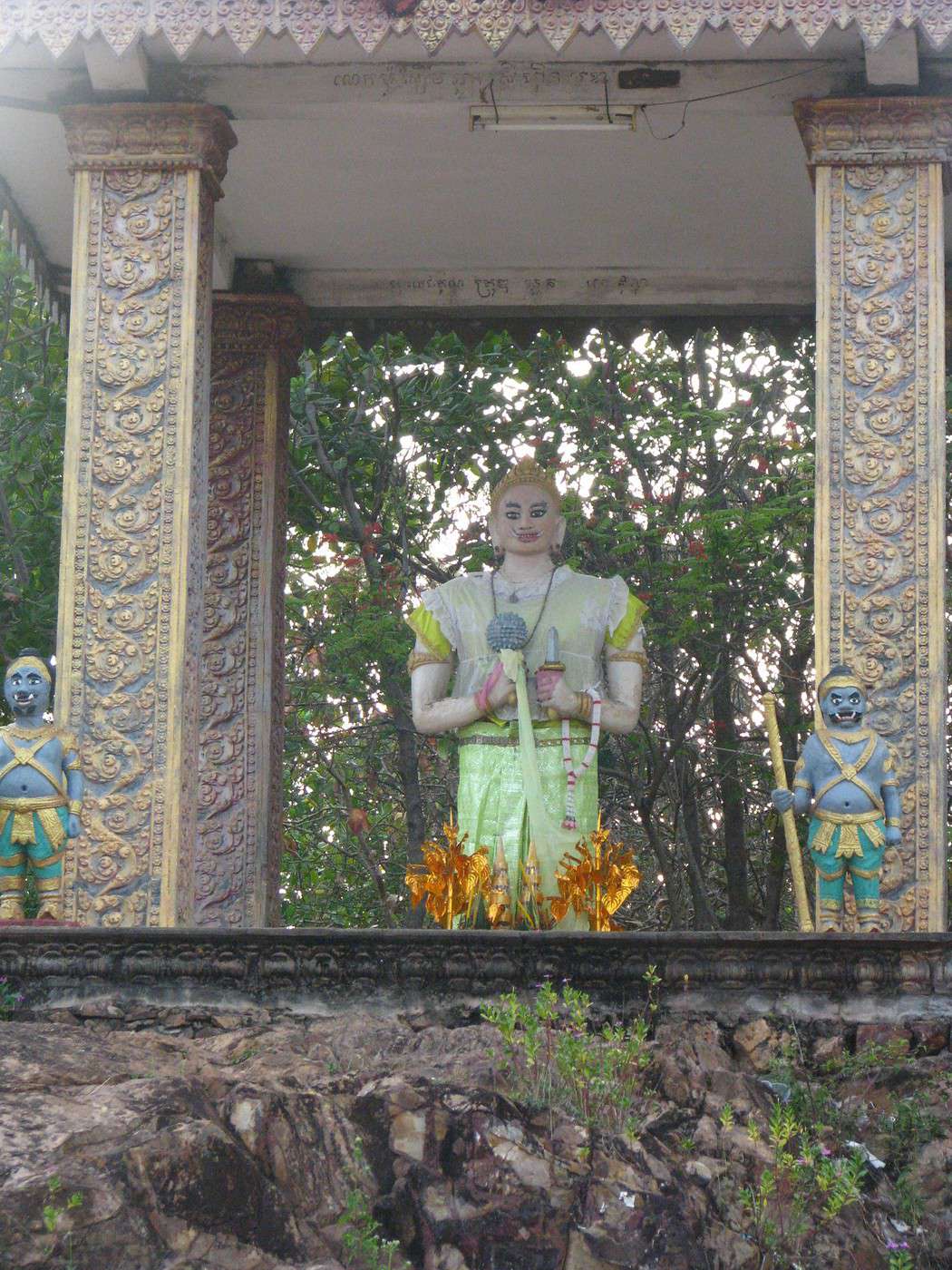
Près du sommet il y a un temple bouddhiste devant lequel il y a une statue d'un Neak Ta (voir photo)
Les Neak Ta sont des génies protecteurs. Pour plus de détails je conseille le livre d'Alain Forest : "Le culte des génies protecteurs au Cambodge"
(*) L'APSARA : Autorité pour la Protection du Site et l'Aménagement de la Région d’Angkor
La création d’APSARA répond aussi à la demande du Comité du Patrimoine Mondial qui avait temporairement inscrit Angkor sur la liste des Sites du Patrimoine Mondial en danger en Décembre 1992. Une inscription permanente dépendait alors des actions concrètes menées sur le terrain par le gouvernement du Cambodge.
En reconnaissance de trois ans de progrès établissant une responsabilité nationale pour la protection et l'administration du site, le Comité du Patrimoine Mondial confirma l’inscription permanente d’Angkor sur la liste du Patrimoine Mondial en Décembre 1995.
L'APSARA a été créée par Décret Royal en Décembre 1995.
La mission principale de l'APSARA est la préservation, l'aménagement et l'entretien du site d'Angkor, en collaboration avec le Ministère de la Culture et des Beaux-Arts.
L'APSARA est également chargée de la formation continue des historiens, archéologues et conservateurs chargés de gérer et d'entretenir le site d'Angkor.
merci d'avoir bien voulu reprendre quelques réflexions que j'ai faites concernant le marchandage excessif ;
résidant au pays depuis plusieurs années , la pauvreté me parait plus évidente chaque jour , et je trouve INDECENT ces discussions pour "gagner" UN dollar , même si l'on n'a pas les moyens ! heureusement que ces malheureux ignorent le montant de leurs billets d'avion !
il est vrai que , dans beaucoup de pays , c'est l'arnaque assurée , d'où ces comportements ; OR , au Cambodge , elles existent bien sur mais tellement moins qu'ailleurs !
en conclusion , chacun agit comme il l'entend , personnellement j'estime que voyager n'est pas seulement aller voir ailleurs mais avoir des échanges sincères avec les gens et un minimum d'empathie envers les plus démunis !
rappel : UN $ pour VOUS ce n'est pas grand chose , pour EUX c'est beaucoup !
c'est tout ! ;faites vous plaisir ...en faisant plaisir !
bons voyages
Jacques
Hello everyone! I’m heading off solo in February and wanted to share my rough itinerary with you. Does this sound doable?
PS: I’m not really into beaches.
D1 Departure on February 17, 2027
D2 Arrival in Kuala Lumpur – stroll through Chinatown and visit the Petronas Towers
D3: Kuala Lumpur – Chow Kit Market, Batu Caves, Little India, Bukit Bintang downtown area
D4: Early morning bus to Malacca. Explore Malacca in the afternoon and evening
D5: Another 2–3 hours in Malacca in the morning, then bus back to Kuala Lumpur. Merdeka Square area. Stay in Chinatown
D6: Bus trip to Kuala Tahan. Night tour
D7: Morning – canopy walk and Bukit Terisek hike. Afternoon – off to Lata Berkoh
D8 & D9: 2-day jungle trek in Taman Negara National Park
D10: Head to Cameron Highlands
D11: Morning hike through the plantations. Afternoon still to be decided
D12: Morning – excursion to Mossy Forest and Sungei Plantation. Afternoon bus to Ipoh
D13: Morning – Mirror Lake / Sam Poh Temple area. Afternoon – explore downtown Ipoh
D14: Morning train to Penang. Afternoon – wander around Georgetown
D15: Morning – Penang Hill and Keh Loh Temple. Afternoon – Georgetown
D16: Bus to Butterfly Garden and Spice Garden. Late afternoon – Burmese and Thai temples
D17: Morning flight to Singapore. Afternoon – Chinatown and Marina Bay tour
D18: Morning – Gardens by the Bay area. Afternoon – Boat Quay, Clarke Quay, Kampong Glam
D19: Morning – The Ridges area and Botanical Garden. Afternoon – Little India, then back to Chinatown before 11:15 PM return flight
D20: Morning arrival
Hi everyone,
I’ll be in western Malaysia for 20 days in January and February.
I’m coming from southern Thailand to Ipoh for the Thaipusam festivities.
Then it’s off to Pangkor Island.
I’ll finish up in Malacca for the Chinese New Year celebrations before heading to Singapore.
I’ve got a 6-day gap.
I was thinking of going to K.Lipis for the jungle train and heading to Dabong, but the caves might not be open.
Any suggestions around K.L.?
Day treks?
A stopover between K.L. and Malacca?
Thanks
Hi, I’ve read that these two volcanoes are super popular and that there are *tons* of people for sunrise, especially in July. I’m looking for firsthand accounts from anyone who’s done it later, around 9–10 a.m.
Thanks for your help!
Laëtitia
I’m heading to Cambodia at the end of December 2026 – January 2027 for 3-4 weeks. Since I’ve already visited Cambodia twice, my itinerary is a bit different this time—I’d love to explore Botum Sakor Park, Chi Pat, the Tatai region, and the Cardamom Mountains. I’m traveling solo. If you have any tips on transportation, excursions, treks, sights, or accommodations in the area, I’d really appreciate it. Thanks for your feedback!
Has anyone traveled with the Laos travel agency ADV ?
I’m planning a trip to Laos and have received several quotes. Among them, this agency’s seem very reasonable, and so far, the interactions have been positive.
I’ve found a few positive reviews online, but I’d love to hear from travelers who’ve actually booked with them: how’s the organization, guide quality, accommodations, on-the-ground responsiveness, etc.
Thanks for sharing your experiences!
First stop on our discovery of the peninsula: Amphawa. It’s our first night in Thailand (we arrived at Suvarnabhumi at 8:50 AM).
Our initial plan was to explore the area before heading further south. The Mae Klong Railway Market is tempting... but what else is there to do????
We’ll be there on a Wednesday, and from what I’ve read on the forum, some say there’s absolutely nothing to do during the week—no floating market, barely any shops open, no restaurants, etc.
Others, though, say the place is actually more charming without the weekend crowds.
Could you share your thoughts? Missing the floating market is one thing, but if it’s really a ghost town on Wednesdays, I might just drop our bags somewhere else.
Amphawa seemed like a good first stop, just 1.5 hours from the airport, but I’d still like to settle somewhere a bit lively for our first evening.
We’ll be there at the end of October.
Thanks!
Hi,
I wanted to visit the plantations in the morning with GetYourGuide or by just showing up.
How much time should I really plan for?
I’d like to catch either the 3 PM or 5 PM bus back to KL.
Thanks
Hi,
I wanted to get some info about the cable car and the bridge—I see lots of different options...
How much time should we allow for these two activities? If we arrive around 4 PM, will we have enough time to visit without rushing?
Thanks
Hi there,
I didn’t plan to return to Thailand this year, but my health conditions mean it’ll be the best place for me to stay between two trips to India. The tourism setup there is so well-organized that it’s the most "comfortable" country for a short visit. Thailand feels too sanitized for my taste, and there’s too much religion, Buddha, and the King, but it’s still the best option given how my health has been evolving. I’d considered two weeks in ThaTon for hiking, but I got too sick from the burn-offs during my trips to the mountains around Chiang Rai. So I’m not sure where to go this year. Definitely not the sea, touristy spots, or the mountains with burn-offs...
Hi,
On September 1st, we're heading to Kalimantan for six weeks, probably from Pontianak to the Derawan Islands.
I've scoured this site, which is usually my go-to 😉, and others like VoyageForum, but recent info is pretty scarce.
I'd love any tips on places you've visited—our itinerary is still a work in progress.
We're two couples traveling with backpacks, using buses, boats, guesthouses, and homestays.
Thanks in advance!
Hi fellow travelers,
First trip to Vietnam.
We’ll be arriving in Ho Chi Minh City during Tet.
Is it complicated to find accommodation and get around during this period?
Any tips would be welcome.
Thanks for your replies.
Hi! I’d like to split my trip into two parts: 15 days in Phuket and 15 days in Krabi. Do you know if I can rent a car and drop it off in Krabi when I fly back to France?
Thanks for your feedback!
Have a great Sunday!
Martine
Hello,
After 1 night in Khao Sok, I’d like to find a 2 Days 1 Night package on the lake.
After reading a lot, I decided to "break the bank" and treat ourselves to a private tour—mainly to avoid the crowds.
But after contacting several operators, they offer "private tours" that are very expensive (around 700 €), yet in the details, the boats can only leave from the pier at 10 AM like everyone else. (I was hoping to leave much earlier.) The morning program is the same for everyone too (private or not). They drop us off at noon at our floating hotel (I’d chosen Phupha Waree). Free afternoon (swimming or kayaking in front of the hotel). We head back by boat for a 1-hour sunset ride. And the next morning, we leave the hotel at 8 AM to be at the pier by 9:30 AM at the latest—end of the trip.
So basically, we’re paying a lot for a private tour just to do the same thing as everyone else at the same time.
Or maybe I just had bad luck in my search.
I contacted Panida Ladi, who’s very popular on forums. We’d agreed on a private tour that matched my request (departure from the pier at 8 AM, very personalized itinerary). We settled on the itinerary and price, she asked for a Wise transfer for a 30% deposit, confirmed receipt of the deposit. Then 30 minutes later, she messaged me to say she was canceling everything because it was impossible to do the requested tour—and promised a quick refund of my deposit.
So here’s my question: Who’s done a *real* private tour on this lake? Who can recommend a reliable agency? Is it even really possible to do a private tour here?
I’m searching for a real gem for my 3rd stay in Koh Lanta: a lovely, high-quality hotel right by an easily accessible beach in a lively spot.
If you know of anything that fits what I’m looking for and want to share, don’t hesitate!
Hi, is anyone there in Flores right now? According to some websites, everything is closed and the situation is tough. But our guide says it's fine. Who should we believe? We're supposed to leave on September 2nd. Thanks to anyone in Flores at the moment!
Hi dear community,
I'm planning to visit Cambodia this winter, right after Christmas, for my first solo trip and my first trip to Asia. For two weeks (yes, I know it's short, but I really can't do more...). I have two main desires: Siem Reap and the countryside, the villages, the Mekong...
What do you think of this itinerary? Arrival in Siem Reap, departure from Phnom Penh.
SR: 5 days (1 day for arrival, 3 for the temples, 1 for the lake and its villages)
Kratie (stop on the way to Mondolkiri): 3 days (1 day of travel, 2 days there)
Mondolkiri/Sen Monorom: 4 days (1 day of travel, 1 day there, 2 days of treks)
PP: 3 days (1 day of travel, 2 days of sightseeing)
I think I need to cut one day somewhere if I travel from Saturday to Saturday or Sunday to Sunday. In Kratie, maybe? Or in PP? And I'll miss the boat trip that everyone recommends (SR-Battambang), but I don't see where to fit it in. Unless I do a PP-PP loop starting in the east, skip Kratie or just stay one night, then SR, then PP.
In my timing, Mondolkiri seems closer than Ratanakiri, which also tempted me a lot! Will it be too complicated alone? I'm thinking of using local guides or a small local agency for a nature and village getaway.
I've read that Siem Reap is very crowded between Christmas and New Year's. I could also do the circuit in the opposite direction. But I thought it would be easier to get familiar with the country by arriving in a touristy area—I might be wrong...
Thanks for your advice and opinions!
Hi everyone.
I’m planning my trip, and based on all the posts I’ve read, this country is amazing.
Of course, I’ve got a ton of questions for you.
Here’s a possible itinerary: Vientiane - Vang Vieng - Phonsavan - Sam Neua - Nong Khiaw + villages - Phongsali - Luang Namtha and the area - Udomxai - Huay Xai - Luang Prabang and back to Vientiane.
What do you think?
We’re planning to prioritize local transport—is it possible to do this loop?
We’d also love to go kayaking, but I’m not sure if the season’s right or where the best spot is.
For trekking—I read that Phongsali is the most authentic spot to visit villages and see wildlife. Do you know of a reliable agency and a guesthouse with reasonable prices?
Is it worth taking a slow boat for a stretch on the Mekong, and if so, which route?
For accommodations, is it better to book through Booking.com and Agoda or look when we arrive?
Are mosquitoes bad in Laos, and should we take malaria prophylaxis?
What’s the average daily budget (accommodation, food, visits)?
Is renting scooters a good option for exploring towns, and if so, which ones?
From what I’ve read, it’s best to carry cash—euros or dollars? Is it risky to walk around with that much cash?
I’ve still got tons of questions. Thanks to anyone who can help, and I’m open to all tips, info, etc.
Thanks again
Hi there,
I’m planning a family trip (my wife and I, both 47, and our two sons, aged 5 and 12) to Malaysia for the last week of June and the first two weeks of July 2027.
We used to love road trips as a couple, then as a trio, but since our second child arrived, we’ve taken a break with "camping village" style trips.
Now feels like the right time to get back to our old habits, while adjusting the pace for the kids.
We’re craving Asia. We’ve been lucky enough to visit Thailand, Indonesia (Bali and Lombok), and Sri Lanka before.
Friends have raved about Malaysia, so we’re definitely tempted.
For those who know and love Malaysia, what would be a good itinerary starting from Kuala Lumpur, with a maximum of 3-4 stops? We’d like a mix of culture, nature, and relaxation (just to clarify, we’re not big beach fans). All of this without rushing, of course.
Hello,
We’re a family of four with two teens aged 16 and 18. We’re heading to Thailand this summer. We’ll arrive in Bangkok and plan to take a flight to Luang Prabang.
I’ve seen there are some great visits and excursions to do (temples, markets, waterfalls) and maybe even venture a bit north to places like Nong Khiaw, Muang Xay, Muang Ngoy, or Oudom Xay.
But I’ve also heard about the Bokeo region with the Gibbon Experience.
Since we won’t be able to do everything, I’d love to hear about your experiences, impressions, and advice on the two options I’m considering, especially since we’ll be meeting family in Chiang Mai, Thailand, afterward.
Option 1: A loop from Luang Prabang heading slightly north, then a flight from Luang Prabang to Chiang Mai.
Option 2: A few days in Luang Prabang, exploring within a few dozen kilometers around, then heading to Bokeo province for the 2-day/1-night Gibbon Experience. For this option, I saw on Rome2Rio that it’s possible to book a ferry trip on the Mekong from Luang Prabang to Huay Xay—they mention about 8 hours. But is that realistic? What type of boat is it?
Then, to get to Chiang Mai, there aren’t many options—bus or minivan—but how does crossing the border work?
Finally, for those of you who’ve been to Laos in August, what was the weather like?
We’ve already visited Thailand, Vietnam, and Cambodia during the same period over the past four years and weren’t really bothered by bad weather.
I’m starting a discussion about guides in the Mekong Delta because we’ve just finished our trip in this region and had a hard time finding a French-speaking guide. We had Thanh—she speaks French really well and travels all over the delta region, including Ho Chi Minh City. She’s super friendly and flexible. I recommend her wholeheartedly. If it can help someone...
Feel free to contact us for her number.
Hi everyone,
I couldn’t find any recent info on Kuching.
Can anyone recommend a hotel or guesthouse for under 100 RM that’s nice and affordable? No dorms, please.
Also, does it rain a lot in November, and is it still worth visiting Semenggoh or Bako?
We’ll be arriving in Phnom Penh this coming January and we’re thinking of starting our trip with a stop in Kampong Cham, then Kratie.
After Kratie, we’re considering heading toward Siem Reap with a stop in Kampong Thom.
That said, I’m not really sure how long the Kratie–Kampong Thom journey might take or how complicated it is.
Does this stop on the way to Siem Reap seem like a good idea to you?
If we don’t visit the Sambor Prei Kuk site, are there still any walks or sights worth checking out in Kampong Thom?
Silly question—backpack or hard-shell suitcase for the Sepilok, Kinabatangan, Tioman, KL trip?
I’m struggling to fit all my son’s and my stuff into the 70L backpack... and I’m thinking a suitcase would be easier, but I’m not sure if it’ll work for getting around.
After a stay on Koh Phayam this coming November, I’d like to spend 2 or 3 days on Koh Phra Thong before heading further south.
Do you think it’s doable to leave Koh Phayam early enough to catch the 10 AM boat from Khura Buri to Koh Phra Thong? The next one isn’t until 4 PM, which would cost me a whole day.
I’m planning a trip to Indonesia, specifically Sulawesi and Java, in September for 10 days.
I don’t know this part of the world at all—any advice is welcome!
I’ll be traveling solo and would also love tips on meeting other travelers or locals.
Hello everyone,
Not long ago, I used to travel as a couple, but my husband has since passed away, and I’ve decided to set off again. The trip I took to Cambodia in January 2025 did me a world of good.
I’m now considering Thailand, a destination we never included in our plans because even 15 years ago, people said it was too touristy. Still, I’m thinking about the itinerary below, but I don’t feel up to arranging buses, trains, or guides on my own while I’m there. I’m looking for one or more drivers and have been in touch with an agency, but their offers are just copy-paste group tours that I don’t want.
So, if you have any contacts, experiences, or advice, I’d be so grateful if you’d share them with me. Here’s my rough plan:
Arrival in Bangkok
Ayutthaya (2 nights)
Kanchanaburi (2 or 3 nights)
Sangkhlaburi/Sai Yok (3 nights)
Sukhothai (2 nights)
Lampang (I’ve planned 3 nights, but that might be a bit much—it depends on what time I arrive in the city)
Chiang Mai
Chiang Dao
Pai
Chiang Rai
I was thinking about the Mae Hong Son loop—thoughts?
What do you think about staying overnight at the Golden Triangle?
When I look online, of course, I can find agencies that organize tours to national parks, etc.
I’m retired but in great physical shape. I’d rather go hiking than sit in hot springs with crowds of tourists who’ve all arranged meet-ups. I don’t want to spend a day at an elephant camp, and I don’t want to visit Karen villages.
I’d love to hear your advice.
Thank you all,
Hi everyone,
Could you share your thoughts on my 3-week itinerary?
We’re a small group (family + friends) of 12 people, planning to leave around January 21, 2027.
Here’s my itinerary:
3 nights in Bangkok
4 nights in Chiang Mai
3 nights on Koh Samui
3 nights on Koh Phangan
4 nights in Krabi
4 nights in Phuket
I’m also open to any great tips you might have...
Thanks, everyone! Alain.
Hi there,
We’re planning a 3-week family trip next summer with our three kids, who’ll be 8, 8, and 7 years old.
After some research, we’re leaning toward Malaysia to combine nature/forests and paradise beaches. The idea is to introduce our kids to the country’s culture, nature, and wildlife.
We want a great trip but without splurging on luxury options like high-end lodges and resorts. We’re looking for comfort with a touch of authenticity—basically, a good middle ground.
I’ve started putting together an itinerary and would love your expert advice and tips to help us build this amazing trip with our little ones.
Day 1: Departure from France
Day 2: Kuala Lumpur
Stay at a hotel near the airport or KL Sentral.
Just one night.
Day 3: Morning flight to Sandakan (Borneo).
Stay in Sepilok
Day 4: Sepilok:
* Orangutan Center
* Malayan Sun Bear Center
* Rainforest Discovery Centre
Day 5: Depart for Kinabatangan.
Boat safari in the late afternoon.
Day 6: Sunrise safari.
Jungle walk.
Evening safari.
Day 7: Final safari.
Return to Sandakan.
Flight to Kuala Lumpur, then to Kota Bharu (or overnight transit depending on schedules).
Day 8: Transfer to the port.
Boat to the Perhentian Islands.
Days 9 to 13: Perhentian Besar
5 full days.
* Snorkeling
* Hiking
* Turtle watching
* Wild beaches
* Relaxation
Day 14: Return to the mainland.
Bus or private car to Taman Negara.