Les differences entre les differents "parlers" actuels de cette langue autrefois commune m echappent, c est sur.
Je ne suis pas certaine que cette langue ait été "autrefois commune". Ou alors il y a très très très longtemps.
Un peu comme l'indo-européen, un truc de linguistes dont on ne pense pas qu'il ait vraiment existé.
Qu'il y ait une une famille de langues très proches, oui. Une culture qui différenciait en plus la plupart des gens parlant ces langues de leurs voisins, c'est certain.
Mais une langue commune ? Alors qu'on a déjà des patois différents d'une région à l'autre, pour ne pas dire plus ? Sur un territoire qui s'étendait sur toute l'Afrique du Nord et le Sahel ? Dont les habitants étaient en contact avec des peuples différents (grecs, romains, phéniciens, marchands d'Afrique Noire, sans doute un peu de temps en temps quelques vikings) ? Et pour un groupe de langues qui n'étaient pas écrites, même s'il y avait un alphabet ?
J'en doute :)
La richesse linguistique disparait avec le temps. Il reste encore une vingtaine de versions de berbère avec des locuteurs, aujourd'hui. Ça signifierait plutôt qu'il y en a eu plus autrefois.
oui, tu as surement raison, par analogie on en arrive à penser cela.
ce qui m’intéresse en fait, c'est de voir comment le processus d'arabisation a trouvé ses limites.
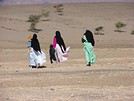
quels sont les "restes" de cette civilisation enfouie sous celle de l'islam venue d'Arabie : pas seulement la langue, mais la religion - les religions- qui existaient avant, autres traits culturels. par exemple on dit les femmes, plus libres etc ....mais les femmes berbères rencontrées lors des treks, le soir, ne me semblaient pas plus libres et même moins que d'autres. Elles se planquaient dans les cuisines.
mais cela ne veut pas dire grand chose, c'est trop superficiel comme témoignage.
J'ai rencontré à Agadir, au marché el had, un gars bien remonté et très bavard sur ce sujet, j'avoue que malgré l’Intérêt de ses propos, il était si vindicatif que j'ai poliment pris congé.
je vais trouver des lectures sur le sujet. 🙂
@voyageur 2500, ... Pour info ce ne sont pas les Romains qui nous ont appelés Berbères, ce mot était présent bien avant l'émergence des Romains. L'origine de ces deux mots n'est pas établie à 100%. Certains histoiriens ont postulé que le mot berbère pourrait dériver du mot Ibere et non de barbare. Dans l'antiquité les Egyptiens nous appelaient les Meshwesh ( du moins les peuples voisins qui se trouvaient dans la Libye actuelle) Les Romains nous connaissait sous les noms de Numide, Mauretaniens, Getules, Libyens... Le mot Amazigh n'etait pas si courant que ça en Kabylie jusque dans la moitié du 20ème siècle mais plus présent chez d'autres peuples amazighes. Au-delà de la signification, le mot berbère est considéré plus "neutre" en Algérie mais ça commence à changer
@Mezgarne, en Kabylie il ya presque un dialecte par village 😏. La langue amazighe est une branche de la famille afro-asiatique. Donc elle est l'équivalente du latin. Les différents dialectes sont différents comme le Français est différent du Portugais. Et contrairement aux pays Européens latins, il n'y a pas eu d'échanges entre les peuples amazighes depuis des siècles. Donc le fait que en tant que Kabyle j'arrive à comprendre un berbère du Maroc relève du miracle.
Pour revenir au sujet, jai enfin des idées d'endroits à visiter à Marrakech. Merci beaucoup pour les suggestions 🙂
Un jour dans un bar à Tazenakh j'entend Idir , je discute avec le serveur , il est tout étonné ....tu connais le Kabile ? bravo 😎😎😎 je lui ai ensuite prêté un CD de Rachid Taha .
La boisson je l'ai eu ...ä l'œil 😉
Le mot Amazigh n'etait pas si courant que ça en Kabylie jusque dans la moitié du 20ème siècle mais plus présent chez d'autres peuples amazighes. Au-delà de la signification, le mot berbère est considéré plus "neutre" en Algérie mais ça commence à changer
Belle synthèse, et j'ajoute mon grain de sel
(dans le cadre de "Je ramène ma science ! 😊 )
J'ai découvert avec étonnement, en lisant le rapport fait par le Docteur Linarès du "Voyage au Tafilalt" (du Sultan Hassan Ier. Texte disponible en ligne) en 1893, la présence, à 3 reprises, du terme, assez inattendu, d' "amazighophobie"...
Donc le fait que en tant que Kabyle j'arrive à comprendre un berbère du Maroc relève du miracle.
J'ai fait un essai à Chenini en Tunisie. Résultat peu concluant, à part des convergences lexicales sur des mots de base. Et je n'ai pas pu me rendre à Siwa, pour woir...
😉
Tu affirmes d'un côté que ce ne sont pas les romais ou dire ensuite qu'on n'est pas sûr... 🤔
Le terme ne vient pas d'eux mais l'ethymologie vient du grec... Donc... Sachant que les grecs ne sont pas venu coloniser la Maurétanie...
Mais tu as raison... Ce grand historien arabe... heu Ibn kaloun..heu zut me souviens plus...😁 disait que ça venait peut être du mot arabe : brabra...
En tout cas ce n'est pas simple sachant qu'on est aussi tous des berbères de la France...😂
Qui écoute trop la météo, passe sa vie au bistrot !
Histoire d'en remettre une couche sur les langues 😉
Et les juifs berbères ces communautés juives du Maghreb qui historiquement parlaient les langues berbères ., au depart qu'elle langue parlaient ils ?
L'hébreu ?
C'est de lui dont tu parles ?
.... " Basée , presque uniquement, sur les travaux de l’historien arabe Ibn Khaldoun (1332-1406), cette affirmation, précise, et étayée par de multiples détails, reprenait, en les rationalisant, des traditions orales immédiatement postérieures aux débuts de la conquête arabe du Maghreb (extrême fin du viie siècle, début du viiie siècle). Ibn Khaldoun semblait faire sienne l’idée selon laquelle la Kahéna, la reine des Aurès, à la tête de la tribu des berbères Jarâwa, aurait pratiqué le judaïsme ainsi que ceux de sa tribu, la conversion s’étant effectué à une époque fort antérieure à la conquête arabe. D’autres groupes berbères auraient suivi la même évolution comme les Bahlula des confins algéro-marocains, les Madyûna de la région de Tlemcen, les Nefûsa des montagnes au sud de Tripoli"......
Histoire d'en remettre une couche sur les langues 😉
Et les juifs berbères ces communautés juives du Maghreb qui historiquement parlaient les langues berbères ., au depart qu'elle langue parlaient ils ?
L'hébreu ?
Sachant qu'historiquement, à l'époque "du Christ", on parlait plutôt araméen ou grec en Palestine, que les juifs berbères sont des tribus berbères converties, beaucoup plus que des exilés, je crois qu'ils parlaient amazigh.
A la différence des juifs qui sont arrivés au Maroc après la Reconquista, et qui se sont peu à peu mis à parler le ladino, qui est aux séfarades ce que le yiddish est aux ashkenazes.
ce qui m’intéresse en fait, c'est de voir comment le processus d'arabisation a trouvé ses limites.
quels sont les "restes" de cette civilisation enfouie sous celle de l'islam venue d'Arabie : pas seulement la langue, mais la religion - les religions- qui existaient avant, autres traits culturels.
C'est un vrai millefeuilles !
Par exemple, on parle beaucoup au Maroc de la "magie des arabes", mais quand tu regardes les rituels, notamment avec le plomb, ils sont extrêmement proches des rituels romains. D'autres rites, comme "Ayuden Tachourt" (l'Achoura des Juifs de Goulmima) sont tellement voisins des carnavals des montagnes en Europe que c'en est troublant.
par exemple on dit les femmes, plus libres etc ....mais les femmes berbères rencontrées lors des treks, le soir, ne me semblaient pas plus libres et même moins que d'autres. Elles se planquaient dans les cuisines.
Il y a beaucoup de romantisme dans la "liberté" des femmes berbères. On a souvent tendance à l'assimiler à "notre" liberté, mais cela se joue à plein de niveaux. "En général" les femmes berbères ont "culturellement" un pouvoir plus fort sur la vie à la maison que les femmes arabes, et l'homme berbère est presque soumis à sa femme pour l'organisation interne (en tout cas il ne veut pas s'en mêler).
Il y a "relativement" moins de polygamie chez les berbères.
Les femmes berbères sont plus libres de sortir de chez elles, dans le village, de se rendre visite, voire même d'aller au marché vendre des articles pour les femmes (mais pas partout, au contraire dans le Rif elles sont beaucoup plus enfermées).
Rajoutes à tout ça des trucs totalement faux, "montés" pour le tourisme, comme la légende d'Imilchil...
mais cela ne veut pas dire grand chose, c'est trop superficiel comme témoignage.
C'est surtout que les Berbères, c'est comme les Européens... Entre les Mauritaniennes qui s'enorgueillissent de leurs divorces, qui continuent à posséder la tente, les tribus où la femme divorcée est renvoyée dans sa famille et celles où c'est le mari qui quitte la maison, entre les régions où les femmes ont accès à l'éducation et celles où ça n'est pas le cas... il y a toute une palette de situations et de nuances.
Mais globalement, oui, je trouve qu'en dehors des milieux privilégiés, les femmes berbères sont plus libres. Et même chez les privilégiés : regarde le nombre de femmes d'affaires arabes, vs. berbères...
la différence des juifs qui sont arrivés au Maroc après la Reconquista, et qui se sont peu à peu mis à parler le ladino, qui est aux séfarades ce que le yiddish est aux ashkenazes.
Le ladino c'est ma tasse de thé , je suis une inconditionnelle de Yasmine Levy .
D'autres rites, comme "Ayuden Tachourt" (l'Achoura des Juifs de Goulmima) sont tellement voisins des carnavals des montagnes en Europe que c'en est troublant.
Le carnaval de Bielsa notamment. Avec les masques surmontés de tete de bélier .
Et les femmes sarhaouies. Qu' en est- il reellement de leur liberté?
ça je ne sais pas vraiment.
Les saharaouies sont hassania et les tribus hassania, c'est un mélange d'origine arabe et berbère. Mais pour les origines arabes, ce sont des bédouins, pas des "arabes des villes", et dans la péninsule arabique aussi, les femmes bédouines sont censées être plus libres que les femmes des villes.
D'ailleurs, ça correspond à la thèse de Germaine Tillon, "Le harem et les cousins", un livre remarquable que je conseille à tous ceux qui se posent des questions sur le statut de la femme en Afrique du Nord...
Les Mauritaniennes sont connues pour être très libres face aux hommes, il y a une militante saharaouie qui a fait la une des journaux. Par contre, les saharaouias de Tindouf sont bien dans la m....
Mais quand même, encore une fois, notre notion de liberté n'est pas la même. Le fait qu'une Mauritanienne collectionne les divorces ne veut pas dire qu'elle se permettra tout. Elle reste soumise au groupe et aux limites qu'il impose, l'individualisme est restreint.
Dans une petite boutique de musique à Carthagene le vendeur qui me conseillait sur le flamenco m'a fait connaitre Yasmine Levy et par lä même occasion le Ladino .
Heureuse de t'avoir fait decouvrir cette remarquable chanteuse .
Je pars une semaine fin novembre à Marrakech. Pour le logement, je recherche un Riad sympa et authentique dans la médina, ou tout proche. Auriez-vous des…
Nous sommes 4 adultes et 2 enfants. Nous recherchons un riad ou dar authentique propre et avec un bassin ou une piscine avec peu de chambres, maximum 5…
Apres avoir choisis mon super riad alisma, qui a l'air tres bien, proprios sympa... maintenant je vais me mettre en quete d'un endroit charmant pour passer le…
Mon ami et moi souhaitons partir cet été en aout (nous sommes étudiant donc période de congés scolaire obligatoire) au maroc. Nous adorons la nature, les beaux…
Je suis à la recherche d'une authentique maison d'hôtes à Essaouira, tenue par de "vrais" propriétaires marocains. Auriez-vous une ou deux adresses que vous…
Here’s a first draft for a 14-night itinerary during the Christmas break with two teens. We’re especially fond of hiking (nothing too extreme, though), which is why we’re drawn to the south.
- Marrakech (2 nights)
- Aït Ben Haddou (1 night)
- Dadès (3 nights, though we’re thinking of doing a day trip to the Todra Gorge on one of those days)
- M'hamid (1 night)
- Erg Chigaga (1 night)
- 4 nights to slot in
- Marrakech (2 nights)
Okay, I realize this involves a lot of driving, and we’re still debating the return route since we’d like to avoid the Tichka Pass in January, but going through Taroudant seems like it would add *a lot* of time. 😕
If you’ve got other suggestions for an itinerary with great hikes, I’m all ears!
Also, the 4 nights total in MRK isn’t really our preference, but since we’re arriving/departing super early from overseas, we’d like to be a bit rested before the long flight.
Another question:
For hikes (aside from the desert one), is it better to have a guide with us, or are the trails well-marked?
Hi everyone,
Our trip to Morocco will be from November 3 to 17, in the High Atlas.
Basically, our route would be:
Marrakech - Aït Benhaddou
Skoura - Tinghir - Merzouga
Merzouga via the N12 to Zagora
Zagora - Draa Valley - Marrakech
It seems to be the low season, so I’d love to travel without having to book accommodations in advance. In other countries, pre-booking has restricted us and kept us from visiting unplanned sites. Freedom is important to us, but I’d also like to avoid arriving somewhere and finding nothing available.
What do you recommend? Book ahead or not?
Your advice is always helpful, and thanks to anyone who can shed some light on this for me.
Roberto
First of all: a big thank you to everyone whose insightful, funny, lively, and exotic posts we’ve enjoyed. It’s a joy to find such lovely writers on this forum, who’ve given me tons of ideas and addresses to prepare our trip.
Our plan: to explore Morocco from November 2nd to December 4th. We’ll have our own vehicle (a 2011 Renault Grand Scenic, in great condition), shipped with us from Sète to Tanger Med. Returning from Nador.
Our profile: 75 and 62 years young, so old but happy to be, in very good health. Seasoned travelers—it’s practically our whole life. Lovers of beautiful landscapes, historic sites, fine craftsmanship, and road trips. This will be my 3rd trip to Morocco, but the first two were 20 and 17 years ago. I’ve never been north of the Essaouira-Marrakech line (though I’ve gone further south). As for my husband, a lifelong expat including in Muslim countries, it’s his first time in Morocco.
He’s the one driving. He’s very experienced, cautious, not necessarily fast, but used to driving in all conditions (and countries, including the most creative on the road). But I don’t want to tire him out, and he no longer drives at night (and we’ll be there in November).
I’ve decided to show him a bit of everything by taking a road trip along beautiful backroads, with daily distances averaging 180-200 km (except on highways, which will be rare), regularly broken up by rest days. I’m counting on a speed of 40-50 km/h, plus stops/visits along the way.
Since I’ve read so many posts, I’ve narrowed it down to some very specific questions.
1) Coming directly from Rabat via the highway, we’d prefer to skip Marrakech*. Still, we’ll need to sleep somewhere nearby. We’ll head toward Skoura the next day. Does anyone have a well-located address for this route, possibly east of Marrakech? Ideally, we’re looking for a small town, easy parking, clean accommodation (minimum) with average comfort (or better if available), a bit heated, and if possible, pretty and/or nice—but above all, a place to sleep well, wash with lukewarm (ideally hot) water, and have a decent dinner.
(*Explanation for the "no-go" in Marrakech: it’s a shame, because there are truly beautiful things in this city, but I think the vibe won’t suit us—it’s an understatement for "it’ll put us off" / "make us flee" / "traumatize us." Not because it’s too crowded and we want to stand out from tourists (we’re part of them), but because of forced henna on your hand, or spending 10 minutes every quarter-hour saying "no thank you" to a "guide" who’s as much a guide as I am a trapeze artist. Knowing us, it’ll wear us down. The country is vast and beautiful, and our time too short to waste our memories just days after arriving. And I don’t want to ruin things for my peaceful husband, or he’ll demand we turn back—and Sète in November isn’t exactly thrilling either.)
2) Which route to Skoura (in 2 days)? I see two options: either via the Tichka Pass, with a night in Telouet before reaching Skoura, or via the R307/N23 from Demnate, with a night near Megdaz before descending to Skoura. So: Tichka Pass or R307/N23? I have a slight (big) preference for the second option, even though I know the other route is very beautiful too. Of course, before deciding, we’ll check the weather and the current state of the R307/N23—does anyone know where to get info on the road conditions? But even assuming the road is "passable," is it a bit too tough in itself? In short, is it reasonable? If a kind soul could share their experience, a thousand thanks in advance.
That’s all I’ve written for now. I’ll save the other questions for later posts. Thanks again to those who had the patience to read this and to those who can respond. Happy Sunday to all!
I’m just a few days away from my trip to Marrakech—I’m leaving from November 13th to 20th and bringing my parents along! I’d love to plan my stay as best as I can, and I’m sure the forum crew can help. So, here are my questions:
- Where’s the best place to exchange money without getting ripped off? The owner of the riad where we’re staying told us to avoid doing it at the airport because it’s really expensive and to do it in the medina instead, near Jemaa el-Fna square.
- Which traditional hammams do you recommend that are reasonably priced? How much should we budget for one? That’ll help me plan my expenses.
- What are some nice restaurants in the medina?
- I’d also like to know roughly how much to expect for a tea, a meal, a taxi, a djellaba, and babouches. I don’t want to get overcharged and would like to know what to expect.
- What are the must-do activities and places to visit?
Hi, I’d like to head to Morocco next week with my car. I’ve looked online at all the different info about the ferry crossing to Tangier, but I’m finding it really expensive. Is there a way to buy tickets in Spain? Or another way to get the Algeciras–Tangier crossing cheaper? Thanks for any tips or info!
We found a guide who offers the trip from M'hamid to a camp (departure at 3 PM, tea, meal, camel ride, overnight stay, breakfast, and return to M'Hamid by 11 AM the next day via the sacred oasis). He quoted us a price of 380 € for April.
What do you think of this rate?
This might sound like a silly question, but is it common to negotiate the price for this kind of thing (we're booking from France)? It’s still a big part of our travel budget.
Hi there,
We're planning to visit Egypt between January 25 and February 15, 2027. I looked up the Ramadan dates and found some sites saying it starts on February 8, while others say February 18... Where's the mistake?
Thanks,
Christian
Hi there,
We’re a family of 4 with two boys aged 12 and 10 traveling to Egypt in February.
We’re spending 3 days in Cairo to take our time exploring the city and the sites before heading south.
-Is it necessary to have a guide to visit the GEM? Are audio guides available?
-Do you have any contacts for drivers to organize a few transfers (Giza, Saqqara, Airport)?
-Do you know a French-speaking guide who’s friendly, family-friendly, and good at making things exciting, with reasonable prices?
With our two teens, we’re heading to Morocco for two weeks at the end of December and beginning of January. It’ll be our first trip that’s more "off the beaten path," even though we’ve visited several countries before. Given the overwhelming amount of info, I’m feeling a bit swamped with the prep this trip requires, and I’ll admit I’m a little lost when it comes to figuring out what’s realistic to visit in two weeks 😕 So, all your tips, personal experiences, and suggestions are more than welcome!
- Which places should we prioritize during this time of year? (I’ve read that some spots are less accessible in winter?)
- What’s the best way to get around? (rental car, train, private transport, buses, etc.? — just a heads-up, we’ll have a few suitcases!)
- In terms of "safety," are there any areas to avoid?
- Any recommendations for reliable local tour companies (beyond the big names like "Get Your Guide") that offer excursions or private transport to help us explore the country?
- A doable 2-week itinerary that lets us enjoy the country’s diversity without having to change accommodations every two days?
I’m planning a trip to the High Atlas in Morocco and have a few questions for you:
- Why do so many people recommend avoiding international agencies for car rentals? Can anyone explain why?
- Is Booking.com reliable, and has anyone rented a vehicle through their service? There’s a pretty big price difference compared to local Moroccan agencies.
- Is there a detailed road map included in the rental car?
- Is Google Maps enough to get around the High Atlas? This will be my first trip there.
Thanks so much to anyone who can help with this destination I’ve been dreaming about for years.
Have a great evening,
Roberto
hi there, I’m heading to Tunisia 🙂 from April 27 to May 8 with my family. I’ve read through the various discussions about the country, but I’m still a bit unsure🤪: for currency exchange, I saw on the French Ministry of Foreign Affairs website that withdrawing currency with a bank card from ATMs is limited to 200 TND per week. There are four of us traveling by car, so that might be a bit tight! And it’s a hassle to carry a lot of cash, even if I’m not being paranoid! What do you all recommend?
Cheers,
Laurent.
I was wondering if it’s possible to join a group as a solo traveler with local agencies in Djanet for circuits like Tadrart, Essendilene, Sefar, or Tassili?
If you have any agencies to recommend, I’d love to hear about them.
I didn’t find any info on the forum.
Best,
We're planning a 2-week trip in late February/early March for a road trip in the High Atlas with a rental car, and we'd love to avoid booking our accommodations in advance. Is that doable, easily manageable, or risky (are accommodations available, expensive, or not great)? Thanks for your tips!
Annie
Hi,
This autumn, we’re planning to explore the Oriental region and we’re wondering where the best place to land would be. We’ll have three weeks ahead of us and we’ll be renting a car.
Any tips would be much appreciated. Thanks.
Is there an official website or list of certified Egyptologist guides in Egypt? And most importantly, what are the normal prices for a full day or half day? There’s so much scamming and crazy pricing—depending on who you contact, it can range from simple to quadruple!!!!
Thanks
Hello,
In September, my wife and I, along with another couple, will be traveling to Tunisia and staying at the Sheherasade Hotel near Sousse.
We’d love to hear your recommendations or tips on places to visit, as well as advice on taxis or other transportation options.
Thanks in advance!
This autumn’s trip should be in Morocco—barring any geopolitical issues between now and then.
After many trips to the south of Fès, I’m giving the north a try.
My plan is roughly to do a road trip loop from Rabat back to Rabat, passing through Asilah, Tangier, Tétouan, Chefchaouen, Akchour, Fès, Meknès, and Volubilis.
That’s a lot of cities.
Probably a bit too many for our taste—we usually prefer more isolated spots...
So I’m looking for tips on little backroads, secluded beaches, half-day hikes, and offbeat places.
If you’ve also got recommendations for accommodation... (We’re open to splurging over 100 € if it’s a real favorite.)
Feel free to think outside the box—this is an open-ended plan! !😉
Hello,
I’m looking for testimonials from Pieds-Noirs who have recently returned to Algeria.
There can’t be many left after 65 years of the country’s independence.
I’m planning to go back myself soon to reconnect with my roots... before I pass away...
I’ve started making a few pre-bookings for hotels and apartments to rent in Algiers. At first, I received friendly and welcoming responses. Then, when I mentioned I wanted to stay for two or three weeks—maybe even a month—explaining that my trip wouldn’t be strictly touristy but more of a pilgrimage to the places of my childhood, and that it would likely be a very emotional journey, I expected a positive and warm reaction to my approach. Instead, I suddenly stopped getting replies from the three or four people I’d contacted. So now I’m wondering about the reception former Pieds-Noirs can expect...
Anyone here who can share their experience of returning? I specified “recently” because it seems that right now, diplomatic relations between the two governments are extremely tense, not to say hostile... even if Macron claims otherwise...
Hello,
I’m traveling to Algeria from October 27 to November 16, 2026.
I’d love to hear from anyone who’s been through the process about the accommodation attestation required for the visa application:
- Does it need to cover the entire duration of the trip?
- Is this document mandatory for a hotel to rent a room?
- Is it checked during inspections?
- Is a hotel booking (e.g., via Booking.com) sufficient for the visa?
- If so, does it need to be paid in advance?
I plan to visit several cities and do one or more treks with a guide or agency.
If you have any contacts you’d recommend, I’d be grateful!
Also, I’d love to share this trip with a companion who’s already done some traveling.
We’d organize the journey together, of course.
Thanks for your feedback!
Safe travels to all,
Dom, Dijon, 64 years old
I’m leaving for Tunisia in five weeks for a full 15-day trip. I’ll be arriving in Monastir and departing from there as well.
I’d like to do a route that’s a bit different from my first stay, which was more focused on cities and culture (Tunis, Sousse, Kairouan, El Jem).
I’ll be getting around by public transport.
I’d like to head south toward Tozeur, and I saw that you can take a *louage* from Monastir to Sbeitla (2h30). I imagine it’s not too complicated to get to Tozeur from there afterward? The issue is the return trip to Monastir and safety in Sbeitla.
If this route seems too complicated, I might opt for Djerba instead, which looks simpler.
I’m heading to Morocco in September 2026, and part of my trip takes me through Merzouga. I’m looking for a 4x4 driver-guide to explore the area with my partner and me.
Even though I come to Morocco four times a year, it’s been a long time since I’ve made the trip by car. I need to refresh my knowledge! I’ll be traveling in early October. I have a car that’s about 20 years old. The plan is to cross via Algeciras/Ceuta.
A few questions:
1) Does this crossing still exist? If so, do I need to buy the ticket in advance or on the spot? From whom? Any advice is welcome!
2) What documents are required for the car?
3) If anyone is making the trip around the same time, it could be fun to drive together 😊
Hi there,
I’m looking for some friendly recommendations for places to stay in Marrakech for 3 nights in June 2026.
In the meantime, have a great day, everyone! Thanks so much in advance.