Hi there!!
We’re planning a bike trip down the Douro from the Spanish border to Porto in May 2025. We’re looking for any info on possible routes and trails, as well as camping options and/or homestays.
Thanks so much!!
Bicycle travel
Section for those who enjoy traveling by bike. Bicycle touring, tips, suggestions, equipment, etc.
Showing 181–189 of 189 discussions in English.
Bicycle travel by destination (90)
African Indian Ocean 5Albania 1Algeria 3Argentina 4Austria 4Belgium 1Bolivia 2Brazil 1Brittany 3Cambodia 1Canary Islands 1Caribbean 2Central America 1Central Asia 7Central France 1Chile 5China 4Corsica 1Costa Rica 1Croatia 2Cuba 1Czechia 1Denmark 3East and Southern Africa 4Eastern Europe 23Eastern France 2Egypt 1Estonia 2Finland 1France 48Germany 3Greece 6Guadeloupe 1Hungary 6India 1Italy 12Japan 2Kyrgyzstan 3Laos 1Latvia 1Libya 1Lithuania 1Madagascar 5Massif Central 1Mexico 1Mongolia 2Morocco 4Nepal 3Netherlands 4Normandy 1North Africa 8North America 2Northeast Asia 9Northern France 1Norway 6Panama 1Paris and Île-de-France 2Peru 1Poland 2Portugal 4Provence-Côte d'Azur 7Quebec 2Rhône-Alpes 13Romania 2Russia 1Rwanda 1Saudi Arabia 1Serbia 3Slovenia 1South America 8South Asia (Indian subcontinent) 3South-West France 7Southeast Asia 7Spain 5Sweden 2Switzerland 1Taiwan 2Tajikistan 1Tanzania 1Thailand 3Tunisia 1Turkey 5Uganda 1United Kingdom 1United States 1Uruguay 1Uzbekistan 2Vietnam 3West Asia (Middle East) 1Western Europe 43
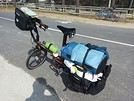
Hi
To attach this part [1]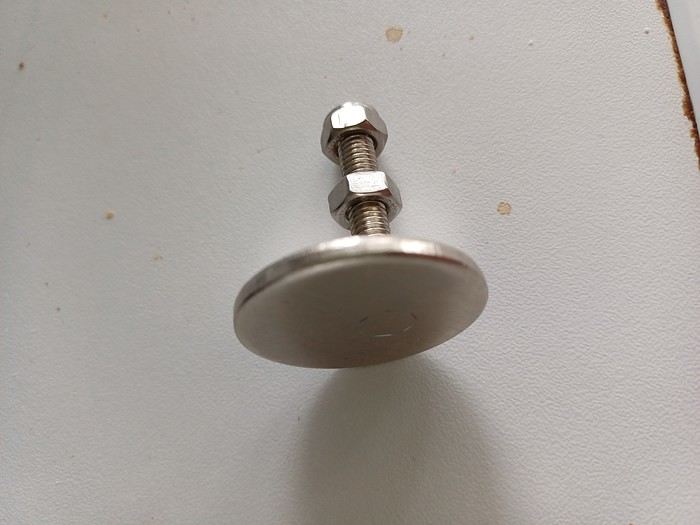 on the front fork with an oval cross-section, I need a clamp like this
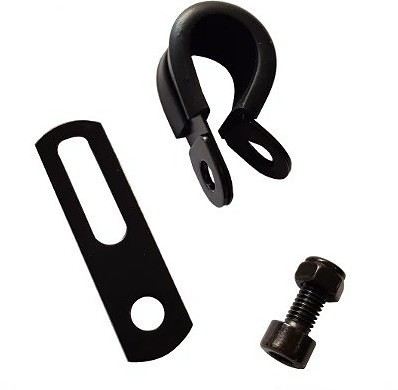 but with an oval shape, knowing that the fork’s larger diameter is 3 cm and the smaller diameter is 1.5 cm.
[1] It’s part of a magnetic locking clip. This keeps a folding bike in the folded position.
Thanks
To attach this part [1]
on the front fork with an oval cross-section, I need a clamp like this
but with an oval shape, knowing that the fork’s larger diameter is 3 cm and the smaller diameter is 1.5 cm.[1] It’s part of a magnetic locking clip. This keeps a folding bike in the folded position.
Thanks
Hey everyone, travelers! Here’s a little post to share our bike trip this summer. We did the Via Rhôna from Geneva all the way to the Mediterranean Sea. It was a truly amazing adventure—no hitches, lots of independent greenways, and we felt like we had the Rhône all to ourselves as our guide for 700 km over 7 days. That averages out to 100 km a day. We thought we’d do less, but the Via Rhôna is flat and not too tiring, which let us push to around 100 km each day!
Here’s the full video of our route: www.youtube.com/watch?v=x_cpBro6Df8
We’re not seasoned cyclists—we just love biking, and this trip was our first big bike touring adventure. As for our bikes (see photo), we had road bikes, sturdy ones with fairly large wheels and rear racks for our gear.
Speaking of gear, here’s what we brought: just the essentials for 7 days of biking and camping—1 tent for 2, two sleeping bags, a few clothes (not too many), 1 book each, toiletries, phone chargers, a basic bike repair kit... and maybe 2 or 3 things I’m forgetting. The idea is to travel light so you’re carrying as little as possible!
We camped every night. Along the Rhône, it’s pretty easy to find campgrounds, and they’re cheap too! Each morning, we’d decide on our destination for the evening (usually based on available campgrounds) and call during the day to book. We always managed to get a spot right away (except when we reached the Mediterranean coast, but we should’ve seen that coming 😛).
For expenses, we slept at campgrounds (between 15 and 25 € per site for 2) and either picnicked or ate at restaurants. Other than that, there weren’t really any other costs besides a few small souvenirs here and there. In total, we spent about 500 € for two over 7 days (so 35 € per person per day). I think it’s possible to spend even less—we decided not to restrict ourselves when it came to restaurants and campground prices.
For us, the most beautiful part was between Geneva and Lyon! The Rhône is still a bit wild there, as are its banks. Not too many roads, highways, trains, or factories around—just nature and peace. You gradually leave the Alps behind and head further south. It was truly stunning. We also loved the "Rhône Valley" after Lyon. The succession of dozens of suspension bridges and little villages, each more charming than the last, really enchanted us.
The trickiest part was leaving Lyon... The Via Rhôna disappears for a long stretch, forcing you to alternate between roads, traffic, danger, and pollution. We had to wait until Givors, further south, to finally get back to the quiet bike path and the Rhône showing us the way. Also, after Lyon, the Rhône becomes a bit more industrial—you pass by dams, factories, and power plants more often. But it’s really just a small detail, the exception that proves the rule of this magnificent Via Rhôna.
The Via Rhôna is a fantastic way to see how water from the mountains of Lake Geneva flows, travels, and winds its way for hundreds of kilometers to reach the sea. With this trip, you get closer to the Rhône—it becomes your accomplice, your guide. Plus, you cross a beautiful part of France, with its charm and little villages. It’s the France we love, and it’s great to explore your own country like a tourist.
That’s it for our little travel journal. I didn’t go into too much detail about our days since everyone will follow the same route, and everyone can go at their own pace :) But I’m happy to answer any questions (logistics, technical stuff, routes, etc.)—I’d be glad to help!
Here’s the video of our route again—I also composed the music, so I hope you’ll like it: www.youtube.com/watch?v=x_cpBro6Df8
Happy travels,
Flo
Hi,
It's all in the title... I'm looking for tips on how to transport spices. In other words, I'm looking for small containers to carry them in.
I read on a blog that you could use Tic Tac boxes... but honestly, I don’t want to buy Tic Tacs just for that. I checked at D4 but didn’t find any suitable containers. If you know any handy tips or practical containers, I’d love to hear them! :D
Thanks
I read on a blog that you could use Tic Tac boxes... but honestly, I don’t want to buy Tic Tacs just for that. I checked at D4 but didn’t find any suitable containers. If you know any handy tips or practical containers, I’d love to hear them! :D
Thanks
Hi there.
I'd like to change the chainring on my Riverside 5 with trigger shifters.
I’m attaching a photo for advice. I’m lacking power and want a larger chainring for road use because I’m spinning out on the highest gear even though I still have power to give on flat terrain.
At Decathlon, they were supposed to get back to me after checking it out in the workshop but never did. It was outside their standards, and the salesperson clearly forgot about me...
What are your recommendations and suitable products for purchase, please?
Thanks.
Best regards,
A lot of water has flowed under the bridges, and many kilometers have rolled by under my wheels since my last post on this forum. I've ridden the 4 diagonals of France, a Paris-Brest-Paris, and crisscrossed the country from one end to the other.
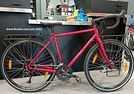
in 2024, a beautiful ride with Claudio
from Dunkirk to Perpignan or thereabouts
a timeless journey off the beaten path
http://cbandiera.free.fr/recits/2024-dunkerq-perp/

http://cbandiera.free.fr/recits/2024-dunkerq-perp/
New, seen on TV, you won't believe it. Click here.
During my recent trek, I found that my bike—and my luggage—were heavy. Until now, the weight of my gear hadn’t been an issue. Maybe I’m getting old, or maybe I just can’t handle the SNCF’s stairs anymore.
It hit me in Toulouse. A 3-minute stop turned into a 6-hour delay because of a fire that was hard to control between Toulouse and Montauban. Eventually, our train was canceled, and we were told to take another train that was also waiting for the same destination. It was my fourth train of the day. It was 9:30 PM, and I’d left at 9:30 AM that morning. Suddenly, exhaustion took over.
That’s when I met two bike-packers who, without hesitation, lifted their bikes with all their gear attached, carried them down the steps of the Corail train, and then down the stairs to the underground passage. They were young and fit (they smelled like warm sand), and I definitely wasn’t. It was in that scorching heat, struggling up and down all those stairs (Oh Toulouse, as Nougaro would say, may you be cursed for seven generations), that I decided to go on a diet.
It’s a diet anyone can do, it works, and it’s free. So I’m sharing it right away.
No need to exercise or restrict yourself. No, all you have to do is think and do some research. You need a chair, a table, a scale, a computer, and a spreadsheet. Make a list of everything you’ve brought and weigh it all. Set a goal based on the type of trek and your comfort level. Remove everything that doesn’t help you reach that goal.
My goal: - Trekking in France from May to September, in the plains or at most on a plateau like Mont Aubrac, where at 800 m altitude, it can drop to 10 °C at night even in the middle of summer.
- Sleeping in a tent on a good mattress in a sleeping bag (I’m not changing that). Someone suggested I could sleep under the stars on bubble wrap. No way, are you crazy?
- Not cooking. I buy lunch on the way in the morning and dinner on the way in the afternoon (I’m not changing that either). Someone suggested Ducasse delivers everywhere in France. Uh, have you been smoking lemon weed?
That’s how I lost 5 kg, going from 17.7 kg to 12.8 kg, including luggage but not food or water. But I also reduced the volume and quantity of my gear.
Here are the before photos:
https://photos.app.goo.gl/XDfKaoVvHFNxDXrq5
And after:
https://photos.app.goo.gl/STRVKaWuVcNVeCfS9
of my bike.
You can see that a duffel bag is gone, as well as the extra bags behind the panniers. I don’t even use the mesh pockets at the bottom of each pannier anymore. You can also see I’m still carrying my 1 kg U-lock. I know, it’s unforgivable. I’m on the verge of being banned.
So I might do another trek in September to validate my choices.
For the rear panniers, I can save between 1 and 1.5 kg depending on the solution: Arkel Dry-lites (28 L pair, 0.540 kg) or Vaude Aqua Light (38 L pair, 1.080 kg).
I also need to cut down on the tools I bring. I should be able to shave off about 0.5 kg.
And the bike? I’m thinking about it. Someone suggested the folding Savadeck Z2, which only weighs 10 kg. Carbon? Oh, don’t spread the word—it’s even more taboo than aluminum in some circles, and I won’t even mention the belt drive.
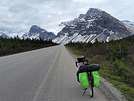
This message is for folks who’ve been to Cayo Jutias in the past year, especially this past winter. I’d love to hear about the road conditions on the way there. Are the last few kilometers to the beach still in terrible shape, full of potholes?
Same question about the road through La Sabana toward Santa Lucia—was it still in rough condition?
How’s the road to Minas de Matahambre and Pons?
And what about the route from Santa Lucia to Mantua and then Sandino?
Thanks in advance.
Same question about the road through La Sabana toward Santa Lucia—was it still in rough condition?
How’s the road to Minas de Matahambre and Pons?
And what about the route from Santa Lucia to Mantua and then Sandino?
Thanks in advance.
Recommended for you
 14 Days in Japan – September-October 2026
 Trek in Norway: Jotunheimen and Dovrefjell, you’ll adapt to the rain...
 CARIBBEAN: The island of SAINT-MARTIN, a different perspective
 Northern Morocco, the kingdom of kif?
 Summer 2026 - 3 weeks in the Azores
 The Pearl of Africa - July-August 2026
 A little piece of Sulawesi with the family: Rantepao and Selayar
 Tanzania Classics (Safari & Zanzibar)
15,434 more discussions in this forum are in French. Browse them on the French forum