Travel journals
FR

Many threads here are in French, the community’s main language. English translations are added over time.

JA
Jacou0109 last year · Greggig
Eastern Crete in September 2024
Travel journal in Eastern Crete from September 8th to 29th, 2024

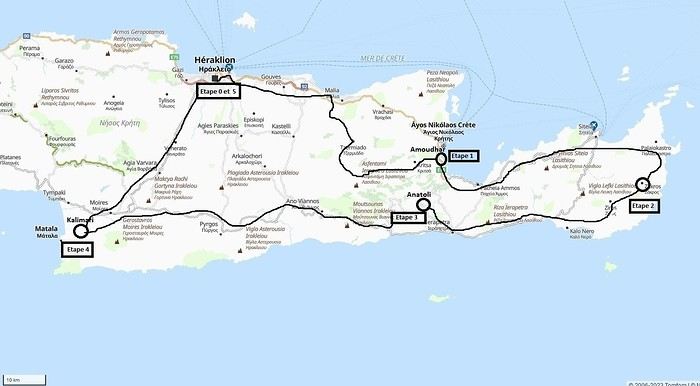
Our 21-day itinerary

Sunday, 08/09: Once again—and this is the eighth time—we’re setting off, the four of us: Patrick, Michelle, Jacques, and Monique, for the Greek islands. This time, we’ve chosen Crete. No need to wake up at 3 or 4 a.m. to reach Basel-Mulhouse Airport at dawn to catch the first flight to Greece at 6 a.m.! Given the prohibitive prices charged by EasyJet, we found flights that were half the price from Zurich Airport, which is accessible in 3 hours by train from Colmar. Pierre-Paul drives all four of us to Colmar train station, where we take the train to Basel and then, 20 minutes later, the direct train to Zurich Airport. After wandering around the airport, we go for a coffee at 6 € each! We’re in Switzerland, after all. The other dining areas all have vending machines for selecting and paying for meals—soon, there won’t be anyone left to serve you! After a short wait, we take off at 7:45 p.m. (20 minutes late) in an Aegean Airbus A321. Free in-flight meal service isn’t bad either! We land in Heraklion around 11:15 p.m. We pick up our rental car (a red Seat Ibiza) at the airport and head straight to our apartment, located 2 km from the city center. Thanks to the GPS, we find it quickly. It’s a beautiful, fully renovated apartment with all the comforts and well-equipped. On the table, there’s wine, bottles of water, jam, coffee, etc. Given the late hour, we won’t stay up long.

Monday, 09/09: To enhance our breakfast, Michelle and Monique set off to find a bakery nearby. They return with croissants and donuts—yum... Then we head to the west coast. The highway follows the coastline, but we prefer taking the old road to Malia, our first stop. We visit the major archaeological site of this Minoan city under the hot sun. The site covers a vast area, but the ruins aren’t very evocative except for a few beautiful amphorae scattered around. The explanations in a small house at the entrance are interesting and help us better understand the organization of the ancient city with its different districts. From there, we head toward the nearby mountains to see the thousand-year-old plane tree in the village of Krasi. We take the opportunity to enjoy an excellent lunch of moussaka and delicious gemista at the Krassopsychia taverna in the village center. Pleasant surprise: the prices are still reasonable, with a bill of 70 € for four, including wine and water. The friendly tradition of complimentary dessert and glasses of raki continues—great! We’ve set the bar high right away! Let’s hope the rest lives up to it! On the way back toward the Lassithi Plateau, we stop at the Kardiotisa Monastery perched high on the mountain to enjoy a magnificent view of the entire region. Just a little further, we arrive at the Lassithi Plateau: the presence of small windmills used to pump water from the ground is the typical feature of this plateau. We complete a full loop around the plateau, passing by numerous orchards and vegetable gardens that occupy the entire space. At the end of the plateau, we once again cross mountain passes via winding roads that bring us near Agios Nikolaos. Our apartment is located about ten kilometers further south in Amoudhara. The owner, who was notified, waits for us and shows us her superb apartment, whose large terrace overlooks the entire Mirabello Bay. She then gives us valuable information about the different beaches in the area. Dinner will be frugal, given our hearty lunch in Krasi!
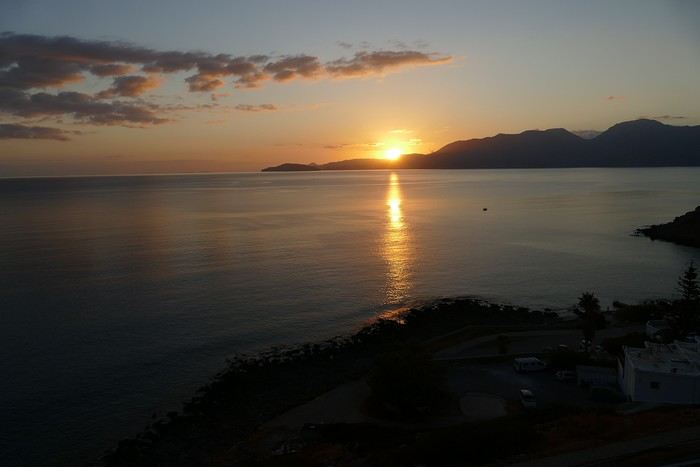
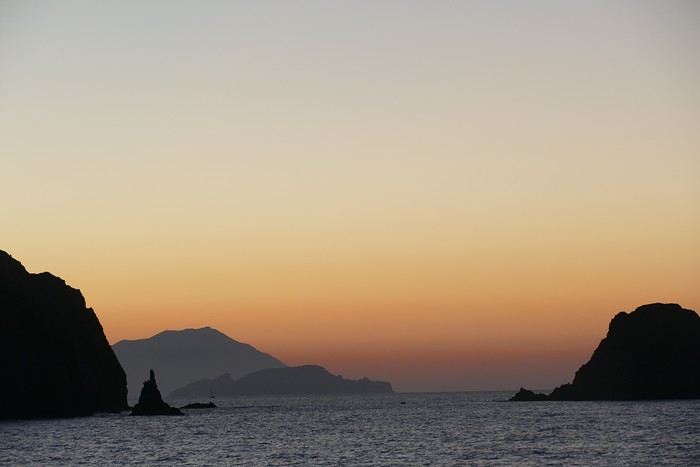
Sunset over Mirabello Bay

Tuesday, 10/09: A bit of a gray sky when we wake up around 8 a.m., but the sun will soon triumph over the scattered clouds. For our first swim, we opt for Voulisma Beach, even though our host warned us it was a bit “crowdy.” That’s understandable given the beautiful emerald color of the sea and the lovely curve of the beach. To avoid the big crowds, we move toward the eastern part of the beach, accessible via a steep staircase. The water is very warm, and this first dip is very pleasant. Before returning to the apartment, we stop at the bakery to buy spinach pies, essential ingredients to accompany our Greek salad for lunch. Of course, everything will be washed down with ouzo, which will remain our favorite drink for the next three weeks—but in moderation!!! A nap is in order after all that effort. In the late afternoon, we drive to Agios Nikolaos, the main seaside resort in Crete. We’re not too enthusiastic about visiting this mass-tourism resort, but the center of Agios, concentrated around the small inner harbor, is pleasant to see despite the plethora of shops and restaurants. We dine a little outside the harbor in the shaded courtyard of the Avli taverna: the oven-baked lamb, squid with spinach, and cuttlefish ink orzo pasta are all highly appreciated. We still stay under a 75 € bill for four.
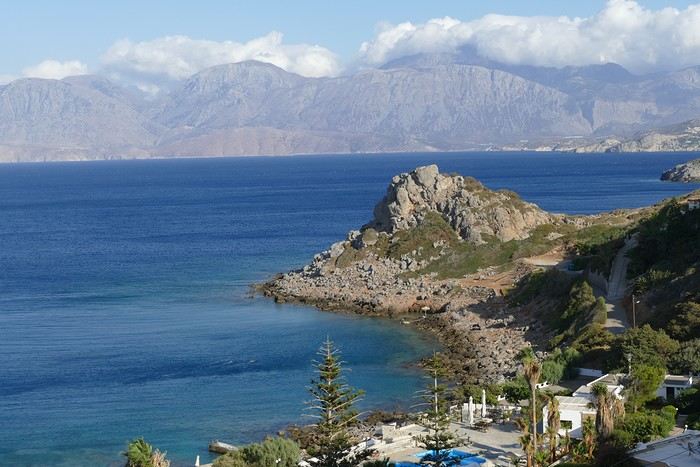
Mirabello Bay seen from our terrace

Wednesday, 11/09: At 8 a.m., the terrace is already bathed in sunlight, and it’s already quite hot. The small parasol barely gives us enough shade, but we’re not complaining! For our second swim, we head to a tiny beach recommended by our host, just 3 minutes by car from our place. The path leading to it is very discreet, and we don’t find it right away! It’s a small sandy cove with a few welcome tamarisk trees for shade. When we arrive, there are two swimmers, and there won’t be more than five or six in the morning. After lunch and a nap, we head to the beautiful village of Kritsa, just a few kilometers away. It’s too late to visit the beautiful church of Kera Panagia, which is already closed. We settle for the exterior, which is worth a look. The weather is clouding over, and big clouds are gathering. Upon arriving in Kritsa, a heavy shower forces us to take shelter in the Platanos taverna in the village center, and since it’s nearly 7 p.m., we decide to stay and dine there. Good choice—excellent meze: croquettes and stuffed zucchini flowers, gigantes beans, grilled tomatoes and feta, and pancetta as the main dish. The rain stops just as we decide to head back.
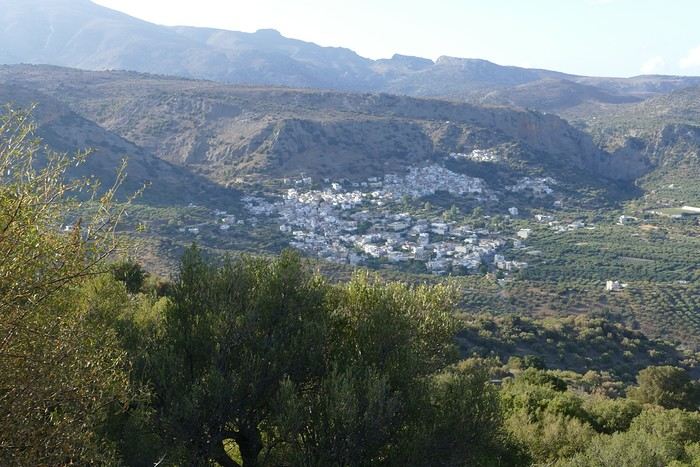
Village of Kritsa

Thursday, 12/09: Our terrace faces east, so we get to watch the sunrise around 7 a.m.—it’s truly a beautiful sight we never tire of. Around 9 a.m., we head to the village of Plaka, where boats depart for the island of Spinalonga, located north of Agios Nikolaos. We board the first boat, which sets sail at 10 a.m., and we’re not alone—the boat is practically full. After 10 minutes, we land on the island at the same time as several other boats from Elounda or Agios. Needless to say, there are already quite a few people walking through the streets of the leper village. The visit remains interesting and moving as we read the explanatory panels recounting the island’s history under Byzantine and then Turkish rule, followed by its transformation into a leper colony. As soon as we climb toward the top of the island via more or less maintained paths, there’s almost no one left. The 360° view from up there is stunning.
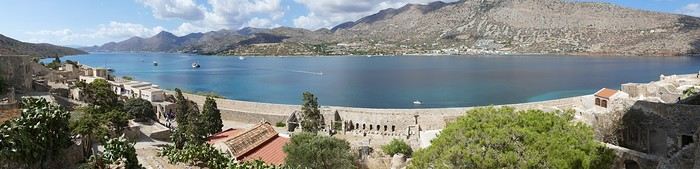


Spinalonga Island

The heat is now unbearable, and we can’t wait to get back home to have lunch on our terrace and rest. In the late afternoon, we go grocery shopping at the AB supermarket at the entrance of Agios. We had spotted another nice restaurant in our guide, but unfortunately, there’s a different one at the indicated location that doesn’t inspire us. So, we return to the Avli taverna for another dinner just as good as the first.

Friday, 13/09: We repeat yesterday’s successful program: a swim in our little cove, lunch on the terrace, a nap, and then, in the late afternoon, we discover another nearby village, Kroustas, nestled in the olive groves near Kritsa. Much less touristy than Kritsa, it’s mostly inhabited by locals, especially the elderly who are enjoying the cool air on their chairs—if you can call it cool given the still-high temperatures in the late afternoon! We then return to visit Kritsa, which we hadn’t been able to explore due to the rain. Dinner at a taverna in the village center at a very reasonable price.

Saturday, 14/09: Today, we move to our new base further east. We start with a high viewpoint at the Faneromeni Monastery, which overlooks Mirabello Bay. The monastery itself is of little interest as it’s under renovation with excessive concrete work. We continue to the village of Kavoussi to see another exceptional tree after a few kilometers on a dusty, bumpy track. It’s an olive tree said to be about 3,200 years old—impressive, and the countryside is very beautiful. It’s time to find a place for lunch. We find one in the charming little port of Mohlos, where a few tavernas surround a very nice small beach. Our choice falls on the Bogazzi taverna, where we enjoy fried fish. To reach our new base in Zakros, we still have to drive through the mountains before reaching Sitia, Paleokastro, and finally Zakros. The region is beautiful, with olive groves and rows of wind turbines taking advantage of the strong wind near the northern tip of the island. In Zakros, we’re greeted by our very friendly host. Here too, we have all the comforts and a beautiful terrace overlooking the village. The apartment has reversible air conditioners, but the overly simple instructions leave us puzzled. Thinking we’ve set it correctly, we realize a little too late that it’s blowing hot air over 30°C! After numerous attempts and testing several confusing programs, we finally succeed! Dinner on our new terrace.

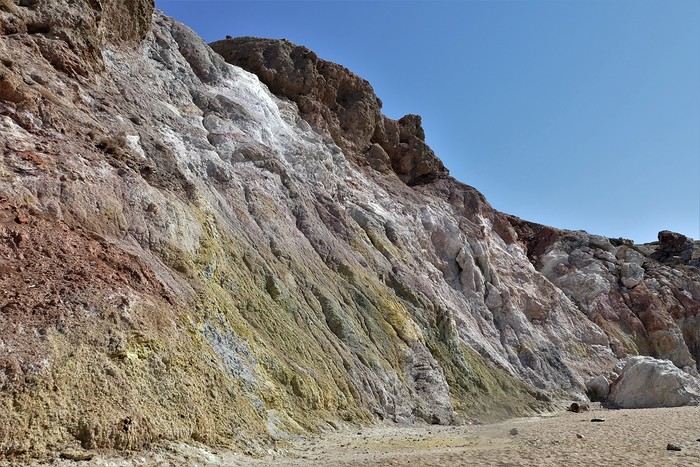
Sunday, 15/09: This morning, we get up early to hike in the “Gorge of the Dead” while it’s still cool. The sky is blue as usual! We park in the nearest parking lot and start our descent via a beautiful path winding through the olive groves. A little further on, the landscape opens up, and the path, now a stony trail, begins the descent to the dry riverbed. On either side of the riverbed rise beautiful reddish cliffs.
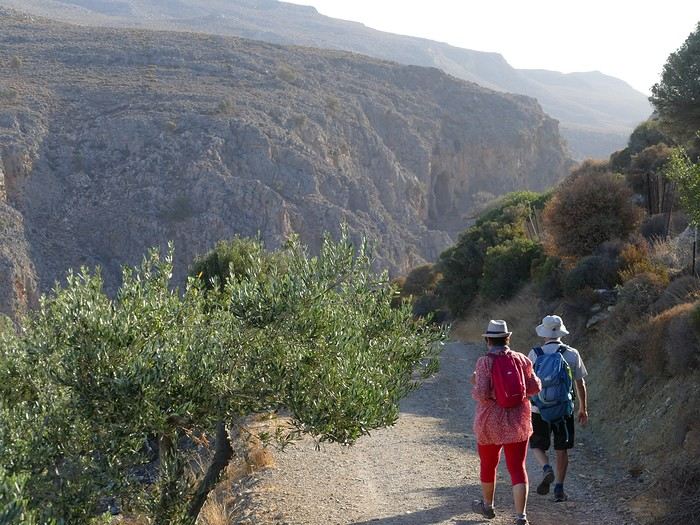
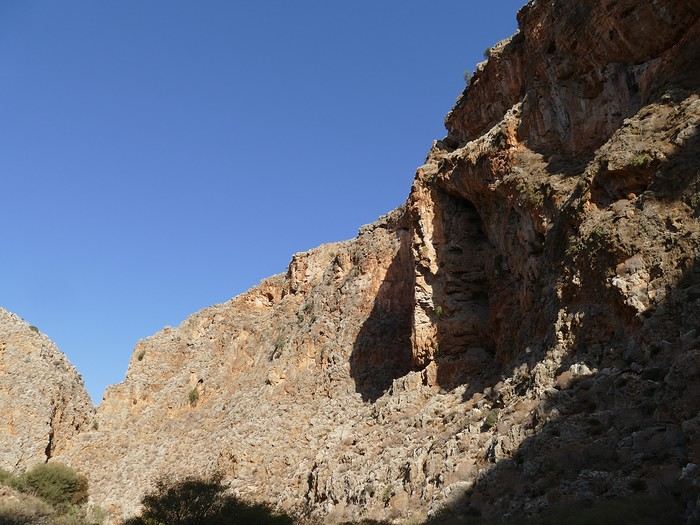


Gorge of the Dead

The trail winds its way through this narrow gorge with difficulty. It was in the many caves visible halfway up the slope that the Minoans buried their dead, hence the name “Gorge of the Dead.” The gorge opens onto a beautiful small pebble beach. A swim is welcome after this hike that made us sweat. The hike took us 1 hour and 25 minutes, and a little less on the way back. Meanwhile, Monique did some shopping and prepared an excellent lunch. In the late afternoon, we go down to dine at Platanakis, a taverna in the small village of Kato Zakros.

Monday, 16/09: This morning, we explore the northern part of the east coast near Palekastro. We start with a dip at the beautiful Hionia Beach near Palekastro. The water is still just as nice, but a light breeze is blowing—not enough to spoil our fun! Seeing all the wind turbines lining the ridges, it’s no surprise.

Grocery shopping in Palekastro and return to Zakros. A little rain in the late afternoon and an excellent dinner at Iannis Mitsakakis’ Taverna in Adravastis. These are the kind of small tavernas we love—unpretentious, a few tables on a terrace, a warm welcome, a short menu guaranteeing freshness, tasty dishes prepared by the server’s mom, and a light bill. What more could you ask for!

Tuesday, 17/09: We head back toward Palekastro to do some shopping, but it’s also the road to the Toplou Monastery. There, we see a collection of magnificent icons dating from the 15th to the 20th century. We can also admire drawings of Orthodox religious architecture. We continue toward the Mavros Akrotiri headland to enjoy the view of the sea and rocky capes. On the way back to our place, we make a small detour to see the famous Vai palm grove. Meh... As for Vai Beach, it’s filled with paid umbrellas and sunbeds, and there are so many people that we flee. Plus, having to pay for parking is another reason to snub this trendy beach. We prefer our Hionia Beach, which we already appreciated the other day. In the late afternoon, Pat and I start the trail that begins at Kato Zakros Beach heading south. The poorly marked path crosses a plateau of sharp limestone. The paint and cairn markings are no longer very visible, and with dusk approaching, we turn back toward Kato Zakros. Dinner at the Platanakis taverna—less good than last time.

Wednesday, 18/09: To avoid the scorching sun, Pat, Mimi, and I get up earlier than usual to hike the Hohlakies Gorge. At this early hour, the sky is quite cloudy, and it’s drizzling. When we arrive in the village of Hohlakies, we park in front of a small chapel, the start of the hike. The sky is now completely clear. The trail starts among the olive groves, then after passing through a gate, we descend into the gorge filled with large rocks. We’re alone in the world, and the landscape is magnificent. A few wild goats clinging to the cliff watch us from above. After 1 hour and 15 minutes, we emerge onto the wonderful Karoumès Beach. A pleasant swim, then back to civilization! A walk in the late afternoon in Zakros to discover the beautiful springs route. Dinner in Adravastis.

Thursday, 19/09: Another move: Before heading to our next stop, we make a detour to see the beautiful Keratokampos Beach and can’t resist a swim in the still-warm, clear water. We continue our journey via Ziros, then reach the south coast and have lunch at the Stephi taverna in Ferma—excellent meal! The south coast is quite urbanized and has much less charm than the east coast we’ve just left! The numerous plastic greenhouses are partly to blame. We stop for groceries in Ierapetra. Around 3 p.m., we arrive at our destination in the small perched village of Anatoli. Our lodging is at the top of the village, and from the path leading to it, we have a magnificent view of the coastal plain, unfortunately overloaded with plastic greenhouses. It reminds us of the landscapes of El Ejido in Andalusia.
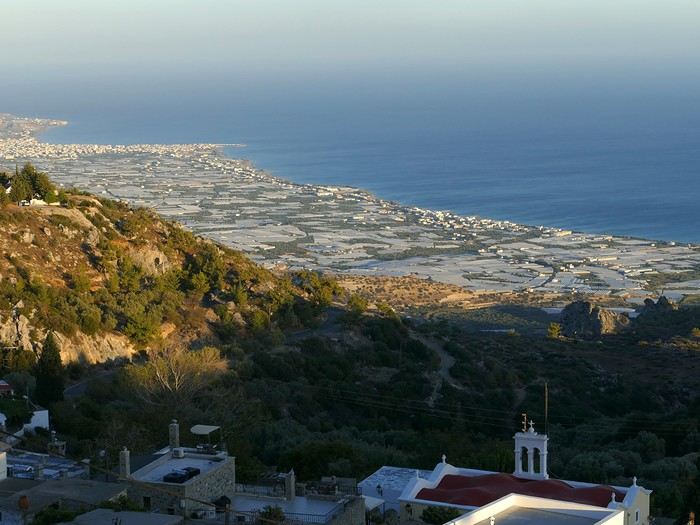
View of the Ierapetra coast from Anatoli

Friday, 20/09: A walk and discovery of the hamlet of Anatoli. There are few services—a tiny grocery store, a taverna, and that’s it. Fortunately, the traveling baker arrives and honks. We take the opportunity to buy fresh bread. Leaving the village, we take a path that should lead us to the hamlet of Drygies. The landscape is beautiful. We walk through a lovely pine forest before arriving at the hamlet. The path continues to a taverna that’s closed today, with a superb terrace overlooking the coast. Luckily, the owner arrives and informs us that the taverna will be open next Sunday and that we can enjoy barbecued meat. Noted! We head back to Anatoli via the small paved road with, fortunately, very limited traffic. Lunch on our terrace, then a dip in our private pool! The water is noticeably cooler than at the beach. Dinner at the village taverna: there’s only one menu—meze starters, souvlaki, water, wine, and bread—all for 35 €! We think we’re dreaming—was there a mistake? No.

Saturday, 21/09: We discover the beach of the village of Myrtos, a small seaside resort that’s quite touristy but on a human scale. We swim in the western part of the beach, and once again, we’re alone in the water. The best part: warm water and tamarisk trees for welcome shade. There’s even a shower to rinse off! In the late afternoon, Pat and I decide to go for a hike in the Selakano pine forest. To get there, we take a narrow, winding, and poorly paved road after the village of Christos. Plus, at this altitude, we encounter clouds clinging to the mountain, so it’s drizzling, and visibility is reduced. We decide to turn back and return to Anatoli. As compensation, we take the path that passes in front of the lodging and leads us to the Timios Stavros chapel, which crowns the summit of the nearby mountain. We arrive at the summit just in time for the sunset at 7 p.m. Breathtaking 360° panorama and magnificent colors!
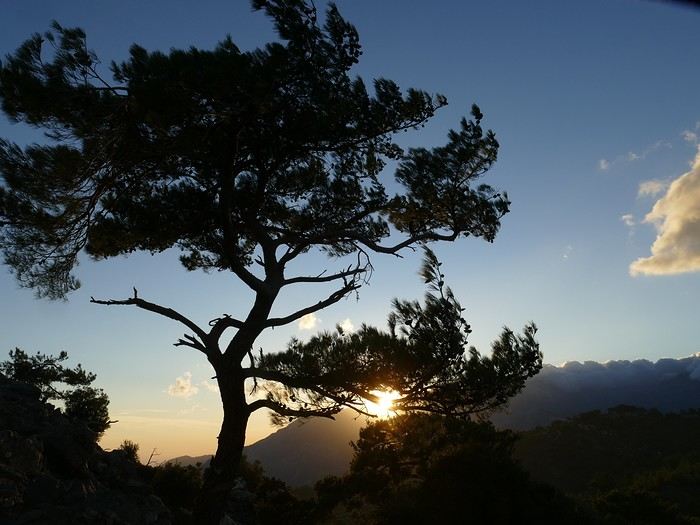
Sunset from Anatoli

Sunday, 22/09: This morning, Pat, Mimi, and I go for a hike in the Sarakina Gorge, located about 12 km from Anatoli via a beautiful road winding through irrigated olive groves. We park in the small parking lot before the trail. At the start, the path follows a levada (small irrigation canal) and quickly enters a very narrow gorge flanked by high cliffs. The riverbed is cluttered with huge rocks blocking the passage. No matter—in the technical sections, ropes or ladders allow us to overcome these obstacles with a bit of skill. You can imagine how quickly the riverbed must rise during a storm, given the narrowness of the gorge!

We progress slowly through this magnificent and impressive rocky chaos. At the exit of the gorge, we take another return path that partly follows the paved road. Back in Anatoli, we go to lunch at the Drygies taverna. We sit at the edge of the terrace under a huge tree that covers almost the entire terrace and order grilled lamb dishes prepared according to the ancient “antikristo” method.

Monday, 23/09: Departure for our last stop before Heraklion. We thought about swimming at Tertsa Beach, but it turns out to be less pleasant than expected, with pebbles and an uneven rocky plateau. So, we return to Myrtos Beach, which we know well and suits us perfectly. We head west, leaving the coast a bit. Around 3:30 p.m., we arrive at our destination in the village of Kamilari, near the famous Matala spot. We’ve rented a beautiful, modern, well-equipped apartment with a lovely shaded terrace. The owner is very friendly and explains everything necessary for a good stay. We explore the quite touristy village with its few tavernas, all full of tourists, mostly Germans.

Tuesday, 24/09: Visit to the village of Sivas, well restored thanks to the Germans, who have invested a lot here. We take the opportunity to scout out “friendly” tavernas, then go for a swim at Kalamaki Beach. Apart from a small sandy access, you have to enter the water via a chaotic limestone plateau—proof of this is that Monique trips slightly when entering the water. A group of very unfriendly German women blocks the sandy passage and doesn’t hesitate to push swimmers they deem too close. Back home, lunch, and a nap. In the late afternoon, we drive to visit the nearby Phaistos site. We benefit from very beautiful lighting. From the elevated site, we overlook the Messara Plain with a beautiful view of the olive grove checkerboards highlighted by the late afternoon sun. The site itself is quite vast, but to appreciate it, it’s better to read the explanatory panels placed throughout the different quarters. At this hour, the site is almost empty, and the beautiful light adds charm to the visit.

Wednesday, 25/09: Departure for the village of Matala, which doesn’t interest us in itself, having been there during the “hippie” era in 1976. However, going to Red Beach, only accessible by taking a path overlooking this area, appeals to us much more. We park in the large parking lot just outside the village and start our climb, which brings us to a pass from where we can admire this beautiful red-sand beach framed by beautiful cliffs plunging into the sea. The weather is magnificent, and at this early hour, there aren’t many people yet. We swim in the free part located near the cliff on the right when arriving at the beach. The sea is like glass, warm, and without a single ripple—a real treat! After half an hour, we turn back, and now there are many people rushing on this path, not at all made for feet in sandals or flip-flops, yet many vacationers venture out like this! Matala lives up to its image—a trendy place, full of shops, bars, and restaurants. You could be in any seaside resort with a standard global urbanism, lacking particular charm. Back home. In the late afternoon, a walk through the olive groves surrounding Kamilari, then dinner at Evangelina’s, who runs the Minoan Parassies taverna in the middle of the olive groves. Evangelina is quite a character: we came to reserve a table for 8 p.m. when it was only 7 p.m., but since we lingered near her restaurant, she prepares a table for us and urges us to sit down! And there she takes our order, and a little later, the meze arrive, followed by the main dishes. We finish this good dinner with several generous glasses of raki, accompanied by Evangelina’s encouragements, repeating “poya poya bravo bravo” in a loop. We’re in great shape too, by the way! We return in the middle of the night, on foot, fortunately, with the path vaguely lit by our phones...

Thursday, 26/09: This morning, we discover a new beach, Kommos Beach, not far from Kamilari either. It’s a long sandy beach, a small part of which is dedicated to paid umbrellas and sunbeds, and the rest is free. We spot a tamarisk tree to take shelter from the still-hot sun, and once again, we enjoy clear, warm water. The few swimmers spread out easily over nearly 500 meters of beach. In the late afternoon, Pat and I go to admire the sunset from the hill near our lodging. The hill, covered with olive trees, is threatened by a planned housing development of large cubic villas—trends dictate. Concrete never stops...

Friday, 27/09: We thought about leaving the car at the Odiyitria Monastery, the end of the paved road, but since the track descending to the cave remains drivable, we park 3 km further at the junction of the track leading to Kali Limenes Beach. We still have to walk for half an hour on a less drivable track, and then we’re at the entrance of the Farango Gorge. It’s a beautiful, easy hike since we follow the dry pebble riverbed. Before arriving at the beach, there’s a very beautiful small chapel sheltered under a large cliff, beautifully lit at this early hour.
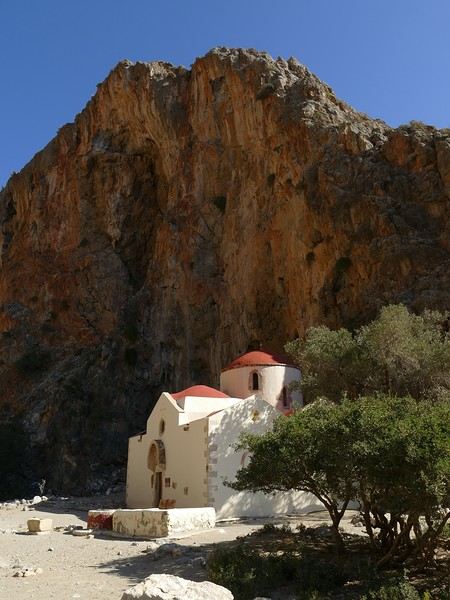


Agio Farango Chapel

A few climbers are scaling the cliff, and about ten swimmers are enjoying the sea. Return to the car under the hot sun. In the late afternoon, we all return to visit the interesting Odiyitria Monastery. Last swim at Kommos Beach and an excellent dinner at the Sigelakis taverna in Sivas.

Saturday, 28/09: There’s an end-of-vacation atmosphere... We pack our bags and head north. A short stop to see the village of Vorri, and a little over an hour later, we arrive in the big city of Heraklion. Since it’s too early to check into the apartment, we park in the city center to visit the famous archaeological museum. It’s indeed a must-see highlight of our stay in Crete. All four of us are amazed by the quantity and quality of the objects presented from the Minoan civilization. After more than 2 hours, we come out without having seen everything, but we’re a bit overwhelmed by all these wonders. Lunch at a nice little taverna very close to the Titus Church. We go to take possession of our apartment—the same as on the way there, still just as satisfying. In the late afternoon, I go alone for a walk in the historic district of the city, passing by the Morosini Fountain, which is bustling with people—some seated at café terraces, others standing and chatting. There’s a lively atmosphere here. A little further on are the Venetian loggia and the Agios Titos Church. I walk down to the old Venetian port to stroll along the jetty and admire the fortifications under beautiful late-afternoon lighting, then return to the apartment. Dinner near our place at Kiriakis, a “chic” restaurant but with very reasonable prices and excellent cuisine.

Sunday, 29/09: Wake-up at 3:30 a.m., quick coffee, and drive to the nearby airport. We leave the car in the parking lot. Already a lot of people at this early hour. Since we don’t have checked luggage, we go straight to security, which goes fairly quickly, then it’s waiting time and takeoff on time in an Airbus A321 for a 45-minute flight to Athens. We take off again in another Airbus A321 with a 50-minute delay to arrive in Zurich at 11:10 a.m. local time. Then we have to take the train to Basel and then the one to Colmar. With fewer Sunday services, we won’t arrive in Colmar until around 4 p.m.

Conclusion All four of us returned very satisfied with this stay in Crete for several reasons: - We found superb beaches with clear, warm water and often very few vacationers. - The few hikes we did were magnificent, especially those where the trails went through gorges leading to deserted beaches. - We greatly appreciated Cretan gastronomy—there were so few disappointments that we can count them on one hand. - All the accommodations we booked turned out to be superb, with the icing on the cake being the very friendly welcome from our hosts. - Generally, contacts with Cretans were always very warm despite the language barrier—we speak a little Greek. - We also appreciated the diversity of landscapes in this eastern part of Crete, with plateaus and mountains with splendid rugged reliefs.

Note: The photo album is available by clicking on this link: https://photos.app.goo.gl/hfdjQndA5eXkL5k7 Captions are only visible per photo by clicking on the circled “i” in the top right. Budget: approximately 3,300 € per couple for 21 days, including train and flights Budget details per couple: - Flight Zurich-Heraklion: 440 € - Trains Colmar-Basel-Zurich round trip for 4: 442.40 € (221 € per couple) - Accommodation: 2,431 € / 21 = 115.80 € per night for 4 (1,216 € per couple) - Car rental for 21 days: 684 € + 145 € fuel (1,150 km) (414 € per couple) - Restaurants, food, etc.: 1,009 €

Open
MI
Minibou37 last year
Carnet de voyage: au pays des Vikings, des fjords et des moutons
Bonjour à tous,

Comme à mon habitude, je viens poster un nouveau carnet de voyage du récit de notre voyage en Norvège en septembre dernier. Celui-ci s'étalera sur plusieurs mois, avec un récit jour par jour de notre périple. Je ne mettrai pas beaucoup de photos sur le forum (les règles de publication s'étant encore un peu plus complexifiées depuis mon dernier carnet), mais vous pourrez trouver l'intégralité de ces clichés sur mon blog (adresse en signature).

Nous voilà rentrés d’un voyage vraiment extraordinaire, inoubliable. La préparation de ce voyage n’a pas été si simple et j’avoue avoir eu du mal à me décider quant à l’itinéraire… Faire tout le trajet en Hurtigruten du Sud jusqu’au Nord ? Mais tout un voyage en bateau ne nous tentait pas trop. Ou bien centrer le voyage au Sud dans la région des fjords ? Mais cela impliquait de ne pas aller voir les îles Lofoten… Nous avons finalement fait le choix de nous concentrer sur le sud de la Norvège à la découverte de la côte et des fjords, tout en incluant un passage à Oslo, et en mêlant trajets en train, bateau et voiture. J’ai également opté pour un voyage où nous roulerons moins que les années précédentes (1650 km contre 2000km au Portugal et 3800km dans l’ouest américain), mais bougerons quand même un peu et ferons quelques randonnées. Voici l’itinéraire que nous avons suivi :


Ce voyage a vraiment été fabuleux et nous aura fait découvrir beaucoup de choses que nous n’avions jamais vues/faites parmi lesquelles les fjords, une nuit en bateau, les glaciers, les églises en bois debout, la neige en été (…et le coût de la vie élevé !).

Si l’on résume au minimum les choses que nous avons préférées, voici notre top 3 : Monsieur :

la variété des paysages les couleurs, en particulier les couleurs de l’eau, du transparent, bleu clair au turquoise dans certains endroits manger du bon poisson

Madame :

les routes : celles du secteur dans lequel nous avons vadrouillé sont réellement magnifiques le Geirangerfjord, surtout en fin de journée, au calme, et sans paquebot la randonnée de la Trolltunga : une randonnée-défi, un petit exploit pour nous

Ce que l’on a moins aimé :

la signalisation parfois un peu aléatoire des randonnées le coût de la vie (tout est payant et même la nourriture est chère) les tunnels : il y en a beaucoup et c’est pas très fun (sauf l’un d’entre eux où l’on peut voir un rond point dedans… !)

Voilà pour ce premier résumé/aperçu, et je peux déjà vous dire que le choix des photos va vraiment être difficile !!! Voici un petit avant-goût de ce que nous avons découvert :


Pour découvrir les photos "en grand" sur mon blog : rv ici
Open
FA
Fabhyène last year · Bibouns51
Carnet participatif pour les amoureux de l'Ouest américain!
Bonjour à tous!

Alors je mets en pratique une idée que j'ai eu voici deux ans... j'invite tous ceux qui le veulent à construire ensemble un bel objet participatif, un carnet commun!!!

Le principe: un post =

une photo que vous avez prise dans l'Ouest américain et qui vous tient à coeur et votre commentaire sur cette photo ou autour de cette photo : où et quand, les coulisses, pourquoi elle vous est chère ...

A vos plumes!!!! (et j'espère que cela ne fera pas FLOP, mais si ça fait FLOP, au moins j'aurai essayé!!!)

Et je lance le bal dans le prochain post!
Open
MI
Michel85200 last year
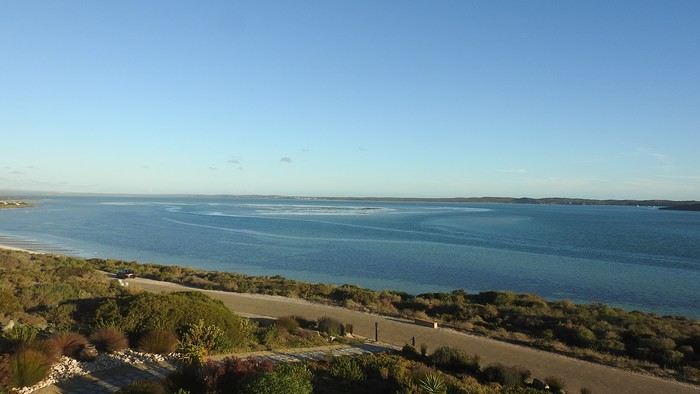
Around Cape Town in 15 days in May
Hi there,

I’ve got a bit of time to share my latest Cape Town – Cape Town trip... A fairly short itinerary, but it was just before heading to Kruger for an extension. In May... Honestly, I’d usually recommend a different time to visit CT—I’ve been there in August, September, and October before. But as they say, "Do as I say, not as I do" or "Only fools never change their minds." Why? Whale season peaks from August to October... and seeing whales right by the shore or breaching out of the water is absolutely spectacular. The end-of-year holiday period—take this year, for example—can get absolutely packed, with beaches closed due to overcrowding, etc. June and July are freezing (for me)... early August isn’t always great either. That said, 2024 saw a September-October with rain, cold, and fog like never before. The Postberg section of West Coast National Park (WCNP) is only open in August and September. Flower season is roughly from mid-August to mid-September.

So, May... The weather? Gorgeous (lucky me!). The route... Not super original (I’ve done it before, though it’s been a while). I didn’t go too far from CT because I prefer slow travel. Cape Town – Langebaan (for WCNP, again) – Cederberg (at Mountain Ceder, again) – Bontebok NP (new to me, and on the way) – De Hoop NR (at De Hoop) – Agulhas NP – Boulders (for Boulders Beach and the peninsula, again and again).

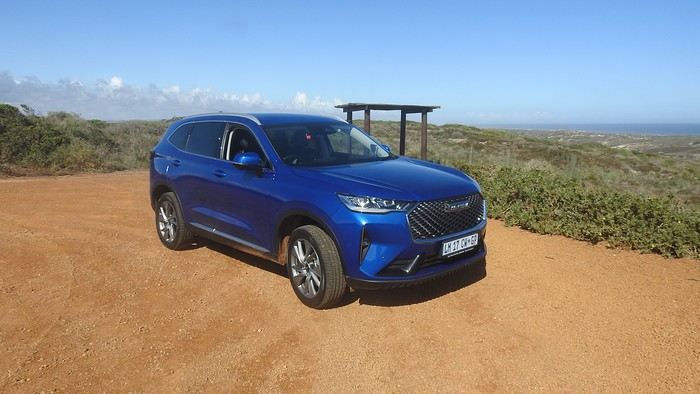
The trip started off badly due to storms in Frankfurt... My overnight flight was delayed until the next day, but via Amsterdam, so a daytime flight instead. A bit stressful, but Lufthansa and KLM handled it well. Now it was my turn to sort things out... "Well, I need you to keep the car for me... I’m arriving tonight!" (aroundaboutcars, a Chinese Haval, blue and 4x4—though I didn’t actually need the 4x4... which waited for me).


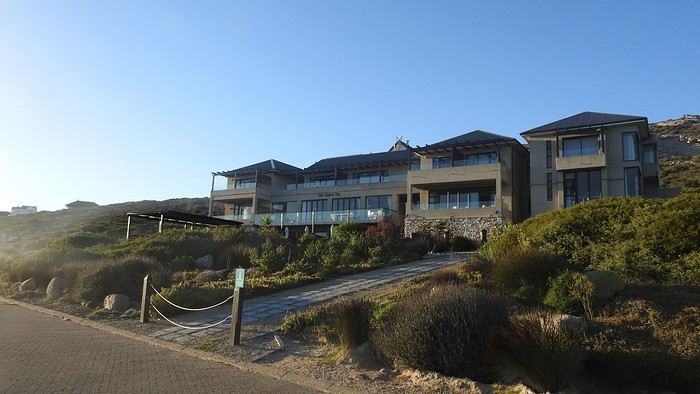
"Well, I need you to keep my room for me... I’m arriving *very* late tonight." A hotel perfectly located by the lagoon, right by the gates of WCNP, but still close to Langebaan and its restaurants. I spotted it myself and booked it during Black Friday...


Yep, what was normally a short 1.5-hour drive *in daylight* from the Mother City to Langebaan... was now *at night*. And here I am, usually the one telling people, "Don’t drive at night, folks!" Well, I know the route, and Google won’t let me get lost... until Langebaan, that is. The last few kilometers were rough—"Don’t they put up signs? Don’t they have streetlights?"

Alright, it’s late, the day’s been long—time for bed! !
Open
BR
Brycs23 last year · Tangis
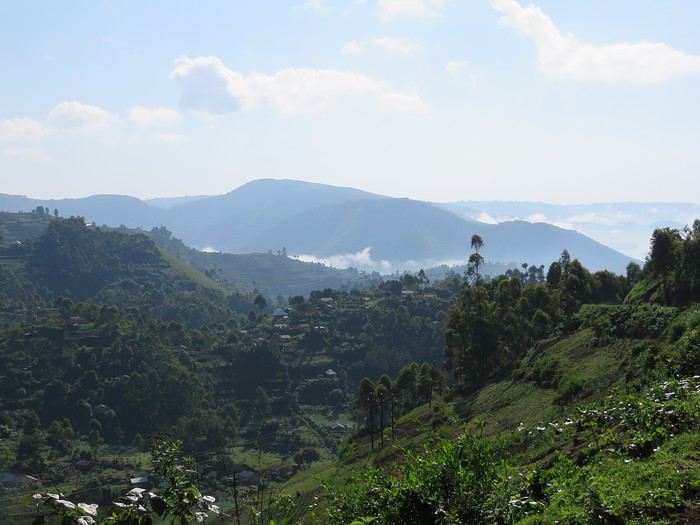
Le Sud-ouest de l'Ouganda en self-drive, février 2020
M'étant beaucoup servi de ce forum pour préparer notre voyage, voici un petit retour de nos 15 jours en self-drive dans le sud-ouest de l'Ouganda. Pour ceux qui auraient des questions, n'hésitez pas. Je tâcherai d'y répondre au mieux 😉

Nous avions déjà pas mal voyagé en Afrique du Sud et une fois en Namibie, toujours en self-drive. Lorsque l'idée de voyager en Ouganda s'est concrétisée, nous nous sommes posés la question - surtout moi 😛 - de savoir si on le ferait seuls ou avec un guide. Très vite, mon mari m'a convaincue de le faire en self-drive. J'ai donc commencé à préparer et organiser le voyage en fonction. Préparatifs et réservations débutés en juin 2019 pour un voyage prévu les 2 premières semaines de février 2020. Nous avons volontairement choisi de ne faire qu'une toute petite partie de l'Ouganda et de prendre notre temps. Nous avons voyagé à quatre, avec notre fils aîné et sa compagne.

Voici notre parcours : - 1er février : départ de Bruxelles, arrivée et nuit à Entebbe - 2 février : route vers le Lac Mburo et nuit sur place - 3 février : route vers le Lac Bunyonyi et nuit sur place - 4 février : balade en bateau sur le lac et puis départ pour Kisoro. Nuit sur place - 5 février : trek au Mount Mgahinga National Park pour les jeunes. Nuit à Kisoro. - 6 février : route vers Bwindi Impenetrable Forest. Nuit à Rushaga - 7 février : tracking gorilles à Rushaga. Nuit à Rushaga - 8 février : route vers le Queen Elizabeth National Park - Secteur sud - Nuit en bordure du parc - 9 février : matinée dans le secteur sud du parc puis traversée vers le nord du parc - Petit safari en fin de journée - Nuit au bord du Kazinga Channel - 10 février : safari et croisière - Seconde nuit sur place - 11 février : route vers la Kibale Forest - Nuit sur place - 12 février : tracking chimpanzés en matinée - Bigodi swamps l'après-midi - Seconde nuit sur place - 13 février : balade en voiture pour voir les lacs de cratères + balade au Lake Nkuruba Nature Reserve - Troisième nuit sur place - 14 février : retour vers Entebbe - 15 février : en matinée, balade en bateau dans les Mabamba swamps - Après-midi au bord du lac Victoria et avion vers Bruxelles à minuit. Voilà les grandes lignes de notre voyage.

Nous avons eu un gros coup de coeur pour ce pays : les gens, les enfants qui crient "muzungu", les couleurs, les paysages, les animaux ... Mais avons aussi été attristé par la pauvreté de certains villages et le travail des enfants , notamment dans des "carrières".

Je vais essayer de faire un compte rendu, jour par jour, si cela peut en intéresser certains.

Open
JL
Jlcro last year
A trip to Australia: Far North Queensland
Thursday, November 9, 2023 Cairns

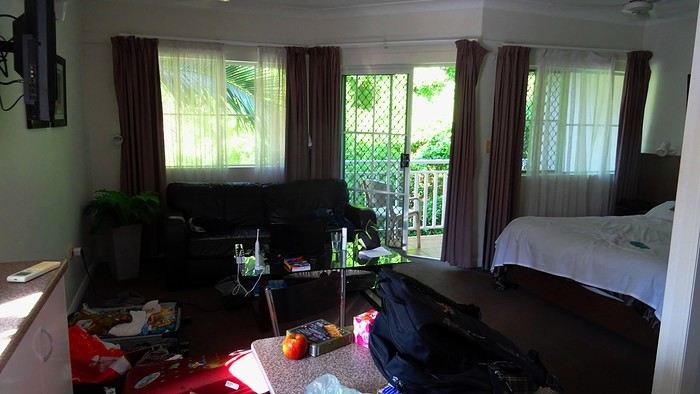
TV scriptwriters are a funny bunch. As soon as their ordinary mug starts becoming recognizable on the street thanks to success, their egos start swelling. They walk on clouds. So, one of the guys who worked on the script for our trip—the one who specifically came up with the bit about the SD card being ejected into the great beyond—has built himself a nice little reputation. The kind that can sometimes launch a real career. Then, inevitably, they just can’t stop. That’s how this guy had the poor idea of adding one last twist to the sequence that made him a one-day star. An idea that’s basically about squeezing the lemon until the very last drop, if you know what I mean. The little bag I take everywhere with my essentials—car keys, camera, phone—has also hosted a bunch of secondary items over time. Tissues, a book, city maps... whatever. It became a mess! So I finally decided to sort it out. I empty it onto a table. And there, stunned, I find the memory card that Dom and I desperately searched for on all fours on Cahill’s Crossing walkway, remember? Under the shocked gaze of a little Australian girl. It had ejected straight into my bag! What do you think? Should we fire the scriptwriter? It’s way too improbable! Stuff like that doesn’t happen in real life, right?

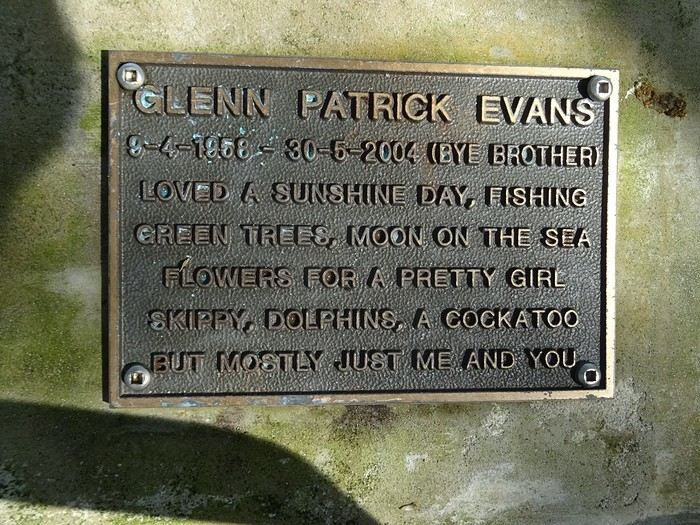
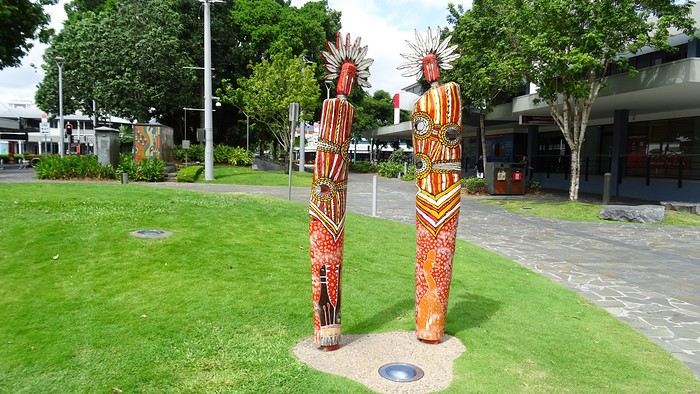
We head out to explore Cairns. The city is mostly about the waterfront, the Esplanade. You’ll find tons of bronze plaques there, most of them in memory of a deceased loved one. All you have to do is shell out a few hundred euros, and one day, a bewildered tourist will read your prose, charmed by your lovely turns of phrase. Vanity is a thriving business!

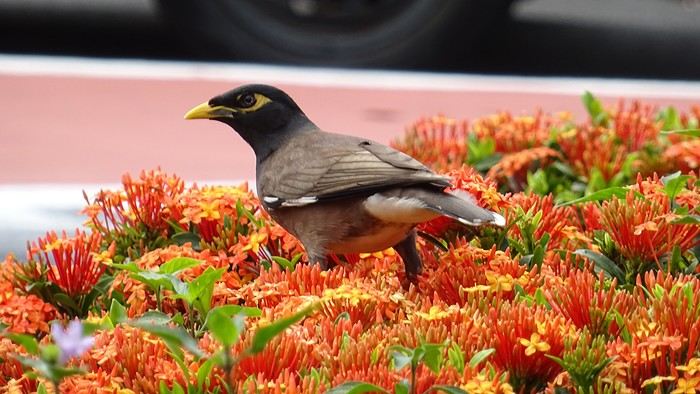
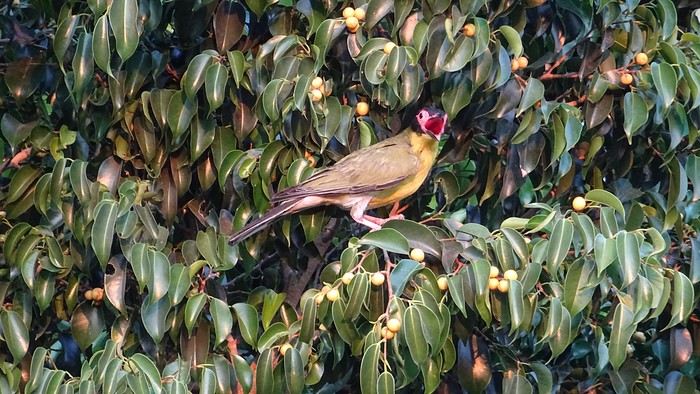
It makes for some reading... We spot our parakeets again... What were they called? Oh right, in abundance! Everywhere, banyan fig trees provide shade from a sun that never seems to tire. Parks... Here, kids are king. Luxury hotels with their infinity pools...
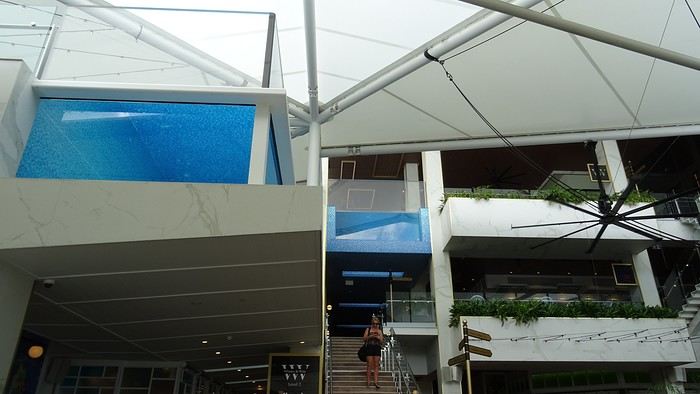
You don’t know where to look first... You’ve got to go all out. Google... Where can we rent bikes? When we finally track down the only operator in town, we find the place closed. A bit further on, a Visitor’s Center might find us an alternative? We meet a charming young guy, super dynamic and a great communicator. We leave without bikes but with a full snorkeling package for the day after tomorrow! I call the shop that let us down... Well done! The owner was at the doctor’s; he’s back now, and we can make a deal!
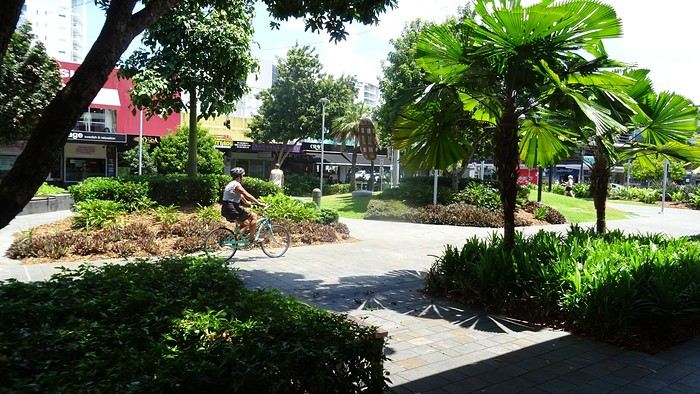

- Oh, Dominique, where are you off to like that, so proudly and at full speed? - Me? To the Botanic Garden, of course! It’s huge and free!

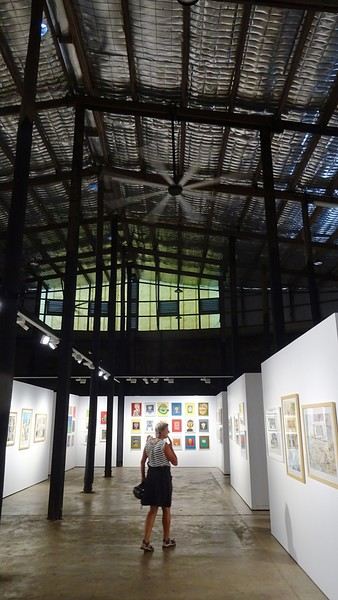
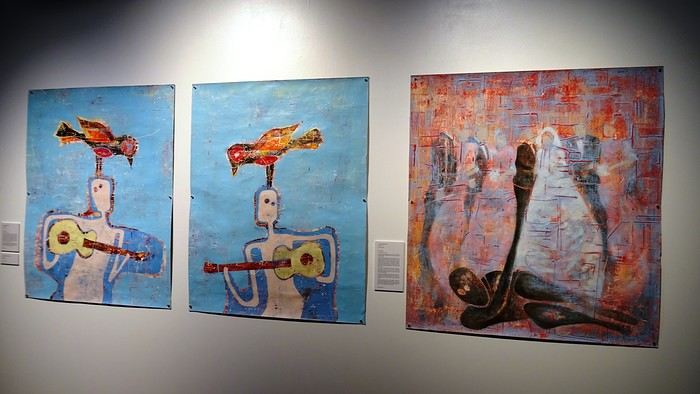
They’ve recycled oil tanks into art galleries!


Open
IS
Isamacha last year · IvanBahiaGde
Sharing our 3-week experience in Brazil
Hello, We’re a couple in our sixties and we’ve just spent 22 days in Brazil, from October 29th to November 21st. We flew from Marseille via Lisbon—outbound to Rio, and back from Recife. Our itinerary: 4 days in Rio 4 days on Ilha Grande 2 days in Paraty 4 days in Salvador 4 days on Boïpeba 4 days in Olinda The transfer between Boïpeba and Recife took us 2 days—boats, taxis, and a flight. We stayed in Airbnbs except in Paraty, where we were in a pousada, and during the Boïpeba–Recife transfer, when we booked a hotel near the airport. Our flights were with Gol and Azul. Transfers from Rio were arranged through Paraty Tour. In Rio, we used a local agency to visit Corcovado and Sugarloaf Mountain.

Happy to answer any questions! Marc
Open
JO
Jojoone1 last year
Promenades au royaume du Siam
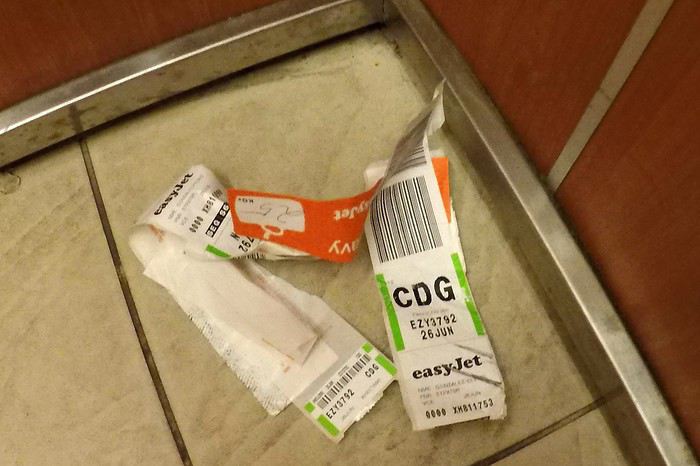
Il arrive qu'un voyage en Thailande débute dans un hôtel proche d'un aéroport, où des clients ont mal compris la signification du nom easy Jette...


Nous savons bien que ce long trajet nous laissera quelque peu déphasés à l'arrivée...


tout en espérant que nous ne commencerons pas notre séjour complètement...


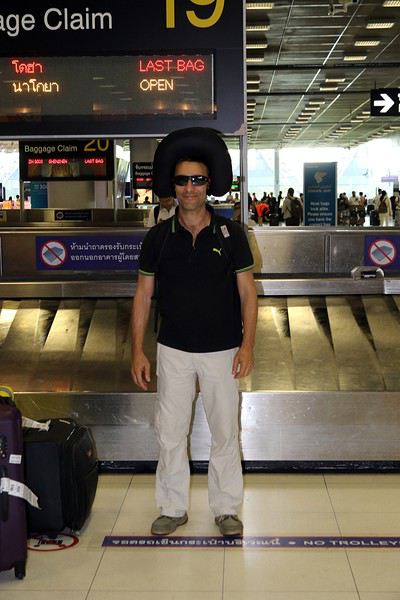
Nous sommes pourtant suffisamment lucides pour constater qu'ils auraient quand même pu, du côté de l'aéroport, égaliser le terrain avant d'y placer la déco :


Comme toujours, notre arrivée se fait sous l'oeil attentif de certains...


sous le regard franchement curieux d'autres...


mais bien sûr il y en a pas mal qui s'en fichent royalement...


Il ne nous reste plus qu'à partir à la découverte, tout en restant prudents, pour ne pas l'avoir dans le baba...

Open
MA
Marcalamar last year
Mimi et Maumau, Martine et DD le retour! Ou la boucle Denver-Denver des 4 amis
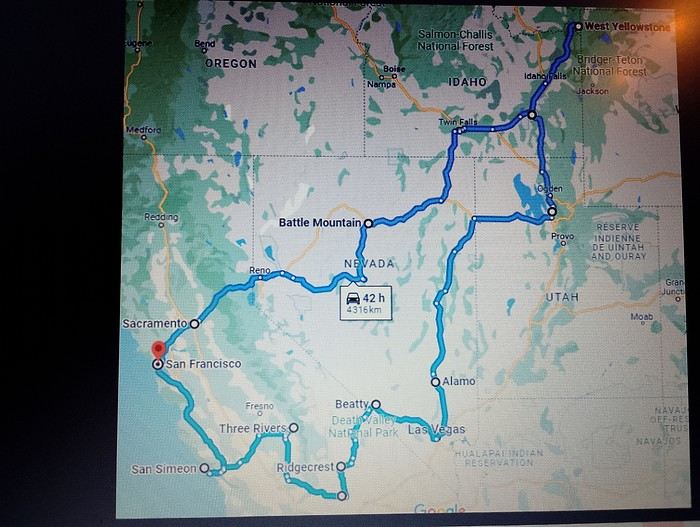
Bonjour 🙂 En 2017, l’ouest addict ayant frappé, notre premier Road trip nous aura donné l’irrésistible envie d’y retourner, ce que nous avons fait du 2 au 24 septembre 2019 lors d’une boucle de Denver à Denver en passant par le Yellowstone. Le point le plus à l’ouest de ce périple qui nous fera passer par le centre géographique des USA nous amènera à une centaine de km de Moab qui avait été le point le plus à l’est de notre dernier séjour.

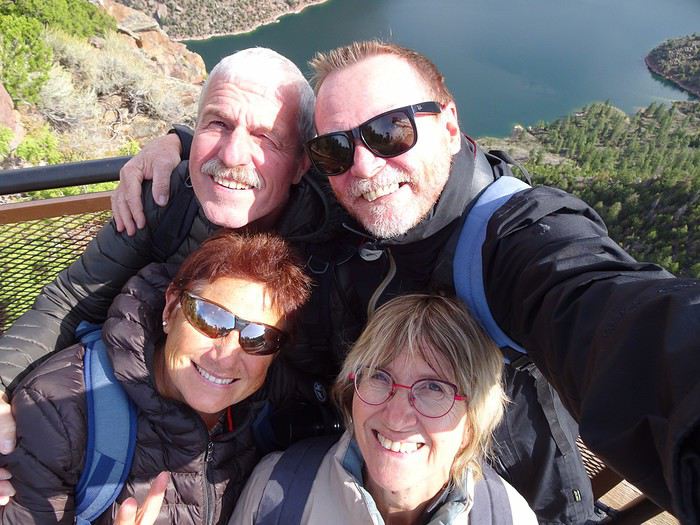
Nous sommes rentrés depuis plus de un mois et je m’aperçois que je commence à oublier certains détails et il est grand temps que je commence mon carnet avant que le gruyère qui me sert de cerveau ne laisse tout s’échapper. Comme je l’avais précisé dans mon dernier récit je vais mettre pas mal de temps avant d’arriver à la fin donc si certains voyageurs ont des questions précises n’hesitez pas à m’écrire en MP . Encore une fois je remercie tous ceux qui m’ont aidée ( ils ont été nombreux) à préparer notre Road trip avec une mention particulière à Disneydiddl, Hiacinthe et Titou ( honneur aux dames) ainsi qu’à Fred et Itat que j’ai bombardé de questions pendant des mois et qui m’ont toujours gentiment et patiemment donné des tas de bons conseils . C’est grâce à vous tous que ce séjour a été une réussite. J’avais un peu peur de ne pas retrouver l’émotion et l’enthousiasme de celui de 2017 mais ce séjour a été aussi « Waouh «  que le précédent . Pour ceux qui ne nous connaissent pas, je présente notre petite troupe. Nous sommes 4 amis sexagénaires ( cette fois ci tout le monde y est, ce qui nous a permis de payer quelques entrées «  seniors » ...). On habite le Var, on se connaît depuis plus de 20 ans et c’est notre deuxième séjour ensemble dans cet ouest magique. Mimi ( Michèle) : toujours la plus petite et la plus rigolote. Heureusement qu’elle était là pour parler anglais Maumau ( Maurice) : son mari, toujours les cheveux blancs, la moustache gauloise, son humour et son accent du Sud. C’est lui qui conduisait un jour sur deux. DD ( André) : celui qui a la barbe et avec qui j’ai fêté nos 41 ans de mariage au Yellowstone. Notre deuxième chauffeur a apprécié d’avoir l’esprIt tranquille puisqu’il est en retraite depuis juillet . Marcalamar (Martine) : je suis toujours blonde à lunettes, je parle toujours autant et j’avais la même peur bleue de louper l’organisation de ce voyage malgré toutes les heures passées sur le forum

Vous nous reconnaissez ? Ha ha ha !!!! Non, je rigole !!!! Ça c’est nous !!!
Open
CE
Cebvl last year · Caussat
From San Francisco to Los Angeles via Highway 1
Hi everyone,

We traveled between Christmas and New Year’s to visit our son in San Francisco. We’d already seen the parks during a 2008 vacation but hadn’t had time to drive Highway 1 between San Francisco and Los Angeles, so we decided to do it this time. At this time of year, the days are short—it gets dark by 5 PM, which limits sightseeing time. Weather-wise, we had temperatures between 11°C and 20°C (52°F and 68°F) during the week, so it was pretty pleasant. There was a bit of rain one day and some gray skies or fog in the mornings. Financially, California is *very* expensive! Prices listed don’t include tax or tips. Taxes are automatically added to restaurant bills or supermarket receipts, but *you* add the tip. Americans always leave a tip, no matter if they’re happy with the service or not (except at self-service places). The absolute minimum is 15%, but 20% is more common. Here’s how it works: First, the server brings the bill with the tax already added, then takes your card and the bill. They come back after charging your card, leaving you a new bill and a pen. You write down the tip (tips) you want to leave, add it up, and sign. You leave the paper and pen on the table and go. In some restaurants, the server brings the card reader to your table, and there are preset tip percentages to choose from. On your bank statement, the total amount (including tax) shows up as “pending.” A few days later, the transaction is finalized with the tip included. The 9-hour time difference isn’t trivial, especially as we get older 😉. Keep it in mind when planning—don’t overdo it in the first few days.

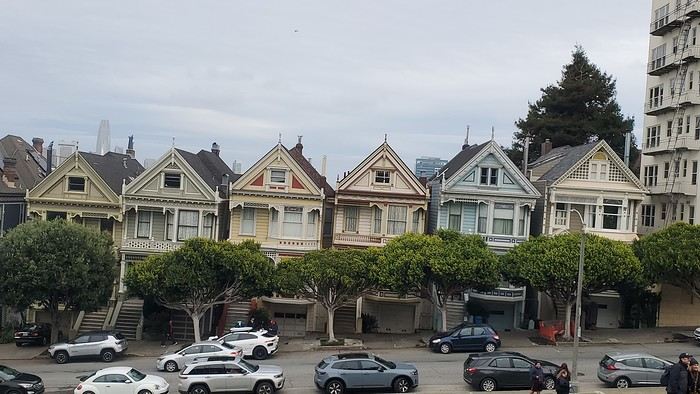
Here’s our itinerary: 12/25/2024: Flight from Lyon (7 AM) to San Francisco (11:50 AM): 1-hour layover in Amsterdam—way too tight. The airport is huge, and flights to the U.S. are at the far end. You also have to go through customs. We had to run! Luckily, there’s a special line for tight connections, and our flight was delayed! Reunited with our son and walked to the Painted Ladies (Victorian houses) and then through Alamo Square. Return trip via Waymo—a driverless Uber. Surprising, but the ride was super smooth, and we felt safe.

12/26/2024: San Francisco Walking tour of the city: Lombard Street, Pier 39 (sea lions), Coit Tower via the Filbert Steps (great view of the city), Chinatown, and Union Square (ice rink and Christmas tree).

12/27/2024: Monterey It took us about 2.5 hours to drive straight from SF to Monterey (to save time, we skipped the start of Highway 1). The goal for this stop was visiting the aquarium. It’s in an old sardine cannery, and there’s an interesting room showing the machinery and explaining the process. The aquarium features all the local fish and plant species, plus a stunning jellyfish exhibit. We spent about 2.5 hours there. Entry is pricey at $65, and it was packed when we went. For parking, you can use meters or day lots. The cheapest we found was $25 for the day, with in-and-out privileges. We saw some closer lots charging $80, so it’s worth shopping around before parking and walking a bit more. Afterward, we stopped by the Monarch Butterfly Sanctuary—a small, free park where these butterflies land, along with some wild deer. We ended the day at Lover’s Point, a park with an ocean view and surfers. That evening, we tried clam chowder in a sourdough bread bowl. Stayed overnight in Monterey.

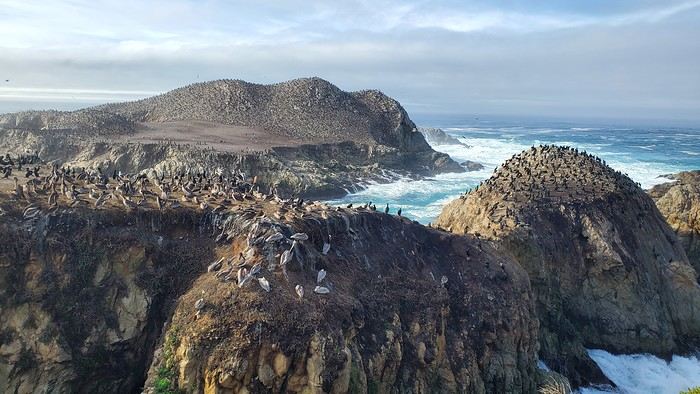
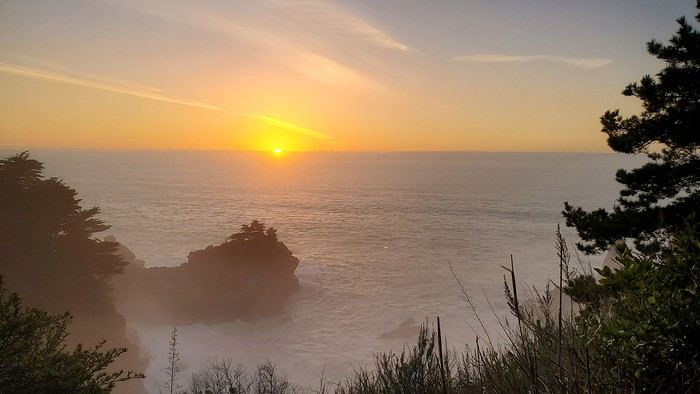
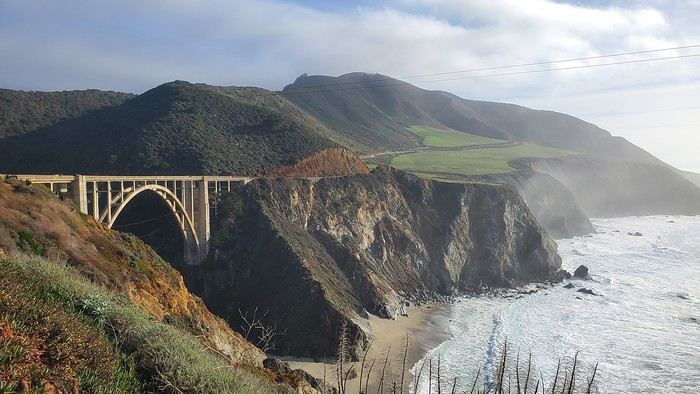
12/28/2024: Big Sur Parks The Big Sur area has many state parks. Entry is $10 per car for the day (valid for any number of parks visited that same day). Pro tip: If you park outside and walk in, you don’t pay. We chose to visit Point Lobos Reserve. We hiked the trails along the ocean. Two must-do (short and easy) trails: “Sea Lion Point,” where massive waves crash onto the rocks, and “Bird Island Lookout,” where you can see thousands of pelicans and cormorants on the rocks, plus a few elephant seals. It’s truly stunning. We spent about 3 hours there. After driving along Garrapata State Park and crossing the famous Bixby Bridge, we went to Pfeiffer Big Sur State Park to do the short Valley View Trail + Pfeiffer Falls hike. It was nice being among the redwoods, but the waterfall was underwhelming. Maybe it’s more impressive in the summer when the river is flowing better. We ended the day at McWay Falls, a waterfall that flows directly into the ocean—super photogenic, especially at sunset. Returned to Monterey for the night.


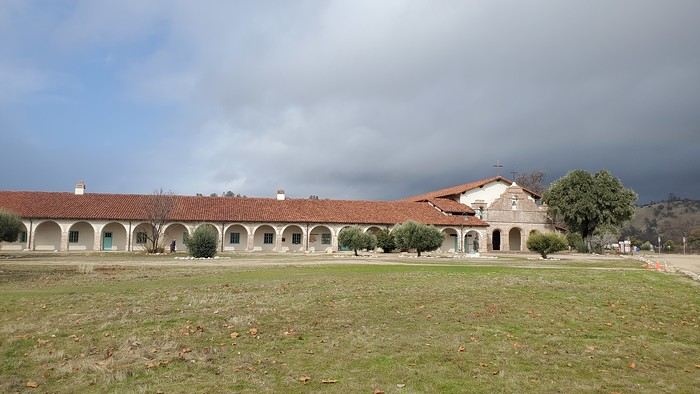
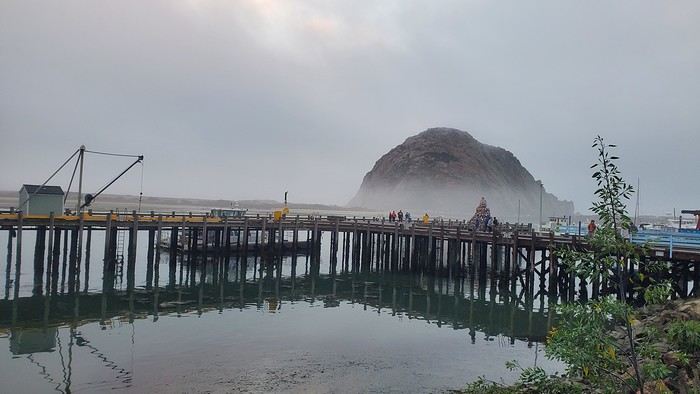
12/29/2024: Drive to Morro Bay Highway 1 is currently closed near Gorda, so we had to take the inland route from Monterey, adding extra miles. It was raining, so we skipped the planned stop at Carmel-by-the-Sea. Instead, we detoured to Mission San Antonio de Padua, the 3rd mission (out of 21) built by the Spanish in 1773 to evangelize the region. It’s less famous than others, so there were fewer people, and it felt more “authentic” (free to visit). With fog adding to the rain, we headed straight to Morro Bay, our stop for the day, instead of continuing up Highway 1 to San Simeon. Took a short evening walk to Morro Rock—saw a few otters in the harbor. Stayed overnight in Morro Bay.


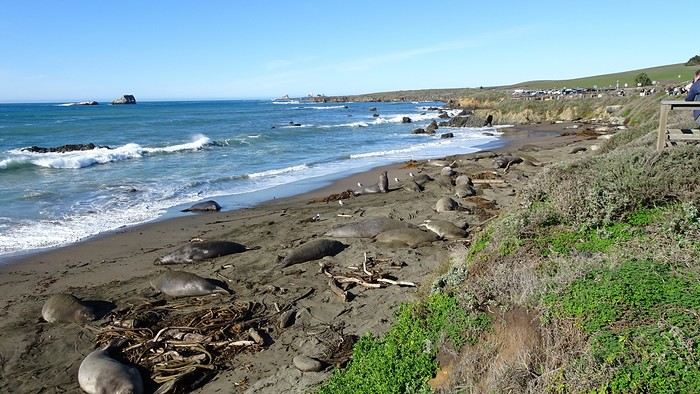
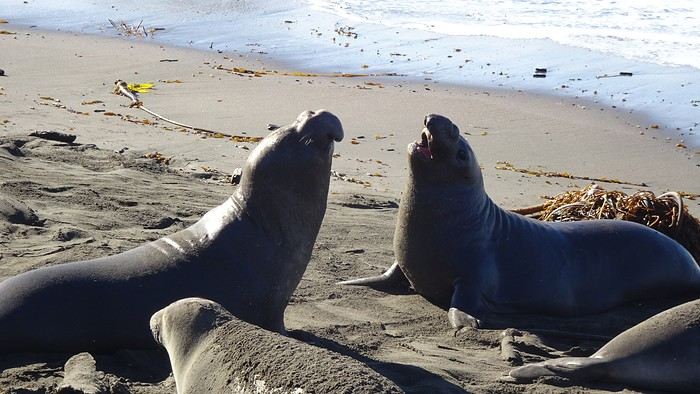
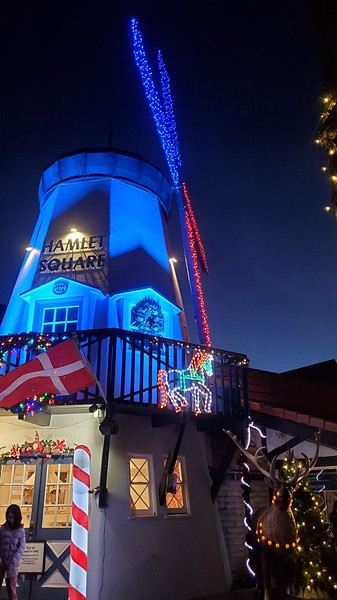
12/30/2024: Elephant Seals at Piedras Blancas The sun came back! We took a quick walk on the pier to see the otters in daylight, then drove back up Highway 1 to Piedras Blancas (near San Simeon), a famous spot for elephant seals. It’s birthing season, so there were lots of pups, plus males fighting for the females’ attention—what a show! We couldn’t get enough. We walked to the Piedras Blancas Lighthouse, with a few viewpoints of beaches where elephant seals were lounging (though far fewer than at the beach near the parking lot). We continued to Santa Barbara, our stop for the day. Stopped in San Luis Obispo for lunch and a quick city tour (Bubblegum Alley, the theater facade, and the mission). Since it was getting late, we skipped Los Alamos and went straight to Solvang, a charming Danish-style town (windmills, typical Danish houses) with lots of holiday lights (it’s their Julefest). Stayed overnight in Santa Barbara.


Open
MI
Mitch341 last year
New Year's Day in Italy
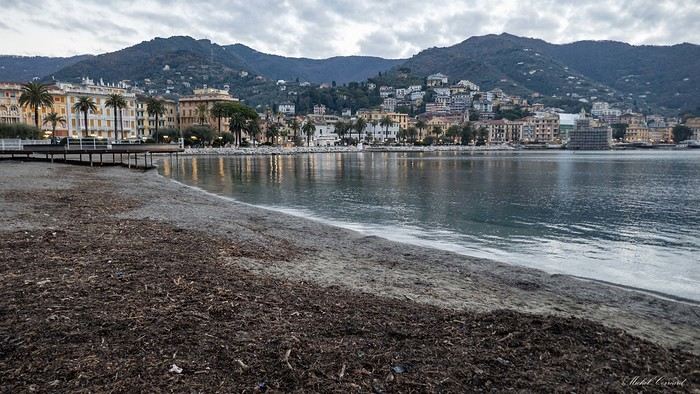
As planned every year for quite some time now, here we are in Italy on the Ligurian Coast to spend a few days and celebrate New Year's 2024/2025.

Our base is in the charming town of Rapallo, between Genoa and La Spezia. We're right on the coast, with our hotel offering a sea view and access to the beach.

Not far from Rapallo, you can find, besides the Cinque Terre, Portofino, Santa Margherita Ligure, Chiavari, and others like Carrara and even Pisa. In short, there's plenty to do.

Five days there with so-so weather, and crowds but nothing overwhelming.

For the trip between home and our base, we're using an electric vehicle. It's manageable without any issues. The hotel has outlets, and otherwise, there are charging points all over Italy. And just to note, Tesla chargers are the best in terms of cost and charging speed.

There you have it.

Once we arrived on Sunday, December 29th, it was time to go for a walk, book a restaurant for Monday evening, and finalize the itinerary.

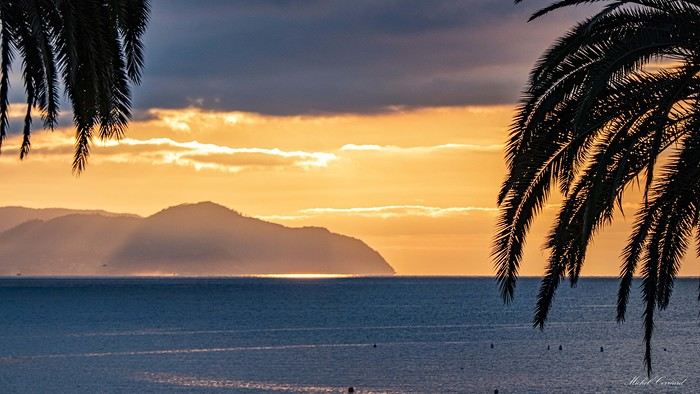
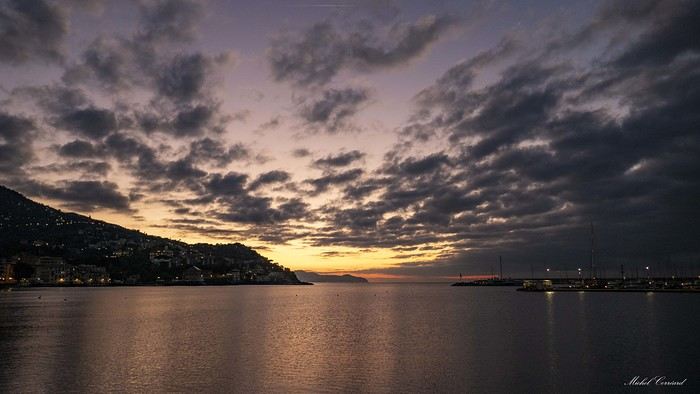
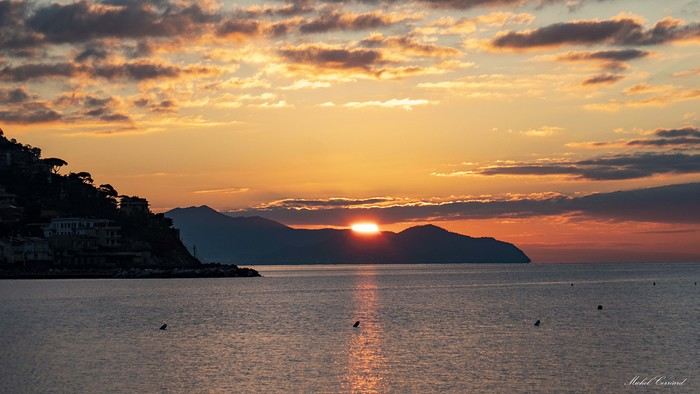
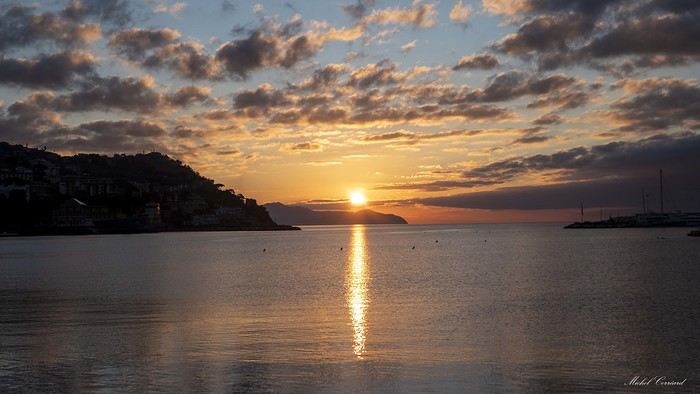
On Monday the 30th, we were lucky enough to see a beautiful sunrise from our window.


And the town of Rapallo in the early morning!

Open
OL
Oltean last year · Torpan
Kyoto, Shinkansen, Tokyo: trois novices au Japon via Air China
Bonjour à tous,

L'idée de visiter le Japon remonte à un an, exactement. Je m'en souviens car je cherchais des vols pas chers pour l'Europe au départ de Paris. Surprise, l'aller-retour pour le Japon, avec Air China, était aussi bon marché - voire meilleur marché - que bien des destinations européennes.

Le billet fut donc acheté. Trois places (dont celle d'un enfant de 12 ans), dix jours pour Pâques 2018, logement AirBnB. Evidemment, en 10 jours, on visite sans vraiment visiter, on reste à la surface des choses. Que du classique : Kyoto, temples, rivière sous la lune ; Shinkasen ; et Tokyo, jardins, flâneries, hi-tech et... maids.

Il faut dire que nous ne savons pas grand-chose de l'archipel et la façon dont nous saurons nous débrouiller est une inépuisable source de tracas. Et si ce voyage allait révéler mon incapacité à m'ouvrir à d'autres civilisations ?

Nous embarquons, cette question en tête, dans le premier vol Air China.
Open
JL
Jlcro 2 years ago
A trip to Australia: the Northern Territory.
Thursday, November 2, 2023 Lake Argyle – Katherine

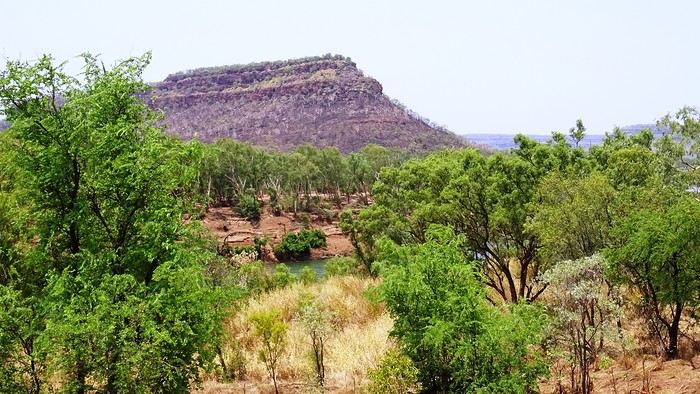
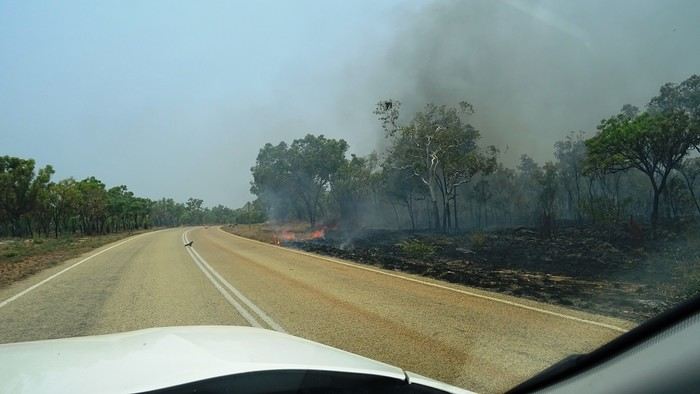
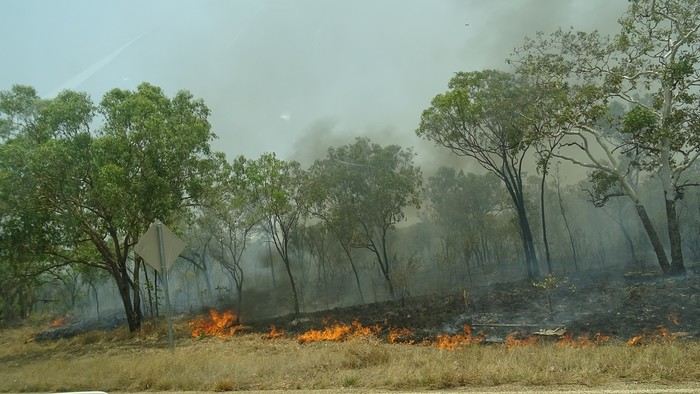
We had a great time. Now we’ve got to pay the price. We’re down one stop before Katherine. Gotta do the whole trip in one go—6 hours of driving. Let’s go! We’re a bit low on fuel with only 300 kilometers of range. The only station at the lake doesn’t open until 9 a.m., and the next (and only) one is 227 kilometers away… Should we risk it? Except for a magnificent frilled-neck lizard darting across the road on its big hind legs and an emu quickly disappearing into the bush, we didn’t see much. Oh—there was also a donkey, lost and panicked in the middle of the road… A quiet road with some beautiful scenery, some worrying bushfires

and a few opportunities to stop for a "warrior’s rest" (never go beyond the first second of the thought that starts drifting off the road…) We cross an invisible border as we enter the Northern Territory, which comes with consequences—we immediately lose an hour and a half by changing time zones. The speed limit goes from 110 to 130.
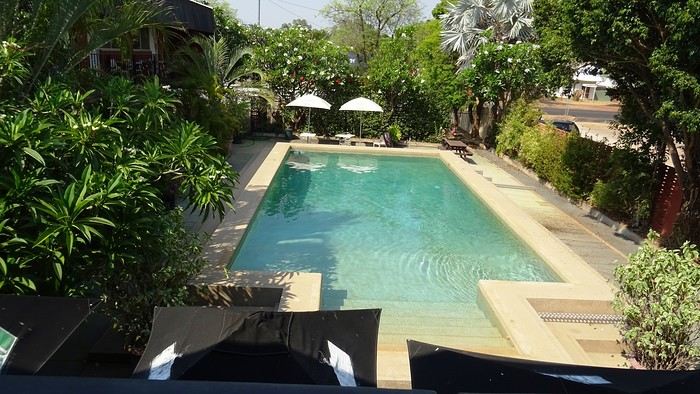
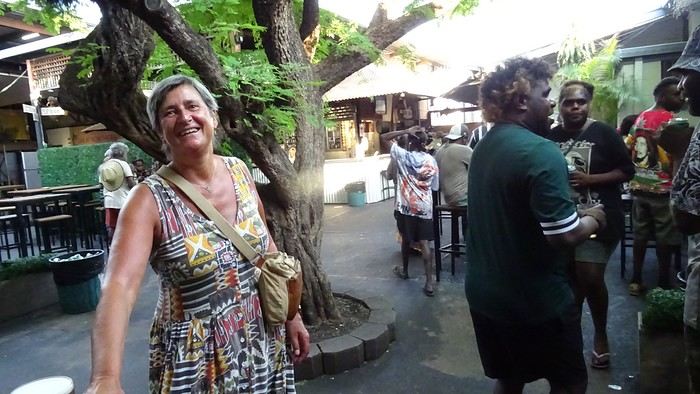
We arrive at the self check-in in Katherine. As usual, we’re a little taken aback at first. The noise, for starters. There’s a group rehearsing, it seems. We go check it out. We pass through the doors separating "The Stuart" from the adjoining bar and stumble upon what feels like collective hysteria. Turns out, it’s a concert. Aboriginal musicians completely fired up by some incredible music! There are just three of them, but they’re delivering a wall of sound that reminds us of South Africa’s finest neo-techno with a trance-like vibe. The crowd is wild! They’re singing in unison, screaming with joy. We get gently kicked out by security because we’re carrying our groceries, and they’re not having it. We promise ourselves we’ll come back once we’ve put them away in our little fridge.

Then we land. We end up finding plenty of nice things. It’s very possible we’ll like this place!

We head back to enjoy our post-battle Happy Hour. The concert’s over, but the crowd’s still riding the high. It’s indescribable. People are shouting across the room, screaming just for the fun of it—men and women alike. There’s pool, some beat-up arcade games being shaken like coconut trees. Dom and I feel like anthropologists. We’re pretty blown away. It’s epic! And the beer’s half the price it is elsewhere! We’ll definitely be back—that’s for sure!
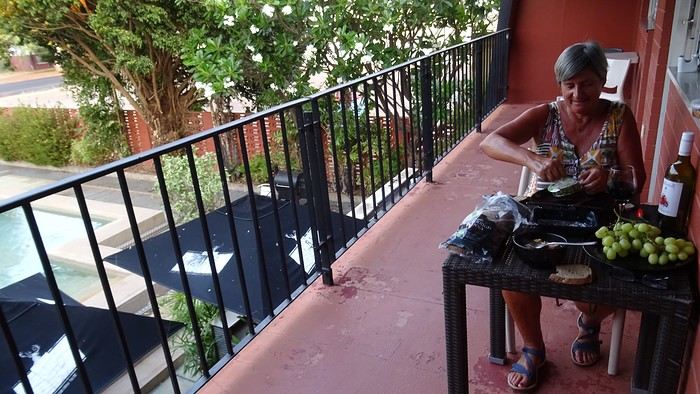
We give up on finding a restaurant. Not sure they even exist, at least not this season. So, we’ve got a microwave—we eat at home on our little terrace, with a musical accompaniment from a massive orchestra of birds. It sounds amazing!
Open
DE
Delrome 2 years ago
Tuscany with 3 kids
Hi there,

A little travel journal of our few days in Tuscany in August 2024 with our three daughters aged 16 months, 4, and 6. A beautiful trip but ruined by extreme heat. The same thing in spring or autumn would have been magical.

Itinerary We used our own car for this mini-trip.

Carpentras-Isolalunga: 1 night

Isolalunga-Barberino (Val d’Elsa): 4 nights

Lucca and Pisa

Siena

Val d’Orcia

Volterra

Barberino-Carpentras

Visits

Lucca is less well-known than its neighbors Florence, Pisa, and Siena. Yet it was already a prosperous city during the Renaissance. The Duomo is magnificent, and strolling along the ramparts in the shade of the trees is very pleasant. The large square, where the buildings were constructed using the walls of the amphitheater, is a curiosity. We used the stroller.

Pisa needs no introduction, but it’s also impossible to pass by without stopping. Alexandre and I had already visited it 15 years ago, so this time we didn’t climb the tower or go inside the Duomo. We arrived around 5 PM, so we were short on time, but the heat had dropped, which made the visit very enjoyable.

Siena is a magnificent city but dry. There’s no watercourse here, which has always been the city’s problem. Everything was designed, including the slope of the main square to collect water. The Duomo is absolutely stunning. We bought the pass to visit the Duomo, the baptistery, the crypt, the museum of the works, the panorama, and the “Gate of Heaven.”

The “Gate of Heaven” is a guided tour that allows you to climb to the top of the Duomo, walk under the roof to see the framework, and admire the beautiful frescoes on the floor from above, as well as the stained glass and ceiling paintings from much closer. Of course, the view of Siena from up there is splendid. It’s really worth it. We left the stroller downstairs, and Alex carried Artemisia.

The museum of the works contains some magnificent paintings and original sculptures from the Duomo.

We didn’t find a park for a picnic. We had to settle for a public garden that wasn’t really well-maintained.

Our visit for the “Gate of Heaven” was at 6:30 PM, so we had dinner in Siena. The restaurant was expensive and disappointing. However, we enjoyed the city’s parade—lots of people in costume, plenty of colors, and brass band music. Nice.

Val d’Orcia

The first goal was to see the famous “Gladiator” house, which was used as a set in Ridley Scott’s film. You’ll have to settle for a photo because it’s not open for visits. The place is pretty, but no more so than many Tuscan estates, so I’d say it’s not worth the detour.

We visited the lovely village of San Quirico d’Orcia, where we had a picnic. In the afternoon, we saw the beautiful Abbey of San Galgano and the Chapel of San Lorenzo, where a sword is planted in the stone (its owner stopped waging war to dedicate his life to God—no apparent connection to the legend of King Arthur). The abbey is in ruins, but the site, planted with cypress trees and sunflower fields, is very beautiful.

Volterra

Volterra is a hilltop village with many facets, aside from a still-active penitentiary in the old fortification.

We bought the “Volterra Card” to visit, in particular, the Palazzo dei Priori, which is as beautiful inside as it is outside, and to climb to the top of the tower, where the view is magnificent.

The Roman ruins (especially the amphitheater and arenas under excavation)

The alabaster museum is very small but highlights one of the region’s ongoing activities.

The Etruscan art museum is a must-see. It’s a high-quality museum with many pieces, mainly richly decorated tombs depicting the lives of the deceased. And it’s air-conditioned!

It’s a bit of a hassle with the stroller. A baby carrier would have been more practical.

We had a picnic in the lovely Enrico Fiumi Park (with playgrounds for kids), which overlooks the city.

There are many charming shops in Volterra for bringing back souvenirs, especially food-related ones.

I find that hotels are very expensive in Italy, so I opted for a farmhouse rental.

We picnicked at lunchtime and ate at restaurants or in our accommodation in the evening. Unfortunately, I can’t recommend any great restaurants.

Budget

Accommodation: 120 € per night

Volterra family card: 20 €
Open
DE
Delrome 2 years ago
A week in Dalmatia with the kids
Croatia

October 2024

Hi everyone, I wanted to share our family week in Croatia. Alex and I, with Apolline (6), Olympe (4), and Artémis (18 months).

Itinerary

Planning the itinerary was complicated, but in the end, I wouldn’t change a thing. Since we had a round-trip flight from Dubrovnik, I preferred to prioritize proximity, so we skipped Plitvice, which I’d really love to visit—but that’ll be for next time. We had time to... take our time, and it was really nice.

Day 1: Marseille-Dubrovnik flight. Night in Ston.

Day 2: Visit to Ston and Mali Ston. Ferry to Mljet. Night in Pomena (3 nights total).

Days 3 & 4: Walks in Mljet National Park and swimming.

Day 5: Return ferry. Visit to the Trsteno Arboretum. Night in Dubrovnik (3 nights total).

Day 6: Visit to Dubrovnik’s city walls and Old Town.

Day 7: Lokrum.

Day 8: Morning in Dubrovnik, then Cavtat and overnight flight back to Marseille.

Our visits

Ston area:

Ston village, small but charming. We walked the walls from Ston to Mali Ston. It’s a steep climb, but the views over Ston and then Mali Ston are stunning. Easy return by road, and we visited the fort. Stroller impossible on the walls.

Pratpano Beach before taking the ferry. A beautiful beach and our first swim!

Mljet

Everything is beautiful on Mljet—the villages, landscapes, beaches... There are plenty of hiking and biking trails of varying difficulty. We saw lots of bike rental shops (Pomena, Polače, at the dock for St. Mary’s...), with some bikes equipped with child seats (though no baby trailers). In Pomena, there’s a small national park office that provides maps, sells entry tickets, and gives info on possible routes. The trails are well-marked. The boat to St. Mary’s Island is included in the park entry fee.

On the first day, from Pomena, we were 20 minutes’ walk from the small saltwater lake and the dock for St. Mary’s Monastery. We visited the little island, but the monastery interior was closed. We swam in Malo Jezero Lake (but there are plenty of spots to swim in both lakes).

The next day, we did a big loop starting from Pomena, walking through the forest (with beautiful sea views) to Janik (across from the monastery), then returning along the shore paths for a swim. An easy hike with little elevation—Olympe did it without any problems. The route is clearly marked on the bike trail map from the park office.

On our last day before the 3 PM ferry, we swam and had a picnic on one of Saplunara’s gorgeous sandy beaches—we had the whole place to ourselves!

Trsteno Arboretum (30 minutes from Dubrovnik). A stunning botanical garden overlooking the sea, which we visited in the late afternoon. Stroller accessible.

Dubrovnik:

City walls. Very expensive, but worth it! Lets you see the whole Old Town and the port from above. Stroller impossible.

Old Town: lots of beautiful, narrow alleys where laundry dries between buildings. Stroller possible but not practical. We visited the two monasteries and the cathedral inside but skipped the Rector’s Palace and St. Lawrence Fort.

Lokrum: deserves a full day. A beautiful walk circles the island, alternating between coves, historic buildings, and botanical gardens. We were short on time before the last boat left, but there are plenty of great spots to swim. You can’t do the full loop with a stroller, but I think the main sights near the dock are accessible.

Cavtat: a great surprise—I’d recommend it if, like us, you have a late flight. Just 15 minutes from the airport, it’s a charming seaside village with a lovely waterfront promenade (stroller-friendly), several swimming coves, and a cute center with things to see if you have extra time (museum, mausoleum, church...), plus restaurants, gelato shops, and boutiques...

Even though the girls walked a lot and enjoyed the walks, they *loved* swimming almost every day.

Transportation

Flight with Volotea. 1-hour delay on the way back.

Rental car with Goldcar. Office 100m outside the airport (it’s small, so about a 10-minute walk from arrivals). We were first in line, and luckily so—the employee was alone, and the queue behind us got really long, so budget extra time.

Don’t plan on driving in central Dubrovnik—the parking is outrageously expensive (over 5 €/hour near the walls), so book accommodation with parking and be ready for some walking.

Ferry: punctual. This time of year, we didn’t need to be at the dock more than 30 minutes before departure. Booked online.

Accommodation

I won’t talk about our place in Ston—it wasn’t very comfortable—or the one in Pomena, where we were really poorly received. But both locations were great for sightseeing. In Dubrovnik, we spent 3 nights at Natasa’s Airbnb (Apt Kalea), which was well-equipped, comfortable, and well-located—20 minutes’ walk from the center, with parking, a garden, and... a washing machine. All right across from a supermarket and a great bakery. For those with bigger budgets, the Art Deco Hilton in the center had me dreaming for 3 days!

Food

We didn’t eat out much because of the prices, but when we did, the food was great. The cuisine blends Italian and Slavic influences, so expect amazing seafood dishes, cuttlefish ink risotto, and big mixed grilled meats, not to mention pepper sauce. Despite the price, I’d recommend the restaurant in Mali Ston, *Kapetanova Kuća*. The food was great, and the service was friendly. If you have a late flight like we did, don’t hesitate to eat at the bistro almost across from the airport, *Pod Dubom*—good, affordable menu and a smiling waiter!

A great local picnic specialty: *burek*, a delicious savory pie (meat or cheese) you’ll find in bakeries or supermarkets. Also, good dry sheep’s cheese.

For picnics in Dubrovnik, I’d recommend the pine grove at St. Lawrence Fort or the benches above the port (at the end of Dominika Street). Both have amazing views.

Weather

We had beautiful weather—perfect for swimming *and* hiking. A light sweater for mornings and late afternoons, T-shirt and swimsuit during the day. In this part of Croatia, I’d say it’s comparable to southeastern France, so ideal for a fall break.

Gear

We like taking our stroller (Yoyo) for airport trips, but it wasn’t much use otherwise. If you have to choose, a baby carrier is better—between the cobblestones and hiking trails, it’s often the only way to carry a little one. We have the Deuter Pro hiking carrier, and Artémis loves it. We had high chairs in the few restaurants we went to, but not in our accommodations, so I brought a foldable fabric seat that fits on any chair. We had a crib in Ston and Pomena but not in Dubrovnik—Artémis slept on the floor on a folded duvet.

I invested in a Minimax *cabin-sized* suitcase for Apolline for this trip—she was so proud to have her first rolling suitcase! It turned out to be practical and seems sturdy. It let us take just one checked bag for all five of us for the first time.

Good and bad impressions

The swims in Mljet’s stunning, nearly empty nature.

Unfortunately, we felt unwelcome. The guidebook mentioned that Croatians can be standoffish at first, but we never got past that first impression. The constant feeling of being in the way—even though we weren’t there in peak season—was a bit unsettling. On the way back, I found out everyone I talked to (with or without kids) felt the same. Of course, it’s not universal—some people were polite, even warm (yes, really!).

No major issues, but a few things to note:

The car rental company only accepted debit cards, not credit cards. It was clearly stated in the contract, but I didn’t take it seriously. Luckily, Alexandre had a professional debit card, but *double-check yours before you go*.

For the car, despite the super-low rental price, you’ll have to add fees if you plan to take a ferry (50 to 80 € depending on the agency).

On Mljet, the only supermarket in Pomena was closed. We had to drive 10 minutes to Polače for basics. For diapers, we had to go even farther. I only saw formula for newborns in small supermarkets—maybe you can find more in Dubrovnik or at a pharmacy. I ended up using regular milk for Artémis.

Health

No issues, and no one got sick. We swam in very accessible spots given the girls’ ages, but if you’re eyeing a gorgeous little cove, watch out for sea urchins—we saw a lot!

Portable DVD players for the plane and car, but we barely used them. The girls watched cartoons in English on TV.

Kidizoom cameras.

A few toys for Artémis.

Budget

We found Croatia expensive, and I imagine it’s even worse in summer. For restaurants, sightseeing, and groceries, expect to pay the same as—or more than—in France. On the other hand, flights were low-cost, and accommodations were reasonable. The rental car was almost a steal, even with the extra ferry fees.

Round-trip flight from Marseille: 583 €

Car for 8 days: 56 € (+50 € for ferry fees)

Accommodations (7 nights): 509 €

Sightseeing:

Mljet National Park entry: 15 €/adult for 2 days (boat to St. Mary’s included)

Arboretum: 10 €/adult

Dubrovnik walls: 35 €/adult

Ferry Pratpano-Mljet: 60 € round-trip
Open
PL
Plumini 2 years ago
Au pays des gorilles de montagne, retour d'un voyage "épique"
Passionnée par les voyages, les animaux (à poils, plumes, écailles) et mon ami par la photographie, c’est, en 2014, après la rencontre avec les orang-outans au parc national de Gunung Leuser à Sumatra que m’est venue l’envie de voir d’autres grands singes dans leur milieu naturel et en liberté. Pour mon mon 40e anniversaire, je ne rêvais que d’une chose... voir les gorilles. J’avais encore 4 ans à attendre et 4 ans pour mettre de l’argent de côté.

A l’époque, je n’avais entendu parler que de la chaîne des Virungas et notamment de la partie au Rwanda . A vrai dire, l’Ouganda ne m’était jamais vraiment apparu comme une destination où je mettrai un jour les pieds et la RDC pour des raisons sécuritaires ne m’attirait pas spécialement.

Mais, voilà qu’un jour, j’entends que le Rwanda allait augmenter le prix des permis pour les gorilles à USD 1500.- par personne. Aïe… ça me semblait quand même hors de prix, surtout qu’on y allait à deux et que j’avais bien envie de les voir deux fois. 6000.- dollars pour 2 jours… OK c’est pour mes 40 ans, mais quand même…

Fin 2017, je commence à m’intéresser de plus près à notre voyage qui est prévu pour décembre 2018. Un hasard du calendrier fait que mon ancienne prof. d’anglais m’envoie un lien à un texte qu’elle a écrit pour son agence de voyage sur sa rencontre avec les gorilles en Ouganda. Mmmh Ouganda? c’est la première fois que je lisais sur ce pays. Why not ?

J’arpente alors les différents forums en français, en anglais et je RE-découvre voyageforum.com. Et surtout, je tombe sur le carnet de Ticapi que je dévore en une soirée et quelques mois plus tard sur celui de Muriel18 dont je guettais la parution. Waouh !!! c’est que non seulement on peut voir des gorilles en Ouganda, mais aussi des chimpanzés et le bec-en-sabot, sans compter qu’il y a aussi de la savane et qu’on pourrait aussi faire des safaris plus classiques.

Reste plus qu’à convaincre ma douce moitié que l’Ouganda est en un pays sûr…

D’habitude, et aujourd’hui plus que jamais, nous préférons les voyages en individuel et les self-drive en particulier. Mais, voilà la proximité avec la frontière de la RDC, les pistes potentiellement impraticables après la pluie et les voitures de location pas toujours de première jeunesse, font que nous engageons un guide pour deux semaines pour décembre 2018. Les mois passent et l’excitation monte.

On est à trois semaines du départ et voilà que je tombe malade après un voyage professionnel en Asie. Zut! Bon ben, cette fois, je ne traîne pas, je vais vite voir le médecin et je me débarrasse vite fait de ce virus. Ça c’était le plan! Grippe ou malaria ? (je suis allée en Amazonie 6 mois auparavant) Le médecin ne sait pas, la toux n’apparaîtra que quelques jours plus tard. On fait une prise de sang deux jours de suite pour écarter la malaria. C’est donc une grippe ou… une pneumonie :-( …?

Les rayons X ont parlé, c’est une pneumonie et elle est bien avancée. Pas grave il me reste encore 2 semaines pour la soigner ! Je prends religieusement mes antibiotiques, j’avale plein de vitamine C, mais rien n’y fait, les antibiotiques n’ont pas l’air de faire effet. Je tousse à en cracher mes poumons, je suis essoufflée, épuisée. Cela fait si longtemps que j’en rêve de ce voyage… il me paraît inconcevable de ne pas partir. J-5, je me fais hospitaliser par mon médecin, la pneumonie a encore progressé et je n’ai pas assez d’oxygène dans le sang, c’est dangereux. Je suis en larmes, mais toujours dans le déni de ce qu’il m’arrive. D’ailleurs, j’ai quand même pris mon anti-paludéen, parce que je suis bien déterminée à partir.

Je passe la première journée aux urgences sous oxygène 24h/24. Le germe qui cause ma pneumonie est inconnu des infectiologues et pneumologues. Ils essaient une combinaison d’antibiotiques. C’est pas grave dans 4 jours, je pars. J’harcèle le médecin, qui doit d’ailleurs me prendre pour une dingue, pour savoir quand je pourrais sortir « parce que vous voyez docteur, samedi j’ai mon avion pour l’Ouganda » . Le jeudi, le médecin est formel, samedi je serai encore hospitalisée… au fond de moi, je le savais mais sans vouloir le reconnaître… mon ami fait les démarches pour l’annulation des vols, il contacte notre assurance voyage (heureusement que nous en avons une d’ailleurs) et j’écris au guide (qui entre temps n’est plus notre guide, mais notre tour opérateur…) qui a de la peine à le croire. Et moi donc! On se dit que ce n’est que partie remise et que fin 2019, on fera ce voyage tant attendu!

Mars 2019, le Tour opérateur nous relance, « vous aviez pas parlé de faire un voyage en Ouganda cette année? Faudrait vous dépêcher de réserver les permis de gorilles avant qu’il n’y en ait plus »

Oh que oui, on veut aller voir les gorilles. Mais, on hésite à le reprendre. Moi, j’ai toujours espoir de faire ce voyage en self-drive. Le truc c’est que cette année, on a réussi à prendre 3 semaines de vacances et on voudrait aussi faire une semaine au Rwanda. Mon ami ne se sent toujours pas de conduire là-bas. Pourtant, il a déjà conduit aux 4 coins du monde. Je respecte, d’autant plus que c’est le seul à conduire.

Bref, on tourne autour du pot, mais aucun de nous deux ne dit réellement le fond de sa pensée, à savoir « et si on prenait quelqu’un d’autre pour organiser notre voyage »? Du coup, on le reprend, on lui fait une première avance pour 4 permis de gorilles (2x 2 jours) (ce n’était pas la meilleure idée qu’on ait eu) et on regarde pour intégrer le Rwanda dans notre itinéraire. On aura un guide/chauffeur pour tout le voyage avec des hébergements de catégorie moyenne.

Après plusieurs aller-retour, l’itinéraire devait être à peu près ça. A vrai dire j’ai basté après un moment.

J1 arrivée à Kigali en soirée J2 transfert Kigali - Akagera NP J3 safari à Akagera NP J4 Akagera NP et nuit à Nyagatare J5 transfert Nyagatare à la forêt de Nyungwe J6 Nyungwe J7 Nyungwe J8 transfert de Nyungwe au bord du Lac Kivu, Rubavu/Gisenyi J9 transfert Rubavu/ Gisenyi à Kisoro/ Ouganda, via la frontière de Cyanika J10 Gorilla tracking au Mgahinga NP J11 Golden Monkeys tracking au Mgahinga NP, nuit au Lac Mutanda J12 Gorilla trackin à Bwindi, Ruhija qui est ensuite devenu Rushaga J13 Queen Elizabeth NP, secteur d’Ishasha le matin et Kazinga channel l’après-midi J14 Pas vraiment eu de réponse sur les activités de ce jour-là. Après 3 tentatives, j’ai laissé tomber. J’aurais pas dû… J15 Chimpanzee tracking à Kyambura gorge, nuit au Lac Nkuruba J16 Lac Nkuruba, activités dans la région du lac le matin et Bigodi swamps l’après-midi J17 transfert Lac Nkuruba à Murchison Falls J18 Murchison Falls J19 Murchison Falls J20 Transfert Murchison Falls - via Ziwa Rhino Sanctuary - nuit à Entebbe J21 Entebbe - Mabamba swamps J22 Mabamba swamps le matin, Jardin botanique à Entebbe l’après-midi et transfert à l’aéroport pour vol de retour de nuit.

En avril, il nous demande le versement d’un acompte substantiel pour les hébergements et certaines activités dans les parcs car un de ses collègues va faire le même tour au mois de mai et ça serait bien qu’il puisse sécuriser les réservations déjà faites, en réglant la note.

Une semaine avant le départ, tout comme nous l’avions fait en 2018, nous lui versons le solde du montant convenu. 3 jours après comme je n’ai pas de nouvelles de sa part (le TO est basé en Allemagne), je lui envoie un message pour m’assurer qu’il a bien reçu le montant.

Mon ami me dit pour rire « et c’est là qu’il nous dit qu’il a fermé le compte sur lequel on a versé l’argent » moi je ris jaune... et encore plus quand le TO me demande sur quel compte j’ai versé le solde… "euh ben sur le même que les autres fois" Et là, il me dit qu’il a fermé ce compte et qu’il aurait peut-être dû me le dire avant… euh non tu crois ?! Et que bien sûr il faudrait lui renvoyer l’argent rapidement. "Alors là, mon vieux, !faudra attendre que je l’aie en retour…!!! "

Il est déjà tard, cela fait bien des heures que ma banque est fermée. Le lendemain à la première heure, j’appelle ma banque et j’explique la situation.

« Malheureusement, nous ne pouvons rien faire pour vous, il faut attendre de recevoir l’argent en retour » « mais cela prend combien de temps? » « quelques jours ou semaines, cela dépend des banques et il faut vous attendre à des frais de transfert »

Gé-ni-al! :-(

Après 10 ans de voyages quasiment sans passer par des agences de voyage traditionnelles, on se serait fait arnaquer ? Je retourne sur les forums relire les posts sur ce TO des différents voyageurs. Ils sont bons, aucun ne fait mention d’une arnaque.

Le lendemain, une recherche sur internet pour trouver les coordonnées de sa banque en Allemagne. J’écris à l’adresse générique en anglais en expliquant que j’avais fait un transfert et que je ne savais pas qu’à ce moment-là, ce Monsieur avait fermé son compte en banque. L’employé me répond dans un anglais impeccable que la banque ne répondait qu’aux emails rédigés en allemand. Grrrr! J’utilise un traducteur bien connu car mon allemand est comme qui dirait rouillé et je renvoie mon email en allemand. Et le même agent me répond en allemand que malheureusement ils ne peuvent rien faire pour moi, que si le compte a été fermé, une règle automatique renverra l’argent à son expéditeur… punkt schluss!

Bon ben notre argent est perdu quelque part dans le « cloud », enfin on espère! Wait and see!

Pas de nouvelles de notre TO et on en donne pas non plus, faut dire qu’on est agacés par les événements.
Open
DU
Ducono 2 years ago
Sugar overload in the American West
After a first trip with her teens to the West during Easter 2019 and then to New York at All Saints' Day that same year, Cécile has only one idea in 2022: to go back!!!! So, we’re planning a loop from SF to SF, passing through the sequoias, LV, Death Valley, and Yellowstone.


Off we go, full of joy and good spirits, heading to San Francisco. To make the flight more comfortable, I’d booked a seat with extra legroom.


Really nice!


Anyway, everything went smoothly until we arrived—1h30 of waiting at customs!!!

But no matter, around 11 PM, we took the shuttle to a hotel, tired but happy
Open
RO
Rouquine38 2 years ago
Découverte des joies du camping en Namibie
Ce séjour de 3 semaines en Namibie a été pour nous une grande première: - Visiter un pays en saison hivernale, pour quelqu’un qui commence à se sentir bien à partir de 25 degré. - Faire du camping, alors que lorsqu’on se trouve dans un hôtel étoilé, on se sent comme chez soi. - Dormir sur le toit d’une voiture, vous en avez des idées... alors qu’un bon lit nous attend un peu plus loin. - Faire les courses, préparer à manger, faire la vaisselle..., enfin ! Tout ce que l’on fuit généralement pour profiter pleinement des vacances. - Se laver, quand on peut, comme on peut... nous qui ne concevons pas de passer un jour sans prendre une douche. - Conduire un gros 4x4 à gauche, en boite manuelle, alors que généralement, nous optons pour une boîte automatique pour plus de confort.

Eh oui! Vous l’aurez compris, nous sommes sortis de notre zone de confort pendant ces vacances.

J’ai eu quand même pas mal de doutes lors de la préparation de ce voyage mais plus je lisais les carnets sur la Namibie, plus j’avais envie d’y aller.

Personnellement sans le forum, jamais je n’aurais osé partir sur les routes namibiennes au volant d’un 4x4. J’ai eu beaucoup d’appréhension lors de la préparation de ce séjour en Namibie, je voulais donc remercier tous ceux qui ont contribué, avec leur carnet, avec les échanges sur le forum, à m’aider à partir plus sereinement.

Au début du projet, il n’était pas question pour moi de dormir sous la tente. Mais à force de persuasion de la part de mon mari, et surtout l’envie de découvrir par moi-même ce que je lisais à travers les carnets sur la Namibie, j’ai capitulé. Donc c’est parti pour un Hilux double cabine avec tente sur le toit.

Et bien sûr, revenons à cette grande frileuse que je suis, un des gros problèmes en amont, a été le choix du duvet. Au bout de quelques temps, les sacs de couchage n’ont plus eu de secrets pour moi: la température (confort, limite, extrême), la forme (sarcophage, rectangulaire), le garnissage (synthétique, duvet en plume), le taux de compression et le poids… enfin tous ces paramètres ont vraiment été un casse-tête chinois. Donc au final pour être sûre de ne pas être dégoûtée du camping en hiver (austral, je précise), j’ai opté pour un duvet avec une température de confort de moins dix. Et pour être sûre de sure que je n’aurai pas froid, j’ai acheté un sac à viande (tient ça aussi je ne savais pas ce que c’était) en Thermolite qui augmente la température du sac de couchage de 11 degré. Il en existe aussi de plus 15 mais faut quand même pas exagérer, on ne part pas en expédition au pôle nord quand même. Mon mari quant à lui s’est équipé d’un duvet avec une température de confort de -5 degré et d’un sac à viande en soie. Alors est ce que c’était suffisant, vous aurez la réponse d’ici peu. En attendant, encore un grand merci à tous ceux qui m’ont aidé à faire ce choix de par leur conseil et leur expérience.

Plus d’un an à l’avance, nous avons défini un itinéraire pour trois semaines, pour la première fois en Namibie, celui-ci reste très classique. Nous avons choisi d’effectuer le circuit dans le sens des aiguilles d’une montre car nous voulions finir en apothéose à Etosha et les animaux, il parait que c’est l’arche de Noé ce coin-là. Et pourquoi pas, la cerise sur le gâteau... des félins.

Nous avons choisi d’utiliser les services de Tourmaline pour réserver les logements ainsi que le 4x4.

Voici donc l’itinéraire prévu avec les campements et hébergements, bon.. oui, il y a quelques logements en dur, il ne faut quand même pas trop tirer sur la corde.

J1: Windhoek – Windhoek Gardens Guesthouse J2: Kalahari Anib Campsite J3: Namibrand Family Hideout J4: Sesriem Camp J5: Sesriem Camp J6: Rostock Ritz Camp J7: Swakopmund - Sea Breeze Guesthouse J8: Swakopmund - Sea Breeze Guesthouse J9: Spitzkoppe Camp Tented J10: Brandberg White Lady Campsite J11: Grootberg Lodge J12: Opuwo Country Campsite J13: Epupa Camp J14: Hobatere Lodge J15: Etosha Olifantsrus Camp J16: Etosha Okaukuejo Camp J17: Etosha Halali Camp J18: Etosha Namutoni Camp J19: Cheetah Eco Lodge J20: Windhoek – Londiningi B&B


Allez ! Etes-vous prêt à suivre cette aventure avec nous à bord de notre Hilux?

Open
FA
FamilleUS 2 years ago
A day in Thiérache (Aisne).
Things to do in northern Aisne: The Godin Familistère and the stunning fortified churches of Thiérache.

The Familistère is a piece of our industrial history. A realistic utopia worth seeing to understand it better.

The fortified churches (there are 80 of them) are everywhere. We did the route Parfondeval / Jeantes / Bancigny / Plomion.


Open
FA
FamilleUS 2 years ago · Poste42
10 days exploring Western Sicily (2022)
Quick recap of a getaway to Sicily (June 3–13, 2022).

Day 1: Transavia flight to Palermo from Lyon Day 2: Zingaro Reserve (14 km coastal trail round-trip, about 4 hours of hiking + coves) / Evening in Scopello Day 3: Segesta + Erice via cable car + evening in Trapani (free parking at Piazza Vit. Emmanuele) Day 3: Bike day in Favignana (Cala Rosa, Cala Azzurra) Day 4: Marsala (quick stop at the salt flats), Selinunte, and sleepover in Agrigento Day 5: Day in Agrigento: Valley of the Temples, Temple of Concordia, Temple of Hercules, Temple of Juno, Temple of Castor and Pollux Day 6: Villa Romana del Casale and Cefalù in the late afternoon Day 7: Relaxing beach day in Cefalù Day 8: Mosaics in Monreale Cathedral, then Palermo Day 9: Palermo Day 10: Return to Lyon

8 days on the ground covering 650 km, scorching heat all week (37°C in Zingaro), and a ridiculously expensive car rental (Sicily by Car).

Some truly great accommodations:

- Tre Giummare in Scopello (despite the AC breaking down the night before) - Laurus Apartments in Trapani (perfect for the Favignana ferry) - Terrazze di Montelusa in Agrigento (worth seeing—very unique!) - Rurale, Via Lancenia 22 in Cefalù (for the pool view!) - Il Giardino di Ballarò in Palermo (charming and right in the heart of the city)

Our top picks:

- Favignana (by far the highlight of the trip) - The temples in Agrigento - Palermo - The food here is amazing

No real disappointments, but Erice didn’t quite live up to expectations, and we were frustrated by the car rental prices.

Side note: make sure to specify that your card is a *credit* card (not debit). Ours was a deferred debit card, and our bank had the sense to label it "credit card"—otherwise, you’d be on the hook for an extra 200 €... those Southern Italians!

Hike in Zingaro:


Segesta:


Open
JO
Jojoone1 2 years ago
Récit de voyage nord Laos, Chiang Mai, Bangkok
Voici donc notre troisième récit de voyage avec photos, après le Vietnam en 2012 et la Thailande sud + Angkor en 2013. Une nouvelle fois, nous remercions ceux qui éclairent ce site de leurs expériences et de leurs conseils. Chaque année, certaines étapes de notre itinéraire se trouvent facilitées ou enrichies grâce à leur participation. Nous avons plaisir à espérer que notre contribution aura le même effet pour d'autres voyageurs.

10 JUILLET 2014

Nous avions pris nos billets d'avion dès septembre dernier pour bénéficier d'un tarif plus intéressant que l'année passée. Nous étions donc satisfaits du coût de 1291 euros pour deux personnes au départ de Paris jusqu'à ce qu'apparaissent les multiples promotions de certaines compagnies à la mi-janvier, que nous n'attendions pas pour une période comme celle de notre séjour. C'est décidé, l'année prochaine nous ferons le pari de patienter davantage en espérant voler, par exemple, avec Qatar Airways. Le sort nous avait donc attribué Indian Airlines. Le vol de Paris à Delhi s'est fait sur un Dreamliner de Boeing lequel, évidemment, sentait le neuf. Après un petit intervalle de quatre heures pour se dégourdir les jambes, nous avons fait le trajet vers Bangkok sur un Airbus 321 préhistorique. C'est simple, si l'extérieur de l'appareil avait été dans le même état que l'intérieur, nous ne serions jamais arrivés. Ecrans flingués, accoudoirs explosés, etc... Pour ce qui est de la qualité des plateaux repas, nous les aurions volontiers dévorés mais après une semaine sans manger sur une île déserte. Le personnel de bord ne nous a pas séduits. Enfin, nous n'avons pas apprécié les comportements, les attitudes, les regards de la plupart des personnes que nous avons croisées lors de nos escales aller et retour à Delhi. Notre expérience de cette année nous a définitivement découragés de choisir à nouveau cette compagnie et même de remettre un jour les pieds en Inde. Cela nous est personnel mais c'est clair.

Une fois de plus, c'est avec un immense soulagement que nous mettons les pieds sur le sol thailandais. Après avoir juste changé pour quelques euros, nous prenons un taxi à l'emplacement prévu et nous avons une expérience tout à fait opposée à celle de l'année passée : le chauffeur est normal et efficace. Si efficace que nous arrivons à destination bien plus tôt que nous l'espérions. Pourboire bien mérité et qui semble lui faire grand plaisir.

Nous laissons nos sacs à la réception et nous précipitons au restaurant Harmonique qui se trouve à 300 mètres à peine, juste à temps pour le dernier service du soir. Nous avons longuement parlé de cet établissement l'année passée. Un an que nous attendions ça, mais nous dégustons juste quelques nems parce que c'est surtout une bonne nuit de sommeil que nous désirons. Alors que pas mal de clients étaient encore sur place, quatre employées sont passées le long des tables pour sortir les deux grosses poubelles de la journée. Elles étaient contentes d'elles et se marraient bien. Cela nous a fait rire malgré tout : voir ça se faire avec un tel naturel alors que certains auraient été absolument indignés d'observer une telle chose dans un établissement de standing analogue dans notre pays !

Un petit mot sur le Swan Hotel : nous sommes reconnaissants à ceux qui l'ont recommandé sur ce site et sur leurs blogs. En effet, il est situé au calme dans le quartier de Silom, à deux pas du fleuve. Nous gardons un excellent souvenir du lit géant et ultra confortable ainsi que de la grande piscine bien entretenue. C'était très calme, mais il est certain que nous y allons à une période où il y a moins de monde. A 30 euros avec petit-déjeuner au moment de notre réservation et autour de 20 euros actuellement sans petit-déjeuner, nous n'imaginons même pas trouver sur Bangkok un hôtel qui nous convienne mieux que celui-là.

11 JUILLET

Nous ne parvenons pas à trouver une banque ouverte et sommes contraints de retirer du liquide à un distributeur automatique. Nous saurons désormais que le 11 juillet est férié en Thailande. Il nous est subitement venu l'idée lumineuse que cette année au moment du retour nous conserverons une certaine somme en bahts pour l'année suivante, nous gagnerons un peu de temps à l'aéroport et éviterons ce genre de petit désagrément.

Nous avons décidé de ne pas aller au Laos de suite et de consacrer cette journée de battement à la visite de Muang Boran, autrement dit Ancient City, à environ 30 km au sud-est de Bangkok.

Les possibilités d'accès sont multiples. Nous éliminons le taxi, un peu cher. De toute manière nous apprécions d'utiliser les transports pour les locaux, c'est plus sympa. Nous prenons juste un taxi pour Democracy Monument. A cet endroit il faut trouver l'arrêt de bus qui se situe à 100 mètres de ce grand rond-point, sur l'une des avenues y menant. Il y a toujours quelqu'un pour indiquer la direction. Nous voilà dans le bus 511 pour un long trajet, avec deux longs ralentissements à des feux rouges. Ce sera également le cas au retour, notre voie croise des routes plus importantes. Nous avions précisé notre destination au chauffeur, il nous indique quand descendre. Pas de problème, déjà quelqu'un nous hèle pour nous mettre 20 mètres plus loin dans le songthaew ( voiture-taxi collective ) qui nous amènera directement dans le site. Le tarif du bus et celui du songthaew sont minimes. Déjà, les personnes que nous cotoyons nous sourient et nous font sourire.

Le prix de l'entrée a augmenté : 700 bahts. Cela comprend le prêt d'un vélo, le parcours en minibus touristique et une promenade en bateau sur la rivière. Nous n'avons pas totalement récupéré du voyage et comme nous avons le temps espéré pour cette journée, il fait une chaleur lourde et humide. Nous optons donc pour la voiturette électrique et n'allons pas le regretter. 150 bahts de l'heure tout de même.

Nous avons passé une excellente journée, au-delà de nos attentes. Ce parc rassemble non seulement une copie grandeur nature ou à échelle réduite des principaux monuments du pays mais on y découvre aussi un grand nombre de statues et de jardins aménagés. Il y a aussi les reconstitutions d'un village thai typique, d'un village du nord de la Thailande, d'une ferme avec ses animaux et d'un village sur l'eau.

Nous n'avons pour ainsi dire vu que des oeuvres bien réalisées et esthétiquement réussies. L'ensemble vaut réellement le déplacement. Nous y avons passé six bonnes heures sans trop trainer.

Voici un échantillon très incomplet de ce que nous avons pu admirer :


Les visiteurs trouveront des toilettes, des restaurants et quelques boutiques bien répartis sur le site. Au retour, il suffit de passer de l'autre côté de la route en traversant la passerelle pour piétons située environ 250 mètres à gauche de la sortie. Il suffit de lever le bras au passage des songthaews.

Toute la journée aura passé comme cela entre la visite et le trajet. Il nous reste le temps de retourner à l'Harmonique pour y déguster le fameux curry de crabe qui fait sa réputation. Une fois qu'on l'a fini, ce curry, on se dit que parfois la vie n'est pas si mal que ça.
Open
SA
Sarana 2 years ago · Nimou74
Sur la Route de la soie: chroniques d'un sexagénaire en autonomie complète
De Pékin à Khiva: Chine, Kyrghisistan, Tajikistan, Ouzbékistan Chronique des anecdotes, faits marquants et autres aventures qui ont émaillé ce périple de huit semaines en 2018.


Le far-west chinois Plus de 30 ans après mon premier voyage en Chine de l'est, je réalise enfin un vieux rêve : partir en solo depuis Pékin vers le grand ouest, découvrir le XinJiang, le peuple Ouïgour et l'oppression qu'il subit, les oasis de Turpan et Kashgar, le désert du Taklmaklan, la fin de la grande muraille... Itinéraire parcouru en train.

MENU 1° PARTIE : CHINE

1- Pékin (Jiankou) : l'authentique grande muraille, sans touristes 2- A vélo dans Pékin, le meilleur moyen de circuler 3- Pékin : départ pour le grand ouest 4- Jiayuguan : se débrouiller autrement qu'en anglais 5- Jiayuguan : arnaque et patrimoine 6- Dunhuang : l'abondance en plein désert 7- Turpan : les ouïgours sous haute surveillance 8- Kashgar : coup de coeur pour la vieille ville 9- Kashgar : recette chinoise pour mater la populace 10- Tashkurgan : mais quelle idée d'aller là-bas ! 11- Frontière kirghise : une épopée surréaliste Album photos années 80 , contributions d'autres voyageurs (page 2)

1- JIANKOU Retrouver l'authentique grande muraille, sans touristes et sans guide Vendredi 24 août 2018 Pas envie trente ans après de revoir la grande muraille à Badaling ou un autre site surpeuplé. Je choisis de la parcourir à Jiankou, dans sa partie la plus sauvage, authentique et non restaurée, en partant d'un village perdu au fond d'une vallée, finalement pas si perdu que ça vu qu'il y a tout pour communiquer.


Inutile de payer un taxi pour s'y rendre, en combinant bien les horaires on peut utiliser les bus pour quelques yuans. Il faut descendre à Xizhazi, terminus du bus. Attention, il n'y en a que deux par jour dans chaque sens. A l'arrêt de bus pour Xizhazi, j'ai croisé un jeune couple débarqué ici sans la moindre information sur ce qui les attendait. Nous avons fait la rando à trois en direction de la partie restaurée de Mutianyu.

Prudence quand même Avec le GPS et un fond de carte topographique (OpenTopoMap), on peut se lancer sans problème et sans guide. Le sentier de montée à Jiankou, facile, est bien tracé. Les autres sentiers pour redescendre le sont aussi. Mais prudence, car une fois sur la muraille, on est bien dans de la randonnée montagnarde, avec passages d'escalade faciles mais dangereux par endroits (au dessus du vide). Amateurs ou sujets au vertige s'abstenir ! Mais quelle récompense. La muraille pour toi seul, là où elle est la plus audacieuse. Vraiment envoûtant.

D'autres photos...

2- PEKIN Le meilleur moyen de circuler dans la capitale Dimanche 26 août La meilleure manière d'explorer la ville reste malgré tout le vélo. La plupart sont en formule Vlib mais il faut utiliser une application, le fameux Wechat, l'application qui sert à tout, comme par exemple contrôler vos faits et gestes. Pas question bien sûr de l'installer.


J'en ai trouvé un chez un loueur proche de l'auberge. L'important, c'est de rapidement maîtriser les coutumes locales en matière de circulation pour limiter les risques. Les espaces dévolus au vélo sont très larges le long des avenues.

Cependant il faut bien : - être attentif à tout ce qui stationne sur les pistes, le plus énervant étant ceux qui téléphonent ou font la sieste dans leur bagnole - surveiller tout ce qui arrive à contresens la liste est longue - le pire, c'est les tourne à droite au feu rouge qui, dans le code de la route chinois, ont l'air d'être prioritaires Une fois assimilé, c'est bon, et la ville étant immense mais toute plate, on peut y aller au juger.

3- PEKIN En train pour le grand ouest Dimanche 26 août La gare de Pékin ouest a les dimensions et le fonctionnement d'un aéroport. Avec ton E-ticket envoyé par l'agence, tu dois d'abord aller retirer ton billet au guichet spécial "English", non sans avoir passé un portique de sécurité. Muni de ton sésame tu dois ressortir puis entrer par la porte d'accès non pas au quai mais aux salles d'attente d'embarquement, non sans avoir passé un deuxième contrôle de sécurité.

Après tu trouves le bon hall et tu attends le signal du panneau pour enfin accéder au quai. Finalement ça fonctionne plutôt bien vu la quantité incroyable de passagers à gérer. J'ai pu me rendre compte partout dans Pékin que les chinois sont passés maîtres dans l'art de la gestion des flux.

Belle surprise : les wagons de seconde classe sont propres, climatisés, lumineux. Ça tombe bien car j'y suis pour 20 heures. Une employée en uniforme pour chaque wagon, service repas ambulant, le luxe quoi. Petit bémol : pas de coin pour les bagages. Grimper sa valise quand on est sur la couchette du haut, c'est plutôt physique. Moi ça va, je suis au milieu. En revanche, qu'il soit rural ou urbain, le paysage est assez lugubre. Ça devrait changer quand on va quitter les plaines de l'est.

J'ai eu droit bien entendu à ma première visite des flics avec épluchage en règle de mon passeport et fouille de mon sac. J'étais prévenu, aller dans le far-west chinois m'expose à ce type d'inconvénients. Mais poli et respectueux.

Le far-west chinois

4- JIAYUGUAN Se débrouiller autrement qu'en anglais Lundi 27 août Aux portes de deux déserts (Gobi et Taklamakan) et au pied des hauts plateaux du Tibet, c'est à Jiayuguan que se termine la grande muraille. Ici c'est la Chine plus profonde que j'ai un peu retrouvée au hasard de ma balade à vélo, même si on ne circule plus qu'avec des deux roues électriques et qu'on ne me regarde plus comme un extra terrestre.


Les prix n'ont rien à voir avec Pékin : tu trouves un plat complet pour deux euros et mon vélo me coûte 7€ pour deux jours. De plus, peu de gens parlent anglais, ni le patron du HI hostel où je loge, ni les vendeurs de billets sur les sites à visiter, encore moins les serveurs des gargotes ou je vais manger, et tout est écrit en chinois. Du coup, ça m'oblige à utiliser le peu de chinois que je possède pour communiquer sur le vital. Ca fait marrer les autochtones de voir un européen essayer de parler leur langue, mais ça force le respect. Avec en plus l'assistance de Google translate, j'arrive à m'en sortir.

Coup de gueule : avec leurs avenues barrées pour travaux au bout de plusieurs kilomètres et sans avertissement, leurs nouvelles routes qui ne sont pas encore sur les cartes, j'ai sûrement fait 15 kms de détours. D'autres photos...

5- JIAYUGUAN Arnaque et patrimoine Mardi 28 août La grande muraille ne se termine pas exactement au fort que j'ai visité hier mais 10 km plus loin, à l'entrée des gorges d'une rivière au pied des montagnes. Il n'en reste plus qu'une tour bien abîmée (plutôt un tas de terre) et un tronçon de mur d'argile, semblable à celui que j'ai parcouru hier à VTT.


Ce matin j'enfourche donc le vélo bien décidé à faire un bout de désert pour voir ce site hautement symbolique. D'abord, on y accède par une large route toute neuve, sur laquelle ne circule pas un chat. Un peu avant le site, je tombe sur un super portail d'accueil, bien dans le style d'époque, mais qui est en fait l'inévitable guichet de péage d'entrée.

Derrière le portail la route continue, rectiligne, jusqu'au site dont on aperçoit au loin, à au moins 2 km, le bout de tour et de muraille. Je dois impérativement laisser mon vélo ici. Bon. Je vais au guichet et je demande le prix : 120 yuans! J'en reviens pas : un peu plus de 15 euros pour un simple monticule de terre.

Je montre mon mécontentement à l'employée qui de toute façon s'en fout complètement et fais aussitôt demi tour. 120 yuans, c'est le prix à payer pour une route neuve, un beau portique plante deux km avant juste pour t'obliger a prendre une navette, des employés qui n'ont rien à foutre de la journée... Je comprends maintenant mieux pourquoi je n'ai rencontré personne !

Un peu chère la Chine patrimoniale D'une façon générale les sites sont chers pour le niveau de vie du pays, mais ceux qui voyagent sont sensés avoir du blé, alors pourquoi se gêner. J'ai même renoncé à la cité interdite, réservation obligatoire plusieurs jours à l'avance (ou alors au marché noir a un prix pas possible). Je préfère en garder le souvenir de mon premier séjour, quand l'entrée avait dû nous coûter quelques dizaines de centimes, et qu'on n'était qu'une poignée de visiteurs.

Ce matin, j'ai pris un taxi pour aller voir de remarquables tombeaux de gens du peuple du IIIeme au VIeme siecle. Ce sont des petites caves voûtées constituées de briques peintes, représentant des scènes de la vie quotidienne. C'est très joli et émouvant. Mais là aussi, même si le prix est plus correct, je suis resté sur ma faim car une seule tombe sur les 16 se visite, et ce n'est apparemment pas la plus belle.

L'authentique Chine, du moins ce qu'il en reste... Au hasard des grandes avenues impersonnelles de la ville, on tombe sur un marché. Là on y trouve encore la Chine traditionnelle, petites boutiques à l'hygiène douteuse, joueurs de go, musiciens et même un prothésiste dentaire. Dernier refuge de ceux que la modernité n'a pas totalement atteints. D'autres photos...

6- DUNHUANG L'abondance en plein désert Mercredi 29 août Bon, je pensais que le paysage serait moins lugubre en arrivant dans l'ouest. C'est raté. La seule distraction dans cette étendue de sables argileux et sombres, ce sont les forêts de pilones et d'éoliennes, mais aussi les chameaux sauvages qui se font la course.

En revanche, la ville de Dunhuang, porte du Taklamakan, est de loin la plus agréable des villes chinoises que je connaisse. Il y a un vrai centre ville qu'on parcourt à pied. Il fait chaud mais sans plus, et il souffle un vent léger et sec. Bien plus agréable qu'à Pékin. Les chinois Han sont encore majoritaires, mais les Ouïgours musulmans y sont plus nombreux, et la prière du muezzin résonne autour de la mosquée.

Le plus étonnant est cette abondance de fruits et légumes d'une grande diversité. On se demande comment tout cela arrive à pousser ici. Bien irrigués, les sables du désert sont très fertiles. Ici, les raisins secs ont des parfums subtils et mystérieux, et le mouton a vraiment goût de mouton.

Aujourd'hui, visite des incontournables Mingshashan, un ensemble de dunes à côté desquelles le Pila est une taupinière. Le Pays Basque, mais recouvert de sable... D'autres photos...

7- TURPAN Les ouïgours sous haute surveillance Vendredi 31 août Caméras de surveillance partout dans la ville, policiers armés en faction aux carrefours, devant les bâtiments publics, à l'entrée et dans les sites touristiques, postes de police à tous les coins de rue, patrouilles à pied ou en voiture, uniformes kaki même pour les collégiens... ici les chinois Han sont minoritaires et ça se sent. Turpan ressemble à une ville en état de siège.


Pour entrer dans l'auberge de jeunesse où je loge, il y a même un portique de sécurité, et la fille à l'accueil (une Han, comme tout ceux qui touchent au tourisme) porte un gilet pare balles ! Rassurant. Bon, faut aussi relativiser, on ne se sent pas particulièrement menacé ici, surtout comme européen. Les emmerdeurs, ce sont les chinois, pas les Ouïgours. A ce propos, d'une manière générale, la Chine est un pays très sûr pour le visiteur.

Souriez, vous êtes flashé ! J'étais à vélo sur une avenue quand la voiture devant moi s'est fait flasher alors qu'elle roulait doucement. J'ai vite compris pourquoi quand je me suis fait flasher à mon tour.

Ici l'heure officielle est celle de Pékin, mais il fait nuit deux heures plus tard. Ce sera encore pire à Kashgar. Plus délicat à gérer : tout l'affichage est en chinois et en arabe. Rien en anglais. Pour choisir un menu, c'est au petit bonheur la chance. A part quelques jeunes chinois, personne ici ne parle anglais et mon chinois n'a pas l'air très compréhensible...

Mogao, terminus de la route pour les Han Sinon, hier, près de Dunhuang, je suis allé à Mogao, un ensemble de grottes creusées décorées de sculptures et peintures en hommage au Bouddha. Superbe, mais que de monde ! Par chance, ici à Turpan, les touristes chinois ne s'aventurent pratiquement plus. Du coup, j'ai visité une ville fantôme de la route de la soie avec seulement une poignée d'autres visiteurs et sous un vent tempétueux.

La ville moderne chinoise grignote tous les vieux quartiers Ouïgours, il ne reste qu'un quartier musée au centre et des îlots de résistance en périphérie condamnés à disparaître dans peu de temps. D'autres photos...

8- KASHGAR Coup de cœur (relatif) pour la vieille ville Dimanche 2 septembre Ça y est, après trois trains de nuit, me voici à l'extrême ouest chinois, à près de 4000 km de la capitale. Malgré l'omniprésence policière et une vieille ville conservée façon UNESCO, Kashgar est mon coup de cœur chinois.


Enfin chinois..., façon de parler, car on est ici en territoire Ouïgour, peuple d'origine turc, qui n'a rien à voir culturellement avec le Han, le chinois de l'est. Ça commençait plutôt mal hier à la gare de Turfan, où après 3 passages de portique de sécurité, au moins 5 contrôles du passeport et une fouille des bagages, 3 adorables policières m'ont confisqué la lotion antibactérienne sous prétexte qu'il y avait le logo inflammable dessus...

Ensuite, ce fut la haie d'honneur d'accueil de flics en armes à la gare de Kashgar. Une fois tout ça franchi, on te fout la paix, sauf qu'il faudra quand même passer les contrôles de sécurité comme le reste de la population pour entrer dans la vieille ville, entrer dans le bazar, entrer dans le marché aux bestiaux... Plus on va dans l'ouest, plus l'état de siège est marqué. Heureusement que la frontière n'est plus très loin...

Malgré les inévitables destructions - reconstructions, le centre ville a été bien préservé. Heureusement, car c'est un style très original, mélange d'autochtone et de colonial. J'adore, même si c'est un peu trop artificiel, aseptisé et édulcoré, et plutôt vide d'habitants. Sur la route de la soie, la ville était renommée pour sa bonne bouffe. Et c'est toujours d'actualité, rarement vu une telle richesse et abondance de victuailles ! Et pas seulement des scorpions ou des serpents. D'autres photos...

9- KASHGAR Recette chinoise pour mater la populace Samedi 1° septembre Le Xinjiang est avec le Tibet une zone "sensible" de rébellion au regard des autorités chinoises. Résultat, l'état met ces régions et leur population totalement sous contrôle. Les touristes en mesurent eux-aussi les conséquences, même s'ils ne risquent pas à priori les camps de rééducation. - Mettre des barbelés et défenses anti voiture bélier autour des sites sensibles (écoles, grands hôtels, administrations...) - Mettre des portiques de surveillance du trafic avec caméra et flash photo (pour tous les véhicules qui passent, y compris les vélos) partout en ville et même en rase campagne - Poster des gardes en uniforme avec taser, piques ou énormes battes de base-ball tous les 100 mètres. - Entraîner la population Han (chinois d'origine) à l'autodéfense avec bâton, de préférence le matin dans la rue. Hommes et femmes de tous âges. - Entrer à l'école au son de l'hymne national, faire des exercices militaires et recevoir de l'endoctrinement politique, bien alignés dans la cour. (Bref l'école rêvée pour tout enseignant) - Mettre un mouchard en uniforme (pseudo gardien) dans les lieux de rassemblement public, comme par exemple les auberges de jeunesse. Le mien passe sa journée à glander dans la cour. - Mettre des drapeaux chinois partout dans la rue, pour bien rappeler qui est le maître. - Mettre des portiques de sécurité à chaque entrée de zone fréquentée par les touristes (merci pour eux) mais pas seulement. - Ne jamais photographier les flics, sinon gare ! J'ai essayé mais pas facile...

Avec ça, c'est sûr, tu peux déambuler sans risque Pas beaucoup de délinquance ! Quant à la somme que dépense l'état chinois pour entretenir un tel dispositif, elle est faramineuse ! Un tiers des Han vivant au Xinjiang travaille dans la sécurité. Aujourd'hui déambulation libre dans le vieux Kashgar, somme toute assez grand. D'autres photos...

10- TASHKURGAN Mais quelle idée d'aller là bas ! Mercredi 5 septembre D'abord, il y a le taxi, bien pourave, avec un chauffeur qui ne connait pas un mot d'anglais et n'arrête pas de cloper. Plus de six heures là dedans !... partagées avec un américain complètement azimuté.


Ensuite, il y a tous les check-points qui jalonnent le parcours. J'insiste pas, vous connaissez maintenant la chanson.

Après, il y a la ville de Tashkurgan, rien à voir, rien à faire. Désert dès la nuit tombée. Il y a cette immense auberge de jeunesse et ces quelques chinois égarés qui tapotent le smartphone en fumant clopes sur clopes. Cette faune américano européenne tout aussi égarée, qui s'échange des tuyaux sur la manière d'entrer au Pakistan ou au Tajikistan

Heureusement, il y a la route du Pamir chinois, bordée de pics à plus de 7000m. Il y a le sentiment de ne plus être en Chine, avec une population dont les traits sont ceux du moyen Orient. Et ces femmes tadjikes aux étonnantes coiffures et costumes chatoyants. Il y a le fait d'avoir atteint la plus occidentale des villes chinoises, loin de la foule et des sites touristiques. Une sorte de bout du monde. D'autres photos...

11- FRONTIERE KIRGHISE Une épopée surréaliste Jeudi 6 septembre La route qui va de Kashgar à la frontière avec le Kirghizistan fait un peu plus de 200 km et passe dans de beaux paysages de montagnes colorées, désertiques, aux plissements acrobatiques. Voilà pour la partie bucolique du voyage. Hier j'ai réussi à réunir 4 personnes pour louer un minibus afin d'atteindre plus facilement cette frontière : un espagnol et un argentin que j'avais déjà rencontrés à Turpan, et deux néo-zélandais qui avaient répondu à l'annonce laissée à l'auberge.

Absurdité et paranoïa des autorités chinoises Le point culminant est la traversée de la ville de Wuqia, 50 km après Kashgar. Finalement, après décomptes avec mes compagnons de galère, nous avons du passer une dizaine de check points avec : - épluchage des passeports : 14 fois, certaines fois par deux flics cote à cote. - contrôle des sacs : 4 fois. - épluchage du smartphone : 2 fois, avec effacement des photos "non conformes", inscription de ton IMEI dans le registre de sortie !... Absurde et surréaliste à la fois, puisque mon appareil photo est resté dans le sac, mes applications sont en français, mes photos depuis longtemps en ligne...

Du coup, avec tout ça, on est arrivé juste pendant la pause repas du dernier contrôle avant le no man's land qui marque le passage entre les deux pays. Et boum! 1h30 d'attente en plus, en compagnie des camionneurs bien plus rodés que nous.

Que penser ? Les flics eux mêmes ne sont pas dupes. Ils jouent le rôle qu'on leur demande, mais il arrive qu'on leur arrache un sourire tant eux mêmes se rendent bien compte du ridicule de la situation.

Quel but ? C'est la grande question à laquelle mes compagnons et moi sommes tentés de répondre par "faire ch... le monde". Te montrer que ta place n'est pas ici, mais avec les autres touristes, là bas dans l'est, à Shanghai, Xi'an ou Canton.

Quant à toi, voyageur d'un pays démocratique, tu vis vraiment ça comme une agression, une humiliation, une violation de ton espace privé. Et encore moi, on me respecte, on me parle correctement. Aujourd'hui, je mesure mieux ce que peut ressentir au quotidien un palestinien ou un citoyen d'un pays occupé. Une expérience unique ! Merci aux chinois.

Et pour finir, le pompon ! Ca reste quand même, après le franchissement du dernier obstacle avant la délivrance du tampon de sortie, ce bouton lumineux sur lequel tu appuies pour évaluer ton passage. J'étais tellement surpris que ça s'est éteint avant que je réagisse. L'espagnol, avec beaucoup d'humour et de dérision, a eu le temps de voter "excellent". Finalement, il n'a pas tort, on peut difficilement faire mieux !

PS : j'ai largué mes acolytes à la frontière. Ils ne voulaient pas payer un taxi pour continuer. Du coup je me suis payé le taxi direct pour Osh. Les 100 premiers kilomètres sont fabuleux. J'ai pas pu faire beaucoup de photos, mais j'y repasse lundi pour aller au Tadjikistan

D'autres photos...

La suite de la route de la soie, 2° partie, dans ces carnets : Kyrghisistan, Tajikistan, Ouzbékistan.
Open
LH
Lhorizon 2 years ago
Mexico: The Magic of the Yucatán
Hello everyone,

What a pleasure to be back on VF after a few difficult years 😎 So, before diving into the topic, welcome back to VF and above all... keep going!

Well, I’m finally picking up my old habit of posting a new travel journal.

Before heading to Mexico in the summer of 2023 with my family (my partner and our two boys, aged 18 and 16), I had somehow convinced myself—though I can’t even remember why—that the Yucatán was too touristy, too cliché, too expensive, and overrated!

The country didn’t particularly appeal to me, but faced with my wife’s insistence—she’d been there years ago, before we met, and had promised to show our sons this incredible place—my arguments didn’t hold much weight.

And thank goodness, because I have to admit she was absolutely right to take us there! In the end, we encountered far fewer tourists than we’d feared (except at a few sites), and the prices, which we’d been told were geared toward American neighbors (US), turned out to be quite affordable. In short, it was pure joy on both counts. All that was left was for the trip itself to be beautiful and memorable—and it was...

1st stop: Isla Holbox and the whale sharks

Holbox (pronounced “Hol-bosh”) is a stunning island where you can relax in an enchanting setting.


Our main goal in coming to Holbox was to swim with whale sharks. So, the first thing we told our hotel, Los Arcos Holbox, upon arrival was to arrange an excursion with one of the island’s many tour operators: Glendy Tours Holbox. We set off the next morning, bright and early.

The itinerary for this outing is the same for all tour operators (and there are about thirty of them!): roughly two hours by speedboat, then snorkeling with the whale sharks, followed by another boat ride to Cabo Catoche for lunch, then more boating to a fish-filled snorkeling spot before heading back. In total, the excursion can take eight hours—or even longer.


Besides my two sons and me, there were only two other clients on board—a French couple. Our boat was one of the very first to leave, but after ten minutes, the pilot got a radio call. We turned back without any explanation, returning to the departure dock.

There, a young woman who clearly fancied herself a diva was waiting for us. She was Mexican and boarded the boat, snubbing all five of us while flirting with the pilot and guide, who were suddenly all eyes for her. We couldn’t understand how this diva had convinced our tour operator to turn the boat around just to pick her up when she hadn’t even booked and we were already far out. We left 20 minutes late.

The two-hour journey passed surprisingly quickly, and for good reason: we spotted dolphins six times! They were leaping out of the water as they moved. Pure joy. We stopped whenever they were near the boat.


The photo isn’t great—the ultra-wide-angle lens on my GoPro makes the dolphins look smaller—but at least I got a souvenir.

A few flying fish (exocets) also glided a meter or two above the water as we sped along. The false start was forgotten, and the day was off to a fantastic start in this stunning marine environment...

When we reached the area where the whale sharks were supposed to be, the guide explained that we’d now have to scan the sea until we spotted one. It could take five minutes or forty-five, he said, and if we were unlucky, we might not see any at all!

An hour and a half later—still nothing! The captain then headed toward a distant area where about twenty other boats were already gathered.

Sure enough, there was a juvenile whale shark (still a good eight meters long) there, and all the boats were lining up to approach it slowly, one by one, so as not to scare the animal. Each boat got about thirty seconds within a few meters of it, engine idling, before making way for the next. We were allowed to approach three times, but we weren’t permitted to dive in. That’s normal—such a crowd of divers around a single animal would stress it out, and here, whale sharks are protected by regulations: swimming with them is strictly controlled. There was even a coast guard boat with us at all times, monitoring everyone’s behavior.

We were torn between the luck of seeing such a magnificent animal, even from the surface, and the discomfort we felt about the absurd situation. All those boats lined up just to catch a fleeting glimpse of the shark for a few seconds—let’s be honest, it was ridiculous. In short, the whole thing was unpleasant, and probably even more so for the shark than for us, though it did keep gulping down kilos of plankton as if nothing were happening...

When it was our turn to approach, I dipped my GoPro into the water at arm’s length and framed the shot blindly, hoping for a decent image of the shark.


On the third and final approach, the sixth passenger on board—the one we’d had to turn back for ten minutes after departure—quietly spoke to the guide and captain after putting on her flippers (even though, I’ll remind you, no one was allowed to dive). She wanted them to ask the coast guard for permission to dive with the shark—just her! She whispered so we couldn’t hear what she was offering in exchange.

The two lackeys complied and shouted the request to the officials in front of all the other boats, with no shame whatsoever. With so many witnesses, the coast guard had no choice but to refuse. The diva wouldn’t let it go and asked them to insist, which they did, but the refusal was firm and final.

On the nearest boats, everyone had heard and was stunned. They openly mocked this bimbo who clearly had no shame. Hidden behind her star sunglasses, she responded with a dismissive smile. Pathetic.

The encounter with the shark ended, and we set off for Cabo Catoche, a site on Holbox Island where we were to have lunch.


We were a little disappointed not to have had the chance to see the usual school of whale sharks (they’re often dozens swimming together!), but that’s nature’s way, and we knew it.

And then, an unlikely stroke of luck: a boat ahead of us was putting divers in the water with a pair of adult whale sharks. We joined them, and while we were putting on our masks and snorkels, the guide briefed us. He said my sons and I would go first, followed by the French couple and the diva.

But Miss World, clearly unhappy with this order, quietly complained to the guide, who eventually switched the order. It didn’t bother us since we’d only get a minute in the water anyway—what’s a minute more or less?

So the three of them got in the water, and a moment later, they were done. My two sons and I, sitting on the edge of the boat with masks on and snorkels in our mouths, were ready to finally take the plunge. But instead of continuing to follow the shark, the captain was suddenly all eyes for Miss Silicone! He even let go of the wheel for a moment to help her back on board.

One of the two sharks had already left minutes earlier, and the second was swimming farther away. Other boats were arriving, and the captain went to join the queue 100 meters from the shark. Soon, even more boats showed up. There were way too many people, the shark left, and diving was no longer possible.

I was, of course, a little disappointed not to have fulfilled my long-time dream of swimming with a whale shark, even briefly. But I was mostly disgusted for my two boys, who had been so excited about it. I told the guide exactly what I thought and asked for compensation—not for missing out on swimming with the shark (you can never guarantee seeing one, nature isn’t at our beck and call), but for clearly skipping our turn to dive. He promised a refund.

At the end of the day, back on land, he dropped us all off, and as he was about to leave, I reminded him about the refund. He agreed again, calmly got back on board, and sped off as if nothing had happened—just him and the captain, two total cowards. I couldn’t believe it.

Of course, back at our hotel (which had booked this tour operator—Glendy Tours), I explained the situation and asked for my refund again. The receptionist called the manager, who arrived with the guide. Our runaway wasn’t so cocky anymore. Inside, I was fuming, but I kept my cool during the discussion that followed.

Right off the bat, I made a point of looking the so-called guide in the eyes while telling him he’d run off like a coward. I did my best to stay calm, speaking clearly, staring him down the whole time, and repeating several times that he was a coward, in front of the manager, who didn’t say a word. The guide had clearly been told by his boss to keep quiet because he didn’t utter a word during the entire twenty-minute conversation.

Anyway, I’ll spare you the details, but in the end, the manager only offered us another excursion the next day as compensation for the “inconvenience.” It was just snorkeling with fish, not another whale shark trip. He admitted their fault, but since we had to leave early the next morning and had other bookings for the rest of the trip, we couldn’t accept. And he refused to refund us.

On Tripadvisor, Glendy Tours has a mediocre rating (3 out of 5), but more importantly, it ranks 29th out of 36 nautical tour operators rated by customers. I was pretty upset with the hotel for booking such an amateur for us.


If you want to swim with whale sharks in Holbox, you might end up with Glendy Tours. And it might go well—I certainly hope so. But given the price of such an excursion (3,000 pesos per person, about 160 €!), I’d still suggest quickly checking online before you go to see which providers have the best ratings. You’ll have a much better chance of things going smoothly with the top-rated ones than with those as poorly ranked as Glendy Tours.

On the other hand, if you’re a beautiful young woman, you can choose them without worry—you’ll get better treatment than the rest of us...

To wrap up this excursion, I have to mention the “respect for nature” angle that all these tour operators highlight. They tell us they respect the whale sharks: only two or three people can dive at a time, and only for a few minutes, so as not to disturb these gentle giants...

We believed them before we left, but that’s not what we saw. When the sharks are hard to find except for one, everyone rushes it, and only the constant presence of the coast guard prevents the tour operators from putting their clients in the water.

Because for the second shark we saw, when the divers from our boat got out of the water and we left to join the queue while it was our turn to dive, other boats quickly arrived and started swarming the poor shark, which eventually left.

In other words, it’s clear these companies only respect the sharks when they’re being watched.

Boat reversing a meter away from a pelican

And for the snorkeling near Cabo Catoche, they attract fish daily by feeding them—a practice that’s normally discouraged. Afterward, these fish can’t feed naturally anymore and become dependent on Glendy Tours and its competitors.

A quick note on the rest of the excursion: Cabo Catoche (the site where we had lunch, on Holbox Island) is the northernmost point of the entire Yucatán. The place is paradise.


On the way back, we spent half an hour snorkeling at a site that turned out to be fish-filled only because the tour operators had the bad habit of feeding the fish. But this practice, which isn’t respectful of nature, is normally discouraged.


Plus, life jackets—like in many places in the Yucatán—are mandatory!!


As divers, we didn’t find the site very interesting, but objectively, it should delight those who aren’t used to putting their heads underwater in beautiful dive spots.

We hated feeling trapped in those life jackets, stuck at the surface, and for me, the highlight was swimming next to a pelican that wasn’t too shy—it was paddling right beside me in green water.

Anyway, it seems we can’t post more than 10 photos at once on VF, so I’ll come back with the rest of the journal in another message. Because after these early trip mishaps, the rest of the journey turned out to be magnificent...
Open
LA
Larsay 2 years ago · Langsuan
Halong Bay
What we commonly call "Halong Bay" is actually made up of three bays. From south to north:

- The small Lan Ha Bay, south and east of Cat Ba Island, inaccessible to large cruise junks because the channels aren’t deep enough for big boats—so it’s more intimate and, above all, cleaner;

- Halong Bay itself, north of Cat Ba, also very beautiful but crowded with tourists since it can accommodate large boats (up to 35 cabins), making it very dirty due to many Asian tourists—except for the Japanese—who throw everything into the water: cigarette butts, bags, empty cans, etc.; - The large Bai Tu Long Bay, north of Halong Bay, characterized by larger islands with beautiful beaches and fewer tourists since it ideally takes 3 days to explore all three bays. PRIORITIZE LAN HA BAY FOR 2 DAYS AND BAI TU LONG BAY FOR THREE. Some travelers want to visit the bay in just one day. Strongly discouraged ! In fact, you need to allow 7 to 8 hours for the round trip between Hanoi and the bay; adding boarding time, you’ll only spend a few hours on a boat and barely scratch the surface of the bay. Plus, one of the most magical moments of the cruise is waking up in the morning surrounded by limestone karsts. Two days/1 night on a junk is the minimum to enjoy the enchanting landscapes. AVOID cheap junks! There’s no secret: cheap = limited comfort, laughable food, and service that’s barely acceptable. Never forget this is a unique site in the world, so it’s worth visiting under the best conditions. Don’t confuse Halong Bay with the "terrestrial Halong Bay" in Ninh Binh (Tam Coc). The first is 110 km north of Hanoi, the second 100 km south, right in the Red River Delta. Both are magnificent, and it’s now possible to take a direct bus from one to the other. To visit the bays, you have two options: - Travel to Cat Ba Island or Halong City on your own and book a junk on-site. We don’t recommend this, as there are many issues—especially overcharging for foreign tourists in ground transport and shortened cruises, not to mention you don’t speak Vietnamese. You’ll end up paying at least the same price as through a Hanoi agency, likely more, since you’re at high risk of being ripped off. - Book an organized tour in Hanoi with a good agency. Given the complexity of traveling from Hanoi to Halong and renting a junk on-site, this is by far the easiest option, with countless possibilities—from private junks (more expensive but with huge advantages) to luxury, superior, and standard group junks. Benefits: with a good agency, you’ll have a hassle-free cruise with no scams, and everything is included in the price: round-trip transfers from your hotel to the boat, guide, junk, all meals, site entries, kayaking, etc.

When it comes to choosing a junk, there are also two options: A private junk is by far the best for many reasons: - You’re the only passengers on board - Smaller than group junks, a private junk can navigate channels inaccessible to large boats and stop at small beaches also off-limits to big vessels - Private junks can anchor wherever the captain chooses, so in a quiet little bay, whereas all large junks are required to spend the night in the same big bay by local police order - Better service and food Of course, these advantages come at a cost—but after all, Halong is a once-in-a-lifetime trip! For luxury private junks, I recommend Bhaya Cruises and Indochina Junks. For superior, one of the best is Oriental Sun (2 cabins/2 bathrooms), owned by the excellent agency Oriental Bridge Travel. Also excellent are the two Dai Duong junks—the 02 with 2 cabins and the 03 with 3.

Group junks range from Deluxe to Superior. Choose a medium-sized junk (8-12 cabins). Among the Deluxe, Bhaya Cruises and Indochina Junks are flawless. For Budget, the superior Swan, Cozy Boutique, and Ocean 7 are great.

Warning: While group junks can be booked once in Hanoi (except during peak season), private junks must be reserved well in advance, especially in high season.

To make your choice and booking easier, the best is to contact Oriental Bridge Travel, which, unlike other agencies that offer every junk imaginable (from the best to the worst), has carefully selected 2 or 3 in each category. Check their website and, in the menu, click all the "Halong" links from "Luxury Private Junks" to "Superior Group Junks."

TRANSPORT TO HALONG BAY

Cruise prices include round-trip transfers between Hanoi and Cat Ba City or Hon Gai. If you want to go to Halong on your own, there are three departure ports for cruises: Cat Ba Island (especially for Lan Ha Bay), Halong City/Bai Chay port (Lan Ha, Halong, and Bai Tu Long), and Cai Rong, which serves only Bai Tu Long Bay. From Hanoi: To Cat Ba, take the Hanoi-Haiphong bus and the Haiphong-Cat Ba speedboat (3-hour journey). This is the fastest option since the boat arrives directly in Cat Ba City. Buy a combined ticket for Hanoi-Haiphong + Haiphong-Cat Ba speedboat. For Halong City, there are frequent direct buses. From other cities: Direct buses from Haiphong or Cat Ba City to Ninh Binh and Sapa. WHERE TO STAY IN CAT BA? If you spend a night in Cat Ba (not essential), there are more and more hotels. Here are the ones I liked among those I’ve visited: 2-star: Cat Ba Dream Impeccable, with a large terrace overlooking Cat Ba Bay, and unbeatable prices: $15-20 for a single/double/twin, $30 for a large triple. The owner is a great cook. 3-star: Hung Long Harbour Brand new and spotless, overlooking Cat Ba Bay. Ask for rooms with a balcony (the suites have very large terraces). Great value for the quality! Single/double: Standard 65 $, Deluxe 80 $, Suite 100 $, extra person: 30 $ There are also several bungalow hotels on the beach: on Monkey Island (3 km from Cat Ba City), the Cat Ba Monkey Island Resort; another on a different island 5 km south of Cat Ba City, the Cat Ba Ocean Beach Resort; and a third, the Cat Ba Beach Resort. In the mountains inside the island, you can stay at the Cat Ba Suoi Goi Resort and the Cat Ba Whisper Bungalows. RESTAURANTS In Cat Ba City, I’ve tried quite a few restaurants—more bad than good. Two excellent floating restaurants in Cat Beo, especially the one on the left. WHAT TO DO? Beyond cruises, there are some interesting sites to visit on the island: · Visit the Cannon Fort: No one goes there, and everyone’s wrong! It’s not far, just behind Cat Ba City on Nui Ngoc Road, the street leading to Cat Beo. You climb to 177 m altitude at the top of a hill with a superb panoramic view of Halong and Lan An Bays. In 1942, the French installed an artillery fort with three 137 mm cannons controlling the passages in the bay; two remain, along with the casemates. It later became an anti-aircraft post during the Vietnam War. Unfortunately, the last time I went, the road was blocked. Still worth a try—great views from the climb. Entry: 50,000 dong, and it’s worth it! · The national park: It covers three-quarters of the island. You can simply stroll or go trekking, especially the 15 km to Viet Hai village. No animals in sight. Just before the park entrance, visit the Viet Hospital, a series of caves remarkably set up as a hospital during the Vietnam War (there was even a natural pool and a cinema room). · The beaches (Cat Cô): The three beautiful beaches in coves at the southern end of Cat Ba City’s esplanade are taken—the first by a children’s water park and the other two by a huge hotel complex.
Open
HO
Hoanib 2 years ago
4x4 Expeditions in Southern Africa
Hi there,

Here’s a quick summary of six trips across Southern Africa, covering South Africa, Namibia, Botswana, Zimbabwe, and more. I traveled for a total of 23 months, over 100,000 km, and crossed 9 countries from South Africa to Tanzania. To do this, I bought an old Land Cruiser—a 1989 BJ 75 with a long chassis and a 3.4L turbo engine—which I converted into a bush camper set up for self-sufficiency in Africa: dual fuel tanks (235 L total) plus 2 x 20-liter jerry cans of diesel, 2 spare tires, a compressor, a toolbox with repair gear, a 50-liter water tank plus 2 x 30-liter and 2 x 10-liter jerry cans, a roof tent, multiple storage boxes, a sturdy roof rack, and even a paramotor. I also packed a first-aid kit and shipped the camper to South Africa by freight. My son joined me for part of the journey.

Key countries and highlights: South Africa in every direction, including its wildlife parks; in Namibia, the classics like Etosha, Fish River, Sossusvlei, Kaudum, but especially Damaraland and Kaokoland; in Botswana, a full loop of the Okavango, crossing the Makgadikgadi Pan, Moremi Park, the Linyanti River; and a tour of Zimbabwe with its national parks. During the last trip in 2020, due to COVID, we found refuge on a 250 km² Namibian farm with its own wildlife reserve. While crossing Damaraland and Kaokoland, we were completely self-sufficient, with supplies for over a month and 130 L of water.

In South Africa and Namibia, one issue that surprised us was the fences stretching for millions of kilometers along the tracks. Namibia is one and a half times the size of France but has a population of only about 2.5 million, mostly concentrated in a dozen small towns of 10,000 to 50,000 people—except for the capital, Windhoek (296,000). Paradoxically, compared to France, the space for freedom is extremely limited. Everything is private and requires payment. Even the Namib Desert is fenced... and you need a permit just to pick up a rock! For someone used to wild camping, it can get frustrating. Sometimes we ignored the rules, but the best solution is to ask a farmer (a real one, like a sheep or cattle rancher—not the ones with 3-meter electrified fences, which are lodges or private reserves) if you can camp on their land.

To truly enjoy freedom in Namibia, you need to venture into the northwest, along the Skeleton Coast, in Damaraland and Kaokoland. However, it’s essential to know your vehicle inside out, be a good mechanic, bring spare parts, and plan for potential breakdowns. Take care of your ride because a major issue out there can be a matter of survival. My motto: "Don’t break down, don’t break down, don’t break down..." Safari pros only venture into this region with two 4x4s. In Messum Crater, we met a couple waiting for rescue (thanks to a satellite device from their rental company) after their driveshaft broke. Keep in mind that in these areas, you’ll cover about 80 km in 8 hours.

Here are some of the issues we faced: a broken rear suspension leaf, several broken bolts on the front leaf springs, the spare tire mount breaking multiple times (replaced on the spot), a cracked water radiator in 1998 causing overheating and a seized valve stem in its guide, plus a bent rocker arm (field repair, valve adjustment, damaged head gasket, daily radiator refills, and a scratched cylinder—engine fully rebuilt upon return). Five roof rack mounts broke and were repaired at a technical high school in South Africa. The battery mount also broke (fixed with a steel plate found on the trail). The fuel filter clogged several times (changed or cleaned on the spot). A huge impact on the windshield from a piece of coal falling from a power plant supply truck (temporary repair with Araldite). The brake master cylinder failed in Marienfluss (repaired, seals replaced in Tsumeb). Multiple flat tires from acacia thorns. The rear door latch broke (homemade aluminum rod repair in Franschhoek). The voltmeter and ammeter failed (repaired on the spot). During the freight trip, despite locking the doors and having a partition between the front and back, someone managed to get in through the small side window, forced open the locks on two accessible storage boxes, and stole my tools (replaced later). A ball joint on the paramotor frame came loose mid-flight, damaging the wing and propeller (propeller shipped from France, homemade repair).

Health issues on the way to Tanzania: a painful sciatica and many sleepless nights (cortisone injection in Dodoma).

Kaokoland, Namibia—the northwest region: https://youtu.be/DzGepFsrnZs

Damaraland: https://youtu.be/DITQj8NvLZ4

Botswana: https://youtu.be/TEvDG0S62hg

Kaudom and Mohembo Parks: https://youtu.be/wq_Yf7jNLhw

Open
FA
FamilleUS 2 years ago · Mathews
Meteora, Pelion, and the Sporades Islands (2022)
In the summer of 2022, we spent 14 nights in Greece with an itinerary built around three hubs: - Skopelos (Sporades Islands): 5 nights at the Aperitton Hotel on Skopelos - Meteora: 2 nights at the Doupiani House Hotel in Kastraki - Pelion: 2 nights at Karavia Lux Inn in Afissos + 5 nights at Akro Rooms Hotel in Agios Ioannis and 1 night in Volos before taking the boat back

We traveled with Transavia (Paris/Skiathos). From there, we took a boat to Skopelos, then another to Volos, and a return boat to Skiathos.

Thoughts on our hotels: Aperitton: Not bad, well-located but a bit "dated" Doupiani: Amazing, top-notch staff, dreamy breakfasts with a view of Meteora Karavia: Luxury, peace, and bliss (plus a great-value dinner option on-site) Akro: Simple and nice, breakfast on the terrace just above the beach

Our highlights: - The magic of Meteora - Exploring Skopelos by scooter, beach to beach - Karavia - The villages of Pelion (Pinakates, Milies, Tsagkarada, Portaria, and Makrinitsa...) - The beaches around Agios Ioannis - Octopus and fish at the local fishermen’s restaurants

Car rental in Volos from Aegean Car Rent: a beat-up 207—avoid! For accommodation prices and restaurant picks, we followed the *Routard* guide’s advice.

And since a picture’s worth a thousand words, here’s Skopelos to start:


Open
JA
Jacou0109 2 years ago · Muriel18
14-Day Trip Report to Milos and Kimolos in September-October 2021


The village of Plaka in Milos

It was with great pleasure that we finally reconnected with our old habits as inveterate travelers! Greece, and more specifically the Greek islands, was the natural choice for us. After having already visited many Greek islands during around 18 trips, we decided to revisit islands we had seen over 40 years ago, like Milos, where our memories were extremely hazy. Our route was well-planned and familiar: a low-cost flight from Basel-Mulhouse to Athens, then a traditional ferry from Piraeus to Milos. Taking a speedboat, which is faster, would have forced us to spend a night in Piraeus. Plus, we felt that the traditional ferry was part of the journey, and with good weather, spending eight hours on deck wasn’t unpleasant at all. Watching the docking maneuvers with the comings and goings of trucks and cars, observing the passengers, reading a book, or admiring the scenery—all of that is part of the travel experience. Milos Island: Accommodation in Adamas We arrived quite late, around 11 PM, in Adamas, the port of Milos. No worries—the friendly couple managing the apartment was waiting for us, and it was just a 10-minute walk from the port. The first two days were spent unwinding, with swimming at the nearby beach, strolling through Adamas, and relaxing.

Discovering Plaka On the third day, we took the path along the small beach west of town toward a French military cemetery! A historical reminder of our presence here during the Crimean War, among others. The path climbs toward a beacon perched on top of a hill before disappearing into the scrubland. We returned to Adamas for lunch on our terrace.


In the afternoon, we visited the hilltop village of Plaka by bus from Adamas. Plaka is the original old town, dominated by a church and, even higher up, the ruins of the Kastro. The view is magnificent. We stopped at a pastry shop in the village to enjoy excellent orange cakes and baklavas. Back in Adamas, we checked out car rental agencies to be more mobile, though the bus network seemed quite extensive. It costs around 40 € per day, plus 8 € if you want to significantly reduce the deductible. Port of Klima.

Yesterday’s weather was quite mixed with lots of clouds, but today the sun is shining again. We drove to the small port of Klima, famous for its boat garages called "sirmatas." It’s true that in the morning sun, these boat garages carved into the volcanic tuff are beautifully lit, turning the village into a colorful mosaic. Above the village, a path climbs directly to the magnificent Roman theater overlooking the surroundings and the sea. Following the well-marked path, we reached the road leading 200 meters down to the catacombs. It’s an impressive complex of 3rd and 4th-century catacombs, though only a small part is open to visitors—it’s still very moving. In the mid-afternoon, we got back in the car to visit the tiny ports of Firopotamos and Mandraki, which also have their colorful sirmatas. We took the opportunity to swim at the small beach in Mandraki, where the water was warm and calm. Mandraki Port. We had a decent dinner at a seaside restaurant in Adamas, though you have to be selective—we had a bad experience at Kynigos on the second night! Moving to Polonia in Eastern Milos, Sarakiniko Site


The Sarakiniko site We left Adamas for a second stay on Milos, this time in Polonia. The rental Panda was packed with the four of us and our luggage! Our apartment was in a beautiful house surrounded by a grove, so our lovely terrace was well-shaded. Luckily, there was a small beach nearby, and we went for a swim right away. Apart from us, there were only three other swimmers—definitely the end of the season!


"Fairy chimney"! In the afternoon, we visited the famous Sarakiniko site, Milos’ emblematic spot. Judging by the number of cars in the parking lot, we wouldn’t be alone. As we approached, we heard an indefinable rock/punk/metal music: some young people had brought a sound system and a foghorn and were having fun diving off a fairly high cliff to impress the crowd. It definitely spoiled the visit. Most spots were taken by couples busy taking selfies, so getting photos of the site without tourists was impossible. Still, the site is magnificent, with its white cliffs looking like they’re covered in whipped cream! The sun was still very bright, reflecting strongly off the cliffs, making photography difficult due to the excessive brightness. We had a fish dinner in Polonia at the Enalion restaurant: while the octopus and squid were good, the fish soup tasted more like vegetable soup with a few fish crumbs—too bad.


Sunset in Polonia

Ports of Papafranga and Mytikos We continued our exploration of Milos with the Papafranga gorge, a narrow and deep gorge that opens to the sea, where the water is a stunning color. Access via an unstable and dangerous path is prohibited, but that didn’t stop a couple of tourists in flip-flops from venturing in!!! We then swam in the tiny, calm, and sheltered cove of the small port of Mytikos. We returned to Polonia for lunch at Alkis: excellent moussaka. In the late afternoon, Pat and I went out to take some photos just before sunset near the Agios Nikolaos chapel, the beacon, and the new Petakoudia neighborhood next to Polonia to the north.


Paleochori Beach

Toward the Multicolored Beach of Paleochori Another sunny day: we still had to discover Paleochori Beach in the south of the island. It was 10:30 AM, and the beach was almost deserted! The water was pleasant, though a bit chilly when we first entered. The beach is bordered by a cliff that, in some places, displays a beautiful multicolored palette. We returned to Polonia in the late afternoon, and Pat and I headed toward Vouddhia Beach south of Polonia—bad choice. The beach is surrounded by a huge mining site served by a dusty road where lines of trucks loaded with ore cross paths. It’s the other side of the coin, and Greece still has progress to make in this area. Dinner at Alki’s was just as good as always. Return to the Sarakiniko Site Early this morning, Pat and I went back to the Sarakiniko site, hoping to take photos in better conditions. While there were fewer people, the parking lot was still full because sunrise is a must in Milos. Still, the conditions were good, and the sunrise spectators left quickly once the sun had risen above the horizon. During the day, an increasingly strong wind cooled the atmosphere, making swimming less enjoyable. Departure for Kimolos Island We changed islands and left Milos for Kimolos, a nearby island—just a 30-minute trip from Polonia’s port. Our apartment was at the entrance of the hilltop village. It’s a village with typical Cycladic architecture, featuring the remains of an old kastro, a few old churches, and windmill towers perched on the hill. We dined in a tiny tavern where the small outdoor tables were squeezed against the walls to let passersby through! As soon as the sun disappeared, it got cold, especially because of the wind. Ports of Kara and Goupa This morning, we explored the small hamlets of Kara and Goupa by Rema Beach, east of the main port. There, we found the sirmatas again—those boat garages partly carved into the volcanic tuff. The path winds between several sirmatas before climbing back up to the Praça road to return to the apartment.


Ports of Kara and Goupa

In the afternoon, we strolled through town, and Pat and I climbed the hill overlooking the village to get a closer look at the few more or less ruined windmills dotting the ridge. Only one mill still had its complete mechanism in place under the roof; the others were empty. The view over the village, port, and sea was beautiful. That evening, we tried another restaurant in the village center, Kali Kardia Bohoris, which was well-frequented by locals, and we didn’t regret it: delicious food, efficient and friendly service, and reasonable prices.


The Kastro Mill

Toward Aliki Beach We walked to Aliki Beach, west of the main village. It’s a large sandy beach shaded by tamarisk trees, but the strong wind prevented us from enjoying it. In the afternoon, I set off on a hike toward the fairy chimney at Skiadi (1.5 hours one way). The paths were very well-marked with signs indicating the trail number and the time to reach the destination. The countryside was beautiful but very dry at this time of year, and as always in Greece, many white chapels dotted the landscape. The numerous dry stone walls testify to the immense labor done by the island’s inhabitants over the centuries! For our last day in Kimolos, we decided to visit the beautiful Praça Beach, one of the most beautiful according to the guides! To get there, we took a path through the interior before joining the paved road near a large dump overflowing with various waste. It’s the flip side of the scenery, and Greece still has progress to make in this area. In the end, Praça Beach left us underwhelmed. The environment, marred by mining operations, detracts from the charm of the beautiful sandy beach. End of the Trip, Return to Piraeus and France And that’s it—we took the Zanteferries ferry back to Piraeus, arriving after a calm and sunny 10-hour journey. We had dinner at Souvlaki Street on the port and spent a good night at the Faros I Hotel in Piraeus—a great spot, close to the port, very clean, and reasonably priced. We flew from Athens to Basel-Mulhouse EuroAirport without any issues. N.B. Budget: around 1850 € all included for 14 days per couple The photo album is available by clicking this link: https://photos.app.goo.gl/wRpxRipg4erpzGj99
Open
MA
Mavietongs 2 years ago
Luang Prabang, Nong Khiaw, and Muang Ngoi (Laos) – Trip Report
Arrival at Luang Prabang Airport: Got my visa on the spot in under 5 minutes, but it cost me $40 + $1 for some "processing fee" and a photo. First ATM withdrawal of the maximum allowed—about 82 €! Luckily, I had euros on me because each withdrawal comes with a fixed fee of 30,000 kips (like in Thailand, where it’s 200 baht per withdrawal, but here you can take out up to 800 €!). Then I took the airport taxi service for 100,000 kips per person. It’s a minivan that drops passengers (8–10) at their hotels. The ticket booth is right at the exit—easy to spot with a sign that says "Taxi Service."

I left Luang Prabang for Nong Khiaw by minivan, paying 180,000 kips. A big tuk-tuk taxi picked us up at the hotel at 8:40 AM, and we picked up more people along the way until we reached a small minivan station. Our "minivan" was *very* mini—we still managed to squeeze in 12 people, with 2 up front + the driver, even though there wasn’t really space for 2 full seats—more like 1.5! Luggage was strapped to the roof under a tarp for the trip. Scheduled to leave at 9 AM, we finally took off at 9:30. The ride took 4 hours and 15 minutes from station to station—roads were rough, sometimes unpaved, and always full of potholes. This route is mostly used by trucks registered in China. We passed the dam that now blocks boat traffic between Luang Prabang and Nong Khiaw. About 40 km from Nong Khiaw, we turned off the main road onto a smaller one, less crowded with trucks but still rough. At the Nong Khiaw bus station, a shared taxi was waiting to drop everyone off at their hotels. I walked to mine—the Nam Ou View Villa, about 600 meters from the station. Nice room with a great view of the river.

Nong Khiaw is easy to explore on foot. One unpaved road runs along the river, lined with hotels and restaurants with terraces, while a parallel paved road has little traffic and all the shops. I loved the vibe and tranquility of the town. There are plenty of guesthouses, especially on the other side of the bridge. Restaurants everywhere, all in a calm atmosphere. I hiked up to the highest viewpoint—there are several. The climb is supposed to take 1.5 hours, but it took me 2. Time to enjoy the nature and catch my breath! No real difficulty, just a *lot* of uphill. There’s a small toll at the start of the climb—I don’t remember the exact amount, but it wasn’t expensive. The view at the top is stunning—360°! Mornings are cloudy, midday is usually clear, and evenings are all about the sunset ☀️. The descent was tougher for me—guaranteed sore muscles!

I also walked along the Nam Ou toward Muang Ngoi. The road is quiet and unpaved but often narrow with no views. Small villages along the way. In town, you can rent canoes, and agencies offer day trips or multi-day excursions. There are shops, a bank, and 2 ATMs.

Departure for Muang Ngoi—a village only accessible by private or public boat. I took the 11:30 AM public boat (sold as 11 AM) for 70,000 kips. There were so many of us that two boats were needed, and we were still packed in! We left 40 minutes late because the ticket collector didn’t check anything, and one ticket was missing. Of course, everyone insisted they’d paid—which was probably true, given the general disorganization. The trip took 1 hour and 5 minutes, going upstream against the current. Gorgeous.

Arriving at Muang Ngoi’s tiny dock, hotel owners were waiting for their guests or offering rooms to those without reservations. I’d booked the Riverview Bungalows & GH. The room was a bit worn but comfortable, and the view was amazing!

Muang Ngoi has ONE recently paved main street—all other paths are red dirt and dusty, perfect for unguided day hikes. I *loved* this village. People live their lives without worrying much about tourists, who aren’t too numerous yet. There’s no bank or ATM, and dollars are accepted (even preferred) for transport and hotels. Watch the condition of your bills—the hotelier refused one with a tiny stain I hadn’t even noticed! There are travel agencies for excursions, small shops... I often ate at Gecko (Western food, I admit) and across the street at Vita, which serves a delicious local dish called *Suzy*—a curry-like specialty. From Muang Ngoi, there are plenty of easy hikes. The trails are simple to find and follow, except for those crossing rice fields. Maps.Me helped me stay on track.

If you don’t want to walk, there are very local transport options: modified tractors with platforms for passengers and luggage. I took an excursion to Sopchem, a small village 40 minutes away by boat. I paid $20 round-trip for two people on a private boat. The ride was stunning—the river cuts through mountains in this section. Sopchem is tiny but charming, especially for buying textiles. Every house has a loom out front and a display selling their work. I bought two scarves for 60,000 kips each without bargaining—it seemed like a steal. Back in Luang Prabang, I saw the same scarves in a fancy boutique for 55,000 kips each—9 or 10 times the price!!!!

I also tried the village laundry service—everywhere lists the price as 25,000 kips per kilo. I picked the closest one to my hotel and watched from my balcony as the woman washed my clothes in the river, then hung them on her fence all day in the dust! Turns out only hotels have washing machines. Better to postpone laundry or do it yourself—my clothes didn’t smell great afterward!

For the return to Luang Prabang, I splurged on a private transfer. An agency at the dock arranged it for $100. I took the public boat to Nong Khiaw, where a driver was waiting. His vehicle was a pickup truck, and the trip took 4 hours total to my hotel in the city center. I recommend this agency (Lattanavongsa Tour Adventure)—very professional. They also run a hotel (same name) that looked nice from the outside, though not riverfront.

In Luang Prabang, I did the Mekong sunset cruise. Departed at 4:30 PM with Sasa Sunset Cruise for 245,000 kips, including one drink and spring rolls. I was lucky to see a beautiful sunset—I don’t regret it. I also visited the tiny Traditional Arts and Ethnology Centre—very interesting for learning about Laos’ ethnic groups and textile traditions, but *very* small. Of course, I visited the temples and wandered the alleys to admire the stunning houses. The sunset at Mount Phousi was nice, but *so* crowded! The night market is fun but not super interesting—vendors sell pretty much the same things you’ll find in daytime shops at the same prices. There are two food courts, one huge at the end of the market. I love the concept, but the quality of the stalls is debatable.

Luang Prabang The morning alms-giving ceremony for monks is called *Tak Bat*. This ritual has turned into a circus for Chinese tourists. I’d visited Luang Prabang 15 years ago and didn’t find the same serenity in the ceremony. In Luang Prabang, I exchanged euros at BFL BRED Bank (recommended in the *Routard* guide). Good rates and a smooth transaction. The employee spoke excellent French and offered me deals on the Sasa sunset cruise (with dinner) and a taxi to the airport. I took her up on the taxi—it was much cheaper. She explained that she works evenings at Sasa Sunset Cruise and the taxi driver is her husband.

Hope this gives you some practical tips for your next trip!
Open
LA
Larsay 2 years ago
The 4000 Islands (Southern Laos)
PAKSE AND THE BOLAVENS PLATEAU

Bolavens (or "Bolovens" – "the region of the Lavens," an old tribe).

PAKSE

A sleepy town, but packed with backpackers in transit between Laos and Cambodia. The streets are numbered, but since there are no signs, you just have to figure it out (rumor has it the signs have been planned for years; luckily, the center isn’t big). Tons of small hotels, including the well-known Sabaidy 2 on Street 20, a big bazaar catering to all budgets, from dark dorms with shared bathrooms to real rooms with terraces or balconies. Since it’s so popular, booking ahead is recommended. My favorite: the Sala Champa, pricier but with two large terraces, one with a bar, and especially a terrace restaurant I consider the best in Pakse (try the divine steamed fish with lemongrass + Lao Gold beer, a rare delight; ask for room 100, with a big terrace). More upscale, the lovely Résidence Sisouk, run by the very classy and French-speaking Mme Sisouk, from the wealthy Lao Sisouk family, the country’s top coffee producer and one of those francophone families you encounter here and there around the world, where class and culture reign – and perfect French. Delicious pastries and, of course, extraordinary coffee tastings. Similar prices at the Pakse Hotel, run by French owners and famous for its rooftop bar-restaurant (great view!).

Tons of restaurants besides those at Sala Champa and Pakse Hotel: from Dao Lin and Sabaidee at the corner of Street 20 and 13, to a decent Indian place (Hassan) and a nice, cheap spot, the Lao Restaurant & Bar, where you can enjoy Lao cuisine for just a few kips, both also on Street 20. You can feast on grilled fish at the countless riverside stalls along the Mekong.

Pakse is home to the famous Yves, a Belgian married to a Lao woman, Noy, who opened the travel agency Miss Noy. He’ll go out of his way to help tourists; he’s incredible, the real tourism office for the region, with maps, endless advice, and every weekday at 6 PM, a full-blown lecture on the Bolavens and the 4000 Islands. A bunch of young travelers listen intently to his explanations about the whole area (he hands out a well-made photocopied map). He also rents bikes and has an internet café with computers that, miraculously, work perfectly. He’s so popular that in high season, you need to book a motorbike 2-3 days in advance (but if he’s out – and he has 40 – he’ll find one for you).

THE BOLAVENS PLATEAU

Plateaus just aren’t my thing – flat-lands! There are some relatively high peaks in the middle, but they’re only accessible by trekking. You can do a small loop from Pakse-Tad Lo-Thateng-Pakson-Pakse, or a big one from Tad Lo to Sekong, then head south to join the Paksong-Pakse road. Starting in the north, the Phu Xam waterfalls are okay (interesting local minority village-museum to the right of the parking lot, and a terrace restaurant above the small falls). Well, they’re on the way, so you might as well see them! After that, a boring road leads to the Tad Lo waterfalls, with tons of small hotels. I chose the big blue house by the river at the right corner of the bridge, the Sipaseth GH, with cute little bungalows in the garden, 4 rooms with balconies overlooking the river, and great food on the terrace facing the falls. **Avoid at all costs**: the Saisee GH, once nice with its little stilt houses by the falls, but now a monument to filth, indifference, and rudeness (confirmed by several people, unanimous on the issue). Luckily, the lovely Tad Lo Lodge, with its bungalows by the falls and gourmet restaurant right above them – not cheap at all – finally built small houses in the woods on the other side for $25.

The next morning, I’d had enough of plateaus, so I took a small loop heading south from Tad Lo to Thateng, and there, a wonder 5 km south of town: the Sinouk Resort. It’s like stepping into *Gone with the Wind* or the Chevalier de Leyritz’s Martinique. In the middle of the Sisouk family’s 34-hectare coffee plantation, a huge garden with three large colonial-style houses: one by the river and pond with a suite + 3 luxury rooms + a small, cozy one for $40 (that’s where I stayed), one with 4 superior rooms for $60, and a very large one overlooking everything with 6 luxury rooms ($60) + 2 huge suites for $90. Of course, it’s all decorated with antique furniture, local knick-knacks, and antiques; there’s a pool, a beautiful restaurant with two terraces, one overlooking a large pond and one by its edge. The food and service are impeccable, and the coffee: from espresso with whipped cream to green tea or wild honey cappuccino… too bad it keeps you up, or you’d sip it all evening (and morning, and afternoon, and in between). In short, a dream!

Back to Pakse via Paksong (what a dump!) and the Tad Fane waterfalls, those are spectacular – twin sisters plunging 200 meters. You can hike down to swim at the bottom (1-hour jungle trek round trip). Across the way, the nice Tad Fane Resort (small houses and a big terrace-restaurant facing the falls).

I think I missed the Katamkok waterfalls, but I don’t believe it – all these falls can’t compare to Ban Gioc Falls in northern Vietnam!!!

CHAMPASAK AND THE 4000 ISLANDS

CHAMPASAK

Even sleepier than Pakse! To avoid the ferry, cross the new Mekong bridge in Pakse, and after about 10 km, turn left at the big "Phaphinoy" sign (the first village in town). When you arrive, turn at the "River Resort" sign. A sumptuous resort on the Mekong, developed with American capital – pure luxury (they even have their own rice field and vegetable garden for the restaurant). Continuing on, you’ll come across the very pleasant Anouxa GH, where I had dinner and stayed. Small bungalows facing the river, garden rooms, and two large wooden houses with huge family rooms + a big terrace on the Mekong, and the food is great! They rent bikes and motorbikes. Further to the right, the pricey Inthira Hotel, which I found uninteresting since it’s on the road instead of by the Mekong. There’s also a Folie Lodge on Don Daeng Island, which I didn’t visit (the word "Folie" is justified: crazy prices, up to $200 and more).

A few nice wats and, of course, Wat Phou, Laos’ most important archaeological site, 10 km south of Champassak in the plains and on the mountainside (the stairs are a killer!). Watch out for the scorching heat, and it closes at 4:30 PM. It’s not Angkor Wat, but it’s still worth the detour. Plan for 2 hours. Entry is 50,000 kips + 5,000 to park your motorbike.

KHIET NGON

To continue south to the 4000 Islands, you have to take the "ferry" (actually fun little things – two canoes joined by a platform; better not mess up when loading your motorbike!). Once on the other side, turn left, and you’ll hit National Road 13 (Pakse-Siphandone, the 4000 Islands), the most boring road I’ve ever been on, like Phnom Penh-Siem Reap – flat and nothing to see. BUT there’s a real gem worth checking out: Kiet Ngon. At Km 48, take the laterite road toward Attapeu (big sign: "Attapeu 155 km") and eat red dust for 8 km (toll: 20,000 kips), then turn right (signposted) onto a good track. You enter the beautiful Xe Pian National Park, where you can still find wild elephants, leopards, and tigers. You arrive at the entrance of the small village of Ban Khiet Ngon. On your right, a small concrete building with 4 decent, cheap rooms (60,000 kips), facing an old wooden house that serves as the tourism office and its "elephant parking" garden. This village is where you can go on an elephant ride (20,000 kips) to the top of Phou Asa, one of the most unusual places I’ve ever seen. You climb through the jungle and emerge onto a flat slate summit, completely bare – it really feels like the Moon! In the distance, an astonishing site built to commemorate a victory by Lao nationalists over Siamese invaders in the 19th century (so the site isn’t 1,000 years old, as the locals claim). A vast archaeological site with an enclosure 180 m by 50 m, marked by 2-meter-high walls and columns made of slate stacked without mortar. At the back, a ruined temple and a tower. Beautiful views of the whole region. Popular with tourists arriving by minibus from Pakse. The elephant rides in a line aren’t my thing, so they tell you it’s forbidden to ride a motorbike, but I did it anyway without any issues – except for the unhappy looks from the mahouts (turn right at the village entrance, sign for "Phou Asa").

If you’ve got the funds, follow the signs for "Kingfisher Lodge" and arrive at Laos’ first ecolodge, developed by a Lao-Italian family. Lovely stilt houses (750,000 kips with breakfast) and 2 bungalows with just fans (250,000 kips). A small two-story wooden building with a restaurant and a terrace by a pond – the bonus: in the evening, wild elephants and buffalo come to drink with you. Booking ahead is recommended since it’s popular with groups from Pakse.

Paper guides also mention the more remote village of Ban Papho, deep in the jungle. There used to be elephant rides, but they’ve stopped. However, there are great treks in the national park (check with the Green Discovery agency in Pakse, which specializes in treks all over Laos).

THE 4000 ISLANDS

You continue on the mind-numbing Road 13 from Pakse and arrive at a brand-new bridge leading to Don Khong Island, where there’s nothing to see except two wats, so if you skip it, you’re not missing much. Next, the Nakasang sign, a small port with mini-ferries crossing the Mekong to Don Det Island. A celebrity, that one – one of those trashy spots for young people who think you can only have fun if you’re wasted on alcohol and drugs. A small street along the river, lined with guesthouses, restaurants, and bars – total chaos! Plus, there’s nothing to see on the island. So, take a tuk-tuk from the jetty, cross the dump, and arrive in a little paradise: Don Khone Island. I planned to stay 2 days but had to be dragged away after 6. A small main village with a dirt road, tons of guesthouses and great restaurants, and lots of beautiful things to see.

For lodging on Don Khone, it’s usually wooden bungalows with river-view terraces. Options range from the elegant and pricey Sala Done Hotel to Somphamit, Pan’s, Pakha GH, and many others. I found my haven away from everything: the little Phonvilay, 3 small bamboo buildings with 2 simple rooms each, terraces above a branch of the Mekong, and a big plus – a small path just to the right that goes down the riverbank, so 3-4 nice swims a day. All for 60,000 kips. To get there, turn right at the end of the bridge until you reach the wat, then take the small path to the river on the right of the wat’s wall.

For food, you’re spoiled for choice. I had all my dinners at the Cordon Bleu of the Fleur du Mékong. I don’t know how she does it, but even the simplest dishes have something extra. She’s famous for her curry (more like a mild stew) of duck or chicken with potatoes and sweet potatoes – a hearty treat. Go for the chicken; Asian ducks are all skin and bones. Her grilled fish is divine!

The island has quite a history: the Mekong upstream is over a kilometer wide (it’s said to reach 14 km during high water) and "falls" onto a rocky barrier. It splits into countless small branches, flowing wherever there’s a crack – hence the 4000 Islands and the impressive rapids. The French discovered this while trying to navigate the Mekong from Saigon to Luang Prabang and China – and bam, impassable! So they built a narrow-gauge railway starting from the south of the island, bypassing the rapids, and ending at the north of Don Det Island. You can see two rusted locomotives, discovered in the jungle in 1990 by a French explorer: one in the southern extension of the bridge and the other in Ban Hang Khone village at the southern tip of the island, both with large English signs and fascinating old photos explaining the whole history of the railway, abandoned when Road 13 was built along the 4000 Islands (the rails were removed, and the railway track is now an excellent trail).

Somphamit Rapids (Li Phi)

Locals call them Li Phi, meaning "the abyss of evil spirits" (the "phi" that Lao people still believe in), because they think the falls and rapids trap spirits, to the point that no one would ever swim there. It’s very dramatic. Entry fee: 35,000 kips. Small beach and a big restaurant with a terrace and thatched-roof tables.

Khon Pa Sai Rapids

A completely different kind, just as spectacular, and less crowded. Turn left at the bridge exit and go to the northern end of the island (Ban Khon Nua village), then continue south until you see a big yellow sign "Khon Pa Sai Waterfalls" pointing to a small path on the left. You arrive at a small suspension bridge with a corner restaurant and terrace where the food is great (I had most of my lunches there). Cross the bridge and follow the path to a spectacular site of falls and rapids. In the middle, you’ll see unique structures – gigantic fish traps over 10 meters long. During high water, each trap can catch up to 500 kg of fish (yes, five hundred) per day.

Ban Hang Khone

This is the "French port" at the southern tip of the island, where the Mekong, after its rapids, spreads out for kilometers – a real inland sea. This is where you can see the famous Irrawaddy dolphins in the morning or late afternoon (boat excursions). To get there, take the trail that was the old railway track, or continue south on the path past the Khon Pa Sai falls (but not by motorbike – the bridge is out). A huge concrete terrace, part of the old port facilities, with a magnificent panoramic view of the Mekong stretching into the distance. Just before, a small path leads to a big beach (with restaurants).

If you go back to Road 13 (or take a pirogue from Don Khone), further south are the Pha Peng Falls, Asia’s highest river falls (15 m). I didn’t go, but they’re said to be spectacular.
Open
JL
Jlcro 2 years ago
Aventure au Maroc
Je n'y reviens plus, le voyage date. Je le publie cependant parce que le pays n'a sans doute pas bougé au point de rendre le récit obsolète et que les étonnantes beautés du pays méritent d'être exposées ici.

Samedi 31 mai 2014 Mulhouse - Marrakech

Un vol qui se tire sur 3 heures trente. Tout roule stress free jusqu’au poste de l’immigration. Comme un peu partout, chacun doit remplir un petit formulaire d’identité avec son adresse d’arrivée. C’est quand il faut le soumettre à un douanier avec ton passeport que ça coince. On voit tout de suite que les files d’attente sont disproportionnées en regard du nombre de douaniers superviseurs. J’oriente Dom sur une file plus à gauche qui évolue visiblement plus vite que les files centrales. Puis je l’entraîne fermement vers l’extrême gauche où il me semble avoir décelé l’ouverture d’un nouveau guichet. C’était une erreur. Grave. Parce que cette file-là se distingue par la lenteur avec laquelle l’agent de sécurité effectue ses contrôles. A raison de 10 minutes par personne, sachant qu’il y en a une quinzaine devant nous, il y en a pour deux heures et demies. L’attente devient une torture. Tout le monde devient nerveux. On regarde avec envie passer sur les autres files des gens initialement très loin derrière nous. T’as un peu envie de râler. Un conseil, retiens-toi ! T’as pas idée à quel point un douanier énervé peut te pourrir la vie ! La consigne : rester calme et prendre sur soi. Une fois l’obstacle passé, un taxi et zou, on se retrouve au Gallia, un hôtel sans prétention mais ravissant à deux pas de la place Jama El Fna. Cette place est hallucinante ! Elle grouille de monde. Toi, tu es bien blanc avec ton appareil photo, t’as tout d’un coup une myriade de gens qui te veulent du bien ! Tu es comme un porte-monnaie en vadrouille !


On a rencart avec des amis en promenade ici avec le comité d'établissement de leur employeur.


On est pleinement dans nos rôles de touristes, on mange dans les restos taillés pour ça, avec des filles qui nous font la danse du ventre qui insistent pour qu'on participe au truc... On se laisse faire, on est pas bégueule, on passe une bonne soirée, on va pas bouder notre plaisir...


dimanche 1er juin 2014 Marrakech

Petit déje très sympa dans le patio de l’hôtel, un authentique Riad, très joliment décoré.


Initialement, on avait prévu une virée dans l’Atlas mais on s’est trouvé naturellement à flâner au hasard, dans la ville. On se retrouve sans y penser au milieu du labyrinthe du souk central. Tu en prends plein les mirettes, les oreilles et surtout les naseaux !

Open

Recommended for you

Previous Page 12 of 183 Next