
Overview
Sites, monuments and architectural ensembles
Toulon Opera House
It is the largest opera theatre in the provinces. Built in the 1860s, it is a fine example of neoclassical architecture.
It is the largest opera theatre in the provinces. Built in the 1860s, it is a fine example of neoclassical architecture.
Puget Square
The heart of the city and Toulon's former main square. It is known for its shaded terraces and the Three Dolphins fountain that adorns it.
The heart of the city and Toulon's former main square. It is known for its shaded terraces and the Three Dolphins fountain that adorns it.
Museums
Provence Landing Memorial
High above Toulon, at Mont Faron, the site commemorates the Allied landing in Provence on August 15, 1944.
High above Toulon, at Mont Faron, the site commemorates the Allied landing in Provence on August 15, 1944.
Toulon Art Museum
Three thousand pieces featuring archaeological objects, paintings from the 15th to the 20th century, contemporary works post-1960, and several hundred photographs.
Three thousand pieces featuring archaeological objects, paintings from the 15th to the 20th century, contemporary works post-1960, and several hundred photographs.
Toulon History Museum and Region
It traces the history of the city and its port. It also houses objects related to the social, economic, religious, artistic, and military history of Toulon.
It traces the history of the city and its port. It also houses objects related to the social, economic, religious, artistic, and military history of Toulon.
National Maritime Museum
One of France’s five naval museums. A true testament to the Toulon arsenal, preserving its monumental gate, it houses an extensive collection of ship models and paintings.
One of France’s five naval museums. A true testament to the Toulon arsenal, preserving its monumental gate, it houses an extensive collection of ship models and paintings.
Var Departmental Museum
This is a natural history museum where visitors can see collections of mineralogy, fossils, taxidermied animals, as well as reconstructions of dinosaurs and prehistoric humans. It is located in the beautiful Jardins du Las.
This is a natural history museum where visitors can see collections of mineralogy, fossils, taxidermied animals, as well as reconstructions of dinosaurs and prehistoric humans. It is located in the beautiful Jardins du Las.
Parks, gardens and natural spaces
Mount Faron
It towers 584 metres above the city of Toulon, offering a beautiful panorama of the harbour. You can reach it by cable car and enjoy its hiking trails. The Provence Landing Memorial and a "wildlife zoo" are located here.
It towers 584 metres above the city of Toulon, offering a beautiful panorama of the harbour. You can reach it by cable car and enjoy its hiking trails. The Provence Landing Memorial and a "wildlife zoo" are located here.
Toulon Harbour
Surrounded by its forts (Balaguier, Six-Fours, etc.), which traditionally protected Toulon’s civilian and military ports, the harbour can be explored on boat trips.
Surrounded by its forts (Balaguier, Six-Fours, etc.), which traditionally protected Toulon’s civilian and military ports, the harbour can be explored on boat trips.
In the surrounding area
Among the (fairly extensive) selection of interesting sites to see around Toulon:
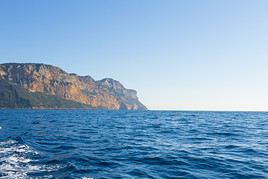
Cap Canaille and Soubeyrannes Cliffs
Between Cassis and La Ciotat, these are some of Europe’s highest sea cliffs, dropping up to 400 m into the Mediterranean.
Between Cassis and La Ciotat, these are some of Europe’s highest sea cliffs, dropping up to 400 m into the Mediterranean.

Cassis
Southeast of Marseille, this charming little port is known for its stunning calanques, which you can also explore (preferably off-season) on boat trips.
Southeast of Marseille, this charming little port is known for its stunning calanques, which you can also explore (preferably off-season) on boat trips.

Hyères
A seaside resort near Toulon with some beautiful early 20th-century mansions and several thousand palm trees. Sandy beaches and rocky coves surround the area, mainly on the Giens peninsula, which is part of the municipality.
A seaside resort near Toulon with some beautiful early 20th-century mansions and several thousand palm trees. Sandy beaches and rocky coves surround the area, mainly on the Giens peninsula, which is part of the municipality.

Porquerolles Island
Opposite Hyères, it’s a major tourist hotspot in the region. Visitors come for its landscapes, beaches, diving, and hiking.
Opposite Hyères, it’s a major tourist hotspot in the region. Visitors come for its landscapes, beaches, diving, and hiking.

La Ciotat
La Ciotat is a fishing port, an old town centre, and above all, its surroundings are well worth a detour, with calanques (coves), some of Europe’s highest cliffs (Cap Canaille), beaches, and diving opportunities.
La Ciotat is a fishing port, an old town centre, and above all, its surroundings are well worth a detour, with calanques (coves), some of Europe’s highest cliffs (Cap Canaille), beaches, and diving opportunities.

Marseille
Unique in its kind, both in atmosphere and tourist attractions, the capital of Bouches-du-Rhône is a must-visit destination in the region.
Unique in its kind, both in atmosphere and tourist attractions, the capital of Bouches-du-Rhône is a must-visit destination in the region.

Sainte-Baume Massif
Straddling two departments (Var and Bouches-du-Rhône), this small massif is popular with hikers.
Straddling two departments (Var and Bouches-du-Rhône), this small massif is popular with hikers.

Port-Cros National Park
The site covers the entire island of the same name (and part of Porquerolles) off the coast of Hyères. Visitors come for diving, boat trips, hiking, and, incidentally, these old forts.
The site covers the entire island of the same name (and part of Porquerolles) off the coast of Hyères. Visitors come for diving, boat trips, hiking, and, incidentally, these old forts.

Saint-Cyr-sur-Mer
A small marina with its beach, nestled in a bay surrounded by pine forests and vineyards.
A small marina with its beach, nestled in a bay surrounded by pine forests and vineyards.
