The problem when you're enjoying listening to the jungle sounds at night is that you don’t get much sleep! Anyway, the night still passes, surrounded by cicadas and monkeys, and it’s the birds that wake us up.
It’s daylight, and we’re heading to the Mayan city of Calakmul, a UNESCO World Heritage site. It’s located 52 kilometers from the campsite. But since the road quickly turns into a dirt track with a 30 km/h speed limit, we have to drive slowly (we’re not here to run over our animal friends). So, it takes about 1 hour and 50 minutes to reach the site.
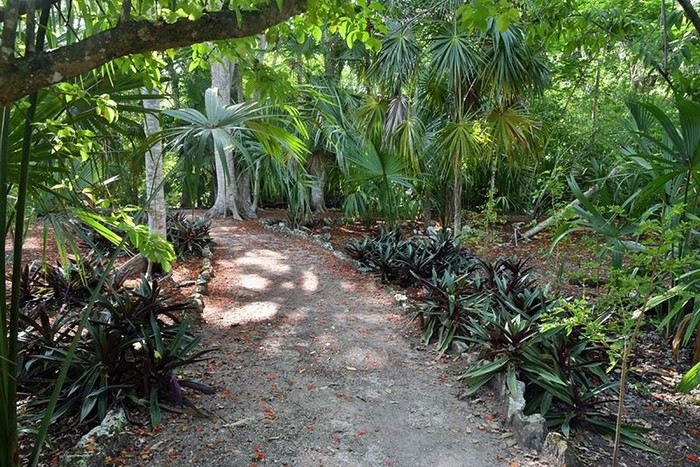
This track cuts through the jungle, a large part of which is also classified by UNESCO—as a biosphere reserve. So, one UNESCO wonder can hide another…
Along the way, we spot ocellated turkeys several times.
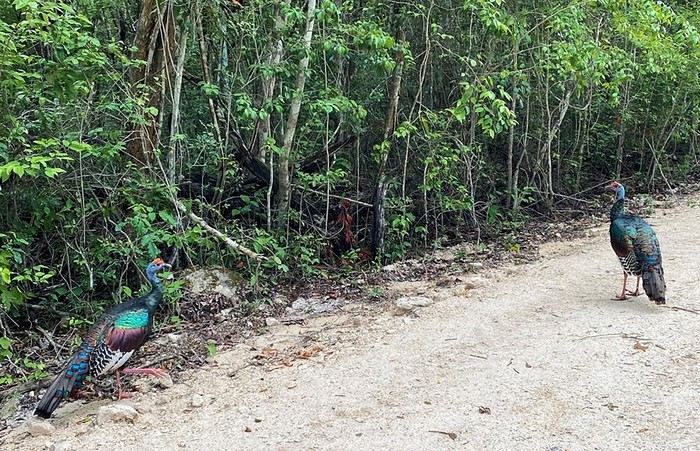
These are large birds (nearly a meter long) with beautiful multicolored plumage. Their heads are blue with lots of round, red growths—kind of like warts, but prettier (or at least less ugly)!
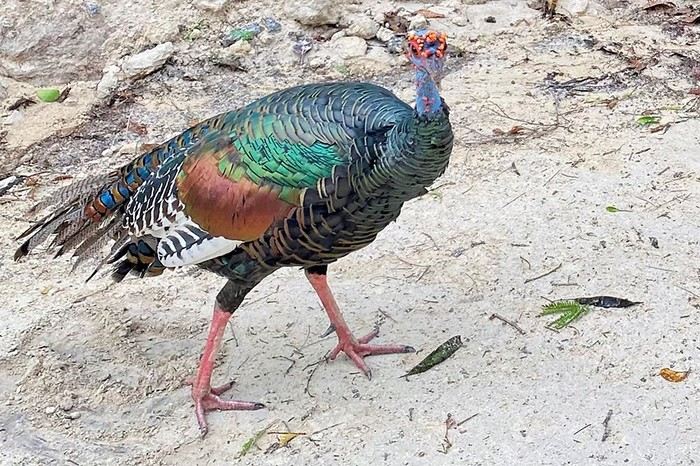
Note: The ocellated turkey doesn’t like being photographed! At least, the one I’m trying to capture through the car window pretends to attack us repeatedly—charging at us suddenly, then slowly backing off for a few seconds, only to charge again.
And when I finally decide to drive away to leave it in peace—after all, this is *its* jungle, not ours—it proudly runs after our car, looking satisfied with a smirk on its beak. The turkey won; I admit defeat.
Among the other animals in the reserve—not all of them easy to spot—are jaguars and pumas, spider monkeys and howler monkeys, tapirs…
There are also 350 bird species, including toucans and several types of eagles, vultures, and parrots; 70 reptile species; and nearly 400 butterfly species…
And with 1,500 plant species, the flora is just as impressive.
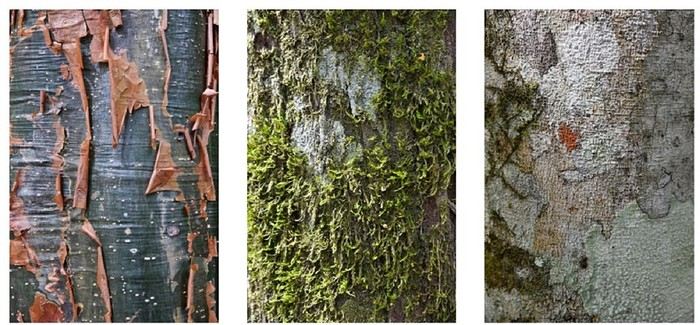
In short, nature lovers, the Calakmul Biosphere Reserve is made for you…
We got up early this morning, and it paid off—when we arrive at the Mayan site, there are only three cars parked there! It’s incredible, but we’re going to have a Mayan city, and not just any one, almost entirely to ourselves.
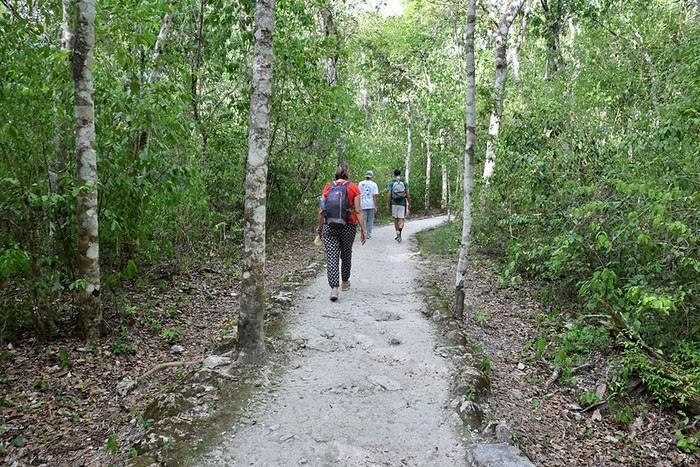
Calakmul was a Mayan city that reached its peak around 650 AD. Very powerful at the time, it had up to 50,000 inhabitants.
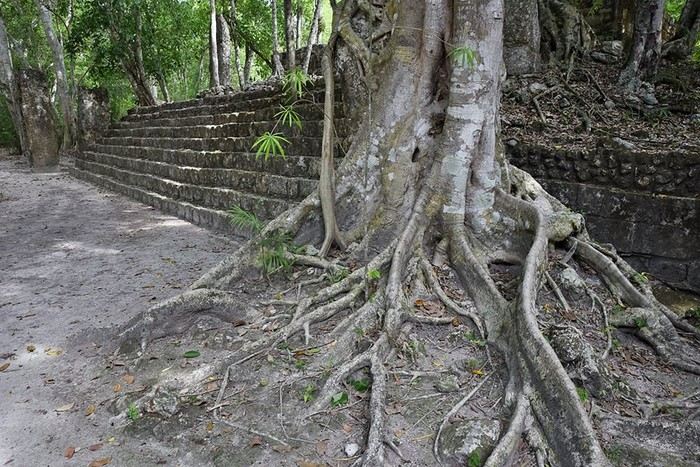
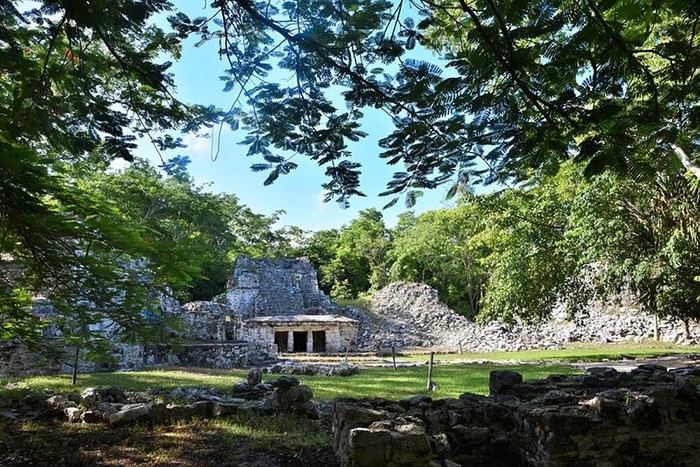
Today, beyond its history, what makes this city magical for amateurs like us is that the jungle has reclaimed the site over the centuries. It gives the lost city a bit of an Indiana Jones vibe.
Only about twenty of the 6,000 structures scattered in the jungle have been cleared and are accessible, despite the trees that have taken over these ancient stones.
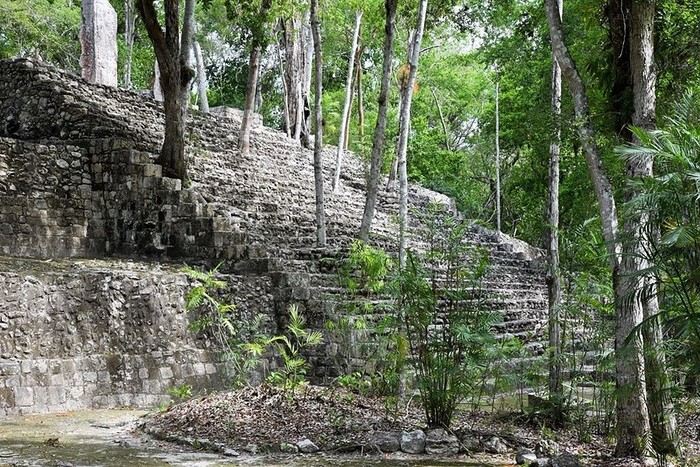
The natural setting of this historic site is truly impressive.
One of the main attractions for visitors exploring Calakmul is that, unlike more famous and crowded Mayan sites like Chichen Itza or Uxmal, you can climb to the top of the pyramids here.
And as always with pre-Columbian pyramids, the climb is steep.
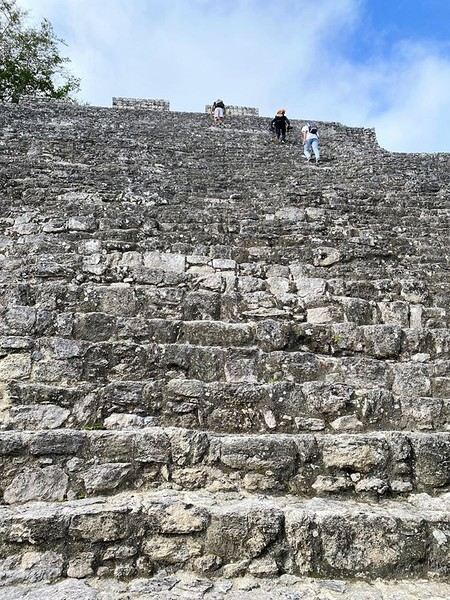
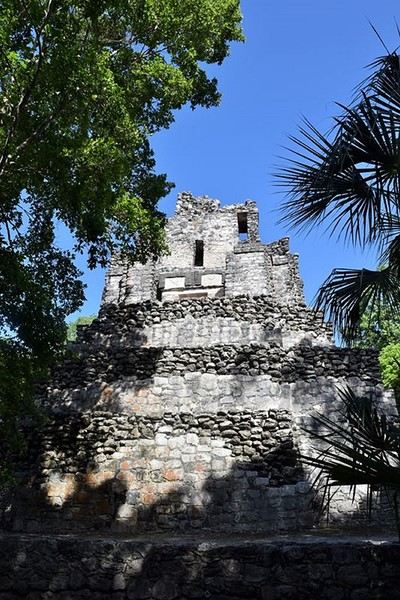
The first pyramid on the itinerary is Structure I. It’s 50 meters tall and faces the site’s main jewel: the second pyramid, or Structure II.
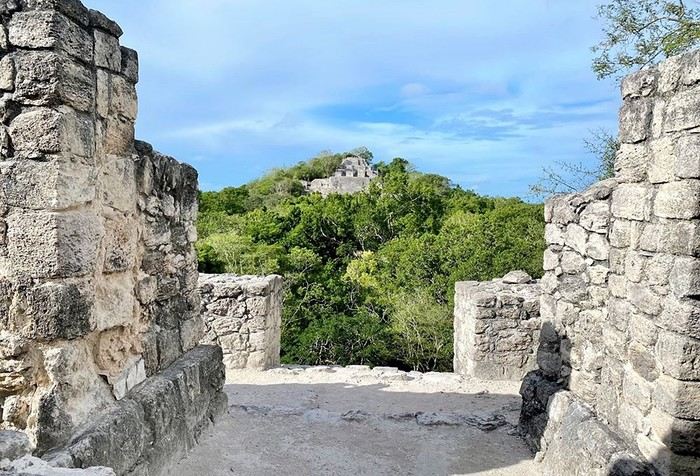 Structure II (in the background) seen from the top of Structure I
As we climb the first pyramid, we hear distant, incredibly loud animal cries that we can’t identify. We wonder what it could be—maybe a big cat? But it’s only when we reach the second pyramid that we realize: the cries are coming from a group of howler monkeys. Clearly, they weren’t given that name for nothing!
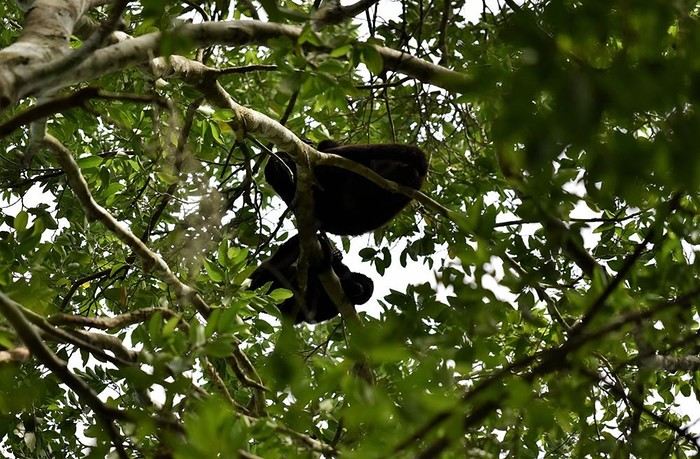
To really understand how impressive the howler monkey’s scream is, you should know that in the entire animal kingdom, it’s one of the three loudest. At 140 decibels, it even beats the roaring deer and the lion (which only reach 110–120 decibels) and isn’t far behind a jetliner taking off (140–170 decibels)! You have to hear it to believe it—it’s truly mind-blowing.
To let loose with their vocal cords, the seven or eight monkeys chose a tree at the foot of one of the most important temple-pyramids in the Mayan world. That’s the magic of the jungle: for us, this wildlife encounter in such a historic place will be unforgettable.
We leave our primate friends—visually, at least, because we can still hear them—as we start climbing the famous pyramid, whose square base measures 120 meters on each side! From the top, you can see the first pyramid we climbed just minutes earlier, swallowed by the endless jungle.
The view from the top of this jewel, rising above the wild vegetation, is breathtaking.
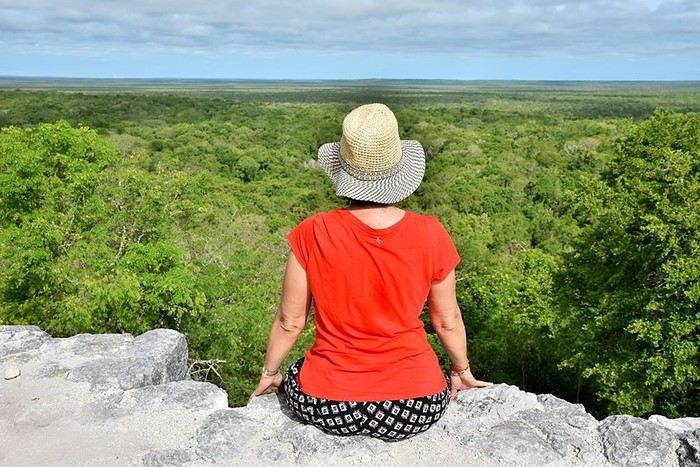
When you think about it, the landscape hasn’t changed much since the time of the Maya. And that’s a good thing.
It’s time to go.
Down below, the monkeys keep letting out their ear-splitting cries
It’s daylight, and we’re heading to the Mayan city of Calakmul, a UNESCO World Heritage site. It’s located 52 kilometers from the campsite. But since the road quickly turns into a dirt track with a 30 km/h speed limit, we have to drive slowly (we’re not here to run over our animal friends). So, it takes about 1 hour and 50 minutes to reach the site.
This track cuts through the jungle, a large part of which is also classified by UNESCO—as a biosphere reserve. So, one UNESCO wonder can hide another…
Along the way, we spot ocellated turkeys several times.
These are large birds (nearly a meter long) with beautiful multicolored plumage. Their heads are blue with lots of round, red growths—kind of like warts, but prettier (or at least less ugly)!
Note: The ocellated turkey doesn’t like being photographed! At least, the one I’m trying to capture through the car window pretends to attack us repeatedly—charging at us suddenly, then slowly backing off for a few seconds, only to charge again.
And when I finally decide to drive away to leave it in peace—after all, this is *its* jungle, not ours—it proudly runs after our car, looking satisfied with a smirk on its beak. The turkey won; I admit defeat.
Among the other animals in the reserve—not all of them easy to spot—are jaguars and pumas, spider monkeys and howler monkeys, tapirs…
There are also 350 bird species, including toucans and several types of eagles, vultures, and parrots; 70 reptile species; and nearly 400 butterfly species…
And with 1,500 plant species, the flora is just as impressive.
In short, nature lovers, the Calakmul Biosphere Reserve is made for you…
We got up early this morning, and it paid off—when we arrive at the Mayan site, there are only three cars parked there! It’s incredible, but we’re going to have a Mayan city, and not just any one, almost entirely to ourselves.
Calakmul was a Mayan city that reached its peak around 650 AD. Very powerful at the time, it had up to 50,000 inhabitants.
Today, beyond its history, what makes this city magical for amateurs like us is that the jungle has reclaimed the site over the centuries. It gives the lost city a bit of an Indiana Jones vibe.
Only about twenty of the 6,000 structures scattered in the jungle have been cleared and are accessible, despite the trees that have taken over these ancient stones.
The natural setting of this historic site is truly impressive.
One of the main attractions for visitors exploring Calakmul is that, unlike more famous and crowded Mayan sites like Chichen Itza or Uxmal, you can climb to the top of the pyramids here.
And as always with pre-Columbian pyramids, the climb is steep.
The first pyramid on the itinerary is Structure I. It’s 50 meters tall and faces the site’s main jewel: the second pyramid, or Structure II.
Structure II (in the background) seen from the top of Structure IAs we climb the first pyramid, we hear distant, incredibly loud animal cries that we can’t identify. We wonder what it could be—maybe a big cat? But it’s only when we reach the second pyramid that we realize: the cries are coming from a group of howler monkeys. Clearly, they weren’t given that name for nothing!
To really understand how impressive the howler monkey’s scream is, you should know that in the entire animal kingdom, it’s one of the three loudest. At 140 decibels, it even beats the roaring deer and the lion (which only reach 110–120 decibels) and isn’t far behind a jetliner taking off (140–170 decibels)! You have to hear it to believe it—it’s truly mind-blowing.
To let loose with their vocal cords, the seven or eight monkeys chose a tree at the foot of one of the most important temple-pyramids in the Mayan world. That’s the magic of the jungle: for us, this wildlife encounter in such a historic place will be unforgettable.
We leave our primate friends—visually, at least, because we can still hear them—as we start climbing the famous pyramid, whose square base measures 120 meters on each side! From the top, you can see the first pyramid we climbed just minutes earlier, swallowed by the endless jungle.
The view from the top of this jewel, rising above the wild vegetation, is breathtaking.
When you think about it, the landscape hasn’t changed much since the time of the Maya. And that’s a good thing.
It’s time to go.
Down below, the monkeys keep letting out their ear-splitting cries
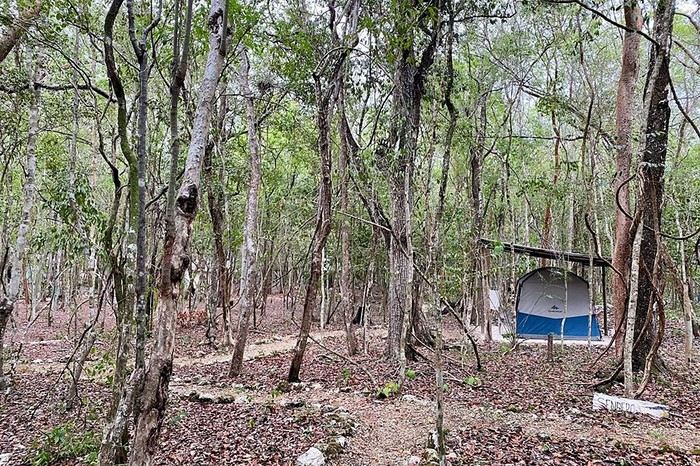 One of the 9 tents at the campground