Skip to content
Mexico: The Magic of the Yucatán
Mexico › Travel journals Lhorizon

Mexico: The Magic of the Yucatán

Translated into English.
Add a reply…

Sign in to reply

Your reply to “Mexico: The Magic of the Yucatán” is one step away. We’ll bring you right back to it.

Create a free account

Why become a member?

44 replies

LhorizonOP· 2 years ago
The problem when you're enjoying listening to the jungle sounds at night is that you don’t get much sleep! Anyway, the night still passes, surrounded by cicadas and monkeys, and it’s the birds that wake us up.

It’s daylight, and we’re heading to the Mayan city of Calakmul, a UNESCO World Heritage site. It’s located 52 kilometers from the campsite. But since the road quickly turns into a dirt track with a 30 km/h speed limit, we have to drive slowly (we’re not here to run over our animal friends). So, it takes about 1 hour and 50 minutes to reach the site.

This track cuts through the jungle, a large part of which is also classified by UNESCO—as a biosphere reserve. So, one UNESCO wonder can hide another…

Along the way, we spot ocellated turkeys several times.
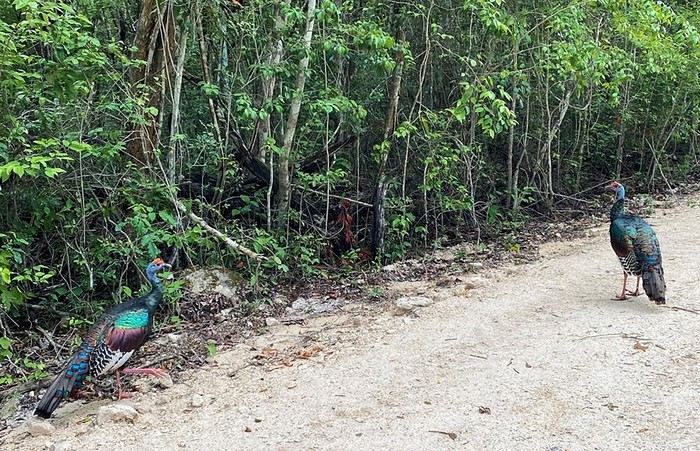


These are large birds (nearly a meter long) with beautiful multicolored plumage. Their heads are blue with lots of round, red growths—kind of like warts, but prettier (or at least less ugly)!
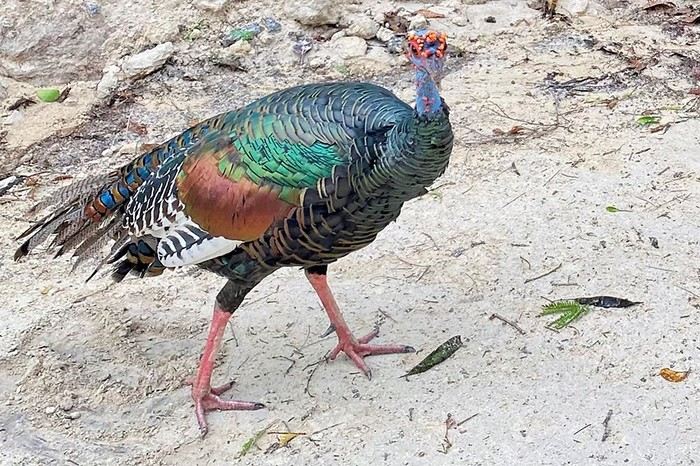


Note: The ocellated turkey doesn’t like being photographed! At least, the one I’m trying to capture through the car window pretends to attack us repeatedly—charging at us suddenly, then slowly backing off for a few seconds, only to charge again.

And when I finally decide to drive away to leave it in peace—after all, this is *its* jungle, not ours—it proudly runs after our car, looking satisfied with a smirk on its beak. The turkey won; I admit defeat.

Among the other animals in the reserve—not all of them easy to spot—are jaguars and pumas, spider monkeys and howler monkeys, tapirs…

There are also 350 bird species, including toucans and several types of eagles, vultures, and parrots; 70 reptile species; and nearly 400 butterfly species…

And with 1,500 plant species, the flora is just as impressive.
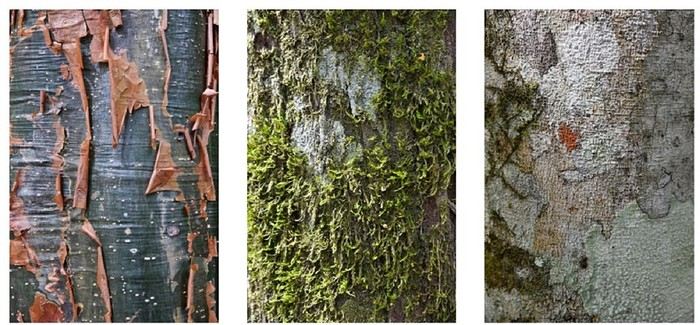


In short, nature lovers, the Calakmul Biosphere Reserve is made for you…

We got up early this morning, and it paid off—when we arrive at the Mayan site, there are only three cars parked there! It’s incredible, but we’re going to have a Mayan city, and not just any one, almost entirely to ourselves.
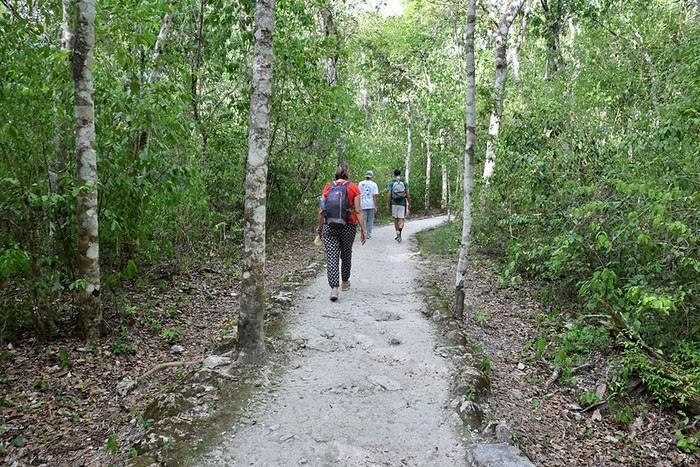


Calakmul was a Mayan city that reached its peak around 650 AD. Very powerful at the time, it had up to 50,000 inhabitants.
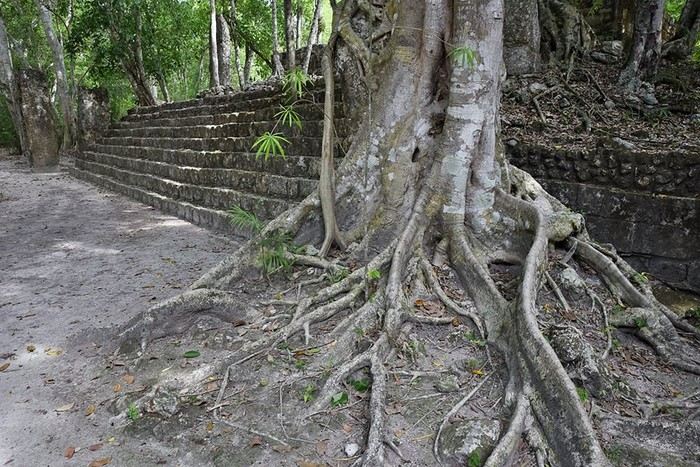


Today, beyond its history, what makes this city magical for amateurs like us is that the jungle has reclaimed the site over the centuries. It gives the lost city a bit of an Indiana Jones vibe.

Only about twenty of the 6,000 structures scattered in the jungle have been cleared and are accessible, despite the trees that have taken over these ancient stones.
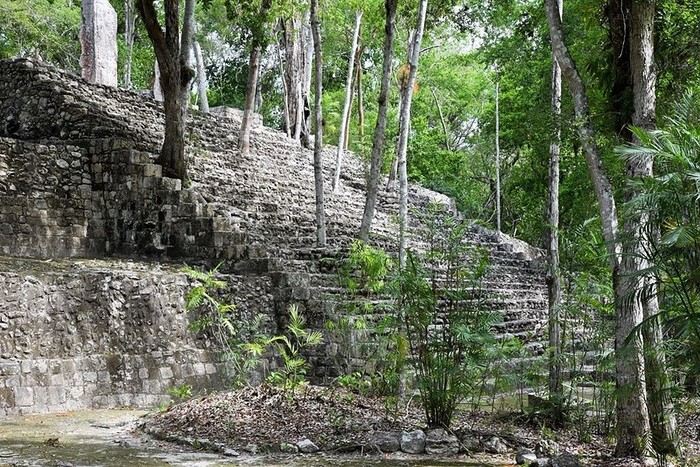


The natural setting of this historic site is truly impressive.

One of the main attractions for visitors exploring Calakmul is that, unlike more famous and crowded Mayan sites like Chichen Itza or Uxmal, you can climb to the top of the pyramids here.

And as always with pre-Columbian pyramids, the climb is steep.
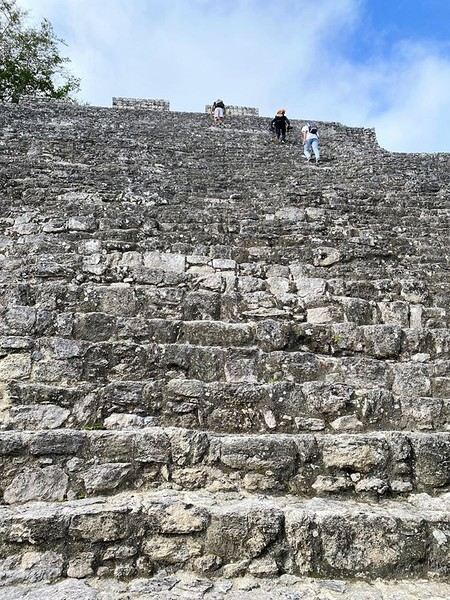


The first pyramid on the itinerary is Structure I. It’s 50 meters tall and faces the site’s main jewel: the second pyramid, or Structure II.
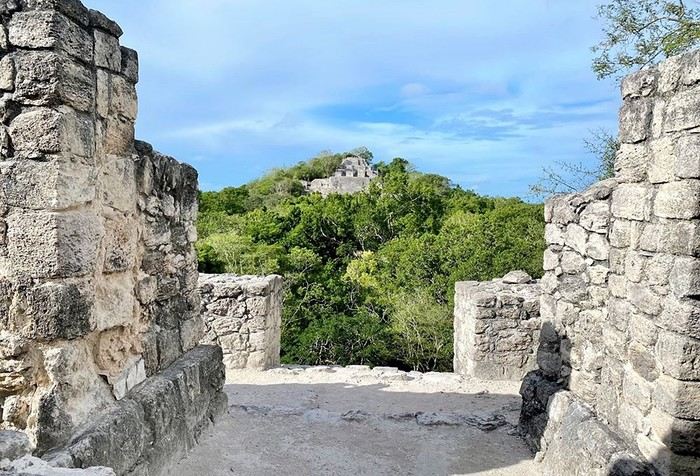
Structure II (in the background) seen from the top of Structure I

As we climb the first pyramid, we hear distant, incredibly loud animal cries that we can’t identify. We wonder what it could be—maybe a big cat? But it’s only when we reach the second pyramid that we realize: the cries are coming from a group of howler monkeys. Clearly, they weren’t given that name for nothing!
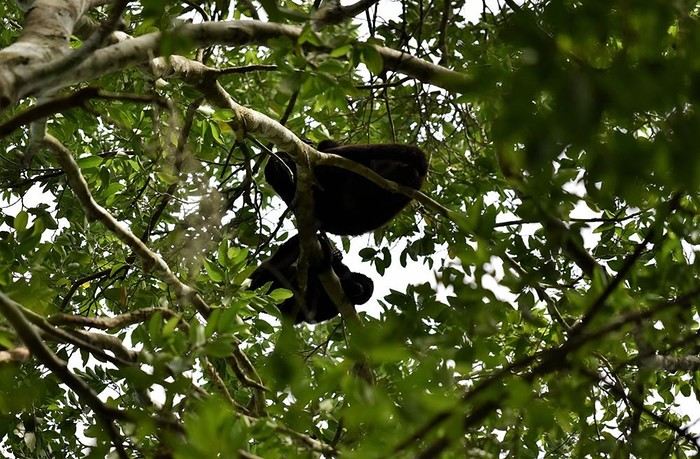


To really understand how impressive the howler monkey’s scream is, you should know that in the entire animal kingdom, it’s one of the three loudest. At 140 decibels, it even beats the roaring deer and the lion (which only reach 110–120 decibels) and isn’t far behind a jetliner taking off (140–170 decibels)! You have to hear it to believe it—it’s truly mind-blowing.

To let loose with their vocal cords, the seven or eight monkeys chose a tree at the foot of one of the most important temple-pyramids in the Mayan world. That’s the magic of the jungle: for us, this wildlife encounter in such a historic place will be unforgettable.

We leave our primate friends—visually, at least, because we can still hear them—as we start climbing the famous pyramid, whose square base measures 120 meters on each side! From the top, you can see the first pyramid we climbed just minutes earlier, swallowed by the endless jungle.

The view from the top of this jewel, rising above the wild vegetation, is breathtaking.
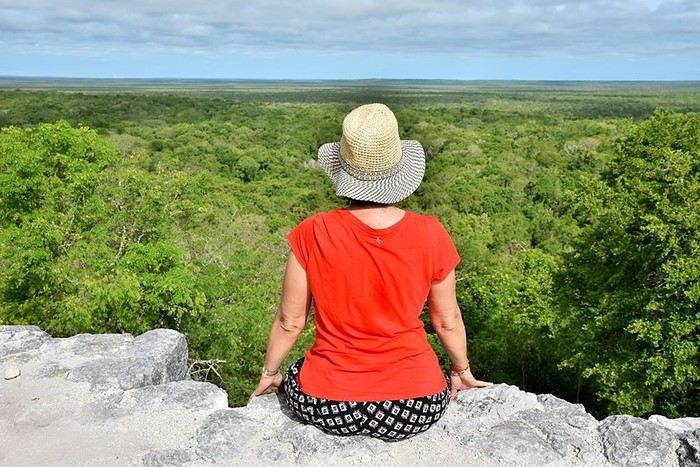


When you think about it, the landscape hasn’t changed much since the time of the Maya. And that’s a good thing.

It’s time to go.

Down below, the monkeys keep letting out their ear-splitting cries
LhorizonOP· 2 years ago
Awesome, everything you did is on our itinerary! And wouldn’t Calakmul be the next stop?....


Sylvain, a lot of visitors only spend two weeks in the Yucatan—sometimes even less—and as a result, they rush through it. It’s a shame.

You’re going to spend two months there with your family, plus one or two other countries, I think (I seem to remember reading that somewhere on VF).

So you’ll see way more than we did—it’s really great. Enjoy this beautiful region that is the Yucatan!

We all loved Calakmul, but I’ve also read some accounts (very few, though) from travelers who thought there wasn’t much to see there.

It’s really a matter of taste, and I hope you’ll all enjoy it (our sons were just a little older than yours when we were there). If you do, take your time: this site, with its mix of nature, wilderness, and history, is totally worth it...
Montagnard74· 2 years ago
Hello! Campeche, Mérida, Uxmal, Coba, Calakmul—so many places that still resonate deeply with me, vivid memories from my month-long trip to Mexico back in 2012!

But I’m thrilled to see there are still "off-the-beaten-path" sites and "rustic" accommodations I love so much. Here’s to the next adventure! !
Scot2021· 2 years ago
Hi, Yes, we’re taking our time, and we’ve already booked our night at the Roots campsite you recommended. We love these situations that push us out of our comfort zone and teach our kids so much!👋🏼
LhorizonOP· 2 years ago
Hi Montagnard,

So glad I brought back such great memories for you!

We’d been told so often that the Yucatán was *ultra*-touristy that we weren’t expecting to find ourselves in some spots that were barely visited—or even deserted, like Calakmul. What a fantastic surprise that was.

And while some sites are packed (Chichén Itzá, Mérida, Tulum, etc.), not all of them are! That’s the beauty of taking your time, like Sylvain mentioned earlier—it lets you uncover those hidden gems and enjoy them the way they deserve…
LhorizonOP· 2 years ago
I’ve added tons of photos to my travel journal, but I think videos capture the reality better.

Anyway, before I continue with the story, here’s a quick 2-minute video that gives a pretty good sense of the Yucatán: right here 😎
LhorizonOP· 2 years ago
Before wrapping up the trip (Bacalar, Sian Ka’an, and Tulum), here’s some practical info about Calakmul:

- Yaax’ Che Campground

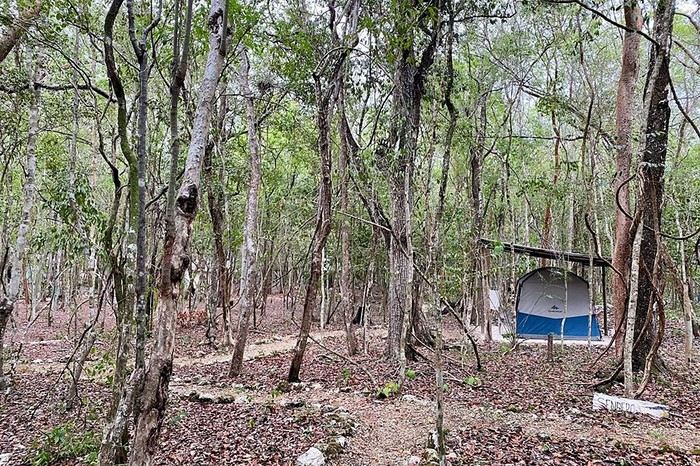
Operating since 2003, it’s run by a family from a local community. The initial goal was to establish a camp with low-impact environmental infrastructure. Twenty years later, this camp is a success, welcoming tourists while helping preserve the reserve’s environment.

One of the 9 tents at the campground
Contact: serveursturisticos@yahoo.com.mx

Phone: +52.983.101.1921

Address: Campamento Yaax Che in Calakmul, Carretera 186 Escacega – Chetumal KM 98 Entronque a Calakmul KM 7, 24640 Conhuas

To book a tent (or several), the best option is to go through the excellent website of the community tourism association this campground belongs to: Peninsular Alliance for Community Tourism.
Don’t hesitate to check it out—you might find something perfect, as it also lists other interesting, community-based, off-the-beaten-path spots in the Yucatán.

Alternatively, you can also book through the usual platforms: Booking, Agoda, Tripadvisor...

Price: It might seem surprising, but here, the price is inversely proportional to the comfort level! We paid 78 € for a tent for four people (in July). Some might find this rate too high for the amenities, but we don’t—it’s worth it to step off the beaten path in this ultra-touristy Yucatán.

Meals included: A light breakfast (not very filling) is included in the price. You can swap it for a small sandwich for your day visiting Calakmul, since there’s nowhere to buy food in the area.

Note that there are two short nature observation trails around the campground, including a bird-watching tower in the middle of the jungle.

- Admission fees for the Calakmul archaeological site

Here’s how the total access fee breaks down (2023 rates):

1/ At the exit of the small village of Conhuas, you pay a road maintenance fee (104 pesos per person).

2/ 20 km later, you pay the entrance fee for the biosphere reserve (150 pesos per person).

3/ And upon arrival (another 40 km), you pay the access fee for the Mayan archaeological site (90 pesos per person).

The total cost is 344 pesos per person (about 19 € at the 2023 exchange rate).

With all these successive payments, it feels a bit like we’re being milked, but in the end, it’s a small price to pay for such an exceptional site as Calakmul.

Warning: Don’t run out of gas, water, or food!

Calakmul is completely isolated in the jungle—there’s nothing nearby, and it’s far from everything. That’s part of its charm, but it also comes with some drawbacks: you need to plan ahead for gas, water, and food.

For gas:

Fill up well before reaching Conhuas, as gas stations are nearly nonexistent on Highway 186.

Coming from the west, the last gas station we found before Conhuas was in Silvituc (45 km from Conhuas and 105 km from Calakmul).

If you’re coming from the east (Bacalar, Chetumal, etc.), it’s best to fill up in Bacalar, especially if you’re making the round trip from Bacalar to Calakmul (470 km).

For water and food:

Stock up well before reaching Calakmul, or you might go hungry! Not having water while walking in this usually scorching-hot site can ruin your visit.

The best option is to buy food and drinks either in a town you pass through on the way (whether coming from Campeche, Bacalar, or elsewhere) or at a typical roadside shop—but in any case, do it well before reaching Conhuas.

Otherwise, you can still find supplies in Conhuas, but with limited choices, as the stores are small and not well-stocked.

And finally, if you pass the first checkpoint 1 km after Conhuas, at the entrance to the road heading south to Calakmul, your last chance is 6 km further at the Oxte’ Tun restaurant on the right side of the road. There, you can buy small sandwiches. They don’t sell bottled water, but you can refill your empty bottles (don’t make the same mistake we did—keep your empty bottles instead of throwing them away!). They also sell sodas.

9/ Bacalar

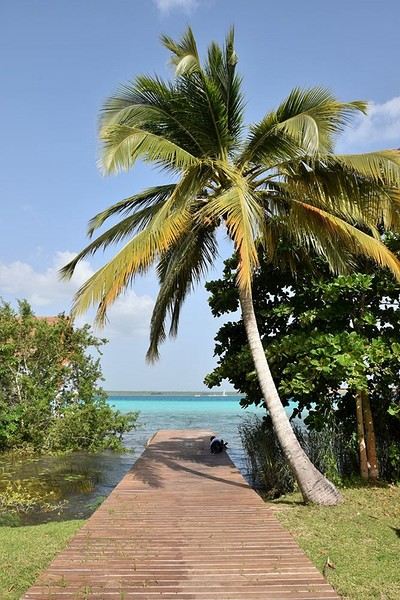
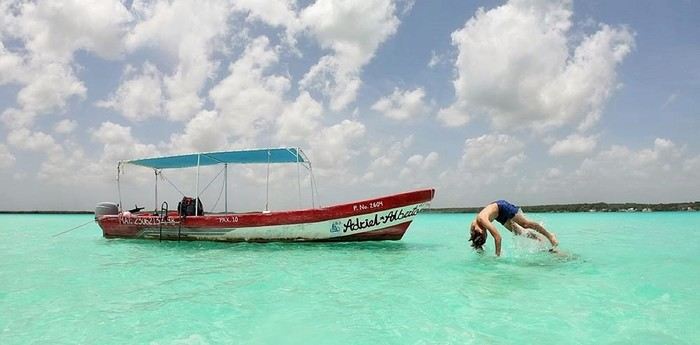
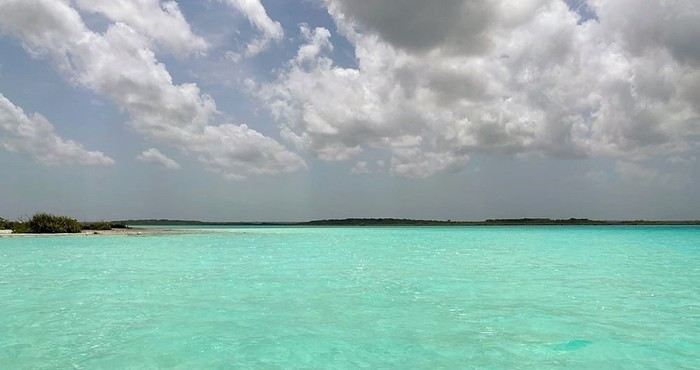
I admit we didn’t stay long enough or make the most of it. It’s a shame because the area is stunning—the colors, especially of the water, are breathtaking and perfect for swimming. The temperature is delightful.


Bacalar Lagoon is nicknamed the “Lagoon of Seven Colors” because of—or rather, thanks to—its different shades of blue, turquoise, and green.


We went to the famous Pirates’ Channel by canoe. First, you have to paddle for a good twenty minutes or more (we had to fight the wind).

Then you arrive at a spot where there’s not much to do except swim and enjoy the scenery.


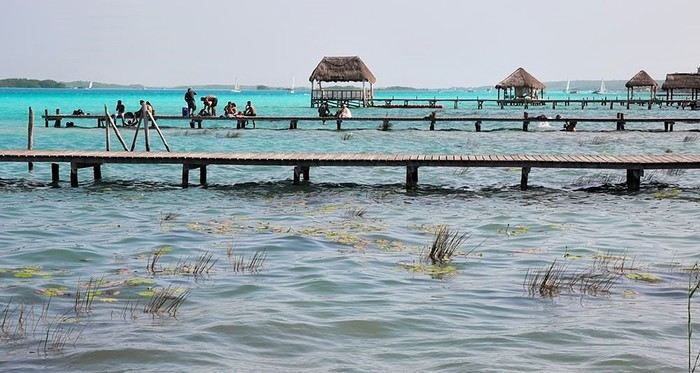
On the way back, we thought we could swim along the shore, but it seems nearly impossible: hotels have taken over the waterfront, and access to the water is privatized. There might be a few public spots, but if so, we didn’t see them.

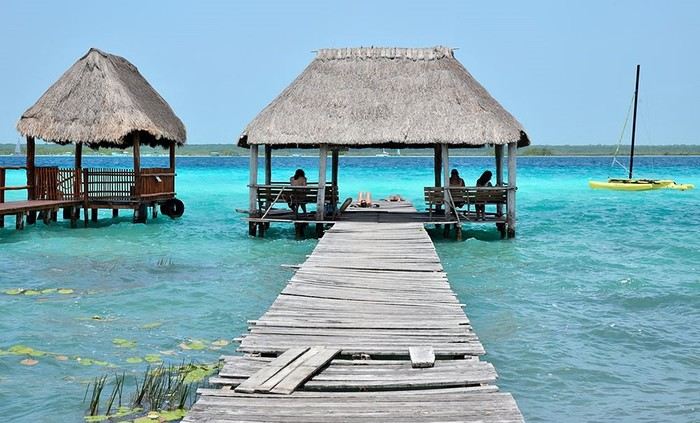
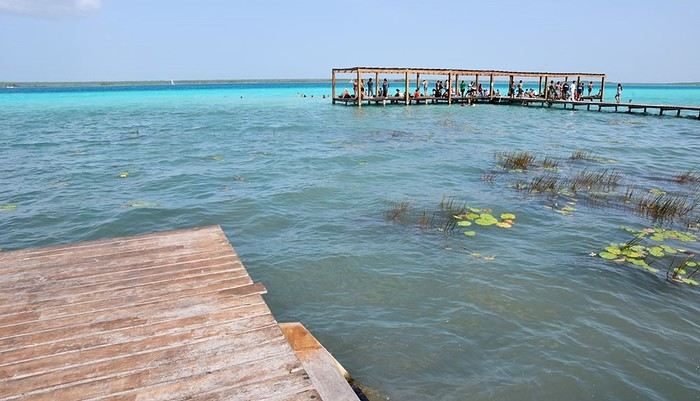
When we thought about heading to a public *balneario* (a free but usually overcrowded small beach area), we found a small, nearly deserted dock nearby:


Here’s what the public *balneario* looks like (in the background):


...and the private docks right next to it:


We also took a short boat tour of the lagoon. We briefly saw a submerged cenote, its circular shape clearly visible.


Then we headed to a new swimming area.


There’s nothing to do there—just savor and enjoy. At that moment, the daily grind of work back in France felt so far away.

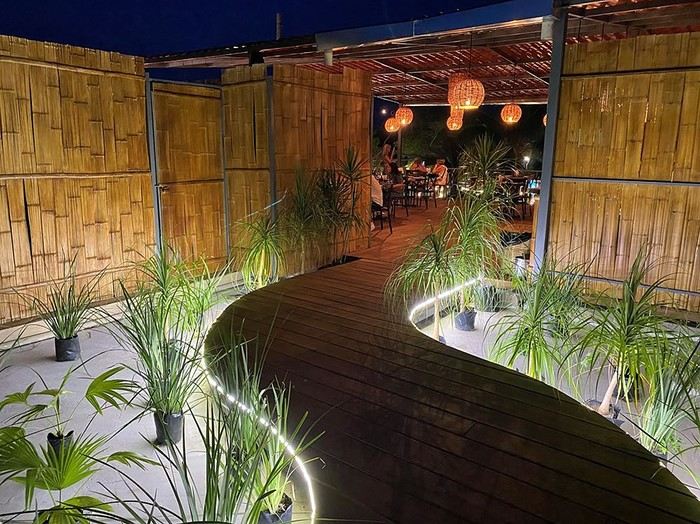
One place we loved was a small, friendly restaurant, Baluartes Marina Laguna Azul (Avenida Costera 1, por Calles 20 y 22, Bacalar, 77930). The food and cocktails are good and filling, and ideally, you should go in the evening and ask for the upstairs area—it’s much nicer than the ground floor:
LhorizonOP· 2 years ago
10/ The Sian Ka’an Biosphere Reserve

There are three ways to visit the Sian Ka’an reserve:

- The short excursion from Muyil (2 to 3 hours) - The long excursion from Muyil (5 hours) - The full Sian Ka’an excursion (8 hours).


We chose the first option: the short excursion from Muyil. It unfolds in three stages:

- We start with a visit to the small ancient Mayan city of Muyil - We continue with a short but pleasant trek through the jungle - We finish with a lovely boat ride that ends with an unforgettable swim in the Mayan canals.

Finally, you can do this excursion with or without a guide, and it’s worth noting that you can also head straight to the dock to take the boat if you want to skip the first two stages.

Step 1: The Mayan ruins of Muyil

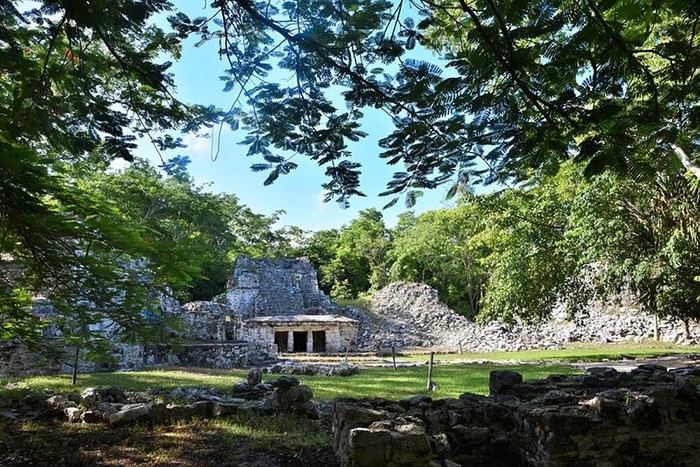
This is an archaeological Mayan site that isn’t particularly impressive at first glance compared to Chichen Itza, Uxmal, or Calakmul.


That said, this site, nestled in nature where visitors aren’t crowded, is really pleasant to explore.


Inhabited early by the Maya (from around 300 BC to 900 AD), the site’s strategic position allowed its inhabitants to control an important trade route.
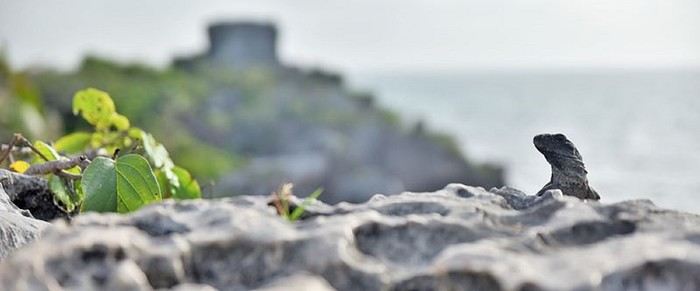
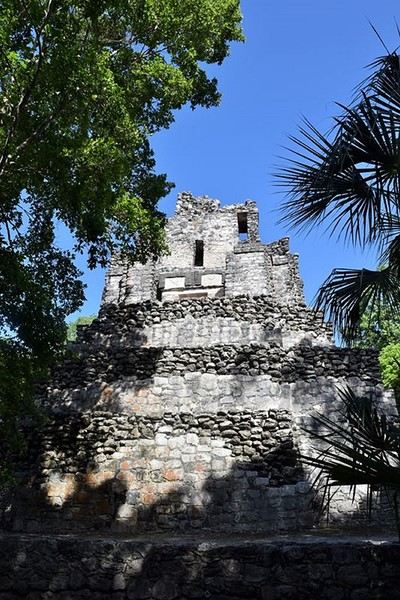
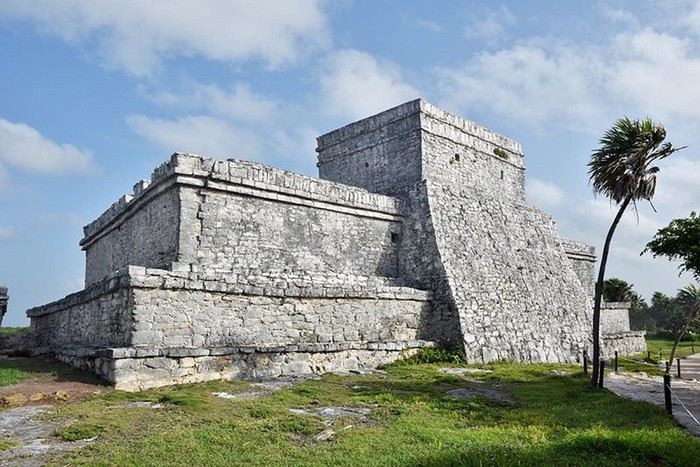
Today, its main archaeological attraction is its stepped pyramid, called El Castillo. It’s also the tallest structure (17 meters).


For reference, you can breeze through the ruins in about fifteen minutes if you’re not too curious, or take an hour or more in slow-travel mode. We took our time—it was just so enjoyable.

Step 2: Short jungle trek

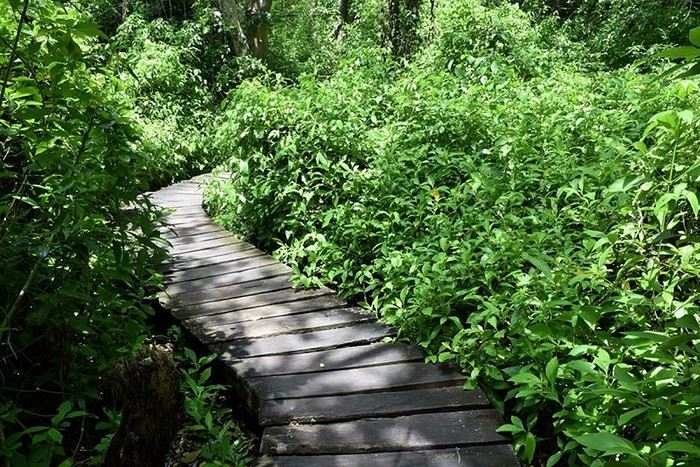
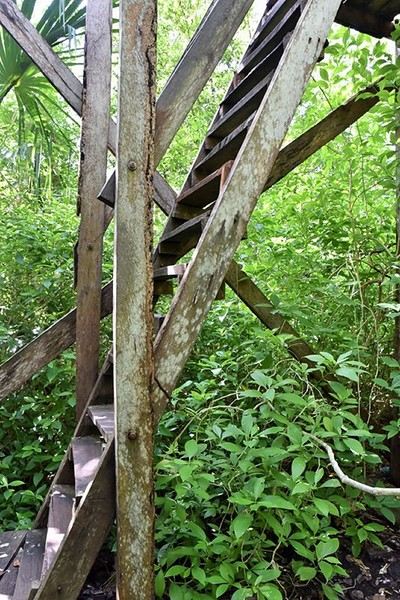
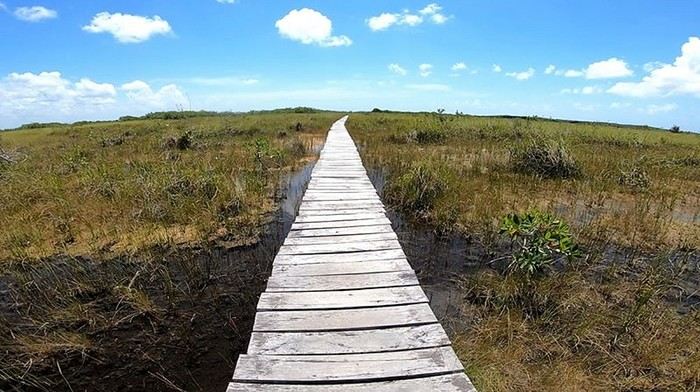
Next, we cross a jungle area on a lovely wooden boardwalk: the Canan Ha trail.


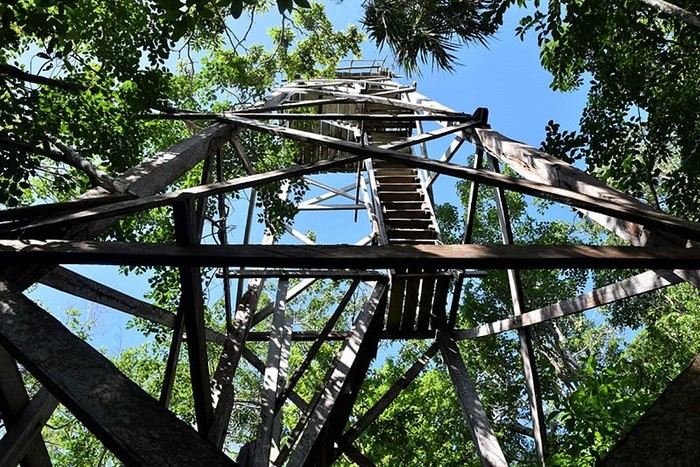
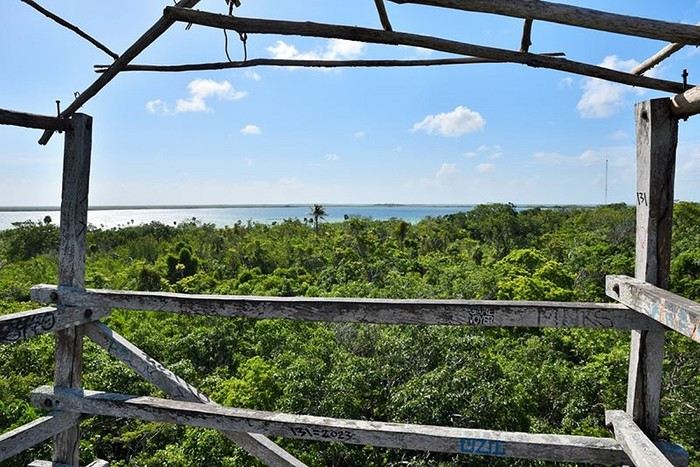
After a 10- to 15-minute walk, we reach an observation tower whose summit sits just above the canopy.


The climb is about as steep as a Mayan pyramid!


The view from the top is worth the detour.


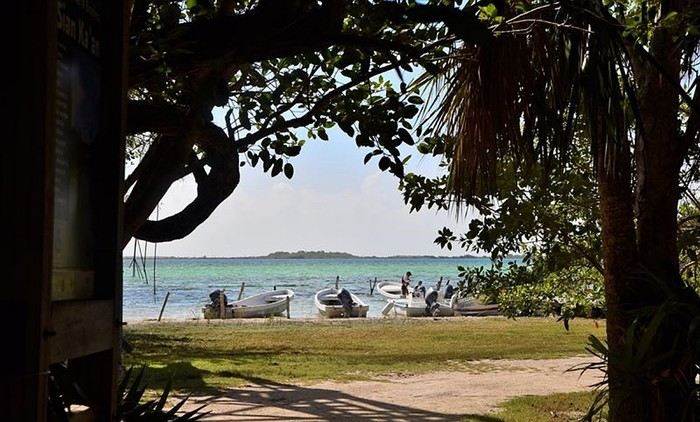
All that’s left is a short walk (5 minutes) before reaching the dock.

LhorizonOP· 2 years ago
Step 3: Boat, lagoon, mangrove, and swimming in the Mayan canals

While the first two steps (ruins and jungle) were already very enjoyable, the third one left a truly unforgettable memory. I’d read about it before going but was skeptical—wrongly so, because it’s really nothing but pure pleasure...


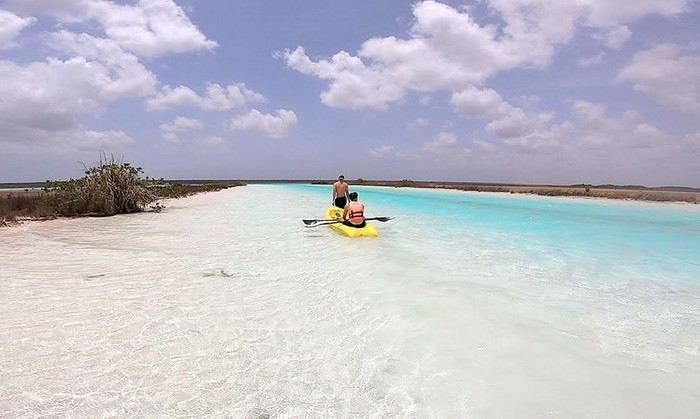
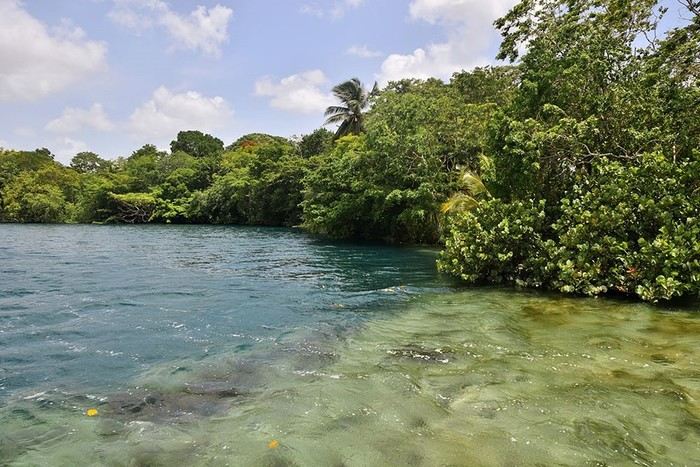
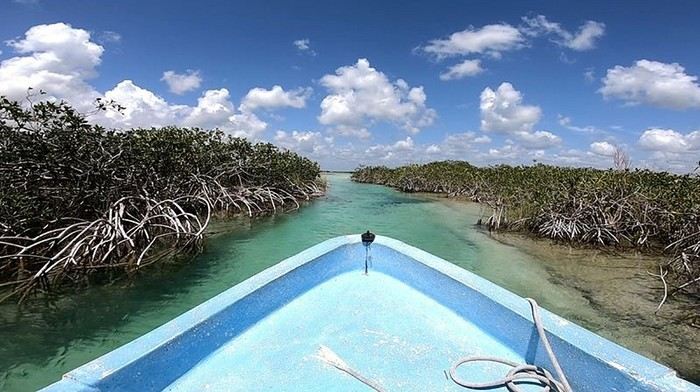
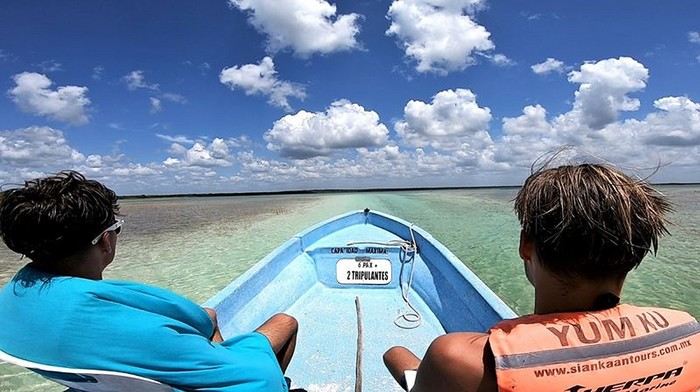
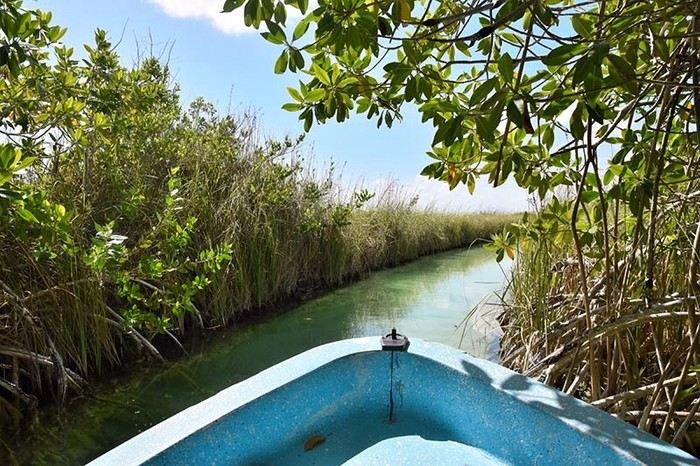
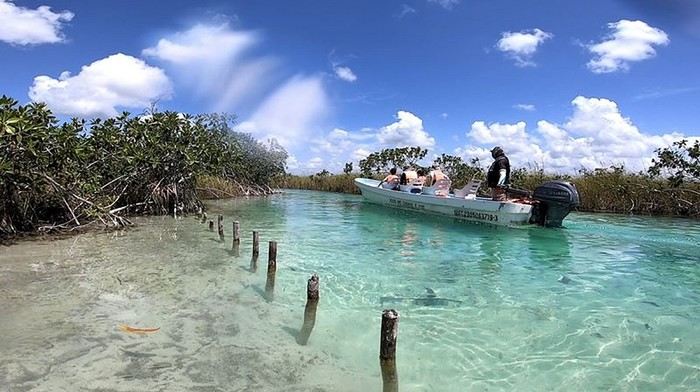
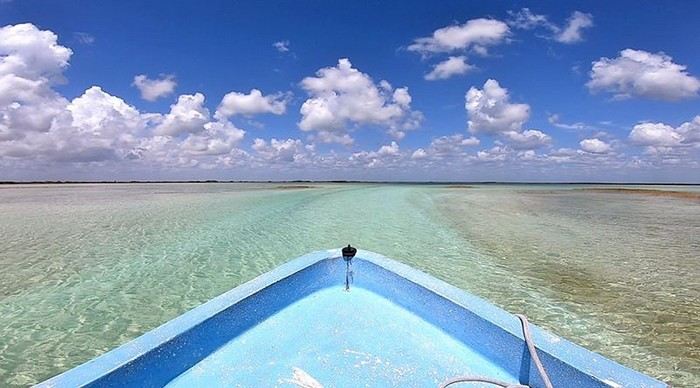
The nautical outing begins with crossing the Muyil lagoon. Shallow and translucent, its water takes on multiple colors: shades of green and blue, white sandbanks, and brown shallows.

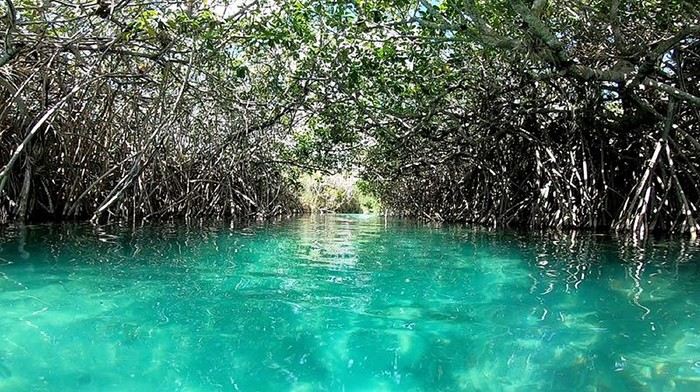
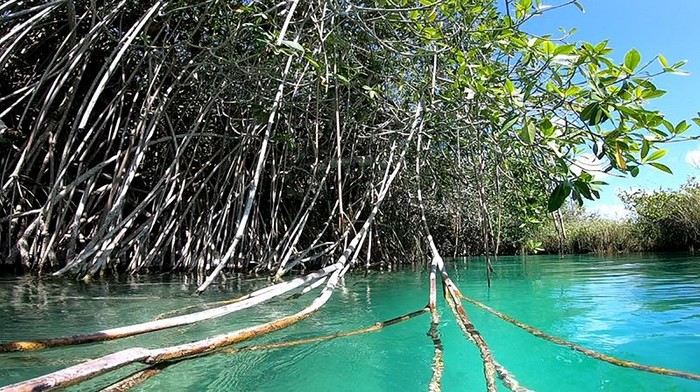
Next, we reach the famous Mayan canals that wind through the mangrove.


Historically, these canals allowed the Mayans to access fresh water, which was vital for them. Today, we get to swim in them!


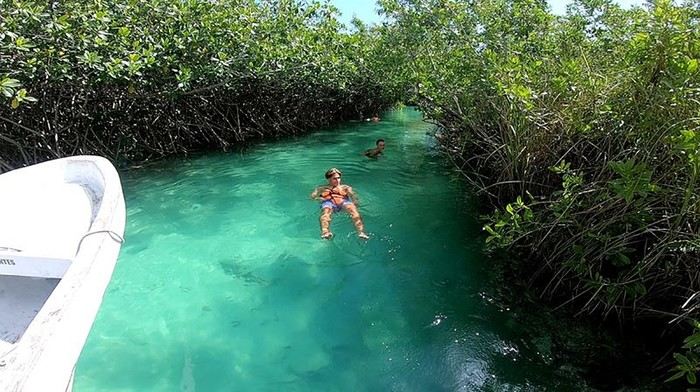
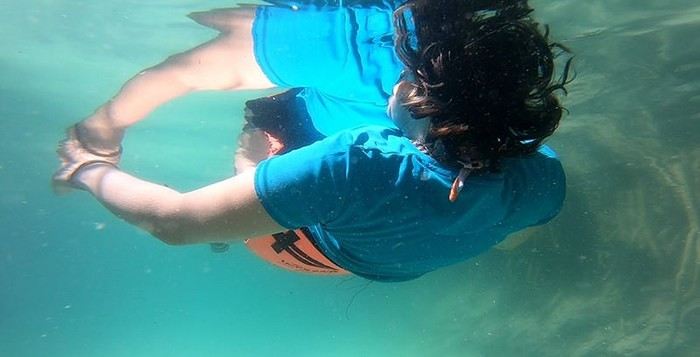
Before jumping in, we have to put on a life jacket—not through the arms but through the legs: the idea is to wear it like a diaper!


We might not look particularly cool dressed like this, but it’s surprisingly comfortable, and the sensations in the water are amazing.

The perfect water temperature is also a huge relief from the ambient heat and helps make the moment magical.


All we have to do is let the current carry us gently, without swimming.


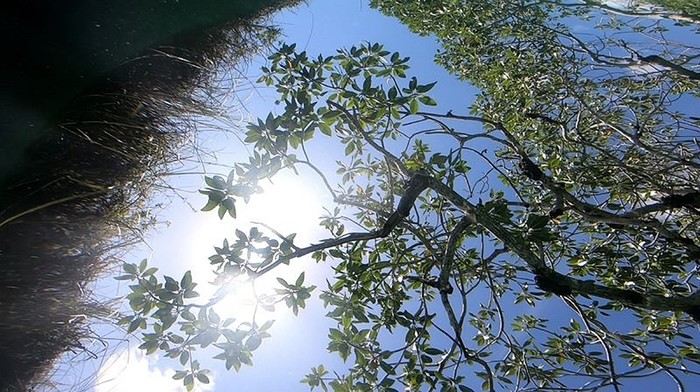
We drift slowly through a beautiful mangrove, in emerald-green water.


For this floating stroll, the boat pilot had announced a duration of about 45 minutes, but you can also prolong the fun: we enjoyed the moment so much that it took us over an hour.

We eventually arrive at a small dock lost in the vegetation, marking the end point. There are two options here: either the pilot came by boat to pick up the swimmers, or he came on foot via a dock through the vegetation, by which we return with him to the boat, still moored where we got into the water.


We returned via this footpath, alone in the middle of nowhere. After a 10-minute walk under the scorching sun, we retrieve the boat.


There’s just about ten more minutes of navigation through the mangrove and the Muyil lagoon in beautiful landscapes to return to the starting dock of Step 3.


From there, you can head to the site exit, either directly (a 5-minute walk) or by retracing the outbound path in reverse (crossing the jungle section and then the archaeological site). We chose the second option to keep enjoying it as much as possible.
To conclude, Sian Ka’an was one of the great surprises of our trip: this outing didn’t look like much at first, but in the end, all four of us really loved it.
LhorizonOP· 2 years ago
Final part...

11th and final stop: Tulum

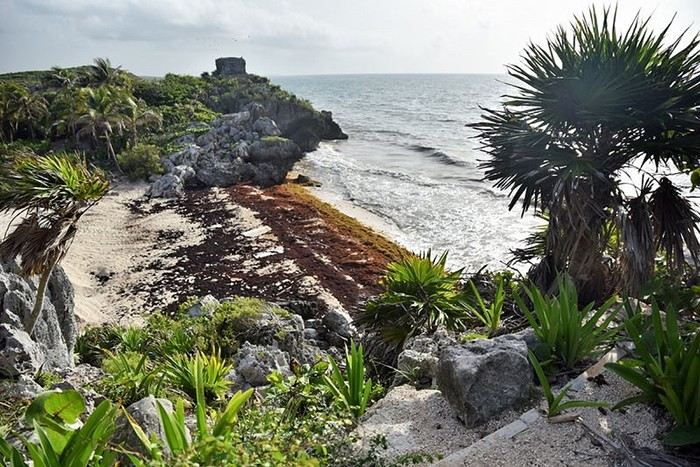
There’s obviously something for everyone here, but as far as we’re concerned, we didn’t like Tulum. Its only real draw is its archaeological site, which most of us have probably seen in photos all over the place—often presented as iconic of the Yucatán.


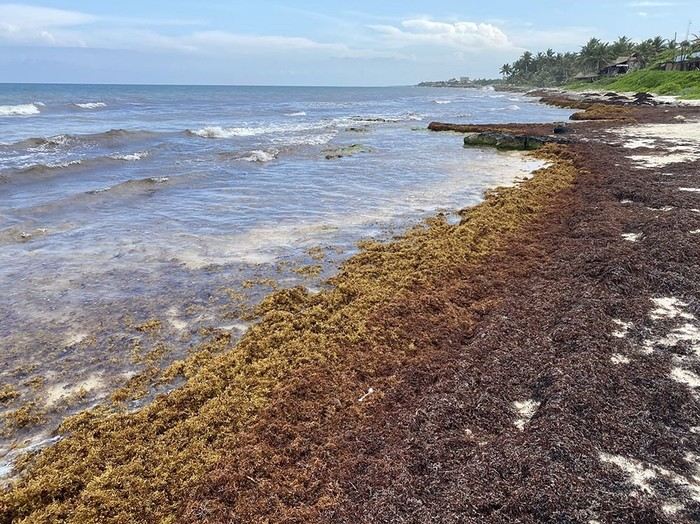
Tulum is a town where the coast is literally taken over by hotels: beach access is almost entirely private. The town itself has zero authenticity. And yet, tourists—many of them American—seem to love crowding into these charm-free hotels, on beaches that are regularly overrun by sargassum.


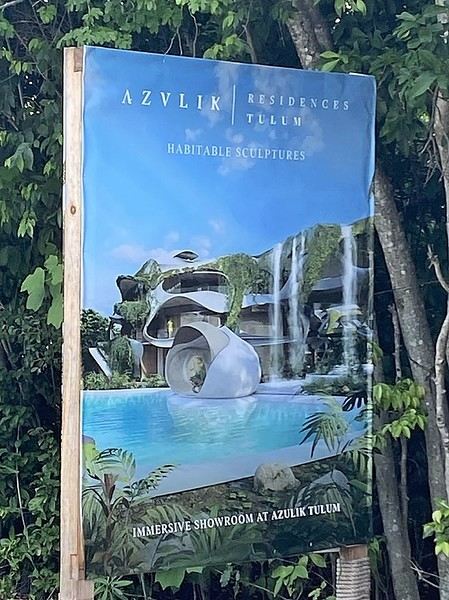
Luxury (and often bizarre) hotel projects keep popping up along the coastline for I don’t even know how many miles, alternating with the ones already there.


Anyway, we visited the Mayan city of Tulum, which was actually interesting, even if you can explore it pretty quickly.

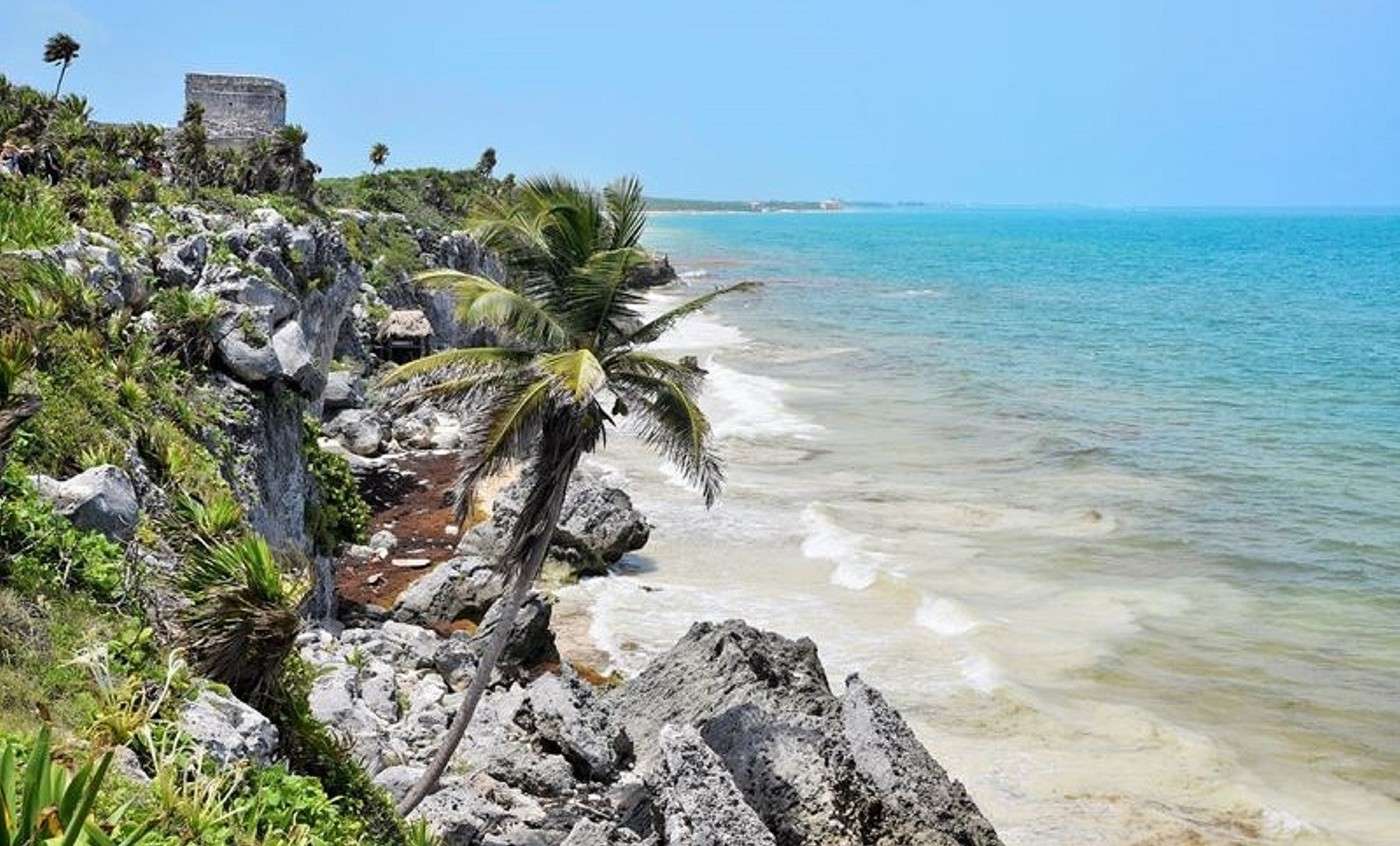
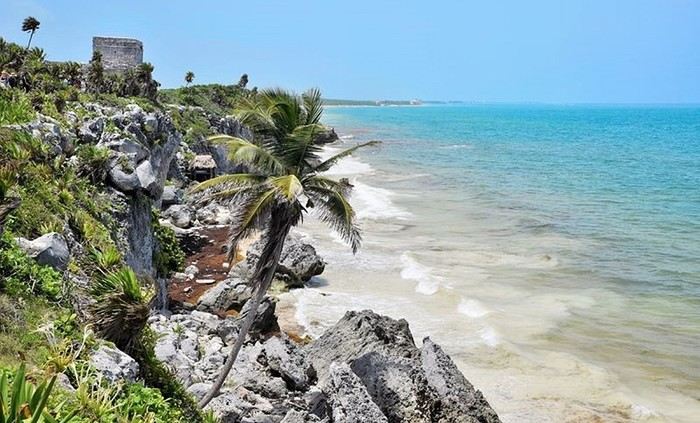
The city was fortified (Tulum means "fence" in Mayan) and located at the highest point on the coast. This allowed it to control maritime trade routes while being virtually impregnable.

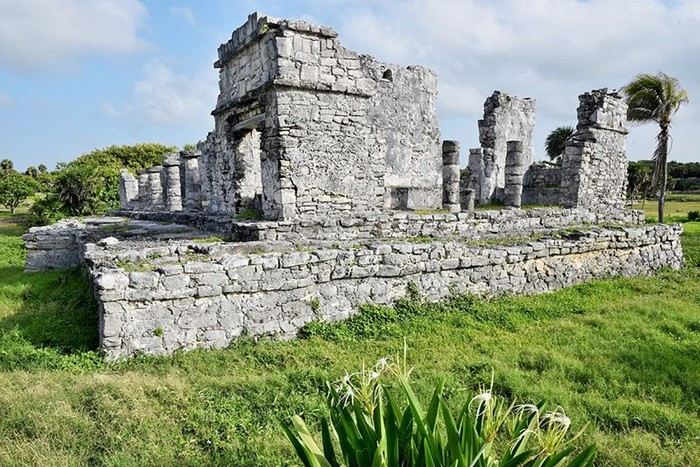
The most iconic building on the site is El Castillo.


The second structure overlooking the Caribbean Sea, smaller than El Castillo, is the Temple of the Wind God.


This walk among Mayan ruins overlooking the sea is where our Yucatán journey comes to an end.


Thanks for following along with this travel journal! 😎

Adios amigos...

Show 10 more replies
Xeta· 2 years ago
Hello Lhorizon! So nice to catch up again 🙂 After Indonesia and Bolivia, we’re sharing Mexico too!

We went as a family for the whole of July 2022. Reading your travel journal brought back great memories of photos from Chichen Itza, Izamal, Uxmal, Campeche, Tulum, and Holbox. We made a detour to Chiapas to visit Palenque and the Agua Azul waterfalls. We also stopped at the Kohunlich ruins on the way to Bacalar (like you, we didn’t get to enjoy Bacalar much, but for health reasons 🤪—I’d had an ear infection for two days, and our oldest son hurt his foot in the lagoon when we arrived in Bacalar🏴‍☠️).

On our side, we swam in the cenotes of Yokdzonot (the place is stunning, though we were a bit annoyed that life jackets were mandatory), Chihuan (we loved it just as much as you did), and Kankirixche (phew, no mandatory life jackets—a semi-open cenote with lots of locals and a platform for diving from several meters up).

I totally agree—this region is absolutely beautiful !
LhorizonOP· 2 years ago
Hi Anne,

What a nice surprise indeed! A half-surprise, actually, since I’ll admit I was vaguely keeping an eye out for you

If you’d like—and this goes for everyone reading too—this is an open travel journal: feel free to add your own experiences in the Yucatan so readers can find all the info they need to plan their trip, especially about places I didn’t visit...

Unless you’d rather treat us to another lovely travel journal?...

Thanks for chiming in. I’ll send you a quick PM to catch up and not clutter the thread for everyone...
Montagnard74· 2 years ago
My history with the Yucatan goes back to 2012, so I’ll just read along instead 😄

One question though: near Tulum, on the way to the Sian Ka’an reserve, there was a beach where you could swim with tons of turtles—I don’t remember the name. Does it still exist?
LhorizonOP· 2 years ago
Sorry, I don’t have the answer to your question, but I do know there are quite a few turtles around Tulum since the coral reef offshore (I can’t remember if I wrote this in my travel journal, but it’s the second largest on the planet after Australia’s) is home to a large number of fish, marine mammals, and reptiles, including, of course, turtles. So it’s an animal you can often come across in the area.


I’ve heard about Akumal Beach, where you can swim with turtles, but that’s probably not your beach since it’s north of Tulum (not toward Sian Ka’an). Today, the site is reportedly (conditional tense: I read this but haven’t verified it) completely overrun by mass tourism...

Just to add a little backstory, the Tulum area has changed a lot over the years. My wife, who visited a long time ago (over 25 years—how time flies!), didn’t recognize the small, super laid-back fishing village she’d loved so much in what’s now a big city... It’s possible your turtle beach has suffered the same fate, even if it hasn’t been as long since you went for a dip there 🙂
Montagnard74· 2 years ago
Ugh, I just checked on Google Maps—I think it might be Akumal Beach. It was already a popular spot back then, but you could still snorkel peacefully among the turtles.

Your girlfriend’s comment doesn’t surprise me. Even in 2012, you could feel the real estate pressure everywhere.
Pastani88· 2 years ago
Hi there,

Thanks for this amazing discovery! Mexico is my biggest travel dream. Some friends of mine went there in early 2023 and told me it was absolutely worth it. And these beautiful photos along with the whole adventure you describe—it’s exactly what I love.

Thanks for sharing this wonderful post.
Torpan· 2 years ago
Thanks for this beautiful travel journal of this stunning region—I traveled through it the same way you did back in 2019 (*Mexico: A Kaleidoscope of Colors*). I had the same feeling about Tulum, and I loved swimming in the cenotes! Have a great evening! !
Sofisonsec· 2 years ago
Amazing travel journal with beautiful photos! I love Mexico—I’ve been there three times, especially for diving in the sea (with bull sharks) and cenotes. I’ve also visited Mayan sites and the Río Lagartos Biosphere Reserve. I’ve explored the Yucatán Peninsula too, and I just got back from La Paz in Baja California, where I dove with sea lions. I’m heading back next year because the people are so welcoming, the food is great, and it’s a stunning country.
FamilleUS· 2 years ago
Great job on this travel journal and these beautiful photos! We have wonderful memories of the Yucatan (Christmas 2007 with family).

The Forum is coming back to life...
LhorizonOP· 2 years ago
Hi Pastani, and thanks for your comment! 🙂

Mexico is my biggest project


So don’t hesitate to ask any questions you might have—I’d be happy to try and answer them, and if I can’t, the other readers of this travel journal will surely be able to help.

Thanks by the way to the last three contributors—Torpan, Sofisonsec, and familleUS—I’m thrilled to have brought back such great memories for you too of this beautiful corner of the world...

You might also like