Hi everyone,
For traveling in Rajasthan by train and bus, could you give me some info: where to buy tickets, cost, purchase locations, websites, etc.?
Any tips you have would be super helpful.
Thanks
There have been tons of answers to this question on the site, and it’s a bit too vague to give a precise response...
For trains, you can buy tickets online if you open an IRCTC account (India’s SNCF), which lets you book trains in advance—but the catch is you need an Indian phone number. There are other sites that bypass this issue but charge a higher commission.
Otherwise, you can buy tickets at the station, though sometimes you’ll need a bit of patience. The easiest option is to go through an agency (they’re everywhere on the streets), which handles your reservations for a usually modest commission. Hotels often do this too, maybe for just a little extra.
Prices vary depending on the route and class, but in any case, even the most expensive classes are very affordable, and the mid-range ones are extremely cheap. I wouldn’t recommend the lowest class...
I’ve always managed to find seats without booking months in advance, but it’s best to make reservations as soon as possible after you arrive.
For buses, it’s much simpler. Private buses are more comfortable, usually air-conditioned, and can be booked through agencies, often near bus stations (but not only there), the day before departure or earlier.
Public buses are often slower and less comfortable, and you can just show up without a reservation. After checking the schedules, you just go to the bus station, pay on the bus, and it usually leaves when it’s full.
Public bus fares are ridiculously low, and private buses are very cheap for us, so they’re worth choosing when available for the route you want, given the comfort difference for a small price gap. Note that some of them have "sleeper" options where you get a bunk cabin, offering extra travel comfort and more peace and quiet for not much more money.
There are other sites that avoid this issue but take a higher commission.
Hi there! 🙂
We booked through 12Go—trains reserved from France, pretty convenient, and no ID was requested. Sure, it was probably more expensive, 15 € Delhi/Agra. Seemed reasonable to me, though I don’t know the direct fare.
Prices depend on the train and class, but 15 € for Delhi-Agra is really expensive compared to local rates. Just comparing with the two best classes, it’s double the price of 2A and a quarter more expensive than 1A. It’s ten times the cost of a sleeper ticket.
hi AP18
A bit of a personal question: how long are you going to India for?
If you're planning a long stay, you don’t need to make reservations.
My last trip to India was 11 weeks long—I didn’t make any reservations for buses or trains, except once in Chennai when I booked a sleeper berth on a night train at 11 AM for a 4 PM departure to Visakhapatnam. There are senior citizen counters—take advantage of them!
Comparing Indian prices to French prices doesn’t make sense because in the real India, prices are generally five times lower than in France for comparable products and quality (there can be exceptions in both directions).
If I’m charged 1500 rupees for a daal fry when it’s really worth 100, I’ll probably think I’m getting ripped off because I’m paying 15 times the price.
That said, sure, you can save face and choose to say you didn’t get scammed because you would’ve paid more back in France—why not? 😄
Anyway, since I’ve already been to India a few times, I’ve taken the Indian TGV before, and I’m familiar with it, but thanks for the info all the same!
Not indiscreet at all: 1 month.
I’m not big on making reservations in advance since I travel solo and like to stay flexible—I reserve the right to change my loosely planned itinerary at any time, for any reason.
Anyway, thanks for all the tips!
Alain
Why would that be a quirk? I think it's just common sense.
And if I can pay the local price, why should I miss out?
Plus, by paying I don’t know how many times the price, we contribute to inflation and deprive locals of certain services.
Anyway, don’t worry, it doesn’t bother me if sometimes I’m charged more... well, 10 or 20% more, okay, but not 500%...
Prices depend on the train and class, but 15 € for Delhi-Agra is very expensive compared to local prices: just comparing the two best classes, it's double the price of 2A and a quarter more expensive than 1A. It's ten times the price of a sleeper ticket.
Sleeper is a berth, right?
Is the berth cheaper than a seated place?
Actually, it doesn’t work at all like in France! Prices aren’t about cheaper seats and pricier berths—they depend on the type of train.
- In a classic train, you’ll find 2S, which is the budget class with the cheapest seats (often packed). Then there’s Sleeper class, the cheapest berth option and not air-conditioned. 3AC is the same as Sleeper but with AC. 2AC is a step up with 4-berth compartments. 1AC is the most comfortable but isn’t available on all trains.
- In unreserved trains, there’s a single class where the first arrivals (those who shoved their way in) get the "best" spots—wooden seats and berths that are very basic and often dirty. It’s the cheapest class in India, yet it still has berths.
- In fast, AC seated-only trains, you’ll find the most expensive classes, and there are no berths. There’s AC Chair, a standard air-conditioned seated class that’s fairly comfortable. Above that, there’s AC Executive. These are significantly pricier than Sleeper class because they’re in newer, faster, and better-maintained trains.
And if I can pay the local price, why should I miss out?
Because it ruins the trip to always have to haggle, argue, and search for the exact price. It’s a waste of time and energy.
For just a few euros in the end, I don’t bother anymore.
Either I buy it because it works for me, or I do something else—but I don’t get into the endless cycle of constant negotiation and chasing the lowest price.
Anyway, there are prices for foreigners: monuments, foreigner quotas on trains, certain hotels.
And not just in India.
We’re supposed to be richer.
Though that’s debatable compared to some Indians...
In India, the more comfortable, reliable, clean, and fast something is, the more expensive it is.
In France, the slower, more uncomfortable, unpredictable, and dirtier it is, the more expensive you pay... (Corail trains are outrageously priced).
(In France, the earlier you book, the better price you can get. Just like with flights. Sometimes the first class ends up cheaper than second if it hasn’t sold out.)
Is yield management practiced in India? In the past, no. Prices were fixed, just like they were in my youth in France.
There are sites like Rome2Rio that give you an idea of the different ways to get from one place to another, along with price ranges.
It can be really useful.
Example for Delhi to Agra
General tips:
The more comfortable you want to travel, the earlier you should book.
The less you want to stress, the more you should use intermediaries.
The shorter the trip, the more you should book in advance and use intermediaries...
And vice versa...
Personally, I prefer trains over buses in India.
But no more than 4-5 hours at a time.
Taxis can also be a good option for getting from point A to point B while stopping at a point C to visit. It can also be more economical for groups if you're looking for a bit of comfort.
There are also ride-hailing services (Uber, Ola, etc.)
Because it ruins the trip to always have to discuss, argue, and look for the exact price. It’s a waste of time and energy.
I disagree—it’s not quite my experience. And it doesn’t ruin the enjoyment of the trip if you don’t see it as a hassle; in fact, it’s the opposite. In places completely off the tourist trail, you don’t always need to negotiate to get the local price or something close to it.
Anyway, there are prices for foreigners: monuments, foreigner quotas on trains, some hotels.
Yes, but that’s a completely different topic. When I buy a bottle of water or cookies at an Indian convenience store, there’s only one barcode for Indians and foreigners. At restaurants, there isn’t one menu for Indians and another for foreigners.
We’re supposed to be richer.
Which is debatable compared to some Indians...
Because it ruins the trip to always have to discuss, argue, and look for the exact price. It’s a waste of time and energy.
I don’t agree—it’s not quite my experience. And it doesn’t ruin the enjoyment of the trip if you don’t see it as a hassle, quite the opposite. In places completely off the tourist trail, it’s not always necessary to negotiate to get the local price or something close.
So why all the talk about prices, getting ripped off, the best deal, etc.?
I get the feeling some people spend more time sorting out money issues than actually traveling.
Even (especially) for a few euros.
I used to stress about it sometimes.
Not anymore.
(My standard of living is the same today as it was 10 years ago)
No, fixed prices don’t really exist anymore with SNCF.
The company uses yield management
Just like on a plane.
The earlier you book, the cheaper it is.
Before, there was a set price with discounts (youth, senior, travel, paid leave, etc.).
The discount applied whether it was December 5th or a Saturday in July or August.
The price was based on the distance traveled.
Things changed with the rise of the TGV.
Seat reservations became mandatory on these trains in addition to the ticket, and the reservation prices varied depending on expected demand.
Customers started paying more for their Paris-Lyon trip on a Friday evening...
Then the price included everything, and almost all trains became mandatory reservation...
Good evening everyone. I m so glad VoyageForum is back up and running. This forum has helped me plan so many trips thanks to all your contributions. So, I m…
Hello, We’re heading to Italy for five weeks next spring. It’ll be our first trip there. We’d love to see some must-see spots and beautiful countryside regions. Our main transport will be trains, and sometimes buses to reach smaller villages. We’re less interested in the mountains and lakes in the north. We’ll try to stay 4–5 days in some places and explore the surrounding area by train or bus. Any suggestions for planning our trip? Itineraries and must-sees! Thanks
I was wondering where the 'Gare du Nord' stop is when you arrive on the 39 bus from Montparnasse, and whether the 'Gare du Nord Dunkerque' stop in front of the station is served by this bus? From what I've read, there's no stop there on the return trip, which seems odd to me.
I can’t seem to complete the payment for my trip on the IRCTC (Indian Railways) site. No matter which payment method I choose, my Visa card isn’t accepted.
Has anyone here managed to do it, and if so, could you share the method you used?
Thanks in advance!
Charlie
If any of you have already taken the Tren Maya, could you tell me if you’ve run into any difficulties upon arrival when trying to reach your destination city by bus: Valladolid, Mérida, Campeche, or Xpuhil?
Hi everyone,
First of all, thank you for all the valuable information you share—it’s really helpful.
My husband and I are heading to South Korea from September 19 to October 6. We know the timing might not be ideal because of Chuseok, but for various reasons, we didn’t have other date options. Plus, this period coincides with some festivals we’ve been eager to check out: the Andong Mask Dance Festival, the Jinju Lantern Festival, and the Hwaseong Festival in Suwon.
Here’s our tentative itinerary:
09/19: Arrival in Seoul
09/20: Bus to Sokcho – explore the city or short hike
09/21: Seoraksan Park
09/22: Return to Seoul
09/23–09/26: Seoul
09/27: Bus or train to Andong – explore the city
09/28: Hahoe
09/29–10/01: Gyeongju
10/01–10/03: Busan
10/03–10/04: Jinju
10/05: Bus/train to Suwon
10/06: Suwon
So here’s my question: Given that several of our trips fall during or around festivals, will it be possible to book bus/train tickets once we’re there, or is there a risk they’ll already be sold out? Specifically for Seoul-Andong, Busan-Jinju, and Jinju-Suwon.
I was thinking of booking everything on our first day in Seoul.
And if it’s better to plan ahead, how should we go about it? I can’t seem to access the Korail (letskorail) or Kobus websites.
Thanks in advance for your answers and help—and sorry for the long post! :)
I’m planning our very first trip to mainland France in January 2027. There’ll be 2 adults and 2 kids, and we’ll mostly be traveling by train.
Here’s our itinerary:
Paris
Rouen (Normandy)
Lyon
Aix-les-Bains (with day trips to Annecy and Geneva)
Saint-Gervais-les-Bains (with Chamonix and a day in Aosta)
Back to Paris
Do you think this itinerary is well-balanced? Any tips, must-see spots, or mistakes to avoid for a first-time visit?
Hi! I’d like to make stops across France, starting from Reims, and travel by train using the Intercités. I want to discover the landscapes and picturesque villages, and make some stops along the way. Could you give me some tips? Thanks!
I’m planning a family trip in a year. Our goal: traveling to China (and maybe Hong Kong) by train.
I’m all set with the route up to eastern Turkey.
However, I’m just starting my research for the rest of the journey—namely the Caucasus (no trains as far as I know, so buses and/or ferries), then Central Asia and China.
So, I’d love to hear any info or tips (general and forward-looking at this stage) about the train route through Central Asia and China to reach the east coast.
I’m particularly interested in details on:
- How far in advance to book / any potential difficulties with reservations
- Whether there are PASS systems (or equivalent) between countries and/or if some tickets allow stopovers, meaning you can hop on and off as you please
- Day trains vs. night trains (the latter option lets you explore cities between two legs of the journey)
- A rough idea of ticket costs
...
A huge thank you to anyone who can share some info or experiences. It’s also a great opportunity to chat about adventure after (way too) many years away from this forum.
I’m planning a trip around Italy using only trains or public transport in October (hoping the weather stays nice!).
I’d obviously like to see some tourist destinations, but I also want to get off the beaten path a bit, and I’m hoping to find some help here? I don’t plan to linger too long in the cities.
Starting in the north, I’d like to visit Lake Como or Lake Orta, pass through the Cinque Terre for some hiking, spend a few days in Naples and Rome, then head down to Sicily.
Hi there,
I’ll be traveling to Japan this coming August. We’ve finalized our itinerary and booked our flight tickets. Now I’m at the stage of buying train tickets for the few segments we’ll need to cover:
Tokyo - Hakone
Hakone - Kyoto
Kyoto - Osaka
Osaka - Tokyo
Here are my questions:
a) Is it possible to buy train tickets for these segments from Canada?
b) If so, which website should I use to do this?
c) And if it is possible, will we be able to print our tickets from Canada?
d) If it’s not possible, where in Tokyo should I go to buy these tickets when I arrive?
Hi everyone, I wanted to take the Paris-Berlin overnight train with a sleeper berth, the new service operated by European Sleepers.
24/05/2026 17:45 Paris-Nord (actually 16:00 from Paris Bercy Seine) -> 25/05/2026 9:59 (actually 7:30 in Berlin)
05/06/2026 18:31 Berlin (actually 20:00) -> 06/06/2026 10:00 Paris Nord (actually 12:30)
Part of the journey was operated by bus instead of the promised overnight train.
For 2 people: 340 € round trip
A total disaster. Never again. I was really looking forward to taking the overnight train, but we faced last-minute changes and truly unpleasant travel conditions. Here are the details:
1) 2 days before departure: email announcing a change of departure station for the outbound trip—Bercy Seine bus station instead of Gare du Nord.
2) Change of schedule: 4:00 PM from Bercy instead of 5:45 PM from Gare du Nord.
3) Change of transport mode!! A bus from Paris to Brussels, then an overnight train from Brussels to Berlin. No functional toilets on the bus. No children under 4 allowed on the bus.
4) On the sleeper train at 9:30 PM: no functional toilets in our carriage, so we had to go to other carriages, even in the middle of the night, to find working ones.
5) The onboard staff, though very friendly, were as lost as we were. In particular, they didn’t know how to handle the lower berths, so people using them had less space (armrests and backrests). Berth numbers weren’t respected, so some passengers had to move. The staff also didn’t know who was supposed to join the compartment during the journey.
6) Arrival at 7:30 AM in Berlin instead of 10:00 AM. No arrival announcement. Passengers had to search for staff to get breakfast and ended up with just a coffee (breakfast = 15 €, not bad for just a coffee).
7) Return trip: drastic schedule change announced by email on 26/05/2026—departure at 7:30 PM instead of 6:30 PM, with arrival between 12:00 PM and 1:00 PM in Paris instead of 10:00 AM. No change in transport mode announced.
8) Change in transport mode announced by email on the same day (05/06/2026)!! Overnight train from Brussels to Berlin, then a bus from Paris to Brussels. No functional toilets on the bus. Children under 4 banned from the bus, and families in this situation were asked to find another way—after being notified the same day.
9) The overnight train arrived at Berlin station with a 30-minute delay on top of its initial delay (scheduled for 6:31 PM, then 7:30 PM, finally arriving at 8:00 PM). The heating was blasting in the compartment with no way to turn it off. No functional toilets in the carriage. From that point on, customer service stopped responding to my messages.
10) Woken up at 5:00 AM with an announcement in all carriages about arrival in Liège.
11) Woken up again at 6:00 AM to be told we’d arrive in Brussels at 7:00 AM.
12) Arrival in Brussels at 7:00 AM and a one-hour wait for the bus to Paris. No functional toilets on the bus.
13) Arrival at Paris Nord at 12:30 PM, so 2.5 hours late compared to the originally scheduled time.
14) The overnight trains used are very old—I recognized the carriages from 20 years ago!! No functional power outlets, no Wi-Fi, no air conditioning. Five people per compartment is a bit cramped, but I consider these conditions expected (especially the air conditioning), so I’m not complaining about that. There’s already plenty to gripe about with the travel conditions.
I have little hope of getting even a partial refund. Customer service emails acknowledge the discomfort but only offer to reimburse the cost of a coffee on board if we send them the receipt... a bit weak.
I’m sharing this experience in the hope it might help others.
Hi there,
I’d like to take the Train of the Clouds from Lima to Huancayo.
I’ve heard it only runs during certain periods.
Does anyone have info on this?
Thanks!
HuancayoHuancayo
As part of my professional thesis, I’m conducting a study on the evolution of long-distance rail transport in France, particularly since it opened up to competition.
I’ve put together a very quick (about 5-minute) and completely anonymous questionnaire. Your answers will help me better understand users' expectations regarding pricing, frequency, and environmental impact.
We’re planning a 15-day trip to Uzbekistan in March—classic independent itinerary: Tashkent, Samarkand, Bukhara, Khiva. We’d like to take the train between each city, but I don’t want to lock down the whole trip before we leave.
So, my question is: is it absolutely necessary to book train tickets before departure, whether for the high-speed trains or the regional ones? Is booking really essential for the regional trains?
Hello,
We’re traveling as a family with two boys aged 10 and 12 to Cairo in February. During our trip, we’re planning to take an overnight train (with or without a sleeper) for the Cairo-Aswan route.
Do you know how I can book this remotely?
Also, I’m looking for:
- A local contact to sail the Nile by felucca for 3 days from Aswan
- A contact to guide us in Cairo
Looking forward to your tips, and thanks in advance!
Marie
Hi everyone,
I first traveled solo to Japan in 2019, exploring the Kyushu region (28 days), and I’m planning to return with my daughter (she’s an adult and it’ll be her first time in Asia) from April 25 to May 9.
I’m reaching out on this forum to ask for route ideas—this time north of Tokyo, but without heading to the Sapporo island (I’m saving that for a future trip).
I’d love to take advantage of the cherry blossom season and its festivities.
I’m looking to create a route that’s a little off the beaten path while staying within 5-6 hours by train from Tokyo to avoid spending too much time on transfers.
Thanks in advance for sharing your suggestions and experiences!
Michael
I'm heading to MEXICO IN NOVEMBER 2025. Since private guides and drivers are really expensive—over 300 € per day—I'm thinking of exploring the Yucatán by train. CAN YOU SHARE ANY INFO ON THIS? Thanks
Hi there!
We’re planning to visit Serbia (1 week) and then Montenegro (2nd week) with our kids from April 18 to May 4. We’d prefer to travel by train (overnight if possible), but we’re not sure which platform to book on or when to do it (is it too early?). If anyone has any tips, I’m all ears!!
I wanted to know if it’s possible to go from Tashkent to Almaty by train without passing through Kyrgyzstan. I’ve heard the border is often closed 😕 between Uzbekistan and Kazakhstan.
Thanks in advance!
Olivier
Hi there!
We’re planning to head back to Istanbul next year—obviously by plane—and then take the train from Istanbul to Antalya. Has anyone here already made this trip by train with TCDD?
I’d love any tips or info that could be useful for us!
I'd like to go to Montserrat on my own from Barcelona. Share your suggestions with me.
Which train should I take, where to get off, what to see once I arrive, etc.
I need to take a sleeper train from Bangkok to Vientiane in January.
I found some ticket options on 12Go Asia, but booking doesn’t seem possible at the moment. I’ve tried simulations for several dates, but no luck.
I’m wondering if it’s already fully booked, if they’ve stopped selling tickets… yet 12Go still features it every day 😕
Has anyone else run into this issue?
Can I find tickets on another site? (I tried Baolau, but no sleepers left for January 8th.)
Hi there,
I’m a bit late to be worrying about this, but hopefully someone can help me before I leave.
Tomorrow afternoon, I arrive at Lyon Part-Dieu on the TGV at 5:50 PM and take the TER to Mâcon at 6:16 PM. Is a 26-minute transfer doable? Are the TGV and TER on the same departure board? And are they on the same platforms too?
I’ve been to Lyon before but never had to make a connection after arriving.
Thanks
Starting November 15th, I’ll be arriving in Thailand, and during my stay, I plan to visit the north, around the Chiang Mai area, then head south to the Krabi region.
After Krabi, I’m planning to take an overnight train to Bangkok. I was wondering if there’s a train that leaves from Krabi or Trang, or if I absolutely have to go to Surat Thani?
Also, which official website can I use to book my ticket?
Next, since I’ll be arriving at dawn in Bangkok, I’ve planned to spend 2 days in Kanchanaburi. What’s the most convenient way to get there—bus or train? And if you know any companies or websites, that’d be great.
Hi there,
Does anyone know if there’s a bus from Luang Namtha to Boten to catch the train coming from China to Vientiane? If so, what’s the name of the company? Also, how long does the bus take to cover that distance? What’s the condition of the road like?
Thanks for your help!
Tom
I just realized there’s only one payment method accepted for booking the Mombasa-Nairobi express train ticket online: M-Pesa, a mobile money transfer service used in Africa. Would it be impossible to book as a European?
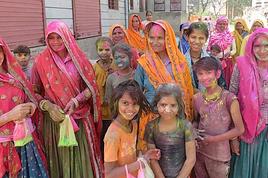 A lovely wander at the mercy of the wind in this amazing Rajasthan
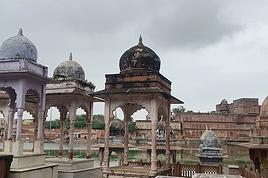 7-week trip feedback: Rajasthan and Varanasi, October-November-December 2025
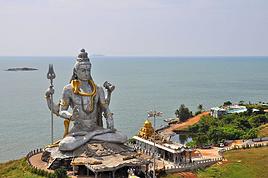 The Hippie Trail to India in the 60s and 70s
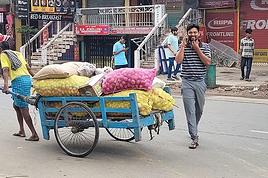 Meghalaya: A Very Rainy Week
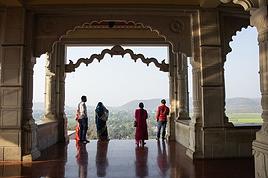 4 friends discover a piece of North India
 A Few Days in Turkmenistan from Uzbekistan
 Slovak travel journal
 14 Days in Japan – September-October 2026