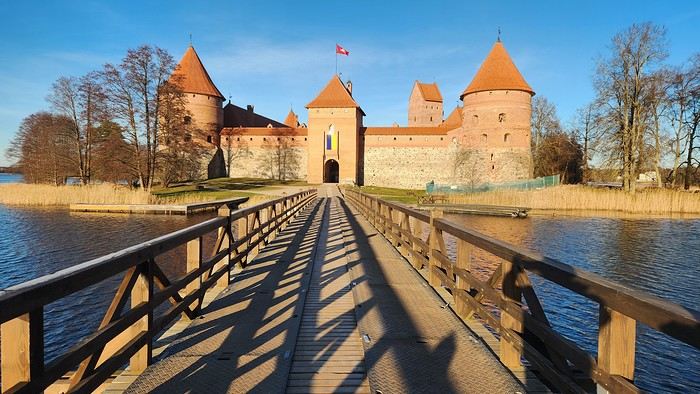
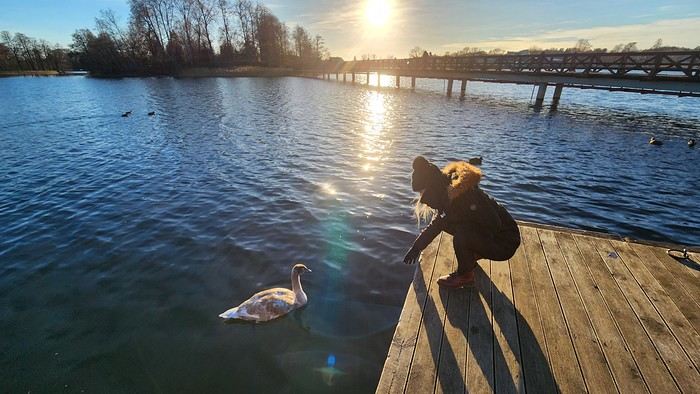
Japan, five weeks between unknown lands and familiar paths
FR

Translated into English. 2 replies on this page are not translated yet and are shown in French.

Original post
NA
Japan, five weeks between unknown lands and familiar paths


Hello everyone,

I invite you to follow me on this fifth exploration trip to Japan.

Five weeks or so!

For the itinerary, my usual mix: New discoveries, well-known places, and others less so.

At the heart of the trip, a two-week road trip by car. I wavered for a long time between the San'in region, from Tottori to Yamaguchi, and southern Kyushu. By a narrow margin, southern Kyushu won out.

Waterfalls that seem even more impressive. A more exotic atmosphere. Tea-growing lands to savor... Kagoshima will be the starting point. Then a loop from west to east.

And, of course, the must-see stops... Those little Japanese touches. Gourmet cuisine. Japanese, but not only!

And then, the soul of the trip, I hope: Human connections. Big or small.

Otherwise? Several local festivals. Osaka, unexpected. Miyakojima, between beauty and small disappointments. Tokyo... it's Tokyo!

So, travel with me. The suitcase is waiting, with stories that are sometimes generous, but always driven by the love of travel experienced firsthand.

Yōkoso, Nihon! Welcome to Japan!
SO Songsam Veteran ·
Hello,

A story that already starts with an excellent teaser, well done.

Telung.
NA Nathalie971 Regular ·
Hello,

A story that already starts with an excellent teaser, well done.

Telung.

Hello Telung... Dr. Telung, perhaps?

Thanks for reading and for noticing the writing effort. I wanted to test it, at least for the introduction.

See you soon for the rest.
NA Nathalie971 Regular ·
Chapter: The Road Book

So many names to describe you!

The impossible choice. The five-legged sheep. The hair-pulling puzzle. Tetris.

At first, you’re all pleasure and excitement.

Then comes the moment when we don’t know what to do with you anymore.

We want you to be perfect, filled with our dreams and fantasies, expecting you to move mountains—sometimes forgetting the realities of time and budget.

Until you become the perfect excuse to travel all year without spending a dime, filling those winter Sundays by the fire.

A fun way to deepen our geographical and cultural knowledge.

And above all, the traveler’s Camino de Santiago!

Because while your route remains free and evolving, some stages seem non-negotiable, others are tentative, and still others will only happen if time or desire allows.

Sometimes you’re indispensable—especially when pinpointing cultural event dates. Other times, you’re just a placeholder, making room for the unforgettable spontaneity or the fatigue that tells us to slow down.

But eventually, you shrug off your own rules and discover your true role: to accompany the journey without ever pretending to control it.

Because real travel—the kind that actually happens—is shaped by a thousand factors. Desires, constraints, surprises, and opportunities shake up the plans and give birth, every time, to a unique experience.

And since every theory eventually meets practice, here’s the itinerary for this fifth trip, just as it finally unfolded:

My Japan Itinerary

Osaka — 4 nights Kagoshima — 3 nights Koshikishima — 2 nights Isa — 1 night Kushima — 4 nights Nichinan — 2 nights Miyakonojō — 2 nights Fukuoka — 3 nights Miyakojima — 7 nights Tokyo — 6 nights

Fellow travelers, this trip takes place at the start of autumn. But from my experience, Japanese autumn feels more like a French summer!

So leave the scarf and winter coat in the closet. Instead, pack sneakers, a hat, and a swimsuit—highly recommended!

Suitcase ready? Then off to Japan!
BL Bluequark Veteran ·
Hi Nathalie, I’m already loving this new travel journal. Thanks!
NA Nathalie971 Regular ·
Hi Nathalie, I’m already loving this new travel journal. Thanks!

Hi Bluequark,

Thanks for your loyalty. 🙂

Are you planning another trip to Japan?
PA Patbill Veteran ·
Hello Nathalie, I’ll be following your trip closely. For me, a third trip to Japan isn’t out of the question. Patrick
NA Nathalie971 Regular ·
Hi Patrick,

Thanks for your encouraging message. The Japan bug has bitten me again. Already got ideas for this 3rd trip in mind?

See you soon!
NA Nathalie971 Regular ·
A closed door, an open heart: When a complicated arrival becomes a wonderful memory

Here we are, standing in front of the building intercom. One of us is pretty tired from the trip and the muggy heat, the other is excited to set foot on this sacred ground again. Without internet, but armed with great screenshots of the instructions, I don’t doubt for a second that in a few minutes, we’ll be discovering our accommodation.😉

Press this button, then enter the secret code, then press the pound key. Nothing happens. I must have pressed it wrong—let’s try again. Still nothing?! The tired one wonders if it’s a scam, while the other replies: « Impossible, We are in Japan! »

Another attempt, same result. We reread the instructions and realize we absolutely need internet to get in. The host is reachable by email, but we need internet for that!😕

One of us starts to get a little annoyed: "We won’t book accommodations without staff anymore!" Meanwhile, the other says: « Don’t worry, I’ll ask the shop next door for Wi-Fi. »

Ah, right—but it’s been a year since you last stammered your few words of Japanese, so it’s a bit of a struggle, and it takes several minutes for your request to be understood.

But this is Japan, so the young woman in front of you, ever so gentle, does her best to understand your request, even though it’s not part of her job at all.😇

Since she doesn’t fully understand, you take her to the intercom, and a lightbulb goes off. Oh, you want internet? Of course—scan the code!

Phew, problem solved. You thank her, thinking she’ll leave, but no—she wants to make sure everything works for you.

You now have internet, but the code and entry process still don’t work. Seeing you worried, she tries it herself, but it doesn’t work either.

So, you ask her to call the emergency number for you, which she agrees to—because of course, she has all the time in the world to help.

But it’s hot! Oh yeah, we’re sweating, and so is she. She invites us to wait in her shop where it’s cool (air conditioning is pretty much everywhere in Japan). We accept, even though we don’t want to be a bother.

Luckily, she doesn’t have any customers. Her shop is a tiny cookie store with English decor, in a British-kawaii style (kawaii means "cute" in Japanese).

She asks us to sit down and serves us each a glass of water. We wait quietly while she takes our problem completely into her own hands.😎

Moshi moshi (hello in Japanese): « I have two foreigners who can’t get into their accommodation... »

« OK, I’ll check and call you back. »

Meanwhile, we look around her shop and order two fresh honey lemon drinks.

Another phone call, and a new access code is given. The woman—who’s actually quite young—comes to our table to explain the whole intercom process, then how to retrieve the key from the lockbox, etc.

After finishing our drinks, she flat-out refuses to let us pay! You insist once, twice, but no—it’s on the house!

Arigatō gozaimasu, shinsetsu desu! (Thank you so much, that’s so kind!)

Then she walks us out, makes sure we have our key, and when everything’s good, she gives us another gift: a small packet of cookies from her shop.

More thanks, « Have a great trip in Japan! » and goodbye!

Even though you know how kind Japanese people are, even on your fifth trip, you’re still touched. Ahhh, it’s really such a joy to be here again!

And you’d think the story was over, but no! The young woman had one last kind gesture for us. What was it? Well, while we were drinking our drinks, she went online to write us a note in French.

Check it out below!
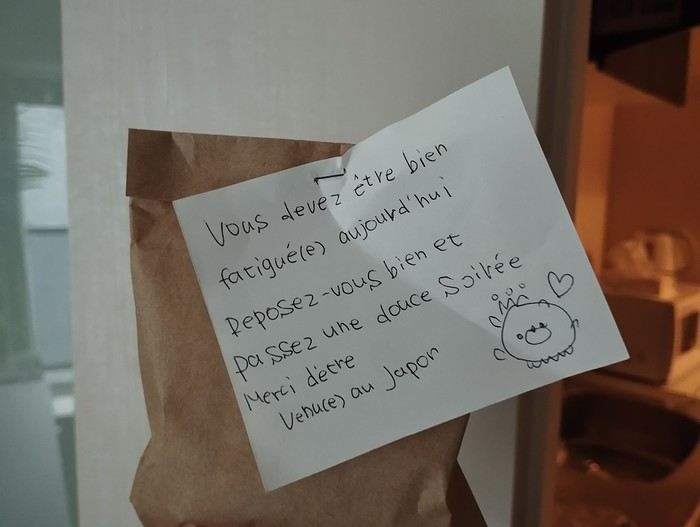


You could say this trip is starting strong—or rather, beautifully—with this exceptional welcome!😏
GE GeorgesOZ Globetrotter ·
Chapter: The road book

....

And since all theory eventually meets practice, here’s the itinerary for this fifth trip, as it finally unfolded:

My itinerary in Japan

Osaka — 4 nights Kagoshima — 3 nights Koshikishima — 2 nights Isa — 1 night Kushima — 4 nights Nichinan — 2 nights Miyakonojō — 2 nights Fukuoka — 3 nights Miyakojima — 7 nights Tokyo — 6 nights

Fellow travelers, this trip takes place in early autumn. But from my experience, Japanese autumn feels more like a French summer!

...

Awesome! I’m actually planning my next trip to Japan right now, and it turns out I’ve decided on Kyushu! Kagoshima, Miyazaki, etc.

It’ll be during the first half of February (no choice—I’ve got other commitments!). It might not be as mild as a French summer, but at least it won’t be the dead of winter like in the northern parts of this amazing country!

I’ll be following your travel journal closely!
NA Nathalie971 Regular ·

Not translated into English yet. Original French text:

Bonjour Georges,

Super! Je suis justement en train de me pencher sur mon prochain voyage au Japon et il se trouve que je me suis décidé pour Kyushu! Kagoshima, Miyazaki etc.

Je te suggère alors de lire également l'excellent carnet de kroston dont je te mets le lien ici, celui de mjp ici, et un des miens ici.

Ce sera pendant la première moitié de février (pas le choix, j‘ai d‘autres engagements!). Ce ne sera peut-être pas aussi clément qu‘un été en France, mais au moins ce ne sera pas non plus le plein hiver comme plus au nord de ce merveilleux pays!

L'hiver a aussi ses avantages. Etre dans un onsen avec la neige qui tombe doit être drôlement magique. Je ne connais pas le Japon à cette saison mais à n'en pas douter le charme opérera.

Je vais donc suivre ton carnet de près!

Merci à toi!
GE GeorgesOZ Globetrotter ·

Not translated into English yet. Original French text:

Bonjour Georges, ...

Super! Je suis justement en train de me pencher sur mon prochain voyage au Japon et il se trouve que je me suis décidé pour Kyushu! Kagoshima, Miyazaki etc.

Je te suggère alors de lire également l'excellent carnet de kroston dont je te mets le lien ici, celui de mjp ici, et un des miens ici. ...

Merci pour les liens. J‘ai commencé à lire ton voyage ‘Kyushu : exploration du nord-ouest entre Fukuoka et Nagasaki à l’automne 2024‘. Je me suis arrêté à ta 2-ème page, faute de temps... Mais plusieurs commentaires déjà:

Tu mentionnes la qualité des sushis. Une chose que nous n‘avons pas manqué de remarquer, dans notre voyage récent, c‘est la qualité du riz. Avant d‘aller au Japon, j‘avais toujours trouvé le riz des sushis assez médiocre (je connais très bien le riz excellent en Thaïlande et aussi le riz fabuleux de la cuisine iranienne), même dans des restaurants tenus par des Japonais (en Australie, il y en a beaucoup). Au Japon, c)est autre chose : le riz est un peu collant, certes, mais garde cependant une qualité grain-par-grains (à la dent, c‘est très important) et a un goût légèrement parfumé. Il est tellement bon que ma compagne qui est Thaïlandaise s‘est mise à acheter du riz japonais dans les grandes surfaces en Thaïlande! c‘est pour dire!

La langue. J‘ai relevé cette remarque que je trouve très juste dans ton récit : ‘Si parler le japonais reste assez accessible, le lire en revanche, est bien plus complexe.‘ Effectivement, et ça surprend, le japonais en tant que langue n‘est pas si difficile que ça : grammaire et phonétique relativement simples. Bien sûr, le vocabulaire est complètement différent et requiert un effort de mémoire ..... mais (et c‘est là qu‘on arrive au sujet de l‘écriture), si on prend la peine d‘apprendre le katakana, on arrive à déchiffrer une quantité énorme d‘inscriptions vraiment utiles. Comme le katakana n‘est utilisé que pour les mots d‘emprunt (beaucoup d‘anglais), ça permet de comprendre tellement de choses! Je vais donner des exemples.


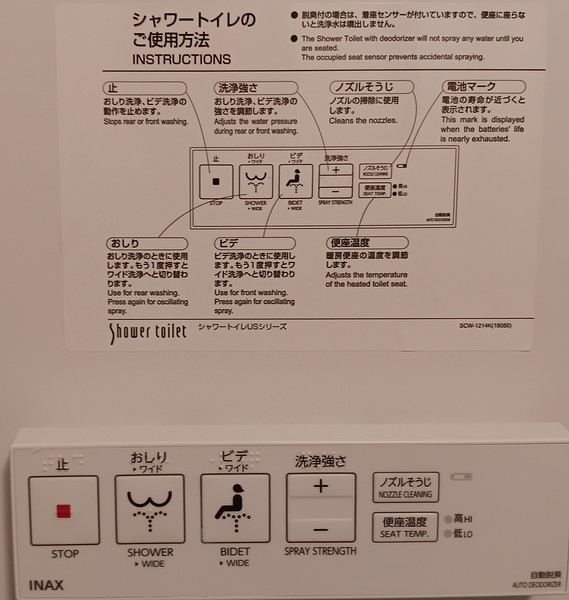
Les toilettes japonaises (ah, sujet inépuisable!). En haut à gauche : ‘shawa toirè‘ = ‘shower toilet‘.

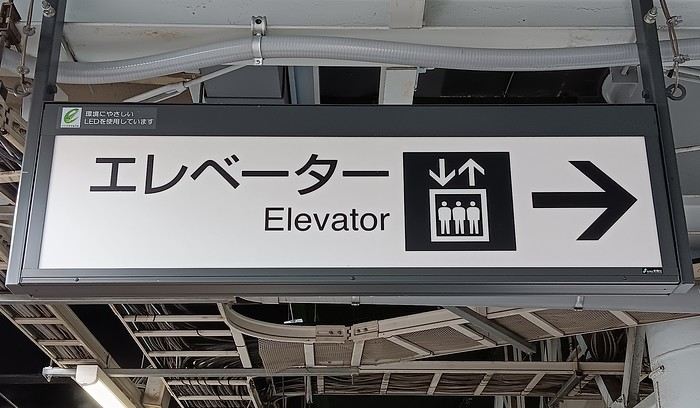
‘èrèbèètaa‘ = ‘elevator‘ = ascenseur. Exemple merveilleux : on a le passage du latin d‘origine (ex + levare > élever) à l‘anglais américain et enfin au japonais!
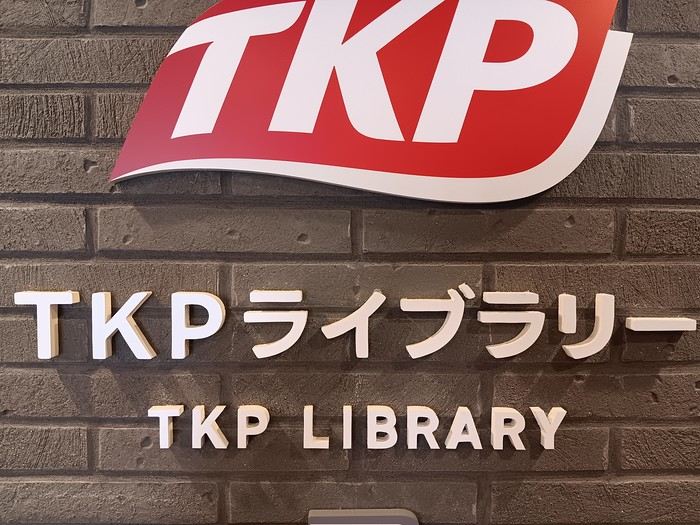

‘raiburarii‘ = ‘library‘ = librairie

Sur ces exemples, on donne l‘équivalent en anglais, donc évident (comme des mini pierres de Rosette), mais ce n‘est pas le cas pour la très grande majorité des inscriptions où figure du katakana. Si on arrive à lire le katakana, on commence à saisir le sens des phrases qui sont complétées par du hiragana et / ou du kanji.

Donc, de ma petite expérience, on peut commencer par apprendre un peu de katakana, puis un peu de hiragana. Une très grande partie est écrit en hiragana et on apprend graduellement à reconnaître le vocabulaire de base. On retrouve par exemple systématiquement ‘kudasaï‘ à la fin des phrases = ‘s‘il vous plaît‘ (en hiragana bien sûr puisque c‘est du japonais pur).

Et enfin quelques caractères de kanji - les plus simples comme ’stop - arrêt‘, ‘montagne‘, ‘eau - rivière‘, ‘personne‘ etc. Mais il faut avouer que c‘est une autre paire de manches!

Similar discussions

You might also like