Bon Appétit !
😛
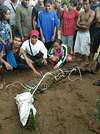
Le prix de la viande de rat a plus que doublé au Cambodge à la suite de l'augmentation du prix de la volaille en raison des quarantaines instaurées pour lutter contre la grippe aviaire et de la hausse du prix de l'énergie, indiquent des médias locaux mardi.
La viande de rat est devenue si recherchée que de nombreux producteurs de riz se sont lancés dans ce commerce, attrapant et préparant des rats, rapporte le journal Kampuchea Thmey. Alors qu'un kilo de rat de bonne qualité était vendu 50 cents il y a deux ans, il atteint aujourd'hui 1, 50 dollar.
Les restrictions sur l'importation de cochons et de volailles afin de limiter la propagation du virus de la grippe aviaire, combinées à la hausse du prix de l'énergie, sont à l'origine de cette forte augmentation du prix de la viande de rat. (belga/7sur7)
bonjour ! Warden est un homme a moins qu'il etait !!! a lui de repondre et qu'il me pardonne pour ce clin d'oeil : content de voir qu'il est toujours en vie
qd au Sujet principal, nombreux vont etre ceux qui desormais vont se lancer dans la chasse aux RRRRRRR😕ats car vu le nombre que nous pouvons voir a l'oeil nu, il y a des fortunes qui peuvent se faire tres rapidement 😕
Bon Appétit !
😛
Le prix de la viande de rat a plus que doublé au Cambodge à la suite de l'augmentation du prix de la volaille en raison des quarantaines instaurées pour lutter contre la grippe aviaire et de la hausse du prix de l'énergie, indiquent des médias locaux mardi.
La viande de rat est devenue si recherchée que de nombreux producteurs de riz se sont lancés dans ce commerce, attrapant et préparant des rats, rapporte le journal Kampuchea Thmey. Alors qu'un kilo de rat de bonne qualité était vendu 50 cents il y a deux ans, il atteint aujourd'hui 1, 50 dollar.
Les restrictions sur l'importation de cochons et de volailles afin de limiter la propagation du virus de la grippe aviaire, combinées à la hausse du prix de l'énergie, sont à l'origine de cette forte augmentation du prix de la viande de rat. (belga/7sur7)
Bon, restriction sur les nems, d'autant que le ratounet de la photo n'est pas un rat des champs !...le phenomène a eté surtout vrai en 2004...maintenant...peut etre un peu moins vrai...
J'avoue que je suis depassé sur le plan culinaire avec mes histoires d'araignées, de serpents et autres punaises d'eaux...
Sur les insectes, les prix montent aussi...l'exportation vers la thailande (qui paye bien) en est la principale raison !
ceci dit le poulet UNTAC que l'on te sers dans les restau des grandes villes ne vaut guere plus cher que le rat...histoire de rassurer un peu! Mais le poulet fermier est devenu trés cher 5USD kilo sur pied, en gros idem pour le poisson ...
Il y a beaucoup d'inflation et les voyageurs peuvent en tenir compte dans leurs budgets...
Le nouvel An chinois aura lieu dans 16 jours et c'est l'année du Rat qui commence. Selon la tradition, on ne touche pas aux Rats, pendant toute l'année, donc il reste 16 jours encore si vous voulez en goûter🙂
je me souviens de mon premier voyage a Hanoi il y a 2 ans (car malgre ems voyages repetes, je n'avais jamais ete dans le nord)
la route entre l'areoport de hanoi et la ville c'est une longue ligne droite
et quand t'arrives sur hanoi, l'entree commence par une sorte de pseudo banlieue bidonville (comme il en existe dans la plupart des metropoles asiatiques)
et tu vois des pancartes de petits commercants culinaires 😛
et donc tu peux lire des trucs du genre "pho thit cho" (traduire la soupe "pho" a base de chien)
alors que d'habitude (dans le sud) on lit plutot pho bo (boeuf) ou pho ga (poulet)...
😄😄😄😄😄😄😄😄😄😄
t'as tjrs envie d'aller au vietnam ?
bon allez je te taquine mais ca se trouve dans d'autres pays on bouffe plein de trucs bien degueu sans meme le savoir
la derniere fois a hong kong, j'ai mange un hot pot sans vraiment savoir ce qu'il y avait dedans
je me doutais bien qu'il y avait des trucs du boyau ou intestin de je sais pas mais j'ai prefere faire comme tout le monde, prendre une bouchee pour faire plaisir (et finir au macdo apres) 😛
J'espère que tu vas bien ainsi que madame, je te confirme pour le prix du poisson qui à augmenté là bas variant de 4 à 5 dollar le kilo .
Je puise mes infos poissonières de ma belle famille, qui pour subvenir à leurs besoins ont un petit élevage de poissons juste derrièer chez eux plus ou moin une cinquantaine de mètres .
Cordailes salutations à vous deux et t'envoi un MP .
Riz, tofu, noodles..., tout flambe, par Sylvie Kauffmann LE MONDE | 21.01.08 | 14h41
Il n'y a pas que le prix du pétrole qui flambe. L'huile alimentaire a battu des records en Asie. La Malaisie - premier producteur mondial d'huile de palme ! - a offert début janvier un étrange spectacle de pénuries et de panique, qui n'a pris fin que lorsque le gouvernement a inondé le marché de 70 000 tonnes d'huile alimentaire pour rassurer les consommateurs. A Jakarta, ce sont le tofu et le tempeh, éléments essentiels de la cuisine indonésienne à base de graines de soja fermenté, qui ont disparu : à la mi-janvier, les vendeurs se sont mis en grève pour protester contre l'explosion des prix du soja, qui ont triplé en un an. L'Indonésie et ses 220 millions d'amateurs de tofu consomment 2 millions de tonnes de soja par an, dont ils ne produisent que 800 000 tonnes. Le reste vient, en grande partie, des Etats-Unis, et le gouvernement indonésien, plutôt que d'affronter l'ire des vendeurs (et des mangeurs) de tempeh, s'est empressé de lever les droits d'importation sur le soja. La liste ne s'arrête pas là. Le prix du blé - le blé dont on fait les noodles - a dépassé fin 2007 les 400 dollars la tonne pour la première fois de l'histoire. Le prix du riz, qui nourrit la moitié de la planète, a atteint son plus haut niveau depuis vingt ans.
Que se passe-t-il ? Traditionnellement, la hausse des prix agricoles s'explique par la rareté de la production. Ce n'est plus le cas. A l'ère de la mondialisation, il y a abondance, pas rareté. Le fait nouveau, c'est un niveau de vie plus élevé en Chine et en Inde. Il n'y a pas de secret : en s'embourgeoisant, on mange mieux - on veut même de la viande avec le riz. La preuve, la courbe de la demande de viande épouse celle de la croissance du PIB. Or pour satisfaire la demande croissante de viande, il faut nourrir le bétail. Et le bétail mange des céréales. De plus en plus de céréales, ce qui fait grimper les prix, d'autant que de mauvaises conditions climatiques ont diminué les performances de gros producteurs.
Autre facteur, l'engouement occidental pour les biocarburants a non seulement fait doubler le prix de l'huile de palme mais encourage les agriculteurs à lâcher le blé ou le soja pour le maïs, à partir duquel est produit l'éthanol. "La hausse des prix de l'énergie pousse la demande de biocarburants, qui, à son tour, fait grimper les prix alimentaires", dit Lawrence Greenwood, vice-président de la Banque asiatique de développement. Et ce n'est que le début.
Sylvie Kauffmann Article paru dans l'édition du 22.01.08. Histoire de sortir du rat!
Sauf que : en Asie la principale source d'alimentation est le riz et qu'il n'y a pas encore de combustible a base de riz (heureusement) (a ma connaissance).
En remplacement du pétrole, on cultive des hectares de biocarburants a la place des aliments pour la population : quoi choisir ???
On peut aussi déboiser ce qui existe pour cultiver des biocarburants ??? (provocation)
Le riz !!! Au cambodge = probleme: production plus que suffisante MAIS thai et viet l'achetent à un prix plus elevé ...Conclusion:en fin de chaine meme la brisure sera en sous quantité et plus chère pour les cambodgiens! 🙁 j'ai du mal à considerer reine la fameuse loi du marché!
ily a une autre solution aux problemesdes biocarburants c est le moteur panton qui marche a l eau mais la les gouvernements n en veulent pas pas de taxe a 75% le litre
Le moteur pantone n'est pas fiable et permet une fausse économie🙂. La diminution de la consommation entraine une perte de rendement. Si l'on augmente le rendement, le moteur n'est plus fiable.
Noe, pour votre info, le son de riz est un excellent carburant. En fait, en Thailande, premier producteur et exportateur mondial, il est utilisé comme souce d"énergie par de plus en plus d'usines
Quand à manger du rat! Allez au Chinatown de New York et jetez un coup d'oeil dans les arrière-cours des restaux (avec tout ce qu"ils cuisent à la vapeur, les portes des cuisines sont toujours ouvertes), et vous comprendrez qu'il vaut mieux pas si on veut manger sans arrière-pensées! Le secret, c'est de pas chercher à savoir; après tout, si c'est bon, c'est le principal!
" L'année 2007 restera marquée par un développement économique visible de l'ensemble du pays, avec des disparités de plus en plus criantes entre les villes et les campagnes: les riches sont de plus en plus riches, d'un luxe ostentatoire, les pauvres de plus en plus pauvres. 34% de la population continue à vivre sous le seuil de pauvreté, le prix du panier de la ménagère a presque doublé durant les trois derniers mois... ..."
Celà se traduira forcement sur les couts de la restauration, juste pour que les voyageurs ne soient pas surpris...
🤪Attends... la viande des rats des villes, c'est destiné aux élevages de crocos non? Les gens en mangent?? Je savais qu'on mangeait les gros rats musqués des rizières... mais les rats noirs... hum... C'est généralisé cette spécialité?... Quelqu'un a essayé? ça a quel goût?...
Alors que se profile les elections de juillet, le gouvernement essaye d'enrayer la hausse des prix qui continue...Hausse dramatique pour la population dont un tiers reste en dessous du seuil de pauvreté!
Au nombre de ces mesures :reimportation du vietnam et de thailande de porc et donc levée de l'interdiction precedente pour cause de cas de fievres porcines, reimportation de poulet....
A l'inverse interdiction de l'exportation de riz...
Le sac de 50 kg de riz jouxte les 50 usd...
Hun Sen cherche à eviter des mouvements de protestation (annoncés) et a demandé l'augmentation des salaires des ouvriers, des fonctionnaires et des militaires...
Des consquences sur le tourisme "bagpackers" sont certaines, augmentation du prix des transports individuels et des resto de rues sont obligatoires et rendent obsoletes les couts de voyages annoncés precedemment...
Hi, Currently in Laos, we re crossing the land border into Cambodia on January 1, 2026. I ve read that tips/bribes are everywhere. Can anyone tell me the price…
Hello everyone! I’m heading off solo in February and wanted to share my rough itinerary with you. Does this sound doable?
PS: I’m not really into beaches.
D1 Departure on February 17, 2027
D2 Arrival in Kuala Lumpur – stroll through Chinatown and visit the Petronas Towers
D3: Kuala Lumpur – Chow Kit Market, Batu Caves, Little India, Bukit Bintang downtown area
D4: Early morning bus to Malacca. Explore Malacca in the afternoon and evening
D5: Another 2–3 hours in Malacca in the morning, then bus back to Kuala Lumpur. Merdeka Square area. Stay in Chinatown
D6: Bus trip to Kuala Tahan. Night tour
D7: Morning – canopy walk and Bukit Terisek hike. Afternoon – off to Lata Berkoh
D8 & D9: 2-day jungle trek in Taman Negara National Park
D10: Head to Cameron Highlands
D11: Morning hike through the plantations. Afternoon still to be decided
D12: Morning – excursion to Mossy Forest and Sungei Plantation. Afternoon bus to Ipoh
D13: Morning – Mirror Lake / Sam Poh Temple area. Afternoon – explore downtown Ipoh
D14: Morning train to Penang. Afternoon – wander around Georgetown
D15: Morning – Penang Hill and Keh Loh Temple. Afternoon – Georgetown
D16: Bus to Butterfly Garden and Spice Garden. Late afternoon – Burmese and Thai temples
D17: Morning flight to Singapore. Afternoon – Chinatown and Marina Bay tour
D18: Morning – Gardens by the Bay area. Afternoon – Boat Quay, Clarke Quay, Kampong Glam
D19: Morning – The Ridges area and Botanical Garden. Afternoon – Little India, then back to Chinatown before 11:15 PM return flight
D20: Morning arrival
Hi everyone,
I’ll be in western Malaysia for 20 days in January and February.
I’m coming from southern Thailand to Ipoh for the Thaipusam festivities.
Then it’s off to Pangkor Island.
I’ll finish up in Malacca for the Chinese New Year celebrations before heading to Singapore.
I’ve got a 6-day gap.
I was thinking of going to K.Lipis for the jungle train and heading to Dabong, but the caves might not be open.
Any suggestions around K.L.?
Day treks?
A stopover between K.L. and Malacca?
Thanks
Hi, I’ve read that these two volcanoes are super popular and that there are *tons* of people for sunrise, especially in July. I’m looking for firsthand accounts from anyone who’s done it later, around 9–10 a.m.
Thanks for your help!
Laëtitia
I’m heading to Cambodia at the end of December 2026 – January 2027 for 3-4 weeks. Since I’ve already visited Cambodia twice, my itinerary is a bit different this time—I’d love to explore Botum Sakor Park, Chi Pat, the Tatai region, and the Cardamom Mountains. I’m traveling solo. If you have any tips on transportation, excursions, treks, sights, or accommodations in the area, I’d really appreciate it. Thanks for your feedback!
Has anyone traveled with the Laos travel agency ADV ?
I’m planning a trip to Laos and have received several quotes. Among them, this agency’s seem very reasonable, and so far, the interactions have been positive.
I’ve found a few positive reviews online, but I’d love to hear from travelers who’ve actually booked with them: how’s the organization, guide quality, accommodations, on-the-ground responsiveness, etc.
Thanks for sharing your experiences!
First stop on our discovery of the peninsula: Amphawa. It’s our first night in Thailand (we arrived at Suvarnabhumi at 8:50 AM).
Our initial plan was to explore the area before heading further south. The Mae Klong Railway Market is tempting... but what else is there to do????
We’ll be there on a Wednesday, and from what I’ve read on the forum, some say there’s absolutely nothing to do during the week—no floating market, barely any shops open, no restaurants, etc.
Others, though, say the place is actually more charming without the weekend crowds.
Could you share your thoughts? Missing the floating market is one thing, but if it’s really a ghost town on Wednesdays, I might just drop our bags somewhere else.
Amphawa seemed like a good first stop, just 1.5 hours from the airport, but I’d still like to settle somewhere a bit lively for our first evening.
We’ll be there at the end of October.
Thanks!
Hi,
I wanted to visit the plantations in the morning with GetYourGuide or by just showing up.
How much time should I really plan for?
I’d like to catch either the 3 PM or 5 PM bus back to KL.
Thanks
Hi,
I wanted to get some info about the cable car and the bridge—I see lots of different options...
How much time should we allow for these two activities? If we arrive around 4 PM, will we have enough time to visit without rushing?
Thanks
Hi there,
I didn’t plan to return to Thailand this year, but my health conditions mean it’ll be the best place for me to stay between two trips to India. The tourism setup there is so well-organized that it’s the most "comfortable" country for a short visit. Thailand feels too sanitized for my taste, and there’s too much religion, Buddha, and the King, but it’s still the best option given how my health has been evolving. I’d considered two weeks in ThaTon for hiking, but I got too sick from the burn-offs during my trips to the mountains around Chiang Rai. So I’m not sure where to go this year. Definitely not the sea, touristy spots, or the mountains with burn-offs...
Hi,
On September 1st, we're heading to Kalimantan for six weeks, probably from Pontianak to the Derawan Islands.
I've scoured this site, which is usually my go-to 😉, and others like VoyageForum, but recent info is pretty scarce.
I'd love any tips on places you've visited—our itinerary is still a work in progress.
We're two couples traveling with backpacks, using buses, boats, guesthouses, and homestays.
Thanks in advance!
Hi fellow travelers,
First trip to Vietnam.
We’ll be arriving in Ho Chi Minh City during Tet.
Is it complicated to find accommodation and get around during this period?
Any tips would be welcome.
Thanks for your replies.
Hi! I’d like to split my trip into two parts: 15 days in Phuket and 15 days in Krabi. Do you know if I can rent a car and drop it off in Krabi when I fly back to France?
Thanks for your feedback!
Have a great Sunday!
Martine
Hello,
After 1 night in Khao Sok, I’d like to find a 2 Days 1 Night package on the lake.
After reading a lot, I decided to "break the bank" and treat ourselves to a private tour—mainly to avoid the crowds.
But after contacting several operators, they offer "private tours" that are very expensive (around 700 €), yet in the details, the boats can only leave from the pier at 10 AM like everyone else. (I was hoping to leave much earlier.) The morning program is the same for everyone too (private or not). They drop us off at noon at our floating hotel (I’d chosen Phupha Waree). Free afternoon (swimming or kayaking in front of the hotel). We head back by boat for a 1-hour sunset ride. And the next morning, we leave the hotel at 8 AM to be at the pier by 9:30 AM at the latest—end of the trip.
So basically, we’re paying a lot for a private tour just to do the same thing as everyone else at the same time.
Or maybe I just had bad luck in my search.
I contacted Panida Ladi, who’s very popular on forums. We’d agreed on a private tour that matched my request (departure from the pier at 8 AM, very personalized itinerary). We settled on the itinerary and price, she asked for a Wise transfer for a 30% deposit, confirmed receipt of the deposit. Then 30 minutes later, she messaged me to say she was canceling everything because it was impossible to do the requested tour—and promised a quick refund of my deposit.
So here’s my question: Who’s done a *real* private tour on this lake? Who can recommend a reliable agency? Is it even really possible to do a private tour here?
I’m searching for a real gem for my 3rd stay in Koh Lanta: a lovely, high-quality hotel right by an easily accessible beach in a lively spot.
If you know of anything that fits what I’m looking for and want to share, don’t hesitate!
Hi, is anyone there in Flores right now? According to some websites, everything is closed and the situation is tough. But our guide says it's fine. Who should we believe? We're supposed to leave on September 2nd. Thanks to anyone in Flores at the moment!
Hi dear community,
I'm planning to visit Cambodia this winter, right after Christmas, for my first solo trip and my first trip to Asia. For two weeks (yes, I know it's short, but I really can't do more...). I have two main desires: Siem Reap and the countryside, the villages, the Mekong...
What do you think of this itinerary? Arrival in Siem Reap, departure from Phnom Penh.
SR: 5 days (1 day for arrival, 3 for the temples, 1 for the lake and its villages)
Kratie (stop on the way to Mondolkiri): 3 days (1 day of travel, 2 days there)
Mondolkiri/Sen Monorom: 4 days (1 day of travel, 1 day there, 2 days of treks)
PP: 3 days (1 day of travel, 2 days of sightseeing)
I think I need to cut one day somewhere if I travel from Saturday to Saturday or Sunday to Sunday. In Kratie, maybe? Or in PP? And I'll miss the boat trip that everyone recommends (SR-Battambang), but I don't see where to fit it in. Unless I do a PP-PP loop starting in the east, skip Kratie or just stay one night, then SR, then PP.
In my timing, Mondolkiri seems closer than Ratanakiri, which also tempted me a lot! Will it be too complicated alone? I'm thinking of using local guides or a small local agency for a nature and village getaway.
I've read that Siem Reap is very crowded between Christmas and New Year's. I could also do the circuit in the opposite direction. But I thought it would be easier to get familiar with the country by arriving in a touristy area—I might be wrong...
Thanks for your advice and opinions!
Hi everyone.
I’m planning my trip, and based on all the posts I’ve read, this country is amazing.
Of course, I’ve got a ton of questions for you.
Here’s a possible itinerary: Vientiane - Vang Vieng - Phonsavan - Sam Neua - Nong Khiaw + villages - Phongsali - Luang Namtha and the area - Udomxai - Huay Xai - Luang Prabang and back to Vientiane.
What do you think?
We’re planning to prioritize local transport—is it possible to do this loop?
We’d also love to go kayaking, but I’m not sure if the season’s right or where the best spot is.
For trekking—I read that Phongsali is the most authentic spot to visit villages and see wildlife. Do you know of a reliable agency and a guesthouse with reasonable prices?
Is it worth taking a slow boat for a stretch on the Mekong, and if so, which route?
For accommodations, is it better to book through Booking.com and Agoda or look when we arrive?
Are mosquitoes bad in Laos, and should we take malaria prophylaxis?
What’s the average daily budget (accommodation, food, visits)?
Is renting scooters a good option for exploring towns, and if so, which ones?
From what I’ve read, it’s best to carry cash—euros or dollars? Is it risky to walk around with that much cash?
I’ve still got tons of questions. Thanks to anyone who can help, and I’m open to all tips, info, etc.
Thanks again
Hi there,
I’m planning a family trip (my wife and I, both 47, and our two sons, aged 5 and 12) to Malaysia for the last week of June and the first two weeks of July 2027.
We used to love road trips as a couple, then as a trio, but since our second child arrived, we’ve taken a break with "camping village" style trips.
Now feels like the right time to get back to our old habits, while adjusting the pace for the kids.
We’re craving Asia. We’ve been lucky enough to visit Thailand, Indonesia (Bali and Lombok), and Sri Lanka before.
Friends have raved about Malaysia, so we’re definitely tempted.
For those who know and love Malaysia, what would be a good itinerary starting from Kuala Lumpur, with a maximum of 3-4 stops? We’d like a mix of culture, nature, and relaxation (just to clarify, we’re not big beach fans). All of this without rushing, of course.
Hello,
We’re a family of four with two teens aged 16 and 18. We’re heading to Thailand this summer. We’ll arrive in Bangkok and plan to take a flight to Luang Prabang.
I’ve seen there are some great visits and excursions to do (temples, markets, waterfalls) and maybe even venture a bit north to places like Nong Khiaw, Muang Xay, Muang Ngoy, or Oudom Xay.
But I’ve also heard about the Bokeo region with the Gibbon Experience.
Since we won’t be able to do everything, I’d love to hear about your experiences, impressions, and advice on the two options I’m considering, especially since we’ll be meeting family in Chiang Mai, Thailand, afterward.
Option 1: A loop from Luang Prabang heading slightly north, then a flight from Luang Prabang to Chiang Mai.
Option 2: A few days in Luang Prabang, exploring within a few dozen kilometers around, then heading to Bokeo province for the 2-day/1-night Gibbon Experience. For this option, I saw on Rome2Rio that it’s possible to book a ferry trip on the Mekong from Luang Prabang to Huay Xay—they mention about 8 hours. But is that realistic? What type of boat is it?
Then, to get to Chiang Mai, there aren’t many options—bus or minivan—but how does crossing the border work?
Finally, for those of you who’ve been to Laos in August, what was the weather like?
We’ve already visited Thailand, Vietnam, and Cambodia during the same period over the past four years and weren’t really bothered by bad weather.
I’m starting a discussion about guides in the Mekong Delta because we’ve just finished our trip in this region and had a hard time finding a French-speaking guide. We had Thanh—she speaks French really well and travels all over the delta region, including Ho Chi Minh City. She’s super friendly and flexible. I recommend her wholeheartedly. If it can help someone...
Feel free to contact us for her number.
Hi everyone,
I couldn’t find any recent info on Kuching.
Can anyone recommend a hotel or guesthouse for under 100 RM that’s nice and affordable? No dorms, please.
Also, does it rain a lot in November, and is it still worth visiting Semenggoh or Bako?
We’ll be arriving in Phnom Penh this coming January and we’re thinking of starting our trip with a stop in Kampong Cham, then Kratie.
After Kratie, we’re considering heading toward Siem Reap with a stop in Kampong Thom.
That said, I’m not really sure how long the Kratie–Kampong Thom journey might take or how complicated it is.
Does this stop on the way to Siem Reap seem like a good idea to you?
If we don’t visit the Sambor Prei Kuk site, are there still any walks or sights worth checking out in Kampong Thom?
Silly question—backpack or hard-shell suitcase for the Sepilok, Kinabatangan, Tioman, KL trip?
I’m struggling to fit all my son’s and my stuff into the 70L backpack... and I’m thinking a suitcase would be easier, but I’m not sure if it’ll work for getting around.
After a stay on Koh Phayam this coming November, I’d like to spend 2 or 3 days on Koh Phra Thong before heading further south.
Do you think it’s doable to leave Koh Phayam early enough to catch the 10 AM boat from Khura Buri to Koh Phra Thong? The next one isn’t until 4 PM, which would cost me a whole day.
I’m planning a trip to Indonesia, specifically Sulawesi and Java, in September for 10 days.
I don’t know this part of the world at all—any advice is welcome!
I’ll be traveling solo and would also love tips on meeting other travelers or locals.
Hello everyone,
Not long ago, I used to travel as a couple, but my husband has since passed away, and I’ve decided to set off again. The trip I took to Cambodia in January 2025 did me a world of good.
I’m now considering Thailand, a destination we never included in our plans because even 15 years ago, people said it was too touristy. Still, I’m thinking about the itinerary below, but I don’t feel up to arranging buses, trains, or guides on my own while I’m there. I’m looking for one or more drivers and have been in touch with an agency, but their offers are just copy-paste group tours that I don’t want.
So, if you have any contacts, experiences, or advice, I’d be so grateful if you’d share them with me. Here’s my rough plan:
Arrival in Bangkok
Ayutthaya (2 nights)
Kanchanaburi (2 or 3 nights)
Sangkhlaburi/Sai Yok (3 nights)
Sukhothai (2 nights)
Lampang (I’ve planned 3 nights, but that might be a bit much—it depends on what time I arrive in the city)
Chiang Mai
Chiang Dao
Pai
Chiang Rai
I was thinking about the Mae Hong Son loop—thoughts?
What do you think about staying overnight at the Golden Triangle?
When I look online, of course, I can find agencies that organize tours to national parks, etc.
I’m retired but in great physical shape. I’d rather go hiking than sit in hot springs with crowds of tourists who’ve all arranged meet-ups. I don’t want to spend a day at an elephant camp, and I don’t want to visit Karen villages.
I’d love to hear your advice.
Thank you all,
Hi everyone,
Could you share your thoughts on my 3-week itinerary?
We’re a small group (family + friends) of 12 people, planning to leave around January 21, 2027.
Here’s my itinerary:
3 nights in Bangkok
4 nights in Chiang Mai
3 nights on Koh Samui
3 nights on Koh Phangan
4 nights in Krabi
4 nights in Phuket
I’m also open to any great tips you might have...
Thanks, everyone! Alain.
Hi there,
We’re planning a 3-week family trip next summer with our three kids, who’ll be 8, 8, and 7 years old.
After some research, we’re leaning toward Malaysia to combine nature/forests and paradise beaches. The idea is to introduce our kids to the country’s culture, nature, and wildlife.
We want a great trip but without splurging on luxury options like high-end lodges and resorts. We’re looking for comfort with a touch of authenticity—basically, a good middle ground.
I’ve started putting together an itinerary and would love your expert advice and tips to help us build this amazing trip with our little ones.
Day 1: Departure from France
Day 2: Kuala Lumpur
Stay at a hotel near the airport or KL Sentral.
Just one night.
Day 3: Morning flight to Sandakan (Borneo).
Stay in Sepilok
Day 4: Sepilok:
* Orangutan Center
* Malayan Sun Bear Center
* Rainforest Discovery Centre
Day 5: Depart for Kinabatangan.
Boat safari in the late afternoon.
Day 6: Sunrise safari.
Jungle walk.
Evening safari.
Day 7: Final safari.
Return to Sandakan.
Flight to Kuala Lumpur, then to Kota Bharu (or overnight transit depending on schedules).
Day 8: Transfer to the port.
Boat to the Perhentian Islands.
Days 9 to 13: Perhentian Besar
5 full days.
* Snorkeling
* Hiking
* Turtle watching
* Wild beaches
* Relaxation
Day 14: Return to the mainland.
Bus or private car to Taman Negara.

 😛
Le prix de la viande de rat a plus que doublé au Cambodge à la suite de l'augmentation du prix de la volaille en raison des quarantaines instaurées pour lutter contre la grippe aviaire et de la hausse du prix de l'énergie, indiquent des médias locaux mardi.
😛
Le prix de la viande de rat a plus que doublé au Cambodge à la suite de l'augmentation du prix de la volaille en raison des quarantaines instaurées pour lutter contre la grippe aviaire et de la hausse du prix de l'énergie, indiquent des médias locaux mardi.


 😛
Le prix de la viande de rat a plus que doublé au Cambodge à la suite de l'augmentation du prix de la volaille en raison des quarantaines instaurées pour lutter contre la grippe aviaire et de la hausse du prix de l'énergie, indiquent des médias locaux mardi.
😛
Le prix de la viande de rat a plus que doublé au Cambodge à la suite de l'augmentation du prix de la volaille en raison des quarantaines instaurées pour lutter contre la grippe aviaire et de la hausse du prix de l'énergie, indiquent des médias locaux mardi.