je voudrais partir au Pérou sans rien reserver, en logeant en tente.il n'y a pas forcement d'endroit que je voudrais voir a part le Machu Pichu mais sans forcement passer par le chemin des Incas. Est-ce que cela est possible? Existe-il des pensions chez l'habitant?
Quel budget une fois la bas faut-il prévoir?
Merci
si tu veux camper tout depend ou tu vas, ton programme !!!! Mais franchement à l'abord des grandes villes tu ne pourras pas et apres en s'éloignant des agglomérations, camper à la campagne, franchement je n'ai vu personne le faire apres peut etre ca existe 😛. Il y a bien sur des pensions chez l'habitant à Lima, Cusco, Arequipa...il y a des sites sur le net mais cherche dans d'autres conversations, il y a une foule de bons plans !!!!
Au niveau du budget, tout depend le temps que tu comptes rester ???? Ou tu vas manger, tes excursions prevues...
voila, si tu peux preciser ce serait sympa 😉
a+
tout d'abord merci de ta reponse.
Pour le campement je voulais camper aux abords du Quapac Nan mais pas celui qui va a Machu Pichu car j'ai lu qu'on été obligé de passer par une agence.
Sinon pour le logement je preferai eviter les hotels mais etre plus au contact des habitants ayant deja fait cela au Chili.
Je n'ai pas de programme spécifique à part MC et je voudrais découvrir la civilisation INCA. En fait je reve de ce voyage depuis plusieurs année et la je me suis dis que j'allais me renseigner.
Pour le budget je voulais rester 1 mois en evitant les hotels mais pas forcément les resto, je sais qu'il faut aussi compter certains voyages en bus et en train et les entrees pour les sites ou les musées.
C'est vrai que je voudrais faire quelquechose hors des sentiers battus: par exemple d'aller de Cuzco a MP et de MP au lic Titicacca le plus possible a pied.
Merci
pour le budget repas si tu comptes 3 € par repas tu t'en sortiras largement à moins de vouloir aller dans les resto gourmet.
pour les nuits chez l'habitant je ne connais pas bien les tarifs et la aussi ca dependra de l'habitant et de son habitat mais je pense que tu t'en sortiras sans aucun soucis avec 10€ voir mois si tu es moins regardant ou dans des zones moins touristique.
pour le bus compte entre 35 soles pour les trajets d environ 6 a 8h et 60 a 80 soles pour de plus long trajet, apres si tu veux voyager en bus cama compte casiment toujours 100 soles et plus soit 30 €.
Tout dépend du confort de voyage que tu souhaiteras avec 400 € tu peux déjà bien te débrouiller sur un mois, maintenant tu peux toujours prévoir 500 et atnt mieux si tu n'utilises pas tout!
Salut,
on y a été 1 mois en aout :
en mangeant relativement correctement (répertoriés corrects dans le routard), en prenant des vols intérieurs, des hotels de niveau moyen du routard, et en ramenant beaucoup de souvenir, en résumé tout compris, 1200 euros (sans compter le billet Paris lima paris).
Ceci dit, tu peux voyager bcp moins cher en te contentant de la partie très bon marché du routard (et là effectivement tu peux le diviser au moins par deux).
En ce qui concerne la tente, oublie cette idée.
En ce qui concerne le logement chez l'habitant, c'est vraiment super, on l'a fait notamment au lac titicaca, et c'est un souvenir fabuleux.
Pour réserver, on s'y prenait 2 ou 3 jours à l'avance alors qu'on était en saison haute. Donc toi tu n'auras aucun problèmes même en t'y prenant à la dernière minute.
Bye. Christophe
merci beaucoup
c'est a peu pres ce que j'avais pensé.
Sinon sais-tu si l'on peut emprunter le chemin des Incas sans payer (sans aller dans la direction de Machu Pichu bien sur)?
Je vais donc acheter le routard!!!!! et pour loger chez l'habitant on trouve comment les adresses?
Comment vous etes vous déplacez? Avez-vous fait bcp de km? de trek?
Avez vous un itinéraire en exemple a me montrer??
Merci bcp pour toute ses info!!!!
ci joint notre planning prévisionnel, on l'a quasiment respecté.
Voyage au Pérou et Bolivie :
Mercredi 26 juillet :
Décollage Roissy CDG à 07h20 – Escale à Amsterdam (8h40 – 11h05) … total 16h de vol, près de 21h de transit…
Arrivée à Lima à 18h55 (décalage horaire = - 7h)
Taxi de l’hôtel
Nuit à Lima (0 m) : Hôtel España (http://www.hotelespanaperu.com/frances/index.htm)
Jeudi 27 juillet : (Ferias patrìas)
Transport en avion Lima ð Arequipa (11h05 ð 12h30)
Premières visites en après-midi
Nuit à Arequipa (2 335 m)
Vendredi 28 juillet :(jour férié : Ferias Patrìas)
Repos / Visite de la ville
Réserver l’excursion de 3 jours au Cañon
Nuit à Arequipa (2 335 m)
Samedi 29 Juillet :(jour férié : Ferias Patrìas)
Visite du Monastère Santa Catalina le matin
Visite de la ville l’après midi
Nuit à Arequipa (2 335 m)
Dimanche 30 juillet :
Excursion dans le Cañon de Colca, jour 1 :
Départ matinal en bus : Arequipa ð Chivay (3633 m, 150 km et 3h30 d’Arequipa)
ð Cabanaconde (3287 m, 1h30 de Chivay) en milieu de journée
ð à pied : descente sur San Juan del Chuccho (2400 m)
Lundi 31 juillet :
Excursion dans le Cañon de Colca, jour 2 :
A pied : San Juan ð montée à Tapay (2800 m) ð redescente vers Cosñirhua (2600 m) et Malata, puis vers l’oasis de Sangalle (2180 m)
Mardi 1 août :
Excursion dans le Cañon de Colca, jour 3 :
A pied : avant l’aurore, montée Sangalle ð Canabaconde
en bus : Cabanaconde ð Cruz del Condor ð Chivay ð Arequipa (arrivée en fin d’après-midi)
Nuit à Arequipa (2 335 m)
Mercredi 2 aout :
Transport en avion Arequipa ð Cuzco (12h55 ð 13h50)
Réservation du train pour AguasC. + achat du Boleto turìstico*
Premières visites sur Cuzco
Nuit à Cuzco (3 400 m)
Jeudi 3 août :
Visite de Cuzco*
Nuit à Cuzco (3 400 m)
Vendredi 4 août : 2 options possibles :
Option 1 :
Route vers Ollantaytambo (2890 m) via
Sacsahuaman* (3600 m) : visite
et Pisac* (2970 m) : visite Option 2 : Route vers Ollantaytambo, via Chincheros (3750 m) et Maras (3000 m) avec éventuelle visite des Salines… Visite de Ollantaytambo* (2890 m)
dans les 2 cas : Train Ollantaytambo ð Aguas Calientes (19h30 ð 21h45) Nuit à Aguas Calientes (2 000 m)
Samedi 5 août :
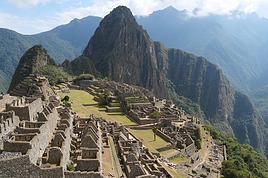
Site du MACHU PICCHU (2430 m) : départ 4h30 le matin à pied , visite du site, montée au Huayna Picchu (2800 m déniv.+400m), descente à pied ou en bus…
Eventuel bain dans les sources chaudes
Nuit à Aguas Calientes (2 000 m)
Dimanche 6 août :
Retour en train sur Ollantaytambo (5h30 ð 7h45)
Option 1 : Visite de Ollantaytambo*
Retour sur Cuzco, via Chincheros (3750 m) et Maras (3000 m) avec éventuelle visite des Salines… Option 2 : Retour sur Cuzco via Pisac* (2970 m) et Sacsahuaman* (3600 m), avec visites de ces sites
Nuit à Cuzco (3 400 m)
Lundi 7 août :
Bus (9 à 11 h) vers Puno (en bus touristique avec arrêts-visites en cours de route)
Nuit à Puno (3 827 m)
Mardi 8 août :
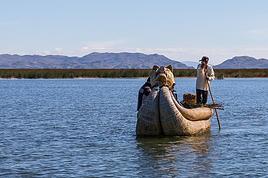
Excursions sur les îles du Lac Titicaca : Los Uros, Taquile, Amantani
Nuit à Amantani, chez l’habitant (3 810 m).
Mercredi 9 août :
Retour sur Puno
Visite de Puno et ses environs : Sillustani
Nuit à Puno (3 827 m)
Jeudi 10 août :
Transport (4h) vers Copacabana (3 810 m) en bus
Traversée (à 13h30) Yampupata ð Isla del Sol
Nuit sur Isla del Sol. (3 810 m)
Vendredi 11 août :
Visite de l’île du Soleil le matin
Retour à Copacabana par navette bateau
grimpette au Cerro Calvario
Nuit à Copacabana (3 810 m)
Samedi 12 août :
Bus (3h30 de bonne route) vers La Paz (3600 / 4000 m)
Petite visite de La Paz
Bus de nuit pour Uyuni, avec départ à 16h (TLJ – 13 h de trajet)
Dimanche 13 août :
Repos et/ou visite de Uyuni
Réserver l’excursion de 4 jours pour le Salar et le Sud Lipez
Nuit à Uyuni (3656 m)
Lundi 14 août :
Excursion 4x4 au Salar et Sud Lipez : Jour 1
Uyuni ð Colchani ð traversée du Salar d’Uyuni avec escale à Isla de los Pescadores ð Colcha K ð nuit à San Juan (3660 m) ou Mañica
Mardi 15 août :
Excursion 4x4 au Salar et Sud Lipez : Jour 2
San Juan ð Salar de Chiguana ð arbol de piedra dans le Desierto Siloli ð Laguna Colorada (4278 m)
Mercredi 16 août :
Excursion 4x4 au Salar et Sud Lipez : Jour 3
ð champ de geysers de Sol de Mañana (4850 m) ð Thermas de Polques (bain) ð Salar de Chalviri ð Laguna Verde (4400 m) au pied du volcan Licancabur ð …
Jeudi 17 août :
Excursion 4x4 au Salar et Sud Lipez : Jour 4
Retour sur Uyuni (6h de trajet) via Valle de Rocas, éventuellement San Crìstobal et le cimetière de trains…
Nuit à Uyuni (3656 m)
Vendredi 18 août :
Bus vers Potosi avec départ à 10h (6 à 7h de trajet
ð arrivée vers 16h à Potosi
Nuit à Potosi (4000 m)
Samedi 19 août :
POTOSI : visite de la ville et/ou les mines (ð compter 4 à 7h selon les agences)
Nuit à Potosi (4000 m) Possible de prendre un bus à 17h pour Sucre (ð arrivée à 20h) ou un taxi (intéressant car on est 4)
Dimanche 20 août :
Trajet vers Sucre (3h de trajet ; 1er départs vers 7h en bus ; possible à toute heure en taxi puisqu’on est 4)
Visite de Sucre (se renseigner au + vite sur le vol pour La Paz)
Nuit à Sucre (2 790 m)
Lundi 21 août :
Visite de Sucre
Nuit à Sucre (2790 m) (éventuellement vol en soirée pour La Paz)
Mardi 22 août :
Vol en matinée Sucre ð La Paz (1h de vol environ)
Visite de La Paz
Nuit à La Paz (3600 / 4000 m)
Mercredi 23 août :
Bus La Paz ð Puno (4h30) via Desaguadero et Tiwanaku (visite 2 ou 3h)
Nuit à Puno (3827 m) et visiste de Sillustani si pas fait avant
Jeudi 24 août :
Bus (45min) pour aéroport de Juliaca
Vol Juliaca ð Lima le matin
Bus Lima à Pisco (4h bus)
nuit à Paracas(0 m)
Vendredi 25 août :
Islas ballestas et réserve Paracas
Nuit à Paracas
Samedi 26 août :
bus Pisco / Lima (4 h)
Décollage à 20h25 – Lima ð Amsterdam …
Dimanche 27 août : (décalage horaire = + 7h)
Lima ð Amsterdam (17h40 – 20h50) ð Paris (arrivée dimanche 27 août, 22h05)
… soit 15h30 de vol et près de 21h de transit…
non,
c'était par personne mais comme je l'ai dit on s'est fait plaisir (resto, excursions ...) et on a ramné une tonne de cadeau et de souvenir. De plus, y a pas mal de long trajet qu'on a fait en avion ou en bus de première catégorie.
On peut effectivement faire bcp moins cher.
De plus, ceux qui ont vraiment un budget serré devraient se diriger vers la bolivie nettement moins chère
Bye. Christophe
Salut,
Pour les adresses, ce n'est pas moi qui les ai : contactes wapiti 74 sur ce site, c'est elle qui a tout gardé comme coordonnées des personnes à contacter. Ecris lui de ma part, elle te donnera toutes ces adresses avec plaisir.
Quant aux treks, on a juste fait le canyon du colca sur 3 jours avec montée à Tapay, mais au Pérou tu verras il y en a bcp d'autres très jolis et qui montent plus haut et durent plus longtemps. Tu as un large éventail de possibilités et tu en trouveras forcément un qui corresponde à tes gouts.
Enfin, je te parle du routard pour te donner un ordre de prix. Les guides ne sont pas géniaux quand on les prend séparément (Routard et Lonely Planet). Les deux étaient complémentaires.
Bye. Christophe
salut,
je pars en Bolivie et Pérou la semaine prochaine.Si tu as le temps de me donner des précisions sur les souvenirs :
quelques exemples avec prix et lieux interessants pour les achats. J'aimerais affiner ainsi mon enveloppe budget kdos car j'aimerais aussi faire plaisir autour de moi au retour.
A bientôt de te lire
chibopé
non tu as plusieurs poste de controle meme le long de la voie ferrée on peut te faire payer une amende des amis en ont fait les frais, mais il y a d autres chemins que le chemin des incas machu picchu et ceux la ne sont pas payant ou tres peu.
routard perou chili et argentine pas trop a jour pour les tarifs et adresses, celui de la bolivie en revenche a été revu l'an dernier et est plus fiable.
Pour des prix précis, Isard pourra sûrement mieux te renseigner, il a beaucoup plus souvent desserré les liens de son porte-monnaie que moi durant ce voyage 😛
Mais au niveau de conseils pour les lieux d'achat, je peux commencer par :
En Bolivie tu trouveras moins cher (bien moins cher) qu'au Pérou.
Mais on n'y trouve pas tout-à-fait la même chose... j'ai par exemple été déçue par les couleurs et motifs des bonnets andins boliviens et ai regretté de ne pas en avoir acheté au Pérou...
Si tu veux des tissus et tissages d'excellente facture, c'est à Sucre, au musée du textile que tu trouveras les plus beaux... mais il faudra y mettre le prix. L'excellente qualité a là un coût assez élevé.
Sinon, pour tout ce qui est petit souvenirs, babioles... en Bolivie, il faut profiter de La Paz, sans hésitation. C'est là qu'il y a le plus de choix, et le moins cher.
Au Pérou, le marché de Pisac est réputé et propose plein de choses. Plus cher qu'en Bolivie, mais du choix, des motifs et couleurs, de la qualité aussi... et des arnaques sûrement aussi...
Sois toujours vigilante dans tes choix, ta négociation des prix -demander à plusieurs commerçant avant de se décider- et tes transactions financières (rendu de monnaie 🤪).
Quand c'est en sol, c'est au pérou, et qd c'est en bol c'est en bolivie. Regarde le change pour transformer en euro mais je crois qu'il faut diviser les bol par 10 et les sol par 3, 5. Vérifie qd même.
Tout a été acheté dans les marchés ou dans les boutiques de souvenirs. Dans les casas de artesanias ou au musée du textile les prix sont horribles (par exemple, on a vu un petit set de table de dimensions inférieures à ceux que j'ai pris à 500 bol, les tapis de 60cm sur 40cm sont à 1000 bol !!!).
Leur artisanat est surtout basé sur le textile et la poterie
un bonnet en alpaga acheté sur la isla amantani sur le lac titicaca côté Pérou m'a couté 20 soles (comme t'a dit wapiti 74, on les a trouvé bcp moins joli en bolivie). Tu peux trouver moins cher si c pas de l'alpaga, ma copine l'a payé moitié prix en synthétique (attention aux arnaques et il y en a bcp, la différence entre les deux est reconnaissable au toucher et à la lumière l'alpaga ne brille pas) une écharpe (30% alpaga et 70% en matière plus moderne et dont je ne me souviens plus le nom) nous a couté 35 bol l'unité Des gants à 8 bol Un tapis très épais avec de très jolis motifs de 2, 5m sur 1, 5m (qu'on a finalement décidé d'accrocher au mur) nous a couté 400 bolivianos une nappe de table très grande coute entre 130 et 150 bol, mais tu en as encore de moindre qualité qui sont 2 fois moins chères une poterie d'une dizane de centimètre de hauteur nous a couté 50 bol Des sets de tables de 40 cm sur 20 cm et épais coutent 30 bol l'unité, mais tu en as des bcp moins chers s'ils sont de moins bonnes qualités un cd de musique andine 20 sol. En bolivie, c'est wapiti qui a acheté un cd, bien moins cher, je crois que c'était 20 bol🏴☠️ Une boite de 100 doses de maté de coca : 50 bol. Des feuilles de coca séché dans une bourse au marché 5 sol, mais il parait qu'il est interdit d'en ramené de cette façon.
Donc tu vois que chaque produit n'est pas cher, mais dès que tu accumules un peu trop ou que tu multiplies, la somme grossit finalement rapidement. dans ce que je n'ai pas acheté, il y a plein de ponchos pour adulte, adolescents et de très jolis pour enfants et bébés. Il y a aussi en Bolivie des bijoux en argent.
Dernière chose, je n'ai quasiment pas marchandé, ils étaient tellement pauvres que je n'en ai pas eu le courage ; ma copine a marchandé un peu plus et elle arrivait à faire tomber ces prix au moins 30% plus bas.
Ah oui, j'oubliais,
je me suis aussi acheté : des pantoufles à 50 sol une trousse à 1 sol
j'ai sans doute encore oublié des trucs mais tu as qd même une grosse partie de la liste.
Bon voyage. Christophe
Un grand merci. Je sens que je vais trouver des choses très sympa...
Comment as-tu transporté ton tapis?car, vu la taille cela doit être lourd et encombrant!!
It's decided—2027 will be Brazil, in the summer (unless you advise against it 😕). From what I’ve read, the weather’s okay, even if it’s a bit chilly for swimming. We’re going, as always, as a group of four, with our teens. 🙂
We’d be looking at a solid two weeks, at least 14 days on the ground. I’m planning way ahead to nail down an itinerary and book our flight tickets (the prices I’m seeing already are freaking me out…).
From my research, I’ve come across some classic routes: Rio/Iguazu/Paraty/Ilha Grande.
Roughly: 4 days in Rio, 2 in Iguazu, 2 in Paraty, and 3 on Ilha Verde. That’d leave us one more stop on the trip.
Since we like to end with a "chill" stop for the kids,
My questions:
- Is Ilha Verde worth it this time of year? I’ve read that swimming might not be an option—water’s too cold… So not ideal for a chill/relaxing destination?
- How should we round out the trip in the South? São Paulo? Another stop along the Costa Verde?
- Wouldn’t it make more sense to head up to the Northeast, where it’s warmer, like Salvador de Bahia?
But Salvador raises other questions:
- Are there flights from Iguazu to Salvador?
- And for the return to France, would we have to connect through Rio or São Paulo from Salvador?
- Any suggestions for places to stay around Salvador?
Thanks for your input—I’m sure I’ll have more questions as I go along. 😉
Hi everyone! So happy to be back on this forum—it’s packed with such useful info! 🙂 My husband and I are planning a 2.5-week self-drive trip to Colombia at the end of the year, including some domestic flights. My first question is: is it possible, easy, and safe to do a road trip in Colombia?
Below is our draft itinerary (with questions at each stop):
29/11: France → Colombia. Overnight in Bogotá.
30/11: Exploring Bogotá: La Candelaria and Montserrate.
01/12: Gold Museum (closed on Mondays). Drive to Zipaquirá (1.5 hrs) to visit the Salt Cathedral. Then drive to Villa de Leyva (3 hrs). Explore the town. Overnight in Villa de Leyva.
02/12: Return to Bogotá via Laguna de Guatavita (5 hrs). Is it worth the detour? Overnight in Bogotá.
03/12: Flight to Pereira. Drive to Salento. Overnight in Salento.
04/12: Cocora Valley (hike among the wax palms) followed by a drive around the area. Are there any waterfalls or other sights nearby?
05/12: Visit a coffee finca—any recommendations? Then explore the surroundings: Filandia, Manizales, waterfalls? Hot springs? Which ones?
06/12: Flight to Medellín.
07/12: Exploring Medellín: Centro, Plaza Botero, Comuna 13. How do you visit Comuna 13? Is it easy to get around Medellín? Metro? Buses?
08/12: Drive to Guatapé (2 hrs). Visit the town, stroll around the lake, then El Peñol. Overnight in Guatapé.
09/12: Return to Medellín.
10/12: Flight to Santa Marta. Drive to a hotel near Tayrona Park.
11/12: Tayrona—El Zaino entrance.
12/12: Tayrona—Palangana entrance, then Bahia Concha and Santa Marta. What do you think?
13/12: Drive to Minca (45 mins). Can we reach the village by car? Pozo Azul and Marinka waterfalls. Overnight in Minca (or back in Tayrona?).
14/12: Drive to Puerto Nao (5 hrs). Stop in Ciénaga on the way + boat tour in Nueva Venecia and/or Buena Vista? Not enough time? Overnight in Puerto Nao.
15/12: Exploring Cartagena: Centro, Getsemaní, the walls + La Boquilla if we have time.
16/12: La Boquilla (is it really worth it?) if we didn’t have time yesterday, then back to the beach.
17/12: Return to France.
So, what do you think? Is this doable, or should we tweak it? Thanks in advance for your invaluable feedback and tips! 🙂
Hi there, I’m looking for recent info on a boat trip with sleeping accommodations from Belém to Santarém. I don’t want a "luxury cruise for wealthy tourists"—just a bed with a minimum of comfort seems great to me🙂. I didn’t find any up-to-date details with Amazon Star. Do you have any companies, guides, or prices for this route to recommend?
I’d love to hear tips and feedback on this trip, especially since I’m traveling solo. I’d like to get a sense of what to expect and ensure some basic safety with transportation.
Thanks.
I live in Quindío and I’ve seen a lot of worried questions since the August earthquake. Here’s an update for those planning a trip to the coffee region.
Tourist sites are operating normally: Salento, the Cocora Valley, Filandia, and Pereira Airport are open and welcoming travelers. The region needs visitors—coming here directly helps the locals.
A few tips to plan your stay:
• Airports: Pereira and Armenia, each about 1 hour from Salento.
• Where to stay: Salento for the vibe and proximity to Cocora, Filandia, or a *finca* near Quimbaya for more tranquility.
• Cocora: Easy to explore independently from Salento, with the Willys (local jeeps) leaving from the square. Go early to avoid crowds.
• La Carbonera: Less known, wilder, and home to the largest wax palm forest. The road is long—best done in a 4x4 or with a Willy driver.
• Coffee: Many small family-run *fincas* offer tours around Salento and Filandia.
• Hot springs: Santa Rosa de Cabal, on the way to Pereira.
• Duration: Plan at least 3 days to enjoy without rushing.
If you have any questions about the region, ask away—I’m happy to help.
Hi everyone! I’m heading to Colombia in January 2026 and have a few questions. In Salento, which is better to do—Cocora Valley or Carbonera Valley? After that, I want to fly from Medellín to Rincón del Mar. Is there an airport in Tolú? I can’t find any info. Thanks in advance, and *buen viajé* to all! Kristian
Hi there, we’ve decided to head to Brazil at the end of March for 2.5 weeks with our 13-year-old son. From what I’ve gathered from some research, Rio seems like a great destination at this time of year, and I’m thinking around 4-5 days to explore it—does that sound right to you? Copacabana, Ipanema, Sugarloaf Mountain, Christ the Redeemer, maybe a favela tour, or any other ideas?
How’s the best way to get around locally? I’ve heard about Bonito or Angra dos Reis and Ilha Grande—what do you think of those? Fernando de Noronha for snorkeling or even diving? Is Recife a good option at this time of year?
If you’ve got any suggestions, we’re all ears—it’s for our 50th birthdays! :-) Thanks so much for your help and tips. See you soon.
Hi everyone,
We’re planning 40 days in Uruguay and Argentina in February and March, trying to avoid as much rain as possible.
We’re thinking of starting in Buenos Aires, then heading to Bariloche, and from there flying to Córdoba, Mendoza, or Salta. Maybe by bus or renting a car to explore each region.
Do you have any suggestions or tips for us? We love picturesque, historic cities and landscapes. As seasoned travelers, we’re used to planning our trips ourselves.
Thanks in advance!
We’ve planned our road trip in Chile, and the only thing left is to book the TABSA ferry from Punta Arenas to Puerto Williams.
Problem: the ferry that leaves Punta Arenas at 1 AM isn’t available for booking, no matter the day or month. All the other departures can be booked, though.
On top of that, Tabsa isn’t responding to any messages.
We’re planning to explore Peru’s main highlights and were wondering if anyone could share insights on the quality and comfort of overnight buses. If so, which bus company should we trust?
Hi,
My wife and I are heading to Brazil from November 6th to December 2nd. We’ll be stopping in São Paulo, Paraty, Ilha Grande, Rio, and Salvador de Bahia.
Could you recommend some nice, non-luxury places to stay in each of these spots?
Also, any suggestions for places to visit would be great.
Thanks in advance for your help!
Marc
Hi there.
I already posted a message asking for advice about our upcoming trip to Chile.
Details: Getting around by bus or train.
Starting from Valparaiso, heading north, passing through cities and places to visit, then returning to Santiago via a different route.
Avoid the beaches...
Thanks
Hello,
my wife and I will be in Cusco for a week in March 2027.
I’d like to organize the visit to the site on our own, combining the Sacred Valley and Machu Picchu.
We’d leave Cusco on Day 1 to arrive at the site in the morning, then stay in Aguas Calientes or Ollantaytambo, and on Day 2 return to Cusco while visiting the Sacred Valley.
Is this doable?
Looking forward to hearing from you.
Cédric.
Hello,
We’re spending 3 weeks in Rio between February 20 and March 15, 2027, to visit our son and daughter-in-law. We’re thinking of one or two "escapes" from Rio—3-day trips to get away from the city (so not too far, max 3–4 hours by car or bus). We’re all ears for suggestions! We love beautiful nature and authentic experiences, not so much the touristy spots... even though those spots are often in beautiful places, we’d rather avoid them.
Thanks for your insights!
Catherine
Hi there,
I’m planning a trip with my partner (no kids this time—thanks, Grandma!) for two weeks to celebrate her 40th birthday. I’ve been thinking about Chile. We’re looking at leaving around September 18, 2027, starting in the south and returning in early April.
Here’s what I had in mind:
8 nights in a van in the Lake District and the start of the Carretera Austral (up to the Chaitén area). We’re set to arrive in Puerto Montt around 2:00 PM. We don’t want to go too far south since we’re planning to explore the heart of Patagonia (Chile and Argentina) with the kids when they’re older. The idea is to spend 3 nights discovering the lakes (up to Cochamó) and 3 nights in Pumalín Park. I’ve also added two transition nights.
7 nights in the Atacama to experience another side of Chile (San Pedro), taking a domestic flight from Puerto Montt to Calama in the early afternoon. We’ll depart for France in the early evening from Santiago.
IMPORTANT NOTICE for those planning to take a bus to another city, state, or destination from Salvador!
Starting January 20, 2026, the intercity bus station Rodoviária is changing its address!
The Rodoviária is leaving the Iguatemi area and will now be located in ÁGUAS CLARAS (about twenty kilometers from downtown Salvador).
A brand-new station (the most modern in Brazil) has just been set up there, accessible by car/taxi/Uber/metro.
Allow for much more transfer time (especially during rush hours), so leave early if you're heading to Chapada Diamantina or other Brazilian cities by bus.
Remember, there are also private transfers (even French-speaking ones) that can take you directly from your hotel in Salvador to your hotel in Chapada. Sure, it’ll be more expensive, but you’ll save on transfer time and comfort.
Tropical greetings from Salvador,
@ivanbahiaguide
Loyal member of the French-Speaking Brazil Forums for over 15 years already 😊 🇧🇷
Hello,
We’re thinking of spending 1 month in Chile, maybe doing a loop?
From 12/23 to 01/22.
What are the must-see sights, given we’re more interested in the country’s cultural side than the beaches?
Thanks
Hi everyone,
We're planning a trip to southern Chile in November. Here's our tentative itinerary:
Day 1: Arrival in Santiago, then a flight the next day to Balmaceda where we'll pick up a rental car to reach Coyhaique.
Day 3: Walk in the Coyhaique National Reserve, then continue to Puerto Chacabuco. Return to Coyhaique for the second night.
Day 4: Drive to Villa Cerro Castillo for a hike in the national park. Continue to Puerto Tranquilo and stay there for 3 nights.
Day 5: Boat tour on Laguna San Rafael.
Day 6: Day trip to Monte San Valentin Glacier.
Day 7: Excursion to the Marble Chapels, then drive to Puerto Guadal. We'll stay there for 3 nights.
Day 8: Walk along Lago Carrera and return to Puerto Guadal.
Day 9: Rio Baker Valley and, if possible, a glacier excursion.
Day 10: Drive to Cochrane and hike in Tamango National Reserve. We'll stay 2 nights in Cochrane.
Day 11: Walk in the Chacabuco Valley.
Day 12: Drive to Caleta Tortel. We'll stay there for 2 nights.
Day 13: Cruise in the Rio Baker delta.
Day 14: Return to Cochrane.
Day 15: Return to Balmaceda in two stages.
Day 16: Continue the return journey.
Day 17: Return the rental car and head back to Santiago.
After this, we're also planning to explore northern Santiago. I'll post about that part once I have a clearer idea of the route.
What do you think of this itinerary? Is it doable in 17 days?
Thanks in advance for your tips and recommendations.
martine
Hi there, I’ll be in Brazil from December 10th to the end of February.
I’ve sketched out a rough itinerary but I’m not sure how to arrange it—considering the climate, year-end holidays, and Carnival.
Basically, I’m thinking of the Amazon, the Northeast coast with Lençóis Maranhenses National Park (but skipping Chapada Diamantina),
Ouro Preto, Paraty, and Ilha Grande—but no Rio visit.
Is this doable in 3 months?
Which direction should I take for this itinerary?
Thanks in advance!
Hi everyone, does anyone know the agency Ventura Travel Agency (not ventura travel)? After lots of research and quotes, it’s the only one offering Uyuni at a reasonable price while meeting all the criteria: transfer to the border, private-room accommodation, and a very fair rate. Other agencies or guides either offer shared rooms, no border transfer, or prices that are way too high. But I’d love to hear some reviews about this agency. Thanks in advance!
Hi everyone,
We're planning a trip to Chile to visit the Atacama Desert and then head toward Putre, Lauca, Salar de Surire, etc.
Which would be the better time to go, April or November?
Is an SUV enough?
Looking forward to your tips!
Hi everyone, French travelers in Chile—what credit cards do you use for your various car rentals in the country? I’m traveling in September and was planning to switch my regular debit card (a VISA PREMIER in deferred debit mode) for the deposit guarantee.
My rentals are with Figal in Punta Arenas, Econautos in Arica, and Chilean Rent a Car in Temuco, and all of them want the deposit on a credit card. For me, deferred debit *should* work, but I’ve read comments saying the opposite.
How’s it actually working on the ground with these rental companies right now? Will a deferred debit card work, or not at all?
In France, banks don’t issue credit cards, right—or am I mistaken?
Hi everyone, is it still possible to travel in Ecuador outside the Amazon region? If so, do you have a reliable agency to recommend? All your recent experiences from the past few months would be greatly appreciated. Thanks so much
Hi,
We’re heading to Buenos Aires for 3 days in November and would like to do a guided tour of a few neighborhoods. There are "free" tours, but none in French. Does anyone have a guide to recommend so we can really get to know the city beyond just the architecture?
Thanks
Hi there,
I’m desperately looking for info on the schedules and routes of (shared) boats to visit the islands of Lake Titicaca.
From what I’ve found, there’s a *combi* (bus) that leaves from Puno to go to Llachon. Where do you catch it? What are the schedules and frequency? Does it take about 1 hour?
Then in Llachon, you can take a boat to Amantani (45 min). Same question—where do you check for frequency and schedule?
After that, from Amantani, boats go to Taquile and then Uros. Do you have enough time to visit the islands between two boats? Frequency and schedule?
The goal is to do this tour independently (no agency) over 2 days. Thanks for any tips you might have!
I just got back from a trip to Bolivia and wow—what a wake-up call. It’s not the easiest country, but it’s absolutely stunning.
I started with Isla del Sol, perfect for easing into the altitude at a relaxed pace. Try to stay in the northern part of the island—it’s quieter and the views are insane. And the trout there? Unreal. Quick tip: bring cash in small bills; they almost never have change, and cards are rarely accepted.
Next up, La Paz. The city’s pretty wild, built in every direction. I did a few hikes in the area, including the famous Charquini Lagoon (the blue lake) at over 5,000 m—let’s just say I struggled 😅 but it was so beautiful it was totally worth it.
After that, I headed to Sajama. It’s cool, especially for the hot springs, and I stayed in Tomarapi. But honestly, if you’re short on time, you can skip it without too many regrets.
The highlight of the trip: the Salar. I did it starting from Tupiza, and I *highly* recommend going Tupiza → Uyuni. Way less crowded at the start and the landscapes are super varied. For the tour, I used SplitYourGuide to find a group, and it worked out great. Super handy for splitting costs and meeting people.
I wrapped up in Sucre—this city is gorgeous, all white, with such a chill vibe. And the salteñas + ice cream? Next level 😋
Bottom line: Bolivia’s a bit rough around the edges, sometimes exhausting (shoutout to the altitude), but it’s 1000% worth it.
If you’ve got questions or need tips, I’m happy to help!
Martin
I was planning to go to Réunion and stay in half-board accommodation with non-professionals, but it seems that’s not really the custom there—or maybe my budget isn’t big enough.
So, since I’ve already traveled around Ecuador and Peru, I’m now looking at Argentina, especially for its mountains (like the ones in Réunion that tempted me, even though—frustratingly—I could only admire them from below).
I plan to get around by bus and don’t know in advance where I’ll sleep, so I won’t book ahead. If I like a place, I might stay for several days.
I know that in Chile, it’s easy to find half-board accommodation, but what about in Argentina?
I’d like to stay with locals in half-board without it being a professional setup. I’m not sure if this is common practice there. It’s up to me to find someone willing to host me.
What do you think?
What would be a fair price (keeping in mind that 40 to 50 € is the max I can spend on accommodation, breakfast, and dinner)?
Hi everyone,
We’re heading to Patagonia for three weeks in November, starting from Coyhaique in Chile.
We won’t have a car, and I’m struggling to find information about transportation options for a few parts of the itinerary we’d like to do:
1) From Perito Moreno (the town, near Los Antiguos), we’d like to travel down Ruta 40 to visit Perito Moreno National Park and then cross into Chile via the Paso Roballos (at the latitude of Bajo Caracoles) to reach the road to Cochrane. Without a car, it seems we’ll need to use private agencies to get to the national park—do you have any recommendations or suggestions? Also, does anyone know if it’s possible to cross into Chile via Paso Roballos (from Bajo Caracoles) without a rental car? That is, without having to go all the way down to El Chaltén or back up toward Perito Moreno/Los Antiguos, etc.?
2) The second stretch that seems a bit tricky (though still easier, in theory) is from Caleta Tortel to Villa O’Higgins on the Chilean side. Do we have to go back through Cochrane, or are there ways to get directly from Tortel to Villa O’Higgins?
3) Finally, we’d like to hike into Argentina (El Chaltén) from O’Higgins. Any recommendations for this? Do we need to go through an agency? What’s the estimated duration of the trek?
As you’ve probably gathered, we want to visit some off-the-beaten-path spots but don’t have a car, so we’re looking for the best possible compromises.
Thanks so much in advance for all your suggestions!
Thomas