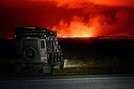
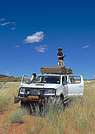
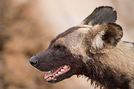
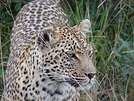
Here’s a recap of our self-drive trip in Tanzania.
Tanzania is a stunning country, but it’s changing fast, which means that any self-drive info you gather in advance might be outdated by the time you travel.
Still, here’s some info for future self-drivers.
The vehicle:
After lots of research, thinking, and calculations, we had our 4x4 with roof tents shipped from South Africa through our rental company of two years, Safari4x4Hire. The price for 31 days came to $247.00 per day. That’s cheaper than some Tanzanian rental companies (Shawsafaris: $380.00 per day, total with 18% tax) and just a little more expensive than others (Tanzanian Pionners), but with the guarantee of having a well-maintained and reliable vehicle. You can check out the discussion I started: here
Traffic:
The speed limit is 80 km/h on roads and 50 km/h in villages. Watch out—there are lots of police checks at village entrances (speed radar). In villages and towns, also be careful with minibuses, which are everywhere and stop and start without signaling. As for paved roads, most are in good condition, and many tracks are brand new or being renovated (the Chinese are in the area!).
Campsites:
It’s very easy to find a spot in Tanzanian campsites (few self-drivers), so no need to book in advance (we were often alone in campsites outside the parks). Inside the parks, it’s easy to book public campsites at the gates. With roof tents, the downside is that sites are usually designed for travelers with ground tents, but we always found space for our vehicle. Another downside is making a fire—it’s nearly impossible to find wood (Tanzanians don’t usually make fires for cooking or ambiance). Campsite prices outside the parks range from $5.00 to $15.00 (price with 18% tax). I’ll list the prices for campsites inside the parks below.
Food:
There are very few supermarkets in Tanzania, and prices can be steep if you’re not careful (European brands). For fruits and vegetables, you can easily find roadside vendors. For other groceries, you can shop at supermarkets (Dar es Salaam, Arusha). In Arusha, there’s a brand-new Shoppers Supermarket—clean and well-stocked—and for meat, don’t hesitate to visit the Meat King butcher. It’s also often possible to eat well at campsites with restaurants for around $10.00 (price with 18% tax).
Some other info:
1. At gas stations, you almost always pay in cash, usually in Tanzanian shillings.
2. Park entries, campsites, and Ngorongoro are paid with a card (Visa, etc.) directly at the gates. Exception: Selous, where you need a permit in advance (we didn’t have one when we arrived at the north gate, but we were still able to enter thanks to the kindness of the gate attendant).
3. Watch out—some regions outside the parks have a tax: the Wildlife Management Fee. Payment is a bit unclear:
- For Lake Chala, we paid at the gate in cash.
- For Lake Natron, you can’t pay at the gate—we had to arrange it with the campsite.
- For the area between Tarangire Gate and Lake Burungi (to reach a campsite), you can’t pass the gate without paying in Arusha first.
4. For divers, you can do amazing dives in Pangani with Kasa Divers.
Park entry and campsite prices in July/August 2018:
Saadani National Park:
Park entry per person: $30 + 18% (for 24 hours)
Park entry for vehicle (under 2000 kg): $40 + 18% (for 24 hours)
Night at Public Campsite per person: $30 + 18%
Arusha National Park:
Park entry per person: $45 + 18% (for 24 hours)
Park entry for vehicle (under 2000 kg): $40 + 18% (for 24 hours)
We slept outside the park.
Serengeti National Park:
Park entry per person: $60 + 18% (for 24 hours)
Park entry for vehicle (under 2000 kg): $40 + 18% (for 24 hours)
Night at Public Campsite per person: $30 + 18%
We couldn’t get a night in a Special Campsite.
Ngorongoro Conservation Area:
Park entry per person: $60 + 18% (for 24 hours)
Park entry for vehicle (under 2000 kg): $40 + 18% (for 24 hours)
Night at Public Campsite per person: $30 + 18%
Night at Special Campsite per person: $60 + 18%
Descent into the crater for vehicle: $250 + 18% (you don’t need a guide to go into the crater).
Tarangire National Park:
Park entry per person: $45 + 18% (for 24 hours)
Park entry for vehicle (under 2000 kg): $40 + 18% (for 24 hours)
Night at Public Campsite per person: $30 + 18%
Ruaha National Park:
Park entry per person: $30 + 18% (for 24 hours)
Park entry for vehicle (under 2000 kg): $40 + 18% (for 24 hours)
Night at Public Campsite per person: $30 + 18%
Selous Game Reserve:
Park entry per person: $75 + 18% (for 24 hours)
Park entry for vehicle (under 2000 kg): $50 + 18% (for 24 hours)
Night at public campsite per person: $30 + 18%
(You don’t need a guide to visit Selous, but a GPS with the Tracks4Africa map is essential—there are lots of tracks).
Conclusion:
We loved the northern parks, but they’re really crowded, especially with safari vehicles (though that does make it easier to spot wildlife—just follow the cars). Still, we preferred the southern parks—they’re wilder, less crowded, and almost no safari vehicles. In the campsites, you can often find yourself alone (just how we like it 😏!). But both north and south have amazing wildlife and friendly people!
If you’re interested in more info about Tanzania, I’d be happy to help.
Yes, August is an excellent time in Tanzania for wildlife viewing, especially for tracking the Great Migration. The trails are dry and as passable as possible, and the wildlife is concentrated around the few remaining water sources. The weather is great—no rain—and the temperatures during the austral winter (July-August-September) are cooler than in summer (January-February-March). The only downside for birdwatchers is that January-February might be better due to the presence of migratory birds from the Western Palearctic.
The only downside is the crowds—it’s the busiest time of the year. But there are nearly deserted parks like Mkomazi in the north or Katavi in the south. And in massive parks like Ruaha (over 20,000 km²) or Serengeti (nearly 15,000 km²), a good driver should still be able to find you some peaceful spots.
I don’t know much about Botswana and Zimbabwe, where we only did a safari. And I’ve never been to Namibia with its stunning landscapes or Uganda with its legendary shoebills and incredible gorillas.
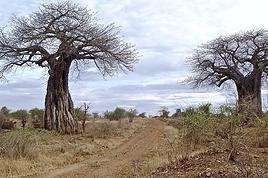
But I can still tell you that Tanzania can offer you what you’ve never had/seen anywhere else: the Great Migration on the endless plains of the Serengeti, the fine sandy beaches of Lake Tanganyika with its perfect water temperature and a multitude of colorful fish, Kilimanjaro, Africa’s highest peak, the crocodiles of Katavi in their dens and the hippos piled up in their wallows, the baobabs of Ruaha and Tarangire, the 300 km² of the Ngorongoro Crater with its unmatched wildlife density, the islands of Zanzibar. And, last but not least, more bird species—1,134 (and more endemics with 53)—than in any other African country.
Yes, August is a great time to explore Tanzania: this year, temperatures ranged between 30/35°C during the day. The nights aren’t as cold as in Namibia or Botswana, except at Ngorongoro. We still had some rain at the end of July and beginning of August, which gave us stunning colors for photos. The tracks were a bit wet but passable.
Tanzania is also lucky to have such varied landscapes. You can relax under palm trees and snorkel with a multitude of small fish in Pangani. Venture into the virgin forest and spot Colobus monkeys in Arusha Park. Discover magnificent volcanoes like Kilimanjaro with its eternal snows (in July/August it’s completely white), Mount Meru overlooking the city and Arusha Park, the Lake Natron region with its many volcanoes, its salt lake, and its sand tornadoes (a very photogenic area). And of course, Ngorongoro with its high concentration of animals, not to mention Empakaai and its alkaline lake, and Lake Chala. The vast plains of the Serengeti for its predators (easy to find—just follow the lodge vehicles), its huge herds of buffalo, and for the Great Migration. August isn’t the best time for that, though—most of the big herds were already in the Mara for us, but we still managed to see a few stragglers near the Grumeti. There are also the baobabs and elephants of Tarangire Park with its high concentration of animals. And of course, the wilder southern parks like Ruaha with its baobabs, its campsites by the river, and its stunning sunsets, not to mention its large number of animals. Finally, the beautiful landscapes of Selous with its lakes, palm trees, green plains, huge crocodiles, hippos, and of course its wild dogs. The scenery along the roads is also very varied—mountains, plains, small villages, etc. Well, I haven’t been to Uganda, so I don’t know if it’s similar to Tanzania!
Cheers!
PS: I think our rental company in South Africa, Safari4x4Hire, now has a depot and cars in Dar es Salaam. A lot of people thought our way of traveling was awesome and took photos of our car. I’ll be able to ask for a discount on our next rental with all this free advertising! 😛
Yes, August is a good time to explore Tanzania: this year, temperatures ranged between 30/35°C during the day. The nights aren’t as cold as in Namibia or Botswana, except at Ngorongoro. We still had some rain at the end of July and beginning of August, which gave us magnificent colors for photos. The tracks were a bit wet but passable.
It was particularly hot for the season—30-35°C is above the seasonal norm, especially for the northern parks, which are 1,000 meters above sea level. No doubt the infernal El Niño/La Niña duo is still causing trouble. You were lucky with the sky for photos; you often have to go later in the season to get those gorgeous stormy skies with *yum* lighting!
Tanzania also has the advantage of offering very diverse landscapes. You can relax under palm trees and snorkel with a multitude of small fish in Pangani. Venture into the virgin forest and spot Colobus monkeys in Arusha National Park. Discover magnificent volcanoes like Kilimanjaro and its eternal snows (in July/August, it’s completely white), Mount Meru overlooking the city and Arusha Park, the Lake Natron region with its many volcanoes, its salt lake, and sand tornadoes (a very photogenic area), and of course, Ngorongoro with its high concentration of animals—don’t forget Empakaai and its alkaline lake, and Lake Chala. The vast plains of the Serengeti for its predators (easy to find, just follow the lodge vehicles), its huge herds of buffalo, though for the Great Migration, August isn’t the best time. For us, the big herds were already in the Mara, but we still managed to see a few stragglers near the Grumeti. There are also the baobabs and elephants of Tarangire National Park with its high concentration of animals. And of course, the wilder southern parks like Ruaha with its baobabs, riverside campsites, and stunning sunsets—plus its large wildlife population. And to finish, the magnificent landscapes of Selous with its lakes, palm trees, green plains, big crocodiles, hippos, and of course, its African wild dogs. The scenery along the roads is also very varied—mountains, plains, small villages, etc.
You really know how to make our mouths water—what a tease! I’m probably not the only one eagerly waiting for your travel journal. Self-drive accounts for Tanzania are so rare. So, dare I say, "go for it"? Come on, I’ll take the plunge 😉!
Have a great day (and go for it again 🙂)
BL
PS: For the Great Migration in August, the classic advice is to head to the northern Lobo area, northeast of the Serengeti, near the Mara River rather than the Western Corridor and Grumeti, which are better suited for late autumn (austral)-early winter, say from late May to July. And according to HerdTracker, that seemed to be the case this year. But the migration’s location, which depends heavily on rainfall, is far from an exact science. With nearly two million wildebeest-zebra-antelope, it doesn’t all pass through in one or two weeks, and there are always stragglers. Plus, some herds even backtrack—we saw a good part of a wildebeest herd recross the Mara just after an initial crossing where they’d lost a few, if you’ll pardon the expression...
Except it doesn’t add much compared to what I’ve already seen :/
I have less experience than you in Southern Africa and only a short trip to Tanzania, but in terms of animal density (herbivores—wildebeest migration—and big cats), I’ve never seen anything like it (and I didn’t even witness the Great Migration in Kenya/Tanzania!)
Muriel
PS: For the great migration in August, the classic advice is to head to the northern part of Lobo, in the northeast of the Serengeti, along the Mara River rather than the Western Corridor and the Grumeti, which are more suitable in late autumn (austral) to early winter, say from late May to July. And according to herdtracker, that seemed to be the case this year. But the location of the migration, which depends heavily on rainfall, is far from an exact science—especially since you can always count on stragglers. With nearly two million wildebeest, zebras, and antelopes, it doesn’t all pass through in one or two weeks. Plus, there are always changes of heart, herds that briefly move against the current. We even saw a large part of a wildebeest herd cross back over the Mara just after an initial crossing where they’d lost a few, if you’ll pardon the expression...
Yes, that’s what the staff at Klein's Gate told us too—it takes about 3 to 4 hours of driving to reach the Mara. Since there’s no public camping in the area, we’d have had around 7 hours of driving round-trip without any guarantee of seeing a crossing. So we gave up! Well, we knew it wasn’t the ideal time, so we’re not disappointed.
We were lucky enough to see 4 wildebeest and zebra crossings on the Mara in the northeast of the Serengeti in late August 2017 after a big storm. We even saw elephants crossing, which our guide told us was very rare.
Best regards
Elephants crossing the Mara—I can well believe that’s pretty rare. On the other hand, in the Selous Game Reserve, it can be a daily spectacle at certain times of year on the Rufiji River.
I just wanted to add a few details.
For our part, we never felt unsafe in Tanzania, even in the villages. However, it was impossible to stop without being surrounded by lots of kids who all gathered around the car.
On the other hand, we found the access tracks to the parks quite rough and tiring because they were quite long—especially Ruaha and the track from Ngorongoro to the Serengeti, which was under construction with big rocks, gravel, and only one lane to drive on (I don’t think the repairs made much of an improvement). In the Serengeti, the “tracks” were more like ruts we followed, and they were very uneven, making the car tilt dangerously—but the reward was worth it!
The paved roads are in better condition in the north than in the south because the edges are deeply eroded, creating huge curbs, not to mention the massive potholes.
We stayed 2 days in Ruaha when I had planned for more, but it was impossible to find fuel inside the park (reserved for lodge guests).
As for whether to visit Ngorongoro or not—we hesitated for a long time but ultimately didn’t regret going. We didn’t see tons of animals, but I thought the setting was magical. We traveled from September 12 to October 10 and didn’t encounter many people—just a few 4x4s.
Regarding wildlife, we saw lots of lionesses and lions up close in the Serengeti, a zebra chase in Mikumi, and a few in Ngorongoro.
As for cheetahs, tourists didn’t see any more than we did—the guides told us they’re very hard to spot. We saw on local TV that some people were arrested for possessing cheetah skins.
At the end of the trip, we took a fantastic break near Pangani—clean, warm ocean, in short, pure bliss.
Well, the adventure is finally starting here: voyageforum.com/...n-tanzanie-d9225696/ or on our site for the full text and photos: www.girardinphoto.net/...eVoyage/Accueil.html
Hi there,
I saw that you did Tanzania as a self-drive trip, which I’m planning to do next September.
What itinerary did you take and how long was your trip?
Thanks for your reply!
Have a great day,
Nathalie
We left from September 12 to October 10, 2018. It was very hot, and we really struggled with the heat because the air conditioning in our "African" car wasn’t working.
We started our trip in the south, Mikumi and Ruaha, then headed north to visit the usual parks. If we’d had a better car (we broke a wheel in the Serengeti), we would’ve added Gombe National Park, but it was a long detour, and with the heat, we decided to skip it...
In any case, it’s an amazing trip—don’t hesitate to go!
Happy planning.
Hi there! For my 60th birthday (yes, I m jumping the gun a bit!), I m starting to plan a self-drive trip to Tanzania (in June). I also considered Zimbabwe but…
I’m in the middle of planning our summer vacation (August 2027) with my family—two kids aged 4.5 (turning 5 in October 2027) and 9.5—and we’re leaning more and more toward South Africa, which seems to fit our budget. Here’s the itinerary we’ve put together:
Day 1 – 3: Arrival in Johannesburg at 10:30 AM. Head to Blyde River Canyon (4.5-hour drive).
Activities: Panorama Route (God’s Window, Bourke’s Luck Potholes, Three Rondavels). 2 nights in Blyde River Canyon.
Day 4 – 7: Kruger National Park (2-hour drive)
Activities: Self-drive safaris, pool time for the kids (weather permitting at this time of year). 4 nights in Satara and Skukuza/Lower Sabie (2 nights each).
Day 8 – 11: St Lucia and the Zulu Coast (6-hour drive—transition day)
Activities: 2-hour estuary cruise among hippos and crocodiles, whale-watching boat trip (humpback whales), Zulu cultural immersion (Indlamu dances and traditional meal), Hluhluwe-iMfolozi Reserve (chance to see rhinos). 4 nights.
Day 12 – 15: Drakensberg (5-hour drive)
Activities: On the way, the Dlinza Forest Aerial Boardwalk in Eshowe (1h15 from St Lucia), family-friendly hikes and waterfalls at the foot of basalt cliffs, Falcon Ridge raptor show, and Moments reptile farm. Relaxing mountain time (with an extra day in case of bad weather). 4 nights in Champagne Valley.
Day 16 - 19: Travel from Drakensberg to Durban Airport (2h45 drive) for a flight to Cape Town.
Activities: Stop at the Nelson Mandela Capture Site and Howick Falls. Domestic flight from Durban to Cape Town (2h15).
Activities: Cable car up Table Mountain, Robben Island excursion (ferry + prison tour and Mandela’s cell, if suitable for kids), day at Boulders Beach (penguins), then Cape of Good Hope and Chapman’s Peak coastal drive. Bad-weather alternative: Two Oceans Aquarium at the Waterfront and a stroll along the harbor. Anything else in the area? We’ll have a car. 4 nights in Cape Town.
Day 20: Final day and return flight (departure at 6:25 PM)
Activities: Morning at the Boomslang treetop walkway in Kirstenbosch Gardens. Head to the airport around 2:30/3:00 PM.
Hello everyone!
It's been a year since I've been longing for South Africa. Our first trip in August 2025 amazed us, and—rarely—it was a unanimous hit with our little family! We were touched to the core, and from the moment we got home, we couldn’t stop talking about going back. 😄
I’d like to take this opportunity to thank everyone who gave me advice on the itinerary for that first trip (Johannesburg loop: Blyde, Kruger, Eswatini, St. Lucia, Durban, Drakensberg)! Thanks to you, our trip went like a dream!
Since then, I haven’t stopped reading articles and discussions on VoyageForum to keep my head in South Africa a little longer!
So, we finally caved and just booked our tickets for January 2027 (from the 3rd to the 26th), with a plan to do a road trip from Cape Town to Johannesburg in about 3 weeks.
I’ve got a rough itinerary that seems great based on what I’ve read on various forums, but there are still some uncertain points, and that’s where I could use your advice.
3/01: Arrival in Johannesburg at 11:45 PM
4/01: Flight to Cape Town, pick up rental car. Afternoon sightseeing
5,6,7/01: Cape Town to visit the big classics in the area (any tips for finding accommodation: which neighborhood, a specific place?)
8/01: Overnight stop before Oudtshoorn—but where??? (Is it essential, or is the CT-Oudtshoorn drive manageable? If so, I’d gain a day in Oudtshoorn. Google Maps shows over 5 hours of driving...)
9,10/01: Oudtshoorn (or would 3 nights be better to really enjoy the area?)
11,12/01: Knysna, Plettenberg Bay (to have time for hiking—if you’ve got hiking tips, I’m all ears!)
13,14/01: Tsitsikamma (still to have time for hiking—who knows the must-do hikes in the area? But maybe 4 nights in the Knysna-Tsitsikamma area is too much—I’m not sure)
16,17/01: Addo Elephant (I’m torn between 3 nights at Addo or 3 nights at Mountain Zebra. Based on travel journals, especially Michel’s on MZ, I’ve scheduled 3 nights at MZ 😄...)
18,19,20/01: Mountain Zebra NP
21/01: Camdeboo NP (because it looks so beautiful!)
22/01: Overnight stop (where?) before wrapping up the trip with either 2 or 3 nights at Golden Gate NP or the Lesotho option, which appeals to me, but I don’t know if it’s doable in 3 days to be back in Johannesburg by the afternoon of the 26th.
That’s my trip idea for now...
I’m eagerly waiting for your advice, ideas, and comments...
Can’t wait to be back there again!
I’m starting to plan a trip to Tanzania + Zanzibar in August 2027 for 2 to 3 weeks with my partner.
I’ve never been there before and I’d love some advice, especially for Tanzania where we’re planning to do several safaris in the North.
Specifically:
Do you recommend using a travel agency to organize the trip, or are guidebooks and internet recommendations enough?
If you’ve used a local agency (rather than one in France), which one?
Would you recommend hiring a guide for the entire stay in Tanzania, or is it better to travel independently except in the parks where I’ve read that guides are mandatory?
If you’ve used a local agency (rather than one in France), which one and at what price?
Have you had any bad surprises (hidden fees, inexperienced guide, poor vehicle condition)?
Looking forward to reading your tips! 🙂
Thanks in advance
Hello,
We’d like to book a round-trip transfer from the airport to the reserve for peace of mind. Do any of you have experience to share or tips to help me find a reliable provider? There’ll be 4 adults in our group.
Thanks for your feedback!
Hi there!
I’m supposed to arrive in Rwanda in mid-January, then continue on to Gabon (I think I’ll have to fly there because of bad experiences in the past), and after that, travel from Libreville to Monrovia by sea. Is this doable without too much hassle?
Hi there, my wife and I are likely going to spend a week volunteering at the in Bela Bela, near Hatfield, during the third week of May 2027. After that, we’d like to rent a car and spend a week in Kruger Park. What do you think about the timing and the type of vehicle? Also, which spots are best for accommodation so we can experience the park’s different sides? Thanks.
Hi,
The Wild Card gives access to many parks in South Africa. Since the card is cheaper if you choose the "couple" option, I was wondering what they mean by "couple." Is it simply 2 people, with no family ties, or is it the "official" couple as many people understand it? In my case, I’ll be traveling with 2 buddies. Since there’ll be 3 of us, we could take 1 couple card and 1 individual one.
Thanks in advance
📋 Yes, travel insurance is now mandatory in the ETA application.
Since October 6, 2026, the official Kenyan ETA portal directly includes a step to subscribe to mandatory government travel insurance for travelers required to obtain an ETA, even if you already have your own medical and repatriation insurance.
This insurance adds an official extra cost of $44 plus payment fees of $8, totaling $52 on top of the ETA. The ETA application cannot be completed without paying for this insurance on the portal.
In the end, Kenya followed the Tanzanian "model".....!!
Thirty years ago, I traveled to Zanzibar (Tanzania) with my children. Since I’ve since started a new family, I took the opportunity of a trip to Kenya to bring my new family along: my wife, who’s Kenyan, and my 10-year-old daughter.
Zanzibar has really changed in 30 years.
It’s become the island of taxes.
It all starts upon arrival: I think it’s the only country in the world, besides the visa, where Zanzibar insurance (and no other) is mandatory—it costs 40 €. If you didn’t purchase it before arriving, good luck getting it: the IT systems are unreliable. With a bit of luck, it’ll take at least an hour to process! And of course, this insurance is useless—if you get sick, it’s recommended to use your home country’s insurance because if you use Zanzibar’s, your national insurance won’t cover you anymore.
I wanted to show my daughter the red colobus monkey, which is endemic to Zanzibar. I paid for a tour that was supposed to be all-inclusive. First, we visited a spice farm, where a farm guide took charge of us—meaning commissions were involved, of course! The tour was very good and informative, though. When we arrived at Jenzhi Park (the colobus park), the guide told us he "forgot" there was an entrance fee (50$).
Aware of the system, I decided to book an Ocean Blue tour through the Zanzibar Tourism Office. After two hours of driving, we stopped at a beach—and were left there. No boat was ready to take us. Since my wife speaks Swahili (the language in Zanzibar), after an hour, a captain with his own boat agreed to take us along with his family.
Another attempt. The main attraction in Zanzibar (besides the city) is Changuu, the Prison Island. You have to take a motorboat and pay the captain, which is normal.
But in Zanzibar, to even get on a boat, you first have to pay a tax! Once we arrived at the island, it started all over again! Thirty years ago, access was free, and the entire island (about 1 km²) was open. Today, there’s a small office, and you have to pay a hefty fee to enter. But enter where? A paved path leads to about 15% of the island—the rest is off-limits. In total, I paid 100 € for my wife, daughter, and myself just to visit a tiny portion of the island! Avoid this!
For the rest of our stay, we stayed at a 5-star hotel with golf, horseback riding, tennis courts, evening concerts, etc.—undeniably high-level comfort. One last thing: if you want to rent a car, it’s affordable and useful for exploring the island’s diverse landscapes, but there are speed cameras at every corner on the main roads. The fine is supposedly 100 $, and it’s hard not to get one!
I told you: Zanzibar, the land of taxes. I used to think my country, Belgium, was the tax champion—I’ve found something even better!
I’d like to go to South Africa in August and plan my trip myself (so no travel agency).
Could anyone recommend a good guidebook, please? (Routard, Lonely Planet, Petit Futé, etc.) Thanks!!
In Nov./Dec. 2022, I went on a safari in the region and we suffered from the extreme temperatures caused by the "El Niño" phenomenon in the Indian Ocean at that time. On top of the extreme heat, there can be torrential rains, flooding, etc., which have led to disasters with casualties.
I’m reaching out with a question about which park to choose for a 3-day safari in Kenya.
After 20 days in Uganda, I’m meeting up with my dad for a 3-day safari (that works for him). We’ll be meeting in Nairobi and have a full day to travel to a park (preferably the farthest from Nairobi to avoid crowds?) and spend 4 nights there before heading back to the capital for our flight to France.
I’d love to hear your recommendations since I’ve read so many great tips on this forum.
March or May 2027.
Around 15 days in the Western Cape,
then 15 days in the southern KNP.
Arrival either in PE or George.
The pros know I’m somewhat familiar with the area... that I don’t camp... that my accommodations can be simple and remote, self-catering but with basic comforts... that I’m looking for spots that are a bit off the beaten path... in a relaxed mode...
From George:
Late arrival... need some rest... Herolds Bay from George to the N1.
Tsitsikamma is catching my eye (Storms River)... with or without a stop in Knysna.
Question:
What’s the current condition of the pass from Knysna to Uniondale? R339.
And while I’m at it, the condition of the R340.
Tsitsikamma, Knysna, and my questions still apply if arriving in PE.
Is the Swartberg still closed?
Any recommendations for accommodation in Prince Albert?
If I cross the escarpment, I’ll continue via Anysberg NR, Touwsrivier... any thoughts?
From there... Tankwa Karoo or Mount Cedar (or both).
Then heading back down to the coast... the highlands of Hermanus or Kogelberg NR (any opinions on the latter?).
Or,
A more classic route along the coast...
If I arrive (fairly late) in PE... any ideas for accommodation in that little area?
Given that Nyathi Camp is winking at me...
(For context... a while back, I stayed at Riverbend (same Addo sector, private concession)... and I visited the ruins of that abandoned lodge at the time, which has clearly been renovated since... located in a very quiet part of Addo...).
Any feedback from the pros?
Well, that’s about it...
I’m open to any other tips or advice!
Here’s my feedback after a recent trip to Ethiopia, organized with a local guide.
Despite a signed quote, months of prep exchanges (over eight months!), and phone calls right up to departure day, the guide didn’t honor the commitments we’d agreed on.
Haile Haftu FANUAILE, manager of the agency www.charmethiopiantours.com—who we’d organized everything with—didn’t meet us as promised when we arrived in Addis Ababa. Without any warning, he sent a different guide to accompany us for the entire trip (with a flimsy excuse).
Several parts of the signed quote weren’t respected:
– Services included in the quote but not provided on-site (meals, water),
– Hotels we’d chosen, booked, and paid for were swapped for lower-category places,
– Visits were canceled because the timing wasn’t calculated properly,
– One stop on the itinerary was dropped without any reason or explanation.
We’d paid a deposit for domestic flights, with a promise to refund any overpayment. A month after returning, 150 € per person (there were three of us) still hasn’t been refunded.
I’m sharing this to warn fellow travelers about the importance of solid guarantees to ensure contracts are actually honored. Double-check everything before committing!
Wishing everyone safe and smooth travel prep—Ethiopia is an incredible country!
---
Hello,
Feedback following a recent trip to Ethiopia, organized with a local guide.
Despite a signed quote, numerous preparatory exchanges over eight months, and phone calls right up until the day of departure, the guide did not fulfill his commitments.
Haile Haftu FANUAILE, manager of the agency www.charmethiopiantours.com with whom we had organized everything, did not meet us as agreed upon our arrival in Addis Ababa; without warning us, he sent another guide in his place to accompany us throughout the trip (with a bogus excuse).
Several points in the signed quote were not honored:
– services included in the quote but not provided on site (meals, water),
– hotels chosen, booked, and paid for, replaced by lower-category establishments,
– visits canceled due to lack of time, which had not been calculated correctly,
– one stop on the itinerary canceled without reason or explanation.
A deposit had been paid for the booking of domestic flights, with a commitment to refund the overpayment.
To date, one month after our return, 150 € per person (there were three of us) has still not been refunded.
This testimony is intended to alert travelers to the importance of solid guarantees for contracts that are actually honored, so that everyone can be extra vigilant before committing.
Good luck with your travel preparations, everyone.
Ethiopia is an extraordinary country!
I’m thinking (thanks to some tips from forum members 😉) of taking this route to get to the Cederberg.
Apparently, the road was damaged by the May rains, and traffic is still slow there.
Has anyone taken this route recently?
If not, is one direction (toward or from the Cederberg) more scenic than the other?
Hi everyone!
I’m still planning my Cape Town to Johannesburg trip in January 2027.
I saw a documentary about the San people in Namibia, and the same day, I stumbled upon the Lonely Planet page about !Kwah Ttu.
I checked out their website to learn more, including Michel’s travel journal about it. I’m really keen to go.
So, I’m thinking of dedicating:
- either 1 day out of the 4.5 I have in Cape Town...
- or making a detour to !Kwah Ttu on the day I leave Cape Town for Montagu, instead of visiting Franschhoek and its Saturday market...
To the VFers who’ve already been: is it really worth spending a day there?
Thanks in advance for your feedback!
Malijp
We're heading to South Africa for a month with 5 adults.
We'd like to rent a vehicle that can accommodate 5 people and all our luggage.
We're starting in Cape Town and ending in Johannesburg.
What vehicle would you recommend?
EDITH
Hi there,
I’m planning a gorilla trek in Bwindi, Uganda. I’m torn between the classic option (1 hour with the gorillas) and the habituation trek (4 hours with the gorillas but a more expensive permit). Has anyone done the habituation trek? Both? If so, I’d love to hear your feedback (including on the difficulty).
Thanks
I’ve read some travel journals here but I still have a question.
We’re heading to Uganda next February. The gorilla permits are booked, and the flight tickets are sorted too.
My question is about the chimpanzee trek. I’d love to know whether it’s better to book the habituation experience (4 hours) or the standard trek (1 hour).
The price difference isn’t huge, but I keep wondering and I’d hate to miss out on a great experience.
Hi everyone,
We’re revising our travel plans for January 2027. Originally, we were considering Uganda for about 14/15 days, but given the current health situation and the restrictions that might affect my partner, who’s American, we’ve decided to switch to Tanzania instead.
I’m used to traveling in South Africa and organizing my trips myself, but I get the impression that planning a safari in Tanzania is quite different.
I know self-drive isn’t really an option in Tanzania. So my main question is: can you organize your own itinerary and book lodges directly, then hire a local driver-guide? Or is it better to go through a local agency that handles the entire safari?
For the itinerary, which parks would you recommend for a first-time visit in January? Serengeti, Ngorongoro, Tarangire, Manyara, Ruaha, Arusha, Selous…
We’d also like to include Zanzibar to end the trip with a few days at the beach. Over 14/15 days, does that sound realistic or too ambitious?
Finally, for flights, is it better to arrive at Kilimanjaro (JRO) or Dar es Salaam (DAR) based on the itinerary we’re considering?
Thanks in advance for your feedback, especially on the best way to organize the safari and which parks to prioritize in January!
We're now just 5 weeks away from our trip to South Africa 🙂 and *so* excited to explore (just a tiny bit of) this amazing country.
I need to buy some binoculars but have no idea which model to choose. I don’t really know what to look for (and I don’t want to spend too much).
Thanks in advance to anyone who can give me some tips!
We just got back from ten days in Tanzania. We were lucky enough to be guided by Gishaman. Always in a great mood, a good driver, and an excellent guide. Thanks to him, we not only saw the Big Five in one day but also loads of other animals. He works for the local agency Blit Safaris, which provided excellent support throughout our trip. Highly recommended!
I’m planning a potential trip to Namibia for a classic circuit in April 2027.
I’m surprised by how expensive the accommodations inside the parks are—really steep! Is it possible to stay outside the parks but still close enough to enjoy the game drives?
Do you have any recommendations for more reasonably priced lodging? I’m okay with spending 200 to 250 € per night.
No camping—the friend I’m traveling with absolutely refuses 😉, but maybe upgraded tents would work.
Hi, I'm looking for information on the road conditions in Moremi. We're leaving in 15 days, and from what I've heard, the roads are pretty tough to drive on. Any advice?
Thanks
My trip to South Africa is getting closer (still 2 months to go 😏), and I’m diving back into my itinerary: from Saturday to the following Sunday around Cape Town, then from Sunday to the following Saturday in Kruger.
For Cape Town, the plan was to avoid changing accommodation every day (we’ll do enough of that in the second part) but still see different landscapes.
I know, I’m missing out on a lot, but you’ve got to make choices, and after all this time, I know what I like—and especially what I don’t (or like less) 😉
Here’s the breakdown:
Arrival Saturday at 11 AM: heading to Hermanus (2 nights). The idea is to stroll along the cliff path in the afternoon, and possibly drive to the Klein River Lagoon. Sunday: Stony Point, then depending on time and weather, a hike in Kogelberg Nature Reserve or Fernkloof Nature Reserve (which seems less scenic but has shorter walks).
Monday: drive to Franschhoek (1 night). If everything lines up, a hike in Jonkershoek NR and a visit to a wine estate.
Tuesday: drive to Mountceder Lodge in the Cederberg (2 nights). I’m thinking of visiting the Stadsaal Caves and the elephant paintings, and maybe one of the hikes listed on the lodge’s site or Maltese Cross.
Thursday: heading to Hout Bay for 3 nights. In no particular order: a classic day trip around the peninsula, half a day at Kirstenbosch Gardens, and half a day at Lion’s Head.
Sunday: flight to Johannesburg.
My questions are mostly about (short) hikes:
Has anyone here done hikes in Kogelberg, Fernkloof, or Jonkershoek?
At Mountceder Lodge (Michel, if you’re reading this… 😉), has anyone tried the hikes (guided or not) offered by the lodge?
There’s still half a day to fill when we’re in Hout Bay—any ideas (not necessarily hikes)?
Lastly, regarding safety: the French foreign ministry (always alarmist, but still) recommends hiking in groups. Is it really risky in broad daylight? (I’m not sure a group of two women counts as a "group"…)
Thanks in advance for your answers, ideas, and comments!
Question: we’re doing a 3-week trip in Namibia, including 5 days for Victoria Falls.
I’ve booked one night in Brandberg, and then I have some questions.
I was thinking of spending 2 nights in Palmwag, then heading to Etosha for one night in Okaukuejo and then 2 nights in Halali.
Alternatively, from Brandberg, I could book a night near Galton Gate and then enter Etosha.
I’m not really sure about the distances, especially with a 4x4.
Same for the return trip: Halali to Windhoek seems long. Maybe it’d be smart to break it up on the way back? (We have 2 days to get back if needed.) If so, where?
Jambo! I organized my trip through this kind of group, so I thought I’d share my experience here. We traveled as a group of four, including two kids aged 9 and 11. After requesting around twenty quotes, I decided to book the safari portion with MAKING MEMORIES IN AFRICA. Ally responded quickly and listened to all my requests—unlike other agencies—such as having a French-speaking guide, the order of park visits (Tarangire, Manyara, Serengeti, then Ngorongoro), and a mix of budget hotels and camping to keep costs down. There were still four agencies in the running, and price was the deciding factor. Even though they were the cheapest, I felt better taken care of than with others. For example, all meals were prepared by a Maasai chef, Louis, who accompanied us throughout the trip, while some others ate meals out of cardboard boxes. Samuel, our guide, explained so many things and answered all our questions. José drove us safely the whole way. Everything was done with great cheer!
At the end of the stay, Ally came to meet us and gave us t-shirts with the agency’s logo—we loved that they took the time to hear our feedback in person. In short, I highly recommend them +++, especially since it’s a local agency that also supports a charity for women and children.
For Zanzibar, I organized everything myself. I hesitated for a long time but eventually booked all four nights at the same place. We don’t like crowds, so I initially considered Jambiani but ended up choosing EVERGREEN BUNGALOWS in Bwejuu. We took their first airport-to-hotel transfer since we arrived at night, and it felt safer. Great value for money, in our opinion. Just be aware that it’s quite isolated—perfect for relaxing and going on excursions. There were very few beach vendors, unlike what I’d read about Zanzibar. We lived with our feet in the sand from morning to night, with a small basin of water outside our room to rinse off. Such a lovely spot!
I had asked for some excursion prices before leaving but ended up booking on-site. Not at our hotel, but at a nearby restaurant that was cheaper. After some thought, since we were based in Bwejuu, I wanted to do Blue Lagoon and Pungume (both departing from the south of Zanzibar).
Blue Lagoon: About 3 hours total, with snorkeling on a small reef full of fish (coral wasn’t great) and a stop at a spot with tons of starfish, plus local snacks, fruit, and drinks.
Pungume: An amazing day with a 50% chance of seeing dolphins (we missed them), a visit to the mangroves, then snorkeling at a spot with some nice coral and, of course, fish. We ended with a fantastic grill (tuna, shrimp, squid, lobster, and fries) on a sandbank in the shade.
Finally, before heading to Stone Town, we visited Paje Cave, which is much less known than Maalum. It’s smaller, but we saw bats, went for a swim, and fed the chickens and rabbits (great for the kids). To finish, we explored Stone Town on our own and had dinner at Forodhani Market.
For flights, we flew with Turkish Airlines from Barcelona to Kilimanjaro and back from Zanzibar—no issues there. However, I don’t recommend the Kilimanjaro-Zanzibar leg with Precision Air. Our luggage didn’t arrive, and according to the hotel, this happens often. We only got it back a day and a half later.
At the end of July, we’re heading to Namibia with a group of five for a three-week road trip and visit to the national parks.
We’ve read conflicting info about buying entry tickets—either online (where?) or at the gate when we arrive?