Hi there,
We’re a couple traveling with our 2.5-year-old baby. We’re heading to Patagonia in March or April 2026. We don’t have exact dates yet because this will be the start of a long trip around Latin America.
We’ll be traveling by public transport, with our backpacks and a baby carrier for support.
We’ll take a domestic flight from Buenos Aires to Ushuaia, and the rest will be by bus.
Here’s the itinerary we’ve planned:
- Buenos Aires (5 days)
- Ushuaia (5 days or more)
- El Calafate (3 days)
- El Chaltén (5 days)
- Los Antiguos + border crossing at Chile Chico
- Puerto Río Tranquilo (Chile) (5 days)
- Coyhaique (Chile) (3 days)
- Chiloé Island (Chile) (10 days)
- Puerto Varas (Chile) (3 days)
- Bariloche (5 days)
- San Martín de los Andes (3 days)
- Mendoza (5 days)
After that, we’re thinking of spending a few days in Córdoba, then a month in Salta.
We plan to head back down to Santiago (Chile) and then head north along the Chilean side toward Peru.
What do you think of this itinerary (especially the Patagonia part)? Is it doable with a young child just over 2.5 years old?
I’d also love to include Esquel and El Bolsón in Argentina, but I’m not sure how to fit them in or if they’re really worth it.
The durations are approximate, depending on what there is to do in each place...
Do you have any suggestions for improving it or any tips?
We want to do some easy hikes or half-day walks since we won’t be able to carry him all day. That’s why we’ve intentionally left out Torres del Paine National Park (very expensive and not very baby-friendly, I think).
Do you know of any hikes that are accessible with a little one?
Thanks in advance! !
403 similar discussions in English
Good evening everyone,
I’m leaving for Malaysia very soon with my 3-year-old daughter—this will be her first big trip! As a former backpacker, I’m finally taking my little one to discover Asia, starting with Malaysia 😊 We’re traveling from December 7th to January 5th, and I’d like to split our stay into 5 must-see spots where we can settle in comfortably for about 5 days each. Given that we’ll definitely spend a few days near Kuala Lumpur upon arrival, that I *must* take her to Malaysian Borneo to see the orangutans, and that I’d also love to relax with her on some beautiful beaches in the east ☀️
Do you have any recommendations or must-see tips?
Are there any cool guesthouses in Kuala Lumpur or nearby where we might meet other families?
Are there places that are especially great for kids—or, on the contrary, places to avoid?
Are there other solo-parent families traveling in the area around the same time as us?
Thanks so much for your kind and alternative suggestions 🤗
Hi everyone,
I know there are some *reaaaal* Morocco experts here, so I’m giving it a shot.
Early June, we’re heading back to the country for the third time for a little week-long trip.
We’ll arrive and depart from Essaouira, where we’ll rent a car to drive south down to roughly Sidi Ifni.
The plan is to make short stops of 2-3 hours max, a mix of coastal spots and a bit inland.
We’re looking for natural, quiet places that feel untouched.
We loved Taghazout years ago and Larache two years back—just to give you an idea of our vibe.
What spots would you recommend along this route?
I’m tempted by Paradise Valley but worried it’ll be as crowded as Agadir. What do you think?
Any other valleys in the area worth the detour?
Thanks, and have a great weekend! 😊
Hello everyone!
In early July, we’re heading to Indonesia for a solid three weeks as a family (my partner and I are in our fifties, and we have two daughters aged 17 and 20). We’ll be arriving and departing from Denpasar. Our itinerary is still entirely up in the air, and we’d like to explore islands other than Bali (we’ve already been there a few years ago).
I’d love to gather your tips and great recommendations to help us plan our route. For now, we’re thinking of visiting Lombok, Flores, and the Komodo archipelago. Here are some of our questions: - I visited Lombok myself back in 1999. I loved it, but I’ve been reading very mixed reviews in recent travel journals. Some are as enthusiastic as I was back then, while others are much more lukewarm (due to the overly strict and visible influence of the island’s governor on the population and because of massive hotel projects—I’m not sure if they’re on hold, underway, or completed). What’s the current situation? Is Lombok still a must-visit? And do you have any tips (hotels, places to visit, health, etc.)? - Still on Lombok, I did the Rinjani trek back then. I remember the hike wasn’t easy, but it wasn’t as tough as what I’ve read in quite a few recent travel journals... My partner and I are in decent shape, but that’s about it, and especially, my partner and our two daughters really don’t like the cold. What’s your experience with this trek? And do you have a trekking agency to recommend? (If we do it, I think we’d want to make sure we have good support, including quality gear, tents, jackets, etc.) - Flores and Komodo would be a completely new experience for all of us. Any tips and recommendations are welcome (sightseeing, accommodations, transport, etc.)! In particular, we’d like to explore the Komodo archipelago with a trusted agency that will take the time to show us the archipelago’s treasures in good conditions (safety and "decent" comfort). Do you know of any such agencies? - Are there other nearby islands you’d recommend? Any advice on places to visit and where to stay?
We’ll have three weeks on the ground... and we like to mix sightseeing with downtime where we just enjoy the moment. So we’re not looking for an overly packed itinerary, but still something rich (no point traveling so far just to lie on a sunbed all day ;-))
Thanks so much in advance for your advice!
Albin
Hello Everyone!!
Is this American West dream finally going to come true? Illness and the loss of loved ones have forced us to cancel this trip several times over the past few years...
Here’s the rough outline I’m sharing with you—feel free to give constructive feedback!!
From April 20, 2025, to May 5, 2025, that’s 14 days on-site excluding flights.
D20: Flight from Lyon to Phoenix, night in Phoenix L21: Phoenix (visit the zoo, city, Apache Trail? The road is apparently closed??) night in Sedona M22: Sedona, night in Sedona M23: Depart for GC, visit GC, night in GC (no accommodation booked yet, same goes for the following visits) J24: Drive to MV, visit MV, night in Mexican Hat or? V25: End of MV, drive to Page, night in Page S26: Page—Antelope Canyon, Horseshoe Bend, Lake Powell, night in Page D27: Drive to Bryce, visit Bryce, night? L28: End of Bryce, depart for Zion (I’m wondering if it’s worth visiting Zion at the end of April—since the park is at high altitude, is there a risk of snow? Temperatures?) If we skip Zion, could we plan 2 days for Arches before heading to Bryce? Night in Springdale if Zion, otherwise drive to Valley of Fire, night? M29: Valley of Fire, then drive to LV, night in LV M30: Morning in LV, then drive to Death Valley, night in Furnace Creek? J1: Visit Death Valley, return to LV, night in LV And then we have 3 days left... where should we add them? More time in Arches and Zion? An extra day in Sedona? In Page? We’re not big hikers, so we won’t spend more than a day in each park.
Just to clarify: passports and ESTA are all set!!
Thanks for your advice! Best regards, Christophe
I’m planning a trip to Norway in June 2025 and I’d like to know how to handle tolls with a contract like I read about
Hi everyone,
I was wondering how the coronavirus pandemic has impacted the way you travel or plan your trips. I know some of these points have been discussed before, but what I’m interested in here is the concrete, present, and personal—no politics and nothing post-COVID.
Here are a few ideas—do any of these resonate with you?
- Traveling shorter distances / for shorter durations - Favoring rural or less crowded areas over urban or overcrowded ones - Opting for private transportation over public transit - Traveling solo or at least in pairs rather than in groups - Waiting until the crisis is over and saving money in the meantime - Reassessing health risks (and updating your first-aid kit/medications and vaccinations) - ...
I’m sure you’ll have other things to add. The floor is yours!
Hello,
my Indian fiancé and I are getting married in France in a few weeks. Like many couples before us, we had extreme difficulties finding out the steps to follow in India to obtain the necessary documents for our marriage. We received no useful information from the Indian Embassy in Paris. It took us hours of research on traveler forums to gather scattered information and piece together the puzzle. I decided to summarize here the steps that allowed my fiancé to obtain the required papers, so other couples can struggle a little less than we did in the future.
I hope this post helps!
Context reminder: the list of documents required for a non-EU national to marry in France (see also www.service-public.fr):
Certificate of Custom: This is an explanation in French of the rules governing marriage eligibility in your country of origin. I read that some countries include proof that the applicant is indeed eligible. This is not the case for India.
Single-status certificate/marital capacity certificate. This is simply proof that you are eligible to marry under the laws of your country of origin.
Birth certificate.
All these documents must be less than 6 months old at the date of the banns publication.
The birth certificate and the single-status certificate must be apostilled. This procedure is linked to the international Hague Convention, of which both France and India are members. The apostille is a kind of stamp affixed to an official document by the authorities of the country where it was issued, giving it legal value in a third country.
How we obtained these documents:
The certificate of custom is very easy to obtain if you already live in France. You just need to go to the Indian Embassy in Paris with the required documents and pay the fees. We received it by mail the next day. The instructions on the Indian Embassy in Paris website are very clear (spring 2019). See also the VFS Global website (the company to which the embassy outsources consular activities).
Obtaining the single-status certificate was much more complicated. In France, a birth certificate is enough to prove whether you are married or not, as annotations are added for every major life event. In contrast, the Indian administration, although it can prove that someone is already married, is unable to prove that someone is still single. The only way to resolve this is to produce an affidavit. It took several trials and errors before we succeeded, as the administrators we dealt with generally did not know the procedure. Here’s what finally worked:
Prepare the affidavit on 100-rupee bond paper (first party: signatory; second party: Sub-Divisional Magistrate) at the Sub-Divisional Magistrate’s office in your place of birth. See Model No. 1 below. It must be signed by you and the Sub-Divisional Magistrate. For my fiancé, the latter only agreed to sign after presenting a certificate from the Tahsildar of his birth Taluk stating that he knew my fiancé was still single. If you don’t know the Tahsildar well, it might be useful to first request such a certificate from the "village accountant" before approaching the Tahsildar. We don’t know if the process would be the same in other districts than my fiancé’s. Attestation at the Regional Commissioner’s (RC) office. The Ministry of External Affairs will only apostille documents that have been attested this way. In our case, we found clear information about the procedure on the Regional Commissioner’s website (required documents, cost, bond paper value). The RC asked us to justify why my fiancé needed a single-status certificate. Such certificates are usually requested by people wishing to join the army, in which case the RC receives a request letter. I asked the mayor of my village to sign such a letter (see Model No. 2, which I wrote myself). I come from a very small town, which was lucky here, as the mayor knows both of us personally and immediately agreed to do it. I have no idea if it would be as easy in a larger town. Once the document was submitted to the RC, it was sent back to the administrator who issued it for authentication. This back-and-forth should not take more than 25 days, but it may be useful to follow the progress of the procedure by calling or visiting the offices of both administrations regularly. Send the attested documents to the Ministry of External Affairs (MEA) for apostille. In 2019, the Indian MEA only accepts apostille requests through private operators, whose list is available on the MEA website.
The birth certificate, once obtained from the municipality of your place of birth, follows the same procedure as the single-status certificate: attestation by the Regional Commissioner, then apostille at the Ministry of External Affairs.
Note: The Indian Embassy in Paris offers to issue a birth certificate. We recommend NOT GOING THROUGH THEM. The procedure is expensive, and they simply copy the information available on your passport. We seriously doubt the validity of such a document for marriage.
A few tips:
Obtaining these documents in India will require a lot of time, patience, and creativity! For us, more than 4 months passed between the moment my fiancé signed his single-status certificate and the day we had it apostilled in hand. In the meantime, there were dozens of phone calls and visits to various local administrations, a lot of brainstorming, and money wasted on canceled flights due to the monsoon.
If you have contacts in the local administration, don’t hesitate to use them. Also, if possible, closely monitor the progress of the procedures by calling or visiting the offices regularly, as mistakes are very common.
I recommend only requesting the certificate of custom once you’re close to having the other documents in hand, as it’s expensive, its issuance is very quick (at least if you both live in France; otherwise, I don’t know), and it’s only valid for 6 months.
All the steps for the birth certificate and the single-status certificate must be done in person, which can be complicated if you already live outside India. Some companies offer to handle it for you if you’re willing to pay. My fiancé bypassed the problem by designating his brother as an "Authorised representative" (a step taken at the notary of his birth Taluk). Once the single-status certificate was established in person, my fiancé’s brother was able to take over and complete the rest of the steps on his behalf. Finally, we asked the service provider handling the apostille to send the documents to our address in France via DHL (we don’t trust the postal service, as we’ve had mail stuck at customs for several weeks before).
My fiancé first tried to establish his single-status certificate at the notary of his birth Taluk. It didn’t work because the Regional Commissioner categorically refused to attest it. Indeed, it is generally forbidden to make any modifications to a document signed by a notary.
Once the birth certificate and the single-status certificate arrive in France, you must have them translated by a sworn translator registered with the Court of Appeal in your area. You can find the list on your Court of Appeal’s website. There are no sworn translators for all Indian languages! So, check beforehand if one exists for the language in which your certificates will be issued, or ensure they are issued in English.
Model No. 1 - Single-status certificate, affidavit
I, (name of applicant), son of (name of father) and (name of mother), with permanent address (address in India), solemnly affirm and declare as follows: 1. That I am a citizen of India 2. That I was born in (place of birth) on the (date of birth) 3. That I am holding a valid Indian passport bearing the number (passport number) issued at (place of issue) and valid from (date of issue) to (date of expiry). 4. That I am unmarried (single) and have no living spouse at present either in India or abroad 5. That I am eligible to marry an Indian or a person of any other nationality according to law. 6. That I am of sound health and in mentally fit condition 7. I further state that whatever stated therein is correct to the best of my knowledge.
I am aware that suppression of facts or furnishing false/misleading information is punishable under Indian law, under section 193(2), 199, 200 of the Indian Penal Code.
Solemnly declared at (place of signature) on (date of signature).
(your signature) (the subdivisional magistrate’s signature)
Model No. 2 – Request letter from the French mayor to the Indian Regional Commissioner
Dear Sir/Madam, (English version below) I, the undersigned (Mayor’s name), Mayor of the Commune of xxx, department of xxx, France, certify as follows. Firstly, that Mr./Ms. (Name of the Indian future spouse), citizen of India, passport No. xxx, issued in xxx on xxx, valid until xxx, residing at (address), INDIA, and Ms./Mr. (Name of the French future spouse), citizen of France, passport No. xxx, residing at (address), FRANCE, have requested that I solemnize their marriage in my Commune under French law.
Secondly, that French law requires me to request from Mr./Ms. (Name of the Indian future spouse) a certificate attesting to their single status.
Issued for all legal purposes.
(Place, date, stamp, and signature of the mayor)
Note: Prepared on the town hall’s letterhead, directly in both French AND English to avoid needing a translator.
Hi,
A friend and I want to do a Togo-Benin loop by moped in early October for about 15 to 20 days.
We're looking for info and tips on:
1 / Moped rental places
2 / The most scenic route
3 / Accommodations—simple but clean, possibly homestays
And anything else you think might be useful.
Thanks in advance!
Best,
Didier
hi
I’ve been in UZBEKISTAN for a few days now, and I really want to get to the Aral Sea. The route is mostly off-road, so I’m told going through an agency is mandatory (or is it??).
Anyone have any feedback on specific agencies, the cost (I’m traveling solo), or whether it’s better to book in advance or just arrange it last-minute when I get to the region?
Thanks in advance! 😛
Well, here goes—I’m taking the plunge. This is my first blog on VF, so I hope I don’t make too many blunders. In advance, you’ll have to excuse me because they’ll definitely happen anyway
Here’s the context of our trip:
- Project started: December 2015 ... yeah, that’s a while ago
- Family of 4: 2 adults, 1 teen (17) and a 10-year-old boy
- First trip to Southern Africa
Originally, we’d planned to go to Namibia. But after watching a TV documentary, we took a slight detour to the right and ended up in Botswana 🙂 Don’t worry, we’ll still do Namibia—just a bit later. It’s definitely not off the table. Quite the opposite!!
After that big decision, the question was: "Should we go alone or with an agency?" Through my son, who’s into music, we were lucky enough to meet some VF members who love Botswana: Marygabrielle and Yves (I won’t name-drop, but you know who you are). They were amazing and helped us with every aspect of our trip. We can’t thank them enough 😉 So, I didn’t even need to ask VF for all my questions 😛
For a first time in Southern Africa, and especially for Botswana, they easily convinced us to use a small local agency for at least part of the tour we wanted to do. After multiple conversations online—and thanks to Marygabrielle acting as our translator (our English is *terrible* )—our itinerary was finalized, and ... we ended up spending our entire vacation with this local agency:
Letsatsi Safaris (email for those interested: letsatsisafaris@gmail.com, website: www.letsatsisafarilodge.com, phone: +267 71692093/71351892) Joe and William (the owners) are brothers and true Batswana.
Since Marygabrielle and Yves knew them well, we set off with them in complete confidence. Everything was planned and paid for in advance, so all we had to do was relax once we arrived. Pure bliss for me—real vacation time without having to prepare meals 😛 and being able to fully enjoy everything. Everything was included: guides (them, in this case), accommodation (mostly in tents), and a cook. All we had to do was help set up and take down the tents. Indiana Jones better watch out—we’re going camping in the wild too 🙂 A dream come true!
Of course, there’s an extra cost compared to traveling solo. But this time, we splurged, and we don’t regret that choice at all.
They were all fantastic—professional, friendly—and it was a huge joy for us. We had an amazing time thanks to them. A big thank you to Joe, William, and all their staff we met: Jonah, Junien, and Doris.
Now, time for the story!
Hi there,
Here’s our plan: traveling to CHIANG MAI from BANGKOK, passing through AYUTTHAYA and SUKHOTHAI, all by tandem bike with a trailer and a child.
What do you think of this route (distance, scenery, elevation, challenges, etc.)?
Any great tips for lodging or other advice are welcome.
Thanks in advance.
Hi everyone,
After months of chronic indecision (wavering between at least 15 countries ), I was initially going to Martinique, but in the end, it’ll be a trip to discover Tunisia—just 10 days for now. The dates are tentatively March 10–20, 2008, but they’re not completely finalized yet. I’m traveling with a friend.
I’ve already browsed the forum a bit—it’s packed with great info, so now I just need to sort through it all 😛. That said, I have a quick question: could anyone recommend a place for renting a car?
Otherwise, if you have any tips, I’d love to hear them! I’m a total beginner when it comes to planning trips, and this is my first one (gotta start somewhere, right? lol ). Thanks in advance 😉
Hi everyone,
I live in Quindío and I’ve seen a lot of worried questions since the August earthquake. Here’s an update for those planning a trip to the coffee region.
Tourist sites are operating normally: Salento, the Cocora Valley, Filandia, and Pereira Airport are open and welcoming travelers. The region needs visitors—coming here directly helps the locals.
A few tips to plan your stay:
• Airports: Pereira and Armenia, each about 1 hour from Salento. • Where to stay: Salento for the vibe and proximity to Cocora, Filandia, or a *finca* near Quimbaya for more tranquility. • Cocora: Easy to explore independently from Salento, with the Willys (local jeeps) leaving from the square. Go early to avoid crowds. • La Carbonera: Less known, wilder, and home to the largest wax palm forest. The road is long—best done in a 4x4 or with a Willy driver. • Coffee: Many small family-run *fincas* offer tours around Salento and Filandia. • Hot springs: Santa Rosa de Cabal, on the way to Pereira. • Duration: Plan at least 3 days to enjoy without rushing.
If you have any questions about the region, ask away—I’m happy to help.
Hello,
A few months ago, I posted a message in the Southern Africa section about a family trip in July/August. In the end, since I had too much trouble deciding on the destination and procrastinated too much with the planning 😎, I changed my mind and we’re going for a completely different trip—to Madagascar, a country we already know a bit since we’ve traveled there several times for 4 to 6 months each time, though our last visit was back in 2012!
The tickets are booked: 19 days on the ground (excluding arrival and departure days in Tana), spanning July and August.
We’re not looking to rack up landscapes (and kilometers). The kids really want to see lots of animals, while we mostly want to show them what daily life is like in Malagasy villages. So ideally, we’d like a trip split into two parts: - For 8/10 days, a hiking portion. The idea isn’t to do a tough trek in very remote areas but rather to walk from one village to another. Let’s say 3-4 hours a day. And when we arrive in each village, we’d have time to explore a bit, chat with the locals, let our kids play with the village children, etc. Stay with locals when possible. Move to a new village every day or every 2-3 days. - A few days visiting 1 or 2 national parks (with lemurs if possible to keep everyone happy!) - With the inevitable travel days, we’ll quickly hit 19 days.
Does this kind of trip sound doable (and fun) to you? Do you know of any villages that would fit our hiking plans?
I don’t have a preferred region yet, except that very dry landscapes appeal to me less. My real love from past trips was the highlands and their bright green rice paddies against red earth, but I’m a bit worried about the cold at this time of year.
After my initial research (thanks to this forum), I get the impression that the Ambalavao/Ambohimahamasina area might meet our criteria. I saw there are "accueil paysan" (farm stays) in that area, which could match what we’re looking for and would let us visit Andringitra National Park and Ranomafana on the way there or back.
But I’m open to all your more original ideas!
For logistical questions (transport, guides, accommodations, etc.), I’ll tackle those later—it’ll depend on the area we choose.
Thanks in advance for your suggestions
Hi there,
As mentioned earlier, we're heading off for a month to explore some parts of Thailand in July/August, and I’ve got a few practical questions I’m hoping you can help with based on your experiences. Thanks in advance!
- Can you choose the denominations at exchange bureaus/ATMs? How do you avoid ending up with only 1000-baht notes when exchanging large sums? - If not, is there an easy way to get change? Any alternatives to buying stuff at 7-Eleven? - Can you buy train tickets from Thonburi to Kanchanaburi in advance? Is there usually space available, considering some people do the Death Railway day trip from Bangkok to Sai Yok Noi? - Is there room for luggage on the trains to Kanchanaburi? We’ll be traveling as a group of four with two large checked-baggage-sized suitcases (25 kg each). - Kanchanaburi: Most day tours allow around 3 hours at Erawan Falls. Is that enough, or is it worth spending the whole day there, especially at the start of the rainy season when it’s a bit greener? - In Sam Roi Yot, are there taxis/Grab/Bolt available for exploring the surrounding areas? I’d appreciate any numbers or addresses. - Does True (7-Eleven) have good coverage across Thailand, from Sam Roi Yot to Chiang Rai, or should we go with AIS? - In Bangkok, if you need to switch BTS lines, do you need a new ticket, or can you change lines as long as you don’t exit the station?
Happy to provide any additional details if needed.
Hi everyone!
I’m planning to go to Kenya next year for a safari trip across a few parks. I’ll be traveling solo!
I’m having trouble understanding how lodges and safaris work! My first questions are:
1-Do I need to find an agency that handles lodges and safaris? Or 2-Should I book lodges through Expedia or similar and then reserve activities (safaris or others) that these lodges offer?
This will help me figure out how to organize everything and whether I should focus on an agency or the lodges themselves.
Thanks!
Hi there, We're thinking of spending 3 weeks in Koh Samui at the start of 2026. Where can we find accommodation close to a pretty beach that's not too touristy but not isolated either, near a small town or village? We've already been to Surin Beach on Phuket Island. We really liked that spot, but we've heard Koh Samui is great too. Thanks for your tips!
hi everyone, and so glad Voyage Forum is back up and running!
my partner and I, along with some friends, are planning a trip to Peru in May 2025.
I’ve got some questions about the Machu Picchu excursion.
we’re in our 60s and 70s, and while we’re pretty fit at European altitudes, I’m a bit worried about hiking above 2,500 m!
that’s why we didn’t hesitate to skip the 4-day Inca Trail trek.
but I’m wondering about the 2-day "short Inca Trail" offered by some agencies—basically one day of hiking with visits to a few sites, and the second day, the classic Machu Picchu visit.
has anyone done it? do you need to be in top shape?
thanks for your tips
Hi everyone,
Here’s a recap of our self-drive trip in Tanzania.
Tanzania is a stunning country, but it’s changing fast, which means that any self-drive info you gather in advance might be outdated by the time you travel.
Still, here’s some info for future self-drivers.
The vehicle: After lots of research, thinking, and calculations, we had our 4x4 with roof tents shipped from South Africa through our rental company of two years, Safari4x4Hire. The price for 31 days came to $247.00 per day. That’s cheaper than some Tanzanian rental companies (Shawsafaris: $380.00 per day, total with 18% tax) and just a little more expensive than others (Tanzanian Pionners), but with the guarantee of having a well-maintained and reliable vehicle. You can check out the discussion I started: here
Traffic: The speed limit is 80 km/h on roads and 50 km/h in villages. Watch out—there are lots of police checks at village entrances (speed radar). In villages and towns, also be careful with minibuses, which are everywhere and stop and start without signaling. As for paved roads, most are in good condition, and many tracks are brand new or being renovated (the Chinese are in the area!).
Campsites: It’s very easy to find a spot in Tanzanian campsites (few self-drivers), so no need to book in advance (we were often alone in campsites outside the parks). Inside the parks, it’s easy to book public campsites at the gates. With roof tents, the downside is that sites are usually designed for travelers with ground tents, but we always found space for our vehicle. Another downside is making a fire—it’s nearly impossible to find wood (Tanzanians don’t usually make fires for cooking or ambiance). Campsite prices outside the parks range from $5.00 to $15.00 (price with 18% tax). I’ll list the prices for campsites inside the parks below.
Food: There are very few supermarkets in Tanzania, and prices can be steep if you’re not careful (European brands). For fruits and vegetables, you can easily find roadside vendors. For other groceries, you can shop at supermarkets (Dar es Salaam, Arusha). In Arusha, there’s a brand-new Shoppers Supermarket—clean and well-stocked—and for meat, don’t hesitate to visit the Meat King butcher. It’s also often possible to eat well at campsites with restaurants for around $10.00 (price with 18% tax).
Some other info: 1. At gas stations, you almost always pay in cash, usually in Tanzanian shillings.
2. Park entries, campsites, and Ngorongoro are paid with a card (Visa, etc.) directly at the gates. Exception: Selous, where you need a permit in advance (we didn’t have one when we arrived at the north gate, but we were still able to enter thanks to the kindness of the gate attendant).
3. Watch out—some regions outside the parks have a tax: the Wildlife Management Fee. Payment is a bit unclear: - For Lake Chala, we paid at the gate in cash. - For Lake Natron, you can’t pay at the gate—we had to arrange it with the campsite. - For the area between Tarangire Gate and Lake Burungi (to reach a campsite), you can’t pass the gate without paying in Arusha first.
4. For divers, you can do amazing dives in Pangani with Kasa Divers.
Park entry and campsite prices in July/August 2018:
Saadani National Park:
Park entry per person: $30 + 18% (for 24 hours)
Park entry for vehicle (under 2000 kg): $40 + 18% (for 24 hours)
Night at Public Campsite per person: $30 + 18%
Arusha National Park:
Park entry per person: $45 + 18% (for 24 hours)
Park entry for vehicle (under 2000 kg): $40 + 18% (for 24 hours)
We slept outside the park.
Serengeti National Park:
Park entry per person: $60 + 18% (for 24 hours)
Park entry for vehicle (under 2000 kg): $40 + 18% (for 24 hours)
Night at Public Campsite per person: $30 + 18%
We couldn’t get a night in a Special Campsite.
Ngorongoro Conservation Area:
Park entry per person: $60 + 18% (for 24 hours)
Park entry for vehicle (under 2000 kg): $40 + 18% (for 24 hours)
Night at Public Campsite per person: $30 + 18%
Night at Special Campsite per person: $60 + 18%
Descent into the crater for vehicle: $250 + 18% (you don’t need a guide to go into the crater).
Tarangire National Park:
Park entry per person: $45 + 18% (for 24 hours)
Park entry for vehicle (under 2000 kg): $40 + 18% (for 24 hours)
Night at Public Campsite per person: $30 + 18%
Ruaha National Park:
Park entry per person: $30 + 18% (for 24 hours)
Park entry for vehicle (under 2000 kg): $40 + 18% (for 24 hours)
Night at Public Campsite per person: $30 + 18%
Selous Game Reserve:
Park entry per person: $75 + 18% (for 24 hours)
Park entry for vehicle (under 2000 kg): $50 + 18% (for 24 hours)
Night at public campsite per person: $30 + 18% (You don’t need a guide to visit Selous, but a GPS with the Tracks4Africa map is essential—there are lots of tracks).
Conclusion: We loved the northern parks, but they’re really crowded, especially with safari vehicles (though that does make it easier to spot wildlife—just follow the cars). Still, we preferred the southern parks—they’re wilder, less crowded, and almost no safari vehicles. In the campsites, you can often find yourself alone (just how we like it 😏!). But both north and south have amazing wildlife and friendly people!
If you’re interested in more info about Tanzania, I’d be happy to help.
Hi there,
For the Dakhla - Nouadhibou route, everyone only talks about taxis costing 350 - 400 MAD. But the bus only costs 260 MAD (Supratours). I’ve been searching in vain for info or testimonials from people who’ve taken the bus to Nouadhibou.
So, how’s the bus? And why does no one seem to take it?? Am I about to make a mistake or what?
Thanks!
Hi everyone...
Must be around 5,000 photos to sort through!
Makes sense after 3 intense weeks in SA.
Anyway, to set the mood, here are a few photos... Well, yeah, they’re not amazing!
Suspense, suspense...
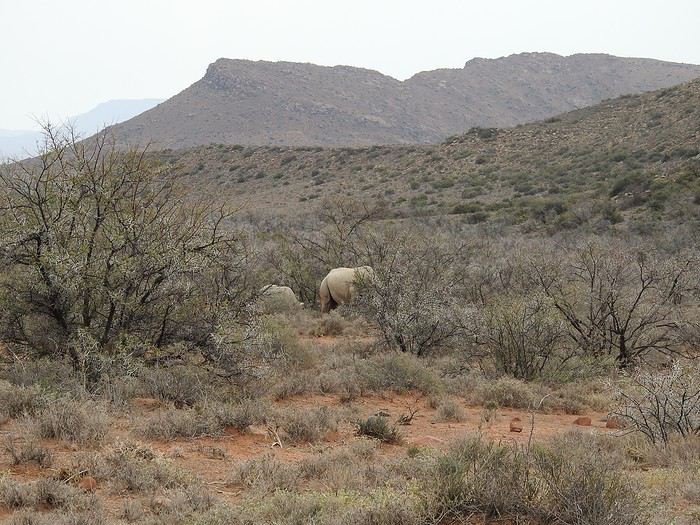
Must be around 5,000 photos to sort through!
Makes sense after 3 intense weeks in SA.
Anyway, to set the mood, here are a few photos... Well, yeah, they’re not amazing!
Suspense, suspense...
Sometimes a trip, a desire to travel, a travel dream... begins between the pages of a book.
These three invite you to Scotland, on the Isle of Lewis. And although they’re published by Babel Noir, Actes Sud’s collection dedicated to crime novels with a dark atmosphere, and even though each book features a crime to solve, these three stories go far beyond the genre.
The central character, Fin, a man who wasn’t gifted with lightness or whimsy at birth, used to be a cop. He isn’t anymore, having left the police after a personal tragedy... A crime with a modus operandi similar to a case he was handling brings him back to Lewis... He’ll stay there. Because the time seems right for him to retrace the steps of his own story... a story deeply rooted in this land of melancholic geography, this island battered and rebattered by the winds, frozen in the past, where beliefs and traditions endure, defying time.
This austere island where his tender years were bruised. This harsh land that closes in on the dead... and returns them to the living years later, when the time seems right for them to put their childhood to rest, by facing the figures and ghosts that once crossed it.
Past and present intertwine, the memories of one explaining and perhaps unraveling the shadows of the other... and it’s only by confronting the darkness that he’ll find a strength he didn’t know he had, one that may—likely will—help him overcome the unspeakable.
In each book, Peter May, like a historian and anthropologist rolled into one, explores a page of the past, highlighting some of Scotland’s darker chapters: the omnipresence of religion, the conflict between Protestants and Catholics, the rituals marking the passage into adulthood, the terrible fate of orphans... the shadowy corners of the human soul.
A poetic, dense, and minimalist writing style that cuts to the essence, with just the right words to describe childhood, solitude, second chances—those who offer them and those who seize them—the weight of things... and happiness sometimes so close yet not always allowed to be grasped.
Three intense stories set in the same landscape: nature ever-present, the icy dampness, the slippery machair, the dry peat that fuels the fires... and Gaelic, that language with its harsh, guttural, rugged sounds?... which isn’t pronounced exactly as it’s written.
Peter May The Scottish Trilogy, Complete edition by Éditions du Rouergue Or In paperback, Actes Sud publisher, Babel Noir collection 1/ The Blackhouse 2/ The Lewis Man 3/ The Chessmen
Hello,
We’re planning our trip for October 2017!! (Yes, it’s still far off—but planning it is already like a vacation.) We’re interested in the Ban Gioc Waterfalls, but I can’t quite make up my mind about them. Will there still be water in October? Is this stop worth it? (Even if there’s no water?) Thanks for your replies! Happy travels to everyone, Eric
We’re planning our trip for October 2017!! (Yes, it’s still far off—but planning it is already like a vacation.) We’re interested in the Ban Gioc Waterfalls, but I can’t quite make up my mind about them. Will there still be water in October? Is this stop worth it? (Even if there’s no water?) Thanks for your replies! Happy travels to everyone, Eric
Hi everyone 😉
I’m Sabrina, I’m French, and I’ve been a nurse for 5 years.......
I’d like to move to Marrakech and find a nursing job there.............. but I have no idea about the working conditions there, whether my diploma is recognized, or what the salary is like......
Thanks for shedding some light on this for me.......
I’m looking forward to your replies and advice on the steps to take......
hi
I just found out about a malaria treatment (prevention) that’s a small electrical device:
has anyone heard of it? tried it?
Thanks😎😎
Thanks😎😎
Hi everyone,
I’ve read the forum a lot and found a wealth of information. I’ve tried to compile all of it into our itinerary and would love your feedback to finalize the bookings (we’re planning this *very* last-minute).
Here’s what we’re thinking of doing: 22 July: arrival in Johannesburg Night of 22–23: Johannesburg Nights of 23–26: Marloth Park (with Kruger visits on the 24th, 25th, and a crossing visit on the 26th) Nights of 26–28: Graskop (visiting the canyon and Panorama Road on the 27th and 28th) Nights of 28–30: Hoedspruit (visiting the central area of Kruger on the 29th?) Nights of 30 July–1 August: Balule Park (private reserve with safari) Nights of 1–5 August: flight from Hoedspruit to Cape Town, then 2 days in Cape Town, 1 day on the peninsula, and 2 days for wine (just the route) or something else based on your advice (we don’t know where to stay—whether to stay all 5 nights in Cape Town and where in the city, or do 2 nights in Cape Town and 3 nights nearby—but where?) Night of 5–6 August: Kelders for penguins and whales Nights of 6–8 August: Tsitsikamma (what is there to do/see?) Nights of 8–10 August: Addo Park on the 9th 10 August: flight from Port Elizabeth to Johannesburg and back home
What do you think? Is there a lot of driving time?
We’d really appreciate your comments and suggestions. Thanks!
Nadia
Hello,
I’m planning and organizing a wonderful trip to Vietnam from mid-March to mid-April 2026, traveling independently for a month with my wife to enjoy her new retirement. Here’s a summary of our itinerary: We arrive in Ho Chi Minh City on the morning of Wednesday, March 18, and depart from Hanoi on the evening of Thursday, April 16. First, I’d like to head to Ho Chi Minh City because the temperatures are high in that region in mid-March. After that, we’ll visit Phu Quoc Island and then the Mekong Delta. We’ll return to Ho Chi Minh City and take a flight to Hue for 2 days, then Tam Coc / Ninh Binh (2-3 days), and Cat Ba Island with a visit to Lan Ha Bay (4 days). We’ll spend a few days in Hanoi, followed by 3-4 days in Sapa with some hikes, and then the Ha Giang loop (4 days). (I’m a motorcyclist—I ride a BMW trail bike and have taken care of renewing my international license.) We’re considering renting a motorcycle or bicycles when needed, except in Ho Chi Minh City and Hanoi. The weather in northern Vietnam in early April should theoretically be decent. Finally, we’ll return to Hanoi before heading back to Paris and the Pays de la Loire. Unfortunately, I’m skipping Angkor in Cambodia. I’d like to have a guide for 1 or 2 days in Sapa (which typical agency would you recommend?), and I’m wondering if I should book an agency for the 4 days in Ha Giang. I prefer my independence and don’t really like the "group" aspect of agencies. I’ll rent a 150cc motorcycle, and my wife will ride with me. Other questions: What are some good, typical accommodations to book in the places we’ve identified? Thanks for any info. Did I forget anything, or should we adjust our itinerary? Thanks for your help and advice. Pimarguibou
I’m planning and organizing a wonderful trip to Vietnam from mid-March to mid-April 2026, traveling independently for a month with my wife to enjoy her new retirement. Here’s a summary of our itinerary: We arrive in Ho Chi Minh City on the morning of Wednesday, March 18, and depart from Hanoi on the evening of Thursday, April 16. First, I’d like to head to Ho Chi Minh City because the temperatures are high in that region in mid-March. After that, we’ll visit Phu Quoc Island and then the Mekong Delta. We’ll return to Ho Chi Minh City and take a flight to Hue for 2 days, then Tam Coc / Ninh Binh (2-3 days), and Cat Ba Island with a visit to Lan Ha Bay (4 days). We’ll spend a few days in Hanoi, followed by 3-4 days in Sapa with some hikes, and then the Ha Giang loop (4 days). (I’m a motorcyclist—I ride a BMW trail bike and have taken care of renewing my international license.) We’re considering renting a motorcycle or bicycles when needed, except in Ho Chi Minh City and Hanoi. The weather in northern Vietnam in early April should theoretically be decent. Finally, we’ll return to Hanoi before heading back to Paris and the Pays de la Loire. Unfortunately, I’m skipping Angkor in Cambodia. I’d like to have a guide for 1 or 2 days in Sapa (which typical agency would you recommend?), and I’m wondering if I should book an agency for the 4 days in Ha Giang. I prefer my independence and don’t really like the "group" aspect of agencies. I’ll rent a 150cc motorcycle, and my wife will ride with me. Other questions: What are some good, typical accommodations to book in the places we’ve identified? Thanks for any info. Did I forget anything, or should we adjust our itinerary? Thanks for your help and advice. Pimarguibou
This catchy and somewhat mysterious title comes from several questions I’ve been asking myself.
VF has been back open for a reasonable number of weeks and months now. The number of visitors overall matches past averages, but the number of members online in the last 24 hours seems relatively lower than what we used to see.
Yet, to my surprise, I’m seeing fewer travel journals, way fewer messages, and way fewer questions. I don’t see many new registered users online, and I notice a number of members who are logged in but either aren’t participating or have stopped participating.
Something’s not adding up for me because, in my opinion, VF is still appealing, and I don’t see which other sites could really compete.
Was there a real break between pre- and post-Covid? Does it just take more time for some people to discover the site or learn that it’s active again? Do people now prefer quick consumption on sites like FB or others I’m not familiar with? Where have the site’s old-timers gone, and what are they doing with their time now? What’s really going on here?
Hi everyone,
We’re heading to Java and Bali this coming July/August with our daughters, aged 9 and 6.
We’d love to hear your thoughts on our itinerary. There are as many possible trips as there are travelers, and everyone will have their own preferences, but the goal is to get a general feel and see if there are any major incompatibilities or mistakes that could prevent us from making the most of this exceptional trip.
Here’s our plan:
Day 1: Arrival in Jakarta at 7 PM, overnight in Jakarta Day 2: Flight from Jakarta (8 AM) to Karimunjawa for rest and adjusting after the journey and time difference Day 3: Karimunjawa – beaches, snorkeling, boat trip to a deserted island Day 4: Karimunjawa – beaches, snorkeling, boat trip to a deserted island Day 5: Morning flight from Karimunjawa to Semarang, transfer to a guesthouse in Borobudur for rest and early night Day 6: Borobudur sunrise visit, transfer to Prambanan for a tour, then to a guesthouse in Yogyakarta Day 7: Train from Yogyakarta to Probolinggo, transfer to Cemoro Lawang for the night Day 8: Bromo sunrise hike, then trip to Kawah Ijen (Brondowoso or Banyuwangi depending on the tour, ideally arranged through our Yogyakarta guesthouse) for the night Day 9: Early morning hike up Kawah Ijen to avoid the heat (no blue flames with the kids), boat to Bali, transfer to Pejarakan for rest after three early mornings Day 10: Pejarakan/Menjangan – beach, snorkeling, boat trip to an island, diving, turtle arch (details to be confirmed) Day 11: Pejarakan/Menjangan – beach, snorkeling, boat trip to an island, diving, turtle arch (details to be confirmed), transfer to the Munduk area in the late afternoon Day 12: Munduk – lake and Ulun Danu Temple Day 13: Munduk/Jatiluwih, transfer to Amed in the late afternoon Day 14: Amed/Jemeluk – details to be confirmed, including sunrise at Mount Agung Day 15: Amed/Jemeluk – details to be confirmed, transfer to Keliki painting school in the Ubud area in the late afternoon Day 16: Keliki painting school activities/rice terraces/Tirta Empul (details to be confirmed) Day 17: Keliki painting school activities/rice terraces/Tirta Empul (details to be confirmed) Day 18: Ubud – Monkey Forest, overnight in Ubud Day 19: Ubud, transfer to Nusa Lembongan Day 20: Nusa Lembongan Day 21: Nusa Lembongan/Nusa Penida/Manta Point (details to be confirmed) Day 22: Nusa Lembongan/Nusa Penida/Manta Point (details to be confirmed) Day 23: Transfer from Lembongan to Gili Asahan via Gili Gede (1h20 + 30-minute boat ride) Day 24: Gili Asahan – beach, snorkeling, boat trip to a deserted island Day 25: Gili Asahan – beach, snorkeling, boat trip to a deserted island Day 26: Transfer from Gili Asahan to Serangan via Gili Gede (30 minutes + 2h15 boat ride), then from Serangan to Denpasar Airport, flight from Denpasar to Jakarta Day 27: Jakarta, then return flight at 7 PM
We chose Gili Asahan over the "other three Gili islands" based on recommendations from Lonely Planet and these sites: - www.onedayonetravel.com/...secrete-bali-lombok/ - petitesbullesdailleurs.fr/...i-asahan-ile-lombok/
Our goal is to end the trip in a beautiful, less touristy spot (only three accommodations on the island) known for its tranquility as of 2017, so it’s recent. With accommodation and boat transfers costing 950 € for three nights, we really don’t want to make a mistake!
Starting with Karimunjawa was a deliberate choice—it’s a quieter island, and we wanted a calm place to acclimate, rest after the long trip and work, before heading straight to Borobudur from Jakarta to avoid wasting time "in the city."
Given the events of the past two years, the distance, and our non-extendable vacation budget, we had to rule out Lombok, Flores, and Sulawesi, despite their many attractions.