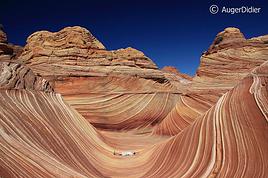
Hello! The itinerary is pretty much set for August 2026. Yeah, I know it’s gonna be *super* hot. But it’s the only time we can get away.
So, here’s the plan: Montpellier-CDG-Dallas.
Stay from July 31 to August 26, 2026:
Car rental – check,
Hotels – check,
Itinerary – almost check,
Photo gear – check,
Budget – check, 🤪
Meal planning – meh, we’ll see...
Walmart, of course, for the cooler when we arrive.
And now, without too much detail...
Fort Worth:
The Longhorns and the Stockyards;
JR’s ranch (for the missus);
Medal of Honor Museum – Arlington.
Houston and NASA Space Center:
See the Gulf of Mexico/America.
San Antonio and the missions.
Fort Stockton for an overnight stop.
El Paso via Guadalupe Mountains:
El Paso and White Sands.
Tucson and the Pima Air & Space Museum:
Tombstone, Bisbee.
Phoenix:
Still working on the program.
Sedona:
Round trip around the area via Flagstaff and Williams, or the Grand Canyon (already done) – we’ll decide on the spot.
Albuquerque:
Santa Fe,
Turquoise Trail,
Los Alamos.
Amarillo via Route 66:
Old Route 66 in the city;
Big Texas Ranch Steak 😏.
Dallas:
JFK Museum;
Perot Museum;
West End district.
And through it all – the road, the road, and more road!!!
We’ll adapt day by day based on our mental and physical state (we’re not exactly spring chickens).
Return to France: Dallas-Montpellier via CDG.
Cheers!
Hello, here’s a totally subjective recap of our 15-day road trip between Colorado and New Mexico, from late September to mid-October.
Our main interests are culture, museums, and landscapes—no hiking or trails for us. Personally, I’m pretty contemplative, and luckily, there’s always something to see out there! We’re pretty used to the US; we’ve been going there often for a long time (let’s just say we’re not exactly young anymore).
Budget: Even though we don’t set a strict budget beforehand, we try to keep costs as low as possible. This time, we managed to spend around 4000 € for two, all included. To do this: avoid expensive accommodations, staying between 60 and 120 € per night with an average of 90 €/night, mixing Airbnb and motels. And skip the “real” restaurants, which are pretty pricey in the US: sandwiches for lunch, takeout or cooking in the Airbnb in the evening. We shop at Sprouts or Whole Foods—organic-style chains that are pricier than Walmart but better. In the evenings, Sprouts has discounts on items that didn’t sell during the day. Also, avoid toll roads, paid parking, and overly expensive attractions or sites. The dispensary budget is separate…
Route: Denver/Colorado Springs/Alamosa/Raton/Santa Fe/Cuba/Cortez/Grand Junction/Glenwood Springs/Denver This wasn’t too planned in advance—we booked a few nights upon arrival and went with the flow. Flight from CDG to Denver with AF/Delta, car rental at Dollar for a standard SUV. The guy at the Dollar counter upsold me on extra insurance for flat tires (and since I knew we’d be off-roading, I took it). Without telling me, he upgraded me to a Jeep Sahara 4X4 Hybrid. Nice.
Listening to the news upon arrival, the anchor announced, “It’s officially fall now.” We hadn’t really thought about that before leaving, but yeah—it’s the time when the trees turn fluorescent yellow and red. Amazing.
Colorado Springs: Garden of the Gods is a free park with paved trails winding through red/orange rock formations. Magical at sunrise—groups of deer roam around, along with birds and rabbits. It’s small but wow! Didn’t try the Manitou Incline in Manitou Springs, a staircase with thousands of steps going straight up the mountain. Impressive from the bottom, but the parking is paid, which is a downside for those willing to tackle it. The Cog Railway goes up to the summit of Pikes Peak—around $100 when we were there. No thanks. And of course, the parking is paid too. For fans, Maggie’s Farm dispensary is great.
On Route 24, Eleven Mile Canyon Recreation Area is fly-fishing paradise—just like in the movie *A River Runs Through It*. Entry is $11, and a trail follows the river at the bottom of the canyon to the dam. Dozens of people in waders are in the water, casting their lines over and over. You can see the salmon in the clear water, and we had a picnic in the sun, imagining Brad Pitt catching a fish.
Buena Vista: A cute little tourist town with an Outdoor Fair that day—some pretty impressive vehicles for sale, set up for mountain living (like Juniper outfitting a RAM).
Alamosa: The closest town to Great Sand Dunes National Park, crossed by the Rio Grande (and let’s be real—it’s more of a stream than a river!). Park access was free because it was National Park Day. A park with massive dunes—climbing them is pretty exhausting, with lots of wind and sinking sand. Glad we didn’t do it in summer; I can’t imagine how tough it’d be in the heat. It’s a bit deceptive: it looks easy to get to the top of a dune, but it’s really not. The campsites were nice, and it was busy that weekend. We passed the “Point of No Return,” a sandy trail winding through the hills and connecting to Route 559 from above. Didn’t go all the way, but it’s possible the entrance is free from that side. However, you need a 4X4 with good ground clearance. After 1 or 2 km on the trail, you’re alone between the dunes and hills—hardly anyone around. But tricky to turn around or pass other vehicles; the trail isn’t wide. We crossed paths with a Hanomag (registered in the Netherlands—impressive!) coming down without stopping, or risking getting stuck.
On the way out, we took the small Route 403, which quickly turns into a trail crossing the mountain. Entire sections of forest were turning fluorescent yellow with patches of green and red—an incredible sight.
Raton: A small town that probably peaked in the late 19th century and has been in slow decline ever since. The Raton Pass Motor Inn is the kind of place that makes the US legendary—entirely 50s and 60s decor, really well done. I had the Betty Page room—too cool. Felt like we were on Route 66. Even better.
Santa Fe: A small city with no high-rises—almost all low-rise buildings, many in adobe, blending perfectly into the landscape. The old downtown is touristy but nice, with its plaza and church. There’s a really cool vibe—we loved it. For drinks, the bar at the top of La Fonda Hotel was packed for sunset, with a diverse crowd. Not overpriced for the location. SITE Santa Fe is a contemporary art space near the train station. It’s free, and the temporary exhibit was really good—high quality. Museum Hill is, as the name suggests, where several museums are located. We visited the Museum of Indian Art and Culture—great if you’re into “First Nations” history. Saw The Dandy Warhols at The Bridge—an outdoor venue, one of the last concerts of the season before winter makes it too cold. Oddly, there was no bag check, just an ID required (even though it was obvious we were over 21!). Tickets were reasonable, around $30 (concerts in the US can be crazy expensive). The band was good, with fewer than 300 people in front. A sign at the bar warned: Don’t forget you’re at 1,500 meters—alcohol hits harder up here!
Albuquerque: A sprawling city with an old historic center that feels a bit like Disneyland—too perfect for my taste. The real highlight is the Sandia Peak Tramway, which goes up to the old ski resort above the city. Tickets are around $35, and it’s worth it—the ride over the canyons is pretty wild. The ski resort is a bit abandoned; apparently, like elsewhere, there’s no snow anymore. I asked several people about the lack of snow, and the answer was always the same: “It’s cyclical.” Okay then. We arrived for the start of the International Balloon Fiesta (one of the world’s largest hot-air balloon gatherings), hoping to see hundreds of balloons in the sky. Nope—windy today, so no one took off. Bummer.
Las Vegas: New Mexico has its own Las Vegas, but it’s nothing like the other one—a sleepy little town with a perfectly preserved 19th-century Historic Plaza Hotel, brick buildings, and vintage streetlights. Everything is so well-preserved it’s often used as a filming location. NM attracts a lot of productions thanks to tax incentives and its Western landscapes—and it’s cheaper than California! That day, a huge Texas flag was flying in the wind: they were filming the second season of *Ransom Canyon* for Netflix in the town center. If we’d been dressed more “Western,” we could’ve been extras.
Jemez Springs: Its Jemez Hot Springs is super cute—several thermal pools at different temperatures, a New Age vibe. The pools are surrounded by big rocks, and you’re asked to speak softly. A place where you could spend hours. $50 for two hours for two.
Los Alamos: A town made legendary by the bomb, the movie, etc. Heads up: It’s still a research center, and to cross part of the town, you need to show ID. No stopping or taking photos allowed. Other than the Oppenheimer House (currently closed—only the neighboring house is open to visitors), there’s not much to see. There’s a replica of the camp entrance, but it’s been turned into restrooms.
Georgia O’Keeffe Trail (American painter, 1887–1986): Her museum in Santa Fe is pretty good, even if they don’t have tons of works. Entry is $20. Her house in Abiquiu is open for visits, but it’s way overpriced at $65. So we skipped it. You can get an idea of it by stopping at the Welcome Center on Route 84. Further down the same road, Ghost Ranch is worth a visit—beautiful setting, free to enter, with trails to explore and a great atmosphere.
Chaco Culture National Historical Park: A pretty isolated park—25 km of trails to get there, with only a small section paved. The road is decent except for the last few kilometers, which have potholes. I can’t imagine it being accessible after rain, though that doesn’t happen often! This park, in the middle of a desert plain with a few canyons, is one of the rare places where you can find multi-story structures from pre-Columbian civilizations—so, before the “current” tribes. But cruel disappointment: it’s been shut down for a few days. We met a Native ranger—tall, with long hair—who explained that even though he wasn’t being paid, he was still guarding the park and had closed all access to the sites. Darn. Turned around and headed back down the trail.
Same story in the next town, Aztec (a funny name, right?): Aztec Ruins National Monument was closed too.
We passed Ship Rock, the Navajo’s sacred mountain—really impressive. Couldn’t find a trail to get closer, but it’s better from a distance anyway! The town of Shiprock itself is pretty depressing—poor living conditions for some Natives, with rundown mobile homes and piles of junk cars.
Stopped in Cortez to visit Mesa Verde National Park. Ate at Denny’s—hadn’t been there in ages (though it’s the kind of place I should feel at home in!). The customers all looked like they’d stepped out of *The Addams Family*—a little creepy. Or funny, depending on your perspective. For Mesa Verde, after discussing it on this forum with the honorable member Caussat (who didn’t find it that amazing), we were on the fence. Problem solved: it was closed too. Back on the road.
Durango: Really nice with its Main Ave and its shops, cafés—touristy but with local life. Famous for its tourist train to Silverton, but we didn’t do it—way too expensive. Choice between a steam locomotive or diesel (which belches black, stinky smoke—yuck). The diesel should be replaced with electric as soon as they get the funds.
Million Dollar Highway: The road winds through the mountains, and every turn (and there are a lot) is breathtaking—unbelievable landscapes with fluorescent yellow, green, and snow-capped mountains. Just wow.
Silverton: A Western town nestled between two mountains, preserved in its original state despite the tourists arriving by train. Around it, abandoned mines and old wooden ties—must’ve been tough for the 19th-century miners.
Grand Junction: The city is surrounded by giant mesas—pretty impressive. The old downtown is *too* clean—almost sterile.
Colorado National Monument: Just outside the city, a winding road climbs between stunning canyons, with sweeping views of the valley. Entry was free that day due to the shutdown.
Route 330, which we took to get back to the highway, passes through a place called “Cowboy Country”—and it’s true. We saw guys in Stetsons with huge pickups, the road turned into a trail with cows wandering on it, and we had to honk to get them to move. The trail to I-70 was full of potholes—the 4X4 came in handy. Had a picnic by Vega Reservoir: the booth at the entrance was empty, but people left cash in envelopes for camping fees. Anyone passing by could’ve taken it, but it’s an example of US trust and honesty!
Glenwood Springs: A small town famous for its hot springs pool—they claim it’s the largest in the world. I don’t know about that, but it has a great look. Unfortunately, it was closed for maintenance those days! Blew our budget by staying at the Hotel Colorado, a huge 1893 building with a real atmosphere in its grand lobby and fake fireplaces. Fire pits in front of wooden chairs in the garden with mountain views—just really great.
Aspen: The billionaires’ ski resort, but surprisingly, parking was free for 2 hours. Rare to see a place for the super-rich that doesn’t scream “not for you” (like Palm Beach, for example). A former mining town completely redone, every shop occupied by a luxury brand. There’s even a thrift shop run by sweet retirees—funny as hell. Two ski lifts to start directly with your skis, but we didn’t see the price—they were still closed. Lots of houses that aren’t huge but are cute, though looking at real estate prices made us think, “Is there an extra zero on that listing?” A 6-bedroom villa for $52 million? Wow. The mountains around are gorgeous—no wonder it became what it is.
Another fancy resort nearby: Vail, more modern in its construction. The restaurants opted for a “Schwarzwald” decor—kind of odd.
Denver: Nothing really stood out for us in this city, except the Design Museum—the Kirkland, where a local painter collected furniture and supplies from Arts and Crafts to Postmodern. Just really great. Entry is included with a visit to the Denver Art Museum, which has diverse collections—from Impressionism (they have a Manet, a Van Gogh, a Cézanne, several Sisleys) to photography. The best part for me was the “Ancient Americas” totems—huge, impressive wooden sculptures, painted, the kind you’re more used to seeing in Polynesia or Easter Island. Personally, I didn’t know Natives made them too. That’s what museums are for!
Back at the airport, where I had to tag my own luggage (you have to do everything yourself with these US airlines). The tag said SLC/CDG! But we were supposed to connect through JFK. Turns out, they’d put us on a DEN/SLC/CDG flight without telling us. In the end, we gained 30 minutes on our original arrival time in Paris!
There you go—hope this inspires other travelers! !
Our main interests are culture, museums, and landscapes—no hiking or trails for us. Personally, I’m pretty contemplative, and luckily, there’s always something to see out there! We’re pretty used to the US; we’ve been going there often for a long time (let’s just say we’re not exactly young anymore).
Budget: Even though we don’t set a strict budget beforehand, we try to keep costs as low as possible. This time, we managed to spend around 4000 € for two, all included. To do this: avoid expensive accommodations, staying between 60 and 120 € per night with an average of 90 €/night, mixing Airbnb and motels. And skip the “real” restaurants, which are pretty pricey in the US: sandwiches for lunch, takeout or cooking in the Airbnb in the evening. We shop at Sprouts or Whole Foods—organic-style chains that are pricier than Walmart but better. In the evenings, Sprouts has discounts on items that didn’t sell during the day. Also, avoid toll roads, paid parking, and overly expensive attractions or sites. The dispensary budget is separate…
Route: Denver/Colorado Springs/Alamosa/Raton/Santa Fe/Cuba/Cortez/Grand Junction/Glenwood Springs/Denver This wasn’t too planned in advance—we booked a few nights upon arrival and went with the flow. Flight from CDG to Denver with AF/Delta, car rental at Dollar for a standard SUV. The guy at the Dollar counter upsold me on extra insurance for flat tires (and since I knew we’d be off-roading, I took it). Without telling me, he upgraded me to a Jeep Sahara 4X4 Hybrid. Nice.
Listening to the news upon arrival, the anchor announced, “It’s officially fall now.” We hadn’t really thought about that before leaving, but yeah—it’s the time when the trees turn fluorescent yellow and red. Amazing.
Colorado Springs: Garden of the Gods is a free park with paved trails winding through red/orange rock formations. Magical at sunrise—groups of deer roam around, along with birds and rabbits. It’s small but wow! Didn’t try the Manitou Incline in Manitou Springs, a staircase with thousands of steps going straight up the mountain. Impressive from the bottom, but the parking is paid, which is a downside for those willing to tackle it. The Cog Railway goes up to the summit of Pikes Peak—around $100 when we were there. No thanks. And of course, the parking is paid too. For fans, Maggie’s Farm dispensary is great.
On Route 24, Eleven Mile Canyon Recreation Area is fly-fishing paradise—just like in the movie *A River Runs Through It*. Entry is $11, and a trail follows the river at the bottom of the canyon to the dam. Dozens of people in waders are in the water, casting their lines over and over. You can see the salmon in the clear water, and we had a picnic in the sun, imagining Brad Pitt catching a fish.
Buena Vista: A cute little tourist town with an Outdoor Fair that day—some pretty impressive vehicles for sale, set up for mountain living (like Juniper outfitting a RAM).
Alamosa: The closest town to Great Sand Dunes National Park, crossed by the Rio Grande (and let’s be real—it’s more of a stream than a river!). Park access was free because it was National Park Day. A park with massive dunes—climbing them is pretty exhausting, with lots of wind and sinking sand. Glad we didn’t do it in summer; I can’t imagine how tough it’d be in the heat. It’s a bit deceptive: it looks easy to get to the top of a dune, but it’s really not. The campsites were nice, and it was busy that weekend. We passed the “Point of No Return,” a sandy trail winding through the hills and connecting to Route 559 from above. Didn’t go all the way, but it’s possible the entrance is free from that side. However, you need a 4X4 with good ground clearance. After 1 or 2 km on the trail, you’re alone between the dunes and hills—hardly anyone around. But tricky to turn around or pass other vehicles; the trail isn’t wide. We crossed paths with a Hanomag (registered in the Netherlands—impressive!) coming down without stopping, or risking getting stuck.
On the way out, we took the small Route 403, which quickly turns into a trail crossing the mountain. Entire sections of forest were turning fluorescent yellow with patches of green and red—an incredible sight.
Raton: A small town that probably peaked in the late 19th century and has been in slow decline ever since. The Raton Pass Motor Inn is the kind of place that makes the US legendary—entirely 50s and 60s decor, really well done. I had the Betty Page room—too cool. Felt like we were on Route 66. Even better.
Santa Fe: A small city with no high-rises—almost all low-rise buildings, many in adobe, blending perfectly into the landscape. The old downtown is touristy but nice, with its plaza and church. There’s a really cool vibe—we loved it. For drinks, the bar at the top of La Fonda Hotel was packed for sunset, with a diverse crowd. Not overpriced for the location. SITE Santa Fe is a contemporary art space near the train station. It’s free, and the temporary exhibit was really good—high quality. Museum Hill is, as the name suggests, where several museums are located. We visited the Museum of Indian Art and Culture—great if you’re into “First Nations” history. Saw The Dandy Warhols at The Bridge—an outdoor venue, one of the last concerts of the season before winter makes it too cold. Oddly, there was no bag check, just an ID required (even though it was obvious we were over 21!). Tickets were reasonable, around $30 (concerts in the US can be crazy expensive). The band was good, with fewer than 300 people in front. A sign at the bar warned: Don’t forget you’re at 1,500 meters—alcohol hits harder up here!
Albuquerque: A sprawling city with an old historic center that feels a bit like Disneyland—too perfect for my taste. The real highlight is the Sandia Peak Tramway, which goes up to the old ski resort above the city. Tickets are around $35, and it’s worth it—the ride over the canyons is pretty wild. The ski resort is a bit abandoned; apparently, like elsewhere, there’s no snow anymore. I asked several people about the lack of snow, and the answer was always the same: “It’s cyclical.” Okay then. We arrived for the start of the International Balloon Fiesta (one of the world’s largest hot-air balloon gatherings), hoping to see hundreds of balloons in the sky. Nope—windy today, so no one took off. Bummer.
Las Vegas: New Mexico has its own Las Vegas, but it’s nothing like the other one—a sleepy little town with a perfectly preserved 19th-century Historic Plaza Hotel, brick buildings, and vintage streetlights. Everything is so well-preserved it’s often used as a filming location. NM attracts a lot of productions thanks to tax incentives and its Western landscapes—and it’s cheaper than California! That day, a huge Texas flag was flying in the wind: they were filming the second season of *Ransom Canyon* for Netflix in the town center. If we’d been dressed more “Western,” we could’ve been extras.
Jemez Springs: Its Jemez Hot Springs is super cute—several thermal pools at different temperatures, a New Age vibe. The pools are surrounded by big rocks, and you’re asked to speak softly. A place where you could spend hours. $50 for two hours for two.
Los Alamos: A town made legendary by the bomb, the movie, etc. Heads up: It’s still a research center, and to cross part of the town, you need to show ID. No stopping or taking photos allowed. Other than the Oppenheimer House (currently closed—only the neighboring house is open to visitors), there’s not much to see. There’s a replica of the camp entrance, but it’s been turned into restrooms.
Georgia O’Keeffe Trail (American painter, 1887–1986): Her museum in Santa Fe is pretty good, even if they don’t have tons of works. Entry is $20. Her house in Abiquiu is open for visits, but it’s way overpriced at $65. So we skipped it. You can get an idea of it by stopping at the Welcome Center on Route 84. Further down the same road, Ghost Ranch is worth a visit—beautiful setting, free to enter, with trails to explore and a great atmosphere.
Chaco Culture National Historical Park: A pretty isolated park—25 km of trails to get there, with only a small section paved. The road is decent except for the last few kilometers, which have potholes. I can’t imagine it being accessible after rain, though that doesn’t happen often! This park, in the middle of a desert plain with a few canyons, is one of the rare places where you can find multi-story structures from pre-Columbian civilizations—so, before the “current” tribes. But cruel disappointment: it’s been shut down for a few days. We met a Native ranger—tall, with long hair—who explained that even though he wasn’t being paid, he was still guarding the park and had closed all access to the sites. Darn. Turned around and headed back down the trail.
Same story in the next town, Aztec (a funny name, right?): Aztec Ruins National Monument was closed too.
We passed Ship Rock, the Navajo’s sacred mountain—really impressive. Couldn’t find a trail to get closer, but it’s better from a distance anyway! The town of Shiprock itself is pretty depressing—poor living conditions for some Natives, with rundown mobile homes and piles of junk cars.
Stopped in Cortez to visit Mesa Verde National Park. Ate at Denny’s—hadn’t been there in ages (though it’s the kind of place I should feel at home in!). The customers all looked like they’d stepped out of *The Addams Family*—a little creepy. Or funny, depending on your perspective. For Mesa Verde, after discussing it on this forum with the honorable member Caussat (who didn’t find it that amazing), we were on the fence. Problem solved: it was closed too. Back on the road.
Durango: Really nice with its Main Ave and its shops, cafés—touristy but with local life. Famous for its tourist train to Silverton, but we didn’t do it—way too expensive. Choice between a steam locomotive or diesel (which belches black, stinky smoke—yuck). The diesel should be replaced with electric as soon as they get the funds.
Million Dollar Highway: The road winds through the mountains, and every turn (and there are a lot) is breathtaking—unbelievable landscapes with fluorescent yellow, green, and snow-capped mountains. Just wow.
Silverton: A Western town nestled between two mountains, preserved in its original state despite the tourists arriving by train. Around it, abandoned mines and old wooden ties—must’ve been tough for the 19th-century miners.
Grand Junction: The city is surrounded by giant mesas—pretty impressive. The old downtown is *too* clean—almost sterile.
Colorado National Monument: Just outside the city, a winding road climbs between stunning canyons, with sweeping views of the valley. Entry was free that day due to the shutdown.
Route 330, which we took to get back to the highway, passes through a place called “Cowboy Country”—and it’s true. We saw guys in Stetsons with huge pickups, the road turned into a trail with cows wandering on it, and we had to honk to get them to move. The trail to I-70 was full of potholes—the 4X4 came in handy. Had a picnic by Vega Reservoir: the booth at the entrance was empty, but people left cash in envelopes for camping fees. Anyone passing by could’ve taken it, but it’s an example of US trust and honesty!
Glenwood Springs: A small town famous for its hot springs pool—they claim it’s the largest in the world. I don’t know about that, but it has a great look. Unfortunately, it was closed for maintenance those days! Blew our budget by staying at the Hotel Colorado, a huge 1893 building with a real atmosphere in its grand lobby and fake fireplaces. Fire pits in front of wooden chairs in the garden with mountain views—just really great.
Aspen: The billionaires’ ski resort, but surprisingly, parking was free for 2 hours. Rare to see a place for the super-rich that doesn’t scream “not for you” (like Palm Beach, for example). A former mining town completely redone, every shop occupied by a luxury brand. There’s even a thrift shop run by sweet retirees—funny as hell. Two ski lifts to start directly with your skis, but we didn’t see the price—they were still closed. Lots of houses that aren’t huge but are cute, though looking at real estate prices made us think, “Is there an extra zero on that listing?” A 6-bedroom villa for $52 million? Wow. The mountains around are gorgeous—no wonder it became what it is.
Another fancy resort nearby: Vail, more modern in its construction. The restaurants opted for a “Schwarzwald” decor—kind of odd.
Denver: Nothing really stood out for us in this city, except the Design Museum—the Kirkland, where a local painter collected furniture and supplies from Arts and Crafts to Postmodern. Just really great. Entry is included with a visit to the Denver Art Museum, which has diverse collections—from Impressionism (they have a Manet, a Van Gogh, a Cézanne, several Sisleys) to photography. The best part for me was the “Ancient Americas” totems—huge, impressive wooden sculptures, painted, the kind you’re more used to seeing in Polynesia or Easter Island. Personally, I didn’t know Natives made them too. That’s what museums are for!
Back at the airport, where I had to tag my own luggage (you have to do everything yourself with these US airlines). The tag said SLC/CDG! But we were supposed to connect through JFK. Turns out, they’d put us on a DEN/SLC/CDG flight without telling us. In the end, we gained 30 minutes on our original arrival time in Paris!
There you go—hope this inspires other travelers! !
I'm struggling to fit everything into my West US itinerary (it's here!) and one way to relax it could be to skip Mesa Verde.
I quite liked it, but nothing more (I was actually pretty indifferent to Canyon de Chelly too). My partner hasn’t been there yet (first trip to the US, aside from a stay in NYC).
Any arguments for or against? Thanks in advance :)
I quite liked it, but nothing more (I was actually pretty indifferent to Canyon de Chelly too). My partner hasn’t been there yet (first trip to the US, aside from a stay in NYC).
Any arguments for or against? Thanks in advance :)
Hi everyone,
I’m planning to visit Monument Valley next Saturday after 3 days at the Grand Canyon. I saw on navajonationparks.org that some roads can be tricky during rainy periods. Is anyone there right now who could tell me what the road conditions are like in the park and whether it’s impassable with a regular rental car?
Thanks so much in advance,
Ruby
Hi everyone,
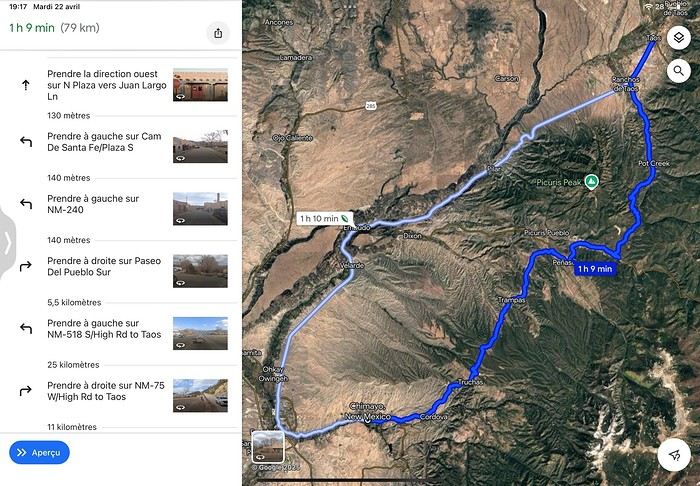
For our leg from Taos to Albuquerque, we have two options with roughly the same mileage and driving time:
Either the light blue route (NM 518 then NM 76)
or the dark blue route (NM 68), which would let us visit the Embudo Gas Museum.
We’d love to stop at the Chimayó Sanctuary if it’s worth the small detour.
We’ll have already taken NM 518 from Las Vegas to Taos.
Which route is prettier and has the most points of interest?
Afterward, we’ll take the Turquoise Trail between Santa Fe and Albuquerque.
Thanks for your input!
Marcalamar :)
Hi everyone,
We’ve made up our minds—this summer, we’re heading back to the USA. Our last trip to the American West was in 2017. Back then, I planned my itinerary with help from this forum, and it was perfect.
I’ve drawn inspiration from a few travel journals and some really interesting websites to sketch out a rough route.
I’d love to hear your thoughts on this itinerary.
Let me know if I’ve missed any cool stops along the way or if some things seem unnecessary.
My husband and I love hiking, nature, and photography, but we’re not into museums and aren’t big fans of cities.
We’ve sorted our ESTA, checked out hotels, and already booked some with cancellation options. All that’s left is the flight tickets and renting a vehicle.
If you’ve got any tips or great deals, we’d love to hear them. Thanks to anyone who takes the time to share their thoughts!
USA ITINERARY, DENVER/DENVER LOOP, YELLOWSTONE 2025
DAY 1: FLIGHT FROM MARSEILLE, ARRIVAL IN DENVER Arrival in Denver / pick up rental vehicle /
Estes Park, Rocky Mountain (note: a permit is required)
DAY 2: ESTES PARK / ROCKY MOUNTAIN
Rocky Mountain
DAY 3: ROCKY MOUNTAIN / CHEYENNE / FORT LARAMIE / CUSTER
Cheyenne (giant boots, The Wranglers store) Fort Laramie Custer and its Bison statues, Wyoming State Museum (free) Custer State Park
DAY 4: CUSTER, BADLANDS NATIONAL PARK
Crazy Horse Memorial Mount Rushmore Rapid City (Chapel in the Hills, Presidents’ statues) – hometown of Calamity Jane and Wild Bill Badlands National Park
DAY 5: BADLANDS NATIONAL PARK
Badlands National Park Wall Drugstore (Wall Drug)
DAY 6: WALL / SHERIDAN
Devil’s Tower (1 hour) Buffalo, quick stop Deadwood, an old gold rush town with a well-restored downtown
DAY 7: SHERIDAN / COOKE CITY
Bighorn National Forest Bighorn National Recreation Area (secret arch to find) Chief Joseph Highway, stop at Indian Summit Cody, hometown of Buffalo Bill
DAY 8: COOKE CITY / YELLOWSTONE
Roosevelt Mammoth Hot Springs Norris Basin Lake Village
DAY 9: YELLOWSTONE
Canyon Village South and North Rim Mud Volcano Lake Village
DAY 10: YELLOWSTONE
Lake Village Madison via Norris Basin, Porcelain Basin Old Faithful, Firehole, Midway Basin
DAY 11: YELLOWSTONE
Old Faithful
DAY 12: YELLOWSTONE
Old Faithful West Basin
DAY 13: YELLOWSTONE / GRAND TETON
Grand Teton via the West on Teton Park Road
DAY 14: MORAN / MANILA
Grand Teton via the East route Pilot Butte (wild horses, pronghorns) Rock Springs Red Canyon (visitor center, well-maintained loop)
DAY 15: MANILA / VERNAL
Rock Springs Flaming Gorge National Recreation Area Dinosaur National Monument
DAY 16: VERNAL
Dinosaur National Monument
DAY 17: VERNAL / GRAND JUNCTION
Fantasy Canyon (2 hours) Colorado National Monument West entrance
DAY 18: GRAND JUNCTION / MONTROSE
Colorado National Monument East entrance Black Canyon of the Gunnison Crested Butte (lovely spot)
DAY 19: MONTROSE / ALAMOSA
Black Canyon of the Gunnison (3 hours) Great Sand Dunes National Park
DAY 20: ALAMOSA / COLORADO SPRINGS
Great Sand Dunes National Park Paint Mines Interpretive Park (2 hours) Garden of the Gods in downtown Colorado Springs
DAY 21: COLORADO SPRINGS / SILVERTHORNE OR DENVER
Bass Pro Shop (outdoor gear store) Outlets in Silverthorne or visit Denver
DAY 22: SILVERTHORNE OR DENVER
Wash the vehicle / fill up with gas
Flight departure at 4:30 PM (tentative)
DAY 23: ARRIVAL HOME Arrival in Marseille at 11:15 AM (tentative), then back home
DAY 24: BACK TO WORK!!!
If you’ve got any tips or great deals, we’d love to hear them. Thanks to anyone who takes the time to share their thoughts!
USA ITINERARY, DENVER/DENVER LOOP, YELLOWSTONE 2025
DAY 1: FLIGHT FROM MARSEILLE, ARRIVAL IN DENVER Arrival in Denver / pick up rental vehicle /
Estes Park, Rocky Mountain (note: a permit is required)
DAY 2: ESTES PARK / ROCKY MOUNTAIN
Rocky Mountain
DAY 3: ROCKY MOUNTAIN / CHEYENNE / FORT LARAMIE / CUSTER
Cheyenne (giant boots, The Wranglers store) Fort Laramie Custer and its Bison statues, Wyoming State Museum (free) Custer State Park
DAY 4: CUSTER, BADLANDS NATIONAL PARK
Crazy Horse Memorial Mount Rushmore Rapid City (Chapel in the Hills, Presidents’ statues) – hometown of Calamity Jane and Wild Bill Badlands National Park
DAY 5: BADLANDS NATIONAL PARK
Badlands National Park Wall Drugstore (Wall Drug)
DAY 6: WALL / SHERIDAN
Devil’s Tower (1 hour) Buffalo, quick stop Deadwood, an old gold rush town with a well-restored downtown
DAY 7: SHERIDAN / COOKE CITY
Bighorn National Forest Bighorn National Recreation Area (secret arch to find) Chief Joseph Highway, stop at Indian Summit Cody, hometown of Buffalo Bill
DAY 8: COOKE CITY / YELLOWSTONE
Roosevelt Mammoth Hot Springs Norris Basin Lake Village
DAY 9: YELLOWSTONE
Canyon Village South and North Rim Mud Volcano Lake Village
DAY 10: YELLOWSTONE
Lake Village Madison via Norris Basin, Porcelain Basin Old Faithful, Firehole, Midway Basin
DAY 11: YELLOWSTONE
Old Faithful
DAY 12: YELLOWSTONE
Old Faithful West Basin
DAY 13: YELLOWSTONE / GRAND TETON
Grand Teton via the West on Teton Park Road
DAY 14: MORAN / MANILA
Grand Teton via the East route Pilot Butte (wild horses, pronghorns) Rock Springs Red Canyon (visitor center, well-maintained loop)
DAY 15: MANILA / VERNAL
Rock Springs Flaming Gorge National Recreation Area Dinosaur National Monument
DAY 16: VERNAL
Dinosaur National Monument
DAY 17: VERNAL / GRAND JUNCTION
Fantasy Canyon (2 hours) Colorado National Monument West entrance
DAY 18: GRAND JUNCTION / MONTROSE
Colorado National Monument East entrance Black Canyon of the Gunnison Crested Butte (lovely spot)
DAY 19: MONTROSE / ALAMOSA
Black Canyon of the Gunnison (3 hours) Great Sand Dunes National Park
DAY 20: ALAMOSA / COLORADO SPRINGS
Great Sand Dunes National Park Paint Mines Interpretive Park (2 hours) Garden of the Gods in downtown Colorado Springs
DAY 21: COLORADO SPRINGS / SILVERTHORNE OR DENVER
Bass Pro Shop (outdoor gear store) Outlets in Silverthorne or visit Denver
DAY 22: SILVERTHORNE OR DENVER
Wash the vehicle / fill up with gas
Flight departure at 4:30 PM (tentative)
DAY 23: ARRIVAL HOME Arrival in Marseille at 11:15 AM (tentative), then back home
DAY 24: BACK TO WORK!!!
Hi there,
I know these aren’t the most popular destinations on the forum, but I thought I’d give it a shot.
I’d love to do a road trip loop next April, and I really want to visit Nashville and Memphis first.
Browsing the forum, I saw that Atlanta / Memphis / Nashville / Charlotte / Charleston / Savannah / Atlanta might be a good route. But I’m only planning to go for 14 days, and it seems like that might be too much. What do you think?
I mostly want to enjoy the music scene in the area and pass through the Smoky Mountains. I know I won’t have much time to stop for hiking, but oh well...
I’m saving Louisiana and New Orleans for another trip.
Thanks to anyone who can help me map out my route and make the most of this part of the U.S. that I don’t know at all yet.
Hi everyone,
After already exploring the West, which was amazing, I’ve got a new plan—I’d like to visit Texas and Tennessee.
I want to start in Las Vegas, revisit Monument Valley, and head toward Dallas, stopping in Albuquerque and other cool spots along the way.
Then, I’ll leave Dallas for Nashville, with several stops in between—any suggestions on where to go?
Do you think 20 days is enough for this trip?
Thanks for your input!
Hello everyone, and a big THANK YOU to all the travelers who took the time to reply to my last post and tell me that doing South India in 28 days was a sweet utopia. My dear friends, you were absolutely right.
After 4 days in Goa, I settled for exploring all of Karnataka and its beautiful UNESCO-listed temples, and I loved it.
Kerala and Tamil Nadu will have to wait until next year when I can take 6 weeks off.
But the purpose of this post is to ask you which guide or website would be best to prepare for the BLUES TRAIL I’d like to do in September or October 2025 over a month: 3 weeks to travel the route, enjoy Nashville a bit too, and the last week to explore Louisiana. I saw that *Le Routard* has a guide on Louisiana. Where else can I find more info?
Thanks so much for your help. Take care of yourselves and happy travels. Régine
But the purpose of this post is to ask you which guide or website would be best to prepare for the BLUES TRAIL I’d like to do in September or October 2025 over a month: 3 weeks to travel the route, enjoy Nashville a bit too, and the last week to explore Louisiana. I saw that *Le Routard* has a guide on Louisiana. Where else can I find more info?
Thanks so much for your help. Take care of yourselves and happy travels. Régine
Hi there,
The first stop on our trip is Memphis. How much time should we spend there to see the must-see spots?
Of course, I’m thinking of Elvis Presley’s house, but I don’t think Memphis is just about that.
Any suggestions for accommodation for 4 people?
Thanks for your feedback!
Hi everyone.
I assume many of you already know, but the America the Beautiful annual pass, which was $80, will increase to $250 starting January 1, 2026.
So if you're planning to travel before the end of December 2026, it's in your best interest to buy your pass in December 2025, since it will still cost $80 and be valid until the end of December 2026 if you purchase it in December 2025.
This price increase only applies to non-U.S. residents.
Additionally, for those who planned to visit just one park, a $100 surcharge per person will apply to access a list of 11 national parks... For example, if there are 4 of you in a car, you’ll have to pay $35 + $400, which comes to $435 to visit one of the 11 parks on the list (I don’t have all of them... Bryce, Zion, Grand Canyon, Yellowstone, Grand Teton, etc.). Total madness.
The goal is to push people who only visit one park into buying the annual pass.
Last point: free entry days are over for non-residents!
That’s all for now.
I assume many of you already know, but the America the Beautiful annual pass, which was $80, will increase to $250 starting January 1, 2026.
So if you're planning to travel before the end of December 2026, it's in your best interest to buy your pass in December 2025, since it will still cost $80 and be valid until the end of December 2026 if you purchase it in December 2025.
This price increase only applies to non-U.S. residents.
Additionally, for those who planned to visit just one park, a $100 surcharge per person will apply to access a list of 11 national parks... For example, if there are 4 of you in a car, you’ll have to pay $35 + $400, which comes to $435 to visit one of the 11 parks on the list (I don’t have all of them... Bryce, Zion, Grand Canyon, Yellowstone, Grand Teton, etc.). Total madness.
The goal is to push people who only visit one park into buying the annual pass.
Last point: free entry days are over for non-residents!
That’s all for now.
I'm thinking of going to Miami at the end of January for 10 days. What do you recommend I see, where to stay, etc.? I'm open to all suggestions. Thanks!
Corinne
Hi everyone,
I’m planning a road trip along the American West Coast in July 25 and, of course, I’d love to visit the parks east of Las Vegas. The crowds—but especially the heat—are making me second-guess whether it’s a good idea (the parks). I’d really appreciate your (honest!) feedback from those who’ve been there. Is the experience ruined? Maybe it’s manageable (early morning visits)? I have no doubt the scenery will be breathtaking, but does the context let you fully enjoy it? Thanks so much in advance for sharing your thoughts!
Hi there,
We’d like to explore New Orleans on our own. Travel agencies keep pushing car rentals, but we’d rather get around using public transportation. Any tips would be much appreciated!
Chantal
Hi,
we’re planning to visit Bryce and Zion from Page—what order do you think works best?
Given our schedule, we’ll be leaving Page on a Sunday early afternoon.
We were thinking of heading to Bryce first (are there a lot of "photo stops"?) to spend the night there. We’ve got a slight preference for Bryce as our first road trip stop and were planning to spend all day Monday there. Is that too much time for Bryce?
Then on Tuesday, we’d like to get closer to Zion, drive through it, and head back to Vegas—is that doable? What else could we fit in that day with a return to Las Vegas?
Thanks in advance for your tips!
Hi,
Do you think 8 days is enough to visit Philadelphia, especially the Rocky spots (my son is a huge fan), and the White House in Washington? For mid-April or mid-July.
Thanks
Hello,
I have the chance to visit Boston for the holidays and I'm looking for accommodation. Any neighborhoods you’d recommend?
We’ll be there for about ten days and can rent a car or use public transit if needed. What do you suggest in the area? For now, we’re sticking to the city and will decide based on the weather.
See you soon,
I have the chance to visit Boston for the holidays and I'm looking for accommodation. Any neighborhoods you’d recommend?
We’ll be there for about ten days and can rent a car or use public transit if needed. What do you suggest in the area? For now, we’re sticking to the city and will decide based on the weather.
See you soon,
Hi everyone! 🙂
Just a quick question about King Canyon and Sequoia National Park.
Before our night in Miramonte, we plan to visit King Canyon. The next stop will be two nights in Three Rivers to explore Sequoia National Park. I wanted to go all the way to Roaring River Falls on the King Canyon Scenic Byway and then turn back to head to Miramonte. Since we’re coming from Oakhurst, Google Maps says it’s 300 km and 5 hours of driving. Since we also want to hike to see the sequoias (Big Stump Area and Grand Grove) before tackling the King Canyon Scenic Byway, the timing’s going to be tight. How far do you recommend going before turning back to miss as few points of interest as possible on the King Canyon Scenic Byway? Thanks for your advice, and have a great evening!
Marcalamar 🙂
Good evening, everyone! 🙂
Just a few last questions to wrap up our Lake Tahoe visit plans.
**Parking:** We’d like to walk to Eagle Falls and then Eagle Lake. I’ve spotted two parking lots that seem close to each other and give access to the trailhead. Where and how do we pay for entry to Emerald Bay State Park and Inspiration Point?
**Viewpoints on the East Side:** Are most of the viewpoints (Balancing Rock, Granite Cave, Bonsai Rock, etc.) right by the road, or do you have to hike to reach them?
**Donner Memorial State Park:** Is it worth making a detour to Truckee to visit this park and the Truckee historic downtown?
Thanks in advance for your tips! 🙂
**Parking:** We’d like to walk to Eagle Falls and then Eagle Lake. I’ve spotted two parking lots that seem close to each other and give access to the trailhead. Where and how do we pay for entry to Emerald Bay State Park and Inspiration Point?
**Viewpoints on the East Side:** Are most of the viewpoints (Balancing Rock, Granite Cave, Bonsai Rock, etc.) right by the road, or do you have to hike to reach them?
**Donner Memorial State Park:** Is it worth making a detour to Truckee to visit this park and the Truckee historic downtown?
Thanks in advance for your tips! 🙂
We’re leaving LA on July 4th (early if needed) to head to the Grand Canyon and arrive the next day in the early afternoon to start sightseeing.
Since it’s a 10-hour drive, that leaves us half a day to explore. I don’t want to rush, so we won’t try to see everything.
Any tips on what to prioritize, especially if we want to enjoy July 4th? For example, there’s the solar-cooked egg contest in Oatman. Or any other must-see quirks along this route on July 4th?
Thanks in advance
Since it’s a 10-hour drive, that leaves us half a day to explore. I don’t want to rush, so we won’t try to see everything.
Any tips on what to prioritize, especially if we want to enjoy July 4th? For example, there’s the solar-cooked egg contest in Oatman. Or any other must-see quirks along this route on July 4th?
Thanks in advance
Hi everyone! 🙂
I’m almost done planning our September road trip. After our 3-night visit to Sequoia, we’ll have a stopover night in Coalinga (to break up the drive). We’ll be staying two nights in Monterey and would like to stop along the way to visit one side of Pinnacles National Park. We’re torn between the West entrance and the East entrance, and we’d like to do a short hike of no more than 2 hours since we don’t want to arrive too late in Monterey.
This park is split into two distinct zones with no connection between them, and the mileage from Coalinga to Monterey is pretty much the same for both. Which area do you recommend visiting—east or west? And which route is the most scenic?
I’ve spotted two short hikes: - East: Moses Spring to Rim Trail Loop - West: Balconies Cliffs Cave Loop
Has anyone been there, or do you have another hike to suggest?
Thanks in advance, and have a great afternoon! Marcalamar 🙂
I’m almost done planning our September road trip. After our 3-night visit to Sequoia, we’ll have a stopover night in Coalinga (to break up the drive). We’ll be staying two nights in Monterey and would like to stop along the way to visit one side of Pinnacles National Park. We’re torn between the West entrance and the East entrance, and we’d like to do a short hike of no more than 2 hours since we don’t want to arrive too late in Monterey.
This park is split into two distinct zones with no connection between them, and the mileage from Coalinga to Monterey is pretty much the same for both. Which area do you recommend visiting—east or west? And which route is the most scenic?
I’ve spotted two short hikes: - East: Moses Spring to Rim Trail Loop - West: Balconies Cliffs Cave Loop
Has anyone been there, or do you have another hike to suggest?
Thanks in advance, and have a great afternoon! Marcalamar 🙂
Hello,
I’m currently looking for well-located hotels near points of interest in the cities below. I’ve found a few, but the prices are really high. Could any of you share some great addresses in the following cities? - Los Angeles - Las Vegas - San Francisco
Also, do you have a preferred airline for domestic flights? If so, which one?
Thanks so much, and have a great day, everyone!
Gertjan
I’m currently looking for well-located hotels near points of interest in the cities below. I’ve found a few, but the prices are really high. Could any of you share some great addresses in the following cities? - Los Angeles - Las Vegas - San Francisco
Also, do you have a preferred airline for domestic flights? If so, which one?
Thanks so much, and have a great day, everyone!
Gertjan
Hi there,
We’re planning a trip in August 2025 with two kids (8 and 11 years old) in a camper van through the American West.
Any tips for renting a van? (I’ve started looking, and it seems really expensive—August probably doesn’t help...) But it’ll still be cheaper and more nature-focused than motels...
We’re considering this route: Salt Lake City - Great Salt Lake - Yellowstone - Grand Teton, then heading back down toward Lake Tahoe, Yosemite (Sequoia Park if we have time), and San Francisco.
Do you think this is doable? Any suggestions for other sites to visit?
Also, any recommendations for campgrounds in these areas?
Thanks in advance!
Hi there! 🙂
I'm taking it slow—I'm only on day 5 of my Tucson to Bisbee leg.
We'd like to stop in Tombstone along the way. I've spotted Boot Hill Cemetery, the Tombstone Courthouse State Historic Park, and around the visitor center: the O.K. Corral, Tombstone Historama, the Tombstone Epitaph, the Bird Cage Theatre, and the Crystal Palace Saloon. Is everything worth visiting, and is parking easy in Tombstone? If anyone has parking recommendations, I'd love to hear them. Thanks in advance!
As for Bisbee, I've noted the Queen Mine Tour, the Great Bisbee Stairs Climb, and the downtown tour. Outside of town, there's the Lavender Pit. Any other suggestions for things to check out?
Thanks so much! Marcalamar 🙂
I'm taking it slow—I'm only on day 5 of my Tucson to Bisbee leg.
We'd like to stop in Tombstone along the way. I've spotted Boot Hill Cemetery, the Tombstone Courthouse State Historic Park, and around the visitor center: the O.K. Corral, Tombstone Historama, the Tombstone Epitaph, the Bird Cage Theatre, and the Crystal Palace Saloon. Is everything worth visiting, and is parking easy in Tombstone? If anyone has parking recommendations, I'd love to hear them. Thanks in advance!
As for Bisbee, I've noted the Queen Mine Tour, the Great Bisbee Stairs Climb, and the downtown tour. Outside of town, there's the Lavender Pit. Any other suggestions for things to check out?
Thanks so much! Marcalamar 🙂
Hi everyone,
Let me introduce myself. I’m 45 and traveling with my husband and my daughter, who’ll be 17 soon. We’re used to road-trip-style vacations, in the US or elsewhere. This will be our 5th trip to the US. We’ve already visited several states: New York, Massachusetts, Rhode Island, Washington DC, Florida, Wyoming, South Dakota, California, Utah, Nevada, and Arizona. I’d like to plan another trip starting from Denver to Colorado and New Mexico, which we haven’t explored yet, with a stop in a part of Arizona we haven’t visited before. So, I’d love to hear your thoughts on this itinerary if you’re familiar with the area. We’ll be traveling in the summer of 2026—admittedly not the best time for this route, but it’s the only time we can all get away for long enough. I’m also tied to the dates for Cheyenne Frontier Days, which we want to attend at the start of the trip. Thanks in advance for your input!
Day 1: Departure from Frankfurt > Arrival in Denver around 3 PM. Night in Denver
Day 2: Denver > Cheyenne Quick visit to Denver Drive to Cheyenne in the late afternoon 2-hour drive Night in Cheyenne Day 3: Cheyenne Frontier Days Night in Cheyenne
Day 4: Cheyenne > Estes Park (Rocky Mountains) Frontier Days during the day. Departure in the late afternoon for Estes Park 2-hour drive Night in Estes Park
Day 5: Hiking in the Rocky Mountains Nights in Estes Park
Day 6: Estes Park > Glenwood Springs We’ll take the day to drive the scenic route and stop at various viewpoints. Night in Glenwood Springs
Day 7: Glenwood Springs Hiking the Hanging Lake Trail + relaxing in the hot springs Night in Glenwood Springs
Day 8: Glenwood Springs > Montrose Visit Colorado NM along the way 3.5-hour drive Night in Montrose
Day 9: Black Canyon Night in Montrose
Day 10: Montrose > Farmington Visit Durango (without taking the train), Ouray, or Silverton along the way? 3.5-hour drive Night in Farmington
Day 11: Farmington > Chinle Bisti Badlands until early afternoon 3-hour drive Night in Chinle
Day 12: Chinle > Sedona Canyon de Chelly in the morning 4-hour drive Night in Sedona
Day 13 - 14: Hiking in Sedona Nights in Sedona
Day 15: Sedona > Tucson Saguaro West Park 3.5-hour drive Night at a ranch in Tucson
Day 16 - 17: Tucson City visit in the morning + ranch activities in the afternoon Nights at a ranch in Tucson
Day 18: > Wilcox Chiricahua NP 1-hour drive Night in Wilcox
Day 19: Wilcox > Alamogordo White Sands in the late afternoon 4.5-hour drive Night in Alamogordo
Day 20: Alamogordo > Carlsbad White Sands in the morning Bat viewing in the evening at Carlsbad 4.5-hour drive Night in Carlsbad
Day 21: Carlsbad > Albuquerque Cave visit in the morning Quick stop in Roswell 4.25-hour drive Night in Albuquerque Day 22: Albuquerque > Santa Fe Visit Albuquerque 1-hour drive Night in Santa Fe
Day 23: Santa Fe Kasha Katuwe Tent Rocks in the morning Visit Santa Fe in the afternoon Night in Santa Fe
Day 24: Santa Fe Bandelier in the morning Visit Santa Fe in the afternoon Night in Santa Fe
Day 25: Santa Fe > Alamosa Taos Pueblo along the way Great Sand Dunes in the late afternoon Zapata Falls Night in Alamosa
Day 26: Alamosa > Denver 4-hour drive Departure around 7 PM
Looking forward to your suggestions, corrections, and feedback!
Let me introduce myself. I’m 45 and traveling with my husband and my daughter, who’ll be 17 soon. We’re used to road-trip-style vacations, in the US or elsewhere. This will be our 5th trip to the US. We’ve already visited several states: New York, Massachusetts, Rhode Island, Washington DC, Florida, Wyoming, South Dakota, California, Utah, Nevada, and Arizona. I’d like to plan another trip starting from Denver to Colorado and New Mexico, which we haven’t explored yet, with a stop in a part of Arizona we haven’t visited before. So, I’d love to hear your thoughts on this itinerary if you’re familiar with the area. We’ll be traveling in the summer of 2026—admittedly not the best time for this route, but it’s the only time we can all get away for long enough. I’m also tied to the dates for Cheyenne Frontier Days, which we want to attend at the start of the trip. Thanks in advance for your input!
Day 1: Departure from Frankfurt > Arrival in Denver around 3 PM. Night in Denver
Day 2: Denver > Cheyenne Quick visit to Denver Drive to Cheyenne in the late afternoon 2-hour drive Night in Cheyenne Day 3: Cheyenne Frontier Days Night in Cheyenne
Day 4: Cheyenne > Estes Park (Rocky Mountains) Frontier Days during the day. Departure in the late afternoon for Estes Park 2-hour drive Night in Estes Park
Day 5: Hiking in the Rocky Mountains Nights in Estes Park
Day 6: Estes Park > Glenwood Springs We’ll take the day to drive the scenic route and stop at various viewpoints. Night in Glenwood Springs
Day 7: Glenwood Springs Hiking the Hanging Lake Trail + relaxing in the hot springs Night in Glenwood Springs
Day 8: Glenwood Springs > Montrose Visit Colorado NM along the way 3.5-hour drive Night in Montrose
Day 9: Black Canyon Night in Montrose
Day 10: Montrose > Farmington Visit Durango (without taking the train), Ouray, or Silverton along the way? 3.5-hour drive Night in Farmington
Day 11: Farmington > Chinle Bisti Badlands until early afternoon 3-hour drive Night in Chinle
Day 12: Chinle > Sedona Canyon de Chelly in the morning 4-hour drive Night in Sedona
Day 13 - 14: Hiking in Sedona Nights in Sedona
Day 15: Sedona > Tucson Saguaro West Park 3.5-hour drive Night at a ranch in Tucson
Day 16 - 17: Tucson City visit in the morning + ranch activities in the afternoon Nights at a ranch in Tucson
Day 18: > Wilcox Chiricahua NP 1-hour drive Night in Wilcox
Day 19: Wilcox > Alamogordo White Sands in the late afternoon 4.5-hour drive Night in Alamogordo
Day 20: Alamogordo > Carlsbad White Sands in the morning Bat viewing in the evening at Carlsbad 4.5-hour drive Night in Carlsbad
Day 21: Carlsbad > Albuquerque Cave visit in the morning Quick stop in Roswell 4.25-hour drive Night in Albuquerque Day 22: Albuquerque > Santa Fe Visit Albuquerque 1-hour drive Night in Santa Fe
Day 23: Santa Fe Kasha Katuwe Tent Rocks in the morning Visit Santa Fe in the afternoon Night in Santa Fe
Day 24: Santa Fe Bandelier in the morning Visit Santa Fe in the afternoon Night in Santa Fe
Day 25: Santa Fe > Alamosa Taos Pueblo along the way Great Sand Dunes in the late afternoon Zapata Falls Night in Alamosa
Day 26: Alamosa > Denver 4-hour drive Departure around 7 PM
Looking forward to your suggestions, corrections, and feedback!
Hello
Departing on August 29 from San Francisco.
I’m not sure if it’s because I’m booking last-minute (I usually reserve way in advance) or if it’s because it’s early September—whereas we usually travel in late September—but I feel like prices have really gone up. Luckily, the dollar is weak right now!
I’ll post the start of the road trip, and I’m looking for your suggestions because I’m a bit stuck around Lassen since I had to cut one day from the rest of the trip.
D1: Flight Marseille → Paris → SFO, night in SFO D2: SFO (3rd time, so it’s just because we love it, but we’ve already done almost everything—we’ll revisit our favorite spots and especially do some walking tours). Night in SF D3 & 4: Heading to Fort Bragg for two nights D5 & 6: Night in Eureka, visiting southern Redwood D7 & 8: Crescent City, visiting northern Redwood D9: Heading to Mount Shasta, night in Mount Shasta D10: Lassen (north entrance), night in Mineral D11: Lassen south, mid-afternoon departure for North Lake Tahoe (two nights) and exploring the area D13 & 14: South Lake Tahoe D15: June Lake D16: Morning walk, then heading toward Fresno, overnight stop in the area D17: King’s Canyon, night at the lodge D18: Drive to Sequoia and walk, night in Three Rivers D19: Big morning in Sequoia, then heading to Pacific Grove (our favorite spot) for three nights to rest and walk along the Pacific D22: Probably (but still undecided) a detour to Sacramento to visit the California State Capitol… if we’re not too lazy, we’ll see D23: Return to San Francisco… night on the coast near the ocean (Pacifica or Half Moon Bay) D24: Return to France
Thanks for your constructive help, and don’t hesitate to criticize—I always try to stay at least two nights in each place and take time to rest a bit. Obviously, we’ve already done all the red rock areas…
I’m not sure if it’s because I’m booking last-minute (I usually reserve way in advance) or if it’s because it’s early September—whereas we usually travel in late September—but I feel like prices have really gone up. Luckily, the dollar is weak right now!
I’ll post the start of the road trip, and I’m looking for your suggestions because I’m a bit stuck around Lassen since I had to cut one day from the rest of the trip.
D1: Flight Marseille → Paris → SFO, night in SFO D2: SFO (3rd time, so it’s just because we love it, but we’ve already done almost everything—we’ll revisit our favorite spots and especially do some walking tours). Night in SF D3 & 4: Heading to Fort Bragg for two nights D5 & 6: Night in Eureka, visiting southern Redwood D7 & 8: Crescent City, visiting northern Redwood D9: Heading to Mount Shasta, night in Mount Shasta D10: Lassen (north entrance), night in Mineral D11: Lassen south, mid-afternoon departure for North Lake Tahoe (two nights) and exploring the area D13 & 14: South Lake Tahoe D15: June Lake D16: Morning walk, then heading toward Fresno, overnight stop in the area D17: King’s Canyon, night at the lodge D18: Drive to Sequoia and walk, night in Three Rivers D19: Big morning in Sequoia, then heading to Pacific Grove (our favorite spot) for three nights to rest and walk along the Pacific D22: Probably (but still undecided) a detour to Sacramento to visit the California State Capitol… if we’re not too lazy, we’ll see D23: Return to San Francisco… night on the coast near the ocean (Pacifica or Half Moon Bay) D24: Return to France
Thanks for your constructive help, and don’t hesitate to criticize—I always try to stay at least two nights in each place and take time to rest a bit. Obviously, we’ve already done all the red rock areas…
Hi there,
For the start of our trip to the US, we’ve decided to spend 2 days in Memphis. We’re arriving around 11 PM. What’s the best way to get to the city center—bus, taxi? Is it better to stay near the airport for the first night?
We’re not planning to rent a car for these 2 days of sightseeing. I’ve read on forums that hotel parking is really expensive. Is it easy to get around from one attraction to another without a car? Where should we stay?
Thanks for sharing your experience!
Hi everyone,
We’re heading to New York soon, and my husband, who’s a firefighter, has always dreamed of trading his retired helmet for an American one.
He doesn’t know how to go about it, but I’d love to surprise him by making it happen. Could anyone help me out? Maybe point me to a contact?
I already tried messaging the FDNY’s Facebook page but didn’t get a reply...
Thanks in advance for your help!
Cécile
Hi,
Is there, to your knowledge, an outfitter or several outfitters that include a visit to Little Finland in Nevada in their offerings? If so, have you had any experience with them and do you have their contact details?
Thanks in advance!
Hi everyone! 🙂
Since my 2024 travel journal is finally posted, I’m diving into planning our September road trip to the part of Arizona we haven’t explored yet and to New Mexico, which we don’t know at all.
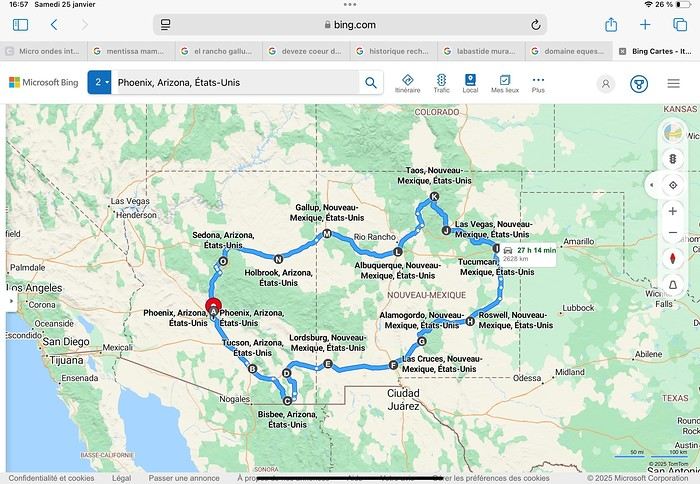
Flights, accommodations, and the rental car are all set—I just need to organize the stops. On the day we arrive in Phoenix (we’re staying in Gold Canyon), I’ve planned a visit to Lost Dutchman State Park at sunset with a short hike and a stop at Goldfield Ghost Town. I was thinking of driving as far as Tortilla Flat, but it might be tight, especially since our flight lands at 12:50 PM, and the most scenic part of the Apache Trail seems to be just past Tortilla Flat. The next day, we’re heading to Tucson for three nights. The first day will be dedicated to Saguaro East (near our hotel), the following day to the Arizona-Sonora Desert Museum, then the Bajada Loop Drive with two short hikes, and the North Kidney Road up to the OVL. Finally, on the last day, we’ll visit Sabino Canyon and hike to Seven Falls—and this is where I could use your insights! The hike is 13 km if we don’t take the shuttle. If we do, it’s only 8 km. Are those kilometers flat, or does it climb right from the start? And if we take the shuttle, where should we get off? Is the trail well-marked? I’ve heard it’s not very clearly signposted.
Thanks in advance for your tips, and I’ll be back with more questions soon! Marcalamar 🙂
Since my 2024 travel journal is finally posted, I’m diving into planning our September road trip to the part of Arizona we haven’t explored yet and to New Mexico, which we don’t know at all.
Flights, accommodations, and the rental car are all set—I just need to organize the stops. On the day we arrive in Phoenix (we’re staying in Gold Canyon), I’ve planned a visit to Lost Dutchman State Park at sunset with a short hike and a stop at Goldfield Ghost Town. I was thinking of driving as far as Tortilla Flat, but it might be tight, especially since our flight lands at 12:50 PM, and the most scenic part of the Apache Trail seems to be just past Tortilla Flat. The next day, we’re heading to Tucson for three nights. The first day will be dedicated to Saguaro East (near our hotel), the following day to the Arizona-Sonora Desert Museum, then the Bajada Loop Drive with two short hikes, and the North Kidney Road up to the OVL. Finally, on the last day, we’ll visit Sabino Canyon and hike to Seven Falls—and this is where I could use your insights! The hike is 13 km if we don’t take the shuttle. If we do, it’s only 8 km. Are those kilometers flat, or does it climb right from the start? And if we take the shuttle, where should we get off? Is the trail well-marked? I’ve heard it’s not very clearly signposted.
Thanks in advance for your tips, and I’ll be back with more questions soon! Marcalamar 🙂