Discussions similar to: Reprise forum
FR

526 similar discussions in English

What if we start with Mont Saint-Michel?
Hello everyone,

Here’s the account of the start of our 5/7-day trip in Normandy (then off to the neighbors in... Brittany):

Day 01 from Valenciennes to Mont Saint-Michel: Sunday, September 6, 2020.

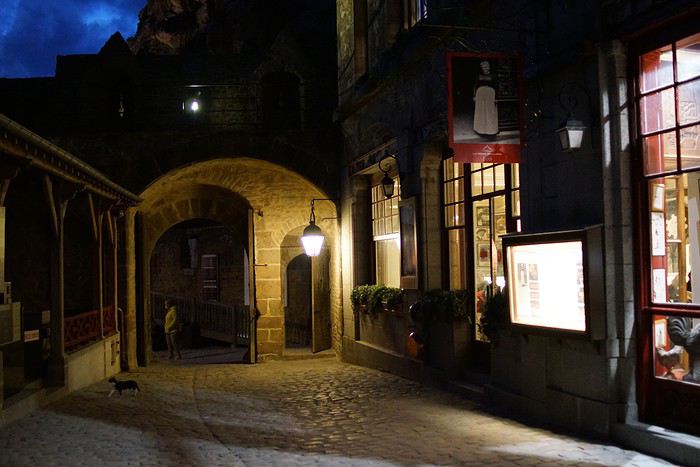
After a detour through the south of Lille (picking up our son), we head southwest around 10:00 AM, taking the highways via Amiens, the Pont de Normandie, and Avranches to arrive at "the Mount" around 4:00 PM after 515 km. Parking P3 (14.20 € for 24 hours) for residents and hotels, located 50 meters from the start of the free round-trip shuttle included in the parking price (not too many tourists at this "late" Sunday hour), and we arrive at the hotel around 4:30 PM. Triple room with a view of the bay at Hôtel Du Guesclin for 1 night. From 5:15 PM to 6:30 PM, we tackle the complete tour of the ramparts counterclockwise from the Porte de l’Avancée, via the Tour du Nord (near the abbey entrance), passing in front of the abbey to reach the Tour Gabriel, and back to the start: stunning, not crowded, great weather, and amazing views. Dinner in the beautiful panoramic restaurant of the hotel, with a bay view at a "window" table (such a nice touch!). Of course, the day isn’t over, and we can then wander through a deserted main street and its unique atmosphere (photos below labeled "night" even though it’s only 9:15/9:30 PM). What a privilege!


Day 02 from Mont Saint-Michel to Saint-Cast: Monday, September 7, 2020.

After a memorable sunrise over the bay and a sit-down breakfast, we climb the steps to the Abbey for our online-reserved time slot (9:30 AM, 11 € per person). The "masked group" is quite large, though within normal limits, and the one-way Covid-marked route (with a small brochure) prevents crowds. No need to rush, and 1 hour 15 minutes later, we’re done. Sure, it doesn’t have the charm of a guided tour, but we’re not complaining about being there! We pick up our bags at the hotel, take the shuttle back, grab the car at Parking P3, and head "south" to Dol-de-Bretagne, 26 km/25 minutes away. Around noon, the small town is very quiet, and parking in front of the Saint-Samson Cathedral** is free. Across the street, the tourist office is generous with info and gives us a great walking map/circuit: Cathedral, a stroll near the ramparts, the historic center** with its typical shopping streets and half-timbered houses, all covered at a leisurely pace in 45 minutes. Then a picnic on-site. It’s another 50 km/50 minutes to Saint-Cast-le-Guildo and the Armor Conseil agency for the apartment keys (Résidence du Casino, 72 m², 5th floor, 2 bedrooms, beach 20 meters away, insane morning and evening views, bed linen rental at Ohier 50 meters away, Carrefour City supermarket, and a bakery 200 meters away, plus a town center that hasn’t changed much in 25/30 years. Really, really nice. After settling in, a short walk is a must up to the heights of the Isle neighborhood behind the seaside residence... memories. Strangely, the well-known Crêperie Bretan’Or seems to be closed, as does the venerable Hôtel du Centre et des Plages (formerly "des Voyageurs")?? And for this reunion evening with the resort, a great crêpe/galette dinner at La Régal’ette, just 100 meters away. Day’s total: 12 km of walking for sightseeing.

A few photos at the bottom of the page...

* Read the rest on the blog: https://blogs.crespel.me/bretagne/
Open
Sending CCAM application file to the French Embassy in Yaoundé
Hi everyone, I need some help, please. My partner wants to send our CCAM file to the embassy in Yaoundé from France. We’re wondering if, with the pandemic, the file will even arrive and how long it’ll take. Would it be better to send it directly to the address in Cameroon? We’d planned to drop it off in March but couldn’t, and my interview is next month (even though I know it’ll probably be postponed). I’d really like the file to be in their hands before my interview date. Please help—what should I do?
Open
Is Shekhawati really worth it? (India)
Hi! After arriving in Delhi and heading to Rajasthan, I'd like to take a break to acclimate to the climate and vibe around Mandawa... Do you think that's a good idea? Is there a better option? I'm heading toward Bikaner.

Thanks!😇
Open
Accommodation in Pokhara
Hi everyone!

I’m planning a short visit to Pokhara around mid-February 2027 (it’ll be my 4th time in Nepal 😊, over 40 years!). I’d like to book a room in advance rather than looking when I arrive. I’ve checked a bit on Bxxking.com and see lots of options. I’m used to scoping out the surroundings of places listed, just to avoid ending up in areas that are either unappealing or far from everything.

So, I see quite a few offers around the lake (Lakeside?), but every time I check what it looks like, the streets seem really uninviting. It’s kind of like a construction site with buildings everywhere… Nothing like Bhaktapur (for example) or even Thamel, where the streets seem way more pleasant.

Could anyone give me some advice?

Also, I don’t really get the impression that Pokhara is worth a visit of several days. The lake, sure, but once you’ve seen it—what else is there?
Open
Retiring in Réunion: where to settle?
Hi! I’m 76 and have traveled a lot in my life, and now I’m looking to settle in Réunion.

I’ve seen a retirement community in Saint-Pierre (Ravine des Cabris) and a residence called Village d’Or in Sainte-Clotilde. I have a feeling that living in Saint-Joseph might be better. I’ve submitted both applications and would love your thoughts—also if you know of any friendly small residences for rent, or if you have experience living there.

My pension is 1,460 €.

Thanks so much for your help! Looking forward to hearing from you—warm regards to everyone
Open
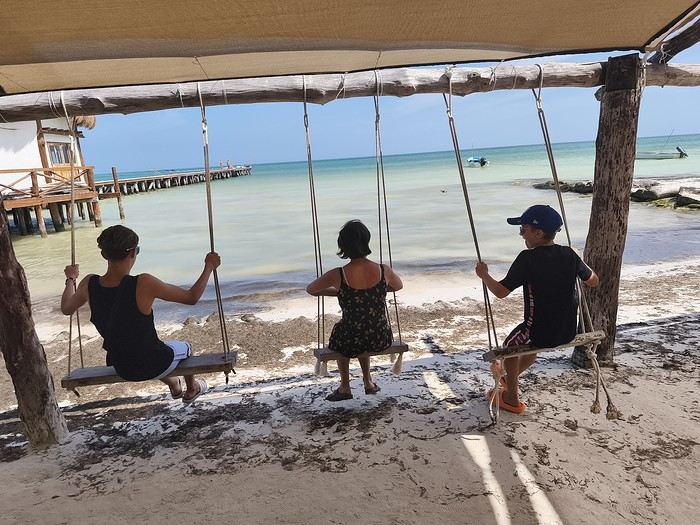
55 days with the family in the Yucatán, including a side trip to Belize...


Hi everyone!

That was about all the Spanish I could speak before we left... Luckily, Tom, 15 and in high school, gets by just fine! And Caroline did a year of Duolingo before we took off... Anyway, after 55 days in the American West three years ago, it’s Mexico’s turn for this second long adventure.

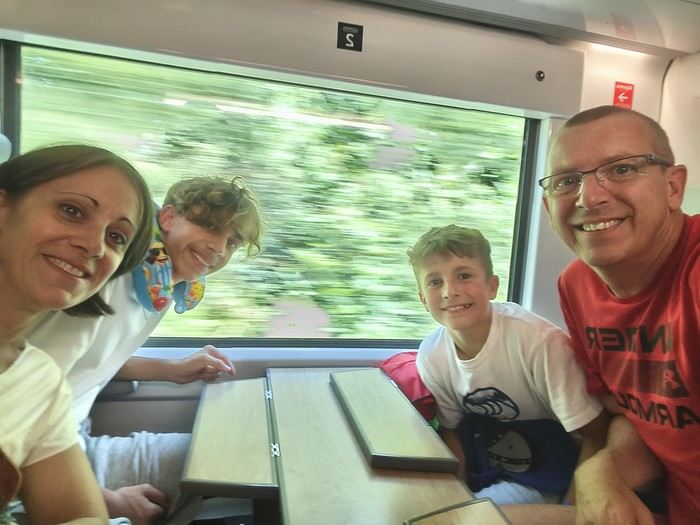
A quick intro to the crew:


- Oscar, 10, a sporty and lively little boy who loves swimming and basketball, - Tom, 15, a high schooler, sporty and tall, who loves swimming and American football, - Caroline, 47, a PE teacher, sporty , loves hiking and snorkeling, - and me, Sylvain, 50, a science teacher, sporty, loves traveling and always has a possible next trip in mind

We mostly travel by swapping our house to discover beautiful France and the world: 135 swaps over the last 13 years.....

Our itinerary is pretty classic since it’s our first time in the Yucatán, and we’ll make a little 10-day detour to Belize...

See you soon...
Open
Which hikes should we prioritize in Réunion?
Hello, I’m heading to Réunion in early October with my girlfriend for two weeks. Out of the 15 days, we’d like to do about 5 days of hiking—maybe a 3-day/2-night trek and two day hikes.

I’ve seen tons of hiking options online, but I’m a bit overwhelmed when it comes to choosing. Hikes like the Tour de Mafate trek, Piton des Neiges, Piton de la Fournaise… we’d love to do those too.

We’ll have a rental car if needed. No problem walking for 6 hours a day (we’re pretty active).

Which hikes would you recommend?

Thanks in advance!
Open
Madeira Between Lockdowns - July-August 2021
Hi there, I'm starting a new travel journal with my itinerary and memories in mind, and maybe a few photos if I can find some.

The context:

April 2020, I was supposed to go to Uzbekistan, and October 2020 to Texas: both canceled due to COVID. Summer vacations in 2020 weren’t gonna be fun. Optimistic, I’d rescheduled both trips for roughly the same dates in 2021: the first was canceled again because of COVID, the second due to U.S. entry conditions (still COVID-related!). Summer vacations in 2021 *had* to be more fun, or I was gonna lose it!!! Plus, our parents are dealing with health issues, which is weighing us down—we really need to get away!

So I looked into where we could go, somewhere we could live almost normally. I saw that Madeira had implemented strict COVID measures but that life on the island was pretty chill afterward. For me, Madeira = sun + hiking + landscapes. BINGO.

Day 1: The flight and arrival on the island

Flight with TAP via Lisbon, departing around noon. We wore our masks properly on the plane. (My last flight was to Portugal, and I told myself I’d break the jinx and leave COVID behind us.) Layover in Lisbon, then an afternoon flight to Madeira. The landing went smoothly, no wind. Cristiano Ronaldo Airport in Funchal is known for being one of the trickiest in the world due to crosswinds. The checks were standard, except COVID added an extra step. Before the trip, I had to fill out a questionnaire (Madeira Safe). Once there, a group of young people—probably students—greeted us, each with a tablet. The health questionnaire and vaccine check were super quick. Then we saw a doctor, and just like that, we were wished a great stay. Honestly, it was so well organized that it only took 10 minutes. We wouldn’t put our masks back on until we returned!

A taxi took us to our hotel in the hills above Funchal—a pretty upscale place, which isn’t our usual style, but we needed it this time! Dinner on the hotel terrace with the city at our feet. Amazing!

HOTEL: Quinta da Bela Vista

The +: We’re traveling!!! The -: Nothing.
Open
Cécile from the Salton Sea to Alcatraz
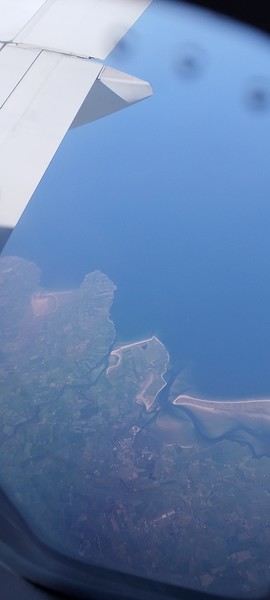
And off we go again for what’s certainly our last trip to the American West... After the disaster of September 2022, the diabetes flare-up, and the pulmonary embolism, we’re spending ten days in the spots we missed and some unlikely places. After flying over Scotland, still English,

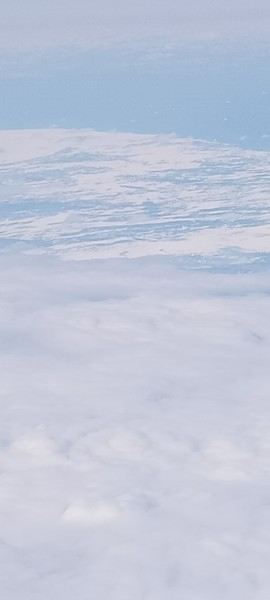
Greenland, still Danish,


And Lake Huron, still half Canadian,

We land early in Detroit... a nightmare of an airport. A long, dreadful baggage check process, but we still make it to gate A10 just in the nick of time—only for disaster to strike! My passport has my first and last name, my boarding pass has my first and last name, BUT not on Delta’s computer—so we’re denied boarding! We head to the Air France-Delta-KLM desk, where an employee listens to us sympathetically. He books us two seats on an 8:30 AM flight to SF... Then passes us off to two colleagues who offer us a night in a hotel... and send a message to the baggage service to keep our checked luggage safe... In the end, we go to bed earlier, wake up earlier, but since we’ll still get some sleep on the plane, we might be able to look back on this whole mess with a smile... well, we hope so, anyway. 10:17 PM in Detroit—time to sleep. Our clean clothes and toiletries are in the plane. We’ll bounce back!!;
Open
Uzbek notes
The Afrosiyob races through a premature twilight, lashed by a blizzard of thick snow. In the endless gray, a monumental industrial complex occasionally emerges, ghostly. Here and there, in the middle of nowhere, a human silhouette appears (a soldier?), standing motionless by the tracks. On the screen mounted in the middle of the ceiling, a dashing Bollywood cat in vibrant colors writhes in all directions, throwing smoldering glances at a dancer on the verge of fainting. A server moves down the central aisle, offering crepes for sale—ones I suspect are stuffed with ground beef. I’m in Central Asia, in Uzbekistan, somewhere between Bukhara and Samarkand.

I chose the title "notes"—scattered thoughts, rough drafts. I’m not sure what I’ll write, but one thing’s certain: this won’t be a linear travel journal.

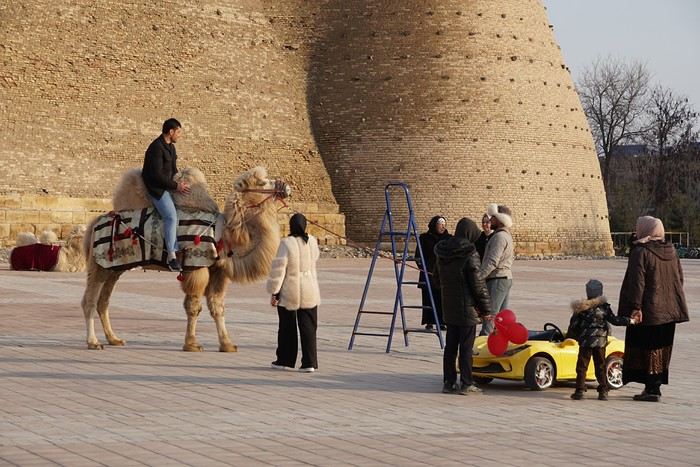
And a photo... there must be a photo, so here:


Local tourists between a Bactrian camel and an electric car, in front of ancient walls—it’ll do.
Open
From Caño Cristales to Tayrona Park
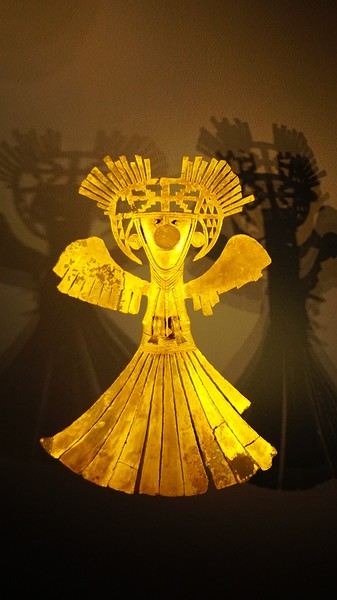
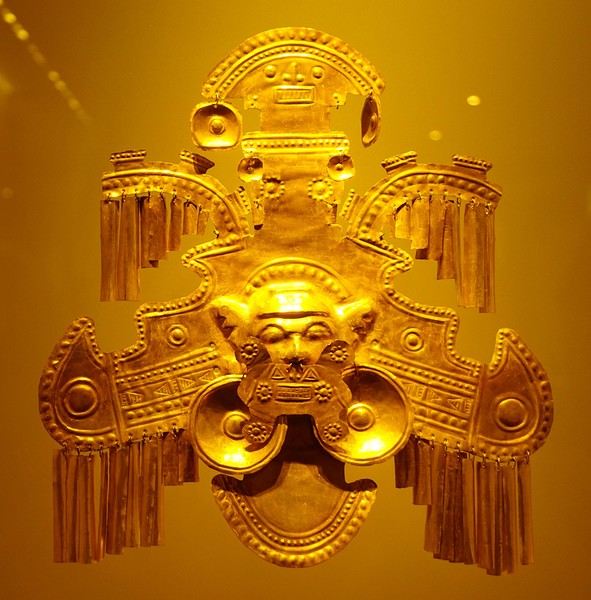
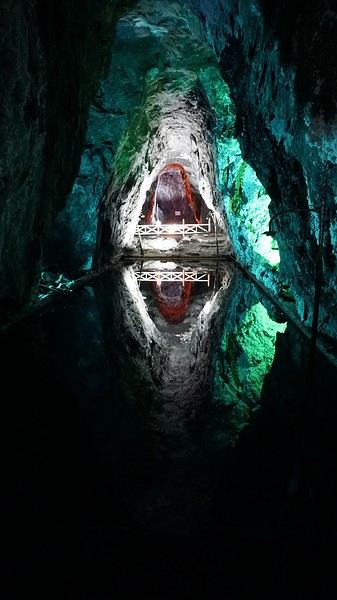
After about 12 hours of flying from Toulouse (via Paris), we landed in Bogotá six years after our first trip to Colombia. This time, our journey will be very different, with only this stop in the Colombian capital in common. Our travel itinerary Bogotá / La Macarena (Caño Cristales) / Villa de Leyva / Barichara / San Gil / Girón / Mompox / Ciénaga and the Santa Marta lagoon / Minca / Los Naranjos (Tayrona Park) / Bogotá. Step 1: Bogotá (and Nemecon) Bogotá (1/3) This morning, we had a meet-up with Flora from Aventure Colombia, who helped me organize one of our stops, a few transfers, and tomorrow’s day trip, the program of which I changed at the last minute after deciding to skip the visit to the Salt Cathedral of Zipaquirá. Flora is a kind and lovely person, always available, and she did everything to answer my questions and give me advice. She’s a local contact I highly recommend. Flora can help you plan your trip, whether you want a fully organized tour or, like us, just need assistance with a specific stop or one or more transfers between cities. We left Flora after setting a meet-up for our return to Bogotá in a month. As we walked out of her agency, we headed to the wonderful Gold Museum, located just a hundred meters away. I was excited to revisit this amazing museum. Note: Free entry for those over 60, regardless of nationality. Just show your passport. Like six years ago, I was amazed by its museography, the beauty of the pieces on display, and that breathtaking shamanic room.


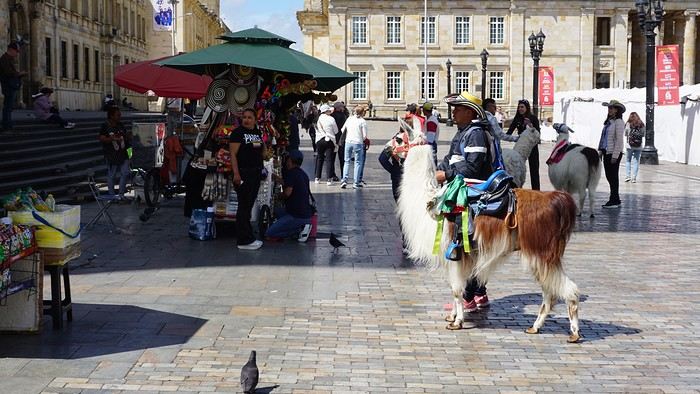
About two hours later, we decided to walk (careful, it’s a climb!) to the Monserrate cable car (3152m). Long wait to buy tickets and board the cable car! Once we arrived, a few raindrops, an impressive panoramic view of Bogotá’s vastness, a quick visit to the basilica (a pilgrimage site for Colombians), a walk through the tourist market, and at the top, plenty of small restaurants where we had our first Colombian meal. After our hearty lunch, we were lucky to see the sun return! No line for the descent. We then headed back to the hotel because Justine wanted to rest and recover from the trip. As for me, I continued my walk. I discovered a really nice craft market recommended by Flora, Pasaje Rivas, returned to Bolívar Square, and wandered through different streets, including the main pedestrian avenue (Calle 7), where there’s always something to see.


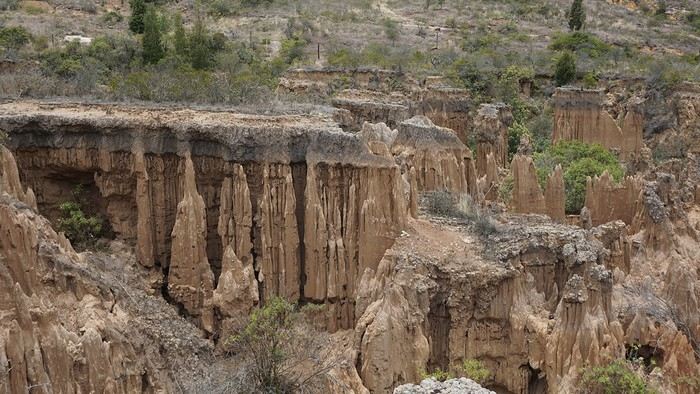
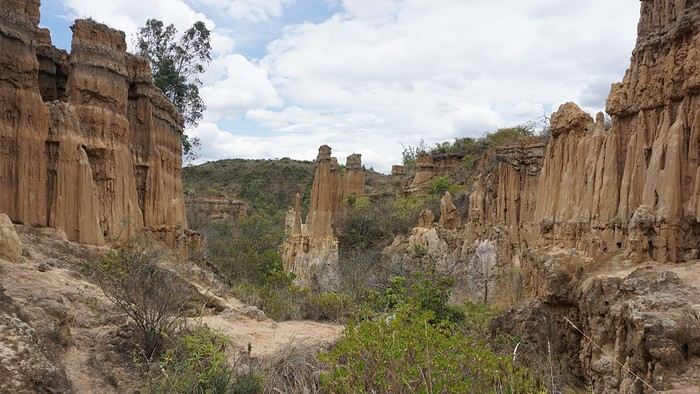
Tomorrow, a change of scenery as we head out for a hike in a small desert (Desierto de Chueca), located about 2 hours from Bogotá in the village of Nemecon. For this outing from Bogotá, with Flora’s help, we booked a car with a driver for the day. Flora also took care of booking the guide (since the site can only be visited with one). Nemecon (2/3) Today, we went to Nemecon to hike about 7.5 km in the ‘Desert of Checua.’ It’s nothing like sandy deserts! Instead, it’s geological formations sculpted by time, wind, and water. After two hours on the road—almost one of them spent navigating traffic jams with cars, trucks, buses, and a continuous flow of motorcycles on either side of our taxi—we reached Nemecon! The village center is really (too?) quiet. We met up with Deisy and headed toward the ‘desert,’ about twenty minutes away on a bumpy dirt road. Once there, a quick briefing, and off we went! Deisy didn’t stop talking (in Spanish) for over 3 hours!!! She told us so much about her region (flower farming, water management, traditions, songs, etc.), the origin of the site, and even mentioned Antonio Banderas, who filmed *The 33* in the village’s salt mine (the story of the survival of 33 Chilean miners after a collapse in their copper and gold mine). One hour of walking to reach the site, one hour to explore it, and one hour to return.


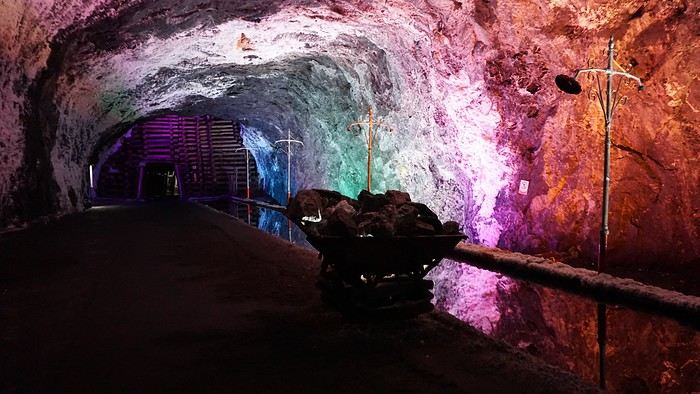
The advantage of this non-stop chatter was that it forced us to brush up on our Spanish at lightning speed. I even wondered if the effort to concentrate wasn’t more exhausting than the physical effort! Especially since on the way back, I got an oral quiz. Deisy wanted to make sure I remembered some of the information she’d given me during the visit: why is this rock white, that one red, and that one black? Back in the village, we had lunch at a restaurant recommended by Deisy before visiting the Nemecon salt mine. Before entering, a guide spent a good half-hour explaining the origin of the salt and the presence of many fossils in the area. Again, concentrating was tough because all the comments were exclusively in Spanish! An hour and a half wandering through the tunnels with a ‘lovely miner’s helmet’ on our heads!


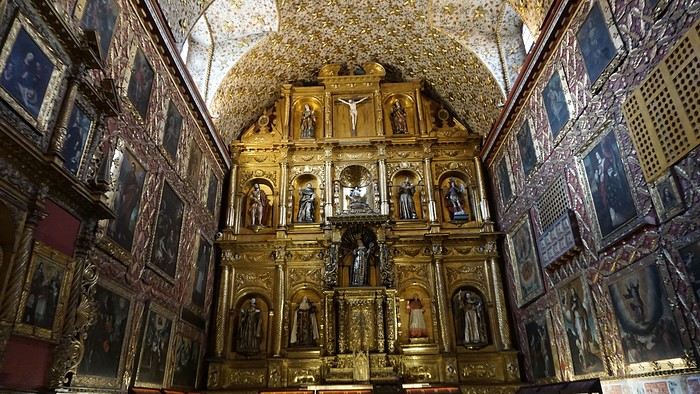
We met our driver at the mine entrance. The return to Bogotá was a bit faster, but traffic in the city center was still heavy! We arrived in front of our hotel between 8:00 and 8:30 PM. It’s been a pretty intense start to the trip! Tonight, our legs are tired. Hopefully, tomorrow will be a bit more relaxed! Bogotá (3/3) We started the day by visiting the Santa Clara Church Museum, located next to the presidential palace. Alejandra (from the local agency ‘Gaia Tours Colombia,’ which organized our stay in Caño Cristales (La Macarena)) had recommended this visit for its rich mural paintings.


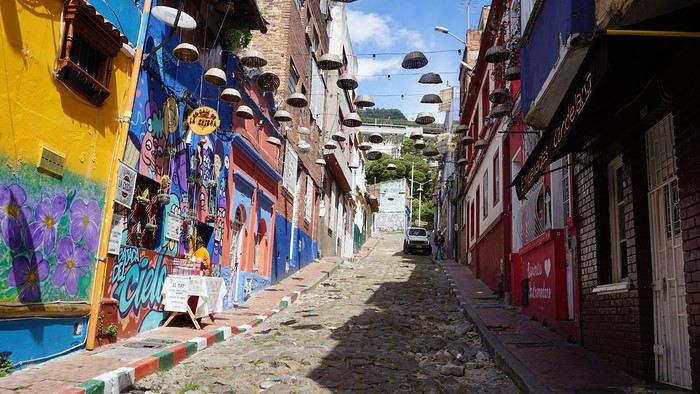
A few hundred meters further, after crossing the Plaza Mayor again, we visited the cultural complex housing the Botero Museum, the Mint Museum, and the Bank of the Republic Art Museum. Note that entry is free for all three museums. Botero Museum: There are fewer works by Botero here than in the Medellín museum, but more paintings and sculptures by other artists, all from Botero’s private collection (donated to Colombia). Mint Museum: We limited ourselves to visiting one room (on Flora’s advice) where three gold and gemstone monstrances and a Christ with a crown of emerald thorns are displayed. Photos are not allowed. Art Museum: We visited two temporary exhibitions. Lunchtime came quickly. We had a good meal at a reasonably priced small restaurant in the La Candelaria micro-district, near the Chorro de Quevedo square. We decided to spend the afternoon wandering the streets and alleys of the historic center to discover local street art.


We also passed through very lively pedestrian streets. I also decided to revisit Pasaje Rivas to show Justine all the shops selling more or less artisanal products. Tomorrow morning, we fly to La Macarena at 10:30 AM. Not to dance (you’d be surprised if I told you we were going to take a South American dance class, right?!), but to visit the fabulous Caño Cristales, a river naturally colored by aquatic plants. The planned program includes hiking, horseback riding, canoeing, and swimming among these plants. This site was long inaccessible because the area was controlled by the FARC. Access and tourism development became possible after agreements and amnesty measures between the Colombian government and paramilitary groups. As in other regions, former FARC members have been able to transition into various tourism-related activities.
Open
Bike trip: from Carcans Maubuisson to Plaisir (Yvelines)
Monday, August 21, 2023 - Rochefort - Marans

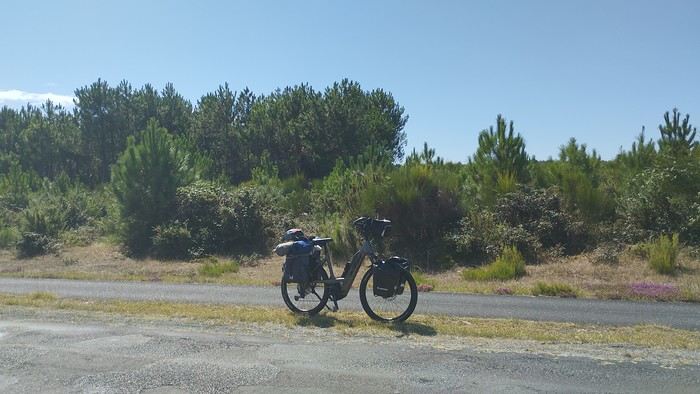
No journal for the first two days. Day 1 - CARCANS-ROYAN Day 2 - ROYAN - ROCHEFORT Tonight I'm in MARANS in the "dry marsh" according to the campsite manager—it’s the first time I’ve heard of a "dry marsh"?!

Photos from the first two days

My gear


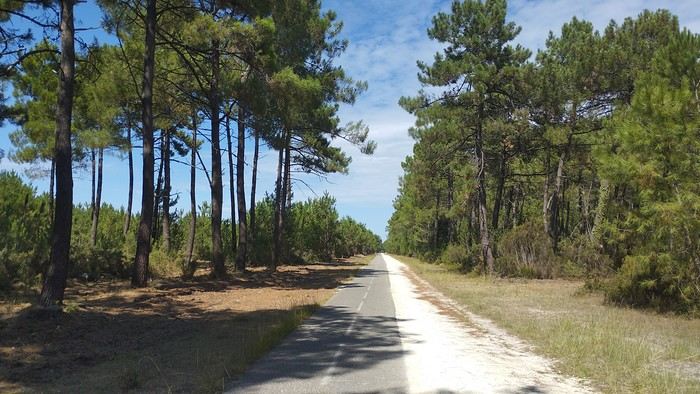
The Landes region—nothing extraordinary, but the calm and serenity are nice.


Le Verdon


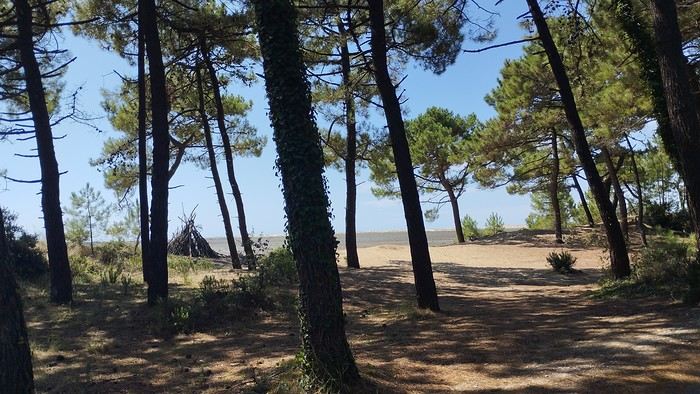
The wild coast


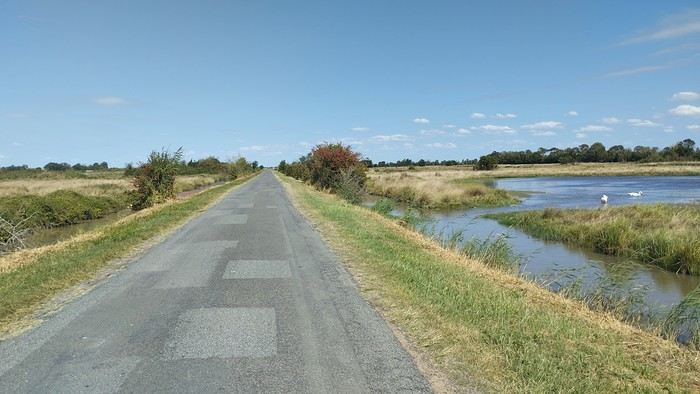
This marsh isn’t dry, though.

Today is the third day of my trip, and I’m writing to you from a campsite in Marans. I’ve set out to bike from Carcans Maubuisson back to Plaisir. Why Carcans? Because we spent a week there as a family—a great week that lets everyone reconnect for a long stretch. Also, on Saturday, we all headed home—some by car, and me by bike. This journey is about 850 km via bike paths and small cycling roads. It’s not a sporting feat, just a nice long ride for fun. As the old Chinese sage says, "The destination doesn’t matter—it’s the journey that counts." But he also told me, "Traveling is great, but what’s the point if you don’t share it?" You see, this old sage has told me a lot of things—he often keeps me company when I’m biking. Of course, he doesn’t pedal, but we travel in harmony. Sure, he can be a bit annoying sometimes, but we still get along. All this to say I’ve created a group to share my story. I’d be happy to share this experience with you—it’s an adventure for me. On Saturday, I wasn’t sure I’d even leave because I’d been dealing with sciatica for days. Luckily, Juliette, a friend of the old Chinese sage, recommended a lifesaving remedy: Alternately stretching your legs with an elastic band under your foot. Obviously, a jam jar rubber band won’t cut it.

From Marans - The mosquitoes are attacking; time to head back to shelter.

The first two legs took me to Royan and then Rochefort. The Sèvre Niortaise flows nearby, and I followed a canal from La Rochelle. You could say the area is as dry as the marsh, judging by the state of the crops.


As I mentioned, it’s the third day, and if Jesus rose again on this day, for me it was more like the crucifixion. The scorching heat—only bearable when you’re moving—combined with rough trail conditions, and the old Chinese sage says, "Terrible roads, slow speed, and watch your limbs." I set out to do 60 km but ended up doing 80, and the last 20 were tough. I kept checking the GPS to see how much farther until the campsite. Today: Rochefort to Marans, sticking to the coast until La Rochelle, then no notable towns after that—just a constant canal. But since the sky isn’t too low, it hasn’t gotten lost. I’ve still got plenty of anecdotes to share, but it’s pitch black out, and the mosquitoes are still around. This morning, I counted ten in my tent, all full of my blood. Yesterday, at the end of the leg to Rochefort, I was really looking forward to crossing the Charente using the transporter bridge, but a sneaky GPS conspiracy led me far from it. I ended up crossing the Charente on a completely ordinary bridge, watching the transporter bridge in the distance with disappointment.

End of the first episode. Until tomorrow, if you’d like!
Open
From Costa Rica to Suriname, a travel report
Hi everyone, I’m restarting my travel reports with my 2023 trip that took me from Costa Rica to Suriname over a month and a half.

First stop: Costa Rica. I arrived in late September in San José, a city I know well and never linger in. As soon as I got off the early-morning flight, I headed to the domestic airport—just a 5-minute walk away—to catch a 45-minute flight to Puerto Limón on the Caribbean coast. The 40-minute flight in a small Cessna was fun, especially since we landed on a tiny airstrip right by the sea—it felt like landing on the beach, which immediately set the mood. Plus, I wasn’t keen on enduring the 4–5-hour bus ride to Cahuita, especially since large sections of the road were under renovation. In Cahuita (where I’ve been going every year since 2015), I stayed at Kenaki Lodge on Playa Grande. It’s a great lodge, about a 45-minute walk from Cahuita’s center, but you’re just 50 meters from the beach and usually have it all to yourself. The lodge is run by Béa, a Frenchwoman, and depending on the season, you can help release baby turtles on the beach. The room was 55 €, very spacious, and you can use the outdoor kitchen. I’d recommend it for anyone looking for peace and quiet and a private beach.

After 5 days there, I flew to Cartagena but didn’t stay overnight. Instead, I headed straight to Rincón del Mar, a 3-hour bus ride from CTG. I’d mostly heard about it from a friend who lives there and runs El Ché, a beachfront restaurant. Rincón del Mar is a tiny seaside village, very peaceful, with a pretty nice beach. There are lots of small hotels and restaurants, and it’s a spot that’s likely to grow quickly in the coming years. Note: there’s no ATM there, so you’ll need to withdraw cash in San Onofre, about 30 minutes away by moto-taxi. The round trip costs around 25,000 COP. That’s also where you catch the bus to Cartagena. For accommodations, rooms were roughly 70,000–90,000 COP, with a so-so value for the price. As for things to do, I’d recommend the tour that takes you to watch the sunset in front of Bird Island, followed by a swim in a lagoon with bioluminescent plankton. The excursion (if I remember correctly) cost around 90,000 COP.

After a week in Rincón del Mar, I headed back to Cartagena and decided to fly to Yopal to visit the Río Meta. In Yopal, you’ll need to go to the bus terminal (10 minutes by taxi from the airport). From there, I took a bus to Orocué (50,000 COP) for about a 4-hour trip—it felt endless because the road was in terrible condition. Orocué is a tiny town on the banks of the Río Meta, but it has all the essentials (hotels, restaurants, ATMs). It’s lovely to stroll along the river at sunset. There are a few small bars, the area is very natural, the sunsets are stunning, and when there are distant storms, it’s just breathtaking. For lodging, I stayed at Hotel Brisas de San Miguel. It wasn’t bad—fan-cooled room for 70,000 COP. There were quite a few mosquitoes. I spent 3 days in Orocué. If you want to swim, head to the bridge (the only one), Cano San Miguel, and on the right, there’s a swimming spot. With the heat, it’s a great way to cool off.

From Orocué, I took a fast *lancha* (boat) up the Río Meta to Puerto Carreño, in the Vichada department at the far end of Colombia. This brings you to the majestic Orinoco River, right across from Venezuela. The boat ride is long—10 hours—and costs about 60 €. We left around 6 AM, with a few stops for bathroom breaks and meals along the way. But you *must* book your spot 1–2 days in advance. To do that, go to the small square above the dock—there’s a "navigation office" there. The trip was long but enjoyable. I never get tired of river journeys.

I was happy to finally arrive in Puerto Carreño, a small border town with Venezuela. No surprise that half the population was Venezuelan. In Puerto Carreño, I stayed at Hotel Delfines del Orinoco. The room was 80,000 COP, decent, with A/C, and the best part was the pool. I spent 2 nights there. One thing you *must* do—morning and evening—is hike to the top of Cerro de la Bandera (the *cerros* are huge rock formations typical of the Orinoco region, and there are many in the area). From the summit, you get amazing 360° views of the savanna and jungle. Sunrise is especially incredible. The trail is well-marked—from downtown Puerto Carreño, it takes about 20 minutes.

Next, I spent 3 nights at Rancho Barú. About an hour by boat from Puerto Carreño, you get off at Casuarito, and someone from the lodge picks you up by motorcycle for a 30-minute ride. The ranch is in the middle of the savanna, with a river/rapids beach just a 5-minute walk away. You can also fish—bites come quickly. For the lodge, one night (room or hammock) with shared bathrooms, three meals included, one excursion, plus the round-trip motorcycle ride costs 245,000 COP. An extra night without an excursion is around 100,000 COP, but you need to let the lodge know in advance so they can prepare enough food—there’s absolutely nothing for miles around.

After those 3 great days at the ranch, I took a canoe to cross into Venezuela, since Casuarito is right across from Puerto Ayacucho. The crossing costs 10,000 COP, but I got shaken down by Venezuelan immigration, who invented a violation and made me pay $40 USD. Puerto Ayacucho didn’t inspire me much. The city felt sketchy, with many hotels closed. Dealing with currency exchange was the hardest part—you *must* bring cash (USD or Colombian pesos), know the exchange rate, and find someone with enough money to exchange with you. It took me at least 2 hours. I stayed in a decent hotel downtown for $20 USD a night, but I’ll admit that going out at night—even in Puerto Ayacucho—felt pretty dodgy. All the buildings have bars on the windows, and there weren’t many people outside. I didn’t linger and found my plans to continue south too complicated. The next day, I took a bus across the country to the Brazilian border at Santa Elena de Uairén. The trip took a day and a night, with countless military checkpoints where they made everyone get off, unload all the luggage, etc. Not exactly a fun ride.

Photos: - 2 sunrises near the Orocué dock - Storm over the savanna at Rancho Barú - View of the savanna and Orinoco near Casuarito - Photo taken during the Río Meta boat trip
Open
Burundi's Awakening in 2021, and What Comes Next?
A massive explosion sets things off... then around 5:30 PM, a huge, coordinated crowd floods the streets of Bujumbura—and the rest of the country—growing by the minute and surging through the main arteries in deafening noise. Backed by every kind of vehicle—motorized or not—pedestrians, bikes, Bajaj, Volkswagens, and Toyota Coasters unite to raise their voices with blaring horns that could wake a nearby ancestor or the Supreme Guide. The police and all law enforcement in the country—military included—are on high alert but haven’t intervened yet, keeping a very close eye on how the situation develops!

Still at work when RFI and France24 send me their "urgent" Burundi alerts, a full 90 minutes after the reliable outlet "Iwacu Burundi" broke the news. My trusty wall calendar and today’s date stamp confirm it’s March 23, 2019, backed up by my phone. Worried, I think to myself, *Oh no, here we go again in this tiny Central African country... But my God, why???*
Open
Tips for learning English easily
Hi everyone, I’d love to know if anyone has tips for learning English easily. Thanks in advance to anyone who shares theirs!

English: Hello everyone, I’d like to know if anyone has tips for learning English easily. Thanks to all who share them with me.
Open
Round-the-world trip with family
Hi,

We're leaving in 5 months for a 10-month family trip, and I'd love to hear from families who've lived this experience—what tips and lessons you took away. How did the adaptation go? It must feel really strange not having a... structured day, I can't find the right words. Thanks for your feedback! celine
Open
Off to explore Egypt!
February 9 - Day 1

"So, my little wanderers, back at the decks? What’s this mystery destination you’ve got in store for us at the start of the year?"

Yes, the schoolyard bell’s ringing again! We’re hitting the road... or rather, the skies! At first glance, our destination might surprise more than a few. First off, simply because I was here exactly twenty years ago, and I don’t usually like retracing my own footsteps. Secondly, because the name of this place screams mass tourism—basically the opposite of what Flo and I look for.

Despite that, in this land of backsheesh, I’d promised myself I’d come back one day to experience it my way. And since Flo told me, during our wanderer chats, that this destination straddling Africa and the Middle East was in her top 2 travel dreams, the stars aligned for this roots-style trip to quickly make it onto our pharaonic festivities program! Unless you’re totally clueless in general knowledge, you’ve probably guessed by now—we’re off to Egypt! Of course, a few classics will be on our itinerary, but above all, we want to soak up a culture that can’t be appreciated in four-star resorts or on a Nile cruise boat. And let’s be clear, these next two weeks won’t be a walk in the park—neither for our two daughters who are joining us, nor for our bodies!

And that’s clear from the get-go: after our first flight, eight hours of trying (and failing) to sleep on Milan airport’s metal seats, our second flight, landing, passport stamps, our Uber ride, and our first Cairo kilometers, we finally drop our exhaustion at the little guesthouse we booked in Giza. Doesn’t all that energy deserve a little reward?

Oh, absolutely! And here it is: a full-on slap in the face for everyone! But just look at this view from our hotel terrace? For 20 € a night for four, even with this incredible view, I figured the room must be pretty shabby, right? Nope... Is the staff rude, then? Nope... Okay, so what’s the catch? You’re gonna tell me breakfast is included too? Well, yes! Honestly, this Egypt trip is off to a great start.


And the rest of the afternoon, spent rubbing shoulders with locals, only confirmed this vibe. After digesting our pyramid view, we dove into the hustle and bustle of our neighborhood with the goal of exchanging money, eating at street stalls, and testing the hospitality of the locals. Ten out of ten!


Eight little sun breads with baba ganoush and falafel? 80 pounds, or 1.5 €. A dozen Middle Eastern pastries? Same! 80 pounds! Two hawawshis, those little pita breads stuffed with meat and spices? 10 pounds each, or about twenty cents! Not to mention all those smiles and free "welcomes" left and right!!!


What a welcome! We end this first day with a sunset over the three sisters of Giza—where we’ll obviously be gawking tomorrow...


https://voyageforum.com/images/posts/small/1789072399-cCyLDYuFwPLAZTY.jpg
Open
Southwest USA Road Trip Part II
Here we go with this second travel journal dedicated to the American West! It’s a must when you love it! 😊

We had left off in the charming town of Bisbee, which once thrived thanks to its copper mines. Today, mining is a thing of the past, and the town seems a bit sleepy.

Unfortunately, I didn’t dig deep enough on-site to answer all the questions my observations raised. Guess I’ll have to *dig* into the subject a bit more... no pun intended! 😊

Let’s hop back in the car and head a little further south to check out the esplanade that offers a view—if you can call it that—of the impressive open-pit mine. Then, it’s off to the Lowell neighborhood.

Preserved almost exactly as it was, this area must’ve been bustling in its heyday. The vintage cars are still around, storefronts and signs look like they’re straight out of another era, and the whole place has a pretty amazing vibe. You’d almost think you were on Route 66!

Here, we’re not just discovering an old neighborhood—it’s a little slice of American history. And, a detail that’s great for my physical health: the area isn’t too spread out. Lucky me! 😊

I won’t post too many photos here since I think I can turn them into a future photo exhibit. Between these and some shots from Route 66, I should have more than enough material! So, let’s keep a few under wraps... to preserve the surprise. 😊

Open
14 Days in Japan – September-October 2026
I had to leave Thailand as my 60-day visa was coming to an end, and this time I opted for a 14-day visit to Japan. I’d already spent 3 days in Tokyo a few years ago on a business trip, which left me with a great impression. Y, my Thai partner, had never been there. That’s why we chose a fairly classic itinerary, including a few castles and Kyoto among other things.

Before diving into the details of our trip, I’d like to recap the expenses we incurred. This will be useful for some of you, and it’ll help us prepare for our next trip to Japan.

I’ve categorized our expenses into 5 groups: - Hotels: 1150 € (breakfast included) - Transportation: 278 € (trains, buses) - Big expenses: 487 € (souvenirs and a few necessary items) - Excursions: 116 € (museum visits, temples, castles) - Daily expenses: 1125 € (meals, small purchases) Total = 3194 €, or 228 € per day on average. I’m excluding flights, as those depend on everyone’s arrangements (departure location, travel dates, etc.).

Jpeg below: apologies for “hotel” without a circumflex—my software isn’t French!


For hotels, we always chose decent but not luxurious places, well-located to let us walk to and from transportation hubs. We systematically avoided taxis, which are notoriously expensive in Japan. We’ve also gotten into the habit over several trips of traveling with minimal luggage: one duffel bag each (7-8 kg) plus the small carry-on allowed on planes (2-3 kg). This lets us travel with three sets of clothes (what we’re wearing plus two changes). We add a checked bag for the return trip to accommodate the things we buy along the way.

‘Transportation’ and ‘Big expenses’: I’ll give more details in the day-by-day account.

We didn’t do any extravagant excursions, like safaris or sports activities.

Meals and food make up the bulk of our daily expenses. We often ate at izakayas, which offer great value—between 2000 and 6000 yen for two (about 11-12 to 33-34 € for two, usually around 20-25 €). We didn’t hold back, but we also didn’t go to high-end restaurants.

More to come while I gather my photos: General Remarks.
Open
Trek in Norway: Jotunheimen and Dovrefjell, you’ll adapt to the rain...
In the summer of 2026, we packed our backpacks again to wander around Jotunheimen National Park in Norway.

We’d never heard of this park just a few months earlier—we discovered it by following threads online.

It’s billed as the most mountainous park in the country, which really appealed to us after scrapping our original plan further north.

Unfortunately, it’s also the most crowded, which immediately made it less appealing! The presence of the highest peak in the Scandinavian Alps and the "famous" Bessengen ridge (famous because it’s apparently well-known across the country) probably has a lot to do with that.

Since we’d managed to avoid the crowds on the Kungsleden trails by camping away from the huts and timing our hike to miss the biggest groups of walkers, we figured we had the formula down and gave in to the call of the Norwegian mountains.

It’s the most mountainous park, sure, but also quite challenging in terms of progress, as we’d soon discover during the trek. And with uncooperative weather, we got the winning combo of a demanding hike. But I’m getting ahead of myself...

For the end of the trip, we planned a few days in Dovrefjell National Park—these two parks are easily connected by public transport—to see something different and, most importantly, to try and spot the musk oxen that live there.

My 04/08 - Arrival in Oslo Wed 05/08 - Bygdin – Torfinsbu Thu 06/08 - Torfinsbu - Gjendebu Fri 07/08 - Gjendebu - Fondsbu Sat 08/08 - Day hike to Slotafjellet Sun 09/08 - Day hike to Lake Kvitevatnet Mon 10/08 - Fondsbu - Gjendebu Tue 11/08 - Gjendebu - Before the Bessengen ridge Wed 12/08 - Bessengen ridge – Maurvangen campsite Thu 13/08 - Knutshoe ridge Fri 14/08 - Bus transfer to Spiterstulen hut via Lom Sat 15/08 - Day hike to Galdhøpiggen Sun 16/08 to Wed 19/08: Dovrefjell End of the trip and wrap-up
Open
Duane Allman: Master Guitarist and His Journey
Exceptional session musician and virtuoso slide guitarist

On the late afternoon of October 29, 1971, one of the world’s greatest guitarists, Duane Allman, was riding his motorcycle when he swerved to avoid hitting a flatbed truck that had suddenly stopped at an intersection. He ended up crashing into the back of the truck with such force that he was thrown under his bike, which skidded and dragged him for 50 feet (15 meters). The impact caused fatal injuries. Suffering from a collapsed chest, a ruptured coronary artery, and liver damage, Allman was pronounced dead three hours later. He was 24 years old. (adapted from The Guardian, 2026)

Duane Allman is widely regarded as one of the greatest guitarists of all time. He regularly appears in the top 10 rankings of the best guitarists on the planet, sometimes taking second place, just behind Jimi Hendrix.

Allman was an innovator who pushed electric guitar solos to new heights, especially when using a slide made from a Coricidin cough syrup bottle. He played a key role in creating the "Southern Rock" genre with The Allman Brothers Band and was at the heart of what many consider the best live album ever recorded (see below).

Additionally, Allman contributed to countless legendary recordings alongside artists like Wilson Pickett, Aretha Franklin, King Curtis, Boz Scaggs, and many others. He notably appeared on Derek and the Dominos’ cult double album, Layla and Other Assorted Love Songs, widely regarded as Eric Clapton’s masterpiece and one of the greatest rock and blues albums of all time.

These immense achievements would normally be the impressive legacy of a long and eventful career, but astonishingly, Allman accomplished all this in just a few short years—until his untimely death.

The Early Years

Howard Duane Allman was born on November 20, 1946, in Nashville, Tennessee. His brother, Gregory Lenoir (Gregg), was born a little over a year later, on December 8, 1947. In 1959, Gregg took a few guitar lessons, then bought his own guitar in 1960.

That same year, the two brothers attended a B.B. King concert, and Gregg began teaching his older brother the basics of guitar. Duane’s obvious talent allowed him to quickly surpass his younger sibling. Interestingly, both brothers were left-handed but played right-handed.

In July 1961, Duane bought a 1959 red Gibson Les Paul Junior. The two boys continued to practice diligently. During the first half of the 1960s, Duane and Gregg played in several bands, including The Kings, The Uniques, the Y Teens, The Misfits, The Shufflers, the Lindsay Morris Band, The House Rockers, Sweet William & The Stereos, and The Escorts.

In the summer of 1965, The Escorts changed their name to The Allman Joys, and Gregg began singing and playing the organ. Some of their recordings weren’t released until much later, in 1973, on an album titled Early Allman.

At the beginning of 1967, the Allman Joys changed their name to the Almanac, or Allman-Act, and moved to St. Louis, Missouri, where they met the Nitty Gritty Dirt Band and their manager. At his suggestion, the Allman-Act changed their name to the Hour Glass and relocated to Los Angeles. The group disbanded at the end of August 1968. Duane Allman went to Muscle Shoals in September and asked the owner of FAME Studios to hire him as a session musician. Allman eventually played on sessions for Clarence Carter and Wilson Pickett. Later that September, Gregg and Duane Allman reunited in Daytona Beach, Florida.

The Melody Master

It was during the second half of 1968 that Duane Allman discovered slide guitar—using a Coricidin cough syrup bottle as a slide. He studied recordings by blues and jazz greats like Robert Johnson, Elmore James, Muddy Waters, Kenny Burrell, Chuck Berry, and B.B. King, and later those of Jeff Beck and Eric Clapton.

While developing his slide style, Allman listened extensively to blues harmonica, particularly Sonny Boy Williamson’s, and replicated blues harmonica phrases on his slide guitar. He also studied jazz brass sections closely. He looped Miles Davis’ Kind of Blue endlessly.

All these varied influences gave birth to a unique guitar style, both fluid and raw, distinguished by impeccable timing and articulation. This is how Allman became a master of melody. He constructed his melodies and solos like a story, with a beginning, a middle, and an end.

Allman could play fast, but he also often used long phrases, modulating and varying the pitch of notes with exceptional fluidity and subtlety. Using feedback between his pickups and speakers to extend sustain was a key part of his sound. Allman was also an excellent rhythm and acoustic guitarist.

The Birth of the Allman Brothers Band

Allman played on numerous studio sessions, often uncredited since he was just lending a hand, but some of the most notable sessions were with Clarence Carter, Arthur Conley, Ronnie Hawkins, Boz Scaggs, and King Curtis. On November 27, 1968, he convinced Wilson Pickett to record a cover of The Beatles’ Hey Jude. Allman’s solo at the end of the track became legendary.

At the end of March 1968, Allman, seeking greater musical freedom, went to Jacksonville, where he began organizing jam sessions with friends. With Gregg Allman’s later arrival in Jacksonville, the first lineup of the Allman Brothers Band was complete. In addition to the two brothers, it included Dickey Betts on lead guitar, Berry Oakley on bass, and Butch Trucks and Jai Johanny "Jaimoe" Johanson on drums.

This grand lineup, featuring two drummers and two lead guitarists, would define the band’s sound. It resulted from Duane Allman hearing James Brown, the first bandleader to use two drummers, as well as his own studio overdubbing experiences, which created two melodic lines, sometimes doubled.

Southern Rock

The Allman Brothers Band began touring nonstop and built an excellent reputation as a live act. Gregg, too, flourished in his role as lead singer and songwriter. In August, the band went to Atlantic Studios in New York to record their self-titled debut album, released on November 4, 1969.

Despite mixed reviews, the album marked a significant artistic breakthrough and embodied the band’s "Southern Rock" style, blending rock, blues, jazz, and country. The band continued touring and recorded their second album, Idlewild South, over several months in 1970. It was released in September 1970.

Despite the band’s struggles to gain a wide audience, Duane Allman’s reputation as an exceptional guitarist spread worldwide. The Allman Brothers performed in Miami on August 26, while Eric Clapton and Derek and the Dominos were recording an album there. When Clapton learned that the guitarist from Hey Jude was playing in town, he attended the concert. The two guitar legends met after the show, hit it off immediately, and Duane Allman ended up playing on eleven of the fourteen tracks on Layla and Assorted Love Songs, including the title track.

The Most Influential

For the rest of 1970 and much of 1971, the Allman Brothers Band continued their relentless touring schedule. Given the band’s impressive reputation as a live act, releasing a live album was the logical next step: two concerts were recorded on March 12 and 13, 1971, at the Fillmore East in New York, and the barely edited result was released as the double album At Fillmore East. Upon its release on July 6, the album stormed the charts and became the Allman Brothers Band’s most successful record.

Over time, the significance of At Fillmore East grew so much that it is now considered one of the most influential live albums of all time. In 2004, the Library of Congress added it to the National Recording Registry, and it regularly appears in rankings of the greatest albums of all time. In 2020, the British newspaper *The Independent* called it "the greatest live album of them all."

In the fall of 1971, the Allman Brothers Band and Duane Allman were at the peak of their art in every way—until the tragedy of October 29.

A Grace

Everyone expected the Allman Brothers Band to call it quits, but they managed to record a double album in tribute to their fallen member. Eat a Peach was released in February 1972. The album went platinum. This success encouraged the band to continue, and they remained active—with a few brief breaks—until 2014. Gregg Allman wasn’t just a key member of the band; he also had a brilliant solo career until his death in 2017 at the age of 69.

What his younger brother Duane accomplished in his short life remains astonishing, and his guitar playing continues to inspire new generations of guitarists. More than fifty years after his death, his music still transcends time, generations, and cultures. This perfectly illustrates the power of music, and in these troubled times, it might be best to conclude with Allman’s own vision of it:

"There are a lot of different forms of communication, but music is absolutely the purest. You can’t hurt anybody with music. You can maybe offend somebody with songs and words, but you cannot offend anyone with music—it’s just all good. There’s nothing at all that could ever be bad about music. It’s a wonderful thing, a grace."

(https://producelikeapro.com/blog/duane-allman/)

Discography:

1969: The Allman Brothers Band 1970: Idlewild South 1971: Live at Fillmore East (2 LPs) 1972: Eat a Peach (2 LPs) 1973: Brothers and Sisters ........

https://www.youtube.com/watch?v=0y8Q2PATVyI&list=RD0y8Q2PATVyI&start_radio=1 Wilson Pickett & Duane Allman: Hey Jude

https://www.youtube.com/watch?v=Dy0S2-MCfpA&list=OLAK5uy_koM0c6t-qGf4d7KVzIPnEffnoWKaLUaUQ&index=2 Duane Allman: Goin' Down Slow

https://www.youtube.com/watch?v=gSDf2Usd8n4&list=RDEMKoJ1OUR8x83z7RAVG4kw3w&index=7 Duane Allman: Blue Sky

https://www.youtube.com/watch?v=P8oZAeL084Q&list=RDEMKoJ1OUR8x83z7RAVG4kw3w&index=8 The Allman Brothers Band: Mountain Jam (Duane Allman part)

https://www.youtube.com/watch?v=FUvxRjYqjEQ&list=RDFUvxRjYqjEQ&start_radio=1 The Allman Brothers Band: Whipping Post
Open
Domestic transfers by taxi/Grab in Thailand
Hello,

So glad the site is back up and running. It's such a useful treasure trove of information!

We're in the midst of planning our 4-week family trip to Thailand in July 2025. I've managed to sort out and book hotels and other activities across various sites, but I'm stuck on some transfers between different locations. Could you confirm or suggest better solutions, keeping in mind we're traveling with two kids aged 12 and 15 and I'd like to minimize risks for transfers.

I’d especially like to know if taxis/Grab are readily available for transfers 2, 3, and 6 below.

Transfers:

1. Bangkok - Kanchanaburi: planned by train 2. Kanchanaburi - Kaeng Krachan National Park: planned by taxi/Grab 3. Kaeng Krachan National Park - Hua Hin or San Roi Yot: planned by taxi/Grab 4. San Roi Yot to Bangkok Airport: planned by taxi, as trains wouldn’t get us there in time for our flight or would require an extra night in Bangkok 5. Bangkok - Chiang Rai: domestic flight 6. Chiang Rai - Chiang Mai: planned by public bus, taxi/Grab possible 7. Chiang Mai - Bangkok: domestic flight

Thanks for your feedback.
Open
First trips after...
A difficult period came to an end in 2022. Many of us started taking big trips again after only making small ones—or none at all. The joy of traveling again probably brought back smiles that some vacationers hadn’t dared to show before!

Open
Booking Timing for Campsites in Botswana
I’m just starting to plan our trip for late August 2026, but I’ve read multiple times that campsite bookings need to be made *way* in advance if we want to secure a spot—especially in the parks. Before I get too far into my road book, I’d love to get a sense of what “way in advance” actually means.

That leads to another question: what’s the best *channel* for making these reservations? Can I find a list of campsites online?

From what I’ve gathered, there aren’t any fenced campsites—is wild camping allowed?

I’ll admit, I’m short on time, and reading a few threads here has shown me how quick and helpful the experts are 😉.

We’re a group of 4 and plan to rent a 4x4. Rooftop tents seem like the better option given the wildlife (and, well, *people* roaming freely), especially compared to Namibia (which we visited in 2018).

Thanks in advance to everyone!
Open
A Not-So-"Classic" Itinerary in Colombia
Hi everyone,

I’m coming back to ask for your valuable advice once again (which has already helped me out multiple times for other trips, thanks! 🙂) for a 3.5-week itinerary in Colombia this January. We’re traveling as a couple, backpacking, and our trip will be by bus only (unless we crack and take a plane once, but we’d prefer to avoid it).

To avoid rushing around and because we want to steer clear of the tourist crowds on the Caribbean coast, we’ve planned a route that might seem a bit off the beaten path. Could you let me know what you think, please?

We land in Bogotá -> Armenia (Cocora Valley) -> Coffee Region -> Medellín -> Guatapé and Jardín -> Capurganá and Sapzurro -> back to Bogotá (or Páramo de Ocetá if we have time).

We’re more drawn to relaxed spots without too many tourists, and we’d really love to swim in a beautiful place (we live in Quebec, and it’s pretty tough to swim in the sea, especially in January!).

Thanks to all of you!
Open
CFC Travel Insurance Certificate
Hi there, we’re planning an Adriatic cruise in September 2025 on CFC’s Renaissance ship—we’ve already sailed with them four times. For this new cruise, when entering passenger details, we’re asked to check the box “I have taken out insurance,” which is the first time this has been required. For recent sailings on the CFC Renaissance, did they ask you for an insurance certificate? Thanks
Open
Weekend in London and Vitamin String Quartet concert on May 24–25, 2025
Hi everyone, I’m looking for one or more travel companions (female travelers welcome!) for a weekend in London on May 24 and 25, 2025.

I’d like to go to the Vitamin String Quartet concert on the evening of May 24. This classical music group is famous for their music from *Bridgerton*, but also for their covers of Taylor Swift and other current artists.

I’d also like to do some cultural and foodie sightseeing during the weekend.

Feel free to get in touch!

Have a great day. Maelle
Open

You might also like