Discussions similar to: François Boucher
FR

1,279 similar discussions in English

Two weeks in Brazil’s Northeast from late March to early April
Hello, Here’s our account of our two weeks in Brazil’s Northeast from March 25 to April 9, 2017. We’re two couples in our fifties. Our itinerary: São Paulo, São Luís, Lençóis Maranhenses Park, the Parnaíba Delta, Jericoacoara, Icaraí de Amontada, Pipa, Olinda, and back to São Paulo. Our budget came to 1400 € per person, excluding international flights.

For food, in a restaurant, a fish or meat dish for two people served with rice, black beans in sauce, and cassava flour costs an average of 80 BRL. You can eat more cheaply on the street, in self-service spots, or in ‘per kilo’ restaurants. At all the pousadas, breakfast was included: it was always very good, hearty, and doubled as our midday meal. Bottled water (1.5 liters): between 2 and 4 BRL Caipirinha: between 5 and 10 BRL

For organization, we used a local guide, Danielisson, to arrange the "Route of Emotions" from São Luís to Jericoacoara (Days 3 to 7). He’s reliable, speaks French very well, and is passionate about his country. The organization was flawless. We highly recommend him. For the rest of the trip, we used cars with drivers or taxis instead of public transport. With four of us, it wasn’t too expensive and was much simpler. We don’t regret not renting a car at all—many roads are unpaved or in very poor condition. Danielisson Pereira: danielissonpereira@yahoo.co.uk Skype: danielissonpereira (Facebook) Phone: 55 (98) 991634424 / 981721946

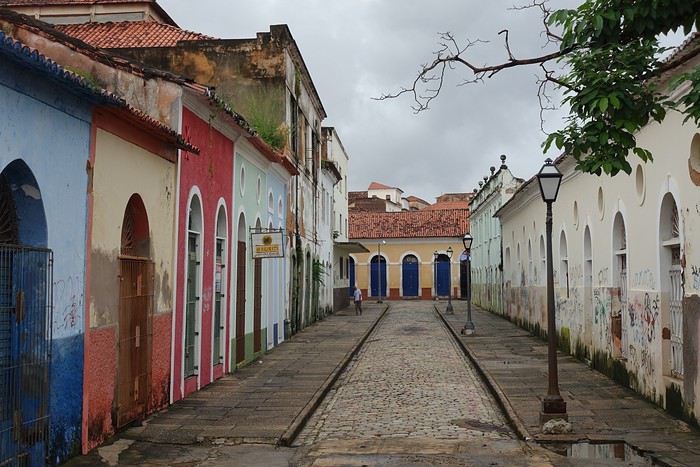
Weather-wise, March-April is the rainy season, so it’s the low season. Downsides: occasional heavy storms, not everything is open (hotels, restaurants, shops…), but upsides: hardly any tourists and lower prices. Temperature-wise: between 25-30°C year-round, 24/7. Health-wise: a few mosquitoes, nothing serious, but bring protection. Day 1: International flight from Lyon to Paris to São Paulo. We went through São Paulo because my husband was there for work. Hotel: Monreale Hotel: 20 minutes from the airport (free shuttle). For those extending a business trip with a vacation, you can leave your luggage at the hotel for free with no time constraints. Day 2: São Luís Flight from São Paulo to São Luís (3.5 hours). We arrived in São Luís in the rain. It felt very strange—the city was deserted. It was Sunday, so everything was closed (don’t count on a currency exchange office or travel agency being open). We struggled to find a restaurant for the evening. Half a day is more than enough to explore the city, but we really liked all the colorful colonial houses. Flight São Paulo/São Luís: 118 € Taxi from airport to pousada: 50 BRL for 4 Pousada Portas da Amazônia: 33 € per room


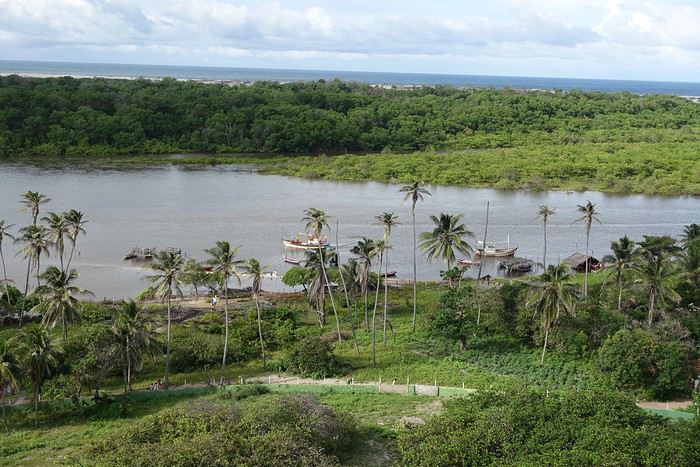
Day 3: Journey to Atins Shared minibus to Barreirinhas (about 4 hours—paved road) where we left our big bags, then a private boat down the Preguiças River to Atins. Stop at Vassouras, where we discovered our first lagoons and enjoyed excellent fish prepared by locals, then at Mandacaru to climb the lighthouse for a 360-degree view. Atins is a small fishing village lost in the sand. During our visit in the low season, almost everything was closed, so it was very quiet.


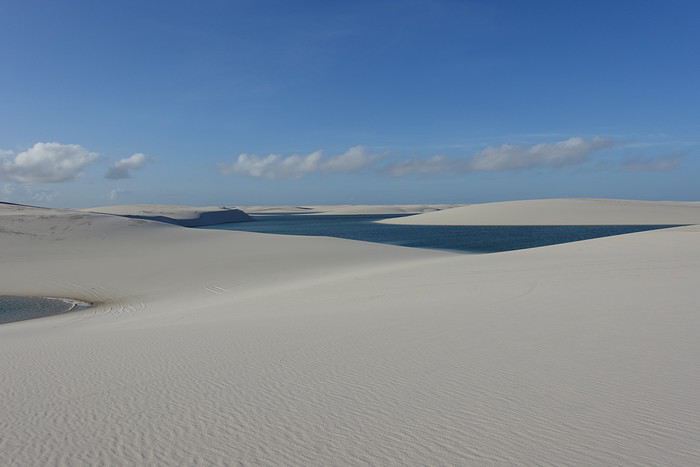
Day 4: Trek in Lençóis Maranhenses Park At 4 AM, we set off for a two-day trek in the Lençóis Park. One hour by 4x4 to reach the starting point. The sun was just rising. At first, there was some vegetation, but then it was just white sand and lagoons, which, contrary to what we thought, were already quite full for the season. As we went on, the landscapes got more and more beautiful. We never got tired of it. The weather was a bit cloudy but no rain, which was ideal to avoid the heat. We took occasional dips in the clear freshwater. Around noon, we arrived at Baixa Grande oasis. Rest and overnight in hammocks with a local family.

Day 5: Trek in Lençóis Maranhenses Park We left the oasis at 5 AM. Compared to the day before, we walked higher up, along the dune ridges, and it was even more stunning. Plus, the sun was shining. It was simply magical. Around noon, we climbed the last dune—on the other side, there was no more sand, just vegetation. A 4x4 was waiting to take us back to Barreirinhas (17 km). A few notes on the trek: - The 6-7 hours of walking are easy. The sand is hard, nothing like walking on a beach. We wore sandals or sneakers. We often got our feet wet crossing lagoons: at first, we took off our shoes, but later, we crossed fully dressed. Everything dries in 5 minutes! - Even with clouds, we got sunburned, so it’s best to wear long sleeves and pants (in addition to a cap, sunscreen, lip balm, water…). - It’s impossible to navigate the desert alone. With the wind, the dunes change shape and position regularly. A guide is essential.


Day 6: Parnaíba Delta A Jeep took us to Tutoia, where we boarded a boat for the Parnaíba Delta. Nothing exceptional. Normally, you can see red ibises at sunset, but we weren’t lucky—they were in their breeding season, so we couldn’t get close. We slept on Canary Island, next to a pretty fishing village.
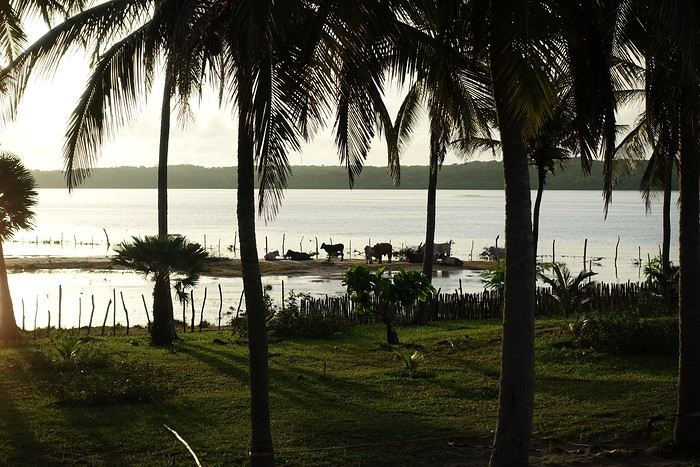


Day 7: Journey to Jericoacoara Boat to Tatus port, then a car to Jericoacoara (via Parnaíba and Camocim). From Camocim onward, it’s a sandy track. We arrived in Jericoacoara in the late afternoon—it was a brutal return to civilization 😅: tourists, shops, restaurants, pousadas, and that’s during the low season! Pousada Capim Verde: 120 BRL (basic rooms but well-located and cheap)
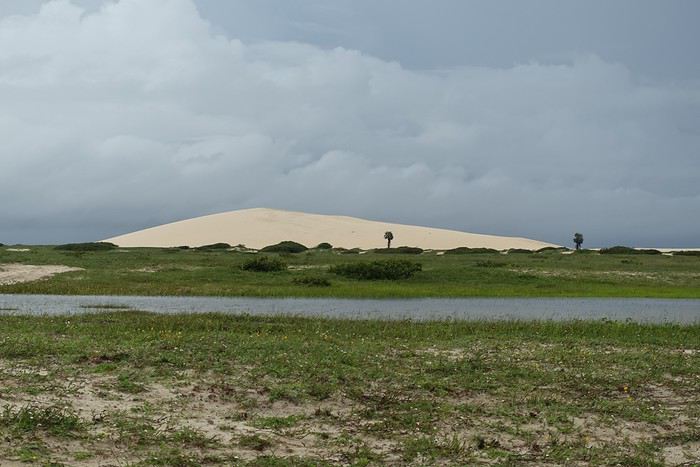


Day 8: Buggy tour Classic buggy tour (offered by all Jeri agencies) to Lagoa do Paraíso. Unfortunately, it rained a lot, and we cut our ride short. That was the only day slightly "ruined" by the weather. Buggy: 270 BRL

Day 9: Icaraí de Amontada To find some "peace," we headed to Icaraí de Amontada. On the way, alternating wind farms and coconut plantations. Icaraizinho is a village with a stunning beach (as long as you look toward the coconut trees, not the wind turbines). Little wind at this time of year, so no tourists. Pousada Pais Tropical (run by French owners): very nice, right on the beach. Taxi Jericoacoara–Icaraí de Amontada: 340 BRL Day 10: Transfer day to Pipa Taxi Icaraí–Fortaleza: 350 BRL Flight Fortaleza–Natal: 37 € per person Taxi Natal–Pipa: 180 BRL Pousada in Pipa: Aconchego, run by French owners. Great welcome, quiet, perfectly located in the city center.
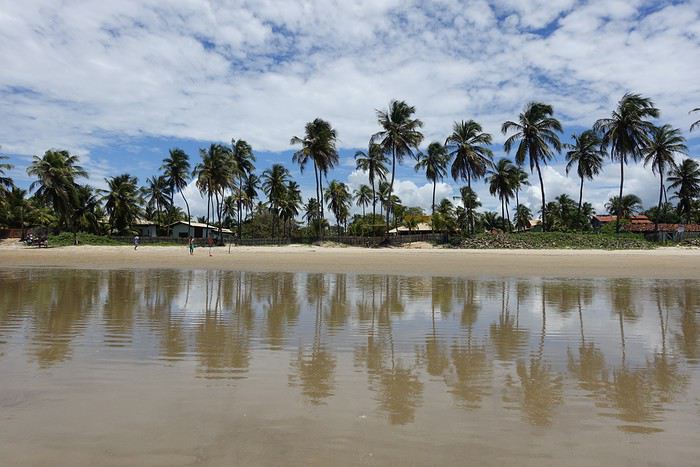
Day 11: Pipa – Dolphin Beach Skeptical, we set off in the morning before high tide (afterward, it’s hard to pass) to try and see dolphins. And we saw them! Mothers with their calves swimming in the waves, appearing where and when you least expect them. They’re not afraid of humans and pop up just a few meters away. It’s unforgettable. No need to take a boat tour—they come to the same spot and stay for 5-10 minutes. For those who don’t want to swim (there were waves and surf when we were there), the dolphins are visible from the beach.

Day 12: Pipa – Tibau do Sul via the beaches A lovely hike where you go from one beach to another until Tibau do Sul: 2 hours of brisk walking! We stayed a while by the lagoon before taking a shuttle back to Pipa. Shuttle: 2.5 BRL per person
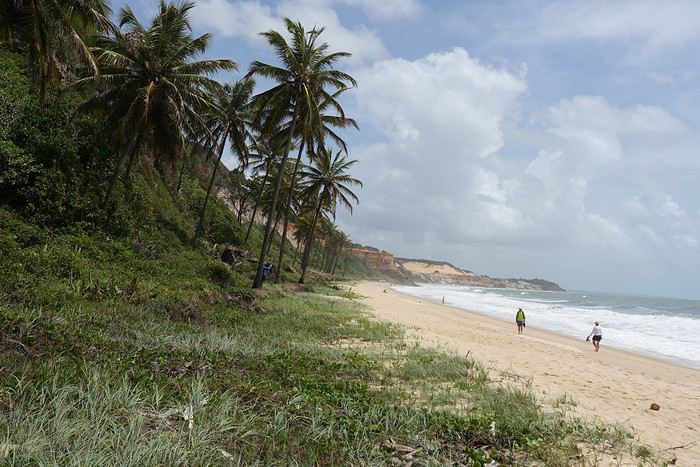


Day 13: Pipa – Dolphin Beach We wanted more—it was too good, and we saw them all day long.

Day 14: Recife A taxi took us to Olinda, where we’d booked a pousada. In the afternoon, we took the bus to Recife: some pretty facades, but nothing unforgettable. Taxi Pipa–Olinda: 400 BRL Bus Olinda–Recife: about 4 BRL per person per trip (45 min) Pousada Villa Olinda (in Olinda): 99 BRL—very well located

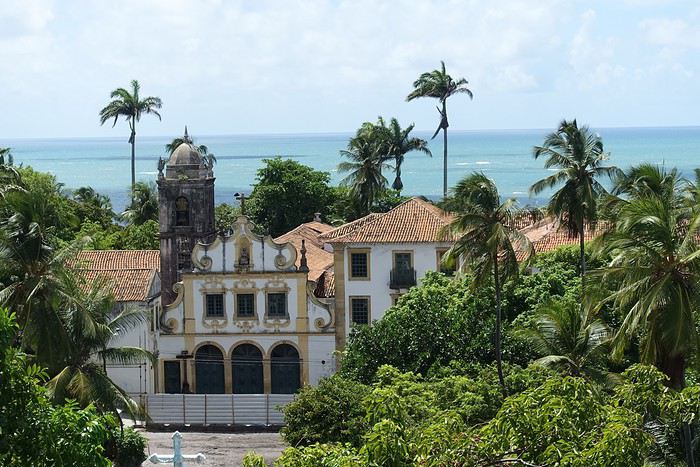
Day 15: Olinda All day walking around Olinda, a small town with colorful houses and many churches. In the late evening, we flew to São Paulo. Uber Olinda–Recife airport: 32 BRL Flight Recife–São Paulo: 123 €


Day 16: São Paulo The hotel in Guarulhos is about an hour by public transport from downtown São Paulo. Short on time, we didn’t see much of the city. We went to Avenida Paulista: it was a Sunday, with lots of cultural and sports events, and the avenue was closed to cars. It was nice. Then we walked down to Ibirapuera Park, but it was marathon day, and we couldn’t get in. Bus Guarulhos–first metro station: 4.70 BRL Metro ticket: 3.8 BRL

Conclusion: With this second trip to Brazil, we discovered another side of the country—a poorer region with fewer infrastructures than the Rio area. The trek in Lençóis Maranhenses Park was the highlight of the trip—landscapes you won’t see anywhere else in the world, worth the trip on their own. We also won’t forget swimming with the dolphins in Pipa.
Open
Wildlife and Bird Guide for South Africa
Hi, I'm looking for a good (digital) wildlife and bird guide for South Africa. I'm planning a 2-month road trip through the parks and tourist spots.

I'm torn between *Duncan Butcher’s Wildlife of South Africa*, *Wildlife of Southern Africa Collins Traveller Guide*, and *Newman’s Birds Guide* for birds. Any other suggestions?! It can be in English, French, or Spanish! Thanks
Open
French-speaking driver/guide in Rio de Janeiro
Hello everyone,

We’re going on a cruise in January 2017 from Rio, and I’m looking for a French-speaking driver/guide in Rio de Janeiro.

Can anyone help? Do you have any contacts?

I’d also love to hear your tips and ideas.

Thanks in advance, and have a great day!

Francine
Open
Military service in Algeria
salam alykom my Algerian brothers I’d really like to get more explanations about my situation. I’m a student and my problem is military service—I didn’t register from the start and I didn’t do the medical visit, which means I’m not entitled to a deferment or anything. But I know I’m not being actively searched because I have a friend who confirmed it from the gendarmerie office. Plus, I only have a call-up order, alhamdulillah. I have the chance to travel to live in another country, and what I want to know is: when I arrive at the airport here in Algiers, will customs stop me and not let me through because of all this? barak allaho fikom
Open
Medical tourism in Costa Rica or Mexico (dental care)
Hi there, I’ve started looking into getting dental implants, possibly in Costa Rica or Mexico. Do you have any clinics to recommend or ones I should avoid? For the next steps, I need to choose between Cuba Medika or Medigo—these are agencies that help with medical procedures. Do you have any info on either of them?

Thanks so much for your help!
Open
Equipment for wildlife watching in South Africa
Hi there,

We're now just 5 weeks away from our trip to South Africa 🙂 and *so* excited to explore (just a tiny bit of) this amazing country. I need to buy some binoculars but have no idea which model to choose. I don’t really know what to look for (and I don’t want to spend too much). Thanks in advance to anyone who can give me some tips!

Françoise
Open
Eco-volunteering travel scam
Hi, I just wanted to step in and warn people who are interested in doing eco-volunteering abroad. I had this experience recently and I’m really disappointed. Watch out for pompous and enticing websites, and their associated blogs where all the comments are inevitably positive. In my case, I went to Kenya after checking out the many sites of this organization (no fewer than 4 links), which boasted about organizing eco-volunteering and eco-solidarity activities, helping the local population, including an orphanage and a refugee camp. In reality, we ended up with a couple of opportunistic French people who treated their staff with contempt and authoritarianism, spending their days on the internet creating new sites to attract more clients. No contact with the local population, let alone the orphanage or refugees, and constant denigration of Africans. The presence of their staff, who were devoted and lovely, made this trip a success. We spent all our time with them and managed to ignore their bosses. We left a review on Tripadvisor, which was quickly contested by the director of the establishment, but we don’t want to let people like that get rich by taking advantage of tourists’ generosity. That’s what we think of Muringa Farm in Subukia, Kenya, and we’re counting on the forum to prevent others from being scammed. Thanks
Open
It seems to me that poverty would be less painful in the sun
"It seems to me that poverty would be less painful in the sun" wrote Aznavour...

Not sure...😕 Who can prove that people in hot countries are happier than others? What do you think?

Is it better to live in Montpellier than in Lille? Are the Pygmies happier than the Inuit? Are Canadians less happy than the people of Louisiana? Are there more French expats in hot countries?

And your travels? Do you choose your destinations based on the climate? Do you rejoice when a bit of sunshine appears?
Open
I'm wondering... Or a little Véfe-style summary
My brain’s short-circuiting—I’m overthinking, overanalyzing, drowning in questions... So I’m turning to you, you with your sharp, no-nonsense advice. You’ll help me, I just know it!

Here’s the thing: I don’t know what to do with my life. I want to travel the world, but I think you need money for that. Should I work to save up a nest egg first, then leave? And if I’m unemployed, can I still just go anyway?

Okay, but *where*? If I go to Cuba, I’ll fall in love with some guy who’ll want to marry me. If I go to Arab countries, I won’t be able to walk around in shorts. If I go to India, I’ll see rats everywhere and beggars dying in the streets. If I go to Argentina, I’ll probably meet aliens. If I go to Africa, I’ll see lots of Black people living in huts, and in Canada, I’ll run into bears (though, honestly, that’s not so bad—I like bears). I could keep going with examples, but I don’t want to wear you out!

And then there’s the language thing—I only speak French. How am I supposed to get by in countries where they don’t speak it?

And what am I even going to eat in all these places? Fries won’t be everywhere, that’s for sure!

But I *still* want to go, to meet people and to *really* meet *myself*. Isn’t that the point? You all say it’s important to go somewhere else to find yourself, so...

Except I’m terrified of flying. I’ve done it a few times, and every time we land, I clap because I’m so relieved to have made it in one piece! And then—bam—I just read that clapping is *super* lame, which explains why I’m always the only one doing it. Everyone else knows it’s dumb. Maybe I just travel with really smart people?

Anyway, while I wait for your brilliant advice, I’ll start packing. Wait—rolling suitcase or backpack? Ugh, why is traveling so complicated! Maybe I should just stay on my couch and watch travel documentaries, like *Peking-whatever* or *Ko-thingy*. My brain would stay intact, and I wouldn’t have to ask so many questions.

But if I stop asking questions, why am I even here? Isn’t the whole point of a forum to ask questions and get answers? Or is it not *just* for that? Sometimes people argue, sometimes they insult each other, sometimes they laugh, sometimes they get bored... Is it just like real life, then? Not even funny...

Dolma
Open
Who really loves India?
hi,

sorry for the accents, I’m in Dubai right now. I just got back from India after a short 10-day trip to the Golden Triangle (Delhi-Jaipur-Agra).

I noticed a lot of hippie-style Anglo-Saxon tourism. Sure, there’s the change of scenery, the temples, the Taj Mahal, and the low cost of living, but personally, all I saw was: misery, filth, chaotic traffic, non-stop honking, diarrhea despite eating at restaurants recommended in the *Routard* and *Lonely Planet* guides, noise, lots of homeless people, delayed trains with uncomfortable first-class carriages, pushy vendors, rickshaw drivers, and beggars, humid heat, dust, nothing worth bringing back, no sidewalks so you’re constantly on edge, questionable hygiene in hotels and restaurants, and locals who treat visitors like cash cows.

So my question: What do people really love about India for those who go multiple times, especially on the same circuit?

Personally, I think it’s just the fact that you can spend without worrying about your budget, and that’s what attracts the French during this period of low purchasing power.
Open
Translation of Fang (Gabon)
A friend from GABON sent me these two sentences in the Fang language: Magnere wa YE MA NZOQUE YE MA BO MINAL Could you translate them for me? It's very important to me. Thanks
Open
Using a mobile phone in New Caledonia
Hi there, I’ll be spending a good month in New Caledonia, plus Maré, Lifou, Ouvéa, and the Isle of Pines, and I absolutely need to be reachable and make local and international calls. What’s the cheapest way to use a mobile phone? Thanks for your tips! Best regards, :-)
Open
Questions for an off-the-beaten-path trip in South Africa
Hi there, Hope the pros are on the lookout!

March or May 2027. Around 15 days in the Western Cape, then 15 days in the southern KNP.

Arrival either in PE or George. The pros know I’m somewhat familiar with the area... that I don’t camp... that my accommodations can be simple and remote, self-catering but with basic comforts... that I’m looking for spots that are a bit off the beaten path... in a relaxed mode... From George: Late arrival... need some rest... Herolds Bay from George to the N1. Tsitsikamma is catching my eye (Storms River)... with or without a stop in Knysna. Question: What’s the current condition of the pass from Knysna to Uniondale? R339. And while I’m at it, the condition of the R340. Tsitsikamma, Knysna, and my questions still apply if arriving in PE.

Is the Swartberg still closed? Any recommendations for accommodation in Prince Albert? If I cross the escarpment, I’ll continue via Anysberg NR, Touwsrivier... any thoughts? From there... Tankwa Karoo or Mount Cedar (or both). Then heading back down to the coast... the highlands of Hermanus or Kogelberg NR (any opinions on the latter?).

Or,

A more classic route along the coast...

If I arrive (fairly late) in PE... any ideas for accommodation in that little area? Given that Nyathi Camp is winking at me... (For context... a while back, I stayed at Riverbend (same Addo sector, private concession)... and I visited the ruins of that abandoned lodge at the time, which has clearly been renovated since... located in a very quiet part of Addo...). Any feedback from the pros? Well, that’s about it... I’m open to any other tips or advice!
Open
NCL Cruise to Iceland
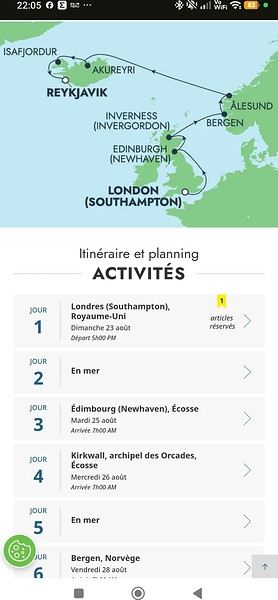
Hello! After a lot of hesitation between different cruise lines (Explora, Oceania, YC, HAL, NCL) and several destinations like Norway, Ireland, and Iceland,

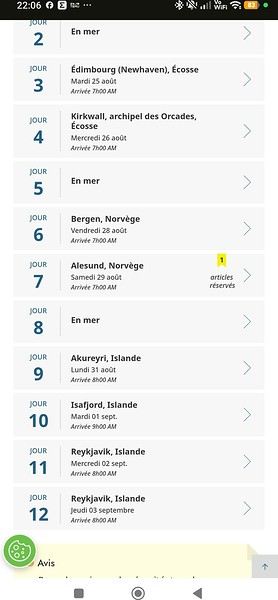
I finally chose NCL’s Star for Iceland. I had already looked at this itinerary when I went to Scotland in April with CFC, but it was really expensive. You should know that CFC often offers last-minute deals 45 days before departure (the point when you can no longer cancel or modify). So, I got a great opportunity and grabbed it. Departure is on August 23rd.


Open
Issue with address in K-ETA authorization application
hi there I’m heading to Seoul in September, and to do that I need to get a travel authorization that we apply for through K-ETA....... turns out I can (barely, I admit) fill out the form up to the address of our "stay location," but every address I’ve entered has been rejected by the system. I’ve tried my hotel, the Lotte Hotel (which is well-known in Seoul), the airport—basically, I’ve entered at least 20 addresses, all rejected....

So, to anyone who’s successfully gotten the authorization, could you tell me which address you used to get that "elusive" approval?...

Thanks for your help
Open
What's the current situation with the wildfires in Canada?
Hello everyone, We’ve planned a trip (retired couple) for late August to the first half of September in Western Canada. Classic itinerary: arrival in Calgary, Banff, Jasper, Clearwater, Whistler, Vancouver Island, departure from Vancouver. I know you can’t see into the future any better than I can, so I’m obviously not asking what the wildfire situation will be like in a month... But if any of you could let me know if, CURRENTLY, there are major difficulties—not just for locals, of course, but for tourists as well? We’re hesitating between taking the chance or canceling what we still can. We’re not young anymore and don’t have the flexibility we once did... A thousand thanks to those of you on the ground or with contacts there who can help us make this decision!
Open
9-Day Trek in the Balkans
Hi there, Here’s a recap of a trek through the Balkans covering three countries: Albania, Montenegro, and Kosovo. I was with a friend, and we didn’t do the full route (only one day in Kosovo). It was a wonderful trek through snow-capped mountains and vast flower-filled meadows, meeting incredibly welcoming people. At the end of the travel journal, I’ll share what I loved and what I liked less.

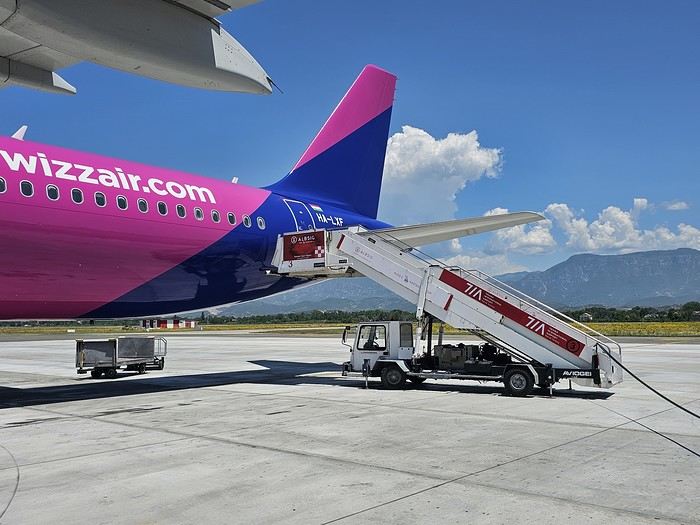
Day 1: Flight from Paris-Beauvais to Tirana with Wizz Air. Since Albania isn’t part of Europe when it comes to phone service (at least not yet! :-)), we had to buy a physical SIM card—otherwise, the bill would’ve been sky-high if we’d used our French plan! We got one from Vodafone AL at the airport. You can buy online before leaving with a virtual SIM (e-SIM) for compatible phones, so you don’t have to swap cards. But given the uncertainty about choosing a plan online, we preferred buying one directly at Tirana Airport. Cost: 31 € for 100 GB. That’s way too much—100 GB is overkill. For 40 GB, it’s 27 €, and the plan lasts 21 days. The price difference isn’t huge, and it was cheaper than online. This plan covers all the countries along the Balkan range. Money tip: All guesthouses and accommodations accept euros. The local currency in Albania is the LEK. In Montenegro, it’s the euro. Bank fees for withdrawing money from an ATM in Albania are pretty steep: 8 € for a withdrawal of 600–700 LEK (about 200 €)! So it’s better to withdraw cash (euros) in France. Oh, and we booked all our accommodations before leaving, but payment is always in cash. Budget around 400–500 € for 9 days of trekking.
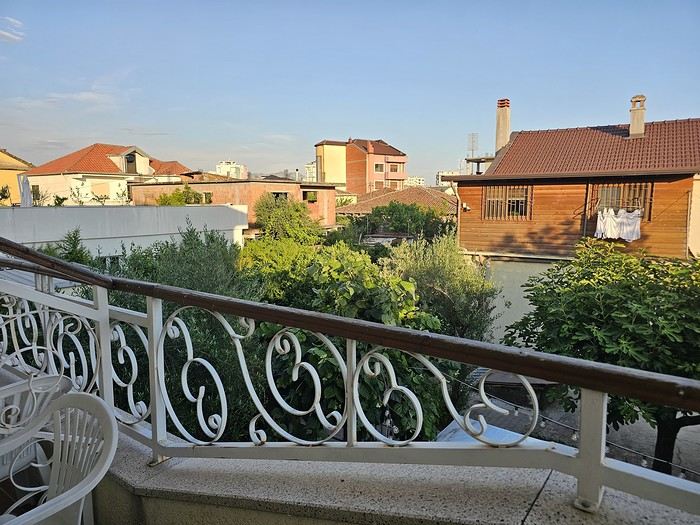
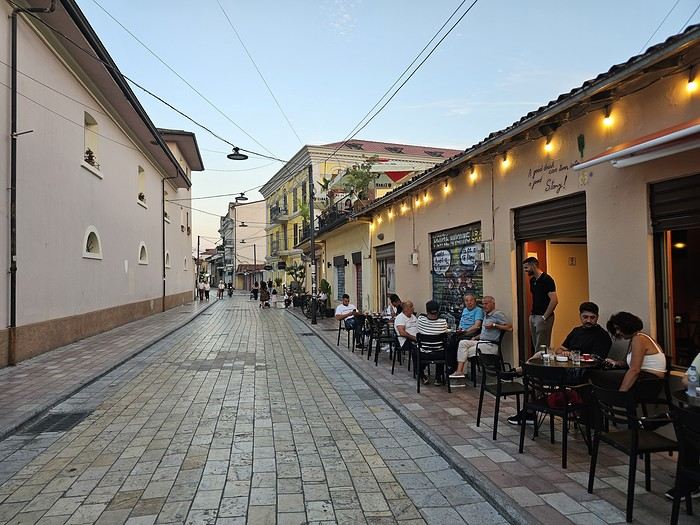
Then, a transfer the same day to Shköder, about a 2-hour bus ride. Cost: 10 € per person. Tickets bought directly on the bus. We spent the night in Shköder at a very clean guesthouse, Open Doors B&B. It had a small balcony overlooking the city. I really liked Shköder, especially its pedestrian street lined with restaurants and lit up at night. It’s a great place to stroll and eat. The food isn’t expensive—two big salads and two beers: 14 € :-) . Fruit prices are also very reasonable: 3 € for a kilo of cherries, compared to 9–10 € in France. Religions coexist peacefully in these countries—Catholics and Muslims. From our balcony, my friend heard the call to prayer for the first time, coming from one of the city’s mosques.
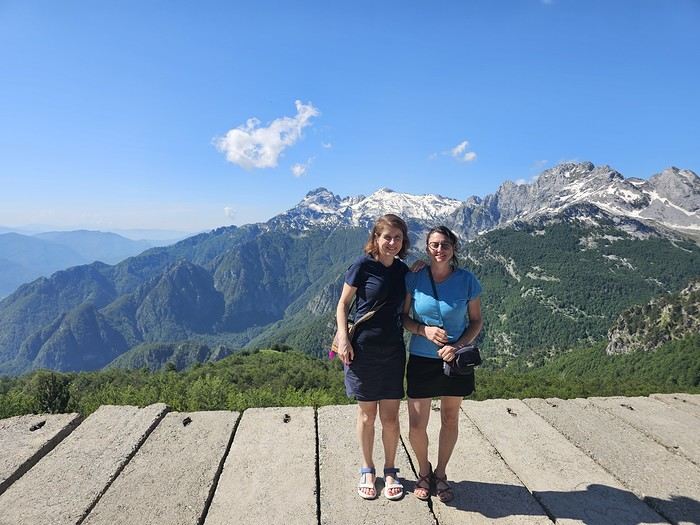
Day 2: Bus ride to Theth, about 1,100 meters in elevation gain, the starting point for our hike the next day.

The trip took 2 hours and 40 minutes with a break in the middle. The bus was affordable, but taxis also make the trip—though they’re very expensive.


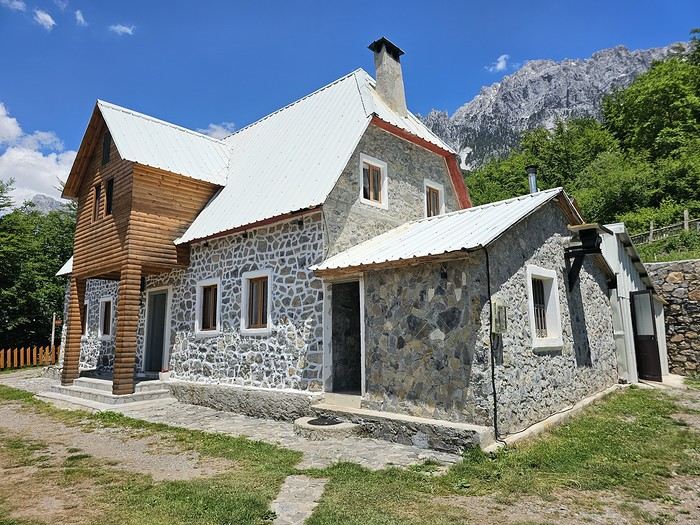
We slept in the heights of Theth at a new guesthouse, "Mountain Vista Shkafi," with an amazing view.
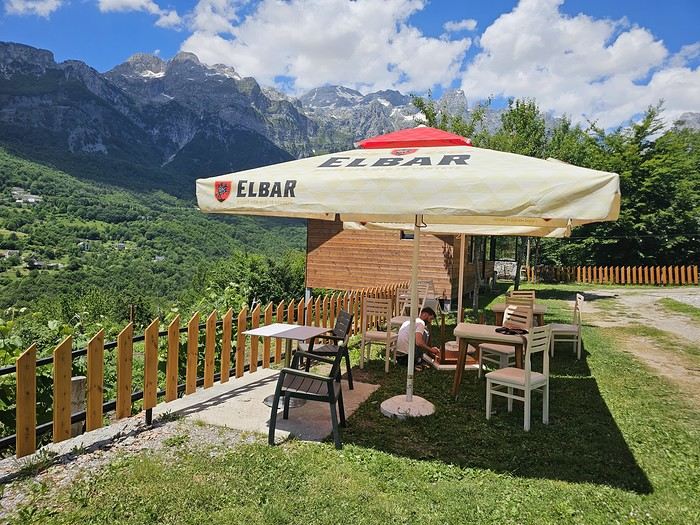
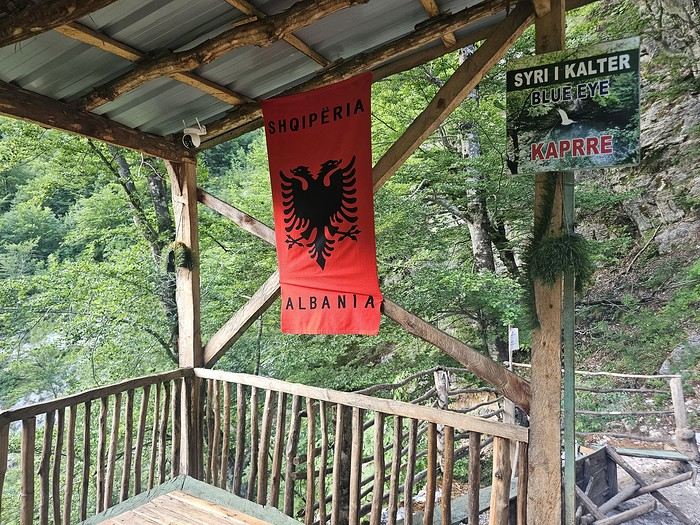
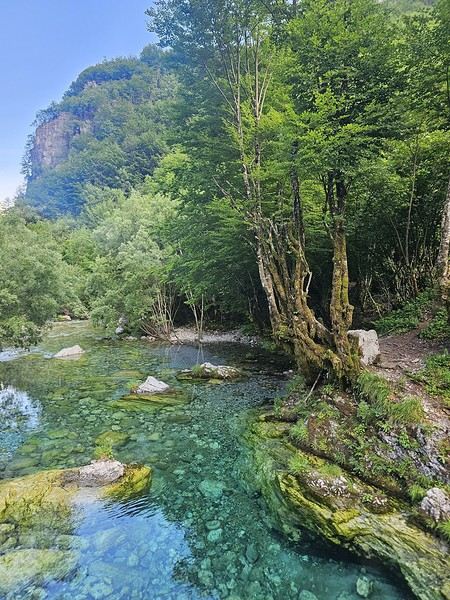
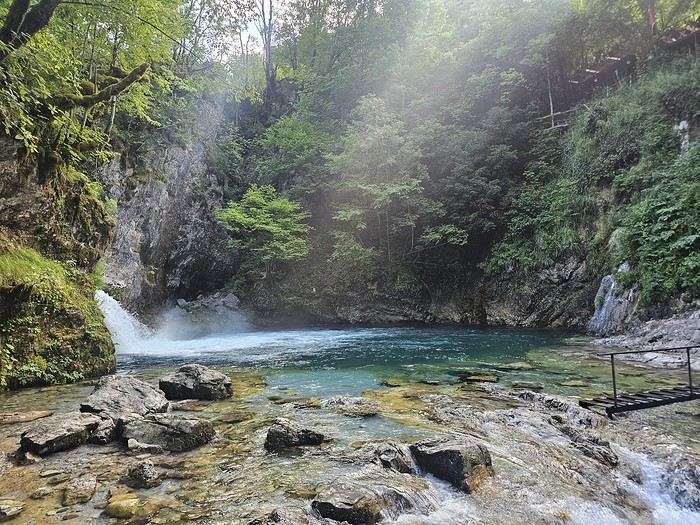
The family was adorable. The husband is a handyman and built almost everything himself. Their baby is named "Sky"—such a cute name, right? :-) Throughout the trek, I found the guesthouses very clean, and the hosts think of everything—no need to bring soap or shampoo; they provide it. Lunch in Theth at a traditional restaurant on the main road. We tried "Tave Dheu," an Albanian dish with beef, cabbage (very common), and cottage cheese. Delicious but not quite filling enough. For dessert, a honey cake that was perfectly moist—such a treat! Desserts like this are rare; sometimes they serve watermelon instead. We took a small private bus for 5 € to the "Blue Eye" parking lot, then walked for about 45 minutes to reach a stunning natural site—a kind of lagoon with incredibly blue water. The bravest can swim, but the water’s freezing!


That evening, we dined at "La Montagne Blanche"—excellent! A delightful mix of grilled meats with potatoes and grilled peppers. Some watermelon slices (which I’m not a fan of) and the famous Raki, a brandy served in Turkey and the Balkans! It was my first time drinking brandy "bottoms up." 😉

To be continued... 😉
Open
A Slightly Less Touristy Japan
Hi everyone, I’m Patrick, 67 years old, a seasoned traveler (already 22 trips outside Europe). In autumn 2025, I took my first 3-week trip to Japan, with stops in Tokyo, Kamakura, Matsumoto, Kamikochi, Takayama, Kanazawa, Kyoto, Nara, Osaka, Koyasan, Tokyo again, and Nikko. I wanted to go back in May 2026 and explore some lesser-known places to complement my first trip. Last year, there were four of us traveling together to discover Japan (a fairly classic itinerary). This time, I’ll be traveling solo for part of the trip and with a couple of French friends for the rest. The weather was gorgeous in May, averaging around 25°C, with two very hot days in Kyoto and only two rainy days. As usual, I organized everything myself, gathering plenty of information from various sites, including this one.

Transportation: An ICOCA card is essential. I got a 5-day Kansai-Hiroshima pass because I took the shinkansen between Hiroshima and Osaka three times, and it paid for itself quickly.

Accommodations: Mostly through Booking. No issues at all. Average cost was 46 € per night.

Meals: For breakfast, I alternated between buying food at a konbini to eat in my room or on the train and grabbing something at local cafés. For lunch and dinner, I tried to vary my meals as much as possible—lots of sashimi, sushi, and ramen. Okonomiyaki in Osaka and Hiroshima. Oysters in every form (raw, grilled, fried) in Onomichi and Hiroshima. A variety of seafood (shrimp, shellfish) in Hiroshima and Matsumoto. Fish whose names often escaped me, but notably mackerel and eel (unagi). Tempura and gyoza. Chicken skewers (yakitori) and one teppanyaki meal. One omakase meal (9 different dishes). In the end, not much meat aside from a few yakitori skewers. No splurges on super expensive wagyu or Kobe beef. Average dinner cost: 4,800 yen, drinks included.

The Itinerary: Day 1: Departure from Brussels Day 2: Arrival in Osaka Day 3: To Himeji, then Kurashiki Day 4: To Fukuyama, then Tomo no Ura, then Onomichi Day 5: Cycling the Shimanami Kaido Day 6: To Takahara, then Hiroshima Day 7: To Kyoto to attend the Aoi Matsuri parade Day 8: To Miyajima Day 9: Hiroshima, then Kyoto Day 10: Southern Kyoto Day 11: Northern Kyoto Day 12: Final day in Kyoto, then to Nagatsugawa Day 13: Start of the Nakasendo Trail (Magome to Tsumago) Day 14: Second day of the trail (Kiso Fukushima) Day 15: Third day of the trail (Narai), then Matsumoto Day 16: To Mt. Fuji (Kawaguchiko) Day 17: To Tokyo Day 18: Excursion to Enoshima and Kamakura Day 19: Flight home, with a 10-hour layover in Hong Kong Day 20: Arrival in Brussels
Open
Do you need an international driver's permit to rent a car in Australia?
Hi everyone, I have to leave for Perth, Australia in a week, for 7 days, and I couldn’t get my international driver’s permit due to processing and delivery delays.

The information I’ve found about whether an international permit is required is contradictory. Some sources say you need one, others say you don’t.

Could anyone let me know if an international driver’s permit is necessary to rent a car in Australia (Perth), or if a French license is enough for a 7-day rental?

Thanks in advance for your advice
Open
Trip to Uzbekistan – Autumn 2026
Hello! For the few who’ve traveled to Iran, loved the country, and discovered its incredible thousand-year-old beauty and the amazing kindness of its people—one of the last places still untouched by mass tourism— I’d have loved to go back, but given the current situation, it’s not possible right now, and likely won’t be for a long time. In the meantime, a neighboring country, Uzbekistan, definitely deserves a visit! I discovered it through photo reports, and it reminds me a lot of Iran. So, I’m planning to check it out. On foot, on horseback, or by car 😄—this time, I’m going with a car 🚗😊😍 I’m looking for an independent, motivated travel companion to explore this seemingly wonderful country. Who’s in? ⭐
Open
Review of our cruise on the Renaissance - August 1-11, 2026
Just back from our first cruise on the Renaissance, and I’d like to share a few thoughts about life on board. Our feelings are mixed—we wanted a change after several MSC cruises, but the value for money on this repositioning cruise left us torn. After taking advantage of successive promotions, we finally secured a well-located balcony cabin for 2600 € (almost 50% off the brochure rate). Given the amenities and the ship’s age, this now feels like the absolute maximum we’d pay for that period. Overall, we were happy with our vacation on board, but a few details—when added up—left us with a somewhat mixed impression.

The pros: - Ship size - Reasonable noise levels, except in the restaurants (aside from the covered pool area) - Spacious balcony cabin (20 + 5 m²) with plenty of storage and a bathtub with jets - Understated, tasteful decor - French language spoken on board - Friendly staff for the most part - 100% French-speaking clientele - Decent food with French dishes (even with an Indian chef) - Tables for two available (though the ship was full, so no changes possible) - Some high-quality shows, thanks to an excellent English-speaking troupe - Interesting lectures (especially on history and cetaceans)

The cons: - Unreliable air conditioning in common areas (you’d go from a freezing lounge to a hot one, as if the system only worked in certain spaces at certain times) - Aging ship with a few glitches (noises, AC, toilet flushes, lights) reported at reception (luckily, our only issue was the bathroom door not closing...) - Industrial, thawed-out bread and pastries (a letdown for a ship with a French image) - Limited fruit selection (often just apples and watermelon/melon) and not much variety in vegetables - Worn, sometimes stained restaurant towels

We’re not ruling out another cruise on the Renaissance—their itineraries are unique—but only at a very competitive price.
Open
A Guide to Kashmir
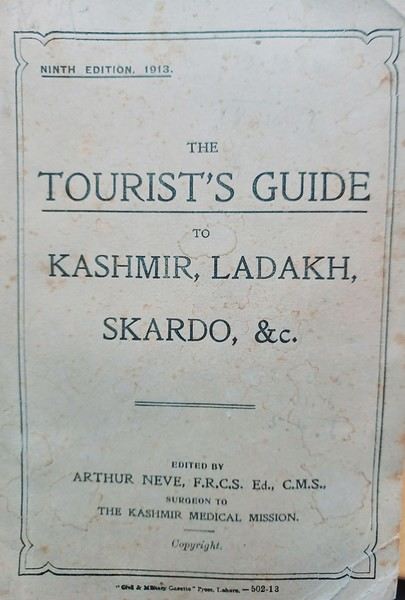
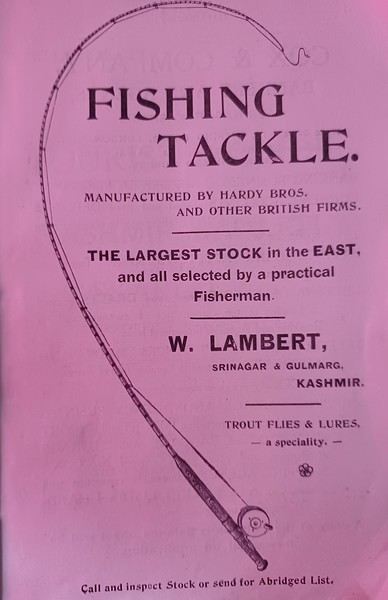
Arthur Neve (1859–1919), an English doctor and missionary, dedicated most of his life to his passion for Kashmir, a region he wrote several books about—including this guide (18 editions published between 1890 and 1945).

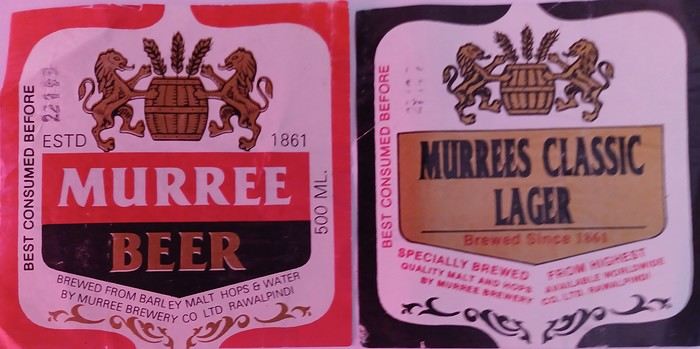
This copy (225 pages, 9th edition, 1913), published in Lahore, features dozens of detailed itineraries with maps, covering campsites, mountain pastures, river crossings, and more. Among them, you can trek from Srinagar to Khapalu and then to Baltistan, or "travel" from Leh to Yarkand (Xinjiang) via the Nubra Valley, along with other unexpected destinations. The guide also includes suggestions for shikara rides, houseboat rentals, and gear for hunting, camping, fishing, and photography. Plus, it lists various supplies like chocolate, Egyptian cigarettes, frames, and alcohol. Note that the Murree Brewery, relocated to Rawalpindi, is still operational—though, in theory, the predominantly Muslim population can’t access it. I found this book in a box of old books, and you can still find copies on Anglo-Saxon websites—though often at prohibitive prices.
Open

You might also like