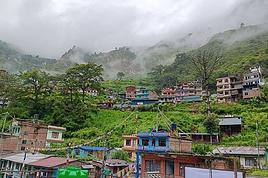
hi, I'm looking for info on possible transport to Ilam and then Phidim from KTM, as well as details about this trek. I found the PDF but no feedback from those who’ve tried it... have a great day, Aichatou
42 similar discussions in English
hi,
we’d like to do a trek in Nepal, and we’re thinking of the Annapurna Circuit—it’s cheaper than the Everest trek.
Our plan is to do it without a guide or porter. We’re used to the mountains, not so much to high altitude, but if we acclimate well, there’s no reason it should go wrong ;)
No guide = handling permits, transport, and accommodation on our own...
So my question is: is it possible to book lodges in advance before departure? Or, even better, day by day?
I’ve read some older posts, so I’m asking again to get up-to-date info on what’s happening now. We’re planning to go mid-November 2026 or March 2027.
Thanks for your tips! :)
Namaste everyone,
We went to Nepal last October and literally fell in love with this country (like so many others, it seems). During our trek, we had the chance to meet and travel with an incredible independent local guide, Apsara Luitel. She told us about a unique project she’s organizing starting mid-May, and we wanted to share it in case it interests anyone. We mentioned it on another travel forum, but just in case, we’re posting it here too to reach as many people as possible.
Apsara, who knows the Api mountain valley (a name as joyful as it is intriguing!) in Nepal’s Far West (on the border between India and Tibet, at the edge of the world) perfectly, is offering an off-the-beaten-path trek for a group of 3 to 8 people max. The program? An authentic and preserved itinerary combining homestays and small mountain lodges, all the way to the Api base camp. Once at base camp, locals will guide us to secret spots only they know, where we’ll harvest yarsagumba (those famous caterpillar-fungi, rare and prized for their medicinal properties in traditional Chinese medicine—they were going for $20,000 per kilo last year!).
Mid-May is the ideal time to discover this almost unexplored region and take part in harvesting these natural treasures. This kind of adventure, led by an inspiring young woman like Apsara, is rare, and we think it could appeal to Nepal lovers and those who enjoy authentic treks far from the usual tourist routes.
No matter how many participants there are (between 3 and 8), there will always be two guides: Apsara, who speaks English (and is learning French!), and a French-speaking guide. The dates are flexible around May 15th, depending on the availability of those who’d like to take on the adventure.
Hi there.
I know this topic has been covered countless times, but I can't seem to find clear answers to my questions.
I'm currently looking into doing the Three Passes Trek, including some adjacent routes like EBC, Kala Patthar, Gokyo Ri, and maybe Chukung Ri. I'm planning to do this trek between April and May.
But I have a few questions.
In terms of difficulty, I think I'm physically up for it—I'm athletic and used to mountain hiking in France—but is there any specific training I should do? Just to note, I did the Annapurna Base Camp last year without any issues.
Is it doable without a guide? I’d prefer to skip a guide and porter so I can really move freely. Is that crazy, or is it common? I’m mostly concerned about the Cho La and Renjo La passes (more about the route and risk of getting lost than safety).
Finally, I’m wondering about the duration. I’m a fast hiker, but I plan to take my time to acclimatize properly and enjoy the scenery (and maybe relax a bit in those landscapes🙂(By the way, does living at 2,000m altitude for 90% of the year help with AMS?) How much time should I budget for the trek to be safe, even if it means spending 2-3 extra days around Lukla-Namche? I was thinking of setting aside 20 days—does that sound reasonable?
Thanks for reading, and sorry in advance for any spelling mistakes. If I think of more questions, I’ll post them in this thread.
Cheers
We did the Langtang trek (hike) from September 10th to 17th, with the first and last days being the trip from Kathmandu and back—so 6 days of actual walking. It’s a fairly well-known trek but certainly not as famous or crowded as those in the Annapurna or Everest regions, which is why we chose it.
In theory, it’s mandatory to have a guide for this trek. In reality, it seems there are ways to bypass the regulations: we met at least two people hiking without a guide—a South Korean, a New Zealander, and possibly also a couple of English women and an American couple, though we’re not sure if they had a guide.
The agency we booked with had told us it was an affordable trek for relatively older people in good shape—which is our case (I’m 72 myself). I have to say upfront that we found it quite challenging, maybe because we didn’t have good weather—it was the end of the monsoon season. To be clear, no matter your fitness level, I’d say doing this trek in the middle of the monsoon season would be suicidal.
Day 1 – Journey from Kathmandu to Syapru Besi
On Monday, September 8th, there had been violent protests in Kathmandu against the government, which had, among other things, blocked access to social media and been accused of nepotism and corruption. There were 19 deaths. The situation was very tense on the day of our departure, Wednesday the 10th. The agency warned us that public transport was very unreliable. So, we decided to take a jeep, at an additional cost of $100 ($160 minus what was already budgeted for the bus).
We left a little before 7 a.m. and it took us a good hour just to reach the outskirts of Kathmandu. Along the way, we saw several houses and vehicles set on fire by protesters.
The road to Syapru Besi is only 120 km, but it’s frankly awful. It’s always narrow, winds through endless mountains, and the shoulders range from bad to confusing to nonexistent. Several sections are just dirt tracks. We didn’t regret opting for the jeep, as we could stop several times at our convenience—if only to let Y (my Thai partner) throw up everything she had. She’d taken her usual motion sickness medication, but the constant turns, accelerations, and braking eventually made her terribly carsick.
In Nuwakot, we stopped for breakfast at a nice little restaurant, Jimbu. It was around 8:30 a.m., and we’d barely covered 60 km. The restaurant has a lovely garden overlooking the Trishuli Ganga, the river flowing down from Syapru Besi. First photo: the river in the bottom right corner, mist and clouds over the mountain on the other side.
An hour later, my second photo: the hills along the Trishuli Ganga. You can see the different crops—lush green rice paddies in the lower right and corn, already yellowed and likely harvested, in the foreground on the left. And of course, the mist and clouds through which you can glimpse the mountain on the other side of the river.
Hello,
I’m planning to do the Great Traverse from Sherpani Col to Amphu Lapsta via Makalu Base Camp in October 2025 (22 to 23 days), from Num to Lukla—a route very rarely completed. It’s considered Nepal’s most challenging trek, but also likely the most breathtaking, with unique views of Makalu, Everest, Baruntse, Ama Dablam, and more.
I’ve already done many treks and trekking peaks in Nepal (three high passes, Mera Peak, the full Annapurna Circuit, North and South Kanchenjunga Base Camps, Manaslu Circuit, and the full traverse of Lower and Upper Dolpo).
We’re already two confirmed people and three with options. I’m looking for two or three additional travel partners for this adventure, planned between mid-October and mid-November 2025. The organization will be handled jointly with a well-known agency in Kathmandu that I trust, which has the guides and expertise for this kind of trek—something most agencies can’t offer.
Alpine experience is required due to technical challenges (technical ascent and descent of Sherpani Col and Amphu Lapsta with rappelling, glacial walking/steep slopes >45°), altitude (around ten days above 4,000m, with passes over 6,000m—Sherpani Col and West Col—and several nights in tents above 5,000m), and the remoteness of this traverse, which is done with tents, porters, and cooks.
Don’t hesitate to get in touch for more details about this incredible Himalayan adventure, rarely done as a traverse. See you soon
Hello,
67 years old, been hiking for a long time, staying in mountain huts during the season and trekking in Nepal for a few years now (three treks with 2/3 people: Mustang, Gokyo Lakes, Kanchenjunga South BC, and two solo treks: Langtang-Gosaikunda in 2025 and Makalu BC in 2026).
I’d like to share another project like Lower Dolpo, Kanchenjunga North and South BC loop, or Manaslu Circuit. Open to other destinations but would prefer to avoid overly touristy areas.
Looking for a woman or man for a trek (+ guide and one porter), all organized through a local agency in Kathmandu (I know several).
Possible periods: November 2026 or April 2027.
Have a great day!
Hi everyone,
We’re heading out in March for this trek. We’re used to hiking and long-distance treks, but this’ll be our first time in Nepal.
QUESTION: People from Nepal are telling us it’s MANDATORY to have guides! Is this true, or is it just agencies trying to get work for their staff?
The Lonely Planet says: "In April 2023, the government announced that every trekker would need to hire the services of a porter or a licensed guide to obtain the TIMS permit. The law isn’t enforced, and by 2025, there were no longer any obligations for teahouse treks."
What do you think? What’s your experience? Thanks for your feedback.
Hi everyone,
We’re a group of 5 heading to the Everest Base Camp trek in early April. We won’t have a porter or guide—we’re used to hiking independently and have already done the Langtang trek and the Annapurna Circuit (back in 2003!).
I’d love to know if it’s necessary to book lodges in advance or if we’ll easily find availability during this busy season. Also, will we find lodges all along the route between the main stopover villages, or only in those villages? I remember there were plenty everywhere on the Annapurna Circuit. We want to stay as flexible as possible.
Thanks for your feedback!
Hello,
A few years ago, I visited Nepal. I have wonderful memories of it. My friend (77) and I (73) would like to go back. We’re still in good shape! But let’s not exaggerate either. So, we’re looking for a relaxed trek in the mid-mountains, in touch with the local people, passing near monasteries, and with beautiful views of the peaks. And no agencies!
Can you give us some tips?
Thanks a million
Hi there,
I’m heading to Nepal for two months in October/November, including a 20-day trek that I’m planning in Dolpo this time (after the Dhaulagiri Circuit and the Three Passes trek in the Khumbu region in previous years).
1/ Is it possible to organize a trek in Dolpo solo—that is, without going through an agency? (I know permits are mandatory, but I’ve heard conflicting info about whether a guide is required.)
I’m considering one of these two routes: - Lower Dolpo loop + variations - Dunai to Lo Manthang traverse (I’d love any tips if someone’s done this route, especially about resupply points)
2/ If it’s not allowed, are there guides or agencies in Dunai that might offer services? I’d appreciate any local contacts.
3/ Lastly, I’m looking for 1–3 trekking partners. Dates and route to be decided together. Experience with high-altitude trekking would be a plus, but simplicity, a thirst for adventure, and a good sense of humor are non-negotiable. Also, up for a self-sufficient experience (no guide or porters), depending on the answers to the points above.
Thanks in advance for your replies!
Olivier
Completed the trek in 6 days from October 23 to October 28, 2026, fully self-sufficient (pack around 18 kg at the start), starting from Phalyagaon and ending in Marpha. Approximately 90 km and 5,000 m of elevation gain.
For transportation, take a bus from Pokhara to Beni (400 NRP), then a bus or shared jeep from Beni to Phaliyagaon (700 NRP by bus or 1,000 NRP by jeep after negotiating...). Allow a full day for the journey.
Homestay in Phaliyagaon at the village entrance and before the suspension bridge to reach Mauri. Most agencies start from Mauri, but it's hard to find public transport...
The trail currently extends to Boghan because of a massive hydroelectric project under construction, which is altering the valley. Phaliyagaon to Boghan is 27 km with quite a bit of elevation gain, but doable in one long day for an experienced hiker.
From Boghan, the real trail begins under forest cover up to the Sallagari lodge, then the high mountain starts. Camping is possible at Italien Campsite, but it's a real factory. If you've got the energy, you can continue to Swiss Campsite in about 2 hours, but with a steep climb. Plan for water.
Above the Swiss camp, the glacial moraine and then the snow cover begin. Base camp at 4,600 m before crossing the French Pass, often crowded but plenty of space (on the snow!). Freezing temperatures at night. I was lucky with little wind, which isn’t always the case!
The ascent of the French Pass is fairly steady, with a trail easy to follow in the snow unless there’s been recent snowfall! Beautiful views of Dhaulagiri...
Polar temperatures and freezing nights in the Hidden Valley with violent winds that make it even colder. Impossible to heat water in the morning because it was frozen and the wind was too strong. This wind continued during the entire ascent of the Dhampus Pass, then the long traverse of a plateau descending but still around 5,000 m (8 to 10 km), always in the snow, before finally starting the final descent to Marpha.
Last night recommended at Alu Bari at 3,800 m rather than Yak Karka, with a stunning view of the Annapurna range if the weather is clear, of course! From Alu Bari, an easy trail leads to Marpha, 1,000 m lower and about 5 km away...
Note that at the various camps, you can get hot water from the agency cooks if you ask politely, of course! It’s a great help, especially since the available water is usually freezing and takes a long time to heat with just a stove...
The trek doesn’t present any technical difficulties if you’re well-acclimatized and in good physical condition to handle high-mountain conditions. Perfect weather is imperative, which was the case for me.
The trek is doable without agencies or mandatory guides; only the ACAP permit is required for the Dhampus Pass (3,000 NRP), but no one ever asked me for it. Issued in 10 minutes in Pokhara.
An interesting trek, far from the crowds of the Annapurnas or Everest Base Camp.
We did the Langtang trek (hike) from September 10th to 17th, with the first and last days being the trip from Kathmandu and back—so 6 days of actual walking. It’s a fairly well-known trek but definitely not as famous or crowded as the Annapurna or Everest ones, which is why we chose it.
Hello,
I’m a 56-year-old man who’s already done several treks in Nepal and elsewhere in the world. I’m also passionate about photography. I’m looking for one or more people to form a group for a trek in Nepal. The trek is the Annapurna and Manaslu circuit (24 days), also passing by Tilicho Lake. I have a great itinerary and the local company seems solid. The price is around $1600. I’ll be in Nepal from April 5 to May 12, 2026, so the trek will need to take place within those dates.
Looking forward to hearing from you!
Daniel, Quebec, Canada
Hello.
I’m a 56-year-old man who’s done several treks in Nepal and elsewhere. Also passionate about photography. I’m looking for one or more people to form a group for a trek in Nepal. The trek is the Annapurna and Manaslu circuit (24 days), including a stop at Tilicho Lake. I’ve got a great itinerary and the local company seems solid. The price is around $1600. I’ll be in Nepal from April 5 to May 12, 2026, so the trek would need to happen within those dates.
Daniel, Québec, Canada
I’m heading to Nepal at the end of April 2026 with my brother, the two kids, and my mom.
My mom is 75, in good shape, she walks but isn’t a big sports enthusiast. My daughter is 16, she’s not really into hiking but with the right vibe, she’ll step up.
I’m looking for a 5-6 day trek that’s not too difficult—around 4-5 hours of walking and 500-600m of elevation gain per day. What’s our goal?
Well, like everyone, we’d love something not too crowded. We want to experience Nepali village life away from the main routes—terraced fields, all that. Some encounters, authenticity, sharing... And if we can catch a glimpse of some high peaks, even better.
Any suggestions?
Hello,
I know there are plenty of discussions on VF about the Poon Hill trek, but most seem outdated and/or don’t provide info specific to February. That’s why I’m bringing this topic back up.
Here’s my plan: - Spending about two weeks in Nepal in the first half of February. - Maybe extending by a few days to a week if needed. - Heading to Pokhara—first time for my partner, second for me (I was there in September/October 1982!). - Doing a relatively easy 4- to 5-day trek. We’re not exactly spring chickens anymore (though we’re in pretty good shape for our age). - We don’t want to go above 3,000–3,500 meters, deal with difficult sections if there’s too much snow, or face daytime temperatures below 10°C. No problem if it drops to 0–5°C at night since we’ll be sheltered somewhere.
So, I’m wondering if the Mardi Himal trek might be too demanding for us, and if we’d be better off sticking with Poon Hill. What do the experts think?
Hi everyone!
New to this forum, I’m planning a pretty big project for 2028. I’m heading to Nepal to do a trek from Kathmandu all the way to Everest Base Camp (a cool 5,300 m 😄). This trek is a bit special because even though I’ll be part of a group, I’m going solo (so far, no problem—I’m used to it). But it’s my first real trek, and it’s also a humanitarian one: once I reach base camp, I’ll stay an extra week to help clean up the waste left by tens of thousands of climbers! Since I’m originally from South America, from two countries that share the Andes, I have a deep respect for mountains—they fascinate me. So Everest… it’s kind of the trip of a lifetime!
So, a little question for those who’ve done treks to Everest before… any tips for good mental preparation (I’m already working on the physical side)?
Thanks in advance for your advice! 🙂
Hi there! I’m heading to Nepal on November 3rd and plan to do a trek to Kala Patthar starting on the 7th (about twelve days).
I’m a 68-year-old man in good physical shape and I’m looking for someone or an already-formed group up for the adventure.
I’ll be accompanied by a porter and possibly a guide, but I think just the porter is necessary.
Last year, I did the Mardi Himal trek in the Annapurna range.
This one is 2 to 3 times longer.
If you’re interested, drop me a message!
Thanks
Hi, has anyone been to the Api Himal region recently? Can you do the trek staying in lodges or tea houses in 2025? Thanks, Aichatou
Hi there,
I’m heading to Nepal very soon to do the Three Passes Trek, among other things. Could anyone tell me what the average daily budget is for this trek? From what I’ve heard, this area seems more expensive than others.
Thanks in advance for your replies! :)
I’m heading to Nepal very soon to do the Three Passes Trek, among other things. Could anyone tell me what the average daily budget is for this trek? From what I’ve heard, this area seems more expensive than others.
Thanks in advance for your replies! :)
Hi everyone! Thanks for welcoming me to the forum :)
I’m preparing for a long trip heading to Nepal, with stops along the way depending on my mood, work needs, and the season. I cycle a lot, but this will be my first big touring adventure. I’d like to camp regularly to keep costs down, so I’ll be riding on all kinds of surfaces: smooth and rough roads, main highways and rocky paths to find my camping spots, flat terrain and the occasional steep slopes.
For my bike model, I’m prioritizing durability, versatility, and repairability. From that perspective, I prefer a steel frame and fork with rim brakes since I’m used to them. I’ve narrowed my choices down to four models:
- The VSF Fahrradmanufaktur T-700 LTD (1400 €): steel frame, aluminum fork, hydraulic rim brakes, 28" wheels, 40mm tires, 36 spokes (2 mm), lightweight rear rack (max 20 kg), no front rack included, smallest gear ratio of 0.72, weight of 13.9 kg.
- The VSF Fahrradmanufaktur TX-400 (2200 €): steel frame and fork, hydraulic rim brakes, 26" wheels, 50mm tires, 36 spokes (2.34 mm), front and rear racks included (40+18 kg), smallest gear ratio of 0.71, weight of 15.9 kg.
- The Genesis Tour de Fer 30 (2150 €): steel frame and fork, mechanical disc brakes, 28" wheels, 36 spokes, 40mm tires, front and rear racks included (27+10 kg), smallest gear ratio of 0.77, weight of 15.9 kg.
- The Rockrider ADTV 900 from Decathlon (1700 €): aluminum frame and fork, mechanical disc brakes, USB port, 28" wheels, 47mm tires, 28 spokes, front and rear racks included (40+20 kg), smallest gear ratio of 0.71, weight of 17.1 kg. This is the successor to the Riverside Touring 900, which was a hit.
I’ve got a few questions:
1/ Should I go for 26" or 28" wheels for my trip? 26" wheels seem better for rough terrain, but 28" wheels feel more comfortable on roads. I’ve also read that 26" tires/tubes are easier to find.
2/ Do you recommend a steel frame and fork over aluminum? I’m guessing a high-quality aluminum frame and fork would be better than a low-quality steel one, right?
3/ Regarding the smallest gear ratio, is 0.71 a good number for a loaded bike in the mountains?
4/ Finally, what do you think of these four models for my project? My heart leans toward the TX-400—it seems to combine the versatility and robustness I’m looking for. But the price difference with the T-700 LTD is making me think twice!
Thanks so much for reading and sharing your thoughts!
Hi everyone,
I'm heading to Nepal solo for over 3 weeks at the beginning of March and wanted to get your thoughts on this itinerary:
Mon 03/03: Visit Kathmandu in the afternoon (night in Kathmandu) Tue 04/03: Kathmandu (night in Kathmandu) Wed 05/03: Swayambunath – Pashupatinath (night in Kathmandu) Thu 06/03: Kathmandu in the morning then go to Boudhanath (night in Boudhanath) Fri 07/03: Shechen - Patan (night in Boudhanath) Sat 08/03: Bhaktapur (night in Bhaktapur) Sun 09/03: Changu Narayan (night in Bhaktapur) Mon 10/03: Bhaktapur (night in Bhaktapur) Tue 11/03: Panauti – Namo Buddha (night in Dhulikhel – drop off my bag at the hotel in the morning) Wed 12/03: Dhulikhel (night in Dhulikhel) Thu 13/03: Nagarkot (night in Nagarkot) Fri 14/03: Kathmandu Airport – Flight to Chitwan Park (night in Chitwan) Sat 15/03: Chitwan Park (night in Chitwan) Sun 16/03: Chitwan Park (night in Chitwan) Mon 17/03: Departure to Pokhara (6-hour bus ride) (night in Pokhara) Tue 18/03: Pokhara (Poon Hill trek) Wed 19/03: Pokhara (Poon Hill trek) Thu 20/03: Pokhara (Poon Hill trek) Fri 21/03: Pokhara (Poon Hill trek) Sat 22/03: Pokhara (Paragliding or Sarangkot? Is it possible to do both in one day?)
Sun 23/03: Bandipur (night in Bandipur) Mon 24/03: Kathmandu (night in Kathmandu)
I plan to travel mostly by bus and taxi (for destinations where I can’t take the bus), except for the trip from Kathmandu to Chitwan Park, where I’ll take a flight. Should I book the flight now, or can I do it once I arrive in Nepal? Is a trekking permit required for the hike from Panauti to Namo Buddha Monastery? And is it required for the trek from Dhulikhel to Nagarkot?
Is it better to book the Poon Hill trek in advance through an agency, or is it best to do it independently (without an agency) without a guide or porter? Is it easy to do this trek without getting lost? What’s the typical price for the Poon Hill trek when going through an agency? Is it better to book accommodations for the Poon Hill trek before leaving for Nepal, or can I easily find places to stay on the same day without prior booking? Is it possible to do both the sunrise excursion to Sarangkot and paragliding over the lake in one day (on my fifth and final day there)? Thanks in advance for your help!
Hi everyone. I’ve been dreaming of this trek since my first trip to Nepal: either joining an existing group (I’m 70, so the pace will be adjusted accordingly...), or organizing it myself with the same guide who accompanied me on the Annapurna Circuit and in Mustang (putting together a group of 2 or 3 people). Who’s interested??? Jules. Agnes
Hi everyone.
I’m putting together my next trek project for the Khumbu Valley.
I was there this year in October-November and would love to go back, ideally in November 2026.
I’m planning the Three Passes trek, including the ascent of Lobuche and Island Peak. The intermediate summits like Gokyo Ri and Kala Patthar will also be part of the adventure.
I’ve already requested a quote from the agency I used this year. Prices vary depending on the number of people. To be honest, going solo with a guide and a porter costs me (excluding the FRANCE-NEPAL flight) 3200 € + $990 extra for the guide (insurance, bonuses). With two people, the price drops to 3000 €, and the $990 disappears. That suddenly makes it much more affordable.
I’d love to go with one or more other people for several reasons. The cost, of course, but also—and most importantly—because it’s way more fun to share this kind of adventure.
Just to clarify, I know this agency well. They’re very professional, French-speaking, and handle any issues that come up. It’s been tested and approved. The ideal time is really November. This year, we had a late monsoon when we left at the end of October, followed by exceptional weather. But a late monsoon means snow—Gokyo was completely snowed in, and the passes were extremely tricky.
The ideal timing is a full month door-to-door, so from France back to France.
Don’t hesitate—there’s plenty of time. I’m just planning to confirm the trip during the winter, around February/March 2026.
See you soon
Hi there,
I’ll be in Nepal in October. I’m planning to do the Annapurna trek and climb Mera Peak. From what I’ve heard, it’s one of the most accessible 6,000m peaks and doesn’t require a mandatory guide? The info I’ve found is pretty scattered—mostly just travel agency blogs. :-) Has anyone here already done this climb? I’ve heard you can find guides in Khare for just the final part of the ascent (which is way cheaper).
Thanks for your feedback!
Can’t wait to be there! :-)
Hi there, we're heading to Nepal in a few weeks and planning a relaxed trek from Jomsom to Tatopani along the left bank of the Kali Gandaki. Starting from Kokhetanti, we'd like to do a day loop to Sekong Lake, then head to Naurikot and return (possibly by road). We’ve found—well, *found* might be a strong word—a path to the lake, but we can’t see any route continuing to Naurikot. Can anyone help us out? Thanks so much! !
Hi there, I’m planning the Annapurna Circuit for March 2027 and I’m looking for a local agency with a local guide—preferably French-speaking—to arrange this trek for us. Any suggestions? Thanks
Hi there,
I’ve been in Nepal for a week now, still in the Kathmandu Valley, after two months in India.
I’m discovering the haze problem in the valleys (Kathmandu, Pokhara), which I hadn’t anticipated at all. It’s really frustrating not to see any peaks.
I was planning to go to Jomsom and also do the Poonhill Trek from Pokhara, but I’m not even sure if it’ll be clear there.
Without going to high altitude or doing a long trek, is there a place where I might have a chance of seeing the mountain panoramas?
Thanks for your help!
Our trip through Nepal, Rajasthan, South India, and the Andaman Islands.
Dates: October 26 to January 14, 2025
Departure from Geneva to Kathmandu.
NEPAL, one month. 2 days of exploring between Kathmandu and Patan. 14 days of trekking from Kathmandu to Langtang, passing by sacred lakes. Trek with a French-speaking guide and 2 porters from the local French-speaking tour operator "NEPAL VOYAGE." Ended with a helicopter ride due to a wrist fracture on black ice at 3,900m. 3 days in the hospital in Kathmandu. Continued the trip in Nepal with a self-guided stay in Bhaktapur and Pokhara. Returned to Kathmandu by plane, then flew to Delhi.
RAJASTHAN. 18 days touring Rajasthan with a French-speaking driver "RAVINDRA MENA." Highlights: Bikaner, Jaisalmer, Jodhpur*, Ranakpur*, Udaipur*, Bundi, Pushkar*, Jaipur, Agra, Jaipur (Top spots marked with *). Flight from Jaipur to Kochi.
KERALA. Kochi, 3 nights—disappointing, but the Backwaters to the north by scooter were stunning and not touristy. Kochi to Varkala by Uber with a Canadian couple. Varkala, 4 nights—great for relaxing, but scooter rentals weren’t available, which was a shame. Varkala to Munroe Island by train. 2 nights in Monroe. Munroe Island to Kumilly. 2 nights on Christmas Day—meh, not much to do since all the park excursions were booked by Indian tourists. Kumilly to Munnar by local taxi, negotiated the day before. Munnar—processions, tea fields, and *so* many Indian tourists during this period that it was impossible to find scooters to rent.
TAMIL NADU Crossed Tamil Nadu from Munnar to Auroville in 3 days, stopping at the extraordinary Tamil temples of Madurai, Trichy, Thanjavur, Darasuram, Chidambaram, and others. With the lunar conjunction, pilgrimages, and year-end holidays, there were *tons* of pilgrims! Auroville to Pondicherry by scooter, then a tuk-tuk for New Year’s Eve—still *so* crowded! Pondicherry to Mahabalipuram by local bus. Mahabalipuram, 2 nights—nice and chill. Mahabalipuram to Chennai by Uber.
ANDAMAN ISLANDS Chennai to Port Blair by flight, Andaman Islands. Port Blair, 2 nights—almost too much! Speedboat to Havelock, 4 nights—still lots of Indian tourism. Couldn’t go snorkeling with a dive operator or rent gear. Luckily, we managed to buy some and do it ourselves. Speedboat to Neil Island, 3 days, 2 nights—too short, but excellent snorkeling from "Elephant, Four Wise Men." Phew, no biting flies, and we weren’t eaten by crocodiles. Back to Port Blair, then Delhi, one night, and return to Geneva.
Our impressions of India. Rajasthan and Tamil Nadu—we eventually got tired of palaces and temples. It’s always complicated and exhausting to get around on foot in the cities. During the year-end period from mid-December to mid-January, *so* many tourists! The Andaman Islands were a bit disappointing—too short, and for snorkeling, Indonesia is easier and less expensive.
Our photos========================= Trip summary NEPAL AND INDIA (140 photos) https://photos.app.goo.gl/NVY4qaLcArvXzUx58
All photos from the Nepal trek (81 photos) https://photos.app.goo.gl/pXkG3JaFyJg93k1s8
All photos NEPAL After the trek and Christine’s accident (87 photos) https://photos.app.goo.gl/UgbNWb6oAibif3837
All photos RAJASTHAN (tough to narrow down! 230 photos) https://photos.app.goo.gl/GghreEkzhZoq6Rcw7
All photos SOUTH INDIA KERALA, Tamil Nadu, Andaman (200 photos) https://photos.app.goo.gl/DYnp2JLyLR2UCM3R6