Bonjour,
je prépare un voyage en Russie, Moscou et St Petersbourg avec un trajet en train Safran entre ces 2 villes.
J'envigeage peut-être une escape de Carélie depuis Spb, peut-on louer raisonablement une voiture pour cette région ?
Ni mon épouse ni moi ne parlons le russe...Est-ce possible de s'y retrouver dans ces 2 villes, pour les visites et dans les gares pour prendre le train ?
L'anglais est-il un peu parlé dans les hôtels ?
A l'avance merci pour vos réponses.
Bons Voyages
I took a few days to get some fresh air outside the Schengen-NATO prison. Between March 18, 2026, and March 25, 2026, as shown by the passport stamps:
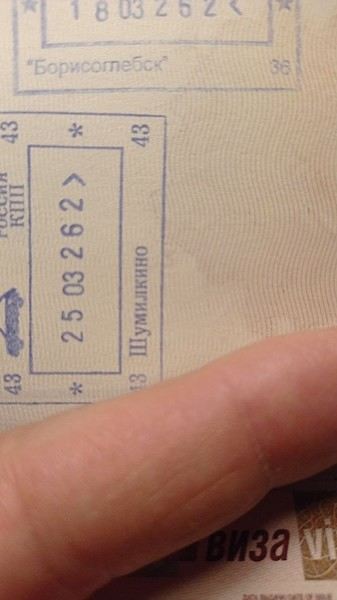
Borisoglebsk is the Russian border checkpoint after Kirkenes, on the road to Murmansk.
Kirkenes is a tiny town with a correspondingly small airport. Nothing has changed there: the minibuses to Murmansk wait on the right as you exit the airport. They’re synchronized with the two daily flights from Oslo—the SAS around 11:00 AM and Norwegian around 11:30 AM. They stop in Kirkenes at the corner of the Scandic for an hour, where other passengers can board, then head straight to the nearby border.
This is the least hassle Frontex/Schengen border. The Norwegian agent quickly scans your passport, and that’s it. No customs, since Norway is Schengen but not in the EU. On the Russian side, there’s a passport check and a quick customs inspection. All in all, crossing both the Norwegian and Russian checkpoints takes about 15 minutes.
A paper visa is required; e-visas aren’t accepted.
Two companies run the route: Avto Ekspress and Borodin: https://ae51.ru/routes/kirkenes-murmansk/ https://borodinbus.com/
The one-way fare is 5,500 ₽. You can either buy it online in rubles with a MIR card or make a formal reservation and pay in NOK cash to the driver. I took Borodin, and the price in NOK was much more expensive than in ₽.
=========================
On March 25, I left from Pskov via the Estonian border post at Luhaama. I spent three days in Murmansk, flew to St. Petersburg (SPB), stayed there for two days, then took an evening train to Pskov.
Since the end of February—and reportedly until the end of May—the Estonians have restricted the opening hours of the two border crossings near Pskov: Koidula (Pechory on the Russian side) and Luhaama (Izborsk on the Russian side). They’re closed at night between 7:00 PM and 7:00 AM. Right now, there’s a bus from Pskov at 7:00 AM to the border. It drops you off at the end of the road where truckers—many Kazakh and Serbian—are parked on the side. You finish the rest on foot to the barrier, where there’s a quick initial check for Ukrainian stamps in passports. Then you walk to the customs building, followed by passport control at the kiosk for motorists. After that, it’s a 500-meter walk to the Estonian checkpoint. At the moment, things seem calmer. Passport control is quick. The usual silly questions in English: "Where were you? Where are you going?" I just gave my most clueless smile: "Sorry, I don’t understand." Yeah, right—I don’t speak English, especially not at an Estonian border with a French passport. If they’re in a mood, though... A very quick bag inspection. Once you exit the Estonian post, walk to the bus stop sign by the road where another coach takes you to Riga.
The catch: in my case, last Wednesday, there were two passengers (Russians) with old Ukrainian stamps in their passports. The bus from the Estonian post to Riga was supposed to leave around 9:30 AM. We ended up leaving around noon after the two were grilled by the FSB. Since it was a weekday outside of holidays, the bus was half-empty. The fuller the bus and the more people with Ukrainian stamps, the worse the nightmare. Don’t book a same-day flight from Riga. I had a flight at 6:00 PM, so it worked out.
=============
The Kirkenes-Murmansk route is still clearly the easiest and fastest. But it’s not the most convenient since it’s way up north.
Next, I’d say the Gdansk-Kaliningrad route in the middle of the week. Avoid weekends and holiday departures/returns.
Avoid the Narva-Ivangorod route during Christmas, Easter, May 9, and *all* summer.
==============
About flights from Murmansk to St. Petersburg: prices are good. I bought my ticket the day before departure on Rossiya for 7,500 ₽, including 10 kg of luggage + a handbag.
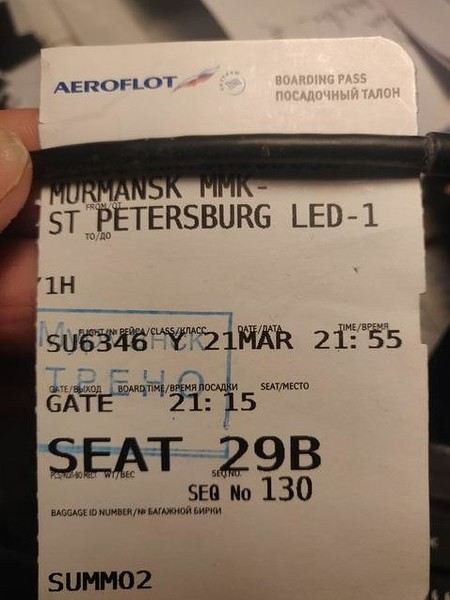
It’s the tail end of the northern lights season, and there were still crowds of Chinese tourists.
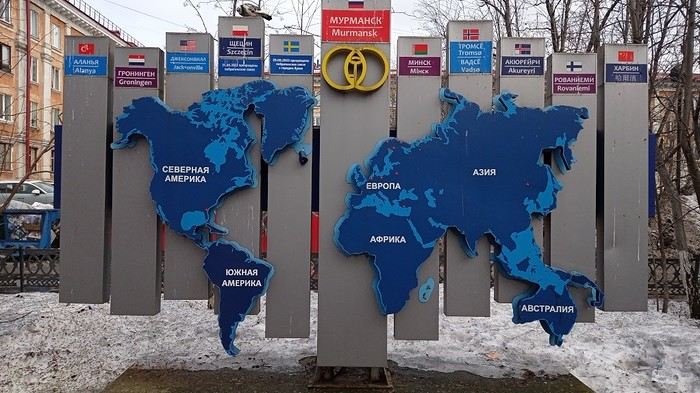
By the way, Murmansk is twinned with Harbin:
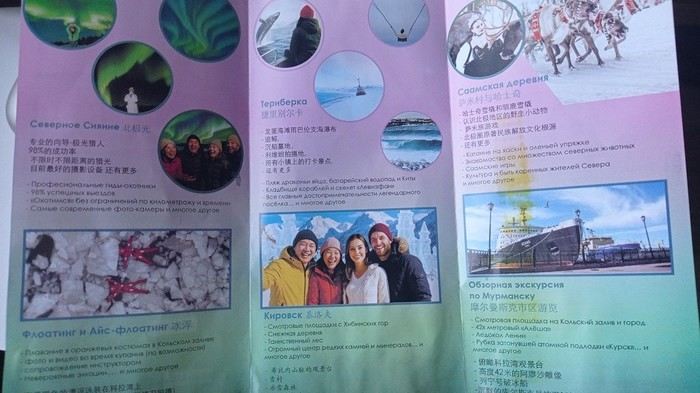
Chinese tourists are the largest foreign group, followed by Indians, then a mix of others from the Far East, Turks, Arabs, etc. Brochures are bilingual—Russian and Chinese:
============================
But let’s talk practical stuff. --
My domestic SIM card was restricted for SMS and internet for 24 hours. After that, if you want to keep using SMS, don’t turn off your phone—restarting triggers another 24-hour purgatory.
My Russian SIM cards (Megafon, MTS, Beeline) were activated as soon as I logged into their respective apps with my credentials.
Internet --
Telegram is heavily slowed down by authorities. To use it, you need to connect through proxy servers, which you load into the latest version of the app. Traffic is then rerouted internally within Telegram to servers outside Russia (Germany, Poland, Sweden, etc.). You can find these proxies on various channels. One is ChatVPN—check their website too.
For general internet use, like browsing the web, VPNs that work right now use the VLESS protocol. You can find several on Telegram by searching "VPN." A few free days, then payment in rubles or crypto.
Rozkomnadzor’s team are experts at this, so things can change. It’s a constant cat-and-mouse game.
Pskov is a special case. The city is near Estonia and has a large military base. Depending on NATO drone swarms launched from the Baltics, Wi-Fi can be completely suspended except for the most essential mobile apps. The drone swarms use the 4G network, and the powerful electronic jamming and drone suppression systems cause periods without Wi-Fi—including in hotels. Wired connections aren’t affected.
Borisoglebsk is the Russian border checkpoint after Kirkenes, on the road to Murmansk.
Kirkenes is a tiny town with a correspondingly small airport. Nothing has changed there: the minibuses to Murmansk wait on the right as you exit the airport. They’re synchronized with the two daily flights from Oslo—the SAS around 11:00 AM and Norwegian around 11:30 AM. They stop in Kirkenes at the corner of the Scandic for an hour, where other passengers can board, then head straight to the nearby border.
This is the least hassle Frontex/Schengen border. The Norwegian agent quickly scans your passport, and that’s it. No customs, since Norway is Schengen but not in the EU. On the Russian side, there’s a passport check and a quick customs inspection. All in all, crossing both the Norwegian and Russian checkpoints takes about 15 minutes.
A paper visa is required; e-visas aren’t accepted.
Two companies run the route: Avto Ekspress and Borodin: https://ae51.ru/routes/kirkenes-murmansk/ https://borodinbus.com/
The one-way fare is 5,500 ₽. You can either buy it online in rubles with a MIR card or make a formal reservation and pay in NOK cash to the driver. I took Borodin, and the price in NOK was much more expensive than in ₽.
=========================
On March 25, I left from Pskov via the Estonian border post at Luhaama. I spent three days in Murmansk, flew to St. Petersburg (SPB), stayed there for two days, then took an evening train to Pskov.
Since the end of February—and reportedly until the end of May—the Estonians have restricted the opening hours of the two border crossings near Pskov: Koidula (Pechory on the Russian side) and Luhaama (Izborsk on the Russian side). They’re closed at night between 7:00 PM and 7:00 AM. Right now, there’s a bus from Pskov at 7:00 AM to the border. It drops you off at the end of the road where truckers—many Kazakh and Serbian—are parked on the side. You finish the rest on foot to the barrier, where there’s a quick initial check for Ukrainian stamps in passports. Then you walk to the customs building, followed by passport control at the kiosk for motorists. After that, it’s a 500-meter walk to the Estonian checkpoint. At the moment, things seem calmer. Passport control is quick. The usual silly questions in English: "Where were you? Where are you going?" I just gave my most clueless smile: "Sorry, I don’t understand." Yeah, right—I don’t speak English, especially not at an Estonian border with a French passport. If they’re in a mood, though... A very quick bag inspection. Once you exit the Estonian post, walk to the bus stop sign by the road where another coach takes you to Riga.
The catch: in my case, last Wednesday, there were two passengers (Russians) with old Ukrainian stamps in their passports. The bus from the Estonian post to Riga was supposed to leave around 9:30 AM. We ended up leaving around noon after the two were grilled by the FSB. Since it was a weekday outside of holidays, the bus was half-empty. The fuller the bus and the more people with Ukrainian stamps, the worse the nightmare. Don’t book a same-day flight from Riga. I had a flight at 6:00 PM, so it worked out.
=============
The Kirkenes-Murmansk route is still clearly the easiest and fastest. But it’s not the most convenient since it’s way up north.
Next, I’d say the Gdansk-Kaliningrad route in the middle of the week. Avoid weekends and holiday departures/returns.
Avoid the Narva-Ivangorod route during Christmas, Easter, May 9, and *all* summer.
==============
About flights from Murmansk to St. Petersburg: prices are good. I bought my ticket the day before departure on Rossiya for 7,500 ₽, including 10 kg of luggage + a handbag.
It’s the tail end of the northern lights season, and there were still crowds of Chinese tourists.
By the way, Murmansk is twinned with Harbin:
Chinese tourists are the largest foreign group, followed by Indians, then a mix of others from the Far East, Turks, Arabs, etc. Brochures are bilingual—Russian and Chinese:
============================
But let’s talk practical stuff. --
My domestic SIM card was restricted for SMS and internet for 24 hours. After that, if you want to keep using SMS, don’t turn off your phone—restarting triggers another 24-hour purgatory.
My Russian SIM cards (Megafon, MTS, Beeline) were activated as soon as I logged into their respective apps with my credentials.
Internet --
Telegram is heavily slowed down by authorities. To use it, you need to connect through proxy servers, which you load into the latest version of the app. Traffic is then rerouted internally within Telegram to servers outside Russia (Germany, Poland, Sweden, etc.). You can find these proxies on various channels. One is ChatVPN—check their website too.
For general internet use, like browsing the web, VPNs that work right now use the VLESS protocol. You can find several on Telegram by searching "VPN." A few free days, then payment in rubles or crypto.
Rozkomnadzor’s team are experts at this, so things can change. It’s a constant cat-and-mouse game.
Pskov is a special case. The city is near Estonia and has a large military base. Depending on NATO drone swarms launched from the Baltics, Wi-Fi can be completely suspended except for the most essential mobile apps. The drone swarms use the 4G network, and the powerful electronic jamming and drone suppression systems cause periods without Wi-Fi—including in hotels. Wired connections aren’t affected.
Qui connaît et pourrait en dire un peu?
Bonjour a vous tous et bons voeux pour vos voyages
nous partons le 25 janvier pour 8 jours sur Moscou St Petersbourg
nous aimerions être en contact avec un guide francophone pour être accompagnés pendant une journée sur chacune de ces villes .
MERCI de vos infos et de votre expérience sur les endroit a ne pas rater et les bonnes adresses
pour se restaurer .
dans l'attente MERCI mille fois Dan and Bet
dans l'attente MERCI mille fois Dan and Bet
Bonjour
Nous désirerions nous rendre à Moscou et St-Petersbourg en décembre de cette année. Les dates qu'on nous propose, sont du 20 au 22/12 à Moscou, train de nuit vers Saint-Pétersbourg le 22 au soir. Du 23 au 26 à Saint Petersbourg.
Est-ce qu'il y a des choses à faire/à voir à ces dates ou est-ce que tout est fermé autour de Noel.
Quelles sont vos remarques à propos de ce voyage à ces dates?
Avez-vous déjà réservé vos documents (invitation russe, demande de visa, ...) en ligne?
Quelles recommandations auriez-vous à nous faire au niveau des visites, des réservations, des vêtements à emporter? Est-ce faisable, simplement avec le contenu d'une valise cabine ou faut-il prévoir pas mal de vêtements de rechange?
Auriez-vous quelques recommandations insolites?
Merci
Delphine (Belgique)
Nous désirerions nous rendre à Moscou et St-Petersbourg en décembre de cette année. Les dates qu'on nous propose, sont du 20 au 22/12 à Moscou, train de nuit vers Saint-Pétersbourg le 22 au soir. Du 23 au 26 à Saint Petersbourg.
Est-ce qu'il y a des choses à faire/à voir à ces dates ou est-ce que tout est fermé autour de Noel.
Quelles sont vos remarques à propos de ce voyage à ces dates?
Avez-vous déjà réservé vos documents (invitation russe, demande de visa, ...) en ligne?
Quelles recommandations auriez-vous à nous faire au niveau des visites, des réservations, des vêtements à emporter? Est-ce faisable, simplement avec le contenu d'une valise cabine ou faut-il prévoir pas mal de vêtements de rechange?
Auriez-vous quelques recommandations insolites?
Merci
Delphine (Belgique)
Bonjour, je rentre d'un voyage magnifique de trois mois en Sibérie, je voyage seule et avec les" moyens du bord", De juin a fin aout 17
Je suis disponible pour aider les prochains voyageur(euses), voilà mon trajet
Paris Ekaterinbourg par avion parce que c'est la fin de l'Oural et le début de la Sibérie, Tomsk, Irkoust, lac Bailkal et ile d'Ol' Khon , Oulan Oude, Nerynngri fin du train, Yakoust et un petit peut plus au dessus
Toute la route aller et retour de Magadan en taxi minibus bus, la ville abandonnée de Kadychan.
Le fleuve Amour Komsomolsk sur amour, De Ksastri, Nikolavevk sur amour, Kabarosk,
Dainerechensk, Spass Dalny, le lac Kamba, Valdivostock
Aucun problème, pas d'arnaque, que tu bonheur avec des magnifiques rencontres avec les gens et coté gentillesse et accueil les russes sont incroyables
Je suis a votre disposition si vous souhaitez avoir des renseignements
Marie
Je suis disponible pour aider les prochains voyageur(euses), voilà mon trajet
Paris Ekaterinbourg par avion parce que c'est la fin de l'Oural et le début de la Sibérie, Tomsk, Irkoust, lac Bailkal et ile d'Ol' Khon , Oulan Oude, Nerynngri fin du train, Yakoust et un petit peut plus au dessus
Toute la route aller et retour de Magadan en taxi minibus bus, la ville abandonnée de Kadychan.
Le fleuve Amour Komsomolsk sur amour, De Ksastri, Nikolavevk sur amour, Kabarosk,
Dainerechensk, Spass Dalny, le lac Kamba, Valdivostock
Aucun problème, pas d'arnaque, que tu bonheur avec des magnifiques rencontres avec les gens et coté gentillesse et accueil les russes sont incroyables
Je suis a votre disposition si vous souhaitez avoir des renseignements
Marie
Bonjour,
Nous sommes deux couples ..
Nous souhaitons faire un voyage Moscou saint pertersbourg sur 8 jours
Mais face au nombre de tours opérateurs nous ne savons plus vers qui nous tourner..
Est-ce que vous avez un conseil à nous donner sachant que nous souhaitons pas nous joindre à un groupe.
Merci 😉
Bonjour,
Nous partons au mois d'août pour 5 jours en famille (2 adultes + 2 ados) à Moscou. Nous souhaitons vivement visiter les "classiques" de la ville avec un guide. En parcourant les sites bien référencés sur google, nous arrivons à un prix qui avoisine les 400 Euros pour la journée pour 4 personnes. Je me demandais s'il n'y avait pas la possibilité de trouver moins cher en passant par un guide privé francophone et s'il y avait un risque à le faire? Pour l'instant je n'en ai malheureusement pas trouvé.
Merci par avance pour vos conseils
Bonjour à tous,
Suite à une formidable expérience à Cracovie (Pologne) en début d'année, j'ai pour projet de poursuivre ma visite, de ce côté là du monde, et plus précisément Lviv (ou l'on m'a dis le plus grand bien) ainsi que Moscou (qui est l'un de mes rêve) pour fin juillet/début aout 2017. Seulement voilà j'ai quelques interrogations sur le temps de visite que je dois m'accorder pour la visite de ces villes. Est-ce qu'il est facile de passer de l'Ukraine à la Russie ou le contraire ? Combien de temps ça prend pour faire le visa pour la Russie ?
Enfin je précise que pour le moment je voyage seul, je partirai de Genève. J'ai 24 ans, je suis ouvert d'esprit et sociable, pas de problème là dessus. Si vous avez d'autres petit conseils a me donner je suis preneur !
Merci d'avance (désolé pour les fautes d’orthographes)
Suite à une formidable expérience à Cracovie (Pologne) en début d'année, j'ai pour projet de poursuivre ma visite, de ce côté là du monde, et plus précisément Lviv (ou l'on m'a dis le plus grand bien) ainsi que Moscou (qui est l'un de mes rêve) pour fin juillet/début aout 2017. Seulement voilà j'ai quelques interrogations sur le temps de visite que je dois m'accorder pour la visite de ces villes. Est-ce qu'il est facile de passer de l'Ukraine à la Russie ou le contraire ? Combien de temps ça prend pour faire le visa pour la Russie ?
Enfin je précise que pour le moment je voyage seul, je partirai de Genève. J'ai 24 ans, je suis ouvert d'esprit et sociable, pas de problème là dessus. Si vous avez d'autres petit conseils a me donner je suis preneur !
Merci d'avance (désolé pour les fautes d’orthographes)
Hello,
qu'y a t il à faire et à voir à St Pétersburg ? Au mois de janvier.
Merci pour vos expériences, Bri.
Salut!
Toujours en quête d'infos sur la praticabilité de pistes et d'autres...
Est-ce que l'un d'entre vous aurait une bonne connaissance des pistes à l'ouest du Baikal?
Je cherche comment rejoindre Ulan Ude à Severobaykalsk (la ville au nord du Baikal- comme son nom l'indique).
Sur ma carte de marque Reise, je vois qu'il existe une piste qui se prolonge après Makarinino en direction du Nord Est jusqu'à rejoindre la route qui suit le BAM vers Novi Uoyan. A quoi ça ressemble? Ce qui m'inquiete c'est que les 40 km avant Kumora sont en pointillés. Nous avons un PL 4x4 de 10tonnes pour 3m70 de haut.
Autre piste : Makarinino/Kydzhimit/Egita/Romanovka/Tchita
Et si on fait le grand tour : que dire de la route Tynda/Severobaykalsk qui suit le BAM? Peut-on trouver du gazoil entre ces deux villes?
Qui est passé par l'un ou l'autre chemin? Qu'est ce qui est possible? Qu'est ce qui vaut le plus le coup?
Toute info est bonne à prendre, sinon on demandera sur place. Mais les conseils des locaux sont parfois éloignés de la raison.
Merci d'avance!!
Autre piste : Makarinino/Kydzhimit/Egita/Romanovka/Tchita
Et si on fait le grand tour : que dire de la route Tynda/Severobaykalsk qui suit le BAM? Peut-on trouver du gazoil entre ces deux villes?
Qui est passé par l'un ou l'autre chemin? Qu'est ce qui est possible? Qu'est ce qui vaut le plus le coup?
Toute info est bonne à prendre, sinon on demandera sur place. Mais les conseils des locaux sont parfois éloignés de la raison.
Merci d'avance!!
Bonjour,
Je me rendrai deux semaines au Kamtchatka l'été prochain. Nous avions bien vu les nombreux circuits proposés par les différentes agences de voyages mais nous préférons éviter les groupes de plus de 6-7 personnes (la plupart des agences prévoient des groupes de 15-20 personnes). Nous n'avons pas encore identifié le circuit que nous souhaiterions faire mais l'idée serait d'aller d'une part sur les volcans proches de Petropavlovsk (Avachinsky, Kozelsky), d'autre part ceux qui sont plus au nord, autour de la ville d'Esso.
Est-il possible de visiter le Kamtchatka en autonomie? Partir en bus et/ou en stop jusqu'au pied des sentiers et randonner à l'aide d'une carte, d'une boussole et d'un gps?
Si cela s'avère impossible (je pense notamment aux ours), pensez vous qu'il soit possible de trouver sur place des guides pour 2/3 jours de randonnée, sans avoir à réserver l'intégralité du circuit de Petropavlosk à Petropavlovsk?
Merci d'avance de vos conseils
David
Je me rendrai deux semaines au Kamtchatka l'été prochain. Nous avions bien vu les nombreux circuits proposés par les différentes agences de voyages mais nous préférons éviter les groupes de plus de 6-7 personnes (la plupart des agences prévoient des groupes de 15-20 personnes). Nous n'avons pas encore identifié le circuit que nous souhaiterions faire mais l'idée serait d'aller d'une part sur les volcans proches de Petropavlovsk (Avachinsky, Kozelsky), d'autre part ceux qui sont plus au nord, autour de la ville d'Esso.
Est-il possible de visiter le Kamtchatka en autonomie? Partir en bus et/ou en stop jusqu'au pied des sentiers et randonner à l'aide d'une carte, d'une boussole et d'un gps?
Si cela s'avère impossible (je pense notamment aux ours), pensez vous qu'il soit possible de trouver sur place des guides pour 2/3 jours de randonnée, sans avoir à réserver l'intégralité du circuit de Petropavlosk à Petropavlovsk?
Merci d'avance de vos conseils
David
Bonjour
Je souhaiterai faire une surprise à ma chérie et faire une demande en mariage à Moscou ou St Petersbourg entre novembre et décembre. J'ai pas mal de questions car nous ne connaissons pas du tout la Russie. Je souhaiterai privilégié Noël mais je ne sais pas si c'est intéressant à cause du manque de luminosité.
1) Est ce que les Russes fêtent Noël, je sais que c'est un Noël orthodoxe là bas (janvier me semble-t-il), mais je ne sais pas si c'est la même chose que chez nous et les périodes
Qui dit fin d'année, dit problèmes de luminosité, il n'y a que 6-7h de jours. Les villes sont magnifiques et c'est peut être dommage de ne pas profiter du jour ? Moscou qui est plus bas a plus a des journées plus longues d'1h je crois que St Petersbourg.
Ma chérie adore la période de Noël. Est-ce qu'il y a du monde à cette période là ?
2) Quel choix entre les 2 villes, Saint Petersbourg a l'air beaucoup plus belle que Moscou.
3) Je pense que ce sera un voyage de 3 ou 4 jours. Un Week-end prolongé en fait.
4) la vie est-elle chère ?
5) Quels restaurants romantiques pourriez-vous me recommander ?
6) EasyJet ne va pas en Russie ?
7) Est-ce-que le cyrillique est facile à comprendre et assimilé ou pas du tout ?
8) Après ce sera un Week end de visites afin de voir ces monuments exceptionnels et ce n'est pas ce qui manquent à St Petersbourg, Moscou je ne sais pas trop. Pourquoi pas d'ailleurs une demande dans ces lieux ? Je verrai.
9) Moscou est-elle une belle ville ? Des personnes m'ont dit bof bof comparé à St Pétersbourg.
Merci pour vos infos Bonne journée
Je souhaiterai faire une surprise à ma chérie et faire une demande en mariage à Moscou ou St Petersbourg entre novembre et décembre. J'ai pas mal de questions car nous ne connaissons pas du tout la Russie. Je souhaiterai privilégié Noël mais je ne sais pas si c'est intéressant à cause du manque de luminosité.
1) Est ce que les Russes fêtent Noël, je sais que c'est un Noël orthodoxe là bas (janvier me semble-t-il), mais je ne sais pas si c'est la même chose que chez nous et les périodes
Qui dit fin d'année, dit problèmes de luminosité, il n'y a que 6-7h de jours. Les villes sont magnifiques et c'est peut être dommage de ne pas profiter du jour ? Moscou qui est plus bas a plus a des journées plus longues d'1h je crois que St Petersbourg.
Ma chérie adore la période de Noël. Est-ce qu'il y a du monde à cette période là ?
2) Quel choix entre les 2 villes, Saint Petersbourg a l'air beaucoup plus belle que Moscou.
3) Je pense que ce sera un voyage de 3 ou 4 jours. Un Week-end prolongé en fait.
4) la vie est-elle chère ?
5) Quels restaurants romantiques pourriez-vous me recommander ?
6) EasyJet ne va pas en Russie ?
7) Est-ce-que le cyrillique est facile à comprendre et assimilé ou pas du tout ?
8) Après ce sera un Week end de visites afin de voir ces monuments exceptionnels et ce n'est pas ce qui manquent à St Petersbourg, Moscou je ne sais pas trop. Pourquoi pas d'ailleurs une demande dans ces lieux ? Je verrai.
9) Moscou est-elle une belle ville ? Des personnes m'ont dit bof bof comparé à St Pétersbourg.
Merci pour vos infos Bonne journée
Bonjour à tous,
En septembre prochain, pendant une croisière, nous faisons escale 2 jours à Saint-Petersourg. Ma femme souhaiterait absolument visiter le Palais Catherine / Tsarkoïe Selo. C'est vrai que ça fait loin "juste pour ça", mais de toute façon en deux jours, on aura pas le temps de voir grand chose (en plus du Palais, on ira voir l'Ermitage, et balade dans la ville).
J'aimerai donc avoir quelques infos / conseils pour ceux qui sont allés le visiter, seuls, sans groupe ni guide, via une croisière ou non.
J'ai lu quelques infos. Sur le site officiel, il est indiqué que le Palais est ouvert de 12h00 à 17h45 mais j'ai lu que le parc n'était pas visitable sans avoir vu le Palais avant. Est-ce vrai ? Ca me parait un peu bizarre puisque le parc est ouvert de 07h à 21h, et que plusieurs musées sont eux ouvert dès 10h ... Nous avons des cartes ICOM car nous travaillons tout les deux dans des musées. Savez-vous si elles sont acceptées (cela donne la gratuité des visites) ? C'est aussi pour ça qu'on achète pas en avance nos billets ... Une fois sur place, peux-t-on acheter nos billets en avance pour le Palais ou est-ce réservé aux horaires d'ouverture ? Pour y aller, quel est le plus simple / le plus fiable ? J'ai lu qu'on pouvait y aller en train (puis bus ou marche à pied), mais les trains dans un pays où la langue n'est pas latine, ça peut être compliqué ... On opterai donc plutôt pour métro jusqu'à Kupchino puis bus 186. Qu'en pensez-vous ?
D'avance merci pour vos réponses et tout vos conseils :)
En septembre prochain, pendant une croisière, nous faisons escale 2 jours à Saint-Petersourg. Ma femme souhaiterait absolument visiter le Palais Catherine / Tsarkoïe Selo. C'est vrai que ça fait loin "juste pour ça", mais de toute façon en deux jours, on aura pas le temps de voir grand chose (en plus du Palais, on ira voir l'Ermitage, et balade dans la ville).
J'aimerai donc avoir quelques infos / conseils pour ceux qui sont allés le visiter, seuls, sans groupe ni guide, via une croisière ou non.
J'ai lu quelques infos. Sur le site officiel, il est indiqué que le Palais est ouvert de 12h00 à 17h45 mais j'ai lu que le parc n'était pas visitable sans avoir vu le Palais avant. Est-ce vrai ? Ca me parait un peu bizarre puisque le parc est ouvert de 07h à 21h, et que plusieurs musées sont eux ouvert dès 10h ... Nous avons des cartes ICOM car nous travaillons tout les deux dans des musées. Savez-vous si elles sont acceptées (cela donne la gratuité des visites) ? C'est aussi pour ça qu'on achète pas en avance nos billets ... Une fois sur place, peux-t-on acheter nos billets en avance pour le Palais ou est-ce réservé aux horaires d'ouverture ? Pour y aller, quel est le plus simple / le plus fiable ? J'ai lu qu'on pouvait y aller en train (puis bus ou marche à pied), mais les trains dans un pays où la langue n'est pas latine, ça peut être compliqué ... On opterai donc plutôt pour métro jusqu'à Kupchino puis bus 186. Qu'en pensez-vous ?
D'avance merci pour vos réponses et tout vos conseils :)
Bonjour à tout le monde!
Je voudrais m'adresser à tous ceux qui aiment la Russie, qui l'ont déjà visitée, qui ont eu de la chance de l'apprécier. Ayant lu la plupart des postes, on voit que de toute l'immensité de la Russie les touristes (pas seulement les francophones) choisissent Moscou, SPb, les villes de l'anneau d'or, Ttranssib, BaÏkal. Mais la Russie ne se termine pas de cettes villes. Il y a beaucoup d'autres endroits digne d'attention. Dites svp, on les ignore parce que personne ne vous y invite pas? Ou il y a d'autres raisons?
Je voudrais m'adresser à tous ceux qui aiment la Russie, qui l'ont déjà visitée, qui ont eu de la chance de l'apprécier. Ayant lu la plupart des postes, on voit que de toute l'immensité de la Russie les touristes (pas seulement les francophones) choisissent Moscou, SPb, les villes de l'anneau d'or, Ttranssib, BaÏkal. Mais la Russie ne se termine pas de cettes villes. Il y a beaucoup d'autres endroits digne d'attention. Dites svp, on les ignore parce que personne ne vous y invite pas? Ou il y a d'autres raisons?
Bonjour,
Je vais en Russie pendant le mondial de football j'ai donc la FAN ID qui me permet de rentrer sans visa. J'ai prévu de dormir en couch surfing (chez l'habitant) et airbnb !
J'ai lu qu'il y est de la responsabilité de mon hôte de m'enregistrer auprès d'un bureau de Police ou Poste. Peut t-il y avoir une incidence si celui ci ne le fait pas pour lui ou moi ? (par ex : au moment de quitter le pays)
Mon hôte doit t-il me fournir un justificatif d'enregistrement ?
Merci
Je vais en Russie pendant le mondial de football j'ai donc la FAN ID qui me permet de rentrer sans visa. J'ai prévu de dormir en couch surfing (chez l'habitant) et airbnb !
J'ai lu qu'il y est de la responsabilité de mon hôte de m'enregistrer auprès d'un bureau de Police ou Poste. Peut t-il y avoir une incidence si celui ci ne le fait pas pour lui ou moi ? (par ex : au moment de quitter le pays)
Mon hôte doit t-il me fournir un justificatif d'enregistrement ?
Merci
On prévoit de faire un tour en Russie durant l'hiver, et sur le site de l'automobile club (vous savez ces voleurs qui font les carnets de douane) il est noté qu'il est obligatoire d'avoir des pneus neige à partir du 1er décemebre.
Sauf qu'on a pas vraiment de l'argent a mettre dans des pneus neige, et qu'on voudrait y aller avec des chaines.
Vous pensez que ca pourrait aller, ou qu'a la frontière on va se faire recaler?
Merci d'avance !
Ps : Si vous avez des infos pour le Kazakhstan et le Kirghizstan aussi ca serait top !
Vous pensez que ca pourrait aller, ou qu'a la frontière on va se faire recaler?
Merci d'avance !
Ps : Si vous avez des infos pour le Kazakhstan et le Kirghizstan aussi ca serait top !
Hello,
Je crée ce sujet puisque j'aimerais savoir pour les personnes qui ont déjà visité Moscou, qu'est ce qui vous a plu là bas ?
Je crée ce sujet puisque j'aimerais savoir pour les personnes qui ont déjà visité Moscou, qu'est ce qui vous a plu là bas ?
Bonjour,
Je souhaite visiter Moscou et St Petersbourg cet été avec un guide. J'hésite à partir avec une agence où tout est organisé ou à faire cela moi-même avec une agence locale ou un guide qui me serait recommandé (nous sommes 2 à partir) Quelqu'un aurait des conseils, des tuyaux à me donner?
Un grand merci d'avance 🙂
Je souhaite visiter Moscou et St Petersbourg cet été avec un guide. J'hésite à partir avec une agence où tout est organisé ou à faire cela moi-même avec une agence locale ou un guide qui me serait recommandé (nous sommes 2 à partir) Quelqu'un aurait des conseils, des tuyaux à me donner?
Un grand merci d'avance 🙂
Bonjour à tous,
J'ai comme projet d'aller en Sibérie cet été, région du globe dont je ne suis absolument pas familier. Mon choix s'est orienté, parmi tant d'autres, sur le fameux lac Baïkal.
J'ai prévu de faire le trajet suivant : Listvianka - Bol'shoye Goloustnoye - Bougouldeïka (- Elantsy), en une bonne semaine de marche, sachant que c'est plus ou moins du plat si l'on longe la rive.
Se pose un problème : la liaison entre Bol'shoye Goloustnoye et Bougouldeïka, en longeant la côte (cf. carte), n'est pas clairement établie (voire pas du tout 😏). De plus, je ne trouve aucune information sur Internet à propos de cette partie-là...
A ceux qui sont déjà allé dans le coin, ou mieux, qui ont tenté de faire cette liaison précise, pensez-vous que c'est faisable ou non ?
J'ai comme projet d'aller en Sibérie cet été, région du globe dont je ne suis absolument pas familier. Mon choix s'est orienté, parmi tant d'autres, sur le fameux lac Baïkal.
J'ai prévu de faire le trajet suivant : Listvianka - Bol'shoye Goloustnoye - Bougouldeïka (- Elantsy), en une bonne semaine de marche, sachant que c'est plus ou moins du plat si l'on longe la rive.
Se pose un problème : la liaison entre Bol'shoye Goloustnoye et Bougouldeïka, en longeant la côte (cf. carte), n'est pas clairement établie (voire pas du tout 😏). De plus, je ne trouve aucune information sur Internet à propos de cette partie-là...
A ceux qui sont déjà allé dans le coin, ou mieux, qui ont tenté de faire cette liaison précise, pensez-vous que c'est faisable ou non ?
Bonjour, est-il possible de se rendre en Russie plusieurs fois (maxi 4 fois) dans l'année. Donc faire autant de fois de visa que de voyages ? (Sachant qu'un voyage est maxi 15 jours). Où y a t-il un nombre limité de visa ou d'entrée en Russie pour une année ?
Merci de vos réponses.
Merci de vos réponses.
Quelqu'un aurait une adresse de restaurant à me donner pour passer la soirée du nouvel an à Saint Petersbourg , sans tomber dans les soirées pour groupes de touristes au bal de l'empereur ... Nous ne sommes que 4 personnes ( quinquas ! )
bonjour a toutes et tous
je cherche des infos sur la crimée car un communiqué des autorités frrancaise deconnseille d aller en crimée.quelqu un y a t il été en 2019? je suis preneur de toutes informations a ce sujet
je voudrais y aller en aout 2020, je m y rendrais en voiture
dans l attente de vous relire merci a tous
Bonjour à tous,
je prépare un voyage : Russie (Sibérie) Kazakhstan, Mongolie je recherche des conseils pour trouver un GPS ou Tablette pour me guider par la route dans ces pays. Je ne fais pas de tout-terrain je veux juste utiliser les routes qui dans certains coins de ces pays sont plutot des piste. dans l'attente de vos infos, amicalement.
je prépare un voyage : Russie (Sibérie) Kazakhstan, Mongolie je recherche des conseils pour trouver un GPS ou Tablette pour me guider par la route dans ces pays. Je ne fais pas de tout-terrain je veux juste utiliser les routes qui dans certains coins de ces pays sont plutot des piste. dans l'attente de vos infos, amicalement.
Bonsoir à tous,
Je craque complétement pour cette destination. Je suis au début de mes recherches. J'ai pour habitude de me dépatouiller pour organiser moi-même des vacances mais là j'avoue que je ne sais pas si c'est possible...
Comment obtenir un visa sans s'arracher les cheveux? Visiter seule, est-ce la galère? Peut-être acheter un plan en cyrillique? Pourquoi pas un guide sur une journée et que visiter en priorité avec lui? Je crois qu'il existe une "carte-musées", est-elle coupe-file? Dans les restos, les menus sont-ils en anglais ? Ou avez-vous au final recours à une agence?
Bref, je prends tous conseils, astuces, adresses...
Bonne soirée
Nous allons passer une semaine a Saint Pétersbourg avec mon mari .Je voudrais savoir s' il vaux mieux visiter le palais Peterhof ou le palais Catherine ? Car les fontaines du premier seront fermés en hiver. Je serais intéressé aussi par ceux qui connaissent bien cette ville pour me conseiller sur le meilleur programme de visite a cette saison .Avez vous un dernier conseil pour passer une belle soirée de réveillon ? Merci a vous tous ..
Bonjour,
J'aimerais avoir votre avis et un retour d'expérience sur un voyage en Russie pour les fetes de Noel et du Nouvel An.
Je souhaite partir quelques jours à Saint Peterbourg et Moscou durant cette période.
Combien de jours consacreriez vous à chaque ville?
Fait il très froid à cette période de l'année?
Bien cordialement,
Benoit
J'aimerais avoir votre avis et un retour d'expérience sur un voyage en Russie pour les fetes de Noel et du Nouvel An.
Je souhaite partir quelques jours à Saint Peterbourg et Moscou durant cette période.
Combien de jours consacreriez vous à chaque ville?
Fait il très froid à cette période de l'année?
Bien cordialement,
Benoit
bonjour,
j'ai fais une demande de billets sur le site de la FIFA pour le dernier match de groupe le 26 JUIN à MOSCOU, pour le 1/8 ème le 30 JUIN à KAZAN (hypothèse la FRANCE termine 1ère de son groupe)et 1/4 de finale le 06 JUILLET à NININOVGORAD.... Pour la suite les billets sont trop chers
En résumé çà fait 4 nuits à MOSCOU, entre 4 et 6 nuits à KAZAN, entre 4 et 6 nuits à NINI NOVGORAD
ma question concerne les transports sachant que j'envisage A/R PARIS-MOSCOU, puis A/R MOSCOU KAZAN (vol?), puis A/R KAZAN-NININOVGORAD ( en bus ou train ou éventuellement bateau sur la VOLGA, ??? )
Est ce que vous pensez que c'est un bon plan pour le transport sachant que je compte voyager avec mon épouse pour faire du tourisme (elle pas de billets = rien à cirer du foot)
Est qu'il est préférable de passer plus de jours à KAZAN ou à NINI NOVGORAD pour le tourisme????
merci à ceux qui connaissent la RUSSIE et aussi est ce que je peux trouver des gens qui parlent ANGLAIS?????
cordialement
Bonjour,
Je prépare pour fin aout un circuit avec des amis et en transports en commun
L'idée est d'arriver à Moscou , de faire qqs villes de l'Anneau d'Or et finir à Saint-Petersbourg . J'ai qqs questions :
1) Quelles sont les villes les plus intéressantes de l'Anneau d'Or ( on ne pourra pas les visiter toutes) ?
2) Comment se déplacer entre ces villes ( train bus , ..)
3) Si quelqu'un a une idée d'un petit circuit optimal au niveau des déplacements et des hébergements , je suis preneuse
Merci d'avance de vos conseils
Je prépare pour fin aout un circuit avec des amis et en transports en commun
L'idée est d'arriver à Moscou , de faire qqs villes de l'Anneau d'Or et finir à Saint-Petersbourg . J'ai qqs questions :
1) Quelles sont les villes les plus intéressantes de l'Anneau d'Or ( on ne pourra pas les visiter toutes) ?
2) Comment se déplacer entre ces villes ( train bus , ..)
3) Si quelqu'un a une idée d'un petit circuit optimal au niveau des déplacements et des hébergements , je suis preneuse
Merci d'avance de vos conseils
Bonjour à tous et à toutes,
Tout d'abord, je tient à préciser que je suis nouvelle sur le forum donc si quelque chose manque à mon message n'hésitez pas à me le signaler.
Ma mère et moi envisageons un séjours de 10 à 13 jours en Russie entre le 1er août et le 19 du mois (champs assez large je pense) et, à peu près avec un nombre de jours équivalents entre Moscou et Saint Petersbourg avec un transfert par le train de nuit (en couchettes de 2 personnes, je crois que c'est la première classe (?)). Je recherche quelques informations concernant le pays, les formalités, la sécurité (2 jeunes femmes, c'est pas risqué ?), et plein d'autres questions auxquelles j'aimerais obtenir une réponse actuelle (la plupart des forums datent de maximum 2014).
Je vous laisse ainsi la liste de mes questions (pour le moment :p) dans l'espoir que vous pourrez répondre à un maximum d'entre elles. N'hésitez pas à partager toutes vos expériences (en tant que voyageurs ou résidents), positives comme négatives qui pourraient nous être utiles.
Premièrement l'histoire du visa... qui à l'air bien galère... pensez vous que ce soit une bonne solution de passer par une agence et de prendre un forfait tout compris (démarches administratives, voucher, visa, prix de l'agence, assurance pour 330€ pour 2 personnes (raisonnable ??)) sachant que l'on est pas du tout à côté des ambassades. Avez-vous d'autres propositions ? Y a t-il beaucoup de risques qu'il soit refusé ? Faut-il avoir déjà reservé quelque chose (avion, hotel) ou faut-il attendre de l'obtenir ? Quand faut-il s'y prendre ?
Ensuite, quel est le prix d'un hôtel en chambre double confortable mais pas non plus luxueux dans le centre touristique de Moscou et St Petersbourg (on souhaiterais faire les trajets hôtel-visites à pied mais est-ce que c'est faisable ?) ? D'autres alternatives ?
Quels sont les prix des repas sur place (sans pouvoir cuisiner) ? Connaissez-vous des lieux où bien manger sans y laisser son porte-feuille...
Connaissez-vous le prix moyen du train de nuit reliant Moscou à St Petersbourg en 1ère classe (couchettes pour 2), personnellement j'ai trouvé 220€. Savez-vous sur quel site il faut réserver ?
Concernant la sécurité sur place, je sais que la question à due être posée milles fois mais je voudrais une réponse récente et sans idées reçues qui ne font que fausser la réalité, sachant que nous sommes deux femmes qui ne sortent pas le soir et évitons les quartier bizarres... En parlant de cela y a t-il effectivement des quartiers à éviter ? Y a t-il des problèmes à cause du contexte politique France-Russie ?
Enfin, avez-vous des visites à nous recommander (insolites y compris) et d'autres à éviter ?
Merci beaucoup pour vos prochaines réponses,
Coline.
Tout d'abord, je tient à préciser que je suis nouvelle sur le forum donc si quelque chose manque à mon message n'hésitez pas à me le signaler.
Ma mère et moi envisageons un séjours de 10 à 13 jours en Russie entre le 1er août et le 19 du mois (champs assez large je pense) et, à peu près avec un nombre de jours équivalents entre Moscou et Saint Petersbourg avec un transfert par le train de nuit (en couchettes de 2 personnes, je crois que c'est la première classe (?)). Je recherche quelques informations concernant le pays, les formalités, la sécurité (2 jeunes femmes, c'est pas risqué ?), et plein d'autres questions auxquelles j'aimerais obtenir une réponse actuelle (la plupart des forums datent de maximum 2014).
Je vous laisse ainsi la liste de mes questions (pour le moment :p) dans l'espoir que vous pourrez répondre à un maximum d'entre elles. N'hésitez pas à partager toutes vos expériences (en tant que voyageurs ou résidents), positives comme négatives qui pourraient nous être utiles.
Premièrement l'histoire du visa... qui à l'air bien galère... pensez vous que ce soit une bonne solution de passer par une agence et de prendre un forfait tout compris (démarches administratives, voucher, visa, prix de l'agence, assurance pour 330€ pour 2 personnes (raisonnable ??)) sachant que l'on est pas du tout à côté des ambassades. Avez-vous d'autres propositions ? Y a t-il beaucoup de risques qu'il soit refusé ? Faut-il avoir déjà reservé quelque chose (avion, hotel) ou faut-il attendre de l'obtenir ? Quand faut-il s'y prendre ?
Ensuite, quel est le prix d'un hôtel en chambre double confortable mais pas non plus luxueux dans le centre touristique de Moscou et St Petersbourg (on souhaiterais faire les trajets hôtel-visites à pied mais est-ce que c'est faisable ?) ? D'autres alternatives ?
Quels sont les prix des repas sur place (sans pouvoir cuisiner) ? Connaissez-vous des lieux où bien manger sans y laisser son porte-feuille...
Connaissez-vous le prix moyen du train de nuit reliant Moscou à St Petersbourg en 1ère classe (couchettes pour 2), personnellement j'ai trouvé 220€. Savez-vous sur quel site il faut réserver ?
Concernant la sécurité sur place, je sais que la question à due être posée milles fois mais je voudrais une réponse récente et sans idées reçues qui ne font que fausser la réalité, sachant que nous sommes deux femmes qui ne sortent pas le soir et évitons les quartier bizarres... En parlant de cela y a t-il effectivement des quartiers à éviter ? Y a t-il des problèmes à cause du contexte politique France-Russie ?
Enfin, avez-vous des visites à nous recommander (insolites y compris) et d'autres à éviter ?
Merci beaucoup pour vos prochaines réponses,
Coline.